AFP

US new home sales fall in September on rising mortgage rates

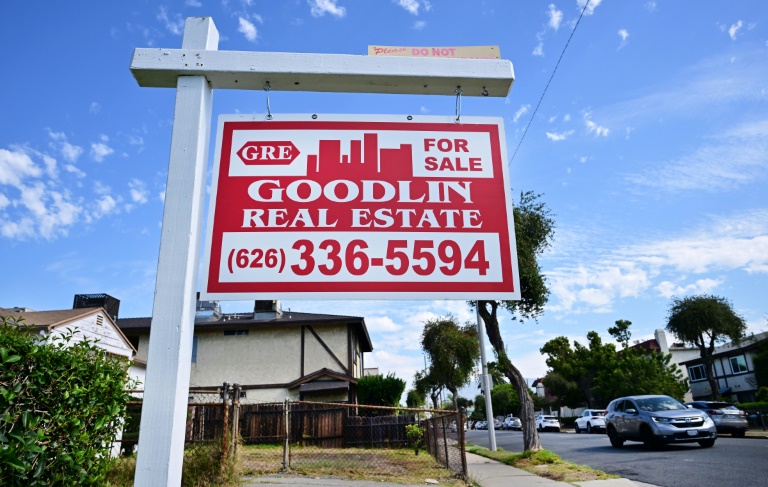
New home sales in the US dipped in September, official data showed Wednesday, as worsening affordability nudges ownership further out of reach for many.

Sales soared during the coronavirus pandemic as Americans snapped up homes on the back of bargain mortgage rates, but the sector has cooled with the US Federal Reserve hiking lending rates as it fights to bring down surging inflation.

Mortgage rates have climbed in the past year and taken a toll on potential homebuyers, with the average for a 30-year loan hitting its highest in over a decade.

In September, sales of new single-family houses fell 10.9 percent from August to a seasonally adjusted annual rate of 603,000, the Commerce Department said.

The median sales price for a new home rose however to $470,600, up by more than $34,000 from August’s revised figures.

Prices have been supported recently by low levels of existing home inventory, pushing buyers into new homes, said Ian Shepherdson of Pantheon Macroeconomics in an analysis this week.

But while sales of new homes rose in August to the highest rate since early this year, analysts expected the gain to be short-lived given a drop in mortgage purchase applications and increasing mortgage rates.

The leap in August could be inaccurate given margins of error in data, or it could be “unsustainable, if it reflects a rush of purchases by people who locked-in rates as they began to surge again,” said Shepherdson.

“We expect both new and existing home prices to fall sharply over the next year,” he said, pointing to growing inventory levels.

The latest down trend in the small new home segment reflects that in the larger existing home sales market, which made an eighth straight monthly decline last month according to industry data.

With inflation still persistently high, observers widely expect the Fed to deliver a further rate hike at an officials’ policy meeting next week.

Putin oversees nuclear response drills

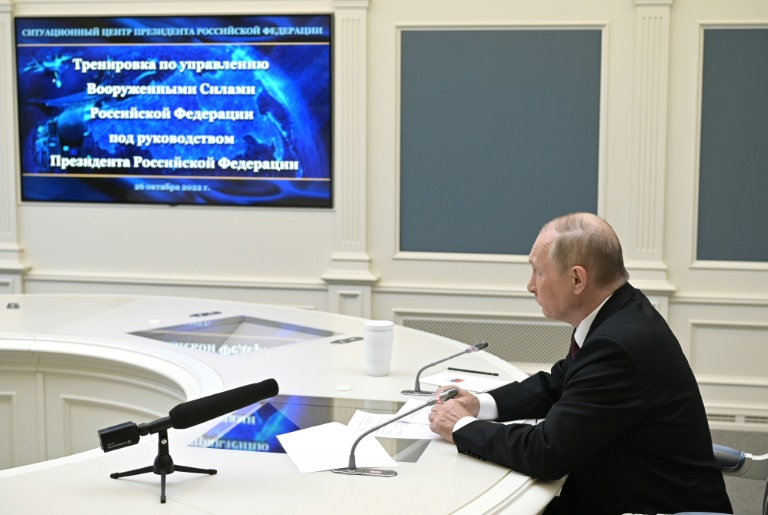
Russian President Vladimir Putin on Wednesday surveyed drills carried out by his nuclear-capable forces as Moscow pressed unfounded claims to India and China that Ukraine was developing a “dirty bomb.”

The drills are the latest in a series of escalatory comments from Moscow and Putin — who observed the drills from a control room —  that the eight-month conflict in Ukraine could turn nuclear.

“Under the leadership of… Vladimir Putin, a training session was held with ground, sea and air strategic deterrence forces, during which practical launches of ballistic and cruise missiles took place,” the Kremlin said in a statement.

Russian state-run media ran footage of a submarine crew preparing the launch of a Sineva ballistic missile from the Barents Sea in the Arctic.

The drills also included launching test missiles from the Kamchatka peninsula in the Russian Far East. 

Footage of the drills across state media came after Russia’s Defence Minister Sergei Shoigu pressed ahead with telephone calls to his counterparts globally, claiming that Ukraine was developing a “dirty bomb”.

Shoigu, who has made these claims in recent days to counterparts from NATO countries, reiterated them to Chinese counterpart Wei Fenghe on Wednesday. 

– Moscow alleges ‘irresponsible behaviour’ –

Shoigu also voiced the same “concerns” in a phone with India’s Defence Minister Rajnath Singh earlier on Wednesday, Moscow said.  

Ukraine has dismissed the allegations as “absurd” and “dangerous,” suggesting the claims could be cover for Russia’s own plans on the battlefield, as have its western allies, including Britain, France and the United States.

A dirty bomb is a conventional bomb laced with radioactive, biological or chemical materials which are disseminated in an explosion.

Kremlin spokesman Dmitry Peskov told reporters earlier Wednesday that Russia had information pertaining to the “existing threat” of Ukraine using a “dirty bomb” and that Kyiv was “preparing for such a terrorist act of sabotage”.

He added: “We will continue vigorously bringing our point of view to the world community to encourage them to take active steps to prevent such irresponsible behaviour.” 

Nuclear rhetoric from Russia began building in September, when Moscow said it was annexing four regions of Ukraine over which its forces have partial control. Putin warned Russia could use nuclear weapons to defend them.

– Advance on Kherson –

One of those regions is Kherson, in southern Ukraine near Moscow-annexed Crimea, where Kyiv has been clawing back territory since a counter-offensive it announced at the end of the summer. 

Russian-backed authorities in recent days urged residents to flee what they say is an oncoming onslaught. They claimed to have turned the city of Kherson into a “fortress”, vowing to defend it at all costs. 

A Moscow-installed official in the region, Vladimir Saldo, said Wednesday that at least 70,000 people have left their homes within the last week. 

Ukraine’s capture of the Kherson region would give Kyiv back important access to the Sea of Azov. It would also cut off Moscow’s land bridge to Russian-annexed Crimea. 

Saldo banned entry to the right bank area of the region for a period of seven days “due to the tense situation on the contact line”, according to a statement on his social media on Wednesday.  

Russia’s offensive to capture Ukrainian territory spurred a wave of international solidarity with Kyiv, including hundreds of foreigners who volunteered to help fend off Russian advances. 

Kyiv said Wednesday that Russia had returned the remains of US citizen Joshua Alan Jones, who was killed fighting Moscow’s forces in August, along with 10 Ukrainian servicemen in a prisoner swap.

Would-be crypto investors in Singapore could face risk awareness tests

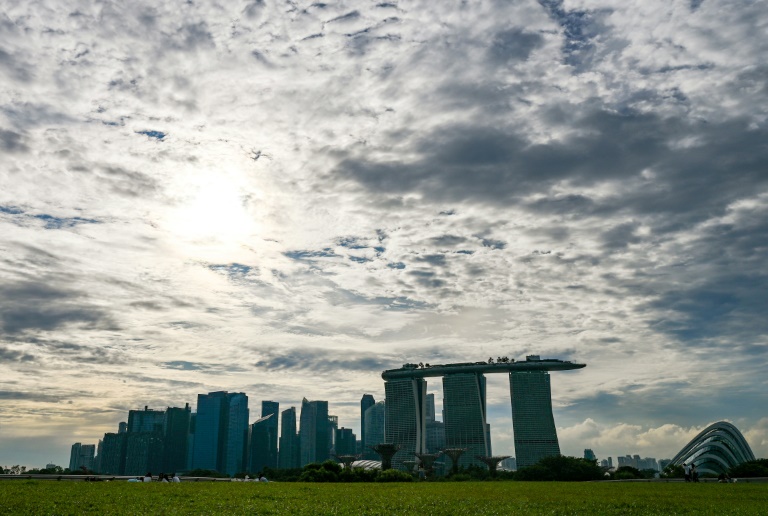
People looking to trade cryptocurrency in Singapore may soon have to take a test to prove they understand what they are getting into, the central bank said Wednesday, as it looks to prevent clueless investors from bankrupting themselves.

The Asian finance hub has taken cautious steps to expand its digital assets market, but has warned against the risks from trading in digital coins, especially among small investors lured by stories of quick riches.

“Trading in cryptocurrencies is highly risky and not suitable for the general public,” the Monetary Authority of Singapore (MAS) said as it unveiled proposals to protect traders.

“However, cryptocurrencies play a supporting role in the broader digital asset ecosystem and it would not be feasible to ban them.”

Under the plan, which will face public scrutiny before it can become legislation, the MAS will require cryptocurrency service providers to be more transparent in telling consumers about the risks so they can make informed choices.

Would-be investors must also take a test to assess their understanding of the risks before they are allowed to trade, and they will be barred from using credit cards or payment apps to buy the units.

If an applicant fails to answer the questions correctly, service providers can give them “educational materials… to strengthen the customer’s knowledge of the risks… This should not be limited to those questions to which the retail customer answered incorrectly”.

Incentives encouraging consumers to invest in crypto are not allowed, and service providers must also adhere to certain standards on how to carry out their business, the MAS said.

Chia Hock Lai, co-chairman of the Blockchain Association Singapore, said while the proposed measures are “comprehensive”, they run the risk of “over-regulating” as some are interconnected.

For example, the risk awareness test “should negate the need to bar credit card payments and provision of incentives to retail customers”, he told AFP.

There has been a global push to regulate the crypto market following wild swings and a string of high-profile collapses, some of which took place in the city-state, hitting its reputation as a potential crypto hub.

In June, Singapore-based cryptocurrency hedge fund Three Arrows Capital collapsed, while Hodlnaut — a crypto lender based in the country — has been placed under interim judicial management.

Fugitive South Korean national Do Kwon, founder of cryptocurrency Terra, was also based in the city-state.

Despite the risks, digital currencies continue to attract investors because of reported big gains made over short periods and promotional endorsements encouraging the public to get into the market, the MAS said.

Cryptocurrencies are not backed by real-world assets, making them subject to huge price swings and trading in them is highly speculative.

Would-be crypto investors in Singapore could face risk awareness tests

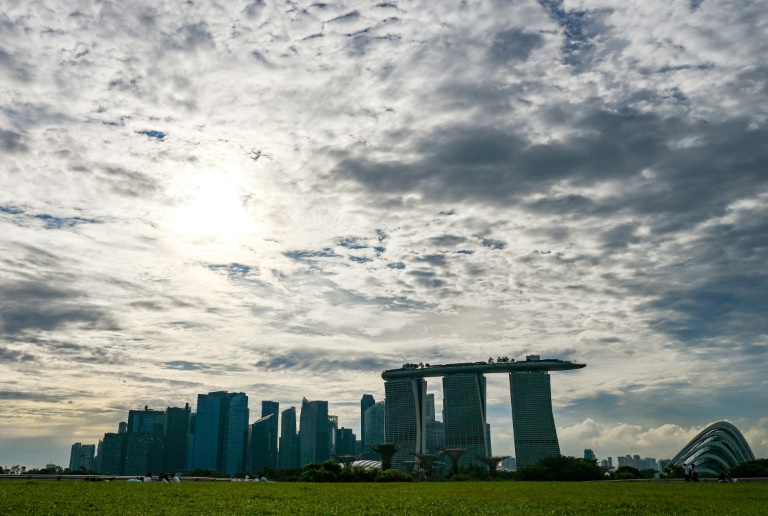
People looking to trade cryptocurrency in Singapore may soon have to take a test to prove they understand what they are getting into, the central bank said Wednesday, as it looks to prevent clueless investors from bankrupting themselves.

The Asian finance hub has taken cautious steps to expand its digital assets market, but has warned against the risks from trading in digital coins, especially among small investors lured by stories of quick riches.

“Trading in cryptocurrencies is highly risky and not suitable for the general public,” the Monetary Authority of Singapore (MAS) said as it unveiled proposals to protect traders.

“However, cryptocurrencies play a supporting role in the broader digital asset ecosystem and it would not be feasible to ban them.”

Under the plan, which will face public scrutiny before it can become legislation, the MAS will require cryptocurrency service providers to be more transparent in telling consumers about the risks so they can make informed choices.

Would-be investors must also take a test to assess their understanding of the risks before they are allowed to trade, and they will be barred from using credit cards or payment apps to buy the units.

If an applicant fails to answer the questions correctly, service providers can give them “educational materials… to strengthen the customer’s knowledge of the risks… This should not be limited to those questions to which the retail customer answered incorrectly”.

Incentives encouraging consumers to invest in crypto are not allowed, and service providers must also adhere to certain standards on how to carry out their business, the MAS said.

Chia Hock Lai, co-chairman of the Blockchain Association Singapore, said while the proposed measures are “comprehensive”, they run the risk of “over-regulating” as some are interconnected.

For example, the risk awareness test “should negate the need to bar credit card payments and provision of incentives to retail customers”, he told AFP.

There has been a global push to regulate the crypto market following wild swings and a string of high-profile collapses, some of which took place in the city-state, hitting its reputation as a potential crypto hub.

In June, Singapore-based cryptocurrency hedge fund Three Arrows Capital collapsed, while Hodlnaut — a crypto lender based in the country — has been placed under interim judicial management.

Fugitive South Korean national Do Kwon, founder of cryptocurrency Terra, was also based in the city-state.

Despite the risks, digital currencies continue to attract investors because of reported big gains made over short periods and promotional endorsements encouraging the public to get into the market, the MAS said.

Cryptocurrencies are not backed by real-world assets, making them subject to huge price swings and trading in them is highly speculative.

Germany allows controversial Chinese stake in Hamburg port

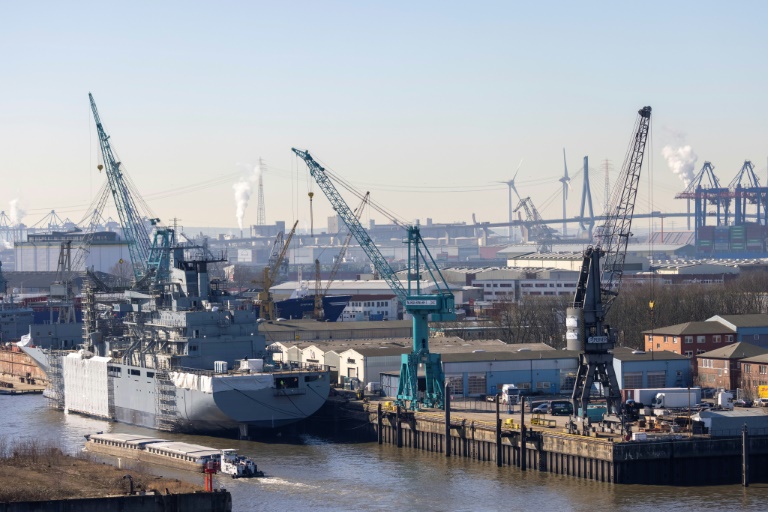
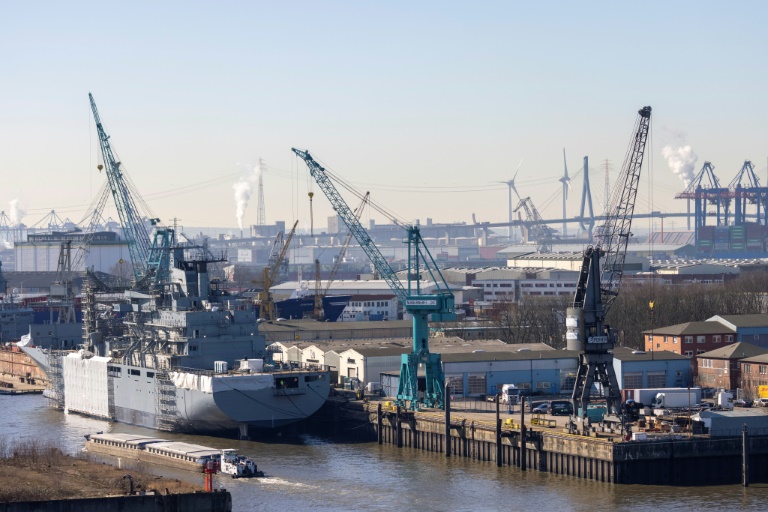
Germany’s coalition government on Wednesday allowed a Chinese firm to buy a reduced stake in a Hamburg port terminal, after Chancellor Olaf Scholz resisted calls to ban the controversial sale outright over security concerns.

Under the compromise agreed by Scholz’s cabinet, Chinese shipping giant Cosco has the go-ahead to buy a stake “below 25 percent” in the Tollerort container terminal owned by HHLA, the economy ministry said in a statement.

“The reason for the partial prohibition is the existence of a threat to public order and safety,” said the ministry.

China’s state-owned Cosco had initially sought a 35-percent stake and the deal would have automatically gone ahead if a compromise solution wasn’t found this week.

The breakthrough came ahead of Scholz’s visit to China next week as the first European Union leader to make the trip since November 2019.

Scholz, a former Hamburg mayor, backed the Cosco deal and has repeatedly stressed the importance of strong trade ties between China and Europe’s biggest economy.

But six ministries wanted to veto the sale, including those of defence, economy and foreign affairs, at a time of heightened concerns about critical infrastructure falling into foreign hands.

The row pitted Social Democrat Scholz against his coalition partners, the Greens and the liberal FDP, who said lessons had to be learned from Germany’s breakdown in ties with Russia.

Beijing welcomed Wednesday’s green light and hit back at critics.

“We hope the relevant parties will view pragmatic cooperation between China and Germany rationally and stop baselessly hyping it up,” said foreign ministry spokesman Wang Wenbin.

Scholz meanwhile was “convinced” that the smaller stake offered to Cosco “does not create strategic dependence”, German government spokeswoman Christiane Hoffmann told reporters.

– ‘Naive’ –

Badly burned by the over-reliance on Russian gas imports, many in Germany are wary of falling into the same trap and becoming too dependent on China economically.

The European Commission also voiced scepticism over the Hamburg project, a source close to the matter told AFP at the weekend, amid fears sensitive information about activity in the port could be relayed to China’s government.

The agreement to settle for allowing a reduced stake of 24.9 percent, thereby depriving Cosco of voting rights, “reduces the acquisition to a purely financial participation”, the economy ministry said.

German harbour logistics firm HHLA for its part said Cosco’s participation would help secure jobs at Hamburg’s port and boost its role as a key trading “hub” with Asia.

But the face-saving compromise failed to silence critics.

Anton Hofreiter, a Green party lawmaker and chairman of the German parliament’s European affairs committee, said approving the deal was the wrong decision.

Scholz’s argument “that this is a purely commercial project is fatally reminiscent of the statements on Russia and Nord Stream (gas pipelines),” he told Funke media group.

“The attitude can be described as naive at best,” he said.

Franziska Brandmann, leader of the FDP’s youth wing, likewise accused the government of being “naive”.

Conservative opposition leader Friedrich Merz said Germany needed “a reassessment of its relationship with China”, noting that the Asian giant was becoming “more repressive” at home and “increasingly aggressive” abroad.

– Tougher stance –

Chinese firms already hold stakes in other European ports, including Rotterdam and Antwerp, but the EU’s stance against Beijing has hardened since then.

Germany too has in recent years taken a closer look at Chinese investment in sensitive technologies and other areas, and reserves the right to veto acquisitions.

The economy ministry said Wednesday that as part of the Cosco compromise, the Chinese firm would not be allowed to appoint senior staff members or have a veto right on strategic business decisions.

Any future attempt to increase the shareholding above the 25-percent threshold would trigger a fresh government review, the ministry added.

China is a key trading partner for Germany, especially for its flagship automotive industry.

But the relationship has been soured in recent years by China’s strict zero-Covid policy, the escalation of tensions over Taiwan and concern over human rights issues in the Muslim-dominated Xinjiang region.

Germany allows controversial Chinese stake in Hamburg port

Germany’s coalition government on Wednesday allowed a Chinese firm to buy a reduced stake in a Hamburg port terminal, after Chancellor Olaf Scholz resisted calls to ban the controversial sale outright over security concerns.

Under the compromise agreed by Scholz’s cabinet, Chinese shipping giant Cosco has the go-ahead to buy a stake “below 25 percent” in the Tollerort container terminal owned by HHLA, the economy ministry said in a statement.

“The reason for the partial prohibition is the existence of a threat to public order and safety,” said the ministry.

China’s state-owned Cosco had initially sought a 35-percent stake and the deal would have automatically gone ahead if a compromise solution wasn’t found this week.

The breakthrough came ahead of Scholz’s visit to China next week as the first European Union leader to make the trip since November 2019.

Scholz, a former Hamburg mayor, backed the Cosco deal and has repeatedly stressed the importance of strong trade ties between China and Europe’s biggest economy.

But six ministries wanted to veto the sale, including those of defence, economy and foreign affairs, at a time of heightened concerns about critical infrastructure falling into foreign hands.

The row pitted Social Democrat Scholz against his coalition partners, the Greens and the liberal FDP, who said lessons had to be learned from Germany’s breakdown in ties with Russia.

Beijing welcomed Wednesday’s green light and hit back at critics.

“We hope the relevant parties will view pragmatic cooperation between China and Germany rationally and stop baselessly hyping it up,” said foreign ministry spokesman Wang Wenbin.

Scholz meanwhile was “convinced” that the smaller stake offered to Cosco “does not create strategic dependence”, German government spokeswoman Christiane Hoffmann told reporters.

– ‘Naive’ –

Badly burned by the over-reliance on Russian gas imports, many in Germany are wary of falling into the same trap and becoming too dependent on China economically.

The European Commission also voiced scepticism over the Hamburg project, a source close to the matter told AFP at the weekend, amid fears sensitive information about activity in the port could be relayed to China’s government.

The agreement to settle for allowing a reduced stake of 24.9 percent, thereby depriving Cosco of voting rights, “reduces the acquisition to a purely financial participation”, the economy ministry said.

German harbour logistics firm HHLA for its part said Cosco’s participation would help secure jobs at Hamburg’s port and boost its role as a key trading “hub” with Asia.

But the face-saving compromise failed to silence critics.

Anton Hofreiter, a Green party lawmaker and chairman of the German parliament’s European affairs committee, said approving the deal was the wrong decision.

Scholz’s argument “that this is a purely commercial project is fatally reminiscent of the statements on Russia and Nord Stream (gas pipelines),” he told Funke media group.

“The attitude can be described as naive at best,” he said.

Franziska Brandmann, leader of the FDP’s youth wing, likewise accused the government of being “naive”.

Conservative opposition leader Friedrich Merz said Germany needed “a reassessment of its relationship with China”, noting that the Asian giant was becoming “more repressive” at home and “increasingly aggressive” abroad.

– Tougher stance –

Chinese firms already hold stakes in other European ports, including Rotterdam and Antwerp, but the EU’s stance against Beijing has hardened since then.

Germany too has in recent years taken a closer look at Chinese investment in sensitive technologies and other areas, and reserves the right to veto acquisitions.

The economy ministry said Wednesday that as part of the Cosco compromise, the Chinese firm would not be allowed to appoint senior staff members or have a veto right on strategic business decisions.

Any future attempt to increase the shareholding above the 25-percent threshold would trigger a fresh government review, the ministry added.

China is a key trading partner for Germany, especially for its flagship automotive industry.

But the relationship has been soured in recent years by China’s strict zero-Covid policy, the escalation of tensions over Taiwan and concern over human rights issues in the Muslim-dominated Xinjiang region.

Boeing reports $3.3 bn loss due to rising defense program costs

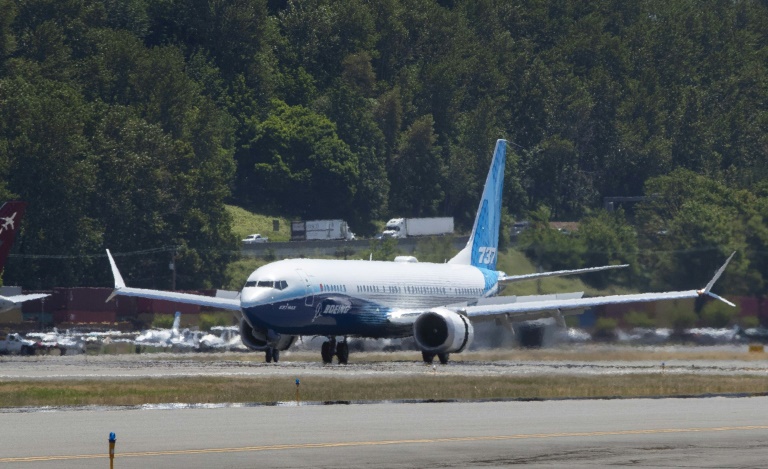
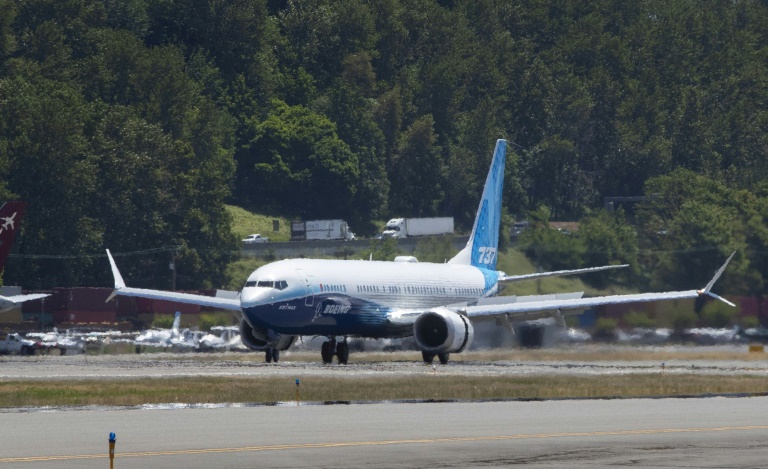
Boeing reported a surprise $3.3 billion third-quarter loss Wednesday because of swelling costs on several defense programs due in part to supply chain expenses.

The aviation giant reported a four percent rise in revenues to $16 billion, which also missed analyst estimates. 

On the up side, Boeing reaffirmed it is on track for positive free cash flow in 2022.

The company flagged a number of fixed-price defense contracts that have been hit with surging costs, including the KC-46, an aerial refueling and strategic military transport aircraft, and the US presidential plane, Air Force One.  

Boeing also said costs were rising in other unspecified defense programs.

The losses in these projects were “driven by higher estimated manufacturing and supply chain costs, as well as technical challenges,” Chief Executive Dave Calhoun said in a letter to employees.

“Nearly every industry is navigating broad supply chain, inflation, labor and macro-economic challenges — and we’re certainly no different. We’re realistic about the environment we face and are taking comprehensive action.”

Calhoun closed his letter by saying that “turnarounds take time,” adding “we have more work to do — but I am confident in our team and the actions we’re taking for the future.”

The difficulties in Boeing’s defense program came as the company saw a jump in revenues in its commercial airplane division following the resumption of deliveries of the 787 Dreamliner and an increase in deliveries in the 737 MAX. 

But Boeing was expected to face questions on an investor conference call later Wednesday on the timing of the resumption of MAX deliveries to China and also on the regulatory outlook for its latest version of the plane, the 737 MAX 10, which has still not been certified by US authorities.

Shares dipped 0.4 percent to $146.00 in pre-market trading.

Boeing reports $3.3 bn loss due to rising defense program costs

Boeing reported a surprise $3.3 billion third-quarter loss Wednesday because of swelling costs on several defense programs due in part to supply chain expenses.

The aviation giant reported a four percent rise in revenues to $16 billion, which also missed analyst estimates. 

On the up side, Boeing reaffirmed it is on track for positive free cash flow in 2022.

The company flagged a number of fixed-price defense contracts that have been hit with surging costs, including the KC-46, an aerial refueling and strategic military transport aircraft, and the US presidential plane, Air Force One.  

Boeing also said costs were rising in other unspecified defense programs.

The losses in these projects were “driven by higher estimated manufacturing and supply chain costs, as well as technical challenges,” Chief Executive Dave Calhoun said in a letter to employees.

“Nearly every industry is navigating broad supply chain, inflation, labor and macro-economic challenges — and we’re certainly no different. We’re realistic about the environment we face and are taking comprehensive action.”

Calhoun closed his letter by saying that “turnarounds take time,” adding “we have more work to do — but I am confident in our team and the actions we’re taking for the future.”

The difficulties in Boeing’s defense program came as the company saw a jump in revenues in its commercial airplane division following the resumption of deliveries of the 787 Dreamliner and an increase in deliveries in the 737 MAX. 

But Boeing was expected to face questions on an investor conference call later Wednesday on the timing of the resumption of MAX deliveries to China and also on the regulatory outlook for its latest version of the plane, the 737 MAX 10, which has still not been certified by US authorities.

Shares dipped 0.4 percent to $146.00 in pre-market trading.

Britain's new PM delays crunch budget plan

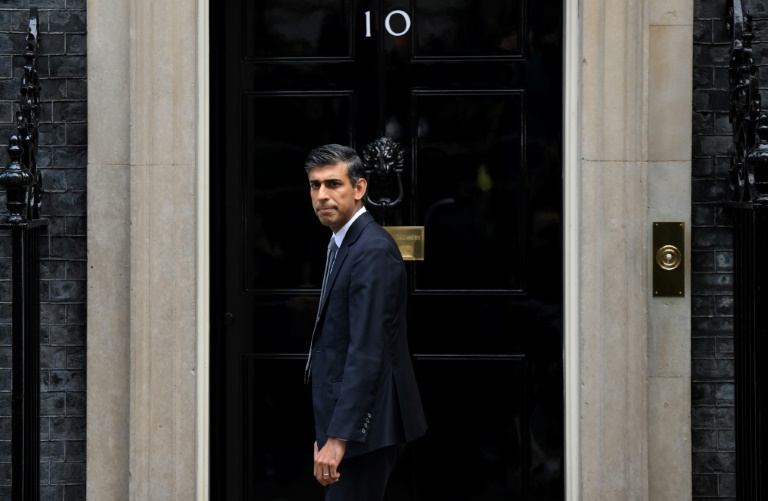
British Prime Minister Rishi Sunak on Wednesday postponed an eagerly awaited budget plan due next week, as the youthful new leader got down to business after weeks of political turmoil. 

Following a meeting of his new cabinet, Sunak was set to engage in his first parliamentary joust against opposition Labour leader Keir Starmer, who is demanding a snap general election.

“The Tories have crashed the economy, with low wages, high prices and a cost-of-living crisis,” Starmer said, in a taste of the attack to come during the Prime Minister’s Questions. 

“The public needs a fresh start and a say on Britain’s future.”

But Sunak, 42, ruled out an early election as he vowed stability and fiscal rectitude following his appointment by King Charles III on Tuesday to succeed Liz Truss after she served just 49 days in Downing Street.

After appointing the cabinet team, Sunak phoned the presidents of Ukraine and the United States to vow continuity on UK foreign policy, including resisting Russia’s invasion of its neighbour with cash and military aid.

But Chancellor of the Exchequer Jeremy Hunt — retained in Sunak’s cabinet along with other senior ministers — said that Monday’s planned “medium-term fiscal statement” was no longer so pressing.

Instead, there will be a full budget statement on November 17 to lay out the new government’s tax and spending plans, Hunt told reporters.

“Now, we have a new prime minister and the prospect of much longer-term stability for the economy,” he said, stressing the new plan would be accompanied by fresh economic forecasts from the Office for Budget Responsibility (OBR). 

– Promise to restore trust –

Hunt said he had discussed the delay with Bank of England governor Andrew Bailey — who had been blindsided by Truss’s previous ill-conceived plan for tax cuts financed by extra borrowing, which sent markets into a tailspin. 

The delay would ensure the budget can “stand the test of time” to give British mortgage holders and businesses more assurance, Hunt said, after the Truss plan provoked a damaging spike in borrowing costs and torpedoed her premiership.

Markets were unperturbed by the postponement, suggesting Hunt and Sunak have successfully calmed investor nerves.

Sunak vowed to restore “trust” and “integrity” in government after Truss’s financial carnage and the many controversies that brought down Boris Johnson before her.

But for critics, the new leader undermined his own pledges by also re-appointing the hardline right-winger Suella Braverman as interior minister, days after she was forced to resign for a security breach.

Foreign Secretary James Cleverly — also retained by Sunak — said Braverman had shown contrition for her “mistake” in emailing classified government documents outside her department.  

The documents reportedly included market-sensitive information from the OBR. 

Hunt declined to confirm this, while Cleverly denied allegations that Sunak reappointed Braverman after a secret deal securing her support against Johnson’s audacious comeback bid.

– ‘Livid’ –

As well as mending Britain’s wounded finances, Sunak is also pledging to reunite the Conservatives after another bruising leadership contest, mere weeks after Johnson was forced out.

The right-leaning Times daily welcomed a “generally broad and capable set of cabinet appointments”, although the left-wing Guardian expressed scepticism.

“Sooner or later, he will face the parliamentary disunity that his election sought to banish,” it said in an editorial. 

Sunak, finance minister under Johnson, also kept Truss’s defence, trade and culture ministers among others, as well as re-hiring some older faces from the Johnson cabinet.

The line-up “reflects a unified party and a cabinet with significant experience, ensuring that at this uncertain time there is continuity at the heart of government”, a Downing Street source said.

But Braverman’s return raised eyebrows across the political spectrum, with Labour demanding answers on the implications for national security. 

Cabinet secretary Simon Case, the UK’s most senior civil servant, was “livid” over her swift return, a source told The Times.

Truss left office as the UK’s shortest-serving premier in history, replaced by its youngest since 1812 and first Hindu leader.

Sunak triumphed in a 96-hour Tory leadership contest after rival contender Penny Mordaunt failed to secure enough nominations from Tory lawmakers and Johnson dramatically aborted his own bid.

Euro back above dollar parity on US economic strains

The euro on Wednesday surged back above parity with the dollar, with the US currency sliding against its main rivals on concerns over the world’s biggest economy.

The euro bounced back above one dollar for the first time since mid-September, helped also by expectations of a big interest rate hike from the European Central Bank on Thursday.

There were large gains against the dollar also for the British pound and yen, helping them to recover some ground after recent sharp losses.

The dollar retreated following “a string of negative (US) economic data released since the beginning of the week”, noted ActivTrades senior analyst Ricardo Evangelista.

He said that poorly-received data, including slower house price growth and weaker consumer confidence, showed that big rate hikes from the Federal Reserve are “starting to open some cracks in the American economy. 

“The Federal Reserve has been hiking rates aggressively in an attempt to bring inflation under control, and the country’s economy is starting to suffer as a result,” Evangelista added.

Sterling on Wednesday jumped more than one percent against the dollar, winning a boost also from markets welcoming the appointment of Rishi Sunak as prime minister.

The move was seen as offering stability to the UK economy after weeks of upheaval fuelled by predecessor Liz Truss’s tax-cutting budget.

The dollar also slumped against the yen following recent 32-year highs, as the Bank of Japan holds off from raising interest rates.

– Stocks track earnings –

Stock markets were mixed Wednesday as traders digested another batch of earnings from some of the world’s biggest companies.

Banks are enjoying large profits as interest rates rise but there are concerns over bad loans with the global economy threatened by possible recession.

Shares in Barclays fell 1.3 percent despite the British bank announcing a 10-percent jump in quarterly net profits.

Google parent Alphabet meanwhile reported quarterly earnings that fell short of market expectations as belts tightened in the digital ad market that drives its revenue.

Alphabet shares slipped 6.8 percent to $97.35 in after-market trades that followed the release of the earnings report.

“When Google stumbles, it’s a bad omen for digital advertising at large,” said Insider Intelligence analyst Evelyn Mitchell.

“This disappointing quarter for Google signifies hard times ahead if market conditions continue to deteriorate.”

– Key figures around 0945 GMT –

Euro/dollar: UP at $1.0023 from $0.9971

Pound/dollar: UP at $1.1567 from $1.1478 on Tuesday

Dollar/yen: DOWN at 147.14 yen from 147.92 yen

Euro/pound: DOWN at 86.64 pence from 86.85 pence

London – FTSE 100: DOWN 0.4 percent at 6,983.15 points

Frankfurt – DAX: DOWN 0.5 percent at 13,115.31

Paris – CAC 40: UP 0.1 percent at 6,255.26

EURO STOXX 50: DOWN 0.1 percent at 3,580.76

Tokyo – Nikkei 225: UP 0.7 percent at 27,431.84 (close)

Hong Kong – Hang Seng Index: UP 1.0 percent at 15,317.67 (close)

Shanghai – Composite: UP 0.8 percent at 2,999.50 (close)

New York – Dow: UP 1.1 percent at 31,836.74 (close)

Brent North Sea crude: UP 0.4 percent at $93.89 per barrel

West Texas Intermediate: UP 0.6 percent at $85.82 per barrel

burs/bcp/rox

Close Bitnami banner
Bitnami