AFP

Mercedes-Benz to sell off Russian assets to local investor

German carmaker Mercedes-Benz is expected to sell its Russian assets to a local investor, the Russian ministry of industry and trade said Wednesday, becoming the latest automaker to exit since Moscow sent troops to Ukraine.

“Mercedes-Benz intends to sell its shares in Russian subsidiaries to a local investor,” Avtodom, the ministry said in a Telegram statement.

“The new owner of the Russian divisions of Mercedes-Benz, Avtodom, will be able to attract other companies as partners for joint productions,” the ministry added.

Mercedes-Benz confirmed it intended to sell in a separate statement. 

“The fulfilment of obligations to customers in Russia… as well as the preservation of jobs for employees of the Russian divisions of the company” were the priority in concluding the deal with Avtodom, general director of Mercedes-Benz-RUS Natalya Koroleva said. 

“The completion of the transaction is subject to the approval of all relevant authorities,” Mercedes-Benz said in the statement. 

Many Western companies left Russia for ethical or logistical reasons since Moscow launched what it calls a “special military operation” in Ukraine on February 24.

No financial details of the transaction were provided by either side on Wednesday.

Western sanctions imposed on Russia since the beginning of the Ukraine offensive have heavily disrupted supply chains.

The technology and car manufacturing sector were particularly affected. 

Deutsche Bank net profit soars five-fold in Q3

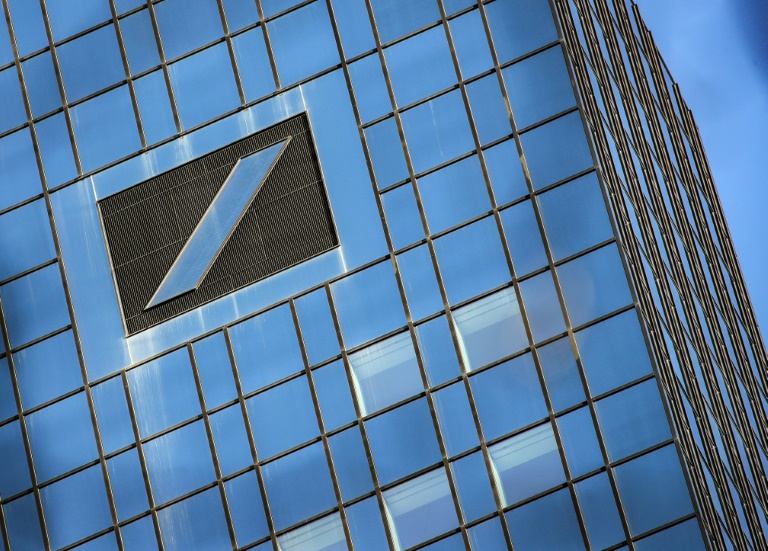
Germany’s biggest lender Deutsche Bank on Wednesday said its third-quarter net profit had risen more than five-fold year-on-year, far better than expected, as a restructuring programme bears fruit.

The group’s net profit between July and September reached 1.1 billion euros ($1.1 billion), compared with 194 million euros in the same period last year, it said in a statement.

It was higher than forecasts by analysts from Factset, who predicted a net profit of 809 million euros.  

Profits before tax hit 1.6 billion euros — the best third-quarter result since 2006, according to the bank. 

Revenues increased 15 percent year on year, to 6.9 billion euros. 

They were driven by corporate banking, with an increase of 25 percent to 1.6 billion euros, according to Deutsche Bank.

In the investment banking division, they rose six percent to 2.4 billion euros. 

The results “underline the successful transformation of our bank,” said Deutsche Bank CEO Christian Sewing.

Deutsche Bank launched a restructuring programme in July 2019, which saw the size of the investment banking division reduced, with the loss of thousands of jobs.

An uncertain outlook, due to the war in Ukraine and the risks of recession in Europe, led the bank to build up provisions of 350 million euros this quarter, up from 117 million in the same period a year earlier.

The bank also reduced its exposure to Russian credit in the third quarter.

Santander's net profit climbs to 2.4 bn euros in Q3

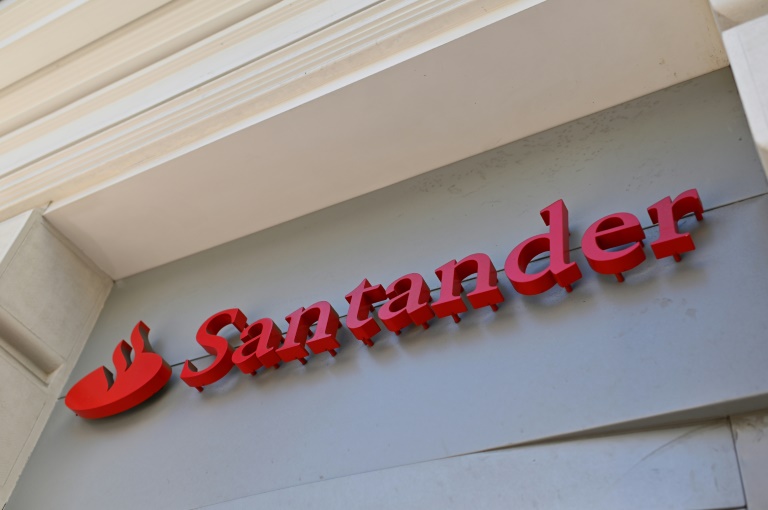
Spanish banking giant Banco Santander on Wednesday announced an 11-percent increase in net profits year-on-year in the third quarter.

The company posted a net profit of 2.42 billion euros ($2.41 billion) between July and September, thanks to strong commercial performance in Poland and Argentina.

It surpassed forecasts of analysts who expected a profit of 2.15 billion euros.

In the year to date profits climbed 25 percent to 7.32 billion euros.

Ana Botin, the executive chair of Banco Santander, said the group had delivered a “strong quarter with revenues increasing and profitability remaining above target… supported by our rock-solid balance sheet”.

She said that they expected the “macroeconomic environment to remain challenging as markets across Europe and North America adapt to levels of inflation not experienced in decades”.

The Spanish bank has 159 million customers worldwide, and said it saw revenues grow fastest in Argentina, Poland and Mexico.

The growth comes despite more pressures at home. Earlier this year the Spanish government said it would slap temporary taxes on banks and energy firms to cover the cost of state measures put in place to help Spaniards grapple with soaring inflation.

Socialist Prime Minister Pedro Sanchez told parliament that the new taxes on lenders should generate around 1.5 billion euros per year and will remain in place for two years.

Greeks turn to firewood to heat homes amid energy crisis

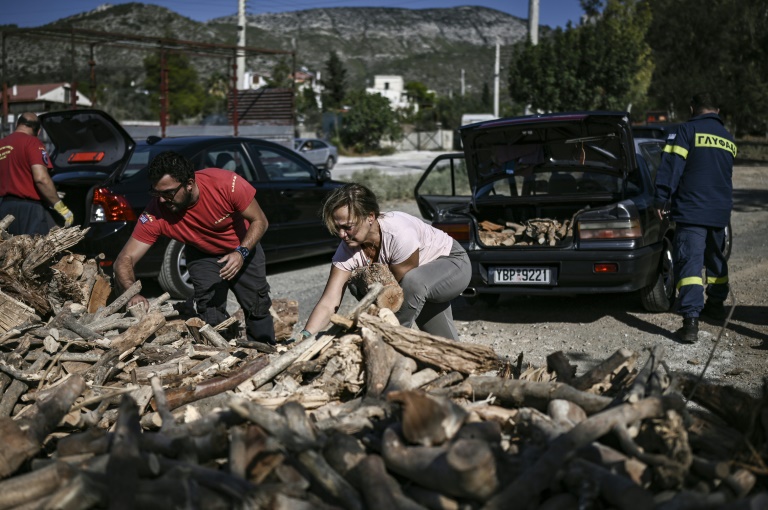
Residents of the Athens suburb of Glyfada who are struggling to heat their homes as energy prices soar now have an option — free firewood from the local council.

“We need it… especially in this difficult year,” says Yiannis Dimitrakopoulos, a 75-year-old pensioner queuing for logs. 

Dozens of people wait patiently in their cars for their turn. 

“We try to get as much wood as we can. We have a fuel oil central heating system but you never know,” says Erofili Generali, a teacher in her 50s.

She looks on while her husband fills the boot of their car with wood collected from local forests and parks.

Although temperatures in Glyfada remain fairly mild during the winter season, the inhabitants of this fashionable southern suburb, nicknamed the Athens Riviera, still need to heat their homes somewhat in winter. 

– Fuel oil and gas heating –

When natural gas prices more than quadrupled in September, many began to wonder how they would afford it.

Many Greeks are still recovering from the financial impact of the county’s decade-long economic crisis, and with inflation running at more than 10 percent for the last six months, the price of food and essential goods has shot up.

In Glyfada, which has a population of around 90,000, homes are mainly equipped with central heating systems that use fuel oil or, increasingly, natural gas.

“We feel betrayed about these exorbitant natural gas prices,” says Dimitrakopoulos.

He recalls how the Greek government has heavily promoted gas for heating in recent years.

Some homes in the area do have fireplaces, although these are not used as the main source of heating.

So the council has stepped in to help with free firewood.

“Many trees came down in a snowstorm in January, so we decided not to recycle the wood into industrial fuel like we used to,” explains Annie Kafka, Glyfada’s deputy civil protection officer.  

Instead, the wood was chopped up so the council could “offer it to households because of the energy crisis”.

Launched at the beginning of October, firewood distribution usually takes place twice a week. 

Approximately 3,000 households have already benefitted from the initiative. 

Meanwhile, demand is exploding. Some 14,000 people have registered on the council’s website, according to Kafka.

Households are notified by SMS when they can come and fill up their car boots. “Vulnerable families obviously have priority,” Kafka says.

– Air pollution –

In September, the council in Zografou, an eastern suburb of Athens, launched a similar initiative.

“The demand from our residents was impressive,” said local councillor Dimosthenis Bouloukos.

But in the country’s densely populated capital, the initiative has not been welcomed with the same enthusiasm, mainly due to environmental concerns.

“Burning wood adds significantly to air pollution, especially in big cities like Athens that already suffer from nitrogen oxide emissions,” explains Petros Varelidis, head of the Natural Environment and Climate Change Agency.

During Greece’s financial crisis, which lasted from 2008 to 2018, a large number of the city’s residents resorted to firewood to heat their homes as they could no longer afford fuel oil or gas.

As a result, Greece’s main cities found themselves shrouded in choking smog. 

But while Glyfada’s residents are aware of the environmental damage caused by burning wood, they argue that there is no other way, given the tough economic times that lie ahead.

“It’s a form of recycling, even if it is harmful,” says Dimitrakopoulos. “This year it’s justifiable.” 

China fiscal deficit balloons to nearly $1 trillion as economy cools

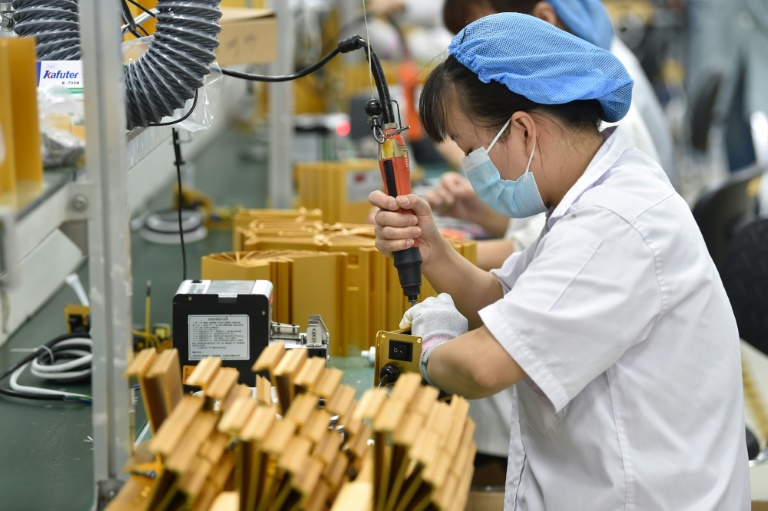
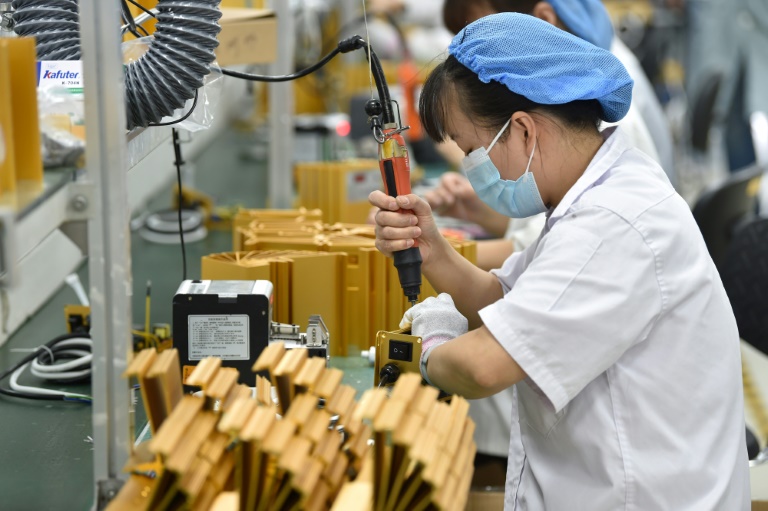
China’s fiscal deficit ballooned to an all-time high of nearly $1 trillion in the first nine months of the year, analysis of government data by Bloomberg showed, as a real estate crisis and tax rebates to boost a cooling economy emptied government coffers.

The budget shortfall for all levels of government from January to September was 7.16 trillion yuan ($980 billion), according to an analysis based on data released by Beijing’s Ministry of Finance on Tuesday — almost three times the 2.6 trillion shortfall over the same period last year.

Overall government revenue dropped 6.6 percent to 15.3 trillion yuan from January to September as the government dolled out more tax rebates to businesses, according to the finance ministry.

Fiscal expenditure then rose 6.2 percent to 19.04 trillion yuan in the first nine months, following a government-driven infrastructure push to boost growth and create employment.

China’s economy grew 3.9 percent year-on-year in the third quarter, data showed this week, beating expectations.

But President Xi Jinping’s re-election to a historic third term as leader of the Communist Party spooked investors Monday, with China’s currency slumping and stocks in Hong Kong nosediving to their lowest level since the global financial crisis.

China is also battling an unprecedented crisis in its real estate sector, which makes up more than a quarter of the country’s GDP when combined with construction.

In October, second-hand home prices fell by the highest month-on-month rate since 2014.

“The housing market is still stuck in a downward spiral, global demand is set to cool further, and the weak renminbi is constraining the central bank’s ability to provide policy support,” Julian Evans-Pritchard from Capital Economics wrote in a research note.

Consumer demand has also been dampened by sudden lockdowns and strict travel restrictions under Beijing’s strict zero-Covid policy.

China is the last of the world’s major economies still sticking to a zero-Covid strategy.

“There is no clear sign of a significant easing of the zero-Covid strategy,” Ting Lu, chief China economist at Nomura, said, adding that at least 207 million people were under some form of lockdown across 28 cities in China earlier this week.

“The actual economic recovery momentum is not strong,” he added.

China fiscal deficit balloons to nearly $1 trillion as economy cools

China’s fiscal deficit ballooned to an all-time high of nearly $1 trillion in the first nine months of the year, analysis of government data by Bloomberg showed, as a real estate crisis and tax rebates to boost a cooling economy emptied government coffers.

The budget shortfall for all levels of government from January to September was 7.16 trillion yuan ($980 billion), according to an analysis based on data released by Beijing’s Ministry of Finance on Tuesday — almost three times the 2.6 trillion shortfall over the same period last year.

Overall government revenue dropped 6.6 percent to 15.3 trillion yuan from January to September as the government dolled out more tax rebates to businesses, according to the finance ministry.

Fiscal expenditure then rose 6.2 percent to 19.04 trillion yuan in the first nine months, following a government-driven infrastructure push to boost growth and create employment.

China’s economy grew 3.9 percent year-on-year in the third quarter, data showed this week, beating expectations.

But President Xi Jinping’s re-election to a historic third term as leader of the Communist Party spooked investors Monday, with China’s currency slumping and stocks in Hong Kong nosediving to their lowest level since the global financial crisis.

China is also battling an unprecedented crisis in its real estate sector, which makes up more than a quarter of the country’s GDP when combined with construction.

In October, second-hand home prices fell by the highest month-on-month rate since 2014.

“The housing market is still stuck in a downward spiral, global demand is set to cool further, and the weak renminbi is constraining the central bank’s ability to provide policy support,” Julian Evans-Pritchard from Capital Economics wrote in a research note.

Consumer demand has also been dampened by sudden lockdowns and strict travel restrictions under Beijing’s strict zero-Covid policy.

China is the last of the world’s major economies still sticking to a zero-Covid strategy.

“There is no clear sign of a significant easing of the zero-Covid strategy,” Ting Lu, chief China economist at Nomura, said, adding that at least 207 million people were under some form of lockdown across 28 cities in China earlier this week.

“The actual economic recovery momentum is not strong,” he added.

Hong Kong arrests two in $446 million money-laundering case

Hong Kong authorities have arrested two men for laundering funds worth HK$3.5 billion ($446 million) by reselling precious metals, one of the city’s largest money-laundering cases, officials said Wednesday.

The two were involved in a scheme selling around eight tonnes of precious metals — mostly gold and palladium — between 2020 and 2021 for returns “incommensurate” with their backgrounds, customs official Rita Li said at a press conference.

It was a record for money-laundering cases busted by Hong Kong Customs, Li said, although the police have cracked larger cases.

Precious metals can be bought and sold anonymously in Hong Kong and are attractive to criminals because of their high value, small size and ease of transportation, Li added. 

“Unlawful elements can easily use proceeds from crime to buy precious metals and then resell them, or conduct multi-layer transactions, to launder money,” she said.

The two men used company accounts to receive large sums from precious metal trading firms and jewellery stores, then quickly transferred the funds to shell companies or accounts abroad, authorities said.

The suspects — believed to be linked to a crime syndicate — were arrested for money laundering last Friday and are on bail pending investigation.

Authorities say they are investigating the origins of the precious metals and will not rule out further arrests.

Last month, four suspected Hong Kong gang members were arrested for laundering $52 million over a two-year period.

Hong Kong arrests two in $446 million money-laundering case

Hong Kong authorities have arrested two men for laundering funds worth HK$3.5 billion ($446 million) by reselling precious metals, one of the city’s largest money-laundering cases, officials said Wednesday.

The two were involved in a scheme selling around eight tonnes of precious metals — mostly gold and palladium — between 2020 and 2021 for returns “incommensurate” with their backgrounds, customs official Rita Li said at a press conference.

It was a record for money-laundering cases busted by Hong Kong Customs, Li said, although the police have cracked larger cases.

Precious metals can be bought and sold anonymously in Hong Kong and are attractive to criminals because of their high value, small size and ease of transportation, Li added. 

“Unlawful elements can easily use proceeds from crime to buy precious metals and then resell them, or conduct multi-layer transactions, to launder money,” she said.

The two men used company accounts to receive large sums from precious metal trading firms and jewellery stores, then quickly transferred the funds to shell companies or accounts abroad, authorities said.

The suspects — believed to be linked to a crime syndicate — were arrested for money laundering last Friday and are on bail pending investigation.

Authorities say they are investigating the origins of the precious metals and will not rule out further arrests.

Last month, four suspected Hong Kong gang members were arrested for laundering $52 million over a two-year period.

Australia admits cyber defences 'inadequate' as medical hack hits millions

Hackers accessed millions of medical records at one of Australia’s largest private health insurers, the company said Wednesday, prompting the government to admit the nation’s cyber safeguards were “inadequate”.

This was the latest in a series of hacks targeting millions of people that have brought Australian companies’ lax approach to cyber security into sharp relief.

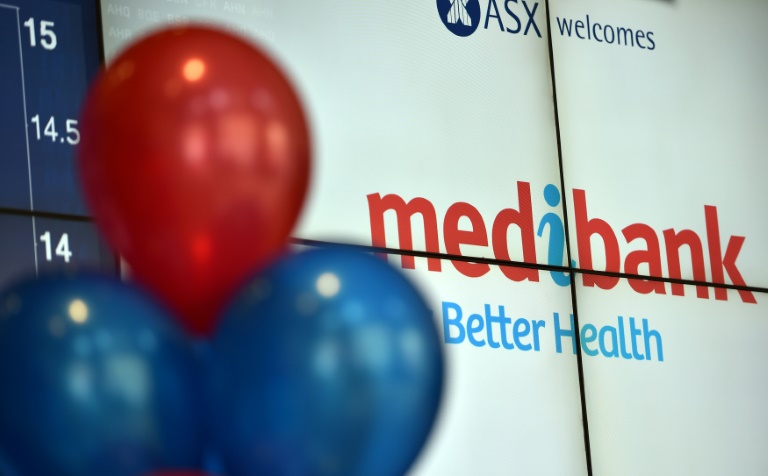
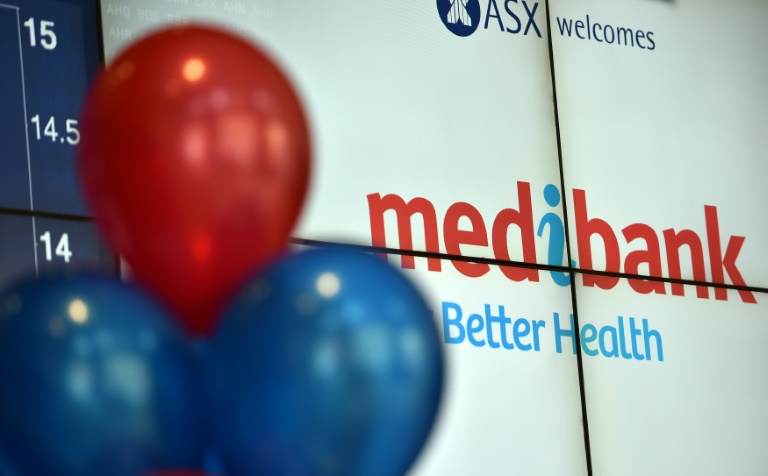
Medibank chief executive David Koczkar said information about each of the company’s 3.9 million policy holders — some 15 percent of Australia’s population — had been compromised.

“Our investigation has now established that this criminal has accessed all our private health insurance customers’ personal data and significant amounts of their health claims data,” he said in a statement to the Australian stock exchange.

“This is a terrible crime. This is a crime designed to cause maximum harm to the most vulnerable members of our community.”

The cyber attack was revealed last week, but it was not known until now how many people were impacted.

The hackers have previously threatened to leak the data, starting with 1,000 famous Australians, unless Medibank pays a ransom.

Medibank on Wednesday also confirmed it was not insured against cyber attacks, estimating the hack could cost the company as much as Au$35 million (US$22 million).

The Medibank hack followed an attack on telecom company Optus last month that exposed the personal information of some nine million Australians — almost a third of the population.

The Optus attack was one of the largest data breaches in Australian history.

– ‘Inadequate’ –

Australia’s Attorney-General Mark Dreyfus has previously accused companies of stockpiling sensitive customer data they did not need. 

Firms currently face paltry fines — Au$2.2 million — for failing to protect customer data. 

Dreyfus last week said these fines would be ratcheted up to Au$50 million. 

“Unfortunately, significant privacy breaches in recent weeks have shown existing safeguards are inadequate,” he said. 

“It’s not enough for a penalty for a major data breach to be seen as the cost of doing business.”

Home Affairs Minister Clare O’Neil on Tuesday said the fallout from the Medibank hack was “potentially irreparable”.

“One of the reasons why the government is so worried about this is because of the nature of the data,” she told Australia’s parliament. 

“When it comes to the personal health information of Australians, the damage here is potentially irreparable.”

O’Neil has previously described hacking as a “dog act” — an Australian phrase reserved for something especially shameful or despicable. 

Australia admits cyber defences 'inadequate' as medical hack hits millions

Hackers accessed millions of medical records at one of Australia’s largest private health insurers, the company said Wednesday, prompting the government to admit the nation’s cyber safeguards were “inadequate”.

This was the latest in a series of hacks targeting millions of people that have brought Australian companies’ lax approach to cyber security into sharp relief.

Medibank chief executive David Koczkar said information about each of the company’s 3.9 million policy holders — some 15 percent of Australia’s population — had been compromised.

“Our investigation has now established that this criminal has accessed all our private health insurance customers’ personal data and significant amounts of their health claims data,” he said in a statement to the Australian stock exchange.

“This is a terrible crime. This is a crime designed to cause maximum harm to the most vulnerable members of our community.”

The cyber attack was revealed last week, but it was not known until now how many people were impacted.

The hackers have previously threatened to leak the data, starting with 1,000 famous Australians, unless Medibank pays a ransom.

Medibank on Wednesday also confirmed it was not insured against cyber attacks, estimating the hack could cost the company as much as Au$35 million (US$22 million).

The Medibank hack followed an attack on telecom company Optus last month that exposed the personal information of some nine million Australians — almost a third of the population.

The Optus attack was one of the largest data breaches in Australian history.

– ‘Inadequate’ –

Australia’s Attorney-General Mark Dreyfus has previously accused companies of stockpiling sensitive customer data they did not need. 

Firms currently face paltry fines — Au$2.2 million — for failing to protect customer data. 

Dreyfus last week said these fines would be ratcheted up to Au$50 million. 

“Unfortunately, significant privacy breaches in recent weeks have shown existing safeguards are inadequate,” he said. 

“It’s not enough for a penalty for a major data breach to be seen as the cost of doing business.”

Home Affairs Minister Clare O’Neil on Tuesday said the fallout from the Medibank hack was “potentially irreparable”.

“One of the reasons why the government is so worried about this is because of the nature of the data,” she told Australia’s parliament. 

“When it comes to the personal health information of Australians, the damage here is potentially irreparable.”

O’Neil has previously described hacking as a “dog act” — an Australian phrase reserved for something especially shameful or despicable. 

Close Bitnami banner
Bitnami