AFP

Asian markets rally with Wall St on rate hope, healthy earnings

Asian stocks rose Wednesday to build on another strong performance in New York following more healthy earnings from big-name firms while hopes for a slowdown in Federal Reserve rate hikes spread cheer.

Hong Kong and Shanghai were among the best performers after China’s central bank and forex officials pledged support for the country’s equities, bonds and yuan, helping investors bounce back from Monday’s rout.

The mood across trading floors has been generally positive this week after a report Friday suggested the Fed could begin discussing applying the brakes on its monetary tightening campaign aimed at fighting decades-high inflation.

That came as some bank officials hinted they could be open to the prospect of hiking by less than the 75 basis points seen after the past three meetings.

And while a similar move is expected next month, there are flickers of hope that the pace could slow in December or next year.

Adding to that optimism was data indicating the higher borrowing costs were having an impact on the world’s biggest economy, with house prices falling, consumer confidence at a three-month low and weakness in the factory sector.

“A few economic reports all told a similar story… that the economy is weakening,” said OANDA’s Edward Moya. “A weakening economy will bring down inflation and that is good news for long-term investors looking to get back into equities.”

All three main indexes on Wall Street rallied, with the Nasdaq up more than two percent, helped by a drop in Treasury yields.

Investors also welcomed another round of better-than-expected profits, this time from Coca-Cola and General Motors. However, after-hours big misses from Microsoft, Texas Instruments and Google parent Alphabet soured the mood a little among tech investors.

Still, Asian markets were well up, led by Hong Kong’s jump of more than two percent while Shanghai climbed one percent.

– China concerns –

The rally in Hong Kong came after it collapsed more than six percent Monday on concerns over Chinese President Xi Jinping’s plans after he strengthened his grip on power and put in top jobs loyalists who backed his economically painful zero-Covid strategy.

Helping the buying was China’s central bank and forex regulator saying they would maintain the development of stock and bond markets, and that the yuan would be “basically stable”.

The currency sank against the dollar Tuesday, with the onshore yuan hitting a 15-year low and the offshore unit at its lowest level since being allowed to trade overseas in 2010. Both clawed back some of their losses on Wednesday.

The remarks, however, were in response to the end of the Communist Party’s twice-a-decade gathering in Beijing rather than in reaction to the markets selloff, Bloomberg News reported.

Elsewhere, Tokyo and Singapore each rose more than one percent while Sydney, Seoul, Wellington, Taipei, Manila and Jakarta were also up.

The prospect of a slowdown in US rate hikes helped weaken the dollar, which has surged against most currencies this year.

The yen, which touched a fresh 32-year low of 151.95 per dollar Friday, was back just above 148, while the euro is hovering just below $1.0 ahead of the European Central Bank’s policy meeting this week that is expected to end with another big rate hike.

And the pound was also holding above $1.14 after former finance minister Rishi Sunak took over as UK prime minister, giving a much-needed sense of stability to markets after weeks of upheaval fuelled by predecessor Liz Truss’s debt-fuelled tax-cutting budget last month.

– Key figures around 0300 GMT –

Tokyo – Nikkei 225: UP 1.20 percent at 27,577.15 (break)

Hong Kong – Hang Seng Index: UP 2.2 percent at 15,492.01

Shanghai – Composite: UP 1.0 percent at 3,007.38

Pound/dollar: DOWN at $1.1460 from $1.1478 on Monday

Dollar/yen: UP at 148.32 yen from 147.92 yen

Euro/dollar: DOWN at $0.9953 from $0.9971

Euro/pound: UP at 86.89 pence from 86.85 pence

West Texas Intermediate: DOWN 0.5 percent at $84.93 per barrel

Brent North Sea crude: DOWN 0.7 percent at $92.84 per barrel

New York – Dow: UP 1.1 percent at 31,836.74 (close)

London – FTSE 100: FLAT at 7,013.48 (close) 

Asian markets rally with Wall St on rate hope, healthy earnings

Asian stocks rose Wednesday to build on another strong performance in New York following more healthy earnings from big-name firms while hopes for a slowdown in Federal Reserve rate hikes spread cheer.

Hong Kong and Shanghai were among the best performers after China’s central bank and forex officials pledged support for the country’s equities, bonds and yuan, helping investors bounce back from Monday’s rout.

The mood across trading floors has been generally positive this week after a report Friday suggested the Fed could begin discussing applying the brakes on its monetary tightening campaign aimed at fighting decades-high inflation.

That came as some bank officials hinted they could be open to the prospect of hiking by less than the 75 basis points seen after the past three meetings.

And while a similar move is expected next month, there are flickers of hope that the pace could slow in December or next year.

Adding to that optimism was data indicating the higher borrowing costs were having an impact on the world’s biggest economy, with house prices falling, consumer confidence at a three-month low and weakness in the factory sector.

“A few economic reports all told a similar story… that the economy is weakening,” said OANDA’s Edward Moya. “A weakening economy will bring down inflation and that is good news for long-term investors looking to get back into equities.”

All three main indexes on Wall Street rallied, with the Nasdaq up more than two percent, helped by a drop in Treasury yields.

Investors also welcomed another round of better-than-expected profits, this time from Coca-Cola and General Motors. However, after-hours big misses from Microsoft, Texas Instruments and Google parent Alphabet soured the mood a little among tech investors.

Still, Asian markets were well up, led by Hong Kong’s jump of more than two percent while Shanghai climbed one percent.

– China concerns –

The rally in Hong Kong came after it collapsed more than six percent Monday on concerns over Chinese President Xi Jinping’s plans after he strengthened his grip on power and put in top jobs loyalists who backed his economically painful zero-Covid strategy.

Helping the buying was China’s central bank and forex regulator saying they would maintain the development of stock and bond markets, and that the yuan would be “basically stable”.

The currency sank against the dollar Tuesday, with the onshore yuan hitting a 15-year low and the offshore unit at its lowest level since being allowed to trade overseas in 2010. Both clawed back some of their losses on Wednesday.

The remarks, however, were in response to the end of the Communist Party’s twice-a-decade gathering in Beijing rather than in reaction to the markets selloff, Bloomberg News reported.

Elsewhere, Tokyo and Singapore each rose more than one percent while Sydney, Seoul, Wellington, Taipei, Manila and Jakarta were also up.

The prospect of a slowdown in US rate hikes helped weaken the dollar, which has surged against most currencies this year.

The yen, which touched a fresh 32-year low of 151.95 per dollar Friday, was back just above 148, while the euro is hovering just below $1.0 ahead of the European Central Bank’s policy meeting this week that is expected to end with another big rate hike.

And the pound was also holding above $1.14 after former finance minister Rishi Sunak took over as UK prime minister, giving a much-needed sense of stability to markets after weeks of upheaval fuelled by predecessor Liz Truss’s debt-fuelled tax-cutting budget last month.

– Key figures around 0300 GMT –

Tokyo – Nikkei 225: UP 1.20 percent at 27,577.15 (break)

Hong Kong – Hang Seng Index: UP 2.2 percent at 15,492.01

Shanghai – Composite: UP 1.0 percent at 3,007.38

Pound/dollar: DOWN at $1.1460 from $1.1478 on Monday

Dollar/yen: UP at 148.32 yen from 147.92 yen

Euro/dollar: DOWN at $0.9953 from $0.9971

Euro/pound: UP at 86.89 pence from 86.85 pence

West Texas Intermediate: DOWN 0.5 percent at $84.93 per barrel

Brent North Sea crude: DOWN 0.7 percent at $92.84 per barrel

New York – Dow: UP 1.1 percent at 31,836.74 (close)

London – FTSE 100: FLAT at 7,013.48 (close) 
US midterm elections: misinformation to watch out for

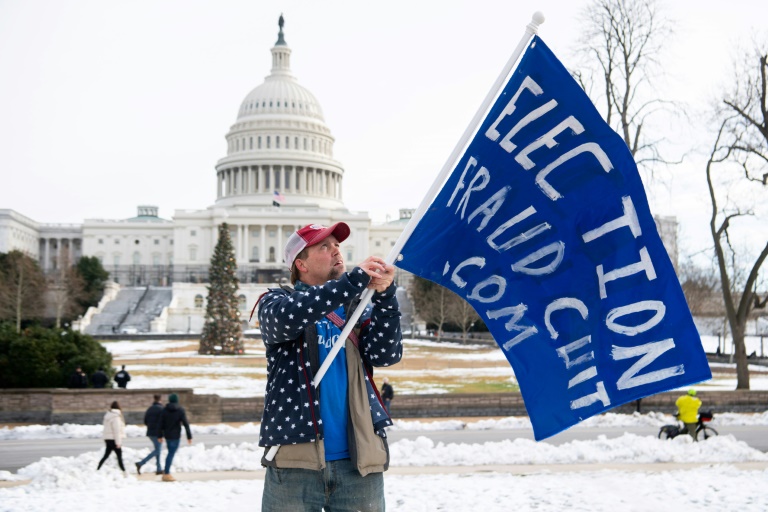
With midterm election campaigns in the closing stretch, Americans could face an onslaught of misinformation about the results. Recent trends suggest alleged voter fraud will be one of the biggest themes.

Claims of foul play — despite being repeatedly debunked after the 2020 presidential election — have permeated voters’ minds. Nearly 40 percent of Republicans and a quarter of Democrats might blame fraud if their party does not win control of Congress on November 8, according to a recent Axios-Ipsos poll.

Such an outlook, with social media weaponized by political operatives and potentially by foreign actors, poses an ongoing risk to democracy in the United States.

“There is going to be a continued effort to undermine confidence in the system,” warned Larry Norden, senior director of the Elections and Government Program at the Brennan Center for Justice, a liberal-leaning think tank, citing “lies around the election” as his biggest fear.

False and misleading claims are bubbling up.

In Colorado, partisan websites misconstrued a database error as a coordinated effort by Democrats to get non-citizens to vote. Social media posts in Alaska and Ohio misled some voters into believing that mail-in ballots without the proper postage would not be counted.

Election officials across the country have set up webpages to prepare for a misinformation deluge. Still, two years on from debunked conspiracy theories and dozens of defeated court cases from former president Donald Trump and his allies, experts say partisan beliefs are unbowed.

“We do have some portion of the American public that does not believe in the legitimacy of the 2020 election — despite all of the extensive evidence,” said Jen Easterly, director of the Cybersecurity and Infrastructure Security Agency (CISA), during a press briefing this month.

With voters increasingly likely to turn to social media for updates, experts recommend taking claims of a rigged election with extreme caution.

“In fact, our election systems are quite secure,” said Rick Hasen, a law professor and fraud expert at the University of California-Los Angeles (UCLA). “Voter fraud tends to be small and isolated.”

– Fraud is rare –

The 2020 presidential election was the most secure in American history, according to CISA. Litigation, audits and recounts have since backed that up, contradicting repeated claims from Trump that stolen votes put Joe Biden in the White House.

“None of the charges of widespread fraud turned out to be true,” said Charles Stewart, director of the Massachusetts Institute of Technology Election Lab, while noting “this is not the same thing as saying there was no fraud.”

Isolated cases were detected after the last general election. But of the more than 65 million absentee ballots cast in 2020, there have been 12 criminal fraud convictions, according to a database maintained by the conservative-leaning Heritage Foundation think tank.

Studies compiled by the Brennan Center, which reviewed fraud cases prior to 2020, also found wrongdoing is uncommon. Americans are more likely to get struck by lightning than impersonate someone at the polls, according to a 2007 report from the policy institute.

“When fraud occurs in elections, it’s most likely to occur for small, local elections where there’s not a lot of attention being paid,” Stewart said. “The fraud claims for really big elections are particularly rare.”

Americans who do commit such crimes face harsh penalties. Those convicted on charges related to the 2020 election were fined thousands of dollars, and some face jail time.

“Voters should look to official sources of information — and to experts and those in the press who focus on election issues — to figure out when claims of vote-rigging are legitimate or just more nonsense,” said Hasen of UCLA.

– Ballots are verified –

Claims of dead people voting and videos supposedly showing malfeasance at the polls reached large audiences in 2020. But there are numerous safeguards to prevent ballot tampering in person, and by mail.

Elections officials verify the eligibility and identity of voters requesting absentee ballots by using techniques such as signature matching. They also implement several security measures, including locks and tamper-evident seals, to protect drop boxes.

Once ballots are cast, there are “protocols in place for assuring the chain of custody,” Stewart said.

“Every step along the way, election workers are recording how many ballots they have, who’s transporting them (and) numbers are reconciled at every place they’re removed or exchanged.”

Russia rejects US basketballer's appeal of 'traumatic' sentence

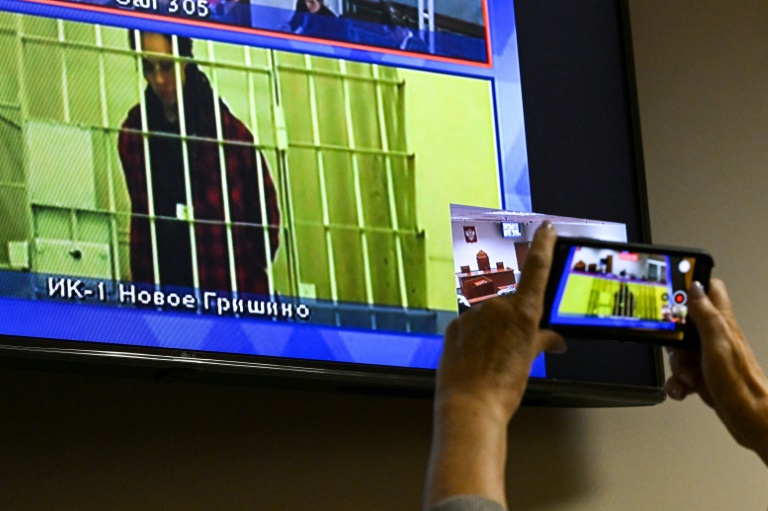
A Russian court on Tuesday rejected an appeal from US basketball star Brittney Griner of her nine-year prison term on drug charges, dismissing her plea for the “traumatic” sentence to be reduced.

The court in Krasnogorsk near Moscow ruled to leave Griner’s August verdict “without change” in the case that came amid fierce tensions between Moscow and Washington over Russia’s military offensive in Ukraine.

US President Joe Biden’s administration dismissed the ruling as “another sham judicial proceeding” that will keep Griner “wrongfully detained under intolerable circumstances” and vowed to continue pressing for her release.

“The President has demonstrated that he is willing to go to extraordinary lengths and make tough decisions to bring Americans home,” US National Security advisor Jake Sullivan said in a statement.

Griner, a star in the Women’s National Basketball Association in the US, had pleaded by video link from her detention centre just outside the Russian capital for the sentence to be cut.

“I really hope that the court will adjust this sentence because it has been very, very stressful and very traumatic,” Griner said.

The 32-year-old was handed nine years in prison in August for possessing vape cartridges with a small quantity of cannabis oil, after she was arrested at a Moscow airport in February.

Speaking slowly so her words could be translated into Russian, Griner asked the court for leniency given that the amount of cannabis found was “barely over the significant amount”.

“I don’t understand the first court’s decision to give one year less than the max when I’ve been here almost eight months and people with more severe crimes have gotten less than what I was given,” she said. 

“So I just beg that the court… reassess my sentence.”

– Not expecting ‘miracles’ –

Griner’s lawyers said they were disappointed by Tuesday’s decision as it goes against standard legal practice.

“Other defendants in similar criminal cases receive punishment in the form of a suspended sentence or a jail term not exceeding six years,” Maria Blagovolina and Alexander Boykov said in a statement.

“Thus, Brittney Griner remains one of the most severely punished defendants in Russia.”

The lawyers said Griner is doing fine physically and that she spoke to her family last week on her birthday, but Tuesday’s decision was hard for Griner to take.

“She had some hopes and these hopes vanished today,” Blagovolina told reports outside the court house.

WNBA commissioner Cathy Engelbert said the ruling “was not unexpected and Brittney Griner remains wrongly detained.”

“It is time to bring this case to an end and bring BG home.”

Griner’s lawyers hope to speak to her later this week about whether she wants to continue appealing the verdict in higher courts.

When she was arrested, the two-time Olympic basketball gold medallist and Women’s NBA champion had been in Russia to play for the professional Yekaterinburg team, during her off-season from the Phoenix Mercury Women’s National Basketball Association side.

She pleaded guilty to the charges, but said she did not intend to break the law or use the banned substance in Russia.

Griner had testified that she had permission from a US doctor to use medicinal cannabis to relieve pain from her many injuries, and had never failed a drug test.

The use of medical marijuana is not allowed in Russia.

In August, Moscow said it was ready to discuss a prisoner swap for Griner, but there has been no apparent progress.

Reports have suggested that Griner and another American jailed in Russia, Paul Whelan — a former US marine arrested in December 2018 and accused of spying — could be traded for Viktor Bout, a Russian arms trafficker serving 25 years in jail on a 2012 conviction.

Force firms to reveal their impact on nature: major businesses

Businesses must be compelled to reveal their impact on nature, more than 300 firms said in an open letter to world leaders published on Wednesday ahead of crunch United Nations negotiations to halt catastrophic biodiversity loss.  

Consumer goods group Unilever, furniture maker IKEA and India’s Tata Steel were among a slew of high profile corporations calling for stricter measures to impel firms to act, amid growing alarm over the devastation being wrought upon the natural world. 

“We need governments globally to transform the rules of the economic game and require business to act now,” the Business for Nature coalition said.

It said its open letter had been signed by some 330 companies with combined revenues of more than $1.5 trillion. 

International efforts to protect the world’s natural life support systems — including air, food and water — are set to conclude in Canada in December. Negotiators are hammering out a global framework to “live in harmony with nature” by 2050, with key benchmarks in 2030.

While businesses are beginning to report on their carbon emissions and climate impacts — albeit with some facing accusations of “greenwashing” — few firms give details on biodiversity.

The businesses that signed on to the statement said they wanted clarity from policymakers. 

“This statement shows the extensive support from major businesses for an ambitious global deal for nature, with clear goals to drive collective business and finance action,” said Andre Hoffmann, the vice-chairman of Roche Holdings.  

“The political certainty will accelerate the necessary changes to our business models. We stand ready to do everything in our power to shift to a society where nature, people and business thrive.”

In March, a report by central banks found that financial institutions and businesses were underestimating the risks of biodiversity loss and destroying the natural assets they depend on.

The new statement calls on heads of state to sign up to a target of mandatory requirements for large firms to assess and disclose their impacts and dependency on biodiversity by the end of this decade. 

The task “won’t be easy but it must happen” the firms said, urging measures to ensure that the UN targets aim to both reduce negative impacts and encourage positive ones.  

“The current rate of global economic activity is more than the planet can cope with,” said Steve Waygood, the chief responsible investment officer at Aviva Investors, which also signed the Business for Nature statement.  

“If nature was a current account, then we would be heavily overdrawn. This is bad for the environment and bad for long term growth.”

Many hope the UN deal, when finalised, will be as ambitious in its goals to protect life on Earth as the Paris Agreement was for climate change — even if the United States is not a party to UN efforts to conserve nature.  

One landmark proposal on the table is the protection of 30 percent of wild land and oceans by 2030. 

Another key focus of negotiations are harmful subsidies for things like fossil fuels, agriculture and fishing that can result in environmental destruction and encourage unsustainable levels of production and consumption.  

These amount to as much as $1.8 trillion every year, or two percent of global gross domestic product, Business for Nature has estimated. 

The world failed to meet almost all of a previous set of targets on nature in the decade to 2020.

Google's money churning ad engine sputters in rough economy

Google parent Alphabet on Tuesday reported quarterly earnings that fell short of market expectations as belts tightened in the digital ad market that drives its revenue.

Alphabet said it made a profit of $14 billion in the third quarter on ad revenue that grew just 6 percent to $69 billion when compared with the same period of last year.

Aside from one period at the start of the Covid pandemic, that would mark the weakest revenue growth at Alphabet for any quarter since 2014.

“When Google stumbles, it’s a bad omen for digital advertising at large,” said Insider Intelligence analyst Evelyn Mitchell.

“This disappointing quarter for Google signifies hard times ahead if market conditions continue to deteriorate.”

Alphabet shares slipped 6.8 percent to $97.35 in after-market trades that followed the release of the earnings report.

Google’s foundation in advertising on its heavily used search engine does give it an advantage, however, over other ad-reliant tech firms such as Meta, Snap and Twitter, the analyst added.

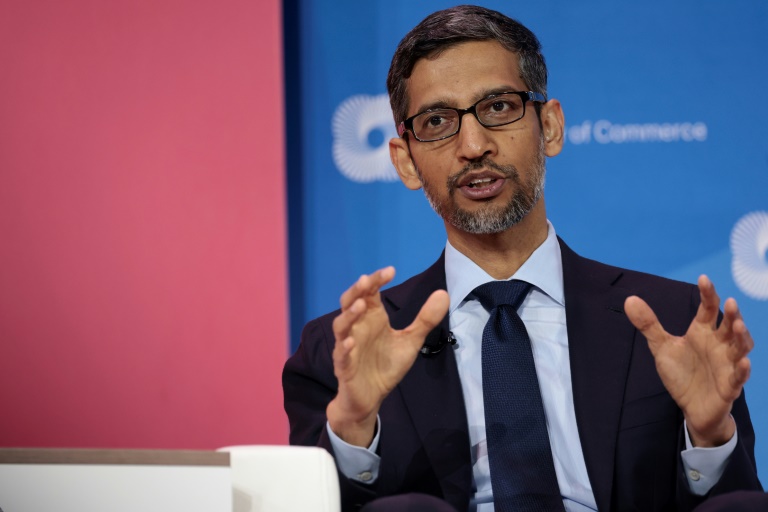
“Over time, we’ve had periods of extraordinary growth and then there are periods I viewed as a moment where you take the time to optimize the company to make sure we are set up for the next decade of growth ahead,” Alphabet and Google chief Sundar Pichai said on an earnings call.

“I view this as one of those moments.”

Alphabet chief financial officer Ruth Porat said the financial results in the quarter showed “healthy fundamental growth in Search and momentum in Cloud” computing revenue, but suffered from foreign exchange rates given the strong US dollar.

“We’re working to realign resources to fuel our highest growth priorities,” Porat said.

Big tech firms are grappling with multiple challenges, from inflation to the war in Ukraine, putting pressure on earnings.

Alphabet recruited throughout the pandemic, but announced a slowdown in hiring as ad revenue growth cooled this year.

“Within this slower headcount growth next year we will continue hiring for critical roles, particularly focused on top engineering and technical talent,” Porat said.

Many other tech companies have decided to lay off staff, including Netflix and Twitter, or slow the pace of hiring, such as Microsoft and Snap. 

– YouTube squeeze? –

Worsening the financial situation for Alphabet is the fact that Google tends not to aggressively promote advertising on its platform with tactics such as trying to convince businesses that online marketing is a smart move during tough economic times, said independent tech analyst Rob Enderle of Enderle Group.

“They don’t like the idea of making their money off advertising, so they don’t treat the market very well,” Enderle contended.

“Now, you are seeing the adverse impact of not taking your revenue source seriously.”

The earnings report also showed that ad revenue at YouTube was slightly lower than it was in the same quarter a year earlier, despite a hot trend of people watching video on-demand on the internet.

“Overall, I feel YouTube remains in a really good position to continue to benefit from the streaming boom,” chief business officer Philipp Schindler said during an earnings call.

However, Alphabet noticed a “pullback in spending” by advertisers at YouTube in the quarter, Schindler told analysts.

“They have a ton of competition in video, and TikTok is probably hitting YouTube pretty hard,” Enderle said.

Netflix last week reported that it gained subscribers in the recent quarter, calming investor fears that the streaming giant was losing paying customers.

The company said it ended the third quarter with slightly more than 223 million subscribers worldwide, up some 2.4 million, after seeing subscriber ranks ebb during the first half of the year.

The turn-around in subscriber growth comes as Netflix is poised to debut a subscription option subsidized by ads in November across a dozen countries.

Rival streaming platform Disney+ is to launch ad-subsidized subscriptions in December.

Google's money churning ad engine sputters in rough economy

Google parent Alphabet on Tuesday reported quarterly earnings that fell short of market expectations as belts tightened in the digital ad market that drives its revenue.

Alphabet said it made a profit of $14 billion in the third quarter on ad revenue that grew just 6 percent to $69 billion when compared with the same period of last year.

Aside from one period at the start of the Covid pandemic, that would mark the weakest revenue growth at Alphabet for any quarter since 2014.

“When Google stumbles, it’s a bad omen for digital advertising at large,” said Insider Intelligence analyst Evelyn Mitchell.

“This disappointing quarter for Google signifies hard times ahead if market conditions continue to deteriorate.”

Alphabet shares slipped 6.8 percent to $97.35 in after-market trades that followed the release of the earnings report.

Google’s foundation in advertising on its heavily used search engine does give it an advantage, however, over other ad-reliant tech firms such as Meta, Snap and Twitter, the analyst added.

“Over time, we’ve had periods of extraordinary growth and then there are periods I viewed as a moment where you take the time to optimize the company to make sure we are set up for the next decade of growth ahead,” Alphabet and Google chief Sundar Pichai said on an earnings call.

“I view this as one of those moments.”

Alphabet chief financial officer Ruth Porat said the financial results in the quarter showed “healthy fundamental growth in Search and momentum in Cloud” computing revenue, but suffered from foreign exchange rates given the strong US dollar.

“We’re working to realign resources to fuel our highest growth priorities,” Porat said.

Big tech firms are grappling with multiple challenges, from inflation to the war in Ukraine, putting pressure on earnings.

Alphabet recruited throughout the pandemic, but announced a slowdown in hiring as ad revenue growth cooled this year.

“Within this slower headcount growth next year we will continue hiring for critical roles, particularly focused on top engineering and technical talent,” Porat said.

Many other tech companies have decided to lay off staff, including Netflix and Twitter, or slow the pace of hiring, such as Microsoft and Snap. 

– YouTube squeeze? –

Worsening the financial situation for Alphabet is the fact that Google tends not to aggressively promote advertising on its platform with tactics such as trying to convince businesses that online marketing is a smart move during tough economic times, said independent tech analyst Rob Enderle of Enderle Group.

“They don’t like the idea of making their money off advertising, so they don’t treat the market very well,” Enderle contended.

“Now, you are seeing the adverse impact of not taking your revenue source seriously.”

The earnings report also showed that ad revenue at YouTube was slightly lower than it was in the same quarter a year earlier, despite a hot trend of people watching video on-demand on the internet.

“Overall, I feel YouTube remains in a really good position to continue to benefit from the streaming boom,” chief business officer Philipp Schindler said during an earnings call.

However, Alphabet noticed a “pullback in spending” by advertisers at YouTube in the quarter, Schindler told analysts.

“They have a ton of competition in video, and TikTok is probably hitting YouTube pretty hard,” Enderle said.

Netflix last week reported that it gained subscribers in the recent quarter, calming investor fears that the streaming giant was losing paying customers.

The company said it ended the third quarter with slightly more than 223 million subscribers worldwide, up some 2.4 million, after seeing subscriber ranks ebb during the first half of the year.

The turn-around in subscriber growth comes as Netflix is poised to debut a subscription option subsidized by ads in November across a dozen countries.

Rival streaming platform Disney+ is to launch ad-subsidized subscriptions in December.

Armed poll watchers loom over US midterms

Armed “poll watchers” stand guard in a suburban parking lot in Arizona, convinced they are doing their bit to prevent the supposed ballot stuffing they fear could cost the Republicans victory in the US midterm elections.

“It’s a deterrent,” 78-year-old retiree Gabor Zolna tells AFP, gesturing to the cameras that he and his fellow unofficial observers are wearing as they wait near early-voting drop-off boxes.

A holstered weapon protrudes from his down jacket.

“We’re really here to deter people who want to go and stuff ballots in the boxes,” says Nicole, who wears a mask and says only that she is a 52-year-old retiree.

Along with a woman who gives her name as Lynnette and says she works for the local government, the trio are here to “save the Republic,” insists Nicole.

All three believe that the 2020 presidential election was stolen from Donald Trump. They are not alone — around 70 percent of registered Republicans in the United States believe the same, multiple polls have shown.

President Joe Biden won deeply divided Arizona by a mere 10,000 votes, overturning decades of Republican victories in a state that has become Ground Zero for election conspiracy theories.

Multiple investigations, including a partisan “audit” of Maricopa County by Cyber Ninjas, a company hired by Republicans, found no widespread fraud in the 2020 vote.

But for the three ballot watchers AFP encountered this week, that does not matter. 

As well as an unshakeable belief that they were robbed at the ballot box, all three also expressed views that diverge considerably from mainstream thinking; Zolna insisted astronauts have not visited the Moon, and Lynnette believes the Earth is flat.

– Lawsuit –

Over the last few days, tensions have risen around the drop-off box in front of Mesa’s juvenile court.

On Friday the local sheriff intervened to remove two armed men in paramilitary-style clothing.

On Monday the Arizona Alliance for Retired Americans and national group Voto Latino filed a federal lawsuit demanding a restraining order against armed and sometimes masked supporters of Clean Elections USA, a self-proclaimed “grassroots organization committed to  election integrity.”

There is now an increased police presence around the drop boxes, and the Maricopa County Elections Department has urged concerned citizens to step back.

“Although monitoring and transparency in our elections is critical, voter intimidation is unlawful. For those who want to be involved in election integrity, become a poll worker or an official observer with your political party,” it said in a statement.

With just weeks to go until the November 8 midterm elections that will decide control of Congress, as well as a raft of key state positions, the atmosphere of distrust and suspicion is growing.

In the parking lot, Kevin Smith sat in his pick-up truck with his large dog on the front seat.

“I want to watch the watchers, and see how they feel about being intimidated,” the 52-year-old said, gesturing to the animal.

It was not possible to tell if the presence of the armed poll watchers affected turnout, but one voter who dropped off her ballot said it was off-putting.

“It’s weird,” said Kristin Wilde. “I’ve already filled out my ballot, so I’m not going to change who I voted for. But yeah, if I was aware of guns, I might not have come down here.”

– Narrow victory –

Midterm elections are when Americans vote for a third of the Senate, all of the House, and myriad local posts from state governor to school board members.

But even though the stakes are high, it has traditionally been hard to get voters interested.

Not so this time.

“The intensity and the tension around this election is unprecedented,” says Gina Woodall, a political scientist at Arizona State University.

In Arizona, the Republican Party establishment has embraced conspiracy theories since Biden’s narrow victory. 

Its candidates for governor, senator and secretary of state are all vehement supporters of the discredited theory that the 2020 vote was invalid.

The heightened atmosphere is worrying election officials in Maricopa county, where they began counting absentee ballots on Monday.

“We have seen an increased amount of threats against election workers,” said Megan Gilbertson, Maricopa County Elections Department’s communications director.

But, she insists, the elections will be secure.

At the downtown Phoenix building, which was besieged by dozens of protesters in 2020, the 16 machines that read the ballots are filmed 24 hours a day.

All hand-written ballots are checked by a pair of observers, one Democrat and one Republican. 

This year, many of them are newcomers. And while most attest that operations are going well, some remain unconvinced. 

“I only see one part of the voting process,” one Republican volunteer who declines to give his name tells AFP.

“I know nothing about what happens before or after that part.”

US charges Ukrainian 'Raccoon Infostealer' with cybercrimes

A Ukrainian man has been charged with computer fraud for allegedly infecting millions of computers with malware in a cybercrime operation known as “Raccoon Infostealer,” the US Justice Department said Tuesday.

Mark Sokolovsky, 26, is being held in the Netherlands and the United States is seeking his extradition, the department said in a statement.

It said Raccoon Infostealer malware was leased to cybercriminals for $200 a month, payable in cryptocurrency.

The malware was then installed on the computers of unsuspecting victims and used to steal personal data such as log-in credentials and financial information, the department said.

It said the FBI and law enforcement partners in Italy and the Netherlands dismantled the digital infrastructure supporting “Raccoon Infostealer” in March 2022, when Sokolovsky was arrested.

The Justice Department said the FBI has identified more than 50 million unique credentials and forms of identification such as email addresses and credit card numbers in the stolen data from millions of potential victims around the world.

“This case highlights the importance of the international cooperation that the Department of Justice and our partners use to dismantle modern cyber threats,” Deputy Attorney General Lisa Monaco said.

“As reflected in the number of potential victims and global breadth of this attack, cyber threats do not respect borders, which makes international cooperation all the more critical,” Monaco said.

Sokolovsky is charged with computer fraud, wire fraud, money laundering and identity theft. He faces up to 20 years in prison for the wire fraud and money laundering charges.

The Justice Department said Sokolovsky is appealing a September 2022 decision by the Amsterdam District Court granting his extradition to the United States.

Biden gets updated Covid booster shot

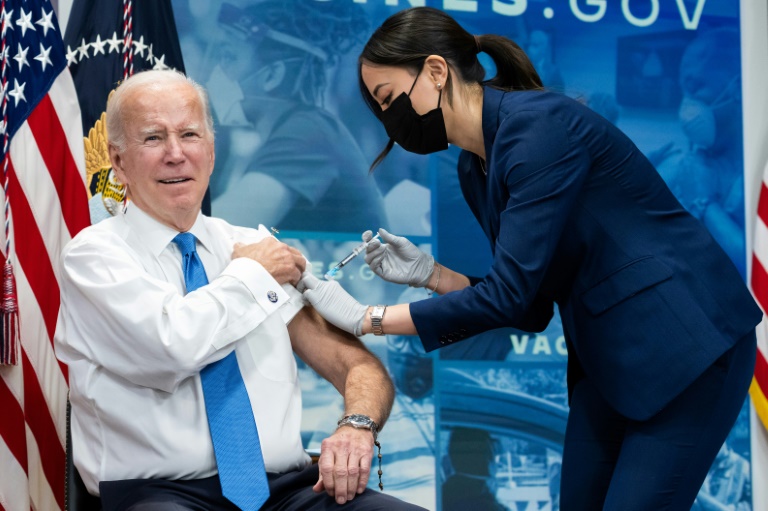
President Joe Biden got an updated Covid-19 vaccine booster shot Tuesday and urged Americans to follow his example ahead of winter, saying no one need die anymore from the once devastating virus.

Biden, 79, contracted the coronavirus three months ago with mild symptoms and already received a second booster for the vaccine at the end of March.

His updated shot, given in front of journalists at the White House, targets two subvariants of the virus.

Biden announced efforts to get more Americans boosted with the new version of the vaccine ahead of major holiday travel periods at Thanksgiving and the end of the year.

“I’m calling on all Americans… to get their shot just as soon as they can,” he said. “There’s still hundreds of people dying each day from Covid, hundreds. That number’s likely to rise this winter, but… this year, nearly every death is preventable.”

Biden said the government and major pharmacy chains, whose leaders joined him on stage to witness the injection, were working together to make sure that the booster was widely available and free of charge.

“Almost everyone who will die from Covid this year will not be up to date on the shots” or have taken the government-funded therapeutics when they get infected, he underlined.

Addressing the long history of political splits on the vaccination issue, Biden pleaded for Americans to “start fresh as a country, put all the old battles over Covid behind us, put all the partisan politics aside.”

“We’ve already lost one million Americans to Covid,” Biden said, calling it “this terrible disease.”

So far only 20 million Americans, including just one in five elderly people, have got the updated shot, according to the White House.

Close Bitnami banner
Bitnami