AFP

Meta says WhatsApp outage resolved

US tech giant Meta on Tuesday said it had resolved a major WhatsApp outage that prevented many of the billions of users of its popular service from connecting or sending messages.

Problems with the instant messaging app were reported by monitoring site Downdetector and user complaints on social media on Tuesday morning.

Downdetector said thousands of WhatsApp users had been reporting problems since 0717 GMT, with a sharp spike appearing on its dedicated chart covering the past 24 hours.

WhatsApp’s parent company Meta said it was working to restore the service “as quickly as possible” before resolving the problem later on Tuesday.

“We know people had trouble sending messages on WhatsApp today. We’ve fixed the issue and apologise for any inconvenience,” a Meta spokesman told AFP.

Social media users said they had been unable to connect to the app or send any messages, although some reported a restoration of the service at around 0850 GMT.

The hashtag #whatsappdown was one of the most trending on Twitter across the world on Tuesday, while millions of messages on Meta-owned photo-sharing platform Instagram also flagged the outage.

Some Twitter users tried to find a funny side to the technical trouble, joking that Twitter would seek to exploit the situation and gain a flurry of new connections in the coming hours. 

The origin of the outage is unclear.

– Meta outages –

Meta — formerly known as Facebook — suffered an unprecedented outage last year affecting its leading social media platforms including Facebook, Instagram, WhatsApp and Messenger.

The duration and scale of the disruption to the four services used by billions of people led to a major incident that Downdetector described as one of the largest ever observed.

At the time, Facebook acknowledged that the incident was due to an error on their part and was not a technical problem.

WhatsApp, a free messaging service, crossed the threshold of two billion users worldwide in February 2020 and is one of the most popular apps.

Facebook renamed itself Meta a year ago, to signal its pivot to building its vision for an interactive virtual and augmented reality world that it sees as the future.

But Meta has been undergoing a difficult period financially due to dropping advertising revenues and fierce competition from other platforms such as TikTok, whose popularity has exploded among social media users.
HSBC profits slide on bank impairment charges

Global bank giant HSBC on Tuesday announced tumbling profits for the third quarter on impairment charges linked to a weak economic outlook and its upcoming sale of French retail operations.

The London-headquartered bank’s share price slid seven percent in morning deals, making it the biggest-falling on the British capital’s FTSE 100 index.

HSBC also announced a boardroom shake-up with the appointment of a new chief financial officer, as the Asia-focused lender faces headwinds in China and global recession prospects.

Net profit slumped 46 percent to $1.91 billion in June-September compared with the third quarter last year. Pre-tax profit slumped 40 percent, HSBC added in a statement.

The bank was hit by a $2.4-billion write-off from the planned disposal of its French business next year, offsetting gains made by soaring interest rates.

HSBC has meanwhile set aside provisions totalling $1.1 billion for loans expected to sour.  

“Macroeconomic headwinds, including higher inflation and a weaker outlook, continue to weigh on the global economy,” it said. 

The bank specifically cited global uncertainty sparked by Russia’s invasion of Ukraine, the fall of the British pound and China’s troubled real estate sector.

Stripping out the one-off hits, adjusted pre-tax profit jumped 18 percent to $6.5 billion, beating analyst expectations.

The bank’s net interest income, measuring what it makes from lending minus interest paid on deposits, came in at $8.6 billion — its best third quarter in more than eight years.

– China strains –

“We retained a tight grip on costs, despite inflationary pressures, and remain on track to achieve our cost targets for 2022 and 2023,” said chief executive Noel Quinn.

The bank said HSBC senior executive Georges Elhedery would next year become chief financial officer, replacing Ewen Stevenson who departs the group.

Senior HSBC executives are next week expected in Hong Kong for a bank summit after the city recently lifted mandatory quarantine for all international arrivals. 

It comes after Chinese leader Xi Jinping tightened his grip on power by securing a third five-year term in office, handing top jobs to a number of loyalists who back his strict zero-Covid strategy.

The policy of lockdowns and other strict measures has been a major cause of the country’s economic woes and the prospect of more upheaval has sent chills through trading floors.

HSBC has vowed to accelerate a multi-year pivot to Asia and the Middle East, with ambitions to lead Asia’s wealth management market.

But the lender is under pressure from Chinese financial giant and major shareholder Ping An to spin off its Asian operations to unlock shareholder value amid tensions between China and Western powers.

HSBC, which has rejected the calls, added Tuesday that it was “exploring the potential sale” of its Canadian division.

In late-morning deals, HSBC shares were down 7.0 percent at 441.35 pence.

“Rising interest rates may be good news for banks but it’s all the other stuff which is causing them headaches right now,” noted AJ Bell financial analyst Danni Hewson.

“Concern about the impact of a slowing economy on bad debts and growth in the loan book is being exacerbated at HSBC by the departure of well-respected finance director Ewen Stevenson and the deteriorating situation in China.”

She added that “Stevenson’s departure may also make HSBC more vulnerable to pressure from its largest shareholder Ping An to break up the bank.”

HSBC profits slide on bank impairment charges

Global bank giant HSBC on Tuesday announced tumbling profits for the third quarter on impairment charges linked to a weak economic outlook and its upcoming sale of French retail operations.

The London-headquartered bank’s share price slid seven percent in morning deals, making it the biggest-falling on the British capital’s FTSE 100 index.

HSBC also announced a boardroom shake-up with the appointment of a new chief financial officer, as the Asia-focused lender faces headwinds in China and global recession prospects.

Net profit slumped 46 percent to $1.91 billion in June-September compared with the third quarter last year. Pre-tax profit slumped 40 percent, HSBC added in a statement.

The bank was hit by a $2.4-billion write-off from the planned disposal of its French business next year, offsetting gains made by soaring interest rates.

HSBC has meanwhile set aside provisions totalling $1.1 billion for loans expected to sour.  

“Macroeconomic headwinds, including higher inflation and a weaker outlook, continue to weigh on the global economy,” it said. 

The bank specifically cited global uncertainty sparked by Russia’s invasion of Ukraine, the fall of the British pound and China’s troubled real estate sector.

Stripping out the one-off hits, adjusted pre-tax profit jumped 18 percent to $6.5 billion, beating analyst expectations.

The bank’s net interest income, measuring what it makes from lending minus interest paid on deposits, came in at $8.6 billion — its best third quarter in more than eight years.

– China strains –

“We retained a tight grip on costs, despite inflationary pressures, and remain on track to achieve our cost targets for 2022 and 2023,” said chief executive Noel Quinn.

The bank said HSBC senior executive Georges Elhedery would next year become chief financial officer, replacing Ewen Stevenson who departs the group.

Senior HSBC executives are next week expected in Hong Kong for a bank summit after the city recently lifted mandatory quarantine for all international arrivals. 

It comes after Chinese leader Xi Jinping tightened his grip on power by securing a third five-year term in office, handing top jobs to a number of loyalists who back his strict zero-Covid strategy.

The policy of lockdowns and other strict measures has been a major cause of the country’s economic woes and the prospect of more upheaval has sent chills through trading floors.

HSBC has vowed to accelerate a multi-year pivot to Asia and the Middle East, with ambitions to lead Asia’s wealth management market.

But the lender is under pressure from Chinese financial giant and major shareholder Ping An to spin off its Asian operations to unlock shareholder value amid tensions between China and Western powers.

HSBC, which has rejected the calls, added Tuesday that it was “exploring the potential sale” of its Canadian division.

In late-morning deals, HSBC shares were down 7.0 percent at 441.35 pence.

“Rising interest rates may be good news for banks but it’s all the other stuff which is causing them headaches right now,” noted AJ Bell financial analyst Danni Hewson.

“Concern about the impact of a slowing economy on bad debts and growth in the loan book is being exacerbated at HSBC by the departure of well-respected finance director Ewen Stevenson and the deteriorating situation in China.”

She added that “Stevenson’s departure may also make HSBC more vulnerable to pressure from its largest shareholder Ping An to break up the bank.”

Meta confirms WhatsApp outage, working to restore service

US tech giant Meta confirmed a global outage was affecting its messaging service WhatsApp on Tuesday and said it was working to restore the app “as quickly as possible”.

“We’re aware that some people are currently having trouble sending messages and we’re working to restore WhatsApp for everyone as quickly as possible,” a Meta spokesman told AFP.

Problems with the hugely popular service were reported by monitoring site Downdetector and user complaints on social media on Tuesday morning.

Downdetector said thousands of WhatsApp users had been reporting problems since 0717 GMT, with a sharp spike appearing on its dedicated chart covering the past 24 hours.

Social media users said they were unable to connect to the app or send messages, although some reported a restoration of the service at around 0850 GMT.

The hashtag #whatsappdown was one of the most trending on Twitter across the world on Tuesday, while millions of messages on Meta-owned photo-sharing platform Instagram also flagged the outage.

Some Twitter users tried to find a funny side to the technical trouble, joking that Twitter would seek to exploit the situation and gain a flurry of new connections in the coming hours. 

The origin of the outage is unclear.

WhatsApp’s parent company Meta, formerly known as Facebook, suffered an unprecedented outage last year affecting its leading social media platforms including Facebook, Instagram, WhatsApp and Messenger.

The duration and scale of the disruption to the four services used by billions of people led to a major incident that Downdetector described as one of the largest ever observed.

At the time, Facebook acknowledged that the incident was due to an error on their part and not a technical problem.

WhatsApp, a free messaging service, crossed the threshold of two billion users worldwide in February 2020 and is one of the most popular apps.

Meta confirms WhatsApp outage, working to restore service

US tech giant Meta confirmed a global outage was affecting its messaging service WhatsApp on Tuesday and said it was working to restore the app “as quickly as possible”.

“We’re aware that some people are currently having trouble sending messages and we’re working to restore WhatsApp for everyone as quickly as possible,” a Meta spokesman told AFP.

Problems with the hugely popular service were reported by monitoring site Downdetector and user complaints on social media on Tuesday morning.

Downdetector said thousands of WhatsApp users had been reporting problems since 0717 GMT, with a sharp spike appearing on its dedicated chart covering the past 24 hours.

Social media users said they were unable to connect to the app or send messages, although some reported a restoration of the service at around 0850 GMT.

The hashtag #whatsappdown was one of the most trending on Twitter across the world on Tuesday, while millions of messages on Meta-owned photo-sharing platform Instagram also flagged the outage.

Some Twitter users tried to find a funny side to the technical trouble, joking that Twitter would seek to exploit the situation and gain a flurry of new connections in the coming hours. 

The origin of the outage is unclear.

WhatsApp’s parent company Meta, formerly known as Facebook, suffered an unprecedented outage last year affecting its leading social media platforms including Facebook, Instagram, WhatsApp and Messenger.

The duration and scale of the disruption to the four services used by billions of people led to a major incident that Downdetector described as one of the largest ever observed.

At the time, Facebook acknowledged that the incident was due to an error on their part and not a technical problem.

WhatsApp, a free messaging service, crossed the threshold of two billion users worldwide in February 2020 and is one of the most popular apps.

China trying to 'undermine' US judicial system: Justice chief

Top US justice officials accused the Chinese government Monday of an unrelenting campaign by intelligence operatives to subvert the American justice system and steal commercial secrets. 

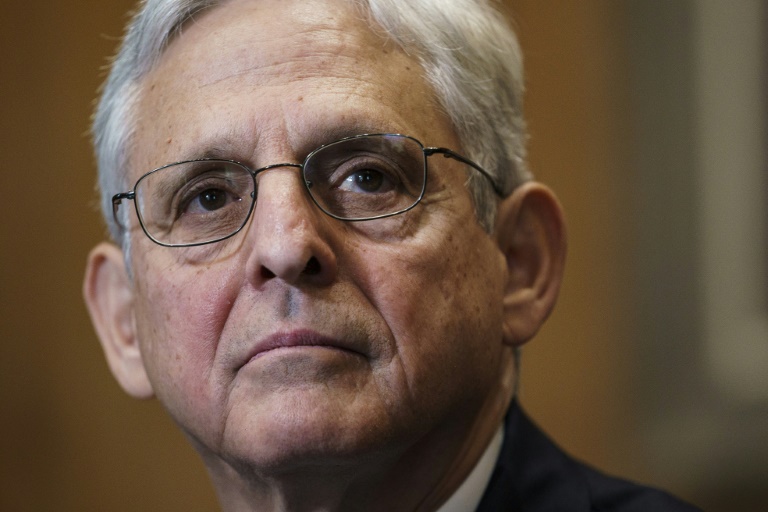
Attorney General Merrick Garland and FBI Director Christopher Wray detailed three separate cases in which Beijing’s spies allegedly harassed dissidents inside the United States, tried to interfere in the prosecution of a Chinese telecoms giant understood to be Huawei, and pressured US academics to work for them.

Thirteen Chinese nationals who allegedly worked for Beijing’s spy agencies have been indicted in the cases and two of them have been arrested.

The cases showed that China “sought to interfere with the rights and freedoms of individuals in the United States and to undermine our judicial system that protects those rights,” said Garland.

“The Justice Department will not tolerate attempts by any foreign power to undermine the rule of law upon which our democracy is based,” the top US law enforcement officer said.

Garland, Wray, and other top justice officials spoke about the cases in a press conference in Washington one day after Xi Jinping secured a historic third term as China’s leader.

US officials have tied Xi to what they see as a growing effort by Chinese intelligence agencies over the past decade to steal US intellectual property and to crack down on Chinese political dissidents in the United States.

Asked whether the announcements Monday were timed to Xi’s confirmation as the Chinese Communist Party’s all-powerful general secretary on Sunday, Wray avoided any specific link.

“We bring cases when they’re ready. And that’s probably the simplest answer and most straightforward answer to that, as far as what signal they send,” the FBI chief said.

“If the Chinese government, the Chinese Communist Party, continues to violate our laws, they are going to keep encountering the FBI,” he said.

– Huawei case interference –

In a case cited Monday but unveiled last week, seven Chinese nationals allegedly tried to force a US resident to go back to China. Two people were arrested, but five others — all allegedly employees of Chinese intelligence agencies — remain at large, likely in China.

In the second case, two Chinese intelligence officials working from China tried to recruit a US government employee to provide them inside information on the Justice Department’s prosecution of Huawei. 

In 2019 Huawei was charged with a systematic campaign to steal US trade secrets, sanctions evasion and other counts.

The two agents believed they had recruited a US government official to work for them and paid the person $61,000 worth of bitcoin to supply internal documents related to the case against Huawei.

But the informant was in fact a double agent who worked with the FBI on the case.

The third case involved Chinese intelligence operatives who worked for the Ministry of State Security posing as academics to recruit operatives in the United States.

From 2008 to at least 2018, they targeted professors, former security officials and others with access to sensitive information and technology for recruitment.

“In all three of these cases, and frankly, in thousands of others, we found the Chinese government threatening established democratic norms and the rule of law as they work to undermine US economic security and fundamental human rights,” said Wray.

The US Justice Department has announced at least a half-dozen similar cases against alleged Chinese intelligence officers so far this year. 

Wray said the threat is constant, and that the FBI opens a Chinese counterintelligence investigation “about every 12 hours.”

In response to the announcements, Chinese Foreign Ministry spokesman Wang Wenbin said “China has always asked its citizens to obey the laws and regulations of the countries they are in.” 

“Some people in US law enforcement… have openly provided shelter for Chinese fugitives and obstructed China’s efforts to chase down fugitives, turning the US into a safe haven for the corrupt and for lawbreakers,” Wang told reporters at a routine briefing.

Hong Kong, Shanghai fall again on China worries as other markets mixed

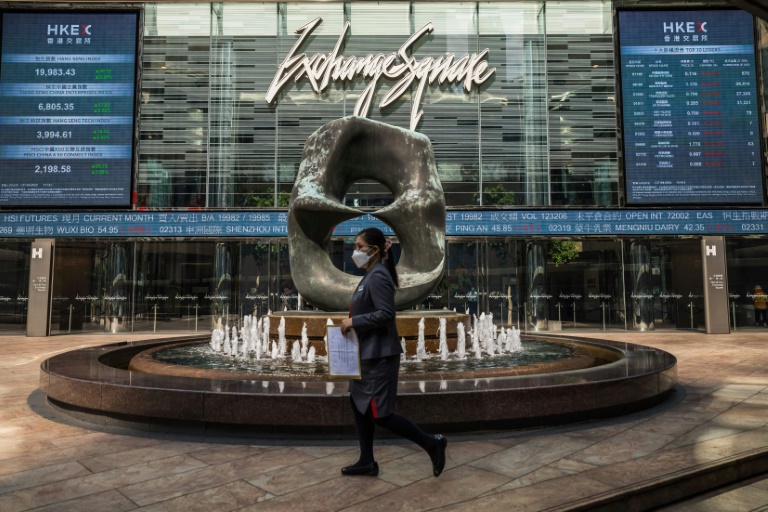
Hong Kong and Shanghai stocks saw big swings Tuesday following the previous day’s rout after Xi Jinping tightened his grip on power in China, while other markets fought to maintain a rally fuelled by hopes of a less hawkish Federal Reserve.

Optimism about upcoming corporate earnings was providing some support, with Wall Street chalking up another strong day ahead of reports this week from big-name firms including Apple, Amazon and Microsoft.

Investors were keeping a wary eye on developments in China after Xi at the weekend was handed another five year term as leader and gave top jobs to a number of loyalists who back his strict zero-Covid strategy.

The policy of lockdowns and other strict measures has been a major cause of the country’s economic woes and the prospect of more upheaval has sent chills through trading floors.

The uncertainty resulted in a drop of more than six percent in Hong Kong on Monday, with tech firms — which have been hardest hit by Xi’s crackdown on a range of private-sector companies — taking the brunt of the pain.

The selling spread to New York later in the day, with the Nasdaq Golden Dragon China Index of 65 Chinese stocks diving 14 percent — its biggest fall on record — wiping more than $90 billion off their market value.

Any hopes for a big bounce from bargain-buying on Tuesday were short-lived with wild fluctuations in the city seeing the Hang Seng Index swing from gains to losses in a three percent band before finishing down 0.1 percent.

Shanghai struggled to get out of negative territory and ended slightly lower, while the onshore yuan sank to its weakest level since 2007 and the offshore yuan hit its lowest level since trading in it started 12 years ago.

“We’re certainly staying away from the Chinese market right now because the political scene is not favourable,” Laila Pence, of Pence Wealth Management, told Bloomberg TV.

“There’s a lot less risk in the US and just as much upside.”

The gloomy mood in China cast a shadow over an largely positive start to the week elsewhere as investors were cheered by a report suggesting the Fed could discuss at next week’s policy meeting the possibility of slowing down its pace of interest rate hikes.

The bank’s policy of ramping up borrowing costs to fight decades-high inflation has hammered global markets this year as investors worry that they will send the economy into recession.

“Investors are getting more confident that inflation will soften as the consumer rethinks massive purchases,” said OANDA’s Edward Moya.

“Fed rate hike expectations will remain volatile, but expectations are growing that a weaker economy will let the Fed pause their tightening after the February policy meeting.”

Tokyo, Sydney, Singapore, Wellington, Manila and Bangkok all rose, though Seoul, Taipei, Mumbai and Jakarta fell.

Focus is now on the release of earnings, with a sense of hope that the results will not be as bad as feared.

A fifth of S&P 500 companies have so far released their figures, with more than half beating expectations, according to Bloomberg News.

The yen hovered around 149 to the dollar after rallying Friday and Monday, with speculation swirling that Japanese authorities had intervened to support the struggling currency.

However, there are expectations it will continue to drop owing to the divergence between the Bank of Japan’s ultra-loose monetary policy and the Fed’s tightening.

The pound was also sitting around $1.13 as the choice of former chancellor Rishi Sunak as Britain’s next prime minister provided a sense of stability after weeks of uncertainty caused by former leader Liz Truss’s controversial debt-fuelled budget.

London was lower ahead of Sunak becoming Britain’s third premier in less than two months with a full in-tray including a cost-of-living crisis, boosting the economy and uniting his fractured Conservative party. Paris and Frankfurt rose.

– Key figures around 0810 GMT –

Tokyo – Nikkei 225: UP 1.0 percent at 27,250.28 (close)

Hong Kong – Hang Seng Index: DOWN 0.1 percent at 15,165.59 (close)

Shanghai – Composite: FLAT at 2,976.28 (close)

London – FTSE 100: DOWN 0.4 percent at 6,984.49

Pound/dollar: UP at $1.1310 from $1.1281 on Monday

Dollar/yen: DOWN at 148.89 yen from 148.95 yen

Euro/dollar: DOWN at $0.9871 from $0.9876

Euro/pound: DOWN at 87.21 pence from 87.56 pence

West Texas Intermediate: DOWN 0.8 percent at $83.87 per barrel

Brent North Sea crude: DOWN 0.8 percent at $92.53 per barrel

New York – Dow: UP 1.3 percent at 31,499.62 (close)

Hong Kong, Shanghai fall again on China worries as other markets mixed

Hong Kong and Shanghai stocks saw big swings Tuesday following the previous day’s rout after Xi Jinping tightened his grip on power in China, while other markets fought to maintain a rally fuelled by hopes of a less hawkish Federal Reserve.

Optimism about upcoming corporate earnings was providing some support, with Wall Street chalking up another strong day ahead of reports this week from big-name firms including Apple, Amazon and Microsoft.

Investors were keeping a wary eye on developments in China after Xi at the weekend was handed another five year term as leader and gave top jobs to a number of loyalists who back his strict zero-Covid strategy.

The policy of lockdowns and other strict measures has been a major cause of the country’s economic woes and the prospect of more upheaval has sent chills through trading floors.

The uncertainty resulted in a drop of more than six percent in Hong Kong on Monday, with tech firms — which have been hardest hit by Xi’s crackdown on a range of private-sector companies — taking the brunt of the pain.

The selling spread to New York later in the day, with the Nasdaq Golden Dragon China Index of 65 Chinese stocks diving 14 percent — its biggest fall on record — wiping more than $90 billion off their market value.

Any hopes for a big bounce from bargain-buying on Tuesday were short-lived with wild fluctuations in the city seeing the Hang Seng Index swing from gains to losses in a three percent band before finishing down 0.1 percent.

Shanghai struggled to get out of negative territory and ended slightly lower, while the onshore yuan sank to its weakest level since 2007 and the offshore yuan hit its lowest level since trading in it started 12 years ago.

“We’re certainly staying away from the Chinese market right now because the political scene is not favourable,” Laila Pence, of Pence Wealth Management, told Bloomberg TV.

“There’s a lot less risk in the US and just as much upside.”

The gloomy mood in China cast a shadow over an largely positive start to the week elsewhere as investors were cheered by a report suggesting the Fed could discuss at next week’s policy meeting the possibility of slowing down its pace of interest rate hikes.

The bank’s policy of ramping up borrowing costs to fight decades-high inflation has hammered global markets this year as investors worry that they will send the economy into recession.

“Investors are getting more confident that inflation will soften as the consumer rethinks massive purchases,” said OANDA’s Edward Moya.

“Fed rate hike expectations will remain volatile, but expectations are growing that a weaker economy will let the Fed pause their tightening after the February policy meeting.”

Tokyo, Sydney, Singapore, Wellington, Manila and Bangkok all rose, though Seoul, Taipei, Mumbai and Jakarta fell.

Focus is now on the release of earnings, with a sense of hope that the results will not be as bad as feared.

A fifth of S&P 500 companies have so far released their figures, with more than half beating expectations, according to Bloomberg News.

The yen hovered around 149 to the dollar after rallying Friday and Monday, with speculation swirling that Japanese authorities had intervened to support the struggling currency.

However, there are expectations it will continue to drop owing to the divergence between the Bank of Japan’s ultra-loose monetary policy and the Fed’s tightening.

The pound was also sitting around $1.13 as the choice of former chancellor Rishi Sunak as Britain’s next prime minister provided a sense of stability after weeks of uncertainty caused by former leader Liz Truss’s controversial debt-fuelled budget.

London was lower ahead of Sunak becoming Britain’s third premier in less than two months with a full in-tray including a cost-of-living crisis, boosting the economy and uniting his fractured Conservative party. Paris and Frankfurt rose.

– Key figures around 0810 GMT –

Tokyo – Nikkei 225: UP 1.0 percent at 27,250.28 (close)

Hong Kong – Hang Seng Index: DOWN 0.1 percent at 15,165.59 (close)

Shanghai – Composite: FLAT at 2,976.28 (close)

London – FTSE 100: DOWN 0.4 percent at 6,984.49

Pound/dollar: UP at $1.1310 from $1.1281 on Monday

Dollar/yen: DOWN at 148.89 yen from 148.95 yen

Euro/dollar: DOWN at $0.9871 from $0.9876

Euro/pound: DOWN at 87.21 pence from 87.56 pence

West Texas Intermediate: DOWN 0.8 percent at $83.87 per barrel

Brent North Sea crude: DOWN 0.8 percent at $92.53 per barrel

New York – Dow: UP 1.3 percent at 31,499.62 (close)

Singapore targets net zero by 2050, eyes hydrogen power

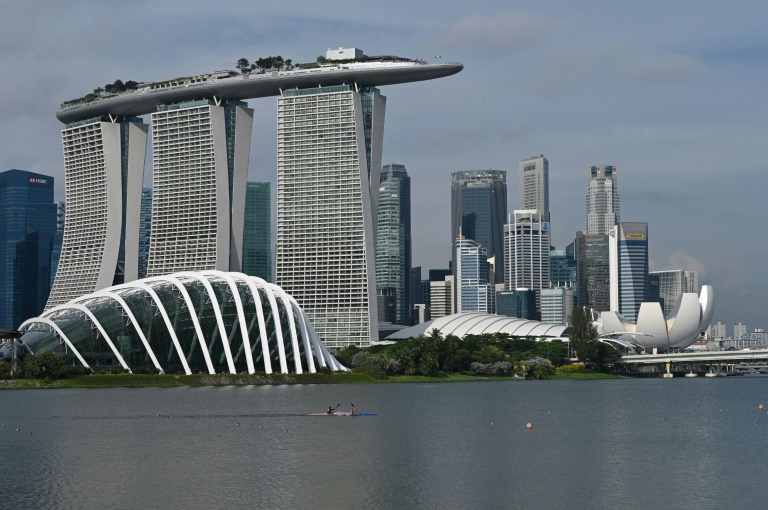
Singapore announced Tuesday it aims to achieve carbon neutrality by 2050, giving a firm date for the first time, and will look at using hydrogen as a major power source.

The city-state targets for carbon emissions to peak in 2030 at 60 million tonnes, a reduction of five million tonnes from the previous goal, Deputy Prime Minister Lawrence Wong said.

The Southeast Asian nation also has plans to look at developing low carbon hydrogen as a major power supply in the long term.

“If technology continues to advance, we foresee that hydrogen can supply up to half of our power needs by 2050, alongside domestic renewable energy sources and electricity imports,” Wong said at an industry conference.

He added that Singapore would experiment with key hydrogen technologies to see how it can be implemented on a large scale.

“We do not have the land for large solar or wind farms, or fast flowing rivers for hydro-electric power,” said Wong, the country’s prime minister in waiting.

Green hydrogen is in sharp focus as governments seek to slash carbon emissions amid global warming and to safeguard energy supplies hit by the invasion of Ukraine by oil and gas producer Russia.

But the “hydrogen economy” has not fully kicked into gear awaiting significant uptake from high-polluting sectors like steel and aviation.

“Many hydrogen technologies are still under development, and a global supply chain has yet to be established,” the Singapore government said in a statement.

“Nevertheless, there has been strong interest internationally from the public and private sectors to accelerate the development,” it added.

Prime Minister Lee Hsien Loong has said the low-lying island nation is especially vulnerable to rising sea levels and defending it from the threat is “existential”.

UBS net profit down in Q3 as revenues fall

Swiss banking giant UBS on Tuesday reported a fall in net profits in the third quarter, though still better than expected against a backdrop of falling revenues at the investment bank.

Profits at Switzerland’s largest bank were down 24 percent to $1.7 billion from July to the end of September.

The firm also saw its income fall by 10 percent to $8.2 billion in the same period, in a global economic and political environment that the group’s chief executive Ralph Hamers described as “increasingly complex”.

“Clients remain concerned about persistently high inflation, elevated energy prices, the war in Ukraine and residual effects of the pandemic,” Hamers said in a statement.

He said the energy crisis was also having an impact, including on their retail and small business clients in Switzerland.

“The impact of all this has been far-reaching –- affecting asset levels, market volatility, rates and investor sentiment across the globe.”

The figures nonetheless exceeded expectations, with analysts predicting a net profit of around $1.4 billion and revenues of $7.9 billion.

The bank’s revenues have dipped recently due to a fall in its mergers and acquisitions and a drop in income from market activity.

Income from its core wealth management operations also retreated year-on-year.

Large US retail banks have seen their profits fall in the last quarter amid a reduction in merger and acquisitions, stock market entries and fundraising.

Close Bitnami banner
Bitnami