AFP

Will Africa's metals boom suffer the same curse as oil?

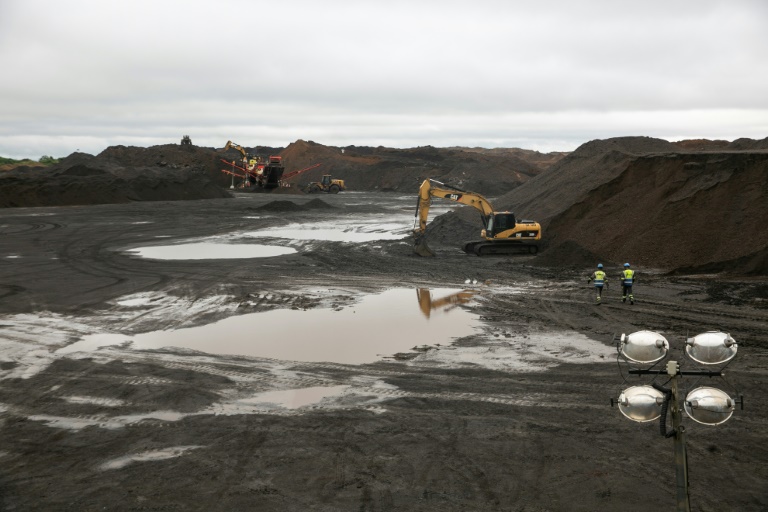
Mechanical diggers are hard at work in the bleak landscape of the Moanda open-cast mine in Gabon, using giant jaws to rip out manganese and then dump the ore into trucks with a crash.

“We’re lucky here in Moanda. We find it about five to six metres (about 18 feet) below the surface,” said manager Olivier Kassibi, whose mine yields 36 tonnes of manganese each day.

Element number 25 on the periodic table, manganese has traditionally been perceived as a useful if humdrum material widely employed in steel and alloys.

More recently, though, the silvery metal has gained star status thanks to its emerging role in rechargeable car batteries, helping to wean the world off carbon-spewing fossil fuels.

Decarbonisation of the world economy will take centre stage at the UN’s COP27 climate talks in Egypt next month.

And as the great transition goes into higher gear, eyes are turning to Africa.

Its soil is rich in manganese, cobalt, nickel and lithium — crucial ingredients in cleaner technology for generating or storing power.

The Moanda region alone contains as much as a quarter of known global reserves of manganese, according to the Compagnie Miniere de l’Ogooue (Comilog), a subsidiary of the French group Eramet which operates the site.

– Curse of oil –

But hopes that the mineral boom will translate into a new dawn of prosperity in the world’s poorest continent are clouded by memories of what happened with oil.

In Africa’s oil-producing countries, black gold meant a gush of wealth for a well-connected few — but only drops for the needy majority.

Corruption sucked the dollars out of plans for roads, hospitals and schools, and environmental damage was often all that remained.

Africa’s potential in new-age minerals is “huge”, said the former chief economist of the African Development Bank, Rabah Arezki, who pointed out that reserves are not even known because so little exploration has been done.

But, he said, “there is very little reason to think that this windfall will benefit the people of Africa, particularly because of governance concerns.”

New metals deposits are following one another at a giddying pace.

In one example, Firefinch Ltd of Australia was looking for gold at Goulamina in southern Mali when it came across lithium, said Seydou Semega, geologist and local director of the firm.

Firefinch then created a local offshoot, Leo Lithium, and inaugurated the mine in early 2022 — a facility that it says could create 1,200 jobs and generate more than $100 million a year for Mali in taxes and dividends.

“Could Africa be the main source of lithium in the world?” asked Simon Hay, director of Leo Lithium. “Absolutely.” 

Comilog, which has operated the Moanda mine since 1960, claims the creation of 3,400 direct and 6,000 indirect jobs, a contribution of around $345 million per year to the national economy in various forms, plus millions of dollars in health and education provisions for the population.

“You need to have a social policy that is as committed as possible to share this wealth,” said its CEO, Leod Paul Batolo.

Comilog is keen to list its green principles, which include rehabilitating and replanting extraction sites, decarbonising the energy mix of its factories and “setting limits” on encroaching on wildlife areas.

But more generally, innumerable studies say the exploitation of resources in Africa has a long and dark history of unequal distribution of wealth, corruption, environmental damage and rights violations.

– ‘Value chain’ –

A big problem is that Africa is typically used as a source of raw materials, and rarely for processing them into goods of higher value, said Gilles Lepesant, a geographer at the French National Centre for Scientific Research (CNRS).

“If activity is limited to mining and extracting ore, Africa will reap no benefit from the energy transition in Europe. It’s absolutely necessary to invest in the value chain,” he said.

He pointed to the Democratic Republic Congo, whose soil is estimated to contain half of the world’s reserves of cobalt, as an example of something that is “both an opportunity and a curse.”

Poorly regulated mining leads to environmental damage and encourages child labour, a phenomenon that is hard to resolve when a family’s livelihood depends on it.

In the sector of tropical forestry, many rich countries have demanded traceability of wood and labour in order to reassure concerned consumers. 

But this is far harder to achieve in the metals used in car batteries and other gadgets, said Lepesant.

“In a lot of cases, the mined metal is exported for refining to other countries, for example China, and then combined with other metals, so it’s hard to know if the cobalt you have on your production line actually comes from such and such a mine in the Democratic Republic of Congo,” he said.

Analyst Hugo Brennan of British firm Verisk Maplecroft said African nations had to strike “a tricky balancing act” — providing incentives for investment while enforcing social and environmental standards — to ensure their mining boom does not go the same way as oil.
Credit Suisse banking on restructure revamp

New Credit Suisse chief executive Ulrich Koerner, faced with trying to turn around the beleaguered bank following multiple scandals, is set to unveil his strategic road map on Thursday.

The pressure is on for Switzerland’s second-biggest bank after investors saw their money go up in smoke due to the collapse in share prices.

And the fragile economic outlook, recent market turbulence and rising interest rates could further complicate Koerner’s task as he reveals his restructuring plan.

– Pillar of Swiss banking –

With a turnover of nearly 22.7 billion Swiss francs ($22.65 billion) in 2021, Credit Suisse is second only to UBS in Swiss banking. 

But unlike its competitor which earned a net profit of $7.4 billion, Credit Suisse suffered a loss of 1.6 billion francs.

Founded in 1856 by Alfred Escher, the pioneer of Swiss railways, the bank then called Schweizerische Kreditanstalt grew to be a pillar of Swiss finance.

It financed the construction of the Gotthard tunnel, the development of large industrial companies and also insurance giants, including Swiss Life and the reinsurer Swiss Re.

The Zurich-based bank is a force on the international stage, especially since it took over the US investment bank First Boston in 1990. Present in some 40 countries, it employs 51,410 people worldwide.

– Too big to fail? –

Credit Suisse is one of 30 banks globally deemed too big to fail, forcing it to set aside more cash to weather a crisis.

At the end of June, its CET1 ratio — which compares a bank’s capital to its risk-weighted assets — stood at 13.5 percent: slightly less than HSBC Holdings but bigger than BNP Paribas, the two largest banks in Europe for which regulatory requirements are even higher.

Banking experts are therefore dismissing social media rumours earlier this month of a “Lehman Brothers moment”, referencing the US bank which collapsed, triggering the 2008 financial crisis.

“The bank will go through difficult times,” Carlo Lombardini, a lawyer and professor of banking law at the University of Lausanne, told AFP, but “not because of a solvency risk or liquidities”.

Credit Suisse already went through a major restructuring under Tidjane Thiam, its chief executive from 2015 to early 2020.

The objective was to relieve the investment bank of its most volatile activities and to strengthen wealth management, through capital increases of six billion and then four billion Swiss francs.

In November 2021, another reorganisation was launched after a series of scandals that tarnished its reputation.

– Four divisions –

Since then, Credit Suisse’s activities have been split into four divisions: wealth management, asset management, Swiss banking, and its investment banking arm.

Wealth management — specialising in investments for rich clients — and Swiss banking — encompassing retail banking and other domestic activities — are considered the most stable.

In the first half of 2022, wealth management, which makes up 30 percent of the bank’s income, suffered 1.4 billion Swiss francs in capital withdrawals, mainly from European and Middle Eastern clients.

Swiss banking, which represents about a quarter of Credit Suisse’s turnover, was the only division to see its income increase.

The asset management branch was rocked by the bankruptcy of British financial firm Greensill, in which some $10 billion had been committed through four funds.

Meanwhile investment banking was hit by the implosion of the US fund Archegos, which cost Credit Suisse more than $5 billion.

While asset management accounted for only about eight percent of Credit Suisse’s revenue in the first half of the year, investment banking contributed 37 percent.

In the first six months, the investment banking division, which is active in fields including debt issues and mergers and acquisitions, racked up losses of 992 million Swiss francs after a loss of 3.7 billion francs in 2021.

Investors have long called for reform of the division, believing that it does not have the heft to take on the big US banks.

In 2011, the Ethos foundation, which represents pension funds in Switzerland, firmly opposed an issue of convertible bonds aimed at strengthening the branch, judging the investment banking arm too capital intensive.

'We don't eat lithium': S. America longs for benefits of metal boon

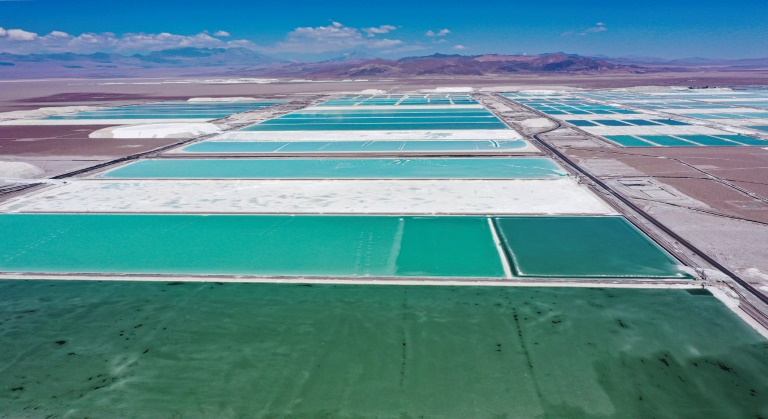
The turquoise glimmer of open-air pools contrasts sharply with the dazzling white of salt flats in Latin America’s “lithium triangle,” where hope resides for a better life fueled by a metal bonanza.

A key component of batteries used in electric cars, demand has exploded for lithium — the “white gold” found in Chile, Argentina and Bolivia in quantities larger than anywhere else in the world.

And as the world seeks to move away from fossil fuels, lithium production — and prices — have skyrocketed, as have the expectations of communities near lithium plants, many of whom live in poverty.

But there are growing concerns about the impact on groundwater sources in regions already prone to extended droughts, with recent evidence of tree and flamingo die-offs.

And there are scant signs to date of benefits trickling down.

“We don’t eat lithium, nor batteries. We do drink water,” said Veronica Chavez, 48, president of the Santuario de Tres Pozos Indigenous community near the town of Salinas Grandes in Argentina’s lithium heartland.

A poster that meets visitors to Salinas Grandes reads: “No to lithium, yes to water and life.”

Lithium extraction requires millions of liters of water per plant per day.

Unlike in Australia — the world’s top lithium producer that extracts the metal from rock — in South America it is derived from salars, or salt flats, where saltwater containing the metal is brought from underground briny lakes to the surface to evaporate.

– Soaring prices –

About 56 percent of the world’s 89 million tons of identified lithium resources are found in the South American triangle, according to the US Geological Survey (USGS).

The world average price rose from $5,700 per ton in November 2020 to $60,500 in September this year. 

Chile hosts the westernmost corner of the lithium triangle in its Atacama desert, which contributed 26 percent of global production in 2021, according to the USGS.

The country started lithium extraction in 1984 and has been a leader in the field partly because of low rainfall levels and high solar radiation that speeds up the evaporation process.

But Chilean law has made it difficult for companies to gain concessions from the government since the dictatorship of Augusto Pinochet declared the metal a “strategic resource” for its potential use in nuclear bombs.

Only two companies have permits to exploit the metal — Chile’s SQM and American Albemarle, which pay up to 40 percent of their sales in tax.

In the first quarter of this year, lithium’s contribution to the public coffers surpassed those of Chile’s mainstay metal, copper, for the first time, according to government records.

Yet, the environmental costs are starting to stack up, and locals fear there is worse to come.

This year, a study in the journal Proceedings of the Royal Society B found a link between lithium mining and a decline in two flamingo species in the Salar de Atacama.

“The development of technologies to slow climate change has been identified as a global imperative. Nonetheless, such ‘green’ technologies can potentially have negative impacts on biodiversity,” said the study.

In 2013, an inspection at the SQM site — which reported using nearly 400,000 liters of water per hour in 2022 — found that a third of carob trees in the area had died.

A later study pointed to water scarcity as a possible cause.

“We want to know, for sure, what has been the real impact of the extraction of groundwater,” said Claudia Perez, 49, a resident of the nearby San Pedro river valley.

She was not against lithium, said Perez, provided there are measures to “minimize the negative impact on people.”

– ‘Leave us alone’ – 

Across the Andes in Argentina, the salt lakes of Jujuy host the world’s second-largest lithium resources along with the neighboring provinces of Salta and Catamarca.

With few restrictions on extraction and a low tax of only 3.0 percent, Argentina has become the world’s fourth-biggest lithium producer from two mines.

With dozens of new projects in the works with the involvement of US, Chinese, French, South Korean and local companies, Argentina has said it hopes to exceed Chilean production by 2030.

But not everyone is sold on the idea.

“It is not, as they say, that they (lithium companies) are going to save the planet… Rather it is us who have to give our lives to save the planet,” said Chavez, of Santuario de Tres Pozos in Jujuy province.

A neighbor, 47-year-old street food seller Barbara Quipildor added fiercely: “I want them to leave us alone, in peace. I don’t want lithium… My concern is the future of my children’s children.”

– Will locals benefit? –

About 300 kilometers (190 miles) north of Jujuy, the salar of Uyuni in Bolivia holds more lithium than anywhere else — a quarter of global resources, according to the USGS.

Half of the residents in the region — which is also rich in silver and tin — live in poverty, household surveys show.

The country’s former leftist president Evo Morales nationalized hydrocarbons and other resources such as lithium towards the start of his 2006-2019 mandate and vowed Bolivia would set the metal’s global price.

In Rio Grande, a small town near the Yacimientos de Litio Bolivianos (YLB) lithium plant, Morales’ plans were met with excitement.

In 2014 Donny Ali, a lawyer now aged 34, opened a hotel with the expectation of an economic boom. 

He called it Lithium.

“We were expecting major industrial technological development and more than anything, better living conditions,” he told AFP. “It didn’t happen.”

Hoping to boost the struggling lithium sector, the government opened it up to private hands in 2018, though domestic legislation has not yet denationalized the resource, and no private extraction has yet begun. 

“Some think that Bolivia will ‘miss the boat’ of lithium,” said economist Juan Carlos Zuleta. “I don’t think that’s going to happen.”

The real question, he said, is: when the boat comes, “will lithium extraction benefit Bolivians?”

The three countries are now looking towards battery manufacturing — possibly even building electric cars — as a way to turn the natural lithium bounty into a modern-day industrial revolution.

“There is a concrete possibility for Latin America to become the next China,” said Zuleta.

In the meantime, the Hotel Lithium stands empty.

China's yuan hits 15-year low after Xi extends rule

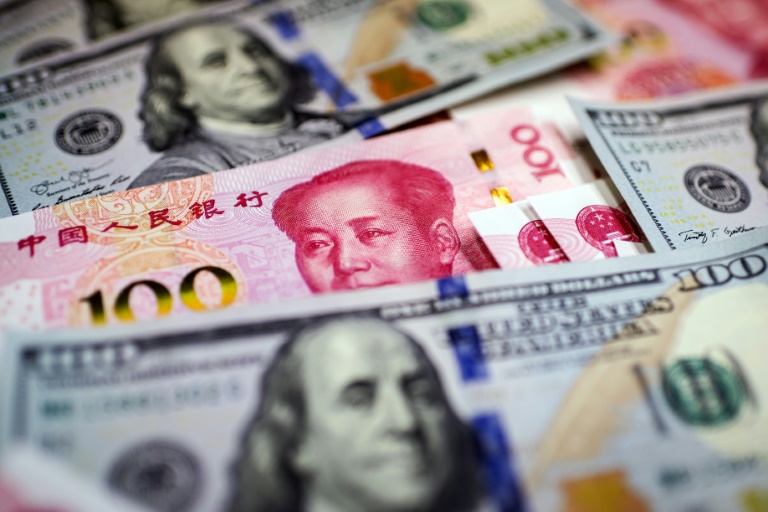
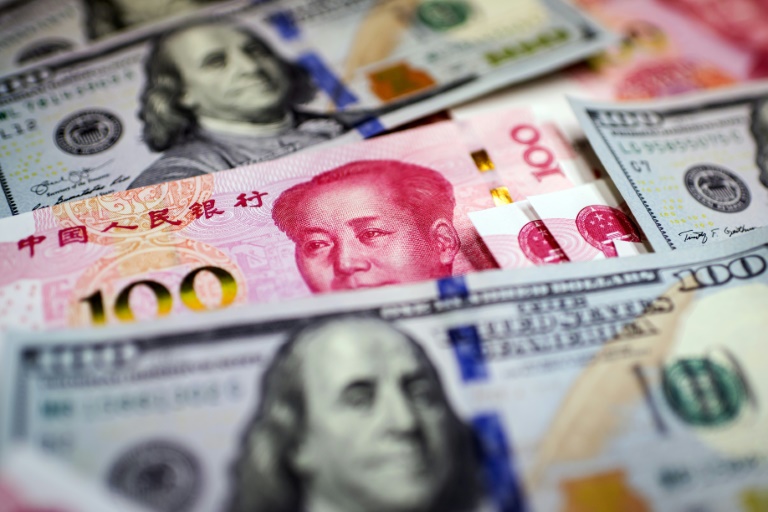
China’s yuan hit a 15-year low against the US dollar on Tuesday, with investors spooked after President Xi Jinping gained complete dominance over the Communist Party at a key meeting last week.

The onshore yuan fell as much as 0.6 percent to 7.3084 per dollar, its weakest level since December 2007 and close to the lower limit of the trading band set by the central bank on Tuesday.

The offshore yuan — which is circulated outside mainland China and is more freely traded than currency in the domestic market  — fell to 7.3735 against the dollar, the weakest since clearing banks in Hong Kong were given the go-ahead to open renminbi accounts freely in 2010.

China’s currency has taken a hit, along with other major currencies, as the Federal Reserve’s hawkish tone sends investors piling into the dollar.

The announcement over the weekend that Xi had secured a third term as party leader, stacking leadership positions with proteges and allies, raised fears among investors that Chinese authorities would continue zero-Covid lockdowns and other policies that have hammered the economy.

The yuan, along with Hong Kong-listed Chinese stocks plummeted on Monday, despite the announcement of better-than-expected growth in the third quarter the same day.

One of the most pressing concerns is Xi’s zero-Covid policy, which continues to put tens of millions of people under rolling lockdowns that also shutter factories. 

China is the last of the world’s major economies to hew to the strategy, with Xi insisting in his speech to mark the end of the Chinese Communist Party Congress on Saturday that the country’s Covid response has been a success.

China is also battling an unprecedented crisis in its real estate sector — which makes up more than a quarter of the country’s GDP when combined with construction. 

Following years of explosive growth fuelled by easy access to loans, Xi oversaw a crackdown on excessive debt.

Property sales are now falling across the country, leaving many developers struggling and some owners refusing to pay their mortgages for unfinished homes.

But Yuting Shao, a strategist at State Street Global Markets, told Bloomberg News “the market reaction is a little bit overblown”.

“You still have to wait for more policy detail plans in the future,” she said.

China's yuan hits 15-year low after Xi extends rule

China’s yuan hit a 15-year low against the US dollar on Tuesday, with investors spooked after President Xi Jinping gained complete dominance over the Communist Party at a key meeting last week.

The onshore yuan fell as much as 0.6 percent to 7.3084 per dollar, its weakest level since December 2007 and close to the lower limit of the trading band set by the central bank on Tuesday.

The offshore yuan — which is circulated outside mainland China and is more freely traded than currency in the domestic market  — fell to 7.3735 against the dollar, the weakest since clearing banks in Hong Kong were given the go-ahead to open renminbi accounts freely in 2010.

China’s currency has taken a hit, along with other major currencies, as the Federal Reserve’s hawkish tone sends investors piling into the dollar.

The announcement over the weekend that Xi had secured a third term as party leader, stacking leadership positions with proteges and allies, raised fears among investors that Chinese authorities would continue zero-Covid lockdowns and other policies that have hammered the economy.

The yuan, along with Hong Kong-listed Chinese stocks plummeted on Monday, despite the announcement of better-than-expected growth in the third quarter the same day.

One of the most pressing concerns is Xi’s zero-Covid policy, which continues to put tens of millions of people under rolling lockdowns that also shutter factories. 

China is the last of the world’s major economies to hew to the strategy, with Xi insisting in his speech to mark the end of the Chinese Communist Party Congress on Saturday that the country’s Covid response has been a success.

China is also battling an unprecedented crisis in its real estate sector — which makes up more than a quarter of the country’s GDP when combined with construction. 

Following years of explosive growth fuelled by easy access to loans, Xi oversaw a crackdown on excessive debt.

Property sales are now falling across the country, leaving many developers struggling and some owners refusing to pay their mortgages for unfinished homes.

But Yuting Shao, a strategist at State Street Global Markets, told Bloomberg News “the market reaction is a little bit overblown”.

“You still have to wait for more policy detail plans in the future,” she said.

HSBC profits fall on French retail impairment charge

HSBC on Tuesday said pre-tax profit slipped more than 40 percent in the third quarter, with the bank citing an impairment on the planned disposal of its retail banking operations in France.

However results were better than analyst estimates and were boosted by rising interest rates making lending more profitable.

The Asia-focused giant said pre-tax profit fell by $2.3 billion to $3.1 billion on year while net profit dropped 46 percent to $1.91 billion.

In a statement to the Hong Kong stock exchange, HSBC said it was looking to offload its French retail arm “as part of our actions to simplify our operations” in Europe adding that it hoped the sale would go through in the second half of 2023.

While reclassifying the French division the bank “recognised an impairment of $2.4 billion”, which impacted the third-quarter figures. 

But adjusted pre-tax profit rose 18 percent to $6.5 billion, beating Bloomberg News analyst estimates.

The bank’s net interest income, which measures what it makes from lending minus interest paid on deposits and is a key measure of profitability, came in at $8.6 billion, its best third quarter in more than eight years.

International banks face a mixed bag. 

Rising interest rates make lending more profitable but at the same time much of the world is staring at a pronounced downturn. 

“Macroeconomic headwinds, including higher inflation and a weaker outlook, continue to weigh on the global economy,” HSBC said, adding it had set aside more provisions against bad loans and had expected credit losses of $1.1 billion for July-September.  

The bank specifically cited global uncertainty sparked by Russia’s invasion of Ukraine, the fall of the pound in Britain and the grim condition of China’s real estate sector.

– Hong Kong and China –

But chief executive Noel Quinn said the bank was focused on delivering a returns target of at least 12 percent for next year as well as keeping costs down.

“We retained a tight grip on costs, despite inflationary pressures, and remain on track to achieve our cost targets for 2022 and 2023,” he said in the earnings report.

HSBC is headquartered in London but makes the vast majority of its profits in Asia, especially China and Hong Kong.

The lender is under pressure from Ping An, which has a 9.2 percent stake, to spin off its Asian operations, in a bid to unlock shareholder value amid tensions between China and the west.

So far HSBC’s leadership have rejected those calls.

Senior executives from the bank are expected to be in Hong Kong next week for a bankers’ summit that is being hosted by the city, which only last month lifted mandatory quarantine for all international arrivals. 

Over the weekend Chinese leader Xi Jinping tightened his grip on power by securing a third five-year term in office, handing top jobs to a number of loyalists who back his strict zero-Covid strategy.

The policy of lockdowns and other strict measures has been a major cause of the country’s economic woes and the prospect of more upheaval has sent chills through trading floors.

HSBC has vowed to accelerate a multi-year pivot to Asia and the Middle East, with ambitions to lead Asia’s wealth management market.

The bank said it would invest $6 billion in Hong Kong, China and Singapore and hire more than 5,000 wealth advisers — while slashing 35,000 jobs and cutting less profitable operations in other markets including France and the United States.

In Tuesday’s earnings report HSBC said it was “exploring the potential sale” of its Canadian division.

HSBC profits fall on French retail impairment charge

HSBC on Tuesday said pre-tax profit slipped more than 40 percent in the third quarter, with the bank citing an impairment on the planned disposal of its retail banking operations in France.

However results were better than analyst estimates and were boosted by rising interest rates making lending more profitable.

The Asia-focused giant said pre-tax profit fell by $2.3 billion to $3.1 billion on year while net profit dropped 46 percent to $1.91 billion.

In a statement to the Hong Kong stock exchange, HSBC said it was looking to offload its French retail arm “as part of our actions to simplify our operations” in Europe adding that it hoped the sale would go through in the second half of 2023.

While reclassifying the French division the bank “recognised an impairment of $2.4 billion”, which impacted the third-quarter figures. 

But adjusted pre-tax profit rose 18 percent to $6.5 billion, beating Bloomberg News analyst estimates.

The bank’s net interest income, which measures what it makes from lending minus interest paid on deposits and is a key measure of profitability, came in at $8.6 billion, its best third quarter in more than eight years.

International banks face a mixed bag. 

Rising interest rates make lending more profitable but at the same time much of the world is staring at a pronounced downturn. 

“Macroeconomic headwinds, including higher inflation and a weaker outlook, continue to weigh on the global economy,” HSBC said, adding it had set aside more provisions against bad loans and had expected credit losses of $1.1 billion for July-September.  

The bank specifically cited global uncertainty sparked by Russia’s invasion of Ukraine, the fall of the pound in Britain and the grim condition of China’s real estate sector.

– Hong Kong and China –

But chief executive Noel Quinn said the bank was focused on delivering a returns target of at least 12 percent for next year as well as keeping costs down.

“We retained a tight grip on costs, despite inflationary pressures, and remain on track to achieve our cost targets for 2022 and 2023,” he said in the earnings report.

HSBC is headquartered in London but makes the vast majority of its profits in Asia, especially China and Hong Kong.

The lender is under pressure from Ping An, which has a 9.2 percent stake, to spin off its Asian operations, in a bid to unlock shareholder value amid tensions between China and the west.

So far HSBC’s leadership have rejected those calls.

Senior executives from the bank are expected to be in Hong Kong next week for a bankers’ summit that is being hosted by the city, which only last month lifted mandatory quarantine for all international arrivals. 

Over the weekend Chinese leader Xi Jinping tightened his grip on power by securing a third five-year term in office, handing top jobs to a number of loyalists who back his strict zero-Covid strategy.

The policy of lockdowns and other strict measures has been a major cause of the country’s economic woes and the prospect of more upheaval has sent chills through trading floors.

HSBC has vowed to accelerate a multi-year pivot to Asia and the Middle East, with ambitions to lead Asia’s wealth management market.

The bank said it would invest $6 billion in Hong Kong, China and Singapore and hire more than 5,000 wealth advisers — while slashing 35,000 jobs and cutting less profitable operations in other markets including France and the United States.

In Tuesday’s earnings report HSBC said it was “exploring the potential sale” of its Canadian division.

Most Asia markets rise on Fed bets as Hong Kong, Shanghai struggle

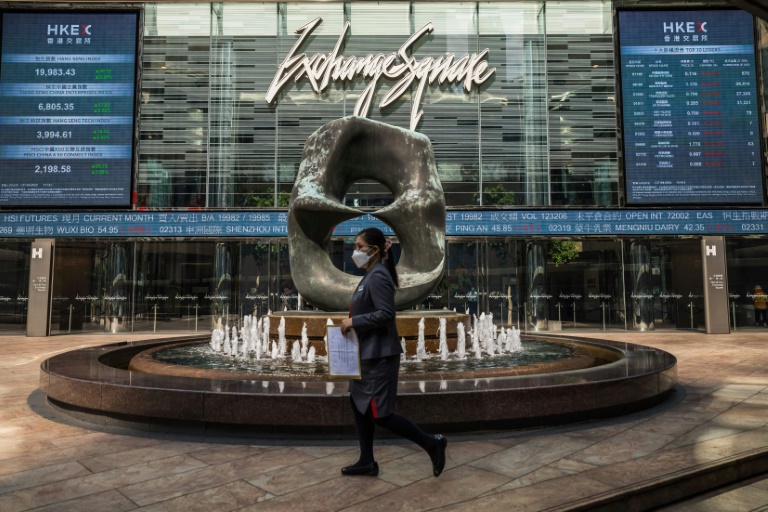
Hong Kong and Shanghai stocks saw big swings Tuesday following the previous day’s rout after Xi Jinping tightened his grip on power in China, while other Asian markets extended gains on hopes the Federal Reserve will slow down its pace of rate hikes.

Optimism about upcoming corporate earnings was also providing support, with Wall Street chalking up another strong day ahead of reports this week from big-name firms including Apple, Amazon and Microsoft.

Investors were keeping a wary eye on developments in China after Xi at the weekend was handed another five year term as leader and gave top jobs to a number of loyalists who back his strict zero-Covid strategy.

The policy of lockdowns and other strict measures has been a major cause of the country’s economic woes and the prospect of more upheaval has sent chills through trading floors.

The uncertainty resulted in a drop of more than six percent in Hong Kong on Monday, with tech firms — which have been hardest hit by Xi’s crackdown on a range of private-sector companies — taking the brunt of it.

And the selling spread to New York later in the day, with the Nasdaq Golden Dragon China Index of 65 Chinese stocks diving 14 percent — its biggest fall on record — wiping more than $90 billion off their market value.

Alibaba, JD.com and Tencent all saw double-digit losses, matching the selling earlier in Hong Kong.

Any hopes for a bounce from bargain-buying on Tuesday appeared to be short-lived with wild fluctuations in the city seeing the Hang Seng Index swing from gains to losses.

Shanghai struggled to get out of negative territory, while the onshore yuan sank to its weakest level since 2007 and the offshore yuan hit a record low.

“We’re certainly staying away from the Chinese market right now because the political scene is not favourable,” Laila Pence, of Pence Wealth Management, told Bloomberg TV.

“There’s a lot less risk in the US and just as much upside.”

The gloomy mood in China cast a shadow over an otherwise positive start to the week elsewhere as investors were cheered by a report suggesting the Fed could discuss at next week’s policy meeting the possibility of slowing down its pace of interest rate hikes.

The bank’s policy of ramping up borrowing costs to fight decades-high inflation has hammered global markets this year as investors worry that they will send the economy into recession.

“Investors are getting more confident that inflation will soften as the consumer rethinks massive purchases,” said OANDA’s Edward Moya.

“Fed rate hike expectations will remain volatile, but expectations are growing that a weaker economy will let the Fed pause their tightening after the February policy meeting.”

Tokyo, Sydney, Seoul, Singapore, Wellington, Manila and Jakarta all rose, though Taipei fell.

Focus is now on the release of earnings, with a sense of hope that the results will not be as bad as feared.

A fifth of S&P 500 companies have so far released their figures, with more than half beating expectations, according to Bloomberg News.

The yen hovered around 149 to the dollar after rallying Friday and Monday, with speculation swirling that Japanese authorities had intervened to support the struggling currency.

However, there are expectations it will continue to drop owing to the divergence between the Bank of Japan’s ultra-loose monetary policy and the Fed’s tightening.

The pound was also sitting around $1.13 as the choice of former chancellor Rishi Sunak as Britain’s next prime minister provided a sense of stability after weeks of uncertainty caused by former leader Liz Truss’s controversial debt-fuelled budget.

– Key figures around 0230 GMT –

Tokyo – Nikkei 225: UP 0.8 percent at 27,201.37 (break)

Hong Kong – Hang Seng Index: DOWN 1.3 percent at 14,977.72

Shanghai – Composite: DOWN 0.8 percent at 2,954.65

Pound/dollar: UP at $1.1301 from $1.1281 on Monday

Dollar/yen: DOWN at 148.92 yen from 148.95 yen

Euro/dollar: UP at $0.9880 from $0.9876

Euro/pound: DOWN at 87.44 pence from 87.56 pence

West Texas Intermediate: UP 0.1 percent at $84.62 per barrel

Brent North Sea crude: DOWN 0.1 percent at $93.21 per barrel

New York – Dow: UP 1.3 percent at 31,499.62 (close)

London – FTSE 100: UP 0.6 percent at 7,013.99 (close)

Most Asia markets rise on Fed bets as Hong Kong, Shanghai struggle

Hong Kong and Shanghai stocks saw big swings Tuesday following the previous day’s rout after Xi Jinping tightened his grip on power in China, while other Asian markets extended gains on hopes the Federal Reserve will slow down its pace of rate hikes.

Optimism about upcoming corporate earnings was also providing support, with Wall Street chalking up another strong day ahead of reports this week from big-name firms including Apple, Amazon and Microsoft.

Investors were keeping a wary eye on developments in China after Xi at the weekend was handed another five year term as leader and gave top jobs to a number of loyalists who back his strict zero-Covid strategy.

The policy of lockdowns and other strict measures has been a major cause of the country’s economic woes and the prospect of more upheaval has sent chills through trading floors.

The uncertainty resulted in a drop of more than six percent in Hong Kong on Monday, with tech firms — which have been hardest hit by Xi’s crackdown on a range of private-sector companies — taking the brunt of it.

And the selling spread to New York later in the day, with the Nasdaq Golden Dragon China Index of 65 Chinese stocks diving 14 percent — its biggest fall on record — wiping more than $90 billion off their market value.

Alibaba, JD.com and Tencent all saw double-digit losses, matching the selling earlier in Hong Kong.

Any hopes for a bounce from bargain-buying on Tuesday appeared to be short-lived with wild fluctuations in the city seeing the Hang Seng Index swing from gains to losses.

Shanghai struggled to get out of negative territory, while the onshore yuan sank to its weakest level since 2007 and the offshore yuan hit a record low.

“We’re certainly staying away from the Chinese market right now because the political scene is not favourable,” Laila Pence, of Pence Wealth Management, told Bloomberg TV.

“There’s a lot less risk in the US and just as much upside.”

The gloomy mood in China cast a shadow over an otherwise positive start to the week elsewhere as investors were cheered by a report suggesting the Fed could discuss at next week’s policy meeting the possibility of slowing down its pace of interest rate hikes.

The bank’s policy of ramping up borrowing costs to fight decades-high inflation has hammered global markets this year as investors worry that they will send the economy into recession.

“Investors are getting more confident that inflation will soften as the consumer rethinks massive purchases,” said OANDA’s Edward Moya.

“Fed rate hike expectations will remain volatile, but expectations are growing that a weaker economy will let the Fed pause their tightening after the February policy meeting.”

Tokyo, Sydney, Seoul, Singapore, Wellington, Manila and Jakarta all rose, though Taipei fell.

Focus is now on the release of earnings, with a sense of hope that the results will not be as bad as feared.

A fifth of S&P 500 companies have so far released their figures, with more than half beating expectations, according to Bloomberg News.

The yen hovered around 149 to the dollar after rallying Friday and Monday, with speculation swirling that Japanese authorities had intervened to support the struggling currency.

However, there are expectations it will continue to drop owing to the divergence between the Bank of Japan’s ultra-loose monetary policy and the Fed’s tightening.

The pound was also sitting around $1.13 as the choice of former chancellor Rishi Sunak as Britain’s next prime minister provided a sense of stability after weeks of uncertainty caused by former leader Liz Truss’s controversial debt-fuelled budget.

– Key figures around 0230 GMT –

Tokyo – Nikkei 225: UP 0.8 percent at 27,201.37 (break)

Hong Kong – Hang Seng Index: DOWN 1.3 percent at 14,977.72

Shanghai – Composite: DOWN 0.8 percent at 2,954.65

Pound/dollar: UP at $1.1301 from $1.1281 on Monday

Dollar/yen: DOWN at 148.92 yen from 148.95 yen

Euro/dollar: UP at $0.9880 from $0.9876

Euro/pound: DOWN at 87.44 pence from 87.56 pence

West Texas Intermediate: UP 0.1 percent at $84.62 per barrel

Brent North Sea crude: DOWN 0.1 percent at $93.21 per barrel

New York – Dow: UP 1.3 percent at 31,499.62 (close)

London – FTSE 100: UP 0.6 percent at 7,013.99 (close)

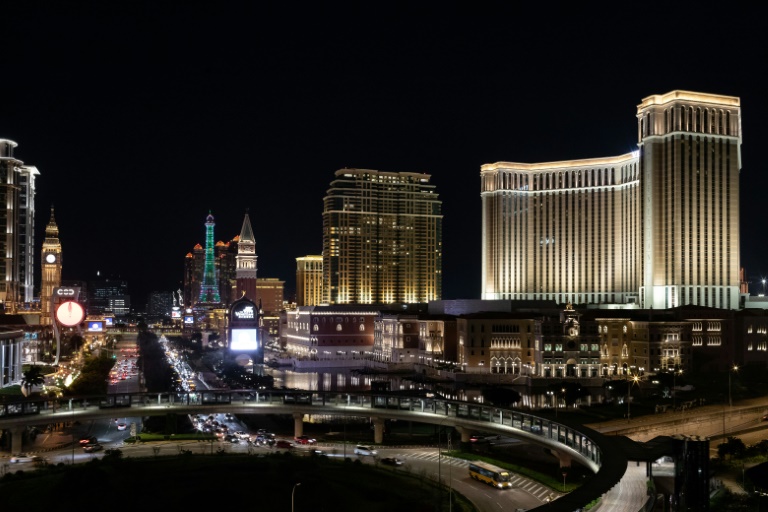
Tough odds for Macau as casinos pray for a pandemic shift

When Pinky Tam lost her job in Macau last year, she found herself among the many thousands cast adrift as the city’s casino industry crumbled beneath the twin forces of politics and a pandemic.

The former Portuguese colony has been limping for nearly three years as coronavirus restrictions have kept away mainland Chinese tourists, depriving the gaming sector of its chief revenue source and tanking the wider economy.

“Back when things were good, it would be almost too crowded to walk,” Tam, who used to work at the gambling operator Suncity Group, recalled of the narrow streets leading from the Ruin of St Paul’s, Macau’s most famous landmark.

“Now you can find maybe one or two locals passing through. I think the people of Macau are frustrated about the economy and future prospects,” she told AFP.

The crisis comes at a sensitive time for Macau’s oligopoly of casinos.

Officials are currently renegotiating the six concessions, which will expire by the end of the year.

It is an industry reshuffle that will shape Macau’s next decade, raising questions over whether the city can return to being the world’s top casino hub, whether it must seek an alternative path, and whether its golden years are over. 

Since its handover to Chinese rule in 1999, Macau has been the only place in the country where casinos are legal, growing to the point two decades later where it was generating nearly six times the annual gaming revenue of Las Vegas.

It was a heady time of extraordinary growth and riches.

– ‘Junket King’ arrest –

But even before the pandemic emerged, its wings were being clipped by President Xi Jinping’s anti-corruption drive.

Then last November, authorities arrested Suncity boss Alvin Chau — nicknamed the “Junket King” for his success in bringing in Chinese high-rollers — and charged him with fraud, money laundering and running a crime syndicate.

It was the clearest sign yet of Beijing’s crackdown on officials and wealthy tycoons who used Macau as a conduit to siphon cash out of China.

“Up until now, 90 percent of our visitors and 90 percent of our revenue comes from China… We basically are a hub to attract mainland Chinese gamblers,” Macau-based gaming analyst Ben Lee told AFP.

“So the Macau government is obviously being pushed to try and redirect the industry away from China.”

Until recently, the renewal of concessions seemed like a done deal for the six companies permitted to operate casinos, which include the subsidiaries of three Las Vegas giants — Sands China, MGM China and Wynn Macau.

But at the last minute, a surprise contender, Malaysia’s Genting Group, threw its hat into the ring.

With the concession renewal taking place at a time of spiralling tensions between Washington and Beijing, Lee posits that one of the US companies may well lose out.

“Why would (China) let the Americans keep 50 percent of the gaming industry in Macau,” said Lee, founder of Macau gaming consultancy IGamiX.

“I cannot see any good reason.”

– Industry shakeup –

Macau’s government has long been keen to diversify away from gaming into tourism and leisure.

For the new concessions, it is demanding “much more non-gaming investment”, Credit Suisse analysts wrote in a research note last week.

“An increase in investment commitment would inevitably put more stress into the already stretched balance sheet of certain operators, as well as lowering the long-term margin for the sector,” it added.

For Macau’s 680,000 residents, the cycle of lockdowns, testings and border closures have been some of the roughest years since the handover in a city where one in five people in the labour force works in gaming.

The biggest test came in July when much of the city, including casinos, was locked down to fight an outbreak of the Omicron coronavirus variant.

“It was an extreme situation for a relatively free and open city like Macau,” former lawmaker Sulu Sou told AFP, adding that the economy emerged from the lockdown “on life support”.

Tam, the former Suncity worker, said she took a one-third pay cut to land a new secretarial job, adding that similar openings were routinely advertised with a monthly wage of just $1,100.

Even if Chinese tourists return en masse under tentative plans to kickstart tour groups in November, Macau’s gaming revenue this year will only be 15 percent of 2019 levels, while the following year will reach 35 percent, according to Credit Suisse estimates.

“In the last two to three years, Covid-19 has really put a spotlight on the need to diversify,” said Glenn McCartney, an associate professor in integrated resort and tourism management at the University of Macau.

“(Diversification) won’t happen overnight, it’s a slow progression.”

Close Bitnami banner
Bitnami