AFP

Tough odds for Macau as casinos pray for a pandemic shift

When Pinky Tam lost her job in Macau last year, she found herself among the many thousands cast adrift as the city’s casino industry crumbled beneath the twin forces of politics and a pandemic.

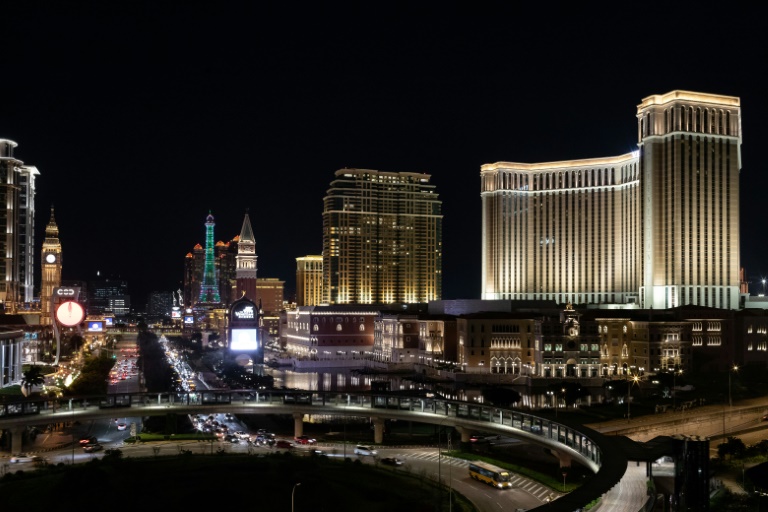
The former Portuguese colony has been limping for nearly three years as coronavirus restrictions have kept away mainland Chinese tourists, depriving the gaming sector of its chief revenue source and tanking the wider economy.

“Back when things were good, it would be almost too crowded to walk,” Tam, who used to work at the gambling operator Suncity Group, recalled of the narrow streets leading from the Ruin of St Paul’s, Macau’s most famous landmark.

“Now you can find maybe one or two locals passing through. I think the people of Macau are frustrated about the economy and future prospects,” she told AFP.

The crisis comes at a sensitive time for Macau’s oligopoly of casinos.

Officials are currently renegotiating the six concessions, which will expire by the end of the year.

It is an industry reshuffle that will shape Macau’s next decade, raising questions over whether the city can return to being the world’s top casino hub, whether it must seek an alternative path, and whether its golden years are over. 

Since its handover to Chinese rule in 1999, Macau has been the only place in the country where casinos are legal, growing to the point two decades later where it was generating nearly six times the annual gaming revenue of Las Vegas.

It was a heady time of extraordinary growth and riches.

– ‘Junket King’ arrest –

But even before the pandemic emerged, its wings were being clipped by President Xi Jinping’s anti-corruption drive.

Then last November, authorities arrested Suncity boss Alvin Chau — nicknamed the “Junket King” for his success in bringing in Chinese high-rollers — and charged him with fraud, money laundering and running a crime syndicate.

It was the clearest sign yet of Beijing’s crackdown on officials and wealthy tycoons who used Macau as a conduit to siphon cash out of China.

“Up until now, 90 percent of our visitors and 90 percent of our revenue comes from China… We basically are a hub to attract mainland Chinese gamblers,” Macau-based gaming analyst Ben Lee told AFP.

“So the Macau government is obviously being pushed to try and redirect the industry away from China.”

Until recently, the renewal of concessions seemed like a done deal for the six companies permitted to operate casinos, which include the subsidiaries of three Las Vegas giants — Sands China, MGM China and Wynn Macau.

But at the last minute, a surprise contender, Malaysia’s Genting Group, threw its hat into the ring.

With the concession renewal taking place at a time of spiralling tensions between Washington and Beijing, Lee posits that one of the US companies may well lose out.

“Why would (China) let the Americans keep 50 percent of the gaming industry in Macau,” said Lee, founder of Macau gaming consultancy IGamiX.

“I cannot see any good reason.”

– Industry shakeup –

Macau’s government has long been keen to diversify away from gaming into tourism and leisure.

For the new concessions, it is demanding “much more non-gaming investment”, Credit Suisse analysts wrote in a research note last week.

“An increase in investment commitment would inevitably put more stress into the already stretched balance sheet of certain operators, as well as lowering the long-term margin for the sector,” it added.

For Macau’s 680,000 residents, the cycle of lockdowns, testings and border closures have been some of the roughest years since the handover in a city where one in five people in the labour force works in gaming.

The biggest test came in July when much of the city, including casinos, was locked down to fight an outbreak of the Omicron coronavirus variant.

“It was an extreme situation for a relatively free and open city like Macau,” former lawmaker Sulu Sou told AFP, adding that the economy emerged from the lockdown “on life support”.

Tam, the former Suncity worker, said she took a one-third pay cut to land a new secretarial job, adding that similar openings were routinely advertised with a monthly wage of just $1,100.

Even if Chinese tourists return en masse under tentative plans to kickstart tour groups in November, Macau’s gaming revenue this year will only be 15 percent of 2019 levels, while the following year will reach 35 percent, according to Credit Suisse estimates.

“In the last two to three years, Covid-19 has really put a spotlight on the need to diversify,” said Glenn McCartney, an associate professor in integrated resort and tourism management at the University of Macau.

“(Diversification) won’t happen overnight, it’s a slow progression.”

Two dead in shooting at US high school, gunman killed by police

Two people were killed on Monday and several were injured by a gunman who opened fire at a high school in the midwestern US city of St. Louis, police said.

The gunman was shot dead by police officers who rushed to the Central Visual & Performing Arts High School, St. Louis police chief Mike Sack told reporters.

Sack said the gunman appeared to be about 20 years old and has not been identified yet.

He said an adult woman and a teenage girl were killed by the gunman, who was armed with what he called a “long gun,” and another half-dozen people suffered “shrapnel and gunshot” wounds.

Sack said police arrived at the school “within a couple of minutes” of receiving a report of an “active shooter.”

“Officers began to clear the building looking for the shooter,” the police chief said. “Upon hearing gunfire, they ran to that gunfire, located the shooter, and engaged that shooter in an exchange of gunfire.”

He said the gunman was shot and killed.

Students told the St. Louis Post-Dispatch that they locked classroom doors when they heard gunshots, while others fled the building.

Nylah Jones, a student at the school, told the newspaper the gunman fired from a hallway into the room where she was in math class but was unable to get into the classroom.

“We just heard gunshots,” she said. 

School shootings are frequent in the United States.

In May, a teenage gunman killed 19 children and two teachers at an elementary school in Uvalde, Texas.

A 16-year-old boy pleaded guilty in Michigan on Monday to shooting dead four classmates at his high school last year with a gun purchased as a gift by his father.

Megayacht sparks warnings Hong Kong could become Russia haven

The recent visit of a Russian megayacht to Hong Kong has sparked warnings from corruption investigators that the city could become a haven for oligarchs and officials hiding from Western sanctions.

The Nord — a $500 million vessel linked to Russian billionaire Alexei Mordashov — spent a little over three weeks in the Chinese territory before leaving last Thursday.

Mordashov is among tycoons close to Russian President Vladimir Putin who have been sanctioned by the United States, the European Union and Britain following Moscow’s invasion of Ukraine.

Multiple jurisdictions have seized Russian oligarchs’ yachts and other assets this year. But Hong Kong made clear it would not do the same, saying it only implements United Nations sanctions, not “unilateral” ones.

That prompted a rebuke from Washington that Hong Kong’s reputation as an international business hub could be damaged.

But Maira Martini, a corrupt money flows expert at Transparency International, said the city has long been a useful jurisdiction for those “wanting to hide assets and launder dirty money”.

She cited Hong Kong’s “easy incorporation of shell companies that can be used to layer funds and obscure the real owners”.

“The government’s recent declaration that it has no interest in implementing sanctions makes Hong Kong an even more enticing option for Russian elites,” she told AFP.

Hong Kong is increasingly taking its cue from Beijing, a key ally of Moscow, said Anthony Ruggiero, an expert on nonproliferation at the Foundation for the Defense of Democracies. 

“I think at this moment and level, we have to treat Hong Kong really as China when it comes to their willingness to cooperate on proliferation, or in this case, the willingness to cooperate on pressuring Russia,” he told AFP.

City leader John Lee and other senior officials are themselves blacklisted by Washington for their role in a crackdown on political freedoms.

– Shell companies –

A major part of Hong Kong’s appeal is how easy it is to set up companies — about 1.4 million businesses are domiciled in the city.

Directors do not need to live there and companies can register addresses via secretarial businesses making it easier to mask true ownership.

The Panama Papers in 2016 exposed how crucial front companies in Hong Kong were for those wanting to hide wealth and avoid tax.

Businesses registered in Hong Kong have also repeatedly appeared on US and other sanctions lists.

Companies helping North Korea evade sanctions were cited by the Treasury and United Nations experts in 2017 and 2018.

More recently the focus has shifted to Iran.

Last month the Treasury named 10 companies allegedly involved in helping Iran sell petroleum products, mostly to China. Three were based in Hong Kong. 

When AFP checked their filings with the city’s Companies Registry, all were registered to secretarial company addresses. 

Two had directors who were Indian nationals, the other was owned by a Dominican Republic national living in China’s Zhejiang province. Very little other public data was available.

– ‘Plenty of competition’ –

Ruggiero, a former US national security advisor, said he expects Moscow to “unleash a network of front companies” around the world as Western sanctions gather pace.

“The Russians have expertise in doing this,” he said. “They’re probably going to be better at it than North Korea and Iran — and North Korea and Iran are pretty good at it.”

David Webb, a Hong Kong activist investor, said the city will have “plenty of competition for being a safe haven, including Dubai and Singapore”.

Nonetheless banks, law firms and other businesses that rely on access to international markets will still be wary of Russian clients lest they face scrutiny.

“Financial institutions that have a United States or European nexus will need to assess their compliance in view of any relevant domestic sanctions,” Syren Johnstone, from the University of Hong Kong’s law school, told AFP.

Igor Sagitov, Moscow’s consul general in Hong Kong, said Russians were already facing difficulties.

“Some foreign financial institutions, insurance and transport companies based here discriminate Russian companies or nationals, even if they are not on the sanctions lists,” he told AFP.

But Sagitov was optimistic that the city remained a good place for business. 

“When the trade volume between Russia and China is growing rapidly, Hong Kong can for sure benefit,” he said.

Asked about Mordashov’s megayacht, he said Moscow “appreciates the approach the Hong Kong government has taken”.

“This approach is based on the rule of law, and not on the law of some imaginary rules.”

Megayacht sparks warnings Hong Kong could become Russia haven

The recent visit of a Russian megayacht to Hong Kong has sparked warnings from corruption investigators that the city could become a haven for oligarchs and officials hiding from Western sanctions.

The Nord — a $500 million vessel linked to Russian billionaire Alexei Mordashov — spent a little over three weeks in the Chinese territory before leaving last Thursday.

Mordashov is among tycoons close to Russian President Vladimir Putin who have been sanctioned by the United States, the European Union and Britain following Moscow’s invasion of Ukraine.

Multiple jurisdictions have seized Russian oligarchs’ yachts and other assets this year. But Hong Kong made clear it would not do the same, saying it only implements United Nations sanctions, not “unilateral” ones.

That prompted a rebuke from Washington that Hong Kong’s reputation as an international business hub could be damaged.

But Maira Martini, a corrupt money flows expert at Transparency International, said the city has long been a useful jurisdiction for those “wanting to hide assets and launder dirty money”.

She cited Hong Kong’s “easy incorporation of shell companies that can be used to layer funds and obscure the real owners”.

“The government’s recent declaration that it has no interest in implementing sanctions makes Hong Kong an even more enticing option for Russian elites,” she told AFP.

Hong Kong is increasingly taking its cue from Beijing, a key ally of Moscow, said Anthony Ruggiero, an expert on nonproliferation at the Foundation for the Defense of Democracies. 

“I think at this moment and level, we have to treat Hong Kong really as China when it comes to their willingness to cooperate on proliferation, or in this case, the willingness to cooperate on pressuring Russia,” he told AFP.

City leader John Lee and other senior officials are themselves blacklisted by Washington for their role in a crackdown on political freedoms.

– Shell companies –

A major part of Hong Kong’s appeal is how easy it is to set up companies — about 1.4 million businesses are domiciled in the city.

Directors do not need to live there and companies can register addresses via secretarial businesses making it easier to mask true ownership.

The Panama Papers in 2016 exposed how crucial front companies in Hong Kong were for those wanting to hide wealth and avoid tax.

Businesses registered in Hong Kong have also repeatedly appeared on US and other sanctions lists.

Companies helping North Korea evade sanctions were cited by the Treasury and United Nations experts in 2017 and 2018.

More recently the focus has shifted to Iran.

Last month the Treasury named 10 companies allegedly involved in helping Iran sell petroleum products, mostly to China. Three were based in Hong Kong. 

When AFP checked their filings with the city’s Companies Registry, all were registered to secretarial company addresses. 

Two had directors who were Indian nationals, the other was owned by a Dominican Republic national living in China’s Zhejiang province. Very little other public data was available.

– ‘Plenty of competition’ –

Ruggiero, a former US national security advisor, said he expects Moscow to “unleash a network of front companies” around the world as Western sanctions gather pace.

“The Russians have expertise in doing this,” he said. “They’re probably going to be better at it than North Korea and Iran — and North Korea and Iran are pretty good at it.”

David Webb, a Hong Kong activist investor, said the city will have “plenty of competition for being a safe haven, including Dubai and Singapore”.

Nonetheless banks, law firms and other businesses that rely on access to international markets will still be wary of Russian clients lest they face scrutiny.

“Financial institutions that have a United States or European nexus will need to assess their compliance in view of any relevant domestic sanctions,” Syren Johnstone, from the University of Hong Kong’s law school, told AFP.

Igor Sagitov, Moscow’s consul general in Hong Kong, said Russians were already facing difficulties.

“Some foreign financial institutions, insurance and transport companies based here discriminate Russian companies or nationals, even if they are not on the sanctions lists,” he told AFP.

But Sagitov was optimistic that the city remained a good place for business. 

“When the trade volume between Russia and China is growing rapidly, Hong Kong can for sure benefit,” he said.

Asked about Mordashov’s megayacht, he said Moscow “appreciates the approach the Hong Kong government has taken”.

“This approach is based on the rule of law, and not on the law of some imaginary rules.”

Abortion, inflation and assault rifles: the US midterms ad war

From a rapping granny to assault rifles, candidates in the US midterm elections have sparred on the airwaves with viral-worthy stunts to stand out to voters.

Here’s a look at some of the most talked about campaign ads:

– Abortion –

Democratic House of Representatives candidate Katie Darling came out strong to denounce the near-ban on abortion in her state of Louisiana. In one ad, she includes images of her giving birth. 

Since the nationwide right to an abortion was struck down by the US Supreme Court in June, abortion has been central to Democratic messaging. 

Among the most striking ads was one from California Representative Eric Swalwell showing a family happily eating dinner together when the police knock at the door. 

“I have a warrant for your arrest… for unlawful termination of a pregnancy,” a police officer tells the mother, saying her doctor is already in custody. 

The frightened woman is handcuffed while her baby cries.

While references to abortion are rarer on the right, many Republicans do bring up the issue, accusing their rivals of wanting to “keep killing babies.”

– Guns and crime –

More commonly in Republican ads, guns take center stage.

In one spot, 78-year-old Alabama Governor Kay Ivey, who is running for reelection, takes lipstick, an iPhone and a small revolver — a “little Smith & Wesson .38” — out of her purse.

Georgia Representative Marjorie Taylor Greene, a staunch supporter of former president Donald Trump, poses in a video in a helicopter cradling an assault rifle, comparing the rival camp to wild hogs. 

“Democrats aren’t the only ones destroying farmers’ ability to put food on the table. We’ve got wild hogs destroying farmers’ fields, so we decided to go hog hunting,” she says, before firing on an animal from the air.

A campaign clip from Jerone Davison, who lost the Republican primary in Arizona for the House, also made an impression.

“Democrats like to say that no one needs an AR-15 for self-defense, that no one could possibly need all 30 rounds,” the African-American House hopeful says, as hooded men dressed in white robes evoking the Ku Klux Klan advance menacingly toward his home.

“But when this rifle is the only thing standing between your family and a dozen angry Democrats in Klan hoods, you just might need that semi-automatic and all 30 rounds,” he adds, sporting sunglasses and toting an AR-15.

Crime also featured heavily in ads, with Republicans accusing their competitors of laxity and seeking to starve the police of funding.

“Look if you hate cops just because they’re cops, the next time you get in trouble, call a crackhead,” says Louisiana Senator John Kennedy in an ad.

– Economy and inflation – 

With multi-decade high inflation topping Americans’ list of concerns according to polls, numerous ads with images of candidates pushing shopping carts through supermarkets or at the pump while panning President Joe Biden’s policies have hammered home Republican messaging.

“Nancy Pelosi’s extreme agenda hit our families with rising costs,” says Ohio Republican Representative Steve Chabot of the House speaker, while filling his car with gas in an ad.

On steep costs of basic goods, a “crudites” war pitted two Senate candidates in Pennsylvania against each other, with wealthy Republican Mehmet Oz ridiculed for a video in which he tours a supermarket vegetable aisle railing against Biden for the prices.

Oz, a former TV show host, uses the French term “crudites” in the ad — creating a golden opportunity for his Democratic rival John Fetterman to criticize him for being bourgeois.

“In PA we call this a veggie tray,” Fetterman hit back.

In Georgia, Democrat Raphael Warnock filmed himself standing in a container waist-deep in a pile of peanuts as more rain down on him in the name of protecting farmers.

– Gender identity and freedoms –

Gender identity and “protecting our children” were other themes highlighted in ads, especially among Republicans hitting out against so-called “wokeism.”

Utah state senate candidate Linda Paulson, an 80-year-old grandmother of 35, released a video of her rapping in front of an American flag.  

“I love God and family and the Constitution… But in schools, they are pushing for new beliefs. And just to clarify, as a female adult, I know what a woman is,” she sings, referencing the battle over trans rights.

On the Democratic side, other freedoms took center stage, with Louisiana candidate for Senate Gary Chambers, who supports cannabis legalization, appearing in a video smoking a fat joint.

And in a striking clip, Kentucky Democrat Charles Booker, an African-American Senate candidate, appears with a noose around his neck to take aim at his rival Rand Paul, who once blocked legislation to make lynching a federal crime.

“The choice couldn’t be clearer,” he says, the sound of a taught rope creaking before he pulls the loop off his neck.

The issues keeping US voters up at night as midterms loom

Victory at the US ballot box hinges on offering the right answers to the questions that matter most to voters. But their shifting priorities have proved difficult to pin down in this year’s midterm election.

Democrats made significant headway in recent months arguing that moves to curb voting rights and abortion access amounted to fundamental threats to freedom and democracy that ought to count for more than partisan politics.

But Republicans have managed to return the campaign to a more traditional tussle over the economy and law and order, with inflation stubbornly high, violent crime soaring and the immigration crisis showing no sign of abating.

With Election Day just two weeks away, here are the issues animating American voters.

– Economy –

With grocery prices spiraling, gas ticking back up and economists making dark noises about a looming recession, the economy has figured at the top of almost every poll of voters’ priorities in the final weeks of the campaign.

Inflation stands at a vertiginous 8.2 percent in the United States. 

Although it is a global issue over which presidents have very limited power, Republicans have blamed Democrats for exacerbating price hikes through runaway spending.

The number of people who rate inflation as extremely important in Monmouth University’s polling has increased from 37 percent in September to 46 percent.

In a Harvard CAPS-Harris Poll survey of around 2,000 registered voters, 48 percent said inflation was more likely to make them vote Republican, while 36 percent said it pushed them towards Democrats. 

– Crime –

Law and order is not new ground for Republicans, who have been hitting Democrats particularly hard on the issue since violence and vandalism marred nationwide racial justice protests in 2020. 

Violent crime as a whole is soaring — up 28 percent from 640,836 incidents in 2020 to 817,020 in 2021, according to FBI data.

More than three-quarters of voters said violent crime was a major problem in a recent Politico/Morning Consult poll, and a Fox News survey showing similar levels of concern placed the issue second behind inflation.

In Pennsylvania, one of the country’s closest Senate races, Republican hopeful Mehmet Oz accuses his Democratic rival John Fetterman almost daily of being “soft on crime.” Republicans have adopted the same tactics in other swing states, including Nevada and Wisconsin.

– Democracy –

Voters believe strongly that democracy is imperiled, according to a recent New York Times/Siena College poll, yet they frame the issue differently from the media.

Almost three-quarters of registered voters agreed that democracy was “under threat,” yet their concern was institutional corruption — the kind of low-level greed that undermines public confidence in officialdom.

They did not appear anywhere near as worried about the themes preoccupying the Washington press pack, such as the multiple allegations of misconduct against Donald Trump, the US Capitol assault and election denialism.

In fact, the widely-praised work of the House committee investigating the 2021 attack on the US Capitol, and Trump’s culpability in the violence, has not affected the former president’s approval rating. 

– Immigration –

Migration into the US from Mexico has been surging past last year’s record-breaking levels, its deadly consequences laid bare by the discovery of more than 50 dead migrants in an abandoned lorry in Texas.

Economic catastrophes, crime and natural disasters in Honduras, Guatemala, El Salvador and a handful of other countries has been fueling the influx, which Republicans say is the source of America’s fentanyl crisis.

Immigration has been ranking high to mid-table among voters’ priorities, often placed fourth behind inflation, crime and threats to democracy.

A Monmouth University poll in September showed just 31 percent of Americans approving of the job Biden is doing on the issue, compared to 63 percent who disapprove.

– Abortion –

Reproductive rights once appeared to be the issue that would decide the election. Voter registrations, particularly among women, surged after the US Supreme Court ended federal protections for abortion access in June. 

But it has lost momentum as a campaign issue more recently, sparking concern among Democrats that they may have relied too heavily on the subject in favor of “kitchen table” fare like inflation.

It’s not clear that the issue is a straightforward winner for liberals in any case. 

In the Harvard CAPS-Harris Poll, 41 percent said abortion was more likely to get them to vote Democratic but almost as many — 38 percent — said it would turn them towards the Republicans.

– Best of the rest –

Several more peripheral issues have dropped in and out of polls on voters’ priorities, important enough to get a mention in debates and the occasional campaign ad but not seen as a dealbreaker for support in the midterms.

These include racial equality, gun control and the climate crisis — perhaps the most pressing issue of all, despite its singular inability to turn heads during election campaigns.

In a recent Washington Post-ABC News poll roughly half of registered voters said climate change was “very important” or “one of the most important issues” in their vote for Congress.

Republicans seize momentum in US midterms home stretch

With just two weeks to go before crucial US midterm elections, Republicans hope their narrative of a nation ravaged by inflation and crime will help them take back Congress and cripple the remaining two years of Joe Biden’s presidency.

The topsy turvy campaign — a referendum on the Democratic leader but also a crucial test of his predecessor Donald Trump’s continued sway in American politics — has seen Republicans on the offensive for much of the year.

The White House was emboldened by a summer backlash against efforts to restrict abortion but soaring violent crime and stubbornly high inflation have pierced the consensus about a Democratic comeback.

US voters decide every two years who gets the majority in both chambers of Congress — and whether the president will get any new policies passed or if the opposition will be able to thwart his agenda.

All 435 seats in the House of Representatives are on the ballot on November 8, as well as 35 Senate seats, just over a third of the upper chamber.

“We just have 15 days until one of the most important elections in our lifetime,” an upbeat Biden told activists Monday at his party’s headquarters in Washington, predicting a late surge for the Democrats.

“And it’s going to shape the way the country looks… for the coming decade.” 

The party of the sitting president typically loses two dozen House members and a handful of senators in midterm elections, with its supporters less motivated to turn out.

After being down in the generic congressional ballot throughout August and September, Republicans now find themselves tied or in a slight lead in most polls.

The Cook Political Report has 192 House seats in its “lean,” “likely” or “solid” Democratic columns and 211 in those columns for the Republicans. The finishing line for majority control is 218 seats, meaning the 32 remaining “toss up” races are where the rubber meets the road.

– Divided Congress –

The conventional wisdom is that Republicans will prize back the House from the Democrats with a gain of perhaps around 20 seats.

That would enable them to fulfill promises of extensive investigations, including potential impeachment proceedings, against Biden and his administration.

The evenly-divided Senate — currently controlled by the Democrats thanks to Vice President Kamala Harris’s tie-breaking vote — will be more of a toss-up. 

The RealClearPolitics polling average has Nevada as the closest race, followed by Georgia, Pennsylvania, Ohio and then Arizona. But polling leads in all of these races suggest photo finishes on Election Day.

“Why so many people offer such confident predictions about the Senate continues to baffle me,” Cook Political Report founder Charlie Cook said in a recent commentary, arguing that an unchanged 50-50 chamber remained “possibly” the most likely outcome. 

A divided Congress would prove a slog for Biden as he attempts to cement the legacy of a single term — or make the case that he should be re-elected in 2024.

Beyond regular set-pieces such as government funding votes, little legislation would be possible with a Republican House and Democratic Senate at loggerheads.

– Biggest headache –

Governors’ mansions are also on the ballot in dozens of states, as well as elections for the secretaries of state and attorneys general seen as crucial to ensuring free and fair elections. 

Pro-democracy activists have voiced concerns over the high number of Trump-backed candidates running on a platform of denying that Biden won the last election fairly.

Strategists in both parties acknowledge that reproductive rights animated Democratic supporters like no other issue in the summer, after the Supreme Court gutted federal protections for access to abortions.

But Democrats fear the public outrage peaked too soon, and the issue has fallen behind the economy, crime, immigration and threats to democracy among voters’ stated priorities.

Democrats are instead banking on getting credit for the White House finally clinching legislation boosting domestic manufacturing, tackling climate change and lowering prescription drug prices. 

And they will be hoping to reassemble the anti-Trump coalitions that swept them to victory in the House in 2018 and the White House in 2020.

The Republican leader remains his party’s biggest headache — both for his high-profile legal troubles and his backing of extremist candidates who have struggled in close contests the party was expected to win easily.

“The fake polls and so-called ‘experts’ are telling us that we will fail at winning back our Republican majority in the Senate,” Trump said in a fundraising email Sunday.

“They were wrong in 2016, and they’re wrong now.”

Will climate change doom US truck habit? Detroit says no

The US consumer’s love for enormous vehicles has been seen by outsiders as a curiosity and sometimes a sign of profligacy.

Either way, rising concerns about climate change seemed to create a reckoning for the behemoth-sized pickup trucks and sport utility vehicles that recently have sustained US automaker profits.

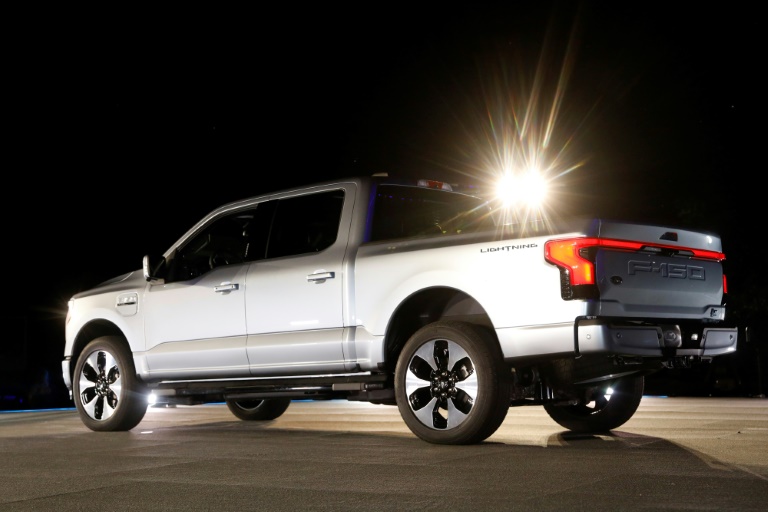
Not so, according to Detroit auto giants, who have responded to the climate crisis by launching all-electric versions of the Ford F-150 pickup, the Chevrolet Blazer SUV and other best-selling giants that seemingly promise the possibility that consumers can have it all: address global warming without sacrificing the appeal of larger autos.

Leading US environmentalists, along with the Biden administration, have praised announcements of the electric vehicle (EV) rollouts as a way to reduce greenhouse gas emissions.

Absent has been any discussion of the environmental toll of large EV trucks, which require more energy to recharge and more critical materials than do smaller EVs.

In showcasing trucks, Detroit automakers are setting the groundwork for an EV era that mirrors the current profile of US roadways and distinct from Europe, where sedans dominate.

Industry insiders like Alan Amici, president of the Center for Automotive Research, see little appetite among American consumers to go small.

“People are still clamoring for big pickups and SUVs,” Amici said. “I don’t expect a return to sedans.”

The trucks, often marketed in advertisements navigating rugged landscapes, provide lucrative profit margins to automakers and have become so ubiquitous on US roads that some consumers avoid smaller vehicles out of fear of how it would handle a crash with a much bigger auto.

Ford and General Motors, both of which report earnings this week, are positioning the vehicles as environmentally friendly based on how they contrast with gas-guzzling equivalents.

Luke Tonachel, who heads the clean vehicles program at environmental group NRDC, said electric pickups and SUVs represent a critical step in addressing climate change.

“It’s incredibly important that we eliminate tailpipe pollution from all cars as soon as possible,” Tonachel told AFP. 

“We need broad acceptance and adoption of EVs across the market. And that’s why it’s encouraging to see automakers starting to make EVs on all types of car segments, including the most popular ones.”

– Customer ‘has spoken’ –

The focus on large vehicles was apparent at last month’s Detroit Auto Show, where Biden test drove the EV Cadillac Lyriq, an SUV made by the GM brand. In previous trips to Detroit, Biden cheered on production of GM’s EV Hummer and the launch of Ford’s F-150 EV.

While GM’s display at the Detroit show included the Bolt, an EV sedan, greater prominence went to electric versions of three larger Chevies: the Silverado pickup, and the Blazer and Equinox SUVs. 

“The customer has spoken. SUVs and trucks are what the customer wants,” Chevrolet Vice President Steve Majoros told AFP at the show. 

NRDC’s Tonachel notes that some sedans still sell at substantial levels in the United States, but that they are made by companies like Japan’s Toyota and South Korea’s Hyundai.

“The different manufacturers are sort of carving out what they see as their specialty,” he said. “The Detroit three automakers, they left the compact car and most of the sedan market years ago.”

Bertrand Rakoto, global automotive practice leader at Ducker in Detroit, a consultancy, said it makes more sense to focus on trucks to fight climate change.

“You’re removing the emissions for the large vehicles that are the most emitting,” he said.

Rakoto, who is originally from France, said the contrast between the United States and Europe reflect different geographic qualities and transportation systems, with space in Europe more precious and public transit more integrated into regular life.

– Energy drain –

A December 2021 International Energy Agency report bemoaned the rise of SUVs, not only in the United States, but in India and Europe.  

Most of the vehicles still run on gasoline, meaning that “if SUVs were an individual country, they would rank sixth in the world for absolute emissions in 2021, emitting over 900 million tons of CO2,” the IEA said.

The analysis said SUV electrification helps, but noted larger vehicles require more critical materials for bigger batteries and consume around 20 percent more energy than a medium-sized car.

For Benjamin Stephan, of Greenpeace in Germany, limiting global warming remains critical, meaning “you sort of have to pull every lever available.”

“Obviously an all-electric pickup truck will have a much better carbon footprint,” he said. “But you could reduce that footprint even more by having no car at all, or a much smaller car.”

Weinstein used Hollywood power to rape, court hears

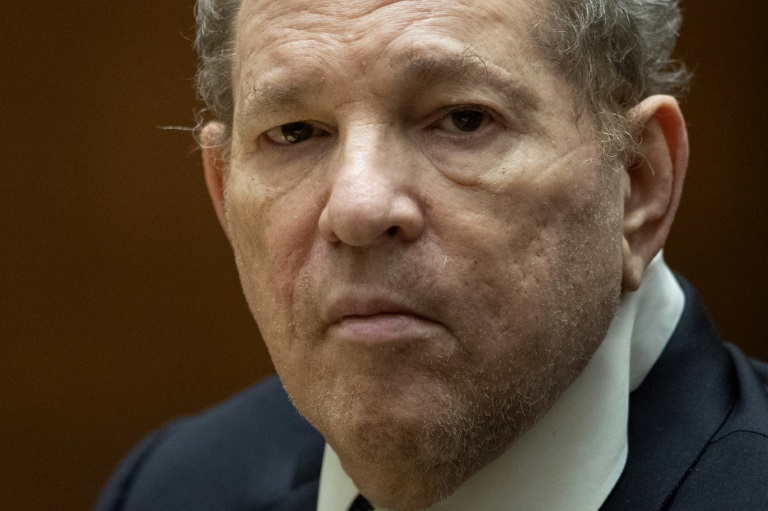
Harvey Weinstein used his power and influence in Hollywood to rape women, leaving them terrified for their careers if they stood up to him, a court in Los Angeles heard Monday.

The movie mogul exploited both his physical size and his position as “king” of the film industry to attack his victims in hotel rooms, the prosecution said, as a two-month trial began to hear evidence.

“They feared that he could crush their careers if they reported what he had done,” Deputy District Attorney Paul Thompson told the packed courtroom.

Thompson said jurors would hear from eight women who were sexually assaulted by the “Pulp Fiction” producer, who is credited with making the careers of some of the movie industry’s biggest names, including Quentin Tarantino, Ben Affleck, Matt Damon and Gwyneth Paltrow.

“Each of these women came forward independent of each other, and none of them knew one another,” he said.

The jury will hear testimony from these women, he said, including how they begged the now-70-year-old to stop, but that he persisted in raping them, forcing them to perform oral sex on him, or making them watch him masturbate.

Weinstein, who produced “The English Patient” and “Good Will Hunting,” is already serving 23 years in jail in New York after being convicted there of a series of sex crimes.

He now faces 11 more charges, including sexual battery by restraint, forcible rape and forcible oral copulation against women in Beverly Hills and Los Angeles hotels between 2004 and 2013.

If convicted, Weinstein — who has pleaded not guilty to all counts — could be sentenced to more than 100 additional years behind bars.

Thompson played jurors a series of quotes from the alleged victims, describing Weinstein as “the most powerful person in the industry,” and “the king.”

“Part of me was thinking should I just make a run for it, but he’s a big guy,” one of the women told investigators.

“He’s big. He’s broad. He’s overweight. He’s domineering,” one said.

“I still wanted to work in Hollywood so I was afraid to do anything because of that,” one woman said.

“I was scared that if I didn’t play nice something could happen in the room or out of the room because of his power in the industry,” another woman said.

In common with most victims of sexual assault, the women in the case are being referred to as “Jane Doe,” in order to preserve their anonymity, but one has been publicly identified as Jennifer Siebel Newsom, the wife of California governor Gavin Newsom. 

– #MeToo –

Defending, Mark Werksman said the prosecution’s case was one of quantity, not quality, and driven by emotion, not reason.

He said sex in Hollywood was a commodity, and that this was all exploded by the advent of the #MeToo movement.

“It was transactional sex. It may have been unpleasant, and embarrassing… but it was consensual.

“It was the casting couch. Everyone did it. He did it. They did it. Because each wanted something from another,” Werksman said.

“Look at him. He’s not Brad Pitt or George Clooney. Do you think those beautiful women had sex with him because he’s hot? No. They did it because he was powerful.”

“An asteroid called the #MeToo movement hit earth with such ferocity that everything changed overnight. And Mr. Weinstein became the epicenter.

“The accusers in this case, women who willingly played the game by the rules that applied back then, they will come into this courtroom now… and claim they were raped and sexually assaulted,” Werksman said. 

Widespread sexual abuse and harassment allegations against Weinstein exploded in October 2017, and his conviction in New York in 2020 was a landmark in the #MeToo movement.

In June, he lost a bid to have that sex crimes conviction overturned. He has been separately charged by British prosecutors with the 1996 indecent assault of a woman in London.

In total, nearly 90 women, including Angelina Jolie, Gwyneth Paltrow and Salma Hayek, have accused Weinstein of harassment or assault.

Before the allegations emerged, he and his brother Bob were Hollywood’s ultimate power players.

Their hits included 1998’s “Shakespeare in Love,” for which Weinstein shared a best picture Oscar. Over the years, Weinstein’s films received more than 300 Oscar nominations and 81 statuettes.

“She Said,” a film about the 2017 newspaper investigation into Weinstein that sparked the demise of his movie empire, is set for wide release on November 18 in the United States.

Trump family business fraud trial opens

The trial of Donald Trump’s family business on fraud and tax evasion charges began in New York on Monday, with the former US president immediately dismissing as it as a political stunt.

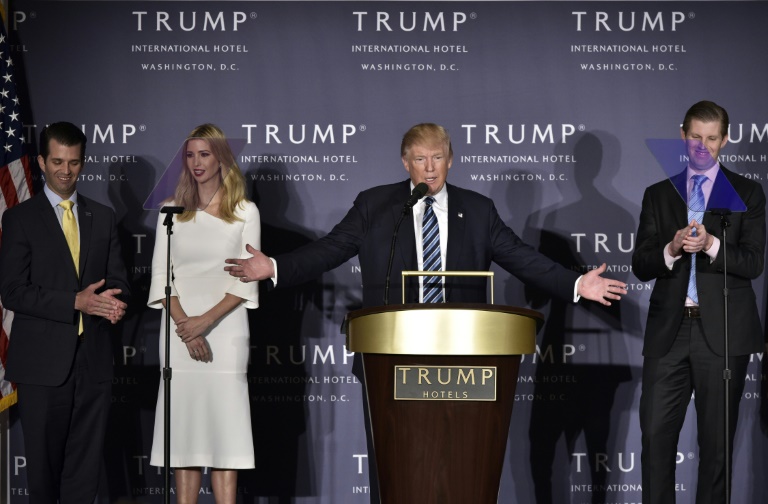
Manhattan prosecutors have charged the Trump Organization, currently run by Trump’s two adult sons, Donald Jr and Eric Trump, with hiding compensation it paid to top executives between 2005 and 2021.

Trump, who is not named in the case, slammed the charges as a “witch hunt” by rivals, weeks ahead of congressional elections on November 8.

“The highly partisan Democrat Witch Hunt goes on, this time in New York… right during the important Mid-Term Elections, of course,” he said on social media.

The company faces potential fines of over $1.5 million if found guilty.

US news outlets said Judge Juan Merchan had made media access to the courtroom difficult and had warned the 130 jury candidates that their selection could take a week, so as to filter out any supporters or open opponents of the divisive former Republican president. 

The trial could last a month and a half, he said.

One of the implicated executives, longtime CFO Allen Weisselberg, has already pleaded guilty to 15 counts of tax fraud, and is expected to testify against his former company as part of a plea bargain.

A close friend of the Trump family, the 75-year-old Weisselberg admitted he schemed with the company to receive undeclared benefits such as a rent-free apartment in a posh Manhattan neighborhood, luxury cars for him and his wife and private school tuition for his grandchildren.

According to his plea deal, Weisselberg has agreed to pay nearly $2 million in fines and penalties and complete a five-month prison sentence in exchange for testimony during the trial, for which jury selection began Monday.

“This plea agreement directly implicates the Trump Organization in a wide range of criminal activity and requires Weisselberg to provide invaluable testimony in the upcoming trial against the corporation,” Manhattan District Attorney Alvin Bragg said in August.

Weisselberg has so far refused to give testimony directly implicating the former president in the scheme.

– Multiple legal cases –

Two subsidiaries of the Trump family’s sprawling real estate, golf and hospitality business are targeted by the suits.

While Donald Trump is not named in this case, he is facing charges along with three of his eldest children in a civil investigation led by New York’s attorney general, Leticia James.

James, a Democrat, has accused the family of purposefully inflating and deflating the value of their properties to avoid tax liabilities and to get more favorable loan and insurance deals.

Her office is seeking $250 million in fines against the former president, and that his family be barred from conducting business in the state.

The suit also calls for three of Trump’s children — Donald Jr, Eric and Ivanka — to be barred from purchasing real estate in New York for five years.

The 76-year-old Trump, who has heavily hinted at but not yet announced a 2024 White House run, is also facing legal action on several other fronts.

He is at the center of a Justice Department investigation into the handling of highly classified documents, which the FBI seized from his Florida home in a raid, as well as multiple state and federal probes into his involvement in the January 6, 2021, attack on the US Capitol.

The congressional committee investigating the Capitol riot has issued a subpoena requiring him to submit documents by November 4 and give sworn testimony by mid-November.

Without confirming that Trump had received the subpoena, his lawyer David Warrington has said his team would “review and analyze” the document and “respond as appropriate to this unprecedented action.”

Trump’s compliance would mean testifying under oath.

If he refuses, the House of Representatives can hold him in criminal contempt in a vote recommending him for prosecution. 

Close Bitnami banner
Bitnami