AFP

Incoming PM Sunak inherits UK economy in crisis

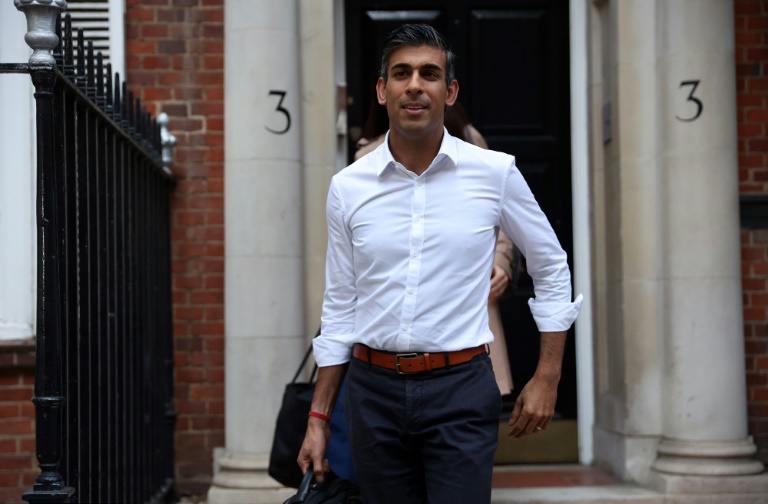
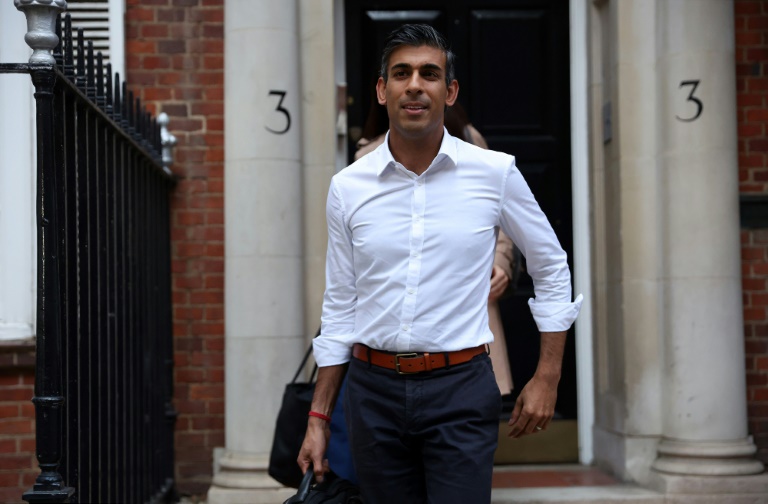
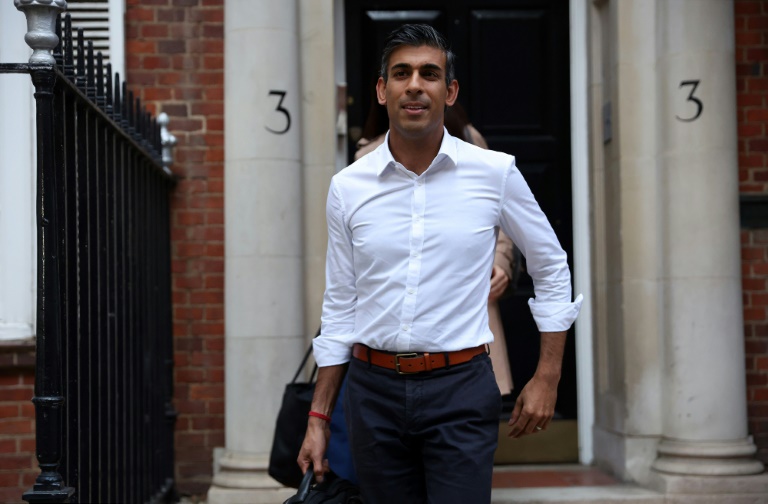
Britain’s next prime minister, former finance chief Rishi Sunak, inherits a UK economy that was headed for recession even before the recent turmoil triggered by Liz Truss.

Outgoing Prime Minister Truss resigned after her budget of tax cuts funded by debt sent shockwaves through markets, crashing the pound.

That caused the government to U-turn on most of its budget, including scaling back a cap on soaring energy bills that have contributed heavily to a cost-of-living crisis for tens of millions of Britons.

Data Monday showed Britain’s economic downturn has worsened in October, with private-sector output at a 21-month low.

“October’s flash PMI data showed the pace of economic decline gathering momentum after the recent political and financial market upheavals,” noted Chris Williamson, chief business economist at S&P Global Market Intelligence that helped compile the figures.

“The heightened political and economic uncertainty has caused business activity to fall at a rate not seen since the global financial crisis in 2009 if pandemic lockdown months are excluded.”

Williamson added that upcoming data would likely show Britain already in recession.

The S&P Global/ CIPS flash UK composite purchasing managers index stood at 47.2 in October, below September’s level of 49.1.

A figure under 50 indicates a contraction.

The UK is not alone, however, with separate S&P data pointing to “impending recession” in Germany, Europe’s biggest economy.

– ‘Sunak stability’ –

Truss resigned last Thursday after just 44 days as prime minister. She had succeeded Boris Johnson on September 6 after a weeks-long campaign against Tory rival Sunak.

The former chancellor of the exchequer had warned in the battle to succeed Johnson that tax cuts promised by Truss when government debt had already soared on Covid interventions was the wrong policy to pursue.

He was proved right as the budget sent the pound crashing to a record-low close to parity with the dollar and triggered yields on government bonds to soar.

With Sunak seen as bringing stability to markets, sterling rose and yields fell Monday.

“Investors clearly hope Sunak will stabilise the economy and the political situation — though it’s hard to work out at this point which is the harder task,” said AJ Bell financial analyst Danni Hewson.

“As well as the recovery in sterling and the reduced cost of government borrowing (as yields drop), Sunak will be pleased to see European gas prices” falling.

However, with UK inflation at a 40-year high above 10 percent, the Bank of England is set to unveil another bumper interest-rate hike at a regular policy meeting next week.

This will heap further pressure on borrowers, including homeowners who have seen mortgage rates surge in the wake of the government’s costly budget.

Shevaun Haviland, director general of the British Chambers of Commerce, urged Sunak to also help out businesses struggling with huge energy bills.

“The political and economic uncertainty of the past few months has been hugely damaging to British business confidence and must now come to an end,” she said in a statement after Sunak’s new position was confirmed.

“The new prime minister must be a steady hand on the tiller to see the economy through the challenging conditions ahead. 

“This means setting out fully costed plans to deal with the big issues facing businesses; soaring energy bills, labour shortages, spiralling inflation, and climbing interest rates.”   
Opening arguments to start in Weinstein sex assault trial

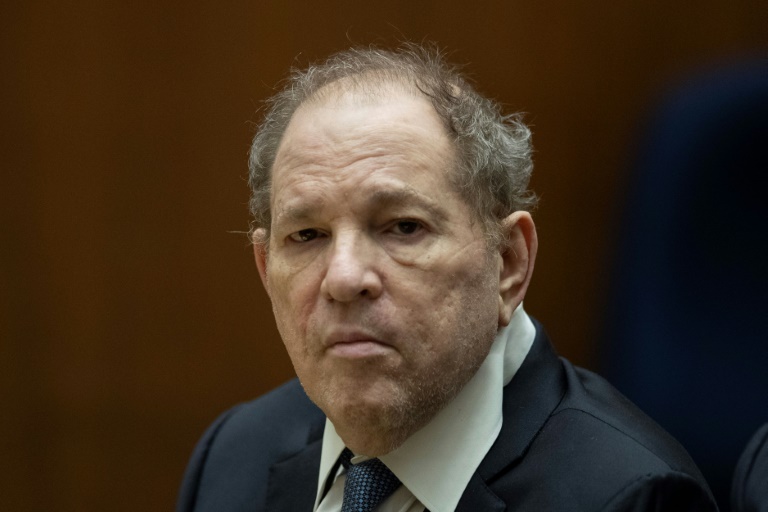
Opening arguments were due to begin Monday in the Los Angeles trial of disgraced Hollywood movie mogul Harvey Weinstein, with five alleged victims expected to take the stand during the two-month case.

The 70-year-old “Pulp Fiction” producer is already serving 23 years in jail in New York after being convicted there of a series of sex crimes.

He now faces 11 more charges, including sexual battery by restraint, forcible rape and forcible oral copulation against women in Beverly Hills and Los Angeles hotels between 2004 and 2013.

If convicted, Weinstein — who has pleaded not guilty to all counts — could be sentenced to more than 100 additional years behind bars.

The task of selecting a jury got underway on October 10, with Judge Lisa Lench overseeing proceedings.

Widespread sexual abuse and harassment allegations against Weinstein exploded in October 2017, and his conviction in New York in 2020 was a landmark in the #MeToo movement.

In June, he lost a bid to have that sex crimes conviction overturned. He has also been separately charged by British prosecutors with the 1996 indecent assault of a woman in London.

In total, nearly 90 women, including Angelina Jolie, Gwyneth Paltrow and Salma Hayek, have accused Weinstein of harassment or assault.

Weinstein attorney Mark Werksman has said there would be testimony in Los Angeles from well-known figures, The Los Angeles Times reported.

“Some of these victims, people will recognize them. Some of these women, you’ve seen them in movies, they’ve been in ad campaigns, a couple of them have achieved some success as actresses or models,” Werksman said, according to the paper.

Weinstein says that all his sexual encounters were consensual, and his lawyer told reporters that the Los Angeles accusations “stem from many years ago” and cannot “be substantiated or corroborated by any forensic evidence” or “credible witnesses.”

Before the allegations against him emerged, the producer and his brother Bob were Hollywood’s ultimate power players.

They co-founded Miramax Films, a distribution company named after their mother Miriam and father Max, in 1979. It was sold to Disney in 1993.

Their hits included 1998’s “Shakespeare in Love,” for which Weinstein shared a best picture Oscar. Over the years, Weinstein’s films received more than 300 Oscar nominations and 81 statuettes.

“She Said,” a film about the 2017 newspaper investigation into Weinstein that sparked the demise of his movie empire, is set for wide release on November 18 in the United States.

European stocks, pound up awaiting new British PM

European stocks and the pound climbed Monday as markets awaited confirmation that former finance minister Rishi Sunak would become Britain’s new prime minister.

European equities climbed despite data showing Britain and Germany headed for recession and a plunging Hong Kong stock market as Chinese President Xi Jinping handed key economic posts to loyalists behind his zero-Covid strategy.

Sentiment was boosted by hopes the Federal Reserve would soon slow its pace of interest rate hikes and on news that European gas prices were at a four-month low.

The reference Dutch TTF gas price on Monday dipped below 100 euros for the first time since June, reaching 98.60 euros per megawatt hour at around 1030 GMT.

All eyes were on Britain, set for its third prime minister in less than two months following the resignations of Boris Johnson and Liz Truss. 

“The pound started the week trading higher as many see the new potential PM as a source of some stability, particularly when compared to the chaotic term served by the Truss government which saw massive volatility across markets,” noted XTB chief market analyst Walid Koudmani.

Yields on UK government bonds also dropped following recent surges in the wake of Truss’s disastrous budget that led to her downfall.

Elsewhere, the embattled yen saw only a brief rally against the dollar on speculation Japanese authorities stepped in to support their currency for a second time in as many sessions.

Focus was also on the euro after new Italian Prime Minister Giorgia Meloni took office.

Meloni’s post-fascist Brothers of Italy scored a historic victory in general elections on September 25.

Her new government is the most far-right in Italy since World War II, and takes power at a time of decades-high inflation and an energy crisis linked to Russia’s invasion of Ukraine.

Milan’s stock market was up 1.3 percent in early afternoon trading on Monday, mirroring strong gains in Frankfurt and Paris.

London was up only slightly, with the stronger pound and falling oil and gas prices weighing on the heavyweight energy sector, according to traders.

The eurozone was meanwhile looking ahead to Thursday when the European Central Bank is expected to announce another bumper rise in interest rates aimed at curbing sky-high prices.

On the corporate front, Dutch medical device manufacturer Philips announced it would axe 4,000 jobs after its recall of faulty sleep respirators pushed it into a loss.

Following the news, the group’s share price dropped 0.8 percent on the Amsterdam stock exchange.

– Key figures around 1100 GMT –

London – FTSE 100: UP 0.2 percent at 6,980.53 points

Frankfurt – DAX: UP 1.3 percent at 12,891.41

Paris – CAC 40: UP 1.5 percent at 6,123.30

EURO STOXX 50: UP 1.3 percent at 3,521.53

Tokyo – Nikkei 225: UP 0.3 percent at 26,974.90 (close)

Hong Kong – Hang Seng Index: DOWN 6.4 percent at 15,180.69 (close)

Shanghai – Composite: DOWN 2.0 percent at 2,977.56 (close)

New York – Dow: UP 2.5 percent at 31,082.56 (close)

Pound/dollar: UP at $1.1303 from $1.1258 on Friday

Dollar/yen: UP at 149.37 yen from 147.65 yen

Euro/dollar: DOWN at $0.9822 from $0.9863

Euro/pound: DOWN at 86.88 pence from 87.26 pence

West Texas Intermediate: DOWN 1.1 percent at $84.14 per barrel

Brent North Sea crude: DOWN 0.8 percent at $92.80 per barrel

burs/bcp/imm

European stocks, pound up awaiting new British PM

European stocks and the pound climbed Monday as markets awaited confirmation that former finance minister Rishi Sunak would become Britain’s new prime minister.

European equities climbed despite data showing Britain and Germany headed for recession and a plunging Hong Kong stock market as Chinese President Xi Jinping handed key economic posts to loyalists behind his zero-Covid strategy.

Sentiment was boosted by hopes the Federal Reserve would soon slow its pace of interest rate hikes and on news that European gas prices were at a four-month low.

The reference Dutch TTF gas price on Monday dipped below 100 euros for the first time since June, reaching 98.60 euros per megawatt hour at around 1030 GMT.

All eyes were on Britain, set for its third prime minister in less than two months following the resignations of Boris Johnson and Liz Truss. 

“The pound started the week trading higher as many see the new potential PM as a source of some stability, particularly when compared to the chaotic term served by the Truss government which saw massive volatility across markets,” noted XTB chief market analyst Walid Koudmani.

Yields on UK government bonds also dropped following recent surges in the wake of Truss’s disastrous budget that led to her downfall.

Elsewhere, the embattled yen saw only a brief rally against the dollar on speculation Japanese authorities stepped in to support their currency for a second time in as many sessions.

Focus was also on the euro after new Italian Prime Minister Giorgia Meloni took office.

Meloni’s post-fascist Brothers of Italy scored a historic victory in general elections on September 25.

Her new government is the most far-right in Italy since World War II, and takes power at a time of decades-high inflation and an energy crisis linked to Russia’s invasion of Ukraine.

Milan’s stock market was up 1.3 percent in early afternoon trading on Monday, mirroring strong gains in Frankfurt and Paris.

London was up only slightly, with the stronger pound and falling oil and gas prices weighing on the heavyweight energy sector, according to traders.

The eurozone was meanwhile looking ahead to Thursday when the European Central Bank is expected to announce another bumper rise in interest rates aimed at curbing sky-high prices.

On the corporate front, Dutch medical device manufacturer Philips announced it would axe 4,000 jobs after its recall of faulty sleep respirators pushed it into a loss.

Following the news, the group’s share price dropped 0.8 percent on the Amsterdam stock exchange.

– Key figures around 1100 GMT –

London – FTSE 100: UP 0.2 percent at 6,980.53 points

Frankfurt – DAX: UP 1.3 percent at 12,891.41

Paris – CAC 40: UP 1.5 percent at 6,123.30

EURO STOXX 50: UP 1.3 percent at 3,521.53

Tokyo – Nikkei 225: UP 0.3 percent at 26,974.90 (close)

Hong Kong – Hang Seng Index: DOWN 6.4 percent at 15,180.69 (close)

Shanghai – Composite: DOWN 2.0 percent at 2,977.56 (close)

New York – Dow: UP 2.5 percent at 31,082.56 (close)

Pound/dollar: UP at $1.1303 from $1.1258 on Friday

Dollar/yen: UP at 149.37 yen from 147.65 yen

Euro/dollar: DOWN at $0.9822 from $0.9863

Euro/pound: DOWN at 86.88 pence from 87.26 pence

West Texas Intermediate: DOWN 1.1 percent at $84.14 per barrel

Brent North Sea crude: DOWN 0.8 percent at $92.80 per barrel

burs/bcp/imm

European stocks, pound up awaiting new British PM

European stocks and the pound climbed Monday as markets awaited confirmation that former finance minister Rishi Sunak would become Britain’s new prime minister.

European equities climbed despite data showing Britain and Germany headed for recession and a plunging Hong Kong stock market as Chinese President Xi Jinping handed key economic posts to loyalists behind his zero-Covid strategy.

Sentiment was boosted by hopes the Federal Reserve would soon slow its pace of interest rate hikes and on news that European gas prices were at a four-month low.

The reference Dutch TTF gas price on Monday dipped below 100 euros for the first time since June, reaching 98.60 euros per megawatt hour at around 1030 GMT.

All eyes were on Britain, set for its third prime minister in less than two months following the resignations of Boris Johnson and Liz Truss. 

“The pound started the week trading higher as many see the new potential PM as a source of some stability, particularly when compared to the chaotic term served by the Truss government which saw massive volatility across markets,” noted XTB chief market analyst Walid Koudmani.

Yields on UK government bonds also dropped following recent surges in the wake of Truss’s disastrous budget that led to her downfall.

Elsewhere, the embattled yen saw only a brief rally against the dollar on speculation Japanese authorities stepped in to support their currency for a second time in as many sessions.

Focus was also on the euro after new Italian Prime Minister Giorgia Meloni took office.

Meloni’s post-fascist Brothers of Italy scored a historic victory in general elections on September 25.

Her new government is the most far-right in Italy since World War II, and takes power at a time of decades-high inflation and an energy crisis linked to Russia’s invasion of Ukraine.

Milan’s stock market was up 1.3 percent in early afternoon trading on Monday, mirroring strong gains in Frankfurt and Paris.

London was up only slightly, with the stronger pound and falling oil and gas prices weighing on the heavyweight energy sector, according to traders.

The eurozone was meanwhile looking ahead to Thursday when the European Central Bank is expected to announce another bumper rise in interest rates aimed at curbing sky-high prices.

On the corporate front, Dutch medical device manufacturer Philips announced it would axe 4,000 jobs after its recall of faulty sleep respirators pushed it into a loss.

Following the news, the group’s share price dropped 0.8 percent on the Amsterdam stock exchange.

– Key figures around 1100 GMT –

London – FTSE 100: UP 0.2 percent at 6,980.53 points

Frankfurt – DAX: UP 1.3 percent at 12,891.41

Paris – CAC 40: UP 1.5 percent at 6,123.30

EURO STOXX 50: UP 1.3 percent at 3,521.53

Tokyo – Nikkei 225: UP 0.3 percent at 26,974.90 (close)

Hong Kong – Hang Seng Index: DOWN 6.4 percent at 15,180.69 (close)

Shanghai – Composite: DOWN 2.0 percent at 2,977.56 (close)

New York – Dow: UP 2.5 percent at 31,082.56 (close)

Pound/dollar: UP at $1.1303 from $1.1258 on Friday

Dollar/yen: UP at 149.37 yen from 147.65 yen

Euro/dollar: DOWN at $0.9822 from $0.9863

Euro/pound: DOWN at 86.88 pence from 87.26 pence

West Texas Intermediate: DOWN 1.1 percent at $84.14 per barrel

Brent North Sea crude: DOWN 0.8 percent at $92.80 per barrel

burs/bcp/imm

China economy grows, but Xi's new power spooks investors

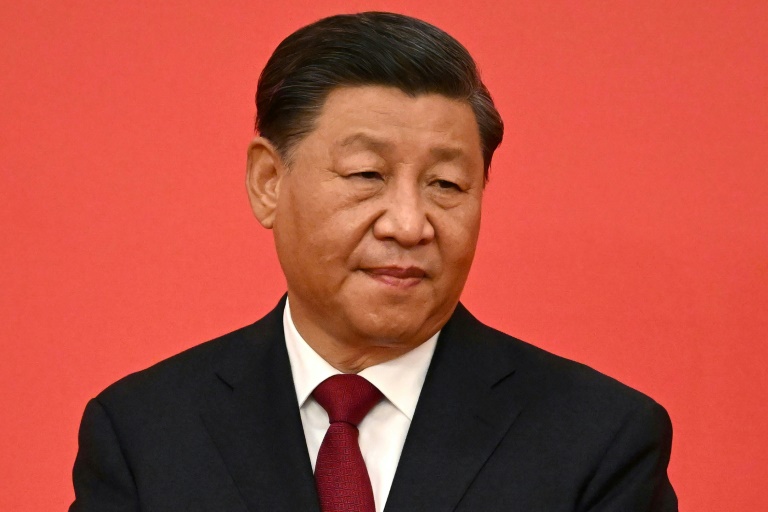
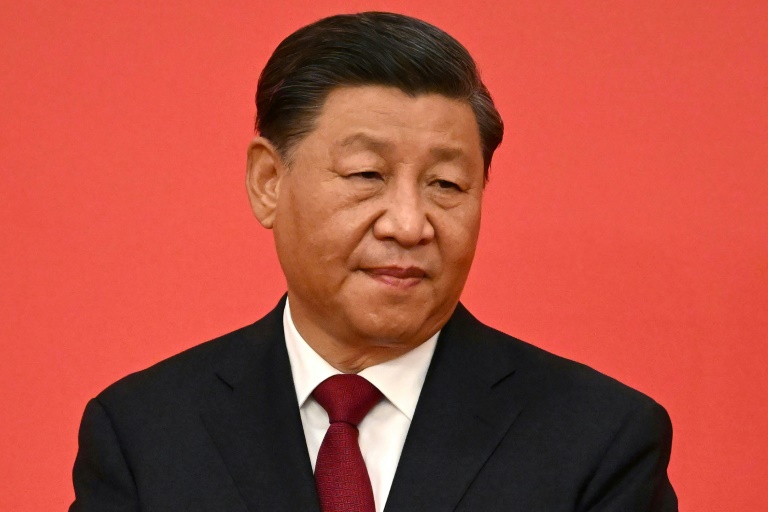
China’s economy grew at a faster pace than forecast in the third quarter, official data showed Monday, but investors reacted with alarm to President Xi Jinping’s sweeping new powers over the ruling Communist Party.

Xi secured an expected third term as leader at a party Congress over the weekend, but surprised observers by stacking leadership positions with proteges and allies. 

After delaying the release of economic data last week, the government announced Monday that the economy grew 3.9 percent year-on-year in the third quarter.

China had been expected to announce some of its weakest quarterly growth figures since 2020, with the world’s second-biggest economy hobbled by Covid-19 restrictions and a real estate crisis.

But investors instead focused on the political developments, which raised fears Xi and his allies would continue with gruelling virus lockdowns and other policies that have punished the economy.

China’s currency slumped and stocks nosedived in Hong Kong to their lowest level since the global financial crisis.

On Monday, the onshore yuan dipped more than 0.4 percent to 7.2633 per dollar — its weakest since January 2008.

The Hang Seng China Enterprises Index, a gauge of Chinese stocks listed in Hong Kong, closed down by more than 7 percent — the worst showing after any Communist Party Congress since the start of the index in 1994.

“The market is concerned that with so many Xi supporters elected, Xi’s unfettered ability to enact policies that are not market friendly is now cemented,” said Justin Tang, head of Asian research at United First Partners.

One of the most pressing concerns is Xi’s zero-Covid policy, which continues to put tens of millions of people under rolling lockdowns that also shutter factories. 

China is the last of the world’s major economies to hew to the strategy.  

“There is no clear sign of a significant easing of the zero-Covid strategy,” Nomura’s Ting Lu said, noting that, if anything, the opposite had happened. 

In a speech to close the Congress on Saturday, Xi insisted China’s Covid response has been a success. 

And he promoted Li Qiang, the architect of a two-month lockdown in Shanghai that crippled the financial hub’s economy, to the second most powerful post in the Communist Party.

Tech firms were among the worst hit by Monday’s sell-off, which comes after Xi’s crackdown on the sector scythed firms’ profits and wiped billions off their valuations.

E-commerce giants Alibaba and JD.com tanked more than 10 percent each, while Tencent lost more than eight percent. 

China is also battling an unprecedented crisis in its real estate sector — which makes up more than a quarter of the country’s GDP when combined with construction. 

Following years of explosive growth fuelled by easy access to loans, Xi oversaw a crackdown on excessive debt.

Property sales are now falling across the country, leaving many developers struggling and some owners refusing to pay their mortgages for unfinished homes.

Still, the economic data released on Monday gave some cause for optimism.

The third-quarter growth was higher than the 2.5 percent predicted by a panel of experts surveyed by AFP.

“Many economic indicators have actually recovered reasonably well from the mass lockdowns of March and April,” according to analyst Thomas Gatley of Gavekal Dragonomics.

Car sales held strong in September, driven by strong demand for electric clean vehicles.

August exports increased 7.1 percent compared with the previous year, and Beijing has invested in infrastructure to support activity.

In the second quarter of the year, growth had collapsed to 0.4 percent on-year, the worst performance since 2020. 

The country posted 4.8 percent growth in the first quarter of 2022.

Many economists continue to think China will struggle to attain its 2022 growth target of around 5.5 percent, and the International Monetary Fund has lowered its GDP growth forecast to 3.2 percent for 2022 and 4.4 percent for next year.

— Bloomberg News contributed to this story —

China economy grows, but Xi's new power spooks investors

China’s economy grew at a faster pace than forecast in the third quarter, official data showed Monday, but investors reacted with alarm to President Xi Jinping’s sweeping new powers over the ruling Communist Party.

Xi secured an expected third term as leader at a party Congress over the weekend, but surprised observers by stacking leadership positions with proteges and allies. 

After delaying the release of economic data last week, the government announced Monday that the economy grew 3.9 percent year-on-year in the third quarter.

China had been expected to announce some of its weakest quarterly growth figures since 2020, with the world’s second-biggest economy hobbled by Covid-19 restrictions and a real estate crisis.

But investors instead focused on the political developments, which raised fears Xi and his allies would continue with gruelling virus lockdowns and other policies that have punished the economy.

China’s currency slumped and stocks nosedived in Hong Kong to their lowest level since the global financial crisis.

On Monday, the onshore yuan dipped more than 0.4 percent to 7.2633 per dollar — its weakest since January 2008.

The Hang Seng China Enterprises Index, a gauge of Chinese stocks listed in Hong Kong, closed down by more than 7 percent — the worst showing after any Communist Party Congress since the start of the index in 1994.

“The market is concerned that with so many Xi supporters elected, Xi’s unfettered ability to enact policies that are not market friendly is now cemented,” said Justin Tang, head of Asian research at United First Partners.

One of the most pressing concerns is Xi’s zero-Covid policy, which continues to put tens of millions of people under rolling lockdowns that also shutter factories. 

China is the last of the world’s major economies to hew to the strategy.  

“There is no clear sign of a significant easing of the zero-Covid strategy,” Nomura’s Ting Lu said, noting that, if anything, the opposite had happened. 

In a speech to close the Congress on Saturday, Xi insisted China’s Covid response has been a success. 

And he promoted Li Qiang, the architect of a two-month lockdown in Shanghai that crippled the financial hub’s economy, to the second most powerful post in the Communist Party.

Tech firms were among the worst hit by Monday’s sell-off, which comes after Xi’s crackdown on the sector scythed firms’ profits and wiped billions off their valuations.

E-commerce giants Alibaba and JD.com tanked more than 10 percent each, while Tencent lost more than eight percent. 

China is also battling an unprecedented crisis in its real estate sector — which makes up more than a quarter of the country’s GDP when combined with construction. 

Following years of explosive growth fuelled by easy access to loans, Xi oversaw a crackdown on excessive debt.

Property sales are now falling across the country, leaving many developers struggling and some owners refusing to pay their mortgages for unfinished homes.

Still, the economic data released on Monday gave some cause for optimism.

The third-quarter growth was higher than the 2.5 percent predicted by a panel of experts surveyed by AFP.

“Many economic indicators have actually recovered reasonably well from the mass lockdowns of March and April,” according to analyst Thomas Gatley of Gavekal Dragonomics.

Car sales held strong in September, driven by strong demand for electric clean vehicles.

August exports increased 7.1 percent compared with the previous year, and Beijing has invested in infrastructure to support activity.

In the second quarter of the year, growth had collapsed to 0.4 percent on-year, the worst performance since 2020. 

The country posted 4.8 percent growth in the first quarter of 2022.

Many economists continue to think China will struggle to attain its 2022 growth target of around 5.5 percent, and the International Monetary Fund has lowered its GDP growth forecast to 3.2 percent for 2022 and 4.4 percent for next year.

— Bloomberg News contributed to this story —

New PM inherits UK economy in crisis

Britain’s new prime minister, set to be former finance minister Rishi Sunak, inherits a UK economy that was headed for recession even before the recent turmoil triggered by Liz Truss.

Outgoing Prime Minister Truss resigned after her budget of tax cuts funded by debt sent shockwaves through markets, crashing the pound.

That caused the government to U-turn on most of its budget, including scaling back a cap on soaring energy bills that have contributed heavily to a cost-of-living crisis for tens of millions of Britons.

Data Monday showed Britain’s economic downturn has worsened in October, with private-sector output at a 21-month low.

“October’s flash PMI data showed the pace of economic decline gathering momentum after the recent political and financial market upheavals,” noted Chris Williamson, chief business economist at S&P Global Market Intelligence that helped compile the figures.

“The heightened political and economic uncertainty has caused business activity to fall at a rate not seen since the global financial crisis in 2009 if pandemic lockdown months are excluded.”

Williamson added that upcoming data would likely show Britain already in recession.

The S&P Global/ CIPS flash UK composite purchasing managers index stood at 47.2 in October, below September’s level of 49.1.

A figure under 50 indicates a contraction.

The UK is not alone, however, with separate S&P data pointing to “impending recession” in Germany, Europe’s biggest economy.

– ‘Sunak stability’ –

Truss resigned last Thursday after just 44 days as prime minister. She had succeeded Boris Johnson on September 6 after a weeks-long campaign against Tory rival Sunak.

The former chancellor of the exchequer had warned in the battle to succeed Johnson that tax cuts promised by Truss when government debt had already soared on Covid interventions was the wrong policy to pursue.

He was proved right as the budget sent the pound crashing to a record-low close to parity with the dollar and triggered yields on government bonds to soar.

With Sunak seen as bringing stability to markets, sterling rose and yields fell Monday.

“Investors clearly hope Sunak will stabilise the economy and the political situation — though it’s hard to work out at this point which is the harder task,” said AJ Bell financial analyst Danni Hewson.

“As well as the recovery in sterling and the reduced cost of government borrowing (as yields drop), Sunak will be pleased to see European gas prices” falling.

However, with UK inflation at a 40-year high above 10 percent, the Bank of England is set to unveil another bumper interest-rate hike at a regular policy meeting next week.

This will heap further pressure on borrowers, including home owners who have seen mortgage rates surge in the wake of the government’s costly budget.

Eurozone contracts further as Germany heads for recession

Germany, the EU’s top economy and Europe’s export powerhouse, looks headed for imminent recession, according to a closely watched survey Monday that pointed to a deepening eurozone contraction.

There are “growing signs of an impending recession in the eurozone’s largest economy,” S&P Global Market Intelligence said as it released its eurozone purchasing managers’ index for October.

The PMI for the 19-nation area fell to 47.1, down from 48.1 a month earlier — its fourth consecutive drop and that fastest decline in nearly two years — as soaring inflation and high energy prices bit deeper.

In Germany, the PMI dropped to 44.1, from 45.7 in September.

A reading below 50 signals an economic contraction.

The downward pressure on eurozone economic activity underlined the woes thrown up by Russia’s war in Ukraine, which has crimped energy supplies.

Germany’s reading was the lowest since initial business shutdowns in Germany when the Covid-19 pandemic hit.

Both manufacturing and services in Germany were showing accelerated rates of shrinkage, though that had yet to feed through into jobs-shedding, the survey showed.

German businesses were “deeply pessimistic” about the year-ahead outlook.

In France, the second-biggest economy in the EU, the economy was stagnating, with a PMI of 50 compared with 51.2 in September.

Although France is suffering less than other countries in Europe from inflation, rising prices are still putting pressure on consumers, leading to a severe fall in factory orders.

Across the eurozone, the PMI indicated that factory output had dropped for the fifth consecutive month, at a rate unseen since the worst of the pandemic.

Supply congestion and shortages had eased a bit, against a backdrop of flagging demand. While input demand had slumped, rising energy bills and wage pressure kept costs high.

A eurozone-wide recession “is looking increasingly inevitable,” S&P Global Market Intelligence chief business economist Chris Williamson said.

“The region’s energy crisis remains a major concern and a drag on activity, especially in energy intensive sectors.”

– ECB rate decision –

The PMI data came ahead of a Thursday meeting of the European Central Bank’s governing board that is expected to deliver a big interest rate cut in a bid to cool inflation.

Inflation in the 19-nation eurozone stood at nearly 10 percent in September, five times the ECB’s target of two percent.

The German economy, whose energy-hungry industries relied heavily on Russian gas before the war, is now forecast to shrink by 0.4 percent in 2023.

Higher interest rates typically mean putting a dampener on business activity, as credit becomes more expensive and consumer spending decreases.

The EU is struggling to find ways to mitigate energy prices. 

A summit last week agreed on a number of measures, but a key one, of capping wholesale gas prices, was kicked into future deliberations by Germany, which fears gas supplies being diverted to more lucrative markets in Asia.

Berlin has unholstered a massive 200-billion-euro ($197-billion) plan to shield German consumers from high energy prices, triggering unease among EU partners at its go-it-alone approach that risks distorting the single market.

At the summit German Chancellor Olaf Scholz reluctantly agreed to have the bloc look further at the price cap measure but only after an impact analysis.

The International Monetary Fund on Sunday said that downturns in parts of Europe could turn into “deeper recessions” across the continent.

Government support to tackle energy costs and inflation would “only partly” offset those strains, it said.

The IMF already predicted that Germany and Italy would slip into recession next year.

Philips to cut 4,000 jobs as recall losses deepen

Dutch medical device manufacturer Philips said Monday it will slash 4,000 jobs after a massive financial hit for a recall of faulty sleep respirators pushed it into loss.

The 1.3-billion-euro ($1.28 billion) write-down for the defective machines pushed the firm, which currently has nearly 80,000 employees worldwide, into a net loss of the same amount.

Philips is negotiating with US authorities over a final settlement on the faulty devices that put users with sleep apnea at risk of inhaling toxic foam, and faces a number of lawsuits.

“We do face multiple challenges,” said new chief executive Roy Jakobs, who only took over earlier this month, adding that the firm had to take “immediate steps” to cut costs.

“This includes the difficult but necessary decision to immediately reduce our workforce by around 4,000 roles globally… a decision we do not take lightly,” he said in a call with investors.

The job losses would mainly be in the United States, the Netherlands, India and China, he said.

Shares in Philips dropped 0.75 percent on the Amsterdam stock exchange in morning trading. 

The firm’s previous CEO Frans van Houten stepped down earlier this month after leading the company’s transition from a consumer electronics to medical device manufacturer over the past 12 years.

Dutchman Jakobs admitted that Amsterdam-based Philips had to “rebuild trust” and had not “lived up to… expectations” of its shareholders in recent years.

“These initial actions are needed to start turning the company around in order to realise Philips’ profitable growth potential and create value for all our stakeholders,” Jakobs said.

– ‘Class-action lawsuits’ –

Philips first announced a recall in June 2021 after sound-dampening foam on some of its sleep respirators was found to degrade under certain conditions.

The issue put users at risk of inhaling or swallowing pieces of debris with what the firm called “possible toxic and carcinogenic effects”.

It has since produced four million replacement devices and repair kits, it said.

But Philips now faces a US Department of Justice investigation and has been in negotiation with US authorities over a proposed financial settlement since July 2022. 

The firm said it also faces “several class-action lawsuits and individual personal injury claims”.

Philips had already set aside 900 million euros over the faulty respirators and had warned two weeks ago it would take the 1.3-billion-euro charge this quarter for the problem.

But it says it cannot give a final overall figure for the respirator issue “given the uncertain nature and timing of the relevant events.”

Philips expects to make another 300 million euros in charges in coming quarters as it proceeds with the restructuring, although it expects those measures will lead to savings of a similar amount.

The company posted a net profit of three billion euros in the third quarter last year, but that was boosted from the sale of its domestic appliances business.

Sales came in at 4.3 billion euros in the July-September period, a drop of five percent on a comparable basis from the same time last year due to supply chain problems.

This was partly because of “operational and supply challenges, inflationary pressures, the Covid situation in China and the Russia-Ukraine war”, the company said.

Philips currently employs nearly 80,000 people in 100 countries.

It started off as a lighting company more than 100 years ago but has undergone major changes in recent years, focusing in particular on remote healthcare.

Close Bitnami banner
Bitnami