AFP

Google fined $162 mn by Indian watchdog over market dominance

Google has been fined more than $160 million by India’s anti-trust watchdog after a probe found the tech behemoth was abusing its commanding position in the local smartphone market. 

The California-based company’s Android mobile operating system is by far the dominant player in India and is run on 95 percent of all the country’s smartphones, according to research agency Counterpoint.

But the Competition Commission of India (CCI) said the operating system was configured to unlawfully crowd out rivals to YouTube, web browser Chrome and other popular Google apps.

Android had a suite of Google apps pre-installed on its phones, including the company’s own search engine, “which accorded significant competitive edge to Google’s search services over its competitors”, a CCI statement said late Thursday. 

“Markets should be allowed to compete on merits and the onus is on (Google) that its conduct does not impinge this competition on merits,” it added. 

The commission levied a fine of 13.4 billion rupees ($162 million) and instructed the company to allow Android users to remove pre-installed Google apps. 

It also told Google not to enter into any agreement with smartphone makers that would encourage them to only sell Android-based devices or exclusively use its software.

The company said it would review the decision and weigh its next moves.

“The CCI’s decision is a major setback for Indian consumers and businesses, opening serious security risks for Indians… and raising the cost of mobile devices,” a spokesperson told AFP. 

Google faced a similar anti-trust ruling in the European Union that found the company had imposed “unlawful restrictions” on smartphone makers to benefit its search engine. 

Last month the EU’s second-highest court upheld a $4.1 billion fine against the company. 

Global regulators have followed suit, with Google facing a barrage of cases in the United States and Asia based on similar accusations.

India is home to the second-highest number of smartphone users in the world, after China.

Its smartphone market grew 27 percent year on year in 2021, according to Counterpoint, with annual sales exceeding 169 million units.

More than 60 percent of phones sold in the country come from leading Chinese manufacturers including Xiaomi and Oppo.  

Apple remains a minor player in the budget-conscious market but has seen some inroads in recent years, and the company last month announced plans to locally manufacture its flagship iPhone 14. 

Google fined $162 mn by Indian watchdog over market dominance

Google has been fined more than $160 million by India’s anti-trust watchdog after a probe found the tech behemoth was abusing its commanding position in the local smartphone market. 

The California-based company’s Android mobile operating system is by far the dominant player in India and is run on 95 percent of all the country’s smartphones, according to research agency Counterpoint.

But the Competition Commission of India (CCI) said the operating system was configured to unlawfully crowd out rivals to YouTube, web browser Chrome and other popular Google apps.

Android had a suite of Google apps pre-installed on its phones, including the company’s own search engine, “which accorded significant competitive edge to Google’s search services over its competitors”, a CCI statement said late Thursday. 

“Markets should be allowed to compete on merits and the onus is on (Google) that its conduct does not impinge this competition on merits,” it added. 

The commission levied a fine of 13.4 billion rupees ($162 million) and instructed the company to allow Android users to remove pre-installed Google apps. 

It also told Google not to enter into any agreement with smartphone makers that would encourage them to only sell Android-based devices or exclusively use its software.

The company said it would review the decision and weigh its next moves.

“The CCI’s decision is a major setback for Indian consumers and businesses, opening serious security risks for Indians… and raising the cost of mobile devices,” a spokesperson told AFP. 

Google faced a similar anti-trust ruling in the European Union that found the company had imposed “unlawful restrictions” on smartphone makers to benefit its search engine. 

Last month the EU’s second-highest court upheld a $4.1 billion fine against the company. 

Global regulators have followed suit, with Google facing a barrage of cases in the United States and Asia based on similar accusations.

India is home to the second-highest number of smartphone users in the world, after China.

Its smartphone market grew 27 percent year on year in 2021, according to Counterpoint, with annual sales exceeding 169 million units.

More than 60 percent of phones sold in the country come from leading Chinese manufacturers including Xiaomi and Oppo.  

Apple remains a minor player in the budget-conscious market but has seen some inroads in recent years, and the company last month announced plans to locally manufacture its flagship iPhone 14. 
As Ukrainians advance, Russians risk losing prized Kherson city

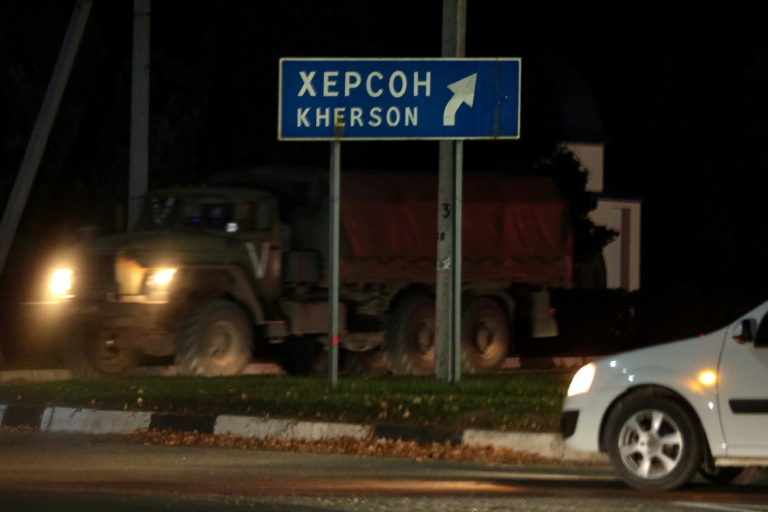
Advancing Ukrainians have vowed to wrest back the southern city of Kherson from the Russians but analysts say Moscow may be reluctant to give up one of its biggest trophies since the February invasion.

On March 3, barely a week into the cross-border assault, Russian troops captured Kherson, the regional centre of the southern Ukrainian province of the same name.

It was the first major city to fall to Moscow’s forces, providing them with a bridgehead on the western banks of the Dnipro river from which Russian troops could launch attacks for more territory further west.

“It’s a strategic point. It’s a connexion point between the Dnipro and the rest of the country,” said Olga Chiriac, a researcher at the Middle East Institute.

But today a Ukrainian counteroffensive is creeping closer to the city, threatening to deprive Moscow of the only provincial capital it has occupied in the invasion.

Pro-Russian authorities in the city have ordered residents to evacuate. And on Friday they accused Kyiv’s forces of killing four people when they shelled a bridge linking both sides of the river, though a Ukrainian military spokeswoman denied that they had killed any civilians.

Ukrainian President Volodymyr Zelensky has in turn accused Russia of planning to destroy a hydroelectric dam upstream from the city, in what would amount to a “catastrophe on a grand scale”.

He said hundreds of thousands of people around the Dnipro would be in danger of flash flooding.

And cutting water supplies could also impact the cooling systems of the Zaporizhzhia nuclear power plant, Europe’s largest.

– Russians ‘at a dead end’ –

It is not yet clear whether the Russians will hold on to Kherson or retreat eastwards across the river.

For the moment, Russia controls a strip around 140 kilometres (90 miles) long along the western bank of the Dnipro river.

It has bolstered its presence with a huge number of seasoned soldiers, who would have the advantage and be able to inflict terrible losses if the Ukrainians decided to attack the city.

But with a river within Ukrainian artillery range separating the Russians from their fall-back positions, they also risk being encircled.

In short, said former Romanian military intelligence officer Valentin Mateiu, Russia had troops that were competent “but at a dead end”. 

Its forces were at a “strategic disadvantage”, after Ukrainian soldiers managed to seize their own foothold beyond a Dnipro tributary to the north of the city, from which they might cut off Russian-held territory.

Ukrainians earlier in the war “systematically prepared the battlefield”, destroying bridges and command centres for example, he said, and could likely do the same again.

He and Chiriac nevertheless thought the Russians would do their best to hold on to the city.

“The Russians will try to avoid being encircled and turn Kherson into a centre of resistance,” Mateiu said.

– ‘Risk a new Mariupol’? –

Ukrainian analyst Mykhailo Samus said Moscow’s troops should have been evacuated “a long time ago”.

But he thought it was unlikely that the Ukrainians would want to attack the Russian-held city, where tens of thousands of residents remain.

“The Ukrainians won’t conduct any battle for Kherson. They don’t attack and destroy cities like Russia, like Mariupol,” he said, referring to the city pounded to rubble by the Russians earlier in the war.

Retired US general Ben Hodges agreed the Ukrainians were likely to avoid a “giant fight inside the city”.

Instead, they are “keeping these Russian troops fixed there so that they cannot escape, and at some point… they’ll be ready to bypass the Russians inside Kherson”, he said.

Pierre Grasser, a researcher tied to Paris’ Sorbonne University, said the Ukrainians were having to carefully weigh up their movements outside the city.

Any closer and “they will be entering the Kherson suburbs, and that could be dangerous”, he said.

“Urban warfare always leads to many deaths on the attacker’s side” and “it would risk a new Mariupol” in terms of damage.

Mateiu said the commander-in-chief of Ukraine’s armed forces, Valeriy Zaluzhnyi, was facing a dilemma.

“The president wants this strategic victory”, especially since it would pave the way towards retaking Ukraine’s Crimea peninsula annexed by Russia in 2014, he said. 

That leaves the army chief with what retired French general Michel Yakovleff described as a terrible choice — “besiege (the city) for as long as it takes or annihilate it and reduce it to rubble”.

Russia says 'fortress' Kherson readying for Ukraine attack

Kremlin proxy officials said Friday they were building up defences and turning Ukraine’s southern city of Kherson into a “fortress” as Kyiv’s forces advance and Russia pulls residents from the region.

The claim came as Ukraine’s President Volodymyr Zelensky said Moscow’s troops were preparing to destroy a hydroelectric dam in the southern Kherson region, in what would amount to a “catastrophe on a grand scale”.

Ukrainian forces in recent weeks — aided by Western weapons — have been advancing along the west bank of the Dnieper river towards the region’s main city, also called Kherson.

Kherson was the first major city to fall to Moscow’s troops since the February invasion began and retaking it would be a crucial prize in Ukraine’s counter-offensive.

Moscow-installed authorities in Kherson accused Kyiv’s forces of killing people by shelling a bridge.

“Four people were killed,” pro-Moscow official Kirill Stremousov said on Telegram. “The city of Kherson, like a fortress, is preparing for its defence.”

A Ukrainian military spokeswoman Nataliya Gumenyuk denied Kyiv’s forces were responsible, saying they do not target local populations.

Russian state-run media in recent days had aired footage showing civilians with bags taking ferries across the river from Kherson.

– Risks of disasters –

Kyiv has branded the organised movement of Kherson residents to Russia and other Moscow-controlled regions as “deportations” of Ukrainian citizens.

Zelensky said late Thursday that Russian forces had mined the Kakhovka hydroelectric power plant with the intent of blowing it up.

Hundreds of thousands of people around the lower Dnipro River would be in danger of flash flooding if the dam was destroyed, Zelensky warned in a speech Thursday to European leaders.

He said cutting water supplies to the south could also impact the cooling systems of the Zaporizhzhia nuclear power plant, Europe’s largest.

The nuclear facility is a key concern of Russia’s eight-month invasion with both sides regularly accusing the other of shelling near it and endangering operations.

Ukraine’s push in the south comes after a sweeping counter-offensive in the northeast Kharkiv region that has badly impaired Russia’s supply routes and logistics corridors in the eastern Donbas region.

But Russian forces have continued shelling the region’s largest city, Kharkiv, and the presidency said Friday that “industrial infrastructure” was hit in the city, wounding six.

The attack is the latest in a weeks-long barrage that has targeted infrastructure and particularly energy facilities.

Energy-saving measures were put in place across the country after Russian missile and drone strikes destroyed what Zelensky said was more than 30 percent of the country’s power stations in a week.

– Resilient Ukraine –

A 64-year-old Ukrainian, Vyacheslav, told AFP in Kyiv that the nation would make do, despite the restrictions.

“There are books to read. There battery-powered lights. I think we can hold out for a few hours. There are gas stoves so it will still be possible to cook,” he said, but declined to give his full name.

Kyrylo, a 27-year-old shop salesman, said that there had been a rush on power banks after Russian attacks began on the energy facilities in the capital.

“We don’t sell flashlights but regarding power banks, I can say that on the 10th, when the attack on Kyiv began, almost all available power banks were sold, and in general, the demand for power banks increased by 70 or 80 percent,” he added.

The Ukraine presidency said Friday that Russian forces were continuing to shell sections along the entire frontline of Donbas in east Ukraine and that two people were killed in the Donetsk region.

Johnson eyes comeback as UK Tories race to replace Truss

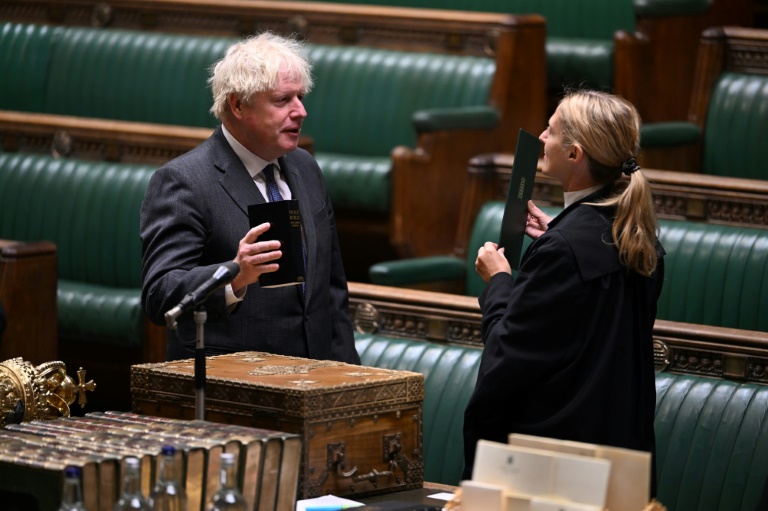
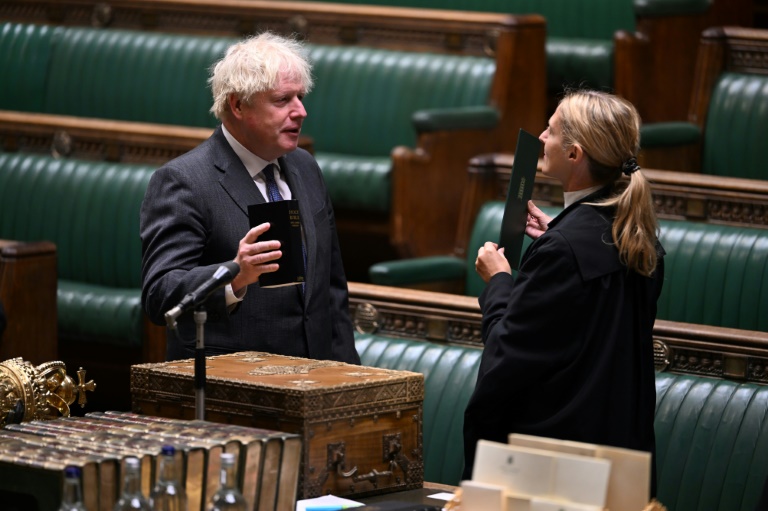
Britain’s divisive former leader Boris Johnson on Friday received heavyweight Conservative backing to stage a sensational comeback following the resignation of Prime Minister Liz Truss.

The UK’s ruling party was forced into its second leadership contest in quick succession after Truss announced she was quitting after just 44 tempestuous days in office.

A poll by YouGov found 79 percent of British people thought she was right to resign, with 64 percent calling her a “terrible” prime minister.

The pollster also found that three in five voters want an early general election, in line with the angry clamour coming from opposition parties as Britons struggle with a worsening cost-of-living crisis.

Labour and other parties say only an election can end the months of political chaos, sparked when Johnson was himself forced out in July after non-stop personal and political scandal.

In the resultant contest, Truss won the support of just over 80,000 Tory party members, defeating Rishi Sunak, who correctly warned that her hard-right programme of debt-fuelled tax cuts would crash the economy.

Now with a new vacancy suddenly opening up in 10 Downing Street, the former finance minister has emerged as favourite in the betting markets and media straw polls of Conservative MPs. 

But Johnson was reportedly cutting short a Caribbean holiday to take part in the accelerated contest, which will see Tory MPs hold a vote on Monday before a possible online ballot for the members next week.

– Serious times –

Business Secretary Jacob Rees-Mogg, an arch Johnson loyalist, became the first minister to publicly back him, tweeting: “Only Boris can win the next election.”

Defence Secretary Ben Wallace, a favourite of the Tory grassroots, told Sky News he was not standing himself and said: “At the moment, I’m leaning towards Boris Johnson.”

Wallace noted that Johnson was the only potential leader with UK-wide electoral legitimacy, having won a thumping victory for the Tories over Labour in 2019.

But the minister added that Johnson still had “some questions to answer” over the multiple scandals, which resulted in a yet-to-launch investigation in the House of Commons.

If found guilty of lying to the Commons over the “Partygate” scandal — lockdown-breaching revels held in Downing Street — Johnson could be suspended or even expelled from parliament.

Thanks to such controversies, Johnson left Number 10 with dismal poll ratings. One poll found that the word most commonly associated with him for voters was “liar”.

Other Tories were aghast at the prospect of his comeback. Veteran backbencher Roger Gale warned that Johnson could face a wave of resignations from MPs refusing to serve under him as leader.

Crispin Blunt MP told the BBC that Johnson was a “fantastic communicator” but Sunak was “a much more serious personality” who could impart a “serious message” to the country.

– ‘Soap opera’ –

So far there are no formal contenders, but the contest is widely expected to be a three-horse race between Sunak, Johnson and senior cabinet member Penny Mordaunt. 

Contenders have until 2:00 pm (1300 GMT) on Monday to produce a minimum 100 nominations from their fellow Tory MPs.

That means a maximum of three candidates will emerge from among the 357 Conservatives in the House of Commons.

If necessary, they will vote to leave two candidates standing, and hold another “indicative” vote to tell the party membership their preferred option.

If no single candidate emerges, the rank-and-file will then have their say in an online ballot and the result will be announced next Friday.

Political website Guido Fawkes, which is running a rolling spreadsheet of Tory MPs’ declared support, had Sunak on 64, Johnson on 59 and Mordaunt on 20 by Friday afternoon.

Other candidates could include a representative of the party’s right such as Suella Braverman, whose resignation as interior minister helped trigger Truss’s downfall. 

Braverman told the BBC she would be making a statement later on Friday.

But the leader of the main opposition Labour party, Keir Starmer, said Britain “cannot have another experiment” after Truss’s disastrous tenure.

“This is not just a soap opera at the top of the Tory party — it’s doing huge damage to the reputation of our country,” he said. Labour are streaming ahead in the polls.

Johnson eyes comeback as UK Tories race to replace Truss

Britain’s divisive former leader Boris Johnson on Friday received heavyweight Conservative backing to stage a sensational comeback following the resignation of Prime Minister Liz Truss.

The UK’s ruling party was forced into its second leadership contest in quick succession after Truss announced she was quitting after just 44 tempestuous days in office.

A poll by YouGov found 79 percent of British people thought she was right to resign, with 64 percent calling her a “terrible” prime minister.

The pollster also found that three in five voters want an early general election, in line with the angry clamour coming from opposition parties as Britons struggle with a worsening cost-of-living crisis.

Labour and other parties say only an election can end the months of political chaos, sparked when Johnson was himself forced out in July after non-stop personal and political scandal.

In the resultant contest, Truss won the support of just over 80,000 Tory party members, defeating Rishi Sunak, who correctly warned that her hard-right programme of debt-fuelled tax cuts would crash the economy.

Now with a new vacancy suddenly opening up in 10 Downing Street, the former finance minister has emerged as favourite in the betting markets and media straw polls of Conservative MPs. 

But Johnson was reportedly cutting short a Caribbean holiday to take part in the accelerated contest, which will see Tory MPs hold a vote on Monday before a possible online ballot for the members next week.

– Serious times –

Business Secretary Jacob Rees-Mogg, an arch Johnson loyalist, became the first minister to publicly back him, tweeting: “Only Boris can win the next election.”

Defence Secretary Ben Wallace, a favourite of the Tory grassroots, told Sky News he was not standing himself and said: “At the moment, I’m leaning towards Boris Johnson.”

Wallace noted that Johnson was the only potential leader with UK-wide electoral legitimacy, having won a thumping victory for the Tories over Labour in 2019.

But the minister added that Johnson still had “some questions to answer” over the multiple scandals, which resulted in a yet-to-launch investigation in the House of Commons.

If found guilty of lying to the Commons over the “Partygate” scandal — lockdown-breaching revels held in Downing Street — Johnson could be suspended or even expelled from parliament.

Thanks to such controversies, Johnson left Number 10 with dismal poll ratings. One poll found that the word most commonly associated with him for voters was “liar”.

Other Tories were aghast at the prospect of his comeback. Veteran backbencher Roger Gale warned that Johnson could face a wave of resignations from MPs refusing to serve under him as leader.

Crispin Blunt MP told the BBC that Johnson was a “fantastic communicator” but Sunak was “a much more serious personality” who could impart a “serious message” to the country.

– ‘Soap opera’ –

So far there are no formal contenders, but the contest is widely expected to be a three-horse race between Sunak, Johnson and senior cabinet member Penny Mordaunt. 

Contenders have until 2:00 pm (1300 GMT) on Monday to produce a minimum 100 nominations from their fellow Tory MPs.

That means a maximum of three candidates will emerge from among the 357 Conservatives in the House of Commons.

If necessary, they will vote to leave two candidates standing, and hold another “indicative” vote to tell the party membership their preferred option.

If no single candidate emerges, the rank-and-file will then have their say in an online ballot and the result will be announced next Friday.

Political website Guido Fawkes, which is running a rolling spreadsheet of Tory MPs’ declared support, had Sunak on 64, Johnson on 59 and Mordaunt on 20 by Friday afternoon.

Other candidates could include a representative of the party’s right such as Suella Braverman, whose resignation as interior minister helped trigger Truss’s downfall. 

Braverman told the BBC she would be making a statement later on Friday.

But the leader of the main opposition Labour party, Keir Starmer, said Britain “cannot have another experiment” after Truss’s disastrous tenure.

“This is not just a soap opera at the top of the Tory party — it’s doing huge damage to the reputation of our country,” he said. Labour are streaming ahead in the polls.

Time of reckoning in Ukrainian monastery town

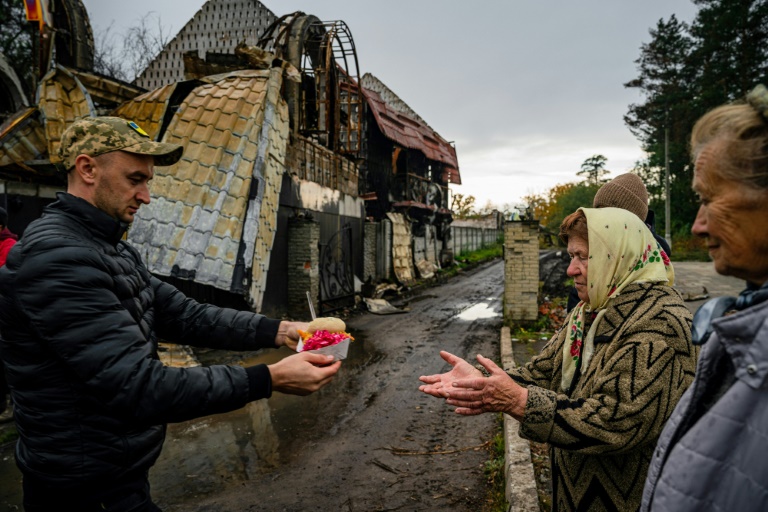
Two neighbours are desperately avoiding each other in a queue for food in the ruins of Svyatogirsk, a spa town whose monastery was recently re-captured by Ukrainian forces.

A tearful Lyudmila Orlova, 61, told AFP she was the victim of a dangerous betrayal of trust by 76-year-old Yevdokiya Yarovaya.

“Four days before the town was liberated, on September 7, she told Russian soldiers that I had a car that was used by Ukrainian troops.”

“They came in the evening with their guns. They were drunk and they questioned me for half an hour. They turned over everything in the house,” said Orlova, a Ukrainian-language teacher in this mostly Russian-speaking town.

Yarovaya denied the accusations, saying she had “no contact” with Russian forces and had only seen them a few times to receive aid.

“Food is more important than anything,” she insisted. But she did not answer the question if this aid was conditional on collaboration.

“There is a lot of anger and resentment. We still haven’t come to terms with what we lived through and I would like it not to happen again,” said Yarovaya.

She clutched two trays of seasoned pilau rice handed out to her by volunteers helping freezing inhabitants.

– ‘Liberators’ –

When Russian troops captured the town in June, its mayor, Volodymyr Bandura, celebrated them as “liberators”, holding a press conference under a Russian flag.

Bandura, a member of the pro-Russia party “For Life” elected in 2020, disappeared when Ukrainian troops took back the town in September and is now wanted for treason.

In his place the army has named Volodymyr Rybalki, who coordinated the town’s civil defence force, as head of the military administration for the re-captured area.

Rybalki said he is trying above all to ensure the welfare of residents as winter approaches and has no time now for any “hunt for collaborators”.

“Working out who collaborated or not is the work of the SBU (Ukrainian intelligence service) and the police. If there have been acts of treason, they will be handled according to the law,” he told AFP.

Ukraine’s law on treason has been amended since the Russian invasion to include a broader range of offences, including “denying that Ukraine suffered an armed aggression”.

People who collaborate with an occupying force risk between 15 years in prison and a life sentence in cases where their crime led to “death or a grave consequence”.

– ‘They support Russia’ –

In Svyatogirsk, the Holy Dormition Lavra monastery has become a focus for tensions.

Its abbot came out openly in favour of Russia-backed separatists in 2014 and Ukrainian authorities accused him of hiding fighters and weapons inside the monastery.

This time “the monastery tried to keep a position that it presented as neutral but we all know they support Russia”, said Oleksiy Kashporovskyi, a Ukrainian army press officer.

The 46-year-old pointed to the green domes of the sprawling religious site on a hillside.

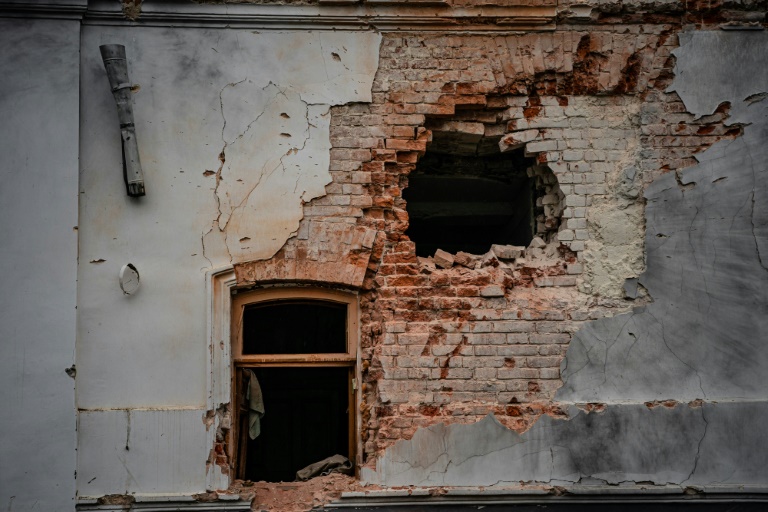
At the entrance to the complex stands a statue of the Virgin Mary with only one hand left. The other was torn off by an explosion.

At the height of the fighting, 400 residents of Svyatogirsk sought refuge in the monastery alongside its 200 monks.

Despite orders for evacuation as Russian forces advanced, they stayed.

“This led to a lot of questions about their loyalties,” Kashporovskyi said.

In the monastery garden, Father Theophanus, 51, a former coal miner, pointed to the fresh graves of three monks killed by a mortar in May.

He said the “hostile” perception of the monastery is linked to questions about the allegiance of the Ukrainian Orthodox Church, which formally broke ties with Moscow in May.

“We mention Patriarch Kirill of Moscow in our services but we have never hosted terrorists, separatists or weapons,” he said, adding that he prayed daily “for the Ukrainian people”.

Russia says 'fortress' Kherson readying for Ukraine attack

Kremlin proxy officials said Friday they were building up defences and turning Ukraine’s southern city of Kherson into a “fortress” as Kyiv’s forces advance and Russia pulls residents from the region.

The claim came as Ukraine’s President Volodymyr Zelensky said Russian troops were preparing to destroy a hydroelectric dam in the southern Kherson region in what would amount to a “catastrophe on a grand scale”.

Ukrainian forces in recent weeks — aided by Western weapons — have been advancing along the west bank of the Dnieper river towards the region’s main city, also called Kherson.

Kherson was the first major city to fall to Moscow’s troops since the February invasion began and retaking it would be a crucial prize in Ukraine’s counter-offensive.

Moscow-installedauthorities in Kherson said Friday Kyiv forces killed four people when they shelled the Antonivskiy bridge over the Dnipro river that civilians have been urged to cross in advance of an anticipated Ukraine assault.

“Four people were killed,” pro-Moscow official Kirill Stremousov said on Telegram. “The city of Kherson, like a fortress, is preparing for its defence.”

A Ukrainian military spokeswoman Nataliya Gumenyuk denied Kyiv’s forces were responsible, saying its forces do not target local populations.

Russian state-run media in recent days had aired footage showing civilians with bags taking ferries across the river from Kherson.

– Risks of disasters –

Kyiv has branded the organised movement of Kherson residents to Russia and other Moscow-controlled regions as “deportations” of Ukrainian citizens.

Zelensky said late Thursday that Russian forces had mined the Kakhovka hydroelectric power plant with the intent of blowing it up.

Hundreds of thousands of people around the lower Dnipro River would be in danger of flash flooding if the dam was destroyed, Zelensky warned in a speech Thursday to European leaders.

He said cutting water supplies to the south could also impact the cooling systems of the Zaporizhzhia nuclear power plant, Europe’s largest.

The nuclear facility is a key concern of Russia’s eight-month invasion with both sides regularly accusing the other of shelling near it and endangering operations.

Ukraine’s push in the south comes after a sweeping counter-offensivein the northeast Kharkiv region that has badly impaired Russia’s supply routes and logistics corridors in the eastern Donbas region.

But Russian forces have continued shelling the region’s largest city, Kharkiv, and the presidency said Friday that “industrial infrastructure” was hit in the city, wounding six.

The attack in the latest in weeks-long barrage that has targeted infrastructure and particularly energy facilities.

Energy-saving measures were put in place across the country after Russian missile and drone strikes destroyed what Zelensky said was more than 30 percent of the country’s power stations in a week.

– Resilient Ukraine –

A 64-year-old Ukrainian, Vyacheslav, told AFP in Kyiv that the nation would make do, despite the restrictions.

“There are books to read. There battery-powered lights. I think we can hold out for a few hours. There are gas stoves so it will still be possible to cook,” he said, but declined to give his last name.

Kyrylo, a 27-year-old shop salesman, said that there had been a rush on power banks after Russian attacks began on the energy facilities in the capital.

“We don’t sell flashlights but regarding power banks, I can say that on the 10th, when the attack on Kyiv began, almost all available power banks were sold, and in general, the demand for power banks increased by 70 or 80 percent.

The Ukraine presidency said Friday that Russian forces were continuing to shell sections along the entire frontline of Donbas in east Ukraine and that two people were killed in the Donetsk region.

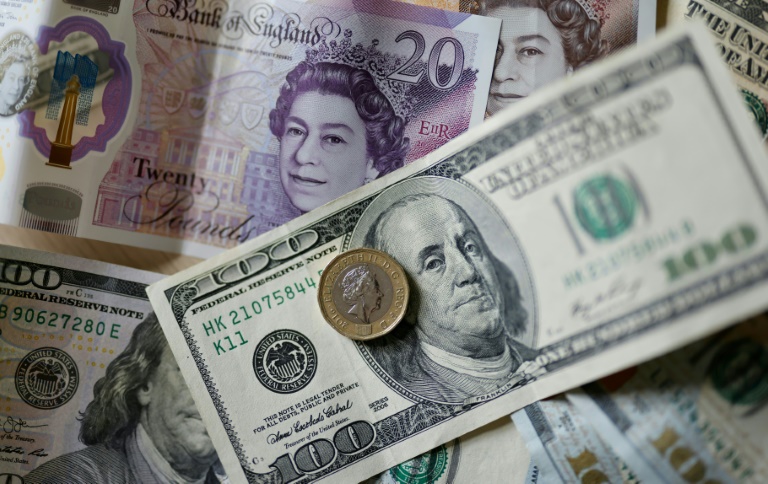
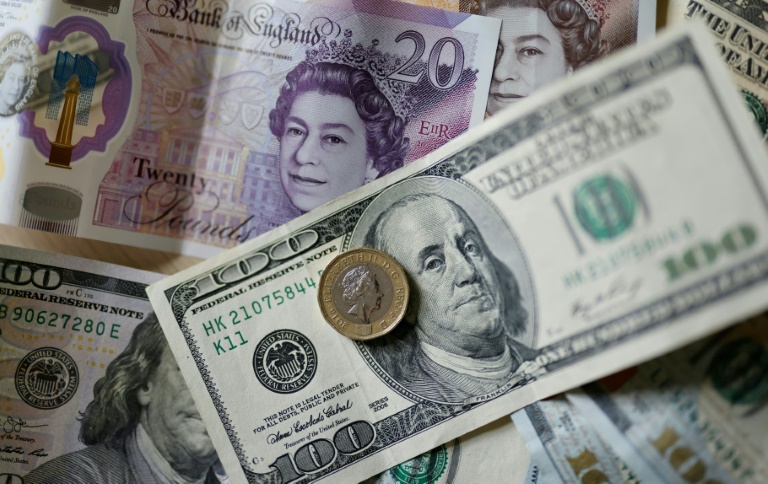
Pound sinks on UK political chaos

The British pound sank against the dollar Friday on political uncertainty after the resignation of UK Prime Minister Liz Truss, while weak economic data added to the turmoil.

The dollar strengthened also on expectations that the US Federal Reserve would press ahead with its programme of bumper interest rate hikes to target decades-high inflation.

European stock markets fell heavily, mirroring losses in Asia and on Wall Street, as investors fretted that rising global interest rates could tip the world economy into recession.

Sterling slid beneath $1.12, having bounced above $1.13 Thursday after Truss quit. 

The yield on the British government’s 30-year bond, or gilt, climbed back above four percent on Friday.

– ‘Seismic events’ –

“We are seeing retracement of these initial moves as markets realise that there’s still huge uncertainty,” noted Markets.com analyst Neil Wilson.

“The economic policies (of Truss) were already dead in the water so the market doesn’t have a huge amount of genuine new information to move on despite the seismic events of the last 24 hours.”

Truss resigned after 44 days in office, having triggered markets chaos over a tax-cutting budget due to have been funded by debt.

The pound was weighed down Friday additionally by official data showing that UK borrowing surged and retail sales slumped in September.

Elsewhere, traders were girding for another possible intervention by Tokyo after the dollar went above 150 yen.

The dollar burst to a 32-year high Thursday as investors bet the Fed would continue to aggressively ramp up borrowing costs.

In a sign of growing rate hike expectations, US 10-year Treasury yields rose to their highest level since the financial crisis in 2008, which in turn hit equities.

By contrast, the Bank of Japan refuses to raise interest rates despite the country’s sky-high inflation.

– Key figures around 1015 GMT –

Pound/dollar: DOWN at $1.1114 from $1.1235 on Thursday

Dollar/yen: UP at 150.98 yen from 150.15 yen

Euro/dollar: DOWN at $0.9735 from $0.9786

Euro/pound: UP at 87.62 pence from 87.11 pence

London – FTSE 100: DOWN 0.9 percent at 6,883.43 points

Frankfurt – DAX: DOWN 1.5 percent at 12,573.45

Paris – CAC 40: DOWN 1.7 percent at 5,986.60

EURO STOXX 50: DOWN 1.6 percent at 3,437.84

Tokyo – Nikkei 225: DOWN 0.4 percent at 26,890.58 (close)

Hong Kong – Hang Seng Index: DOWN 0.4 percent at 16,211.12 (close)

Shanghai – Composite: UP 0.1 percent at 3,038.93 (close)

New York – Dow: DOWN 0.3 percent at 30,333.59 (close)

Brent North Sea crude: DOWN 0.3 percent at $92.14 per barrel

West Texas Intermediate: DOWN 0.2 percent at $84.31 per barrel

burs-rfj/bcp/lth

Pound sinks on UK political chaos

The British pound sank against the dollar Friday on political uncertainty after the resignation of UK Prime Minister Liz Truss, while weak economic data added to the turmoil.

The dollar strengthened also on expectations that the US Federal Reserve would press ahead with its programme of bumper interest rate hikes to target decades-high inflation.

European stock markets fell heavily, mirroring losses in Asia and on Wall Street, as investors fretted that rising global interest rates could tip the world economy into recession.

Sterling slid beneath $1.12, having bounced above $1.13 Thursday after Truss quit. 

The yield on the British government’s 30-year bond, or gilt, climbed back above four percent on Friday.

– ‘Seismic events’ –

“We are seeing retracement of these initial moves as markets realise that there’s still huge uncertainty,” noted Markets.com analyst Neil Wilson.

“The economic policies (of Truss) were already dead in the water so the market doesn’t have a huge amount of genuine new information to move on despite the seismic events of the last 24 hours.”

Truss resigned after 44 days in office, having triggered markets chaos over a tax-cutting budget due to have been funded by debt.

The pound was weighed down Friday additionally by official data showing that UK borrowing surged and retail sales slumped in September.

Elsewhere, traders were girding for another possible intervention by Tokyo after the dollar went above 150 yen.

The dollar burst to a 32-year high Thursday as investors bet the Fed would continue to aggressively ramp up borrowing costs.

In a sign of growing rate hike expectations, US 10-year Treasury yields rose to their highest level since the financial crisis in 2008, which in turn hit equities.

By contrast, the Bank of Japan refuses to raise interest rates despite the country’s sky-high inflation.

– Key figures around 1015 GMT –

Pound/dollar: DOWN at $1.1114 from $1.1235 on Thursday

Dollar/yen: UP at 150.98 yen from 150.15 yen

Euro/dollar: DOWN at $0.9735 from $0.9786

Euro/pound: UP at 87.62 pence from 87.11 pence

London – FTSE 100: DOWN 0.9 percent at 6,883.43 points

Frankfurt – DAX: DOWN 1.5 percent at 12,573.45

Paris – CAC 40: DOWN 1.7 percent at 5,986.60

EURO STOXX 50: DOWN 1.6 percent at 3,437.84

Tokyo – Nikkei 225: DOWN 0.4 percent at 26,890.58 (close)

Hong Kong – Hang Seng Index: DOWN 0.4 percent at 16,211.12 (close)

Shanghai – Composite: UP 0.1 percent at 3,038.93 (close)

New York – Dow: DOWN 0.3 percent at 30,333.59 (close)

Brent North Sea crude: DOWN 0.3 percent at $92.14 per barrel

West Texas Intermediate: DOWN 0.2 percent at $84.31 per barrel

burs-rfj/bcp/lth

Close Bitnami banner
Bitnami