AFP

EU leaders clash over how to tackle energy prices

EU leaders clashed over how to ride out Europe’s energy shock Thursday, with France and Germany at loggerheads over imposing a cap on gas prices pushed skywards by the war in Ukraine.

The bloc’s 27 member states have been squabbling for months over measures to lower energy bills, and a Brussels summit began in a chilly mood.

Countries such as Italy are pushing hard for a swift and ambitious cap on prices, in the teeth of opposition from Germany, the EU’s biggest economy.

There is huge political pressure to act, with strikes and protests over the cost of living spreading across Europe — notably in France and Belgium — and businesses fearing bankruptcy.

Berlin risks finding itself isolated in the debate, with countries furious that the German government won’t back a gas cap and for going it alone in helping its citizens pay for high prices with a 200-billion-euro ($196-billion) spending bonanza.

German Chancellor Olaf Scholz shot back at his critics as he arrived for the talks saying that it was “quite clear that Germany has acted in solidarity” with his EU partners.

French President Emmanuel Macron warned against Berlin standing alone as the talks began.

“Our role is to do everything to ensure that there is European unity and that Germany is part of it,” Macron said.

On the table for leaders are proposals by the European Commission, the EU’s executive arm, that try to satisfy the diverging views.

But these have already been dismissed as timid by those wanting a clear ceiling on gas prices despite the opposing view — championed by Germany, but also Denmark and the Netherlands — that this would choke off supply or encourage consumption.

The push for a common approach has been further hampered by Franco-German discord which burst into the open Wednesday when they delayed a regular meeting between cabinet ministers.

Breakthroughs are difficult when the EU’s biggest powers do not see eye to eye and Macron and Scholz met ahead of the summit in a bid to find common ground.

In a sign of a possible easing of tensions, France on the sidelines of the summit agreed to build a green energy pipeline linking the Spain and Portugal to the rest of Europe.

Berlin is seeking an alternative to Russian gas supply it has relied on for decades, but it was not clear whether the new plan would satisfy them.

– ‘No cap’ –

The commission’s proposals include an idea to allow joint purchases by the EU energy giants in order to command cheaper prices to replenish reserves.

Another proposal is to give the EU’s executive arm the power to establish a pricing “corridor” on Europe’s main gas index to intervene when prices get out of control.

The EU leaders were expected to haggle for hours over the commission’s proposals, with some countries seeking something much more far-reaching than what is on offer.

But Scholz on Thursday again rejected any attempt by the EU to cap prices on gas imports, saying it “carries the risk that producers will then sell their gas elsewhere.”

However, Scholz welcomed the European Commission’s proposal for joint purchases in the EU.

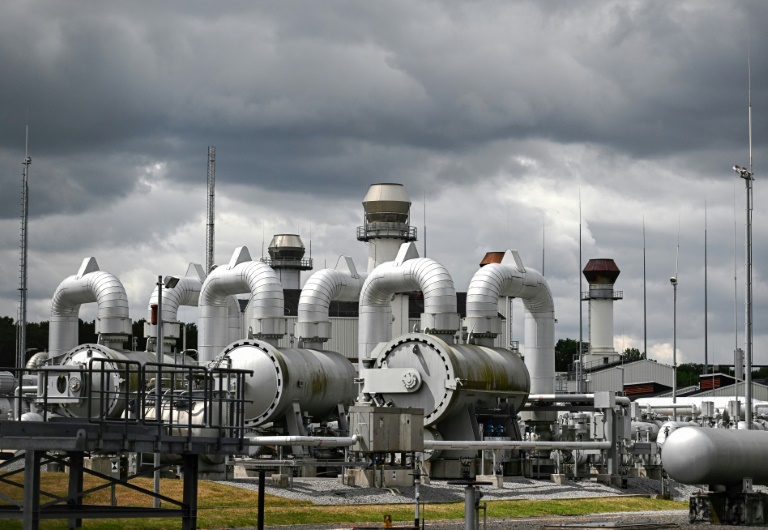
A big problem in Europe is the link between gas and electricity prices. Under EU rules, a gas price index helps set the price of electric power across the continent, even if sourced from nuclear energy, renewables or coal.

But the index has skyrocketed since Ukraine was invaded by Russia, the country that supplied 40 percent of the EU’s gas imports before the war.

Several countries — including France with its nuclear power plants — are calling for an exception to the gas price mechanism while the commission draws up a new system that better reflects market reality.

This was already granted to Spain and Portugal earlier this year, giving them freer rein to keep electricity prices lower despite surging prices.
Food crisis looms in Nigeria as floods destroy crops

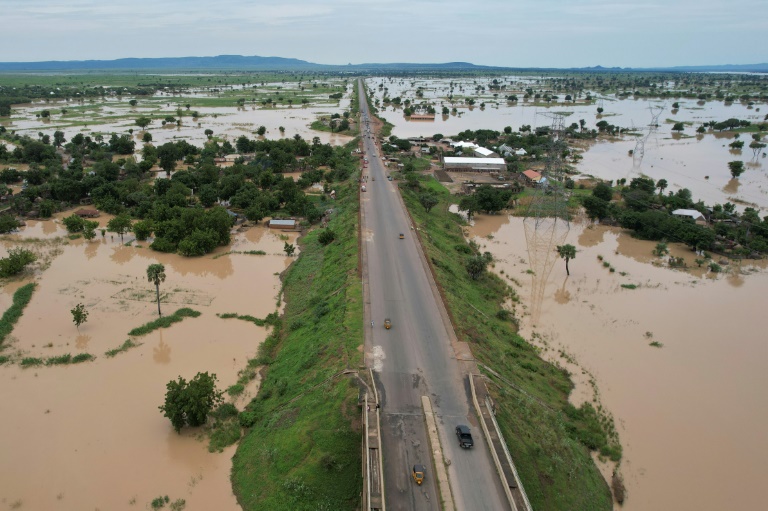
Usman Musa had spent more than $1,300 on his 10-hectare rice farm in Nigeria’s Kogi state, now submerged by the country’s worst floods in a decade.

In a wooden canoe, the 38-year-old father of four paddled his way through the murky waters, passing by his and relatives’ houses, the local hospital and school. 

Only the roofs were visible.

Across Africa’s most populous country, communities and crops of sorghum, maize, rice and vegetables are under water, with farmers and aid workers warning of a possible food crisis.

The country, home to more than 200 million people, was already grappling with high inflation and worrying levels of food insecurity.

Now the situation will worsen, with nearly 110,000 hectares (272,000 acres) of farmland completely destroyed by flooding since August according to the latest government figures.

“Flooding is still ongoing but we can safely say that between 60 to 75 percent of the yield we expected is going to be lost,” Kabir Ibrahim, president of All Farmers Association of Nigeria, told AFP this week.

“It’s monumental. So many people are crying.”

More than 600 people have died and 1.3 million others were forced to leave their homes according to the latest figures given by the Minister of Humanitarian Affairs Sadiya Umar Farouq.

– Risk of hunger –

Floods are not uncommon in Nigeria during the rainy season from May to November but they have been extreme this year.

Officials and residents blame climate change but also poor planning and the release of excessive water from dams, a process that is meant to ease pressure.

“If you don’t open the water through the spillways, then dams will break,” said Ibrahim, and then “it would be like Pakistan. All of Nigeria would be under water like Pakistan.”

Farmers were warned ahead of time but it wasn’t enough. 

“We used the predictions and avoided planting along flood-prone areas,” said Ibrahim, “but now you can see that the devastation is all over.”

As a result, Ibrahim, whose organisation represents 20 million farmers, believes “there will be more hardship towards the end of the year and beginning of next year.”

Food inflation year-on-year was already at 23.3 percent last month, in part because of ripple effects on the import-dependent country from the coronavirus pandemic and the Russia-Ukraine war.

Rampant insecurity with gunmen repeatedly attacking rural communities also forced many farmers to abandon their fields.

The World Food Programme and the UN’s Food and Agriculture Organization (FAO) said last month that Nigeria was among six countries facing a high risk of catastrophic levels of hunger, even before the floods. 

Now, “the impact of the floods on food production is a real threat to the country and could lead to a major food crisis,” said Hussaini Abdu, Nigeria director of the CARE charity.

The FAO representative in Nigeria, Fred Kafeero, said he was “deeply concerned” as food supplies were expected to be low “due to anticipated reduction in household production”.

The aid official said the floods were also affecting livestock and had increased the risk of vector-borne disease outbreaks such as cholera.

– Preventive measures –

The floods have not just destroyed farmlands, they have also prevented the transport of trucks and damaged roads and bridges, further pressuring the food supply.

“We were hoping inflation would get a break with the (upcoming) harvest but now with the floods, it puts a big question mark on our forecast on inflation,” said Ari Aisen, the IMF’s Resident Representative for Nigeria.

“It looks very serious but it’s difficult to judge at this point,” he told AFP, adding that while it was early to assess, “there is an upside risk for inflation, for food price increases.”

The last massive floods in Nigeria in 2012 cost nearly $17 billion, according to the World Bank.

While immediate assistance is now needed, the International Monetary Fund said it would be less costly to invest in preventive measures and policies.

Countries should invest to “help populations adapt to these types (of) events rather than using resources after the fact,” said Aisen. 

But in the meantime, the government said it was ramping up support to affected communities.

President Muhammadu Buhari approved the release of 12,000 metric tons of assorted grains from a national strategic reserve stock.

But farmers are not sure it will be enough.

Buhari restricted the import of rice in 2015, to increase local production and self-sufficiency.

For Ibrahim, resuming those imports “should not be ruled out, if the situation becomes dire”.

Weather forecast agencies have warned there could be more floods until the end of November.

European Space Agency to launch two missions on SpaceX rockets

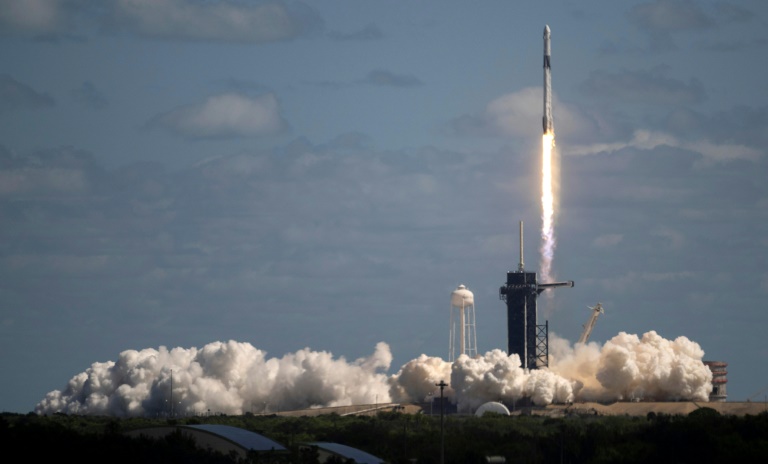
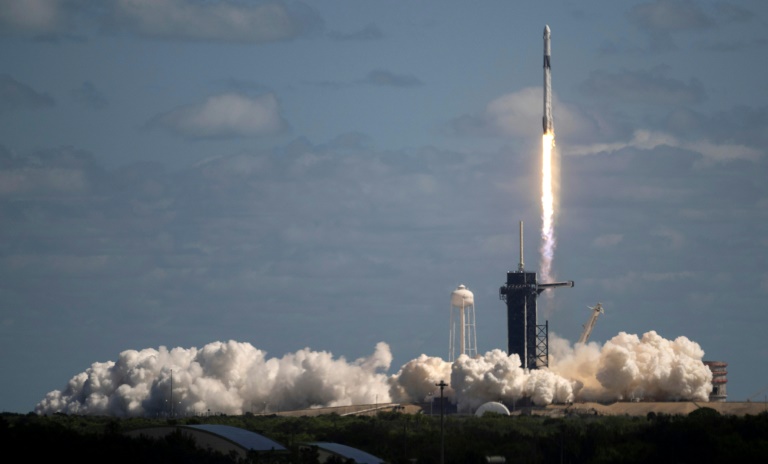
The European Space Agency announced Thursday it will use SpaceX’s Falcon 9 rockets to launch two scientific missions because of delays to its own Ariane 6 rocket and the cancellation of flights on Russia’s Soyuz launchers. 

The ESA’s space telescope Euclid had been planned to launch next year on a Soyuz rocket, but in February Russia pulled out in response to European sanctions over Moscow’s war in Ukraine. 

Euclid, which aims to better understand the mysteries of dark energy and dark matter, will now instead catch a ride into space on the Falcon 9 rocket of billionaire Elon Musk’s US company SpaceX.

The ESA’s Hera mission, which will probe the Didymos asteroid that NASA successfully knocked off course in September by smashing the DART spacecraft into it, will launch on a Falcon 9 in late 2024, ESA director general Josef Aschbacher said.

The use of other launchers was “a temporary measure” for the ESA due to the “drop out of Soyuz in particular,” but also over the Ariane 6 delay, Aschbacher told a press conference.

The ESA previously used a Falcon 9 to launch European-developed radar altimeter satellite Sentinel-6 Michael Freilich in 2020.

The European-Japanese EarthCARE observation satellite had also been planning to reach space on a Soyuz rocket, but will instead take the ESA’s lighter new Vega-C launcher in early 2024, Aschbacher said. 

Tensions over the war in Ukraine also led to a long postponement for the once joint European-Russian ExoMars mission. It had been scheduled to launch last month using a Soyuz rocket to put European rover Rosalind Franklin on Mars to drill for signs of life.

David Parker, the ESA’s director of human and robotic exploration, said a 2028 ExoMars launch date would be proposed to the agency’s 22 members states at a ministerial council in late November. 

“It is exactly one month since we would have been at the launch, which was scheduled for September 20,” he told the press conference.

“But now we will have to wait — if the ministers desire to go forward with the project — until launch in 2028, with a landing in 2030,” he said.

– Ariane 6 delayed again –

Thursday’s announcement came a day after the ESA revealed that Ariane 6’s maiden flight had been delayed again, and will now launch in the last quarter of next year.

Originally planned for 2020, the inaugural flight of the Ariane 6 has previously been postponed by the Covid-19 pandemic as well as development difficulties.

The replacement for the highly successful Ariane 5 is hoped to eventually take over the ESA’s Soyuz missions. Once in operation it is likely to compete with SpaceX rockets, particularly when it comes to sending small satellites into the sky. 

Some 18,500 satellites weighing less than 500 kilogrammes are expected to be launched into space over the next decade, according to advisory firm Euroconsult.

Progress has made in recent days on the Ariane 6, including a test of the new upper stage of the rocket’s engine at a German space site in Lampoldshausen.

Aschbacher said the first 45-second firing test was “extremely successful,” calling it an “important milestone”.

A test model of Ariane 6 was also recently successfully assembled on the launchpad of Europe’s spaceport in French Guiana’s Kourou. 

European Space Agency to launch two missions on SpaceX rockets

The European Space Agency announced Thursday it will use SpaceX’s Falcon 9 rockets to launch two scientific missions because of delays to its own Ariane 6 rocket and the cancellation of flights on Russia’s Soyuz launchers. 

The ESA’s space telescope Euclid had been planned to launch next year on a Soyuz rocket, but in February Russia pulled out in response to European sanctions over Moscow’s war in Ukraine. 

Euclid, which aims to better understand the mysteries of dark energy and dark matter, will now instead catch a ride into space on the Falcon 9 rocket of billionaire Elon Musk’s US company SpaceX.

The ESA’s Hera mission, which will probe the Didymos asteroid that NASA successfully knocked off course in September by smashing the DART spacecraft into it, will launch on a Falcon 9 in late 2024, ESA director general Josef Aschbacher said.

The use of other launchers was “a temporary measure” for the ESA due to the “drop out of Soyuz in particular,” but also over the Ariane 6 delay, Aschbacher told a press conference.

The ESA previously used a Falcon 9 to launch European-developed radar altimeter satellite Sentinel-6 Michael Freilich in 2020.

The European-Japanese EarthCARE observation satellite had also been planning to reach space on a Soyuz rocket, but will instead take the ESA’s lighter new Vega-C launcher in early 2024, Aschbacher said. 

Tensions over the war in Ukraine also led to a long postponement for the once joint European-Russian ExoMars mission. It had been scheduled to launch last month using a Soyuz rocket to put European rover Rosalind Franklin on Mars to drill for signs of life.

David Parker, the ESA’s director of human and robotic exploration, said a 2028 ExoMars launch date would be proposed to the agency’s 22 members states at a ministerial council in late November. 

“It is exactly one month since we would have been at the launch, which was scheduled for September 20,” he told the press conference.

“But now we will have to wait — if the ministers desire to go forward with the project — until launch in 2028, with a landing in 2030,” he said.

– Ariane 6 delayed again –

Thursday’s announcement came a day after the ESA revealed that Ariane 6’s maiden flight had been delayed again, and will now launch in the last quarter of next year.

Originally planned for 2020, the inaugural flight of the Ariane 6 has previously been postponed by the Covid-19 pandemic as well as development difficulties.

The replacement for the highly successful Ariane 5 is hoped to eventually take over the ESA’s Soyuz missions. Once in operation it is likely to compete with SpaceX rockets, particularly when it comes to sending small satellites into the sky. 

Some 18,500 satellites weighing less than 500 kilogrammes are expected to be launched into space over the next decade, according to advisory firm Euroconsult.

Progress has made in recent days on the Ariane 6, including a test of the new upper stage of the rocket’s engine at a German space site in Lampoldshausen.

Aschbacher said the first 45-second firing test was “extremely successful,” calling it an “important milestone”.

A test model of Ariane 6 was also recently successfully assembled on the launchpad of Europe’s spaceport in French Guiana’s Kourou. 

Cougars of LA imperiled by more frequent wildfires

They are beautiful, powerful and stalk the hills above Los Angeles.

But more frequent wildfires caused by climate change have placed the survival of the city’s last remaining mountain lions in doubt, by increasing their exposures to car collisions and hostile encounters with their own kind.

Rachel Blakey of the University of California, Los Angeles led a study published Thursday in Current Biology examining the impact of the 2018 Woolsey fire, which scorched half the big cats’ habitat in the Santa Monica mountains.

The biggest takeaway: “It’s not just about how many animals perished in that fire — in this case two mountain lions,” she told AFP.

“We need to think about how that change in the landscape is then going to influence how these animals experience all the other stresses that they’re currently dealing with.”

Blakey, a native of Australia who has been researching California’s wildlife for about seven years, says she was “blown away” to learn that a city of 10 million people supported a population of mountain lions, also known as cougars.

The apex predators are one of two large cat species in the Western Hemisphere, along with jaguars found further south in Mexico and Central America.

Generally speaking, the species is healthy enough, explained Blakey, though their range was once much bigger, roaming from coast to coast before the arrival of Europeans to the Americas.

But there are pockets within California where the lions are hemmed in by urban areas and freeways, decreasing their genetic diversity and placing great pressures on their survival. Los Angeles is one such region. 

– More crossings, more fights – 

Over the past 20 years, the National Park Service (NPS) has been tracking this isolated population, which generally numbers around 10-12 individuals.

They had already noticed worrying signs of inbreeding, such as kinked tails and low-quality sperm, but the lions were nonetheless clinging on.

Blakey and NPS colleagues decided to leverage GPS and accelerometer data from tags on the animals to understand the impacts of the Woolsey fire, which burned 97,000 acres (40,000 hectares) in November 2018.

What they found was far from encouraging.

After the fire, the lions avoided the burned areas, which they previously used as cover to ambush their prey — deer and small mammals — as well as to avoid conflicts between males.

They also placed themselves at great risk by crossing more roads, including freeways.

Their rate of crossing Highway 101, a busy 10-lane freeway, increased from once every two years to once every four months.

Blakey said this change was “very, very striking considering these roads are the major source of mortality for this population.” 

The lions also had to put in a lot more work to eke out survival. 

They traveled nearly 400 kilometers a month on average compared to 250 kilometers, increasing their food needs and placing them at further risk of lethal skirmishes with other mountain lions. 

– Animal crossing –

One piece of good news from the study: contrary to residents’ fears, the lions remained deeply shy of humans, spending only four or five percent of their time in urban areas both before and after the fire.

Co-author Seth Riley of the NPS told AFP that while the population had since returned to their former range after the forest recovered, and the lions were back to their pre-fire numbers, climate change continued to pose risks.

“With climate change, there’s concern about more and bigger fires, and drought doesn’t help, which is something we’ve been experiencing for quite a while here,” he said.

Researchers and conservationists are placing great hope on the Wallis Annenberg wildlife crossing, a vegetated overpass currently under construction that was designed with the lions and other species in mind.

Some animals will of course continue to get hit, said Riley.

But they believe the crossing will help restore connectivity between the Santa Monica lions and other populations to the north, providing a much-needed boost to genetic exchange.

Biden campaigns in Pennsylvania, ground zero for midterms

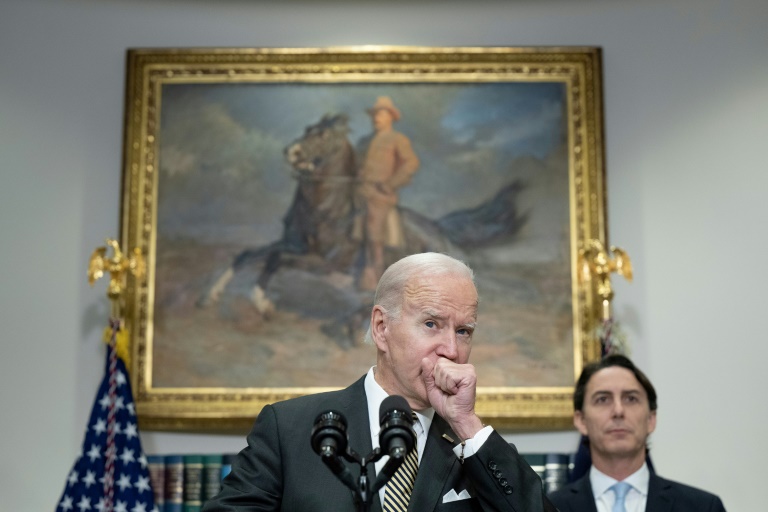
US President Joe Biden will campaign Thursday alongside Senate candidate John Fetterman in Pennsylvania, ground zero in the Democrats’ struggle to avoid a wipeout in the midterms — and two years of political trench warfare for the White House.

Biden will visit Pittsburgh and Philadelphia, touting his administration’s signature infrastructure spending package with a tour of a newly repaired bridge, and then attending a fundraising event with Fetterman.

Fetterman, whose tattoos and love of hoodies and cargo shorts make him one of the most unusual-looking figures on the campaign trail, was once a runaway favorite in the battle against Republican candidate Mehmet Oz, a celebrity TV doctor. Even a stroke in May didn’t derail him, and his medical report this week declared Fetterman fit for work.

But the race has tightened, reflecting sinking Democratic hopes of maintaining the party’s already fragile control of Congress. The latest average of polls shows Fetterman’s nearly 11-point lead in mid-September whittled down to about five points.

Analysts say Pennsylvania is among a handful of races Democrats must win to keep the Senate after November 8, while the tussle for the House is even tougher.

Biden, hampered by approval ratings hovering in the low 40 percent range, has not been much help. Some Democratic candidates have even declared him a hindrance, asking him to keep away from their campaigns.

In a break with tradition, Biden has avoided large-scale rallies in favor of more intimate gatherings and policy announcements that he hopes can shift the momentum. Just this week, he gave speeches vowing to protect abortion access and explaining his attempts to tamp down high energy costs. 

But three weeks from voting day, Americans appear to be veering toward the Republican message that Democrats are failing on the economy.

That raises the likelihood of Republicans taking control of at least the House and quite possibly the Senate. 

And even just the House would give the increasingly far-right Republican party the ability to shut down Biden’s agenda and — as prominent figures are already threatening — attempt impeachment.

– Numbers don’t add up –

A New York Times/Siena poll this week showed that, of likely voters, 26 percent named worries over the economy as the top issue, while 18 percent listed inflation, which is at its highest rate in four decades.

That is not something Biden can fix quickly. This week also saw Bloomberg’s latest probability model giving a 100 percent chance of a recession in the next 12 months.

Even on issues where Biden feels he has a winning hand, there are limits.

During his impassioned speech on abortion, the president tapped into widespread anger over the Supreme Court’s decision to overturn the half-century-old Roe v. Wade ruling that enshrined national abortion rights.

Predicting a revolt by women voters at the ballot box, Biden said Republicans “ain’t seen nothing yet.” 

But the Siena poll does not bear that out: just five percent of likely voters named abortion as their top issue.

Parties controlling the White House nearly always suffer a loss of seats in Congress during midterms, so a heavy Democratic loss would be no surprise. 

Analysts with Larry Sabato’s Crystal Ball election newsletter at the University of Virginia said that after giddy hopes of somehow defying gravity, the Democrats seem to be coming back to earth.

“The usual midterm headwinds remain for Democrats. It’s just tough for a party to thrive with an unpopular president and with the public having significant concerns about issues, like the economy and inflation,” they said Wednesday.

“This is why the House remains very likely to flip to the Republicans and why, despite the aforementioned challenges, Republican chances to win the Senate remain no worse than a coin flip.”

S.Africa paves way for cryptocurrency regulation

South Africa’s financial watchdog on Thursday declared cryptocurrency a financial product, paving way for the regulation of the assets in the continent’s most advanced economy.

The announcement comes in the wake of financial institutions and watchdogs around the world grappling on how to regulate digital currencies.

The decision by the Financial Sector Conduct Authority (FSCA) means financial firms dealing in cryptos will have to apply for licensing next year between June 1 and November 20.

“You cannot have a situation where you have entities operating outside the regulatory framework, it is not ideal, and certainly not in the public interest,” FSCA Commissioner Unathi Kamlana told a news briefing.

The crypto asset, which will not be issued by the central bank, will be tradeable, transferred or stored electronically “for the purpose of payment, investment”.

Robust travel demand boosts American Airlines' Q3 profits

American Airlines reported a strong third quarter Thursday, capitalizing on robust demand for travel that the company sees persisting as Covid-19 worries recede.

Echoing commentary from rivals such as United Airlines and Delta Air Lines, American scored a 13 percent jump in revenues compared with the 2019 period on lofty ticket prices, despite flying around 10 percent less capacity.

“Demand remains strong, and it’s clear that customers in the US and other parts of the world continue to value air travel and the ability to reconnect post-pandemic,” said American Chief Executive Robert Isom.

Profits for the quarter ending September 30 was $483 million, more than double the year-ago level with a 50 percent increase in revenues to $13.5 billion, a quarterly record.

After a devastating industry downturn during the worst days of the coronavirus pandemic, US carriers have begun to prosper in 2022 as more governments pare back restrictions.

Executives point to several factors that are overriding worries about inflation and rising recession risk: continuing “pent-up” travel demand following Covid-19 lockdowns; the shift to hybrid working that allows more travel; and industry-wide capacity constraints that are lifting plane ticket prices.

American released fourth-quarter forecasts that show continued strength, with its projection of between 50 and 70 cents per share in profits easily topping analyst expectations.

Shares rose 2.4 percent to $14.32 in pre-market trading.

Robust travel demand boosts American Airlines' Q3 profits

American Airlines reported a strong third quarter Thursday, capitalizing on robust demand for travel that the company sees persisting as Covid-19 worries recede.

Echoing commentary from rivals such as United Airlines and Delta Air Lines, American scored a 13 percent jump in revenues compared with the 2019 period on lofty ticket prices, despite flying around 10 percent less capacity.

“Demand remains strong, and it’s clear that customers in the US and other parts of the world continue to value air travel and the ability to reconnect post-pandemic,” said American Chief Executive Robert Isom.

Profits for the quarter ending September 30 was $483 million, more than double the year-ago level with a 50 percent increase in revenues to $13.5 billion, a quarterly record.

After a devastating industry downturn during the worst days of the coronavirus pandemic, US carriers have begun to prosper in 2022 as more governments pare back restrictions.

Executives point to several factors that are overriding worries about inflation and rising recession risk: continuing “pent-up” travel demand following Covid-19 lockdowns; the shift to hybrid working that allows more travel; and industry-wide capacity constraints that are lifting plane ticket prices.

American released fourth-quarter forecasts that show continued strength, with its projection of between 50 and 70 cents per share in profits easily topping analyst expectations.

Shares rose 2.4 percent to $14.32 in pre-market trading.

Turkish central bank cuts rates again as inflation rockets

Turkey’s central bank on Thursday cut its policy rate for the third consecutive month despite a plunging lira and an annual inflation rate that has soared over 83 percent.

Turkey’s monetary policymakers are bucking the global trend of central banks raising interest rates to combat inflation, as high borrowing rates cool down the economy and prices.

The latest decision comes after President Recep Tayyip Erdogan said the central bank would keep cutting rates every month for “as long as I am in power” — and despite inflation hitting 83.45 percent in September on an annual basis.

Erdogan wants to lower interest rates to single digits by the end of the year as he prioritises economic growth eight months before a general election — which could promise to be the closest since he came to power nearly two decades ago.

Turkish policymakers have insisted on following this unconventional economic model at the expense of an astronomical inflation.

The central bank said Thursday it was cutting its one-week repo rate to 10.5 percent from 12 percent, with a surge in consumer prices it said was “driven by the lagged and indirect effects of rising energy costs” caused by Russia’s war on Ukraine.

The interest rate cut was widely anticipated, but the 150 basis points cut was larger than expected after two 100 basis points moves in both August and September.

The bank hinted that the easing cycle would end next month.

“The (Monetary Policy) Committee evaluated taking a similar step in the following meeting and ending the rate cut cycle,” the bank said.

Liam Peach, senior emerging markets economist at the London-based Capital Economics, said this guidance “appears to be an admission that lowering interest rates is hardly the right thing to be doing when inflation is so high.”

“But at the same time, it would take interest rates to nine percent and satisfy Erdogan’s wish to bring rates down into single digits,” he added. 

– ‘Re-election strategy’-

Inflation began to rise worldwide after economies emerged from Covid lockdowns but it worsened this year as Russia’s invasion of Ukraine sent energy and food prices through the roof.

Erdogan, a vocal opponent of higher borrowing costs, has called high interest rates his “biggest enemy”. 

Earlier this month he vowed that while he remained in power, “the interest will continue to come down with each passing day, each passing week, each passing month.”

As a result, the Turkish lira keeps losing its value against the US dollar and is down 28 percent since January.   

“Erdogan’s economic re-election strategy is clear… use money from Russia and (the) Gulf to fund FX intervention to defend the lira, cut policy rates as far as possible to get credit and growth going,” BlueBay Asset Management analyst Timothy Ash said. 

The powerful Turkish leader has responded to the economic crisis by an overhaul of his foreign policy and repairing ties with his former rivals in the Arab world, including oil-rich Saudi Arabia. 

Additional trade-focussed deals with Russia have helped shore up Turkey’s dwindling foreign currency reserves and potentially given Erdogan enough breathing room to ride out the economic storm until the June election.

However, Washington has been warning Turkish companies and banks trading with Russia for several months they could face possible sanctions.

Elizabeth Rosenberg, the US assistant secretary for terrorist financing and financial crimes, traveled to Ankara and Istanbul this week, the Department of the Treasury said. 

Her meetings “affirmed the importance of close partnership between the United States and Turkey in addressing the risks caused by sanctions evasion and other illicit financial activities.”

Close Bitnami banner
Bitnami