AFP

Philippines to get US military helicopters after scrapping Russia deal

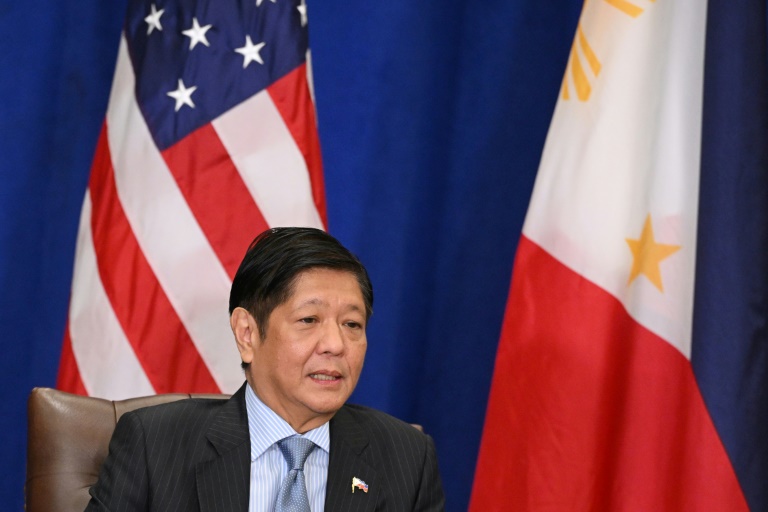
The Philippines will acquire heavy-lift military helicopters from the United States, President Ferdinand Marcos Jr said Thursday, after scrapping a deal to buy similar aircraft from Russia.

The government of his predecessor Rodrigo Duterte had signed a deal worth $216 million for 16 Mi-17 helicopters, but backed out in the months following Russia’s invasion of Ukraine and the imposition of wide-ranging sanctions on Moscow.

Earlier Thursday, local media had quoted the Russian ambassador to the Philippines as saying that deal was still valid.

But Marcos said it was dead.

“We have secured an alternative supply (for heavy-lift helicopters) from the United States,” Marcos, who was elected president in May, told a business forum.

“Unfortunately, we made a down payment (to the Russian manufacturer) that we are hoping to negotiate to get at least a percentage of that back,” he added.

“But the deal as it stood maybe at the beginning of or in the middle of last year has already been cancelled.”

Russian ambassador Marat Pavlov, however, was quoted in local media as saying the manufacturer was still proceeding with the assembly of the Mi-17s.

The Russian embassy in Manila could not be reached for comment.

Marcos did not specify which US helicopter was chosen as the alternative, only that they will be manufactured in Poland.

The Philippine ambassador in Washington, Jose Romualdez, told reporters in August that Manila was looking at Chinooks to replace the Mi-17s.

Romualdez had separately told AFP in August that the decision to cancel the Mi-17 deal was triggered by the Ukraine war, and that Manila was also wary of violating a 2017 US law that sanctions anyone doing business with Russia’s intelligence or defence sectors.

The Philippines is a longtime US ally and began a modest military modernisation programme in 2012.

Until recently, its equipment included Vietnam War-era helicopters and World War II naval vessels used by the United States.

Stocks mostly slide on strong dollar

Asian and European equities mostly slid Thursday after overnight Wall Street losses, while the dollar jumped as surging inflation, interest rate hikes and recession fears returned to the fore.

London stocks also dipped and the pound ducked under $1.12, as British Prime Minister Liz Truss’s government teetered on the brink of collapse after the resignation of home secretary Suella Braverman.

The haven dollar meanwhile soared above 150 yen for the first time since 1990, stoking speculation that Japanese authorities could intervene again to support the battered currency.

The greenback also rallied to a record high at 7.2790 against the offshore yuan, with the US unit boosted by the Federal Reserve’s aggressive interest rate hikes.

– Risk rally fades –

“It looks like the latest risk rally is fading before it really got started,” IG analyst Chris Beauchamp told AFP.

“Markets are worrying about how the rising dollar will begin to break other economies, as it negates their efforts to control inflation by driving their currencies lower while making it more expensive to borrow for a host of emerging market nations.”

He added that disappointing earnings at electric carmaker Tesla “have soured what was a passably good start to the reporting season”.

The unease on trading floors, and concerns that runaway inflation is showing no sign of easing, also sent investors back into the safety of the dollar.

Added to the gloom, Truss looks to be doomed after only six weeks in charge, with her own Conservative MPs calling for her to quit and moves apparently afoot to remove her.

A parliament vote on banning fracking descended into chaos late Wednesday, prompting talk that it was the final nail in the coffin of her premiership.

– ‘Further UK turbulence likely’ –

That came days after the sacking of finance minister Kwasi Kwarteng and the dismembering of the Truss government’s debt-fuelled budget that had sparked chronic markets turmoil.

“The UK was already facing immense challenges from high inflation, rapidly rising interest rates and an economy already probably in recession,” OANDA analyst Craig Erlam told AFP.

“The last thing it needed was an incompetent and unstable government to complete the set,” he said.

“The pound and UK bond yields … both remain vulnerable as the economy finds itself facing enormous headwinds — and the government is on the brink of collapse. Further turbulence looks likely.”

After Wall Street’s drop, markets across Asia were also deep in the red.

Selling was also fuelled by concerns about the Chinese economy as Covid cases spike in the country and leaders stick to lockdown strategies.

A decision to delay the release of China’s third-quarter economic growth data this week added to the unease among investors.

Oil extended Wednesday’s rally that came in reaction to a drop in US petroleum stockpiles, and despite President Joe Biden’s decision to release 15 million barrels from US strategic reserves.

– Key figures around 1040 GMT –

London – FTSE 100: DOWN 0.3 percent at 6,907.59 points

Frankfurt – DAX: DOWN 0.8 percent at 12,643.00

Paris – CAC 40: FLAT at 6,039.51

EURO STOXX 50: DOWN 0.5 percent at 3,455.42

Tokyo – Nikkei 225: DOWN 0.9 percent at 27,006.96 (close)

Hong Kong – Hang Seng Index: DOWN 1.4 percent at 16,280.22 (close)

Shanghai – Composite: DOWN 0.3 percent at 3,035.05 (close)

New York – Dow: DOWN 0.3 percent at 30,423.81 (close)

Pound/dollar: DOWN at $1.1216 from $1.1219 on Wednesday

Dollar/yen: DOWN at 149.78 yen from 149.90 yen

Euro/dollar: UP at $0.9806 from $0.9773 

Euro/pound: UP at 87.39 pence from 87.11 pence

Brent North Sea crude: UP 1.5 percent at $93.77 per barrel

West Texas Intermediate: UP 2.0 percent at $87.24 per barrel

burs-rfj/rl

Stocks mostly slide on strong dollar

Asian and European equities mostly slid Thursday after overnight Wall Street losses, while the dollar jumped as surging inflation, interest rate hikes and recession fears returned to the fore.

London stocks also dipped and the pound ducked under $1.12, as British Prime Minister Liz Truss’s government teetered on the brink of collapse after the resignation of home secretary Suella Braverman.

The haven dollar meanwhile soared above 150 yen for the first time since 1990, stoking speculation that Japanese authorities could intervene again to support the battered currency.

The greenback also rallied to a record high at 7.2790 against the offshore yuan, with the US unit boosted by the Federal Reserve’s aggressive interest rate hikes.

– Risk rally fades –

“It looks like the latest risk rally is fading before it really got started,” IG analyst Chris Beauchamp told AFP.

“Markets are worrying about how the rising dollar will begin to break other economies, as it negates their efforts to control inflation by driving their currencies lower while making it more expensive to borrow for a host of emerging market nations.”

He added that disappointing earnings at electric carmaker Tesla “have soured what was a passably good start to the reporting season”.

The unease on trading floors, and concerns that runaway inflation is showing no sign of easing, also sent investors back into the safety of the dollar.

Added to the gloom, Truss looks to be doomed after only six weeks in charge, with her own Conservative MPs calling for her to quit and moves apparently afoot to remove her.

A parliament vote on banning fracking descended into chaos late Wednesday, prompting talk that it was the final nail in the coffin of her premiership.

– ‘Further UK turbulence likely’ –

That came days after the sacking of finance minister Kwasi Kwarteng and the dismembering of the Truss government’s debt-fuelled budget that had sparked chronic markets turmoil.

“The UK was already facing immense challenges from high inflation, rapidly rising interest rates and an economy already probably in recession,” OANDA analyst Craig Erlam told AFP.

“The last thing it needed was an incompetent and unstable government to complete the set,” he said.

“The pound and UK bond yields … both remain vulnerable as the economy finds itself facing enormous headwinds — and the government is on the brink of collapse. Further turbulence looks likely.”

After Wall Street’s drop, markets across Asia were also deep in the red.

Selling was also fuelled by concerns about the Chinese economy as Covid cases spike in the country and leaders stick to lockdown strategies.

A decision to delay the release of China’s third-quarter economic growth data this week added to the unease among investors.

Oil extended Wednesday’s rally that came in reaction to a drop in US petroleum stockpiles, and despite President Joe Biden’s decision to release 15 million barrels from US strategic reserves.

– Key figures around 1040 GMT –

London – FTSE 100: DOWN 0.3 percent at 6,907.59 points

Frankfurt – DAX: DOWN 0.8 percent at 12,643.00

Paris – CAC 40: FLAT at 6,039.51

EURO STOXX 50: DOWN 0.5 percent at 3,455.42

Tokyo – Nikkei 225: DOWN 0.9 percent at 27,006.96 (close)

Hong Kong – Hang Seng Index: DOWN 1.4 percent at 16,280.22 (close)

Shanghai – Composite: DOWN 0.3 percent at 3,035.05 (close)

New York – Dow: DOWN 0.3 percent at 30,423.81 (close)

Pound/dollar: DOWN at $1.1216 from $1.1219 on Wednesday

Dollar/yen: DOWN at 149.78 yen from 149.90 yen

Euro/dollar: UP at $0.9806 from $0.9773 

Euro/pound: UP at 87.39 pence from 87.11 pence

Brent North Sea crude: UP 1.5 percent at $93.77 per barrel

West Texas Intermediate: UP 2.0 percent at $87.24 per barrel

burs-rfj/rl

Turkish central bank cuts rates for third month

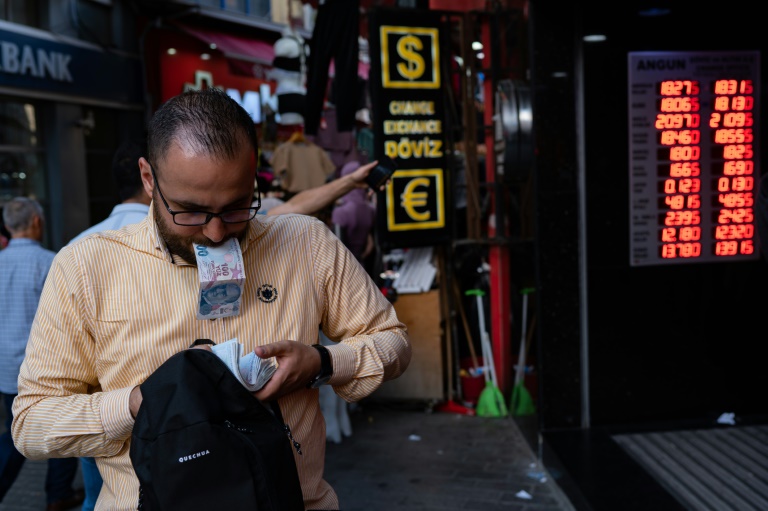
Turkey’s central bank on Thursday cut its policy rate for the third consecutive month despite plunging lira and an annual inflation rate that has soared over 83 percent. 

The central bank said it was cutting its one-week repo rate to 10.5 percent from 12 percent, with a surge in consumer prices it said was “driven by the lagged and indirect effects of rising energy costs” caused by Russia’s war on Ukraine. 

The decision comes right after President Recep Tayyip Erdogan said the central bank would keep cutting rates every month for “as long as I am in power”. 

Erdogan wants interest rates to lower down to single digits by the end of the year as he prioritises economic growth eight months before a general election — which could promise to be the closest since he came to power nearly two decades ago. 

Turkish decision makers have insisted on following this unconventional economic model at the expense of an astronomical inflation.

Erdogan, a vocal opponent of higher borrowing costs, has called high interest rates his “biggest enemy”. 

Earlier this month he vowed that while he remained in power, “the interest will continue to come down with each passing day, each passing week, each passing month.”

As a result, Turkish lira keeps losing its value against the US dollar and is down 28 percent since January.   

“Erdogan’s economic re-election strategy is clear… use money from Russia and (the) Gulf to fund FX intervention to defend the lira, cut policy rates as far as possible to get credit and growth going,” BlueBay Asset Management analyst Timothy Ash said. 

The powerful Turkish leader has responded to the economic crisis by an overhaul of his foreign policy and repairing ties with his former rivals in the Arab world, including oil-rich Saudi Arabia. 

Additional trade-focussed deals with Russia have helped shore up Turkey’s dwindling foreign currency reserves and potentially given Erdogan enough breathing room to ride out the economic storm until the June election.

However, Washington has been warning Turkish companies and banks trading with Russia for several months they could face possible sanctions.

US assistant secretary for terrorist financing and financial crimes Elizabeth Rosenberg traveled to Ankara and Istanbul this week, the Department of the Treasury said. 

Rosenberg’s meetings “affirmed the importance of close partnership between the United States and Turkey in addressing the risks caused by sanctions evasion and other illicit financial activities.”

EU leaders fight for common ground on energy prices

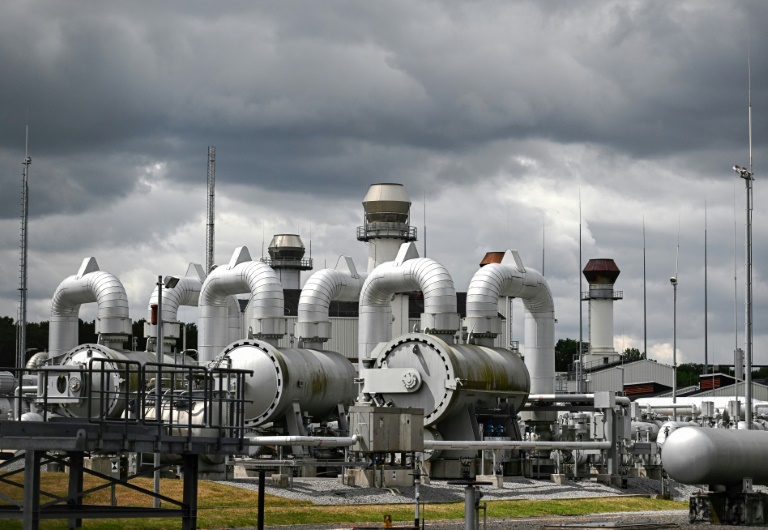
EU leaders are set for tough talks on how to handle Europe’s energy shock Thursday, with capitals at loggerheads over imposing a cap on gas prices pushed skywards by the war in Ukraine.

The bloc’s 27 member states have been squabbling for months over measures to lower energy bills, and will arrive at their Brussels summit in a chilly mood.

Countries such as Italy are pushing hard for a swift and ambitious cap on prices, in the teeth of opposition from Germany, the EU’s biggest economy.

The political pressure to act is huge with strikes and protests over the cost of living spreading across Europe – notably in France and Belgium – and businesses fearing bankruptcy because of the high bills.

If this summit does not result in a “clear political signal that we…no longer tolerate high gas prices”, it will be “Europe’s failure”, Belgian Prime Minister Alexander De Croo said on Monday.

The European Commission, the EU’s executive arm, has tried to satisfy the diverging views with a series of proposals that it hopes will help Europeans pay for their heating as winter approaches.

But these have been dismissed as timid by those wanting a clear ceiling on gas prices despite the opposing view – championed by Germany, but also Denmark and the Netherlands – that this would choke off supply or encourage consumption.

The push for a common approach has been further hampered by discord between France and Germany, which burst into the open Wednesday when they delayed a regular meeting between cabinet ministers.

Breakthroughs in the EU are difficult to achieve when the bloc’s biggest powers do not see eye to eye and French President Emmanuel Macron and Chancellor Olaf Scholz were set to meet ahead of the summit to mend ties.

“There has been a lot of progress, but no fundamental breakthrough,” a senior EU diplomat involved in the negotiations said ahead of the two-day summit.

“Priorities differ: Germany has chosen security of supply because it can afford the high prices, but many countries cannot keep up with the cost,” the diplomat added.

– ‘Slow and painstaking’ –

The Commission’s proposals include an idea to allow joint purchases by the EU energy giants in order to command cheaper prices to replenish reserves.

Another proposal is to give the Commission the power to establish a pricing “corridor” on Europe’s main gas index to intervene when prices get out of control.

Meeting in Brussels, the EU leaders will haggle over the Commission’s proposals, with some countries seeking something much more far-reaching than what is on offer.

But German Chancellor Olaf Scholz on Thursday again rejected any attempt by the EU to cap prices on gas imports saying it “carries the risk that producers will then sell their gas elsewhere.”

However, Scholz welcomed the European Commission’s proposal for joint purchases in the EU.

A big problem in Europe is the link between gas and electricity prices. Under EU rules, a gas price index helps set the price of electric power across the continent, even if sourced from nuclear energy, renewables or coal.

But the index has skyrocketed since Ukraine was invaded by Russia, the country that supplied 40 percent of the EU’s gas imports before the war.

Several countries – including nuclear powered France – are calling for an exception to the gas price mechanism while the commission draws up a new system that better reflects market reality.

This was already granted to Spain and Portugal earlier this year, giving them freer rein to keep electricity prices lower despite surging prices.

“We should not have to ask the Commission four times for the same thing in order to have a proposal,” Spain’s Ecological Transition Minister Teresa Ribera told AFP ahead of the summit.

“It is frustrating to see how slow and painstaking Europe’s response to the challenge we face is,” Ribera said.

First-ever licencing deal struck for cancer drug

Pharmaceutical giant Novartis has signed a licensing agreement increasing access to a vital leukaemia treatment, a UN-backed public health organisation said Thursday, marking the first-ever such agreement for a cancer drug.

The deal will give selected manufacturers the opportunity to develop, manufacture and supply generic versions of nilotinib, a twice-daily oral medication used to treat chronic myeloid leukaemia (CML).

“Access to high-quality cancer medicines is a crucial component of the global health response to the cancer burden,” said Charles Gore, head of the Medicines Patent Pool, the United Nations-backed public health organisation working to increase access to life-saving medicines in poorer countries.

While the remaining patent period for nilotinib was “relatively short”, he said the licencing deal set “a vital precedent that I hope other companies will follow”, Gore said in a statement.

Novartis president of global health and sustainability Lutz Hegemann said the company was “proud to be pioneering this new licensing model with MPP”.

The drug is listed on the World Health Organization’s List of Essential Medicines for the treatment of adults and children over the age of one suffering from CML.

Zeba Aziz, a medical oncologist at Hameed Latif Hospital in Lahore, Pakistan, said nilotinib offers an alternative to people who are resistant or intolerant to imatinib, the first-line treatment for CML — about 20 percent of those who contract the disease.

“I am glad more people in (low and middle-income countries) will have access to this essential cancer medicine,” she said in the statement.

The licence includes seven middle-income countries: Egypt, Guatemala, Indonesia, Morocco, Pakistan, the Philippines and Tunisia, where patents on the product are pending or in force, MPP said.

The Access to Oncology Medicines (ATOM) Coalition welcomed the deal.

“This is a first for cancer treatment anywhere and demonstrates that the combined efforts of the private and public sectors can pave the way to help save millions of lives,” ATOM co-chair Anil D-Cruz said in a separate statement.

First-ever licencing deal struck for cancer drug

Pharmaceutical giant Novartis has signed a licensing agreement increasing access to a vital leukaemia treatment, a UN-backed public health organisation said Thursday, marking the first-ever such agreement for a cancer drug.

The deal will give selected manufacturers the opportunity to develop, manufacture and supply generic versions of nilotinib, a twice-daily oral medication used to treat chronic myeloid leukaemia (CML).

“Access to high-quality cancer medicines is a crucial component of the global health response to the cancer burden,” said Charles Gore, head of the Medicines Patent Pool, the United Nations-backed public health organisation working to increase access to life-saving medicines in poorer countries.

While the remaining patent period for nilotinib was “relatively short”, he said the licencing deal set “a vital precedent that I hope other companies will follow”, Gore said in a statement.

Novartis president of global health and sustainability Lutz Hegemann said the company was “proud to be pioneering this new licensing model with MPP”.

The drug is listed on the World Health Organization’s List of Essential Medicines for the treatment of adults and children over the age of one suffering from CML.

Zeba Aziz, a medical oncologist at Hameed Latif Hospital in Lahore, Pakistan, said nilotinib offers an alternative to people who are resistant or intolerant to imatinib, the first-line treatment for CML — about 20 percent of those who contract the disease.

“I am glad more people in (low and middle-income countries) will have access to this essential cancer medicine,” she said in the statement.

The licence includes seven middle-income countries: Egypt, Guatemala, Indonesia, Morocco, Pakistan, the Philippines and Tunisia, where patents on the product are pending or in force, MPP said.

The Access to Oncology Medicines (ATOM) Coalition welcomed the deal.

“This is a first for cancer treatment anywhere and demonstrates that the combined efforts of the private and public sectors can pave the way to help save millions of lives,” ATOM co-chair Anil D-Cruz said in a separate statement.

Stocks drop and dollar rises as inflation, rate fears return

Equities tumbled Thursday, tracking a sell-off on Wall Street, while the dollar jumped further as surging inflation, interest rate hikes and recession fears returned to the fore.

Traders in Europe were keeping tabs on Westminster a day after Prime Minister Liz Truss’s government was plunged into a fresh crisis and facing collapse following the resignation of home secretary Suella Braverman.

That came days after the sacking of finance minister Kwasi Kwarteng and has left Truss’s premiership on a knife-edge.

The positive start to the week, helped by forecast-beating earnings and a major UK government policy U-turn, gave way to the downbeat mood that has characterised markets all year as traders contemplated an extended period of uncertainty.

News that UK inflation bounced back above 10 percent in September highlighted the struggle central banks have in bringing prices down, despite lifting borrowing costs in recent months.

That followed a similarly glum reading out of New Zealand earlier in the week and helped push up government bond yields around the world, indicating higher interest rates.

The unease on trading floors, and concerns that prices are showing no sign of easing, also sent investors back into the safety of the dollar, adding more inflationary pressure outside the United States and dragging on stock markets.

“As is often the case, rising US yields and the strong US dollar are the sledgehammers pounding global equities lower,” said SPI Asset Management’s Stephen Innes. 

After Wall Street’s drop, markets across Asia were deep in the red, with selling also fuelled by concerns about the Chinese economy as Covid cases spike in the country and leaders stick to lockdown strategies.

A decision to delay the release of third-quarter growth data this week added to the unease among investors.

Hong Kong led losses, shedding almost three percent at one point, while Tokyo, Sydney, Seoul, Wellington, Taipei, Shanghai, Mumbai and Manila were also in the red.

There was a brief rally in the afternoon sparked by a report that China was considering easing quarantine rules for people coming into the country, though traders were unable to maintain momentum.

London’s FTSE 100 fell in the morning. Frankfurt was also down but Paris edged up.

– Westminster chaos –

The losses wiped out most of the gains enjoyed at the start of the week, even as positive earnings reports came in from Netflix and top Wall Street banks, with Ellen Hazen of F.L.Putnam Investment Management warning worse could be yet to come.

“As we look at third-quarter results, we think there are going to be more misses than the market is currently expecting,” she told Bloomberg Radio.

“If you look at GDP for this year, it keeps getting revised downward and it’s really hard for companies to keep growing their earnings in the face of that.”

On forex markets the dollar briefly broke to as high as 150.08 yen for the first time since 1990, putting pressure on Japanese authorities who said saying they were keeping a close watch on the market and were ready to step in to support the beleaguered currency.

But analysts warned the yen would continue to slide as long as the Bank of Japan refuses to tighten monetary policy at the same time as the Federal Reserve presses on with its sharp rate hikes.

The pound was also back under pressure, having bounced Monday after Britain’s new finance minister Jeremy Hunt reversed virtually all of Truss’s debt-fuelled, tax-cutting mini-budget that hammered financial markets.

Sterling was hovering just above $1.12 — against more than $1.14 Tuesday — owing to the chaos in Westminster, with many of the prime minister’s own party calling for her to stand down, while there is speculation that more members of the cabinet could walk.

Oil prices extended Wednesday’s rally that came in reaction to a drop in US petroleum stockpiles, and despite President Joe Biden’s decision to release 15 million barrels from US strategic reserves.

The crude was the last batch to be released from the 180 barrels pledged by Biden earlier this year, aimed at bringing costs down.

But Innes added: “Markets will mostly ignore further releases from the Strategic Petroleum Reserves — prices are elevated because of the medium- and longer-term gap between supply and demand resulting from years of oil industry swoon and the resulting low capital expenditure.

“So, the impact of additional… releases will likely have diminishing returns with (reserves) at a multi-decade low.”

– Key figures around 0810 GMT –

Tokyo – Nikkei 225: DOWN 0.9 percent at 27,006.96 (close)

Hong Kong – Hang Seng Index: DOWN 1.4 percent at 16,280.22 (close)

Shanghai – Composite: DOWN 0.3 percent at 3,035.05 (close)

London – FTSE 100: DOWN 0.2 percent at 6,914.36

Pound/dollar: DOWN at $1.1210 from $1.1219 on Wednesday

Dollar/yen: UP at 149.90 yen from 149.88 yen

Euro/dollar: UP at $0.9794 from $0.9778 

Euro/pound: UP at 87.18 pence from 87.10 pence

West Texas Intermediate: UP 1.5 percent at $86.86 per barrel

Brent North Sea crude: UP 1.2 percent at $93.52 per barrel

New York – Dow: DOWN 0.3 percent at 30,423.81 (close)

Stocks drop and dollar rises as inflation, rate fears return

Equities tumbled Thursday, tracking a sell-off on Wall Street, while the dollar jumped further as surging inflation, interest rate hikes and recession fears returned to the fore.

Traders in Europe were keeping tabs on Westminster a day after Prime Minister Liz Truss’s government was plunged into a fresh crisis and facing collapse following the resignation of home secretary Suella Braverman.

That came days after the sacking of finance minister Kwasi Kwarteng and has left Truss’s premiership on a knife-edge.

The positive start to the week, helped by forecast-beating earnings and a major UK government policy U-turn, gave way to the downbeat mood that has characterised markets all year as traders contemplated an extended period of uncertainty.

News that UK inflation bounced back above 10 percent in September highlighted the struggle central banks have in bringing prices down, despite lifting borrowing costs in recent months.

That followed a similarly glum reading out of New Zealand earlier in the week and helped push up government bond yields around the world, indicating higher interest rates.

The unease on trading floors, and concerns that prices are showing no sign of easing, also sent investors back into the safety of the dollar, adding more inflationary pressure outside the United States and dragging on stock markets.

“As is often the case, rising US yields and the strong US dollar are the sledgehammers pounding global equities lower,” said SPI Asset Management’s Stephen Innes. 

After Wall Street’s drop, markets across Asia were deep in the red, with selling also fuelled by concerns about the Chinese economy as Covid cases spike in the country and leaders stick to lockdown strategies.

A decision to delay the release of third-quarter growth data this week added to the unease among investors.

Hong Kong led losses, shedding almost three percent at one point, while Tokyo, Sydney, Seoul, Wellington, Taipei, Shanghai, Mumbai and Manila were also in the red.

There was a brief rally in the afternoon sparked by a report that China was considering easing quarantine rules for people coming into the country, though traders were unable to maintain momentum.

London’s FTSE 100 fell in the morning. Frankfurt was also down but Paris edged up.

– Westminster chaos –

The losses wiped out most of the gains enjoyed at the start of the week, even as positive earnings reports came in from Netflix and top Wall Street banks, with Ellen Hazen of F.L.Putnam Investment Management warning worse could be yet to come.

“As we look at third-quarter results, we think there are going to be more misses than the market is currently expecting,” she told Bloomberg Radio.

“If you look at GDP for this year, it keeps getting revised downward and it’s really hard for companies to keep growing their earnings in the face of that.”

On forex markets the dollar briefly broke to as high as 150.08 yen for the first time since 1990, putting pressure on Japanese authorities who said saying they were keeping a close watch on the market and were ready to step in to support the beleaguered currency.

But analysts warned the yen would continue to slide as long as the Bank of Japan refuses to tighten monetary policy at the same time as the Federal Reserve presses on with its sharp rate hikes.

The pound was also back under pressure, having bounced Monday after Britain’s new finance minister Jeremy Hunt reversed virtually all of Truss’s debt-fuelled, tax-cutting mini-budget that hammered financial markets.

Sterling was hovering just above $1.12 — against more than $1.14 Tuesday — owing to the chaos in Westminster, with many of the prime minister’s own party calling for her to stand down, while there is speculation that more members of the cabinet could walk.

Oil prices extended Wednesday’s rally that came in reaction to a drop in US petroleum stockpiles, and despite President Joe Biden’s decision to release 15 million barrels from US strategic reserves.

The crude was the last batch to be released from the 180 barrels pledged by Biden earlier this year, aimed at bringing costs down.

But Innes added: “Markets will mostly ignore further releases from the Strategic Petroleum Reserves — prices are elevated because of the medium- and longer-term gap between supply and demand resulting from years of oil industry swoon and the resulting low capital expenditure.

“So, the impact of additional… releases will likely have diminishing returns with (reserves) at a multi-decade low.”

– Key figures around 0810 GMT –

Tokyo – Nikkei 225: DOWN 0.9 percent at 27,006.96 (close)

Hong Kong – Hang Seng Index: DOWN 1.4 percent at 16,280.22 (close)

Shanghai – Composite: DOWN 0.3 percent at 3,035.05 (close)

London – FTSE 100: DOWN 0.2 percent at 6,914.36

Pound/dollar: DOWN at $1.1210 from $1.1219 on Wednesday

Dollar/yen: UP at 149.90 yen from 149.88 yen

Euro/dollar: UP at $0.9794 from $0.9778 

Euro/pound: UP at 87.18 pence from 87.10 pence

West Texas Intermediate: UP 1.5 percent at $86.86 per barrel

Brent North Sea crude: UP 1.2 percent at $93.52 per barrel

New York – Dow: DOWN 0.3 percent at 30,423.81 (close)
Yen sinks to 150 per dollar, lowest since 1990

The falling yen hit 150 per dollar for the first time since 1990 on Thursday, driven down by the contrast between Japanese monetary easing and aggressive US interest rate hikes.

The currency has plunged from February levels of around 115 as the Bank of Japan sticks to its longstanding ultra-loose policies, designed to encourage sustainable growth in the world’s third-largest economy.

At the same time the US Federal Reserve has sharply increased borrowing costs in an attempt to quell sky-high inflation fuelled by factors including the war in Ukraine.

The Japanese unit sank to as low as 150.08 per dollar, before easing back soon after.

Analysts say the yen will continue to slide as long as the two policies differ, with more dramatic Fed interest-rate hikes likely as US prices increase faster than expected.

And speculation is growing that Japan could move to prop up its currency again after spending 2.8 trillion yen in September (then around $20 billion) on an intervention that involves selling dollars and buying yen.

Finance Minister Shunichi Suzuki called volatile fluctuations in forex markets “absolutely intolerable” on Thursday, reiterating verbal warnings that authorities will take an “appropriate response” to promote stability.

Earlier this week, Suzuki declined to confirm whether any unannounced “stealth” interventions had recently taken place.

“It’s probably fair to say that… the Japanese government is engaged in a game of chicken with the market” on the yen, Jane Foley, head of FX strategy at Rabobank, told AFP.

“There isn’t a limit,” she said, explaining that in the short term, “interest rate differentials suggest there is a strong drag on the dollar-yen to go higher.”

A weaker yen inflates profits for Japanese exporters, but can also weigh on the country’s trade balance.

Japan is heavily reliant on imported energy and also buys in other goods including much of its food.

September’s intervention “managed to stabilise the dollar-yen rate for a while, because traders are frightened of intervention”, which can cause them to lose money, said Foley.

But the effect of such interventions will be limited if the gap between Japanese and US monetary policy remains, she added.

“It’s very unlikely that anything is going to change from policy at least until the spring,” when key wage negotiations take place in Japan, she said.

Japan scrapped its Covid-19 border restrictions and reopened to tourists this month, and many visitors will find shopping, eating out and domestic travel a bargain thanks to the weak yen and years of stubbornly low inflation.

Prices are now rising in Japan, although at a slower pace than in other major economies.

In August, inflation came in at 2.8 percent, the highest level since 2014, in part because of soaring energy prices linked to the Ukraine war.

That is above the Bank of Japan’s target for sustained two percent inflation, but it views the price increases as temporary and so has kept its easy-money policies in place.

Close Bitnami banner
Bitnami