AFP

French government set to overrule lawmakers in budget standoff

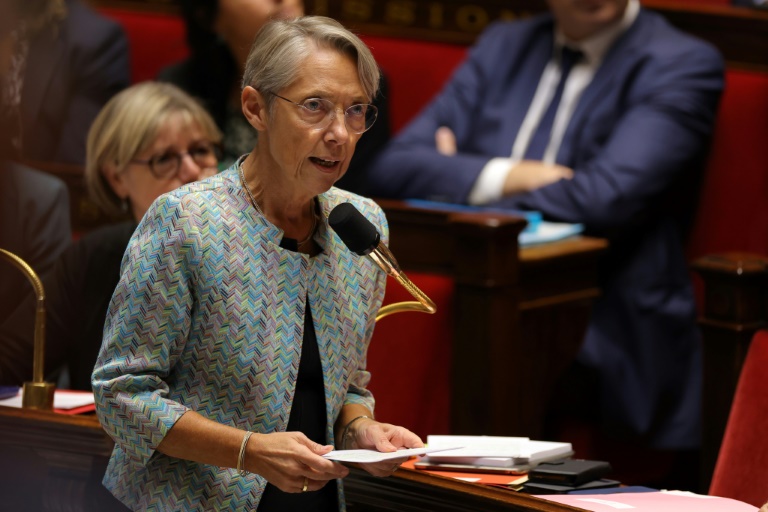
The French government is poised to wield a rarely used constitutional weapon to force its budget through parliament, where opposition groups have stymied the text for weeks with rival amendments, officials said Tuesday.

The impasse underscores the weakened position of President Emmanuel Macron since his centrist party lost its majority in parliamentary elections last spring, just weeks after his own re-election.

Government spokesman Olivier Veran said Prime Minister Elisabeth Borne would “probably” invoke article 49.3 of the constitution on Wednesday, which would end debate and pass the 2023 budget without a vote.

“For now, we will see how the debates progress” after several stormy sessions since last week, Veran told France 2 television.

If article 49.3 is used, hard-left and far-right opponents are expected to call for a no-confidence vote to force the government’s resignation.

That vote is highly unlikely to pass, however, since the conservative Republicans have already said they will not join a bid to bring Macron’s administration down.

But opponents from across the political spectrum have seized on the budget battle, forcing amendments such as a tax on corporate “super-dividends” and a new “exit tax” on people who move wealth out of France — which Macron abolished in his first term.

It is also setting up a bigger fight over Macron’s pensions overhaul that would push back the retirement age to 64 or 65, which he wants to enact in the coming months.

Resorting to article 49.3 would expose Macron to claims of running roughshod over parliament despite his vow last month for more inclusive governance and a “broad national consultation” on “crucial choices.”

His government seems aware of the risk, coming at a time of growing public discontent over soaring inflation.

“We need to give this debate a chance, all the more so because the French don’t really like the 49.3. These tools, like requisitions, should be used with caution,” Borne told lawmakers in Macron’s Renaissance party on Tuesday, according to one participant.

Last week, the government ordered striking refinery employees at TotalEnergies back to work at some fuel depots to ease the shortages causing huge waits at service stations across the country.

Veran said further such “requisitions” could come if the strike continues, though he declined to comment on workers’ demands for a 10 percent pay hike, saying “it’s not for the government to get involved in labour debates in a private company.”

Zelensky set for Frankfurt book fair as Ukraine stars

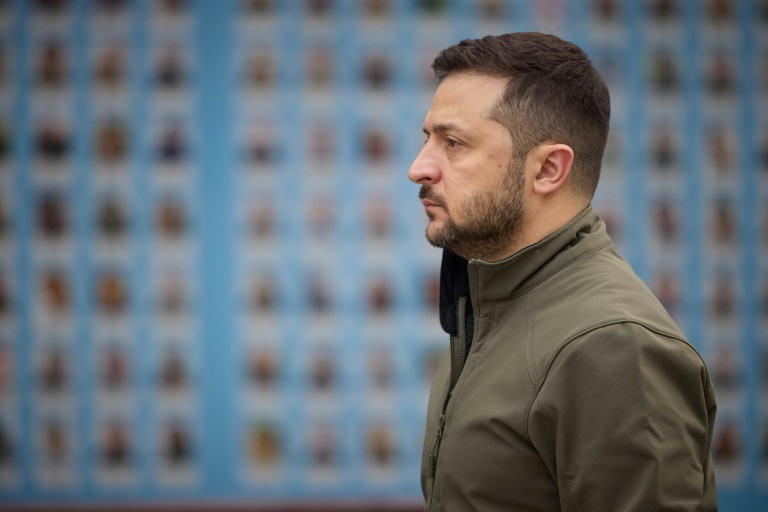
Ukraine’s President Volodymyr Zelensky will address this week’s Frankfurt book fair, with organisers offering emphatic support to the country’s literary scene in the wake of Russia’s invasion.

Ukrainian authors led by “punk poet” Sergiy Zhadan will feature prominently at the world’s biggest publishing event.

Zelensky will make his speech Thursday via video link at the five-day annual fair, which attracts tens of thousands of visitors from around the world and hundreds of exhibitors.  

His wife, Olena Zelenska, is also due to speak at a side event. 

Russian state institutions usually in charge of running their nation’s stand have been banned, with prominent opponents of President Vladimir Putin instead given the stage.

The fair’s director Juergen Boos said the event aimed to “offer direct support to our Ukrainian colleagues now as they withstand the Russian attack”.

“We are completely flabbergasted by a war in Europe which threatens the peaceful order following the fall of the Iron Curtain,” he said. 

The Ukrainian publishing industry has a big stand at the fair, which Boos said was “an act of resistance at the attempt to annihilate the culture of this country”.

The 2022 edition marks a return to near normal for the fair after pandemic-induced disruptions.

“The Frankfurt book fair, after two years of pandemic, is back in full force,” said the director.

“The big VIPs, from politics and literary life, are here in person.”

The 2020 fair was almost fully digital, while last year’s was muted with many authors joining only via video link. 

This year’s event has no restrictions, although the number of countries represented is still below the level at the last pre-pandemic fair in 2019. 

– Energy crisis –

One of the most high-profile Ukrainian attendees will be Zhadan, a writer, translator and musician, and a key figure in the country’s literary scene. 

The author — who has paused his writing career to focus on humanitarian aid and supporting the Ukrainian army — will read his poems and be interviewed.

While other prominent events have been planned around Ukrainian writers and publishers, the fair will also offer a platform to Russian dissidents. 

Leonid Volkov, a leading ally of jailed Kremlin critic Alexei Navalny, and Irina Scherbakova, an activist from prominent rights group Memorial, will discuss the state of Russia’s opposition. 

Popular Russian science fiction writer Dmitry Glukhovsky — recently labelled a “foreign agent” by Moscow and put on a wanted list after denouncing the war in Ukraine — will also be appearing.

The energy crisis facing Europe after Russia’s shutdown of gas supplies will be a topic of discussion, as some bookshops, publishers and printers struggle with soaring bills. 

The industry in Germany, which has been hard hit by the energy crunch, may face serious problems, warned Karin Schmidt-Friderichs, chairwoman of the German publishers and booksellers association. 

“High energy prices also mean extremely high prices for paper and for the printing industry,” she said. 

“If a bookshop sees an increase in 300 percent in terms of energy costs… the book shop may go bust.”

Lighter subjects are also on the agenda, however, with an in-depth look at #BookTok, a growing community on social media network TikTok where users make short videos reviewing and discussing books. 

Other big names include 2021 Nobel literature prize winner Abdulrazak Gurnah from Tanzania and British-Pakistani writer Mohsin Hamid, German-born actor Diane Kruger and American crime fiction author Donna Leon.

Spain is this year’s official guest of honour, and the fair will be opened later Tuesday in the presence of Spain’s King Felipe VI and his wife Queen Letizia, as well as German President Frank-Walter Steinmeier.

Leading Spanish authors will attend and there will be exhibitions about Spanish book illustrators, and stories told through films, drawings and installations.

The huge gathering dates back to the Middle Ages, with the first fairs taking place shortly after the Gutenberg printing press was invented in nearby Mainz in 1436.

Alyssa Milano: women 'refusing to be silenced' since MeToo

Five years after lighting the fuse of MeToo, US actor Alyssa Milano says she is delighted with the way women are “refusing to be silenced”. 

“A lot has changed,” Milano told AFP, since sending her famous tweet on October 15, 2017 asking women to share their stories of sexual harassment under the hashtag #MeToo.

The 49-year-old, who grew up in public as the star of “Who’s the Boss?” and “Charmed”, was herself a victim of sexual assault during a shoot in the 1990s.

“The most obvious thing is that we are refusing to be silenced and really coming together,” she said in Cannes, where she was taking part in the Mipcom TV festival.

She pointed to new legislation against gender discrimination and harassment across the United States, as well as the introduction of “intimacy coordinators” to assist during sex scenes in movies. 

“It made no sense to me how, if there was an animal on the set, we would have to have someone from the humane society to oversee the health and welfare of the animal, and yet the actors are in such vulnerable situations not only with love scenes, but with all sorts of emotional scenes,” Milano said. 

Recent moves to ban abortions in the United States were a reaction against the empowerment of women triggered by MeToo, she added.

“Equality and equity are terrifying to a lot of white men in power,” she said. “Taking away our body autonomy is the most extreme case of trying to impede our evolution and our growth and our drive for a more equitable future.”

Milano’s activism did not start with MeToo, however. 

When “Who’s the Boss?” was the number one show in the United States, a 15-year-old Milano received a request from none other than Elton John. 

The singer asked her to meet a young fan, Ryan White, who had been expelled from his school after contracting HIV. 

“He asked me if I could go on TV and kiss him to prove that you couldn’t get HIV/AIDS through casual contact, and I said yes,” she said on a panel at Mipcom.  

“That was the moment that my life completely changed because I realised what it meant to be famous, and to do good with that voice,” she said. 

'Hey Buddha': Japan researchers create AI enlightenment tool

What is the meaning of happiness? Why not ask AI Buddha, a tool made by Japanese researchers that brings spiritual guidance from ancient scriptures to your smartphone.

The software, co-developed by a team of religion and computing academics at Kyoto University, has been programmed to memorise around 1,000 teachings from Buddhist texts such as the Sutta Nipata and Dhammapada.

Users seeking enlightenment can question a Buddha avatar that pops up on their phone screen.

“Sharpen your observations and explore the various reasons behind the doom. Only then can you experience happiness,” was the answer AFP received to the question above.

An augmented reality backdrop shows the pint-sized Buddha sitting cross-legged within the real-life surroundings captured by the device’s camera.

And an artificial intelligence dialogue system dubbed “Buddhabot” is behind the tech, which is still in testing stages and not yet available to the general public.

Smartphone meditation apps have become hugely popular worldwide, offering specialised audio for situations from coping with bereavement to getting through a difficult day at work.

The AI Buddha, developed with the help of an IT company, is also intended as a therapeutic distraction from “the increasingly stressful real world”, from Covid-19 to the war in Ukraine, said Seiji Kumagai, a key developer of the software at Kyoto University.

“Buddhism scriptures represent the wisdom of ancient times,” the Buddhist and Tibetan studies associate professor told AFP.

“Our goal is for people to apply such old wisdom to their lives in this modern society, and seek ways to become happier,” he added.

Kumagai said the tool could be a step towards a metaverse-driven spiritual world — a potential alternative to Japan’s many temples, whose numbers are expected to decline because of depopulation.

But before the digital Buddha can be made public, more work is needed to improve grammar and contextual errors which sometimes make its answers nonsensical.

This could be misleading and even dangerous, Kumagai said, warning that in its current form, the software could “steer people on the wrong path”.

“What if, for example, people with suicidal thoughts consulted the Buddha avatar… and followed through on that impulse based on what they had been told?”

On Tuesday, a workshop was held at Kyoto University as part of the testing process, with students and faculty members invited to try out the tool.

Yuya Ohara, a 19-year-old student and football fan, asked the Buddha what makes an ideal football player, to which it answered: “Abandon your possessiveness.”

“I would’ve laughed it off if that answer came from my friends,” he told AFP.

“But since it was from Buddha, I was more open-minded.”

European stock markets climb on bright US earnings

European equities rose Tuesday on upbeat US earnings, with sentiment also soothed after Britain shredded its controversial budget.

Asian and Europe chased Wall Street higher after Bank of America became the latest US financial heavyweight to top estimates, following JPMorgan Chase and others that logged solid numbers Friday.

“Better-than-expected US earnings reports sparked a rally on Wall Street with positive momentum reverberating across European equities,” Interactive Investor analyst Victoria Scholar told AFP.

“Risk appetite is picking up after a volatile week for markets, as corporate results look to be the main driver of price action today.”

Later on Tuesday, investors will digest results from Goldman Sachs, Johnson & Johnson, Lockheed Martin and Netflix.

Analysts remain hopeful that an upbeat third-quarter results season could give a shot in the arm to markets which have been slammed this year on fears over inflation and Federal Reserve interest rate hikes.

Frankfurt stocks jumped more than one percent on Tuesday as a key survey showed German investor confidence climbed slightly in October, but it still held at a low level.

London gains were curbed after the Bank of England poured cold water on a newspaper report that it could delay the sale of government bonds again to help maintain market stability.

A BoE spokesperson described the Financial Times story as “inaccurate”.

The British pound retreated back under $1.13, after jumping Monday above $1.14 as the UK government sensationally ripped up its controversial debt-fuelled budget.

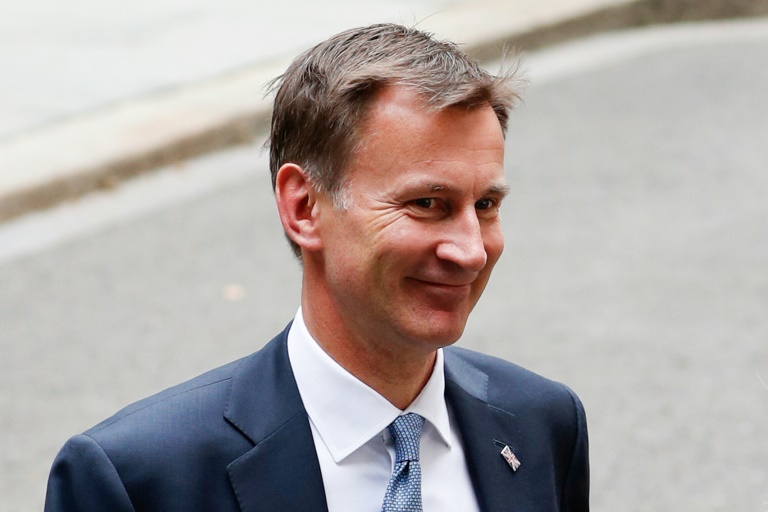
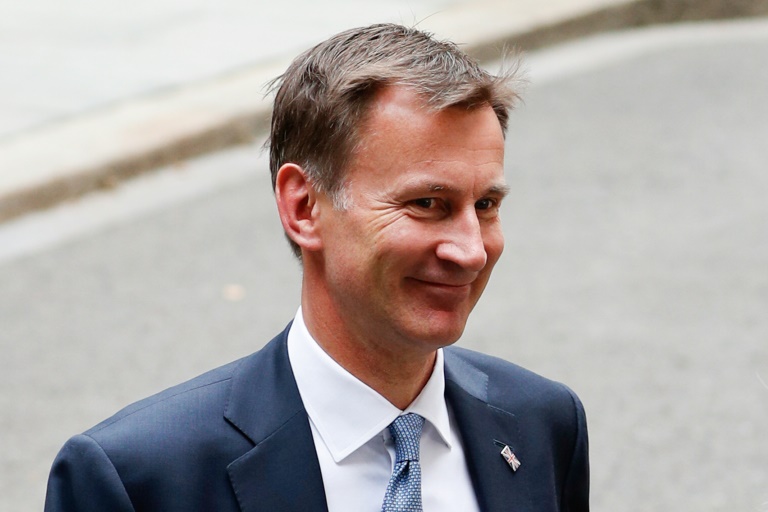
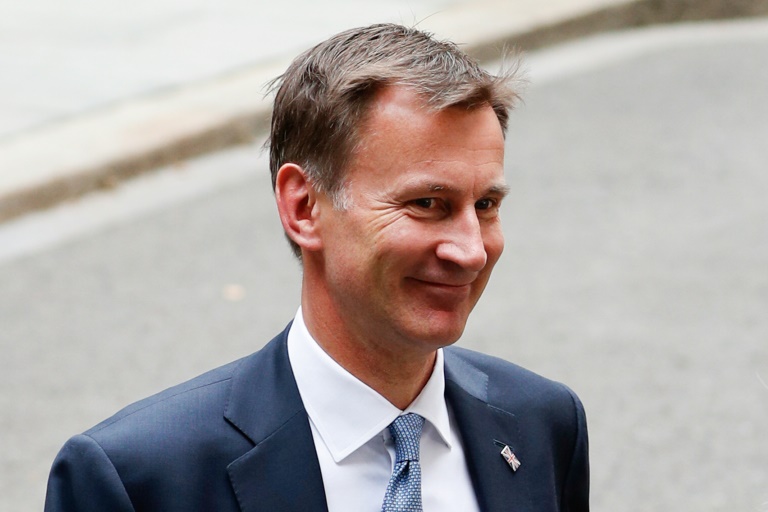
After a volatile few weeks during which the pound hit a record low, new finance minister Jeremy Hunt sought Monday to reassure investors as he scrapped tax cuts and warned of tough spending cuts.

Monday’s move, which dealt a blow to Prime Minister Liz Truss’s authority, sent sterling up as much as two percent at one point and the cost of government borrowing tumbled, while the FTSE 100 jumped.

“Investors continue to monitor the political and economic turbulence surrounding the UK,” noted XTB analyst Walid Koudmani.

Markets in China fluctuated a day after authorities delayed the release of third-quarter economic figures, which analysts said were likely to show the weakest growth since the pandemic owing to Covid-19 lockdowns.

The decision comes as the Communist Party holds a key gathering at which President Xi Jinping is expected to be handed a third term.

– Key figures around 1030 GMT –

London – FTSE 100: UP 0.9 percent at 6,979.19 points

Frankfurt – DAX: UP 1.2 percent at 12,794.07

Paris – CAC 40: UP 0.7 percent at 6,079.98

EURO STOXX 50: UP 0.9 percent at 3,474.10

Tokyo – Nikkei 225: UP 1.4 percent at 27,156.14 (close)

Hong Kong – Hang Seng Index: UP 1.8 percent at 16,914.58 (close)

Shanghai – Composite: DOWN 0.1 percent at 3,080.96 (close)

New York – Dow: UP 1.9 percent at 30,185.82 (close)

Pound/dollar: DOWN at $1.1275 from $1.1358 on Monday

Dollar/yen: UP at 149.11 yen from 149.04 yen

Euro/dollar: DOWN at $0.9835 from $0.9841

Euro/pound: UP at 87.21 pence from 86.64 pence

Brent North Sea crude: DOWN 0.2 percent at $91.47 per barrel

West Texas Intermediate: DOWN 0.2 percent at $85.28 per barrel

burs-rfj/rl

European stock markets climb on bright US earnings

European equities rose Tuesday on upbeat US earnings, with sentiment also soothed after Britain shredded its controversial budget.

Asian and Europe chased Wall Street higher after Bank of America became the latest US financial heavyweight to top estimates, following JPMorgan Chase and others that logged solid numbers Friday.

“Better-than-expected US earnings reports sparked a rally on Wall Street with positive momentum reverberating across European equities,” Interactive Investor analyst Victoria Scholar told AFP.

“Risk appetite is picking up after a volatile week for markets, as corporate results look to be the main driver of price action today.”

Later on Tuesday, investors will digest results from Goldman Sachs, Johnson & Johnson, Lockheed Martin and Netflix.

Analysts remain hopeful that an upbeat third-quarter results season could give a shot in the arm to markets which have been slammed this year on fears over inflation and Federal Reserve interest rate hikes.

Frankfurt stocks jumped more than one percent on Tuesday as a key survey showed German investor confidence climbed slightly in October, but it still held at a low level.

London gains were curbed after the Bank of England poured cold water on a newspaper report that it could delay the sale of government bonds again to help maintain market stability.

A BoE spokesperson described the Financial Times story as “inaccurate”.

The British pound retreated back under $1.13, after jumping Monday above $1.14 as the UK government sensationally ripped up its controversial debt-fuelled budget.

After a volatile few weeks during which the pound hit a record low, new finance minister Jeremy Hunt sought Monday to reassure investors as he scrapped tax cuts and warned of tough spending cuts.

Monday’s move, which dealt a blow to Prime Minister Liz Truss’s authority, sent sterling up as much as two percent at one point and the cost of government borrowing tumbled, while the FTSE 100 jumped.

“Investors continue to monitor the political and economic turbulence surrounding the UK,” noted XTB analyst Walid Koudmani.

Markets in China fluctuated a day after authorities delayed the release of third-quarter economic figures, which analysts said were likely to show the weakest growth since the pandemic owing to Covid-19 lockdowns.

The decision comes as the Communist Party holds a key gathering at which President Xi Jinping is expected to be handed a third term.

– Key figures around 1030 GMT –

London – FTSE 100: UP 0.9 percent at 6,979.19 points

Frankfurt – DAX: UP 1.2 percent at 12,794.07

Paris – CAC 40: UP 0.7 percent at 6,079.98

EURO STOXX 50: UP 0.9 percent at 3,474.10

Tokyo – Nikkei 225: UP 1.4 percent at 27,156.14 (close)

Hong Kong – Hang Seng Index: UP 1.8 percent at 16,914.58 (close)

Shanghai – Composite: DOWN 0.1 percent at 3,080.96 (close)

New York – Dow: UP 1.9 percent at 30,185.82 (close)

Pound/dollar: DOWN at $1.1275 from $1.1358 on Monday

Dollar/yen: UP at 149.11 yen from 149.04 yen

Euro/dollar: DOWN at $0.9835 from $0.9841

Euro/pound: UP at 87.21 pence from 86.64 pence

Brent North Sea crude: DOWN 0.2 percent at $91.47 per barrel

West Texas Intermediate: DOWN 0.2 percent at $85.28 per barrel

burs-rfj/rl

European stock markets climb on bright US earnings

European equities rose Tuesday on upbeat US earnings, with sentiment also soothed after Britain shredded its controversial budget.

Asian and Europe chased Wall Street higher after Bank of America became the latest US financial heavyweight to top estimates, following JPMorgan Chase and others that logged solid numbers Friday.

“Better-than-expected US earnings reports sparked a rally on Wall Street with positive momentum reverberating across European equities,” Interactive Investor analyst Victoria Scholar told AFP.

“Risk appetite is picking up after a volatile week for markets, as corporate results look to be the main driver of price action today.”

Later on Tuesday, investors will digest results from Goldman Sachs, Johnson & Johnson, Lockheed Martin and Netflix.

Analysts remain hopeful that an upbeat third-quarter results season could give a shot in the arm to markets which have been slammed this year on fears over inflation and Federal Reserve interest rate hikes.

Frankfurt stocks jumped more than one percent on Tuesday as a key survey showed German investor confidence climbed slightly in October, but it still held at a low level.

London gains were curbed after the Bank of England poured cold water on a newspaper report that it could delay the sale of government bonds again to help maintain market stability.

A BoE spokesperson described the Financial Times story as “inaccurate”.

The British pound retreated back under $1.13, after jumping Monday above $1.14 as the UK government sensationally ripped up its controversial debt-fuelled budget.

After a volatile few weeks during which the pound hit a record low, new finance minister Jeremy Hunt sought Monday to reassure investors as he scrapped tax cuts and warned of tough spending cuts.

Monday’s move, which dealt a blow to Prime Minister Liz Truss’s authority, sent sterling up as much as two percent at one point and the cost of government borrowing tumbled, while the FTSE 100 jumped.

“Investors continue to monitor the political and economic turbulence surrounding the UK,” noted XTB analyst Walid Koudmani.

Markets in China fluctuated a day after authorities delayed the release of third-quarter economic figures, which analysts said were likely to show the weakest growth since the pandemic owing to Covid-19 lockdowns.

The decision comes as the Communist Party holds a key gathering at which President Xi Jinping is expected to be handed a third term.

– Key figures around 1030 GMT –

London – FTSE 100: UP 0.9 percent at 6,979.19 points

Frankfurt – DAX: UP 1.2 percent at 12,794.07

Paris – CAC 40: UP 0.7 percent at 6,079.98

EURO STOXX 50: UP 0.9 percent at 3,474.10

Tokyo – Nikkei 225: UP 1.4 percent at 27,156.14 (close)

Hong Kong – Hang Seng Index: UP 1.8 percent at 16,914.58 (close)

Shanghai – Composite: DOWN 0.1 percent at 3,080.96 (close)

New York – Dow: UP 1.9 percent at 30,185.82 (close)

Pound/dollar: DOWN at $1.1275 from $1.1358 on Monday

Dollar/yen: UP at 149.11 yen from 149.04 yen

Euro/dollar: DOWN at $0.9835 from $0.9841

Euro/pound: UP at 87.21 pence from 86.64 pence

Brent North Sea crude: DOWN 0.2 percent at $91.47 per barrel

West Texas Intermediate: DOWN 0.2 percent at $85.28 per barrel

burs-rfj/rl

Australian sports stars revolt over mining, fossil fuel sponsorships

Stars from two of Australia’s favourite sporting codes are pushing back against lucrative energy and mining sponsorship deals, with cricket captain Pat Cummins leading the charge on Tuesday.

Cummins, whose role as Test captain makes him one of Australia’s most prominent public figures, told local media he would no longer appear in adverts for sponsor Alinta Energy.

The 29-year-old fast bowler is a vocal proponent of action on climate change, an urgent issue in fire, drought and flood-prone Australia.

Cricket Australia on Tuesday abruptly announced its four-year-old sponsorship deal with Alinta would end in 2023, citing a change in the firm’s “brand strategy”.

Cricket administrators denied the parting had anything to do with Cummins, despite reports of changing-room disquiet. 

The player said the relationship with sponsors was “a balance”.

“We’ve seen certain players make decisions based on certain religions or certain foods, they won’t partner with specific partners,” Cummins said.

Australia’s economy is heavily dependent on coal, gas and mineral exports and the companies involved are among the country’s more profitable.

Energy and mining firms channel a small percentage of their earnings into sports from cricket to rugby and netball, sparking a clash of cultures with increasingly environmentally and culturally conscious players.

Pro-fossil fuel media commentator Chris Kelly accused Cummins of “having a whinge” and carrying out an “idiotic” protest.

– Cultural sensitivities –

This week Australia’s netball team objected to wearing jerseys with a multimillion-dollar mining sponsor on them after concerns raised by an Aboriginal player. 

Hancock Prospecting, a mining company led by Australia’s richest person Gina Rinehart, this year announced an Aus$15 million (US$9 million) sponsorship with Netball Australia, which has booked losses of $7 million over the past two years. 

But the sponsorship has reportedly caused turmoil inside the Australian Diamonds national team, with Aboriginal squad member Donnell Wallam raising concerns about the company’s treatment of Indigenous communities.

Her stance has reportedly been widely backed by other players. 

Lang Hancock, founder of Hancock Prospecting and Rinehart’s father, suggested in 1984 dumping chemicals in water sources to sterilise Aboriginal populations that caused trouble.

Netball Australia said it was aware of “cultural sensitivities raised by a Diamonds squad member” but said it would retain the deal with Hancock. 

“Netball Australia and Hancock Prospecting have been working tirelessly to acknowledge and recognise the sensitivities, to further understand the concerns of that squad member and to provide avenues for support,” the national body said in a statement. 

Netball Australia chair Wendy Archer denied reports the team had boycotted uniforms with the Hancock Prospecting logo during recent games in New Zealand. 

Volleyball Australia, also sponsored by Hancock Prospecting, last week said the controversy was surprising — instead praising Rinehart for her philanthropic spirit. 

“Mrs Rinehart’s selfless commitment to women’s sport deserves the accolades of our great sporting nation,” it said. 

Former Wallabies captain turned senator David Pocock has voiced his objection to Santos energy’s sponsorship of the national rugby team he once led.

“I was always proud to represent my country. As a rugby player, that’s what you dream of. It’s been difficult to watch a partnership emerge with Santos,” Pocock recently told local media.

“I really think fossil-fuel sponsorship is the new cigarette sponsorship, where they are advertising a product that we now know is destroying our home planet and our futures.”

France faces delays as unions call transport strike

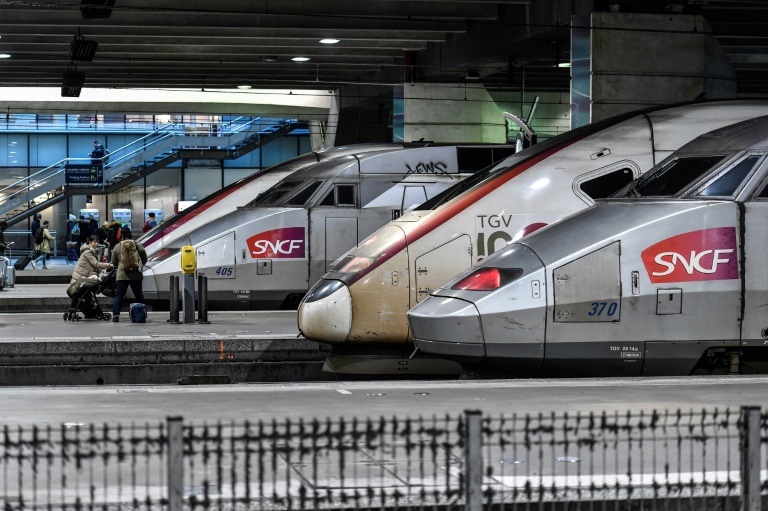
France faced disruptions on Tuesday after unions called a nationwide transport strike, as they remain in deadlock with the government over walkouts at oil depots that have sparked fuel shortages.

The effects were already visible at Paris hub Gare de Lyon early Tuesday, with packed suburban trains disgorging floods of passengers onto the platforms every 15 or even 20 minutes.

Commuter Leonore Lopez said her trip into Paris from a small town outside the capital had taken one hour more than usual.

“It was a bit of a pain,” she said.

The broader strike comes after workers at several oil refineries and depots operated by energy giant TotalEnergies voted to extend walkouts.

Their industrial action has seriously disrupted fuel distribution across the country but particularly in northern and central France and the Paris region.

Motorists have scrambled to fill tanks as the fuel strike, which has lasted for nearly three weeks, cripples supplies at around 30 percent of France’s service stations and has had a knock-on effect across all sectors of the economy.

– ‘Time for negotiation over’ –

President Emmanuel Macron’s government used requisitioning powers to force some strikers back to open fuel depots, a move that infuriated unions but has so far been upheld in the courts.

Finance Minister Bruno Le Maire earlier said it was necessary to use requisitioning powers to reopen the refineries and depots.

“The time for negotiation is over,” Le Maire told the BFMTV broadcaster. 

“There was an agreement,” he added, referring to the deal concluded last week between TotalEnergies and two majority unions, but which the hard-left CGT union rejects.

The CGT’s representative at TotalEnergies, Eric Sellini, told AFP that strikers would gather on Tuesday evening to decide their next move.

CGT boss Philippe Martinez suggested Monday that the government “get around a table” with the unions to discuss an increase in France’s minimum wage. 

– Trains cancelled –

The leftist CGT and FO unions called a nationwide strike Tuesday for higher salaries, and against government requisitions of oil installations, threatening to cripple public transport in particular.

The action is the unions’ biggest challenge to Macron since he won a new presidential term in May.

The Liberation newspaper on its front page published a caricature of Macron swept off his feet and clinging on to the edge of a giant megaphone blasting the message of angry protesters.

Unions in other industries and the public sector have also announced action to protest against the twin impact of soaring energy prices and overall inflation on the cost of living. 

Rail operator SNCF will see “severe disruptions” with half of train services cancelled, Transport Minister Clement Beaune said.

At the train station in the southwestern city of Toulouse, Frederic Mercier-Handisyde had turned up two hours early to travel to Paris.

“I thought there would likely be disruptions, so I planned ahead,” said the 58-year-old engineer, though adding he supported the strikers.

– ‘Real pay rises’ –

A poll by the Elabe group found 39 percent of French people supported Tuesday’s action, while 49 percent disapproved of it.

CGT boss Martinez told RTL radio that it would be “the workers who decide” whether the strike at SCNF continues into the busy late October school holiday period.

“Rail workers are determined to obtain real pay rises,” Laurent Brun, head of the CGT’s rail workers union, wrote on Twitter.

Suburban services in the Paris region and bus services would also be impacted, operator RATP said.

But the inner-Paris metro system appeared to be largely unaffected.

Beyond transport workers, unions hope to bring out staff in sectors such as the food industry and healthcare.

The education ministry said less than six percent of its workers had walked out, though that rate reached 23 percent for vocational schools.

Their action will kick off what is likely to be a tense autumn and winter as Macron also seeks to implement his flagship domestic policy of raising the French retirement age.

The economic squeeze partly caused by Russia’s invasion of Ukraine, along with the failure of Macron’s party to secure an overall majority in June legislative polls, only adds to the magnitude of the task.

sl-burs/ah/sjw/rl

Russian strikes pound Ukraine power sites

President Volodymyr Zelensky said Tuesday that Russian strikes had destroyed about 30 percent of his country’s power stations in one week, speaking hours after a fresh barrage cut electricity to cities across Ukraine.

Russian attacks rocked energy facilities in Kyiv and urban centres across the country, causing blackouts and disrupting water supplies, just one day after the capital was bombarded with a swarm of suicide drones.

The strikes in the early hours of Tuesday hit Kyiv, Kharkiv in the east, Mykolaiv in the south and central regions of Dnipro and Zhytomyr, where officials said hospitals were running on backup generators.

Drones bombarded Kyiv on Monday, destroying a residential building in the centre and killing five people in what the presidency described as an attack of desperation.

It was the second Monday in a row that Russia launched punitive strikes which military observers have said appear to be Moscow’s response to battlefield losses.

Zelensky described the repeated targeted of energy infrastructure as “another kind of Russian terrorist attacks”.

“Since October 10, 30 percent of Ukraine’s power stations have been destroyed, causing massive blackouts across the country,” the Ukrainian leader said on Twitter. 

– Hospitals on back-up power –

He said the attack meant that there was “no space left for negotiations with (President Vladimir) Putin’s regime”. 

Many settlements in the Zhytomyr region west of Kyiv and parts of the city of Dnipro in central Ukraine were without electricity, while power was restored to the southern city of Mykolaiv after strikes overnight. 

“Now the city is cut off from electricity and water supplies. Hospitals are working on backup power,” the mayor of Zhytomyr Sergiy Sukhomlyn said in a statement on line.

In the northeast meanwhile, Ukraine’s second-largest city of Kharkiv some 40 kilometres (25 miles) from the border with Russia was hit with eight missiles, the regional governor said.

Kharkiv’s mayor Igor Terekhov said an “industrial enterprise” had been hit.

In Kyiv, meanwhile, the DETK energy provider said its staff were “doing their best to restore electricity supply after the destruction of a critical infrastructure facility in Kyiv city.”

Zelensky earlier said the fresh wave of nationwide strikes — which he said had damaged a residential buidling and flower market in Mykolaiv — was a Russian attempt to “terrorize and kill civilians.”

“The terrorist state will not change anything for itself with these kind of actions. It will only confirm its destructive and murderous essence, for which it will certainly be held to account,” Zelensky said on social media.

There was no immediate reaction from Moscow, but it has said following similar attacks that assigned military targets were hit.

– Kremlin denies Iran drone use –

Following the wave of kamikaze drone attacks on Kyiv Monday, Foreign Minister Dmytro Kuleba demanded EU sanctions on Iran, accusing Tehran of providing Russia with drones.

The Kremlin said Tuesday it has no knowledge of its army using Iranian drones in Ukraine.

“Russian tech is being used,” Kremlin spokesman Dmitry Peskov said, referring other questions to the defence ministry.

Iran has denied exporting any weapons to either side, but the United States warned it would take action against companies and nations working with Tehran’s drone programme following the strikes in Kyiv.

Senior presidential aide Mykhaylo Podolyak meanwhile called for Russia to be excluded from the upcoming G20 summit.

With fighting ongoing across a sprawling frontline in east and southern Ukraine, its military said that over the past 24 hours it had shot down 38 Iranian-made Shahed-136 unmanned aerial.

Separately on Tuesday, Russian investigators said they intially believe that a military plane that crashed into a residential building in the south of the country near Ukraine was the result of a technical malfunction.

Investigators said they were questioning the pilots of the Sukhoi Su-34, who managed to parachute out of the plane before it crashed on Monday evening into the nine-storey building, engulfing it in flames.

Close Bitnami banner
Bitnami