AFP

China sees 'much faster timeline' on taking Taiwan, Blinken warns

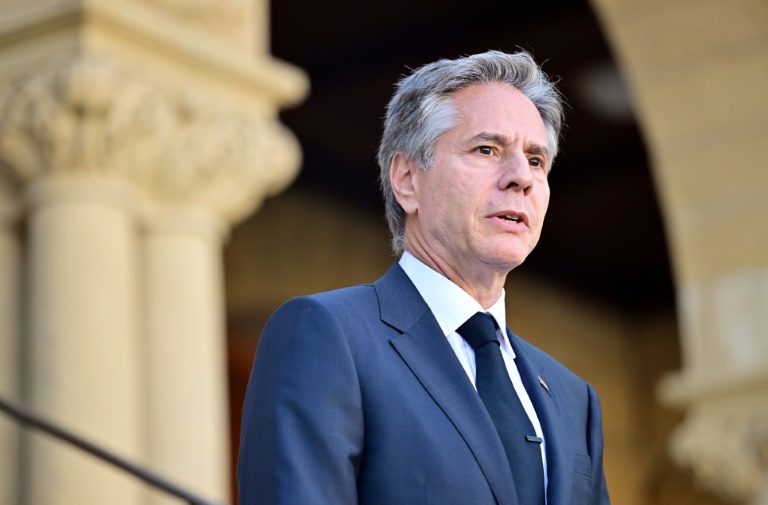
Beijing wants to seize Taiwan “on a much faster timeline” than previously considered, US Secretary of State Antony Blinken said Monday, warning that President Xi Jinping was leading China in a more aggressive direction.

Xi is on the cusp of securing a third five-year term at the helm of the world’s most populous nation, delivering a landmark Communist Party Congress speech on Sunday that hailed his decade in power and restated his vow to one day “reunify,” or forcefully take, Taiwan.

“We’ve seen a very different China emerge in recent years under Xi Jinping’s leadership,” Blinken told a forum at Stanford University with former secretary of state Condoleezza Rice.

“It is more repressive at home; it’s more aggressive abroad. And in many instances that poses a challenge to our own interests as well as to our own values,” he added.

Blinken accused Xi of “creating tremendous tension” by changing the approach toward self-ruled Taiwan, which China’s Communist Party has never controlled but claims as its own.

He said China had made a “fundamental decision that the status quo was no longer acceptable, and that Beijing was determined to pursue reunification on a much faster timeline,” though he gave no hard estimate or date.

Senior US military figures have previously sounded the alarm that China has expanded its military forces to the point where it could soon have the capability to pull off an invasion of Taiwan. 

China’s stance has long been that it seeks “peaceful reunification” with Taiwan but reserves the right to use force if necessary, especially if the island formally declares independence.

But the rhetoric and actions towards Taiwan have become more pronounced under Xi, China’s most assertive leader in a generation.

He has tied taking Taiwan to his vision of the “great rejuvenation of the Chinese nation” and has previously said the goal of reunification cannot continue to be passed indefinitely from generation to generation.

In Sunday’s speech, he repeated similar themes, saying the “wheels of history are rolling on towards China’s reunification” and that “we reserve the option of taking all measures necessary.”

– Shared interests –

Russia’s recent invasion of Ukraine, which China has not condemned, has also raised fears that Beijing might take similar moves against Taiwan’s 23 million people.

Ties between Washington and Beijing have been at a decade-low ebb under both the administrations of Donald Trump and his successor President Joe Biden, over a range of issues from trade to security and human rights. 

But Blinken said the world’s two largest economies should be willing to cooperate on shared interests.

He said the world “fundamentally expects” the two powers to work together on climate change, global health and possibly drug trafficking.

Beijing “just has to be responsive to demand signals that it’s getting from countries around the world to be a positive actor, not a negative actor, on issues that concern them.”

China cut cooperation with the United States on climate change and drug trafficking in August as part of its protest against US House Speaker Nancy Pelosi’s visit to Taiwan, which also saw Beijing launch its biggest military drills yet around the island.

Responding to Blinken’s speech, Chinese foreign ministry spokesman Wang Wenbin accused Washington of altering its own approach to Taiwan, citing examples such as Pelosi’s visit and recent arms sales.

“Peacefully resolving the Taiwan issue cannot coexist with Taiwan separatism,” Wang said. 

Xi is widely expected to meet Biden on the sidelines of a Group of 20 summit next month in Bali, their first meeting since the US leader took office.

UK PM Truss battles to stay in power after tax reforms trashed

British Prime Minister Liz Truss on Tuesday battled to stabilise her position after an economic crash forced her into humiliating U-turns on tax reforms, putting her future as leader in doubt.

“It’s hard to conceive of a more serious political and economic crisis in recent times than that which Britain now faces,” right-wing broadsheet The Daily Telegraph wrote in an editorial.

The paper, which previously supported Truss, wrote that she faced “the ignominy” of becoming the country’s second shortest-serving prime minister in history, unless her own MPs gave her “breathing space”.

Truss on Tuesday was to meet her cabinet and attempt to rally support among Conservative MPs, some of whom have publicly said she has no future as prime minister. 

She was set to face parliament on Wednesday for a session of Prime Minister’s Questions.

The right-wing Sun tabloid on Tuesday called Truss “The Ghost PM”, while left-wing tabloid The Mirror called the situation a “catastrophic humiliation”.

The embattled prime minister on Monday apologised in a BBC interview for going “too far and too fast” with reforms, a month after taking office.

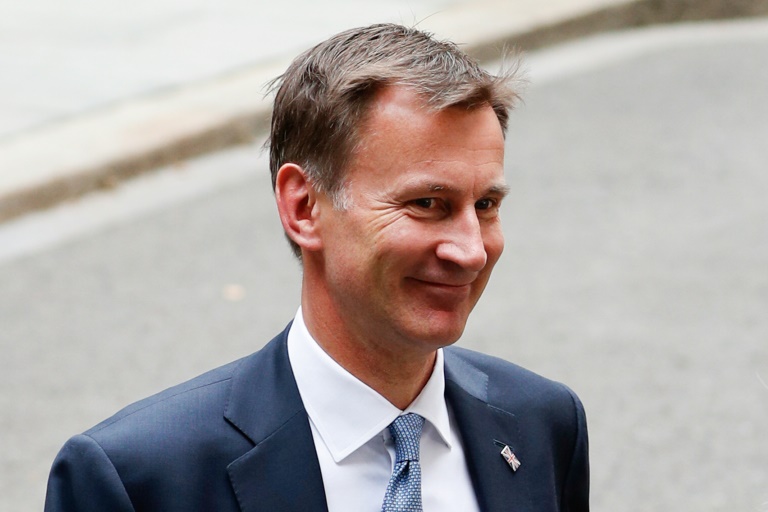
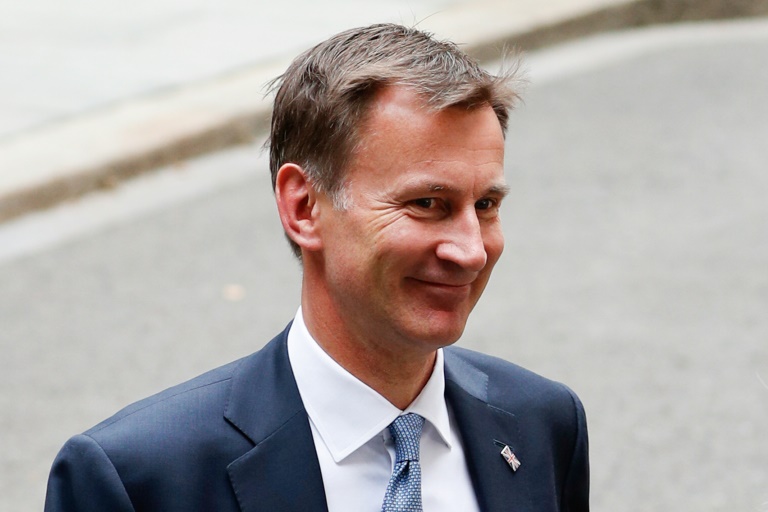
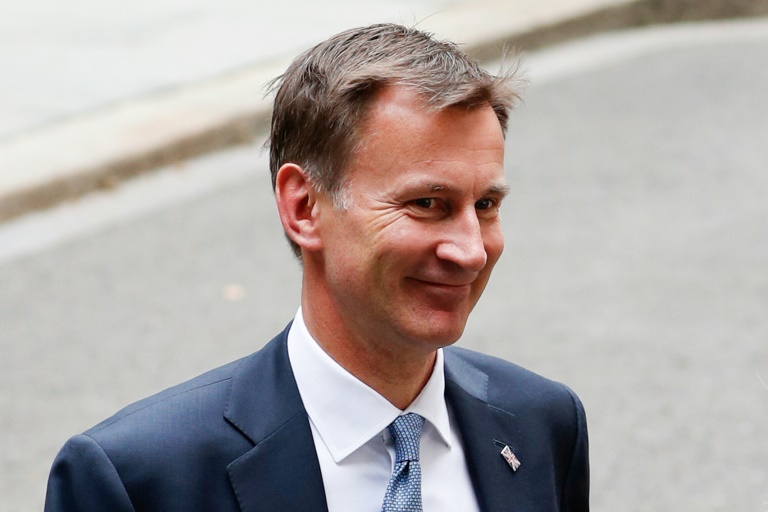
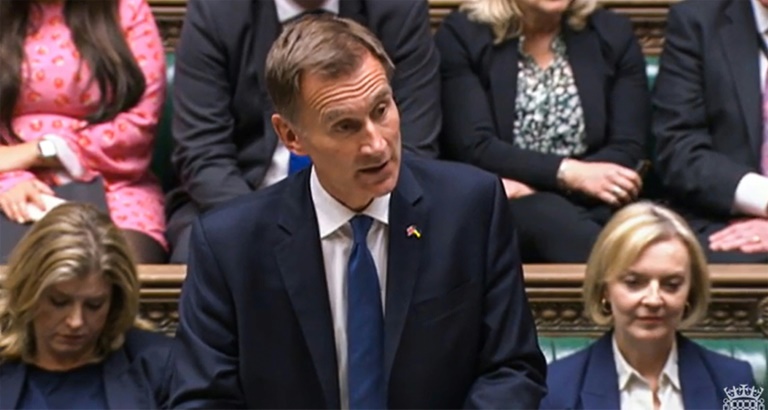
This came after her new finance minister Jeremy Hunt in a brief televised statement on Monday axed almost all the debt-fuelled tax cuts announced last month in a budget by his sacked predecessor, Kwasi Kwarteng.

Hunt told parliament that he and Truss “agreed yesterday to reverse almost all the tax measures announced in the growth plan three weeks ago”, flanked by a grim-faced Truss.

The announcement came as Truss’s governing Conservative party tanked in the opinion polls amid the reversals and Britain’s worsening cost-of-living crisis.

– ‘Very British coup’ –

British media likened Hunt’s dramatic intervention to a coup, with The Telegraph depicting him in cartoon form as a bemedaled Generalissimo “taking temporary control to stabilise the situation”.

“It was a very British coup. So polite you could almost have missed it,” wrote left-wing broadsheet The Guardian.

Conservative MP Roger Gale said that Hunt had become “de facto prime minister” as several MPs publicly urged her to go and others reportedly plotted to unseat her.

“I think her position is untenable,” Conservative MP Charles Walker told Sky News.

“If she doesn’t go right now, it will not be her decision,” he warned.

Armed forces minister James Heappey assured British media on Tuesday morning that Truss had “owned” her mistake, while admitting she could not repeat such errors.

Asked by Sky News whether Truss was “prime minister in name only”, Heappey insisted: “She’s been very candid about the mistake that was made and she has apologised for that… There’s leadership in doing that”.

But he conceded that “given how skittish our politics are… I don’t think that there’s the opportunity to make any more mistakes.”

Truss fired her close friend Kwarteng on Friday after their tax-slashing budget sent bond yields spiking and the pound collapsing to a record dollar-low on fears of rocketing UK debt — fuelling intense speculation over her political future one month after taking office.

Truss had already staged two embarrassing budget U-turns, scrapping tax cuts for the richest earners and on company profits.

Hunt’s strategy reversals included reducing Truss’s announced £2,500 cap on energy bills for all British people from two years to six months, after which he promised a new approach.

Hunt estimated the tax changes would raise about £32 billion ($36 billion) per year, after economists estimated the government faced a £60-billion black hole. He also warned of tough spending cuts.

Hunt’s actions on Monday sent the British pound soaring against the dollar and euro, while bond yields dipped.

WWII munitions hinder Nord Stream pipeline probe

Investigations into the suspected sabotage of the Nord Stream gas pipelines linking Russia with Europe are “progressing well”, despite World War II munitions on the seabed, Denmark said Thursday.

“It’s a zone marked by the presence of munitions — used or not — from World War II,” Danish Defence Minister Morten Bodskov told reporters on the sidelines of a meeting of the NATO defence alliance in Brussels.

“There’s a lot of stuff at the bottom of the sea, so it’s not so easy.”

“But the work is continuing and going well,” he added.

The two Nord Stream pipelines were damaged by two explosions under the Baltic Sea at the end of September, causing major gas leaks.

Sweden has announced that preliminary underwater inspections backed up suspicions of probable sabotage.

“With Sweden and Germany, Denmark is carrying out an inquiry which is progressing well,” the minister said.

“What we discover will of course be made public.”

With fingers being pointed at Russia for the sabotage, Moscow demanded to be part of the investigations into the explosions which happened in international waters, but Copenhagen and Stockholm refused.

Russia’s ambassador to Copenhagen said the credibility of the inquiry was undermined by Moscow’s absence.

But Sweden’s outgoing Prime Minister Magdalena Andersson told Moscow to open its own investigation.

Both Moscow and Washington have denied responsibility for the gas leaks.

Taiwan's Foxconn unveils more electric vehicle prototypes

Taiwanese tech giant Foxconn unveiled two more electric vehicle prototypes on Tuesday, including a pickup truck, saying commercial production on two other designs would start later this year.

The world’s largest contract electronics maker, Foxconn already plays a lynchpin role in assembling gadgets for a host of top international brands including Apple’s iPhone.

The company has moved to diversify beyond electronics assembly and embraced the competitive but rapidly expanding EV business, unveiling three concept cars last year.

Foxconn chairman Young Liu showed off two more prototypes at Tuesday’s media event in Taipei — a sporty hatchback dubbed the Model B and a pickup, the Model V.

He also announced that commercial production would start by the end of the year on the group’s previously unveiled electric bus and a family sports utility vehicle.

“Foxconn has cut in half the design time and reduced development cost by a third in taking an EV from concept to production-ready,” Liu said.

Foxconn plans to do with electric vehicles what it did for gadgets — become a go-to contract builder.

Its strategy is to construct vehicles for clients rather than sell them under its own name, using the prototypes as a guide.

“I hope one day we can do Tesla cars for Tesla,” Liu told reporters, adding that Foxconn was aiming for five percent of the global EV market by 2025. 

Liu said one of its clients, Taiwanese automaker Luxgen, had received 15,000 customer pre-orders in under two days for its N7 car, which is based on the Foxconn Model C unveiled last year.

He added that various models will be put into production in Taiwan, Thailand and the United States while the company is also eyeing cooperation with Indonesia and India, without providing details.

Foxconn has also started building electric vehicles for Lordstown Motors after completing its purchase of a former General Motors plant in Lordstown, Ohio in May.

This month, it signed a memorandum of understanding with US-based INDIEV Inc to build the first INDI One prototype EV at its Ohio facility.

Its partners also include Fisker, one of a host of US-based electronic car startups hoping to someday challenge Tesla’s supremacy.

Fisker has recently reaffirmed plans to have Foxconn build its upcoming Fisker Pear model at the Ohio factory starting in 2024.

It has been widely reported for years that Apple has a secret electronic car project, something Foxconn could be in an ideal place to partner on given its existing relationship with the California-based giant.

Taiwan's Foxconn unveils more electric vehicle prototypes

Taiwanese tech giant Foxconn unveiled two more electric vehicle prototypes on Tuesday, including a pickup truck, saying commercial production on two other designs would start later this year.

The world’s largest contract electronics maker, Foxconn already plays a lynchpin role in assembling gadgets for a host of top international brands including Apple’s iPhone.

The company has moved to diversify beyond electronics assembly and embraced the competitive but rapidly expanding EV business, unveiling three concept cars last year.

Foxconn chairman Young Liu showed off two more prototypes at Tuesday’s media event in Taipei — a sporty hatchback dubbed the Model B and a pickup, the Model V.

He also announced that commercial production would start by the end of the year on the group’s previously unveiled electric bus and a family sports utility vehicle.

“Foxconn has cut in half the design time and reduced development cost by a third in taking an EV from concept to production-ready,” Liu said.

Foxconn plans to do with electric vehicles what it did for gadgets — become a go-to contract builder.

Its strategy is to construct vehicles for clients rather than sell them under its own name, using the prototypes as a guide.

“I hope one day we can do Tesla cars for Tesla,” Liu told reporters, adding that Foxconn was aiming for five percent of the global EV market by 2025. 

Liu said one of its clients, Taiwanese automaker Luxgen, had received 15,000 customer pre-orders in under two days for its N7 car, which is based on the Foxconn Model C unveiled last year.

He added that various models will be put into production in Taiwan, Thailand and the United States while the company is also eyeing cooperation with Indonesia and India, without providing details.

Foxconn has also started building electric vehicles for Lordstown Motors after completing its purchase of a former General Motors plant in Lordstown, Ohio in May.

This month, it signed a memorandum of understanding with US-based INDIEV Inc to build the first INDI One prototype EV at its Ohio facility.

Its partners also include Fisker, one of a host of US-based electronic car startups hoping to someday challenge Tesla’s supremacy.

Fisker has recently reaffirmed plans to have Foxconn build its upcoming Fisker Pear model at the Ohio factory starting in 2024.

It has been widely reported for years that Apple has a secret electronic car project, something Foxconn could be in an ideal place to partner on given its existing relationship with the California-based giant.

Stocks, sterling extend gains after UK budget U-turn

Equities rose with sterling Tuesday after the UK government scrapped a controversial debt-funded mini-budget that had roiled markets, while traders were also cheered by a broadly positive start to earnings season.

After a volatile few weeks during which the pound hit a record low, new finance minister Jeremy Hunt sought Monday to reassure investors as he unveiled a new spending package, doing away with tax cuts and warning of much lower spending.

The move — which deals a blow to Prime Minister Liz Truss’s authority — sent sterling up as much as two percent at one point and the cost of government borrowing tumbled, while the FTSE 100 jumped.

The positive mood filtered through to other markets, with Wall Street enjoying a much-needed surge, including a more than three percent jump in the Nasdaq.

And most of Asia followed suit, with Tokyo, Hong Kong, Singapore, Mumbai, Bangkok, Sydney, Seoul, Wellington, Taipei, Manila and Jakarta all enjoying a pick-up, though Shanghai dipped.

London opened on the front foot along with Paris and Frankfurt.

The pound was also given an extra boost — at one point topping $1.14 — after a Financial Times report said the Bank of England will likely put off the sale of government bonds again as it looks to maintain market stability.

The Bank had been due to offload the gilts — bought to keep borrowing costs down during the pandemic — from October 6 but delayed that because of the turmoil sparked by the mini-budget, but the FT said it would likely delay again until financial conditions had calmed.

The market gains built on Monday’s rise, though analysts warned that the advances were unlikely to be sustained owing to broader worries about inflation and rising interest rates.

“The last couple of months have been tough for equity markets since peaking towards the end of the summer and a rebound of some kind was going to happen eventually,” said OANDA’s Craig Erlam. 

“I’m just not convinced there’s much substance behind it as the economic landscape looks treacherous and we don’t even know if we’re at peak inflation and interest rate pricing yet. Those are substantial headwinds that will make any stock market rebound extremely challenging.”

The latest data out of New Zealand showing inflation remained at a three-decade high underscored the tough job central banks have in bringing prices down, even after several rate hikes.

Commentators said traders have come to the conclusion that a recession is on the way in major economies, with the main question being how bad it will be.

“I think we can stop saying inflation is ‘hotter than expected’ and shift to ‘hotter than hoped’ — because it really does feel like we’re all just crossing our fingers and hoping prices come down,” said Matt Simpson at City Index.

“And in the few cases that they are, it is clearly not fast enough for anyone’s liking. Conversely to the adage about stock market prices, inflation seems to get the elevator up and the escalator down — but not before lingering around the top floor for an extended period of time.”

Markets in China fluctuated a day after authorities delayed the release of third-quarter economic figures, which analysts said were likely to show the weakest growth since the pandemic owing to Covid-19 lockdowns.

The decision comes as the Communist Party holds a key gathering at which President Xi Jinping is expected to be handed a third term.

“Whenever the release occurs, we should all be prepared for some global financial market reaction if the world’s two largest economies are both in recession this year. Especially, as the global economic slowdown remains ongoing,” said Clifford Bennett at ACY Securities.

“While in China, we have a slightly artificially generated risk of recession due to a zero-Covid policy.

“This policy has been confirmed to remain in place indefinitely. This means China will see further economic disruption over the coming year.”

– Key figures around 0810 GMT –

Tokyo – Nikkei 225: UP 1.4 percent at 27,156.14 (close)

Hong Kong – Hang Seng Index: UP 1.8 percent at 16,914.58 (close)

Shanghai – Composite: DOWN 0.1 percent at 3,080.96 (close)

London – FTSE 100: UP 1.1 percent at 6,994.87

Pound/dollar: UP at $1.1357 from $1.1351 on Monday

Dollar/yen: DOWN at 148.99 yen from 149.03 yen

Euro/dollar: UP at $0.9858 from $0.9840

Euro/pound: UP at 86.80 pence from 86.66 pence

West Texas Intermediate: UP 0.4 percent at $85.82 per barrel

Brent North Sea crude: UP 0.3 percent at $91.89 per barrel

New York – Dow: UP 1.9 percent at 30,185.82 (close)

— Bloomberg News contributed to this story —

Stocks, sterling extend gains after UK budget U-turn

Equities rose with sterling Tuesday after the UK government scrapped a controversial debt-funded mini-budget that had roiled markets, while traders were also cheered by a broadly positive start to earnings season.

After a volatile few weeks during which the pound hit a record low, new finance minister Jeremy Hunt sought Monday to reassure investors as he unveiled a new spending package, doing away with tax cuts and warning of much lower spending.

The move — which deals a blow to Prime Minister Liz Truss’s authority — sent sterling up as much as two percent at one point and the cost of government borrowing tumbled, while the FTSE 100 jumped.

The positive mood filtered through to other markets, with Wall Street enjoying a much-needed surge, including a more than three percent jump in the Nasdaq.

And most of Asia followed suit, with Tokyo, Hong Kong, Singapore, Mumbai, Bangkok, Sydney, Seoul, Wellington, Taipei, Manila and Jakarta all enjoying a pick-up, though Shanghai dipped.

London opened on the front foot along with Paris and Frankfurt.

The pound was also given an extra boost — at one point topping $1.14 — after a Financial Times report said the Bank of England will likely put off the sale of government bonds again as it looks to maintain market stability.

The Bank had been due to offload the gilts — bought to keep borrowing costs down during the pandemic — from October 6 but delayed that because of the turmoil sparked by the mini-budget, but the FT said it would likely delay again until financial conditions had calmed.

The market gains built on Monday’s rise, though analysts warned that the advances were unlikely to be sustained owing to broader worries about inflation and rising interest rates.

“The last couple of months have been tough for equity markets since peaking towards the end of the summer and a rebound of some kind was going to happen eventually,” said OANDA’s Craig Erlam. 

“I’m just not convinced there’s much substance behind it as the economic landscape looks treacherous and we don’t even know if we’re at peak inflation and interest rate pricing yet. Those are substantial headwinds that will make any stock market rebound extremely challenging.”

The latest data out of New Zealand showing inflation remained at a three-decade high underscored the tough job central banks have in bringing prices down, even after several rate hikes.

Commentators said traders have come to the conclusion that a recession is on the way in major economies, with the main question being how bad it will be.

“I think we can stop saying inflation is ‘hotter than expected’ and shift to ‘hotter than hoped’ — because it really does feel like we’re all just crossing our fingers and hoping prices come down,” said Matt Simpson at City Index.

“And in the few cases that they are, it is clearly not fast enough for anyone’s liking. Conversely to the adage about stock market prices, inflation seems to get the elevator up and the escalator down — but not before lingering around the top floor for an extended period of time.”

Markets in China fluctuated a day after authorities delayed the release of third-quarter economic figures, which analysts said were likely to show the weakest growth since the pandemic owing to Covid-19 lockdowns.

The decision comes as the Communist Party holds a key gathering at which President Xi Jinping is expected to be handed a third term.

“Whenever the release occurs, we should all be prepared for some global financial market reaction if the world’s two largest economies are both in recession this year. Especially, as the global economic slowdown remains ongoing,” said Clifford Bennett at ACY Securities.

“While in China, we have a slightly artificially generated risk of recession due to a zero-Covid policy.

“This policy has been confirmed to remain in place indefinitely. This means China will see further economic disruption over the coming year.”

– Key figures around 0810 GMT –

Tokyo – Nikkei 225: UP 1.4 percent at 27,156.14 (close)

Hong Kong – Hang Seng Index: UP 1.8 percent at 16,914.58 (close)

Shanghai – Composite: DOWN 0.1 percent at 3,080.96 (close)

London – FTSE 100: UP 1.1 percent at 6,994.87

Pound/dollar: UP at $1.1357 from $1.1351 on Monday

Dollar/yen: DOWN at 148.99 yen from 149.03 yen

Euro/dollar: UP at $0.9858 from $0.9840

Euro/pound: UP at 86.80 pence from 86.66 pence

West Texas Intermediate: UP 0.4 percent at $85.82 per barrel

Brent North Sea crude: UP 0.3 percent at $91.89 per barrel

New York – Dow: UP 1.9 percent at 30,185.82 (close)

— Bloomberg News contributed to this story —

Stocks, sterling extend gains after UK budget U-turn

Equities rose with sterling Tuesday after the UK government scrapped a controversial debt-funded mini-budget that had roiled markets, while traders were also cheered by a broadly positive start to earnings season.

After a volatile few weeks during which the pound hit a record low, new finance minister Jeremy Hunt sought Monday to reassure investors as he unveiled a new spending package, doing away with tax cuts and warning of much lower spending.

The move — which deals a blow to Prime Minister Liz Truss’s authority — sent sterling up as much as two percent at one point and the cost of government borrowing tumbled, while the FTSE 100 jumped.

The positive mood filtered through to other markets, with Wall Street enjoying a much-needed surge, including a more than three percent jump in the Nasdaq.

And most of Asia followed suit, with Tokyo, Hong Kong, Singapore, Mumbai, Bangkok, Sydney, Seoul, Wellington, Taipei, Manila and Jakarta all enjoying a pick-up, though Shanghai dipped.

London opened on the front foot along with Paris and Frankfurt.

The pound was also given an extra boost — at one point topping $1.14 — after a Financial Times report said the Bank of England will likely put off the sale of government bonds again as it looks to maintain market stability.

The Bank had been due to offload the gilts — bought to keep borrowing costs down during the pandemic — from October 6 but delayed that because of the turmoil sparked by the mini-budget, but the FT said it would likely delay again until financial conditions had calmed.

The market gains built on Monday’s rise, though analysts warned that the advances were unlikely to be sustained owing to broader worries about inflation and rising interest rates.

“The last couple of months have been tough for equity markets since peaking towards the end of the summer and a rebound of some kind was going to happen eventually,” said OANDA’s Craig Erlam. 

“I’m just not convinced there’s much substance behind it as the economic landscape looks treacherous and we don’t even know if we’re at peak inflation and interest rate pricing yet. Those are substantial headwinds that will make any stock market rebound extremely challenging.”

The latest data out of New Zealand showing inflation remained at a three-decade high underscored the tough job central banks have in bringing prices down, even after several rate hikes.

Commentators said traders have come to the conclusion that a recession is on the way in major economies, with the main question being how bad it will be.

“I think we can stop saying inflation is ‘hotter than expected’ and shift to ‘hotter than hoped’ — because it really does feel like we’re all just crossing our fingers and hoping prices come down,” said Matt Simpson at City Index.

“And in the few cases that they are, it is clearly not fast enough for anyone’s liking. Conversely to the adage about stock market prices, inflation seems to get the elevator up and the escalator down — but not before lingering around the top floor for an extended period of time.”

Markets in China fluctuated a day after authorities delayed the release of third-quarter economic figures, which analysts said were likely to show the weakest growth since the pandemic owing to Covid-19 lockdowns.

The decision comes as the Communist Party holds a key gathering at which President Xi Jinping is expected to be handed a third term.

“Whenever the release occurs, we should all be prepared for some global financial market reaction if the world’s two largest economies are both in recession this year. Especially, as the global economic slowdown remains ongoing,” said Clifford Bennett at ACY Securities.

“While in China, we have a slightly artificially generated risk of recession due to a zero-Covid policy.

“This policy has been confirmed to remain in place indefinitely. This means China will see further economic disruption over the coming year.”

– Key figures around 0810 GMT –

Tokyo – Nikkei 225: UP 1.4 percent at 27,156.14 (close)

Hong Kong – Hang Seng Index: UP 1.8 percent at 16,914.58 (close)

Shanghai – Composite: DOWN 0.1 percent at 3,080.96 (close)

London – FTSE 100: UP 1.1 percent at 6,994.87

Pound/dollar: UP at $1.1357 from $1.1351 on Monday

Dollar/yen: DOWN at 148.99 yen from 149.03 yen

Euro/dollar: UP at $0.9858 from $0.9840

Euro/pound: UP at 86.80 pence from 86.66 pence

West Texas Intermediate: UP 0.4 percent at $85.82 per barrel

Brent North Sea crude: UP 0.3 percent at $91.89 per barrel

New York – Dow: UP 1.9 percent at 30,185.82 (close)

— Bloomberg News contributed to this story —

France prepares for major disruptions as unions call transport strike

France faced major disruptions on Tuesday after unions called a nationwide transport strike, as they remain in deadlock with the government over walkouts at oil depots that have sparked fuel shortages.

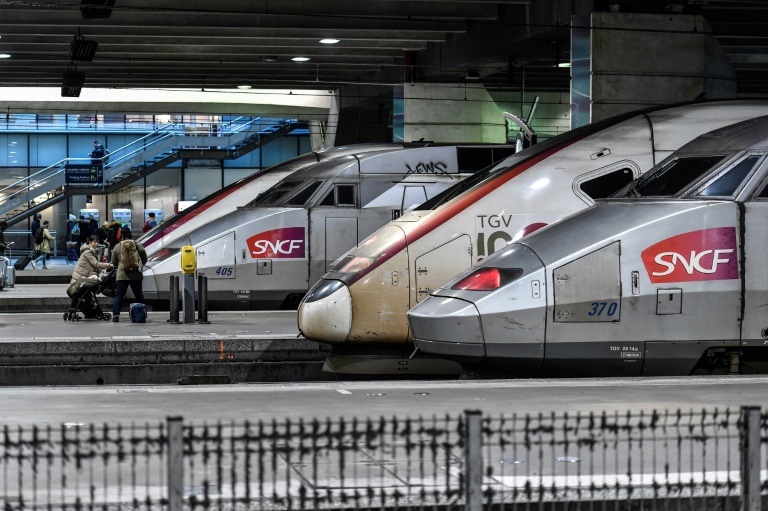
The effects were already visible at Paris hub Gare de Lyon early Tuesday, with packed suburban trains disgorging floods of passengers onto the platforms every 15 or even 20 minutes.

“I’ve got a two or three hour trip today, rather than an hour and a half normally,” said commuter Yera Diallo, adding that “I have no idea how it’s going to go this evening.”

The broader strike comes after workers at several oil refineries and depots operated by energy giant TotalEnergies voted to extend walkouts.

Their industrial action has seriously disrupted fuel distribution across the country but particularly in northern and central France and the Paris region.

Motorists have scrambled to fill tanks as the fuel strike, which has lasted for nearly three weeks, cripples supplies at around 30 percent of France’s service stations and has had a knock-on effect across all sectors of the economy.

President Emmanuel Macron’s government used requisitioning powers to force some strikers back to open fuel depots, a move that infuriated unions but has so far been upheld in the courts.

“We will continue to do the utmost,” Macron said after a meeting Monday with ministers, adding he wanted the crisis “to be resolved as quickly as possible”.

– ‘Time for negotiation over’ –

Finance Minister Bruno Le Maire earlier said it was necessary to use requisitioning powers to reopen the refineries and depots.

“The time for negotiation is over,” Le Maire told the BFMTV broadcaster. 

“There was a negotiation, there was an agreement,” he added, referring to the agreement concluded last week between TotalEnergies and two majority unions, but which the hard-left CGT union rejects.

CGT boss Philippe Martinez suggested Monday that the government “get around a table” with the unions to discuss an increase in France’s minimum wage.

“Requisitioning is unacceptable and it’s never the right solution,” added Frederic Souillot, general secretary of the FO union which is also taking part in the day of strike action, the unions’ biggest challenge to Macron since he won a new presidential term in May.

– Trains cancelled –

The leftist CGT and FO called for a nationwide strike Tuesday for higher salaries, and against government requisitions of oil installations, threatening to cripple public transport in particular.

Unions in other industries and the public sector have also announced action to protest against the twin impact of soaring energy prices and overall inflation on the cost of living.

Rail operator SNCF will see “severe disruptions” with half of train services cancelled, Transport Minister Clement Beaune said.

CGT boss Martinez told RTL radio that “it will be the workers who decide” whether the strike at SCNF continues into the busy late October school holiday period.

Suburban services in the Paris region as well as bus services will also be impacted, operator RATP said, but the inner-Paris metro system should be mostly unaffected.

Beyond transport workers, unions hope to bring out staff in sectors such as the food industry and healthcare.

Their action will kick off what is likely to be a tense autumn and winter as Macron also seeks to implement his flagship domestic policy of raising the French retirement age.

But the economic squeeze partly caused by Russia’s invasion of Ukraine, along with the failure of Macron’s party to secure an overall majority in June legislative polls, only adds to the magnitude of the task.

In Paris Tuesday, separate marches by striking workers and vocational school teachers are expected by police to gather more than 15,000 people in total.

A weekend march against the high cost of living called by opposition party France Unbowed (LFI) saw around 30,000 people hit the streets by a police count, while organisers claimed 140,000.

China sees 'much faster timeline' on taking Taiwan, Blinken warns

Beijing wants to seize Taiwan “on a much faster timeline” than previously considered, US Secretary of State Antony Blinken said Monday, warning that President Xi Jinping was leading China in a more aggressive direction.

Xi is on the cusp of securing a third five-year term at the helm of the world’s most populous nation, delivering a landmark Communist Party Congress speech on Sunday that hailed his decade in power and restated his vow to one day “reunify”, or forcefully take, Taiwan.

“We’ve seen a very different China emerge in recent years under Xi Jinping’s leadership,” Blinken told a forum at Stanford University with former secretary of state Condoleezza Rice.

“It is more repressive at home; it’s more aggressive abroad. And in many instances that poses a challenge to our own interests as well as to our own values,” he added.

Blinken accused Xi of “creating tremendous tension” by changing the approach toward self-ruled Taiwan, which China’s Communist Party has never controlled but claims as its own.

He said China had made a “fundamental decision that the status quo was no longer acceptable, and that Beijing was determined to pursue reunification on a much faster timeline”, though he gave no hard estimate or date.

Senior US military figures have previously sounded the alarm that China has expanded its military forces to the point where it could soon have the capability to pull off an invasion of Taiwan. 

China’s stance has long been that it seeks “peaceful reunification” with Taiwan but reserves the right to use force if necessary, especially if the island ever formally declares independence.

But the rhetoric and actions towards Taiwan have become more pronounced under Xi, China’s most assertive leader in a generation.

He has tied taking Taiwan to his landmark “great rejuvenation of the Chinese nation” and has previously said the goal of reunification cannot continue to be passed indefinitely from generation to generation.

In Sunday’s speech he repeated similar themes, saying the “wheels of history are rolling on towards China’s reunification” and that “we reserve the option of taking all measures necessary”.

– Shared interests –

Russia’s recent invasion of Ukraine, which China has not condemned, has also raised fears that Beijing might try something similar against Taiwan’s 23 million people.

Ties between Washington and Beijing have been at a decade-low ebb under both the administrations of Donald Trump and his successor Joe Biden, over a range of issues from trade to security and human rights. 

But Blinken said the world’s two largest economies should be willing to cooperate on shared interests.

He said the world “fundamentally expects” the two powers to work together on climate change, global health and possibly drug trafficking.

Beijing “just has to be responsive to demand signals that it’s getting from countries around the world to be a positive actor, not a negative actor, on issues that concern them”.

China cut cooperation with the United States on climate change and drug trafficking in August as part of its protest against a visit to Taiwan by US House Speaker Nancy Pelosi, which also saw Beijing launch its biggest military drills yet around the island.

Xi is widely expected to meet President Biden on the sidelines of a Group of 20 summit next month in Bali, their first meeting since the US leader took office.

Close Bitnami banner
Bitnami