AFP

'A turning point': Japanese fashion after Kenzo, Miyake

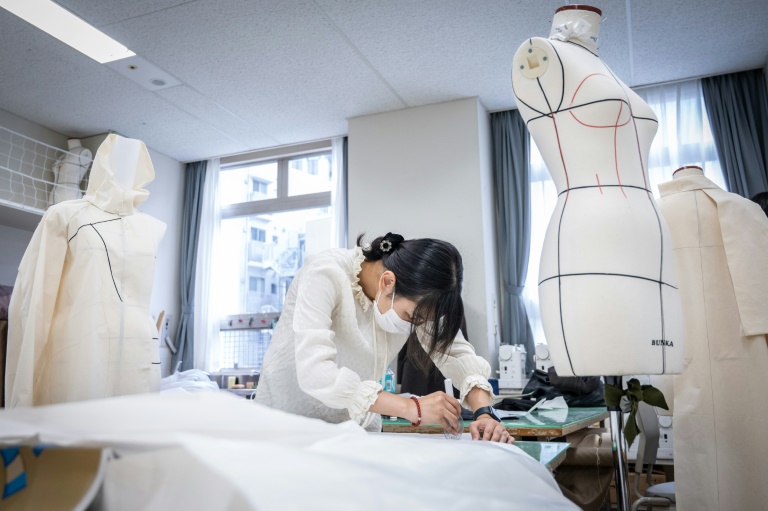
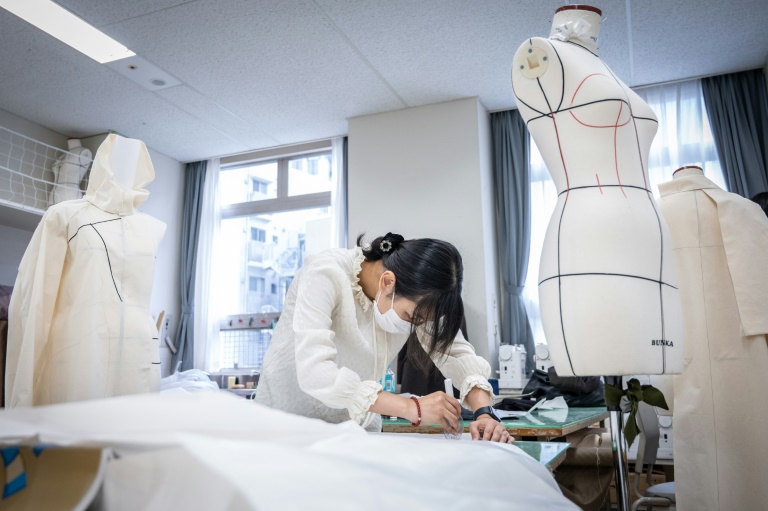
At Tokyo’s prestigious Bunka Fashion College, students concentrate in silence that is broken only by the sound of scissors and sewing machines as they strive to emulate the global success of alumni like Kenzo.

The loss of greats Kenzo Takada and Issey Miyake heralds the end of a fashion era, decades after Japanese design revolutionised Parisian catwalks in the 1970s and ’80s.

And the French capital remains a goal for emerging talent like Bunka graduate Takuya Morikawa, whose streetwear-inspired tailoring made its Paris Fashion Week debut two years ago.

Morikawa, 40, hopes his shows at the industry’s top event will lead to “an amazing future, beyond my wildest dreams”.

Before launching his label TAAKK in 2013, Morikawa spent eight years at Miyake’s studio, where he worked on runway collections and the famous “Pleats Please” line, but also harvested rice and made paper to learn about traditional craft methods.

He told AFP he was saddened by Miyake’s death this summer, but implored younger designers not to feel disheartened.

“We need to do our best to not let these designers’ deaths impact the fashion world. If that happens, it means we’re doing our job badly,” he said.

One of the big names picking up the baton is Nigo, who shot to fame in the 1990s with his streetwear brand A Bathing Ape.

The designer, who also studied at Bunka and whose real name is Tomoaki Nagao, was named artistic director at Kenzo last year, after founder Takada died of Covid-19 in 2020.

Another Japanese label enjoying international success is Sacai, founded in 1999 by Chitose Abe, who was tapped as the first guest couture designer for Jean Paul Gaultier.

– ‘Goosebumps’ –

Kenzo and textile visionary Miyake became hugely influential by pursuing their passion in Paris, as did haute couture trailblazer Hanae Mori, who died in August.

Left holding the torch are Yohji Yamamoto, now 79, and 80-year-old Rei Kawakubo, founder of Comme des Garcons, who shook up the fashion establishment in the early 1980s.

New challenges, including the vast range of styles now available for every taste, have made it harder for emerging designers to grab global attention, according to Bunka president Sachiko Aihara.

“The world was shocked” by avant-garde Japanese design, she said, recalling how her students began to dress in black after Yamamoto launched his first monochromatic clothing line.

“But we no longer live in an era where a designer presents a collection and everyone wears it,” she said at the school, whose basement archive is packed with valuable garments that students and teachers can study.

This is because of the explosion in diverse types of clothing, “not a decline in talent”, stressed Aihara, adding that it was now also essential to study business to start a competitive brand.

Designer Mariko Nakayama, who worked as a stylist in Tokyo’s fashion scene for decades, also remembers “feeling goosebumps” wearing Comme des Garcons for the first time.

She agrees, however, that the industry is different now.

“Looking at Virgil Abloh for Louis Vuitton, for example, I feel that now is an era of edit,” with designers making modern tweaks to classic shapes and patterns, she said at her boutique in Tokyo’s upscale Omotesando district.

– ‘Create new values’ –

Working in Paris, London, New York or Milan is still seen as key to succeeding for Japanese designers, said Aya Takeshima, 35, who studied at Central Saint Martins in the British capital.

Takeshima’s recent show at Tokyo Fashion Week for her brand Ayame featured women wearing sheer blouses and embossed dresses, while male models donned delicate dresses. 

She told AFP she had chosen to study abroad to “learn what I needed to become an independent designer”, adding that the experience had helped her understand different perspectives.

“Honestly, I think it would be difficult” to succeed internationally while only working in Japan, she said.

“In Japan, it felt like technique was drilled into you first, while ideas and concepts… were secondary”, but it was the other way around in London, Takeshima explained.

Bunka college recognises these benefits and plans to offer a scholarship for studying abroad as part of its 100th-anniversary celebrations next year.

For 21-year-old Natalia Sato, a student at Bunka, Miyake and the old guard of Japanese designers “brought a great deal of Japanese and Eastern values” to the world, including techniques inspired by “delicate” traditional craftsmanship.

“I’m worried that the foundation they built might be destroyed by their passing”, but “at the same time, this is a turning point” that could provide new creative opportunities, she said.

“It’s a chance for me to think about how we can create new values.”
'A turning point': Japanese fashion after Kenzo, Miyake

At Tokyo’s prestigious Bunka Fashion College, students concentrate in silence that is broken only by the sound of scissors and sewing machines as they strive to emulate the global success of alumni like Kenzo.

The loss of greats Kenzo Takada and Issey Miyake heralds the end of a fashion era, decades after Japanese design revolutionised Parisian catwalks in the 1970s and ’80s.

And the French capital remains a goal for emerging talent like Bunka graduate Takuya Morikawa, whose streetwear-inspired tailoring made its Paris Fashion Week debut two years ago.

Morikawa, 40, hopes his shows at the industry’s top event will lead to “an amazing future, beyond my wildest dreams”.

Before launching his label TAAKK in 2013, Morikawa spent eight years at Miyake’s studio, where he worked on runway collections and the famous “Pleats Please” line, but also harvested rice and made paper to learn about traditional craft methods.

He told AFP he was saddened by Miyake’s death this summer, but implored younger designers not to feel disheartened.

“We need to do our best to not let these designers’ deaths impact the fashion world. If that happens, it means we’re doing our job badly,” he said.

One of the big names picking up the baton is Nigo, who shot to fame in the 1990s with his streetwear brand A Bathing Ape.

The designer, who also studied at Bunka and whose real name is Tomoaki Nagao, was named artistic director at Kenzo last year, after founder Takada died of Covid-19 in 2020.

Another Japanese label enjoying international success is Sacai, founded in 1999 by Chitose Abe, who was tapped as the first guest couture designer for Jean Paul Gaultier.

– ‘Goosebumps’ –

Kenzo and textile visionary Miyake became hugely influential by pursuing their passion in Paris, as did haute couture trailblazer Hanae Mori, who died in August.

Left holding the torch are Yohji Yamamoto, now 79, and 80-year-old Rei Kawakubo, founder of Comme des Garcons, who shook up the fashion establishment in the early 1980s.

New challenges, including the vast range of styles now available for every taste, have made it harder for emerging designers to grab global attention, according to Bunka president Sachiko Aihara.

“The world was shocked” by avant-garde Japanese design, she said, recalling how her students began to dress in black after Yamamoto launched his first monochromatic clothing line.

“But we no longer live in an era where a designer presents a collection and everyone wears it,” she said at the school, whose basement archive is packed with valuable garments that students and teachers can study.

This is because of the explosion in diverse types of clothing, “not a decline in talent”, stressed Aihara, adding that it was now also essential to study business to start a competitive brand.

Designer Mariko Nakayama, who worked as a stylist in Tokyo’s fashion scene for decades, also remembers “feeling goosebumps” wearing Comme des Garcons for the first time.

She agrees, however, that the industry is different now.

“Looking at Virgil Abloh for Louis Vuitton, for example, I feel that now is an era of edit,” with designers making modern tweaks to classic shapes and patterns, she said at her boutique in Tokyo’s upscale Omotesando district.

– ‘Create new values’ –

Working in Paris, London, New York or Milan is still seen as key to succeeding for Japanese designers, said Aya Takeshima, 35, who studied at Central Saint Martins in the British capital.

Takeshima’s recent show at Tokyo Fashion Week for her brand Ayame featured women wearing sheer blouses and embossed dresses, while male models donned delicate dresses. 

She told AFP she had chosen to study abroad to “learn what I needed to become an independent designer”, adding that the experience had helped her understand different perspectives.

“Honestly, I think it would be difficult” to succeed internationally while only working in Japan, she said.

“In Japan, it felt like technique was drilled into you first, while ideas and concepts… were secondary”, but it was the other way around in London, Takeshima explained.

Bunka college recognises these benefits and plans to offer a scholarship for studying abroad as part of its 100th-anniversary celebrations next year.

For 21-year-old Natalia Sato, a student at Bunka, Miyake and the old guard of Japanese designers “brought a great deal of Japanese and Eastern values” to the world, including techniques inspired by “delicate” traditional craftsmanship.

“I’m worried that the foundation they built might be destroyed by their passing”, but “at the same time, this is a turning point” that could provide new creative opportunities, she said.

“It’s a chance for me to think about how we can create new values.”

Deadly drone strikes hit Kyiv as Russian warplane crashes

Moscow on Monday stepped up attacks across Ukraine, cutting electricity and killing eight people, including in kamikaze drone strikes on the capital, as a Russian warplane crashed near the border.

The plane struck a residential area of Yeysk, a town in southwestern Russia, according to Russian authorities.

Health minister Mikhail Murashko said three people had died and 19 were injured, Russia’s state-run TASS news agency reported, revising an earlier toll of six dead given by the ministry of emergency situations.

Moscow is thought to be trying to counter battlefield losses in its eight-month war in Ukraine by waging a punitive policy of striking energy facilities before winter in a move President Vladimir Putin hopes will weaken resistance.

Ukrainian Prime Minister Denys Shmygal said Russia launched five strikes in Kyiv and against energy facilities in Sumy and the central Dnipropetrovsk regions, knocking out electricity to hundreds of towns and villages.

Ukraine said four people were killed in Kyiv, including a married couple expecting a baby, and another four in the northeast region of Sumy.

Foreign Minister Dmytro Kuleba demanded EU sanctions on Iran, accusing Tehran of providing Russia with drones.

An AFP journalist saw drones swooping low over central Kyiv on Monday as police tried to shoot them down with automatic weapons and smoke rose from explosions across the city.

“I saw a bright orange splash… The house trembled,” said resident Tamara Beroshvili.

Ukraine’s military said it shot down eight Iranian-made drones and two Russian cruise missiles on Monday.

Iran denies exporting any weapons to either side, but the United States warned it would take action against companies and nations working with Tehran’s drone programme following the strikes in Kyiv.

– Call for Russia to be ousted from G20 –

The strikes come exactly a week after Russian missiles rained down on Kyiv and other cities on October 10 in the biggest wave of attacks in months, killing at least 19 people, wounding 105 others and sparking an international outcry.

“They seem to be hitting us every Monday now,” said taxi driver Sergiy Prikhodko, who was waiting for a fare near the central train station in Kyiv.

“It’s a new way of starting the week,” he told AFP.

Air raid sirens sounded in Kyiv shortly before the first explosion at around 6:35 am (0335 GMT), followed by sirens across most of the country.

“Kamikaze drones and missiles are attacking all of Ukraine. The enemy can attack our cities, but it won’t be able to break us,” President Volodymyr Zelensky said.

“Russia will not achieve anything with this form of terror even now when we still do not have a sufficient number of air defence and missile defence systems,” the president added.

Senior presidential aide Mykhaylo Podolyak called for Russia to be excluded from the G20 following the strikes.

“Those who give orders to attack critical infrastructure, to freeze civilians and organise total mobilisation to cover the frontline with corpses, cannot sit at the same table with leaders of (the) G20,” he said in a statement on social media, calling for Russia to be “expelled from all platforms”.

– NATO drills –

In Moscow, mayor Sergei Sobyanin announced that Russian army draft offices would close from Monday, saying the Kremlin’s mobilisation quotas to recruit reservists to fight in Ukraine had been completed in the capital.

Meanwhile, Ukraine announced it had swapped more than 100 prisoners with Russia in what it said was the first all-female exchange with Moscow since the invasion began on February 24.

“The more Russian prisoners we have, the sooner we will be able to free our heroes. Every Ukrainian soldier, every front-line commander should remember this,” Zelensky said.

NATO launched regular nuclear deterrence drills in western Europe, which were planned before Russia invaded Ukraine, rejecting calls to scrap the exercises after Putin ratcheted up veiled threats to launch a nuclear attack.

The exercises will involve US B-52 long-range bombers, and up to 60 aircraft in total will take part in training flights over Belgium, the United Kingdom and the North Sea.

Meanwhile, Moscow ally Belarus said as many as 9,000 Russian soldiers and around 170 tanks would be deployed in the country to build up a new joint force, which it said will be uniquely defensive and aims to secure its borders.

In the south, Ukrainian troops have been pushing closer and closer to the large city of Kherson, just north of Crimea.

Kherson is one of four regions in Ukraine that Moscow recently claimed to have annexed.

burs/jm-kjm/wd/sst/mtp/cwl

Abortion rights center stage ahead of Pennsylvania vote

Jen Sloan has voted Republican her entire life, but in the upcoming midterm election, the nurse living in suburban Pittsburgh will cast her first vote for Democrats.

Why? The 52-year-old Pennsylvanian fears for the future of abortion rights, which has become a key issue this election season.

The divorced mother of three said the US Supreme Court decision at the end of June — which struck down the half-a-century old Roe v. Wade decision guaranteeing the federal right to abortion — “changed everything for me.”

Calling the move by the conservative-dominated court “a slap across my face,” Sloan said she’d always considered the right as “something untouchable.”

“I never thought this would happen in my lifetime,” she told AFP, explaining her decision to switch her vote.

Sloan said she voted for Donald Trump in 2016 and again in the 2020 race he lost to the Democrat Joe Biden — but after the court’s decision, she says “that’s just not who I am.”

“I didn’t want to be aligned with that anymore.”

The state of Pennsylvania is among several key states in the upcoming election, scene of a tight Senate race that could decide control of the evenly-divided upper chamber.

Democrats there have identified the fight for abortion rights as a vital issue that could sway voters towards their camp.

– ‘Vital state’ –

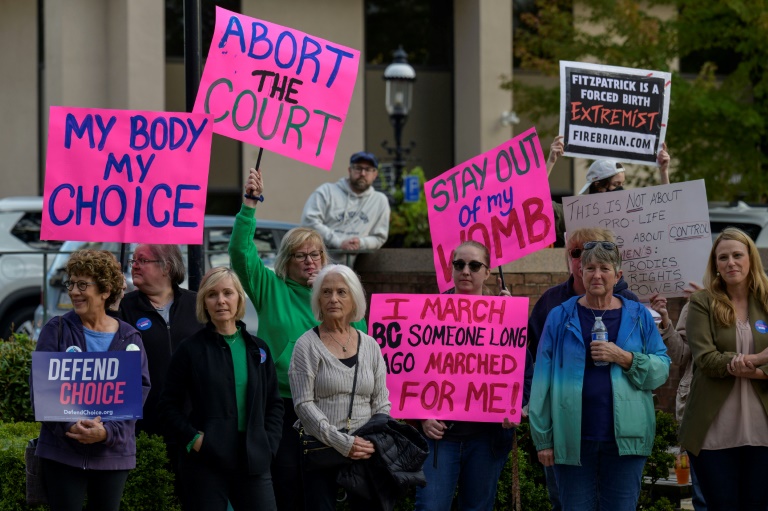
At a recent rally in Doylestown, a northern suburb of Philadelphia, the national nonprofit organization Planned Parenthood made their voices heard.

“Abortion is still legal in Pennsylvania and we’re going to fight every day to make sure that that stays the case,” said Lindsey Mauldin, the vice president of public policy and advocacy at one of the state’s Planned Parenthood branches.

“Our patients don’t come to our health centers for political reasons, they don’t come to our health centers for religious reasons; they come to our health centers because they need care,” she said, saying that patients from bordering states are also arriving seeking health services.

“Pennsylvania remains a very vital state in providing that care for patients in the northeast quadrant of the country,” she said, even though the state has fewer than 20 clinics for more than 12 million residents.

Standing among signs reading “My Body, My Choice,” Angela Jacobs says it’s the first time she’s become active in politics.

But the 51-year-old felt moved to get engaged, saying in her early 20s she had an abortion and wants her own daughter, now 20, to have the same option.

“I realize now that, if we don’t talk about these things, then we’re going to lose that choice and that’s not something that women can afford, to have that taken away from us,” Jacobs said.

– ‘Clear break’ –

Lara Putnam, a professor of history at the University of Pittsburgh, says that from the moment the Supreme Court decision dropped, Democrats have slightly outnumbered Republicans in the number of net voters gained by each party on the voter rolls.

“This marks a clear break” and temporarily reverses a structural trend in the state, where Democrats have seen their old industrial-era base shrink for decades, she told AFP.

But is it enough to tip the vote?

Randy Charlins, a bar manager who lives near Doylestown, doesn’t think so.

The 61-year-old Republican says that while the race is “very close,” he’s confident that Mehmet Oz, the celebrity doctor running for Senate there, will best his Democratic opponent John Fetterman, the former mayor of a struggling steel town.

“I think there is a silent majority,” Charlins said, standing on the porch of his house where a pile of decorations is already out in preparation for Christmas.

“There’s a lot of conservatives that are not saying anything for fear,” he said.

– Swing state –

For the bar manager, inflation remains a core concern.

“I see my customers who come in maybe three times a week, a year ago, year and a half ago, they’re only coming in once a week,” he said. “Now, that affects my income.” 

He’s far from alone: a national poll conducted by The New York Times/Siena College released Monday shows that 18 percent of voters consider inflation their top priority, as opposed to five percent who ranked abortion rights their number one concern. 

Across the country, Republican candidates have quieted down on the issue of abortion, aware that taking an extreme position could cost them votes.

Right-wing campaign ads have mostly focused on crime or inflation, brandishing the threat of drug legalization.

Democrats are regularly recalling that Dr. Oz and Doug Mastriano, the ultra-conservative candidate for governor in Pennsylvania, have stood for restricting abortion access or a near-total ban on the medical procedure.

Pennsylvania is well-known for tight races, having given Trump a narrow win in 2016, before barely turning Democratic for Biden in 2020.

Cranberry farmers fight climate change to protect Thanksgiving staple

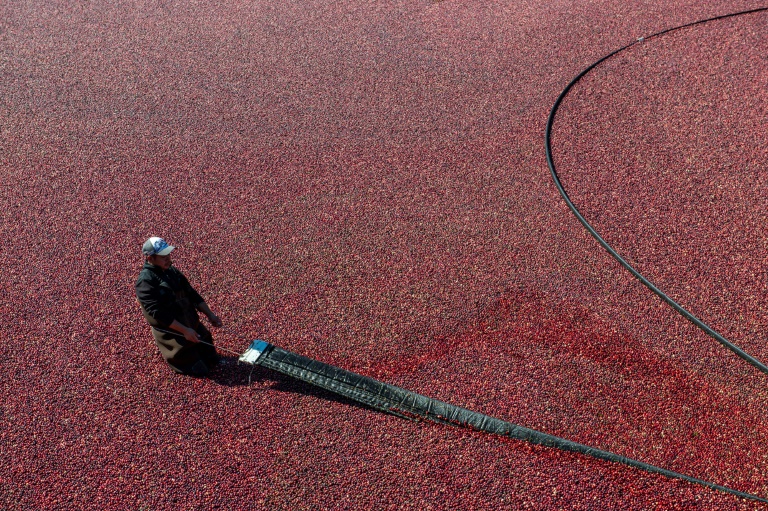
American farmers growing cranberries, a quintessential component of Thanksgiving feasts, have had to adapt their traditional methods to fight the effects of climate change.

The tart red berries, boiled with a heaping dose of sugar to make classic cranberry sauce, thrive only in the right environment — but climate change threatens to make conditions more unpredictable and extreme.

After a terrible 2021 season, Massachusetts farmer Billy McCaffrey is ecstatic for a bumper crop this year.

“Phenomenal, unbelievable,” the 70-year-old former teacher says, surrounded up to his waist by a sea of floating berries.

His cranberry farm, south of Boston, is one of hundreds in the northeastern US state of Massachusetts — the second largest producer after midwestern Wisconsin.

“Every year is up and down… I just hope we can keep it and get paid,” says McCaffrey, worrying that an unexpected hail storm could still cause disaster for him and his wife Mary.

The McCaffreys had worried that 2022 could see a repeat of the previous year, which the head of the Cape Cod Cranberry Growers Association (CCCGA), Brian Wick, says was “one of our worst crops in quite some time.”

“The rains and the environment in the vine canopy created the perfect conditions for rot (and) fungus” the expert told AFP.

– ‘Double Whammy’ –

This year’s growing season started with a drought, the exact opposite of last year, but farmers were able to use pumps and water to keep their crops alive.

That eats into their bottom line.      

Now this year looks like one of the biggest crops ever with a prediction of 1.9 million barrels (189 million pounds) produced in Massachusetts according to the CCCGA.

Keith Mann, 54, has outfitted his large farm in Buzzards Bay, Massachusetts, with solar panels to help offset fuel costs. He has also installed several windmills on his property and sells electricity back to the grid.

Though he’s not sure the average temperatures have noticeably increased, Mann says the “weather extremes cause real troubles for us.”

“We had drought all summer… Then late in the summer we had torrential downpours, (which) caused flooding, and the flooding causes fungal infections.”

“Too much rain all at once is a problem. Not enough rain most of the season was another problem. Put them together it’s a double whammy,” said Mann.

As for this year’s Thanksgiving and those in the relative near future, Americans don’t need to rush and stock up on cranberry sauce just yet.

Farmers are adapting to the changing climate and producing new varieties to be processed by the massive Ocean Spray farm cooperative in Massachusetts.

“Thanksgiving, we get up for that. It drives us” said McCaffrey.

“You’re going to have to change your technique and tweak it a little bit at a time.”

Cranberry farmers fight climate change to protect Thanksgiving staple

American farmers growing cranberries, a quintessential component of Thanksgiving feasts, have had to adapt their traditional methods to fight the effects of climate change.

The tart red berries, boiled with a heaping dose of sugar to make classic cranberry sauce, thrive only in the right environment — but climate change threatens to make conditions more unpredictable and extreme.

After a terrible 2021 season, Massachusetts farmer Billy McCaffrey is ecstatic for a bumper crop this year.

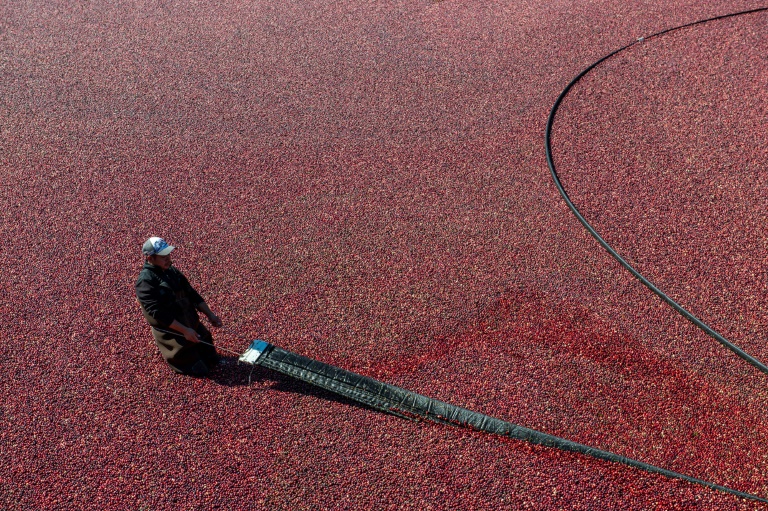
“Phenomenal, unbelievable,” the 70-year-old former teacher says, surrounded up to his waist by a sea of floating berries.

His cranberry farm, south of Boston, is one of hundreds in the northeastern US state of Massachusetts — the second largest producer after midwestern Wisconsin.

“Every year is up and down… I just hope we can keep it and get paid,” says McCaffrey, worrying that an unexpected hail storm could still cause disaster for him and his wife Mary.

The McCaffreys had worried that 2022 could see a repeat of the previous year, which the head of the Cape Cod Cranberry Growers Association (CCCGA), Brian Wick, says was “one of our worst crops in quite some time.”

“The rains and the environment in the vine canopy created the perfect conditions for rot (and) fungus” the expert told AFP.

– ‘Double Whammy’ –

This year’s growing season started with a drought, the exact opposite of last year, but farmers were able to use pumps and water to keep their crops alive.

That eats into their bottom line.      

Now this year looks like one of the biggest crops ever with a prediction of 1.9 million barrels (189 million pounds) produced in Massachusetts according to the CCCGA.

Keith Mann, 54, has outfitted his large farm in Buzzards Bay, Massachusetts, with solar panels to help offset fuel costs. He has also installed several windmills on his property and sells electricity back to the grid.

Though he’s not sure the average temperatures have noticeably increased, Mann says the “weather extremes cause real troubles for us.”

“We had drought all summer… Then late in the summer we had torrential downpours, (which) caused flooding, and the flooding causes fungal infections.”

“Too much rain all at once is a problem. Not enough rain most of the season was another problem. Put them together it’s a double whammy,” said Mann.

As for this year’s Thanksgiving and those in the relative near future, Americans don’t need to rush and stock up on cranberry sauce just yet.

Farmers are adapting to the changing climate and producing new varieties to be processed by the massive Ocean Spray farm cooperative in Massachusetts.

“Thanksgiving, we get up for that. It drives us” said McCaffrey.

“You’re going to have to change your technique and tweak it a little bit at a time.”

Kevin Spacey denies sex assault charge in US court

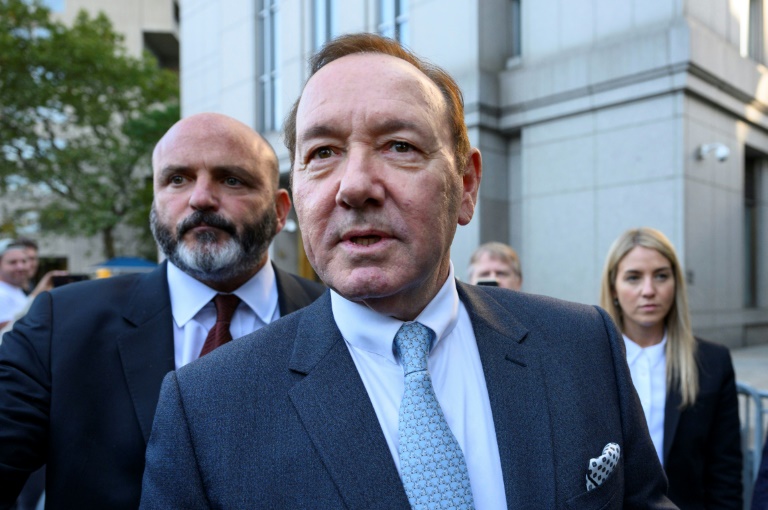
Disgraced movie star Kevin Spacey takes the stand at his New York trial, rejecting as “not true” accusations he sexually assaulted fellow actor Anthony Rapp when he was a minor.

Rapp, who stars in the series “Star Trek: Discovery,” is claiming damages of $40 million against the two-time Oscar-winner for “emotional anguish,” for what allegedly happened in 1986, when he was 14 and Spacey was 26.

Spacey said he had no recollection of attending a private party in a Manhattan apartment with Rapp, as the now 50-year-old claims.

Before appearing in court Monday, Spacey, 63, won a small victory when the judge presiding over the case, Lewis Kaplan, dismissed Rapp’s claim that Spacey had intentionally caused him emotional distress.

In his lawsuit, Rapp accused Spacey of having come into a bedroom where he was watching television during a party the two had attended, of picking him up, lifting him onto a bed and laying down next to him.

Addressing the court earlier this month, Rapp recounted that he “felt frozen” during the alleged incident — until he managed to “wiggle his way” out.

Since Rapp’s accusations first emerged in 2017, at the height of the #MeToo movement against sexual abuse, Spacey has disappeared from screens and theaters. 

During Monday’s cross-examination, Spacey described his own troubled family, with a father he described as a “white supremacist” and a “neo-Nazi,” something he had never said in public before, and who disliked gay people and did not appreciate his son’s interest in the theater. 

Spacey said that Rapp’s accusations, published in late 2017 in a Buzzfeed article, made him feel “shocked, frightened and confused.”

On recommendation of his advisors, he issued a public apology which he said he now regrets.

“I was being encouraged to apologize and I’ve learned a lesson, which is never apologize for something you didn’t do,” he told the court.

At the time of the accusations, he came out publicly as gay for the first time, which he said led to accusations that he was “trying to change the subject, or trying to deflect.”

Wiping away tears, the star of “American Beauty” and “House of Cards” said he would “never have done anything to hurt the gay community.”

The “Usual Suspects” star has also pleaded not guilty to charges of sexual assault of three men between March 2005 and April 2013 in Britain, and in 2019, charges against of indecent assault and sexual assault were dropped in Massachusetts.

Kanye West agrees to buy social network Parler

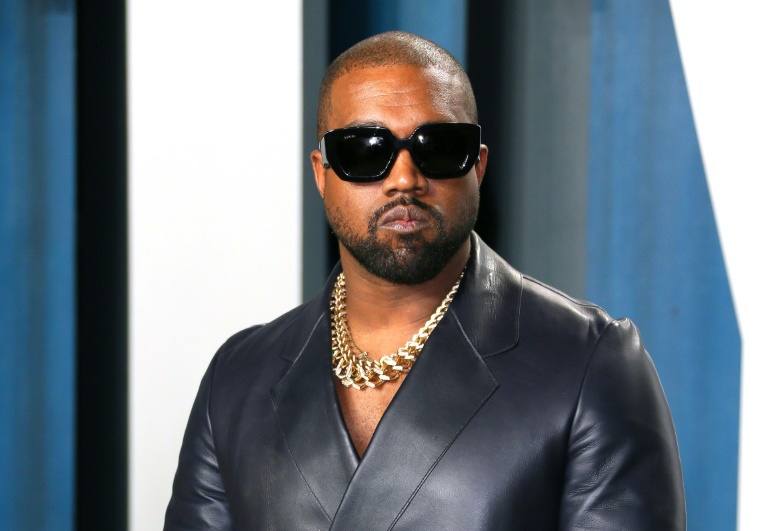
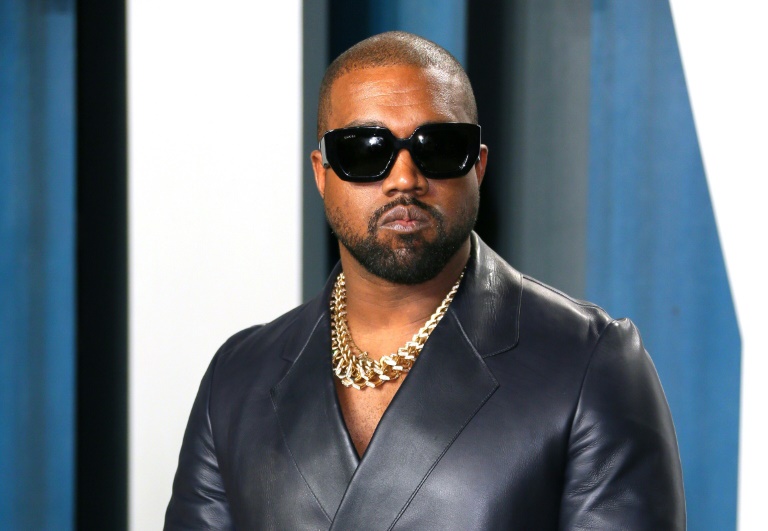
Social network Parler announced Monday a deal for Kanye West to buy the platform popular with US conservatives, just over a week after the rapper’s Twitter and Instagram accounts were restricted over anti-Semitic posts.

West — now known as Ye — has recently alienated fans and business partners with anti-Semitic comments, interest in racist conspiracy theories and wearing a provocative “White Lives Matter” T-shirt at Paris fashion week.

“In a world where conservative opinions are considered to be controversial we have to make sure we have the right to freely express ourselves,” the billionaire artist and fashion mogul said in a statement released by Parler.

Parler said West, who has an account on the network as of Monday, was “taking a bold stance against his recent censorship from Big Tech.”

West’s decision to buy his own social media platform comes on the heels of him running into trouble on Twitter and Meta-owned Instagram for posts containing anti-Semitic remarks, in violation of the platform’s content rules.

The 45-year-old’s restrictions on Twitter and Instagram earlier in October were not the first time his posts prompted punitive action from major social media platforms.

Earlier this year, West was banned from posting on Instagram for 24 hours after violating the social network’s harassment policy amid his acrimonious divorce from reality star Kim Kardashian.

Former US president Donald Trump, himself permanently banned from Twitter for tweets deemed to be inciting violence, has already spoken with West about his Parler purchase and the two plan to have dinner, according to news site Politico.

Parler, which describes itself as “a guiding force in the fight against Big Tech, Big Government, censorship, and cancel culture,” announced in September that it was restructuring to focus on users who risk being ousted from the internet.

– Trump supporters –

George Farmer, Parler’s executive director, said the deal with West would “change the world, and change the way the world thinks about free speech.”

“Ye is making a groundbreaking move into the free speech media space and will never have to fear being removed from social media again,” he said.

The value of the deal was not disclosed.

Launched in 2018, Parler became a haven for Trump supporters and far-right users who say they have been censored on social media platforms. It has since signed up many more traditional Republican voices.

But it was pulled from the Apple and Google online marketplaces and effectively shut down when Amazon Web Services cut ties over allegations the platform failed to stop incitement of violence ahead of the January 6, 2021, siege of the US Capitol led by Trump supporters.

Last month, Google allowed Parler back into its Play Store, more than a year after banning the platform.

The network — one of several in a crowded conservative social media marketplace — claimed to have more than 20 million users before being pulled from Apple and Google.

Competitor Truth Social — which Trump launched after being barred from Twitter over the Capitol riot — was also allowed on the Google Play Store this month, weeks before the crucial midterm elections.

Meanwhile, Tesla chief Elon Musk tweeted a cartoon picturing him and West combining their respective social media companies’ forces, with a caption of “Wait for it” as well as “Fun times ahead.”

Musk is proceeding with his $44 billion deal to buy Twitter after trying to back out of the contract, but it has yet to close.

Kanye West agrees to buy social network Parler

Social network Parler announced Monday a deal for Kanye West to buy the platform popular with US conservatives, just over a week after the rapper’s Twitter and Instagram accounts were restricted over anti-Semitic posts.

West — now known as Ye — has recently alienated fans and business partners with anti-Semitic comments, interest in racist conspiracy theories and wearing a provocative “White Lives Matter” T-shirt at Paris fashion week.

“In a world where conservative opinions are considered to be controversial we have to make sure we have the right to freely express ourselves,” the billionaire artist and fashion mogul said in a statement released by Parler.

Parler said West, who has an account on the network as of Monday, was “taking a bold stance against his recent censorship from Big Tech.”

West’s decision to buy his own social media platform comes on the heels of him running into trouble on Twitter and Meta-owned Instagram for posts containing anti-Semitic remarks, in violation of the platform’s content rules.

The 45-year-old’s restrictions on Twitter and Instagram earlier in October were not the first time his posts prompted punitive action from major social media platforms.

Earlier this year, West was banned from posting on Instagram for 24 hours after violating the social network’s harassment policy amid his acrimonious divorce from reality star Kim Kardashian.

Former US president Donald Trump, himself permanently banned from Twitter for tweets deemed to be inciting violence, has already spoken with West about his Parler purchase and the two plan to have dinner, according to news site Politico.

Parler, which describes itself as “a guiding force in the fight against Big Tech, Big Government, censorship, and cancel culture,” announced in September that it was restructuring to focus on users who risk being ousted from the internet.

– Trump supporters –

George Farmer, Parler’s executive director, said the deal with West would “change the world, and change the way the world thinks about free speech.”

“Ye is making a groundbreaking move into the free speech media space and will never have to fear being removed from social media again,” he said.

The value of the deal was not disclosed.

Launched in 2018, Parler became a haven for Trump supporters and far-right users who say they have been censored on social media platforms. It has since signed up many more traditional Republican voices.

But it was pulled from the Apple and Google online marketplaces and effectively shut down when Amazon Web Services cut ties over allegations the platform failed to stop incitement of violence ahead of the January 6, 2021, siege of the US Capitol led by Trump supporters.

Last month, Google allowed Parler back into its Play Store, more than a year after banning the platform.

The network — one of several in a crowded conservative social media marketplace — claimed to have more than 20 million users before being pulled from Apple and Google.

Competitor Truth Social — which Trump launched after being barred from Twitter over the Capitol riot — was also allowed on the Google Play Store this month, weeks before the crucial midterm elections.

Meanwhile, Tesla chief Elon Musk tweeted a cartoon picturing him and West combining their respective social media companies’ forces, with a caption of “Wait for it” as well as “Fun times ahead.”

Musk is proceeding with his $44 billion deal to buy Twitter after trying to back out of the contract, but it has yet to close.

Trump aides blocked accurate Covid information: US probe

Former US president Donald Trump’s administration prevented health officials from providing accurate information about Covid-19 in a bid to back up his overly optimistic view of the outbreak, according to a congressional report released Monday.

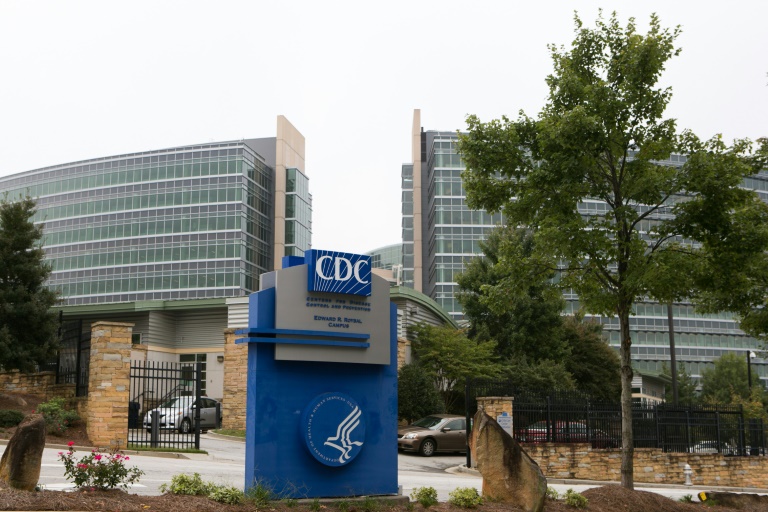
Senior staff at the US Centers for Disease Control and Prevention (CDC) told investigators Trump aides bullied staff and tried to rewrite their reports in a bid to align guidance with the president’s public downplaying of the crisis.

Officials took “unprecedented steps to insert political appointees into the publication process and rebut CDC’s scientific reports, including drafting op-eds and other public messaging designed to directly counteract CDC’s findings,” the report said.

Investigators interviewed a dozen current and former CDC officials as well as senior administration figures for the 91-page document released by the House select subcommittee on the coronavirus crisis.

The panel describes how Trump appointees at the Department of Health and Human Services (HHS) tried to take over the CDC’s weekly scientific journal, the Morbidity and Mortality Weekly Report (MMWR), editing or blocking articles they believed might prove harmful to Trump.

Trump appointees had sought to “alter the contents, rebut, or delay the release” of 18 MMWRs and a health alert, succeeding on at least five occasions.

The report quoted a CDC communications officer who complained that a Trump ally in HHS had used “bully-ish behavior” that made CDC officials “feel threatened.”

Jay Butler, the CDC’s deputy director of infectious diseases, said he was “not really asked back to do telebriefings” after his statements were deemed “too alarming.”

“The Select Subcommittee’s investigation has shown that the previous administration engaged in an unprecedented campaign of political interference in the federal government’s pandemic response, which undermined public health to benefit the former president’s political goals,” panel chairman Jim Clyburn, a Democrat, said in a statement. 

“As today’s report shows, President Trump and his top aides repeatedly attacked CDC scientists, compromised the agency’s public health guidance, and suppressed scientific reports in an effort to downplay the seriousness of the coronavirus.”

A previous report outlined the Trump administration’s bid to block government health officials from speaking publicly about the pandemic.

And another described its pressure on the US Food and Drug Administration to reissue emergency authorization for hydroxychloroquine, an anti-malaria drug Trump was promoting despite its ineffectiveness in treating Covid-19.

Republicans dismissed the latest report as partisan and have vowed to conduct their own inquiry if they win back the House or the Senate in November’s midterm elections. 

Close Bitnami banner
Bitnami