AFP

Lufthansa expects higher profits as air travel booms

German airline giant Lufthansa on Monday significantly raised its earnings forecast for 2022, citing “strong demand” for air travel in the months ahead.

The group now expects adjusted operating profits (adjusted EBIT) of “over one billion euros ($980 million)”, it said in a statement, double its previous target of “at least” 500 million euros.

Lufthansa said the optimistic outlook was “based on the positive development in the third quarter, the current booking situation, which continues to reflect strong demand for air travel in the coming months and the expectation of another record result from Lufthansa Cargo in 2022”.

Third quarter revenues almost doubled year-on-year to 10.1 billion euros, according to preliminary results released by Lufthansa.

Strike action by pilots and ground staff over the July-to-September period cost the airline around 70 million euros, it added.

Lufthansa pilots agreed last month not to strike again until at least the end of June next year, after reaching a deal with bosses on higher pay.

The Lufthansa group — which includes Eurowings, Austrian, Swiss and Brussels Airlines — made huge net losses of 6.7 billion euros in 2020 and 2.2 billion euros in 2021 as the coronavirus pandemic shut down large parts of the airline industry.

Lufthansa was saved from bankruptcy by a German government bailout in June 2020.

The strong rebound in travel and freight traffic since then allowed Lufthansa to stabilise its finances earlier than expected.

The German government sold its remaining stake in Lufthansa last month, putting the airline back in private hands.

Lufthansa will publish its full third-quarter results on October 27.

Stellantis CEO says group may end China production

Car giant Stellantis may stop building vehicles in China, chief executive Carlos Tavares said Monday, citing building tensions with the West as a deterrent to investment there.

“Our strategy anticipates the possibility of geopolitical tensions,” Tavares told reporters at the Paris Motor Show.

“There have already been several times where we’ve been thrown out of a country when Western sanctions are imposed… can we be sure that the stability of relations between China and the world is guaranteed?” he added.

Stellantis has already dropped a joint venture that built Jeep SUVs in China after failing to take a controlling stake, and is in talks with local partner Dongfeng about its Peugeot and Citroen brands.

Unlike German rival Volkswagen, which sold three million cars in China last year, the historic mass-market French vehicles have never broken through there.

“We’re still selling Jeep and Alfa Romeo vehicles built outside China very profitably” in the world’s largest car market, Tavares said, suggesting the same model could work for Peugeot and Citroen.

“If we take our strategy all the way, we don’t need any factories in China. In a world of growing tensions, we don’t need to create vulnerabilities,” he added.

Japanese and German producers have largely stayed away from the Paris Motor Show.

But Asian manufacturers like China’s Ora and BYD or Vietnam’s VinFast have turned out in force, hoping to bring lower-cost electric vehicles to European markets.

Stellantis aims for revenues of 20 billion euros ($19.6 billion) in China by 2030 with its 14 brands, but Tavares complained of unequal treatment from Beijing.

“The red carpet is rolled out for Chinese manufacturers in Europe, and that’s not how we’re welcomed in China,” he said.

“Import taxes on vehicles coming from China should be symmetrical with those applied to Western vehicles in China.”

The Stellantis boss added that “we are in a world that’s fragmenting, states are trying to create bubbles.

“If we think these bubbles will close at some point, we’ll have to sell in Europe vehicles that are made in Europe. We will adapt,” he added.

Stellantis CEO says group may end China production

Car giant Stellantis may stop building vehicles in China, chief executive Carlos Tavares said Monday, citing building tensions with the West as a deterrent to investment there.

“Our strategy anticipates the possibility of geopolitical tensions,” Tavares told reporters at the Paris Motor Show.

“There have already been several times where we’ve been thrown out of a country when Western sanctions are imposed… can we be sure that the stability of relations between China and the world is guaranteed?” he added.

Stellantis has already dropped a joint venture that built Jeep SUVs in China after failing to take a controlling stake, and is in talks with local partner Dongfeng about its Peugeot and Citroen brands.

Unlike German rival Volkswagen, which sold three million cars in China last year, the historic mass-market French vehicles have never broken through there.

“We’re still selling Jeep and Alfa Romeo vehicles built outside China very profitably” in the world’s largest car market, Tavares said, suggesting the same model could work for Peugeot and Citroen.

“If we take our strategy all the way, we don’t need any factories in China. In a world of growing tensions, we don’t need to create vulnerabilities,” he added.

Japanese and German producers have largely stayed away from the Paris Motor Show.

But Asian manufacturers like China’s Ora and BYD or Vietnam’s VinFast have turned out in force, hoping to bring lower-cost electric vehicles to European markets.

Stellantis aims for revenues of 20 billion euros ($19.6 billion) in China by 2030 with its 14 brands, but Tavares complained of unequal treatment from Beijing.

“The red carpet is rolled out for Chinese manufacturers in Europe, and that’s not how we’re welcomed in China,” he said.

“Import taxes on vehicles coming from China should be symmetrical with those applied to Western vehicles in China.”

The Stellantis boss added that “we are in a world that’s fragmenting, states are trying to create bubbles.

“If we think these bubbles will close at some point, we’ll have to sell in Europe vehicles that are made in Europe. We will adapt,” he added.

Pound rockets as UK rips up budget

The pound jumped more than two percent against the dollar Monday as Britain’s fourth finance minister in as many months sensationally ripped up a tax-cutting budget that had spooked markets.

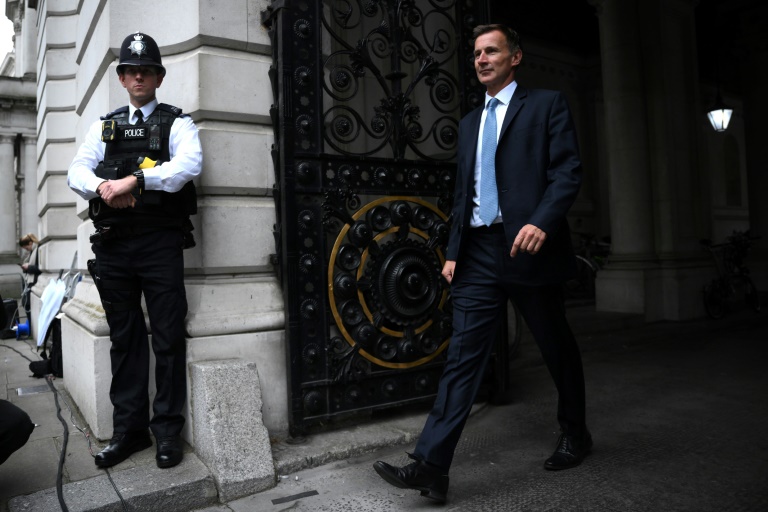
Chancellor of the Exchequer Jeremy Hunt tore up the fiscal policy unveiled by the new government of Prime Minister Liz Truss last month.

She is battling to stay in power after dramatically sacking Hunt’s predecessor Kwasi Kwarteng on Friday.

Truss and Kwarteng had announced tax cuts, funded by debt — causing the pound to hit a record low against the dollar and UK government bond yields to soar.

-‘Government can’t control markets’ –

“No government can control markets but every government can give certainty about the sustainability of public finances,” Hunt said in a televised address that demolished the maligned budget.

The pound rallied and yields on UK government bonds, or gilts, slid on Monday’s fiscal policy U-turns.

“The markets are responding positively to the new chancellor’s plans to reverse almost all of the tax cuts announced by his predecessor,” noted Victoria Scholar, head of investment at Interactive Investor. 

“Jeremy Hunt’s focus on reassuring the markets and reinstating confidence appears to have worked so far with gilt yields trading lower and sterling pushing higher.”

The Bank of England on Friday ended its emergency purchasing on UK government bonds triggered by unravelling markets in the wake of Kwarteng’s September budget aimed at boosting Britain’s recession-threatened economy.

Monday’s reversals also lifted London’s benchmark FTSE 100 shares index, which closed up 0.9 percent.

Frankfurt gained 1.7 percent and Paris 1.8 percent.

– China disappointment –

All three main indices on Wall Street rebounded on Monday, having finished sharply lower Friday. 

The Dow was up 1.7 percent in late morning trading, with the S&P 500 climbing 2.6 percent and the tech-heavy Nasdaq soaring 3.2 percent.

“The three pillars of support for the rebound effort — lower interest rates, a weaker dollar, and strength in the mega-cap stocks — need to remain intact,” said market analyst Patrick O’Hare at Briefing.com. 

“They are currently, so the stock market has something to build on.”

The markets have been grappling with the latest strong US inflation reading, which ramped up bets that the Federal Reserve will hike borrowing costs by 75 basis points twice more before the end of the year. 

That, in turn, has stoked concerns the world’s top economy will flip into a recession.

Traders are keeping tabs on looming earnings reports, with expectations that higher rates and prices will have eaten into companies’ bottom lines.

Elsewhere, Asian equities started the week in mixed fashion.

There was a little disappointment among investors after Chinese President Xi Jinping at the weekend reasserted his commitment to the zero-Covid strategy of lockdowns that has hammered the economy this year.

Beijing has also delayed the release of anticipated economic growth figures — which analysts had expected to be some of its weakest quarterly growth figures since 2020, as the economy is hobbled by the Covid-19 restrictions and a real estate crisis.

Eyes are also on Tokyo as the yen sits around a three-decade low against the dollar owing to US rate hike expectations and the Bank of Japan’s refusal to tighten monetary policy, citing a need to support the economy.

The yen is approaching 150 to the dollar for the first time since 1990, but while officials have said they are keeping tabs on developments, they have yet to intervene in markets for a second time, having done so last month.

– Key figures around 1530 GMT –

New York – Dow: UP 1.7 percent at 30,150.53 points

EURO STOXX 50: UP 1.8 percent at 3,441.64

London – FTSE 100: UP 0.9 percent at 6,920.24 (close) 

Frankfurt – DAX: UP 1.7 percent at 12,649.03 (close)

Paris – CAC 40: UP 1.8 percent at 6,040.66 (close)

Tokyo – Nikkei 225: DOWN 1.2 percent at 26,775.79 (close)

Hong Kong – Hang Seng Index: UP 0.2 percent at 16,612.90 (close)

Shanghai – Composite: UP 0.4 percent at 3,084.94 (close)

Pound/dollar: UP at $1.1416 from $1.1172 Friday

Dollar/yen: UP at 148.75 yen from 148.67 yen

Euro/dollar: UP at $0.9813 from $0.9722

Euro/pound: DOWN at 85.97 pence from 87.02 pence

Brent North Sea crude: DOWN less than 0.1 at $91.55 per barrel

West Texas Intermediate: FLAT at $85.60 per barrel

burs-rl/pvh

Kanye West agrees to buy social network Parler

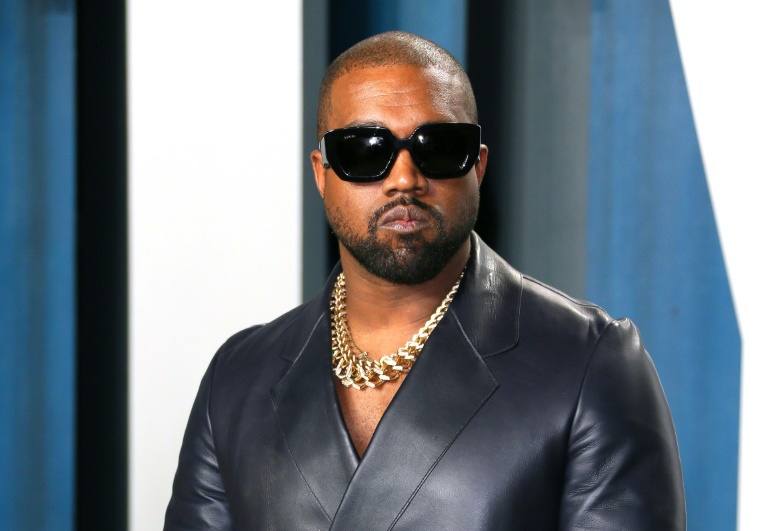
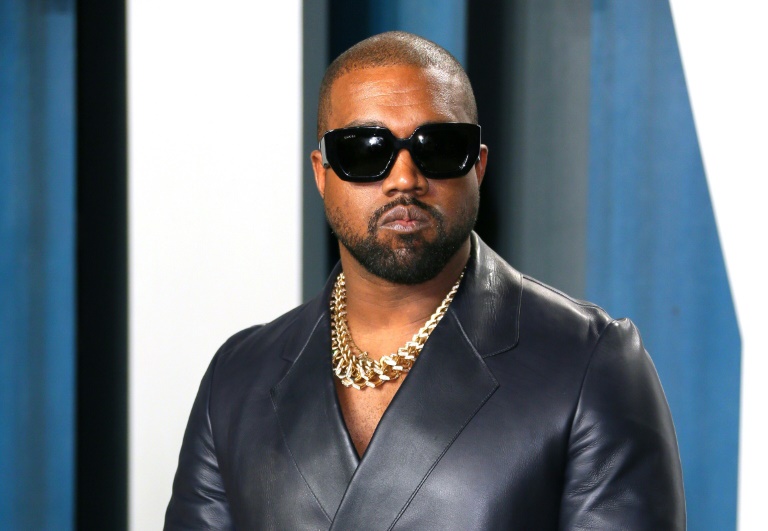
Social network Parler announced Monday a deal for Kanye West to buy the platform popular with US conservatives, just over a week after the rapper’s Twitter and Instagram accounts were restricted over anti-Semitic posts.

West — now known as Ye — has recently alienated fans and business partners with anti-Semitic comments, interest in racist conspiracy theories and wearing a provocative “White Lives Matter” T-shirt at Paris fashion week.

“In a world where conservative opinions are considered to be controversial we have to make sure we have the right to freely express ourselves,” the billionaire artist and fashion mogul said in a statement released by Parler.

Parler said West, who has an account on the network as of Monday, was “taking a bold stance against his recent censorship from Big Tech.”

The 45-year-old’s restrictions on Twitter and Instagram earlier in October were not the first time his posts prompted punitive action from major social media platforms.

Earlier this year, West was banned from posting on Instagram for 24 hours after violating the social network’s harassment policy amid his acrimonious divorce from reality star Kim Kardashian. 

Parler, which describes itself as “a guiding force in the fight against Big Tech, Big Government, censorship, and cancel culture,” announced in September that it was restructuring to focus on users who risk being ousted from the internet. 

– Trump supporters –

George Farmer, Parler’s executive director, said the deal with West would “change the world, and change the way the world thinks about free speech.”

“Ye is making a groundbreaking move into the free speech media space and will never have to fear being removed from social media again,” he said.

The value of the deal, which is expected to close this year was not disclosed.

Launched in 2018, Parler became a haven for supporters of former US president Donald Trump and far-right users who say they have been censored by other social media platforms such as Twitter. It has since signed up many more traditional Republican voices.

But it was pulled from the Apple and Google online marketplaces and effectively shut down when Amazon Web Services cut ties over allegations the platform failed to stop incitement of violence ahead of the January 6, 2021, siege of the US Capitol led by Trump supporters.

Last month, Google allowed Parler back into its Play Store, more than a year after banning the platform.

The network — one of several in a crowded conservative social media marketplace — claimed to have more than 20 million users before being pulled from Apple and Google.

Competitor Truth Social — which Trump launched after being barred from Twitter over the Capitol riot — was also allowed on the Google Play Store this month, weeks before the crucial midterm elections.

Kanye West agrees to buy social network Parler

Social network Parler announced Monday a deal for Kanye West to buy the platform popular with US conservatives, just over a week after the rapper’s Twitter and Instagram accounts were restricted over anti-Semitic posts.

West — now known as Ye — has recently alienated fans and business partners with anti-Semitic comments, interest in racist conspiracy theories and wearing a provocative “White Lives Matter” T-shirt at Paris fashion week.

“In a world where conservative opinions are considered to be controversial we have to make sure we have the right to freely express ourselves,” the billionaire artist and fashion mogul said in a statement released by Parler.

Parler said West, who has an account on the network as of Monday, was “taking a bold stance against his recent censorship from Big Tech.”

The 45-year-old’s restrictions on Twitter and Instagram earlier in October were not the first time his posts prompted punitive action from major social media platforms.

Earlier this year, West was banned from posting on Instagram for 24 hours after violating the social network’s harassment policy amid his acrimonious divorce from reality star Kim Kardashian. 

Parler, which describes itself as “a guiding force in the fight against Big Tech, Big Government, censorship, and cancel culture,” announced in September that it was restructuring to focus on users who risk being ousted from the internet. 

– Trump supporters –

George Farmer, Parler’s executive director, said the deal with West would “change the world, and change the way the world thinks about free speech.”

“Ye is making a groundbreaking move into the free speech media space and will never have to fear being removed from social media again,” he said.

The value of the deal, which is expected to close this year was not disclosed.

Launched in 2018, Parler became a haven for supporters of former US president Donald Trump and far-right users who say they have been censored by other social media platforms such as Twitter. It has since signed up many more traditional Republican voices.

But it was pulled from the Apple and Google online marketplaces and effectively shut down when Amazon Web Services cut ties over allegations the platform failed to stop incitement of violence ahead of the January 6, 2021, siege of the US Capitol led by Trump supporters.

Last month, Google allowed Parler back into its Play Store, more than a year after banning the platform.

The network — one of several in a crowded conservative social media marketplace — claimed to have more than 20 million users before being pulled from Apple and Google.

Competitor Truth Social — which Trump launched after being barred from Twitter over the Capitol riot — was also allowed on the Google Play Store this month, weeks before the crucial midterm elections.

WHO seeks flexible funds from business via foundation

The World Health Organization is sourcing rapid response financing directly from companies to help tackle international crises, through the foundation it set up to bridge the shortfall from member states.

The WHO Foundation — set up in May 2020 as the UN health agency scrambled for resources to fight the Covid-19 pandemic — was created to marshal new resources from business and philanthropists.

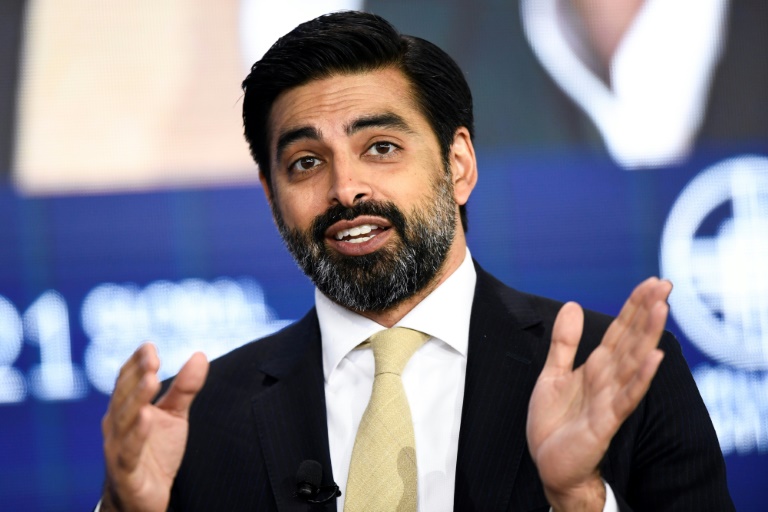
The foundation, which went live in January 2021, aims to “mobilise more support for the WHO, from the public, from businesses, from philanthropists,” its chief executive Anil Soni told AFP. 

“No organisation, no sector can solve the challenges that the world is facing alone,” the 46-year-old American said.

The WHO has a two-year budget of $5.8 billion but its financial independence has steadily declined. 

Its 194 member states provide barely 16 percent of the organisation’s financing through membership fees.

The rest comes from voluntary contributions, of which 88 percent are “specified”, meaning the money goes to projects earmarked by the donors.

And with national budgets tightening around the world, governments “are having to make tough decisions about where they give their money”, said Soni.

“That’s why we should do more with the private sector.”

– ‘Matchmaker’ –

The foundation says it exists because the WHO lacks sufficient resources to fulfil its mandate.

The list of health crises currently being combated by the WHO includes Covid-19, the cholera outbreak in Haiti, the war in Ukraine, the devastating floods in Pakistan, monkeypox and attempts to get aid into Ethiopia’s besieged Tigray region.

The foundation has raised $30 million since the start of 2021 — money which has mainly been focused on supporting the WHO’s emergency response to Covid-19 and the war in Ukraine.

“Part of our job is to be a matchmaker, is to make sure that we can facilitate dialogue and share information,” said Soni.

“So the WHO sees the benefit of working with the private sector, and the private sector sees the power of the WHO.”

The foundation has around 40 staff compared to more than 8,600 for the WHO, which is also based in Geneva.

– Innovation investments –

Soni admits that some — including within the WHO — fear the risk of private companies holding too much sway over the organisation, which makes decisions on the usage and approval of drugs, vaccines and treatments.

He insisted mechanisms were in place to prevent any company from influencing such decisions.

“But to close the door to all of the private sector — that doesn’t work,” he said.

On September 19, the WHO Foundation announced that it had partnered with venture capital firm OurCrowd to launch a $200 million investment fund focused on breakthrough health technologies.

OurCrowd will raise the money and a share of the profits will go to the WHO.

In addition, the companies in which the fund has invested will have to commit to ensuring fair access to their new technologies — one of the WHO’s chief gripes during the pandemic response, as poorer nations went to the back of the queue for Covid vaccines and treatments.

– Flexible friends –

On September 22, the foundation announced the launch of the Health Emergencies Alliance partnership — a vehicle for companies and philanthropists who want to support the WHO in tackling health emergencies on a regular basis.

The partnership, which is in its infancy, hopes to get financing to the front line swiftly and effectively.

“What we wanted to do was engage companies and give them an ability to more quickly respond to emergencies and also raise more flexible funding for the WHO,” said Soni.

The French laboratory pharmaceutical giant Sanofi was the first to sign up, he said, with discussions ongoing with other companies.

Those who join the programme will pay a set amount to the foundation each year, without the donation being earmarked for a particular situation.

And when a health emergency suddenly springs up, these companies will, within 24 hours, have the possibility of raising additional resources for the response, from their clients, employees and the company itself, capitalising while the emotion on breaking disasters is still strong.

US seeks six months in jail for ex-Trump aide Bannon

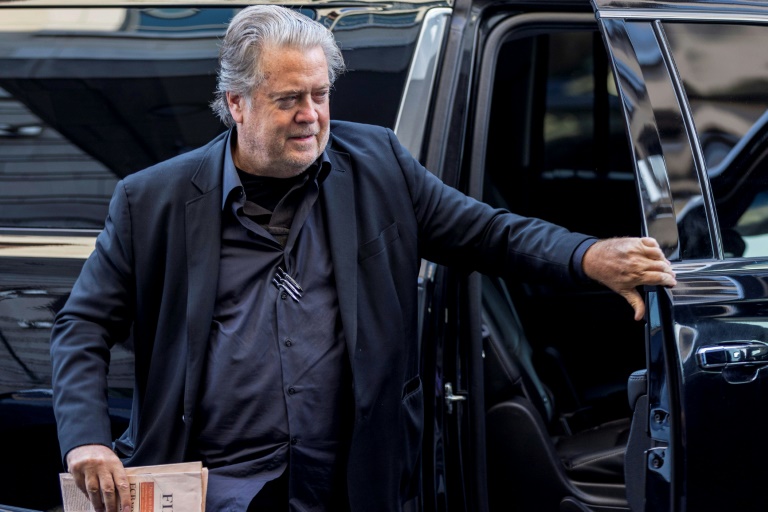
The US Justice Department asked a judge Monday to sentence Donald Trump’s former aide Steve Bannon to six months in prison for refusing to testify in Congress’s probe of the January 6, 2021 attack on the Capitol.

Bannon, a longtime political strategist and vocal advocate for the Republican former president, was found guilty in July on two counts of  contempt of Congress for defying a subpoena to testify.

The Justice Department said in a sentencing recommendation that the 68-year-old Bannon should receive the six-month sentence and pay a fine of $200,000 because he repeatedly sought to delay the proceedings by hinting he might cooperate.

Bannon “has pursued a bad-faith strategy of defiance and contempt,” the department said.

The investigation by a special House committee depicted Bannon last week as knowing in advance of the plan by hardline Trump supporters to attack the Capitol to prevent Democrat Joe Biden from being confirmed as the next president.

It also showed him advocating for Congress to block Biden — who defeated Trump in the November 2020 election — from becoming president.

“The rioters who overran the Capitol on January 6 did not just attack a building — they assaulted the rule of law upon which this country was built and through which it endures,” the department said.

“By flouting the Select Committee’s subpoena and its authority, the defendant exacerbated that assault.”

The maximum sentence for contempt of Congress is 12 months, and a $100,000 fine. 

The department’s recommendation of six months in prison is at the top end of the standard sentencing guidelines, a calculation based on the context of the crime and the defendant’s own justice record.

Sentencing is set for October 21.

But Bannon, who currently runs a streaming political commentary website,  “Bannon’s War Room,” could appeal the sentence, delaying its implementation well into next year. 

Drones spark gunfire, fearful cries before exploding in Kyiv

Buzzing like a lawn mower, a white arrow darts across the blue sky and drops obliquely toward its target in Ukraine’s capital as policemen crouching next to their patrol car open fire. 

When the kamikaze drone explodes along a street devoid of traffic, a thick plume of brown smoke rises high into the air, watched by a handful of bystanders moving skittishly on pavements or hugging buildings. 

The unmanned aerial vehicle strikes that officials said killed at least four people in Kyiv early on Monday trigger cries of alarm and send many residents rushing to shelters. 

Police officers try to keep their cool.

“We have been here for half an hour and four drones have fallen,” says officer Yaraslov, still nervous after firing his kalashnikov. 

“It’s a bit frightening but it’s our job. What can we do? It’s normal because it’s our work. We have to do it,” he adds.

It is 08:13 am (0513 GMT) in the centre of the Ukrainian capital. This is the second strike on the residential Shevchenkivsky district and at least the fourth attack since 06:30 am.

The drone strikes are the second Russian attack on Kyiv since missiles slammed into the city exactly one week ago as people were preparing for their new working week.

Yaroslav and his fellow officer block traffic at the intersection. Their patrol car is about 100 metres (yards) from where the first drone hit.

AFP journalists have been unable to identify the targets.

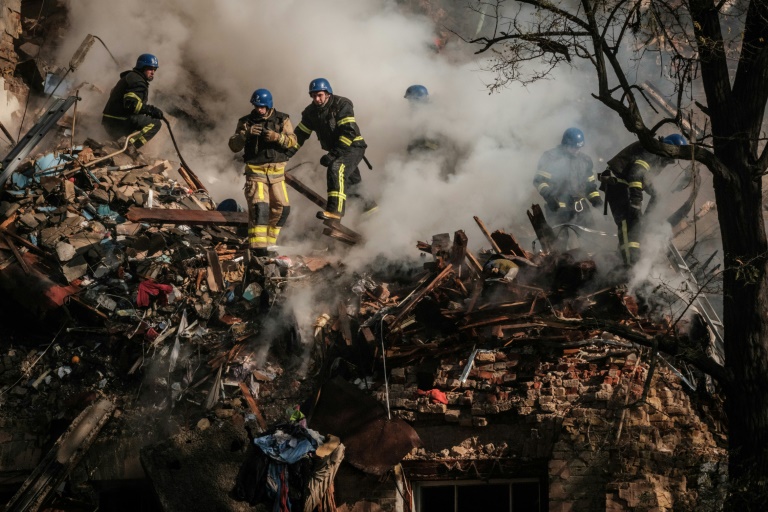
The mayor’s office said a residential building was partially destroyed and at least four people died.

– Heads turn skyward –

A few residents try to get a glimpse of the first target as brown smoke still trails upward.

Suddenly there are shouts and panic grips residents. Heads turn skyward, while a number of people run for shelter.

At first far off, the sound of a drone becomes clearer as the unmanned aircraft flies over the neighbourhood. 

Quite visible, even if it is dozens of metres above, the white dart-like craft flies over buildings.

Like other policemen and soldiers in the district, Yaroslav grabs his kalashnikov, kneels on the tarmac and starts firing at the object. 

The crackling of automatic weapons resounds with both long and short bursts throughout the area.

There is no sign the officers have hit the drone, which flies obliquely to its target 200 metres away. The explosion echoes in the streets.

Less than 10 minutes later, close to 8:20 am, the scene repeats itself in the same place — the third strike in a row.

The target is just a short distance from the building hit earlier.

AFP journalists hear no air raid sirens before the last two strikes. Some AFP journalists see a fireball when a drone has hit.

About 200 metres from the explosions, a group of elderly people — two women and a man — continue sheltering by the low wall of a building, next to a policeman.

They want to find a safer place.

– ‘We won’t be intimidated’ –

“Let’s go to the metro station. There’s a bomb shelter,” one of the women tells the others.

“When the guns begin to crackle, it means they (the drones) are flying somewhere. Can we leave now? We want to go to the park,” the woman asks the officer, who gives them the all-clear.

Sasha, a 22-year-old who lives in an apartment near where the drones struck, says anxiously that he was woken up by the first explosion at about 6:30 am.

“I’m afraid,” he says laconically, standing near the entrance of a building serving as a shelter.

Lessya, a woman of about 60 who lives in a building at the blocked-off crossroads, puts her faith in Ukraine’s security forces.

“We believe in our armed forces and we believe in our victory and we won’t be intimidated by these explosions,” she says.

“They don’t frighten us. We are used to it and still believe we will win, whatever happens. Yes, it’s scary … but they will never intimidate us. 

UK axes 'almost all' budget tax cuts in humiliation for Truss

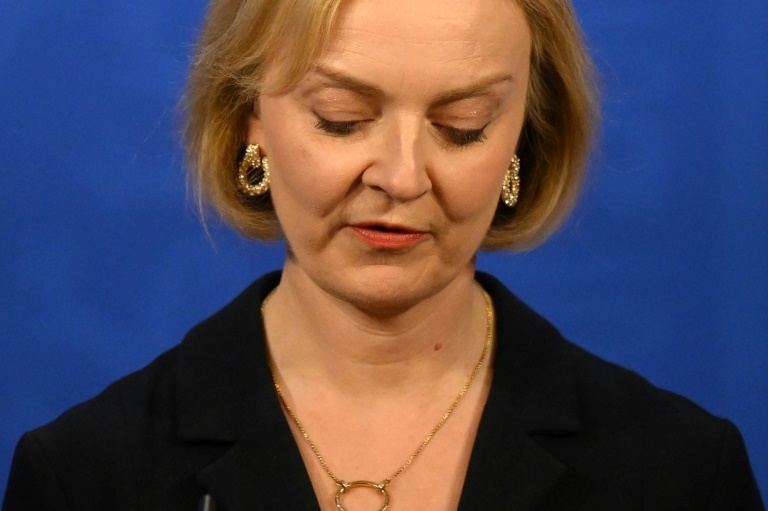
The British government on Monday axed almost all of its debt-fuelled tax cuts unveiled last month to avert fresh markets chaos, in a humiliating climbdown for embattled Prime Minister Liz Truss.

The shock move by new finance chief Jeremy Hunt, parachuted into the job on Friday to replace sacked Kwasi Kwarteng, leaves Truss’ position in a precarious state after a series of embarrassing U-turns.

Hunt estimated the tax changes would raise about £32 billion ($36 billion) per year, after economists estimated the government faced a £60-billion black hole. He also warned of tough spending cuts.

The chancellor of the exchequer said no government could control markets — but stressed his action would give certainty over public finances and help secure growth.

“We will reverse almost all the tax measures announced… three weeks ago,” Hunt said in a televised statement, conceding last month’s budget from his predecessor had harmed the public purse.

“The most important objective for our country right now is stability,” he added in a contrite statement, ahead of setting out further details in parliament later Monday.

– U-turns –

Hunt scrapped plans to axe the lowest rate of income tax, and curbed the government’s flagship energy price freeze — pulling the plug in April instead of late 2024.

After April, his department will “review” its energy support package, he said.

A proposed reduction in shareholder dividend tax was also binned, along with planned tax-free shopping for tourists and a freeze on alcohol duty.

The announcement comes as Truss’ governing Conservative party tanks in the opinion polls amid the reversals and Britain’s worsening cost-of-living crisis.

Truss fired her close friend Kwarteng on Friday after their recent tax-slashing budget sparked markets chaos — fuelling intense speculation over her political future one month after taking office.

“No government can control the markets but every government can give certainty about the sustainability of public finances,” Hunt added Monday.

His action sent the British pound jumping to $1.1346, while bond yields dipped.

Last month’s notorious budget had sent bond yields spiking and the pound collapsing to a record dollar-low on fears of rocketing UK debt.

– ‘Difficult decisions’ –

Tax reductions were the centrepiece of the ill-fated budget, but they were financed via huge borrowing.

Truss had already staged two embarrassing budget U-turns, scrapping tax cuts for the richest earners and on company profits.

“There will be more difficult decisions I am afraid, on both tax and spending, as we deliver our commitment to get debt falling as a share of the economy over the medium term,” Hunt added Monday.

“All departments will need to redouble their efforts to find savings, and some areas of spending will need to be cut.”

Hunt already stated that he was not taking anything off the table” amid speculation of cutbacks on areas like defence, hospitals and schools.

He met over the weekend with the governor of the Bank of England, Andrew Bailey, and the head of the Debt Management Office to discuss his plans.

In the wake of the earlier turmoil, the BoE launched emergency buying of UK government bonds — a policy that ended Friday.

The budget furore has reportedly sparked a plot to oust the prime minister.

UK media reported that senior Conservative members of parliament were plotting to unseat Truss, aghast at the party’s performance since she replaced scandal-hit Boris Johnson on September 6.

– ‘Death knell’ –

Monday’s latest massive U-turn comes after Truss was elected Tory leader on a tax-slashing platform that analysts dubbed “Trussonomics”.

“That sound you can hear is the death knell for Trussonomics, with the vast majority of her tax cutting plans now consigned to the bin,” said Laura Suter, head of personal finance at stockbroker AJ Bell.

“People have had yogurt in their fridge that’s lasted longer than some of the government’s planned tax cuts,” she added.

In two weeks’ time, Hunt will unveil his medium-term fiscal plan alongside independent economic forecasts from the Office for Budget Responsibility.

But the main opposition Labour party, riding high in the polls, said the ruling Tories had “lost all credibility”.

“All the chancellor’s statement underlines is that the damage has been done,” said its shadow finance minister Rachel Reeves.

Close Bitnami banner
Bitnami