AFP

Climate protesters scale major UK bridge

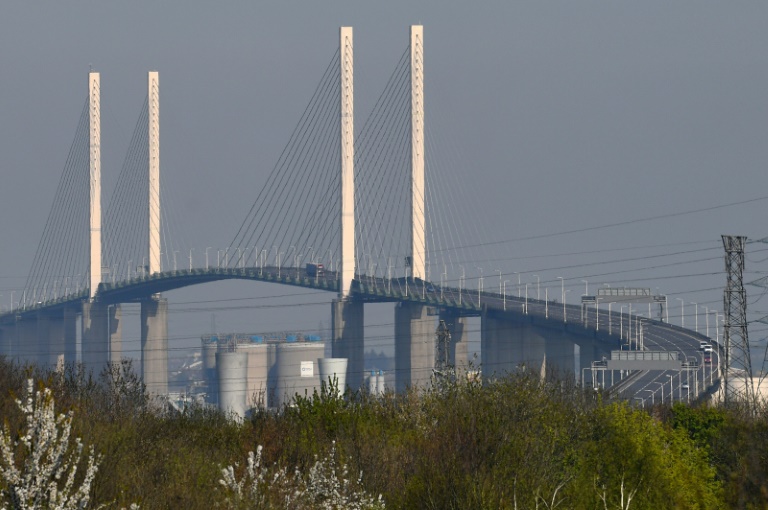
Two UK climate protesters scaled a major road bridge over the River Thames on Monday causing huge traffic delays, days after activists threw tomato soup over Vincent van Gogh’s “Sunflowers” masterpiece.

The Just Stop Oil protesters climbed more than 80 metres (260 feet) up one of the towers of the Queen Elizabeth II Bridge, which is used by an estimated 160,000 vehicles a day and links up to one of Europe’s busiest motorways.

One activist said he was protesting because government policies were accelerating the climate emergency.

The closure caused major delays for motorists for whom the bridge, known as the Dartford Crossing, is the only way to cross the Thames to the east of London.

“Two people climbed up onto high cables early this morning,” Essex Police said on Twitter.

“The QEII bridge is closed to allow us to resolve the situation as safely as possible.” 

One of the protesters, Morgan Trowland, posted on Twitter a clip of himself at the top of the bridge.

“I’m willing to do this ‘cos I’m not willing to sit back and see everything burn,” he wrote.

The 39-year-old, who said he was a bridge design engineer, said he felt compelled to take action because of government policies.

“Our government has enacted suicidal laws to accelerate oil production — killing human life and destroying our environment,” he said.

“I can’t challenge this madness in my desk job, designing bridges, so I’m taking direct action, occupying the QE2 bridge until the government stops all new oil.”

Another protester, identified as Marcus, a 33-year-old teacher, added: “Only direct action will now help to reach the social tipping point we so urgently need.”

Police said the bridge, which is used for southbound traffic, was closed before dawn. Traffic was diverted through a tunnel under the river, which is normally only used for northbound traffic.

“This incident may take some time to resolve due to the complexities of safely getting people down from height,” an Essex police spokesman added.

The bridge, 30 kilometres (18 miles) east of central London, connects directly at both ends with the M25 London Orbital route.

On Saturday, two protesters appeared in court a day after throwing tomato soup over the van Gogh painting at London’s National Gallery.

The painting itself was protected by a screen but damage was caused to the frame, according to the gallery in Trafalgar Square.

Also on Saturday, nearly 30 demonstrators from the group glued themselves to the tarmac when they blocked a major road in east London.

UK Home Secretary Suella Braverman has threatened a police clampdown on “direct-action” protests, including by Just Stop Oil.

Just Stop Oil says climate change poses an existential crisis for humanity and its direct tactics are justified.
China delays release of economic data during key political meeting

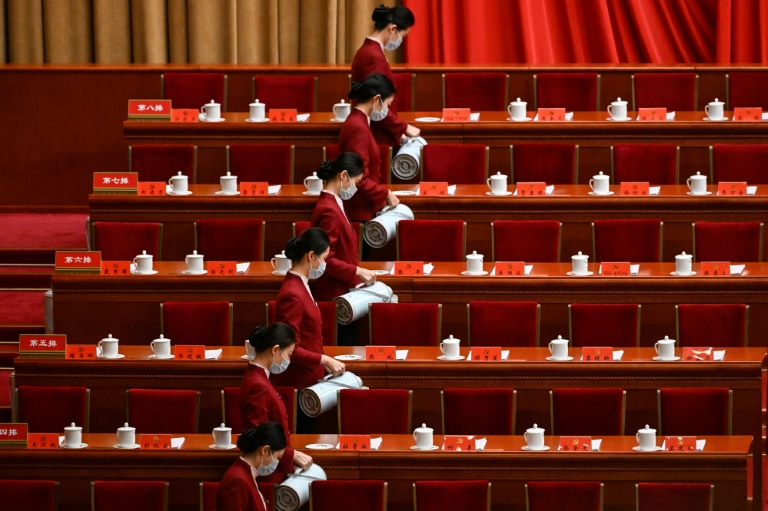
China said Monday it will delay the release of economic growth figures, as the country’s leadership gathers for a major meeting set to hand President Xi Jinping a historic third term in office.

The announcement comes a day before analysts had expected Beijing to publish some of its weakest quarterly growth figures since 2020 with the economy hobbled by Covid-19 restrictions and a real estate crisis.

The National Bureau of Statistics (NBS) said the release of growth figures for the third quarter along with a host of other economic data would be “postponed”, without specifying a reason or giving a new timeline.

The delay comes as officials from China’s ruling Communist Party meet in Beijing for their 20th Congress, which is set to rubber stamp Xi’s bid to rule for another term.

Zhao Chenxin, senior official at the National Development and Reform Commission, told reporters on Monday that “the economy rebounded significantly in the third quarter”.

“From a global perspective, China’s economic performance is still outstanding,” he said.

But many analysts expect the world’s second-largest economy to struggle to reach its growth target this year of around 5.5 percent, with the International Monetary Fund lowering its forecast for GDP expansion to 3.2 percent.

A panel of experts polled by AFP last week predicted an average of three percent growth in 2022 — a long way off the 8.1 percent seen last year.

That would be China’s weakest growth rate in four decades, excluding 2020 when the global economy was hammered by the emergence of the coronavirus.

The NBS said it would also postpone the release of monthly data on indicators including real estate and retail sales.

Last week customs authorities delayed the release of September trade figures without providing an explanation.

– China ‘in a bind’ –

Nick Marro, lead for global trade at the Economist Intelligence Unit, told AFP that signs point to “a really ugly Q3 data print, at a time when the party is focused on highlighting its policy achievements, while minimising any missteps”.

Alicia Garcia Herrero, chief economist at Natixis, said “nothing, not even GDP data release, can disturb the coronation of Xi Jinping”.

The delay “puts China in a bind”, Marro added.

“If it comes out with a rosier-than-expected data print, the national statistics bureau will inevitably face questions around data veracity,” he said.

China’s economy has been hit hard by the government’s strict zero-Covid policy.

The country is the last of the world’s major economies to continue to follow the strategy, which imposes tight travel restrictions, mass PCR testing and obligatory quarantines.

It also involves sudden and strict lockdowns — including of businesses and factories — that have disrupted production and weighed heavily on household consumption.

China is also battling an unprecedented crisis in its real estate sector — historically a major driver of growth that accounts for more than a quarter of GDP when combined with construction.

Following years of explosive growth fuelled by easy access to loans, Beijing launched a crackdown on excessive debt in 2020.

Property sales are now falling across the country, leaving many developers struggling and some owners refusing to pay their mortgages for unfinished homes.

China delays release of economic data during key political meeting

China said Monday it will delay the release of economic growth figures, as the country’s leadership gathers for a major meeting set to hand President Xi Jinping a historic third term in office.

The announcement comes a day before analysts had expected Beijing to publish some of its weakest quarterly growth figures since 2020 with the economy hobbled by Covid-19 restrictions and a real estate crisis.

The National Bureau of Statistics (NBS) said the release of growth figures for the third quarter along with a host of other economic data would be “postponed”, without specifying a reason or giving a new timeline.

The delay comes as officials from China’s ruling Communist Party meet in Beijing for their 20th Congress, which is set to rubber stamp Xi’s bid to rule for another term.

Zhao Chenxin, senior official at the National Development and Reform Commission, told reporters on Monday that “the economy rebounded significantly in the third quarter”.

“From a global perspective, China’s economic performance is still outstanding,” he said.

But many analysts expect the world’s second-largest economy to struggle to reach its growth target this year of around 5.5 percent, with the International Monetary Fund lowering its forecast for GDP expansion to 3.2 percent.

A panel of experts polled by AFP last week predicted an average of three percent growth in 2022 — a long way off the 8.1 percent seen last year.

That would be China’s weakest growth rate in four decades, excluding 2020 when the global economy was hammered by the emergence of the coronavirus.

The NBS said it would also postpone the release of monthly data on indicators including real estate and retail sales.

Last week customs authorities delayed the release of September trade figures without providing an explanation.

– China ‘in a bind’ –

Nick Marro, lead for global trade at the Economist Intelligence Unit, told AFP that signs point to “a really ugly Q3 data print, at a time when the party is focused on highlighting its policy achievements, while minimising any missteps”.

Alicia Garcia Herrero, chief economist at Natixis, said “nothing, not even GDP data release, can disturb the coronation of Xi Jinping”.

The delay “puts China in a bind”, Marro added.

“If it comes out with a rosier-than-expected data print, the national statistics bureau will inevitably face questions around data veracity,” he said.

China’s economy has been hit hard by the government’s strict zero-Covid policy.

The country is the last of the world’s major economies to continue to follow the strategy, which imposes tight travel restrictions, mass PCR testing and obligatory quarantines.

It also involves sudden and strict lockdowns — including of businesses and factories — that have disrupted production and weighed heavily on household consumption.

China is also battling an unprecedented crisis in its real estate sector — historically a major driver of growth that accounts for more than a quarter of GDP when combined with construction.

Following years of explosive growth fuelled by easy access to loans, Beijing launched a crackdown on excessive debt in 2020.

Property sales are now falling across the country, leaving many developers struggling and some owners refusing to pay their mortgages for unfinished homes.

Britain fast-tracks fiscal plans as Truss hangs by thread

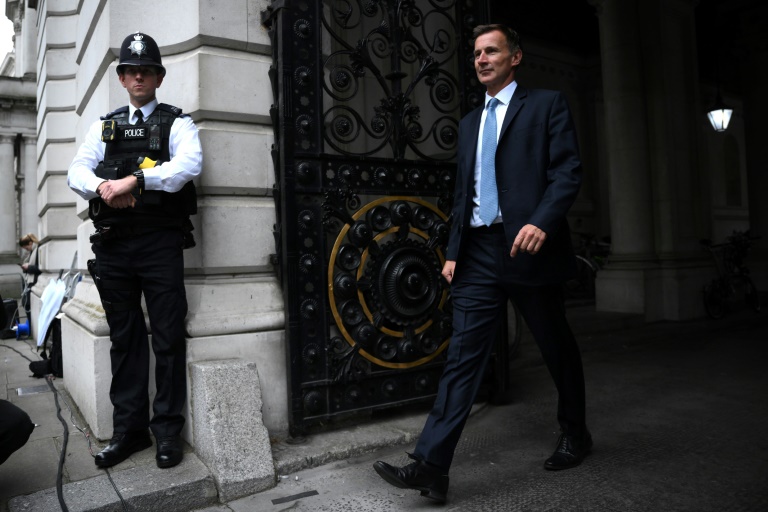
Britain’s new finance chief Jeremy Hunt will Monday bring forward fiscal measures to further calm markets turmoil, in another government U-turn that appears to have left Liz Truss’s position as prime minister hanging by a thread.

Chancellor of the Exchequer Hunt, parachuted into the job on Friday to replace sacked Kwasi Kwarteng, will at 1000 GMT trail measures from a fiscal plan due October 31.

Hunt, who is Britain’s fourth finance minister in as many months, will also address lawmakers over his plans at 1430 GMT.

The news sent the British pound surging more than one percent against the dollar, while bond yields fell sharply on investor relief.

Truss fired her close friend Kwarteng on Friday after their recent tax-slashing budget sparked markets chaos, fuelling intense speculation over her political future one month after taking office.

Hunt’s announcement “will support fiscal sustainability”, the Treasury said in a statement, after last month’s notorious budget had sent bond yields spiking and the pound collapsing to a record dollar low on fears of rocketing debt.

“This follows… further conversations between the prime minister and the chancellor over the weekend, to ensure sustainable public finances underpin economic growth,” the Treasury added.

– ‘Too far, too fast’ –

Tax reductions were the centrepiece of the ill-starred budget, but they were financed via huge borrowing.

Truss has already staged two humiliating budget U-turns, scrapping tax cuts for the richest earners and on company profits.

Following his shock appointment, Hunt hit the ground running Saturday with a warning of tax hikes as he dramatically reversed course on right-wing Truss’ radical programme of economic reform.

The mini budget on September 23 went “too far, too fast”, he declared over the weekend.

And Hunt warned he was “not taking anything off the table” amid speculation of painful spending cutbacks on critical areas like defence, hospitals and schools.

Hunt met with the governor of the Bank of England and the head of the Debt Management Office to discuss his plans late on Sunday.

In the wake of turmoil, the BoE was forced to launch an emergency bond-buying policy but this ended on Friday.

The furore over the budget, which also contained a costly freeze on domestic energy prices to ease Britain’s cost of living crisis, has reportedly sparked a plot to oust the prime minister.

British media reported that senior Conservative members of parliament were plotting to unseat Truss, aghast at the party’s collapse in opinion polls since she replaced Boris Johnson on September 6.

Party grandee and former leader William Hague said Truss’ premiership was “hanging by a thread” after Kwarteng was unceremoniously fired.

– Another U-turn –

Monday’s news sent the UK’s 30-year bond yield sliding to 4.46 percent.

“The bringing forward of the fiscal statement is in itself another U-turn, given that the government had been sticking to the Halloween date for its release, even on Friday,” noted Hargreaves Lansdown analyst Susannah Streeter.

“But worries that the bond markets in particular will take fright again has prompted fresh urgency for damage limitation so a roll-back of planned tax cuts is now expected.”

China delays release of economic data during key political meeting

China  said Monday it will delay the release of economic growth figures, as the country’s leadership gathers for a meeting set to hand President Xi Jinping a historic third term in office.

The announcement comes a day before China had been expected by analysts to announce some of its weakest quarterly growth figures since 2020, as the economy is hobbled by Covid-19 restrictions and a real estate crisis.

Beijing’s National Bureau of Statistics (NBS) announced that the release of growth figures for the third quarter along with a host of other economic data would be “postponed”, without specifying a reason for the delay or giving a new timeline.

The postponement comes as officials from China’s ruling Communist Party gather in Beijing for their 20th Congress, which is set to rubber stamp Xi’s bid to rule for another term.

Zhao Chenxin, senior official at the National Development and Reform Commission, told reporters on Monday morning that “the economy rebounded significantly in the third quarter.”

“From a global perspective, China’s economic performance is still outstanding,” he said.

But many analysts had expected the world’s second-largest economy to struggle to reach its growth target this year of around 5.5 percent, with the International Monetary Fund lowering its GDP growth forecast to 3.2 percent for 2022.

A panel of experts polled by AFP last week predicted average growth of three percent in 2022 — a long way off the 8.1 percent seen in 2021.

That would have marked China’s weakest growth rate in four decades, excluding 2020 when the global economy was hammered by the emergence of the coronavirus.

Separately, customs authorities delayed the release of September’s trade figures last week, without providing an explanation, while the NBS said on Monday it would also postpone the release of monthly data on indicators including real estate and retail sales.

– Covid impact –

China’s economy has been hit particularly hard by the government’s strict zero-Covid policy.

The country is the last of the world’s major economies to continue to follow the strategy, which imposes tight travel restrictions, mass PCR testing and obligatory quarantines.

It also involves sudden and strict lockdowns — including of businesses and factories — that have disrupted production and weighed heavily on household consumption.

China is also battling an unprecedented crisis in its real estate sector — historically a driver of growth in the economy and representative of more than a quarter of the country’s GDP when combined with construction.

Following years of explosive growth fuelled by easy access to loans, Beijing launched a crackdown on excessive debt in 2020.

Property sales are now falling across the country, leaving many developers struggling and some owners refusing to pay their mortgages for unfinished homes.

China delays release of economic data during key political meeting

China  said Monday it will delay the release of economic growth figures, as the country’s leadership gathers for a meeting set to hand President Xi Jinping a historic third term in office.

The announcement comes a day before China had been expected by analysts to announce some of its weakest quarterly growth figures since 2020, as the economy is hobbled by Covid-19 restrictions and a real estate crisis.

Beijing’s National Bureau of Statistics (NBS) announced that the release of growth figures for the third quarter along with a host of other economic data would be “postponed”, without specifying a reason for the delay or giving a new timeline.

The postponement comes as officials from China’s ruling Communist Party gather in Beijing for their 20th Congress, which is set to rubber stamp Xi’s bid to rule for another term.

Zhao Chenxin, senior official at the National Development and Reform Commission, told reporters on Monday morning that “the economy rebounded significantly in the third quarter.”

“From a global perspective, China’s economic performance is still outstanding,” he said.

But many analysts had expected the world’s second-largest economy to struggle to reach its growth target this year of around 5.5 percent, with the International Monetary Fund lowering its GDP growth forecast to 3.2 percent for 2022.

A panel of experts polled by AFP last week predicted average growth of three percent in 2022 — a long way off the 8.1 percent seen in 2021.

That would have marked China’s weakest growth rate in four decades, excluding 2020 when the global economy was hammered by the emergence of the coronavirus.

Separately, customs authorities delayed the release of September’s trade figures last week, without providing an explanation, while the NBS said on Monday it would also postpone the release of monthly data on indicators including real estate and retail sales.

– Covid impact –

China’s economy has been hit particularly hard by the government’s strict zero-Covid policy.

The country is the last of the world’s major economies to continue to follow the strategy, which imposes tight travel restrictions, mass PCR testing and obligatory quarantines.

It also involves sudden and strict lockdowns — including of businesses and factories — that have disrupted production and weighed heavily on household consumption.

China is also battling an unprecedented crisis in its real estate sector — historically a driver of growth in the economy and representative of more than a quarter of the country’s GDP when combined with construction.

Following years of explosive growth fuelled by easy access to loans, Beijing launched a crackdown on excessive debt in 2020.

Property sales are now falling across the country, leaving many developers struggling and some owners refusing to pay their mortgages for unfinished homes.

France braces for nationwide strike amid fuel shortage tensions

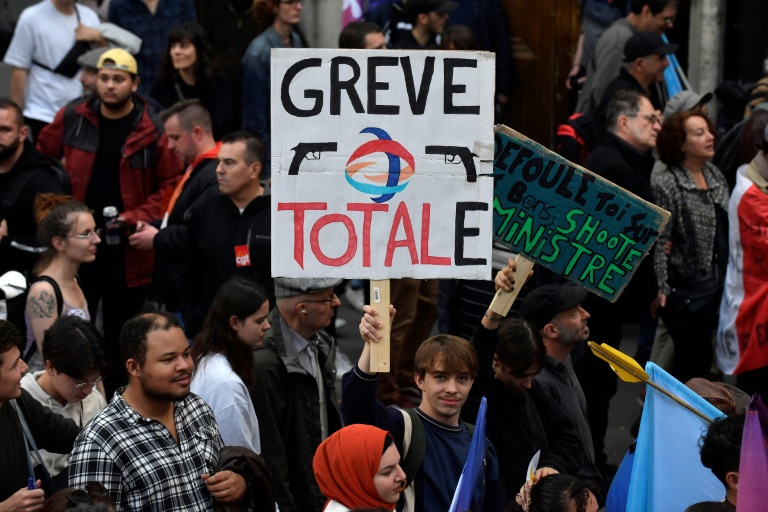
France on Monday braced for nationwide transport strike actions as the government and unions remained in deadlock over stoppages at oil depots that have sparked fuel shortages.

Leading unions have called for strikes Tuesday in their biggest challenge yet to President Emmanuel Macron since he won a new presidential term in May.

It will come after workers at several refineries and depots operated by energy giant TotalEnergies voted to extend their strike action, defying the government which has begun to force staff back on the job.

Motorists scrambled to fill tanks as the fuel strike, which has lasted for nearly three weeks, crippled supplies at just over 30 percent of France’s service stations.

The government, increasingly impatient with striking workers, said it was forcing key staff back to work.

“The time for negotiation is over,” Finance Minister Bruno Le Maire told the BFMTV broadcaster Monday. 

The government said it would begin to requisition workers at the Feyzin depot in southeastern France from 2.00 pm (1200 GMT) on Monday, having already employed the same strategy at the Mardyck depot in the north of the country.

Fuel workers voted to continue stoppages at several refineries run by TotalEnergies, the coordinator for the hard-left CGT union Eric Sellini said, rejecting a pay package agreed between the group’s management and mainstream unions.

Three out of seven of the country’s oil refineries and five major fuel depots (out of around 200) are affected, the government said.

Strike action at Esso-ExxonMobil ended at the end of last week at the company’s two French refineries, after a pay deal between management and moderate unions which represent a majority of workers.

A return to normal supply conditions at petrol stations will take at least two weeks after strikes end, the government has warned.

– ‘Severe disruptions’ –

Unions in other industries and the public sector have also announced action to protest against the twin impact of soaring energy prices and overall inflation on the cost of living.

Leftist unions CGT and FO have called for a nationwide strike Tuesday for higher salaries, and against government requisitions of oil installations, threatening to cripple public transport in particular.

Rail operator SNCF will see “severe disruptions” with half of train services cancelled, Transport Minister Clement Beaune said.

Suburban services in the Paris region as well as bus services will also be impacted, operator RATP said, but the inner-Paris metro system should be mostly unaffected.

Beyond transport workers, unions hope to bring out staff in sectors such as the food industry and healthcare, CGT boss Philippe Martinez told France Inter radio.

Their action will kick off what is likely to be a tense autumn and winter as Macron also seeks to implement his flagship domestic policy of raising the French retirement age.

But the economic squeeze partly caused by Russia’s invasion of Ukraine, along with the failure of Macron’s party to secure an overall majority in June legislative polls, only adds to the magnitude of the task.

On Sunday tens of thousands of protesters marched in Paris to express their frustration at the rising cost of living.

The demonstration was called by the left-wing political opposition and led by the head of the France Unbowed (LFI) party, Jean-Luc Melenchon.

Security forces fired teargas and launched baton charges after they were pelted with objects, while on the fringes of the march, masked men dressed in black ransacked a bank.

Some protesters wore yellow fluorescent vests, the symbol of the often violent anti-government protests in 2018 that shook the pro-business government of Macron.

“We’re going to have a week the likes of which we don’t see very often,” Melenchon told the crowd.

Organisers claimed 140,000 people attended Sunday’s march, but police said there were 30,000.

burs-jh/sjw/rox

Hungry elephants, Cameroon farmers struggle to coexist

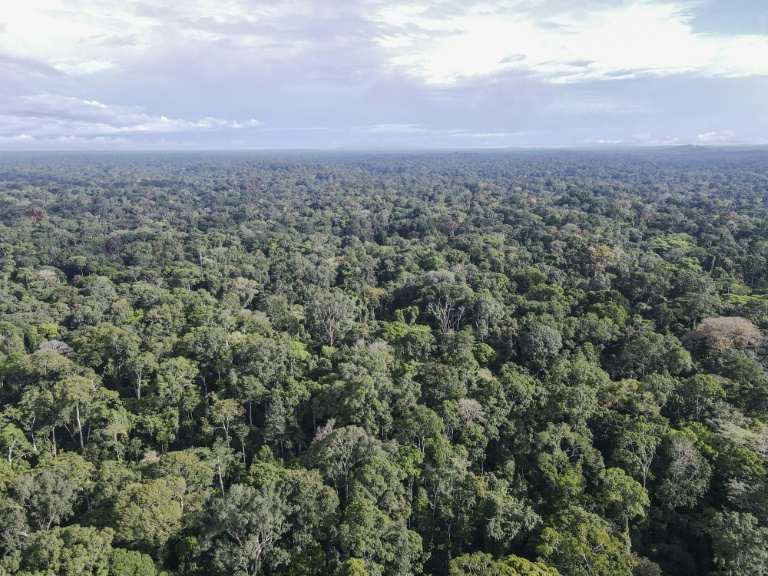
Banana growers on the edge of a giant national park on Cameroon’s Atlantic coast say they can take no more crop destruction from hungry elephants as the conflict between man and animal escalates.

Near the southern border with Equatorial Guinea, eight villages have registered complaints with the Campo Ma’an national park, a vast area of virgin forest from where the animals emerge.

An estimated 500 gorillas and more than 200 elephants — both endangered species — roam the reserve’s 264,000 hectares (652,000 acres).

A week after elephants flattened his banana plantation close by the park, Simplice Yomen, 47, is struggling to cope.

“We are at the end of our tether,” he sighs.

The elephants eat the new growth inside the banana tree trunks after splitting them open.

Manioc, maize, sweet potato and peanuts are also favourite snacks, says park administrator Michel Nko’o.

In Cameroon, co-existence between humans and animals on the edge of dense forests is proving increasingly challenging. 

Most of the crop destruction is recorded near protected wildlife reserves.

For Nko’o, the elephant raids have become noticeably more frequent since agro-industrialists began setting up by the park.

More 2,000 hectares of forest has been chopped down to grow palm oil trees for Cameroun Vert, an industrial plantation project for which the government first approved a clearing of 60,000 hectares before reducing it to 39,000 hectares after protests.

“The elephants who lived here no longer have any place to go and end up in people’s fields,” regrets park conservationist Charles Memvi.

– ‘Discouraging’ –

Affected villages near the town of Campo have seen “three to four hectares of plantations destroyed, which is a major financial loss for the local people”, says Nko’o.

Elephants are blamed for 80-90 percent of the attacks. 

The rest is accounted for by gorillas, chimpanzees, hedgehogs, pangolins and porcupines.

Nearly all these species are endangered due to habitat loss and/or poaching.

Daniel Mengata’s two hectares of banana trees were “devastated” in 2020.

“The animals really are discouraging us,” the 37-year-old admitted.

“I started crying after seeing the damage because in one night a year’s work was wiped out. That really hurts.” 

“I can no longer feed my family,” adds Emini Ngono, 57. Hungry elephants have ruined her smallholding, which once produced gourds, manioc and potato.

Ngono says she could make more than 1,000 euros ($970) from selling seeds for gourds, a traditional stable food across the region.


– Reconciliation –

Not far off, logs of wood extracted from the forest are piling up.

The high-pitched noise from a saw masks the birdsong as a group of trackers set off looking for rare gorillas.

The World Wide Fund for Nature (WWF) launched a “primate habituation” project a decade ago focused on gorillas in a bid to develop ecotourism in the area.

Part of the income was to go to local communities to encourage them to help protect the animals and reduce the conflict with humans.

Chimene Mando’o is out tracking primates.

“There! That’s Akiba”, the 25-year-old cries after the gorilla calls out.

Shortly after, Akiba — meaning “thank you” in the local Mvae language — briefly appears at the foot of a tree just a dozen metres (yards) away, before scampering off into the jungle.

“We have to find a way to generate some development … in such a way that everyone benefits from this natural resource,” explains WWF biodiversity economist Yann Laurans.

The ministry for forests and wildlife says Cameroon has no legal framework to compensate people after attacks by animals from national parks.

The WWF is testing and studying an insurance system to cover people who lose their livelihoods to animal attacks.

Smallholder Simplice Yomen is hoping for a more secure future after setting up beehives to dissuade elephants from encroaching on his plantation.

Others are trying lemon trees and other spiky bushes to keep the elephants out.

Hungry elephants, Cameroon farmers struggle to coexist

Banana growers on the edge of a giant national park on Cameroon’s Atlantic coast say they can take no more crop destruction from hungry elephants as the conflict between man and animal escalates.

Near the southern border with Equatorial Guinea, eight villages have registered complaints with the Campo Ma’an national park, a vast area of virgin forest from where the animals emerge.

An estimated 500 gorillas and more than 200 elephants — both endangered species — roam the reserve’s 264,000 hectares (652,000 acres).

A week after elephants flattened his banana plantation close by the park, Simplice Yomen, 47, is struggling to cope.

“We are at the end of our tether,” he sighs.

The elephants eat the new growth inside the banana tree trunks after splitting them open.

Manioc, maize, sweet potato and peanuts are also favourite snacks, says park administrator Michel Nko’o.

In Cameroon, co-existence between humans and animals on the edge of dense forests is proving increasingly challenging. 

Most of the crop destruction is recorded near protected wildlife reserves.

For Nko’o, the elephant raids have become noticeably more frequent since agro-industrialists began setting up by the park.

More 2,000 hectares of forest has been chopped down to grow palm oil trees for Cameroun Vert, an industrial plantation project for which the government first approved a clearing of 60,000 hectares before reducing it to 39,000 hectares after protests.

“The elephants who lived here no longer have any place to go and end up in people’s fields,” regrets park conservationist Charles Memvi.

– ‘Discouraging’ –

Affected villages near the town of Campo have seen “three to four hectares of plantations destroyed, which is a major financial loss for the local people”, says Nko’o.

Elephants are blamed for 80-90 percent of the attacks. 

The rest is accounted for by gorillas, chimpanzees, hedgehogs, pangolins and porcupines.

Nearly all these species are endangered due to habitat loss and/or poaching.

Daniel Mengata’s two hectares of banana trees were “devastated” in 2020.

“The animals really are discouraging us,” the 37-year-old admitted.

“I started crying after seeing the damage because in one night a year’s work was wiped out. That really hurts.” 

“I can no longer feed my family,” adds Emini Ngono, 57. Hungry elephants have ruined her smallholding, which once produced gourds, manioc and potato.

Ngono says she could make more than 1,000 euros ($970) from selling seeds for gourds, a traditional stable food across the region.


– Reconciliation –

Not far off, logs of wood extracted from the forest are piling up.

The high-pitched noise from a saw masks the birdsong as a group of trackers set off looking for rare gorillas.

The World Wide Fund for Nature (WWF) launched a “primate habituation” project a decade ago focused on gorillas in a bid to develop ecotourism in the area.

Part of the income was to go to local communities to encourage them to help protect the animals and reduce the conflict with humans.

Chimene Mando’o is out tracking primates.

“There! That’s Akiba”, the 25-year-old cries after the gorilla calls out.

Shortly after, Akiba — meaning “thank you” in the local Mvae language — briefly appears at the foot of a tree just a dozen metres (yards) away, before scampering off into the jungle.

“We have to find a way to generate some development … in such a way that everyone benefits from this natural resource,” explains WWF biodiversity economist Yann Laurans.

The ministry for forests and wildlife says Cameroon has no legal framework to compensate people after attacks by animals from national parks.

The WWF is testing and studying an insurance system to cover people who lose their livelihoods to animal attacks.

Smallholder Simplice Yomen is hoping for a more secure future after setting up beehives to dissuade elephants from encroaching on his plantation.

Others are trying lemon trees and other spiky bushes to keep the elephants out.

Saudi defends oil policy in face of US charges

Saudi Arabia has rejected US accusations of aligning itself with Russia amid the Ukraine war by making oil production cuts to drive up crude prices, insisting it was purely a business decision.

“We are astonished by the accusations that the kingdom is standing with Russia in its war with Ukraine,” the Saudi defence minister, Prince Khaled bin Salman, tweeted late Sunday.

The Saudi-led OPEC+ cartel — which includes Russia — has angered Washington by deciding to cut production by two million barrels per day from November, adding further pressure on soaring crude prices.

“It is telling that these false accusations did not come from the Ukrainian government,” Prince Khaled wrote. “Although the OPEC+ decision, which was taken unanimously, was due to purely economic reasons, some accused the kingdom of standing with Russia.

“Iran is also a member of OPEC, does this mean that the kingdom is standing with Iran as well?” he asked, referring to Saudi Arabia’s regional rival.

In a speech broadcast on Sunday night, Saudi King Salman bin Abdulaziz Al Saud insisted his country was “working hard, within its energy strategy, to support the stability and balance of global oil markets”.

The United Arab Emirates and Bahrain, which like Saudi Arabia are US allies as well as OPEC partners, also defended the cartel’s decision as a “technical” move.

White House spokesman John Kirby said last week that Riyadh knew the cut “would increase Russian revenues and blunt the effectiveness of sanctions” on Moscow.

The United States has vowed to re-evaluate ties with the oil-rich kingdom since the cut, which was seen as a diplomatic slap in the face for President Joe Biden by hiking prices on US consumers weeks before congressional elections.

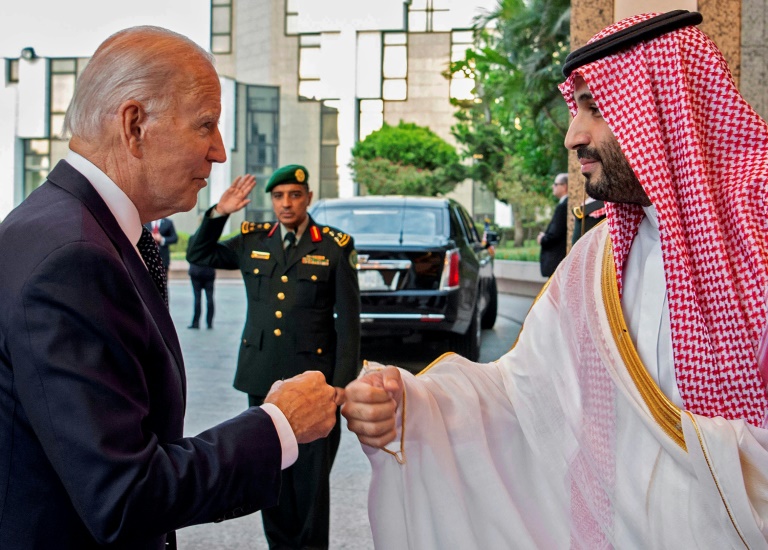
Despite vowing to make the kingdom an international “pariah” following the October 2018 murder of journalist Jamal Khashoggi, Biden travelled to Saudi Arabia in July and met with Crown Prince Mohammed bin Salman — with the two greeting each other with a high-profile fist bump.

But with relations now strained, US National Security Advisor Jake Sullivan said Sunday that Biden has “no plans” to meet with Prince Mohammed at an upcoming G20 summit in Indonesia.

Close Bitnami banner
Bitnami