AFP

Mexico: the promised land for migrants… from the US

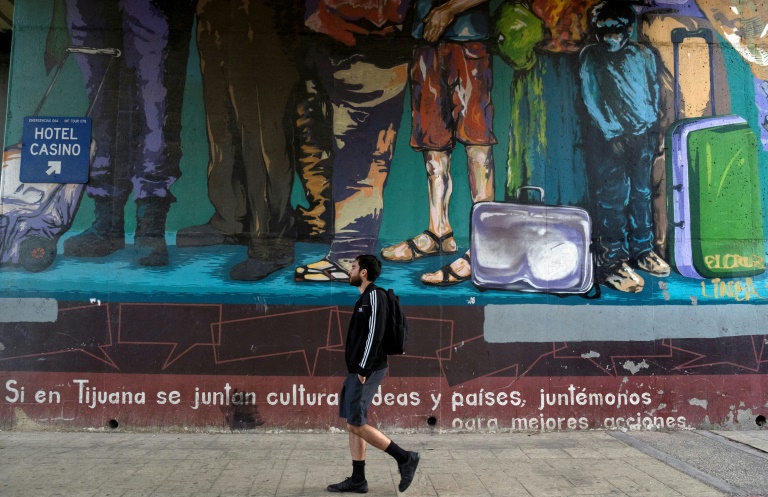
While many migrants risk their lives chasing the American dream, Gabriel Zarate fled the rising cost of living in California and moved to the Mexican border city of Tijuana.

The 38-year-old Chilean American now crosses over to work in San Diego as an English teacher during the day and returns home in the evening to Mexico.

“One of the biggest reasons is the cost of living in Tijuana. It’s significantly cheaper than in California,” Zarate said.

Also, he added: “I love Mexican people and food.”

His neighbor and fellow English teacher Mike Rachfal also made the move from San Diego, where he used to pay $1,275 a month to rent a studio.

“Here it’s about half that,” the 36-year-old said.

The cheaper rents can be a sensitive subject in Mexico, where wages are much lower than in the United States and people are also facing increasing living costs.

Tijuana is one of the cities with the fastest-rising real estate prices in Mexico —  up 10.7 percent in the first quarter of 2022 from a year earlier, according to the state-owned Federal Mortgage Society.

The average price of properties bought by US citizens is around $270,000 — “three times lower than what the same property would cost in the United States,” said Ruth Sastre, president of the local realtors association.

– Construction boom –

In Tijuana, a bustling city with a reputation for gang violence, new apartment buildings are springing up with “For Sale” signs in English and prices in dollars.

With more than 1,000 murders in the city already this year, security is an important consideration, but Zarate said that “in general I feel fine in Tijuana, especially downtown or around the border.”

“It’s like any big city. There will always be places rougher or more complicated than others,” he added. 

It is a similar story just south of Tijuana in Rosarito on the Pacific coast.

Following a real estate boom that began a decade ago, up to around 12,000 people from the United States now live in the resort city, said Jesus Rincon Vargas, president of the local construction industry association.

In total around 1.6 million US citizens are estimated to live in Mexico, according to their country’s embassy, which does not keep official records.

They can stay for up to six months with a tourist visa, or apply for residency.

– ‘Friendly culture’ –

Along with the lifestyle and cost of living, the relatively relaxed immigration rules are part of the appeal for remote workers flocking to Mexico, notably the capital.

Brian McDonald, a 34-year-old software developer from the US state of Oklahoma, has spent more than a year in the Latin American country, lured by its budding technology scene.

“Mexico City seems like it’s kind of a gateway for expanding companies and I like working with start-ups,” he said.

“It’s a very friendly culture,” McDonald added.

Office-sharing company WeWork has seen a “significant influx of digital nomads” in districts of Mexico City popular with foreigners, said spokeswoman Cristina Sancen.

“Mexico City has an incomparable climate. For foreigners, it’s definitely a cheaper city. It’s also a cosmopolitan and highly developed city with start-ups and corporations,” she added.

Some foreigners working for US firms are also choosing to base themselves south of the border.

Kirsty Hall, 23, from Scotland, picked Mexico City as a remote working location while helping to set up a San Francisco-based tech start-up.

“I can walk everywhere here. I can cycle. Today I roller-skated to work. Public transport is awesome and it’s very cheap. People are very welcoming too,” Hall said.

The influx of foreigners has divided opinion among residents of the capital, some of whom see the city’s popularity as one of the reasons behind gentrification and rising rents.

“I heard there’s some prejudice towards digital nomads within Mexico City but I haven’t experienced it personally,” said Blazej Mosinski, 23, from Poland, who is doing a San Francisco internship remotely “purely for financial reasons.”

Other challenges of working remotely in Mexico include slower internet speeds than in US technology hubs and safety concerns.

“I was robbed by the police two weeks ago, just walking home,” McDonald said.

But “the rest — the good food, the cost of living — offsets all of those things,” he added.

In conservative Florida, LGBT community fights to make its voice heard

A Beyonce hit thumped in the background as Pride parade participants marched on Saturday through the streets of Orlando, transforming the Florida city into a rainbow island in a US state more and more associated with the conservative politics of its governor.

Behind their beaming smiles and vibrant outfits, the state’s LGBT community is having a tough year.

“We’re definitely headed back in time,” said Donna Marie, a 55-year-old nurse in a rainbow hat.

“And if this continues, the next thing is going to be gay marriage,” she added, referring to the fear of a potential political threat to same-sex unions.

In March, Florida’s Republican Governor Ron DeSantis, one of the most prominent conservative politicians in the United States, signed a law prohibiting the discussion of sexual orientation or gender identity in elementary school classrooms.

The controversial bill — dubbed the “Don’t Say Gay” law by its detractors — was a major topic of discussion at the Pride parade, with signs encouraging participants to not only “say gay,” but also to “shout gay” and “yell gay” too.

For 22-year-old Brianna Johnson, the political environment made her appearance at Pride all the more meaningful, because, she said, “We still show who we are, and nobody can stop us from that.”

Johnson, a manager with Disney, said she has known she was a lesbian since But her religious family has been a long-time obstacle on the path to embrace her true identity.

Stopping young people from expressing themselves, as Florida’s law could, is “very harmful and hurtful,” according to Johnson.

“It hurts my heart,” she said.

– Pulse –

Not far from a stand selling signs exclaiming “I love my gay son,” 61-year-old Morgan Manry shares his own concerns.

The non-profit worker recalls how the 2016 massacre at Pulse, in which 49 people were killed in a shooting at the gay nightclub in Orlando, “brought together the city” and helped the LGBT community become more accepted around town.

Now, the current political climate is “dismantling a social understanding that took years to develop,” Manry said.

Transgender student Jason Humphrey says he is facing the indirect consequences the “Don’t Say Gay” law.

Even though the new rule is directed at younger students, 19-year-old Humphrey says his own teachers are also now reluctant to discuss his gender identity or name change.

“They were worried about getting in any trouble,” he told AFP, calling the situation “horrible.”

“We’re citizens of Florida too, come on. It’s not appropriate,” he said of the law, carrying a large python around his arm — and hurrying to clarify that the animal does not bite. 

– ‘Get out and vote’ –

Coming just weeks before decisive midterm elections, the Pride parade cannot help but take on a political tone.

Local Democratic candidates work campaign stands along the route, and US Senate candidate Val Demings marches right in the middle of the procession, rainbow flag in hand.

The campaigning helps to both differentiate candidates from DeSantis and use the social issue to motivate Democratic voters to show up to the polls.

For some Pride attendants, such as Aubrey Robinson, the strategy seems to be working. Next to a button reading “respect all pronouns,” the 43-year-old is wearing another one in support of a Democratic candidate, who, “I’ll be honest with you, I don’t know anything about him,” she said.

But campaigners told Robinson the candidate is opposed to the governor’s policies.

“Anybody that is against DeSantis and getting in there and that is for the community, I’m for,” she said.

“I think that it’s very important to get out and vote. More so than ever now.”

Phillies oust Braves, Astros sweep Seattle in MLB playoffs

Jeremy Pena’s solo home run in the 18th inning on Saturday lifted the Houston Astros over Seattle for a Major League Baseball playoff sweep, while Philadelphia ousted defending champion Atlanta.

Pena’s blast after the most scoreless innings in MLB playoff history gave the Astros a 1-0 victory over the Mariners and a 3-0 sweep of their best-of-five American League division series matchup.

Houston reached the best-of-seven AL Championship Series for a sixth consecutive year and will face either the Cleveland Guardians or New York Yankees.

Cleveland rookie Oscar Gonzalez hit a two-out, two-strike single with the bases loaded in the ninth inning to drive in two deciding runs in a dramatic 6-5 victory over the visiting Yankees.

“I just wanted to put the ball in play. Thank God I got the results,” the Dominican said through a translator. “Then I was just waiting for the guys to score and celebrate.”

The Guardians swiped a 2-1 series lead with the chance to advance by winning at home on Sunday.

In the National League, Philadelphia defeated Atlanta 8-3 to win their series in four games.

J.T. Realmuto hit an inside-the-park home run while Brandon Marsh smacked a three-run homer and Bryce Harper added a solo homer for the Phillies.

Philadelphia advanced to an NL finals showdown against either the Los Angeles Dodgers or San Diego Padres to decide a World Series berth.

“What an opportunity,” Harper said. 

“You’ve got to beat the champs to be the champs. I get chills, man. We’ve got two more. We’ve got (to win) eight more games.”

The Phillies reached the playoffs for the first time since 2011 and made the NL final for the first time since 2010. They last reached the World Series in 2009 and last won the crown in 2008.

The Braves failed in their bid to become the first MLB repeat champion since the New York Yankees from 1998-2000.

The Dodgers, who won an MLB-best 111 games this season, faced elimination in a later game at San Diego.

At Seattle, relief pitchers were masterful for hours in the first MLB playoff game to go scoreless into the 16th inning. The total of 42 strikeouts in the contest also was an MLB playoff record.

The Astros stranded 13 base runners and the Mariners left 10 on base through 17 scoreless innings.

In the 18th, Pena blasted a 3-ball, 2-strike fastball pitch off Seattle reliever Penn Murfee over the centerfield wall for the only run of the contest.

At Cleveland, the Guardians took a 2-0 lead on a run-scoring single by Josh Naylor in the first and another by Steven Kwan in the second.

Aaron Judge and Oswaldo Cabrera each blasted two-run homers to put New York ahead 4-2. Will Brennan answered with a run-scoring single in the sixth but Harrison Bader’s solo homer in the seventh made it 5-3 Yankees.

Cleveland answered in the ninth on consecutive singles by Myles Straw, Kwan, Amed Rosario and Jose Ramirez to pull the hosts within 5-4 and load the bases, setting the stage for Gonzalez’s heroics.

– Inside-the-park mark –

At Philadelphia, Realmuto became the first catcher to hit an MLB playoff inside-the-park homer and only the 18th player in all to manage the feat. It was the first such homer in the playoffs since 2017.

Marsh gave the Phillies the lead by hitting a three-run homer in the second inning off Braves pitcher Charlie Morton, making his first playoff start since suffering a broken right leg last October.

Morton, who left the game after a batted ball struck his right elbow in the second inning, was replaced by Collin McHugh, who surrendered Realmuto’s inside-the-park homer in the third.

The ball went over Atlanta’s Michael Harris and bounced off the centerfield wall, rolling away from Harris. 

By the time he retrieved the ball and threw it to the infield, Realmuto was racing home in a 15.4-second circuit of the bases to give Philadelphia a 4-1 lead. The Braves never got nearer than two runs again.

New UK finance minister tears up tottering PM's agenda

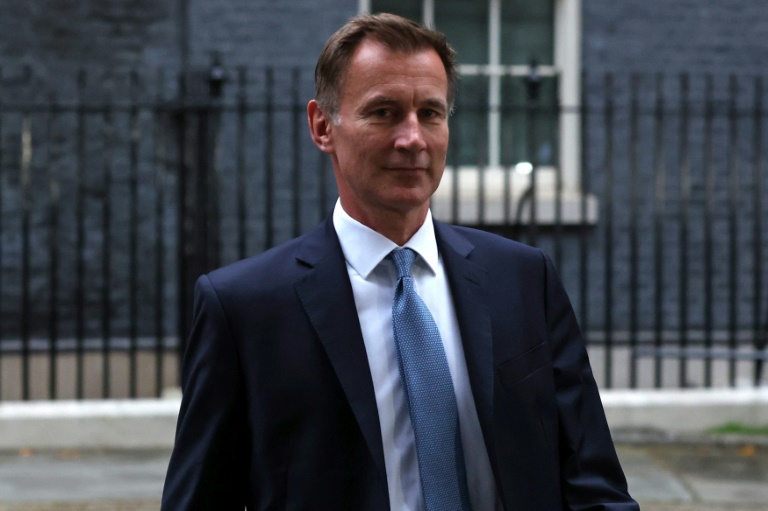
Britain’s new finance minister Jeremy Hunt warned Saturday of looming tax hikes as he dramatically reversed course on right-wing Prime Minister Liz Truss’s radical programme of economic reform.

Senior Conservative members of parliament were reportedly plotting to unseat Truss, possibly within days, aghast at the party’s collapse in opinion polls since she replaced Boris Johnson on September 6.

“Hunt takes full control as plotters circle wounded PM”, The Sunday Times headlined, while The Observer said: “Tories in talks to oust Truss”.

The Times and Telegraph newspapers reported that Hunt was planning to delay a planned cut on the basic rate of income tax, enforcing yet another humiliating climbdown on Truss after she sacked Kwasi Kwarteng as chancellor of the exchequer.

In crisis talks Sunday at the prime minister’s country retreat, Hunt and Truss were set to thrash out a new budget plan that he is due to deliver on October 31, just over a month after Kwarteng’s botched attempt to drive through a slew of unfunded tax cuts.

“There were mistakes,” acknowledged Hunt, whom one ally called the government’s new “chief executive” — with Truss relegated to the role of back-seat chairwoman.

Hunt said Kwarteng and Truss had erred on September 23 in trying to cut taxes for the highest earners, and tried to “fly blind” in presenting their plan without independent forecasts from the Office for Budget Responsibility.

“The prime minister’s recognised that, that’s why I’m here,” Hunt told Sky News.

In one of his first acts on taking office Friday, the new chancellor spoke to Bank of England governor Andrew Bailey, who has had to stage costly interventions to calm febrile bond markets.

Briefing reporters in Washington, Bailey said on Saturday: “I can tell you there is a very clear and immediate meeting of minds on the importance of stability and (fiscal) sustainability.”

US President Joe Biden said Saturday he thought the abandoned tax cut reform was a “mistake”.

“I think that the idea of cutting taxes on the super-wealthy at a time when… I disagreed with the policy, but that’s up to Great Britain to make that judgment, not me,” he said.

Tax cuts were the centrepiece of the ill-starred budget announced by Kwarteng and Truss. 

But they were financed through billions in extra borrowing, causing panic on financial markets at the prospect of higher inflation, which has already left British households in the grip of a cost-of-living crisis.

– ‘Clinging on’ –

“We will have some very difficult decisions ahead,” Hunt said, warning that “all government departments” face spending curbs including welfare, health and defence. 

“And some taxes will not be cut as quickly as people want. Some taxes will go up.”

Soon after Hunt’s upcoming fiscal statement, the Bank of England will hold its next rate-setting meeting on November 3.

In a separate speech Saturday, Bailey warned anew that the central bank would “not hesitate” to raise rates to keep soaring inflation under control, and said a “stronger response” than previously expected may have to come.

Truss dismissed Kwarteng hours after he had rushed home early from international finance meetings in Washington, and she staged another U-turn in acquiescing to a significant rise in profits tax levied on companies.

At a subsequent Downing Street news conference, the prime minister took only four questions, glancing nervously around the room and delivering terse replies before abruptly leaving after just over eight minutes. 

“Robotic, hesitant, tone-deaf, defiant and still utterly convinced of the purity and necessity of her mission, Liz Truss killed off her political career in a matter of minutes,” Times columnist Jenni Russell wrote.

Asked why she herself should not resign, Truss said she was “absolutely determined to see through what I have promised” — but her comments only served to depress the pound and bond markets further.

Former Conservative leader William Hague said Truss’s premiership now “hangs by a thread”, as the Sunday newspapers recounted bitter infighting among party factions.

Up to 100 letters expressing no confidence in Truss have been submitted by Tory MPs, the Sunday Times said, with opponents said to be coalescing around her defeated leadership rival Rishi Sunak and another one-time foe, Penny Mordaunt.

But with the opposition Labour party surging in the polls, Welsh Secretary Robert Buckland warned his restive colleagues against “throwing another prime minister to the wolves”.

Labour leader Keir Starmer accused Truss of “clinging on”, and demanded an early general election.

“The Tories no longer have a mandate from the British people,” he tweeted, after Truss became prime minister through the votes of some 80,000 Conservative members — less than 0.2 percent of the UK electorate.

Biden calls latest January 6 testimony 'devastating'

US President Joe Biden on Saturday said the latest testimony and video evidence presented by lawmakers probing the deadly 2021 attack on the Capitol — including footage of House leaders asking for help — was “devastating.” 

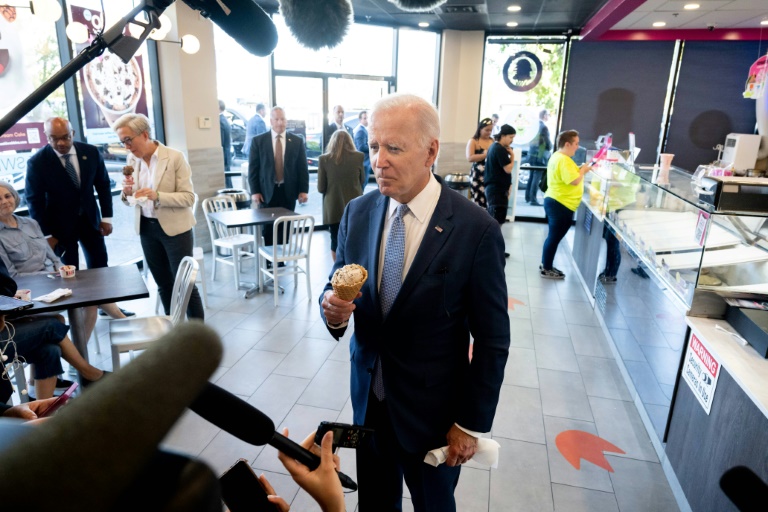
Biden, who was speaking during an impromptu ice cream stop in Oregon, where he was campaigning for Democratic gubernatorial hopeful Tina Kotek, called the case presented by January 6 committee members “fairly overwhelming.”

“I think the testimony and the video are actually devastating. And I’ve been going out of my way not to comment and see what happens. But it’s — I think it’s been devastating,” Biden told reporters. 

“But any more I say about it, you — justified — are going to ask me if I’m trying to influence the attorney general. I’m not. I’ve not spoken with him at all.” 

On Thursday, the House panel into the January 6 riot — comprised of seven Democrats and two Republicans — revealed new video of Congressional leaders desperately calling for help as the melee unfolded.

In what was expected to be the final hearing of the committee before crucial midterm elections in November, the lawmakers aired the previously unreleased footage of House Speaker Nancy Pelosi and others in a secure location.

The committee also voted to subpoena former president Donald Trump to testify on his role in the violence.

The vote came as a spectacular coda to an already stunning hearing in which the committee offered fresh evidence that Trump had planned to declare victory in the 2020 election — regardless of the outcome.

Trump had a “premeditated plan” formulated months before the vote to claim he had won on election night, whatever the vote tally showed, panel member Zoe Lofgren told the hearing, citing evidence gathered by the committee. 

Mexico: the promised land for migrants… from the US

While many migrants risk their lives chasing the American dream, Gabriel Zarate fled the rising cost of living in California and moved to the Mexican border city of Tijuana.

The 38-year-old Chilean American now crosses over to work in San Diego as an English teacher during the day and returns home in the evening to Mexico.

“One of the biggest reasons is the cost of living in Tijuana. It’s significantly cheaper than in California,” Zarate said.

Also, he added: “I love Mexican people and food.”

His neighbor and fellow English teacher Mike Rachfal also made the move from San Diego, where he used to pay $1,275 a month to rent a studio.

“Here it’s about half that,” the 36-year-old said.

The cheaper rents can be a sensitive subject in Mexico, where wages are much lower than in the United States and people are also facing increasing living costs.

Tijuana is one of the cities with the fastest-rising real estate prices in Mexico —  up 10.7 percent in the first quarter of 2022 from a year earlier, according to the state-owned Federal Mortgage Society.

The average price of properties bought by US citizens is around $270,000 — “three times lower than what the same property would cost in the United States,” said Ruth Sastre, president of the local realtors association.

– Construction boom –

In Tijuana, a bustling city with a reputation for gang violence, new apartment buildings are springing up with “For Sale” signs in English and prices in dollars.

With more than 1,000 murders in the city already this year, security is an important consideration, but Zarate said that “in general I feel fine in Tijuana, especially downtown or around the border.”

“It’s like any big city. There will always be places rougher or more complicated than others,” he added. 

It is a similar story just south of Tijuana in Rosarito on the Pacific coast.

Following a real estate boom that began a decade ago, up to around 12,000 people from the United States now live in the resort city, said Jesus Rincon Vargas, president of the local construction industry association.

In total around 1.6 million US citizens are estimated to live in Mexico, according to their country’s embassy, which does not keep official records.

They can stay for up to six months with a tourist visa, or apply for residency.

– ‘Friendly culture’ –

Along with the lifestyle and cost of living, the relatively relaxed immigration rules are part of the appeal for remote workers flocking to Mexico, notably the capital.

Brian McDonald, a 34-year-old software developer from the US state of Oklahoma, has spent more than a year in the Latin American country, lured by its budding technology scene.

“Mexico City seems like it’s kind of a gateway for expanding companies and I like working with start-ups,” he said.

“It’s a very friendly culture,” McDonald added.

Office-sharing company WeWork has seen a “significant influx of digital nomads” in districts of Mexico City popular with foreigners, said spokeswoman Cristina Sancen.

“Mexico City has an incomparable climate. For foreigners, it’s definitely a cheaper city. It’s also a cosmopolitan and highly developed city with start-ups and corporations,” she added.

Some foreigners working for US firms are also choosing to base themselves south of the border.

Kirsty Hall, 23, from Scotland, picked Mexico City as a remote working location while helping to set up a San Francisco-based tech start-up.

“I can walk everywhere here. I can cycle. Today I roller-skated to work. Public transport is awesome and it’s very cheap. People are very welcoming too,” Hall said.

The influx of foreigners has divided opinion among residents of the capital, some of whom see the city’s popularity as one of the reasons behind gentrification and rising rents.

“I heard there’s some prejudice towards digital nomads within Mexico City but I haven’t experienced it personally,” said Blazej Mosinski, 23, from Poland, who is doing a San Francisco internship remotely “purely for financial reasons.”

Other challenges of working remotely in Mexico include slower internet speeds than in US technology hubs and safety concerns.

“I was robbed by the police two weeks ago, just walking home,” McDonald said.

But “the rest — the good food, the cost of living — offsets all of those things,” he added.

Strikes persist at TotalEnergies refineries, fuel depot in France

French refinery and fuel depot workers at five sites owned by oil giant TotalEnergies have extended their strike, union leaders said Saturday, compounding concern over petrol supply ahead of wider protests early next week.

Four of France’s seven refineries and one fuel depot were out of action after striking members of the hard-left CGT union rejected a pay offer from the hydrocarbon industry leader that other unions accepted.

Operations had resumed earlier this week at two other refineries run by Esso-ExxonMobil, however, after workers reached a deal with management.

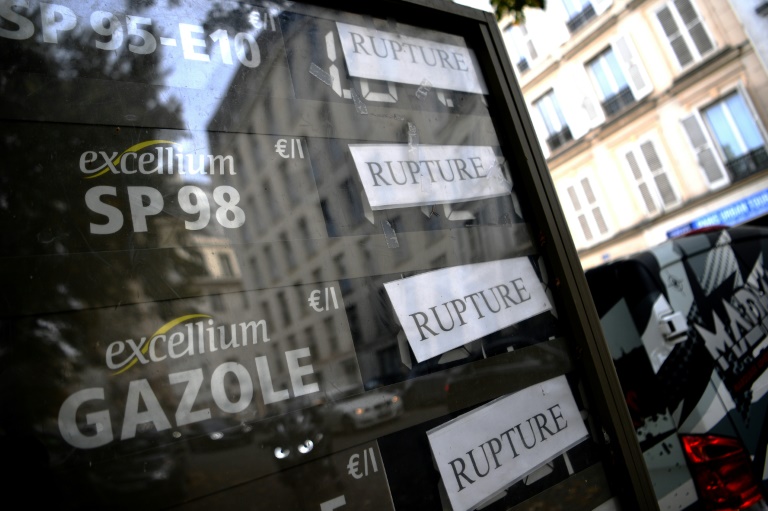
The strike action has forced many filling stations to close and had a knock-on effect across all sectors of the economy.

President Emmanuel Macron’s government used requisitioning powers this week to force some strikers back to open fuel depots, a move that infuriated unions but has so far been upheld in the courts.

The CGT, which launched the industrial action three weeks ago, said on Saturday that workers at three TotalEnergies sites had decided to extend the stoppage.

Employees at the two others, including France’s largest refinery near the northwestern city of Le Havre, had already decided to stay out.

– Protest in Paris –

On Sunday, left-wing opponents of Macron will hold a march and rally in Paris to campaign against the rising cost of living.

Jean-Luc Melenchon, leader of the left-wing France Unbowed (LFI) party, had planned the march well before the current strike, but organisers are hoping to pick up some of the momentum from the current industrial unrest.

“The rise in prices is unbearable,” LFI deputy Manon Aubry told broadcaster LFI. “It is the greatest loss of purchasing power in 40 years.”

It is time the billions that the big companies were reaping in profits were passed down to those struggling to make ends meet, she added.

Police are expecting around 30,000 people to attend, with one source saying they feared problems from hard-left troublemakers. “The organiser has been warned of these fears,” said the official.

– More protests, strikes –

The CGT meanwhile has extended its strike action up to Tuesday, when it has also called a broader strike involving public transport nationwide.

The union risks stoking resentment in a country where three-quarters of workers rely on personal vehicles for their jobs, with public support for the strike at just 37 percent in a BVA poll released Friday.

The CGT is pushing for a 10-percent pay rise for staff at TotalEnergies, retroactive for all of 2022.

It says the French group can more than afford it, citing TotalEnergies’ net profit of $5.7 billion in the April-June period as energy prices soared with the war in Ukraine, and its payout of billions of euros in dividends to shareholders.

The CGT walked out of talks with the French group, even as other unions representing a majority of workers accepted a deal for a smaller pay hike.

TotalEnergies on Saturday urged employees to resume work, “in view of the signing of a majority deal on salaries” with two other unions.

Esso-ExxonMobil has said it would take two to three weeks to relaunch production at its refineries.

Prime Minister Elisabeth Borne is due to appear on primetime television Sunday evening to discuss the petrol shortage.

In reversal, Musk to continue funding Starlink in Ukraine

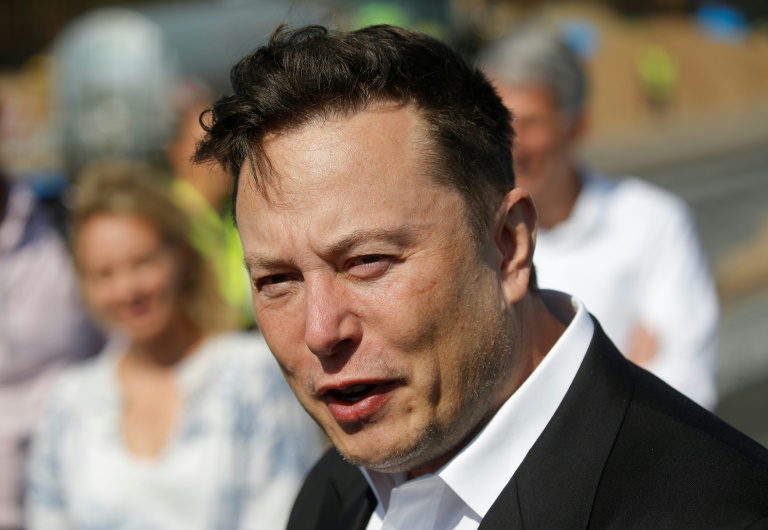
Elon Musk said Saturday that his company SpaceX will continue to pay for Starlink satellite internet in war-torn Ukraine, one day after the tech mogul suggested he could not keep funding the project.

Starlink, a constellation of more than 3,000 small satellites in low Earth orbit, has been vital to Ukraine’s communications as it battles Russia.

But Musk has found himself embroiled of late in public spats with Ukrainian leaders who were angered by his controversial proposals for de-escalating the conflict, which included acknowledging Russian sovereignty over Crimea.

“The hell with it,” Musk, the world’s richest man, wrote on Twitter.

“Even though Starlink is still losing money & other companies are getting billions of taxpayer $, we’ll just keep funding Ukraine govt for free.”

In a series of tweets Friday, Musk had detailed the logistics of the operation and said it was costing SpaceX nearly $20 million per month, and suggested the company could not fund it indefinitely.

Meanwhile, the US military confirmed it was communicating with the billionaire’s company about funding for the key network.

“SpaceX is not asking to recoup past expenses, but also cannot fund the existing system indefinitely *and* send several thousand more terminals that have data usage up to 100X greater than typical households,” he said Friday. 

“This is unreasonable.”

– Pentagon funding on cards? –

SpaceX has donated some 25,000 ground terminals to Ukraine, according to an updated figure given by Musk last week.

He says the operation has already cost SpaceX $80 million, and that total is projected to exceed $100 million by the end of the year.

Musk also appeared to confirm a report by CNN saying he had written to the Pentagon warning that his financial contributions would come to an end, and that the military would need to foot the bill.

According to CNN, SpaceX figures shared with the Pentagon show about 85 percent of the first 20,000 terminals in Ukraine were paid at least in part by countries such as the United States, Poland, or other entities, which also paid for about 30 percent of internet connectivity.

Deputy Pentagon Press Secretary Sabrina Singh said Friday the Pentagon is in contact with Musk about the funding issue, saying it had “received correspondence from SpaceX about the funding of… their satellite communications product in Ukraine.”

Musk has recently been in a spat with Ukrainian officials including President Volodymyr Zelensky after suggesting a peace deal that involved re-running controversial referendums in Russian-occupied territories in Ukraine — an idea welcomed by Moscow.

A senior Ukrainian presidential aide, Mykhaylo Podolyak, acknowledged the importance of Starlink in a tweet on Friday.

“Like it or not, @elonmusk helped us survive the most critical moments of war,” Podolyak wrote, adding that Ukraine “will find a solution to keep #Starlink working.”

In reversal, Musk to continue funding Starlink in Ukraine

Elon Musk said Saturday that his company SpaceX will continue to pay for Starlink satellite internet in war-torn Ukraine, one day after the tech mogul suggested he could not keep funding the project.

Starlink, a constellation of more than 3,000 small satellites in low Earth orbit, has been vital to Ukraine’s communications as it battles Russia.

But Musk has found himself embroiled of late in public spats with Ukrainian leaders who were angered by his controversial proposals for de-escalating the conflict, which included acknowledging Russian sovereignty over Crimea.

“The hell with it,” Musk, the world’s richest man, wrote on Twitter.

“Even though Starlink is still losing money & other companies are getting billions of taxpayer $, we’ll just keep funding Ukraine govt for free.”

In a series of tweets Friday, Musk had detailed the logistics of the operation and said it was costing SpaceX nearly $20 million per month, and suggested the company could not fund it indefinitely.

Meanwhile, the US military confirmed it was communicating with the billionaire’s company about funding for the key network.

“SpaceX is not asking to recoup past expenses, but also cannot fund the existing system indefinitely *and* send several thousand more terminals that have data usage up to 100X greater than typical households,” he said Friday. 

“This is unreasonable.”

– Pentagon funding on cards? –

SpaceX has donated some 25,000 ground terminals to Ukraine, according to an updated figure given by Musk last week.

He says the operation has already cost SpaceX $80 million, and that total is projected to exceed $100 million by the end of the year.

Musk also appeared to confirm a report by CNN saying he had written to the Pentagon warning that his financial contributions would come to an end, and that the military would need to foot the bill.

According to CNN, SpaceX figures shared with the Pentagon show about 85 percent of the first 20,000 terminals in Ukraine were paid at least in part by countries such as the United States, Poland, or other entities, which also paid for about 30 percent of internet connectivity.

Deputy Pentagon Press Secretary Sabrina Singh said Friday the Pentagon is in contact with Musk about the funding issue, saying it had “received correspondence from SpaceX about the funding of… their satellite communications product in Ukraine.”

Musk has recently been in a spat with Ukrainian officials including President Volodymyr Zelensky after suggesting a peace deal that involved re-running controversial referendums in Russian-occupied territories in Ukraine — an idea welcomed by Moscow.

A senior Ukrainian presidential aide, Mykhaylo Podolyak, acknowledged the importance of Starlink in a tweet on Friday.

“Like it or not, @elonmusk helped us survive the most critical moments of war,” Podolyak wrote, adding that Ukraine “will find a solution to keep #Starlink working.”

One dead, two missing as Crete hit by major flooding

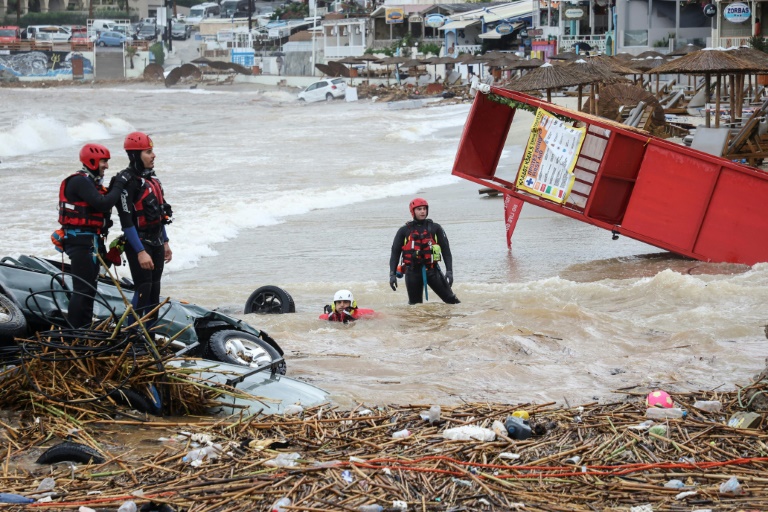
A man was found dead and two people were missing on Saturday after torrential rain brought major flooding to the Greek island of Crete, emergency workers said.

The victim, a man in his fifties, was trapped in his car as the rains began to fall in the southern Greek island, a popular holiday destination.

Local media reported extensive damage in seaside villages, where streets have become rivers carrying away everything in their path.

According to emergency services, a woman was slightly injured when she too became trapped in a car. 

At least nine vehicles surrounded by water still need to be rescued.The emergency services received over 450 calls within an hour on Friday morning as the extent of the problem became clear.

Eight tourists and a security guard were also stranded in the Archaeological Museum in the coastal resort town of Sitia.

All the gorges on the island, popular hiking spots for tourists, were closed to the public until further notice.

The mayor of Sitia told the Skai TV channel, “The situation was out of control and the (weather) phenomena in the region were exceptional.” 

Scientists say human-induced climate change is amplifying extreme weather — including the floods, heatwaves, droughts seen in several parts of the planet — and say these events will become more frequent and more intense.

A senior official for the Heraklion region, Nikos Syrigonakis, urged residents to limit their movements.

“This is a difficult day,” he added. 

The Civil Defence department said it was mobilised and asked all citizens to be vigilant in Crete and the surrounding islands of Rhodes, Karpathos, Kastellorizo and Kasos.

Close Bitnami banner
Bitnami