AFP

Asian markets surge after sharp Wall St swing, pound holds gains

Asian equities soared Friday to extend a surge on Wall Street, where all three indexes saw extreme swings in response to a forecast-beating inflation report that cemented expectations for more big Federal Reserve rate hikes.

Sterling also held on to its big gains sparked by speculation the UK government was set to perform another u-turn on its controversial debt-fuelled mini-budget, though the yen remained stuck around three-decade lows against the dollar.

The hotly awaited US inflation report showed prices rose last month at a faster clip than expected despite a series of interest rate increases this year, which have fanned fears of a global recession.

The month-on-month reading came in double estimates, while core inflation — which strips out volatile energy and food prices — was also elevated.

The figures sparked a sharp plunge on Wall Street but the selling quickly reversed, and all three main indexes finished the day with gains of more than two percent with analysts suggesting several reasons for the extreme move.

Some said the initial selling may have been a knee-jerk reaction before traders accepted the data was not as bad as other recent reports, while technical factors were also flagged.

Others speculated that equities had finally reached their bottom after a year of selling that has seen many indexes plunge into correction territory having lost more than 20 percent from their recent peaks.

“The market reversal was a head-scratcher”, said OANDA’s Edward Moya. “Some investors are convinced core inflation will soon start trending lower. Fed tightening will remain aggressive at 75 basis points in November and possibly December,” he added.

“Monetary policy is quickly getting restrictive and that will undoubtedly send inflation lower. It looks like rates will peak slightly above five percent and for some that is good enough of a reason to get back into stocks.”

However, he warned that “given the path for rates is higher, this market reversal won’t last long”.

– Yen weakness –

Still, Asian investors took the opportunity to buy up some bargains after another torrid week.

Tokyo, Hong Kong and Taipei put on more than three percent apiece, while Seoul was up more than two percent. Shanghai, Sydney, Singapore, Wellington, Manila and Jakarta were also sharply higher.

The pound was also still enjoying some much-needed support after breaking higher Thursday on reports that the new government was looking at rowing back on more tax-cut pledges in its mini-budget, which sparked turmoil on debt markets when released two weeks ago.

Sterling was sitting well above $1.13, having been wallowing below $1.10 early Thursday, with help also coming from Bank of England cash injections to prop up financial markets and prevent a collapse of pension funds.

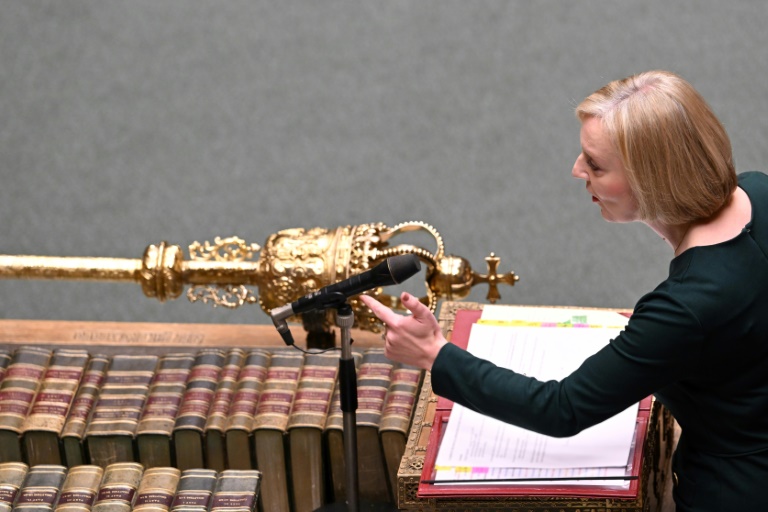
The pound’s stronger position came despite Prime Minister Liz Truss’s insistence that there would be no more u-turns, after she was previously forced to scrap a plan to cut the higher rate of income tax.

However, the strong inflation data pushed the already strong dollar further up against other currencies and it hit a 32-year high of 147.67 yen, with traders now looking to see if Japanese officials intervene again to protect the struggling unit.

Japanese finance minister Shunichi Suzuki told the Group of 20 gathering in Washington DC that authorities were “watching the foreign exchange markets with a high sense of urgency, and we’ll take appropriate responses against excessive moves”.

Officials refused to say if they intervened Thursday following a big drop in response to the greenback’s spike.

The yen’s weakness comes from the Bank of Japan’s refusal to lift interest rates — citing a need to support the economy — at the same time as the Fed presses ahead with a series of big rate hikes.

– Key figures around 0230 GMT –

Tokyo – Nikkei 225: UP 3.4 percent at 27,141.18 (break)

Hong Kong – Hang Seng Index: UP 3.2 percent at 16,912.09

Shanghai – Composite: UP 1.4 percent at 3,059.30

Pound/dollar: DOWN at $1.1330 from $1.1333 Thursday

Dollar/yen: UP at 147.28 yen from 147.22 yen

Euro/dollar: UP at $0.9792 from $0.9780

Euro/pound: UP at 86.38 pence from 86.28 pence

West Texas Intermediate: UP 0.1 percent at $89.22 per barrel

Brent North Sea crude: UP 0.1 percent at $94.67 per barrel

New York – Dow: UP 2.8 percent at 30,038.72 (close)

London – FTSE 100: UP 0.4 percent at 6,850.27 (close) 
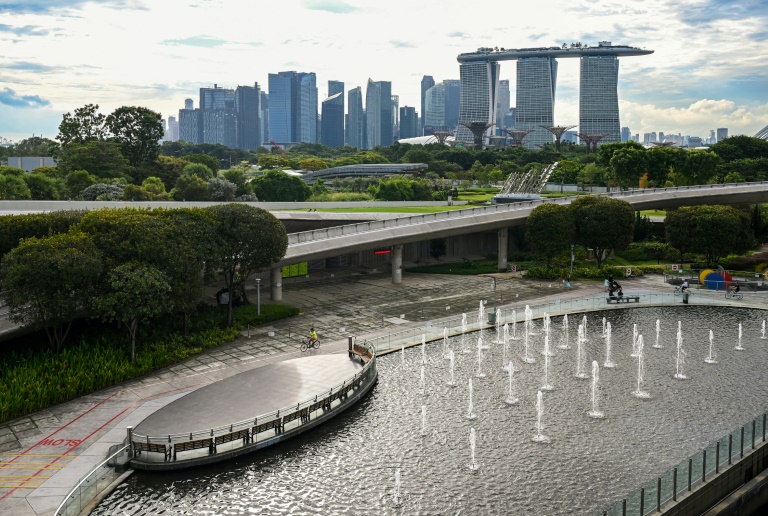
Singapore's economy grows 4.4% in Q3

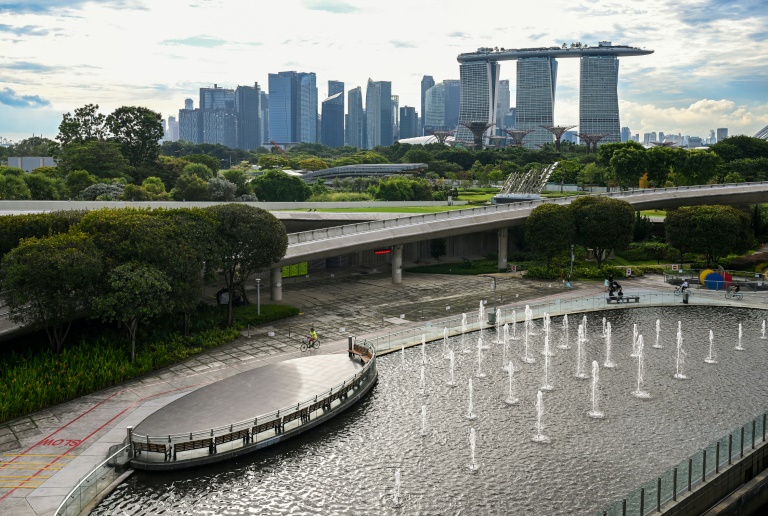
Singapore’s economy expanded by 4.4 percent on-year in the third quarter of 2022, the government said Friday while warning of ongoing global challenges such as inflation.

Economists often see the performance of the city-state’s open, trade-driven economy as a barometer for global trading activity.

The Q3 reading was slightly lower than the previous quarter’s 4.5 percent, according to advance estimates released by the trade ministry.

“The expansion was underpinned in part by a stronger-than-expected recovery in the domestic-oriented and travel-related sectors as more Covid-19 restrictions abroad and locally were relaxed,” the Monetary Authority of Singapore said Friday.

Singapore has removed all Covid restrictions, except for mask-wearing inside buses and metro trains, after vaccinating most of its population of nearly six million and deciding to live with the coronavirus.

On a quarter-to-quarter basis, Singapore’s economy expanded by 1.5 percent, avoiding a technical recession by reversing the 0.2 percent contraction in Q2.

However, manufacturing output and financial services weakened because of softening external demand, according to the central bank.

The MAS said it would further tighten monetary policy to fight inflation — its fifth such move since October 2021.

“In the quarters ahead, the drag on economic activity from the globally synchronised tightening in monetary policy will intensify,” it said.

“While inflation should moderate, it will remain high for some time.”

The MAS slightly raised its inflation forecasts, predicting around 4.0 percent core inflation and around 6.0 percent headline inflation for 2022.

“However, further shocks, including from geopolitical tensions, could drive inflation higher and cause full-year recessions in some key economies,” the bank added.

Singapore’s economy is projected to expand by 3.0-4.0 percent in 2022, after officials trimmed the earlier forecast of 3.0-5.0 percent.

Singapore's economy grows 4.4% in Q3

Singapore’s economy expanded by 4.4 percent on-year in the third quarter of 2022, the government said Friday while warning of ongoing global challenges such as inflation.

Economists often see the performance of the city-state’s open, trade-driven economy as a barometer for global trading activity.

The Q3 reading was slightly lower than the previous quarter’s 4.5 percent, according to advance estimates released by the trade ministry.

“The expansion was underpinned in part by a stronger-than-expected recovery in the domestic-oriented and travel-related sectors as more Covid-19 restrictions abroad and locally were relaxed,” the Monetary Authority of Singapore said Friday.

Singapore has removed all Covid restrictions, except for mask-wearing inside buses and metro trains, after vaccinating most of its population of nearly six million and deciding to live with the coronavirus.

On a quarter-to-quarter basis, Singapore’s economy expanded by 1.5 percent, avoiding a technical recession by reversing the 0.2 percent contraction in Q2.

However, manufacturing output and financial services weakened because of softening external demand, according to the central bank.

The MAS said it would further tighten monetary policy to fight inflation — its fifth such move since October 2021.

“In the quarters ahead, the drag on economic activity from the globally synchronised tightening in monetary policy will intensify,” it said.

“While inflation should moderate, it will remain high for some time.”

The MAS slightly raised its inflation forecasts, predicting around 4.0 percent core inflation and around 6.0 percent headline inflation for 2022.

“However, further shocks, including from geopolitical tensions, could drive inflation higher and cause full-year recessions in some key economies,” the bank added.

Singapore’s economy is projected to expand by 3.0-4.0 percent in 2022, after officials trimmed the earlier forecast of 3.0-5.0 percent.

US pushes allies to assemble patchwork air defenses for Ukraine

The United States is pressing allies to hastily build for Ukraine a patchwork air defense network using NATO-compatible equipment — some ultra-modern, others older — to protect strategic targets from Russian strikes.

The effort was given added urgency after Moscow pummeled Ukraine with missiles this week, damaging energy facilities nationwide and leaving at least 20 people dead.

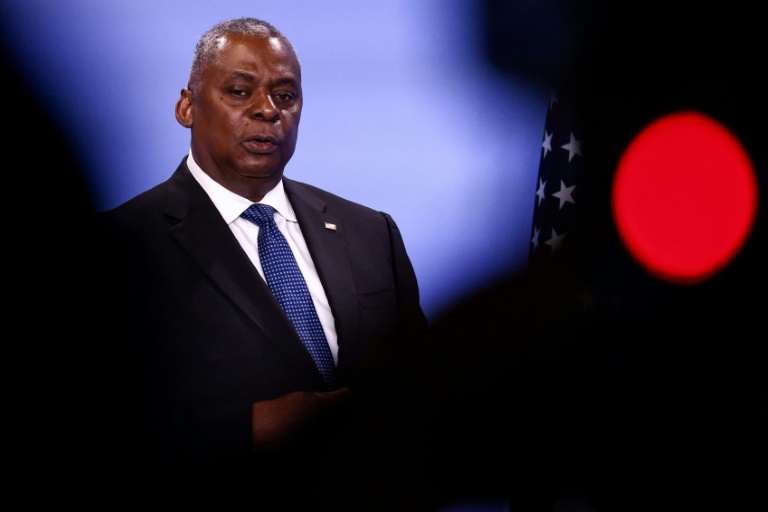
“What the (Ukrainian) leadership described that they needed yesterday most was air defense capability,” US Defense Secretary Lloyd Austin said in Brussels on Thursday, a day after a meeting of 50 allied countries who coordinate their military support for Kyiv.

In order to protect Ukraine from Russia’s varied threats, however, it will be necessary to build air defenses made up of multiple layers, says the top US military officer, General Mark Milley.

“What you’re looking at, really, is short-range, low-altitude systems, then medium-range, medium-altitude, and then long-range and high-altitude systems,” he said Wednesday in Brussels.

These three levels will protect major cities and key infrastructure in Ukraine from Russian ballistic and cruise missiles as well as drones.

“That doesn’t control all the airspace over Ukraine, but they are designed to control priority targets that Ukraine needs to protect,” Milley said during a news conference.

Washington has promised to provide Ukraine with the short- to medium-range, medium-altitude NASAMS air defense system, with the first two arriving soon.

It has also ordered six more from manufacturer Raytheon, but those deliveries may not occur for two to three years.

– Old and new –

Germany has delivered the first of the latest-generation Iris-T defense systems, but Kyiv will have to wait until next year for three others that have been promised. The medium-range, high-altitude Iris-T system is designed to protect a small city.

To accelerate the process, the United States urged its allies on Wednesday to provide their available anti-aircraft equipment — even if it is older — as long as it meets NATO standards.

Spain was the first to respond positively to that call: it will send Ukraine four medium-range Hawk surface-to-air systems, which first went into service during the Cold War but have been modernized over the years.

They are no longer used by the US military, which has replaced them with more modern Patriot units, but Spain has refurbished some in recent years to extend their life.

President Emmanuel Macron announced Wednesday that France would provide “radars, systems and missiles to protect (the Ukrainians) from these attacks.”

He did not specify the type of anti-aircraft defenses planned, but a US military official mentioned the SAMP/T high-altitude system known as “Mamba,” which is in service in France, Italy and Singapore and is a European competitor to the US Patriot.

The French-Italian-designed system is currently part of NATO’s air defenses.

“The Italians are apparently willing to see what can be given in terms of SAMP-T, but all this is very complex,” the French presidency said Thursday, adding that it is “a work in progress.”

Paris has also provided the short-range Crotale system, it added.

– ‘Complicated’ –

Britain announced Wednesday that it was sending AMRAAM missiles, which are launched by the US-supplied NASAMS.

According to a US military official speaking on condition of anonymity, Washington is also interested in the option of the Spada 2000 system, which like Mamba is manufactured by Europe’s MBDA.

It is a modernized version of a medium-altitude and range system in service since the 1980s in Italy. It has also been sold to Kuwait, Spain and Pakistan.

To defend against ballistic missiles, Washington is also considering providing Patriot missile batteries to Ukraine. 

The US military does not have enough to supply them to Kyiv, but Washington is lobbying other countries that have them to participate in the effort, and is also trying to convince Israel to provide parts of its Iron Dome system.

“Many countries have Patriot. Many countries have other systems,” Milley said in Brussels. “There’s a whole series of Israeli systems that are quite capable.”

Once the systems are provided, Ukrainian forces will need to be trained on their use, and will have to “make sure that they can link together with the command-and-control and communication systems and make sure they have radars that can talk to each other so that they can acquire targets,” he said.

“It’s quite complicated from a technical standpoint,” Milley added.

“It’ll take a little bit of time.”

Meta working to speed up metaverse, but success far from certain

A year after rebranding itself from Facebook into Meta, the social network titan is striving to make the metaverse a routine part of daily life, offering users new features and promoting new virtual reality gear.

But analysts say the company has toned down the hype a bit as it struggles to reach its goal of creating an interactive virtual world that it sees as the next phase of online activity.

The biggest announcement from this week’s Meta Connect event — the company’s giant’s annual conference focused on virtual reality — was the launch of the much anticipated Meta Quest Pro VR headset, targeted at professionals in creative fields.

But there were also legs — as in, legs for user avatars in Meta’s Horizon World virtual realm, as well as facial expressions.

Is this the future? The company says yes.

“The metaverse is going to sneak up on us,” Meta Reality Labs vice president Mark Rabkin predicted.

“I think it’s going to feel really far away and then there’ll be certain pockets and niches that are suddenly really useful — and then we’ll realize that the gaps… are getting smaller, and suddenly it’s here.”

For Rabkin, executives can save time and money by meeting in the metaverse, and artists can embrace virtual venues for concerts, comedy shows and other entertainment.

Bridges, skyscrapers, footwear and more could be designed in 3-D using digital tools in the metaverse.

“We’re building things that power the metaverse and will be part of the metaverse,” Rabkin said.

“We are investing heavily to pull the future forward a little bit.”

– Smiles and nods –

A year ago, Facebook renamed itself Meta to signal its devotion to a metaverse future.

In a small step on that path, the $1,500 Quest Pro headset — aimed at architects, engineers and designers, among others — boasts new features that are meant to improve users’ perception of actually being in the presence of others.

“The moment that they begin to break into a smile or when they raise their eyebrow… your avatar should be able to express all of that and more,” Meta chief Mark Zuckerberg said at Meta Connect.

The company said it is partnering with Microsoft, Adobe, Accenture and others to sync up popular work software with virtual worlds using Quest Pro. 

“At Microsoft, we’re incredibly excited about the metaverse and how digital and physical worlds are coming together,” Microsoft CEO Satya Nadella said during the presentation.

Microsoft is “really leaning in” to make its widely-used productivity software, as well as tools built for its own HoloLens augmented reality headset, compatible with Quest Pro, according to Rabkin.

Zuckerberg stressed that Meta wants its VR platform to dovetail with offerings from other companies.

“Not only will our stuff run on a variety of devices, including not our own, but there will inevitably be multiple universes joined together in a variety of ways,” Rabkin explained.

Technical advances built into Quest Pro are expected to eventually be incorporated into lower-priced headsets destined for average consumers.

– Handling the hype –

Zuckerberg was quoted by tech news website The Verge as saying he didn’t expect the metaverse to make the company a meaningful amount of money for years, setting up a “trough of disillusionment.”

For Creative Strategies analyst Carolina Milanesi, Meta has de-emphasized the hype of the metaverse in favor of talking more about the nuts and bolts of how it will work.

“I’m assuming it’s because they figured out how hard it is to actually make this stuff in terms of actually creating that world,” Milanesi told AFP.

Companies are investing billions of dollars in building blocks of the metaverse, with Meta leading the pack, VRDirect managing director Rolf Illenberger told AFP.

Microsoft, Sony, and HTC are among the players, and Apple is rumored to be planning to release its own virtual reality headset.

“On the one hand, Mark Zuckerberg needs to be acknowledged as a hero, as a visionary because he’s pushing the industry like no one else,” Illenberger said.

“But on the other hand, his bad reputation also kind of, to some extent, puts blame on the metaverse as a technology.”

Critics have said rebranding Facebook as Meta was a move to distance the tech firm from scandals including a whistleblower who said it valued profit over user safety.

In Kentucky, abortion issue generates new breed of activists

Leah Martin ended up in the emergency room “because of the immense stress” of being denied an abortion in her US home state of Kentucky.

Due to this “horrible” experience, she is now going door-to-door against a state ballot initiative that would cement Kentucky’s near total ban on abortions.

Scott Van Neste, a pastor, sharply opposes the procedure. Surrounded by his eight children, Van Neste has begun attending demonstrations to protect the state’s anti-abortion law.

Surprisingly, the two have something in common: They are new to the activist sphere.

Newfound activism may be a wildcard as US voters cast ballots November 8 in a variety of national, state and local races as well as on hot-button ballot initiatives.

Since the Supreme Court in June overturned the constitutional right to abortion and restored states’ ability to ban the procedure, the issue has become a major ballot question.

Only four states have decided to hold referendums exclusively on abortion, decoupling the issue from platforms and political parties, and opening the door to citizens who are not very political to get involved in what is, for them, a matter of “values.”

For Martin, it’s a personal issue.

In June, the 35-year-old and her husband joyfully learned that they were expecting a second child. Unfortunately, at 12 weeks of pregnancy, the doctors detected a chromosomal abnormality.

“It was 100 percent certain that the baby would not live past 10 months at the absolute most,” she told AFP.

The news came after the Supreme Court ruling, and the conservative Kentucky state legislature had just prohibited abortions.

“My doctors were crying with me… but essentially said, ‘Hey, we can’t help you. With the ban on abortion in Kentucky, you have to go to a different state,'” Martin said.

Martin said she ultimately ended up in the emergency room “because of the immense stress and panic that I put on my body from receiving that news.”

But then came what she calls an “insane miracle,” a one-week period “where a judge lifted the ban on abortion in Kentucky. And so I was able to receive the care that I needed.”

To overcome her trauma, Martin, a marketing executive for whom politics has always been “a private matter,” decided to get involved in the referendum campaign, going door-to-door in her hometown of Lexington.

“It is not in my nature to be knocking on doors… But some things are just too important,” Martin said as she approached a stately home.

A short distance away, Molly Kimbrell, 61, is also trying her hand at canvassing.

“Politics is not my jam. But issues are,” said Kimbrell, a nurse who had an abortion at the age of 14 owing to “a stupid kid mess up.”

Voicing outrage that women no longer have that option, she decided to get “off the couch” and try to persuade voters.

– ‘Big for me’ –

Displaying similar determination but from a different angle, Van Neste, 47, attended a “yes” rally outside the Kentucky Capitol in Frankfort on October 1.

He, too, is not used to this type of exercise: In his entire life, he has only demonstrated once.

But convinced that “all life is precious,” he wanted to defend the law in his state even if it forbids abortion in cases of incest or rape.

“We would not want the child to be punished for someone else’s wrongdoing,” he said.

“This is big for me because I have four children that were adopted,” said Van Neste, a Baptist pastor who doesn’t hesitate to talk about the ballot during his sermons.

A 1954 law prohibits churches from endorsing candidates but does not apply to referendums, points out Addia Wuchner, organizer of the event. In the Capitol parking lot, several buses are from religious organizations.

This time, Wuchner said, “there can be that discussion from the pulpit in the churches.”

Abigail Butler, 25, considers herself an independent voter. The theology student has volunteered at “crisis centers” that try to discourage women from having abortions, but she swears she is “not an activist, just passionate about the issue.”

Originally from Florida, she made sure to register to vote in Kentucky to participate in the referendum.

The challenge is to avoid what happened on August 2 in Kansas, a conservative state, where nearly 60 percent of voters in a high-turnout election rejected an anti-abortion amendment.

The result gave hope to Martin, as does her father’s attitude. 

“My father is a Republican,” she said, and opposed to abortions. “But watching me go through my experience… I know that on this particular issue, he will be voting no in November.”

Floods force evacuations in Australia

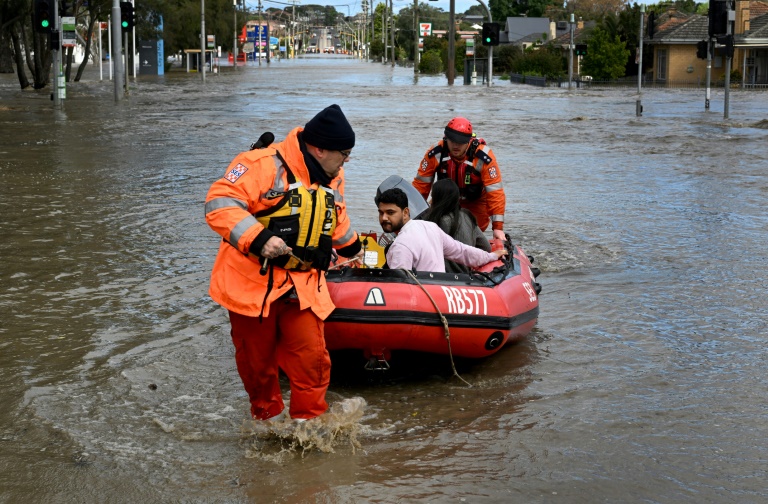
Thousands were warned to flee their homes in southeastern Australia on Friday to escape surging floodwaters threatening towns across three separate states. 

The flooding emergency was the worst in Victoria — Australia’s second most populous state — where on Friday morning rapidly rising waters swamped the Maribyrnong suburb of Melbourne, forcing evacuations.

The Victorian government was preparing to reopen a Covid-19 quarantine centre to shelter those whose homes were uninhabitable, state leader Daniel Andrews told ABC Radio. 

“This has been a very, very significant flood event and it’s far from over,” he said Friday morning. 

“The real challenge is waters continuing to rise and more and more houses being inundated, more and more communities being closed off.” 

The ground floor of the Anglers Tavern, a pub on the banks of the Maribyrnong River, was on Friday morning almost completely under water. 

Near-record flood levels were expected later on Friday evening in the towns of Shepparton and Murchison, north of Melbourne.

Northern parts of Tasmania — an island state south of Victoria — were on Friday also preparing for major floods. 

Mass evacuation orders were issued, while heavy rains forced the closure of some 120 roads. 

“Lives are at risk from floodwaters,” Tasmania’s state emergency service said in a statement.

In New South Wales — Australia’s most populous state — an evacuation centre was set up after intense downpours Thursday evening in Forbes, an inland town about five hours’ drive east of Sydney. 

The New South Wales emergency service said flood levels in Forbes could peak on Friday as water moved downstream. 

Australia’s east coast has been repeatedly lashed by heavy rainfall in the past two years, driven by back-to-back La Nina cycles. 

The east coast flooding disaster in March — caused by heavy storms that devastated parts of Queensland and New South Wales — claimed more than 20 lives. 

Tens of thousands of Sydney residents were ordered to evacuate in July when floods again swamped suburbs on the city’s fridge.

Turkey introduces jail terms for 'fake news'

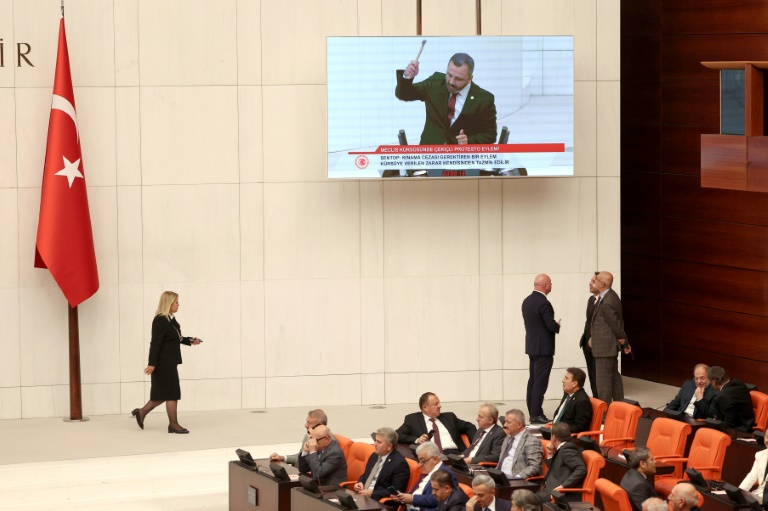
Turkey’s parliament on Thursday approved a tough pre-election law that could see reporters and social media users jailed for up to three years for spreading “fake news”.

The new rules cement the government’s already-firm grip on the media eight months before a general election that President Recep Tayyip Erdogan enters trailing in the polls.

The Council of Europe said the measure’s vague definition of “disinformation” and accompanying threat of jail could have a “chilling effect and increased self-censorship, not least in view of the upcoming elections in June 2023”.

The legislation — comprised of 40 amendments that each required a separate vote — was proposed by Erdogan’s Islamic-rooted AKP party and furiously opposed by Turkey’s main opposition groups.

One lawmaker from the secular CHP party smashed his mobile phone with a hammer in parliament to demonstrate how freedom of expression was being destroyed — particularly for the young.

“I would like to address my brothers who are 15, 16, 17 years old and who will be deciding the fate of Turkey in 2023,” CHP lawmaker Burak Erbay said before taking out his hammer.

“You have only one freedom left — the phone in your pocket. There’s Instagram, YouTube, Facebook. You communicate there,” he said ahead of the vote.

“If the law here passes in parliament, you can break your phone like this,” he said.

– ‘War on the truth’ –

Most Turkish newspapers and television channels fell under the control of government officials and their business allies during a sweeping crackdown that followed a failed coup in 2016.

But social networks and internet-based media remained largely free of oversight — much to the growing annoyance of Erdogan.

This began to change when Turkey used the threat of heavy penalties to force giants such as Facebook and Twitter to appoint local representatives who can quickly comply with local court orders to take down contentious posts.

Erdogan began to argue at around the same time that Turkey’s highly-polarised society was particularly vulnerable to fake and misleading news.

Social media have “turned into one of the main threats to today’s democracy”, Erdogan said last December.

The new legislation imposes a criminal penalty for those found guilty of spreading false or misleading information.

It requires social networks and internet sites to hand over personal details of users suspected of “propagating misleading information”.

It also allows the courts to sentence accredited reporters and regular social media users who “openly spread misleading information” to between one and three years in jail.

The government has also started publishing a weekly “disinformation bulletin” aimed at debunking what it deems as false news with “accurate and truthful information”.

Lawmakers rejected repeated opposition attempts to dilute the legislation before the vote.

“This law declares war on the truth,” pro-Kurdish opposition HDP party lawmaker Meral Danis Bektas said.

– ‘Legal harassment’ –

Turkey was ranked 149th out of 180 countries in the annual media freedom index published by Reporters Without Borders (RSF) earlier this year.

“Authoritarianism is gaining ground in Turkey, challenging media pluralism,” RSF said. “All possible means are used to undermine critics.”

Award-winning media rights campaigner Veysel Ok said everyone in Turkey was now exposed to potential prosecution for their views.

“The members of the opposition, NGOs, bar associations, professional associations, journalists and ordinary citizens… Now, all will be subjected to legal harassment,” Ok tweeted.

US stocks rebound after disappointing inflation data

Wall Street stocks finished a topsy-turvy session with strong gains Thursday following disappointing inflation data, while the pound rallied and the yen hit a new multi-decade low.

US consumer prices rose 0.4 percent in September compared to August, twice the 0.2 percent projected by analysts, even as the annual increase in the consumer price index slowed slightly to 8.2 percent from 8.3 percent.

The data are the latest sign inflation is becoming more ingrained in the US economy, despite numerous Federal Reserve actions to counter the trend.

US stocks initially plummeted on the report, which exacerbated recession worries on the increased odds of more aggressive Fed interest rate increases.

But equities soon reversed course, working their way back into positive territory by late morning and rising from there.

The broad-based S&P 500 ended 2.6 percent higher, joined in positive territory by bourses in Paris and Frankfurt that had earlier closed up at least one percent.

The early action after the inflation report was “knee-jerk” selling, said Briefing.com analyst Patrick O’Hare, adding that the inflation data — while disappointing — was not shocking given other recent economic reports.

The initial reversal was due to technical trading factors. When stocks refused to drop below a key trading level, they did a 180-degree turn and pushed higher.

“Maybe now there’s a bottom in place for the time being,” O’Hare said.

Also on Thursday, the British pound soared against the dollar and other currencies amid media speculation the government may cut back on its fiscal stimulus plans and increase corporate taxes in its latest policy U-turn.

The IMF reiterated its criticism of the new British government’s policies, with Chief Kristalina Georgieva calling for “coherent and consistent” measures.

Throughout this week’s meetings of finance chiefs in Washington, the IMF has stressed that the priority was for central banks to control inflation with monetary policy tightening and for governments to keep their budgets tight.

“Our message to everybody, not just to the UK, to everybody at this time: fiscal policy should not undermine monetary policy,” Georgieva said.

The Japanese yen on Thursday also hit its lowest level against the dollar since 1990 after the US inflation data, a reflection of the gulf between the US and Japanese central banks in monetary policy.

“The Bank of Japan continues to keep monetary policy easy because inflation and wages remain relatively low” in Japan, said Carol Kong, an economist and currency strategist at Commonwealth Bank of Australia.

– Key figures around 2100 GMT –

New York – Dow: UP 2.8 percent at 30,038.72 (close)

New York – S&P 500: UP 2.6 percent at 3,669.91 (close)

New York – Nasdaq: UP 2.2 percent at 10.649.15 (close)

London – FTSE 100: UP 0.4 percent at 6,850.27 (close) 
Frankfurt – DAX: UP 1.5 percent at 12,355.58 (close)

Paris – CAC 40: UP 1.0 percent at 5,879.19 (close)

EURO STOXX 50: UP 0.9 percent at 3,362.40 (close)

Tokyo – Nikkei 225: DOWN 0.6 percent at 26,237.42 (close)

Hong Kong – Hang Seng Index: DOWN 1.9 percent at 16,389.11 (close)

Shanghai – Composite: DOWN 0.3 percent at 3,016.36 (close)

Pound/dollar: UP at $1.1333 from $1.1100 Wednesday

Dollar/yen: UP at 147.22 yen from 146.91 yen

Euro/dollar: UP at $0.9780 from $0.9703

Euro/pound: DOWN at 86.28 pence from 87.41 pence

Brent North Sea crude: UP 2.3 percent at $94.57 per barrel

West Texas Intermediate: UP 2.1 percent at $89.11 per barrel

burs-jmb/des

US stocks rebound after disappointing inflation data

Wall Street stocks finished a topsy-turvy session with strong gains Thursday following disappointing inflation data, while the pound rallied and the yen hit a new multi-decade low.

US consumer prices rose 0.4 percent in September compared to August, twice the 0.2 percent projected by analysts, even as the annual increase in the consumer price index slowed slightly to 8.2 percent from 8.3 percent.

The data are the latest sign inflation is becoming more ingrained in the US economy, despite numerous Federal Reserve actions to counter the trend.

US stocks initially plummeted on the report, which exacerbated recession worries on the increased odds of more aggressive Fed interest rate increases.

But equities soon reversed course, working their way back into positive territory by late morning and rising from there.

The broad-based S&P 500 ended 2.6 percent higher, joined in positive territory by bourses in Paris and Frankfurt that had earlier closed up at least one percent.

The early action after the inflation report was “knee-jerk” selling, said Briefing.com analyst Patrick O’Hare, adding that the inflation data — while disappointing — was not shocking given other recent economic reports.

The initial reversal was due to technical trading factors. When stocks refused to drop below a key trading level, they did a 180-degree turn and pushed higher.

“Maybe now there’s a bottom in place for the time being,” O’Hare said.

Also on Thursday, the British pound soared against the dollar and other currencies amid media speculation the government may cut back on its fiscal stimulus plans and increase corporate taxes in its latest policy U-turn.

The IMF reiterated its criticism of the new British government’s policies, with Chief Kristalina Georgieva calling for “coherent and consistent” measures.

Throughout this week’s meetings of finance chiefs in Washington, the IMF has stressed that the priority was for central banks to control inflation with monetary policy tightening and for governments to keep their budgets tight.

“Our message to everybody, not just to the UK, to everybody at this time: fiscal policy should not undermine monetary policy,” Georgieva said.

The Japanese yen on Thursday also hit its lowest level against the dollar since 1990 after the US inflation data, a reflection of the gulf between the US and Japanese central banks in monetary policy.

“The Bank of Japan continues to keep monetary policy easy because inflation and wages remain relatively low” in Japan, said Carol Kong, an economist and currency strategist at Commonwealth Bank of Australia.

– Key figures around 2100 GMT –

New York – Dow: UP 2.8 percent at 30,038.72 (close)

New York – S&P 500: UP 2.6 percent at 3,669.91 (close)

New York – Nasdaq: UP 2.2 percent at 10.649.15 (close)

London – FTSE 100: UP 0.4 percent at 6,850.27 (close) 
Frankfurt – DAX: UP 1.5 percent at 12,355.58 (close)

Paris – CAC 40: UP 1.0 percent at 5,879.19 (close)

EURO STOXX 50: UP 0.9 percent at 3,362.40 (close)

Tokyo – Nikkei 225: DOWN 0.6 percent at 26,237.42 (close)

Hong Kong – Hang Seng Index: DOWN 1.9 percent at 16,389.11 (close)

Shanghai – Composite: DOWN 0.3 percent at 3,016.36 (close)

Pound/dollar: UP at $1.1333 from $1.1100 Wednesday

Dollar/yen: UP at 147.22 yen from 146.91 yen

Euro/dollar: UP at $0.9780 from $0.9703

Euro/pound: DOWN at 86.28 pence from 87.41 pence

Brent North Sea crude: UP 2.3 percent at $94.57 per barrel

West Texas Intermediate: UP 2.1 percent at $89.11 per barrel

burs-jmb/des

Close Bitnami banner
Bitnami