AFP

Florida school shooter avoids death penalty, gets life in prison

A US jury on Thursday rejected the death penalty for Nikolas Cruz, who shot and killed 17 people at his former Florida high school, opting instead for life imprisonment without the possibility of parole.

Cruz, 24, wearing a striped sweater and large glasses, stared down expressionless at the defense table as the verdict was read while several relatives of the victims in the gallery shook their heads in disbelief.

The jury deliberated for a full day Wednesday and briefly Thursday before deciding that Cruz should receive life in prison for the February 2018 murders of 14 students and three staff members at Marjory Stoneman Douglas High School in Parkland, Florida.

A death penalty recommendation needed to be unanimous and one or more of the 12 jurors found that it was not justified because of mitigating circumstances.

Several relatives of victims reacted angrily to the verdict.

“I could not be more disappointed in what happened today,” said Fred Guttenberg, whose 14-year-old daughter Jaime was one of the students killed in the Valentine’s Day attack.

“I’m stunned. I’m devastated,” Guttenberg said. “There are 17 victims that did not receive justice today. This jury failed our families today.”

Prosecutors and Cruz’s defense team gave their closing arguments on Tuesday after a three-month trial, during which the jury saw graphic footage of the attack and listened to harrowing testimony from survivors.

Michael Satz, the lead prosecutor, said Cruz, who pleaded guilty to the murders last year, planned and carried out a “systematic massacre” and the appropriate penalty was death.

The 80-year-old Satz, who came out of retirement to try the case, ended his closing arguments by reciting the names of the 17 people who died.

– ‘Brain-damaged, mentally-ill’ –

Melisa McNeill, a lawyer for Cruz, urged the jurors to show compassion.

McNeill said Cruz was a troubled young man born with fetal alcohol stress disorder to a mother who struggled with homelessness, alcoholism and drug addiction before putting him up for adoption.

“He was doomed from the womb and in a civilized, humane society, do we kill brain-damaged, mentally ill, broken people?” McNeill asked in her closing statement. “Do we? I hope not.”

Tony Montalto, whose 14-year-old daughter Gina was killed, dismissed those arguments.

“This shooter did not deserve compassion,” Montalto said. “Did he show compassion to Gina when he put the weapon against her chest and chose to pull that trigger?

“Do we want people who commit atrocious acts… to be punished to the fullest extent of the law?” he asked. “Or do we want to excuse them because they had a tough time growing up?”

– Gun control debate –

On February 14, 2018, the then-19-year-old Cruz walked into school carrying a high-powered semiautomatic rifle. He had been expelled a year earlier for disciplinary reasons.

In a matter of nine minutes, he killed 17 people and wounded over a dozen more.

Cruz fled by mixing in with people frantically escaping the gory scene, but was arrested by police shortly after as he walked along the street.

The shooting stunned the nation and reignited debate on gun control since Cruz had legally purchased the gun he used despite his mental health issues.

On March 24, 2018, nationwide marches inspired by school shooting survivors and parents of victims brought together 1.5 million people — the largest public turnout ever in defense of stricter gun control laws in America.

But the Parkland shooting prompted no significant reform by Congress and gun sales have continued to rise.

Thousands turned out for demonstrations organized following two other recent mass shootings: one at a Texas elementary school that killed 19 young children and two teachers, and another at a New York supermarket that left 10 Black people dead.

Those shootings helped galvanize support for the first significant federal bill on gun safety in decades.

President Joe Biden signed the bill into law in June. It included enhanced background checks for younger buyers and federal cash for states introducing “red flag” laws that allow courts to temporarily remove weapons from people who are considered a threat.

But the measure fell far short of steps Biden had called for, including an assault weapons ban.

The Justice Department reached a $127.5 million settlement in March with survivors and relatives of Parkland victims who had accused the FBI of negligence for failing to act on tips received prior to the attack that Cruz was dangerous.


At IMF, UK gets lecture on having 'coherent' fiscal policy

Britain has had its knuckles rapped over its controversial debt-fueled budget at the IMF’s annual meetings, with the crisis lender’s chief urging London on Thursday to maintain “coherent and consistent” policies.

British finance minister Kwasi Kwarteng was already under fire back home when he arrived in Washington for the annual gathering, which Bank of England Governor Andrew Bailey is also attending.

IMF officials — from the institution’s top economist to its managing director — have had their say about Britain’s fiscal choices this week after already warning last month that the measures would increase inequality.

IMF chief Kristalina Georgieva said she had a “very constructive” meeting with Kwarteng and Bailey.

“We discussed the importance of policy coherence and communicating clearly so there can be no — in this jittery environment — there could be no reasons for more jitters,” she said at a news conference.

The UK’s sovereign bonds and the pound have taken a beating on financial markets since Kwarteng and Prime Minister Liz Truss unveiled a “mini-budget” last month that included tax cuts in a bid to ease a cost-of-living crisis.

The move forced the Bank of England, which has been raising borrowing costs to tame inflation, to jump into bond markets to help protect financial stability.

Since then, Kwarteng axed his proposed tax cut for the richest earners and brought forward his debt-reduction plans and economic forecasts to October 31.

The British pound rallied against the dollar on Thursday on reports that the embattled leaders were mulling more U-turns, including on planned changes to corporation tax.

Kwarteng, however, insisted that his “position hasn’t changed.”

“I will come up with the medium-term fiscal plan on the 31st of October, as I said earlier in the week, and there’ll be more detail there,” he told reporters.

He added that Georgieva had told him on Wednesday that he was “quite right to focus on growth.”

– ‘Runaway train’ –

The International Monetary Fund has stressed throughout this week’s meetings of finance chiefs that the priority was for central banks to continue to tighten monetary policies to control inflation and for governments to keep their budgets tight.

“Our message to everybody, not just to the UK, to everybody at this time: fiscal policy should not undermine monetary policy,” Georgieva said.

This would make the task of monetary policy “only harder and it translates into the necessity for even further increase of rates and tightening financial conditions,” she said.

“So don’t prolong the pain and make sure that actions are coherent and consistent.”

While she called for consistency, Georgieva said it was “correct to be led by evidence, so if the evidence is that there has to be a recalibration, it is right for governments to do so.”

The IMF’s chief economist, Pierre-Olivier Gourinchas, said earlier this week that the divergence between BoE monetary policy and government’s fiscal plans was “not going to work very well.”

“It’s like having a car with two people in the front, and each of them is steering the wheel, and trying to steer the car in a different direction,” he said.

Georgieva used more analogies on Thursday as she warned that “we cannot allow inflation to become a runaway train.”

“I’m going to say it again because it is so important for this message to penetrate. When monetary policy puts a foot on the brakes, fiscal policy should not step on the accelerator,” she said.

– ‘A dressing-down’ –

European Central Bank chief Christine Lagarde made a veiled reference to Britain at an event on the sidelines of the IMF meetings where she called for cooperation between monetary and fiscal policies.

“We have seen good and bad examples of what cooperation or lack of cooperation can do,” she said at the annual meeting of the Institute of International Finance.

Susannah Streeter, senior investment and markets analyst at UK asset management firm Hargreaves Lansdown, said that “being given a dressing down by the IMF is never a good look.”

“Such international criticism doesn’t help stem evaporating confidence among investors about the government’s handling of the economy,” Streeter told AFP.

But, she added, it is likely to be “finger-pointing” domestically that would make the UK treasury reassess its tax cut policies.

Kenya denies defaulting on China railway debt

Kenya on Thursday denied it had defaulted on interest repayments on a loan advanced by China for the construction of a railway line from the port city of Mombasa that opened in 2017.

The $5 billion project, financed 90 percent by China, replaced the so-called “Lunatic Express” — a line built more than a century ago by colonial power Britain which was notorious for lengthy delays and breakdowns.

Kenya’s Business Daily reported that the government failed to repay interest on the loan in the financial year ended June, attracting a fine of 1.312 billion Kenyan shillings ($10.8 million). 

But Treasury Cabinet Secretary Ukur Yatani rejected the report as “misinformation”, saying the financial position of the East African economic powerhouse was “sound and robust”.

“We wish to state categorically that Kenya has never defaulted on its settlement of its debt service obligations to any of its creditors,” Yatani said in a statement. 

The Standard Gauge Railway (SGR) is Kenya’s biggest infrastructure project since independence from Britain in 1963 and was launched as a master plan by East African leaders to connect their nations by rail. 

Currently snaking from Mombasa via the capital Nairobi to the Rift Valley town of Naivasha, it is planned to eventually link Uganda, Rwanda, South Sudan, Burundi and Ethiopia.

The railway was to be managed by the Chinese contractor for five years before being handed over to the Kenyan government.

But it has posted losses, with analysts worrying the trend could continue after newly elected President William Ruto last month reversed a policy that made it mandatory for cargo to use the railway. 

China is Kenya’s second-largest lender after the World Bank and has funded a number of costly infrastructure projects that have raised concerns about Nairobi taking on more debt than it can afford.

The country’s public debt load in June stood at 8.6 trillion shillings ($71.1 billion), an 11.5 percent rise from a year earlier, according to government figures.

Loan interest repayments have however shot up in recent months as the value of the shilling rapidly loses ground against international currencies, trading at 121 to the dollar on Thursday.

Yatani said there was no cause for alarm as the country frequently undergoes independent sovereign rating reviews which are published widely. 

“At no time has Kenya been flagged as a country defaulting on its external debt obligations,” he added.

Stocks bounce after key US inflation data

Equities fell sharply on Thursday after data showed US inflation jumped more than expected in September, before quickly bouncing higher.

The data was seen as solidifying expectations of further interest rate hikes, and helped push the dollar higher. The greenback hit its highest level against the Japanese yen since 1990.

US consumer prices rose 0.4 percent in September compared to August, twice the 0.2 percent projected by analysts even as the annual increase in the consumer price index slowed slightly to 8.2 percent from 8.3 percent.

But core inflation, excluding volatile energy and food prices, climbed to 6.6 percent from 6.3 percent in August.

The US Federal Reserve has raised interest rates at an aggressive clip of 0.75 percentage points at its last three meetings. It has signalled plans to continue doing so until rampant inflation is brought under control.

That has led to a slump in stock prices in recent months, as higher interest rates will reduce consumer spending power.

Last month saw a brief rally in stocks after data suggested the US economy was slowing. Investors hoped that it would allow a “pivot” by the Fed to a slower rate of interest rate hikes.

“The strong CPI only reinforces the view that there is no way the Federal Reserve can contemplate a ‘pivot’ this year,” said Stephen Innes at SPI Asset Management. 

Wall Street stocks plunged after the opening bell, the Nasdaq Composite quickly dropping more than three percent.

But by late morning, Wall Street’s main indices were all solidly higher.  

“In the aftermath of the hotter US CPI report, we saw risk assets tumble as the dollar and bonds jumped,” said market analyst Fawad Razaqzada at City Index and FOREX.com.

“Much — or in some cases, all — of those moves have since been undone due to profit-taking, while banks and energy stocks rose thanks to even higher yields and rebounding crude oil prices,” he added.

– Europe stocks recover –

European stocks also bounced back from sharp losses.

Frankfurt closed 1.5 percent higher and Paris rose 1.0 percent.

The FTSE 100 in London added 0.4 percent amid media speculation the government may cut back on its fiscal stimulus plans and increase corporate taxes in its latest policy U-turn.

The speculation sent the pound soaring 1.9 percent against the dollar. 

Meanwhile the UK government’s 30-year bond yield eased to 4.56 percent and the 10-year fell to 4.23 percent.

The ten-year yield on Wednesday struck 4.64 percent, the highest since the 2008 global financial crisis and higher than the level that prompted the BoE’s recent bond market intervention.

The drop in UK bond yields helped fuel a rebound in stocks of home builders and mortgage lenders.

The dollar rose as high as 147.67 yen, its highest level since 1990, as US and Japanese monetary policy increasingly diverge.

The Bank of Japan has so far refused to raise interest rates, making yen investments less attractive than dollar investments.

“The Bank of Japan continues to keep monetary policy easy because inflation and wages remain relatively low” in Japan, said Carol Kong, and economist and currency strategist at Commonwealth Bank of Australia.

– Key figures around 1530 GMT –

New York – Dow: UP 1.3 percent at 29,576.35 points

EURO STOXX 50: UP 0.9 percent at 3,362.40

London – FTSE 100: UP 0.4 percent at 6,850.27 (close) 

Frankfurt – DAX: UP 1.5 percent at 12,355.58 (close)

Paris – CAC 40: UP 1.0 percent at 5,879.19 (close)

Tokyo – Nikkei 225: DOWN 0.6 percent at 26,237.42 (close)

Hong Kong – Hang Seng Index: DOWN 1.9 percent at 16,389.11 (close)

Shanghai – Composite: DOWN 0.3 percent at 3,016.36 (close)

Pound/dollar: UP at $1.1310 from $1.1100 Wednesday

Dollar/yen: UP at 147.25 yen from 146.91 yen

Euro/dollar: UP at $0.9764 from $0.9703

Euro/pound: DOWN at 86.33 pence from 87.41 pence

Brent North Sea crude: UP 1.4 percent at $93.72 per barrel

West Texas Intermediate: UP 1.4 percent at $88.53 per barrel

burs-rl/jj

Stocks bounce after key US inflation data

Equities fell sharply on Thursday after data showed US inflation jumped more than expected in September, before quickly bouncing higher.

The data was seen as solidifying expectations of further interest rate hikes, and helped push the dollar higher. The greenback hit its highest level against the Japanese yen since 1990.

US consumer prices rose 0.4 percent in September compared to August, twice the 0.2 percent projected by analysts even as the annual increase in the consumer price index slowed slightly to 8.2 percent from 8.3 percent.

But core inflation, excluding volatile energy and food prices, climbed to 6.6 percent from 6.3 percent in August.

The US Federal Reserve has raised interest rates at an aggressive clip of 0.75 percentage points at its last three meetings. It has signalled plans to continue doing so until rampant inflation is brought under control.

That has led to a slump in stock prices in recent months, as higher interest rates will reduce consumer spending power.

Last month saw a brief rally in stocks after data suggested the US economy was slowing. Investors hoped that it would allow a “pivot” by the Fed to a slower rate of interest rate hikes.

“The strong CPI only reinforces the view that there is no way the Federal Reserve can contemplate a ‘pivot’ this year,” said Stephen Innes at SPI Asset Management. 

Wall Street stocks plunged after the opening bell, the Nasdaq Composite quickly dropping more than three percent.

But by late morning, Wall Street’s main indices were all solidly higher.  

“In the aftermath of the hotter US CPI report, we saw risk assets tumble as the dollar and bonds jumped,” said market analyst Fawad Razaqzada at City Index and FOREX.com.

“Much — or in some cases, all — of those moves have since been undone due to profit-taking, while banks and energy stocks rose thanks to even higher yields and rebounding crude oil prices,” he added.

– Europe stocks recover –

European stocks also bounced back from sharp losses.

Frankfurt closed 1.5 percent higher and Paris rose 1.0 percent.

The FTSE 100 in London added 0.4 percent amid media speculation the government may cut back on its fiscal stimulus plans and increase corporate taxes in its latest policy U-turn.

The speculation sent the pound soaring 1.9 percent against the dollar. 

Meanwhile the UK government’s 30-year bond yield eased to 4.56 percent and the 10-year fell to 4.23 percent.

The ten-year yield on Wednesday struck 4.64 percent, the highest since the 2008 global financial crisis and higher than the level that prompted the BoE’s recent bond market intervention.

The drop in UK bond yields helped fuel a rebound in stocks of home builders and mortgage lenders.

The dollar rose as high as 147.67 yen, its highest level since 1990, as US and Japanese monetary policy increasingly diverge.

The Bank of Japan has so far refused to raise interest rates, making yen investments less attractive than dollar investments.

“The Bank of Japan continues to keep monetary policy easy because inflation and wages remain relatively low” in Japan, said Carol Kong, and economist and currency strategist at Commonwealth Bank of Australia.

– Key figures around 1530 GMT –

New York – Dow: UP 1.3 percent at 29,576.35 points

EURO STOXX 50: UP 0.9 percent at 3,362.40

London – FTSE 100: UP 0.4 percent at 6,850.27 (close) 

Frankfurt – DAX: UP 1.5 percent at 12,355.58 (close)

Paris – CAC 40: UP 1.0 percent at 5,879.19 (close)

Tokyo – Nikkei 225: DOWN 0.6 percent at 26,237.42 (close)

Hong Kong – Hang Seng Index: DOWN 1.9 percent at 16,389.11 (close)

Shanghai – Composite: DOWN 0.3 percent at 3,016.36 (close)

Pound/dollar: UP at $1.1310 from $1.1100 Wednesday

Dollar/yen: UP at 147.25 yen from 146.91 yen

Euro/dollar: UP at $0.9764 from $0.9703

Euro/pound: DOWN at 86.33 pence from 87.41 pence

Brent North Sea crude: UP 1.4 percent at $93.72 per barrel

West Texas Intermediate: UP 1.4 percent at $88.53 per barrel

burs-rl/jj

Florida school shooter avoids death penalty, gets life in prison

A US jury on Thursday rejected the death penalty for Nikolas Cruz, who shot and killed 17 people at his former Florida high school, opting instead for life imprisonment without the chance of parole.

The jury deliberated for a full day Wednesday and briefly Thursday before deciding that the 24-year-old Cruz should receive life in prison for the February 2018 murders of 14 students and three staff members at Marjory Stoneman Douglas High School in Parkland, Florida.

A death penalty recommendation needed to be unanimous and at least one or more of the 12 jurors found it was not justified because of mitigating circumstances.

As the verdict was read, Cruz, wearing a striped sweater and large glasses, stared down expressionless at the defense table while several relatives of the victims in the public gallery shook their heads in disbelief.

Cruz pleaded guilty to the Valentine’s Day murders last year and prosecutors had argued during a three-month penalty trial that the appropriate sentence was death.

Melisa McNeill, a lawyer for Cruz, had urged the jurors to show mercy to a young man she described as a “brain-damaged, mentally ill, broken” person.

Inflation maintains grip on US with new jump in September

Inflation kept its hold on the US economy in September, jumping more than expected according to government data Thursday that adds to the headwinds facing President Joe Biden’s Democrats shortly before midterm elections.

The last consumer price report before the November 8 vote to decide control of Congress showed US prices rose 0.4 percent in September compared to August, twice the 0.2 percent projected by analysts, with increases for food, housing and medical care weighing on consumers.

While the annual rate of inflation slowed slightly to 8.2 percent from 8.3 percent, according to the Bureau of Labor Statistics data, analysts expressed increasing concerns that pricing pressures have become more engrained in the economy.

Biden touted “some progress in the fight” but admitted that “prices are still too high” and that “we have more work to do” — as the disappointing data set the stage for more aggressive rate hikes by the US Federal Reserve.

The Fed has been walking a tightrope for months in trying to wrestle inflation down from the current 40-year highs — without triggering a damaging recession in the world’s largest economy.

In an interview with CNN on Tuesday, Biden acknowledged the possibility of a mild recession, but said he didn’t think it was likely. 

Thursday’s data showed core inflation, which strips out volatile energy and food prices, rose 0.6 percent in September, more than the 0.4 percent projected by analysts.

Other items that saw price increases in September included motor vehicle insurance, householder furnishings and education. Items with decreases included used cars and apparel.

Republican candidates have blamed Biden for broad-based price increases as they seek to win back control of Congress from Biden’s camp — tying high gasoline prices to Democratic resistance to new oil and gas drilling and to the White House’s efforts to address climate change. 

Treasury Secretary Janet Yellen and other Biden administration officials have defended their policies, attributing price increases to supply chain problems and other unforeseen events, such as the Russian invasion of Ukraine that has boosted prices for energy, wheat and other commodities.

– More Fed pain ahead –

Thursday’s data is certain to disappoint the Fed, which in September had enacted its third straight increase of 0.75 percentage point as Fed Chair Jerome Powell acknowledged that there isn’t a “painless” way to bring inflation down.

But the data Thursday showed the Fed’s actions thus far have come nowhere near realizing the goal of two percent inflation over the long run. The central bank has aimed to stop inflation before it becomes engrained in the economy

Analysts said the disappointing report not only boosts the odds of another 0.75 percentage point hike in November, but also raises the chances for a supersized December rate hike, or for bigger increases down the road.

Higher interest rates increase the cost for mortgages and car loans, weighing on the economy.

“With still very strong inflation readings, the Fed is now clearly forced to err on the side of overdoing at the cost of hurting the economy to preserve its credibility,” said a note from UniCredit Bank Economist Edoardo Campanella.

Stocks, which have been in retreat over the last month, gyrated following the report, initially tumbling as the market priced in higher interest rates, but later staging a rebound.

Near 1545 GMT, the Dow Jones Industrial Average was up 1.7 percent at 29,719.16, more than 1,000 points above its level earlier in the session.

– Cost-of-living adjustment –

In one bright spot for US consumers, the Social Security Administration announced it was boosting its payments by 8.7 percent in 2023 in the largest cost-of-living adjustment to retiree since 1981.

Retail industry analyst Neil Saunders of GlobalData pointed to one other silver lining: With many retailers facing excess inventories due to supply chain snafus in recent months and unpredictable consumer demand during the pandemic, “discounting will remain elevated” through the holiday shopping season.

While inflation is moderating in some categories, pricing pressure for energy and other essential goods will pose challenges in the upcoming period, Saunders said.

“While many households are now used to inflation, higher energy bills during the winter months could be the next big blow to consumer confidence,” he said.

Severe storms swell Iguazu falls to 10 times normal flow

The famed Iguazu waterfalls on the border between Argentina and Brazil have registered 10 times their usual water volume after heavy rains, authorities said, closing one of the site’s main tourist walkways for safety reasons.

The flow through the massive waterfall system reached 14.5 million liters (3.8 million gallons) per second Wednesday night, far above the usual 1.5 million per second, said Wemerson Augusto, spokesman for Iguazu National Park.

The high water level led officials to close the “Devil’s Throat” walkway, famed for its breathtaking views of the falls, after it was partly submerged, Augusto told AFP.

He said such a large rush of water was “atypical” for October.

Walkways on the Argentine side were also closed Tuesday.

The falls have been swollen by heavy rains in Parana state in southern Brazil, where emergency officials said Wednesday 24 counties had been hit by “severe weather events” that damaged some 400 houses and forced more than 1,200 people from their homes.

The water volume was the highest registered at the falls since June 2014, when the flow hit 47 million liters per second.

5.3 billion cell phones to become waste in 2022: report

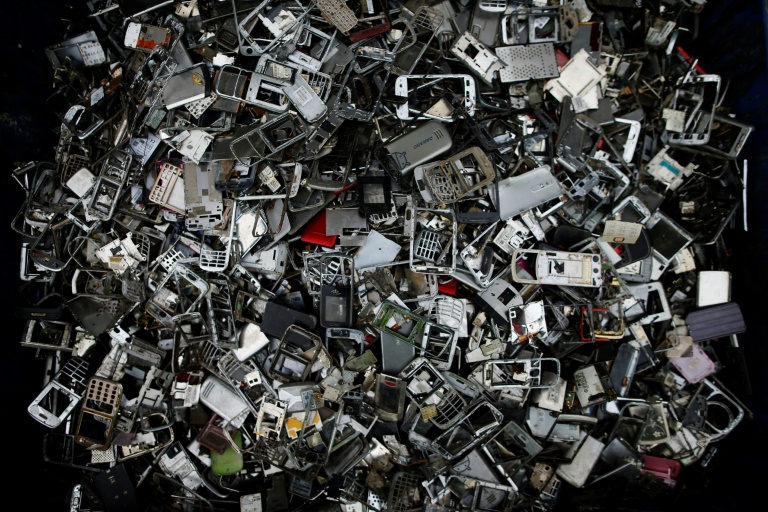
More than five billion of the estimated 16 billion mobile phones possessed worldwide will likely be discarded or stashed away in 2022, experts said Thursday, calling for more recycling of the often hazardous materials they contain. 

Stacked flat on top of each other, that many disused phones would rise 50,000 kilometres (30,000 miles), more than a hundred times higher than the International Space Station, the WEEE research consortium found.

Despite containing valuable gold, copper, silver, palladium and other recyclable components, almost all these unwanted devices will be hoarded, dumped or incinerated, causing significant health and environmental harm. 

“Smartphones are one of the electronic products of highest concern for us,” said Pascal Leroy, Director General of the WEEE Forum, a not-for-profit association representing forty-six producer responsibility organisations. 

“If we don’t recycle the rare materials they contain, we’ll have to mine them in countries like China or Congo,” Leroy told AFP.

Defunct cell phones are just the tip of the 44.48-million-ton iceberg of global electronic waste generated annually that isn’t recycled, according to the 2020 global e-waste monitor.

Many of the five billion phones withdrawn from circulation will be hoarded rather than dumped in the trash, according to a survey in six European countries from June to September 2022. 

This happens when households and businesses forget cell phones in drawers, closets, cupboards or garages rather than bringing them in for repair or recycling.

Up to five kilos (8 pounds) of e-devices per person are currently hoarded in the average European family, the report found.

According to the new findings, 46 percent of the 8,775 households surveyed considered potential future use as the main reason for hoarding small electrical and electronic equipment. 

Another 15 percent stockpile their gadgets with the intention to sell them or giving them away, while 13 percent keep them due to “sentimental value”. 

– Societal challenge –

“People tend not to realise that all these seemingly insignificant items have a lot of value, and together at a global level represent massive volumes,” said Pascal Leroy.

“But e-waste will never be collected voluntarily because of the high cost. That is why legislation is essential.”

This month the EU parliament passed a new law requiring USB-C to be the single charger standard for all new smartphones, tablets and cameras from late 2024.

The move is expected to generate annual savings of at least 200 million euros ($195 million) and cut more than a thousand tonnes of EU electronic waste every year.

According to Kees Balde, Senior Scientific Specialist at the  United Nations Institute for Training and Research (UNITAR), legislation in Europe has prompted higher e-waste collection rates in the region compared to other parts of the world. 

“At the European level, 50-55 percent of e-waste is collected or recycled,” Balde told AFP. “In low-income countries, our estimates plunge to under 5 percent and sometimes even below 1 percent.”

At the same time, thousands of tons of e-waste are shipped from wealthy nations — including members of the European Union — to developing countries every year, adding to their recycling burden. 

At the receiving end, financial means are often lacking for e-waste to be treated safely: hazardous substances such as mercury and plastic can contaminate soil, pollute water and enter the food chain, as happened near a Ghanaian e-waste dumpsite. 

Research carried out in the west African nation in 2019 by the IPEN and Basel Action Network revealed a level of chlorinated dioxins in hens’ eggs laid near the Agbogbloshie dumpsite, near central Accra, 220 times higher than levels permitted in Europe. 

“We have moved mountains in Europe,” said WEEE Forum director Pascal Leroy. “The challenge now is to transfer knowledge to other parts of the world.”

Yen hits lowest level against dollar since 1990 

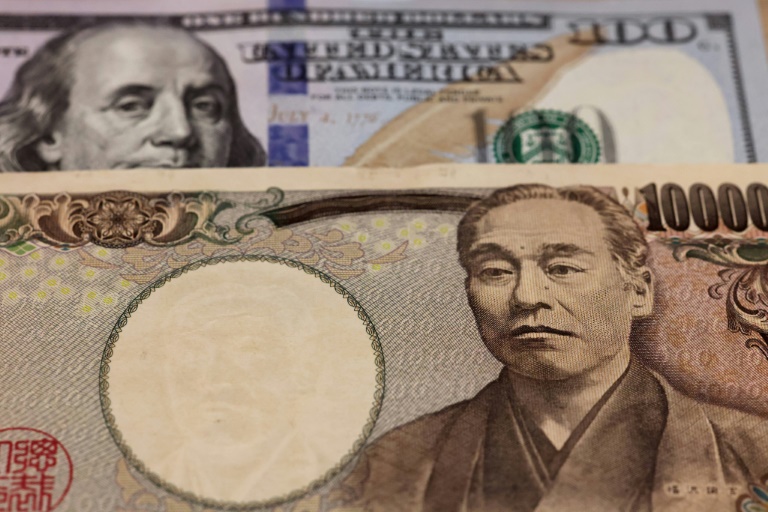
The yen on Thursday dropped to the lowest level against the dollar since 1990 after US inflation data indicated more aggressive interest rate hikes from the Federal Reserve.

One dollar was worth 147.67 yen following the stronger-than-expected inflation number, which comes as Japan’s central bank holds off from hiking interest rates.

“The yen has been the weakest major currency so far in 2022,” noted Carol Kong, a currency strategist at Commonwealth Bank of Australia.  

“There are two key reasons behind its rapid weakness. The first is the growing divergence in monetary policy between the US and Japan,” she told AFP.  

“The Bank of Japan continues to keep monetary policy easy because inflation and wages remain relatively low” in the country. 

Kong said the yen had been hit hard also by a collapse in Japan’s current account balance after oil prices surged following the invasion of Ukraine by key energy producer Russia.  

With Japan relying on oil imports to meet most of its energy needs, the surge in crude costs recently sent its current account into deficit, she pointed out. 

On the upside, a weaker yen is helpful to Japanese exporters, whose products turn cheaper for foreign buyers holding stronger currencies.

Fast Retailing, the parent company of Japanese clothing giant Uniqlo, posted on Thursday a record full-year net profit thanks to the weak yen and a rebound in demand after virus lockdowns.

The yen’s dramatic fall — from around 115 against the dollar in February to over 138 in late August — was a boon for the company, which owns Uniqlo stores worldwide.

Wall Street and European stock markets were meanwhile also down sharply following Thursday’s US inflation data that solidified expectations of further big interest rate hikes from the Federal Reserve.

US consumer prices rose 0.4 percent in September compared to August, double the figure projected by analysts.

burs-bcp/rl

Close Bitnami banner
Bitnami