AFP

Western allies vow to get air defence to Ukraine 'as fast as can'

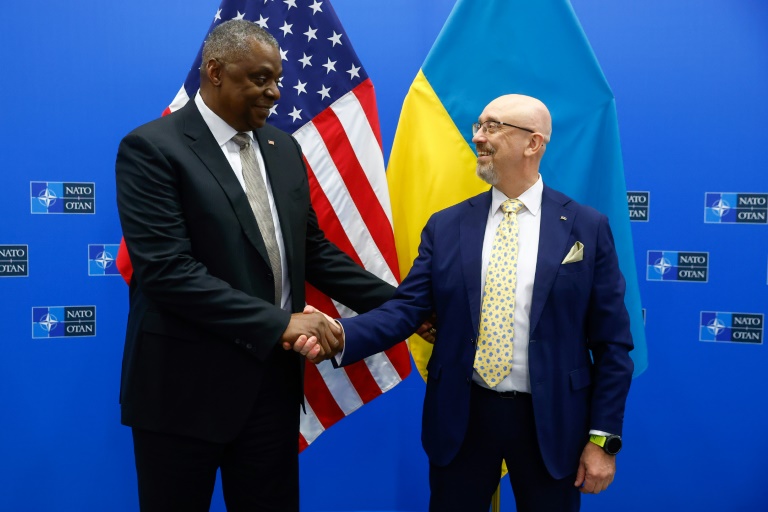
International backers of Ukraine vowed on Wednesday to deliver new air defences “as fast as we can”, as Kyiv pressed them to bolster protection against Russia’s missile blitz.

A US-led group of some 50 countries held talks at NATO headquarters in Brussels with the focus on air defences after Russian President Vladimir Putin unleashed a barrage across Ukraine following a blast at a bridge to the annexed Crimea peninsula. 

Ukrainian Defence Minister Oleksiy Reznikov said just three words when asked what he hoped for from the meeting: “Air defence systems.”

Western allies have scrambled to work out how to supply more advanced systems to Ukraine as diplomats admit they have precious few to spare.

“The systems will be provided, as fast as we can physically get them there,” United States Defence Secretary Lloyd Austin said after the meeting, without giving details on any new pledges.  

“We’re going to provide systems that we have available … We’re also going to try to provide additional munitions to the existing systems that the Ukrainian forces are using.”

A first Iris-T medium-range system has arrived in Ukraine after Germany decided to ship it before even giving it to its own troops. 

The United States has also said it is looking to expedite the delivery of its NASAMS anti-missile and anti-drone system to Kyiv and a first batch of two is expected in the coming weeks. 

Deliveries of a further six units could take far longer as they need to be manufactured and US sources said Washington is eyeing the possibility of trying to get Cold War-era Hawk systems to Ukraine in the meantime. 

“There’s other systems out there throughout the world that are available,” US top general Mark Milley said. 

“The task will be to bring those together, get them deployed.”

– ‘Pivotal moment’ –

Ukraine’s President Volodymyr Zelensky had called on G7 leaders on Tuesday to help establish an “air shield” over his country more than seven months into the war against Moscow. 

Austin said that the resolve of Ukraine’s allies to support Kyiv had been “heightened by the deliberate cruelty of Russia’s new barrage against Ukraine’s cities”. 

“Those assaults on targets with no military purpose again revealed the malice of Putin’s war of choice,” he said. 

NATO defence ministers, who will meet on Thursday, are pushing for ways to bolster their overall weapons stockpiles as the war in Ukraine has depleted their shelves.

NATO members have supplied weaponry worth billions of dollars to help fight Russia’s more than seven-month invasion of Ukraine and have vowed to keep supplies flowing as Kyiv pushes to recapture occupied territories. 

“Allies have provided support to Ukraine by reducing NATO stocks, or ammunition, or weapons. This has been the right thing to do, but of course, we need to address how to refill those stocks,” Stoltenberg said. 

“I expect that the ministers will agree to review our guidelines for stocks and also to engage more with industry.”

The NATO chief said the meeting in Brussels comes at a “pivotal moment” as Putin has followed up battlefield losses by annexing seized territory and issuing veiled nuclear threats. 

Western powers say they have seen no change in Moscow’s nuclear posture that would suggest it is getting ready to launch a strike. They have warned Moscow against deploying any small, tactical atomic bomb in Ukraine.

“There would be a sharp response — almost certainly drawing a physical response from many allies, and potentially from NATO itself,” a senior NATO official said. 
Ukraine claims new gains after days of mass Russian strikes

Ukraine said Wednesday it reclaimed more territory from Russia in the south and welcomed the delivery of Western air defences Kyiv said would herald a “new era” after mass strikes by Moscow.

Russia for two days pummelled Ukraine with missiles, damaging energy facilities nationwide, in attacks that President Vladimir Putin said were retaliation for a deadly explosion at the Crimea bridge.

Moscow’s FSB security service said Wednesday it detained eight suspects over the blast that ripped through the road and rail bridge connecting Crimea to Russia.

But it also claimed to have foiled two more attacks that Ukrainian special services allegedly planned to carry out on Russian territory.

NATO chief Jens Stoltenberg said Wednesday after Russia’s missile barrage that Ukraine’s Western backers were looking to provide Kyiv with more air defences to protect against Russia’s “indiscriminate” attacks across the country. 

“The top priority will be more air defence for Ukraine,” Stoltenberg said at the start of a meeting by Ukraine’s allies on arms supplies to Kyiv.

United States Defence Secretary Lloyd Austin said after the meeting “the systems will be provided, as fast as we can physically get them there”. 

Putin has vowed a “severe” response to any further attack on Russia and what Moscow considers to be its territory, including the Crimea peninsula that it annexed from Ukraine in 2014.

Despite warnings from the Kremlin, Kyiv has vowed to retake the peninsula as well as four regions in Ukraine’s east and south that Moscow says are now part of Russia.

Kyiv said Wednesday that it had retaken five more settlements in the southern region of Kherson — one of the four territories Moscow said it annexed in late September — in the latest setback for Russia’s campaign.

– Putin ‘miscalculated’ –

The Russian military meanwhile said it had fended off Ukrainian attacks in the eastern Donetsk, Lugansk and Kharkiv regions.

And Russian strikes on the frontline town of Avdiivka killed at least eight people at a market, the Ukraine-appointed chief of the region said.

The Ukrainian army announced its counter-offensive in the south in late August. 

After regaining almost full control of the northeastern region of Kharkiv, Ukrainian forces recently claimed more gains on the eastern and southern fronts.

Faced with mounting setbacks since September, the Russian president announced the mobilisation of hundreds of thousands of reservists to join the fighting in Ukraine. 

With the Crimea bridge blast, Russia also lost a vital transport link for moving military equipment for its soldiers fighting in Ukraine.

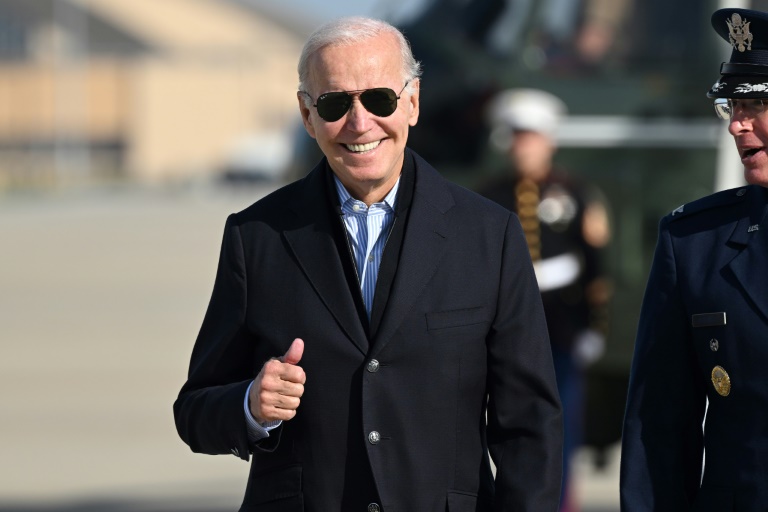
US President Joe Biden said Tuesday that he believes his Russian counterpart “miscalculated” the situation in Ukraine and underestimated the ferocity of Ukrainian defiance.

“He thought he was going to be welcomed with open arms, that this was the home of Mother Russia in Kyiv,” Biden told CNN in a rare televised interview.

“I think he just totally miscalculated.”

Putin is due to meet Turkish President Recep Tayyip Erdogan in Kazakhstan later this week, with a Kremlin official suggesting Ankara will formally offer to mediate talks between Russia and Ukraine.

– Mass graves discovered –

After two days of nationwide Russian strikes that especially targeted Ukraine’s energy infrastructure, leaving villages and towns without power and hot water, Ukraine said it had started receiving anti-aircraft defence systems from its Western allies. 

“A new era of air defence has begun in Ukraine,” Defence Minister Oleksiy Reznikov said on Twitter, announcing the arrival of Germany’s Iris-Ts and the upcoming delivery of NASAMS from Washington. 

He said he had met with Austin and General Mark Milley and discussed the “strengthening of the combat potential of the Ukrainian army”, according to a tweet.

On Tuesday, Ukraine’s President Volodymyr Zelensky called on the G7 club of wealthy nations to help Kyiv create an “air shield”, warning that Russia “still has room for further escalation”.

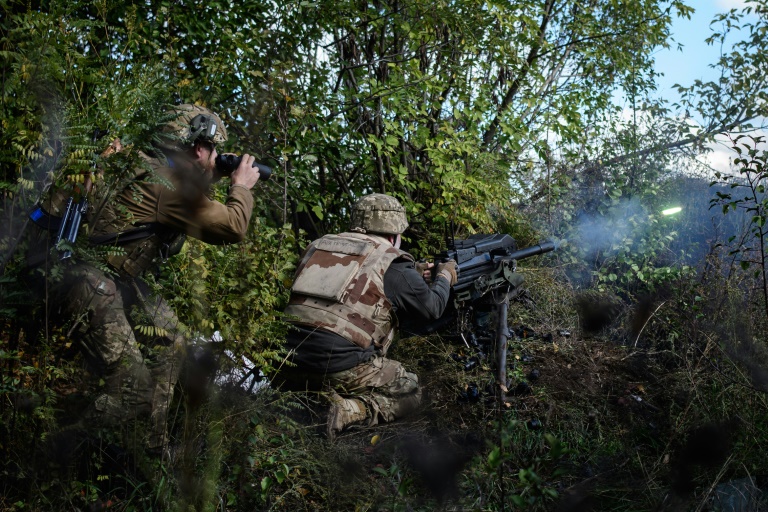
On the frontline in Donetsk, Western weapons have helped boost Ukrainian morale and the abilities of Kyiv’s forces.

“We definitely need more artillery,” said an officer who gave his name as “Sergiy” with Ukraine’s 5th Regiment on a hill overlooking Russian-held Gorlivka in Donetsk.

“When it comes to artillery, they still have an advantage so we can’t return fire equally. 

“We are firing more precisely now, but with fewer strikes,” Sergiy said about the US-made Mk-19 automatic grenade launcher.

In two towns elsewhere in the Donetsk region, Ukrainian officials announced Tuesday the recovery of the remains of dozens of civilians found at mass burial sites.

In Lyman, a railway hub retaken by Ukraine in early October, a forensic team dressed in protective gear was exhuming dozens of bodies, an AFP journalist saw. 

More than 50 bodies of both soldiers and civilians were found, officials said.

Russian forces have been accused of numerous abuses — torture, rape, extrajudicial executions — in Ukraine, claims Moscow has repeatedly denied.

Finance chiefs mull Ukraine aid, Russia oil price cap at IMF talks

Global finance chiefs were expected to discuss a proposed price cap on Russian oil and support for Ukraine on Wednesday as the conflict takes center stage during the IMF’s annual meetings.

Finance ministers and central bankers from around the world are gathering in Washington this week for the first fully in-person gathering hosted by the International Monetary Fund since 2019.

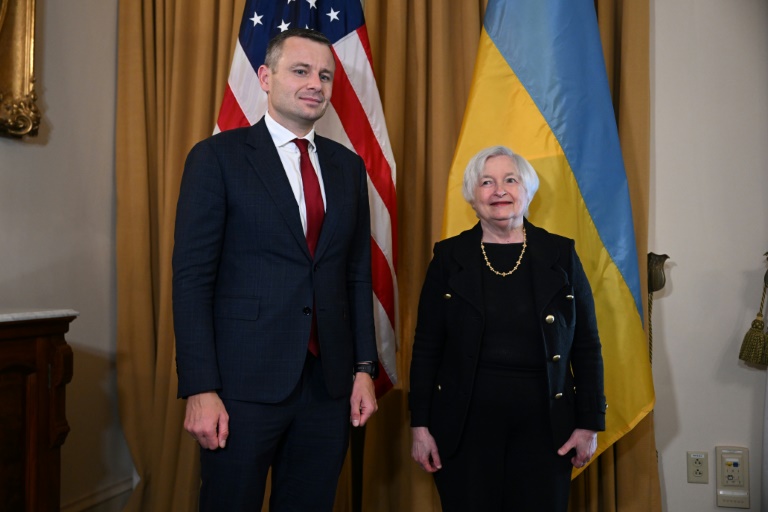
The office of US Treasury Secretary Janet Yellen said on Tuesday she would “redouble efforts to advance a price cap on Russian oil, continue to lead the broad alliance leveling sanctions on Russia, and encourage our partners to accelerate and increase the scale of economic assistance to Ukraine.”

Finance ministers from the Group of Seven wealthy democracies were due to talk on Wednesday about setting a ceiling on Russia’s oil exports — a move aimed at denying Moscow of a major source of funding for its war and containing soaring energy prices.

Hours earlier, Russian President Vladimir Putin lashed out at the proposal, which the United States has pushed and the European Commission has proposed.

“With their cavalier decisions, some Western politicians are destroying the global market economy and are in fact posing a threat to the well-being of billions of people,” Putin told an energy forum in Moscow.

Moscow has warned that it would cut off oil supplies to countries that impose such a cap.

Officials have yet to say at what level the cap would be set, but they have said that it would remain above the cost of production so that Russia would still have an incentive to supply importing countries.

At a separate event, IMF Managing Director Kristalina Georgieva and World Bank President David Malpass were scheduled to talk with Ukrainian Prime Minister Denys Shmygal on how to support the war-torn country.

The IMF said last week it would provide $1.3 billion in emergency aid to Ukraine through its new food crisis assistance program. The World Bank earlier granted $530 million in additional aid to the country.

The United States has provided $65 billion in aid, including military equipment to Kyiv since February, while EU nations have given weapons and promised $9 billion in loans to the country.

Finance chiefs mull Ukraine aid, Russia oil price cap at IMF talks

Global finance chiefs were expected to discuss a proposed price cap on Russian oil and support for Ukraine on Wednesday as the conflict takes center stage during the IMF’s annual meetings.

Finance ministers and central bankers from around the world are gathering in Washington this week for the first fully in-person gathering hosted by the International Monetary Fund since 2019.

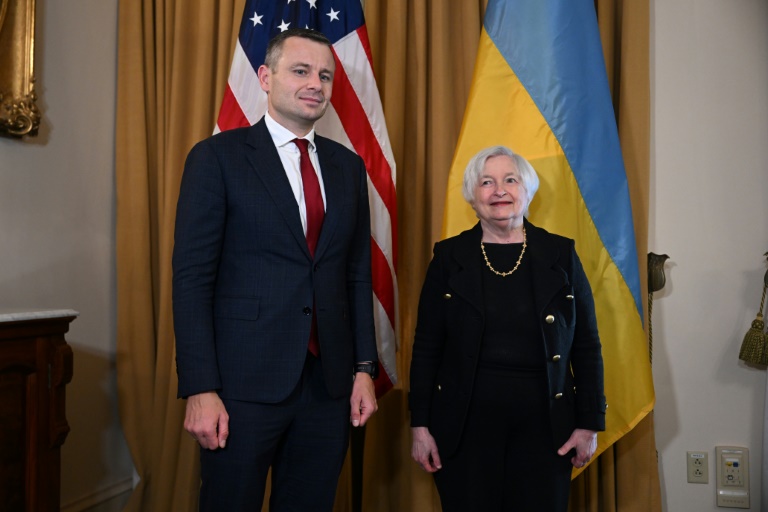
The office of US Treasury Secretary Janet Yellen said on Tuesday she would “redouble efforts to advance a price cap on Russian oil, continue to lead the broad alliance leveling sanctions on Russia, and encourage our partners to accelerate and increase the scale of economic assistance to Ukraine.”

Finance ministers from the Group of Seven wealthy democracies were due to talk on Wednesday about setting a ceiling on Russia’s oil exports — a move aimed at denying Moscow of a major source of funding for its war and containing soaring energy prices.

Hours earlier, Russian President Vladimir Putin lashed out at the proposal, which the United States has pushed and the European Commission has proposed.

“With their cavalier decisions, some Western politicians are destroying the global market economy and are in fact posing a threat to the well-being of billions of people,” Putin told an energy forum in Moscow.

Moscow has warned that it would cut off oil supplies to countries that impose such a cap.

Officials have yet to say at what level the cap would be set, but they have said that it would remain above the cost of production so that Russia would still have an incentive to supply importing countries.

At a separate event, IMF Managing Director Kristalina Georgieva and World Bank President David Malpass were scheduled to talk with Ukrainian Prime Minister Denys Shmygal on how to support the war-torn country.

The IMF said last week it would provide $1.3 billion in emergency aid to Ukraine through its new food crisis assistance program. The World Bank earlier granted $530 million in additional aid to the country.

The United States has provided $65 billion in aid, including military equipment to Kyiv since February, while EU nations have given weapons and promised $9 billion in loans to the country.

Andrew Bailey: Bank of England boss facing fresh storm

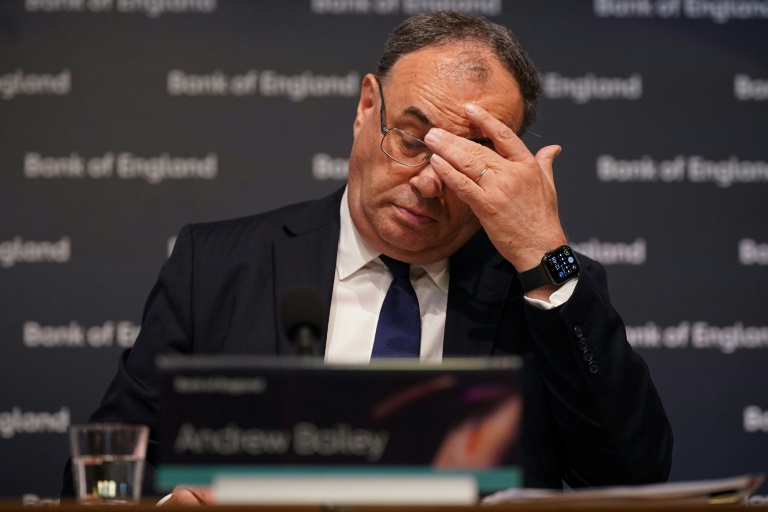
Andrew Bailey is no stranger to economic storms as head of the Bank of England, becoming governor just as Covid was taking hold in Britain.

Less than three years on and Bailey is struggling to reassure markets that emergency BoE intervention on markets, notably by snapping up UK government bonds, is working.

His predecessor Mark Carney was named the “unreliable boyfriend” by traders for hinting at interest rate rises that never materialised.

Bailey, 63, was seen as acting in a similar fashion almost one year ago, while market chaos in reaction to BoE policy in the wake of Britain’s heavily-criticised budget has heightened such accusations.

“This is not the first time that Bailey has had troubles guiding the market,” noted Victoria Scholar, head of investment at Interactive Investor. 

“He was labelled the ‘unreliable boyfriend’ last November for signalling lift-off on interest rates but keeping rates unchanged.”

Since then, the BoE has hiked its main interest rate to 2.25 percent from a record-low level of 0.1 percent in an attempt to cool the highest inflation Britain has seen in decades.

– Tough start –

The coronavirus pandemic gave Bailey, from the city of Leicester in central England, no time to settle.

“It was the third day of my term when the markets team came into the office and said, ‘we need to talk’. That’s never good,” he told the Financial Times. 

The BoE promptly slashed its key interest rate to an all-time low and increased its asset-purchase programme to prevent the UK economy from going under.

Britain’s output collapsed by a record 9.9 percent in 2020 on Covid fallout.

While it rebounded last year, sky-high inflation has put the economy close to recession. 

That situation has worsened in recent weeks following a budget from the government of new Prime Minister Liz Truss that has spooked markets.

Fearing that uncosted tax cuts will plunge the UK into a debt crisis despite the BoE intervention, yields on long-dated UK government bonds have soared.

Bailey’s first 12 months in office saw him face scrutiny also over his previous role as head as Britain’s financial regulator, from which he joined the BoE.

Under his tenure, the Financial Conduct Authority was rocked by a series of scandals, including the collapse of former star investor Neil Woodford’s fund and London Capital and Finance.

The fall of LCF cost thousands of investors their life savings.

Bailey first joined Britain’s central bank in 1985, spending most of his working life on Threadneedle Street.

The married father-of-two played a key role during the 2008 financial crisis, when he was in charge of the bank’s special operations that oversaw the state bailout of Royal Bank of Scotland. 

Bailey earned a doctorate at the University of Cambridge before becoming a researcher at the London School of Economics.

Pound, UK bond yields climb on Bank of England uncertainty

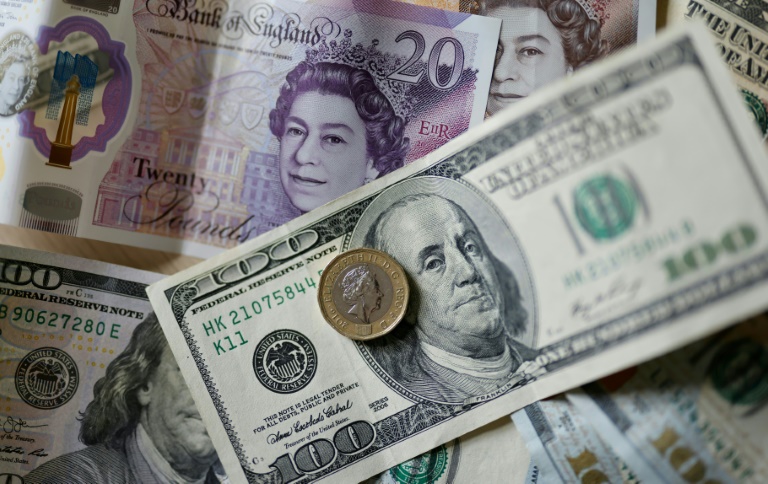
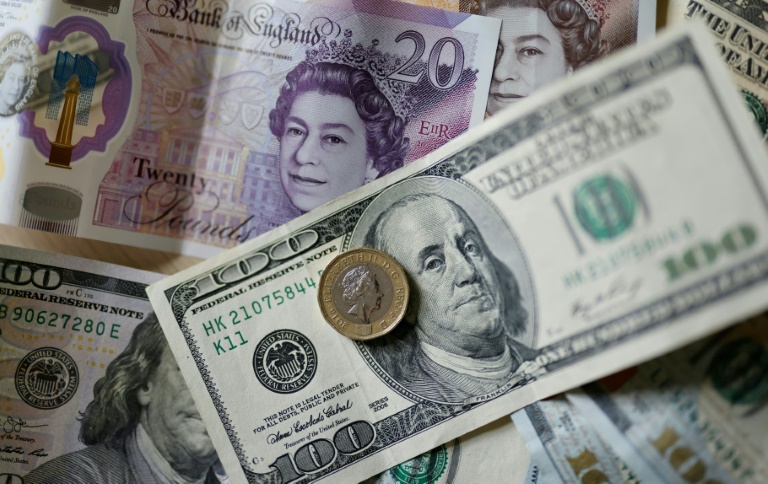
The pound rallied and UK government bond yields rose Wednesday as the Bank of England came under criticism for fuelling market uncertainty.

The BoE insisted it would halt on Friday a short-term programme of bond-buying support aimed at quelling volatility triggered by a debt-fuelled UK budget following a Financial Times report the central bank stood ready to intervene further.

“The Bank of England’s messaging to the market over the last 24-hours has been conflicted and confused, causing unnecessary gyrations to the pound and adding to the sense of instability in the markets,” said Interactive Investor analyst Victoria Scholar.

On Wednesday, the yield on the government’s 30-year bond returned above a relatively high level of five percent, and the yield on 10-year bonds hit 4.64 percent, the highest level since 2008 in the midst of the global financial crisis and higher than the level which prompted the BoE’s bond market intervention.

The UK government’s higher borrowing costs are a reflection of market unease regarding the affordability of upcoming tax cuts aimed at supporting Britain’s recession-threatened economy.

The pound rose against the dollar as traders bet on more aggressive interest rate hikes from the BoE on concerns the budget of uncosted tax cuts would further fuel sky-high UK inflation.

Meanwhile, London’s benchmark FTSE 100 index shed 0.9 percent, with sentiment also dampened by news that the UK economy unexpectedly shrank in August.

Frankfurt’s DAX dipped 0.4 percent after the German government said it now expects the economy will contract 0.4 percent next year and inflation will run at seven percent.

Investors are struggling to find some solace as they navigate a range of crises that threaten the global economy, from soaring prices and bumper interest rate hikes to the Ukraine war and China’s Covid-induced growth slowdown.

The gloom was summed up by the International Monetary Fund, which on Tuesday highlighted the risks of inflation and the conflict in Europe as it slashed its global growth forecast and warned: “For many people 2023 will feel like a recession”.

Later, US President Joe Biden admitted there was a chance the country could suffer a “slight” recession.

Investors are now nervously looking ahead to Thursday’s US inflation report, with observers warning that a strong reading could spark another rout on markets.

Even if it shows inflation cooling from a four-decade high, analysts said the Fed would not likely take the single reading as reason to slow down its pace of rate hikes.

Wall Street’s main stock indices rose despite the latest reading of the producer price index, which nudged down only a tenth of a percentage point to 8.5 percent in September on an annual basis.

The reading “will stoke concerns that there hasn’t been enough improvement on the inflation front to convince the Fed to take a more guarded approach with its rate hikes,” said market analyst Patrick O’Hare at Briefing.com.

Oil prices fell after OPEC trimmed its forecast for growth in oil demand this year and next by half a million barrels per day, citing “recent macroeconomic trends and oil demand developments in various regions.”

OPEC and its allies including Russia last week decided to cut output by two million barrels per day despite concerns about tight supplies.

“Continued concerns about future global demand and the bleak outlook from the IMF is raising the possibility that supply issues will be less of an issue than demand destruction,” said Michael Hewson at CMC Markets.

– Key figures around 1530 GMT –

New York – Dow: UP 0.4 percent at 29,356.58 points

EURO STOXX 50: DOWN 0.3 percent at 3,331.53

London – FTSE 100: DOWN 0.9 percent at 6,826.15 (close) 

Frankfurt – DAX: DOWN 0.4 percent at 12,172.26 (close)

Paris – CAC 40: DOWN 0.3 percent at 5,818.47 (close)

Tokyo – Nikkei 225: FLAT at 26,396.83 (close)

Hong Kong – Hang Seng Index: DOWN 0.8 percent at 16,701.03 (close)

Shanghai – Composite: UP 1.5 percent at 3,025.51 (close)

Pound/dollar: UP at $1.1075 from $1.0972 Tuesday

Dollar/yen: UP at 146.89 yen from 145.83 yen

Euro/dollar: DOWN at $0.9705 from $0.9709

Euro/pound: DOWN at 87.64 pence from 88.46 pence

Brent North Sea crude: DOWN 2.0 percent at $92.40 per barrel

West Texas Intermediate: DOWN 2.3 percent at $87.26 per barrel

burs-rl/lcm

Pound, UK bond yields climb on Bank of England uncertainty

The pound rallied and UK government bond yields rose Wednesday as the Bank of England came under criticism for fuelling market uncertainty.

The BoE insisted it would halt on Friday a short-term programme of bond-buying support aimed at quelling volatility triggered by a debt-fuelled UK budget following a Financial Times report the central bank stood ready to intervene further.

“The Bank of England’s messaging to the market over the last 24-hours has been conflicted and confused, causing unnecessary gyrations to the pound and adding to the sense of instability in the markets,” said Interactive Investor analyst Victoria Scholar.

On Wednesday, the yield on the government’s 30-year bond returned above a relatively high level of five percent, and the yield on 10-year bonds hit 4.64 percent, the highest level since 2008 in the midst of the global financial crisis and higher than the level which prompted the BoE’s bond market intervention.

The UK government’s higher borrowing costs are a reflection of market unease regarding the affordability of upcoming tax cuts aimed at supporting Britain’s recession-threatened economy.

The pound rose against the dollar as traders bet on more aggressive interest rate hikes from the BoE on concerns the budget of uncosted tax cuts would further fuel sky-high UK inflation.

Meanwhile, London’s benchmark FTSE 100 index shed 0.9 percent, with sentiment also dampened by news that the UK economy unexpectedly shrank in August.

Frankfurt’s DAX dipped 0.4 percent after the German government said it now expects the economy will contract 0.4 percent next year and inflation will run at seven percent.

Investors are struggling to find some solace as they navigate a range of crises that threaten the global economy, from soaring prices and bumper interest rate hikes to the Ukraine war and China’s Covid-induced growth slowdown.

The gloom was summed up by the International Monetary Fund, which on Tuesday highlighted the risks of inflation and the conflict in Europe as it slashed its global growth forecast and warned: “For many people 2023 will feel like a recession”.

Later, US President Joe Biden admitted there was a chance the country could suffer a “slight” recession.

Investors are now nervously looking ahead to Thursday’s US inflation report, with observers warning that a strong reading could spark another rout on markets.

Even if it shows inflation cooling from a four-decade high, analysts said the Fed would not likely take the single reading as reason to slow down its pace of rate hikes.

Wall Street’s main stock indices rose despite the latest reading of the producer price index, which nudged down only a tenth of a percentage point to 8.5 percent in September on an annual basis.

The reading “will stoke concerns that there hasn’t been enough improvement on the inflation front to convince the Fed to take a more guarded approach with its rate hikes,” said market analyst Patrick O’Hare at Briefing.com.

Oil prices fell after OPEC trimmed its forecast for growth in oil demand this year and next by half a million barrels per day, citing “recent macroeconomic trends and oil demand developments in various regions.”

OPEC and its allies including Russia last week decided to cut output by two million barrels per day despite concerns about tight supplies.

“Continued concerns about future global demand and the bleak outlook from the IMF is raising the possibility that supply issues will be less of an issue than demand destruction,” said Michael Hewson at CMC Markets.

– Key figures around 1530 GMT –

New York – Dow: UP 0.4 percent at 29,356.58 points

EURO STOXX 50: DOWN 0.3 percent at 3,331.53

London – FTSE 100: DOWN 0.9 percent at 6,826.15 (close) 

Frankfurt – DAX: DOWN 0.4 percent at 12,172.26 (close)

Paris – CAC 40: DOWN 0.3 percent at 5,818.47 (close)

Tokyo – Nikkei 225: FLAT at 26,396.83 (close)

Hong Kong – Hang Seng Index: DOWN 0.8 percent at 16,701.03 (close)

Shanghai – Composite: UP 1.5 percent at 3,025.51 (close)

Pound/dollar: UP at $1.1075 from $1.0972 Tuesday

Dollar/yen: UP at 146.89 yen from 145.83 yen

Euro/dollar: DOWN at $0.9705 from $0.9709

Euro/pound: DOWN at 87.64 pence from 88.46 pence

Brent North Sea crude: DOWN 2.0 percent at $92.40 per barrel

West Texas Intermediate: DOWN 2.3 percent at $87.26 per barrel

burs-rl/lcm

Striking French refinery workers defy government threats

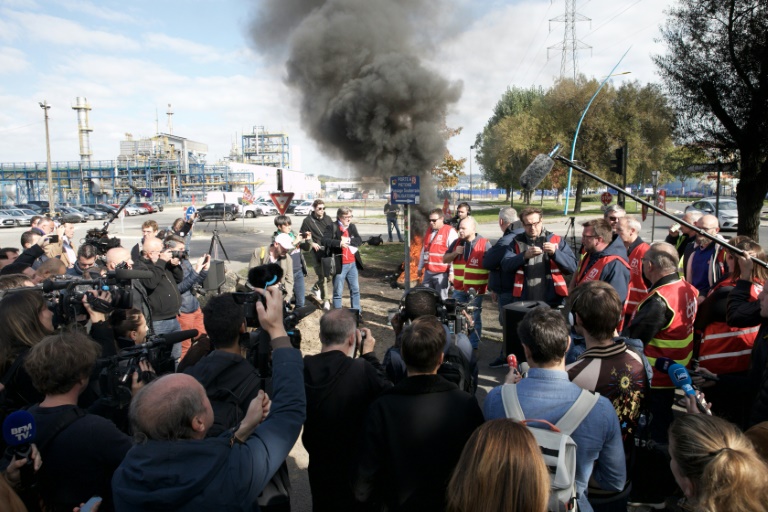
Striking French oil refinery employees voted Wednesday to maintain blockades now in their third week, despite a government order for some of them to return to work in a bid to get fuel supplies flowing.

The industrial action to demand pay hikes has paralysed six out of the seven fuel refineries in France, leading to shortages of petrol and diesel exacerbated by panic-buying from drivers.

Having previously threatened to use emergency powers to order essential workers back to the job on pain of fines or jail time, the government announced Wednesday it was putting them into action.

Workers at a fuel depot at a refinery in northwest France, owned by US giant Esso-ExxonMobil, will be the first to be targeted, an energy ministry official told AFP.

“Faced with the continuation of the strike by some of the personnel at Port-Jerome in Normandy, the government is launching the requisitioning of essential workers at the depot,” the official said.

Government spokesman Olivier Veran later said that TotalEnergies workers at a northern French oil depot in Flandres, near Dunkirk, would be next.

Long queues of motorists desperately seeking fuel again blocked streets in Paris and other major cities.

As of Tuesday evening, 31 percent of stations across the country lacked at least one grade of fuel. In the greater Paris region, that figure stood at 44 percent.

Esther Berrebi, a home health aide in the capital, was trying her third station since 7:00 am.

“I’m very angry, and very worried,” she told AFP. “I understand they want higher salaries, but I don’t understand how they can halt an entire country.”

– Growing frustration –

The hard-left CGT union leading the stoppages said Tuesday that any requisitioning would be “not necessary and illegal”, raising the prospect of legal challenges.

It is seeking a 10-percent pay rise for staff at TotalEnergies, retroactive for all of 2022, and says management has refused to hold talks.

“It would have been easier to requisition our CEO and bring him to the negotiating table,” said Germinal Lancelin, the CGT leader for ExxonMobil at the Gravenchon-Port-Jerome refinery.

On Wednesday, TotalEnergies said it would meet all union representatives, having previously insisted it would meet only those who accepted to end the blockades.

“We’ll see what management puts on the table, but this is a first step,” said Antoine Lopez, 50, enjoying a barbecue with colleagues at a picket outside the Feyzin refinery in eastern France.

CGT’s branch inside the company said bosses had agreed to drop its demand for an end to the refinery strike before opening wage talks, but were still insisting fuel deliveries should resume.

“It’s up to the strikers to decide, not us, but I’d lay money on them not agreeing” to the condition, CGT representative Thierry Dufresne told reporters.

– ‘General strike’ –

Until now, the government had been reluctant to inflame the conflict, but in recent days officials have had to acknowledge the growing frustration and economic damage caused by drivers spending hours trying to fill their tanks.

“Petrol is too important for us. It’s been a nightmare for a week,” Santiago, a delivery driver, told AFP in Paris.

Even if key personnel are ordered back to work, “it will take at least two weeks” to restore fuel supplies, said Gil Villard, a CGT representative for Esso at the Fos-sur-Mer refinery outside Marseille, in the southeast.

At a time of high energy prices and inflation, TotalEnergies’ bumper profits have caused anger, leading to calls for a windfall tax.

The standoff could add impetus to a march planned by left-wing political parties on Sunday against the policies of President Emmanuel Macron and the high cost of living. 

“I hope this is the spark that begins a general strike,” leading Greens party parliamentarian Sandrine Rousseau told Franceinfo radio Wednesday.

The industrial action comes as Macron is preparing to push through a contentious pension overhaul by the end of the winter, despite warnings from some allies about the risk of widespread resistance.

Labour unions and left-wing political parties have vowed to try to block the reform, which would see the pension age raised to 64 or 65 for most people, from 62 currently.

Biden to prioritize China competition amid 'dangerous' Russia

President Joe Biden’s administration said Wednesday it would prioritize winning a competition with China, seeing it as the only global rival to the United States, even as it also works to constrain a “dangerous” Russia.

Releasing a national security strategy delayed by the Ukraine war, the White House said the 2020s would be a “decisive decade for America and the world,” both for reducing conflict and confronting the key shared threat of climate change.

“We will prioritize maintaining an enduring competitive edge over the PRC while constraining a still profoundly dangerous Russia,” the strategy said, referring to the People’s Republic of China.

“The most pressing strategic challenge facing our vision is from powers that layer authoritarian governance with a revisionist foreign policy,” it said.

Vladimir Putin’s Russia “poses an immediate threat to the free and open international system, recklessly flouting the basic laws of the international order today, as its brutal war of aggression against Ukraine has shown,” the strategy added.

China, “by contrast, is the only competitor with both the intent to reshape the international order and, increasingly, the economic, diplomatic, military and technological power to advance that objective.”

The strategy is largely consistent with interim guidance the administration laid out shortly after taking office in January 2021, even as Biden for most of this year has focused on rallying allies against Russia’s invasion of Ukraine and sending billions of dollars in weapons to Kyiv.

“I don’t believe that the war in Ukraine has fundamentally altered Joe Biden’s approach to foreign policy, which long predates his presidency,” said his national security advisor, Jake Sullivan.

“But I do believe that it presents in living color the key elements of our approach — the emphasis on allies, the importance of strengthening the hand of the democratic world and standing up for our fellow democracies and for democratic values,” he told reporters.

– China wants to be ‘world’s leading power’ –

The strategy said the United States was willing to work even with competitors on shared interests, amid the Biden team’s talks with top carbon emitter China on climate change, described as “the existential challenge of our time.”

But the White House emphasized risks from China, warning that its rapid advances in technology aimed to mold the world order in support of “its own authoritarian model.”

Despite Beijing’s repeated denials it is seeking hegemony, the strategy said China “has ambitions to create an enhanced sphere of influence in the Indo-Pacific and to become the world’s leading power,” using the favored US term for the broader Asia region.

The White House also tied a rising China to Biden’s vows to prioritize the US middle class, saying Beijing was seeking to make the world dependent on its economy while limiting access to its own billion-plus market.

The strategy called for major investment at home, two months after Biden signed a $52 billion package to improve US capacity for semiconductors, but also said the United States sought to “coexist peacefully” with China and manage the competition “responsibly.”

“We are not seeking to have competition tip over into confrontation or a new Cold War and we are not engaging each country as simply a proxy battleground,” Sullivan said.

The strategy release comes as Biden vows a reassessment of relations with one longtime US ally, Saudi Arabia, which moved to slash oil output — benefitting energy exporter Russia and potentially raising gas prices for American consumers weeks before congressional elections.

Amid reconciliation between Israel and Gulf Arab states, the strategy called for a “more integrated Middle East” that would reduce the long-term “resource demands” of the United States, which for decades has provided security for oil-producing nations.

Biden, who controversially traveled to Saudi Arabia in June, will be asking whether the nature of the relationship with the kingdom is “serving the interests and values of the United States” and whether changes should be made, Sullivan said.

Nigeria floods kill 500, displace 1.4 million people

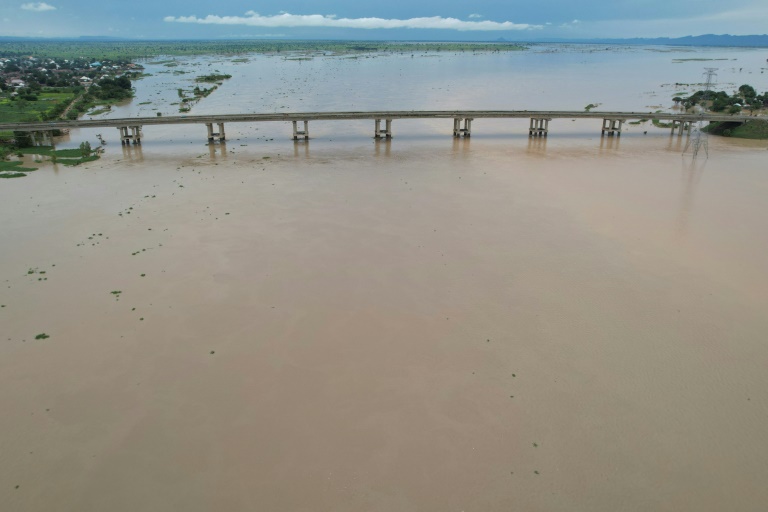
About 500 people have died in Nigeria’s worst floods in a decade and 1.4 million others been displaced from their homes since the start of the rainy season, the government said.

Floods caused by abundant rains and poor infrastructure have affected vast swathes of Africa’s most populous country sparking fears they could worsen food insecurity and inflation. 

Nigeria’s Ministry of Humanitarian Affairs said Tuesday that “over 1.4 million persons were displaced, about 500 persons have been reported dead… and 1,546 persons were injured”.

“Similarly, 45,249 houses were totally damaged… while 70,566 hectares of farmlands were completely destroyed,” added the statement from the ministry’s Deputy Director Information, Rhoda Ishaku Iliya.

National Emergency Management Agency spokesman Manzo Ezekiel told AFP on Wednesday the latest figures were from last weekend.

While the rainy season usually begins around June, most deaths and displacements started “around August and September” Ezekiel added.

“We are taking all the necessary actions to bring relief to the people affected by the flood,” humanitarian affairs ministry official Nasir Sani-Gwarzo said.

Fuel scarcity caused long queues at petrol stations in the capital Abuja this week after tankers were blocked by floods in neighbouring states.

In southern Anambra state, 76 people died when a boat capsized  last Friday during flooding of the Niger River.

More abundant rains are expected in the coming weeks and months — the rainy season typically ends in November in northern states and in  December in the south. 

Until Thursday, “heavy rainfall is anticipated over parts of Taraba, Ebonyi, Benue and Cross Rivers State,” the  Meteorological Agency said on Facebook, adding that “flash flooding is likely”.

Floods were also caused by the release of water from several damns, a process that was meant to prevent excessive flooding.

The high level of damage caused is also because “people violate regional planning (rules), constructing (houses and buildings) near waterways,” said Ezekiel.

In 2012, 363 people died and more than 2.1 million were displaced from flooding. 

Sub-Saharan Africa is disproportionately affected by climate change and many of its economies are already struggling from ripple effects of the Russia-Ukraine war.

Rice producers have warned that the devastating floods could impact prices in the country of some 200 million people where rice imports are banned to stimulate local production.

The World Food Programme and the UN’s Food and Agriculture Organization said last month that Nigeria was among six countries facing a high risk of catastrophic levels of hunger.

Close Bitnami banner
Bitnami