AFP

Nigeria floods kill 500, displace 1.4 million people

About 500 people have died in Nigeria’s worst floods in a decade and 1.4 million others been displaced from their homes since the start of the rainy season, the government said.

Floods caused by abundant rains and poor infrastructure have affected vast swathes of Africa’s most populous country sparkin fears they could worsen food insecurity and inflation. 

Nigeria’s Ministry of Humanitarian Affairs said Tuesday that “over 1.4 million persons were displaced, about 500 persons have been reported dead… and 1,546 persons were injured”.

“Similarly, 45,249 houses were totally damaged… while 70,566 hectares of farmlands were completely destroyed,” added the statement from the ministry’s Deputy Director Information, Rhoda Ishaku Iliya.

National Emergency Management Agency spokesman Manzo Ezekiel told AFP on Wednesday the latest figures were from last weekend.

While the rainy season usually begins around June, most deaths and displacements started “around August and September” Ezekiel added.

“We are taking all the necessary actions to bring relief to the people affected by the flood,” humanitarian affairs ministry official Nasir Sani-Gwarzo said.

Fuel scarcity caused long queues at petrol stations in the capital Abuja this week after tankers were blocked by floods in neighbouring states.

In southern Anambra state, 76 people died when a boat capsized  last Friday during flooding of the Niger River.

More abundant rains are expected in the coming weeks and months — the rainy season typically ends in November in northern states and in  December in the south. 

Until Thursday, “heavy rainfall is anticipated over parts of Taraba, Ebonyi, Benue and Cross Rivers State,” the  Meteorological Agency said on Facebook, adding that “flash flooding is likely”.

Floods were also caused by the release of water from several damns, a process that was meant to prevent excessive flooding.

The high level of damage caused is also because “people violate regional planning (rules), constructing (houses and buildings) near waterways,” said Ezekiel.

In 2012, 363 people died and more than 2.1 million were displaced from flooding. 

Sub-Saharan Africa is disproportionately affected by climate change and many of its economies are already struggling from ripple effects of the Russia-Ukraine war.

Rice producers have warned that the devastating floods could impact prices in the country of some 200 million people where rice imports are banned to stimulate local production.

The World Food Programme and the UN’s Food and Agriculture Organization said last month that Nigeria was among six countries facing a high risk of catastrophic levels of hunger.


Workers at 3rd Amazon site in New York hold unionization vote

Amazon workers at an upstate New York warehouse began voting Wednesday on whether to unionize in the latest labor battle following a surprise union win earlier this year at another Amazon site.

Amazon Labor Union (ALU), which won a unionization vote in April at the 8,000-employee JFK8 warehouse in Staten Island in New York City, is hoping to follow up that upset with another win at a much smaller Amazon facility near the state capital Albany.

Some 400 full-time hourly workers at the ALB1 site in Castelton-On-Hudson, about 150 miles (240 kilometers) north of Manhattan, will vote between Wednesday and Monday on whether to be represented by ALU.

The National Labor Relations Board, which is overseeing the election, plans to begin counting ballots on Tuesday, October 18.

The NLRB moved ahead with the election after the ALU submitted signatures from more than the 30 percent of employees needed.

Amazon has signaled complete opposition to the effort.

“We remain skeptical that there are a sufficient number of legitimate signatures to support the union’s petition for an election, but the NLRB is moving forward,” said Amazon spokesman Paul Flaningan.

“We’ve always said that we want our employees to have their voices heard, and we hope and expect this process allows for that.”

Led by its president Christian Smalls, a former worker at the Staten Island site, the ALU gave a jolt to the US organized labor movement this spring after a solid majority voted for representation.

However, just weeks later, the ALU suffered a setback when the LDJ5 warehouse, also in Staten Island, voted against the group.

Amazon has refused to accept the election outcome in the first Staten Island vote, arguing the results should be tossed out in light of alleged improprieties.

Last month, an NLRB official rejected Amazon’s claims as groundless after a 24-day hearing on the e-commerce giant’s claims. 

Flaningan said Amazon “strongly” disagrees with the NLRB official’s decision and plans to appeal.

The ongoing fight over the election has prevented contract talks between the ALU and Amazon at JFK8.

Workers at 3rd Amazon site in New York hold unionization vote

Amazon workers at an upstate New York warehouse began voting Wednesday on whether to unionize in the latest labor battle following a surprise union win earlier this year at another Amazon site.

Amazon Labor Union (ALU), which won a unionization vote in April at the 8,000-employee JFK8 warehouse in Staten Island in New York City, is hoping to follow up that upset with another win at a much smaller Amazon facility near the state capital Albany.

Some 400 full-time hourly workers at the ALB1 site in Castelton-On-Hudson, about 150 miles (240 kilometers) north of Manhattan, will vote between Wednesday and Monday on whether to be represented by ALU.

The National Labor Relations Board, which is overseeing the election, plans to begin counting ballots on Tuesday, October 18.

The NLRB moved ahead with the election after the ALU submitted signatures from more than the 30 percent of employees needed.

Amazon has signaled complete opposition to the effort.

“We remain skeptical that there are a sufficient number of legitimate signatures to support the union’s petition for an election, but the NLRB is moving forward,” said Amazon spokesman Paul Flaningan.

“We’ve always said that we want our employees to have their voices heard, and we hope and expect this process allows for that.”

Led by its president Christian Smalls, a former worker at the Staten Island site, the ALU gave a jolt to the US organized labor movement this spring after a solid majority voted for representation.

However, just weeks later, the ALU suffered a setback when the LDJ5 warehouse, also in Staten Island, voted against the group.

Amazon has refused to accept the election outcome in the first Staten Island vote, arguing the results should be tossed out in light of alleged improprieties.

Last month, an NLRB official rejected Amazon’s claims as groundless after a 24-day hearing on the e-commerce giant’s claims. 

Flaningan said Amazon “strongly” disagrees with the NLRB official’s decision and plans to appeal.

The ongoing fight over the election has prevented contract talks between the ALU and Amazon at JFK8.

Human brain cells implanted in rats offer research gold mine

Scientists have successfully implanted and integrated human brain cells into newborn rats, creating a new way to study complex psychiatric disorders such as schizophrenia and autism, and perhaps eventually test treatments.

Studying how these conditions develop is incredibly difficult — animals do not experience them like people, and humans cannot simply be opened up for research.

Scientists can assemble small sections of human brain tissue derived from stem cells in petri dishes, and have already done so with more than a dozen brain regions.

But in dishes, “neurons don’t grow to the size which a human neuron in an actual human brain would grow”, said Sergiu Pasca, the study’s lead author and professor of psychiatry and behavioural sciences at Stanford University.

And isolated from a body, they cannot tell us what symptoms a defect will cause.

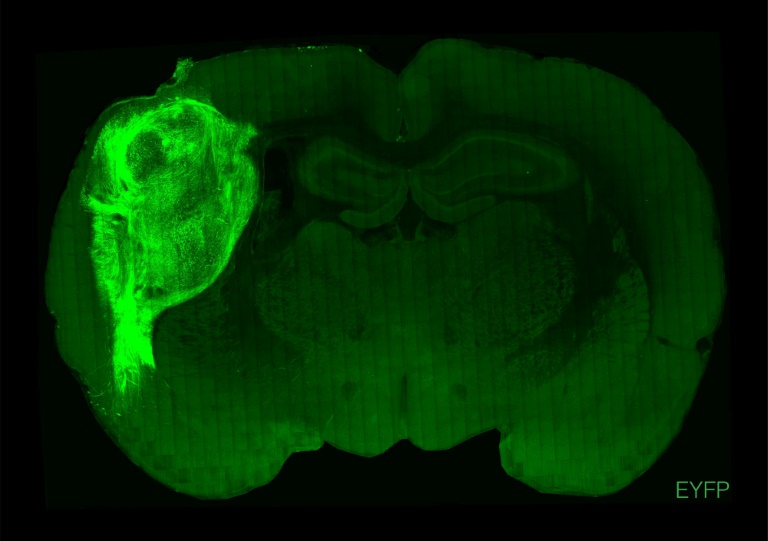
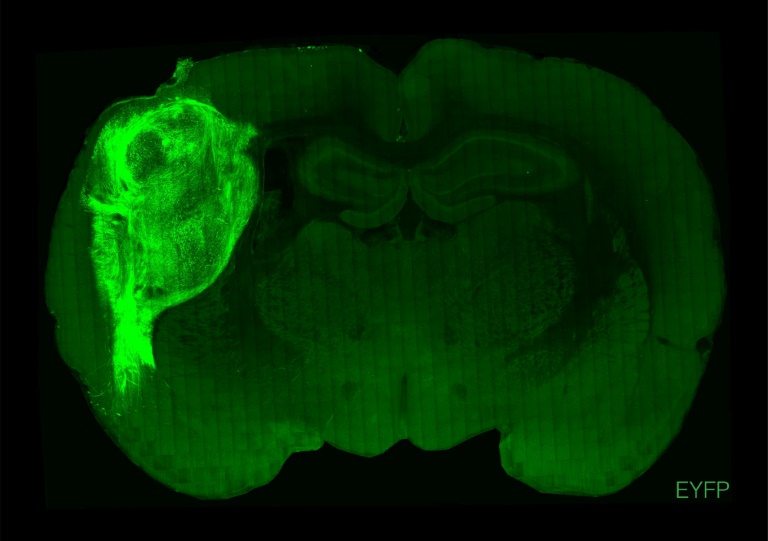
To overcome those limitations, researchers implanted the groupings of human brain cells, called organoids, into the brains of young rats.

The rats’ age was important: human neurons have been implanted into adult rats before, but an animal’s brain stops developing at a certain age, limiting how well implanted cells can integrate.

“By transplanting them at these early stages, we found that these organoids can grow relatively large, they become vascularised (receive nutrients) by the rat, and they can cover about a third of a rat’s (brain) hemisphere,” Pasca said.

– Ethical dilemmas –

To test how well the human neurons integrated with the rat brains and bodies, air was puffed across the animals’ whiskers, which prompted electrical activity in the human neurons.

That showed an input connection — external stimulation of the rat’s body was processed by the human tissue in the brain.

The scientists then tested the reverse: could the human neurons send signals back to the rat’s body?

They implanted human brain cells altered to respond to blue light, and then trained the rats to expect a “reward” of water from a spout when blue light shone on the neurons via a cable in the animals’ skulls.

After two weeks, pulsing the blue light sent the rats scrambling to the spout, according to the research published Wednesday in the journal Nature.

The team has now used the technique to show that organoids developed from patients with Timothy syndrome grow more slowly and display less electrical activity than those from healthy people.

The technique could eventually be used to test new drugs, according to J. Gray Camp of the Roche Institute for Translational Bioengineering, and Barbara Treutlein of ETH Zurich.

It “takes our ability to study human brain development, evolution and disease into uncharted territory”, the pair, who were not involved in the study, wrote in a review commissioned by Nature.

The method raises potentially uncomfortable questions — how much human brain tissue can be implanted into a rat before the animal’s nature is changed? Would the method be ethical in primates?

Pasca argued that limitations on how deeply human neurons integrate with the rat brain provide “natural barriers”.

Rat brains develop much faster than human ones, “so there’s only so much that the rat cortex can integrate”.

But in species closer to humans, those barriers might no longer exist, and Pasca said he would not support using the technique in primates for now.

He argued though that there is a “moral imperative” to find ways to better study and treat psychiatric disorders.

“Certainly the more human these models are becoming, the more uncomfortable we feel,” he said.

But “human psychiatric disorders are to a large extent uniquely human. So we’re going to have to think very carefully… how far we want to go with some of these models moving forward.”

Human brain cells implanted in rats offer research gold mine

Scientists have successfully implanted and integrated human brain cells into newborn rats, creating a new way to study complex psychiatric disorders such as schizophrenia and autism, and perhaps eventually test treatments.

Studying how these conditions develop is incredibly difficult — animals do not experience them like people, and humans cannot simply be opened up for research.

Scientists can assemble small sections of human brain tissue derived from stem cells in petri dishes, and have already done so with more than a dozen brain regions.

But in dishes, “neurons don’t grow to the size which a human neuron in an actual human brain would grow”, said Sergiu Pasca, the study’s lead author and professor of psychiatry and behavioural sciences at Stanford University.

And isolated from a body, they cannot tell us what symptoms a defect will cause.

To overcome those limitations, researchers implanted the groupings of human brain cells, called organoids, into the brains of young rats.

The rats’ age was important: human neurons have been implanted into adult rats before, but an animal’s brain stops developing at a certain age, limiting how well implanted cells can integrate.

“By transplanting them at these early stages, we found that these organoids can grow relatively large, they become vascularised (receive nutrients) by the rat, and they can cover about a third of a rat’s (brain) hemisphere,” Pasca said.

– Ethical dilemmas –

To test how well the human neurons integrated with the rat brains and bodies, air was puffed across the animals’ whiskers, which prompted electrical activity in the human neurons.

That showed an input connection — external stimulation of the rat’s body was processed by the human tissue in the brain.

The scientists then tested the reverse: could the human neurons send signals back to the rat’s body?

They implanted human brain cells altered to respond to blue light, and then trained the rats to expect a “reward” of water from a spout when blue light shone on the neurons via a cable in the animals’ skulls.

After two weeks, pulsing the blue light sent the rats scrambling to the spout, according to the research published Wednesday in the journal Nature.

The team has now used the technique to show that organoids developed from patients with Timothy syndrome grow more slowly and display less electrical activity than those from healthy people.

The technique could eventually be used to test new drugs, according to J. Gray Camp of the Roche Institute for Translational Bioengineering, and Barbara Treutlein of ETH Zurich.

It “takes our ability to study human brain development, evolution and disease into uncharted territory”, the pair, who were not involved in the study, wrote in a review commissioned by Nature.

The method raises potentially uncomfortable questions — how much human brain tissue can be implanted into a rat before the animal’s nature is changed? Would the method be ethical in primates?

Pasca argued that limitations on how deeply human neurons integrate with the rat brain provide “natural barriers”.

Rat brains develop much faster than human ones, “so there’s only so much that the rat cortex can integrate”.

But in species closer to humans, those barriers might no longer exist, and Pasca said he would not support using the technique in primates for now.

He argued though that there is a “moral imperative” to find ways to better study and treat psychiatric disorders.

“Certainly the more human these models are becoming, the more uncomfortable we feel,” he said.

But “human psychiatric disorders are to a large extent uniquely human. So we’re going to have to think very carefully… how far we want to go with some of these models moving forward.”

UK to cap renewable energy company revenues

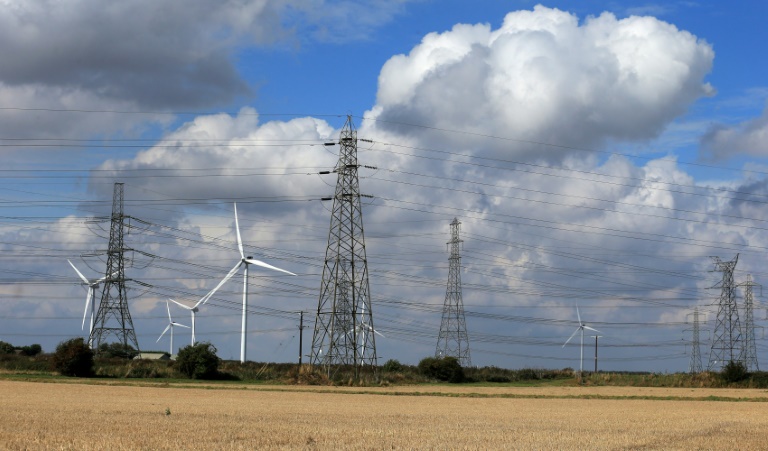
Britain will introduce a cap on the revenues of companies that produce low-carbon electricity in an attempt to mitigate the impact of soaring energy prices on consumers.

The temporary cap on energy companies that produce electricity from renewables and nuclear is being introduced in England and Wales, the government said in a statement late Tuesday.

The measure “will reduce the impact of unprecedented wholesale prices on consumers and the taxpayer by introducing a revenue limit, curbing the amount generators can make”, the government said.

The main opposition Labour party called the measure a “windfall tax”, which business minister Jacob Rees-Mogg denied. 

He told the BBC that, after intervening on retail energy prices, the British government was now acting on wholesale prices.

“This is simply mischaracterising what’s being done, and misunderstands how the market works,” he said.

“What this is doing is rationalising the market in a way that energy companies have been in favour,” he added.

“It’s clearly not a tax. It’s nothing to do with the profits these companies are making.”

Liz Truss successfully campaigned to become prime minister by saying she was opposed to the idea of a tax on the profits of energy giants. 

The previous government of Boris Johnson introduced a one-off tax on the profits of oil and gas companies, but this could largely be offset by investment in hydrocarbon production.

– ‘Double standard’ –

Before the introduction of recent energy subsidies, “businesses and consumers had been left facing increasing financial turmoil, with energy bills estimated to increase to as high as £6,500 before the government stepped in,” the government said. 

Truss last month introduced a two-year cap on energy bills for domestic consumers at £2,500 ($2,770) a year per average household.

Businesses will have around half their bills covered for six months. 

The UK is particularly reliant on gas for its electricity, the price of which has soared since the Russian invasion of Ukraine began on February 24. 

Shell boss Ben van Beurden last week told an energy conference that in light of soaring energy prices and resulting inflation, governments should be imposing more taxes on companies in the sector.

Dhara Vyas, policy director at industry lobbyists Energy UK, warned that the new revenue cap mechanism, the details of which are yet to be worked out, must not “risk the very investment the UK needs to ensure long-term, sustainable economic growth”. 

Dan McGrail, chief executive of renewable energy organisation RenewableUK, added that the move risked “skewing investment towards the fossil fuels that have caused this energy crisis”.

Environmental NGO Greenpeace UK accused the government of a “glaring double standard”.

“Was it just a dream or did we all hear the prime minister say, just weeks ago, she was against a windfall tax?,” said policy director Doug Parr.

“Now she’s going to impose a de facto one after all but only on electricity generators, not a proper one on oil and gas firms. This glaring double standard makes no sense.” 

IMF warns against 'costly' tax cuts to fight inflation

Soaring food and energy prices are raising the risk of social unrest, but attempting to tame costs through tax cuts, subsidies and price controls would be too costly, the IMF said Wednesday.

The fund’s comments, in its latest Fiscal Monitor report, come as food prices have surged by half since 2019 while energy bills soared in the wake of Russia’s invasion of Ukraine.

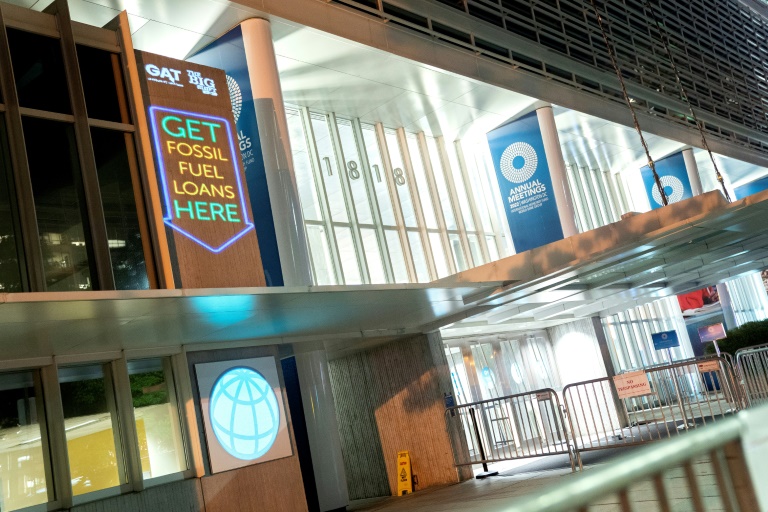
“Countries all around the world are facing more pressing and more painful trade offs,” Vitor Gaspar, director of the International Monetary Fund’s fiscal affairs department, told AFP as the crisis lender holds its annual meetings in Washington this week.

The combination of inflation along with food and energy price surges point to a cost-of-living crisis, he said.

Countries spent heavily to protect their economies during the pandemic, then faced supply chain issues as they emerged from Covid lockdowns.

Inflation soared further after Russia invaded Ukraine in February, with food and energy costs going through the roof, forcing central banks to raise interest rates aggressively.

“Households are struggling with elevated food and energy prices, raising the risk of social unrest,” the IMF Fiscal Monitor report said.

But, it added, “fiscal policy trade-offs are increasingly difficult, especially for high-debt countries where responses to the Covid-19 pandemic exhausted their fiscal space.”

– ‘More generous’ food aid –

As governments operate within tighter budgets, prioritizing policies and programs becomes vital, the report said, adding that key goals are ensuring access to affordable food and protecting low-income households from inflation.

There appears to be an “association between social unrest and episodes of spikes in food prices,” while fuel prices are politically sensitive, IMF fiscal affairs department deputy director Paolo Mauro told reporters.

Countries have to be selective in giving support, he said, but the IMF recommends being “more generous” on food as a need for survival.

However, with long-lasting supply shocks and broad-based inflation, attempts to cap surging costs through price controls, subsidies or tax cuts will be “costly to the budget and ultimately ineffective,” the IMF warned.

Officials should instead allow prices to adjust and provide targeted cash transfers to the most vulnerable.

Most countries should continue “tightening” their budgets, the report said.

Asked about Britain’s controversial tax-slashing plans, which rocked the pound and raised the country’s borrowing costs, Gaspar told reporters that monetary and fiscal policies should be consistent, with markets “looking for certainty in a very uncertain world.”

“The expectation is that the announcement of a full-fledged fiscal plan on October 31 accompanied by a macroeconomic forecast… will contribute to give to the market the certainty that it seeks,” he said.

Countries may need to raise added revenues and contain the growth of other expenditures as they prioritize policies, the IMF report said.

Fiscal costs can be offset by measures like taxes, it added, suggesting that a permanent tax on “windfall profits” from fossil fuel extraction based on excess gains “can be considered” if an adequate instrument is not already in place.

But the report cautioned that low-income countries will need more global humanitarian assistance and emergency financing given their limited resources, adding that the biggest challenge comes from the food price surge.

IMF warns against 'costly' tax cuts to fight inflation

Soaring food and energy prices are raising the risk of social unrest, but attempting to tame costs through tax cuts, subsidies and price controls would be too costly, the IMF said Wednesday.

The fund’s comments, in its latest Fiscal Monitor report, come as food prices have surged by half since 2019 while energy bills soared in the wake of Russia’s invasion of Ukraine.

“Countries all around the world are facing more pressing and more painful trade offs,” Vitor Gaspar, director of the International Monetary Fund’s fiscal affairs department, told AFP as the crisis lender holds its annual meetings in Washington this week.

The combination of inflation along with food and energy price surges point to a cost-of-living crisis, he said.

Countries spent heavily to protect their economies during the pandemic, then faced supply chain issues as they emerged from Covid lockdowns.

Inflation soared further after Russia invaded Ukraine in February, with food and energy costs going through the roof, forcing central banks to raise interest rates aggressively.

“Households are struggling with elevated food and energy prices, raising the risk of social unrest,” the IMF Fiscal Monitor report said.

But, it added, “fiscal policy trade-offs are increasingly difficult, especially for high-debt countries where responses to the Covid-19 pandemic exhausted their fiscal space.”

– ‘More generous’ food aid –

As governments operate within tighter budgets, prioritizing policies and programs becomes vital, the report said, adding that key goals are ensuring access to affordable food and protecting low-income households from inflation.

There appears to be an “association between social unrest and episodes of spikes in food prices,” while fuel prices are politically sensitive, IMF fiscal affairs department deputy director Paolo Mauro told reporters.

Countries have to be selective in giving support, he said, but the IMF recommends being “more generous” on food as a need for survival.

However, with long-lasting supply shocks and broad-based inflation, attempts to cap surging costs through price controls, subsidies or tax cuts will be “costly to the budget and ultimately ineffective,” the IMF warned.

Officials should instead allow prices to adjust and provide targeted cash transfers to the most vulnerable.

Most countries should continue “tightening” their budgets, the report said.

Asked about Britain’s controversial tax-slashing plans, which rocked the pound and raised the country’s borrowing costs, Gaspar told reporters that monetary and fiscal policies should be consistent, with markets “looking for certainty in a very uncertain world.”

“The expectation is that the announcement of a full-fledged fiscal plan on October 31 accompanied by a macroeconomic forecast… will contribute to give to the market the certainty that it seeks,” he said.

Countries may need to raise added revenues and contain the growth of other expenditures as they prioritize policies, the IMF report said.

Fiscal costs can be offset by measures like taxes, it added, suggesting that a permanent tax on “windfall profits” from fossil fuel extraction based on excess gains “can be considered” if an adequate instrument is not already in place.

But the report cautioned that low-income countries will need more global humanitarian assistance and emergency financing given their limited resources, adding that the biggest challenge comes from the food price surge.

BoE fails to reassure over emergency intervention

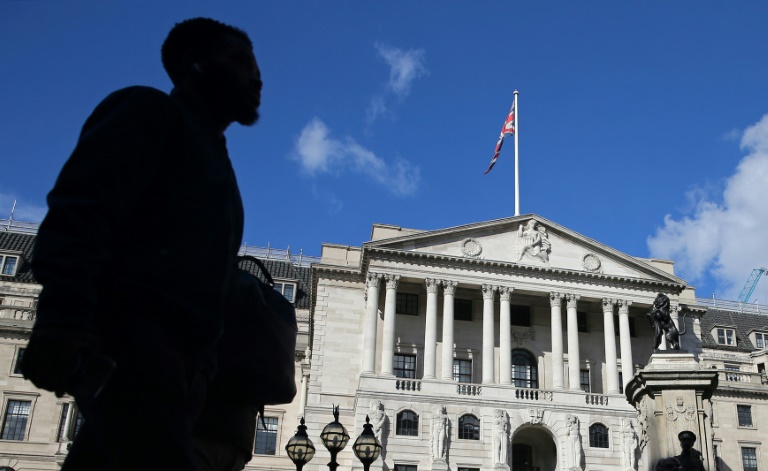
The Bank of England on Wednesday insisted it would end emergency buying of UK bonds by the weekend but sent markets into further frenzy as economic uncertainty grips Britain.

The BoE launched a bond-buying drive in late September aimed at quelling market turmoil triggered by an uncosted budget unveiled by the government of new Prime Minister Liz Truss.

Following a Financial Times report on Wednesday that the BoE could extend its buying of UK government debt, the central bank insisted it would end purchases of long-dated bonds on Friday.

Amid all the uncertainty, the yield on Britain’s 30-year bond, or gilt, rose back above five percent close to a 24-year peak.

The yield on the 10-year gilt reached 4.64 percent, the highest level since the 2008 global financial crisis.

The BoE on Wednesday insisted that “its temporary and targeted purchases of gilts will end on 14 October”.

It also confirmed, however, that measures to boost liquidity would remain in place beyond Friday.

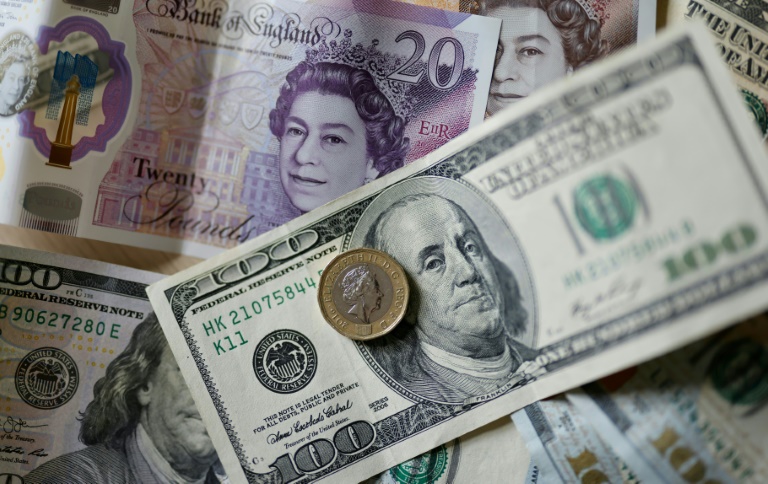
The bank has jumped into bond markets to protect financial stability after yields rocketed and the pound tumbled to a record dollar-low following Britain’s tax-slashing budget.

In particular, the BoE feared for British pension funds that invest in traditionally low-volatility state bonds.

Speaking on the sidelines of an International Monetary Fund gathering in Washington on Tuesday, BoE governor Andrew Bailey confirmed that pension fund managers had “three days left” until the bank’s bond purchases ended.

“We think the BoE has put itself in a no-win situation,” said Matthew Ryan, head of market strategy at financial services firm Ebury.

“Either Bailey is forced to backtrack on his pledge and extend intervention beyond Friday, potentially damaging the bank’s credibility, or end the measures as planned and risk another blowout in gilt yields.”

– ‘Bank sector resilience’ –

Separately, the BoE on Wednesday judged that Britain’s banks were “substantially more resilient” than before the 2008 crisis thanks to strong capital and liquidity.

Nevertheless, the BoE this week launched a temporary facility aimed at easing liquidity pressures that arose after the UK budget shocked markets.

The BoE’s Temporary Expanded Collateral Repo Facility allows “banks to help to ease liquidity pressures facing” client funds beyond the end of this week, it said on Monday.

In volatile trading Wednesday, the pound rallied above $1.10 as markets price in more aggressive interest-rate hikes from the BoE to try and cool decades-high inflation.

It came as official data showed the UK economy contracted in August on surging prices.

The BoE’s emergency bond-buying programme offered to buy up to £65 billion ($72 billion) in long-dated gilts, although the current total is far below the limit.

The bank this week widened the scope of its daily purchases of gilts to include debt linked to the UK inflation rate, currently at around 10 percent.

In a bid to address markets chaos, finance minister Kwasi Kwarteng has brought forward UK growth and inflation forecasts to October 31, when he will also unveil plans to reduce debt.

His budget included a freeze on energy prices as millions of Britons struggle with a cost-of-living crisis.

The International Monetary Fund and ratings agencies have warned that the costly budget would cause UK government debt to balloon.

Fitch last week lowered the outlook on its credit rating for British government debt to negative from stable.

– Truss vow –

Addressing parliament Wednesday, Truss vowed not to cut public spending to bring down debt.

“We will do that not by cutting public spending but by spending public money well,” she said. 

The BoE has piled on further pressure by ramping up its main interest rate to a 14-year high of 2.25 percent in a bid to cool inflation — and is expected to hike even further at a policy meeting next month.

“Given the uncertain world and volatile markets we face, November can seem a long time away,” BoE chief economist Huw Pill said in a speech Wednesday.

“At present, I am still inclined to believe that a significant monetary policy response will be required to the significant macro and market news of the past few weeks,” he added.

Pound, UK bond yields climb on Bank of England uncertainty

The pound rallied and UK government bond yields rose Wednesday as the Bank of England came under criticism for fuelling market uncertainty.

The BoE insisted it would halt on Friday a short-term programme of bond-buying support aimed at quelling volatility triggered by a debt-fuelled UK budget following a Financial Times report the central bank stood ready to intervene further.

“The Bank of England’s messaging to the market over the last 24-hours has been conflicted and confused, causing unnecessary gyrations to the pound and adding to the sense of instability in the markets,” said Interactive Investor analyst Victoria Scholar.

On Wednesday, the yield on the government’s 30-year bond returned above a relatively high level of five percent, and the yield on 10-year bonds hit 4.64 percent, the highest level since 2008 in the midst of the global financial crisis and higher than the level which prompted the BoE’s bond market intervention.

The UK government’s higher borrowing costs are a reflection of market unease regarding the affordability of upcoming tax cuts aimed at supporting Britain’s recession-threatened economy.

The pound rose against the dollar as traders bet on more aggressive interest rate hikes from the BoE on concerns the budget of uncosted tax cuts would further fuel sky-high UK inflation.

Meanwhile, London’s benchmark FTSE 100 index slumped 1.2 percent, with sentiment also dampened by news that the UK economy unexpectedly shrank in August.

Frankfurt’s DAX shed 0.6 percent after the German government said it now expects the economy will contract 0.4 percent next year and inflation will run at seven percent.

Investors are struggling to find some solace as they navigate a range of crises that threaten the global economy, from soaring prices and bumper interest rate hikes to the Ukraine war and China’s Covid-induced growth slowdown.

The gloom was summed up by the International Monetary Fund, which on Tuesday highlighted the risks of inflation and the conflict in Europe as it slashed its global growth forecast and warned: “For many people 2023 will feel like a recession”.

Later, US President Joe Biden admitted there was a chance the country could suffer a “slight” recession.

Investors are now nervously looking ahead to Thursday’s US inflation report, with observers warning that a strong reading could spark another rout on markets.

Even if it showed inflation cooling from a four-decade high, analysts said the Fed would not likely take the single reading as reason to slow down its pace of rate hikes.

Wall Street’s main stock indices fell at the open, with investors disappointed with the latest reading of the producer price index, which nudged down only a tenth of a percentage point to 8.5 percent in September on an annual basis.

The reading “will stoke concerns that there hasn’t been enough improvement on the inflation front to convince the Fed to take a more guarded approach with its rate hikes,” said market analyst Patrick O’Hare at Briefing.com.

Oil prices fell after OPEC trimmed its forecast for growth in oil demand this year and next by half a million barrels per day, citing “recent macroeconomic trends and oil demand developments in various regions.”

OPEC pointed to “the extension of China’s zero-Covid-19 restrictions in some regions, economic challenges in OECD Europe, and inflationary pressures in other key economies, which have weighed on oil demand.”

OPEC and its allies including Russia last week decided to cut output by 2 million barrels per day, a move analysts had warned could backfire as any increase in prices it causes will dent demand by consumers.

– Key figures around 1330 GMT –

London – FTSE 100: DOWN 1.2 percent at 6,802.26 points

Frankfurt – DAX: DOWN 0.6 percent at 12,145.17

Paris – CAC 40: DOWN 0.6 percent at 5,796.74

EURO STOXX 50: DOWN 0.6 percent at 3,320.46

New York – Dow: DOWN 0.2 percent at 29,173.60

Tokyo – Nikkei 225: FLAT at 26,396.83 (close)

Hong Kong – Hang Seng Index: DOWN 0.8 percent at 16,701.03 (close)

Shanghai – Composite: UP 1.5 percent at 3,025.51 (close)

Pound/dollar: UP at $1.1043 from $1.0972 Tuesday

Dollar/yen: UP at 146.78 yen from 145.83 yen

Euro/dollar: DOWN at $0.9702 from $0.9709

Euro/pound: DOWN at 87.90 pence from 88.46 pence

Brent North Sea crude: DOWN 1.1 percent at $93.26 per barrel

West Texas Intermediate: DOWN 1.1 percent at $88.08 per barrel

burs-rl/lcm

Close Bitnami banner
Bitnami