AFP

NASA kicked asteroid off course in test to save Earth

NASA on Tuesday celebrated exceeding expectations during a mission to deflect a distant asteroid, in a sci-fi like test of humanity’s ability to stop an incoming cosmic object from devastating life on Earth.

The fridge-sized Double Asteroid Redirection Test (DART) impactor deliberately smashed into the moonlet asteroid Dimorphos on September 26, pushing it into a smaller, faster orbit around its big brother Didymos, NASA chief Bill Nelson announced.

That changed its orbital period by four percent, or 32 minutes — from 11 hour 55 minutes to 11 hours 23 minutes, bettering an expectation of 10 minutes.

“At some point in the future, if we find an asteroid that is threatening to hit Earth, and would be large enough to really do some damage, thank goodness that we will have had this successful test,” Nelson told AFP.

The asteroid pair loop together around our Sun every 2.1 years, and pose no threat to our planet.

But they are ideal for studying the “kinetic impact” method of planetary defense.

DART’s success as a proof-of-concept has made a reality what was once science fiction — notably films such as “Armageddon,” “Deep Impact,” and “Don’t Look Up.”

Never actually photographed before, Dimorphos, which is 530 feet (160 meters) in diameter or roughly the size of a big Egyptian pyramid, appeared as a speck of light around an hour before impact.

Its egg-like shape and craggy, boulder-dotted surface finally came into clear view in the last few moments, as DART raced toward it at roughly 14,500 miles (23,500 kilometers) per hour.

– Pseudo-comet –

In the days that followed, astronomers rejoiced in stunning images of matter spreading out thousands of miles — pictures collected by Earth and space telescopes, as well as a tiny companion satellite that traveled to the zone with DART.

Thanks to its temporary new tail, Dimorphos has turned into a man-made comet.

But quantifying just how well the test worked required an analysis of light patterns from ground telescopes, which took a few weeks to become apparent.

The binary asteroid system, which was around 6.8 million miles (11 million kilometers) from Earth at impact, is visible only as a single dot from the ground.

The dot’s brightness changes as Dimorphos passes in front of Didymos, which is significantly bigger at half-a-mile wide.

Four optical telescopes were involved in measuring the orbital period — all in Chile and South Africa — while two US based radar telescopes helped confirm the finding, said NASA planetary scientist Nancy Chabot.

The test also showed scientists that the asteroid is less like a solid rock, and more like a “rubbish pile” of boulders bound by mutual gravity.

If an asteroid is more solid, the momentum imparted by a spaceship will be limited. But if significant mass is pushed at high velocity in the opposite direction to impact, there will be an additional boost.

“It looks like the recoil from the ejecta blast off the surface was a substantial contributor to the overall push given to the asteroid,” said NASA scientist Tom Statler at a briefing.

The test will serve as an “anchor point” for simulations and calculations about the outcome of future impacts, he added.

– Mass extinction –

No known asteroid larger than 140 meters (460 feet) in size — big enough to devastate a city — has a significant chance to hit Earth for the next 100 years, according to NASA.

But wait long enough, and it will happen.

The geological record shows, for example, that a six-mile wide asteroid struck Earth 66 million years ago, plunging the world into a long winter that led to the mass extinction of the dinosaurs along with 75 percent of all species.

The agency plans to launch in 2026 a telescope called the Near-Earth Object (NEO) Surveyor to better characterize potentially hazardous 140-meter asteroids and comets that come within 30 million miles. 

So far, less than half of the estimated 25,000 NEOs of 140 meters have been discovered.

Kinetic impact with a spaceship is just one way to defend the planet, albeit the only method possible with current technology.

Should an approaching object be detected early, a spaceship could be sent to fly alongside it for long enough to divert its path via using the ship’s gravitational pull, creating a so-called gravity tractor.

Another option would be launching nuclear explosives to redirect or destroy an asteroid.

NASA believes the best way to deploy such weapons would be at a distance, to impart force without blowing the asteroid to smithereens, which could further imperil Earth.
Ballet stars who fled Russia's Ukraine war reunite in US

Joy Womack built herself a fairytale life in Russia’s notoriously tough world of classical dance after becoming the first American to graduate from the Bolshoi Ballet Academy.

But a career that inspired a Hollywood film exploded as Moscow’s first bombs rained down on Ukraine, and she became one of dozens of dancers who fled Vladimir Putin’s war.

“I mourned because it was the end of knowing what was next. And for me, it felt almost in some ways like the end of my career,” Womack told AFP in California.

As Russian troops rolled into Ukraine in February, the Texan was in Poland choreographing “Joika.” 

The film, starring Diane Kruger, tells the story of Womack’s life: from arrival in Moscow at the age of 15, not speaking a word of Russian, to a lead role in the Kremlin Ballet. 

Womack knew at that moment that she could not return to Russia, and must leave behind her belongings, her friends and the years of sacrifice that had helped her to succeed in one of the world’s most competitive ballet environments.  

“I was building a future in Russia. I was trying to walk both lines being a ballerina from America, but also working in Russia.

“And my career and my education in Russia led to an international career in the West. So for me, it’s really hard to say goodbye to that chapter,” she says, pulling off her shoes to reveal feet scarred by her trade.

 – ‘Fear and sadness’ – 

Dozens of foreign and domestic dancers had already fled Russia for fear of being called to the frontlines, before Putin ordered a mass mobilization of 300,000 people to bolster his flagging war effort.

But even without a call-up, the drumbeat of conflict was crowding out the cultural spaces, says Ilya Jivoy. 

A native of St. Petersburg with a 26-year career, Jivoy left Russia with his Ukrainian wife as war broke out.

They did not know what they would do, or where they would go, but he remains convinced it was the best decision.  

“We couldn’t work normally since it all started,” he says. 

“I think now to work in the cultural space in Russia… it may be impossible. 

“It’s not about the art. It’s just about fear and about sadness.”

Now exiles in the United States, Womack and Jivoy know they are comparatively lucky because they were able to leave.

Others were not.

“I have a beautiful partner that I used to work with last year,” Womack said.

“He was served papers. He’s a ballet dancer, not in the army, and it’s the end of his career.”

– Reunited – 

Some exiled dancers have now reunited with one-time colleagues from the Russian stage for a single performance near Los Angeles next month.

The Segerstrom Center for the Arts, a state-of-the-art cultural center in the small town of Costa Mesa, will host “Reunited in Dance.” 

The one-night-only performance will showcase choreography and recreate some of the repertoire that has wowed Moscow audiences.

The performance’s artistic director is Xander Parish, a Briton who lived and worked in Moscow for 12 years, including at the Mariinsky Theater.

Parish, who trained at the Royal Ballet in Britain, recounts the emotional weight of the uprooting these dancers have endured. 

“The theater becomes your family. You work with these people, you dance with them, you get to know them very intimately, working in such close proximity. Your coaches are like your parents,” he said.

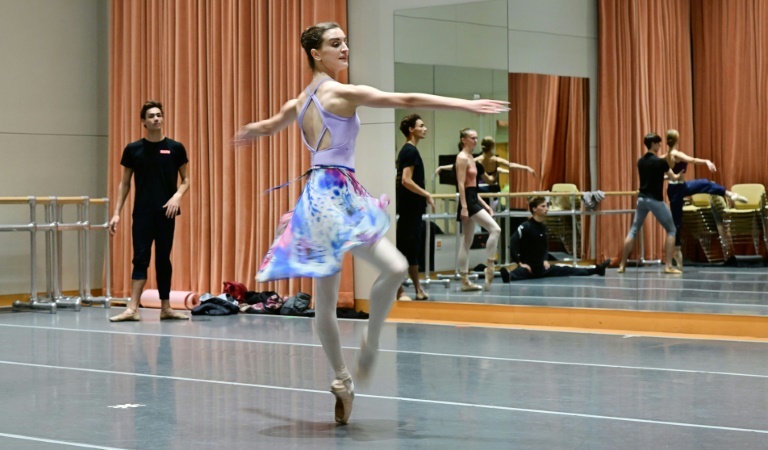
During rehearsals that AFP watched, the camaraderie is evident, as the cast slips in and out of Russian and English, discussing how each minute of the performance should work.

The November 12 show could, Parish thinks, be the springboard for something bigger: a more permanent ballet company that would have space for these talents in exile.

“That’s going to take a long time to sort out. But I mean, that’d be my dream, if we can build that in the future,” he says.

“These are the first small steps, the foundations, that bring us together.”

US proposes redefining when gig workers are employees

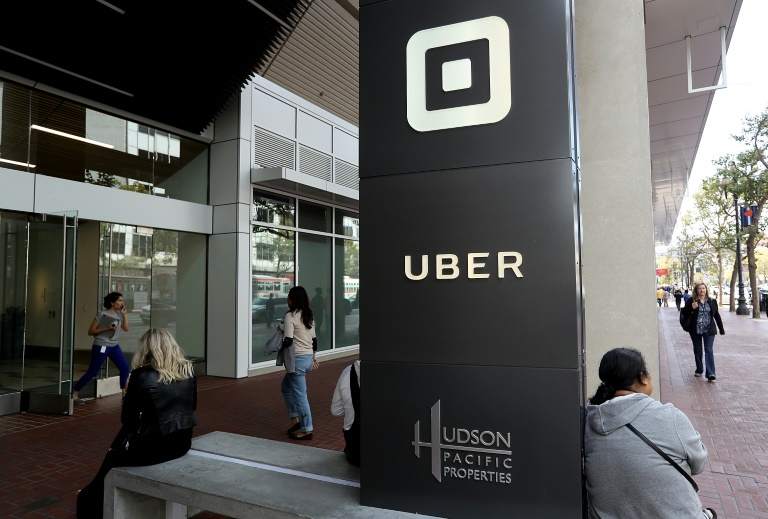
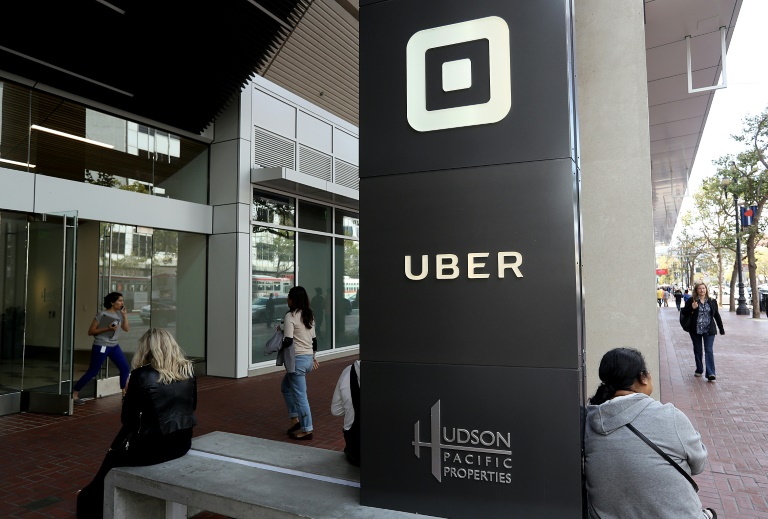
United States labor officials proposed a rule change Tuesday that could make it easier for gig workers such as Uber drivers to be reclassified as employees entitled to benefits.

The move by President Joe Biden’s Labor Department would lower a bar set by his predecessor regarding when someone is considered an employee instead of a contract worker.

It also comes as “gig economy” companies from rideshare platforms to food delivery services strive to maintain the status quo.

The new formula includes factors such as how long a person works for a company and the degree of control over the worker, as well as whether what they do is “integral” to a business, according to the proposed rule.

“We believe the proposed regulation would better protect workers from misclassification while at the same time providing a consistent approach for those businesses that engage or wish to engage with independent contractors,” Jessica Looman of the US Department of Labor said at a press briefing.

Being classified as employees would entitle workers to sick leave, overtime, medical coverage and other benefits, driving up costs for companies such as Uber, Lyft and DoorDash that rely on gig workers.

The proposed rule change is subject to a 45-day public comment period, meaning there is no immediate impact, but share prices took a hit on the news.

Uber and Lyft shares ended the formal day down more than 10 percent, while DoorDash was down nearly six percent.

“It’s a clear blow to the gig economy and a near-term concern for the likes of Uber and Lyft,” despite uncertainty about how the new rule might be interpreted across the country, Wedbush analyst Dan Ives said in a note to investors.

“With ride sharing and other gig economy players depending on the contractor business model, a classification to employees would essentially throw the business model upside down and cause some major structural changes if this holds.”

Uber and Lyft have consistently argued that their drivers want independence, provided benefits are added to the mix.

In California, the cradle of the gig economy, voters in late 2020 approved a referendum backed by firms such as Uber that preserved keeping drivers classified as independent contractors.

The measure effectively overturned a state law that would require the ride-hailing firms and others to reclassify their drivers and provide employee benefits.

The vote came after a contentious campaign with labor groups claiming the initiative would erode worker rights and benefits, and with backers arguing for a new, flexible economic model.

US proposes redefining when gig workers are employees

United States labor officials proposed a rule change Tuesday that could make it easier for gig workers such as Uber drivers to be reclassified as employees entitled to benefits.

The move by President Joe Biden’s Labor Department would lower a bar set by his predecessor regarding when someone is considered an employee instead of a contract worker.

It also comes as “gig economy” companies from rideshare platforms to food delivery services strive to maintain the status quo.

The new formula includes factors such as how long a person works for a company and the degree of control over the worker, as well as whether what they do is “integral” to a business, according to the proposed rule.

“We believe the proposed regulation would better protect workers from misclassification while at the same time providing a consistent approach for those businesses that engage or wish to engage with independent contractors,” Jessica Looman of the US Department of Labor said at a press briefing.

Being classified as employees would entitle workers to sick leave, overtime, medical coverage and other benefits, driving up costs for companies such as Uber, Lyft and DoorDash that rely on gig workers.

The proposed rule change is subject to a 45-day public comment period, meaning there is no immediate impact, but share prices took a hit on the news.

Uber and Lyft shares ended the formal day down more than 10 percent, while DoorDash was down nearly six percent.

“It’s a clear blow to the gig economy and a near-term concern for the likes of Uber and Lyft,” despite uncertainty about how the new rule might be interpreted across the country, Wedbush analyst Dan Ives said in a note to investors.

“With ride sharing and other gig economy players depending on the contractor business model, a classification to employees would essentially throw the business model upside down and cause some major structural changes if this holds.”

Uber and Lyft have consistently argued that their drivers want independence, provided benefits are added to the mix.

In California, the cradle of the gig economy, voters in late 2020 approved a referendum backed by firms such as Uber that preserved keeping drivers classified as independent contractors.

The measure effectively overturned a state law that would require the ride-hailing firms and others to reclassify their drivers and provide employee benefits.

The vote came after a contentious campaign with labor groups claiming the initiative would erode worker rights and benefits, and with backers arguing for a new, flexible economic model.

Meta unveils new virtual reality headset Quest Pro

A year after it rebranded itself in the name of building a metaverse, Meta on Tuesday unveiled a new version of its virtual reality headset tailored for working professionals.

The $1,500 Meta Quest Pro features a number of new features that are meant to improve users’ perception of truly being in the presence of other people.

The headset makes it possible to view not only virtual worlds but also the real environment of the user, thanks to high-resolution outward-facing cameras.

“The moment that they begin to break into a smile or when they raise their eyebrow… your avatar should be able to express all of that and more,” Meta chief Mark Zuckerberg said at Meta Connect, the company’s giant’s annual conference focused on virtual reality.

Customers can begin ordering the Quest Pro starting Tuesday, and the device will ship at the end of the month.

Meta said it is partnering with Microsoft and others to tune popular business and productivity software to virtual worlds using Quest Pro. 

Capabilities being worked on include using Quest Pro during virtual meetings on the Microsoft Teams platform, according to the two companies.

“At Microsoft, we’re incredibly excited about the metaverse and how digital and physical worlds are coming together,” Microsoft CEO Satya Nadella said during the presentation.

Facebook renamed itself Meta in October 2021 to signal a pivot to building its vision for an interactive virtual and augmented reality world that it sees as the future.

The move came as the company was facing a backlash after a whistleblower leaked documents suggesting the social media giant put profits over safety.

Meta is undergoing a difficult period financially due to dropping advertising revenues and fierce competition from other platforms such as TikTok, whose popularity has exploded.

About a third of the apps in the Quest app store brought in millions of dollars in revenue since launching there, according to Meta chief technology officer Andrew “Boz” Bosworth.

Some $1.5 billion has been spent overall on games and apps in the Quest store, and titles on the way to its virtual shelves include an “Iron Man” game set for release in November by Marvel Entertainment and Sony Interactive Entertainment, according to Meta executives.

Hope fading in search for Venezuela landslide survivors

Hopes were fading Tuesday of finding alive any of 56 people missing after a devastating landslide swept through a Venezuelan town with 36 confirmed deaths to date.

President Nicolas Maduro said on state television that the death toll is expected to reach 100.

Neighbors and rescuers — some 3,000 police, soldiers and other professionals — were engaged in the ever-more desperate search among the fast-hardening mud, tree trunks and rocks dumped Saturday on the town of Las Tejerias. 

Rescuers told AFP it would be difficult to find any survivors in the town some 50 kilometers (31 miles) from the capital Caracas.

“I don’t know whether to scream, I don’t know whether to run… whether to cry,” Nathalie Matos, 34, told AFP of the frustrating wait for news on the fate of her 65-year-old mother, who she had on the phone as the deluge came.  

“She told me: ‘Daughter, I am drowning, the water got in, get me out, get me out… save me!'” Matos recounted.

“I tried to call her back, she picked up, but there was just noise.”

A rescue team is at her mother’s mud-filled house.

“The dog gave signs here, in this area that was the living room and the kitchen,” said a firefighter, though all their digging so far had yielded nothing.

“I know she is there,” insisted Mato.  

A few meters away, another team examined a piece of land where a house stood until Saturday, when Las Tejerias became the site of Venezuela’s worst natural disaster in decades.  

Neighbors were helping to reconstruct what would have been the floor plan to get an idea of where to dig.

A civil protection official, who did not have permission to speak in an official capacity, told AFP most victims of the storm died after they were struck by tree trunks, large rocks or other objects swept along by the raging waters, and others of hypothermia.  

Unusually heavy rains caused a major river and several streams to overflow on Saturday, causing a torrent of mud that washed away cars, parts of homes, businesses and telephone wires, and felled massive trees.

Vice President Delcy Rodriguez said a month’s worth of rain fell in the area in just eight hours.

The government has declared three days of mourning.

– Town ‘will be reborn’ –

Experts say the storm was aggravated by the seasonal La Nina weather phenomenon gripping the region, as well as the effects of Hurricane Julia which also claimed at least 26 lives in Central America and caused extensive damage.

Crisis-hit Venezuela is no stranger to seasonal storms, but this was the worst so far this year following historic rain levels that caused dozens of deaths in recent months. 

In 1999, about 10,000 people died in a massive landslide in the northern state of Vargas. 

Maduro had visited Las Tejerias on Monday, vowing to rebuild “each and every” home and business destroyed by the freak storm.

“We take with us the pain, the clamor, the despair, the tears of the people, but they must know that Las Tejerias will rise like the phoenix, Las Tejerias will be reborn,” he said.

Rodriguez said 317 homes were destroyed and 757 damaged by the mudslide. 

The authorities have erected refuge centers in Maracay, the capital of the affected Aragua province, and announced the distribution of 300 tons of food. 

Glazers don't want to sell Man Utd says British tycoon Ratcliffe

Manchester United owners the Glazer family do not want to sell the Premier League club, according to British billionaire Jim Ratcliffe.

United fan Ratcliffe, who owns the Ineos chemical group, was interested in buying the Old Trafford club after his unsuccessful bid to take over at Chelsea earlier this year.

There had been reports the Glazers could be ready to consider selling United after increasingly angry fan protests during their troubled reign.

But while Ratcliffe wants to add to the Ineos sporting portfolio, he revealed the American owners told him United are not on the market.

“Manchester United is owned by the Glazer family, whom I have met,” Ratcliffe said at Financial Times Live conference on Tuesday.

“I met Joel and Avram, and they are the nicest people. They are proper gentlemen, and they don’t want to sell it (United). It is owned by the six children of the father and they don’t want to sell.

“If it had been for sale in the summer, yes we would probably have had a go following on from the Chelsea thing, but we can’t sit around hoping that one day Manchester United will become available.”

Ratcliffe’s Ineos group already owns French side Nice and Swiss club Lausanne.

On the prospect of further investment elsewhere, Ratcliffe said: “The most popular sport in the world is football, and it is the sport closest to us, so we should have an asset… not a Premiership (club), I think a premier club.”

'Murder, She Wrote' star Angela Lansbury dies aged 96

Actress Angela Lansbury, who became a household name through her role as a writer-detective in “Murder, She Wrote,” died on Tuesday, her family announced. She was 96.

The British-born star, who found fame and fortune as one of television’s most memorable characters, was also a hugely successful and decorated stage and film actress.

“The children of Dame Angela Lansbury are sad to announce that their mother died peacefully in her sleep at home in Los Angeles… just five days shy of her 97th birthday,” a statement widely quoted in US media said.

Tributes came Tuesday from across the world, with Australian former prime minister Malcolm Turnbull posting a picture of the pair, who were cousins.

“Thank you Angela for the joy & love you have shared with all the world all your life,” Turnbull tweeted.

Meanwhile NASA posted what it called “a cosmic rose” — a deep space constellation — in memory of the actress.

Lansbury was nearly 60 years old when she netted the role that made her famous: the mystery writer and amateur sleuth in the smash television series “Murder, She Wrote.”

In a career spanning more than seven decades, she appeared in about 60 films and starred in some of Broadway’s biggest musicals. 

She snapped up six Golden Globes, five Tony Awards for her work in American theatre and, in 2013, an honorary lifetime Oscar.

But most remember her as the down-to-earth, middle-aged widow Jessica Fletcher who ferreted out criminals in the television series “Murder, She Wrote”, which ran from 1984 to 1996 on US television and was exported to dozens of countries, making her recognised the world over.

“I was amazed, almost everywhere in the world knew Jessica Fletcher. They treated me like a rock star,” Lansbury said in 2016.

The 264-episode series won her four of her Golden Globes, as well as a fortune: she garnered up to $300,000 per episode.

Even so, in 2017 at the age of 91, the still-lively actress spoke of her wish to play the role of Jessica Fletcher “just one more time”, British media reported.

– Teen screen debut –

Lansbury was born in London on October 16, 1925, to a family of politicians and actors.

Her grandfather, George Lansbury, was a leader of Britain’s Labour party in the 1930s and her mother, Moyna Macgill, was an Irish actress.

In 1940 she emigrated with her widowed mother to the United States, fleeing the World War II blitz.

Blonde with big, blue eyes, she studied acting in New York.

Her film breakthrough came at just 17 when she was cast as the conniving maid Nancy in the 1944 psychological thriller “Gaslight” with Ingrid Bergman, a role that won her an Oscar nomination for best supporting actress and led to a seven-year contract with MGM studios.

Another Oscar nomination quickly followed, for “The Picture of Dorian Gray” in 1946, while a third nomination came for “The Manchurian Candidate” in 1963, roles for which she picked up two Golden Globes.

However, Lansbury was often sidelined into secondary roles, playing characters older than herself.

“I was playing older parts when I was terribly young because I wasn’t a big screen beauty. I am a character actress,” she told BBC radio in 2014. 

In the 1961 musical comedy “Blue Hawaii”, for example, she was the mother of a dashing tour guide played by Elvis Presley, who was only 10 years her junior.

– From Hollywood to Broadway –

Frustrated with her slow career in Hollywood, Lansbury moved to theatre in Broadway in the late 1950s.

She became a star in the title role of the 1966 musical “Mame”, about rich New Yorkers during the Depression, for which she trod the boards more than 1,500 times and won her first Tony Award. “Gypsy” (1973-1975) and “Sweeney Todd” (1979) followed.

But she continued to pick up roles in cinema, gaining a younger audience as the witch in the hit Disney film “Bedknobs and Broomsticks” in 1971.

She won her fifth Tony award in 2009 for her Broadway role as dotty clairvoyant Madame Arcati in Noel Coward’s “Blithe Spirit.”

She reprised the part, in her late 80s, in London’s West end in 2014 — her first time on a London stage in 39 years, winning rave reviews. 

“She’s the utmost professional,” Michael Blakemore, who directed her in the play, was quoted as saying in The Guardian newspaper in 2015. 

“I think people such as her, who have been acting since they were teenagers, develop special gifts because they learn the basis of their craft when they are young and impressionable,” he said.

Lansbury was married for 53 years to her second husband Peter Shaw, who died in 2003.

Britain made Lansbury a dame in 2014.

“In addition to her three children, Anthony, Deirdre and David, she is survived by three grandchildren, Peter, Katherine and Ian, plus five great grandchildren and her brother, producer Edgar Lansbury,” the family statement said.

“A private family ceremony will be held at a date to be determined.”

Supreme Court ponders the fate of pigs, high cost of bacon

A California law aimed at reducing animal suffering on pig farms led to some unusual exchanges Tuesday in the US Supreme Court.

Following a grassroots referendum, California passed an animal welfare measure in 2018 that bans the sale of pork from pigs that were raised in overly confined spaces.

The pork industry had gone to court accusing California — which produces little of the pork it consumes — of restricting interstate commerce and trying to impose its values on other US states.

The sector fears that California will effectively set national standards for conditions in which farm animals, including cows and chickens, are kept, thus raising ham and bacon prices for consumers.

Pork producers, after being rejected by state courts, turned to the Supreme Court, which seemed baffled by the case.

For nearly two hours, the nine justices pondered the criteria that would allow comparable cases to be resolved in the future.

The result was a series of highly political hypothetical scenarios.

Progressive Justice Elena Kagan wondered what would happen if Democratic states banned the sale of goods made by non-unionized workers.

Her conservative colleague Amy Coney Barrett imagined that they would ban goods from companies that did not fund medical care for their transgender employees.

Judge Brett Kavanaugh, meanwhile, speculated that Republican states might ban products created by undocumented immigrants.

Perplexity peaked when Justice Sonia Sotomayor noted that the pork market was already regulated. 

“We have marketed already pork marked as organic, crate-free, antibiotic-free and beta-agonist free,” she said. “I have no idea what that means, but I know it’s there. I’ve seen it in supermarkets.”

The high court will return a decision before June 30. 

Equities, oil prices slide on recession fears

Stock markets mostly slid and oil prices tumbled Tuesday as markets contend with growing recession worries with the Federal Reserve and other central banks moving aggressively to counter inflation.

A downcast IMF report highlighted the risks of elevated inflation and other fallout from Russia’s invasion of Ukraine.

The mood darkened also on new China Covid-19 crackdowns and continued upheaval in British financial markets.

With the focus on inflation, analysts said US consumer price index data released later this week will be crucial to the direction of risk assets. 

Another big reading could spark a fresh equity selloff and a surge in the dollar.

“There is growing pessimism in the markets now and with some big data points to come from the US this week, not to mention the start of earnings season,” noted Craig Erlam, analyst at OANDA trading group.

“Investors should probably brace for more volatility.”

Traders had hoped that bumper rate increases by the US Federal Reserve this year would begin to drag on the economy and slow runaway prices, allowing policymakers to reduce the pace of monetary tightening.

But a forecast-beating US jobs report on Friday highlighted the tough work the country’s central bank has slowing inflation from four-decade highs, and many observers warn recession is virtually inevitable.

World Bank chief David Malpass said Monday there was a “real danger” of a global contraction next year, adding that the surge in the dollar was weakening the developing nations’ currencies and pushing their debt to “burdensome” levels.

In its latest forecasts released on Tuesday, the IMF trimmed its 2023 global growth forecast to 2.7 percent. It left its world growth forecast for this year unchanged at 3.2 percent.

But the IMF’s economic counsellor Pierre-Olivier Gourinchas also warned that more than a third of the global economy is headed for contraction this year or next, and the three biggest economies –- the United States, European Union and China –- will continue to stall.

“The worst is yet to come and, for many people 2023 will feel like a recession,” said Gourinchas.

Europe’s main equity markets closed lower, while the S&P 500 fell for the fifth straight day, sagging after comments by Bank of England Governor Andrew Bailey that the central bank would end emergency bond-buying efforts on Friday, rebuffing calls for a longer program to allow markets to stabilize.

“We think the rebalancing must be done and my message to the funds involved and all the firms involved managing those funds: you’ve got three days left now,” Bailey said.

“You’ve got to get this done,” he said at an appearance at the Institute of International Finance, a Washington trade group. 

Bailey’s statement also weighed on the pound, which retreated after earlier posting gains on the dollar following the BoE’s interventions announced earlier Tuesday.

Oil prices also fell, with concerns about Chinese demand front and center.

“Covid cases are picking up in the country, and the Chinese Communist Party’s newspaper, the People’s Daily, ran a commentary saying the Covid Zero policy is ‘sustainable’, indicating that the country is likely to keep following it if not double down,” said Stephen Innes at SPI Asset Management. 

– Key figures around 2050 GMT –

New York – Dow: UP 0.1 percent at 29,239.19 (close)

New York – S&P 500: DOWN 0.7 percent at 3,588.84 (close)

New York – Nasdaq: DOWN 1.1 percent at 10,426.19 (close)

London – FTSE 100: DOWN 1.1 percent at 6,885.23 (close)

Frankfurt – DAX: DOWN 0.4 percent at 12,220.25 (close)

Paris – CAC 40: DOWN 0.1 percent at 5,833.20 (close)

EURO STOXX 50: DOWN 0.5 percent at 3,340.35 (close)

Tokyo – Nikkei 225: DOWN 2.6 percent at 26,401.25 (close)

Hong Kong – Hang Seng Index: DOWN 2.2 percent at 16,832.36 (close)

Shanghai – Composite: UP 0.2 percent at 2,979.79 (close)

Euro/dollar: UP at $0.9709 from $0.9702 on Monday

Pound/dollar: DOWN at $1.0972 from $1.1055

Euro/pound: UP at 88.46 pence from 87.76 pence

Dollar/yen: UP at 145.83 yen from 145.72 yen

West Texas Intermediate: DOWN 2.0 percent at $89.35 per barrel

Brent North Sea crude: DOWN 2.0 percent at $94.29 per barrel

burs-jmb

Close Bitnami banner
Bitnami