AFP

Greece, Turkey set tensions aside for direct maritime link

Setting aside longstanding strategic rivalry, Greece and Turkey on Monday inaugurated a “friendship line” ferry link between Thessalonika in northern Greece and the western Turkish port of Izmir.

Greek-based shipping company Levante Ferries announced the MV “Smyrna di Levante” vessel had started passenger and freight services between the two countries, the first direct maritime link between the regional rivals.

The company said the vessel carrying up to 948 passengers and as many as 300 vehicles would both promote the neighbours’ commercial interests and deepen ties. 

The ship began its maiden test voyage from Thessalonika at 5.15 pm (1414 GMT) on Monday with 35 people aboard — mainly Levante employees — bound for Izmir some 14 hours away.   

The ferry firm has over the past three years invested a reported 16 million euros in the three-times weekly route, the first direct major link between continental Greece and Turkey.

Some eastern Greek islands off the Turkish coast offer more ad hoc trips to nearby Turkish ports courtesy of small boats.

“We want to link Europe and Asia (and) benefit from market demand” to “promote maritime and tourist transport,” said Greek operator Yannis Dimitriadis.

Greece and Turkey have endured long bouts of sometimes bitter rivalry with a series of maritime border disputes raising tensions amid Turkish accusations its fellow NATO member seeks to militarise more than a dozen of its islands in the Aegean Sea.

Athens has pushed back against Ankara’s demands that it desist from doing so.

Last week saw a further spat at an informal EU gathering in Prague when Greek Prime Minister Kyriakos Mitsotakis left an official dinner during an address by Turkish President Recep Tayyip Erdogan. 

Putin vows more 'severe' attacks after Russian missiles batter Ukraine

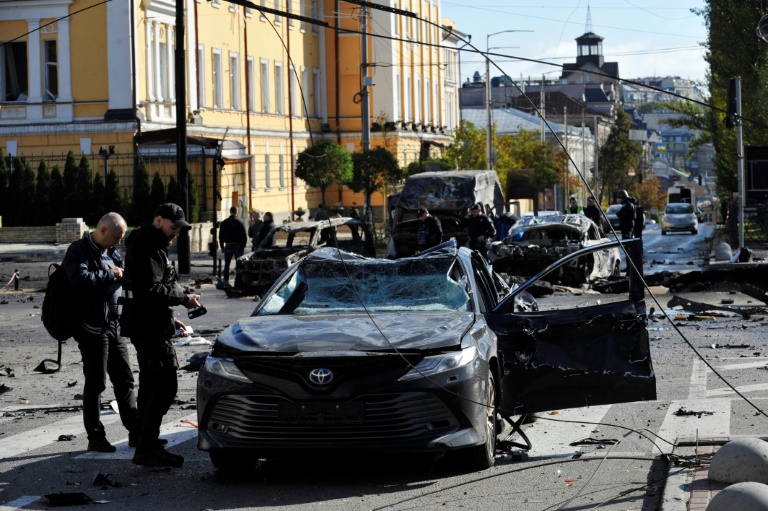
President Vladimir Putin threatened on Monday more “severe” attacks against Ukraine after Russian missiles rained down on the capital Kyiv and other Ukrainian cities in what Washington branded “utter brutality”.

The biggest wave of strikes across Ukraine in months killed at least 11 and wounded more than 80 in retaliation for an explosion this weekend that damaged a key bridge linking Russia to the Moscow-annexed Crimean peninsula.

“Let there be no doubt,” Putin said in televised comments addressed to his security council, “if attempts at terrorist attacks continue, the response from Russia will be severe.”

Kyiv said Russian forces had fired more than 80 missiles on cities across the country and that Russia had also used Iranian drones launched from neighbouring Belarus, spurring panic and damaging energy facilities throughout Ukraine.

Putin’s predecessor Dmitry Medvedev warned that the strikes were only “the first episode” of a response to explosion on the Kerch bridge.

But Ukraine’s foreign minister Dmytro Kuleba said the salvo showed Moscow was increasingly panicked about recent battlefield losses seven months into its invasion.

And his country’s closest allies slammed Russia, with US President Joe Biden saying they strikes “demonstrate the utter brutality” of Putin’s “illegal war.”

Ksenia Ryazantseva, a 39-year-old language teacher, told AFP she was awoken by the blasts.

“We saw the smoke, then the cars, and then we realised we didn’t have a window anymore,” she added. “There’s no military target or anything like that here. They’re just killing civilians”.

– ‘Demonstration of weakness’ –

Ukrainian President Volodymyr Zelensky said the strikes aimed to take down Ukrainian energy infrastructure and regional officials across the country confirmed widespread disruptions.

Russia’s defence ministry meanwhile confirmed it had targeted Ukrainian energy, military command and communications facilities, claiming the strikes had been a success and “achieved their aims”.

Kuleba said the attacks had not been “provoked” and that the onslaught was Moscow’s response to a series of embarrassing military losses in eastern Ukraine.

“Putin is desperate because of battlefield defeats and uses missile terror to try to change the pace of war in his favour,” minister Dmytro Kuleba wrote on social media. 

Zelensky said he had spoken with the leaders of France and Germany and urged them to “increase pressure” on Russia.

– Dozens injured –

US Secretary of State Antony Blinken weighed in on Twitter, writing: “We will continue to provide unwavering economic, humanitarian, and security assistance so Ukraine can defend itself and take care of its people.”

In Ukraine, the national police service said that at least 11 people had been killed nationwide and at least another 80 wounded.

Ukrainian officials said the central Shevchenkivsky district of the city was hit and that a university, museums and the philharmonic building had been damaged.

An AFP journalist in Kyiv said a projectile landed near a playground and saw smoke rising from a large crater at the impact site. Trees and benches were charred by the blast and a number of ambulances were at the scene.

In the western city of Lviv, mayor Andriy Sadovyi said there were disruptions to electricity and hot water services after bombardments targeted critical infrastructure.

AFP photographers there saw plumes of black smoke rising above the town’s skyline.

Moldova, west of Ukraine, said several Russian cruise missiles targeting Ukraine had crossed its airspace, and that it had summoned Moscow’s envoy to demand an explanation.

The ex-Soviet country, which is a candidate to join the European Union, has a small breakaway region, Transnistria, which is armed and supported by Russia.

– Crimean bridge attack –

Belarusian President Alexander Lukashenko, a close ally of Putin’s, meanwhile claimed Monday that Ukraine was preparing an attack on his country’s territory.

He said Russia and Belarus would “deploy” troops together, without specifying where.

The autocratic leader also accused Ukraine, alongside neighbouring Poland and Lithuania, of training Belarusian militants to carrying out attacks at home.

The strikes across Ukraine came a day after Moscow blamed Kyiv for the blast that damaged a bridge linking Crimea to Russia, leaving three people dead.

The blast that hit the bridge — a symbol of the Kremlin’s 2014 annexation of Crimea — sparked celebrations by Ukrainians and others on social media.

But Zelensky on Saturday did not directly mention the incident and officials in Kyiv have made no direct claim of responsibility.

The 19-kilometre (12-mile) bridge is also a vital supply link between Russia and the annexed Crimean peninsula.

Stocks slip, dollar rises as US rate hikes seen

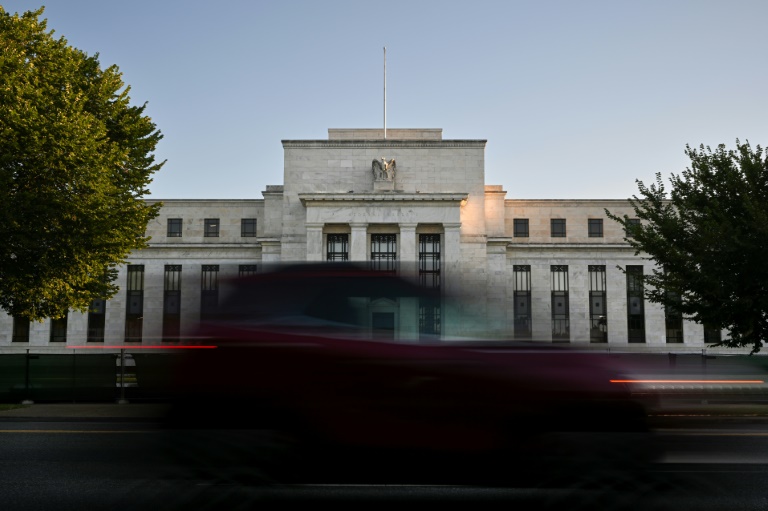
Global stocks slid on Monday as investors braced for more large interest rate hikes from the Federal Reserve.

The prospect of higher yields on debt was a boon for the dollar, however, which gained on its main rivals.

“We’re seeing mild risk aversion in the markets at the start of the week, perhaps some apprehension ahead of what could be a big few days for the US,” said market analyst Craig Erlam at OANDA.

Last week closed out with news that the US firms created a net 263,000 jobs in September.

While that was down from August it was more than expected, indicating that the US economy is not yet slowing considerably and inflationary pressures likely remain.

That sent stocks sharply lower as it means the Fed is unlikely to relent on interest rate hikes that are meant to tame inflation.

Stocks took a beating in August and September as monetary policymakers made clear they would keep raising interest rates in order to bring down inflation, even at the cost of a recession.

Last week, however, they briefly rallied on hope that the US jobs data would show the economy is already slowing, meaning the Fed could relent on interest rate hikes.

Some investors “may still be hoping that this week’s inflation data will swing the central bank but given previous comments, that doesn’t appear realistic unless we see a significant miss to the downside,” added Erlam.

Adding to the stress is the upcoming corporate earnings season, which many fear will show that companies are feeling the pain of tightening monetary policies.

Elsewhere on Monday, the Moscow stock exchange plunged nearly 12 percent following a weekend explosion that partially destroyed the bridge connecting Crimea to Russia.

Meanwhile, the pound won little support from Britain ramping up efforts to calm markets after a heavily criticised budget.

In what was seen as co-ordinated action, the government brought forward the release date of key economic forecasts and the Bank of England boosted liquidity.

“With the pound remaining weak and (UK) government borrowing costs inching up again towards worrying levels, the UK government and the Bank of England have launched a two-pronged attempt to calm markets,” noted Susannah Streeter, senior investment and markets analyst at Hargreaves Lansdown.

Oil prices meanwhile fell after the biggest weekly gain since March that followed a decision by OPEC and allied producers led by Russia to slash crude output by two million barrels per day.

The drop Monday came also on demand concerns caused by China’s Covid flare-ups and more weak data out of Beijing owing to lockdowns.

– Key figures around 1530 GMT –

New York – Dow: DOWN 0.3 percent at 29,202.02 points

EURO STOXX 50: DOWN 0.6 percent at 3,356.88

London – FTSE 100: DOWN 0.5 percent at 6,959.31 (close) 

Frankfurt – DAX: FLAT at 12,272.94 (close)

Paris – CAC 40: DOWN 0.5 percent at 5,840.55 (close)

Hong Kong – Hang Seng Index: DOWN 3.0 percent at 17,216.66 (close) 

Shanghai – Composite: DOWN 1.7 percent at 2,974.15 (close)

Tokyo – Nikkei 225: Closed for a holiday

Pound/dollar: DOWN at $1.1034 from $1.1082 on Friday

Euro/dollar: DOWN at $0.9689 from $0.9743

Euro/pound: DOWN at 87.79 pence from 87.97 pence

Dollar/yen: UP at 145.77 yen from 145.38 yen

West Texas Intermediate: DOWN 0.5 percent at $92.20 per barrel

Brent North Sea crude: DOWN 0.6 percent at $97.29 per barrel

burs-rl/pvh

Stocks slip, dollar rises as US rate hikes seen

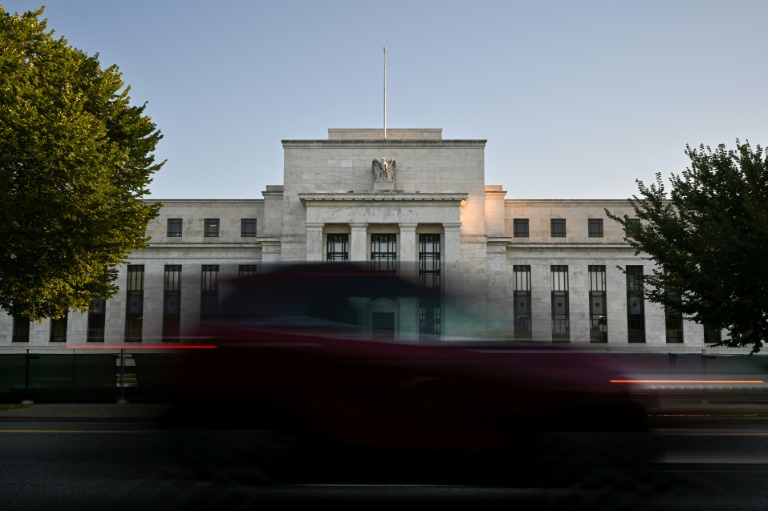
Global stocks slid on Monday as investors braced for more large interest rate hikes from the Federal Reserve.

The prospect of higher yields on debt was a boon for the dollar, however, which gained on its main rivals.

“We’re seeing mild risk aversion in the markets at the start of the week, perhaps some apprehension ahead of what could be a big few days for the US,” said market analyst Craig Erlam at OANDA.

Last week closed out with news that the US firms created a net 263,000 jobs in September.

While that was down from August it was more than expected, indicating that the US economy is not yet slowing considerably and inflationary pressures likely remain.

That sent stocks sharply lower as it means the Fed is unlikely to relent on interest rate hikes that are meant to tame inflation.

Stocks took a beating in August and September as monetary policymakers made clear they would keep raising interest rates in order to bring down inflation, even at the cost of a recession.

Last week, however, they briefly rallied on hope that the US jobs data would show the economy is already slowing, meaning the Fed could relent on interest rate hikes.

Some investors “may still be hoping that this week’s inflation data will swing the central bank but given previous comments, that doesn’t appear realistic unless we see a significant miss to the downside,” added Erlam.

Adding to the stress is the upcoming corporate earnings season, which many fear will show that companies are feeling the pain of tightening monetary policies.

Elsewhere on Monday, the Moscow stock exchange plunged nearly 12 percent following a weekend explosion that partially destroyed the bridge connecting Crimea to Russia.

Meanwhile, the pound won little support from Britain ramping up efforts to calm markets after a heavily criticised budget.

In what was seen as co-ordinated action, the government brought forward the release date of key economic forecasts and the Bank of England boosted liquidity.

“With the pound remaining weak and (UK) government borrowing costs inching up again towards worrying levels, the UK government and the Bank of England have launched a two-pronged attempt to calm markets,” noted Susannah Streeter, senior investment and markets analyst at Hargreaves Lansdown.

Oil prices meanwhile fell after the biggest weekly gain since March that followed a decision by OPEC and allied producers led by Russia to slash crude output by two million barrels per day.

The drop Monday came also on demand concerns caused by China’s Covid flare-ups and more weak data out of Beijing owing to lockdowns.

– Key figures around 1530 GMT –

New York – Dow: DOWN 0.3 percent at 29,202.02 points

EURO STOXX 50: DOWN 0.6 percent at 3,356.88

London – FTSE 100: DOWN 0.5 percent at 6,959.31 (close) 

Frankfurt – DAX: FLAT at 12,272.94 (close)

Paris – CAC 40: DOWN 0.5 percent at 5,840.55 (close)

Hong Kong – Hang Seng Index: DOWN 3.0 percent at 17,216.66 (close) 

Shanghai – Composite: DOWN 1.7 percent at 2,974.15 (close)

Tokyo – Nikkei 225: Closed for a holiday

Pound/dollar: DOWN at $1.1034 from $1.1082 on Friday

Euro/dollar: DOWN at $0.9689 from $0.9743

Euro/pound: DOWN at 87.79 pence from 87.97 pence

Dollar/yen: UP at 145.77 yen from 145.38 yen

West Texas Intermediate: DOWN 0.5 percent at $92.20 per barrel

Brent North Sea crude: DOWN 0.6 percent at $97.29 per barrel

burs-rl/pvh

Stocks slip, dollar rises as US rate hikes seen

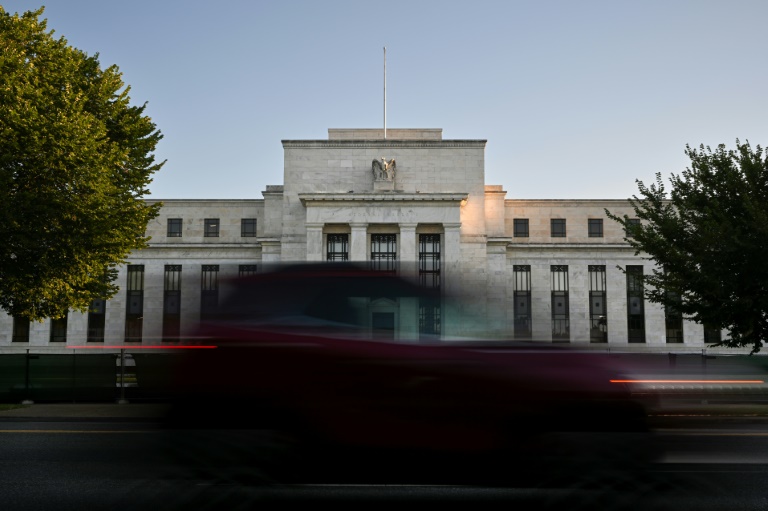
Global stocks slid on Monday as investors braced for more large interest rate hikes from the Federal Reserve.

The prospect of higher yields on debt was a boon for the dollar, however, which gained on its main rivals.

“We’re seeing mild risk aversion in the markets at the start of the week, perhaps some apprehension ahead of what could be a big few days for the US,” said market analyst Craig Erlam at OANDA.

Last week closed out with news that the US firms created a net 263,000 jobs in September.

While that was down from August it was more than expected, indicating that the US economy is not yet slowing considerably and inflationary pressures likely remain.

That sent stocks sharply lower as it means the Fed is unlikely to relent on interest rate hikes that are meant to tame inflation.

Stocks took a beating in August and September as monetary policymakers made clear they would keep raising interest rates in order to bring down inflation, even at the cost of a recession.

Last week, however, they briefly rallied on hope that the US jobs data would show the economy is already slowing, meaning the Fed could relent on interest rate hikes.

Some investors “may still be hoping that this week’s inflation data will swing the central bank but given previous comments, that doesn’t appear realistic unless we see a significant miss to the downside,” added Erlam.

Adding to the stress is the upcoming corporate earnings season, which many fear will show that companies are feeling the pain of tightening monetary policies.

Elsewhere on Monday, the Moscow stock exchange plunged nearly 12 percent following a weekend explosion that partially destroyed the bridge connecting Crimea to Russia.

Meanwhile, the pound won little support from Britain ramping up efforts to calm markets after a heavily criticised budget.

In what was seen as co-ordinated action, the government brought forward the release date of key economic forecasts and the Bank of England boosted liquidity.

“With the pound remaining weak and (UK) government borrowing costs inching up again towards worrying levels, the UK government and the Bank of England have launched a two-pronged attempt to calm markets,” noted Susannah Streeter, senior investment and markets analyst at Hargreaves Lansdown.

Oil prices meanwhile fell after the biggest weekly gain since March that followed a decision by OPEC and allied producers led by Russia to slash crude output by two million barrels per day.

The drop Monday came also on demand concerns caused by China’s Covid flare-ups and more weak data out of Beijing owing to lockdowns.

– Key figures around 1530 GMT –

New York – Dow: DOWN 0.3 percent at 29,202.02 points

EURO STOXX 50: DOWN 0.6 percent at 3,356.88

London – FTSE 100: DOWN 0.5 percent at 6,959.31 (close) 

Frankfurt – DAX: FLAT at 12,272.94 (close)

Paris – CAC 40: DOWN 0.5 percent at 5,840.55 (close)

Hong Kong – Hang Seng Index: DOWN 3.0 percent at 17,216.66 (close) 

Shanghai – Composite: DOWN 1.7 percent at 2,974.15 (close)

Tokyo – Nikkei 225: Closed for a holiday

Pound/dollar: DOWN at $1.1034 from $1.1082 on Friday

Euro/dollar: DOWN at $0.9689 from $0.9743

Euro/pound: DOWN at 87.79 pence from 87.97 pence

Dollar/yen: UP at 145.77 yen from 145.38 yen

West Texas Intermediate: DOWN 0.5 percent at $92.20 per barrel

Brent North Sea crude: DOWN 0.6 percent at $97.29 per barrel

burs-rl/pvh

Defiant Ukraine reopens eastern rail link despite missiles

As Russia launched a huge wave of missile strikes against Ukrainian cities Monday, defiant rail workers in the east of the country managed to restore a severed rail link.

Angered by a truck bombing that damaged a bridge carrying Russia’s main road and rail link to the occupied Ukrainian region of Crimea, Moscow has stepped up strikes on civilian targets.

But, despite the savage bombardment, the passenger rail service between recently-occupied Izyum and Ukraine’s second city Kharkiv restarted after Russia’s February 24 invasion forced a seven-month closure.

“The trains will be running twice a day, every day,” said Izyum railway manager Andrei Gadyatskiy, standing in the rain in front of the boarded up windows of his partially burned station.

Any transport away from Ukraine’s eastern frontline will serve, for some, as a lifeline to the most basic necessities. 

“It will allow them to go to Kharkiv, to use their bank cards,” Gadyatskiy said.

Raisa Starovoytova came to the station on Monday because she could barely believe rumours that the train had returned. 

“I came to find out about the train because I will need to get back to Kharkiv,” she told AFP, relieved to confirm that she would be able to leave later in the week.

The 65-year-old retired teacher had returned to Izyum after the Russian retreat, to see what had happened to her home.

“They took everything they could… mattresses, bedding… I came to take the bedding at least, but it wasn’t there,” she said.

– Former airport shuttle –

There is no electricity to power the electric locomotives that once served the eastern network, and Russian missile attacks still regularly hit the marshalling yards in Kharkiv.

But a Ukrainian DPKr-3 diesel that once shuttled air travellers between the capital Kyiv and Boryspil international airport has been pressed into service, 600 kilometres (360 miles) east of its home.

In the early stages of the war, Izyum came under intense Russian shelling and the invading army occupied the city from early April until its liberation last month by Ukrainian forces.

After the Russian retreat, the discovery of a mass burial site and the corpses of torture victims made Izyum a byword for the alleged atrocities committed under Russian occupation.

Now the town once again has a link to the regional capital, Kharkiv, by the rail line, along with stops in former frontline towns like Savyntsi, Tsyganska and Balakliya along the way.

Mariya Tymofiyenko had not been to Balakliya since the start of the war.

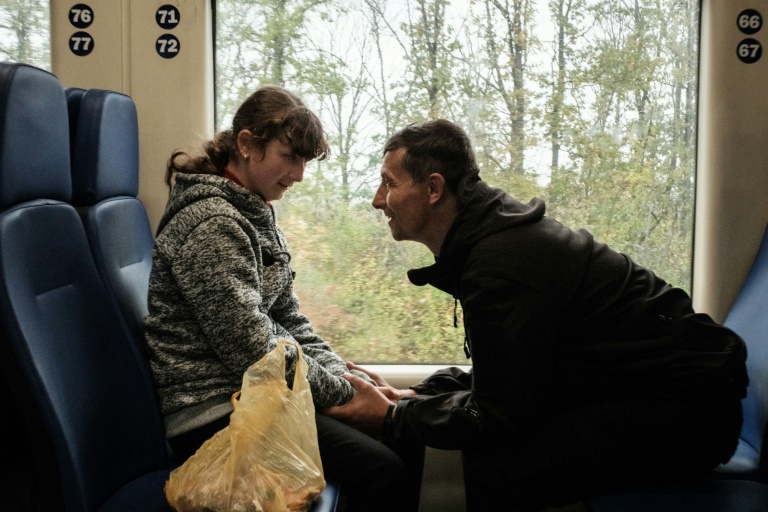
“I’m 73 years old and I still have to ride a bicycle because the buses are not running. It’s too far to walk,” she told AFP, on board the train as it wound its way through low wooded hills under leaden grey skies.

She hopes that Balakliya, where she has relatives, will prove a respite from the ruined town left behind by the Russian occupation of Izyum.

– ‘Tortured, beaten’ –

“I have no hope. If it’s like Izyum, I don’t know — here they broke into my flat, my garage. They stole everything. They ate all my preserves. They took all the tools,” she told AFP, blinking back tears.

“So many people died under the rubble. Apartments were destroyed, the schools. It was terrifying,” she said, wrapped up well against the first damp, chilly days of autumn.

“So many people were tortured, taken away, beaten. One man, my neighbour from one street over, was hanged,” she continued. 

“Yesterday, my granddaughter called me and said, ‘Grandma, I checked on the internet and the train to Balakliya will start again tomorrow.’ And I said, ‘OK, OK I will take it’.”

Neighbors, rescuers search for 52 missing after Venezuela landslide

Neighbors helped rescue teams comb through mud and debris Monday for signs of 52 people missing after a landslide swept through a town in Venezuela, killing at least 25.

Another 13 people were killed in heavy rains elsewhere in the South American country, while four died in Central America after tropical storm Julia dumped torrential rain on El Salvador, Honduras and Nicaragua.

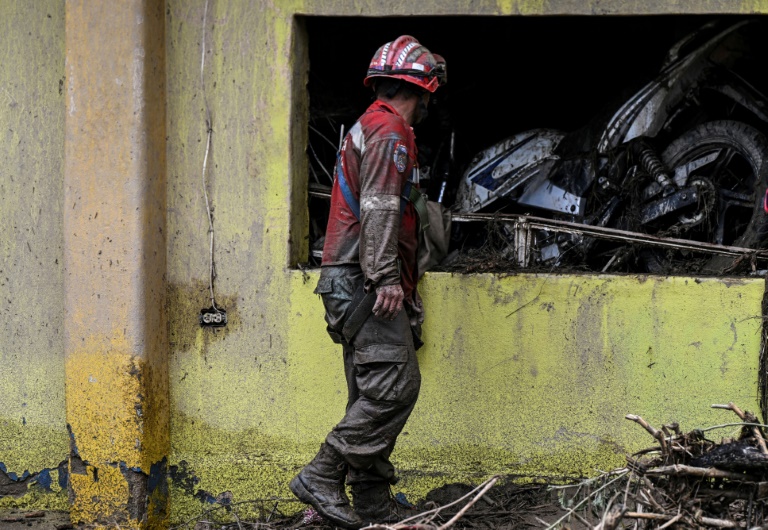
Residents of Las Tejerias some 50 kilometers (31 miles) from Caracas, used picks, shovels and any tools they could find to dig through a thick bank of mud deposited on the town Saturday.

“It came too fast, we had no time,” resident Carlos Camejo, 60, said of the mudslide.

“The town is lost, Las Tejerias is lost,” added Carmen Melendez, 55, desperately waiting for news on the whereabouts of a missing relative.

Some 1,000 rescuers were involved in the effort, Interior Minister Remigio Ceballos told AFP, with the military also deployed.

Authorities erected shelters for the displaced in Maracay, capital of the affected Aragua province.

The efforts had continued by lamplight overnight, with dogs and drones.

“We are working to find the people who are still missing, that is our main task right now,” Ceballos posted on social media late Sunday.

President Nicolas Maduro decreed three days of national mourning after the biggest river flood in the area in 30 years.

A torrent of mud several meters deep razed houses and businesses in Las Tejerias, a town of 54,000 people nestled in the mountains.

The deluge swept away cars, homes and telephone poles and felled large trees that were dragged by mud through the streets of the town left without electricity.

By the last count, Ceballos put the toll at 25 dead and 52 missing.

According to Vice President Delcy Rodriguez, five streams in the region overflowed after “as much rain fell in eight hours as normally falls in a month,” blaming the “climate crisis.”

Crews of workers with machinery were clearing the debris-covered roads while residents battled to clean out meters of mud dumped inside their homes.

Las Tejerias resident Jose Santiago spent 40 minutes clinging to an antenna while the flood dragged along several houses. His home was left standing but a torrent of mud swept through it.

“The river caught me and I couldn’t find anything to do besides climb a roof and grab onto an antenna,” the 65-year-old recounted. 

– ‘Life-threatening’ –

Further afield, four people died in Honduras and El Salvador when tropical storm Julia raced across Central America.

El Salvador police said on Twitter that “at least two people died” after a house collapsed in the town of Guatajiagua, some 150 kilometers east of San Salvador. 

Wilmer Wood, mayor of the eastern Honduran town of Brus Laguna, said two people died after Julia capsized a boat.

A third person is missing, said Wood.

The storm barelled into Nicaragua early Sunday as a hurricane packing sustained winds of 140 kilometers per hour, before weakening to tropical storm status but still inundating parts of the country with heavy rains that caused flooding.

By Monday morning, Julia’s eye was moving northwestward along the El Salvadoran and then Guatemalan coasts, according to the US National Hurricane Center which warned of “life-threatening flash floods and mudslides” across Central America and Southern Mexico.

The system was forecast to weaken to a tropical depression later Monday.

In Venezuela, the Tigres de Aragua and Caracas Lions baseball teams availed their stadiums as collection points for donations, and the Caracas metro said it too would raise collections from the public for those affected.

The crisis-hit country is no stranger to seasonal storms, but this was the worst so far this year following historic rain levels that caused dozens of deaths in recent months.

In 1999, about 10,000 people died in a massive landslide in the northern state of Vargas.

US trio, including ex-Fed chief Bernanke, win economics Nobel

A US trio including ex-Federal Reserve chief Ben Bernanke, who played a key role battling the 2008 financial crisis, won the economics Nobel on Monday for research on banks in times of turmoil.

Bernanke, together with Douglas Diamond and Philip Dybvig, were honoured for having “significantly improved our understanding of the role of banks in the economy, particularly during financial crises, as well as how to regulate financial markets”, the jury said.

Bernanke, 68, has been both credited for spurring recovery after the 2008 recession and pilloried by critics for doing little to avert it, allowing investment bank Lehman Brothers to collapse.

He received the award for his analysis, conducted in the early 1980s, of the Great Depression in the 1930s, the worst economic crisis in modern history.

In particular, Bernanke showed “how failing banks played a decisive role in the global depression,” making the downturn “not only deep, but also long-lasting,” the Nobel jury noted.

In his role as chief of the central bank, Bernanke “was able to put knowledge from research into policy” during the financial crisis of 2008-2009, the Nobel Committee said.

Bernanke has been hailed for the Fed’s unorthodox response of slashing interest rates and flooding the financial system with liquidity.

– Bank runs –

Diamond, a professor at the University of Chicago born in 1953, and Dybvig, 67, a professor at Washington University in St. Louis, were honoured for showing how “banks offer an optimal solution” for channelling savings to investments by acting as an intermediary.

The pair also showed how these institutions were vulnerable to so called bank runs, where a large number of savers simultaneously withdraw their money leading to the bank’s collapse.

The committee added that this dangerous dynamic can be avoided by governments providing deposit insurance and giving banks a life-line by becoming a lender of last resort.

“In a nutshell, the theory says that banks can be tremendously useful but they are only guaranteed to be stable if they are properly regulated”, Tore Ellingsen, chair of the prize committee, said.

Diamond, speaking to reporters after the announcement, reflected Monday on the decision by US authorities not to bail out Lehman Brothers, as they later did other financial institutions.

The bank’s collapse sent shockwaves through financial markets when it filed for bankruptcy in September 2008.

“It would have been better to find a more accommodating way, a less unstable way and unexpected way to resolve Lehman Brothers,” Diamond said, stressing there were questions about what regulators were legally able to do at the time.

“Had they found a way, I think the world would have had less of a severe crisis than it did,” Diamond said.

Speaking in an interview with the Nobel Foundation, Diamond also praised the work of his fellow laureate.

“The world was incredibly lucky to have Ben Bernanke sitting in the Federal Reserve during the crisis,” Diamond said.

– Few women –

Of all the Nobels, the economics prize has the fewest number of female winners: just two since it was first awarded in 1969, Elinor Ostrom in 2009 and Esther Duflo in 2019.

This year, only two women were among the 12 individuals and two organisations honoured, Carolyn Bertozzi in chemistry and Annie Ernaux for literature.

Hans Ellegren, secretary general of the Royal Swedish Academy of Sciences, told AFP that since the science prizes generally honour research dating back decades, laureates who win “now reflect what the scientific community looked like back then.”

“I’m rather glad to be able to say that we have increased the proportion of women that get Nobel Prizes,” Ellegren said.

He noted that in the last five years, four women had been awarded the chemistry prize and two had received the physics prize, which has been a male-dominated field.

The economics prize, created by the Swedish central bank in 1968, was the only award not included when scientist Alfred Nobel created the prestigious awards in his 1895 will.

But like the other prizes it comes with a gold medal and an award sum of 10 million Swedish kronor (around $900,000).

The winners will receive the prize from King Carl XVI Gustaf at a formal ceremony in Stockholm on December 10, the anniversary of the 1896 death of scientist Alfred Nobel. 

US trio, including ex-Fed chief Bernanke, win economics Nobel

A US trio including ex-Federal Reserve chief Ben Bernanke, who played a key role battling the 2008 financial crisis, won the economics Nobel on Monday for research on banks in times of turmoil.

Bernanke, together with Douglas Diamond and Philip Dybvig, were honoured for having “significantly improved our understanding of the role of banks in the economy, particularly during financial crises, as well as how to regulate financial markets”, the jury said.

Bernanke, 68, has been both credited for spurring recovery after the 2008 recession and pilloried by critics for doing little to avert it, allowing investment bank Lehman Brothers to collapse.

He received the award for his analysis, conducted in the early 1980s, of the Great Depression in the 1930s, the worst economic crisis in modern history.

In particular, Bernanke showed “how failing banks played a decisive role in the global depression,” making the downturn “not only deep, but also long-lasting,” the Nobel jury noted.

In his role as chief of the central bank, Bernanke “was able to put knowledge from research into policy” during the financial crisis of 2008-2009, the Nobel Committee said.

Bernanke has been hailed for the Fed’s unorthodox response of slashing interest rates and flooding the financial system with liquidity.

– Bank runs –

Diamond, a professor at the University of Chicago born in 1953, and Dybvig, 67, a professor at Washington University in St. Louis, were honoured for showing how “banks offer an optimal solution” for channelling savings to investments by acting as an intermediary.

The pair also showed how these institutions were vulnerable to so called bank runs, where a large number of savers simultaneously withdraw their money leading to the bank’s collapse.

The committee added that this dangerous dynamic can be avoided by governments providing deposit insurance and giving banks a life-line by becoming a lender of last resort.

“In a nutshell, the theory says that banks can be tremendously useful but they are only guaranteed to be stable if they are properly regulated”, Tore Ellingsen, chair of the prize committee, said.

Diamond, speaking to reporters after the announcement, reflected Monday on the decision by US authorities not to bail out Lehman Brothers, as they later did other financial institutions.

The bank’s collapse sent shockwaves through financial markets when it filed for bankruptcy in September 2008.

“It would have been better to find a more accommodating way, a less unstable way and unexpected way to resolve Lehman Brothers,” Diamond said, stressing there were questions about what regulators were legally able to do at the time.

“Had they found a way, I think the world would have had less of a severe crisis than it did,” Diamond said.

Speaking in an interview with the Nobel Foundation, Diamond also praised the work of his fellow laureate.

“The world was incredibly lucky to have Ben Bernanke sitting in the Federal Reserve during the crisis,” Diamond said.

– Few women –

Of all the Nobels, the economics prize has the fewest number of female winners: just two since it was first awarded in 1969, Elinor Ostrom in 2009 and Esther Duflo in 2019.

This year, only two women were among the 12 individuals and two organisations honoured, Carolyn Bertozzi in chemistry and Annie Ernaux for literature.

Hans Ellegren, secretary general of the Royal Swedish Academy of Sciences, told AFP that since the science prizes generally honour research dating back decades, laureates who win “now reflect what the scientific community looked like back then.”

“I’m rather glad to be able to say that we have increased the proportion of women that get Nobel Prizes,” Ellegren said.

He noted that in the last five years, four women had been awarded the chemistry prize and two had received the physics prize, which has been a male-dominated field.

The economics prize, created by the Swedish central bank in 1968, was the only award not included when scientist Alfred Nobel created the prestigious awards in his 1895 will.

But like the other prizes it comes with a gold medal and an award sum of 10 million Swedish kronor (around $900,000).

The winners will receive the prize from King Carl XVI Gustaf at a formal ceremony in Stockholm on December 10, the anniversary of the 1896 death of scientist Alfred Nobel. 

Heatwaves will make regions uninhabitable within decades: UN, Red Cross

Heatwaves will become so extreme in certain regions of the world within decades that human life there will be unsustainable, the United Nations and the Red Cross said Monday.

Heatwaves are predicted to “exceed human physiological and social limits” in the Sahel, the Horn of Africa and south and southwest Asia, with extreme events triggering “large-scale suffering and loss of life”, the organisations said.

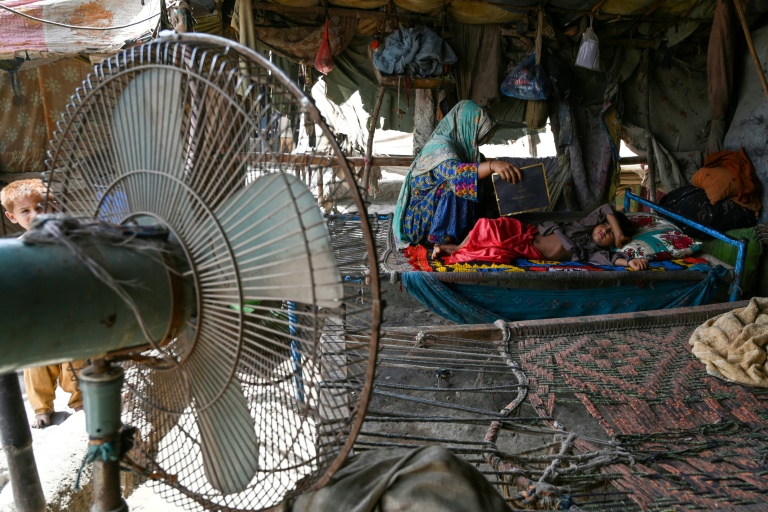
Heatwave catastrophes this year in countries like Somalia and Pakistan foreshadow a future with deadlier, more frequent, and more intense heat-related humanitarian emergencies, they warned in a joint report.

The UN’s Office for the Coordination of Humanitarian Affairs (OCHA) and the International Federation of Red Cross and Red Crescent Societies (IFRC) released the report in advance of next month’s COP27 climate change summit in Egypt.

“We don’t want to dramatise it, but clearly the data shows that it does lead towards a very bleak future,” said IFRC secretary-general Jagan Chapagain.

They said aggressive steps needed to be taken immediately to avert potentially recurrent heat disasters, listing steps that could mitigate the worst effects of extreme heat.

– Limits of survival –

“There are clear limits beyond which people exposed to extreme heat and humidity cannot survive,” the report said.

“There are also likely to be levels of extreme heat beyond which societies may find it practically impossible to deliver effective adaptation for all.

“On current trajectories, heatwaves could meet and exceed these physiological and social limits in the coming decades, including in regions such as the Sahel and south and southwest Asia.”

It warned that the impact of this would be “large-scale suffering and loss of life, population movements and further entrenched inequality.”

The report said extreme heat was a “silent killer”, claiming thousands of lives each year as the deadliest weather-related hazard — and the dangers were set to grow at an “alarming rate” due to climate change.

According to a study cited by the report, the number of poor people living in extreme heat conditions in urban areas will jump by 700 percent by 2050, particularly in west Africa and southeast Asia.

“Projected future death rates from extreme heat are staggeringly high — comparable in magnitude by the end of the century to all cancers or all infectious diseases — and staggeringly unequal,” the report said.

Agricultural workers, children, the elderly and pregnant and breastfeeding women are at higher risk of illness and death, the report claimed.

“As the climate crisis goes unchecked, extreme weather events, such as heatwaves and floods, are hitting the most vulnerable people the hardest,” said UN humanitarian chief Martin Griffiths.

“The humanitarian system is not equipped to handle crisis of this scale on our own.”

– ‘Previously unimaginable’ –

Chapagain urged countries at COP27 to invest in climate adaptation and mitigation in the regions most at risk.

OCHA and the IFRC suggested five main steps to help combat the impact of extreme heatwaves, including providing early information to help people and authorities react in time, and finding new ways of financing local-level action.

They also included humanitarian organisations testing more “thermally-appropriate” emergency shelter and “cooling centres”, while getting communities to alter their development planning to take account of likely extreme heat impacts.

OCHA and the IFRC said there were limits to extreme heat adaptation measures.

Some, such as increasing energy-intensive air conditioning, are costly, environmentally unsustainable and contribute themselves to climate change.

If emissions of the greenhouse gases which cause climate change are not aggressively reduced, the world will face “previously unimaginable levels of extreme heat”.

Close Bitnami banner
Bitnami