AFP

No relief for French motorists as petrol strike hardens

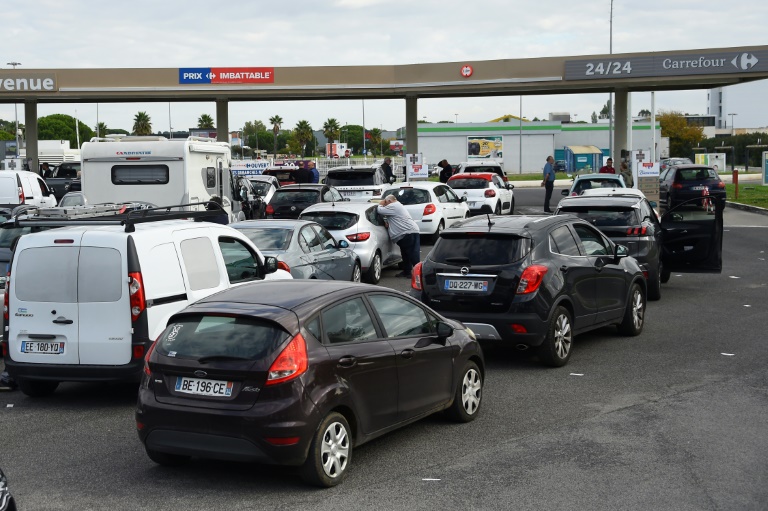
Filling stations across France were low on petrol on Monday as a strike by workers at energy giant TotalEnergies entered its third week despite government pressure to negotiate.

According to official estimates, around 30 percent of service stations were out of all or at least some fuel types, causing long queues for increasingly desperate motorists.

There had been hopes that the pay-related strike action at TotalEnergies, among the world’s biggest energy multinationals, would end rapidly after management on Sunday agreed to bring forward salary talks in return for workers resuming service.

But the hard-left CGT union declined the offer, accusing management of “blackmail”.

The union is demanding a wage rise of 10 percent for 2022, pointing to TotalEnergies’ exceptionally high first-quarter profit of $10.6 billion.

The boss of TotalEnergies’ European refineries, Jean-Marc Durand, countered that “it’s the French people who are being blackmailed”.

Stoppages continued at several refineries Monday, including France’s biggest near Le Havre in the north of the country, with the CGT renewing its strike call until Tuesday and extending strike action to more than a dozen service stations along French motorways.

Workers at the French branch of Esso-ExxonMobil were also still on strike, blocking two refineries. 

Members of the French government, including Prime Minister Elisabeth Borne, have called for both sides to find a negotiated settlement quickly, and on Monday President Emmanuel Macron weighed in.

“Blockades are no way to negotiate”, Macron said, calling for “an early conclusion of negotiations”. 

He said the current petrol shortages were unrelated to the war in Ukraine and “not the government’s doing”.

Borne, meanwhile, said she expected “the situation to improve in the course of this week”.

The petrol crisis comes at a time of high energy prices and inflation that are sapping French households’ purchasing power.

The left-wing opposition coalition Nupes has called for a “March against a high cost of living” in Paris and elsewhere on Sunday.

At the weekend, several prominent French people came out in support of the initiative, including this year’s winner of the Nobel Prize for Literature, Annie Ernaux.
Iraq drought displaces 1,200 families in parched south

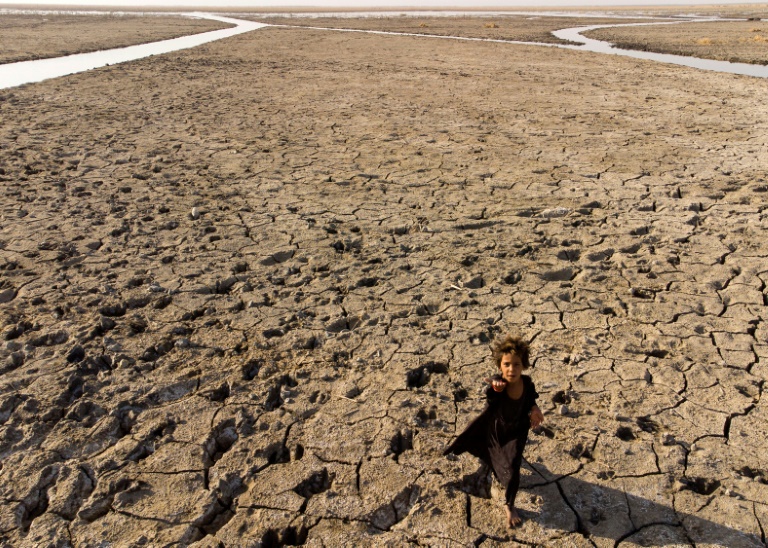
Some 1,200 Iraqi families have been forced out of southern marshes and farmlands over the past six months, a local official told AFP, as drought ravages swathes of the country.

The Mesopotamian Marshes, a UNESCO World Heritage site, have been battered by low rainfall and reduced flows in the Tigris and Euphrates rivers due to dams built upstream in Turkey and Iran.

Oil-rich Iraq, battered by decades of war, is also the world’s fifth-most vulnerable country to some key effects of climate change, including water scarcity and desertification, say the United Nations. 

Saleh Hadi, head of the agriculture authority in Dhi Qar province, said “about 1,200 families of buffalo herders and farmers in the marshes and other areas of the province were displaced from their homes do to water shortages”.

The mass exodus began in April, Hadi said, adding that more than 2,000 buffaloes had died as a result of the drought.

“Half of the families have moved closer to the river in areas of north of Nasiriyah,” the regional capital, he added, while others have relocated to central and southern provinces such as Babylon, Kut, Karbala and Basra.

According to Hadi, the Dhi Qar’s Chibayish marshes and the village of Manar in the Hammar marshes were hit particularly hard, but families have also left Umm al-Wadaa and farming lands in Sayyed Dakhil, Suk al-Shuyukh and al-Islah.

Iraq’s water resources minister last month said that 2022 has been “one of the driest years Iraq has seen since 1930,” citing three consecutive years of low precipitation and reduced river flow.

This summer, vast swathes of wetland in Hawizah, along the border with Iran, as well as in the touristic Chibayish region have dried up.

The UN Food and Agriculture Organization noted in July “unprecedented low water levels” in the marshes, “one of the poorest regions in Iraq and one of the most affected by climate change”.

The agency underlined the “disastrous impact” on more than 6,000 families living in that area who “are losing their buffaloes, their unique living asset”.

Record quarterly profit for Indian software giant TCS

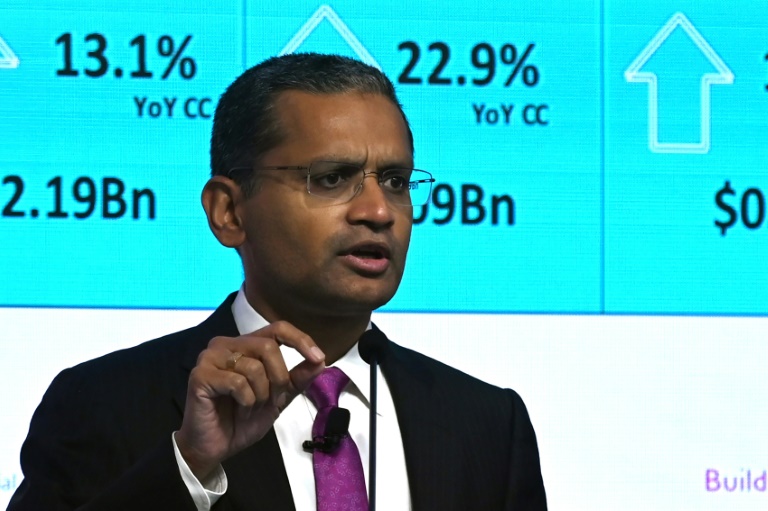
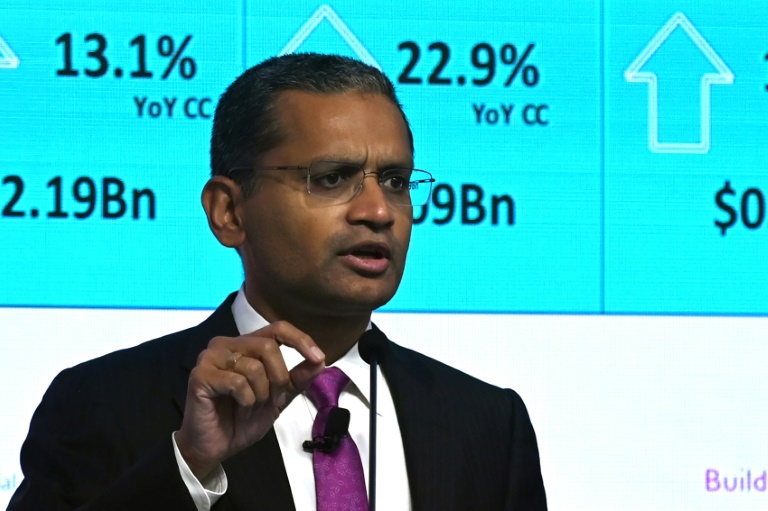
India’s largest software exporter Tata Consultancy Services on Monday shrugged off global economic turmoil to report a record profit for any quarter, with figures that beat analyst estimates.

TCS is India’s second-most-valuable company by market capitalisation and earns more than 80 percent of its revenues from Western markets.

It has been at the forefront of an IT boom that has seen India become a back office to the world as firms in North America and Europe subcontract work, taking advantage of a skilled English-speaking workforce.

More recently, technology companies have benefited from a boost in demand for digital services since the pandemic.

Net profit at the IT giant rose 8.4 percent year-on-year in the three months to September to reach 104.3 billion rupees ($1.26 billion), with revenues up 18 percent to 553.1 billion rupees.

The net profit figure was 1.4 billion rupees ahead of analysts’ average estimate, according to Bloomberg News.

“This is a milestone quarter for us,” chief executive officer Rajesh Gopinathan told a media briefing, pointing to net profit surpassing 100 billion rupees for the first time.

“Of course, the environment is challenging and it requires all of us to remain very vigilant,” he said, adding that customers were relying on TCS’s diversified services to manage volatile market conditions.

Its overseas growth in the quarter was led by North America, which contributed half of its business and saw revenue growth of 17.6 percent.

The company — one of India’s largest private employers — slowed its hiring despite its attrition rate rising to 21.5 percent.

Competition for employees has driven up salaries and weighed on operating margins in recent quarters, but TCS said attrition — a key metric for IT companies — has “peaked” and will “taper down from this point”.

Operating margins at the Mumbai-headquartered company contracted 1.6 percentage points to 24 percent, while its order book stood steady at $8.1 billion at the end of September.

Shares in the firm closed 1.84 percent higher in Mumbai ahead of the release of the results.

Record quarterly profit for Indian software giant TCS

India’s largest software exporter Tata Consultancy Services on Monday shrugged off global economic turmoil to report a record profit for any quarter, with figures that beat analyst estimates.

TCS is India’s second-most-valuable company by market capitalisation and earns more than 80 percent of its revenues from Western markets.

It has been at the forefront of an IT boom that has seen India become a back office to the world as firms in North America and Europe subcontract work, taking advantage of a skilled English-speaking workforce.

More recently, technology companies have benefited from a boost in demand for digital services since the pandemic.

Net profit at the IT giant rose 8.4 percent year-on-year in the three months to September to reach 104.3 billion rupees ($1.26 billion), with revenues up 18 percent to 553.1 billion rupees.

The net profit figure was 1.4 billion rupees ahead of analysts’ average estimate, according to Bloomberg News.

“This is a milestone quarter for us,” chief executive officer Rajesh Gopinathan told a media briefing, pointing to net profit surpassing 100 billion rupees for the first time.

“Of course, the environment is challenging and it requires all of us to remain very vigilant,” he said, adding that customers were relying on TCS’s diversified services to manage volatile market conditions.

Its overseas growth in the quarter was led by North America, which contributed half of its business and saw revenue growth of 17.6 percent.

The company — one of India’s largest private employers — slowed its hiring despite its attrition rate rising to 21.5 percent.

Competition for employees has driven up salaries and weighed on operating margins in recent quarters, but TCS said attrition — a key metric for IT companies — has “peaked” and will “taper down from this point”.

Operating margins at the Mumbai-headquartered company contracted 1.6 percentage points to 24 percent, while its order book stood steady at $8.1 billion at the end of September.

Shares in the firm closed 1.84 percent higher in Mumbai ahead of the release of the results.

UK sets scene for Hallowe'en forecasts after budget spooks investors

Britain on Monday brought forward key economic forecasts to Hallowe’en and the Bank of England boosted liquidity, after markets were spooked by a much-criticised tax-slashing budget.

Finance minister Kwasi Kwarteng will unveil debt-reduction plans and independent economic predictions later this month after his borrowing-fuelled budget sparked markets turmoil.

In his latest U-turn, Kwarteng revealed he would publish his medium-term fiscal plan alongside the forecasts on October 31 rather than late November.

“It’s clear there is still much scepticism about the government’s plans. The risk is that if the numbers don’t add up, the markets could take fright again on Halloween,” said Hargreaves Lansdown analyst Susannah Streeter.

It comes after Chancellor of the Exchequer Kwarteng was already forced to axe a tax cut for the richest earners, in the face of outrage as millions of Britons face a cost-of-living crisis with UK inflation around 10 percent.

Markets have been shaken by the budget from the government of new Prime Minister Liz Truss, which also included a costly energy price freeze for households and businesses in the budget.

The plans that are aimed at supporting Britain’s recession-threatened economy sent UK bond yields soaring and the pound tumbling to a record low against the dollar.

– Bank of England action –

The Bank of England earlier Monday revealed it was launching a temporary facility aimed at easing liquidity pressures that arose after the budget shocked markets.

The BoE in a statement announced “additional measures to support market functioning”.

It added that the central bank was ready to increase the size of its UK government bond purchases under an emergency measure due to end Friday.

The BoE said it was launching a Temporary Expanded Collateral Repo Facility, enabling “banks to help to ease liquidity pressures facing” client funds beyond the end of this week.

Budget turmoil triggered the emergency buying of long-dated bonds by the BoE.

The central bank has so far made purchases of so-called gilts totalling around £5 billion ($5.5 billion), far less than its £65-billion limit, under a plan ending Friday.

The purchases are “to restore market functioning in long-dated government bonds and reduce risks from contagion to credit conditions for UK households and businesses”, the BoE stressed in its statement Monday.

The budget was widely criticised, including by the International Monetary Fund, over fears that government debt would balloon to pay for the tax cuts.

Fitch last week lowered the outlook on its credit rating for British government debt to negative from stable.

The pound was down against the dollar Monday but above the record-low level that was close to parity.

– Calm for now –

Despite the measures calming volatility, yields on Britain’s bonds remain elevated on concern over sustainability.

The yield on 30-year UK government bonds, which spiked to 5.14 percent following the budget, stood at 4.54 percent on Monday.

“The central bank’s action has helped to calm government debt markets but there are concerns about what happens next week after the BoE’s support package ends,” noted Victoria Scholar, head of investment at Interactive Investor.

Monday’s intervention comes as Britain suffers a cost-of-living crisis caused by the highest inflation in decades after energy and food prices have rocketed.

The BoE has piled on further pressure by hiking its main interest rate to a 14-year high of 2.25 percent in a bid to cool inflation.

This in turn has seen retail banks ramp up interest rates on mortgages, with analysts predicting heavy price falls for property.

Air France, Airbus trial opens over 2009 Rio-Paris crash

A French trial of Air France and Airbus began Monday on charges of involuntary manslaughter over the fatal 2009 crash of a jet heading to Paris from Brazil, killing all 228 people aboard.

Victims’ families and some aviation experts say the pilots were insufficiently trained to handle a loss of speed readings caused by crucial equipment freezing over in a storm.

Around 50 relatives of the victims sat on the benches in the packed Paris criminal court, while Airbus’s chief executive Guillaume Faury and Air France boss Anne Rigail also attended.

Judges read out the charges before listing aloud the names of every person killed in the crash.

Flight AF 447 from Rio de Janeiro plunged into the Atlantic Ocean in the early hours of June 1, 2009, after entering a zone near the Equator known for strong turbulence.

The Airbus A330 was carrying 12 crew members and 216 passengers. It was the carrier’s deadliest crash.

It took nearly two years to locate the bulk of the fuselage and recover the “black box” flight recorders.

French flagship carrier Air France and aircraft maker Airbus were charged as the inquiry progressed. 

Experts determined the crash resulted from mistakes made by pilots disorientated by so-called Pitot speed-monitoring tubes that had frozen over in thick cloud.

But investigating magistrates overseeing the case dropped the charges in 2019, a decision that infuriated victims’ families.

Prosecutors appealed against the decision and in 2021 a Paris court ruled there was sufficient evidence for a trial to go ahead. 

Ophelie Toulliou, who lost her brother on the flight, said it was essential “the truth come out, and that the sentences, if deserved, are handed down”.

“But the message is also to make companies that think they’re untouchable understand ‘You’re like everyone else and if you make mistakes, they will be punished,'” she told AFP.

– ‘Lost our speeds’ –

The court will hear testimony from dozens of aviation experts and pilots over two months of hearings, and each company faces a maximum fine of 225,000 euros ($220,000).

There will also be analysis of the final minutes in the cockpit before the plane went into free-fall after entering a so-called “intertropical convergence zone” that often produces volatile storms with heavy precipitation.

In the cold, the Pitot tubes froze, a problem that had already been reported by other pilots. The tubes were quickly replaced on planes worldwide in the months after the accident.

“We’ve lost our speeds,” one pilot is heard saying in the flight recordings, before other indicators mistakenly show a loss of altitude and a series of alarm messages appear on the cockpit screens. 

The pilots start climbing and even though a “STALL” alert sounds, reach 11,600 metres (38,060 feet).

“I don’t know what’s happening,” one of the pilots is heard saying as the stall begins.

– Training overhaul –

Air France pilots’ union SPAF said it was now “indispensable for a court to hear all the parties and decide where responsibility lies in a public hearing”.

The crash prompted an overhaul of training protocols across the industry, in particular to prepare pilots to handle the intense stress of unforeseen circumstances.

Pilots are also now required to continually practise stall responses on simulators.

“That was the big change after this accident for all civil airline companies. Before, it was something pilots learned in basic training and then they were never trained again,” one airline executive told AFP, on condition of anonymity.

Testimony will also be heard from some of the 476 members of victims’ families who are civil plaintiffs in the case.

But Nelson Faria Marinho, president of the Brazilian association of victims’ relatives, said: “I’m not expecting anything from this trial.”

“Even if there is a conviction, who will be punished? The CEOs? They were changed at Airbus and Air France a long time ago,” he told AFP during an interview at his Rio home.

He will be represented by former French pilot Gerard Arnoux, who has advised several of the victims’ families and wrote a book titled “Rio-Paris Is Not Responding: AF447, the Crash that Should Not Have Happened”.

US trio, including ex-Fed chief Bernanke, win economics Nobel

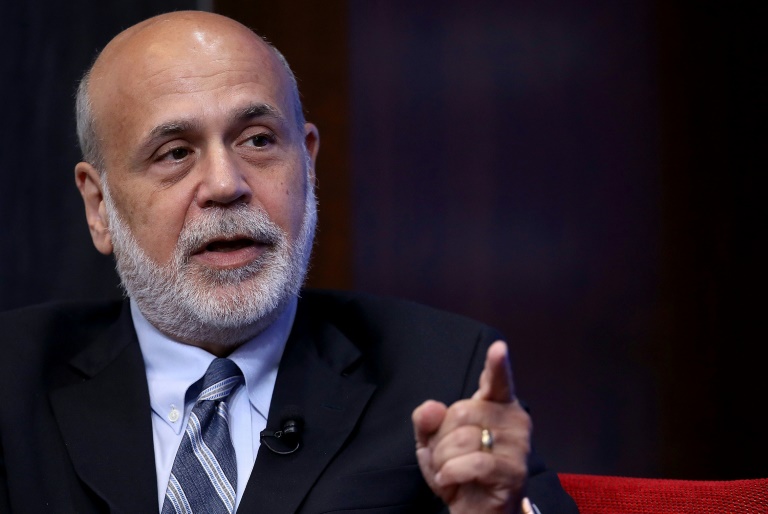
A US trio including ex-Federal Reserve chief Ben Bernanke, who played a key role battling the 2008 financial crisis, won the economics Nobel on Monday for research on banks in times of turmoil.

Bernanke, together with Douglas Diamond and Philip Dybvig, were honoured for having “significantly improved our understanding of the role of banks in the economy, particularly during financial crises, as well as how to regulate financial markets”, the jury said.

Bernanke, 68, has been both credited for spurring recovery after the 2008 recession and pilloried by critics for doing little to avert it, allowing investment bank Lehman Brothers to collapse.

He received the award for his analysis, conducted in the early 1980s, of the Great Depression in the 1930s, the worst economic crisis in modern history.

In particular, Bernanke showed “how failing banks played a decisive role in the global depression,” making the downturn “not only deep, but also long-lasting,” the Nobel jury noted.

In his role as chief of the central bank, Bernanke “was able to put knowledge from research into policy,” during the financial crisis of 2008-2009, the Nobel Committee said.

Bernanke has been hailed for the Fed’s unorthodox response of slashing interest rates and flooding the financial system with liquidity.

– Bank runs –

Diamond, a professor at the University of Chicago born in 1953, and Dybvig, 67, a professor at Washington University in St. Louis, were honoured for showing how “banks offer an optimal solution” for channelling savings to investments by acting as an intermediary.

The pair also showed how these institutions were vulnerable to so called banks runs.

“If a large number of savers simultaneously run to the bank to withdraw their money, the rumour may become a self-fulfilling prophecy –- a bank run occurs and the bank collapses,” the Nobel Committee said.

The committee added that this dangerous dynamic can be avoided by governments providing deposit insurance and giving banks a life-line by becoming a lender of last resort.

“The laureates’ insights have improved our ability to avoid both serious crises and expensive bailouts,” Tore Ellingsen, chair of the Committee for the Prize in Economic Sciences, said.

“In a nutshell, the theory says that banks can be tremendously useful but they are only guaranteed to be stable if they are properly regulated”, he added.

Diamond, speaking to reporters after the announcement, reflected Monday on the decision by US authorities not to bailout US investment bank Lehman Brothers, as they later did other financial institutions.

The bank’s collapse sent shockwaves through financial markets when it filed for bankrupcy in September 2008.

“It would have been better to find a more accommodating way, a less unstable way and unexpected way to resolve Lehman Brothers,” Diamond said, stressing there were questions about what regulators were legally able to do at the time.

“Had they found a way, I think the world would have had less of a severe crisis than it did,” Diamond said.

– ‘False Nobel’ –

Of all the Nobels, the economics prize has the fewest number of female winners, just two since it was first awarded in 1969 — Elinor Ostrom in 2009 and Esther Duflo in 2019.

The economics prize, set up by the Swedish central bank, was the only award absent from the original five created by scientist Alfred Nobel, sometimes earning it the moniker of “false Nobel”.

But like the other prizes it comes with a medal and an award sum of 10 million Swedish kronor (around $900,000).

The winners will receive the prize from King Carl XVI Gustaf at a formal ceremony in Stockholm on December 10, the anniversary of the 1896 death of scientist Alfred Nobel who created the prizes in his last will and testament. 

Last year, the honour went jointly to Canada’s David Card, Israeli-American Joshua Angrist and Dutch-American Guido Imbens for research that “revolutionised” empirical work in their field and brought better understanding of how labour markets work.

The Economics Prize closes this year’s Nobel season. 

US trio, including ex-Fed chief Bernanke, win economics Nobel

A US trio including ex-Federal Reserve chief Ben Bernanke, who played a key role battling the 2008 financial crisis, won the economics Nobel on Monday for research on banks in times of turmoil.

Bernanke, together with Douglas Diamond and Philip Dybvig, were honoured for having “significantly improved our understanding of the role of banks in the economy, particularly during financial crises, as well as how to regulate financial markets”, the jury said.

Bernanke, 68, has been both credited for spurring recovery after the 2008 recession and pilloried by critics for doing little to avert it, allowing investment bank Lehman Brothers to collapse.

He received the award for his analysis, conducted in the early 1980s, of the Great Depression in the 1930s, the worst economic crisis in modern history.

In particular, Bernanke showed “how failing banks played a decisive role in the global depression,” making the downturn “not only deep, but also long-lasting,” the Nobel jury noted.

In his role as chief of the central bank, Bernanke “was able to put knowledge from research into policy,” during the financial crisis of 2008-2009, the Nobel Committee said.

Bernanke has been hailed for the Fed’s unorthodox response of slashing interest rates and flooding the financial system with liquidity.

– Bank runs –

Diamond, a professor at the University of Chicago born in 1953, and Dybvig, 67, a professor at Washington University in St. Louis, were honoured for showing how “banks offer an optimal solution” for channelling savings to investments by acting as an intermediary.

The pair also showed how these institutions were vulnerable to so called banks runs.

“If a large number of savers simultaneously run to the bank to withdraw their money, the rumour may become a self-fulfilling prophecy –- a bank run occurs and the bank collapses,” the Nobel Committee said.

The committee added that this dangerous dynamic can be avoided by governments providing deposit insurance and giving banks a life-line by becoming a lender of last resort.

“The laureates’ insights have improved our ability to avoid both serious crises and expensive bailouts,” Tore Ellingsen, chair of the Committee for the Prize in Economic Sciences, said.

“In a nutshell, the theory says that banks can be tremendously useful but they are only guaranteed to be stable if they are properly regulated”, he added.

Diamond, speaking to reporters after the announcement, reflected Monday on the decision by US authorities not to bailout US investment bank Lehman Brothers, as they later did other financial institutions.

The bank’s collapse sent shockwaves through financial markets when it filed for bankrupcy in September 2008.

“It would have been better to find a more accommodating way, a less unstable way and unexpected way to resolve Lehman Brothers,” Diamond said, stressing there were questions about what regulators were legally able to do at the time.

“Had they found a way, I think the world would have had less of a severe crisis than it did,” Diamond said.

– ‘False Nobel’ –

Of all the Nobels, the economics prize has the fewest number of female winners, just two since it was first awarded in 1969 — Elinor Ostrom in 2009 and Esther Duflo in 2019.

The economics prize, set up by the Swedish central bank, was the only award absent from the original five created by scientist Alfred Nobel, sometimes earning it the moniker of “false Nobel”.

But like the other prizes it comes with a medal and an award sum of 10 million Swedish kronor (around $900,000).

The winners will receive the prize from King Carl XVI Gustaf at a formal ceremony in Stockholm on December 10, the anniversary of the 1896 death of scientist Alfred Nobel who created the prizes in his last will and testament. 

Last year, the honour went jointly to Canada’s David Card, Israeli-American Joshua Angrist and Dutch-American Guido Imbens for research that “revolutionised” empirical work in their field and brought better understanding of how labour markets work.

The Economics Prize closes this year’s Nobel season. 

German experts propose energy price cap from next year

A price cap to reduce soaring German energy costs following Russia’s invasion of Ukraine should come into force next year with additional help provided beforehand, a government-appointed commission recommended Monday.

Under the plan, households will benefit from the cap covering 80 percent of their usage from March next year to April 2024, said the expert commission.

To bridge the gap until the brake enters force, the government should foot gas and district heating bills for households and small companies in December to tackle high costs over winter, they said.

“We wanted the effects of the relief measures to be fast,” Michael Vassiliadis, a member of the commission told a press conference, adding a “first possibility” of lightening the burden for consumers needed to be provided by the end of 2022. 

Moscow’s move to cut off gas supplies amid the fallout from the Ukraine war has triggered an energy crisis in Europe, with Germany particularly hard hit as it relied heavily on Russian supplies prior to the conflict. 

The proposed price cap is part of a controversial 200-billion-euro ($194-billion) fund aimed at shielding Germans from skyrocketing energy costs. 

The announcement of the fund last month caused tensions with some fellow European Union members, who are concerned by Berlin’s go-it-alone approach and are calling for bloc-wide solutions.

Vassiliadis insisted that Germany’s plans were not “against Europe”. 

He said Germany took European solidarity into account, but was also acting “with regard to our households and people”.

For major industrial users, the commission also proposed a price cap of seven cents per kilowatt hour for usage of up to 70 percent of 2021’s consumption.

These companies, numbering around 25,000 in Germany, will not benefit from December’s payment, but the price cap should kick in already in January to help ease their energy burden, the commission said.

The energy crisis endangered not just individual companies but “the German economic model, and also our prosperity,” said commission member Siegfried Russwurm.

Germany is set to sink into a recession in 2023, leading economic institutes said last month, citing the impact of energy prices. 

Bernanke: Depression scholar who faced global financial crisis

Ben Bernanke, who shared the Nobel Economics Prize on Monday, is a scholar of the Great Depression who helped to steer the United States through another major financial crisis as Federal Reserve chief.

Bernanke took over as Fed chair in February 2006, just before the collapse of the US housing market that triggered a global crisis of epic proportions.

Many analysts say Bernanke’s aggressive and unorthodox moves allowed the central bank to prop up the financial system and keep credit flowing, therefore avoiding a repeat of a 1930s-style calamity.

His critics, though, argue that he did little to avert the crisis and may have helped fuel the problems when he was a Fed governor in 2002-2005 under then-chairman Alan Greenspan and subsequently headed the Council of Economic Advisers under former president George W. Bush.

The Nobel jury awarded the prize to Bernanke, 68, along with fellow US economists Douglas Diamond and Philip Dybvig for having “significantly improved our understanding of the role of banks in the economy, particularly during financial crises, as well as how to regulate financial markets.”

Bernanke was singled out for his analysis of “the worst economic crisis in modern history” — the Great Depression in the 1930s. He published a book on his essays about the topic and co-authored another about the 2008 financial crisis.

He is now a senior fellow at the Brookings Institution think tank in Washington and a senior adviser to the asset management firms Pimco and Citadel — appointments that raised concerns about the “revolving door” between Washington and Wall Street.

– ‘Creative leadership’ –

In recognition for his actions during the global financial crisis, he was named TIME magazine’s “Person of the Year” for 2009.

TIME honored the former Princeton University professor as “the most important player guiding the world’s most important economy.”

“His creative leadership helped ensure that 2009 was a period of weak recovery rather than catastrophic depression,” TIME senior writer Michael Grunwald wrote.

Grunwald said at the time that Bernanke still wielded “unrivaled power over our money, our jobs, our savings and our national future.”

Bernanke served as central bank chief under Bush and was kept on the job by the Republican leader’s Democratic successor, Barack Obama.

The former central banker has stressed the importance of transparency in the Fed’s communications, stepping away from Greenspan’s turgid, jargon-laden statements.

And unlike his predecessor, Bernanke talked often to reporters.

Joseph Brusuelas, a director at Moody’s Analytics, once said that the Fed’s unorthodox response to the global financial crisis was “without precedent” as it slashed its policy rate to zero and “flooded the financial system with liquidity.”

The Fed’s moves, Brusuelas said, “slowly rebuilt confidence in the banking system.”

Jeffrey Sachs, economist at Columbia University, said “a depression seemed possible” at the time of the Lehman Brothers collapse in September 2008, but action by central banks “prevented financial markets from crashing.”

– Lehman ‘blunder’ –

But others criticized him for failing to better predict the severity of the economic crisis: in 2007, when the first signs of the subprime mortgage crisis emerged, Bernanke assured Congress that the fallout would be limited.

Others accuse Bernanke of failing to act quickly to cut interest rates once the scale of the crisis emerged. The Fed instead adopted a go-slow posture on cutting rates, before making an emergency cut in January 2008.

Among Bernanke critics, the late economist Allan Meltzer at Carnegie Mellon University said the Lehman collapse represented a mistake of historic proportions.

“Allowing Lehman to fail without warning is one of the worst blunders in Federal Reserve history,” he wrote in a Wall Street Journal essay.

Bernanke was born on December 13, 1953 in Augusta, Georgia, to a pharmacist father and a schoolteacher mother. He grew up in a Jewish household, a minority in the heavily Christian community.

He spent his childhood in Dillon, South Carolina — a farm town with a population of 7,500 — and was a star scholar, achieving a near-perfect score in the Scholastic Aptitude Test (SAT), a university entrance exam.

He studied economics at Harvard and graduated with top honors in 1975, then went on to obtain a PhD in economics from the Massachusetts Institute of Technology. 

He worked at Princeton for 17 years before joining the Federal Reserve Board in 2002.

Close Bitnami banner
Bitnami