AFP

Markets sink as US jobs data fan rate hike bets

Stock markets sank Monday as forecast-beating US jobs data fanned expectations for another big Federal Reserve interest rate hike, while traders are now focusing on an upcoming inflation report.

A brief rally across trading floors last week gave way to gloom as investors grow increasingly worried that central bank efforts to tame runaway prices will plunge the global economy into recession.

Adding to the stress is the upcoming corporate earnings season, which many fear will show that companies are feeling the pain of tightening monetary policies, and fresh China-US tensions.

All three main indexes tumbled Friday — with the Nasdaq off almost four percent — following news that a net 263,000 US jobs were created in September.

While that was down from August it was more than expected and showed that the labour market remained robust and highlighted the tough job Fed officials face in their battle against four-decade-high inflation. 

With the spotlight on a consumer price index reading later in the week, policymakers continue to take a hawkish tone, warning they will not ease up on their rate hikes even if that means causing a recession.

Asia tracked the US losses, with Hong Kong down three percent and hefty selling in Sydney, Singapore, Mumbai, Bangkok, Manila, Jakarta and Wellington. 

Shanghai dropped as traders returned from a week-long holiday, with rising Covid numbers in the country leading to worries of more economically painful lockdowns ahead of a key Communist Party gathering.

Chinese tech firms were also hit after Washington on Friday announced new export controls aimed at restricting China’s ability to buy and make high-end chips with military applications, adding to tensions between the countries.

London, Paris and Frankfurt all fell in the morning, while Moscow stocks plunged nearly 12 percent following a series of strikes on cities across Ukraine and after the bridge connecting Crimea to Russia was hit by an explosion at the weekend.

Tokyo, Seoul and Taipei were closed.

“The sell-off in equities and the rally in the dollar following Friday’s US employment report reflects the concern that the hurdle for a Fed pause is high,” said SPI Asset Management’s Stephen Innes.

“The rising unemployment rate needed to help bring down CPI inflation will require job losses despite the political fallout that is bound to ensue. Regardless, tightening monetary policy until job losses materialize is on the cards.”

He added that there was also nervousness about earnings.

“Unlike June, where earnings were poised to beat expectations, investors are biased towards hitting the sell button as concern around lagged effects of tightening hitting bottom lines now permeate expectations,” he said in a note.

The prospect of higher US borrowing costs sent the dollar rallying Friday and it held most of those gains in early Asian trade.

Investors are keeping an eye on the yen, which is edging back to the lows touched last month when the government stepped in with a massive cash injection to support the currency.

The pound weakened even as the Bank of England said it was launching a temporary facility aimed at easing liquidity pressures that arose after the UK government’s budget shocked markets last month.

It said it was ready to increase the size of its UK government bond purchases under an emergency measure due to end Friday.

The pound has been hammered — at one point hitting a record low versus the dollar — since finance minister Kwasi Kwarteng unveiled a debt-fuelled tax-cutting mini-budget.

Oil prices edged down after seeing their biggest weekly gain since March in reaction to a decision by OPEC and other major producers led by Russia to cut output by two million barrels a day.

The drop Monday came on demand concerns caused by China’s Covid flare-ups and more weak data out of Beijing caused by recent lockdowns.

“A slew of weak macroeconomic data that China has released shows that there is very limited room for an economic rebound in the short term, which is hard to provide support for earnings and market confidence,” Shen Meng, at investment bank Chanson & Co in Beijing, said.

– Key figures around 0810 GMT –

Hong Kong – Hang Seng Index: DOWN 3.0 percent at 17,216.66 (close) 

Shanghai – Composite: DOWN 1.7 percent at 2,974.15 (close)

Tokyo – Nikkei 225: Closed for a holiday

London – FTSE 100: DOWN 0.7 percent at 6,944.90

Pound/dollar: UP at $1.1074 from $1.1082 on Friday

Euro/dollar: DOWN at $0.9703 from $0.9743

Euro/pound: DOWN at 87.62 pence from 87.97 pence

Dollar/yen: DOWN at 145.35 yen from 145.38 yen

West Texas Intermediate: DOWN 0.4 percent at $92.27 per barrel

Brent North Sea crude: DOWN 0.5 percent at $97.44 per barrel

New York – Dow: DOWN 2.1 percent at 29,296.79 (close)

— Bloomberg News contributed to this story —

Markets sink as US jobs data fan rate hike bets

Stock markets sank Monday as forecast-beating US jobs data fanned expectations for another big Federal Reserve interest rate hike, while traders are now focusing on an upcoming inflation report.

A brief rally across trading floors last week gave way to gloom as investors grow increasingly worried that central bank efforts to tame runaway prices will plunge the global economy into recession.

Adding to the stress is the upcoming corporate earnings season, which many fear will show that companies are feeling the pain of tightening monetary policies, and fresh China-US tensions.

All three main indexes tumbled Friday — with the Nasdaq off almost four percent — following news that a net 263,000 US jobs were created in September.

While that was down from August it was more than expected and showed that the labour market remained robust and highlighted the tough job Fed officials face in their battle against four-decade-high inflation. 

With the spotlight on a consumer price index reading later in the week, policymakers continue to take a hawkish tone, warning they will not ease up on their rate hikes even if that means causing a recession.

Asia tracked the US losses, with Hong Kong down three percent and hefty selling in Sydney, Singapore, Mumbai, Bangkok, Manila, Jakarta and Wellington. 

Shanghai dropped as traders returned from a week-long holiday, with rising Covid numbers in the country leading to worries of more economically painful lockdowns ahead of a key Communist Party gathering.

Chinese tech firms were also hit after Washington on Friday announced new export controls aimed at restricting China’s ability to buy and make high-end chips with military applications, adding to tensions between the countries.

London, Paris and Frankfurt all fell in the morning, while Moscow stocks plunged nearly 12 percent following a series of strikes on cities across Ukraine and after the bridge connecting Crimea to Russia was hit by an explosion at the weekend.

Tokyo, Seoul and Taipei were closed.

“The sell-off in equities and the rally in the dollar following Friday’s US employment report reflects the concern that the hurdle for a Fed pause is high,” said SPI Asset Management’s Stephen Innes.

“The rising unemployment rate needed to help bring down CPI inflation will require job losses despite the political fallout that is bound to ensue. Regardless, tightening monetary policy until job losses materialize is on the cards.”

He added that there was also nervousness about earnings.

“Unlike June, where earnings were poised to beat expectations, investors are biased towards hitting the sell button as concern around lagged effects of tightening hitting bottom lines now permeate expectations,” he said in a note.

The prospect of higher US borrowing costs sent the dollar rallying Friday and it held most of those gains in early Asian trade.

Investors are keeping an eye on the yen, which is edging back to the lows touched last month when the government stepped in with a massive cash injection to support the currency.

The pound weakened even as the Bank of England said it was launching a temporary facility aimed at easing liquidity pressures that arose after the UK government’s budget shocked markets last month.

It said it was ready to increase the size of its UK government bond purchases under an emergency measure due to end Friday.

The pound has been hammered — at one point hitting a record low versus the dollar — since finance minister Kwasi Kwarteng unveiled a debt-fuelled tax-cutting mini-budget.

Oil prices edged down after seeing their biggest weekly gain since March in reaction to a decision by OPEC and other major producers led by Russia to cut output by two million barrels a day.

The drop Monday came on demand concerns caused by China’s Covid flare-ups and more weak data out of Beijing caused by recent lockdowns.

“A slew of weak macroeconomic data that China has released shows that there is very limited room for an economic rebound in the short term, which is hard to provide support for earnings and market confidence,” Shen Meng, at investment bank Chanson & Co in Beijing, said.

– Key figures around 0810 GMT –

Hong Kong – Hang Seng Index: DOWN 3.0 percent at 17,216.66 (close) 

Shanghai – Composite: DOWN 1.7 percent at 2,974.15 (close)

Tokyo – Nikkei 225: Closed for a holiday

London – FTSE 100: DOWN 0.7 percent at 6,944.90

Pound/dollar: UP at $1.1074 from $1.1082 on Friday

Euro/dollar: DOWN at $0.9703 from $0.9743

Euro/pound: DOWN at 87.62 pence from 87.97 pence

Dollar/yen: DOWN at 145.35 yen from 145.38 yen

West Texas Intermediate: DOWN 0.4 percent at $92.27 per barrel

Brent North Sea crude: DOWN 0.5 percent at $97.44 per barrel

New York – Dow: DOWN 2.1 percent at 29,296.79 (close)

— Bloomberg News contributed to this story —
Venezuela landslide leaves 25 dead, more than 50 missing

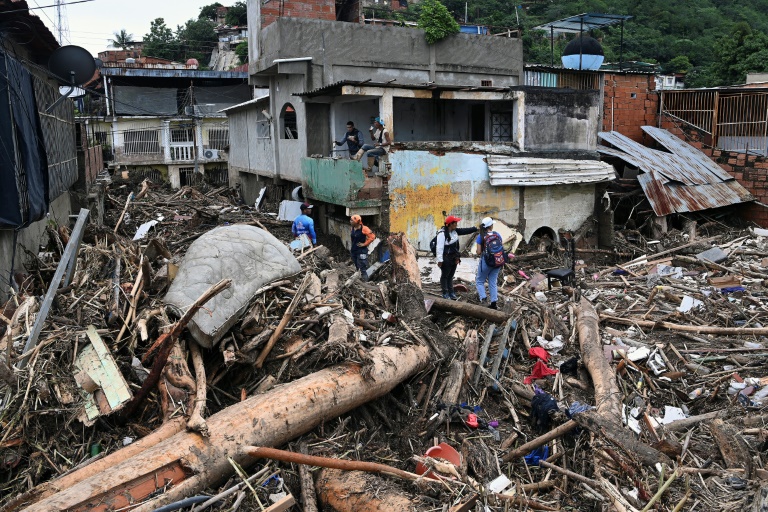
A landslide in Venezuela has left at least 25 people dead and more than 50 missing after a river overflowed, officials said Sunday, in the latest deadly disaster caused by heavy rains to hit the country.

Houses and businesses were destroyed in the Saturday night deluge, which left the town of Las Tejerias covered with mud and debris, including felled trees, household items and mangled cars.

“We are seeing very significant damage here, human losses,” Vice President Delcy Rodriguez told local media at the scene.

Interior Minister Remigio Ceballos said at least 25 people had died in the disaster as he gave an updated toll on government television VTV late Sunday.

“Unfortunately so far we have 25 people who were recovered dead,” he said. “We also have 52 missing,” he said, adding that search efforts were continuing.

Dozens of people have died in recent months in the crisis-hit South American nation as a result of historically high levels of rain.

“The village is lost. Las Tejerias is lost,” 55-year-old resident Carmen Melendez, who has lived her whole life in the town 50 kilometers (30 miles) from the capital, Caracas, told AFP.

Around a thousand people had joined the rescue efforts, Interior and Justice Minister Remigio Ceballos told AFP, as he worked at the site.

Residents dug through the remains of battered homes looking for loved ones, while search teams arrived with dogs hoping to find survivors trapped in the rubble.

A butcher shop that had closed due to the pandemic and which was due to reopen Monday was buried in muddy sediment that caked the refrigerators and everything else inside.

“We were waiting for the meat to be shipped in — to start after two years closed,” said Ramon Arvelo, one of the workers who was helping remove mud.

“I never thought that something of this magnitude could happen; it’s a really big deal,” said Loryis Verenzuela, 50, as she looked out at the devastation through tears.

– Record rain –

“We had a huge landslide as a result of the changing climate,” Ceballos said, referring to the effects of Hurricane Julia, which passed just north of Venezuela the night before.

“There was a record rainfall,” he added as he surveyed the disaster site — as much rain in one day as is usually seen in a month. 

“These strong rains saturated the ground,” he said. 

Images taken by rescue team drones showed huge amounts of earth piled up in the streets as residents had tried to shovel out the meters of mud that flowed into their houses. 

Las Tejerias resident Jose Santiago spent 40 minutes clinging to an antenna while the huge flood dragged several houses along in the mud, including his own.

“The river caught me and I couldn’t find anything to do besides climb a roof and grab onto an antenna,” the 65-year-old recounted. “I was reborn!”

President Nicolas Maduro declared three days of national mourning for the victims, while Venezuelans took to social media to offer assistance to the town, where electricity and communications have now been cut off.

Caracas baseball team Los Leones said they would organize a collection for the victims, asking for “non-perishable foods, water and clothes.”

The landslide, caused by the biggest river flood in the area in 30 years, is the worst so far this year in Venezuela, which has seen historic rain levels in recent months. 

In August, at least 15 people died in the Venezuelan Andes after heavy rains triggered mud and rock slides.

And in September, at least eight people died when floods from intense rains flowed through a religious retreat in the western part of the country.

In 1999, huge landslides killed some 10,000 people in the state of Vargas, north of Caracas.

N. Korea says recent tests were 'tactical nuclear' drills, overseen by Kim

North Korea’s recent missile tests involved “tactical nuclear” drills to simulate hitting the South, and were overseen by leader Kim Jong Un in response to US-led joint military exercises in the region, state media said Monday.

Kim made acquiring tactical nukes — smaller, lighter weapons designed for battlefield use — a top priority at a key party congress in January 2021, and this year vowed to develop North Korea’s nuclear forces at the fastest possible speed.

The country revised its nuclear laws last month to allow pre-emptive strikes, with Kim declaring North Korea an “irreversible” nuclear power — effectively ending the possibility of negotiations over its arsenal.

Since then, Seoul, Tokyo and Washington have ramped up combined military exercises, including deploying a nuclear-powered US aircraft carrier to the area twice, infuriating Pyongyang, which sees such drills as rehearsals for invasion.

In response, North Korea “decided to organise military drills under the simulation of an actual war” that gamed out hitting South Korea’s ports, airports and military command facilities, KCNA said.

North Korean army units involved in “the operation of tactical nukes staged military drills from September 25 to October 9 in order to check and assess the war deterrent and nuclear counterattack capability,” the report said.

Kim “guided the military drills on the spot,” it said, adding he had dismissed the idea of restarting talks, saying North Korea “felt no necessity to do so”.

The report also said that North Korea’s October 4 missile launch, which flew over Japan and prompted rare evacuation warnings, involved a “new-type ground-to-ground intermediate-range ballistic missile”.

That test aimed to “send more powerful and clear warning to the enemies”.

– Dangerous dynamic –

North Korea’s claim its missile launches are a “response” to US-South Korea drills is part of a “familiar spiral dynamic” on the Korean peninsula, said US-based security analyst Ankit Panda.

“I worry that this is the start of a dangerous dynamic on the Korean Peninsula, where we have two states in a bitter rivalry and each faces strong incentives to fire first in a serious crisis,” he said.

“We also have no real measures of negotiated restraint or hotlines to manage crises,” he added.

“The North Koreans haven’t yet defined what exactly they consider to be a tactical nuclear weapon or mission … but we’re starting to see a picture that suggests any nuclear weapon they’d look to use early in a conflict can be defined as a ‘tactical’ capability,” he told AFP.

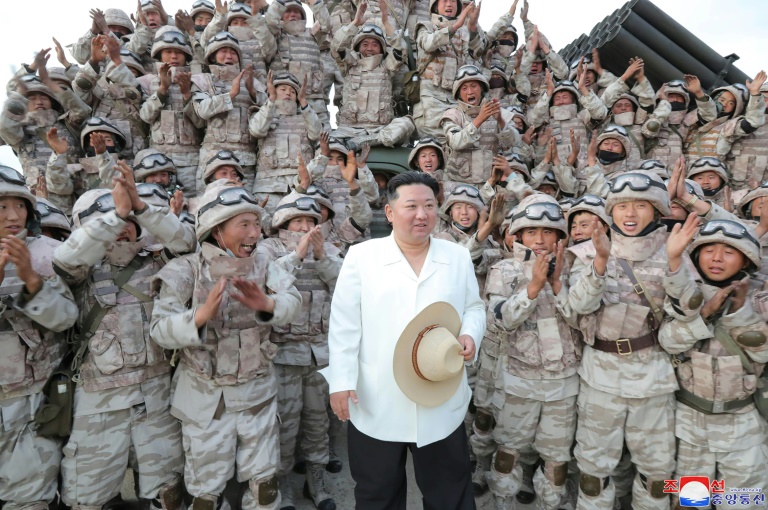
North Korea also released multiple photographs of the recent missile launches, tests and exercises showing Kim Jong Un overseeing them all, giving orders and posing with smiling soldiers.

It is significant that North Korea is not framing the recent launches as tests of the missiles themselves, but of the units that launch them, analysts said.

“That suggests these systems are deployed,” Jeffrey Lewis of the Middlebury Institute of International Studies wrote on Twitter.

– ‘Nuclear harbinger’ – 

In addition to the array of “tactical nuclear” drills, North Korea said it had carried out “a large-scale combined air-attack drill”, which was also overseen by Kim.

KCNA said this involved “more than 150 fighter planes” but analysts dismissed this as domestic propaganda, and Seoul said last week it had only detected 12 North Korean warplanes flying in formation.

The volley of KCNA statements about its recent tests — which are unusual, as state media no longer routinely comments on launches — indicates Pyongyang is concerned about the recent US-led joint drills, analysts said.

“To strengthen its self-proclaimed deterrent, it is making explicit the nuclear threat behind its recent missile launches,” said Leif-Eric Easley, a professor at Ewha University in Seoul.

“The KCNA report may also be a harbinger of a forthcoming nuclear test for the kind of tactical warhead that would arm the units Kim visited in the field,” he added.

Officials in Washington and Seoul have been warning for months that North Korea has completed preparations for another nuclear test — which would be the country’s seventh, and first since 2017.

“The fears of a nuclear war in Ukraine are no longer someone else’s concern,” Lim Eul-chul, a professor at Kyungnam University, told AFP.

“We need to take more seriously the fact that the possibility of a nuclear war on the Korean peninsula has increased.”

Air France, Airbus trial to open over 2009 Rio-Paris crash

Air France and Airbus will go on trial Monday on charges of involuntary manslaughter over the fatal 2009 crash of a jet heading to Paris from Brazil, killing all 228 people aboard.

Victims’ families and some aviation experts say the pilots were insufficiently trained to handle a loss of speed readings caused by crucial equipment freezing over in a storm.

Flight AF 447 from Rio de Janeiro plunged into the Atlantic Ocean in the early hours of June 1, 2009, after entering a zone near the Equator known for strong turbulence.

The Airbus A330 was carrying 12 crew members and 216 passengers. It was the carrier’s deadliest crash.

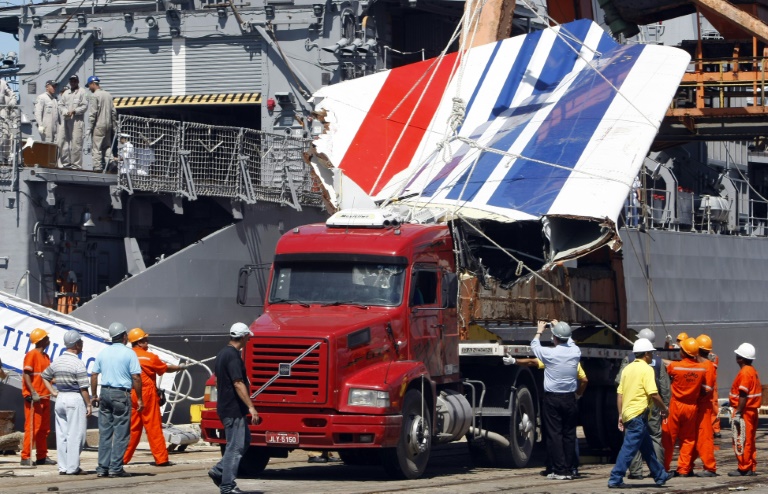
It took nearly two years to locate the bulk of the fuselage and recover the “black box” flight recorders.

Air France and Airbus were charged as the inquiry progressed, with experts determining the crash resulted from mistakes made by pilots disorientated by so-called Pitot speed-monitoring tubes that had frozen over in thick cloud.

But investigating magistrates overseeing the case dropped the charges in 2019, a decision that infuriated victims’ families.

Prosecutors appealed the decision and in 2021 a Paris court ruled there was sufficient evidence for a trial to go ahead. 

Ophelie Toulliou, who lost her brother on the flight, said it was essential “the truth come out, and that the sentences, if deserved, are handed down”.

“But the message is also to make companies that think they’re untouchable understand: ‘You’re like everyone else and if you make mistakes, they will be punished,” she told AFP.

– ‘Lost our speeds’ –

The court will hear testimony from dozens of aviation experts and pilots over two months of hearings, and each company faces a maximum fine of 225,000 euros ($220,000).

There will also be analysis of the final minutes in the cockpit before the plane went into free-fall after entering a so-called “intertropical convergence zone” that often produces volatile storms with heavy precipitation.

In the cold, the Pitot tubes froze, a problem that had already been reported by other pilots — and which were quickly replaced on planes worldwide in the months after the accident.

“We’ve lost our speeds,” one pilot is heard saying in the flight recordings, before other indicators mistakenly show a loss of altitude, and a series of alarm messages appear on the cockpit screens. 

The pilots start climbing and even though a “STALL” alert sounds, reach 11,600 metres (38,060 feet). 

“I don’t know what’s happening,” one of the pilots is heard saying as the stall begins.

– Training overhaul –

The crash prompted an overhaul of training protocols across the industry, in particular to prepare pilots to handle the intense stress of unforeseen circumstances.

Pilots are also now required to continually practice stall responses on simulators.

“That was the big change after this accident for all civil airline companies. Before, it was something pilots learned in basic training and then they were never trained again,” one airline executive told AFP, on condition of anonymity.

Testimony will also be heard from some of the 476 members of victims’ families who are civil plaintiffs in the case.

But Nelson Faria Marinho, president of the Brazilian association of victims’ relatives, said, “I’m not expecting anything from this trial.”

“Even if there is a conviction, who will be punished? The CEOs? They were changed at Airbus and Air France a long time ago,” he told AFP during an interview at his Rio home.

He will be represented by former French pilot Gerard Arnoux, who has advised several of the victims’ families and wrote a book titled “Rio-Paris Is Not Responding: AF447, the Crash that Should Not Have Happened”.

Climate refugees flee as Bangladesh villages washed away

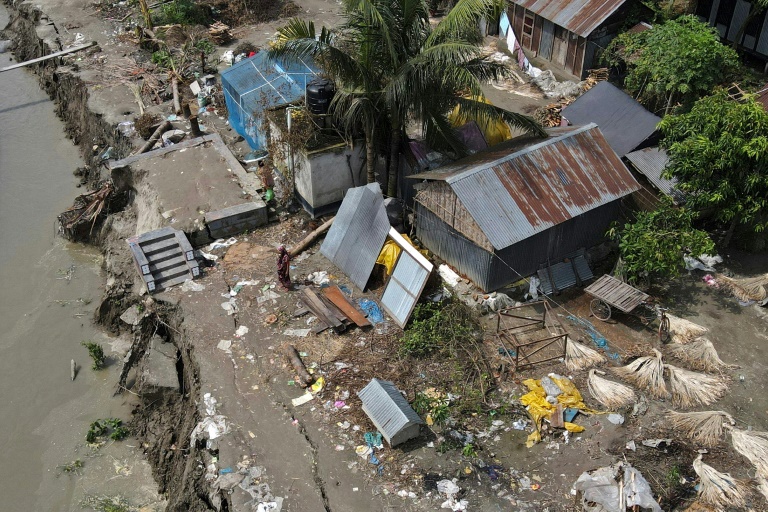
For generations Paban Baroi’s family guarded a temple to Shiva, the Hindu god of destruction, until Bangladesh’s mighty Padma river wreaked havoc of its own, wiping out the shrine, their home, and 200 other houses in their village.

The 70-year-old and his neighbours are among thousands in the country who will be rendered destitute this year as surging waters and eroding lands reshape the landscape — a phenomenon made worse by climate change.

One day in September, the waterway abruptly changed course and a swathe of the tight-knit community in Baroi’s village vanished as the very land on which it stood was washed away.

“The river current was so powerful,” he told AFP. “Many of us have been living under the open sky for the last few days.”

Baroi’s family were hereditary custodians of the temple in Bangla Bazar, on the outskirts of the capital Dhaka, the site of an annual festival that long drew Hindu faithful and friends from its majority-Muslim population.

The ceremonies were staged even through some of the country’s worst catastrophes, including sectarian violence that accompanied the end of the British colonial era and a brutal 1971 independence war that saw an exodus of persecuted Hindus to neighbouring India.

But next year’s festivities could be cancelled for the first time in more than a century — as by then many of the usual participants will have been forced to move away.

“It has been a thriving community of carpenters, fishermen, farmers and traders,” Sohrab Hossain Pir, a councillor for the village, told AFP.

“But now everything is going into the river.”

Bangladesh is a delta country crisscrossed by more than 200 waterways, each connected to the Ganges and Brahmaputra rivers that course from the Himalayas and through the South Asian subcontinent.

Periodic flooding that inundates homes, markets and schools has always been a fact of life for the tens of millions of farmers and fishermen who crowd the rivers’ banks — some of the most densely populated areas of the Bangladeshi countryside.

But scientists say climate change has increased the severity and frequency of the phenomenon, with more erratic rainfall causing more cyclones and flash floods.

– ‘Clearly climate change’ –

This year Bangladesh saw record flooding that killed more than 100 people and cut off seven million others, with relief efforts continuing for months.

The impact is expected to worsen significantly in the coming decades, just as rising sea levels threaten to displace tens of millions of people along the low-lying Bangladeshi coastline and inundate its most fertile farmlands with salt water.

Bangladesh is already rated by the UN and civil society groups as one of the countries most affected by extreme weather events since the turn of the century, with entire inland villages wiped from the map.

Around 1,800 hectares (4,500 acres) of land will be eroded by rivers in Bangladesh this year and the homes of at least 10,000 people will disappear, according to the state-funded Centre for Environmental and Geographic Information Services (CEGIS).

“These erosion events are clearly as a result of climate change,” Ian Fry, the UN special rapporteur on climate change, told reporters when he visited in September.

Residents of disappeared villages often seek a new life in the slums of Dhaka, a sprawling city of 22 million that has doubled in size since the turn of the century on the back of urban migration.

“Many of these people have been displaced by climate change-related reasons,” Fry said in a statement that highlighted endemic child malnutrition, a lack of safe drinking water and high rates of human trafficking. 

– ‘Where will we go?’ –

Bangladesh will present a national plan to help manage increasing natural disasters and extreme weather calamities triggered by climate change at November’s COP27 climate summit in Egypt.

That includes keeping river erosion to around 1,000 hectares per year — still the size of a large international airport.

At the summit, Dhaka will appeal to leaders of developed nations for urgent funding — it estimates a staggering $230 billion is needed by 2050 to mitigate the impact of climate change on the country.

“It is clear to me the burden of the climate change should not be carried by Bangladesh alone,” said Fry, adding that richer nations with higher levels of historical emissions should help foot the bill.

“For too long, countries have denied their responsibility for the sufferings they have caused,” he said. “They should be paying for this.”

In Bangla Bazar, Baroi and his family were yet to find shelter a week after losing their home, while some of his neighbours took refuge in cowsheds.

Those that still have a roof over their heads fretted over where they will turn when the Padma swallows more land.

“I don’t want to go anywhere,” Baroi said. “But if the river devours the entire village, what will happen? Where will we go?”

At the gateway to the Arctic, a world in turmoil

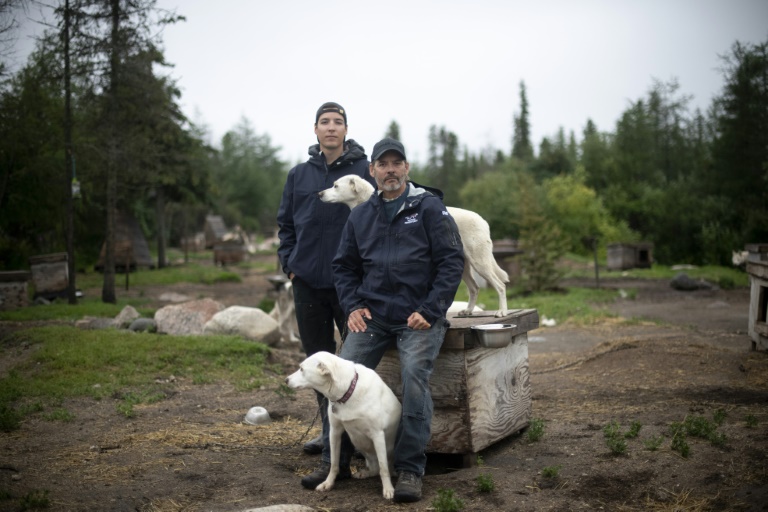
Sled dog breeder David Daley lives at the gateway to the Canadian Arctic, occupying a front-row seat to the march of global warming, and he senses calamity ahead.

“For all the devastation that we’re doing to her, she’s not going to sit still, our planet Mother Earth will punish us,” Daley says.

Daley’s hometown of Churchill is an isolated settlement at the edge of the Hudson Bay where global warming unfolds at triple the pace of much of the rest of the world, causing the Arctic ice to gradually disappear.

A member of the Metis people, one of three Indigenous groups in Canada, the 59-year-old grandfather lives close to nature, surrounded by his 46 dogs, at the point where the tundra ends and the boreal forest begins.

But every year, he fears that the snow will arrive late, and the impact that has on his sled dogs.

“They’re just waiting for winter like the rest of us right now,” Daley said. “This is like a culture that’s dying.”

In summer and winter, Daley travels through this region where rocky terrain, moss, tall grasses and black spruce forests prevail. At night, the displays of light known as the aurora borealis often flicker in the high-latitude skies.

Daley has been hunting here all his life and has seen the wildlife change up close, some species vanishing and others arriving.

“There was hardly any moose here when I was a kid. Now there’s moose everywhere,” said Daley, who uses his Indigenous knowledge to earn money as a tourist guide.

“When I was a kid hunting, fishing and trapping here, there were no pine martens.

“There’s sharptail grouse moving in now where I’ve never… harvested one till last year.”

His observations echo scientific studies: Global warming is endangering Arctic species, especially by opening the doors to other animals from further south.

Both animals and vegetation are migrating north. For Daley, humans have “no choice,” they must “adapt” as animals are forced to do.

– Prowling polar bears –

Adaptation includes a newfound need for closer coexistence with the emblematic predator of the Arctic region: the polar bear.

During the Cold War, a joint Canadian-US military installation in Churchill stood guard against a possible Soviet attack coming over the North Pole. The installation is now deserted, and local concerns today concentrate more on polar bears.

Due to global warming, ice no longer covers the Hudson Bay for as long each winter, forcing the polar bears to spend more time on land and nearer to humans. Often hungry and weak, the bears wander closer to settlements.

Venturing around the town requires precautions: a gun, bear repellent and the need to walk in groups after dark or in poor visibility.

Everyone in Churchill has a story about a run-in with a polar bear.

“I don’t remember feeling unsafe during summertime. No, no. I used to play on the rocks,” said Danielle Daley, the 33-year-old daughter of David Daley. “Today, it’s different. I won’t let my kids play on the rocks.”

The slender young woman recounts her fright at seeing a bear run past her house in July, followed closely by the Manitoba Natural Resources bureau patrol vehicle with its sirens wailing.

It’s even more complicated in the fall, when the bears are starving after months of failing to find food on land, without a seal in sight.

“We’re at the beginning of the busiest time of year for us when the bears will be coming through Churchill on their way north to the first ice on the Hudson Bay,” said Ian Van Nest, a wildlife officer.

For Halloween night, October 31, a special set-up is put in place, Van Nest said. 

Clad in a bullet-proof vest, with a rifle slung over his shoulder and a walkie-talkie on his belt, the stern-faced Van Nest and his fellow officers go on patrol.

They even deploy helicopters to spot roaming bears and ensure they do not come near children collecting candy.

“Otherwise we could use cracker shells. It’s a loud bang and a flash that’ll haze the bear away as well,” Van Nest said.

The town is also equipped with new radars that can detect polar bears within two kilometers (1.2 miles) of its most outlying homes, even at night or thick fog.

Around Churchill, the polar bear population has been in decline since the 1980s but still hovers around 800, about the same number as human inhabitants of the town.

– ‘Opportunities are there’ –

Not everyone sees these climate-related changes in a bad light.

“You’ve got to look for the wins in all of this,” said Churchill Mayor Michael Spence, a member of the Cree, the most populous Indigenous group of the First Nations in Canada.

An increase in tourism, along with development of the port, have gone hand in hand with rising temperatures.

“The opportunities are there for local people to have… economic growth,” said Spence, who grew up locally.

This remote corner of Manitoba province is inaccessible by car from the rest of Canada, yet a few thousand tourists find their way each year, by air or rail, drawn by the increased presence of the polar bears.

And the melting sea ice allows ships to access the city’s port, the only deep-water port in the Canadian Arctic, for more months each year than before.

The mayor dreams of transitioning Churchill into a bustling port for grain grown in increasingly more northern areas, and eventually for minerals, more easily extracted in the far north due to thawing.

A large part of Canada’s mining potential is found in the far north, including deposits of diamonds, gold, tungsten, uranium, and rare earth elements.

But the thawing of the soil can also hamper mining prospects. Railways that once delivered raw materials to port have become less stable, and even at times useless.

In 2017, a major melt led to flooding that damaged rail lines, and rail transport was cut off for more than 18 months. Since then, the port has been largely idle, handling only a few ships per year. At the back of the gigantic silos, old rail cars rust amid wild grass.

– Poverty – 

For some residents of Churchill, grinding poverty relegates concerns about global warming to the background.

Dilapidated homes, some hastily patched up, line the streets alongside prefabricated buildings on cinder blocks, seemingly unsuited for winter temperatures that can plunge below -40 degrees Celsius (-40 degrees Fahrenheit).

Abandoned cars, vans, snowmobiles and quads are a frequent sight, often stripped for spare parts.

In the early period of European colonization, Churchill was an important outpost of the fur trade. Today, both poverty and the region’s Indigenous roots are apparent.

Fully 60 percent of the population is Indigenous (Inuit, Metis and First Nation groups like Cree and Dene), while in Canada as a whole the number is only five percent and in Manitoba 18 percent. Unemployment, substandard housing and discrimination prevail.

About 64 percent of children here live below the poverty line.

UN climate experts already said in their March report that these people’s intimate knowledge must be taken into account in the fight against climate change.

At November’s COP27 climate summit in Egypt, some activists will press for policies that take into account Indigenous ancestral practices, since their lands host 80 percent of the world’s biodiversity.

David Daley dreams of an awakening.

“We must, as Indigenous people, lead the reconciliation with our mother, the Earth,” he says.

tib/dp/tjj/bgs/bfm/ec/mca

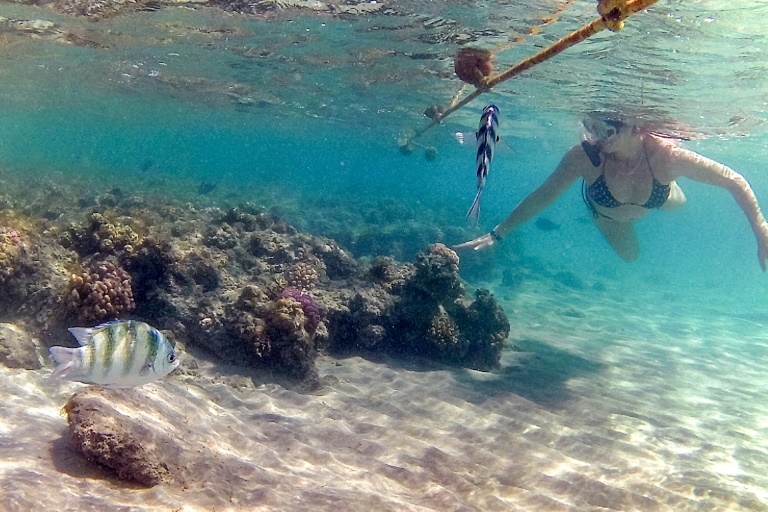
Heat-resilient Red Sea reefs offer last stand for corals

Beneath the waters off Egypt’s Red Sea coast a kaleidoscopic ecosystem teems with life that could become the world’s “last coral refuge” as global heating eradicates reefs elsewhere, researchers say.

Most shallow water corals, battered and bleached white by repeated marine heatwaves, are “unlikely to last the century,” the Intergovernmental Panel on Climate Change said this year.

That threatens a devastating loss for the hundreds of millions of people worldwide who depend on the fish stocks that live and breed in these fragile ecosystems.

Even if global warming is capped within Paris climate goals of 1.5 degrees Celsius above pre-industrial levels, 99 percent of the world’s corals would be unable to recover, experts say.

But Red Sea coral reefs, unlike those elsewhere, have proven “highly tolerant to rising sea temperatures,” said Mahmoud Hanafy, professor of marine biology at Egypt’s Suez Canal University.

Scientists hope that at least some of the Red Sea corals — five percent of the total corals left worldwide — could cling on amid what is otherwise a looming global collapse.

“There’s very strong evidence to suggest that this reef is humanity’s hope for having a coral reef ecosystem in the future,” Hanafy said.

Eslam Osman from the King Abdullah University of Science and Technology in Saudi Arabia said: “It is crucial that we preserve the northern Red Sea as one of the last standing coral refuges, because it could be a seed bank for any future restoration effort.”

– Livelihoods for millions –

The impacts of coral loss are dire: they cover only 0.2 percent of the ocean floor, but are home to at least a quarter of all marine animals and plants, helping sustain livelihoods for half a billion people worldwide.

Global warming, as well as dynamite fishing and pollution, wiped out a startling 14 percent of the world’s coral reefs between 2009 and 2018, according to the Global Coral Reef Monitoring Network.

Graveyards of bleached coral skeletons are now left where once vibrant and species-rich ecosystems thrived. 

Recent studies have shown the northern Red Sea corals are better able to resist the dire impact of heating waters.

“We have a buffer temperature before the coral sees bleaching,” Osman said. “One, two, even three degrees (Celsius) of warming, we’re still on the safe side.”

Osman said one theory explaining the corals’ apparent resilience to heat is due to “evolutionary memory” developed many thousands of years ago, when coral larvae migrated north from the Indian Ocean.

“In the southern Red Sea, coral larvae had to pass through very warm waters, which acted as a filter, only letting through species that could survive up to 32 degrees Celsius (89 degrees Fahrenheit),” Osman said.

However, scientists warn that even if Red Sea corals survive surging water temperatures, they risk being damaged from non-climate threats — pollution, overfishing and habitat destruction including from costal development and mass tourism.

“When non-climate threats increase, the vulnerability to climate change increases as well,” Osman said.

– ‘Global responsibility’ –

Reefs off Egypt are hugely popular among divers, and some Red Sea dive sites are operating at up to 40 times their recommended capacity, Hanafy said.

Fishing, another huge pressure, must drop to a sixth of current rates to become sustainable, he said. 

For Hanafy, protecting the reef is a “global responsibility” and one which Red Sea tourism businesses — which account for 65 percent of Egypt’s vital tourism industry — must share.

Local professionals say they have already witnessed damage to parts of the delicate ecosystem.

One solution, Hanafy said, is for the environment ministry to boost protection over a 400-square-kilometre (154-square-mile) area of corals known as Egypt’s Great Fringing Reef.

More than half already lies within nature reserves or environmentally-administered areas, but creating one continuous protected area would support the coral by “regulating activities and fishing, implementing carrying capacity plans and banning pollution”, Hanafy said.

Further south, off Sudan, a near absence of tourism has shielded pristine corals from polluting boats and the wandering fins of divers.

But, despite their greater resilience, the corals are far from immune to climate change, and the reefs there have experienced several bleaching events over the past three decades.

For Sudan, a country mired in a dire economic and political crisis including a military coup last year, monitoring the coral is “difficult” without funding, Sudan’s Higher Council for the Environment and Natural Resources said.

Off both the Egyptian and Saudi coasts, corals face the threats of coastal development, including sewage and sedimentation from construction runoff, Osman warned.

The great irony, he said, is that, while the natural wonders of the Red Sea corals that have drawn tourists and developers, the increased man-made pressures are in turn accelerating their destruction.

N. Korea says recent tests were 'tactical nuclear' drills, overseen by Kim

North Korea’s recent missile tests involved “tactical nuclear” drills to simulate hitting the South, and were overseen by leader Kim Jong Un in response to US-led joint military exercises in the region, state media said Monday.

Kim made acquiring tactical nukes — smaller, lighter weapons designed for battlefield use — a top priority at a key party congress in January 2021, and this year vowed to develop North Korea’s nuclear forces at the fastest possible speed.

The country revised its nuclear laws last month, outlining a wide array of scenarios in which it could its nukes, with Kim declaring North Korea an “irreversible” nuclear power — effectively ending the possibility of negotiations over its arsenal.

Since then, Seoul, Tokyo and Washington have ramped up combined military exercises, including deploying a nuclear-powered US aircraft carrier to the area twice, infuriating Pyongyang, which sees such drills as rehearsals for invasion.

In response, North Korea “decided to organise military drills under the simulation of an actual war” that gamed out hitting South Korea’s ports, airports and military command facilities, KCNA said.

North Korean army units involved in “the operation of tactical nukes staged military drills from September 25 to October 9 in order to check and assess the war deterrent and nuclear counterattack capability,” the report said.

Kim “guided the military drills on the spot,” it said, adding he had dismissed the idea of restarting talks, saying North Korea “felt no necessity to do so”.

The report also said that North Korea’s October 4 missile launch, which flew over Japan and prompted rare evacuation warnings, involved a “new-type ground-to-ground intermediate-range ballistic missile”.

That test aimed to “send more powerful and clear warning to the enemies”.

– Dangerous dynamic –

North Korea’s claim its missile launches are a “response” to US-South Korea drills is part of a “familiar spiral dynamic” on the Korean peninsula, said US-based security analyst Ankit Panda.

“I worry that this is the start of a dangerous dynamic on the Korean Peninsula, where we have two states in a bitter rivalry and each faces strong incentives to fire first in a serious crisis,” he said.

“The North Koreans haven’t yet defined what exactly they consider to be a tactical nuclear weapon or mission… but we’re starting to see a picture that suggests any nuclear weapon they’d look to use early in a conflict can be defined as a ‘tactical’ capability,” he told AFP. 

North Korea also released multiple photographs of the recent missile launches, tests and exercises showing Kim Jong Un overseeing them all, giving orders and posing with smiling soldiers.

It is also significant that North Korea was not framing the recent launches as tests of the missiles themselves, but of the units that launch them, analysts said.

“That suggests these systems are deployed,” Jeffrey Lewis of the Middlebury Institute of International Studies wrote on Twitter. 

– ‘Nuclear harbinger’ – 

In addition to the array of “tactical nuclear” drills, North Korea said it had carried out “a large-scale combined air-attack drill”, which was also overseen by Kim.

KCNA said this involved “more than 150 fighter planes” but analysts dismissed this as domestic propaganda, and Seoul said last week it had only detected 12 North Korean warplanes flying in formation.

The volley of KCNA statements about its recent tests — which are unusual, as state media no longer routinely comments on launches — indicates Pyongyang is concerned about the recent US-led joint drills, analysts said.

“To strengthen its self-proclaimed deterrent, it is making explicit the nuclear threat behind its recent missile launches,” said Leif-Eric Easley, a professor at Ewha University in Seoul.

“The KCNA report may also be a harbinger of a forthcoming nuclear test for the kind of tactical warhead that would arm the units Kim visited in the field,” he added.

Officials in Washington and Seoul have been warning for months that North Korea has completed preparations for another nuclear test — which would be the country’s seventh, and first since 2017.

At the gateway to the Arctic, a world in turmoil

Sled dog breeder David Daley lives at the gateway to the Canadian Arctic, occupying a front-row seat to the march of global warming, and he senses calamity ahead.

“For all the devastation that we’re doing to her, she’s not going to sit still, our planet Mother Earth will punish us,” Daley says.

Daley’s hometown of Churchill is an isolated settlement at the edge of the Hudson Bay where global warming unfolds at triple the pace of much of the rest of the world, causing the Arctic ice to gradually disappear.

A member of the Metis people, one of three Indigenous groups in Canada, the 59-year-old grandfather lives close to nature, surrounded by his 46 dogs, at the point where the tundra ends and the boreal forest begins.

But every year, he fears that the snow will arrive late, and the impact that has on his sled dogs.

“They’re just waiting for winter like the rest of us right now,” Daley said. “This is like a culture that’s dying.”

In summer and winter, Daley travels through this region where rocky terrain, moss, tall grasses and black spruce forests prevail. At night, the displays of light known as the aurora borealis often flicker in the high-latitude skies.

Daley has been hunting here all his life and has seen the wildlife change up close, some species vanishing and others arriving.

“There was hardly any moose here when I was a kid. Now there’s moose everywhere,” said Daley, who uses his Indigenous knowledge to earn money as a tourist guide.

“When I was a kid hunting, fishing and trapping here, there were no pine martens.

“There’s sharptail grouse moving in now where I’ve never… harvested one till last year.”

His observations echo scientific studies: Global warming is endangering Arctic species, especially by opening the doors to other animals from further south.

Both animals and vegetation are migrating north. For Daley, humans have “no choice,” they must “adapt” as animals are forced to do.

– Prowling polar bears –

Adaptation includes a newfound need for closer coexistence with the emblematic predator of the Arctic region: the polar bear.

During the Cold War, a joint Canadian-US military installation in Churchill stood guard against a possible Soviet attack coming over the North Pole. The installation is now deserted, and local concerns today concentrate more on polar bears.

Due to global warming, ice no longer covers the Hudson Bay for as long each winter, forcing the polar bears to spend more time on land and nearer to humans. Often hungry and weak, the bears wander closer to settlements.

Venturing around the town requires precautions: a gun, bear repellent and the need to walk in groups after dark or in poor visibility.

Everyone in Churchill has a story about a run-in with a polar bear.

“I don’t remember feeling unsafe during summertime. No, no. I used to play on the rocks,” said Danielle Daley, the 33-year-old daughter of David Daley. “Today, it’s different. I won’t let my kids play on the rocks.”

The slender young woman recounts her fright at seeing a bear run past her house in July, followed closely by the Manitoba Natural Resources bureau patrol vehicle with its sirens wailing.

It’s even more complicated in the fall, when the bears are starving after months of failing to find food on land, without a seal in sight.

“We’re at the beginning of the busiest time of year for us when the bears will be coming through Churchill on their way north to the first ice on the Hudson Bay,” said Ian Van Nest, a wildlife officer.

For Halloween night, October 31, a special set-up is put in place, Van Nest said. 

Clad in a bullet-proof vest, with a rifle slung over his shoulder and a walkie-talkie on his belt, the stern-faced Van Nest and his fellow officers go on patrol.

They even deploy helicopters to spot roaming bears and ensure they do not come near children collecting candy.

“Otherwise we could use cracker shells. It’s a loud bang and a flash that’ll haze the bear away as well,” Van Nest said.

The town is also equipped with new radars that can detect polar bears within two kilometers (1.2 miles) of its most outlying homes, even at night or thick fog.

Around Churchill, the polar bear population has been in decline since the 1980s but still hovers around 800, about the same number as human inhabitants of the town.

– ‘Opportunities are there’ –

Not everyone sees these climate-related changes in a bad light.

“You’ve got to look for the wins in all of this,” said Churchill Mayor Michael Spence, a member of the Cree, the most populous Indigenous group of the First Nations in Canada.

An increase in tourism, along with development of the port, have gone hand in hand with rising temperatures.

“The opportunities are there for local people to have… economic growth,” said Spence, who grew up locally.

This remote corner of Manitoba province is inaccessible by car from the rest of Canada, yet a few thousand tourists find their way each year, by air or rail, drawn by the increased presence of the polar bears.

And the melting sea ice allows ships to access the city’s port, the only deep-water port in the Canadian Arctic, for more months each year than before.

The mayor dreams of transitioning Churchill into a bustling port for grain grown in increasingly more northern areas, and eventually for minerals, more easily extracted in the far north due to thawing.

A large part of Canada’s mining potential is found in the far north, including deposits of diamonds, gold, tungsten, uranium, and rare earth elements.

But the thawing of the soil can also hamper mining prospects. Railways that once delivered raw materials to port have become less stable, and even at times useless.

In 2017, a major melt led to flooding that damaged rail lines, and rail transport was cut off for more than 18 months. Since then, the port has been largely idle, handling only a few ships per year. At the back of the gigantic silos, old rail cars rust amid wild grass.

– Poverty – 

For some residents of Churchill, grinding poverty relegates concerns about global warming to the background.

Dilapidated homes, some hastily patched up, line the streets alongside prefabricated buildings on cinder blocks, seemingly unsuited for winter temperatures that can plunge below -40 degrees Celsius (-40 degrees Fahrenheit).

Abandoned cars, vans, snowmobiles and quads are a frequent sight, often stripped for spare parts.

In the early period of European colonization, Churchill was an important outpost of the fur trade. Today, both poverty and the region’s Indigenous roots are apparent.

Fully 60 percent of the population is Indigenous (Inuit, Metis and First Nation groups like Cree and Dene), while in Canada as a whole the number is only five percent and in Manitoba 18 percent. Unemployment, substandard housing and discrimination prevail.

About 64 percent of children here live below the poverty line.

UN climate experts already said in their March report that these people’s intimate knowledge must be taken into account in the fight against climate change.

At November’s COP27 climate summit in Egypt, some activists will press for policies that take into account Indigenous ancestral practices, since their lands host 80 percent of the world’s biodiversity.

David Daley dreams of an awakening.

“We must, as Indigenous people, lead the reconciliation with our mother, the Earth,” he says.

tib/dp/tjj/bgs/bfm/ec/mca

Close Bitnami banner
Bitnami