AFP

US releases new Arctic strategy as climate threat grows

US President Joe Biden’s administration released a new Arctic strategy on Friday as the strategically and environmentally important region suffers worsening effects from climate change and sees increased international competition.

Global warming is melting Arctic ice, opening previously closed areas to navigation and creating new opportunities for countries such as the United States, Russia and China to vie for resources and influence.

The situation is further complicated by the invasion of Ukraine by Russia — a major Arctic power — which has increased tensions between Moscow and Washington to a level not seen since the height of the Cold War.

“The Arctic — home to more than four million people, extensive natural resources, and unique ecosystems — is undergoing a dramatic transformation,” the strategy says.

“Driven by climate change, this transformation will challenge livelihoods in the Arctic, will create new economic opportunities, and could intensify strategic competition among countries.”

The strategy features four main pillars: security, climate change and environmental protection, sustainable economic development, and international cooperation.

“Our highest priority is to protect the American people and our sovereign territory and rights. We are committed to the security of our treaty allies and to supporting our partners in the region,” the strategy says.

To do this, Washington will “enhance and exercise both our military and civilian capabilities in the Arctic as required to deter threats and to anticipate, prevent, and respond to both natural and human-made incidents.”

As the impact of global warming grows, Washington wants to help Alaska — its northernmost state — to build resilience and adapt, and also aims to pursue international initiatives to mitigate emissions in the Arctic.

“Climate change generates greater impacts in the Arctic than in many more temperate regions, yielding unstable terrain, vulnerable coasts, changing ecosystems, and a worsening biodiversity crisis,” the strategy says.

– Russia cooperation ‘virtually impossible’ –

“We will support efforts to build Alaskan communities’ resilience in the face of dramatic changes on the Arctic’s horizon,” it says, noting that more than 60 percent of the state’s Native communities are considered “environmentally threatened.”

On the economic front, the strategy notes that melting Arctic ice — while a “stark indicator of accelerating climate change” — also presents opportunities.

“The US government will help create the conditions to catalyze responsible, inclusive, and transparent economic development in Alaska and across the Arctic,” it says, including via infrastructure development and supporting industries that increase opportunities for local communities.

The strategy says the United States values Arctic cooperation, but that Russia’s invasion of Ukraine has dealt the prospects of working with Moscow a significant blow.

“Russia’s brutal war in Ukraine has made this cooperation in the Arctic virtually impossible… at present. However, maintaining cooperation with our allies and partners in the near-term remains essential to advancing our objectives for the region,” it says.

It has been nearly 10 years since the last US Arctic policy document was released, and the new strategy acknowledges both the changing natural and geopolitical environment.

“This strategy addresses the climate crisis with greater urgency, given the developments that we’ve seen over the last eight to nine years,” a senior US administration official said ahead of its release.

It also “recognizes the increased strategic competition that we’ve seen in the Arctic in terms of Russia and (China) over the last decade, and… seeks to position the US to effectively compete and also manage those tensions.”

US releases new Arctic strategy as climate threat grows

US President Joe Biden’s administration released a new Arctic strategy on Friday as the strategically and environmentally important region suffers worsening effects from climate change and sees increased international competition.

Global warming is melting Arctic ice, opening previously closed areas to navigation and creating new opportunities for countries such as the United States, Russia and China to vie for resources and influence.

The situation is further complicated by the invasion of Ukraine by Russia — a major Arctic power — which has increased tensions between Moscow and Washington to a level not seen since the height of the Cold War.

“The Arctic — home to more than four million people, extensive natural resources, and unique ecosystems — is undergoing a dramatic transformation,” the strategy says.

“Driven by climate change, this transformation will challenge livelihoods in the Arctic, will create new economic opportunities, and could intensify strategic competition among countries.”

The strategy features four main pillars: security, climate change and environmental protection, sustainable economic development, and international cooperation.

“Our highest priority is to protect the American people and our sovereign territory and rights. We are committed to the security of our treaty allies and to supporting our partners in the region,” the strategy says.

To do this, Washington will “enhance and exercise both our military and civilian capabilities in the Arctic as required to deter threats and to anticipate, prevent, and respond to both natural and human-made incidents.”

As the impact of global warming grows, Washington wants to help Alaska — its northernmost state — to build resilience and adapt, and also aims to pursue international initiatives to mitigate emissions in the Arctic.

“Climate change generates greater impacts in the Arctic than in many more temperate regions, yielding unstable terrain, vulnerable coasts, changing ecosystems, and a worsening biodiversity crisis,” the strategy says.

– Russia cooperation ‘virtually impossible’ –

“We will support efforts to build Alaskan communities’ resilience in the face of dramatic changes on the Arctic’s horizon,” it says, noting that more than 60 percent of the state’s Native communities are considered “environmentally threatened.”

On the economic front, the strategy notes that melting Arctic ice — while a “stark indicator of accelerating climate change” — also presents opportunities.

“The US government will help create the conditions to catalyze responsible, inclusive, and transparent economic development in Alaska and across the Arctic,” it says, including via infrastructure development and supporting industries that increase opportunities for local communities.

The strategy says the United States values Arctic cooperation, but that Russia’s invasion of Ukraine has dealt the prospects of working with Moscow a significant blow.

“Russia’s brutal war in Ukraine has made this cooperation in the Arctic virtually impossible… at present. However, maintaining cooperation with our allies and partners in the near-term remains essential to advancing our objectives for the region,” it says.

It has been nearly 10 years since the last US Arctic policy document was released, and the new strategy acknowledges both the changing natural and geopolitical environment.

“This strategy addresses the climate crisis with greater urgency, given the developments that we’ve seen over the last eight to nine years,” a senior US administration official said ahead of its release.

It also “recognizes the increased strategic competition that we’ve seen in the Arctic in terms of Russia and (China) over the last decade, and… seeks to position the US to effectively compete and also manage those tensions.”
Stocks fall, dollar boosted by US jobs data

Stocks mostly slid and the dollar surged Friday after US jobs data showed only a timid slowdown in the labour market, setting the stage for further aggressive interest rate hikes. 

Equity markets have taken a battering in the past couple of months as the US Federal Reserve has made it clear it intends to continue aggressively raising interest rates until soaring inflation is tamed, even if that means sending the economy into a recession.

There was a brief rebound at the start of the week as investors hoped data pointing to economic slowdown would allow the Fed to “pivot”, or slow down rate hikes.

However, the jobs report shows the US labour market is still robust, with hiring in the US economy slowing slightly in September, to a net gain of 263,000 jobs, from 315,000 in August. 

That was more than the consensus forecast for a net gain of 250,000, sending equities lower and the dollar higher. 

“The understanding that the report is unlikely to soften the Fed’s rate hike path has sent equity futures to lows while the dollar is showing continued strength against the euro and Sterling,” said Briefing.com analyst Patrick O’Hare before Wall Street opened.

Wall Street opened lower, with the Dow sliding 0.9 percent. The broader S&P 500 index fell 1.2 percent and the tech-heavy Nasdaq Composite tumbled 1.8 percent.

In afternoon trading, Frankfurt slid 0.8 percent and Paris shed 0.5 percent. London was flat.

– ‘Pivot party gang’ –

Rising interest rates boost the dollar as foreign investors seek to buy dollar-denominated debt. 

Stephen Innes at SPI Asset Management said it is “unsurprising to see solid dollar buying with stocks and gold tanking as the labour market strength should quieten any Fed pivot talk for now, if not deal a severe knockout blow to the pivot party gang.”

The next data point that the Fed, and investors, will be scrutinising is the consumer price index report next week.

Adding to unease on markets was a warning from US President Joe Biden that the world faced nuclear “Armageddon” for the first time since the 1962 Cuban missile crisis.

He told a Democratic Party fundraiser in New York that Russian President Vladimir Putin was “not joking” when he threatened to use nuclear weapons over the Ukraine war.

Elsewhere, oil prices jumped and were set for their biggest weekly gain since March after OPEC and other major producers led by Russia agreed to slash daily output by two million barrels.

– Key figures around 1330 GMT –

London – FTSE 100: FLAT at 6,996.98 points

Frankfurt – DAX: DOWN 0.8 percent at 12,376.54

Paris – CAC 40: DOWN 0.5 percent at 5,905.01

EURO STOXX 50: DOWN 0.9 percent at 3,403.52

New York – Dow: DOWN 0.9 percent at 29,651.01

Tokyo – Nikkei 225: DOWN 0.7 percent at 27,116.11 (close)

Hong Kong – Hang Seng Index: DOWN 1.5 percent at 17,740.05 (close)

Shanghai – Composite: Closed for a holiday

Pound/dollar: DOWN at $1.1145 from $1.1161 on Thursday

Euro/dollar: DOWN at $0.9764 from $0.9794

Euro/pound: DOWN at 87.62 pence from 87.74 pence

Dollar/yen: UP at 145.06 yen from 145.11 yen

Brent North Sea crude: UP 1.3 percent at $95.65 per barrel

West Texas Intermediate: UP 1.2 percent at $89.53 per barrel

burs-rl/lth

Stocks fall, dollar boosted by US jobs data

Stocks mostly slid and the dollar surged Friday after US jobs data showed only a timid slowdown in the labour market, setting the stage for further aggressive interest rate hikes. 

Equity markets have taken a battering in the past couple of months as the US Federal Reserve has made it clear it intends to continue aggressively raising interest rates until soaring inflation is tamed, even if that means sending the economy into a recession.

There was a brief rebound at the start of the week as investors hoped data pointing to economic slowdown would allow the Fed to “pivot”, or slow down rate hikes.

However, the jobs report shows the US labour market is still robust, with hiring in the US economy slowing slightly in September, to a net gain of 263,000 jobs, from 315,000 in August. 

That was more than the consensus forecast for a net gain of 250,000, sending equities lower and the dollar higher. 

“The understanding that the report is unlikely to soften the Fed’s rate hike path has sent equity futures to lows while the dollar is showing continued strength against the euro and Sterling,” said Briefing.com analyst Patrick O’Hare before Wall Street opened.

Wall Street opened lower, with the Dow sliding 0.9 percent. The broader S&P 500 index fell 1.2 percent and the tech-heavy Nasdaq Composite tumbled 1.8 percent.

In afternoon trading, Frankfurt slid 0.8 percent and Paris shed 0.5 percent. London was flat.

– ‘Pivot party gang’ –

Rising interest rates boost the dollar as foreign investors seek to buy dollar-denominated debt. 

Stephen Innes at SPI Asset Management said it is “unsurprising to see solid dollar buying with stocks and gold tanking as the labour market strength should quieten any Fed pivot talk for now, if not deal a severe knockout blow to the pivot party gang.”

The next data point that the Fed, and investors, will be scrutinising is the consumer price index report next week.

Adding to unease on markets was a warning from US President Joe Biden that the world faced nuclear “Armageddon” for the first time since the 1962 Cuban missile crisis.

He told a Democratic Party fundraiser in New York that Russian President Vladimir Putin was “not joking” when he threatened to use nuclear weapons over the Ukraine war.

Elsewhere, oil prices jumped and were set for their biggest weekly gain since March after OPEC and other major producers led by Russia agreed to slash daily output by two million barrels.

– Key figures around 1330 GMT –

London – FTSE 100: FLAT at 6,996.98 points

Frankfurt – DAX: DOWN 0.8 percent at 12,376.54

Paris – CAC 40: DOWN 0.5 percent at 5,905.01

EURO STOXX 50: DOWN 0.9 percent at 3,403.52

New York – Dow: DOWN 0.9 percent at 29,651.01

Tokyo – Nikkei 225: DOWN 0.7 percent at 27,116.11 (close)

Hong Kong – Hang Seng Index: DOWN 1.5 percent at 17,740.05 (close)

Shanghai – Composite: Closed for a holiday

Pound/dollar: DOWN at $1.1145 from $1.1161 on Thursday

Euro/dollar: DOWN at $0.9764 from $0.9794

Euro/pound: DOWN at 87.62 pence from 87.74 pence

Dollar/yen: UP at 145.06 yen from 145.11 yen

Brent North Sea crude: UP 1.3 percent at $95.65 per barrel

West Texas Intermediate: UP 1.2 percent at $89.53 per barrel

burs-rl/lth

French motorists scramble for fuel as strike cuts supply

Frustrated motorists faced another day of long waits at petrol pumps across France on Friday as a strike at energy giant TotalEnergies entered its 12th day.

TotalEnergies, among the world’s biggest oil companies, runs a network of around 3,500 filling stations in France, nearly a third of the total, with most of them low on fuel.

“Does anyone know of a petrol station around here that’s been re-supplied?” read a post in a local Facebook group Friday morning. “Where can I get ethanol?” posted another motorist in the hope of filling the tank before the weekend.

Several of TotalEnergies’ oil refineries have been blockaded by striking workers.

“We’ve been dry since Sunday,” a manager at a station in central Paris said on Thursday.

Since the start of September, TotalEnergies has cut petrol prices by 20 euro cents ($0.19) per litre to help vehicle owners cope with sharp rises in energy prices triggered by the war in Ukraine.

The average price for E5-type unleaded petrol is now 1.62 euros per litre, or 6.19 euros per gallon, up around four percent from only a week ago.

“Everybody wants to buy from us because we’re cheaper,” the station manager said.

Bottlenecks due to strong demand have been exacerbated by strike action over pay, which has cut the frequency of fuel deliveries in half, he said.

Anthony, a plumber in Paris, said traffic was blocked up Friday along an entire boulevard as early as 7:00 am when he started his morning rounds, as people tried to reach a TotalEnergies station in the 12th Arrondissement in the east of the capital.

– ‘Shareholders get a lot’ –

“It’s been like this since 5 o’clock this morning, and every morning before,” said the manager at an Agip station in Marseille, Ali Mansoibou, pointing at a long queue of cars waiting to be served.

Mansoibou said he allowed each driver to buy no more than 30 euros’ worth of fuel, but even so, “there’ll be nothing left for the weekend”.

The government has responded to the shortages by releasing fuel from strategic stocks, Energy Transition Minister Agnes Pannier-Runacher told the broadcaster BFM television late Thursday.

In addition, more supplies were being brought in from neighbouring Belgium and elsewhere, she said.

The supply situation would improve “within two or three days”, she predicted, saying that just 15 percent of all petrol stations in France had been affected.

But Thierry Defresne, head of the European works council at TotalEnergies, told AFP that “every site” at the company had announced their intention to extend the strike action.

“Shareholders get a lot, but workers are completely forgotten,” Defresne told RMC radio on Friday.

“Fabulous profits are being made, but they don’t want to offset the impact of inflation,” he said.

TotalEnergies paid out a special dividend to shareholders totalling 2.6 billion euros ($2.55 billion) after the company — like most in the sector — made exceptionally large profits from high energy retail prices.

The government appeared sympathetic to the wage demands on Friday, with Olivia Gregoire, minister for small and midsize companies, calling on energy majors to “listen to demands for salary rises”.

Most of the sector’s companies had posted “strong results”, she said. “We expect an effort in favour of workers.”

Prime Minister Elisabeth Borne called on management and workers at TotalEnergies to exercise “responsibility” in their negotiations and not “penalise the French people”.

Staff at the French branch of oil major ExxonMobil have also demanded higher wages, with angry demonstrators setting fire to wooden crates during a protest in northern France on Wednesday. 

Transport Minister Clement Beaune said fuel trucks would, exceptionally, be allowed to make deliveries on Sunday.

“We’re doing what we can to resolve this situation over the coming days,” he said.

TotalEnergies did not give any details about the impact of the strike on its supply situation, with a spokesperson telling AFP simply that the situation was “stable”.

burs-jh/js/rl

Meta warns of password stealing phone apps

Meta warned a million Facebook users Friday that they have been “exposed” to seemingly innocuous smartphone applications designed to steal passwords to the social network.

So far this year, Meta has identified more than 400 “malicious” apps tailored for smartphones powered by Apple or Android software and available at the Apple and Google app stores, director of threat disruption David Agranovich said during a briefing.

“These apps were listed on the Google Play Store and Apple’s App Store and disguised as photo editors, games, VPN services, business apps and other utilities to trick people into downloading them,” Meta said in a blog post.

The apps often ask people to login with their Facebook account information to use promised features, stealing usernames and passwords if entered, according to Meta’s security team.

“They are just trying to trick people into entering in their login information in a way that enables hackers to access their accounts,” Agranovich said of the apps.

“We will notify one million users that they may have been exposed to these applications; that is not to say they have been compromised.”

More than 40 percent of the apps Meta listed involved ways to edit or manipulate images, and some were as seemingly simple as using smartphones as flashlights.

“Our sense is these types of malicious app developers try to target multiple services,” Agranovich said, noting the app creators are likely after passwords to more than just Facebook accounts.

“The targeting here seemed to be relatively indiscriminate — get people to download the applications around the world in an attempt to get access to as many login credentials as possible.”

Meta said that it shared what it discovered with Apple and Google, who control what is offered at their respective app shops and each vet offerings.

Apple did not respond to questions regarding whether it took action against any of the apps Meta deemed malicious.

But Google said that most of the apps Meta flagged had already been identified and removed from the Play store by its own vetting systems.

“All of the apps identified in the report are no longer available on Google Play,” a spokesperson told AFP.

“Users are also protected by Google Play Protect, which blocks these apps on Android.”

Meta warns of password stealing phone apps

Meta warned a million Facebook users Friday that they have been “exposed” to seemingly innocuous smartphone applications designed to steal passwords to the social network.

So far this year, Meta has identified more than 400 “malicious” apps tailored for smartphones powered by Apple or Android software and available at the Apple and Google app stores, director of threat disruption David Agranovich said during a briefing.

“These apps were listed on the Google Play Store and Apple’s App Store and disguised as photo editors, games, VPN services, business apps and other utilities to trick people into downloading them,” Meta said in a blog post.

The apps often ask people to login with their Facebook account information to use promised features, stealing usernames and passwords if entered, according to Meta’s security team.

“They are just trying to trick people into entering in their login information in a way that enables hackers to access their accounts,” Agranovich said of the apps.

“We will notify one million users that they may have been exposed to these applications; that is not to say they have been compromised.”

More than 40 percent of the apps Meta listed involved ways to edit or manipulate images, and some were as seemingly simple as using smartphones as flashlights.

“Our sense is these types of malicious app developers try to target multiple services,” Agranovich said, noting the app creators are likely after passwords to more than just Facebook accounts.

“The targeting here seemed to be relatively indiscriminate — get people to download the applications around the world in an attempt to get access to as many login credentials as possible.”

Meta said that it shared what it discovered with Apple and Google, who control what is offered at their respective app shops and each vet offerings.

Apple did not respond to questions regarding whether it took action against any of the apps Meta deemed malicious.

But Google said that most of the apps Meta flagged had already been identified and removed from the Play store by its own vetting systems.

“All of the apps identified in the report are no longer available on Google Play,” a spokesperson told AFP.

“Users are also protected by Google Play Protect, which blocks these apps on Android.”

Ireland voices hope of end to post-Brexit trade row in N.Ireland

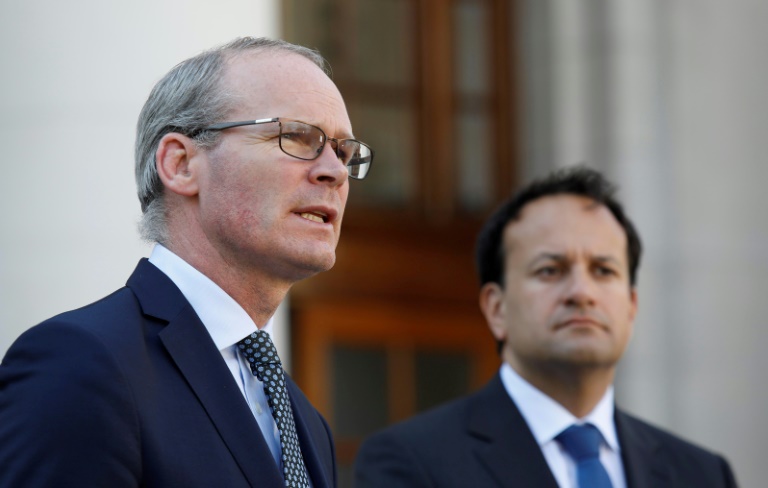
Ireland’s foreign minister Simon Coveney on Friday gave hope of an end to wrangling over post-Brexit trading rules in Northern Ireland, as talks resumed to break the impasse.

Coveney met his UK counterpart James Cleverly in London on Thursday night and said there was a “real focus” on making progress and a “new air of positivity”.

“There is a genuine effort coming from this new team in the British government to try to reach out to Dublin and indeed to Brussels,” he told Ireland’s national broadcaster RTE.

“But time will tell whether, of course, the compromises necessary to get a deal are possible.”

Relations between Ireland and the UK have been soured by long-running disagreements over the implementation of trade arrangements between London and Brussels known as the Northern Ireland Protocol.

The deal, signed separately from the Brexit trade agreement that took the UK out of the European Union, effectively keeps Northern Ireland within the European single market and customs union.

London and pro-UK unionist parties in Northern Ireland object to having checks on goods heading to the province from mainland Britain, arguing it impinges on the country’s sovereignty.

The UK is seeking to unilaterally overhaul the agreement, despite EU warnings it could spark reprisals.

But there are signs of a thaw in frosty relations: last week Steve Baker, a junior UK Northern Ireland minister, apologised for the effect of the hardline stance on relations with Ireland.

On Thursday, Ireland’s deputy prime minister Leo Varadkar, who will become prime minister in December under a coalition deal in Dublin, conceded that the protocol had been “a little too strict”.

Coveney echoed the statements, saying both the EU and Ireland as a member of the bloc were in agreement on the need for flexibility.

Talks between London and Brussels had been stalled since February but a month-end deadline for the restoration of the devolved assembly in Belfast appears to have focused minds.

Northern Ireland’s biggest pro-UK party, the Democratic Unionist Party, has vowed to stay away from the newly elected legislature unless the protocol is scrapped or substantially overhauled.

UK Northern Ireland Secretary Chris Heaton-Harris has said fresh elections would need to be called by October 28 unless power-sharing between unionists and pro-Ireland nationalists is restored.

Coveney said the prospect of that would “polarise opinion again, and make compromise a lot more difficult”.

Adidas puts partnership with Kanye West 'under review'

German sportswear giant Adidas said Friday it was reconsidering its partnership with Kanye West after the US rap star reportedly became disgruntled with how the brand was marketing his products. 

The artist now known as Ye has netted billions selling his Yeezy clothing range through the German company since 2015, but the collaboration had recently been dogged by tensions.

“After repeated efforts to privately resolve the situation, we have taken the decision to place the partnership under review,” Adidas said in a statement.  

In a recent Instagram message cited by US media outlets, West had accused Adidas of arranging marketing events and bringing back older styles without his approval.

He also said the brand had hired staff to work under him and organised a “Yeezy Day” without his involvement.

West also sparked controversy this week when he was pictured wearing a “White Lives Matter” T-shirt at Paris Fashion Week.

The artist was associated with Nike for years but broke away in 2013, lending his name to Adidas as they launched their first Yeezy shoe together in 2015 — a partnership that went on to make him a billionaire. 

Along with Beyonce, Stella McCartney and Pharrell Williams, West’s has been one of the top names used by Adidas to boost sales, especially online.

Announcing the review, Adidas did not mention recent tensions, but said its partnership with the rapper had been “one of the most successful collaborations in our industry’s history” and was “rooted in mutual respect and shared values”.

West has made headlines in recent years for his psychiatric problems, controversial comments about slavery and support for former US president Donald Trump.

– ‘White Lives Matter’ –

He was widely criticised for wearing the “White Lives Matter” T-shirt, which was also shown as part of his collection in Paris.

The phrase “Black Lives Matter” became a rallying cry for protests against racism and police brutality sparked by the 2020 murder of George Floyd.

Asked why he wore it, West said in a Fox News interview Thursday: “I do certain things from a feeling, I like, just channel the energy, it just feels right.”

The Chicago-born star was for years part of one of the world’s most famous power couples thanks to his marriage to reality TV star Kim Kardashian.

But Kardashian filed for divorce last year after US media reported the pair were living separately and dealing with “regular relationship issues”.

West and retail brand Gap also announced an end to a partnership last month, with the artist saying he had plans to open his own stores.

The announcement capped months of social media complaints from West, which included accusations that he had been left out of the creative process and criticisms of marketing delays.

“GAP left Ye no choice but to terminate their collaboration agreement because of GAP’s substantial noncompliance,” wrote the artist’s lawyer, Nicholas Gravante, in a letter.

However, the controversy around his business ventures has not dimmed West’s success in the music world, as the star continues to enjoy hits and praise from critics.

His album “Donda” was nominated for Album of the Year and Best Rap Album at the 2022 Grammys.

UK climate protesters undeterred despite govt threats

Britain’s Home Secretary Suella Braverman had a stark warning this week for direct-action protesters who use “guerilla tactics” to bring “chaos and misery” to the public.

“Whether you’re Just Stop Oil, Insulate Britain or Extinction Rebellion, you cross a line when you break the law — and that’s why we’ll keep putting you behind bars,” she said.

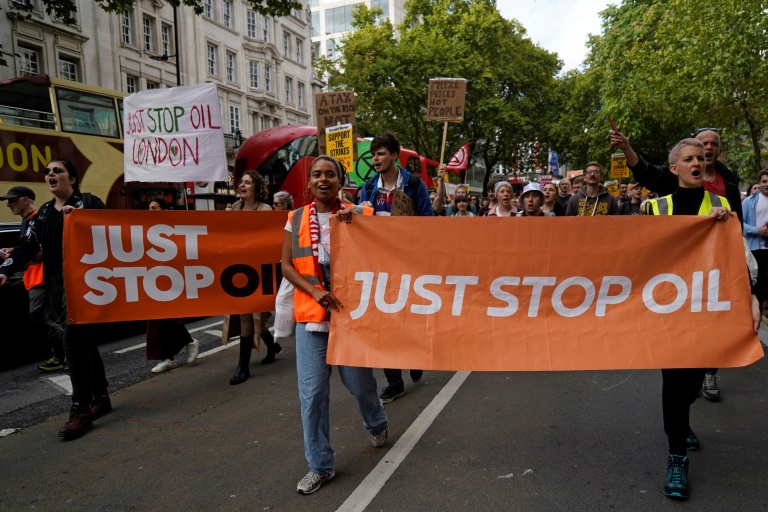
Braverman’s threat came as the Just Stop Oil coalition group, which wants an end to new fossil fuel licensing and production, embarked on a month-long series of protests in central London.

Dozens have been arrested this week for blocking roads and bridges, after similar protests that have brought gridlock to Britain’s motorways, blocked oil refineries and seen petrol pumps damaged.

Two Greenpeace protesters interrupted a speech by Prime Minister Liz Truss’s on Wednesday, accusing the government of backsliding on its commitments to reduce fossil fuel use and ban fracking.

Truss said Greenpeace and Extinction Rebellion were part of an “anti-growth coalition” with trade unions and the main opposition Labour party determined to derail her economic reforms.

“The fact is they prefer protesting to doing. They prefer talking on Twitter to taking tough decisions,” she told the Conservative party conference. 

But activists insist they are also taking action to highlight the climate emergency, which was blamed for pushing temperatures above 40 Celsius (104 Fahrenheit) in Britain this year for the first time

In London this week, threats of arrest — and tougher laws to come — failed to discourage protesters, many of whom took time off work and travelled from outside London.

“I’m prepared to be arrested because the thought of absolute social destruction is a lot worse,” retail worker Theresa Higginson, 24, who locked herself onto another protestor via a metal tube as they blocked a road at Trafalgar Square, told AFP on Thursday.

“We don’t want to do this,” added animal rights activist Gemma Barnes, 32. “We don’t want to be here. 

“But they (the government) have left us no other choice. We believe at this point that the only way to enact change is through civil resistance.”

– ‘They did nothing’ –

Direct-action protests about climate change have escalated in Britain in recent years, led by Extinction Rebellion and allied groups. 

Insulate Britain, which campaigns for more energy efficient homes, first came to public attention by blocking London’s busy M25 orbital motorway last year.

Just Stop Oil protesters have tried to disrupt an English Premier League football match by tying themselves to goalposts and got onto the track at the Silverstone circuit during the Formula One British Grand Prix.

Activists have glued themselves to the frames of well-known works of art at galleries around Britain and targeted the red carpet of the BAFTA awards.

The right-wing tabloid press regularly labels the protesters “eco-anarchists” and “eco-zealots”.

But in London this week, protesters said they were far from being stereotypical activists.

Instead they said they were normal people voicing public concern about climate change in Britain and around the world and “terror” about the future.

“It’s a luxury for us to be able to ignore it, to get on with our everyday life,” said former art school librarian Emma Brown, 30, referring to devastating recent floods in Pakistan.

Retiree Kris Welsch, 69, said police called in to deal with the protests were sympathetic and polite, giving multiple opportunities to abandon their roadblocks before they moved in to arrest them.

“They treat us with respect and we treat them with respect. They understand that they might have to deal with food insecurity and civil unrest in the coming years,” she added.

“This is the least I can do for the up and coming generations,” she said.

The government’s new Public Order Bill is winding its way through parliament, proposing to criminalise “lock-on” tactics and ban the obstruction of major transport work.

Just Stop Oil likened itself to the Suffragettes who campaigned for votes for women, Nelson Mandela’s anti-Apartheid struggle and Russians speaking out against the war in Ukraine.

“We are undeterred. Oil is killing people, now,” it said.

Gabriella Ditto, a 28-year-old mobiliser for the group, told onlookers at Thursday’s roadblock that they had no choice.

“Before we got to this point, we sent some petitions, we sent some strongly worded emails and we wrote to our MPs,” she said. 

“And they did nothing.”

Close Bitnami banner
Bitnami