AFP

After the floods, a wave of disease plagues Pakistan

His head haloed by a whirlwind of mosquitoes, Aamir Hussain stands on the roof of his home in southern Pakistan surveying the fetid floodwaters all around.

Four months after the start of record monsoon rains linked to climate change, the standing water has curdled into a pestilent soup breeding malaria, cholera and dengue.

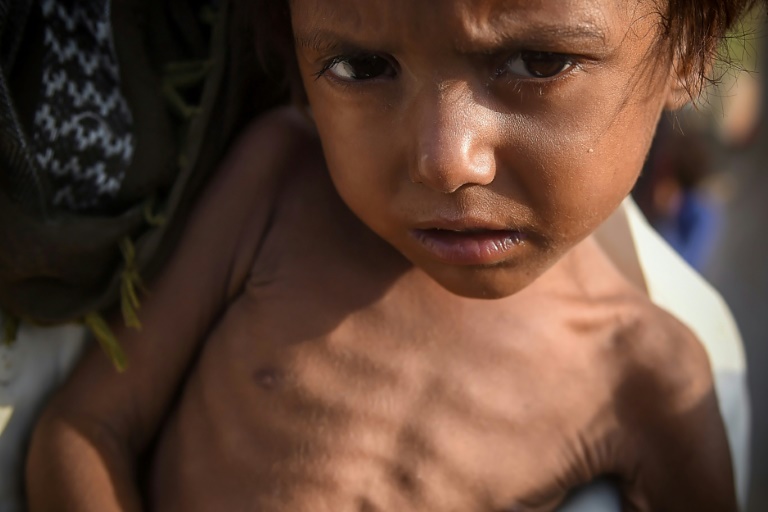
The UN has warned of a “second wave” of catastrophe, with the risk that deaths from water-borne disease and malnutrition will outstrip the 1,700 drowned and electrocuted in the initial cascade.

As dusk arrives in Hussain’s submerged village in Dadu district of Sindh province, so do the bugs, and the gamble that they will infect his wife and two children.

“The mosquitoes bite a lot and we fall sick,” said the 25-year-old, atop a brickwork compound framing a courtyard awash with putrid, sucking mud.

His brother, who shares this home, has already ventured off the roof to treat his sick children at hospital with borrowed cash.

“Some of our nets are torn now so we are worried,” said Hussain, whose infant son has fallen ill.

Sindh has been worst-hit by the catastrophic flooding which put a third of Pakistan underwater, displaced eight million, destroyed or damaged two million homes, crippled 1,500 hospitals and clinics and caused an estimated $28 billion in damages.

– Cascading disaster –

Climate change minister Sherry Rehman said this week that more than 20 million people are still in need “with futures that are entirely precarious”. Eight million of those require “urgent medical services”, she said.

Zahida Mallah has already been tipped over the edge.

In a bleak camp south of Dadu, outside the city of Hyderabad, the 35 year-old explained she is in mourning for her twin two-month-old sons.

One died on the day AFP visited, the other around two weeks ago at a separate camp. 

They were killed by “colds”, she said, after sleeping out in the open. She was offered a tent only after it was too late.

“We just keep floundering,” she lamented.

Nearby, the city of Johi is corralled by water, accessible via a ramshackle flotilla of canoes powered by greasy petrol engines.

Residents rallied to save the city as the rains lashed down, heaving sandbags into a snaking makeshift levee. But it cannot hold back the disease.

In a desperately rundown emergency clinic, a doctor treats unresponsive seven year-old Kashaf, a suspected malaria patient lying on dirty sheets with a clutch of pharmaceuticals at her feet.

“Perhaps it’s a natural disaster, or perhaps we are being tested by God, but whatever it is we are the victims,” said her father, 20 year-old Dildar Mastoi.

Under a black scarf his daughter’s eyes have rolled back into her head. She no longer recognises her parents — doctors say a fever has affected her brain.

Barely adults themselves, her mother and father fled rising waters twice before settling in a camp where they drink from a well they suspect is contaminated by flood water.

“From early evening until dawn, throughout the whole night, the mosquitoes are overwhelming,” said Kashaf’s mother, 19 year-old Bashiran Mastoi. “When the night approaches we start to worry.”

“Life at the camp is immensely miserable,” she said in a vigil on her child’s sickbed.

Medic Manzoor Shahani said there has been a “surge” in malaria, gastro illnesses, and dengue while “most of the patients are children and pregnant women”.

– ‘The hidden fever’ –

Before the floods southern Pakistan was already devastated by grinding poverty. Now aid only sporadically penetrates the patchwork swampland, while the true number of those in need has yet to even be discovered.

Doctors and officials offer contradicting figures, as they grapple to understand the scale. In Dadu the official death toll is just 23, but everyone privately agrees the real figure must be far higher.

“This is devastation beyond the government’s approach,” said provincial health monitor Faheem Soomro, as young doctors tally the day’s fresh patients at a boardroom table.

Half of malaria tests are coming back positive and most homes have suspected cases. 

Sindh has recorded 208,000 cases of malaria so far this year, a dramatic rise from 2021, when cases were reported.

Left untreated — as it certainly is in the stranded swathes of Sindh — malaria can quickly turn fatal. In a normal year there are 50,000 deaths from malaria in Pakistan.

Soomro describes it as “the hidden fever”. It has vague flu-like symptoms — as the mosquito-borne parasite enters the liver and bloodstream, in severe cases swelling the brain.

The healthcare disaster is most easily monitored in camps — there are 19 in Dadu — where the luckiest of the displaced live in row upon row of hundreds of simple A-frame tents.

In one of the “tent cities” home to around 5,000, residents clamour for treatment in a blustery gazebo where doctors test them for malnutrition and malaria, as others offer vaccinations and female health advice.

Soomro estimates 60 percent of the displaced once stayed in camps like this, but three quarters of those have scattered back to the sodden hinterlands to remake their lives, often out of reach of aid efforts.

Outside the camps the dispersed can be seen everywhere — in tents and on daybeds clustered by highways and near scummy stagnant lakes.

– ‘Unaware’ victims –

The monsoon torrent came after Pakistan was seared by a spring heatwave, with pockets of Sindh sporadically suffering temperatures of 50C (122F). 

Extreme weather events are increasing in severity as a result of climate change, scientists say.

Pakistan — the world’s fifth largest population — is responsible for only 0.8 percent of global greenhouse emissions but it’s one of the most vulnerable to extreme weather caused by global warming.

In Johi, community activist Ali Pervez laments how the worst affected Pakistanis are unable to advocate for climate justice.

“They are totally unaware,” he said.

“There is not any quality education [so] that we can easily make aware, empower our people.”
US, Philippines reinforce alliance with joint military drills

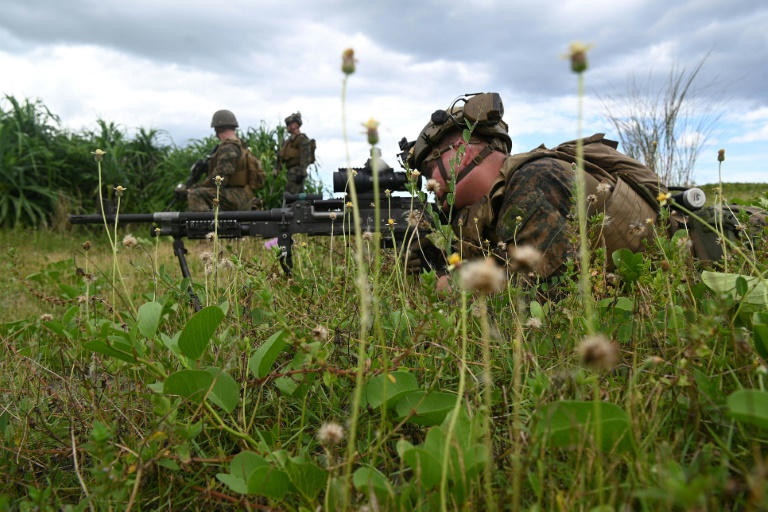
US and Philippine marines stormed a beach near a disputed rocky outcrop in the South China Sea on Friday as part of joint military drills involving more than 3,500 troops. 

It is the first time the annual naval exercises have been held under Philippine President Ferdinand Marcos, who has expressed strong support for the decades-old alliance, after rocky relations under his predecessor Rodrigo Duterte.

Duterte had threatened to cancel drills and axe a key military deal with the United States as he pivoted towards China.

But Marcos told US President Joe Biden during a meeting in New York last month that he appreciated America’s role in “maintaining the peace in our region”. 

China’s recent war games around Taiwan, which it claims as part of its territory, rang alarm bells among nations surrounding the South China Sea. 

Beijing claims sovereignty over almost the entire sea, while the Philippines, Vietnam, Malaysia and Brunei have overlapping claims to parts of it. 

China has ignored an international court ruling that its claims have no legal basis, and has aggressively asserted its stance.

It has built artificial islands as well as deployed hundreds of coast guard and maritime militia vessels to prowl the strategic waters, swarming reefs and harassing fishing and other boats.

The KAMANDAG exercises — the Filipino acronym for “Cooperation of the Warriors of the Sea” — kicked off Monday and will be held across the country’s main island of Luzon until October 14.

One of the objectives is improving the Philippine military’s coastal defence capability. 

Around 300 troops were involved in Friday’s amphibious drills held on an uninhabited beach in Zambales province, about 240 kilometres (150 miles) east of Scarborough Shoal, which China seized from the Philippines in 2012.

The rich fishing ground has become a flashpoint between the two countries.

“We are preparing for any threat that will be coming sooner or later,” said Major Emery Torre, spokesman for the Philippine Marine Corps.

But Torre said the exercises did not simulate an attack by a particular country and were not related to a specific situation.

Marcos has taken a harder line on defending Philippine waters, insisting he would not let China trample on Manila’s maritime rights.

During aerial surveillance over Scarborough Shoal on Thursday, the Philippine Coast Guard spotted six Chinese vessels, including four coast guard and two militia boats, in and around the small ring of reefs. 

“We are doing the patrol operations to establish a presence at the area and also for the sake of our fishermen,” said coast guard spokesman Armand Balilo.

As regional tensions rise, Washington is keen to preserve its security alliance with Manila, which includes a mutual defence treaty and permission for the US military to store defence equipment and supplies on several Philippine bases.

It also allows US troops to access certain military bases in the country.

Death toll in Indian Himalayas avalanche rises to 19

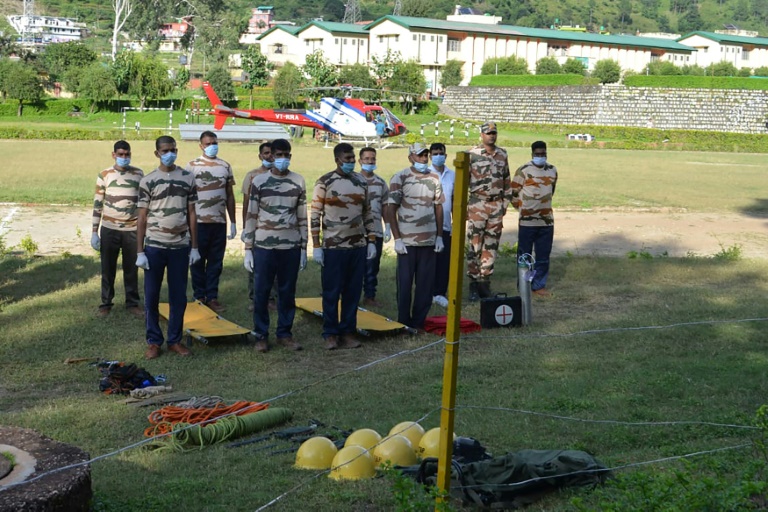
At least 19 people are confirmed dead after an avalanche struck climbers in the Indian Himalayas, authorities said Friday, with bad weather hampering the fourth day of search and rescue efforts.

A group of climbing trainees and instructors were caught in Tuesday’s massive snowslide near the summit of Mount Draupadi ka Danda II in the northern state of Uttarakhand. 

“Nineteen bodies have been recovered. 10 people are still missing,” state disaster agency spokesperson Ridhim Aggarwal told AFP.  

“Rescue operations have resumed for the day but are subject to weather,” she added. “The weather is bad.”

Police, disaster authorities and the Indian air force have been mobilised to help with search efforts, with 32 people successfully rescued from the mountain despite snow and rainfall.

An advance helicopter landing ground had been prepared near the site of the avalanche at 4,900 metres (16,000 feet) above sea level, the Indo-Tibetan Border Police said Thursday.

Sunil Lalwani, one of the rescued trainee climbers, credited the instructors for saving many lives.

“We were 50-100 metres from the summit with our instructors ahead of us, when suddenly an avalanche hit us and took everyone down,” Lalwani was quoted as saying by the Hindustan Times on Thursday.

“It happened in a matter of seconds and we were dumped in a crevasse. We were somehow able to breathe… It’s because of them that we are alive today.”

Among the bodies recovered earlier in the week was that of climber Savita Kanswal, who had summited Everest this year.

Kanswal was an instructor with the expedition and had been feted by the climbing community for summiting the world’s highest peak and nearby Makalu in just 16 days — a women’s record.

– Fatal accidents common –

Fatal climbing accidents are common in the Himalayas, home to Everest and several of the world’s highest peaks.

In August, the body of a mountaineer was recovered two months after he fell into a crevasse while crossing a glacier in the northern state of Himachal Pradesh. 

Last week, renowned US ski mountaineer Hilaree Nelson’s body was found on the slopes of Nepal’s Manaslu peak after she went missing skiing down the world’s eighth-highest mountain.

The same day, Nepali climber Anup Rai was killed and a dozen others were injured after an avalanche on the 8,163-metre (26,781-foot) mountain. 

Although no substantial research has been done on the impacts of climate change on mountaineering risks in the Himalayas, climbers have reported crevasses widening, running water on previously snowy slopes, and the increasing formation of glacial lakes. 

Egypt replants mangrove 'treasure' to fight climate change impacts

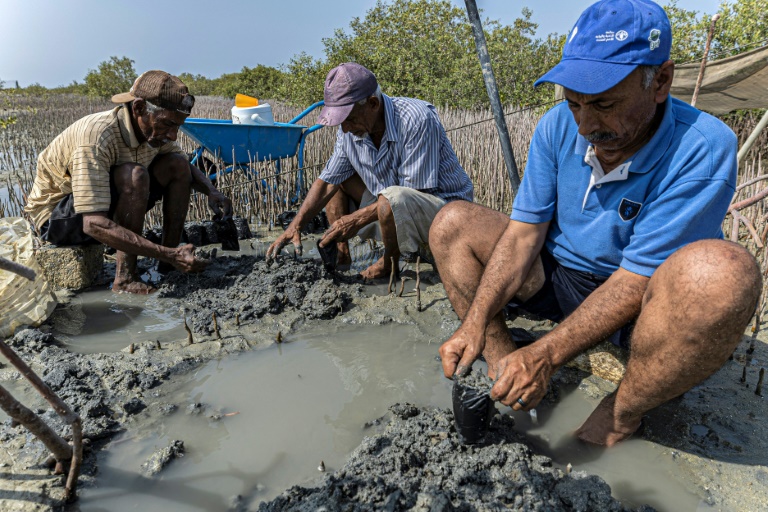
On Egypt’s Red Sea coast, fish swim among thousands of newly planted mangroves, part of a programme to boost biodiversity, protect coastlines and fight climate change and its impacts.

After decades of destruction that saw the mangroves cleared, all that remained were fragmented patches totalling some 500 hectares (1,200 acres), the size of only a few hundred football pitches.

Sayed Khalifa, the head of Egypt’s agriculture syndicate who is leading mangrove replanting efforts, calls the unique plants a “treasure” because of their ability to grow in salt water where they face no problems of drought.

“It’s an entire ecosystem,” Khalifa said, knee-deep in the water. “When you plant mangroves, marine life, crustaceans and birds all flock in.”

Between the tentacle-like roots of months-old saplings, small fish and tiny crab larvae dart through the shallows — making the trees key nurseries of marine life.

Khalifa’s team are growing tens of thousands of seedlings in a nursery, which are then used to rehabilitate six key areas on the Red Sea and Sinai coast, aiming to replant some 210 hectares.

But Khalifa dreams of extending the mangroves as far “as possible,” pointing past a yacht marina some six kilometres (four miles) to the south.

The about $50,000-a-year government-backed programme was launched five years ago.

– ‘Punch above their weight’ –

Mangroves also have a powerful impact in combating climate change.

The resilient trees “punch above their weight” absorbing five times more carbon than forests on land, according to the UN Environment Programme (UNEP).

The stands of trees also help filter out water pollution and act as a natural barrier against rising seas and extreme weather, shielding coastal communities from destructive storms.

UNEP calculates that protecting mangroves is a thousand times cheaper than building seawalls over the same distance.

Despite their value, mangroves have been annihilated worldwide at rapid speed. 

Over a third of mangroves globally have been lost globally, researchers estimate, with losses up to 80 percent in some coastlines of the Indian Ocean.

Mangrove expert Niko Howai, from Britain’s University of Reading, said in the past many governments had not appreciated “the importance of mangroves”, eyeing instead lucrative “opportunities to earn revenue” including through coastal development.

In Egypt’s case, “mass tourism activities and resorts, which cause pollution”, as well as boat activity and oil drilling wreaked havoc on mangroves, said Kamal Shaltout, a botany professor at Egypt’s Tanta University.

Shaltout warned that mangrove restoration efforts “will go to waste” if these threats are not addressed.

“The problem is that the mangroves we have are so limited in number that any damage causes total disruption,” he said.

– Impact of mass tourism –

There is little reliable information to indicate how much has been lost, but Shaltout said “there are areas that have been completely destroyed”, particularly around the major resort town of Hurghada.

Red Sea tourism accounts for 65 percent of Egypt’s vital tourism industry.

The scale of damage, a 2018 study by Shaltout and other researchers found, “probably far exceeds what could be replaced by any replanting programme for years to come”.

Efforts to link up replanted areas will be potentially blocked by barriers of marinas, resorts and coastal settlements.

“Mangroves are hardy, but they are also sensitive, especially as saplings,” Howai said.

“Intermingling mangrove reforestation with existing development projects is not impossible, but it is going to be more challenging.”

To be successful, Shaltout said that tourist operators must be involved, including by tasking resorts with replanting areas themselves.

“It could even come with certain tax benefits, to tell them that just like they have turned a profit, they should also play a role in protecting nature,” the botanist said.

Manhattan arts complex opens new hall by exploring district it once displaced

Years before Manhattan’s Upper West Side became home to arias and pirouettes, it housed San Juan Hill, a bustling neighborhood and thriving arts nexus where clubs and dance halls were hatching new musical forms.

But the district was destroyed in the mid-20th century to make way for the shiny new arts complex Lincoln Center. Now, as the New York Philharmonic prepares to debut its long-planned new performance space there this weekend, the institution is reckoning with its unsavory beginnings, opening with the commissioned piece “San Juan Hill: A New York Story.”

It was in the San Juan Hill neighborhood that stride piano innovator James P. Johnson composed the wildly popular “Charleston” dance at the Jungle Cafe club, and jazz piano legend Thelonious Monk — credited with developing bebop — grew up.

But in 1947, New York’s notorious urban planner Robert Moses declared the area — home to thousands of Black and Puerto Rican families, and hundreds of small businesses — a slum district, clearing the way to raze it as part of his grand “urban renewal” campaign that controversially transformed the city.

“What happens to the neighborhood is what happens to lots of other neighborhoods — that it sort of stands in the way of some future vision of the city,” said historian Julia Foulkes.

She collaborated with composer and trumpeter Etienne Charles as he created the Philharmonic’s new piece, which places his group Creole Soul in conversation with the symphony.

By mid-century, 18 city blocks had been leveled and thousands of people displaced, as the project to construct the arts campus that would come to house the Metropolitan Opera, New York Philharmonic, New York City Ballet and the Juilliard conservatory got underway.

“What’s lost is not only specific blocks and residences, but actually the tenor of a whole area,” said Foulkes, a professor at The New School.

Along with musical elements including ragtime, jazz, calypso, funk and hip hop, Charles’s multimedia work features spoken word, visual projections and first-person accounts of San Juan Hill that document the neighborhood’s history and pay homage to the music and culture brought to the city by migrants from the south and the Caribbean.

Charles, who is originally from Trinidad and Tobago and studied himself at Juilliard, told AFP he hopes the project will shed light on the mere fact that the neighborhood — now wiped off the map — existed.

“We have to start valuing people for more than just where they live and the quality of the property that they have, and start looking at their culture and their lineage and their heritage and their history that they are building,” he said.

“It’s always about knowing who was there, and understanding what your relationship to that is.”

– Inclusivity –

Shanta Thake, the chief artistic officer at Lincoln Center, said that the commission is part of a broader conversation at the institution, “thinking through what it means to be a civic space, and what it means to hold the city’s stories — and what it also means to have interrupted the city’s stories.”

“For a long time there was a prevailing narrative of ‘Lincoln Center is the best thing that could have ever happened to this neighborhood,'” she continued, saying that pieces like Charles’s allow for “really peeling that apart.”

The composer’s piece is the crown jewel of a series of talks and workshops sponsored by the institution exploring culture, gentrification and community activism, Lincoln Center said.

For years, companies at the complex have been battling criticisms that their offerings are geared toward primarily white, upper-class audiences.

Part of the gut renovation of David Geffen Hall, the Philharmonic’s home, was giving it more accessible airs, with a breezy lobby that opens to the plaza and a sidewalk studio for performances visible from the street. 

And tickets to Charles’s show, which includes five movements from the orchestra and debuts October 8, were made available for a choose-what-you-pay fee starting at $5, with some distributed for free.

The composer, who has worked with Lincoln Center before, said he thinks the complex has made efforts to “ensure that they are inclusive, not only for the audiences, but what they present musically — this piece is an example of that.”

Historian Foulkes recalled Charles telling her his aim was to compose music “that sounds like what if symphony and orchestras had not excluded all of the other music that had been occurring around them.”

“I think that is such a compelling image for where we need to be,” she said.

Nuclear 'Armageddon' threat back for first time since Cold War: Biden

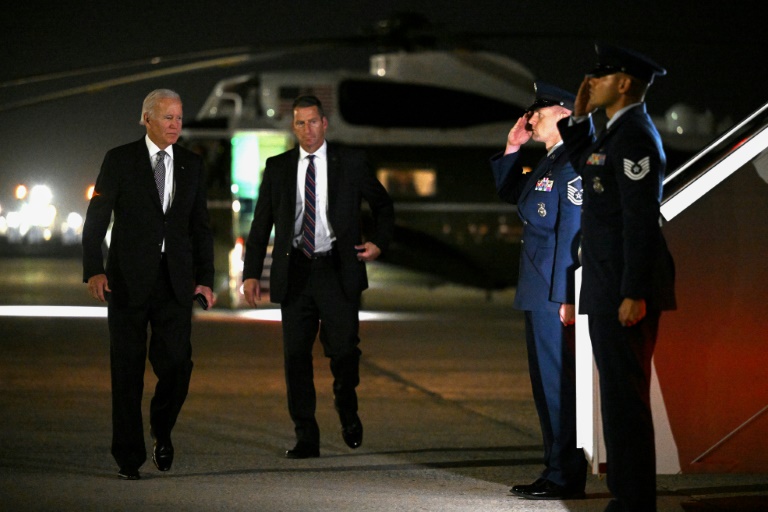
US President Joe Biden said Thursday the world risks nuclear “Armageddon” for the first time since the Cold War and that he is trying to find Russian President Vladimir Putin’s “off-ramp” in the Ukraine conflict.

“We have not faced the prospect of Armageddon since Kennedy and the Cuban missile crisis” in 1962, Biden said at a Democratic Party fundraising event in New York, referring to former US president John F Kennedy.

Putin is “not joking” when he threatens to use nuclear weapons to pursue his invasion of Ukraine, Biden said.

The president made his unusually strong comments about the risks created by Putin’s nuclear threats while speaking to party supporters at an event hosted in the Manhattan home of James Murdoch, son of newspaper mogul Rupert Murdoch.

Referring to the nuclear standoff 60 years ago triggered by the Soviet Union stationing missiles in Cuba, within easy range of the United States, Biden said that for the “first time since the Cuban missile crisis, we have a direct threat from the use of nuclear weapons if in fact things continue down the path they are going.”

“We’re trying to figure out what is Putin’s off-ramp,” Biden said.

Putin has made thinly veiled threats to use nuclear weapons if he feels he has run out of options in his bid to seize swaths of Ukrainian territory in the face of stiff resistance by Western-back Kyiv.

Experts say these would most likely be relatively small, tactical strikes. But Biden warned such strikes in a limited area would still risk triggering a wider conflagration.

“We’ve got a guy I know fairly well,” Biden said. Putin’s “not joking when he talks about potential use of tactical nuclear weapons or biological or chemical weapons, because his military is, you might say, significantly underperforming.”

But “I don’t think there’s any such thing as the ability to easily (use) a tactical nuclear weapon and not end up with Armageddon,” Biden said.

The president’s comments come as Ukraine has recaptured fresh territory from Russian troops, the latest in a series of Moscow defeats undermining the Kremlin’s claim to have annexed around 20 percent of Ukraine.

But with Russian’s once-vaunted military faltering, Washington and its Western allies have grown concerned about what Putin might be planning on the battlefield.

“Where does he find a way out?” Biden asked. 

“Where does he find himself in a position that he does not, not only lose face, but lose significant power within Russia?”

Asian stocks drop, dollar holds rally as US jobs report looms

Asian markets fell and the dollar held an advance as the optimism that coursed through trading floors earlier this week gave way to nervousness ahead of a massive US jobs report later Friday that could determine Federal Reserve rate hike plans.

Soft economic data out of Washington sent equities surging at the start of the week and dragged the greenback on hopes that the readings could allow the US central bank to pivot and slow down its strict monetary tightening programme.

However, the uncertainty that has characterised the year so far has slowly returned and Wall Street’s three main indexes ended Thursday with fresh losses, with sights firmly on the non-farm payrolls (NFP) figures.

Analysts expect the monthly report to show 250,000 posts were created in September, which would be the weakest since late 2020 but still a healthy figure suggesting a strong labour market. 

There is a fear that a result higher than expectations could spark another sell-off across risk markets as investors bet on more bumper rate hikes.

Fed officials have consistently warned that they are determined to ramp up borrowing costs to fight four-decade-high inflation, even at the expense of a recession — feeding worries among traders that the world economy is heading for such a scenario.

“The pivot party gang dialled down their new-found enthusiasm overnight after hawkish central bankers expressed concerns over sticky inflation,” said SPI Asset Management’s Stephen Innes.

He pointed out that other central banks, including in Europe and Canada, had also flagged further tough measures.

Still, OANDA’s Edward Moya added that a consumer price index report next week was also coming on traders’ radars.

“Economists are not expecting a significant drop in pricing pressures, but many traders think that a cool report could happen and that will force the Fed to change their tune next week,” he said in a note. 

“Fed messaging has been consistent and it will likely stay that way post-NFP. Rate hike and cut bets will likely have significant swings after next Thursday’s inflation report.”

Asian markets extended the New York retreat, with downbeat earnings from chipmakers — and a warning from South Korean titan Samsung — raising worries about the upcoming corporate earnings season.

Tokyo, Hong Kong, Sydney, Seoul, Wellington, Taipei, Manila and Jakarta were all in negative territory.

Adding to the unease was a warning from US President Joe Biden that the world faced nuclear “Armageddon” for the first time since the 1962 Cuban missile crisis and that he is trying to find Russian counterpart Vladimir Putin’s “off-ramp”

He told a Democratic Party fundraiser in New York that Putin was “not joking” when he threatened to use nuclear weapons as his army faces a series of defeats in eastern Ukraine following his invasion in February.

The risk-off mood saw the dollar bounce Thursday after days of losses caused by traders lowering their rate expectations, and it held the advance in early Asian business.

The standout was sterling, which remained wedged below $1.12 and continued a rollercoaster that saw it hit a record low last week before recovering thanks to a Bank of England lifeline.

However, observers warned of more volatility in the pound as the government presses ahead with a debt-funded tax-cutting mini-budget, while the promised support from the BoE is due to end soon.

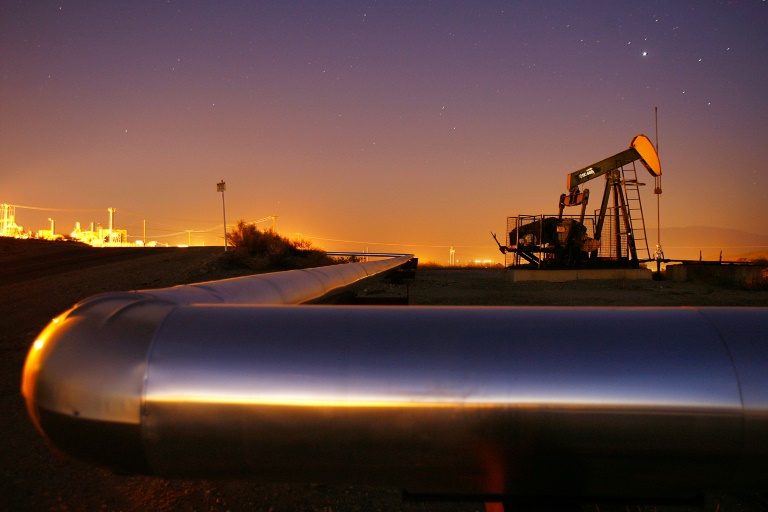
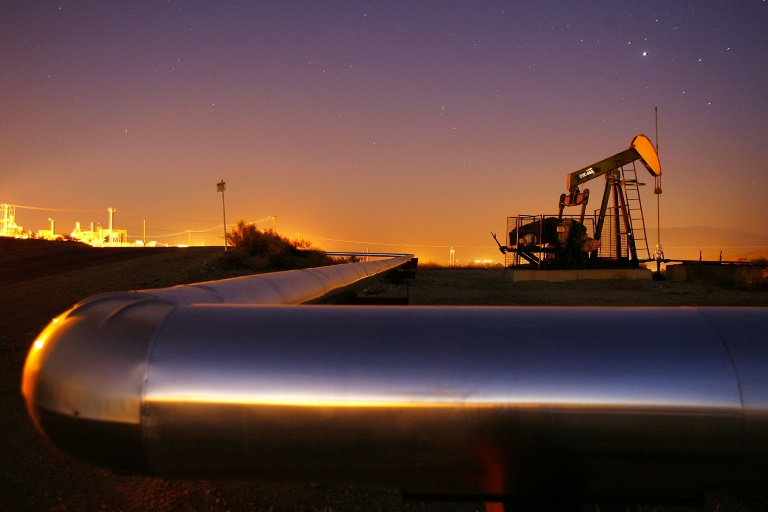
Oil prices edged down but are set for their biggest weekly gain since March after OPEC and other major producers led by Russia agreed to slash output by two million barrels, leading some analysts to predict a return to $100 a barrel by the end of the year.

– Key figures around 0230 GMT –

Tokyo – Nikkei 225: DOWN 0.6 percent at 27,149.76 (break)

Hong Kong – Hang Seng Index: DOWN 0.9 percent at 17,836.92

Shanghai – Composite: Closed for a holiday

Pound/dollar: UP at $1.1164 from $1.1161 on Thursday

Euro/dollar: UP at $0.9797 from $0.9794

Euro/pound: UP at 87.77 pence from 87.74 pence

Dollar/yen: DOWN at 145.04 yen from 145.11 yen

West Texas Intermediate: DOWN 0.1 percent at $88.40 per barrel

Brent North Sea crude: DOWN 0.2 percent at $94.28 per barrel

New York – Dow: DOWN 1.2 percent at 29,926.94 (close)

London – FTSE 100: DOWN 0.8 percent at 6,997.27 (close) 

Asian stocks drop, dollar holds rally as US jobs report looms

Asian markets fell and the dollar held an advance as the optimism that coursed through trading floors earlier this week gave way to nervousness ahead of a massive US jobs report later Friday that could determine Federal Reserve rate hike plans.

Soft economic data out of Washington sent equities surging at the start of the week and dragged the greenback on hopes that the readings could allow the US central bank to pivot and slow down its strict monetary tightening programme.

However, the uncertainty that has characterised the year so far has slowly returned and Wall Street’s three main indexes ended Thursday with fresh losses, with sights firmly on the non-farm payrolls (NFP) figures.

Analysts expect the monthly report to show 250,000 posts were created in September, which would be the weakest since late 2020 but still a healthy figure suggesting a strong labour market. 

There is a fear that a result higher than expectations could spark another sell-off across risk markets as investors bet on more bumper rate hikes.

Fed officials have consistently warned that they are determined to ramp up borrowing costs to fight four-decade-high inflation, even at the expense of a recession — feeding worries among traders that the world economy is heading for such a scenario.

“The pivot party gang dialled down their new-found enthusiasm overnight after hawkish central bankers expressed concerns over sticky inflation,” said SPI Asset Management’s Stephen Innes.

He pointed out that other central banks, including in Europe and Canada, had also flagged further tough measures.

Still, OANDA’s Edward Moya added that a consumer price index report next week was also coming on traders’ radars.

“Economists are not expecting a significant drop in pricing pressures, but many traders think that a cool report could happen and that will force the Fed to change their tune next week,” he said in a note. 

“Fed messaging has been consistent and it will likely stay that way post-NFP. Rate hike and cut bets will likely have significant swings after next Thursday’s inflation report.”

Asian markets extended the New York retreat, with downbeat earnings from chipmakers — and a warning from South Korean titan Samsung — raising worries about the upcoming corporate earnings season.

Tokyo, Hong Kong, Sydney, Seoul, Wellington, Taipei, Manila and Jakarta were all in negative territory.

Adding to the unease was a warning from US President Joe Biden that the world faced nuclear “Armageddon” for the first time since the 1962 Cuban missile crisis and that he is trying to find Russian counterpart Vladimir Putin’s “off-ramp”

He told a Democratic Party fundraiser in New York that Putin was “not joking” when he threatened to use nuclear weapons as his army faces a series of defeats in eastern Ukraine following his invasion in February.

The risk-off mood saw the dollar bounce Thursday after days of losses caused by traders lowering their rate expectations, and it held the advance in early Asian business.

The standout was sterling, which remained wedged below $1.12 and continued a rollercoaster that saw it hit a record low last week before recovering thanks to a Bank of England lifeline.

However, observers warned of more volatility in the pound as the government presses ahead with a debt-funded tax-cutting mini-budget, while the promised support from the BoE is due to end soon.

Oil prices edged down but are set for their biggest weekly gain since March after OPEC and other major producers led by Russia agreed to slash output by two million barrels, leading some analysts to predict a return to $100 a barrel by the end of the year.

– Key figures around 0230 GMT –

Tokyo – Nikkei 225: DOWN 0.6 percent at 27,149.76 (break)

Hong Kong – Hang Seng Index: DOWN 0.9 percent at 17,836.92

Shanghai – Composite: Closed for a holiday

Pound/dollar: UP at $1.1164 from $1.1161 on Thursday

Euro/dollar: UP at $0.9797 from $0.9794

Euro/pound: UP at 87.77 pence from 87.74 pence

Dollar/yen: DOWN at 145.04 yen from 145.11 yen

West Texas Intermediate: DOWN 0.1 percent at $88.40 per barrel

Brent North Sea crude: DOWN 0.2 percent at $94.28 per barrel

New York – Dow: DOWN 1.2 percent at 29,926.94 (close)

London – FTSE 100: DOWN 0.8 percent at 6,997.27 (close) 

Samsung Electronics forecasts 31.7% fall in Q3 profit

Samsung Electronics expects operating profits in the third quarter to fall 31.7 percent, the South Korean tech giant said in a statement Friday, after a global economic downturn hit demand for consumer electronics.

The latest forecast is the company’s first projection of a year-on-year decline in profit for nearly three years. 

Operating profit for July to September was predicted to reach 10.8 trillion won ($7.7 billion), down 31.7 percent from 15.8 trillion won a year earlier, the world’s major maker of smartphones and memory chips said in a statement.

But the company said it expected sales to increase by 2.7 percent from the same period last year to 76 trillion won.

The firm is the flagship subsidiary of the giant Samsung Group, by far the biggest of the family-controlled conglomerates that dominate business in Asia’s fourth-largest economy, and is crucial to South Korea’s economy.

Until the second quarter of this year, Samsung, along with other tech companies, significantly benefitted from strong demand for electronic devices — as well as chips that power them — during the pandemic.

But the global economy is now facing multiple challenges, including soaring inflation, rising interest rates and a growing threat of a broad debt crisis.

The situation has been exacerbated by Russia’s invasion of Ukraine — which spurred a surge in energy prices and pushed global food prices up — along with China’s adherence to a strict zero-Covid policy.

“If you look at the current macroeconomic environment, the demand for consumer segment such as smartphones, PCs remains weak,” Neil Shah, an analyst at Counterpoint research, told AFP. 

And “almost a third of the Samsung’s revenues and almost 70 percent of operating profits comes from semiconductor divisions and particularly memory,” he added.

The company is expected to release its final earnings report at the end of this month.

Samsung Electronics forecasts 31.7% fall in Q3 profit

Samsung Electronics expects operating profits in the third quarter to fall 31.7 percent, the South Korean tech giant said in a statement Friday, after a global economic downturn hit demand for consumer electronics.

The latest forecast is the company’s first projection of a year-on-year decline in profit for nearly three years. 

Operating profit for July to September was predicted to reach 10.8 trillion won ($7.7 billion), down 31.7 percent from 15.8 trillion won a year earlier, the world’s major maker of smartphones and memory chips said in a statement.

But the company said it expected sales to increase by 2.7 percent from the same period last year to 76 trillion won.

The firm is the flagship subsidiary of the giant Samsung Group, by far the biggest of the family-controlled conglomerates that dominate business in Asia’s fourth-largest economy, and is crucial to South Korea’s economy.

Until the second quarter of this year, Samsung, along with other tech companies, significantly benefitted from strong demand for electronic devices — as well as chips that power them — during the pandemic.

But the global economy is now facing multiple challenges, including soaring inflation, rising interest rates and a growing threat of a broad debt crisis.

The situation has been exacerbated by Russia’s invasion of Ukraine — which spurred a surge in energy prices and pushed global food prices up — along with China’s adherence to a strict zero-Covid policy.

“If you look at the current macroeconomic environment, the demand for consumer segment such as smartphones, PCs remains weak,” Neil Shah, an analyst at Counterpoint research, told AFP. 

And “almost a third of the Samsung’s revenues and almost 70 percent of operating profits comes from semiconductor divisions and particularly memory,” he added.

The company is expected to release its final earnings report at the end of this month.

Close Bitnami banner
Bitnami