AFP

OPEC+ angers US with major oil output cut

Saudi Arabia, Russia and other top oil producers agreed on a major cut in production on Wednesday to boost crude prices — a move denounced by the United States as a concession to Moscow that will further hurt the global economy.

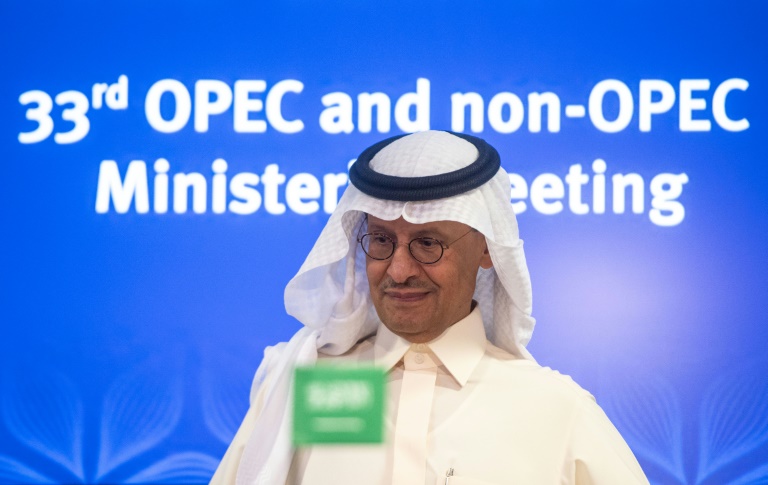
The 13-nation OPEC cartel headed by Riyadh and its 10 allies led by Moscow agreed to reduce output by two million barrels per day from November at a meeting in Vienna, the group said in a statement.

It is the biggest cut since the height of the Covid pandemic in 2020, raising fears that it will turbocharge oil prices at a time when countries are already facing soaring energy-fuelled inflation.

Saudi Arabia’s energy minister, Prince Abdulaziz bin Salman, defended the move, saying the cartel’s priority was “to maintain a sustainable oil market”, at a press conference following OPEC+’s first in-person meeting since March 2020.

But the decision drew a swift rebuke from US President Joe Biden, who had made a controversial trip to Saudi Arabia in July under pressure as Americans faced rising prices at fuel stations.

The timing is also bad for Biden’s political agenda as it comes ahead of US midterm elections next month.

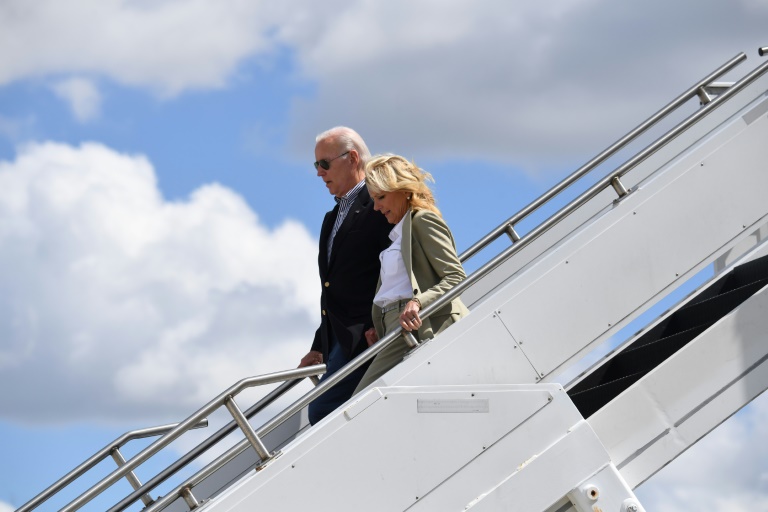
“It’s clear that OPEC+ is aligning with Russia with today’s announcement,” White House Press Secretary Karine Jean-Pierre said aboard Air Force One.

National Security Advisor Jake Sullivan and top economic advisor Brian Deese said in a statement that Biden was “disappointed by the shortsighted decision by OPEC+”.

Western allies led by the United States have tried to isolate Russia’s economy, which relies heavily on energy exports, in retaliation for the invasion of Ukraine.

– Oil prices rise –

OPEC+ decided to slash its output as oil prices fell below $90 per barrel in recent months over concerns about the global economy, after soaring to $140 in the wake of Russia’s invasion of Ukraine earlier this year.

The international benchmark, Brent North Sea crude, was up at $93.43 following Wednesday’s announcement.

The oil production cut could give sanctions-hit Russia a boost ahead of a European Union ban on most of its crude exports later this year and as the Group of Seven wealthy democracies mull a cap on the country’s oil prices.

Russian deputy prime minister Alexander Novak, who is under US sanctions and attended the OPEC+ meeting, said a price cap would have a “detrimental effect” on the global oil sector.

He warned that Russian companies would “not supply oil to those countries” that introduce such a cap.

“There is a reason why Russia is ready to participate with an OPEC cut — because they are not sure whether they will find somebody to buy this oil,” Patrick Pouyanne, chairman of French oil giant TotalEnergies, said at a London oil industry conference.

Collectively known as OPEC+, the alliance drastically slashed output by almost 10 million barrels per day (bpd) in April 2020 to reverse a massive drop in crude prices caused by Covid lockdowns.

OPEC+ began to raise production last year after the market improved. Output returned to pre-pandemic levels this year, but only on paper as some members have struggled to meet their quotas.

The group agreed last month on a small, symbolic cut of 100,000 bpd from October, the first in more than a year.

Consumer countries had pushed for months for OPEC+ to open taps more widely to bring down prices, but the group ignored them again.

Biden travelled to Saudi Arabia in July in part to convince the kingdom to loosen the production taps. The trip saw Biden meet Crown Prince Mohammed bin Salman despite his promise to make Riyadh a “pariah” following the 2018 killing of journalist Jamal Khashoggi.

While the cut was not welcomed by the United States, several OPEC+ nations have struggled to meet their quotas in the first place.

The next ministerial OPEC meeting will be on December 4. In recent months, the cartel and its partners met online each month. 

burs-jza/
Biden tours Florida hurricane clean-up zone — and opponent's territory

President Joe Biden made a politically charged visit Wednesday to inspect the aftermath of deadly Hurricane Ian in Florida while striking a united front with bitter Republican critic and potential 2024 opponent, Governor Ron DeSantis.

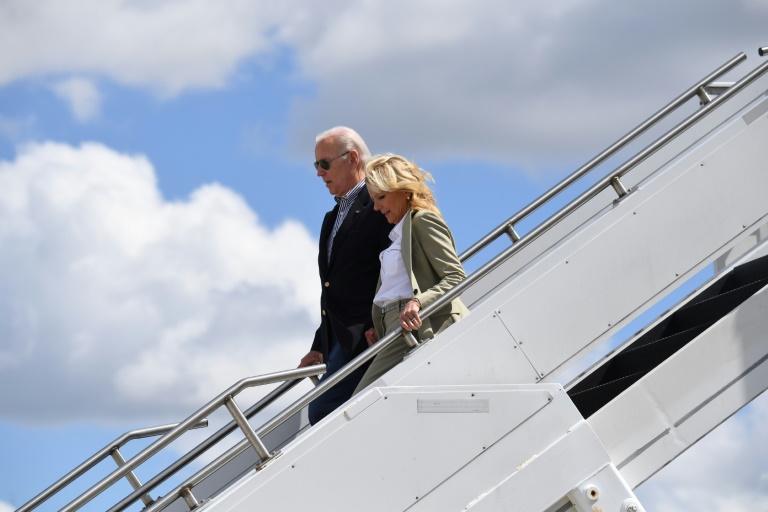
The Democrat, accompanied by First Lady Jill Biden, boarded a helicopter at Fort Myers for an aerial inspection of the havoc wreaked in one of the worst storms ever to hit the country.

“They will survey the damage, receive an operational briefing on ongoing recovery efforts, and thank federal, state and local officials working around the clock,” White House Press Secretary Karine Jean-Pierre said aboard Air Force One flying down from Washington.

Authorities say at least 76 people —  more than 100 according to US television networks citing local officials — died in Hurricane Ian.

The Category 4 storm flattened whole neighborhoods on the Sunshine State’s west coast, knocking out power for millions of people — with hundreds of thousands still waiting for electricity to be restored Tuesday — and then weakened before tearing into South Carolina and up the East Coast.

For Biden, who visited hurricane-hit Puerto Rico on Monday, the Florida trip also has an inescapable political dimension, taking him into the stronghold of both DeSantis and Biden’s scandal-plagued predecessor in the White House, Donald Trump.

The Democrat, who says he wants to seek a second term despite already being the oldest man ever in the job at 79, could realistically end up facing a rematch with Trump in two years or a challenge from the up-and-coming DeSantis.

DeSantis has been a caustic critic, as he builds his brand of muscular right-wing politics in a bid to replace Trump as the biggest name in the Republican party. Biden has returned fire, painting DeSantis as part of what he says is an increasingly extreme right.

The hurricane, however, has prompted a truce, with phone calls between the two men and acknowledgement from DeSantis that the federal government was quick to provide assistance.

The visit is “above politics,” Jean-Pierre said ahead of the trip.

“There will be plenty of times, plenty of time to discuss differences between the president and the governor,” she said. “Now is not the time.”

– Disaster briefing –

Biden’s main goal, Jean-Pierre said, is to check that “the people of Florida have what they need.”

In addition to getting briefings from federal emergency management chief Deanne Criswell and DeSantis, Biden will meet small business owners and local storm survivors, then give televised remarks.

He will “confirm his commitment to the people of Florida as they recover and rebuild,” Jean-Pierre said.

Biden’s visit to Puerto Rico earlier in the week covered similar ground, although there he was updated on recovery from Hurricane Fiona, which hit the island last month.

Again, Biden stressed the unity message, telling the territory — which often feels overlooked by the mainland and the federal government — that “all of America’s with you.”

The disagreements with DeSantis, however, are many and will likely resurface as soon as Floridians recommence a semblance of their previous lives.

DeSantis opposed Biden on his Covid-19 policies during the pandemic, accusing the president of overreach. He has likewise made himself the standard bearer of the conservative backlash to growing tolerance for LGBT issues — something Biden has championed.

Another right-wing Florida Republican who often comes under fire from Biden, Senator Rick Scott, was also due to meet the president during his visit.

Biden tours Florida hurricane clean-up zone — and opponent's territory

President Joe Biden made a politically charged visit Wednesday to inspect the aftermath of deadly Hurricane Ian in Florida while striking a united front with bitter Republican critic and potential 2024 opponent, Governor Ron DeSantis.

The Democrat, accompanied by First Lady Jill Biden, boarded a helicopter at Fort Myers for an aerial inspection of the havoc wreaked in one of the worst storms ever to hit the country.

“They will survey the damage, receive an operational briefing on ongoing recovery efforts, and thank federal, state and local officials working around the clock,” White House Press Secretary Karine Jean-Pierre said aboard Air Force One flying down from Washington.

Authorities say at least 76 people —  more than 100 according to US television networks citing local officials — died in Hurricane Ian.

The Category 4 storm flattened whole neighborhoods on the Sunshine State’s west coast, knocking out power for millions of people — with hundreds of thousands still waiting for electricity to be restored Tuesday — and then weakened before tearing into South Carolina and up the East Coast.

For Biden, who visited hurricane-hit Puerto Rico on Monday, the Florida trip also has an inescapable political dimension, taking him into the stronghold of both DeSantis and Biden’s scandal-plagued predecessor in the White House, Donald Trump.

The Democrat, who says he wants to seek a second term despite already being the oldest man ever in the job at 79, could realistically end up facing a rematch with Trump in two years or a challenge from the up-and-coming DeSantis.

DeSantis has been a caustic critic, as he builds his brand of muscular right-wing politics in a bid to replace Trump as the biggest name in the Republican party. Biden has returned fire, painting DeSantis as part of what he says is an increasingly extreme right.

The hurricane, however, has prompted a truce, with phone calls between the two men and acknowledgement from DeSantis that the federal government was quick to provide assistance.

The visit is “above politics,” Jean-Pierre said ahead of the trip.

“There will be plenty of times, plenty of time to discuss differences between the president and the governor,” she said. “Now is not the time.”

– Disaster briefing –

Biden’s main goal, Jean-Pierre said, is to check that “the people of Florida have what they need.”

In addition to getting briefings from federal emergency management chief Deanne Criswell and DeSantis, Biden will meet small business owners and local storm survivors, then give televised remarks.

He will “confirm his commitment to the people of Florida as they recover and rebuild,” Jean-Pierre said.

Biden’s visit to Puerto Rico earlier in the week covered similar ground, although there he was updated on recovery from Hurricane Fiona, which hit the island last month.

Again, Biden stressed the unity message, telling the territory — which often feels overlooked by the mainland and the federal government — that “all of America’s with you.”

The disagreements with DeSantis, however, are many and will likely resurface as soon as Floridians recommence a semblance of their previous lives.

DeSantis opposed Biden on his Covid-19 policies during the pandemic, accusing the president of overreach. He has likewise made himself the standard bearer of the conservative backlash to growing tolerance for LGBT issues — something Biden has championed.

Another right-wing Florida Republican who often comes under fire from Biden, Senator Rick Scott, was also due to meet the president during his visit.

Putin says war to 'stabilise', Ukraine presses counterattack

Russian President Vladimir Putin said Wednesday that he expected the situation to “stabilise” in Ukrainian regions annexed by the Kremlin after Moscow suffered military setbacks and lost several key towns to Kyiv.

He also ordered his government to seize control over Europe’s largest nuclear power plant in the Russian-controlled region of Zaporizhzhia with IAEA head Rafael Grossi en route to Kyiv for consultations on the facility.

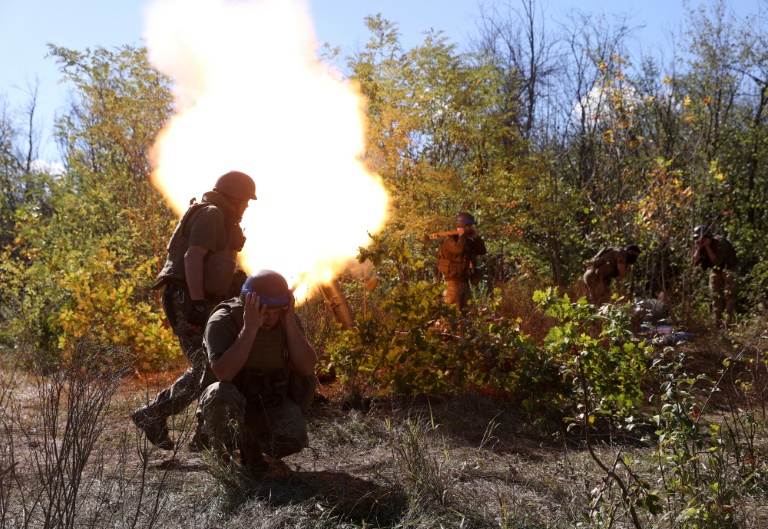
Ukraine earlier claimed victories over Russian troops in the eastern region of Lugansk as the Kremlin vowed to recapture territory lost in a lightning Ukrainian counteroffensive.

In recent weeks, Ukraine’s forces, bolstered by Western weapons, have wrested Russian troops out of a string of towns and villages in the southern Kherson region and the eastern separatist strongholds of Lugansk and Donetsk.

“We are working on the assumption that the situation in the new territories will stabilise,” Putin told Russian teachers during a televised video call.

Just hours earlier, the Ukrainian-appointed head of Lugansk Sergiy Gaiday announced that the “de-occupation of the Lugansk region has already officially started”.

A senior Russian lawmaker called on military officials to tell the truth about developments on the ground in Ukraine following the string of bruising defeats.

“We need to stop lying,” the chairman of the lower house of parliament’s defence committee, Andrei Kartapolov, told a journalist from state-run media.

“The reports of the defence ministry do not change. The people know. Our people are not stupid. This can lead to loss of credibility.”

– Regions to be ‘Russian forever’ –

Putin on Wednesday signed into legislation his annexation of four Ukrainian territories — including Lugansk — as the European Union agreed a new round of sanctions against Moscow in response.

Kremlin spokesman Dmitry Peskov said Moscow would take back land it lost to Kyiv within the annexed regions, vowing they would be “Russian forever and will not be returned”.

Putin initially inked agreements with the Moscow-installed leaders of the four regions to become subjects of the Russian Federation, despite condemnation from Kyiv and the West.

The four territories — Donetsk, Kherson, Lugansk and Zaporizhzhia — create a land corridor between Russia and the Crimean peninsula, which was annexed by Moscow in 2014.

Together, the five regions make up around 20 percent of Ukraine.

The Kremlin annexed the territories after hastily conducting referendums, denounced as void by Kyiv and its Western allies, but has yet to confirm what areas exactly of those regions are being annexed.

Russian forces do not have full control over Kherson or Zaporizhzhia and recently lost control of several settlements in Donetsk.

The latest battlefield maps from Moscow showed that Russian troops had left many areas in Kherson, including along the west bank of the Dnipro River.

– ‘Lived like rats’ –

In Kharkiv, the maps indicated that Moscow’s forces had almost entirely abandoned the east bank of the Oskil River, potentially giving the Ukrainians space to shell key Russian troop transportation and supply corridors.

While Russian authorities remain largely silent about the extent of the setbacks, war correspondents of pro-Kremlin media admitted that troops were in trouble. 

“There won’t be any good news in the near future. Not from the Kherson front nor from Lugansk,” newspaper journalist Alexander Kots wrote on his Telegram channel with more than 640,000 followers.

In the town of Lyman, Ukrainian police officers were moving back in to the station used until last week by the Russian occupation force.

“They lived like rats,” said the town’s police chief, Igor Ugnivenko, returning to his pre-invasion office and surveying the debris.

In front of the central administration building queues of mainly elderly residents built up for two ambulances distributing meagre humanitarian aid.

“I don’t know if the situation is better or worse,” said 62-year- old Tatiana Slavuta of the town’s recapture by Ukrainian forces.

“All the shops are closed, we don’t have money, we don’t have light. Nothing.

“We don’t see any change,” she added before correcting herself and brightening.

– ‘Now there’s silence’ –

“At least now there’s silence — no shelling.”

Putin’s decision to wrest control of the Zaporizhzhia plant comes after months of tensions around the facility with both sides blaming each other for strikes that had raised fears of a radiation disaster.

“On our way to Kyiv for important meetings,” International Atomic Energy Agency head Rafael Grossi wrote on Twitter, saying the need for a protection zone around the site was “more urgent than ever”.

On Tuesday, US President Joe Biden told Zelensky that another $625 million in military assistance was on the way.

The new batch includes more HIMARS multiple rocket launchers, which have allowed Ukraine to strike Russian command depots and arms stockpiles far behind the frontline.

From the EU, there were no details about the nature of fresh sanctions agreed against Russia.

The latest package — the eighth since Russia’s invasion in February — is now going through a final approval procedure which, if no objections emerge, will be published and come into effect on Thursday, the Czech Republic’s EU ambassador said on Twitter.

Click chemistry, Nobel-winning science that may 'change the world'

The Nobel Chemistry Prize was awarded to three scientists on Tuesday for their work on click chemistry, a way to snap molecules together like Lego that experts say will soon “change the world”.

But how exactly does it work?

Imagine two people walking through a mostly empty room towards each other then shaking hands. 

“That’s how a classical chemical reaction is done,” said Benjamin Schumann, a chemist at Imperial College, London.

But what if there was lots of furniture and other people clogging up the room?

“They might not meet each other,” Schumann said.

Now imagine those people were molecules, tiny groups of atoms that form the basis of chemistry.

“Click chemistry makes it possible for two molecules that are in an environment where you have lots of other things around” to meet and join with each other, he told AFP.

The way click chemistry snaps together molecular building blocks is also often compared to Lego.

But Carolyn Bertozzi, who shared this year’s chemistry Nobel with Barry Sharpless and Morten Meldal, said it would take a very special kind of Lego.

Even if two Legos were “surrounded by millions of other very similar plastic toys” they would only click in to each other, she told AFP.

– ‘Changed the playing field’ – 

Around the year 2000, Sharpless and Meldal separately discovered a specific chemical reaction using copper ions as a catalyst which “changed the playing field” and became “the cream of the crop”, said Silvia Diez-Gonzalez, a chemist at the Imperial College, London.

Copper has many advantages, including that reactions could involve water and be done at room temperature rather than at high heat which can complicate matters.

This particular way of connecting molecules was far more flexible, efficient and targeted than had ever been possible before.

Since its discovery, chemists have been finding out all the different kinds of molecular architecture they can build with their special new Lego blocks.

“The applications are almost endless,” said Tom Brown, a British chemist at Oxford University that has worked on DNA click chemistry.

But there was one problem with using copper as a catalyst. It can be toxic for the cells of living organisms — such as humans.

So Bertozzi built on the foundations of Sharpless and Meldal’s work, designing a copperless “way of using click chemistry with biological systems without killing them,” Diez-Gonzalez said.

Previously the molecules clicked together in a straight flat line — like a seat belt — but Bertozzi discovered that forcing them “to be a bit bent” made the reaction more stable, Diez-Gonzalez said.

Bertozzi called the field she created bioorthogonal chemistry — orthogonal means intersecting at right angles.

– ‘Tip of the iceberg’ –

Diez-Gonzalez said she was “a bit surprised” that the field had been awarded with a Nobel so soon, because “there are not that many commercial applications out there yet”.

But the future looks bright.

“We’re kind of at the tip of the iceberg,” said American Chemical Society President Angela Wilson, adding that this “chemistry is going to change the world.”

Bertozzi said that there are so many potential uses for click chemistry, that “I can’t even really enumerate them”.

One use is for developing new targeted medicines, some of which could involve “doing chemistry inside human patients to make sure that drugs go to the right place,” she told the Nobel conference. 

Her lab has started research on potential treatments for severe Covid, she added.

Another hope is that it can lead to a more targeted way to diagnose and treat cancer, as well make chemotherapy have fewer, less severe side effects.

It has even created a way to make the bacteria that causes Legionnaires’ disease become fluorescent so it easier to spot in water supplies. 

Already, click chemistry has been used “to create some very, very durable polymers” that protect against heat, as well as in forms of glue in nano-chemistry, Meldal told AFP.

Wilson said other future applications include personalised medicines, antibacterial and antiviral drugs, brightening agents and more.

“I think it’s going to completely revolutionise everything from medicine to materials,” she said.

Uganda Ebola outbreak death toll 29, says WHO

Sixty-three confirmed and probable cases have been reported in the Ebola outbreak in Uganda, including 29 deaths, the World Health Organization said Wednesday.

WHO chief Tedros Adhanom Ghebreyesus lamented that the outbreak, declared two weeks ago, was taking a deadly toll on health workers as well as patients.

There are six species of the Ebolavirus genus and the one circulating in Uganda is the Sudan ebolavirus — for which there is currently no vaccine.

“So far, 63 confirmed and probable cases have been reported, including 29 deaths,” Tedros told a press conference in Geneva.

“Ten health workers have been infected and four have died. Four people have recovered and are receiving follow-up care.”

The east African nation’s Health Minister Jane Ruth Aceng Ocero said that a 58-year-old anaesthetist had died of Ebola early Wednesday, following the deaths of a Tanzanian doctor, a health assistant and a midwife.

– Candidate vaccines –

Tedros said the vaccines used successfully to curb recent outbreaks of the Zaire ebolavirus species in the neighbouring Democratic Republic of Congo (DRC) did not provide cross-protection against the Sudan ebolavirus.

“However, several vaccines are in various stages of development against this virus, two of which could begin clinical trials in Uganda in the coming weeks, pending regulatory and ethics approvals from the Ugandan government,” he said.

There are at least six candidate vaccines against the Sudan species, of which three have made it far enough to be tested on humans, producing so-called Phase 1 safety and immunogenicity data.

They could “proceed to be used in the field in a sort of ring vaccination campaign”, WHO’s chief scientist Soumya Swaminathan said.

She mentioned a candidate vaccine from the University of Oxford and another from the Sabin Vaccine Institute, and said which one goes into trials may depend on which one actually has doses ready to deploy.

“Realistically it may take another four to six weeks,” she said.

Swaminathan said plans were also afoot for testing potential therapeutics.

– WHO sending specialists, resources –

The initial outbreak was discovered in the central district of Mubende.

There are gold mines in the Mubende area which attract people from across Uganda, as well as other countries, the WHO’s Africa regional office said.

“The mobile nature of the population in Mubende increases the risk of a possible spread of the virus,” it said.

Infections have since been found in Kassanda, Kyegegwa and Kagadi districts.

The WHO’s Geneva headquarters has released $2 million from its contingency fund for emergencies and is working with partners to support the health ministry by sending additional specialists, supplies and resources, Tedros said.

Ugandan President Yoweri Museveni has vowed not to impose any lockdowns to tackle the disease, saying last week that there was “no need for anxiety”.

– Haemorrhagic fever –

Ebola is an often-fatal viral haemorrhagic fever named after a river in DR Congo where it was discovered in 1976.

Human transmission is through bodily fluids, with the main symptoms being fever, vomiting, bleeding and diarrhoea.

Outbreaks are difficult to contain, especially in urban environments.

People who are infected do not become contagious until symptoms appear, which is after an incubation period of between two and 21 days.

Uganda has experienced several Ebola outbreaks, most recently in 2019 when at least five people died.

The neighbouring DRC last week declared an end to an Ebola virus outbreak that emerged in eastern North Kivu province six weeks ago.

The worst epidemic, in West Africa between 2013 and 2016, killed more than 11,300 people. The DRC has had more than a dozen epidemics, the deadliest killing 2,280 people in 2020.

rjm-burs/nl/pvh

EU signals shifts towards gas price cap

The EU is “ready to discuss” a price cap on gas within the bloc to bring down soaring energy costs, European Commission chief Ursula von der Leyen said Wednesday.

Her comment to the European Parliament signalled a shift in tone after EU powerhouse Germany had expressed worries a broad price cap might divert supplies away from Europe.

It comes as 15 EU countries — more than half the bloc — are pushing for the EU to impose a price ceiling on how much it would pay for gas piped or shipped in, as the northern hemisphere winter sets in.

Europe is facing an energy crunch as the price of electricity generation skyrockets because of a massive surge in gas prices.

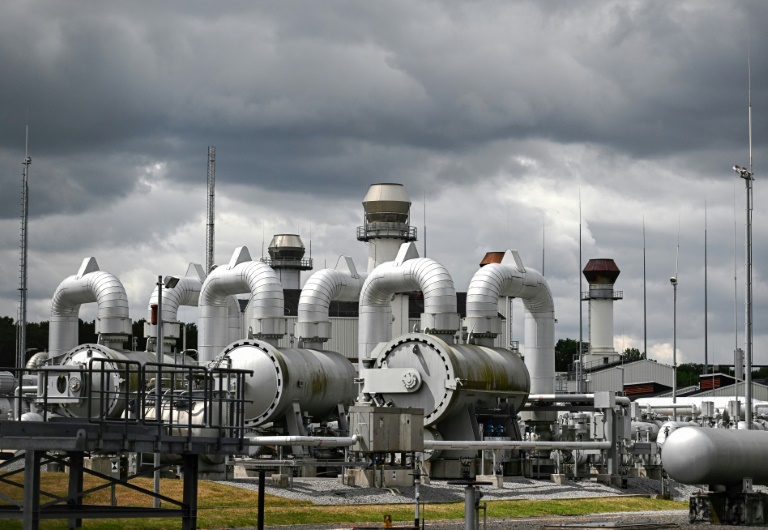
Russia, which used to be Europe’s main supplier, has largely turned off the taps after being hit by EU sanctions over the war in Ukraine that, while not touching gas, crimped sales of its more lucrative oil exports.

“We are ready to discuss a cap on the price of gas that is used to generate electricity,” Von der Leyen told MEPs sitting in Strasbourg, France.

“This cap would also be a first step on the way to a structural reform and overall reform of our electricity market.”

She added, “We also have to look at gas prices beyond the electricity market”.

– Still being ‘fleshed out’ –

Her spokesman, Eric Mamer, explained the proposal was still being “fleshed out” and “related to the wholesale market of gas trading in Europe” and not directly on the price paid for imported gas.

He acknowledged however “links between the price of gas traded within Europe and the price of the gas that we buy from outside”.

Norway, which has become Europe’s main gas supplier as Russian deliveries have fallen, reiterated Wednesday its opposition to a price cap saying it would not resolve the problem of a shortage of gas.

“It would rather make the situation worse because you can expect such a solution to contribute to increased consumption and fewer deliveries,” said the non-EU nation’s energy minister Terje Aasland.

“No one can use more gas or energy than exists,” he told AFP by email.   

Brussels has been amenable to a cap on pipeline gas to hurt Russia and deprive it of cash.

But it has resisted a cap on liquified natural gas (LNG), fearing that sellers might simply divert shipments to higher-paying markets, further starving Europe of gas.

Germany, traditionally the biggest beneficiary of Russian gas, had also rebuffed the idea. But it has come under pressure from other EU members after announcing a 200-billion-euro ($199-billion) fund to protect consumers.

Von der Leyen admitted a price cap “entails drawbacks in terms of security of supply of gas”.

In a letter to EU leaders for them to consider at a Prague summit on Friday, she said her “roadmap” included negotiating a “corridor” for gas supplies from trusted partners such as Norway and the United States.

She stressed also, in apparent allusion to the criticism of Germany’s go-it-alone approach, that, “to avoid serious fragmentation (in the EU), we need a united and common European response” to avoid “distortions of the single market”

While gas storage ahead of winter has hit 90 percent — exceeding targets — there remained “a heavy burden on people and our economy”.

She said her commission would present its outline for a structural reform of the EU’s electricity market by the end of the year, incorporating the ambition of “a more decarbonised future”.

Amid Ukraine war, US flys Russian cosmonaut to ISS

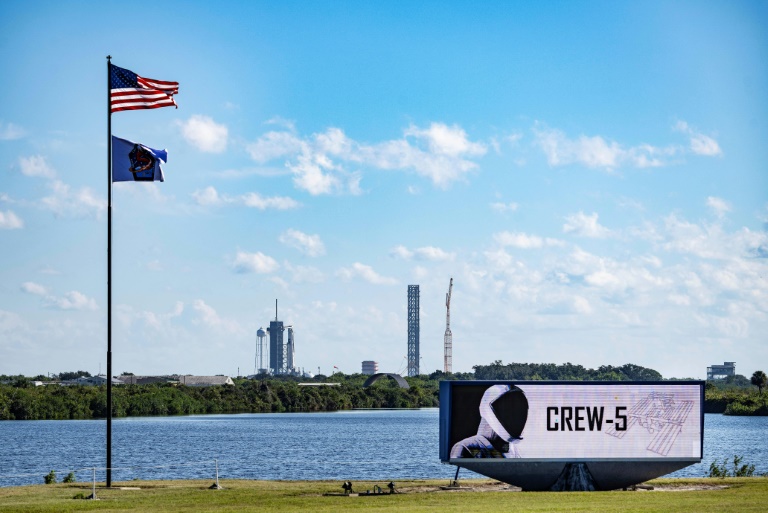
A SpaceX spaceship blasted off from Florida Wednesday, headed for the International Space Station and carrying a Russian crewmate, in a voyage that carries symbolic significance amid the Ukraine war.

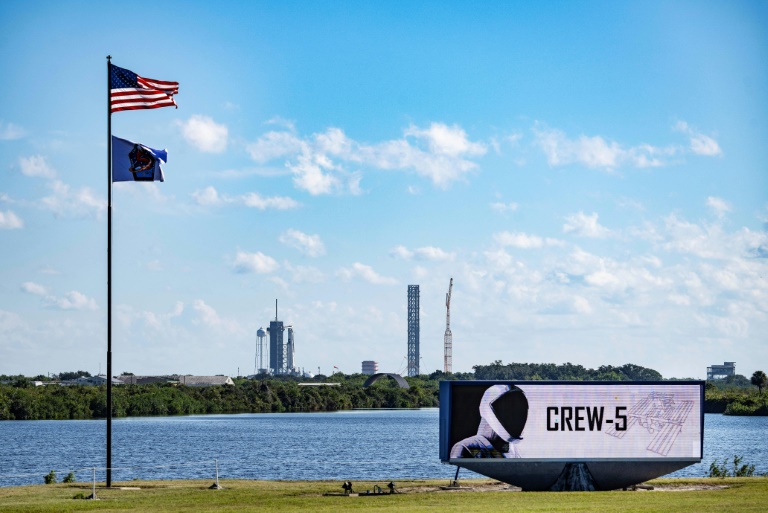
Anna Kikina, the only female cosmonaut in service, is part of the Crew-5 mission, which also includes one Japanese and two American astronauts.

“Let’s do this,” said Crew-5 mission commander Nicole Mann, the first Native American in space, shortly before liftoff from the Kennedy Space Center in Florida at noon.

Two weeks ago, an American astronaut took off on a Russian Soyuz rocket for the orbital platform.

The long-planned astronaut exchange program has been maintained despite soaring tensions between the United States and Russia since Moscow’s invasion of Ukraine in February.

Ensuring the operation of the ISS has become one of the few remaining areas of cooperation between the United States and Russia.

“When you each are flying other’s crew members, you know that you have a huge responsibility that you’re promising to the other country,” NASA associate administrator Kathy Lueders told reporters in a recent press conference.

“At a working level, we really appreciated the constancy in the relationship, even during some really, really tough times geopolitically.”

– Fifth female cosmonaut, first Native American – 

Kikina, 38 and an engineer by training, will become the fifth Russian female professional cosmonaut to go into space.

“I hope in the near future we have more women in the cosmonaut corps,” the Novosibirsk native told AFP in August.

The Soviet Union put the first woman in space, Valentina Tereshkova, in 1963, nearly 20 years before the first American woman Sally Ride. Since then, the United States has flown dozens more women.

It is also the first spaceflight for American astronauts Mann and Josh Cassada, but the fifth for Japan’s Koichi Wakata.

Mann is the first indigenous woman to go to space with NASA. According to her NASA biography she is registered with the Wailacki of the Round Valley Indian Tribes.

She holds a Master’s degree in mechanical engineering from Stanford, served as a test pilot in the F/A-18 Hornet and Super Hornet, and flew 47 combat missions in Iraq and Afghanistan.

– ISS future unclear – 

Kikina will be the first Russian to fly with Elon Musk’s SpaceX which, along with Boeing, has a “taxi service” contract with NASA.

Musk himself waded into the conflict by proposing on Twitter a peace deal that involved re-running, under UN supervision, annexation referendums in Moscow-occupied regions of Ukraine and acknowledging Russian sovereignty over the Crimean peninsula. 

The post enraged Ukrainians, including the country’s envoy to Germany, who responded with an expletive. 

Tensions between Moscow and Washington have increased considerably in the space field after the announcement of American sanctions against the Russian aerospace industry, in response to the invasion of Ukraine.

Russia thus announced this summer that it wanted to leave the ISS “after 2024” in favor of creating its own station, albeit without setting a precise date.

The director of manned flights at Roscosmos, Sergei Krikaliov, declared Monday he hoped the Russian government agrees to extend participation in the ISS after 2024.

The United States, for its part, wants to continue operating until at least 2030, then transition to commercially run stations.

As things stand, the ISS cannot function without joint cooperation, as the US side is responsible for power and life support and the Russian side for propulsion and maintaining orbit.

Amid Ukraine war, US flys Russian cosmonaut to ISS

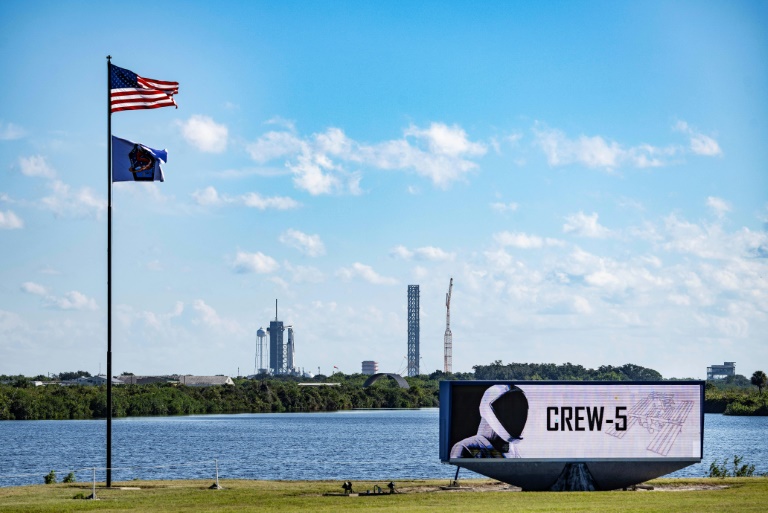
A SpaceX spaceship blasted off from Florida Wednesday, headed for the International Space Station and carrying a Russian crewmate, in a voyage that carries symbolic significance amid the Ukraine war.

Anna Kikina, the only female cosmonaut in service, is part of the Crew-5 mission, which also includes one Japanese and two American astronauts.

“Let’s do this,” said Crew-5 mission commander Nicole Mann, the first Native American in space, shortly before liftoff from the Kennedy Space Center in Florida at noon.

Two weeks ago, an American astronaut took off on a Russian Soyuz rocket for the orbital platform.

The long-planned astronaut exchange program has been maintained despite soaring tensions between the United States and Russia since Moscow’s invasion of Ukraine in February.

Ensuring the operation of the ISS has become one of the few remaining areas of cooperation between the United States and Russia.

“When you each are flying other’s crew members, you know that you have a huge responsibility that you’re promising to the other country,” NASA associate administrator Kathy Lueders told reporters in a recent press conference.

“At a working level, we really appreciated the constancy in the relationship, even during some really, really tough times geopolitically.”

– Fifth female cosmonaut, first Native American – 

Kikina, 38 and an engineer by training, will become the fifth Russian female professional cosmonaut to go into space.

“I hope in the near future we have more women in the cosmonaut corps,” the Novosibirsk native told AFP in August.

The Soviet Union put the first woman in space, Valentina Tereshkova, in 1963, nearly 20 years before the first American woman Sally Ride. Since then, the United States has flown dozens more women.

It is also the first spaceflight for American astronauts Mann and Josh Cassada, but the fifth for Japan’s Koichi Wakata.

Mann is the first indigenous woman to go to space with NASA. According to her NASA biography she is registered with the Wailacki of the Round Valley Indian Tribes.

She holds a Master’s degree in mechanical engineering from Stanford, served as a test pilot in the F/A-18 Hornet and Super Hornet, and flew 47 combat missions in Iraq and Afghanistan.

– ISS future unclear – 

Kikina will be the first Russian to fly with Elon Musk’s SpaceX which, along with Boeing, has a “taxi service” contract with NASA.

Musk himself waded into the conflict by proposing on Twitter a peace deal that involved re-running, under UN supervision, annexation referendums in Moscow-occupied regions of Ukraine and acknowledging Russian sovereignty over the Crimean peninsula. 

The post enraged Ukrainians, including the country’s envoy to Germany, who responded with an expletive. 

Tensions between Moscow and Washington have increased considerably in the space field after the announcement of American sanctions against the Russian aerospace industry, in response to the invasion of Ukraine.

Russia thus announced this summer that it wanted to leave the ISS “after 2024” in favor of creating its own station, albeit without setting a precise date.

The director of manned flights at Roscosmos, Sergei Krikaliov, declared Monday he hoped the Russian government agrees to extend participation in the ISS after 2024.

The United States, for its part, wants to continue operating until at least 2030, then transition to commercially run stations.

As things stand, the ISS cannot function without joint cooperation, as the US side is responsible for power and life support and the Russian side for propulsion and maintaining orbit.

Amid Ukraine war, US flys Russian cosmonaut to ISS

A SpaceX spaceship blasted off from Florida Wednesday, headed for the International Space Station and carrying a Russian crewmate, in a voyage that carries symbolic significance amid the Ukraine war.

Anna Kikina, the only female cosmonaut in service, is part of the Crew-5 mission, which also includes one Japanese and two American astronauts.

“Let’s do this,” said Crew-5 mission commander Nicole Mann, the first Native American in space, shortly before liftoff from the Kennedy Space Center in Florida at noon.

Two weeks ago, an American astronaut took off on a Russian Soyuz rocket for the orbital platform.

The long-planned astronaut exchange program has been maintained despite soaring tensions between the United States and Russia since Moscow’s invasion of Ukraine in February.

Ensuring the operation of the ISS has become one of the few remaining areas of cooperation between the United States and Russia.

“When you each are flying other’s crew members, you know that you have a huge responsibility that you’re promising to the other country,” NASA associate administrator Kathy Lueders told reporters in a recent press conference.

“At a working level, we really appreciated the constancy in the relationship, even during some really, really tough times geopolitically.”

– Fifth female cosmonaut, first Native American – 

Kikina, 38 and an engineer by training, will become the fifth Russian female professional cosmonaut to go into space.

“I hope in the near future we have more women in the cosmonaut corps,” the Novosibirsk native told AFP in August.

The Soviet Union put the first woman in space, Valentina Tereshkova, in 1963, nearly 20 years before the first American woman Sally Ride. Since then, the United States has flown dozens more women.

It is also the first spaceflight for American astronauts Mann and Josh Cassada, but the fifth for Japan’s Koichi Wakata.

Mann is the first indigenous woman to go to space with NASA. According to her NASA biography she is registered with the Wailacki of the Round Valley Indian Tribes.

She holds a Master’s degree in mechanical engineering from Stanford, served as a test pilot in the F/A-18 Hornet and Super Hornet, and flew 47 combat missions in Iraq and Afghanistan.

– ISS future unclear – 

Kikina will be the first Russian to fly with Elon Musk’s SpaceX which, along with Boeing, has a “taxi service” contract with NASA.

Musk himself waded into the conflict by proposing on Twitter a peace deal that involved re-running, under UN supervision, annexation referendums in Moscow-occupied regions of Ukraine and acknowledging Russian sovereignty over the Crimean peninsula. 

The post enraged Ukrainians, including the country’s envoy to Germany, who responded with an expletive. 

Tensions between Moscow and Washington have increased considerably in the space field after the announcement of American sanctions against the Russian aerospace industry, in response to the invasion of Ukraine.

Russia thus announced this summer that it wanted to leave the ISS “after 2024” in favor of creating its own station, albeit without setting a precise date.

The director of manned flights at Roscosmos, Sergei Krikaliov, declared Monday he hoped the Russian government agrees to extend participation in the ISS after 2024.

The United States, for its part, wants to continue operating until at least 2030, then transition to commercially run stations.

As things stand, the ISS cannot function without joint cooperation, as the US side is responsible for power and life support and the Russian side for propulsion and maintaining orbit.

Close Bitnami banner
Bitnami