AFP

Ukraine pushes east, Moscow vows to win back lost ground

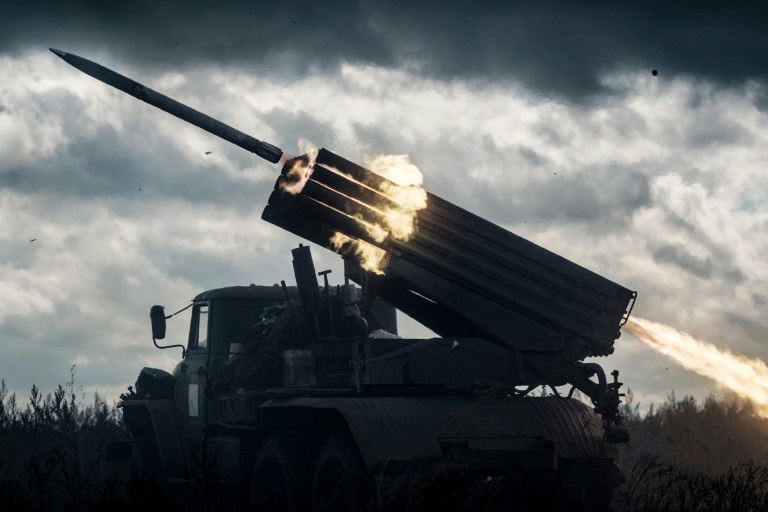
Kyiv on Wednesday claimed further victories over Russian troops in eastern Ukraine as the Kremlin vowed to recapture territory lost in a lightening Ukrainian counteroffensive.

In recent weeks, Ukraine’s forces, bolstered by Western weapons, have wrested Russian troops out of a string of towns and villages in the east and in the south.

Kyiv this week claimed gains in the southern Kherson region and control of almost the entire eastern Kharkiv region, paving the way for its forces to enter the separatist stronghold of Lugansk.

“The de-occupation of the Lugansk region has already officially started,” regional governor Sergiy Gaiday said in a video posted on social media, dressed in camouflage and adding that several settlements had been liberated.

On Wednesday, Russian President Vladimir Putin signed into legislation his annexation of four Ukrainian territories — including Lugansk — as the EU agreed a new round of sanctions against Moscow in response.

Kremlin spokesman Dmitry Peskov said Moscow would take back land it lost to Kyiv within the annexed regions, vowing they would be “Russian forever and will not be returned.” 

Putin last Friday signed agreements with the Moscow-installed leaders of the four regions to become subjects of the Russian Federation, despite condemnation from Kyiv and the West.

The four territories — Donetsk, Kherson, Lugansk and Zaporizhzhia — create a crucial land corridor between Russia and the Crimean Peninsula, which was annexed by Moscow in 2014.

Together, the five regions make up around 20 percent of Ukraine.

– ‘Strike back’ –

The Kremlin annexed the territories after hastily conducting referendums, denounced as void by Kyiv and its Western allies, but has yet to confirm what areas exactly of those regions are being annexed.

Russian forces do not have full control over Kherson or Zaporizhzhia and recently lost control of several settlements in Donetsk.

“The way we are regrouping (our forces) along the front means that we can gather strength and strike back,” Kirill Stremousov, the Moscow-appointed deputy head of Kherson region, told the RIA Novosti news agency.

Ukraine’s forces “won’t enter Kherson. Its impossible,” he said referring to the region’s eponymous main city.

On Tuesday, Ukrainian President Volodymyr Zelensky said his forces were making “rapid and powerful” gains and had retaken “dozens” of villages in the east and south.

The latest battlefield maps from Moscow showed that Russian troops had left many areas in Kherson, including along the west bank of the Dnipro River.

In Kharkiv, the maps indicated that Russian forces had almost entirely abandoned the east bank of the Oskil River, potentially giving the Ukrainians space to shell key Russian troop transportation and supply corridors.

While Russian authorities remain largely silent about the extent of the setbacks, war correspondents of pro-Kremlin media admitted that troops were in trouble. 

“There won’t be any good news in the near future. Not from the Kherson front nor from Lugansk,” newspaper journalist Alexander Kots wrote on his Telegram channel with over 640,000 followers.

– ‘Chase them’ –

Near Lyman, a strategic transport hub in Donetsk that Kyiv recaptured over the weekend, a Ukrainian paratrooper told AFP that forces were “exhausted”. 

“We’ll rest for a bit and then we will go further,” said the young, bearded soldier. “We will chase them,” he added.

On Tuesday, US President Joe Biden told Zelensky that another $625 million in military assistance was on the way.

The new batch includes more HIMARS multiple rocket launchers, which have allowed Ukraine to strike Russian command depots and arms stockpiles far behind the front line.

From the EU, there were no details about the nature of fresh sanctions agreed against Russia.

The latest package — the eighth since Russia’s invasion in February — is now going through a final approval procedure which, if no objections emerge, will be published and come into effect on Thursday, the Czech Republic’s EU ambassador said on Twitter.

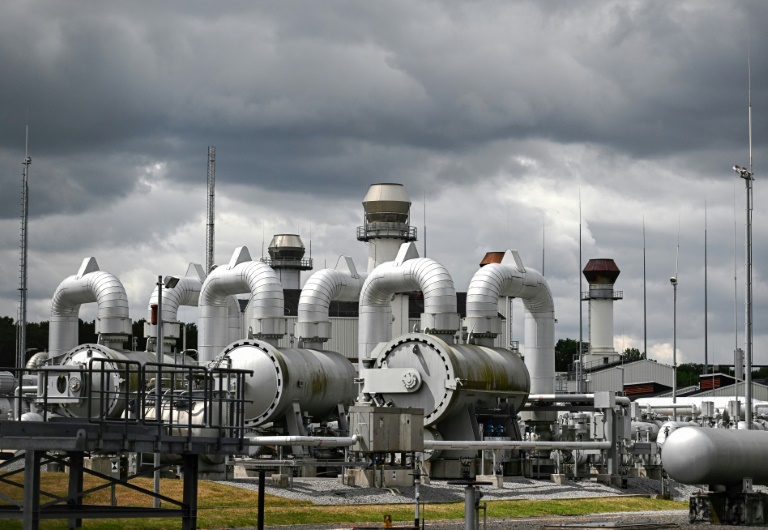
Otherwise, Russia insisted that it should be part of an international probe into leaks in the Nord Stream pipeline that carries gas from Russia to Europe. Sweden has blocked off the area pending an investigation.

Moscow has accused the West of being behind blasts that lead to four leaks on the Baltic Sea pipelines.

Both Moscow and Washington have denied involvement.
US duo and Dane win Nobel for 'click chemistry'

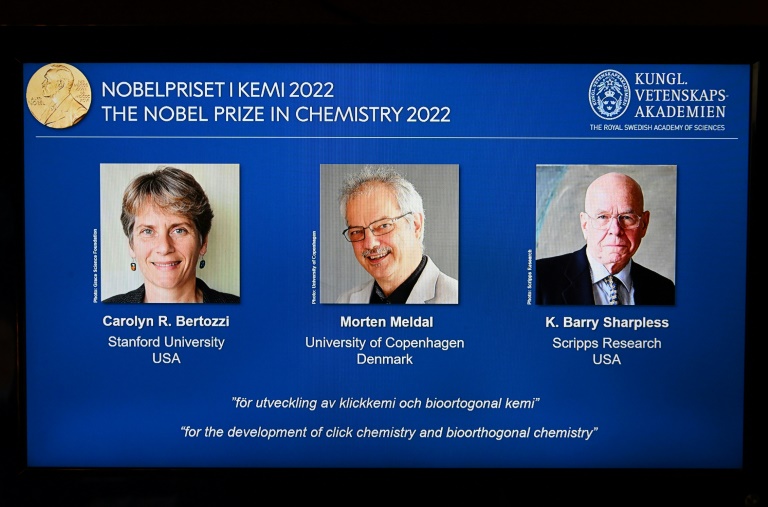
A trio of chemists from the United States and Denmark who laid the foundation for a more functional form of chemistry where molecules are snapped together on Wednesday won the Nobel Chemistry Prize.

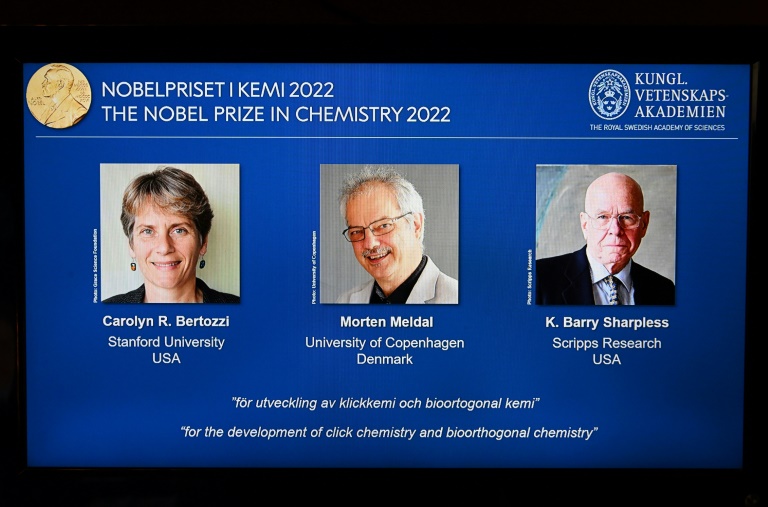
Americans Carolyn Bertozzi and Barry Sharpless, together with Denmark’s Morten Meldal, were honoured “for the development of click chemistry and bioorthogonal chemistry”, the jury said.

Bertozzi is the only woman among the seven Nobel laureates honoured so far this year, with women vastly under-represented in the history of the prizes, especially in the science disciplines.

The chemist — who as an undergraduate at Harvard played keyboards in a band called Bored of Education with future Rage Against the Machine guitarist Tom Morello — is only the eighth woman to win a Nobel Chemistry Prize, out of 189 recipients.

The award marks the second Nobel for 81-year-old Sharpless, who won the chemistry Nobel in 2001. 

Only four other individuals have achieved the feat of winning two Nobel Prizes, including Polish-born Frenchwoman Marie Curie, who won the chemistry prize in 1911 after first winning the physics prize in 1903.

She was followed by American Linus Pauling who won for chemistry in 1954 and peace in 1962. American John Bardeen won the physics prize in 1956 and 1972, and Britain’s Frederick Sanger won the chemistry prize in 1958 and 1980.

– To make drugs, map DNA –

Click chemistry “is an elegant and efficient chemical reaction that is now in widespread use,” the jury said in a statement.

“Among many other uses, it is utilised in the development of pharmaceuticals, for mapping DNA and creating materials that are more fit for purpose,” it added.

Sharpless, a professor at Scripps Research in California, “started the ball rolling” and “coined the concept of click chemistry” around 2000, the jury said.

Afterwards, Sharpless and Meldal, a professor at the University of Copenhagen, “independently of each other, presented what is now the crown jewel of click chemistry: the copper catalysed azide-alkyne cycloaddition”.

The process allows chemists to “snap” molecules together like Lego bricks “with the help of some copper ions”, which among other things allow for the production of new materials.

“If a manufacturer adds a clickable azide to a plastic or fibre, changing the material at a later stage is straightforward,” the Nobel committee explained.

It is possible to click in substances that conduct electricity, capture sunlight, are antibacterial, protect from ultraviolet radiation or have other desirable properties, it said.

While there is widespread application of his research, Meldal said he was “very surprised and very proud” to receive the honour.

“There are so many good discoveries and developments in the world, it’s incredible to be in this situation,” Meldal told Swedish public radio.

– ‘A new level’ –

Bertozzi, 55, a professor at Stanford in the United States, was highlighted for then taking “click chemistry to a new level”.

“She developed click reactions that work inside living organisms. Her bioorthogonal reactions take place without disrupting the normal chemistry of the cell,” the jury said.

Her research is now being used to investigate how these reactions can be used to diagnose and treat cancer.

“I’m absolutely stunned, I’m sitting here and I can hardly breathe,” Bertozzi told reporters via telephone, minutes after the announcement.

Silvia Diez-Gonzaleza, a chemist who works on click chemistry at Imperial College, London, welcomed the win.

“Thank goodness” that the days of women not being allowed in chemistry labs are over, she told AFP, though “there is a lot of bias still out there”.

“I want to believe that it’s just a matter of time that as women and non-white people get more opportunities to achieve their potential, then eventually the recognition they get will be spread more widely.”

The Royal Swedish Academy of Sciences, which awards the Nobels in the science disciplines, has refused to introduce quotas despite the dearth of women laureates.

Goran Hansson, then-secretary general of the academy, told AFP last year after all of the science nods went to men, that it wanted every laureate to be accepted “because they made the most important discovery, and not because of gender or ethnicity”. 

The lack of women laureates “reflects the unfair conditions in society, particularly in years past but still existing”, he acknowledged.

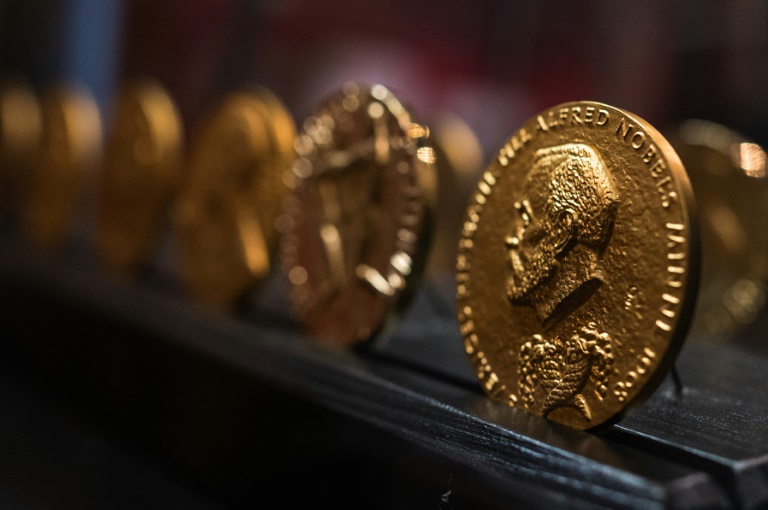
This year’s laureates will share the Nobel award sum of 10 million Swedish kronor (more than $910,000), and will receive the prize from King Carl XVI Gustaf at a ceremony in Stockholm on December 10, the anniversary of the 1896 death of scientist Alfred Nobel who created the prizes in his last will and testament.

US duo and Dane win Nobel for 'click chemistry'

A trio of chemists from the United States and Denmark who laid the foundation for a more functional form of chemistry where molecules are snapped together on Wednesday won the Nobel Chemistry Prize.

Americans Carolyn Bertozzi and Barry Sharpless, together with Denmark’s Morten Meldal, were honoured “for the development of click chemistry and bioorthogonal chemistry”, the jury said.

Bertozzi is the only woman among the seven Nobel laureates honoured so far this year, with women vastly under-represented in the history of the prizes, especially in the science disciplines.

The chemist — who as an undergraduate at Harvard played keyboards in a band called Bored of Education with future Rage Against the Machine guitarist Tom Morello — is only the eighth woman to win a Nobel Chemistry Prize, out of 189 recipients.

The award marks the second Nobel for 81-year-old Sharpless, who won the chemistry Nobel in 2001. 

Only four other individuals have achieved the feat of winning two Nobel Prizes, including Polish-born Frenchwoman Marie Curie, who won the chemistry prize in 1911 after first winning the physics prize in 1903.

She was followed by American Linus Pauling who won for chemistry in 1954 and peace in 1962. American John Bardeen won the physics prize in 1956 and 1972, and Britain’s Frederick Sanger won the chemistry prize in 1958 and 1980.

– To make drugs, map DNA –

Click chemistry “is an elegant and efficient chemical reaction that is now in widespread use,” the jury said in a statement.

“Among many other uses, it is utilised in the development of pharmaceuticals, for mapping DNA and creating materials that are more fit for purpose,” it added.

Sharpless, a professor at Scripps Research in California, “started the ball rolling” and “coined the concept of click chemistry” around 2000, the jury said.

Afterwards, Sharpless and Meldal, a professor at the University of Copenhagen, “independently of each other, presented what is now the crown jewel of click chemistry: the copper catalysed azide-alkyne cycloaddition”.

The process allows chemists to “snap” molecules together like Lego bricks “with the help of some copper ions”, which among other things allow for the production of new materials.

“If a manufacturer adds a clickable azide to a plastic or fibre, changing the material at a later stage is straightforward,” the Nobel committee explained.

It is possible to click in substances that conduct electricity, capture sunlight, are antibacterial, protect from ultraviolet radiation or have other desirable properties, it said.

While there is widespread application of his research, Meldal said he was “very surprised and very proud” to receive the honour.

“There are so many good discoveries and developments in the world, it’s incredible to be in this situation,” Meldal told Swedish public radio.

– ‘A new level’ –

Bertozzi, 55, a professor at Stanford in the United States, was highlighted for then taking “click chemistry to a new level”.

“She developed click reactions that work inside living organisms. Her bioorthogonal reactions take place without disrupting the normal chemistry of the cell,” the jury said.

Her research is now being used to investigate how these reactions can be used to diagnose and treat cancer.

“I’m absolutely stunned, I’m sitting here and I can hardly breathe,” Bertozzi told reporters via telephone, minutes after the announcement.

Silvia Diez-Gonzaleza, a chemist who works on click chemistry at Imperial College, London, welcomed the win.

“Thank goodness” that the days of women not being allowed in chemistry labs are over, she told AFP, though “there is a lot of bias still out there”.

“I want to believe that it’s just a matter of time that as women and non-white people get more opportunities to achieve their potential, then eventually the recognition they get will be spread more widely.”

The Royal Swedish Academy of Sciences, which awards the Nobels in the science disciplines, has refused to introduce quotas despite the dearth of women laureates.

Goran Hansson, then-secretary general of the academy, told AFP last year after all of the science nods went to men, that it wanted every laureate to be accepted “because they made the most important discovery, and not because of gender or ethnicity”. 

The lack of women laureates “reflects the unfair conditions in society, particularly in years past but still existing”, he acknowledged.

This year’s laureates will share the Nobel award sum of 10 million Swedish kronor (more than $910,000), and will receive the prize from King Carl XVI Gustaf at a ceremony in Stockholm on December 10, the anniversary of the 1896 death of scientist Alfred Nobel who created the prizes in his last will and testament.

The five scientists who won two Nobel prizes

American Barry Sharpless on Wednesday became only the fifth person ever to win a second Nobel Prize, two decades after being awarded his first.

AFP looks at the four other people who received the illustrious award twice for their services to mankind:

– Marie Curie (1903, 1911) –

The mother of modern physics was the first woman ever to win not one, but two, Nobel prizes for her seminal discoveries in physics and chemistry.

Born Maria Sklodowska in Poland, Curie moved to Paris as a student and is famed for having isolated the elements of polonium and radium as well as for promoting radium to alleviate suffering.

In 1903, she was awarded the Nobel Prize in Physics, along with her husband Pierre Curie and French physicist Antoine Henri Becquerel for their research into spontaneous radiation.

A second Nobel followed in 1911, this time for chemistry, when Curie was honoured alone for her work on radioactivity.

– Linus Pauling (1954, 1962) –

Linus Pauling, the US chemist who posited that huge doses of vitamin C can ward off the common cold, is the only person to have been awarded two unshared Nobel Prizes – the 1954 Nobel Prize in Chemistry and the 1962 Nobel Peace Prize.

Pauling won his first Nobel in 1954 for his work in molecular chemistry, particularly in the field of proteins and anti-bodies.

His second award came eight years later in 1962 was in recognition for his campaigning against nuclear testing.

– John Bardeen (1956, 1972) –

US engineer John Bardeen shared the Nobel Prize in Physics twice.

In 1956, he and two colleagues at Bell Labs, William Shockley and Walter Brattain, won for inventing the transistor, which revolutionised the field of electronics by leading to smaller and cheaper radios, calculators and computers, amongst other objects.

In 1972, he picked up his second Nobel for developing the BSC-theory of superconductivity, with fellow American physicists Leon Cooper and John Robert Schrieffer.

– Frederick Sanger (1958, 1980) –

British biochemist Frederick Sanger, dubbed the father of genomics, was the only person to win the chemistry Nobel twice.

Sanger was the sole winner of the prize in 1958 for his work on the structure of proteins, notably insulin, and then shared it with two others, Paul Berg and Walter Gilbert of the United States, in 1980 for pioneering developments in DNA sequencing that are still being used today.

His work allowed long stretches of DNA to be rapidly and accurately sequenced and was central to the Human Genome Project’s mammoth achievement in mapping more than three billion units of human DNA.

– ICRC and UNHCR –

Two organisations have won multiple Nobel Peace Prizes.

The International Committee of the Red Cross won in 1917, 1944 and 1963 and the Office of the UN High Commissioner for Refugees won in 1954 and 1981.

Oil prices rise awaiting OPEC output cut

Oil prices rose Wednesday as OPEC and Russia-led allies prepare to announce a big cut in output.

Stocks markets diverged following Tuesday’s surge on hopes the US Federal Reserve could temper its rate hike campaign.

The pound continued to suffer against the dollar over fears for Britain’s recession-threatened economy, losing around one percent. 

The main focus has been the oil market. “There will be a lot of attention on just how big this (oil output) cut is,” said AJ Bell investment director Russ Mould.

“Speculation they could be double the volume previously flagged… has been behind the recent surge in crude.”

Major oil producers led by Saudi Arabia and Russia were on Wednesday expected to announce a large cut in output to prop up prices despite Western concerns over energy-fuelled inflation.

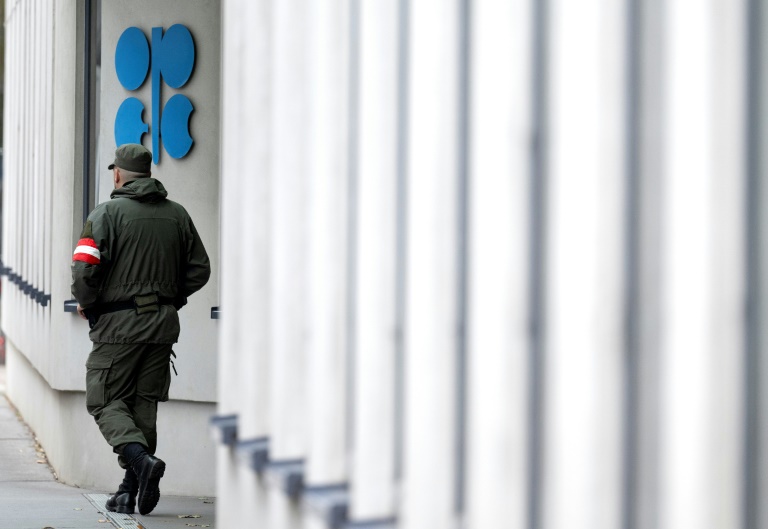
The 13-nation OPEC cartel and its 10 Russian-led allies are reportedly considering a reduction of up to two million barrels per day at a meeting in Vienna — the biggest cut since 2020.

In a reminder of the global economic turmoil, the World Trade Organization (WTO) dramatically lowered its global trade forecast for 2023.

“Today the global economy faces multi-prong crises. Monetary tightening is weighing on growth across much of the world,” WTO Director-General Ngozi Okonjo-Iweala told reporters in Geneva.

Presenting a revision of their annual trade forecast, WTO economists said they still anticipated global economic growth rising 2.8 percent this year.

Hong Kong stocks soared Wednesday following a public holiday, catching up with the previous day’s global rally.

In corporate news, Elon Musk has offered to push through with his buyout of Twitter at the original agreed price.

The world’s richest man said in a filing with the Securities and Exchange Commission that he sent Twitter a letter vowing to honour the contract.

The latest twist in the long-running saga came ahead of the high-stakes court battle launched by Twitter in an attempt to hold the Tesla chief to the $44-billion deal he signed in April.

– Key figures around 1100 GMT –

Brent North Sea crude: UP 0.9 percent at $92.57 per barrel

West Texas Intermediate: UP 0.7 percent at $87.10 per barrel

London – FTSE 100: DOWN 1.0 percent at 7,016.57 points

Frankfurt – DAX: DOWN 0.8 percent at 12,570.82

Paris – CAC 40: DOWN 0.7 percent at 5,996.54

EURO STOXX 50: DOWN 0.8 percent at 3,456.56

Tokyo – Nikkei 225: UP 0.5 percent at 27,120.53 (close)

Hong Kong – Hang Seng Index: UP 5.9 percent at 18,087.97 (close)

Shanghai – Composite: Closed for a holiday

New York – Dow: UP 2.8 percent at 30,316.32 (close)

Pound/dollar: DOWN at $1.1372 from $1.1477 on Tuesday

Euro/dollar: DOWN at $0.9926 from $0.9992

Euro/pound: UP at 87.27 pence from 87.03 pence

Dollar/yen: UP at 144.34 yen from 144.09 yen

burs-bcp/rfj/lcm

Oil prices rise awaiting OPEC output cut

Oil prices rose Wednesday as OPEC and Russia-led allies prepare to announce a big cut in output.

Stocks markets diverged following Tuesday’s surge on hopes the US Federal Reserve could temper its rate hike campaign.

The pound continued to suffer against the dollar over fears for Britain’s recession-threatened economy, losing around one percent. 

The main focus has been the oil market. “There will be a lot of attention on just how big this (oil output) cut is,” said AJ Bell investment director Russ Mould.

“Speculation they could be double the volume previously flagged… has been behind the recent surge in crude.”

Major oil producers led by Saudi Arabia and Russia were on Wednesday expected to announce a large cut in output to prop up prices despite Western concerns over energy-fuelled inflation.

The 13-nation OPEC cartel and its 10 Russian-led allies are reportedly considering a reduction of up to two million barrels per day at a meeting in Vienna — the biggest cut since 2020.

In a reminder of the global economic turmoil, the World Trade Organization (WTO) dramatically lowered its global trade forecast for 2023.

“Today the global economy faces multi-prong crises. Monetary tightening is weighing on growth across much of the world,” WTO Director-General Ngozi Okonjo-Iweala told reporters in Geneva.

Presenting a revision of their annual trade forecast, WTO economists said they still anticipated global economic growth rising 2.8 percent this year.

Hong Kong stocks soared Wednesday following a public holiday, catching up with the previous day’s global rally.

In corporate news, Elon Musk has offered to push through with his buyout of Twitter at the original agreed price.

The world’s richest man said in a filing with the Securities and Exchange Commission that he sent Twitter a letter vowing to honour the contract.

The latest twist in the long-running saga came ahead of the high-stakes court battle launched by Twitter in an attempt to hold the Tesla chief to the $44-billion deal he signed in April.

– Key figures around 1100 GMT –

Brent North Sea crude: UP 0.9 percent at $92.57 per barrel

West Texas Intermediate: UP 0.7 percent at $87.10 per barrel

London – FTSE 100: DOWN 1.0 percent at 7,016.57 points

Frankfurt – DAX: DOWN 0.8 percent at 12,570.82

Paris – CAC 40: DOWN 0.7 percent at 5,996.54

EURO STOXX 50: DOWN 0.8 percent at 3,456.56

Tokyo – Nikkei 225: UP 0.5 percent at 27,120.53 (close)

Hong Kong – Hang Seng Index: UP 5.9 percent at 18,087.97 (close)

Shanghai – Composite: Closed for a holiday

New York – Dow: UP 2.8 percent at 30,316.32 (close)

Pound/dollar: DOWN at $1.1372 from $1.1477 on Tuesday

Euro/dollar: DOWN at $0.9926 from $0.9992

Euro/pound: UP at 87.27 pence from 87.03 pence

Dollar/yen: UP at 144.34 yen from 144.09 yen

burs-bcp/rfj/lcm

WTO slashes 2023 global trade forecast as recession looms

The World Trade Organization on Wednesday dramatically lowered its global trade forecast for 2023, as Russia’s war in Ukraine and other shocks take their toll on the world economy.

Presenting a revision of their annual trade forecast, WTO economists said they expected the volume of global merchandise trade to grow 3.5 percent this year, which is slightly higher than their expectations in April.

But they forecast it would grow by only one percent in 2023 — dramatically down from their expectations of 3.4-percent growth six months ago.

“The picture for 2023 has darkened considerably,” WTO Director-General Ngozi Okonjo-Iweala told reporters in Geneva.

“Today the global economy faces multi-prong crises. Monetary tightening is weighing on growth across much of the world.” 

As for the global economy as a whole, WTO economists stuck with their April forecast of 2.8-percent GDP growth this year, but said growth in 2023 was now expected to be just 2.3 percent — down a full percentage point from the previous forecast.

By way of comparison, the Organisation for Economic Co-operation and Development has maintained its 2022 forecast at three percent, and expects 2.2 percent growth next year.

The International Monetary Fund meanwhile forecasts growth at 3.2 percent this year and 2.9 percent in 2023.

– ‘Overly optimistic’ –

The WTO pointed out that its April forecasts were presented only weeks into the start of Russia’s full-scale war in Ukraine, making them very uncertain.

The estimates for 2023 “now appear overly optimistic, as energy prices have skyrocketed, inflation has become more broad-based, and the war shows no sign of letting up,” it said.

The WTO said surging energy prices in Europe, stemming from the war in Ukraine, were expected to squeeze household spending and raise manufacturing costs on the continent.

Meanwhile monetary policy tightening in the United States was hitting the housing, motor vehicle and fixed investment sectors, and China was still grappling with Covid-19 outbreaks and production disruptions.

Furthermore, the growing import bills for fuel, food and fertiliser risked leading to more food insecurity and debt distress in developing countries, the WTO said.

If its new forecasts pan out, world trade will slow considerably next year, but will still continue to grow.

But the global trade body stressed that it still remained very unclear how things would pan out.

“There’s a great deal of uncertainty in the estimates going forward, simply because of the nature of the conflict” in Ukraine, WTO senior economist Coleman Nee told reporters. 

– ‘Huge impact’ –

If the war “worsens rather than gets better, then that’s going to have a huge impact,” Okonjo-Iweala agreed, adding though that if the situation in Ukraine improves, that would have a “positive impact” on global trade growth.

Such uncertainty leaves WTO economists with a broad spectrum of possibilities for how global trade will evolve in 2023, ranging from a decline of 2.8 percent to a hike of as much as 4.6 percent. 

Last week, Okonjo-Iweala warned that Russia’s war in Ukraine, the climate crisis, food price and energy shocks plus the aftermath of the Covid-19 pandemic were creating the conditions for a world recession.

“Now we have to weather what looks like an oncoming recession,” she told the opening of the WTO’s annual public forum in Geneva.

On Wednesday, she acknowledged that monetary “policymakers are confronted with unenviable choices as they try to find an optimal balance among tackling inflation, maintaining full employment, and advancing important policy goals such as transitioning to clean energy.”

EU signals shifts towards gas price cap

The EU is “ready to discuss” a price cap on gas within the bloc to bring down soaring energy costs, European Commission chief Ursula von der Leyen said Wednesday.

Her comment, to the European Parliament, signalled a shift in tone after powerhouse EU country Germany had expressed worries that a broad price cap might divert supplies for Europe.

It comes after 15 EU countries — more than half the bloc — made a joint call for the EU to impose a price ceiling on how much it would pay for gas piped or shipped in, as the northern hemisphere winter sets in.

Europe is facing an energy crunch as the price of electricity generation skyrockets because of a massive surge in the price of gas.

Russia, which used to be Europe’s main gas supplier, has turned off the taps after being hit by EU sanctions over the war in Ukraine that, while not touching gas, crimped sales of its more lucrative oil exports.

“We are ready to discuss a cap on the price of gas that is used to generate electricity,” Von der Leyen told MEPs sitting in Strasbourg, France.

“This cap would also be a first step on the way to a structural reform and overall reform of our electricity market.”

She added that “we also have to look at gas prices beyond the electricity market”.

– Still being ‘fleshed out’ –

Her spokesman, Eric Mamer, later explained that the proposal was still being “fleshed out” and would be detailed in a letter to EU leaders ahead of a Friday summit in Prague.

But he did say that the idea was “related to the wholesale market of gas trading in Europe” and not directly on the price paid for imported gas.

He acknowledged however that “there are links between the price of gas traded within Europe and the price of the gas that we buy from outside”.

Brussels has been amenable to a cap on pipeline gas to hurt Russia and deprive it of cash for its Ukraine invasion.

But it has resisted a cap on liquified natural gas (LNG), fearing that sellers might simply divert to higher-paying markets, further starving Europe of gas.

Germany, traditionally the biggest beneficiary of Russian gas, had also rebuffed the idea. But it has come under pressure from other EU countries after it announced a 200-billion-euro ($199-billion) fund to shield its own consumers from soaring prices.

Von der Leyen admitted a price cap “entails drawbacks in terms of security of supply of gas”.

But she argued that “the situation has critically evolved” and now, “more member states are open for it and we are better prepared”.

She noted that Europe’s stockpile of gas for winter had reached 90 percent of capacity, exceeding a target set.

She also said any price cap would be “a temporary solution” and that “exceptional times require exceptional emergency measures”.

Musk-Twitter deal: a roller-coaster saga

Elon Musk’s pursuit of Twitter was a melodrama from the beginning — a mercurial billionaire locked in a bitter fight with his favorite social media platform.

After months of recriminations and attempts to cancel his attempt to buy, Musk on Tuesday called a truce and agreed to honor his initial offer.

Here are the main ups and downs of the saga: 

– ‘Passionate believer’ –

Musk is a long-time Twitter user with more than 100 million followers, using the platform as a megaphone for his corporate and personal ambitions.

In an April 4 regulatory filing, he revealed he had splashed out nearly $2.9 billion on a 9.2 percent stake in the company.

Twitter shares soared, Musk got a seat on the board, and CEO Parag Agrawal called him “a passionate believer and intense critic of the service”, saying it was “exactly what we need”.

Both sides appeared to be getting along famously.

– ‘Poison pill’ –

But it took less than a week for things to fall apart.

Musk decided against joining the board, and Agrawal said it was “for the best”.

Musk then launched a hostile takeover bid, an April 13 filing showed, and Twitter adopted a “poison pill” defense that would allow shareholders to buy additional stock.

– Deal back on –

Then Twitter reversed course and on April 25 revealed that it would sell after all in a deal that valued the firm at $44 billion.

Musk parted with $8.4 billion in shares in Tesla, pledged up to $21 billion from his personal fortune and got some friends to stake him a few billion.

The billionaire mogul, known for his provocative messages, set out plans to allow former US president Donald Trump back on to the platform.

– See you in court –

Then it was Musk’s turn to get cold feet. He said on May 13 the deal was “temporarily on hold” while he sought details of spam and fake accounts on the platform.

After two months of very public fighting over the issue, he called off the deal and accused Twitter of making “misleading” statements.

The company quickly launched legal action to enforce the deal.

– Rapprochement –

Both sides had been gearing up for a lengthy and hugely expensive showdown at the Delaware Chancery Court.

Musk had been buoyed by whistleblower revelations that portrayed the company as cavalier with its bot counting and lax on security.

Twitter, however, believed the agreement it had with Musk was watertight.

Then, on Tuesday, Musk revealed — on Twitter, of course — that he had agreed to close the deal at the price he had initially offered.

“I think that Musk realized he was not going to win that trial,” said law professor Carl Tobias.

– The future is ‘X’ –

In his tweet on Tuesday, Musk said the acquisition would be an “accelerant” towards creating “X”, which he said would be “the everything app”.

He offered no further detail.

He had previously told Twitter staff that he envisaged a platform with one billion users, but he was hazy on issues like potential staff layoffs and free-speech limits.

Text messages revealed during the legal process showed how he briefly considered making a blockchain-based social media app.

But before the future of Twitter can even be discussed, either side could still quibble over the details of the sale.

The potential of a courtroom showdown has receded but remains a possibility.

Africa sounds caution on net zero goal ahead of COP27

Africa needs time and money to wean itself off fossil fuels in order to achieve net zero without jeopardising its future, its representatives are warning ahead of next month’s climate talks.

At energy conferences this week, Ghana, South Africa and the African Union have insisted the continent stands by net zero — the goal of an overall balance in heat-stoking greenhouse gases.

But they warned that the continent was still heavily dependent on coal, oil and gas to power its development.

“Africa is fully convinced and committed to a net zero and supportive of the climate agenda, however. where we may differ is on the timeframe,” African Union (AU) energy commissioner Amani Abou-Zeid told AFP on the sidelines of the Green Energy Africa Summit in Cape Town.

Africa’s population of 1.3 billion is set to double by 2050, and AU nations aim to make affordable and reliable energy available to everyone by 2063, she argued. 

Funding for Africa’s green transition is likely to be a flashpoint at the COP27 climate summit, running in the Egyptian resort of Sharm el-Sheikh from November 6-18.

Under the 2015 Paris Agreement, rich nations pledged $100 billion a year to help developing countries limit climate change. 

But they have so far failed to meet the promise — and prospects have been further clouded this year by the resounding economic impacts from the Covid-19 pandemic and war in Ukraine.

– ‘Not in our interest’ –

Ghana’s deputy energy minister Mohammed Amin Adam said international green energy investment in Africa was “still appalling”, accounting only for about two percent of the global total. 

At the same time, African countries also need to secure financing for oil and gas projects, as fossil fuel revenue is needed to finance climate adaptation measures, he told AFP. 

Adam pointed to data showing that most of Africa’s oil and gas producers depended greatly on export revenue derived by these fuels.

“If we give up this, how do we even finance our ability to adapt to the climate effects? We cannot. Unless we have a substitute for our revenue,” he said. 

African countries are among the most exposed to the impacts of climate change, especially worsening droughts and floods, but responsible for only around three percent of global CO2 emissions, former UN chief Ban Ki-moon said last month.

– S.African coal –

Speaking at an Africa Oil Week event in Cape Town, South African Energy Minister Gwede Mantashe said ditching coal too quickly was not in the country’s best interests, as it would damage the economy and cost thousands of jobs. 

South Africa is the continent’s main coal producer and consumer — as well as one of the world’s top 12 carbon emitters. 

Last year, the government secured pledges of $8.5 billion loans and grants from a group of rich nations to finance the transition to greener alternatives.

But the deal is hanging in the balance, amid fraught negotiations with donor countries around how the money should be spent.

“When developed economies come to us and say ‘part of the $8.5 billion is going to be spent on accelerating the exit of coal’, I feel that is not in our interest,” Mantashe said. 

At pre-COP27 talks in Kinshasa this week, the Democratic Republic of Congo fended off demands to abandon oil and gas blocks that it has put up for auction in environmentally sensitive areas.

The DRC launched bids in July for 30 blocks in the Congo Basin, sparking fears that drilling could release carbon dioxide trapped for millennia in the peaty forest floor. 

But DRC Environment Minister Eve Bazaiba, opening the talks on Monday, asked if the government should let children die rather than harvest from its fossil resources. 

“As much as we need oxygen, we also need bread,” she said.

Close Bitnami banner
Bitnami