AFP

OPEC+ expected to slash oil output

Major oil producers led by Saudi Arabia and Russia were expected Wednesday to agree on a major cut in output to prop up prices despite Western concerns over energy-fuelled inflation.

The 13-nation OPEC cartel and its 10 Russian-led allies is reportedly considering a reduction of up to two million barrels per day at a meeting in Vienna — the biggest cut since 2020.

Such a move could turbocharge crude prices, further aggravating inflation which has reached decades-high levels in many countries and is contributing to a global economic slowdown.

US President Joe Biden personally appealed to Saudi leaders in July to boost production in order to tame prices which soared following Russia’s invasion of Ukraine earlier this year. 

But crude price have fallen in recent months on concerns over dwindling demand and fears over a possible global recession.

“With consumers only just breathing a sigh of relief after being forced to pay record prices at the pump, today’s cut is not going to go down well,” said Craig Erlam, an analyst at trading platform OANDA. 

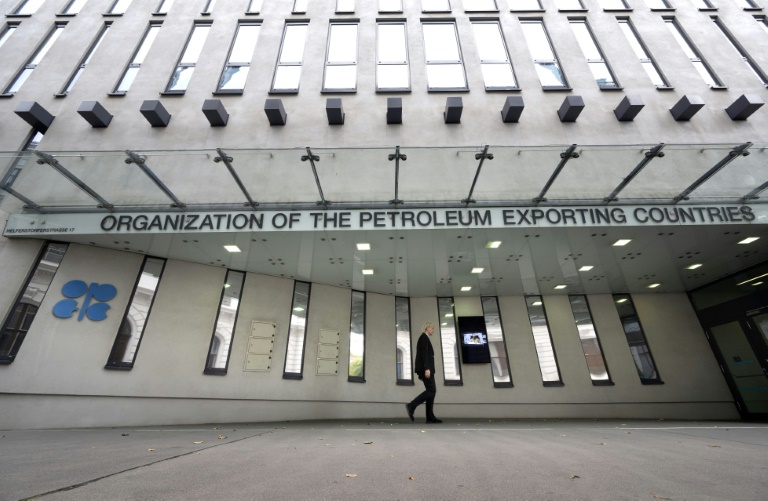
Ministers from the Saudi-led Organization of the Petroleum Exporting Countries and its partners will discuss their next move at their first in-person meeting at the group’s headquarters in Vienna since March 2020.

They were tight-lipped as they arrived for the gathering on Tuesday.

“Let’s wait… We will have to listen to the technical team,” the energy minister of the United Arab Emirates, Suhail al-Mazrouei, told reporters, adding that the group was still reviewing market data.

– Geopolitical tensions –

Collectively known as OPEC+, the alliance drastically slashed output by almost 10 million barrels per day (bpd) in April 2020 to reverse a massive drop in crude prices caused by Covid lockdowns.

OPEC+ began to raise production last year after the market improved. Output returned to pre-pandemic levels this year, but only on paper as some members have struggled to meet their quotas.

The group agreed last month on a small, symbolic cut of 100,000 bpd from October, the first in more than a year.

Bloomberg, the financial news agency, said OPEC+ officials were discussing the removal of about two million bpd out of the market from November, twice as much as earlier predictions.

Consumer countries have pushed for months for OPEC+ to open taps more widely to bring down prices — calls that the group has largely ignored.

“Knowing that Russia is willing to cut output, the move could also be perceived as another escalation of the geopolitical tensions” between Moscow and the West, said Ipek Ozkardeskaya, a Swissquote bank analyst.

The OPEC+ discussion also comes as Western nations mull imposing a price cap on Russian oil while an EU ban on most crude from Russia comes into effect in December. 

– US elections –

Biden made a controversial trip to Saudi Arabia in July in part to convince the kingdom to loosen the production taps. The trip saw Biden meet Crown Prince Mohammed bin Salman despite his promise to make Riyadh a “pariah” following the 2018 killing of journalist Jamal Khashoggi.

A major cut now would be “something that will not be well received by the White House ahead of next month’s midterm elections,” said Tama Varga, analyst at PV Energy, referring to congressional elections.

While such a cut could anger Washington, several OPEC+ nations have struggled to meet their quotas in the first place.

Prices soared close to $140 per barrel in the aftermath of Russia’s invasion of Ukraine in late February but fell as low as below $90 more recently.

After rallying earlier this week on speculation over the OPEC+ cut, the international benchmark, Brent North Sea crude, was slightly down on Wednesday, hovering above $91.

According to UBS bank, a cut of at least 500,000 bpd would be necessary to stop the price plunge.

OPEC+ expected to slash oil output

Major oil producers led by Saudi Arabia and Russia were expected Wednesday to agree on a major cut in output to prop up prices despite Western concerns over energy-fuelled inflation.

The 13-nation OPEC cartel and its 10 Russian-led allies is reportedly considering a reduction of up to two million barrels per day at a meeting in Vienna — the biggest cut since 2020.

Such a move could turbocharge crude prices, further aggravating inflation which has reached decades-high levels in many countries and is contributing to a global economic slowdown.

US President Joe Biden personally appealed to Saudi leaders in July to boost production in order to tame prices which soared following Russia’s invasion of Ukraine earlier this year. 

But crude price have fallen in recent months on concerns over dwindling demand and fears over a possible global recession.

“With consumers only just breathing a sigh of relief after being forced to pay record prices at the pump, today’s cut is not going to go down well,” said Craig Erlam, an analyst at trading platform OANDA. 

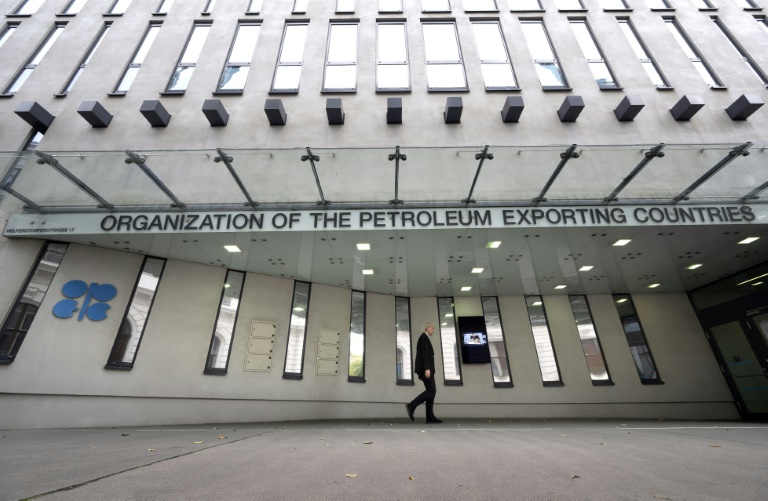
Ministers from the Saudi-led Organization of the Petroleum Exporting Countries and its partners will discuss their next move at their first in-person meeting at the group’s headquarters in Vienna since March 2020.

They were tight-lipped as they arrived for the gathering on Tuesday.

“Let’s wait… We will have to listen to the technical team,” the energy minister of the United Arab Emirates, Suhail al-Mazrouei, told reporters, adding that the group was still reviewing market data.

– Geopolitical tensions –

Collectively known as OPEC+, the alliance drastically slashed output by almost 10 million barrels per day (bpd) in April 2020 to reverse a massive drop in crude prices caused by Covid lockdowns.

OPEC+ began to raise production last year after the market improved. Output returned to pre-pandemic levels this year, but only on paper as some members have struggled to meet their quotas.

The group agreed last month on a small, symbolic cut of 100,000 bpd from October, the first in more than a year.

Bloomberg, the financial news agency, said OPEC+ officials were discussing the removal of about two million bpd out of the market from November, twice as much as earlier predictions.

Consumer countries have pushed for months for OPEC+ to open taps more widely to bring down prices — calls that the group has largely ignored.

“Knowing that Russia is willing to cut output, the move could also be perceived as another escalation of the geopolitical tensions” between Moscow and the West, said Ipek Ozkardeskaya, a Swissquote bank analyst.

The OPEC+ discussion also comes as Western nations mull imposing a price cap on Russian oil while an EU ban on most crude from Russia comes into effect in December. 

– US elections –

Biden made a controversial trip to Saudi Arabia in July in part to convince the kingdom to loosen the production taps. The trip saw Biden meet Crown Prince Mohammed bin Salman despite his promise to make Riyadh a “pariah” following the 2018 killing of journalist Jamal Khashoggi.

A major cut now would be “something that will not be well received by the White House ahead of next month’s midterm elections,” said Tama Varga, analyst at PV Energy, referring to congressional elections.

While such a cut could anger Washington, several OPEC+ nations have struggled to meet their quotas in the first place.

Prices soared close to $140 per barrel in the aftermath of Russia’s invasion of Ukraine in late February but fell as low as below $90 more recently.

After rallying earlier this week on speculation over the OPEC+ cut, the international benchmark, Brent North Sea crude, was slightly down on Wednesday, hovering above $91.

According to UBS bank, a cut of at least 500,000 bpd would be necessary to stop the price plunge.
Oxfam warns of soaring inequality in Hong Kong

Inequality has dramatically worsened in Hong Kong, Oxfam warned Wednesday, placing further pressure on the financial hub’s leaders who have been ordered to reduce poverty by Chinese President Xi Jinping.

Hong Kong regularly tops the charts of the most expensive cities to live in, with world-beating levels of wealth inequality that have only worsened during the coronavirus pandemic.

The richest households in the city now make 47 times as much as the poorest — a sharp rise from before the pandemic when the wealthiest made 34 times as much, according to Oxfam’s calculations.

One in four Hong Kongers living in poverty was unemployed this year in what Oxfam’s Hong Kong Director General Kalina Tsang said was a “very severe” situation.

“The fifth wave of Covid has widened the gap between the rich and the poor in Hong Kong,” Tsang said, referring to the Omicron-fuelled outbreak this year that left Hong Kong with one of the world’s highest coronavirus death rates per capita.

Hong Kong has hewed to a looser version of China’s zero-Covid strategy that has had a profound impact on the economy.

The city is currently in recession in part because it has maintained painful pandemic rules while rivals such as Singapore have reopened. 

“Because of the freezing of the minimum wage, the salary can’t catch up with inflation and… because of the pandemic, many low-skilled jobs are not viable right now,” Tsang added.

The elderly were among the most affected, she said — one out of two people aged 65 or above who do not have a job is poor.

In the first quarter of this year, 1.09 million out of Hong Kong’s population of 7.3 million were “economically inactive and poor”, including 466,000 elderly.

In a speech in July marking 25 years since Hong Kong returned to Chinese rule, President Xi gave a clear directive that the city’s government must solve livelihood problems and increase socio-economic mobility.

Hong Kong leader John Lee, who was chosen by a committee of Beijing loyalists in May, will deliver his first policy address this month.

Oxfam urged Lee to announce anti-poverty measures including raising the minimum wage and extending unemployment relief.

The group said Hong Kong’s hourly minimum wage, which has remained static at HK$37.5 (US$4.8) during the pandemic, should be raised to HK$45.4.

EU signals shifts towards price cap on imported gas

The EU is “ready to discuss” a price cap on imported gas to bring down soaring energy costs, European Commission chief Ursula von der Leyen said Wednesday.

Her comment, to the European Parliament, signalled a shift in tone in Europe after powerhouse EU country Germany had expressed worries that a broad price cap might divert supplies for Europe.

It comes after 15 EU countries — more than half the bloc — made a joint call for the EU to impose a price ceiling on how much it would pay for gas piped or shipped in, as the northern hemisphere winter bears down.

Europe is facing an energy crunch as the price of electricity generation skyrockets because of a massive surge in the price for gas.

Russia, which used to be Europe’s main gas supplier, has turned off the taps after being hit by EU sanctions over the war in Ukraine that, while not touching gas, crimped sales of its more lucrative oil exports.

“We are ready to discuss a cap on the price of gas that is used to generate electricity,” von der Leyen told MEPs sitting in Strasbourg, France.

“This cap would also be a first step on the way to a structural reform and overall reform of our electricity market.”

She added that “we also have to look at gas prices beyond the electricity market”.

– ‘Drawbacks’ on supply –

Von der Leyen did not specify whether the mooted price cap would cover all gas imports — not only the gas that arrives mainly by pipeline from Russia, but also liquified natural gas (LNG) that can be shipped around the world.

Brussels has been amenable to a cap on pipeline gas to hurt Russia and rob it of cash for its Ukraine invasion.

But it has resisted a cap on LNG, fearing that sellers might simply divert to higher-paying markets, further starving Europe of gas.

Germany, traditionally the biggest beneficiary of Russian gas, had also rebuffed the idea. But it has come under pressure from other EU countries after it announced a 200-billion-euro ($199-billion) fund to shield its own consumers from soaring prices.

Von der Leyen admitted a price cap “entails drawbacks in terms of security of supply of gas”.

But she argued that “the situation has critically evolved” and, now, “more member states are open for it and we are better prepared”.

She did not detail what had changed, beyond noting that Europe’s stockpile of gas for winter had reached 90 percent of capacity, exceeding a target set.

She also said any price cap would be “a temporary solution” and that “exceptional times require exceptional emergency measures”.

Asia markets extend rally on rate hopes, OPEC in focus

Asian investors joined their Wall Street counterparts in an equity buying spree Wednesday as more data pointing to weakness in the US economy further fanned hopes the Federal Reserve could temper its rate hike campaign.

The much-needed dose of optimism has also put pressure on the dollar, pushing it down against most of its peers and adding to the upward march in oil prices fuelled by expectations OPEC will announce a massive output cut later in the day.

The mood on trading floors was lightened Monday by data showing US factory activity slowed more than forecast in September to a two-year low, suggesting the Fed’s rate hike campaign against decades-high inflation could be kicking in.

That was followed Tuesday by news that US job openings had also dropped by almost 10 percent in August, its fastest fall since April 2020.

“Rate hikes are really beginning to take a bite out of the US employment numbers,” said Matt Simpson, of City Index.

He added that the figures put more emphasis on jobs reports out later in the week, with weak readings likely to provide more support to stocks as investors bet the Fed will temper its tightening campaign.

However, officials at the central bank continue to flag their determination to crush inflation, even if that means sparking a recession.

“For the market to continue higher, the jobs data will have to be in-line with, or short of expectations,” said Lindsey Bell, of Ally Financial.

The market is currently anticipating a “Goldilocks” labour market report that’s “not too hot and not too cold”.

All three main indexes on Wall Street rallied Tuesday, with the S&P 500 and Nasdaq up more than three percent. European markets also thundered higher Tuesday, though they gave back some of those gains in early trade Wednesday.

And Asia continued the run, with Hong Kong rocketing almost six percent as investors there returned from a one-day break, while there were also healthy performances in Tokyo, Singapore, Sydney, Wellington, Bangkok, Seoul, Taipei, Jakarta and Manila.

– ‘No time to get carried away’ –

“It’s been a very impressive relief rally, albeit one aided by a rose-tinted interpretation of certain economic indicators and a terrible plunge in the weeks before,” said OANDA’s Craig Erlam. 

“This isn’t the time to get carried away but it is understandable that we’re seeing some relief. It all hangs on whether the data is the start of a weakening trend or just a blip, as with the July inflation drop.”

The gains in Asia were also helped by a smaller-than-expected rate hike by the Reserve Bank of Australia.

That came after the Bank of England last week pledged to pump billions of dollars into supporting financial markets after they were hammered by the UK government’s big-borrowing mini-budget.

The BoE pivot “seems to have convinced investors that the Fed now must give more weight to financial stability, which means that the current monetary tightening cycle might end sooner rather than later”, Ed Yardeni, president of Yardeni Research, said.

Focus is now on the meeting later Wednesday of OPEC and other major producers, who are reportedly considering a two million barrels cut in output — double what had earlier been flagged — after prices plunged to their January lows owing to recession concerns.

But such a large reduction would likely annoy the United States, which has joined several other countries in releasing crude from their emergency supplies to help tamp down the cost of energy, which is a key driver of inflation.

Both main contracts have bounced this week on talk of the reductions, while the weaker dollar makes the commodity cheaper for buyers using other currencies.

WTI and Brent edged down slightly Wednesday with downward pressure coming from news that Russia will resume gas deliveries to Italy after suspending them over a transport problem in Austria.

However, analysts said the commodity may have more road to run up as supplies tighten and the dollar softens.

– Key figures around 0810 GMT –

Tokyo – Nikkei 225: UP 0.5 percent at 27,120.53 (close)

Hong Kong – Hang Seng Index: UP 5.9 percent at 18,087.97 (close)

Shanghai – Composite: Closed for a holiday

London – FTSE 100: DOWN 0.4 percent at 7,058.05

Pound/dollar: DOWN at $1.1423 from $1.1477 on Tuesday

Euro/dollar: DOWN at $0.9961 from $0.9992

Euro/pound: UP at 87.15 pence from 87.03 pence

Dollar/yen: UP at 144.44 yen from 144.09 yen

West Texas Intermediate: DOWN 0.2 percent at $86.31 per barrel

Brent North Sea crude: DOWN 0.2 percent at $91.63 per barrel

New York – Dow: UP 2.8 percent at 30,316.32 (close)

— Bloomberg News contributed to this story —

Asia markets extend rally on rate hopes, OPEC in focus

Asian investors joined their Wall Street counterparts in an equity buying spree Wednesday as more data pointing to weakness in the US economy further fanned hopes the Federal Reserve could temper its rate hike campaign.

The much-needed dose of optimism has also put pressure on the dollar, pushing it down against most of its peers and adding to the upward march in oil prices fuelled by expectations OPEC will announce a massive output cut later in the day.

The mood on trading floors was lightened Monday by data showing US factory activity slowed more than forecast in September to a two-year low, suggesting the Fed’s rate hike campaign against decades-high inflation could be kicking in.

That was followed Tuesday by news that US job openings had also dropped by almost 10 percent in August, its fastest fall since April 2020.

“Rate hikes are really beginning to take a bite out of the US employment numbers,” said Matt Simpson, of City Index.

He added that the figures put more emphasis on jobs reports out later in the week, with weak readings likely to provide more support to stocks as investors bet the Fed will temper its tightening campaign.

However, officials at the central bank continue to flag their determination to crush inflation, even if that means sparking a recession.

“For the market to continue higher, the jobs data will have to be in-line with, or short of expectations,” said Lindsey Bell, of Ally Financial.

The market is currently anticipating a “Goldilocks” labour market report that’s “not too hot and not too cold”.

All three main indexes on Wall Street rallied Tuesday, with the S&P 500 and Nasdaq up more than three percent. European markets also thundered higher Tuesday, though they gave back some of those gains in early trade Wednesday.

And Asia continued the run, with Hong Kong rocketing almost six percent as investors there returned from a one-day break, while there were also healthy performances in Tokyo, Singapore, Sydney, Wellington, Bangkok, Seoul, Taipei, Jakarta and Manila.

– ‘No time to get carried away’ –

“It’s been a very impressive relief rally, albeit one aided by a rose-tinted interpretation of certain economic indicators and a terrible plunge in the weeks before,” said OANDA’s Craig Erlam. 

“This isn’t the time to get carried away but it is understandable that we’re seeing some relief. It all hangs on whether the data is the start of a weakening trend or just a blip, as with the July inflation drop.”

The gains in Asia were also helped by a smaller-than-expected rate hike by the Reserve Bank of Australia.

That came after the Bank of England last week pledged to pump billions of dollars into supporting financial markets after they were hammered by the UK government’s big-borrowing mini-budget.

The BoE pivot “seems to have convinced investors that the Fed now must give more weight to financial stability, which means that the current monetary tightening cycle might end sooner rather than later”, Ed Yardeni, president of Yardeni Research, said.

Focus is now on the meeting later Wednesday of OPEC and other major producers, who are reportedly considering a two million barrels cut in output — double what had earlier been flagged — after prices plunged to their January lows owing to recession concerns.

But such a large reduction would likely annoy the United States, which has joined several other countries in releasing crude from their emergency supplies to help tamp down the cost of energy, which is a key driver of inflation.

Both main contracts have bounced this week on talk of the reductions, while the weaker dollar makes the commodity cheaper for buyers using other currencies.

WTI and Brent edged down slightly Wednesday with downward pressure coming from news that Russia will resume gas deliveries to Italy after suspending them over a transport problem in Austria.

However, analysts said the commodity may have more road to run up as supplies tighten and the dollar softens.

– Key figures around 0810 GMT –

Tokyo – Nikkei 225: UP 0.5 percent at 27,120.53 (close)

Hong Kong – Hang Seng Index: UP 5.9 percent at 18,087.97 (close)

Shanghai – Composite: Closed for a holiday

London – FTSE 100: DOWN 0.4 percent at 7,058.05

Pound/dollar: DOWN at $1.1423 from $1.1477 on Tuesday

Euro/dollar: DOWN at $0.9961 from $0.9992

Euro/pound: UP at 87.15 pence from 87.03 pence

Dollar/yen: UP at 144.44 yen from 144.09 yen

West Texas Intermediate: DOWN 0.2 percent at $86.31 per barrel

Brent North Sea crude: DOWN 0.2 percent at $91.63 per barrel

New York – Dow: UP 2.8 percent at 30,316.32 (close)

— Bloomberg News contributed to this story —

Kevin Spacey due in New York court for sexual abuse of teen in 1986

Kevin Spacey will appear in a New York court from Thursday to face a civil lawsuit brought by US actor Anthony Rapp, who has accused the disgraced Hollywood star of sexually abusing him when he was 14. 

The two-time Oscar-winning star of the stage, cinema and television  — whose full name is Kevin Spacey Fowler — has disappeared from public view since he became one of the first performers to be caught up in the freshly minted #MeToo movement in October 2017.

Rapp, who currently stars in the “Star Trek: Discovery” series, turns 51 this month. He filed a complaint in September 2020 against Spacey for advances and an alleged sexual assault at a party in Manhattan in 1986.

Rapp was 14 years old at the time, while Spacey — now 63 — was almost twice his age.

– Global fame –

Spacey, who built his worldwide fame since the 1980s in movies such as “The Usual Suspects” and “American Beauty” and on to the Netflix hit “House of Cards,” has always denied allegations of sexual abuse. 

The #MeToo movement exploded in October 2017, when more than 80 women in the movie industry accused — and ultimately brought down — the previously untouchable producer Harvey Weinstein.

At the end of the month, Rapp accused Spacey for the first time, in great detail, in an interview with BuzzFeed News.

The next day, on Twitter, Spacey presented his “sincerest apology” to Rapp for any “deeply inappropriate drunken behavior,” saying he did not recall the incident.

After a 2020 criminal charge of sexual assault was dismissed by a judge, Rapp filed a civil suit that will see Spacey in a Manhattan courtroom starting Thursday at 9:30 am (1330 GMT), in a case to be heard by a jury and presided over by Judge Lewis Kaplan.

– ‘An impartial jury’ –

“Mr Spacey will appear Thursday and throughout the trial. We look forward to his vindication by an impartial jury,” his lawyer Jennifer Keller told AFP in an email.

If found guilty, Spacey faces significant damages.

Kaplan had dropped Rapp’s initial charge of sexual assault, ruling it had been brought too late and was not covered by a New York state law on child protection, implemented in 2019.

However, the judge acknowledged that during the party in 1986, Spacey had fondled the 14-year-old boy’s buttocks, lifted him onto a bed and laid partially on top of him while fully clothed.

– Other lawsuits –

During his testimony 35 years after the incident, Rapp agreed there had been “no kissing, no undressing, no reaching under clothes, and no sexualized statements or innuendo,” during an incident that had lasted no more than two minutes. 

Spacey has been hit by other charges in both the United States and Britain. 

In August, a California judge ordered him to pay almost $31 million to the production company responsible for making the “House of Cards” series, from which he was fired when accusations of sexual harassment against him emerged. 

In London, he is being prosecuted for sexual assault against three men between March 2005 and April 2013, when he was a theater director, and to which he pleaded not guilty last July. 

And in Massachusetts, Spacey was charged with indecent assault and sexual assault on an 18-year-old bar worker in July 2016. The charges were dropped in July 2019.

Amid Ukraine war, US set to fly Russian cosmonaut to ISS

The United States will on Wednesday carry a Russian to the International Space Station aboard a SpaceX ship, in a voyage that carries symbolic significance amid the Ukraine war.

Anna Kikina, the only female cosmonaut in service, is part of the Crew-5 mission, which also includes one Japanese and two American astronauts.

Blast-off is set for noon from the Kennedy Space Center, with the weather forecast so far promising.

Two weeks ago, an American astronaut took off on a Russian Soyuz rocket for the orbital platform.

The long-planned astronaut exchange program has been maintained despite soaring tensions between the two countries since Moscow’s invasion of Ukraine in February.

Ensuring the operation of the ISS has become one of the few remaining areas of cooperation between the United States and Russia.

“When you each are flying other’s crew members, you know that you have a huge responsibility that you’re promising to the other country,” NASA associate administrator Kathy Lueders told reporters in a recent press conference.

“At a working level, we really appreciated the constancy in the relationship, even during some really, really tough times geopolitically.”

– Fifth female cosmonaut – 

Kikina, 38 and an engineer by training, will become the fifth Russian female professional cosmonaut to go into space.

“I hope in the near future we have more women in the cosmonaut corps,” the Novosibirsk native told AFP in August.

The Soviet Union put the first woman in space, Valentina Tereshkova, in 1963, nearly 20 years before the first American woman Sally Ride. Since then, America has flown dozens more women.

It will also be the first spaceflight for American astronauts Nicole Mann and Josh Cassada, but the fifth for Japan’s Koichi Wakata.

After a journey of about 30 hours, their ship will dock with the station on Thursday, ready to begin a five-month science mission and relieve the four members of Crew-4, who will stay a few days for handover.

Crew-5’s arrival will bring the total number of astronauts on the ISS to 11, including two other Russians and an American who arrived on the recent Soyuz.

– ISS future unclear – 

Kikina will be the first Russian to fly with Elon Musk’s SpaceX which, along with Boeing, has a “taxi service” contract with NASA.

Musk himself waded into the conflict Thursday by proposing a peace deal that involved re-running, under UN supervision, annexation referendums in Moscow-occupied regions of Ukraine and acknowledging Russian sovereignty over the Crimean peninsula. 

The post enraged Ukrainians, including the country’s envoy to Germany, who responded with an expletive. 

Tensions between Moscow and Washington have increased considerably in the space field after the announcement of American sanctions against the Russian aerospace industry, in response to the invasion of Ukraine.

Russia thus announced this summer that it wanted to leave the ISS “after 2024” in favor of creating its own station, albeit without setting a precise date.

The director of manned flights at Roscosmos, Sergei Krikaliov, declared Monday he hoped the Russian government agrees to extend participation in the ISS after 2024.

The United States, for its part, wants to continue operating until at least 2030, then transition to commercially run stations.

As things stand, the ISS cannot function without joint cooperation, as the US side is responsible for power and life support and the Russian side for propulsion and maintaining orbit.

Between 2011 — when the Space Shuttle program ended — and SpaceX’s first flight to the ISS in 2020, the United States was dependent on Russia for flying its crew to the station, paying tens of millions of dollars per seat.

The loss of this monopoly represents a significant income reduction for the Russian space program. The current crew exchange program, by contrast, is a barter-based agreement with no exchange of money.

Amid Ukraine war, US set to fly Russian cosmonaut to ISS

The United States will on Wednesday carry a Russian to the International Space Station aboard a SpaceX ship, in a voyage that carries symbolic significance amid the Ukraine war.

Anna Kikina, the only female cosmonaut in service, is part of the Crew-5 mission, which also includes one Japanese and two American astronauts.

Blast-off is set for noon from the Kennedy Space Center, with the weather forecast so far promising.

Two weeks ago, an American astronaut took off on a Russian Soyuz rocket for the orbital platform.

The long-planned astronaut exchange program has been maintained despite soaring tensions between the two countries since Moscow’s invasion of Ukraine in February.

Ensuring the operation of the ISS has become one of the few remaining areas of cooperation between the United States and Russia.

“When you each are flying other’s crew members, you know that you have a huge responsibility that you’re promising to the other country,” NASA associate administrator Kathy Lueders told reporters in a recent press conference.

“At a working level, we really appreciated the constancy in the relationship, even during some really, really tough times geopolitically.”

– Fifth female cosmonaut – 

Kikina, 38 and an engineer by training, will become the fifth Russian female professional cosmonaut to go into space.

“I hope in the near future we have more women in the cosmonaut corps,” the Novosibirsk native told AFP in August.

The Soviet Union put the first woman in space, Valentina Tereshkova, in 1963, nearly 20 years before the first American woman Sally Ride. Since then, America has flown dozens more women.

It will also be the first spaceflight for American astronauts Nicole Mann and Josh Cassada, but the fifth for Japan’s Koichi Wakata.

After a journey of about 30 hours, their ship will dock with the station on Thursday, ready to begin a five-month science mission and relieve the four members of Crew-4, who will stay a few days for handover.

Crew-5’s arrival will bring the total number of astronauts on the ISS to 11, including two other Russians and an American who arrived on the recent Soyuz.

– ISS future unclear – 

Kikina will be the first Russian to fly with Elon Musk’s SpaceX which, along with Boeing, has a “taxi service” contract with NASA.

Musk himself waded into the conflict Thursday by proposing a peace deal that involved re-running, under UN supervision, annexation referendums in Moscow-occupied regions of Ukraine and acknowledging Russian sovereignty over the Crimean peninsula. 

The post enraged Ukrainians, including the country’s envoy to Germany, who responded with an expletive. 

Tensions between Moscow and Washington have increased considerably in the space field after the announcement of American sanctions against the Russian aerospace industry, in response to the invasion of Ukraine.

Russia thus announced this summer that it wanted to leave the ISS “after 2024” in favor of creating its own station, albeit without setting a precise date.

The director of manned flights at Roscosmos, Sergei Krikaliov, declared Monday he hoped the Russian government agrees to extend participation in the ISS after 2024.

The United States, for its part, wants to continue operating until at least 2030, then transition to commercially run stations.

As things stand, the ISS cannot function without joint cooperation, as the US side is responsible for power and life support and the Russian side for propulsion and maintaining orbit.

Between 2011 — when the Space Shuttle program ended — and SpaceX’s first flight to the ISS in 2020, the United States was dependent on Russia for flying its crew to the station, paying tens of millions of dollars per seat.

The loss of this monopoly represents a significant income reduction for the Russian space program. The current crew exchange program, by contrast, is a barter-based agreement with no exchange of money.

Amid Ukraine war, US set to fly Russian cosmonaut to ISS

The United States will on Wednesday carry a Russian to the International Space Station aboard a SpaceX ship, in a voyage that carries symbolic significance amid the Ukraine war.

Anna Kikina, the only female cosmonaut in service, is part of the Crew-5 mission, which also includes one Japanese and two American astronauts.

Blast-off is set for noon from the Kennedy Space Center, with the weather forecast so far promising.

Two weeks ago, an American astronaut took off on a Russian Soyuz rocket for the orbital platform.

The long-planned astronaut exchange program has been maintained despite soaring tensions between the two countries since Moscow’s invasion of Ukraine in February.

Ensuring the operation of the ISS has become one of the few remaining areas of cooperation between the United States and Russia.

“When you each are flying other’s crew members, you know that you have a huge responsibility that you’re promising to the other country,” NASA associate administrator Kathy Lueders told reporters in a recent press conference.

“At a working level, we really appreciated the constancy in the relationship, even during some really, really tough times geopolitically.”

– Fifth female cosmonaut – 

Kikina, 38 and an engineer by training, will become the fifth Russian female professional cosmonaut to go into space.

“I hope in the near future we have more women in the cosmonaut corps,” the Novosibirsk native told AFP in August.

The Soviet Union put the first woman in space, Valentina Tereshkova, in 1963, nearly 20 years before the first American woman Sally Ride. Since then, America has flown dozens more women.

It will also be the first spaceflight for American astronauts Nicole Mann and Josh Cassada, but the fifth for Japan’s Koichi Wakata.

After a journey of about 30 hours, their ship will dock with the station on Thursday, ready to begin a five-month science mission and relieve the four members of Crew-4, who will stay a few days for handover.

Crew-5’s arrival will bring the total number of astronauts on the ISS to 11, including two other Russians and an American who arrived on the recent Soyuz.

– ISS future unclear – 

Kikina will be the first Russian to fly with Elon Musk’s SpaceX which, along with Boeing, has a “taxi service” contract with NASA.

Musk himself waded into the conflict Thursday by proposing a peace deal that involved re-running, under UN supervision, annexation referendums in Moscow-occupied regions of Ukraine and acknowledging Russian sovereignty over the Crimean peninsula. 

The post enraged Ukrainians, including the country’s envoy to Germany, who responded with an expletive. 

Tensions between Moscow and Washington have increased considerably in the space field after the announcement of American sanctions against the Russian aerospace industry, in response to the invasion of Ukraine.

Russia thus announced this summer that it wanted to leave the ISS “after 2024” in favor of creating its own station, albeit without setting a precise date.

The director of manned flights at Roscosmos, Sergei Krikaliov, declared Monday he hoped the Russian government agrees to extend participation in the ISS after 2024.

The United States, for its part, wants to continue operating until at least 2030, then transition to commercially run stations.

As things stand, the ISS cannot function without joint cooperation, as the US side is responsible for power and life support and the Russian side for propulsion and maintaining orbit.

Between 2011 — when the Space Shuttle program ended — and SpaceX’s first flight to the ISS in 2020, the United States was dependent on Russia for flying its crew to the station, paying tens of millions of dollars per seat.

The loss of this monopoly represents a significant income reduction for the Russian space program. The current crew exchange program, by contrast, is a barter-based agreement with no exchange of money.

Close Bitnami banner
Bitnami