AFP

EU lawmakers impose single charger for all smartphones

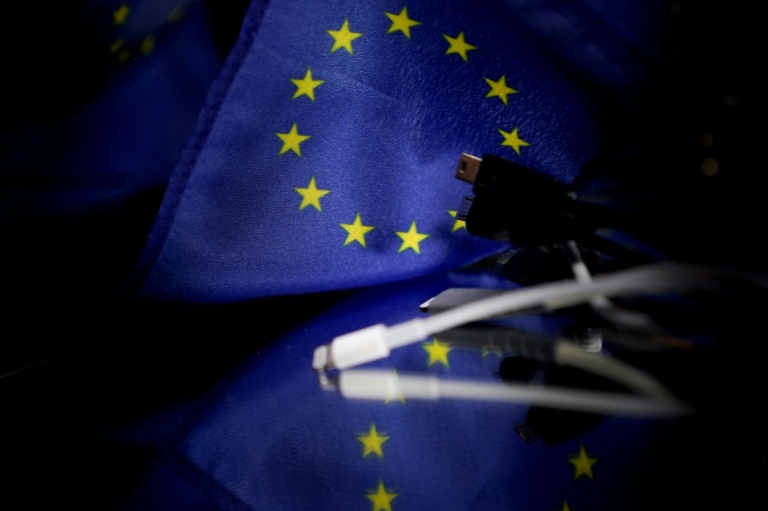
The EU parliament on Tuesday passed a new law requiring USB-C to be the single charger standard for all new smartphones, tablets and cameras from late 2024.

The measure, which EU lawmakers adopted with a vote 602 in favour, 13 against, will — in Europe at least — push Apple to drop its outdated Lightning port on its iPhones for the USB-C one already used by many of its competitors.

Makers of laptops will have extra time, from early 2026, to also follow suit.

EU policymakers say the single charger rule will simplify the life of Europeans, reduce the mountain of obsolete chargers and reduce costs for consumers. 

It is expected to save at least 200 million euros ($195 million) per year and cut more than a thousand tonnes of EU electronic waste every year, the bloc’s competition chief Margrethe Vestager said.

The EU move is expected to ripple around the world.

The European Union’s 27 countries are home to 450 million people who count among the world’s wealthiest consumers. Regulatory changes in the bloc often set global industry norms in what is known as the Brussels Effect.

“Today is a great day for consumers, a great day  for our environment,” Maltese MEP Alex Agius Saliba, the European Parliament’s pointman on the issue, said.

“After more than a decade; the single charger for multiple electronic devices will finally become a reality for Europe and hopefully we can also inspire the rest of the world,” he said.

– Faster data speed –

Apple, the world’s second-biggest seller of smartphones after Samsung, already uses USB-C charging ports on its iPads and laptops. 

But it resisted EU legislation to force a change away from its Lightning ports on its iPhones, saying that was disproportionate and would stifle innovation.

However some users of its latest flagship iPhone models — which can capture extremely high-resolution photos and videos in massive data files — complain that the Lightning cable transfers data at only a bare fraction of the speed USB-C does.

The EU law will in two years’ time apply to all handheld mobile phones, tablets, digital cameras, headphones, headsets, portable speakers, handheld videogame consoles, e-readers, earbuds, keyboards, mice and portable navigation systems.

People buying a device will have the choice of getting one with or without a USB-C charger, to take advantage of the fact they might already have at least one cable at home.

Makers of electronic consumer items in Europe agreed a single charging norm from dozens on the market a decade ago under a voluntary agreement with the European Commission.

But Apple refused to abide by it, and other manufacturers kept their alternative cables going, meaning there are still some six types knocking around.

They include old-style USB-A, mini-USB and USB-micro, creating a jumble of cables for consumers.

USB-C ports can charge at up to 100 Watts, transfer data up to 40 gigabits per second, and can serve to hook up to external displays.

Apple also offers wireless charging for its latest iPhones — and there is speculation it might do away with charging ports for cables entirely in future models. But currently the wireless charging option offers lower power and data transfer speeds than USB-C.

US Supreme Court hears Alabama Black voting rights case

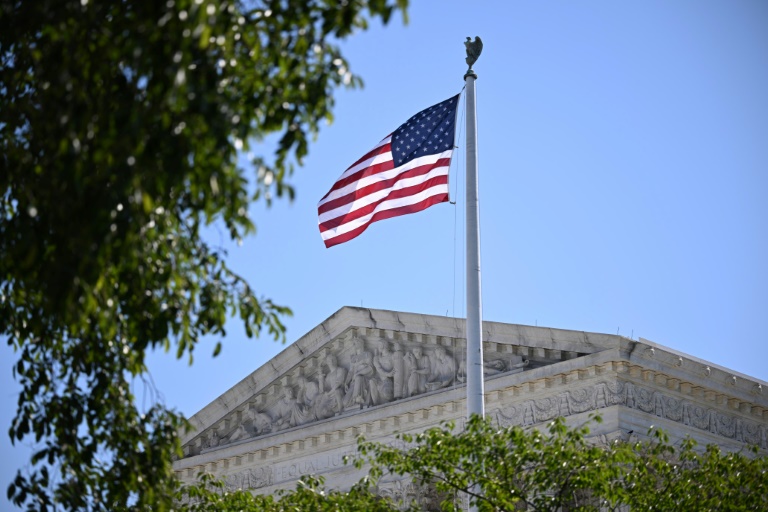
The US Supreme Court heard arguments on Tuesday in a racially-charged case involving the rights of Black voters.

The case involves the 1965 Voting Rights Act and a congressional redistricting map in the southern state of Alabama that critics say diminishes the influence of African American voters.

The Voting Rights Act is intended to prevent racial discrimination against minorities in voting and a ruling in the Alabama case by the conservative-dominated court could potentially limit its scope.

The Alabama case concerns a map that was redrawn in 2021 by Alabama’s Republican majority legislature to allocate seats in the US House of Representatives.

Under the map, Black voters — who represent around a quarter of registered voters state-wide — are in a majority in only one of seven congressional districts. 

Citizens and rights groups took the matter to court, accusing legislators of violating civil rights laws which prohibit diluting the African American vote in this way. 

The new map, they say, cuts through the middle of a predominantly Black region, the “Black Belt,” and splits it in two, and Alabama should have created a second district with a Black majority instead. 

The stakes are particularly high in the state, where African Americans vote mostly Democratic, while white voters mostly support Republicans. 

“It’s one of the great achievements of American democracy,” Justice Elena Kagan, one of the three liberals on the nine-member court, said of the Voting Rights Act during Tuesday’s arguments.

The act seeks to provide “equal political opportunities regardless of race to ensure that African Americans could have as much political power as white Americans could,” Kagan said.

– ‘Race-neutral’ –

Justice Ketanji Brown Jackson, the first Black woman on the high court, pushed back against arguments by Alabama officials that congressional district maps be drawn up on “race-neutral” principles.

Jackson noted that constitutional amendments passed after the US Civil War were intended to ensure that former slaves “were brought equal to everyone else in society.”

“That’s not a race neutral or race blind idea in terms of the remedy,” she said. “I don’t think that the historical record establishes that the founders believed that race neutrality or race blindness was required.”

Earlier this year, a lower court ruled in favor of the plaintiffs in the Alabama case and ordered local officials to turn in a new copy of the map. 

Republican officials then turned to the Supreme Court.

In February, five of the nine judges allowed them to keep the 2021 map for now — and thus for the US mid-term elections in November — while postponing consideration of the merits of the case until Tuesday.

The Alabama case is one of several the court will hear this term revolving around race.

Later this month, the court is to hear arguments on the use of race in deciding who gets to attend Harvard University and the University of North Carolina.

Harvard and UNC, like many other US institutions of higher education, use race as a factor in trying to ensure a diverse student body and to make up for a legacy of racial discrimination against African Americans and Hispanics.

The court has ruled previously in favor of affirmative action but it has long been in the cross-hairs of the right and its opponents believe the current court will be receptive to their arguments.

US Navy's $13 bn carrier embarks on first deployment

The US Navy’s newest aircraft carrier embarked on its maiden deployment Tuesday, a milestone for a ship that has suffered problems with some of the advanced technologies it carries.

The USS Gerald R. Ford — which cost more than $13 billion — will work with countries including Canada, France and Germany during a deployment that will include training on air defense, anti-submarine warfare and amphibious operations.

A live video on a US Navy Facebook page showed tugboats moving the gray-painted ship away from the pier at Naval Station Norfolk in Virginia.

The ship’s deployment will “demonstrate its unmatched, multi-domain, full-spectrum lethality in the Atlantic,” Admiral Daryl Caudle said in a statement ahead of the ship’s departure.

The deployment will involve 9,000 people, 20 ships and 60 aircraft from nine different countries, the US Navy said, without providing a breakdown by nation.

Commissioned in 2017, the carrier is massive — more than 1,100 feet (335 meters) long, and displacing 100,000 long tons (101,000 tonnes) when fully loaded. But it can still sail at a speed of more than 34 miles (54 kilometers) per hour. 

The ship — named for the 38th US president — requires hundreds fewer crew members to operate than previous carriers and is designed to be able to carry futuristic energy weapons that are still under development.

A key improvement over previous carriers is supposed to be the rate at which it can launch and retrieve aircraft, but there have been issues with the systems involved, according to a June 2022 report to Congress.

– Delayed deployment –

“The Navy anticipates achieving reliability goals in the 2030s,” the Government Accountability Office report said of the carrier’s Electromagnetic Aircraft Launch System and Advanced Arresting Gear, adding that reliability issues could “prevent the ship from demonstrating one of its key requirements — rapidly deploying aircraft.”

The vessel’s weapons elevators — which move missiles and bombs from its magazines to the deck so they can be loaded onto planes — have also suffered problems.

“The ship’s first deployment was delayed by a need to complete work on the ship’s weapons elevators and correct other technical problems,” the Congressional Research Service said in a report updated in August, adding that the final elevator was tested and certified in late 2021.

As the Gerald R. Ford goes to sea and with other similar carriers in the works, there is debate over whether new weapons such as anti-ship ballistic missiles have rendered such ships obsolete, or will do so in the future.

Mackenzie Eaglen, a senior fellow and defense expert at the American Enterprise Institute, argues that their time is far from over due to the deterrent role they play.

“The US military — most visibly through US Navy… carrier strike groups — first deters bad actors and messy wars. If deterrence is lost, then we have a lot of equipment and bases that are vulnerable in the next conflict,” Eaglen said.

“As the US (seemingly constantly) debates the utility of the carrier, other nations are busy heavily investing in aircraft carriers — from India, China, France, UK, Australia and Italy — which speaks to the ship’s continued utility both in peacetime and war,” she added.

Study eyes US cooperation with Pakistan amid China rise

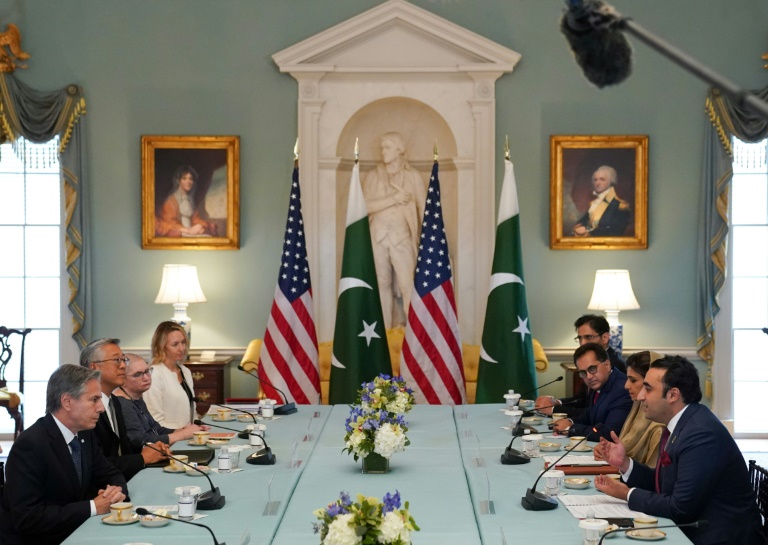
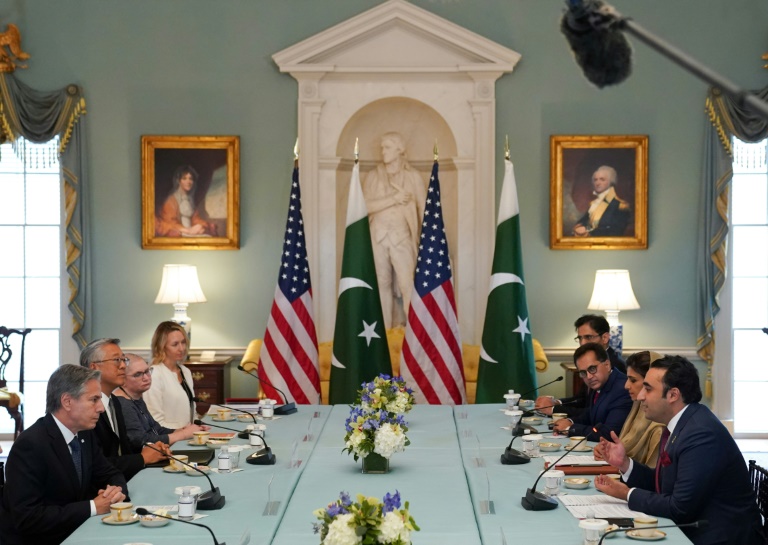
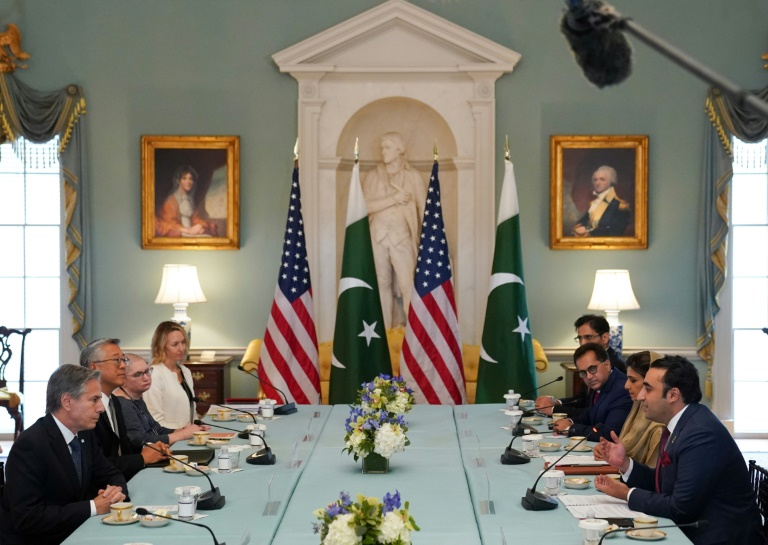
The United States needs to keep engaging Pakistan despite lingering distrust over Afghanistan, with investment and climate cooperation key to reducing the South Asian nation’s growing reliance on China, a study group recommended Tuesday.

The group released its findings during a visit to Washington by the head of Pakistan’s powerful military, General Qamar Javed Bajwa, a week after a trip by the civilian foreign minister, Bilawal Bhutto Zardari.

The study group, which did not involve the US government, included scholars and former US ambassadors to Pakistan Ryan Crocker, Cameron Munter and Robin Raphel, along with Husain Haqqani, Pakistan’s former ambassador in Washington.

Pakistan and the United States were partners in the Cold War and, officially, in the Afghanistan war. But American officials lost patience with Islamabad which they suspected of quietly maintaining support for the Taliban, who triumphed as US troops withdrew last year.

“Instead of allowing existing differences to define the partnership, it may be time to recognize that both sides need to understand the other’s interests so that they can then find a way to work on areas of mutual concern,” the study group said.

The United States must move beyond leveraging aid to change Pakistan’s policies, a tactic that has been a proven failure.

Islamabad, in turn, needs to accept “that all of Pakistan’s problems, especially terrorism and militancy, cannot be laid at the door of the US.”

Pakistan has forged increasingly close relations with China, triggering warnings from the United States that Beijing — seen as Washington’s key global competitor — will saddle the economically troubled nation with debt.

The study group said that after previously linking the Pakistan relationship to Afghanistan or its historic rival India, the United States should avoid now seeing ties through the lens of China.

Instead, the United States can “help build Pakistan’s capacity for transparency and compliance” on Chinese loans and can reduce reliance on China by encouraging investment by US companies and others, it said.

The United States can also focus on building climate resilience — a key challenge for Pakistan, which was recently devastated by floods.

While the United States wants to step back from Afghanistan, the study group said the need for counterterrorism cooperation with Pakistan “has if anything increased” due to the loss of US intelligence assets on the ground.

“While Pakistan and the US often fail to see eye-to-eye when it comes to Afghanistan, China, or India, they do share mutual interests in seeking stability in the region, combatting the problem of extremism and averting armed conflict in nuclear South Asia,” it said.

Study eyes US cooperation with Pakistan amid China rise

The United States needs to keep engaging Pakistan despite lingering distrust over Afghanistan, with investment and climate cooperation key to reducing the South Asian nation’s growing reliance on China, a study group recommended Tuesday.

The group released its findings during a visit to Washington by the head of Pakistan’s powerful military, General Qamar Javed Bajwa, a week after a trip by the civilian foreign minister, Bilawal Bhutto Zardari.

The study group, which did not involve the US government, included scholars and former US ambassadors to Pakistan Ryan Crocker, Cameron Munter and Robin Raphel, along with Husain Haqqani, Pakistan’s former ambassador in Washington.

Pakistan and the United States were partners in the Cold War and, officially, in the Afghanistan war. But American officials lost patience with Islamabad which they suspected of quietly maintaining support for the Taliban, who triumphed as US troops withdrew last year.

“Instead of allowing existing differences to define the partnership, it may be time to recognize that both sides need to understand the other’s interests so that they can then find a way to work on areas of mutual concern,” the study group said.

The United States must move beyond leveraging aid to change Pakistan’s policies, a tactic that has been a proven failure.

Islamabad, in turn, needs to accept “that all of Pakistan’s problems, especially terrorism and militancy, cannot be laid at the door of the US.”

Pakistan has forged increasingly close relations with China, triggering warnings from the United States that Beijing — seen as Washington’s key global competitor — will saddle the economically troubled nation with debt.

The study group said that after previously linking the Pakistan relationship to Afghanistan or its historic rival India, the United States should avoid now seeing ties through the lens of China.

Instead, the United States can “help build Pakistan’s capacity for transparency and compliance” on Chinese loans and can reduce reliance on China by encouraging investment by US companies and others, it said.

The United States can also focus on building climate resilience — a key challenge for Pakistan, which was recently devastated by floods.

While the United States wants to step back from Afghanistan, the study group said the need for counterterrorism cooperation with Pakistan “has if anything increased” due to the loss of US intelligence assets on the ground.

“While Pakistan and the US often fail to see eye-to-eye when it comes to Afghanistan, China, or India, they do share mutual interests in seeking stability in the region, combatting the problem of extremism and averting armed conflict in nuclear South Asia,” it said.

Study eyes US cooperation with Pakistan amid China rise

The United States needs to keep engaging Pakistan despite lingering distrust over Afghanistan, with investment and climate cooperation key to reducing the South Asian nation’s growing reliance on China, a study group recommended Tuesday.

The group released its findings during a visit to Washington by the head of Pakistan’s powerful military, General Qamar Javed Bajwa, a week after a trip by the civilian foreign minister, Bilawal Bhutto Zardari.

The study group, which did not involve the US government, included scholars and former US ambassadors to Pakistan Ryan Crocker, Cameron Munter and Robin Raphel, along with Husain Haqqani, Pakistan’s former ambassador in Washington.

Pakistan and the United States were partners in the Cold War and, officially, in the Afghanistan war. But American officials lost patience with Islamabad which they suspected of quietly maintaining support for the Taliban, who triumphed as US troops withdrew last year.

“Instead of allowing existing differences to define the partnership, it may be time to recognize that both sides need to understand the other’s interests so that they can then find a way to work on areas of mutual concern,” the study group said.

The United States must move beyond leveraging aid to change Pakistan’s policies, a tactic that has been a proven failure.

Islamabad, in turn, needs to accept “that all of Pakistan’s problems, especially terrorism and militancy, cannot be laid at the door of the US.”

Pakistan has forged increasingly close relations with China, triggering warnings from the United States that Beijing — seen as Washington’s key global competitor — will saddle the economically troubled nation with debt.

The study group said that after previously linking the Pakistan relationship to Afghanistan or its historic rival India, the United States should avoid now seeing ties through the lens of China.

Instead, the United States can “help build Pakistan’s capacity for transparency and compliance” on Chinese loans and can reduce reliance on China by encouraging investment by US companies and others, it said.

The United States can also focus on building climate resilience — a key challenge for Pakistan, which was recently devastated by floods.

While the United States wants to step back from Afghanistan, the study group said the need for counterterrorism cooperation with Pakistan “has if anything increased” due to the loss of US intelligence assets on the ground.

“While Pakistan and the US often fail to see eye-to-eye when it comes to Afghanistan, China, or India, they do share mutual interests in seeking stability in the region, combatting the problem of extremism and averting armed conflict in nuclear South Asia,” it said.

Loretta Lynn, country music luminary and songwriting pioneer, dies at 90

Loretta Lynn, America’s groundbreaking country titan whose frank lyricism delving into women’s experiences with sex, infidelity and pregnancy touched the nerve of a nation, has died. She was 90 years old.

She “passed peacefully in her sleep” at her ranch in Tennessee Tuesday morning, her family said in a statement sent to AFP.

Lynn saw a number of her edgy tracks banned by country music stations, but over the course of more than six decades in the business, she became a standard-bearer of the genre and its most decorated female artist ever.

Born Loretta Webb on April 14, 1932 in small-town Kentucky, Lynn was the eldest daughter in an impoverished family of eight kids, a childhood she immortalized in her iconic track “Coal Miner’s Daughter” — a staple on lists of all-time best songs.

“We were poor but we had love / That’s the one thing that daddy made sure of,” Lynn sang in the hit recorded in 1970 — later the theme song for a 1980 movie about her life starring Sissy Spacek, who won an Oscar for the role. 

At just 15 years old, the artist married Oliver Vanetta Lynn, who she remained married to for nearly 50 years until his death in 1996.

They moved to a logging community in Washington state, and Lynn gave birth to four children before the age of 20, adding twins to the family not long after.

An admirer of his wife’s voice, her husband bought Lynn a guitar in the early 1950s.

The self-taught musician went on to pen lyrics inspired by her own early experiences as a married woman and her oft-tumultuous relationship, the nascent days of a prolific career that would see the artist release dozens of albums.

She started her own band, Loretta and the Trailblazers, and began playing bar sets before cutting her first record — “I’m a Honky Tonk Girl” in 1960.

Her twang was warm and languid but Lynn’s lyrics were anything but: She sang with searing precision of marriage’s growing pains and gave voice to issues facing women that had long been kept quiet.

“Most songwriters tended to write about falling in love, breaking up and being alone, things like that,” Lynn told The Wall Street Journal in 2016. “The female view I wrote about was new.”

“I just wrote about what I knew, and what I knew usually involved something that somebody did to me.”

– ‘The Pill’ –

The Lynns began touring nationwide to promote the singer’s work to radio stations, and she made her debut at the storied Grand Ole Opry in 1960, going on to become one of the Nashville institution’s most acclaimed acts.

“Our Opry family turns to music when words fail. Thank you for all you’ve given to the Opry, @LorettaLynn,” the show tweeted.

During her early years in the industry, she found a friend and mentor in Patsy Cline, one of the 20th century’s most influential singers who died in a plane crash in 1963 at age 30.

She also forged a longstanding creative partnership with Conway Twitty, with whom she formed one of country’s classic duet acts.

Lynn released a steady stream of hit singles, including 1966’s “Dear Uncle Sam” — one of the era’s first tracks to document the tragedy of the Vietnam War.

That same year she put out “You Ain’t Woman Enough (To Take My Man),” which made her the first woman in country to pen a number one hit.

In 1969, she released one of her most controversial songs, “Wings Upon Your Horns,” which describes through religious metaphor a teenager losing her virginity.

But her runaway success continued and she dominated the 1970s with hits such as “Fist City” — a stern warning to her cheating husband’s lover — and 1972’s “Rated X,” which triggered an outcry in discussing the stigmas faced by divorced women.

In 1975, she released “The Pill,” which praised the freedoms of birth control. 

“When I’d put out a record, they’d say, ‘Uh oh, another dirty song.’ ‘Rated X’? They thought that was going to be bad. But hey, it sold. ‘One’s on the Way’? They thought that song would really be dirty,” she told Billboard in 2015. 

“But everything I sang about was everyday living.”

– ‘The truth’ –

In 1988, Lynn was inducted into the Country Music Hall of Fame as one of its most storied legends.

She won virtually every arts honor available, including the prestigious Presidential Medal of Freedom, the nation’s highest civilian award.

Despite the progressive airs of her music, Lynn would insist that her clearly political music had “no politics.” She leaned Republican most of her life, frequently performing for and supporting right-wing candidates — including Donald Trump in 2016 — even as she also voiced support for Democrats like Jimmy Carter.

But she was universally beloved in the industry she deeply influenced, collaborating with scores of artists including Dolly Parton, Willie Nelson and Elvis Costello. In 2004 she released the album “Van Lear Rose,” produced by Jack White.

In 2021, a month before turning 89, she released the album “Still Woman Enough,” which featured re-recordings and new material.

Music world accolades quickly flooded social media, praising Lynn’s pivotal life.

“We’ve been like sisters all the years we’ve been in Nashville and she was a wonderful human being, wonderful talent, had millions of fans and I’m one of them,” wrote the superstar Parton.

Crystal Gayle, Lynn’s actual sister and a singer in her own right, wrote that “the world lost a legend. We lost a sister. Love you Loretta.”

Lynn once told Billboard she’d never retire from music, vowing that “when they lay me down six feet under, they can say, ‘Loretta’s quit singing.’ I’ll have on one of my gowns,” she continued.

“That’s morbid, but it’s the truth.”

Musk offers to close Twitter buyout at original price: report

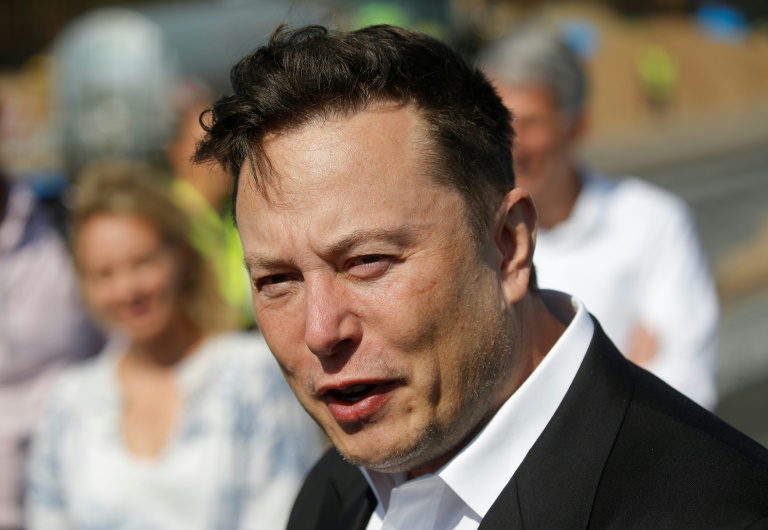
Elon Musk has offered to push through with his buyout of Twitter at the original agreed price, reports said Tuesday, just weeks before the opening of a bitter court case over his effort to withdraw from the deal.

US media said the world’s richest man had sent a letter to Twitter vowing to honor the takeover price of $54.20 a share — prompting a surge in the share value of the social network that triggered a suspension of trading.

The latest twist in the long-running buyout saga comes less than two weeks before the start of the high-stakes trial instigated by Twitter in an effort to hold the Tesla chief to the $44 billion deal he signed in April.

Musk was slated to be deposed by Twitter attorneys later this week in preparation for the trial.

A serial entrepreneur made rich through his success with Tesla electric cars, Musk began to step back from the Twitter deal soon after it was agreed.

He said in a letter in July that he was canceling the purchase because he was misled by Twitter concerning the number of fake “bot” accounts, allegations rejected by the company.

Twitter, meanwhile, has been seeking material or testimony to prove Musk is contriving excuses to walk away because he changed his mind.

In July, a Delaware judge agreed to fast-track a trial on Twitter’s allegations, which the company argued is impeding its financial performance.

– Free speech or abuse? –

Wedbush analyst Dan Ives said in an email that Musk’s apparent pivot shows that he recognized his chance of winning in court was “highly unlikely, and this $44 billion deal was going to be completed one way or another.”

Shares in Twitter were up 12.7 percent at $47.95, having been halted by the New York Stock Exchange following a Bloomberg report on a possible new takeover offer.

Musk made his unsolicited bid to buy Twitter without asking for estimates regarding spam or fake accounts, and even sweetened his offer to the board by withdrawing a diligence condition, the lawsuit against him said.

Seen by his champions as an iconoclastic genius and by his critics as an erratic megalomaniac, Musk surprised many investors with his pursuit of Twitter.

His potential stewardship of the social media site hit several bumps since the takeover attempt was made public, and sparked worry from activists over lifting of the ban on Donald Trump — as well as the possibility the new owner would open the gates to abusive and misinformative posts.

Musk — who sees himself as a free speech advocate — has said he favored lifting the ban on Trump, who was kicked off the platform in January 2021 shortly after the former US president’s efforts to overturn his election defeat led to the January 6 assault on the US Capitol.

Musk’s norm-defying conduct has come as little surprise to watchers of the Tesla and SpaceX chief after years of statements that flout or test convention and sometimes provoke a crackdown from regulators.

Only on Monday he was embroiled in a Twitter spat with Ukrainian President Volodymyr Zelensky over his ideas on ending Russia’s invasion.

Musk offers to close Twitter buyout at original price: report

Elon Musk has offered to push through with his buyout of Twitter at the original agreed price, reports said Tuesday, just weeks before the opening of a bitter court case over his effort to withdraw from the deal.

US media said the world’s richest man had sent a letter to Twitter vowing to honor the takeover price of $54.20 a share — prompting a surge in the share value of the social network that triggered a suspension of trading.

The latest twist in the long-running buyout saga comes less than two weeks before the start of the high-stakes trial instigated by Twitter in an effort to hold the Tesla chief to the $44 billion deal he signed in April.

Musk was slated to be deposed by Twitter attorneys later this week in preparation for the trial.

A serial entrepreneur made rich through his success with Tesla electric cars, Musk began to step back from the Twitter deal soon after it was agreed.

He said in a letter in July that he was canceling the purchase because he was misled by Twitter concerning the number of fake “bot” accounts, allegations rejected by the company.

Twitter, meanwhile, has been seeking material or testimony to prove Musk is contriving excuses to walk away because he changed his mind.

In July, a Delaware judge agreed to fast-track a trial on Twitter’s allegations, which the company argued is impeding its financial performance.

– Free speech or abuse? –

Wedbush analyst Dan Ives said in an email that Musk’s apparent pivot shows that he recognized his chance of winning in court was “highly unlikely, and this $44 billion deal was going to be completed one way or another.”

Shares in Twitter were up 12.7 percent at $47.95, having been halted by the New York Stock Exchange following a Bloomberg report on a possible new takeover offer.

Musk made his unsolicited bid to buy Twitter without asking for estimates regarding spam or fake accounts, and even sweetened his offer to the board by withdrawing a diligence condition, the lawsuit against him said.

Seen by his champions as an iconoclastic genius and by his critics as an erratic megalomaniac, Musk surprised many investors with his pursuit of Twitter.

His potential stewardship of the social media site hit several bumps since the takeover attempt was made public, and sparked worry from activists over lifting of the ban on Donald Trump — as well as the possibility the new owner would open the gates to abusive and misinformative posts.

Musk — who sees himself as a free speech advocate — has said he favored lifting the ban on Trump, who was kicked off the platform in January 2021 shortly after the former US president’s efforts to overturn his election defeat led to the January 6 assault on the US Capitol.

Musk’s norm-defying conduct has come as little surprise to watchers of the Tesla and SpaceX chief after years of statements that flout or test convention and sometimes provoke a crackdown from regulators.

Only on Monday he was embroiled in a Twitter spat with Ukrainian President Volodymyr Zelensky over his ideas on ending Russia’s invasion.

Saudi prince's lawyers says PM title ensures legal immunity

Lawyers for Saudi Crown Prince Mohammed bin Salman have argued that his appointment as prime minister qualifies him for immunity from lawsuits in US courts, including one related to the 2018 killing of journalist Jamal Khashoggi.

Prince Mohammed, who previously served as deputy prime minister and defence minister, was named prime minister by royal decree last week, sparking concern from human rights activists and government critics that he was looking to skirt exposure in cases filed in foreign courts.

His lawyers had previously argued that he “sits at the apex of Saudi Arabia’s government” and thus qualifies for the kind of immunity US courts afford foreign heads of state and other high-ranking officials.

Last week’s royal decree “leaves no doubt that the Crown Prince is entitled to status-based immunity”, his lawyers said in a filing Monday in a case brought in 2020 by Khashoggi’s fiancee, Hatice Cengiz.

The 2018 killing of Khashoggi, a Saudi insider turned critic, in the kingdom’s Istanbul consulate temporarily turned Prince Mohammed into a pariah in the West.

But he has been welcomed back on the world stage this year, notably by US President Joe Biden, who travelled to Saudi Arabia in July despite an earlier pledge to make the kingdom a “pariah”.

Last year, Biden declassified an intelligence report that found Prince Mohammed had approved the operation against Khashoggi, an assertion Saudi authorities deny.

The Biden administration has yet to weigh in on whether it believes Prince Mohammed qualifies for immunity.

A judge had given US lawyers a deadline of October 3 to file a “statement of interest” on the question.

But on Friday, citing Prince Mohammed’s new position, the administration requested an additional 45 days to make up its mind.

That request was granted and the new deadline is November 17.

The legal threats to Prince Mohammed in US courts go beyond Khashoggi.

He was also named in a lawsuit filed by Saad al-Jabri, a former top intelligence official who fell out of favour as Prince Mohammed manoeuvred to become first in line to the throne in 2017. 

That complaint accuses Prince Mohammed of trying to lure Jabri back to Saudi Arabia from exile in Canada — then, when that didn’t work, “deploying a hit squad” to kill him on Canadian soil, a plot foiled when most of the would-be assailants were turned back at the border.

However on Friday a judge granted a motion to dismiss the case, saying his court did not have jurisdiction over nearly all of the defendants listed by Jabri — a group that includes Prince Mohammed, other Saudi officials and “several US-based individuals”.

Prince Mohammed’s father, 86-year-old King Salman, has been hospitalised twice this year, but he chaired the weekly cabinet meeting Tuesday, just as he did the day Prince Mohammed’s promotion was announced.

In July, a group of NGOs filed a complaint in France alleging that Prince Mohammed was an accomplice to Khashoggi’s torture and enforced disappearance.

They said the charges could be prosecuted in France, which recognises universal jurisdiction.

Prince Mohammed “does not have immunity from prosecution because as crown prince he is not head of state”, they said.

Close Bitnami banner
Bitnami