AFP

US Supreme Court to consider Black voting rights case

The United States Supreme Court on Tuesday is considering a redistricting proposal in the state of Alabama that is accused of diminishing the influence of African American voters. 

The case is attracting attention because a ruling from the court could impact the scope of the Voting Rights Act, a key 1965 law that protected African Americans’ right to vote. 

The case concerns a map to allocate seats in the House of Representatives that was redrawn in 2021 by the state’s Republican elected officials. 

According to the new map, Black voters — who represent around a quarter of registered voters state-wide — are in a majority in only one of seven districts. 

Citizens and rights groups took the matter to court, accusing legislators of violating civil rights laws, which prohibit diluting the African American vote in this way. 

They say the new map cuts through the middle of a predominantly Black region, the “Black Belt,” and splits it in two. 

The petitioners believe that Alabama should have created a second district with a Black majority instead. 

The stakes are particularly high in this state, where African Americans vote mostly Democratic, while white voters mostly support Republicans. 

– ‘Unfortunate reality’ –

Earlier this year, a lower court ruled in favor of the plaintiffs and ordered local officials to turn in a new copy of the map. 

Republican officials then turned to the Supreme Court. 

In February, five of the nine judges at the apex court allowed them to keep the 2021 map for now — and thus for the US mid-term elections in November — while postponing consideration of the merits of the case. 

Now, the parties will face off at the Supreme Court to make their cases. 

In addition to the debate over its map, Alabama will also argue that the US constitution prohibits the use of ethnicity as a basis for drawing electoral districts. 

The Voting Rights Act, however, allows it to be used to ensure that voters from minority groups have elected officials who reflect their views. 

“If the court allows this to be overturned, it will undoubtedly have a significant impact on community representation,” Sophia Lin Lakin, who is monitoring the case for the American Civil Liberties Union (ACLU), said at a news conference. 

Democratic President Joe Biden’s administration also supports the current legal framework.

It is “a measured response to the unfortunate reality of persistent voting blocs” based on skin color, he said in a filing to the court. 

UK's embattled govt stares at new U-turn on economy

Britain’s Prime Minister Liz Truss defended her contentious plan to kick-start economic growth through tax cuts, despite expectations Tuesday of a second damaging U-turn.

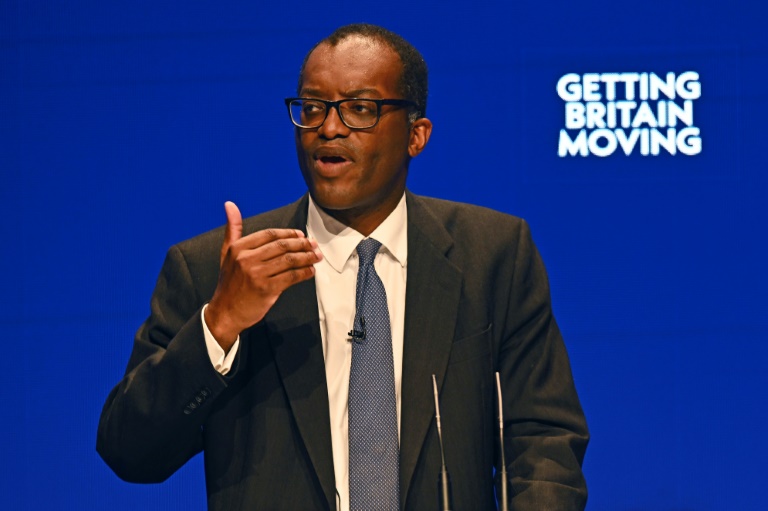
Fresh from a humiliating climbdown on cutting income tax for the richest, Truss and Chancellor of the Exchequer Kwasi Kwarteng were set to bring forward a major debt reduction plan, the Financial Times and others reported.

Its unveiling will come later this month rather than on November 23, and will be accompanied by independent forecasts from the Office for Budget Responsibility (OBR) in a bid to calm febrile financial markets, the reports said.

The government declined to confirm the reports, as Truss and Kwarteng endured another difficult day at the ruling Conservatives’ annual conference in Birmingham, central England.

But Mel Stride, the Tory chairman of the powerful Treasury committee in the House of Commons, said: “I have pressed the chancellor very hard on this and to his credit he has listened.”

Acting in advance of the Bank of England’s next rate-setting meeting on November 3 could “reduce the upward pressure on interest rates to the benefit of millions of people up and down the country”, he added.

Asked if any more U-turns were coming, Truss was evasive in an interview with LBC radio broadcast Tuesday but recorded on Monday.

“I’m determined to carry on with this growth package,” she said, stressing another component of the plan to cap soaring energy bills. 

“That’s what’s important, but it’s also important that we do listen to people and we bring the country with us.” 

– ‘Get a grip!’ –

Truss refused to rule out cuts to benefits as poorer Britons struggle with the worst cost-of-living crisis in generations.

“I’m very committed to supporting the most vulnerable,” Truss told BBC radio in another pre-recorded interview aired Tuesday.

But she added: “We have to look at these issues in the round. We have to be fiscally responsible.”

Potential cuts to the welfare budget are shaping up as the next battle with dissident Tory MPs after the aborted tax cut, part of a package that relies on billions more in new borrowing.

Splits have also emerged in the cabinet.

Senior minister Penny Mordaunt, one of the candidates Truss beat in the Tory leadership race, said it “makes sense” that welfare should still rise in line with soaring rates of inflation.

“That’s what I voted for before, and so have a lot of my colleagues,” she told Times Radio. 

Media coverage of Monday’s volte-face was damning, with many commentators arguing Truss’s credibility was already in tatters less than a month since she succeeded Boris Johnson.

The Daily Mail newspaper, normally a trenchant voice in support of the new leader’s right-wing agenda, headlined its main story: “Get a grip!”

– Kwarteng’s quips –

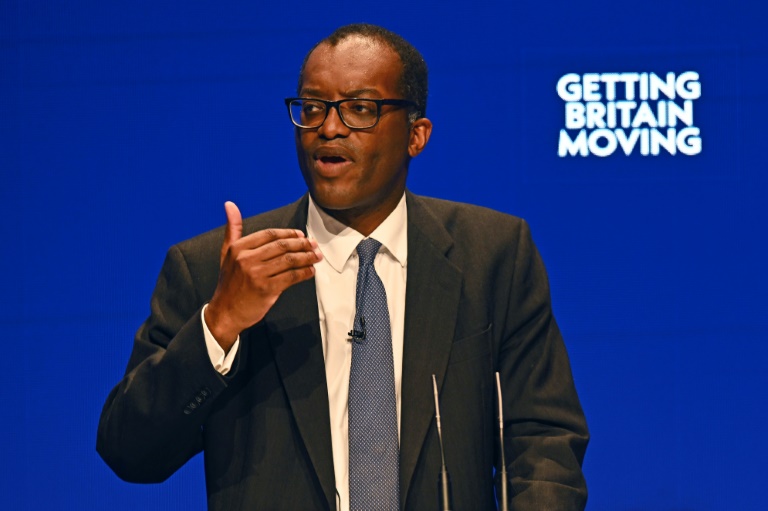
Coverage of Kwarteng’s lacklustre speech to the Tory conference on Monday, which had to be rapidly rewritten after the tax plan was ditched, was also damning.

There was particular criticism of the finance minister’s jocular tone, which he reinforced at an evening reception with the Policy Exchange think-tank.

Market reactions that saw the pound slump to an all-time low against the dollar last week had been “hullabaloo”, he said.

Policy Exchange, he also told his laughing hosts, was “twice as old as the OBR — that gives you huge authority”.

Dissident ringleader Michael Gove kept up criticism of Truss on Tuesday, stressing all Conservative MPs had been elected on Johnson’s manifesto of 2019. 

It included a pledge to end arbitrary evictions of tenants by private landlords, he noted at a conference fringe event held by the housing charity Shelter. 

“We’ve got to keep faith with what Boris wanted, we’ve got to make sure that manifesto commitment is honoured,” Gove said, after Truss reneged on a Johnson commitment to ban fracking. 

But asked by reporters if Truss would survive past the end of the year, the former minister said: “Yes.”

Shelter presented poll findings that suggested private renters who voted Tory in 2019 are deserting the party in droves for Labour and other opposition parties. 

Conservative seats at risk in the MRP poll included Johnson’s own constituency in west London. 

Wider opinion polls in recent days have shown Labour breaching 50 percent as the Tories slump under Truss, raising the stakes as she prepares to close the Birmingham conference on Wednesday.

Markets surge on interest rate hopes

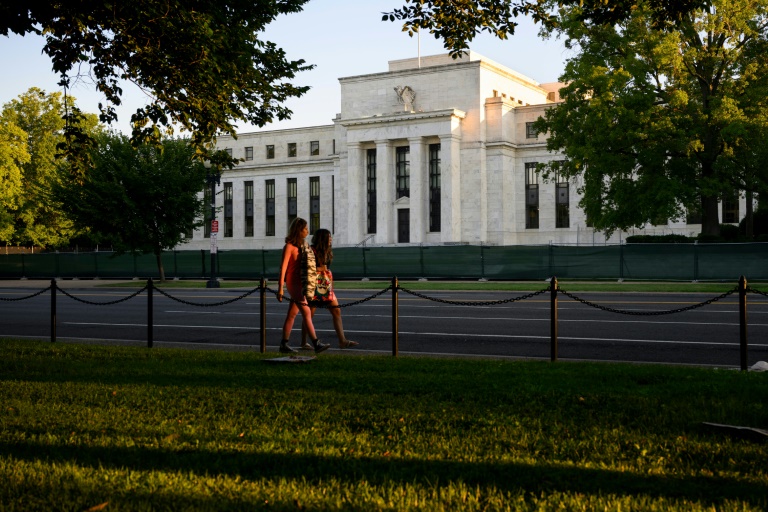
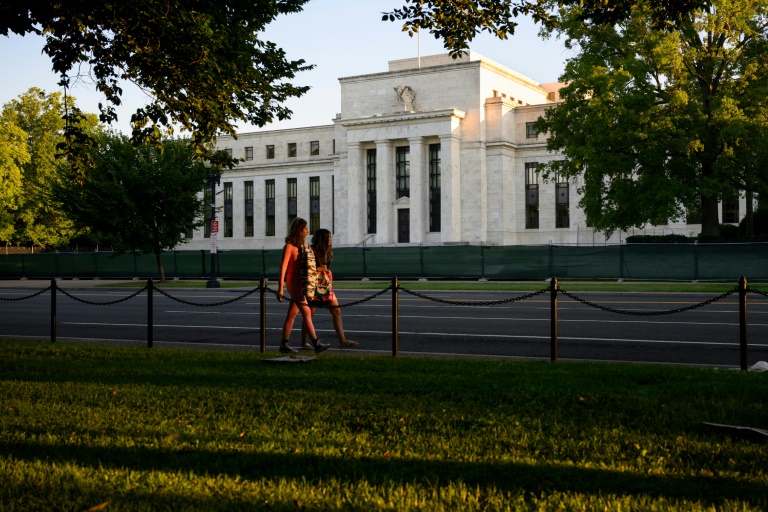
Asian and European stocks rallied Tuesday and the dollar dipped as weak US data sparked hopes the Federal Reserve could ease its interest-rate hiking plans.

Frankfurt and Paris equities soared more than three percent in value after similar stellar gains in Tokyo, while London won two percent.

“Weaker-than-expected manufacturing data from the US was taken as a signal that rising interest rates may be having some effect on cooling demand for goods,” said Interactive Investor analyst Richard Hunter.

“This in turn led to hopes of a Federal Reserve pivot, even though the spectre of inflation remains firmly at the top of their stated to-do list.”

The Fed and other central banks across the world have raised interest rates in efforts to tame runaway inflation, but the monetary tightening has raised fears that it could plunge countries into recession.

Wall Street had enjoyed a bumper start to the fourth quarter on Monday after data showed US manufacturing growth slowed more than expected in September to its weakest in more than two years.

The Institute for Supply Management said its manufacturing index dropped 1.9 points to 50.9 percent, just barely above the 50-percent threshold indicating expansion, as the prices index fell to the lowest in more than two years.

Eurozone manufacturing survey data out Monday showed a contraction on the back of the region’s ongoing energy crisis.

“The turnaround in risk appetite appears to have been driven by another deterioration in PMI surveys as traders speculate that such weakness could be a precursor to slower monetary tightening,” noted OANDA market analyst Craig Erlam.

Asian markets built on the Wall Street surge. Tokyo and Seoul were among the leaders, despite news that North Korea had fired a missile over Japan for the first time since 2017.

Sydney soared 3.8 percent after the Reserve Bank of Australia lifted interest rates by less than expected.

Hong Kong and Shanghai were closed for holidays.

Investors will focus later this week on Friday’s all-important US jobs figures for the latest reading on the health of the world’s biggest economy.

– Sterling extends gains –

Oil also continued to rise on expectations OPEC and other major producers will slash output this week, having become spooked by a plunge in the commodity on recession fears.

The 13 members of the Organization of the Petroleum Exporting Countries (OPEC), led by Riyadh, and their 10 allies headed by Moscow will hold Wednesday their first in-person meeting at the group’s headquarters in Vienna since March 2020.

The rally in equities came as the dollar weakened owing to lower expectations for US monetary tightening, with the pound also supported by the UK government’s decision to scrap a planned cut in the top rate of income tax.

Finance minister Kwasi Kwarteng has dropped the proposal, which was part of a big-borrowing mini-budget that sent shudders through markets.

The pound extended gains after breaking back above $1.13, having last Monday tanked to a record low $1.0350.

– Key figures around 1030 GMT –

Paris – CAC 40: UP 3.5 percent at 5,995.86 points

Frankfurt – DAX: UP 3.1 percent at 12,590.86

London – FTSE 100: UP 2.0 percent at 7,046.02

EURO STOXX 50: UP 3.3 percent at 3,452.98

Tokyo – Nikkei 225: UP 3.0 percent at 26,992.21 (close)

Hong Kong – Hang Seng Index: Closed for a holiday

Shanghai – Composite: Closed for a holiday

New York – Dow: UP 2.7 percent at 29,490.89 (close)

Pound/dollar: UP at $1.1362 from $1.1323 on Monday

Euro/dollar: UP at $0.9898 from $0.9826

Euro/pound: UP at 87.13 pence from 86.77 pence

Dollar/yen: UP at 144.65 yen from 144.55 yen

Brent North Sea crude: UP 1.1 percent at $89.82 per barrel

West Texas Intermediate: UP 0.9 percent at $84.40 per barrel

burs/rfj/lth

Markets surge on interest rate hopes

Asian and European stocks rallied Tuesday and the dollar dipped as weak US data sparked hopes the Federal Reserve could ease its interest-rate hiking plans.

Frankfurt and Paris equities soared more than three percent in value after similar stellar gains in Tokyo, while London won two percent.

“Weaker-than-expected manufacturing data from the US was taken as a signal that rising interest rates may be having some effect on cooling demand for goods,” said Interactive Investor analyst Richard Hunter.

“This in turn led to hopes of a Federal Reserve pivot, even though the spectre of inflation remains firmly at the top of their stated to-do list.”

The Fed and other central banks across the world have raised interest rates in efforts to tame runaway inflation, but the monetary tightening has raised fears that it could plunge countries into recession.

Wall Street had enjoyed a bumper start to the fourth quarter on Monday after data showed US manufacturing growth slowed more than expected in September to its weakest in more than two years.

The Institute for Supply Management said its manufacturing index dropped 1.9 points to 50.9 percent, just barely above the 50-percent threshold indicating expansion, as the prices index fell to the lowest in more than two years.

Eurozone manufacturing survey data out Monday showed a contraction on the back of the region’s ongoing energy crisis.

“The turnaround in risk appetite appears to have been driven by another deterioration in PMI surveys as traders speculate that such weakness could be a precursor to slower monetary tightening,” noted OANDA market analyst Craig Erlam.

Asian markets built on the Wall Street surge. Tokyo and Seoul were among the leaders, despite news that North Korea had fired a missile over Japan for the first time since 2017.

Sydney soared 3.8 percent after the Reserve Bank of Australia lifted interest rates by less than expected.

Hong Kong and Shanghai were closed for holidays.

Investors will focus later this week on Friday’s all-important US jobs figures for the latest reading on the health of the world’s biggest economy.

– Sterling extends gains –

Oil also continued to rise on expectations OPEC and other major producers will slash output this week, having become spooked by a plunge in the commodity on recession fears.

The 13 members of the Organization of the Petroleum Exporting Countries (OPEC), led by Riyadh, and their 10 allies headed by Moscow will hold Wednesday their first in-person meeting at the group’s headquarters in Vienna since March 2020.

The rally in equities came as the dollar weakened owing to lower expectations for US monetary tightening, with the pound also supported by the UK government’s decision to scrap a planned cut in the top rate of income tax.

Finance minister Kwasi Kwarteng has dropped the proposal, which was part of a big-borrowing mini-budget that sent shudders through markets.

The pound extended gains after breaking back above $1.13, having last Monday tanked to a record low $1.0350.

– Key figures around 1030 GMT –

Paris – CAC 40: UP 3.5 percent at 5,995.86 points

Frankfurt – DAX: UP 3.1 percent at 12,590.86

London – FTSE 100: UP 2.0 percent at 7,046.02

EURO STOXX 50: UP 3.3 percent at 3,452.98

Tokyo – Nikkei 225: UP 3.0 percent at 26,992.21 (close)

Hong Kong – Hang Seng Index: Closed for a holiday

Shanghai – Composite: Closed for a holiday

New York – Dow: UP 2.7 percent at 29,490.89 (close)

Pound/dollar: UP at $1.1362 from $1.1323 on Monday

Euro/dollar: UP at $0.9898 from $0.9826

Euro/pound: UP at 87.13 pence from 86.77 pence

Dollar/yen: UP at 144.65 yen from 144.55 yen

Brent North Sea crude: UP 1.1 percent at $89.82 per barrel

West Texas Intermediate: UP 0.9 percent at $84.40 per barrel

burs/rfj/lth

EU lawmakers impose single charger for all smartphones

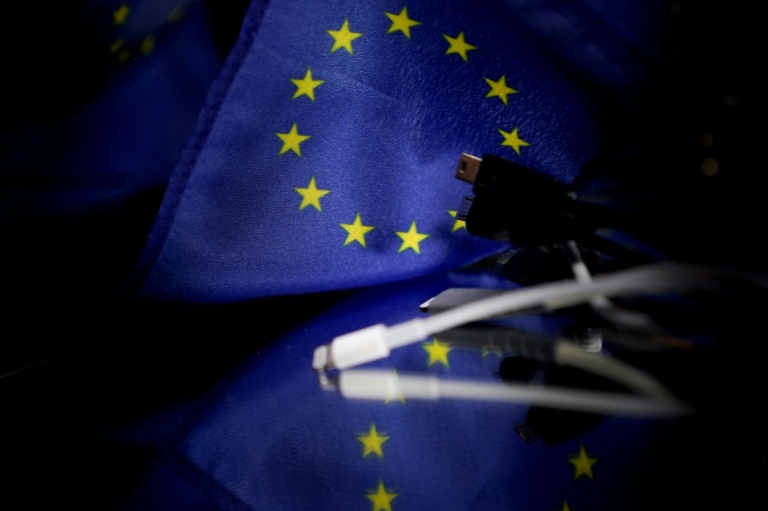
The EU parliament on Tuesday passed a new law requiring USB-C to be the single charger standard for all new smartphones, tablets and cameras from late 2024.

The measure, which EU lawmakers adopted with a vote 602 in favour, 13 against, will — in Europe at least — push Apple to drop its outdated Lightning port on its iPhones for the USB-C one already used by many of its competitors.

Makers of laptops will have extra time, from early 2026, to also follow suit.

EU policymakers say the single charger rule will simplify the life of Europeans, reduce the mountain of obsolete chargers and reduce costs for consumers. 

It is expected to save at least 200 million euros ($195 million) per year and cut more than a thousand tonnes of EU electronic waste every year, the bloc’s competition chief Margrethe Vestager said.

The EU move is expected to ripple around the world.

The European Union’s 27 countries are home to 450 million people who count among the world’s wealthiest consumers. Regulatory changes in the bloc often set global industry norms in what is known as the Brussels Effect.

“Today is a great day for consumers, a great day  for our environment,” Maltese MEP Alex Agius Saliba, the European Parliament’s pointman on the issue, said.

“After more than a decade; the single charger for multiple electronic devices will finally become a reality for Europe and hopefully we can also inspire the rest of the world,” he said.

– Faster data speed –

Apple, the world’s second-biggest seller of smartphones after Samsung, already uses USB-C charging ports on its iPads and laptops. 

But it resisted EU legislation to force a change away from its Lightning ports on its iPhones, saying that was disproportionate and would stifle innovation.

However some users of its latest flagship iPhone models — which can capture extremely high-resolution photos and videos in massive data files — complain that the Lightning cable transfers data at only a bare fraction of the speed USB-C does.

The EU law will in two years’ time apply to all handheld mobile phones, tablets, digital cameras, headphones, headsets, portable speakers, handheld videogame consoles, e-readers, earbuds, keyboards, mice and portable navigation systems.

People buying a device will have the choice of getting one with or without a USB-C charger, to take advantage of the fact they might already have at least one cable at home.

Makers of electronic consumer items in Europe agreed a single charging norm from dozens on the market a decade ago under a voluntary agreement with the European Commission.

But Apple refused to abide by it, and other manufacturers kept their alternative cables going, meaning there are still some six types knocking around.

They include old-style USB-A, mini-USB and USB-micro, creating a jumble of cables for consumers.

USB-C ports can charge at up to 100 Watts, transfer data up to 40 gigabits per second, and can serve to hook up to external displays.

Apple also offers wireless charging for its latest iPhones — and there is speculation it might do away with charging ports for cables entirely in future models. But currently the wireless charging option offers lower power and data transfer speeds than USB-C.

UK's embattled govt stares at new U-turn on economy

Britain’s Prime Minister Liz Truss defended her contentious plan to kick-start economic growth through tax cuts, despite expectations Tuesday of a second damaging U-turn.

Fresh from a humiliating climbdown on cutting income tax for the richest, Truss and Chancellor of the Exchequer Kwasi Kwarteng were set to bring forward a major debt reduction plan, the Financial Times and others reported.

Its unveiling will come later this month rather than on November 23, and will be accompanied by independent forecasts from the Office for Budget Responsibility (OBR) in a bid to calm febrile financial markets, the reports said.

There was no immediate comment from the government, as Truss and Kwarteng prepared for another difficult day at the ruling Conservatives’ annual conference in Birmingham, central England.

But Mel Stride, the Tory chairman of the powerful Treasury committee in the House of Commons, said: “I have pressed the chancellor very hard on this and to his credit he has listened.”

Acting in advance of the Bank of England’s next rate-setting meeting on November 3 could “reduce the upward pressure on interest rates to the benefit of millions of people up and down the country”, he added.

Asked if any more U-turns were coming, Truss was evasive in an interview with LBC radio broadcast Tuesday but recorded on Monday.

“I’m determined to carry on with this growth package,” she said, stressing another component of the plan to cap soaring energy bills. 

“That’s what’s important, but it’s also important that we do listen to people and we bring the country with us.” 

However, Truss also refused to rule out cuts to benefits as poorer Britons struggle with the worst cost-of-living crisis in generations.

“I’m very committed to supporting the most vulnerable,” Truss told BBC radio in another pre-recorded interview aired Tuesday.

But she added: “We have to look at these issues in the round. We have to be fiscally responsible.”

– ‘Get a grip!’ –

Potential cuts to the welfare budget are shaping up as the next battle with dissident Tory MPs after the aborted tax cut, part of a package that relies on billions more in new borrowing.

Splits have also emerged in the cabinet.

Senior minister Penny Mordaunt, one of the candidates Truss beat in the Tory leadership race, said it “makes sense” that welfare should still rise in line with soaring rates of inflation.

“I have always supported –- whether it’s pensions, whether it’s our welfare system –- keeping pace with inflation,” she told Times Radio. 

“That’s what I voted for before, and so have a lot of my colleagues.” 

Media coverage of Monday’s volte-face was damning, with many commentators arguing Truss’s credibility was already in tatters less than a month since she succeeded Boris Johnson.

The Daily Mail newspaper, normally a trenchant voice in support of the new leader’s right-wing agenda, headlined its main story: “Get a grip!”

Coverage of Kwarteng’s lacklustre speech to the Tory conference on Monday, which had to be rapidly rewritten after the tax plan was ditched, was also damning.

There was particular criticism of the finance minister’s jocular tone, which he reinforced at an evening reception with the Policy Exchange think-tank.

Market reactions that saw the pound slump to an all-time low against the dollar last week had been “hullabaloo”, he said.

Policy Exchange, he also told his laughing hosts, was “twice as old as the OBR — that gives you huge authority”.

Elsewhere at the Birmingham conference, Foreign Secretary James Cleverly was Tuesday to declare that Britain has the “strategic endurance” to see Ukraine “through to victory” over Russia.

And Home Secretary Suella Braverman was readying new measures to tackle migrants crossing the Channel from France on rickety boats, as Truss’s government seeks to shore up its right-wing credentials.

Markets rally, dollar dips as US data tempers rate fears

Asian markets rallied Tuesday and the dollar eased after weak US factory data sparked optimism that a series of big interest rate hikes were taking their toll, allowing the Federal Reserve to ease its foot off the pedal.

Oil also continued to rise on expectations OPEC and other major producers will slash output this week, having become spooked by a plunge in the commodity on recession fears.

All three main indexes in New York enjoyed a bumper start to the quarter after data showed US manufacturing growth slowed more than expected in September to its weakest in more than two years.

SPI Asset Management’s Stephen Innes said: “The positive aspect in the data is prices paid dropped to 51.7, the lowest print since June 2020, triggering a mini-risk revival in stocks and a sell-off on the US dollar as US yields continued to slide.

“In this hawkishly priced risk environment, bad data is considered good news, as it raises the possibility of a doveish pivot by the Federal Reserve.”

But he added that there was a lot more data to come this week, topped by Friday’s US jobs figures, that could alter investors’ views, while several Fed officials remained wedded to their rate hike plan to tame inflation.

Nicole Webb, at Wealth Enhancement Group, told Bloomberg Television that while the Fed will at some point stop hiking, “how long they hold us or suspend us there is still in question”.

Still, Asian markets built on the Wall Street surge.

Tokyo and Seoul were among the leaders, despite news that North Korea had fired a missile over Japan for the first time since 2017.

Sydney surged 3.8 percent after the Reserve Bank of Australia lifted interest rates by less than expected.

Singapore, Mumbai, Bangkok, Taipei, Manila, Jakarta and Wellington were also sharply higher. Hong Kong and Shanghai are closed for holidays.

London, Paris and Frankfurt were also well up soon after opening.

– Sterling extends gains –

The rally in equities came as the dollar weakened owing to lower expectations for US monetary tightening, with the pound also supported by the UK government’s decision to scrap a planned cut in the top rate of income tax.

Ahead of a speech to a conference of the ruling Conservatives, finance minister Kwasi Kwarteng dropped the proposal, which was part of a big-borrowing mini-budget that sent shudders through markets.

The pound extended gains after breaking back above $1.13, having last Monday tanked to a record low $1.0350.

The tax cut would have cost about £2-3 billion out of an estimated £72.4 billion worth of debt issuance this year.

But National Australia Bank’s Tapas Strickland said the u-turn “is a sign that the government is responding to market concerns and also to polling which may mean the new government is not as cavalier as some had feared”.

The dollar was also down against the euro and yen, while the Australian dollar overcame an initial drop after the RBA’s rate hike to push higher.

Commodities traders are keenly awaiting Wednesday’s monthly meeting of OPEC and other producers after reports said it is considering a million-barrels-a-day output cut.

WTI surged more than five percent Monday and Brent was up 4.4 percent, recovering some of the huge losses suffered in recent months because of fears about demand caused by an expected recession.

The jump was also helped by the weaker dollar, which makes the so-called black gold cheaper for buyers using other currencies.

A cut would deal an extra blow to central banks trying to fight decades-high inflation, which has partly been driven by the spike in crude markets stoked by Russia’s invasion of Ukraine.

But SPI’s Innes added OPEC could justify the move by pointing to the recent drop in prices, which are down about 40 percent from June.

– Key figures around 0720 GMT –

Tokyo – Nikkei 225: UP 3.0 percent at 26,992.21 (close)

Hong Kong – Hang Seng Index: Closed for a holiday

Shanghai – Composite: Closed for a holiday

London – FTSE 100: UP 0.7 percent at 6,956.55

Pound/dollar: UP at $1.1374 from $1.1315 on Monday

Euro/dollar: UP at $0.9859 from $0.9822

Euro/pound: UP at 86.90 pence from 86.74 pence

Dollar/yen: DOWN at 144.60 yen from 144.66 yen

West Texas Intermediate: UP 0.6 percent at $84.15 per barrel

Brent North Sea crude: UP 0.8 percent at $89.53 per barrel

New York – Dow: UP 2.7 percent at 29,490.89 (close)

Markets rally, dollar dips as US data tempers rate fears

Asian markets rallied Tuesday and the dollar eased after weak US factory data sparked optimism that a series of big interest rate hikes were taking their toll, allowing the Federal Reserve to ease its foot off the pedal.

Oil also continued to rise on expectations OPEC and other major producers will slash output this week, having become spooked by a plunge in the commodity on recession fears.

All three main indexes in New York enjoyed a bumper start to the quarter after data showed US manufacturing growth slowed more than expected in September to its weakest in more than two years.

SPI Asset Management’s Stephen Innes said: “The positive aspect in the data is prices paid dropped to 51.7, the lowest print since June 2020, triggering a mini-risk revival in stocks and a sell-off on the US dollar as US yields continued to slide.

“In this hawkishly priced risk environment, bad data is considered good news, as it raises the possibility of a doveish pivot by the Federal Reserve.”

But he added that there was a lot more data to come this week, topped by Friday’s US jobs figures, that could alter investors’ views, while several Fed officials remained wedded to their rate hike plan to tame inflation.

Nicole Webb, at Wealth Enhancement Group, told Bloomberg Television that while the Fed will at some point stop hiking, “how long they hold us or suspend us there is still in question”.

Still, Asian markets built on the Wall Street surge.

Tokyo and Seoul were among the leaders, despite news that North Korea had fired a missile over Japan for the first time since 2017.

Sydney surged 3.8 percent after the Reserve Bank of Australia lifted interest rates by less than expected.

Singapore, Mumbai, Bangkok, Taipei, Manila, Jakarta and Wellington were also sharply higher. Hong Kong and Shanghai are closed for holidays.

London, Paris and Frankfurt were also well up soon after opening.

– Sterling extends gains –

The rally in equities came as the dollar weakened owing to lower expectations for US monetary tightening, with the pound also supported by the UK government’s decision to scrap a planned cut in the top rate of income tax.

Ahead of a speech to a conference of the ruling Conservatives, finance minister Kwasi Kwarteng dropped the proposal, which was part of a big-borrowing mini-budget that sent shudders through markets.

The pound extended gains after breaking back above $1.13, having last Monday tanked to a record low $1.0350.

The tax cut would have cost about £2-3 billion out of an estimated £72.4 billion worth of debt issuance this year.

But National Australia Bank’s Tapas Strickland said the u-turn “is a sign that the government is responding to market concerns and also to polling which may mean the new government is not as cavalier as some had feared”.

The dollar was also down against the euro and yen, while the Australian dollar overcame an initial drop after the RBA’s rate hike to push higher.

Commodities traders are keenly awaiting Wednesday’s monthly meeting of OPEC and other producers after reports said it is considering a million-barrels-a-day output cut.

WTI surged more than five percent Monday and Brent was up 4.4 percent, recovering some of the huge losses suffered in recent months because of fears about demand caused by an expected recession.

The jump was also helped by the weaker dollar, which makes the so-called black gold cheaper for buyers using other currencies.

A cut would deal an extra blow to central banks trying to fight decades-high inflation, which has partly been driven by the spike in crude markets stoked by Russia’s invasion of Ukraine.

But SPI’s Innes added OPEC could justify the move by pointing to the recent drop in prices, which are down about 40 percent from June.

– Key figures around 0720 GMT –

Tokyo – Nikkei 225: UP 3.0 percent at 26,992.21 (close)

Hong Kong – Hang Seng Index: Closed for a holiday

Shanghai – Composite: Closed for a holiday

London – FTSE 100: UP 0.7 percent at 6,956.55

Pound/dollar: UP at $1.1374 from $1.1315 on Monday

Euro/dollar: UP at $0.9859 from $0.9822

Euro/pound: UP at 86.90 pence from 86.74 pence

Dollar/yen: DOWN at 144.60 yen from 144.66 yen

West Texas Intermediate: UP 0.6 percent at $84.15 per barrel

Brent North Sea crude: UP 0.8 percent at $89.53 per barrel

New York – Dow: UP 2.7 percent at 29,490.89 (close)

Australia hikes rates less than forecast, boosting stocks

Australia raised interest rates less than expected Tuesday, boosting stocks and dragging the local dollar lower, as officials grow concerned about a slowing global economy sparked by rising borrowing costs and surging prices.

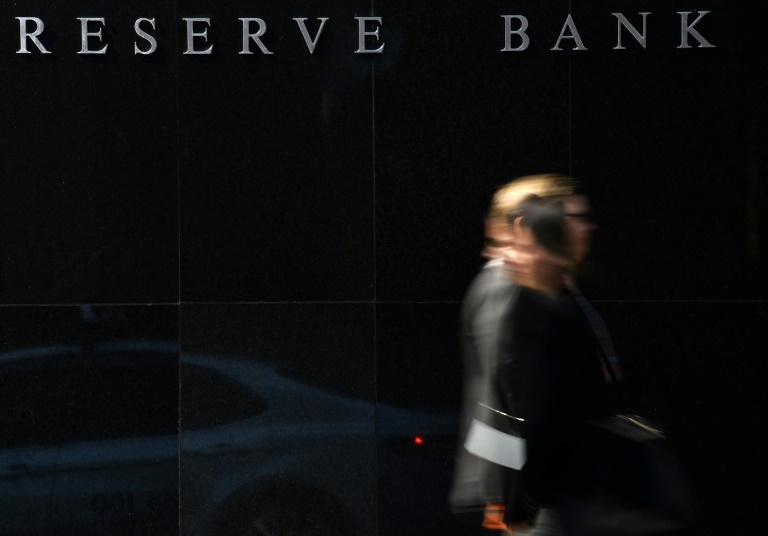
While the Reserve Bank of Australia’s 0.25 percentage point hike took the cash rate to a nine-year high of 2.60 percent, the increase was half what had been forecast as it joins others around the world in trying to rein in runaway inflation.

In a statement the RBA noted it had already increased rates “substantially in a short period of time”, though it held its inflation estimate for the year with a peak of 7.75 percent, before dropping to just over four percent in 2023.

“As is the case in most countries, inflation in Australia is too high,” the bank said in a statement.

It added that the surge in prices had been driven by “global factors”, along with strong spending levels in Australia.

The move highlights the tightrope central banks have to walk in trying to bring down inflation while at the same time trying to cushion their economies from a recession, a battle many commentators warn they are losing.

The Federal Reserve and European Central Bank have flagged further hikes at their next meetings, while the United Nations warned that the tightening programmes could trigger prolonged stagnation.

Sydney’s ASX 200 soared 3.8 percent after the announcement, while the Australian dollar dropped from US$0.6510 to as low as $0.6451 though it edged back slightly.

City Index Senior Market analyst Matt Simpson said the decision was “telling” after Australia had to “play catch-up with other central banks”.

“Already that trajectory is dying down. And as long as medium-term inflation expectations continue to behave, the case for a much higher cash is fading,” he said.

Federal Treasurer Jim Chalmers said the rise and international warnings of economic slowdowns would shape his upcoming budget announcement, which is due in three weeks.

“The storm clouds are gathering again in the global economy,” he told a news conference in Canberra.

“There’s no use pretending that the global situation hasn’t deteriorated.

“There’s no use pretending that rising inflation isn’t punching a hole in family budgets.”

Australia hikes rates less than forecast, boosting stocks

Australia raised interest rates less than expected Tuesday, boosting stocks and dragging the local dollar lower, as officials grow concerned about a slowing global economy sparked by rising borrowing costs and surging prices.

While the Reserve Bank of Australia’s 0.25 percentage point hike took the cash rate to a nine-year high of 2.60 percent, the increase was half what had been forecast as it joins others around the world in trying to rein in runaway inflation.

In a statement the RBA noted it had already increased rates “substantially in a short period of time”, though it held its inflation estimate for the year with a peak of 7.75 percent, before dropping to just over four percent in 2023.

“As is the case in most countries, inflation in Australia is too high,” the bank said in a statement.

It added that the surge in prices had been driven by “global factors”, along with strong spending levels in Australia.

The move highlights the tightrope central banks have to walk in trying to bring down inflation while at the same time trying to cushion their economies from a recession, a battle many commentators warn they are losing.

The Federal Reserve and European Central Bank have flagged further hikes at their next meetings, while the United Nations warned that the tightening programmes could trigger prolonged stagnation.

Sydney’s ASX 200 soared 3.8 percent after the announcement, while the Australian dollar dropped from US$0.6510 to as low as $0.6451 though it edged back slightly.

City Index Senior Market analyst Matt Simpson said the decision was “telling” after Australia had to “play catch-up with other central banks”.

“Already that trajectory is dying down. And as long as medium-term inflation expectations continue to behave, the case for a much higher cash is fading,” he said.

Federal Treasurer Jim Chalmers said the rise and international warnings of economic slowdowns would shape his upcoming budget announcement, which is due in three weeks.

“The storm clouds are gathering again in the global economy,” he told a news conference in Canberra.

“There’s no use pretending that the global situation hasn’t deteriorated.

“There’s no use pretending that rising inflation isn’t punching a hole in family budgets.”

Close Bitnami banner
Bitnami