AFP

At least 15 dead in new Ecuador prison riot

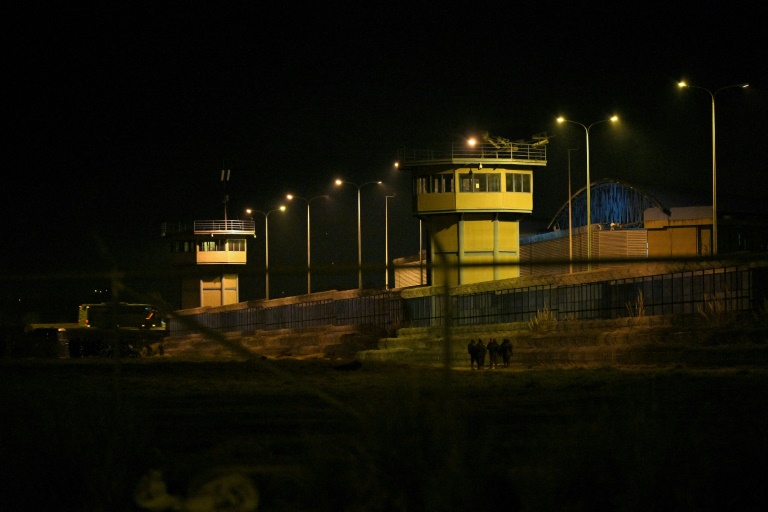
At least 15 prisoners died Monday in the latest riots to strike Ecuador’s troubled prison system, officials in the South American country reported.

The riots left 15 people dead and 21 injured, said a statement from SNAI, the agency that manages Ecuador’s prisons.

The SNAI had earlier announced that tactical units were continuing operations to regain control of the facility, located in the southern Ecuadoran city of Latacunga.

The prison, which houses about 4,300 prisoners and is one of the largest in the country, has been the site of seven major outbreaks of violence linked to drug trafficking that have left more than 400 inmates dead since February 2021.

Authorities have been unable to prevent the brutal violence, which is often carried out with knives and has involved beheadings.

According to official estimates, the country’s overcrowded prisons contain about 35,000 prisoners, many of them members of gangs linked to drug trafficking.

Bordered by Colombia and Peru, the world’s largest cocaine producers, Ecuador serves as a departure port for drug shipments, primarily to the United States and Europe.

In 2021, Ecuador seized a record 210 tons of drugs, mostly cocaine.

Last year, the country of 17.7 million people had a murder rate of 14 per 100,000, nearly double that of 2020.

In a bid to improve the living conditions in Ecuador’s prisons, President Guillermo Lasso launched the country’s first inmate census in August.

Rubbish reform: changes to waste management could slash emissions

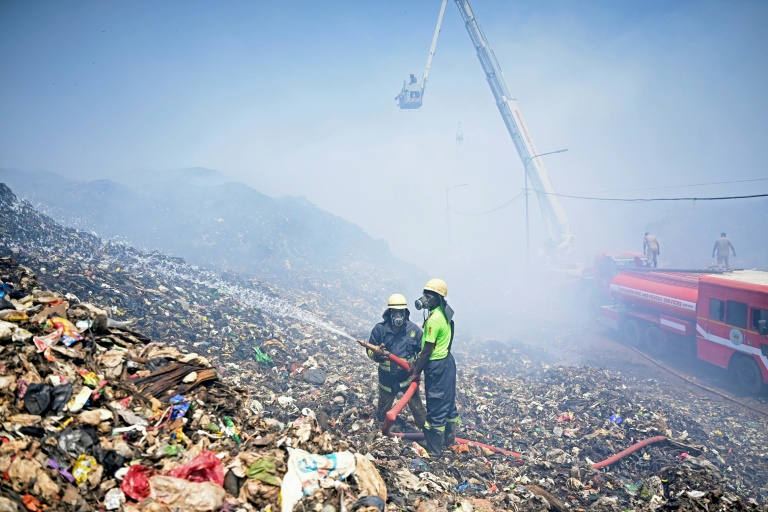
Reforms to the way that societies collect and treat their waste could slash global emissions of planet-heating methane, a new report said Monday, noting that simple measures like composting were a climate solution “staring us in the face”. 

Governments around the world have pledged to reduce emissions of methane (CH4) — which absorbs 80 times more solar radiation over short periods than carbon dioxide — in their battle to curb global warming. 

Human-induced sources of the powerful greenhouse gas are largely from livestock and manure handling, which accounts for some 30 percent of anthropogenic methane emissions, followed by the oil and gas sector (19 percent) and landfills (17 percent), according to UN climate experts.  

A new report by the organisation Global Alliance for Incinerator Alternatives (GAIA) found that simple tweaks in the waste sector, particularly in urban areas, could slash carbon emissions by the equivalent of the annual emissions of 300 million cars.  

The authors looked at “zero waste” strategies, like separating organic materials, composting, recycling non-organic material and overall reductions in discarded products. 

While reforms would not remove methane emissions from the waste system, the report estimated that policies could reduce overall emissions of methane from human sources by as much as 13 percent globally.

– Consumption changes –

The authors said that a focus on waste reduction would not only tackle methane, which leaches from landfills as organic matter rots, but could also make a major dent in the carbon pollution from the manufacture, transport and use of goods. 

“Better waste management is a climate change solution staring us in the face,” said report co-author Neil Tangri of GAIA.  

“It doesn’t require flashy or expensive new technology — it’s just about paying more attention to what we produce and consume, and how we deal with it when it is no longer needed.”

The authors stressed that tackling waste was a key element of reaching the aspirational Paris deal target of limiting global warming to 1.5 degrees Celsius above pre-industrial levels. 

The researchers modelled potential emissions reductions from eight cities around the world and found that, on average, they could cut waste sector emissions by almost 84 percent. 

Methane is responsible for roughly 30 percent of the global rise in temperatures to date. 

The powerful greenhouse gas lingers in the atmosphere only a fraction as long as CO2, but is far more efficient at trapping heat. Levels of the gas are their highest in at least 800,000 years.

At last year’s COP26 climate summit in Glasgow, more than 100 nations agreed under the Global Methane Pledge to reduce emissions 30 percent by 2030. But several major methane emitters — including China, Russia, Iran and India — failed to sign.

“This report demonstrates the huge importance of aligning our waste systems with climate goals,” said Janez Potocnik, from the International Resource Panel of the UN Environment Programme.

“It highlights the absolute necessity of reducing root sources of waste through changing our production and consumption patterns — using all the tools at our disposal to achieve the deep emissions reductions we need.”

Last stop: Paris waves goodbye to cardboard Metro tickets

The Paris Metro is phasing out cardboard tickets after 120 years, taking the capital’s urban transit into a contactless future but leaving behind nostalgic fans who will miss the humble rectangular cards.

Beyond their intended use as a transport token, the tickets with their trademark magnetic strip have inspired artists, filmmakers and singers, served as emergency notepads and, most of all, bookmarks.

“As the metro ticket disappears, so does a part of our lives,” said Gregoire Thonnat, a collector and author of a book on the history of the metro ticket. “The metro ticket is part of how we picture Paris.” 

Ile-de-France Mobilites, which operates the metro’s ticketing system, had wanted the pack of 10 tickets known as “carnets” to be gone by the first quarter of this year.

But then the Covid-19 pandemic erupted, and Russia’s war in Ukraine, and with it a global shortage of microchips needed to make the smartcards to replace the tickets — whose sales still total 550 million per year, more than 50 tonnes of paper.

“We were in a hurry, but the chip crisis slowed us down,” Laurent Probst, director-general at Ile-de-France Mobilites told AFP.

The operator has started cutting the number of metro stations that still sell carnets to nudge clients towards plastic cards, and many turnstiles can no longer read cardboard tickets.

– ‘Change their habits’ –

As a result, the share of card tickets used on urban trips has dropped from more than two-thirds a year ago to well under half now. “Our customers are beginning to change their habits,” Probst said.

He said carnets would be gone completely sometime next year.

But, probably until 2024, travellers will still be able to buy single tickets at 1.90 euros ($1.82), a markup from the 1.49 euros a single journey costs when using a smartcard.

Ile-de-France Mobilites is pushing ahead with more modernisation, including the use of smartphones at turnstiles, with Android phones to be enabled within weeks and Apple phones in 2023.

“I’m enthusiastic about this development,” Probst said. “This is a sea change in the quality of our customer service.”

Paris’s leap into the future comes 20 years after the New York subway abolished metal tokens, and more than a decade after London’s Underground went mostly paperless, but some are pleased that Paris has taken things slowly.

“I enjoy the texture of it, I enjoy the cleanness of the ticket itself when it’s new, and how much you can destroy it and still have it,” said Sarah Sturman, an Italian-American artist in Paris who uses metro tickets in her collage work.

“I’m going to keep collecting metro tickets until they’re gone, and when they’re gone they’ll be even more precious,” she told AFP.

“If I see a metro ticket in a scrapbook 10 years from now, it will all come rushing back: Memories of being on the metro late at night, or in the rush hour, my favourite metro line, or why I hate another one, losing the tickets, trying to sort through my bag at the turnstile, doing laundry and finding your crumpled metro ticket in a pocket afterwards,” she said.

– ‘Ideal thickness’ –

Cannabis smokers will also miss the 30-by-66-millimetre ticket, which can be used to make filter tips, or “crutches”, for joints.

“Ideal thickness, perfect width, readily available — the three gold standards of a good crutch,” said Jake, a Japanese-American student in Paris.

The metro ticket also has its place in popular culture, famously in singer-songwriter Serge Gainsbourg’s 1959 hit “Le Poinconneur des Lilas” (The ticket puncher at the Lilas station); as a keepsake for Yves Montand in the 1953 film “Wages of Fear”; and on the cover of Raymond Queneau’s novel “Zazie in the Metro” that director Louis Malle made into a film in 1960.

“The useful life of a metro ticket is one hour, or one and a half hours, and yet we get attached to it,” Thonnat said. “It’s quite irrational.”

“Metro ticket” is also the name of a pubic hair trimming style that leaves just a ticket-size strip after waxing. The cut, known in the United States as a “landing strip,” is the most popular among Parisian women, according to a 2020 study published by the Version Femina magazine.

– ‘Something to show our kids’ –

Some tourists visiting Paris can’t wait for the day when they won’t have to decipher complicated metro ticket machines.

“I don’t like paper tickets, I want everything on my phone,” said Javier Romani, a visitor from the Catalonia region in Spain.

“I’m against the paper tickets,” said Jeff Noel, from Indianapolis in the US state of Indiana. “If you could do this electronically in your hotel room it would be a lot easier than trying to find a machine.”

Stefania Grigoriadou, from Thessaloniki, Greece, said she preferred online booking but would hold on to the ticket she bought to get to the Disneyland Paris theme park.

“It’s nice to have it as a souvenir. Maybe we won’t come to Paris again, and so we have something to show to our kids in the future,” she told AFP.

Chile's distant paradise where scientists study climate change

Hidden inside pristine forests in Chile’s deep south, known as the end of the world, lie potential early warning signs of climate change.

Puerto Williams on Navarino island, which is separated from the South American mainland by the Beagle Channel, is the world’s southern-most town.

Far from the pollution that blights major urban and industrial centers, it is a paradise that provides unique conditions to study global warming.

“There is nowhere else like it,” Ricardo Rozzi, director of the Cape Horn International Center for global change studies and bio-cultural conservation in Puerto Williams, told AFP.

It is “a place that is especially sensitive to climate change” as average temperatures do not rise above five degrees Celsius.

This cold and windy area is the last inhabited southern frontier before reaching the Antarctic.

The ethnobotanical Omora park is home to an immense variety of lichens, mosses and fungi that scientists study by crouching down onto their knees with magnifying glasses.

In the crystal clear Robalo river, minuscule organisms act as sentinels of the changes produced by global warming.

In both the park and river, the alarm bells are ringing.

– Moss and lichen on the move –

At this latitude — 55 degrees south — climate change has an exponential effect on flora that react by seeking out low temperatures, said Rozzi, 61.

“The most obvious aspect of climate change is the rising temperatures,” he said.

“These lichens cannot survive” if a certain threshold is passed.

To escape the higher temperatures, they move.

“In the case of (mosses) we’ve noticed that they have moved. Before they were between 50 and 350 (meters above sea level) and now they are between 100 and 400,” said Rozzi.

He says Omora has more diversity per square meter of lichens and mosses than anywhere else in the world.

They also help to absorb carbon dioxide.

Another aspect is the elevational diversity gradient, an ecological pattern in which biodiversity changes with elevation.

The 700-meter high Bandera hill’s biodiversity changes every 200 meters and there is a mammoth 1.5 degrees Celsius difference in temperature between top and bottom.

“We can see what changes happen in the high mountains and in the area close to the sea in a very short distance, and we can see how the temperature affects the biodiversity that lives in this river,” Tamara Contador, 38, a biologist at the Cape Horn International Center, told AFP.

She studies the gradients themselves.

If the height difference between gradients rises or falls on the mountain, scientists can determine whether there has been a global change in temperature.

They say there has been.

– Avoiding ‘extermination’ –

“On a global level, the polar and subpolar ecosystems are the most affected by climate change, so we are in a place where climate change has a much bigger effect on biodiversity than other places,” said Contador.

River organisms also form part of the alert system.

“The organisms that live here are also indicators of water quality and global environmental change,” added Contador.

River organisms move about and have already increased their reproductive cycle, says Rozzi. This confirms there has been a small change to the climate in the area that could have been much greater elsewhere on the planet.

“Some insects that have an annual eggs to larvae to adulthood cycle are now having two cycles because the temperature has risen,” said Rozzi.

By studying these organisms and learning from them “we can avoid crossing the threshold that brings us to the extermination of humanity and other life forms,” he added.

Why crypto's big 'merge' is causing big headaches

The biggest software upgrade in the short history of crypto has fulfilled its promise to wipe out more than 99 percent of the electricity used by the second-biggest cryptocurrency, experts have told AFP.

That is no mean feat, given that the Ethereum blockchain was burning through about as much electricity as New Zealand.

Sceptics had expected glitches with the upgrade, known as “the merge”, but it ended up being a “rather boring event”, according to Alex de Vries of the Free University in Amsterdam. 

De Vries, whose Digiconomist website models the energy use of Bitcoin and Ethereum, said consumption had indeed plummeted by more than 99 percent on Ethereum.

Moritz Platt, a researcher specialising in crypto at King’s College London, said the 99 percent estimates were realistic and heralded a positive step towards “cryptocurrency sustainability”.

So the Ethereum blockchain, which supports billions of dollars of trading in games, tokens, art and the ether currency, has cleaned up its act.  

But there are complications.

Ethereum faces bitter opposition from those who lost out from the merge and it could also get greater scrutiny from regulators.

– ‘Astronomical’ growth –

The old system, known as “proof of work”, relied on people and firms to “mine” new coins — an industry worth $22 million daily before the merge, according to de Vries.  

The miners used vast power-guzzling computer rigs to compete with each other to solve complex equations, and the winner was awarded the prize of adding entries to the blockchain and generating coins. 

The merge wiped out their business model overnight. 

“Those rigs do not magically turn back into invested capital,” said a crypto-miner known only as “J” who operates between Singapore and Hong Kong. 

He said it was costing him between $30,000 and $40,000 a month to keep his staff and equipment idling while he thinks about his next move.

Plenty of miners have sold off their kit, while others are putting their rigs to work on less profitable blockchains that still use the old system. 

A miner who uses the name Leon Ravencoin, for example, has been tweeting non-stop about the “astronomical” growth of Ravencoin, one of the currencies to get a boost after the merge.

The combined computing power used by these coins is around one-fifth of the pre-merge Ethereum blockchain. 

However, de Vries said they generated only about $500,000 in daily revenue so only the most energy-efficient machines with the lowest energy costs would be able to make a profit.

As a result, one-fifth of the computing power would work out far less than one-fifth of the electricity use.

– ‘Designed to be centralised’ –

Aside from the problem with miners, the new system, known as “proof of stake”, has several issues baked in.

Anyone willing to stake a large amount of ether can now “validate” new entries on the blockchain.

The more you stake, the more chance you have of updating the chain and earning coins. 

The system gives an advantage to the biggest players, and just three companies now account for more than half of “validators”, according to research by Dune Analytics. 

Cryptocurrencies were envisaged as a decentralised alternative to the banks, corporations and governments that failed so spectacularly during the global crash of 2008.

But crypto-miner J said the new Ethereum was “designed to be more centralised” and suggested it no longer had a real purpose.

Regulators have also begun to pay attention, with US Securities and Exchange Commission Chairman Gary Gensler suggesting proof-of-stake looked like a securities market that would fall under his remit.

The disaster scenario for Ethereum would be that enough disgruntled purists switch to one of the gas-guzzling proof-of-work alternatives, with Ethereum Classic being the main one.

“There is nothing capping Ethereum Classic prices,” said de Vries, meaning that miners could potentially make good profits if the market shifted their way.

A rush from the greener blockchain was “theoretically definitely possible”, he said.

Why crypto's big 'merge' is causing big headaches

The biggest software upgrade in the short history of crypto has fulfilled its promise to wipe out more than 99 percent of the electricity used by the second-biggest cryptocurrency, experts have told AFP.

That is no mean feat, given that the Ethereum blockchain was burning through about as much electricity as New Zealand.

Sceptics had expected glitches with the upgrade, known as “the merge”, but it ended up being a “rather boring event”, according to Alex de Vries of the Free University in Amsterdam. 

De Vries, whose Digiconomist website models the energy use of Bitcoin and Ethereum, said consumption had indeed plummeted by more than 99 percent on Ethereum.

Moritz Platt, a researcher specialising in crypto at King’s College London, said the 99 percent estimates were realistic and heralded a positive step towards “cryptocurrency sustainability”.

So the Ethereum blockchain, which supports billions of dollars of trading in games, tokens, art and the ether currency, has cleaned up its act.  

But there are complications.

Ethereum faces bitter opposition from those who lost out from the merge and it could also get greater scrutiny from regulators.

– ‘Astronomical’ growth –

The old system, known as “proof of work”, relied on people and firms to “mine” new coins — an industry worth $22 million daily before the merge, according to de Vries.  

The miners used vast power-guzzling computer rigs to compete with each other to solve complex equations, and the winner was awarded the prize of adding entries to the blockchain and generating coins. 

The merge wiped out their business model overnight. 

“Those rigs do not magically turn back into invested capital,” said a crypto-miner known only as “J” who operates between Singapore and Hong Kong. 

He said it was costing him between $30,000 and $40,000 a month to keep his staff and equipment idling while he thinks about his next move.

Plenty of miners have sold off their kit, while others are putting their rigs to work on less profitable blockchains that still use the old system. 

A miner who uses the name Leon Ravencoin, for example, has been tweeting non-stop about the “astronomical” growth of Ravencoin, one of the currencies to get a boost after the merge.

The combined computing power used by these coins is around one-fifth of the pre-merge Ethereum blockchain. 

However, de Vries said they generated only about $500,000 in daily revenue so only the most energy-efficient machines with the lowest energy costs would be able to make a profit.

As a result, one-fifth of the computing power would work out far less than one-fifth of the electricity use.

– ‘Designed to be centralised’ –

Aside from the problem with miners, the new system, known as “proof of stake”, has several issues baked in.

Anyone willing to stake a large amount of ether can now “validate” new entries on the blockchain.

The more you stake, the more chance you have of updating the chain and earning coins. 

The system gives an advantage to the biggest players, and just three companies now account for more than half of “validators”, according to research by Dune Analytics. 

Cryptocurrencies were envisaged as a decentralised alternative to the banks, corporations and governments that failed so spectacularly during the global crash of 2008.

But crypto-miner J said the new Ethereum was “designed to be more centralised” and suggested it no longer had a real purpose.

Regulators have also begun to pay attention, with US Securities and Exchange Commission Chairman Gary Gensler suggesting proof-of-stake looked like a securities market that would fall under his remit.

The disaster scenario for Ethereum would be that enough disgruntled purists switch to one of the gas-guzzling proof-of-work alternatives, with Ethereum Classic being the main one.

“There is nothing capping Ethereum Classic prices,” said de Vries, meaning that miners could potentially make good profits if the market shifted their way.

A rush from the greener blockchain was “theoretically definitely possible”, he said.

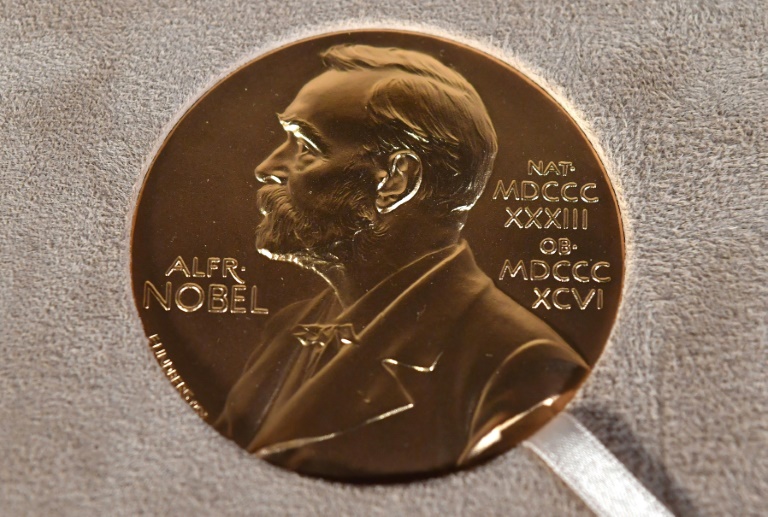
Nobel Physics Prize could focus on light

Bending and manipulating light to make objects invisible or harnessing it more efficiently to produce electricity are among the discoveries tipped to win the Nobel Physics Prize on Tuesday.

The Royal Swedish Academy of Sciences is due to announce the winner at 11:45 am (0945 GMT).

Last year, the academy honoured Syukuro Manabe, of Japan and the United States, and German Klaus Hasselmann for their research on climate models, while Italian Giorgio Parisi also won for his work on the interplay of disorder and fluctuations in physical systems.

David Pendlebury, head of Clarivate — an organisation which keeps a close eye on potential laureates in the sciences — said the committee is likely to stay terrestrial this year.

“There have been so many astrophysics, cosmology prizes, just in the last few years. So I don’t think that’s on the table this year,” he told AFP.

He said a likely pick could be Britain’s John B. Pendry, who has become famous for his “invisibility cloak,” where he uses materials to bend light to make objects invisible.

Other potential winners are Sajeev John and American Eli Yablonovitch, who in 1987 discovered photonic crystals that can control and manipulate the flow of light.

– Photovoltaics? –

Ulrika Bjorksten, a science commentator for Swedish public radio, said the academy could also focus on photovoltaics: the conversion of light to electricity.

Bjorksten said work on perovskite — a material discovered by the Russian mineralogist Lev Perovski in the 19th century — might get recognised.

This could steer the academy towards Britain’s Henry Snaith, a physics professor at the University of Oxford, who is developing new materials and structures for hybrid solar cells.

The relatively recent discovery that metal halide perovskites can operate extremely efficiently in thin film solar cells makes him a contender, Bjorksten said.

“He was the origin for why there was so much attention given to perovskite,” Bjorksten told AFP.

South Korea’s Nam-Gyu Park could also be a candidate for his research into improving the stability of photovoltaic cells.

Specialists in photovoltaics on the other hand could potentially be overlooked since the field is so vast, according to Bjorksten.

“It’s really difficult… because there are so many involved,” Bjorksten said.

Linus Brohult, editor of the science desk at Swedish public broadcaster SVT, said the microphysics expert Stephen Quake, could be considered for work on microscopic fluid dynamics.

– Women absent –

Only four women — Marie Curie (1903), Maria Goeppert Mayer (1963), Donna Strickland (2018) and Andrea Ghez (2020) — have won the Nobel Physics Prize since the award was instituted in 1901.

“It reflects the unfair conditions in society, particularly in years past but still existing,” Goran Hansson, secretary general of the Swedish Academy of Sciences, told AFP last year.

Quotas however have been ruled out.

“We want every laureate (to) be accepted… because they made the most important discovery, and not because of gender or ethnicity,” Hansson said.

Last year, 12 men and one woman won Nobel Prizes, with all of the science nods going to men.

The physics prize is followed by chemistry on Wednesday, with the highly watched literature and peace prizes announced on Thursday and Friday respectively.

For the literature prize, critics told AFP they thought the Swedish Academy may go for a more mainstream author this year, after selecting lesser-known writers the past two years.

Last year, Tanzanian author Abdulrazak Gurnah won, while US poet Louise Gluck was crowned in 2020.

The peace prize is expected to hold a special significance this year given the Russian invasion of Ukraine.

The International Criminal Court, tasked with investigating war crimes in Ukraine, has been mentioned as a possible laureate this year, along with jailed Russian dissident Alexei Navalny and Belarusian opposition leader Svetlana Tikhanovskaya.

Asian traders track Wall St up as US data tempers rate fears

Asian markets followed Wall Street higher Tuesday after weak US factory data sparked optimism that a series of big interest rate hikes were taking their toll, allowing the Federal Reserve to ease its foot off the pedal.

The rally in equities was matched by more gains in sterling as traders welcomed the government’s decision to scrap a planned cut in the top rate of income tax.

Oil also continued to rise on expectations OPEC and other major producers will slash output this week, having become spooked by a plunge in the commodity on recession fears.

All three main indexes in New York enjoyed a bumper start to the quarter after data showed US manufacturing growth slowed more than expected in September to its weakest in more than two years.

SPI Asset Management’s Stephen Innes said: “The positive aspect in the data is prices paid dropped to 51.7, the lowest print since June 2020, triggering a mini-risk revival in stocks and a sell-off on the US dollar as US yields continued to slide.

“In this hawkishly priced risk environment, bad data is considered good news, as it raises the possibility of a doveish pivot by the Federal Reserve.”

But he added that there was a lot more data to come this week, topped by Friday’s US jobs figures, that could alter investors’ views, while several Fed officials remained wedded to their rate hike plan to tame inflation.

Nicole Webb, at Wealth Enhancement Group, told Bloomberg Television that while the Fed will at some point stop hiking, “how long they hold us or suspend us there is still in question”.

Still, in early trade Tuesday, Asia built on the Wall Street surge.

Tokyo and Seoul were among the leaders, despite news that North Korea had fired a missile over Japan for the first time since 2017.

Sydney, Singapore, Taipei, Manila and Wellington were also sharply higher. Hong Kong and Shanghai are closed for holidays.

On currency markets, sterling held its gains against the dollar, which came on the back of lower US rate hike bets as well as the UK government’s decision to walk back a controversial tax cut.

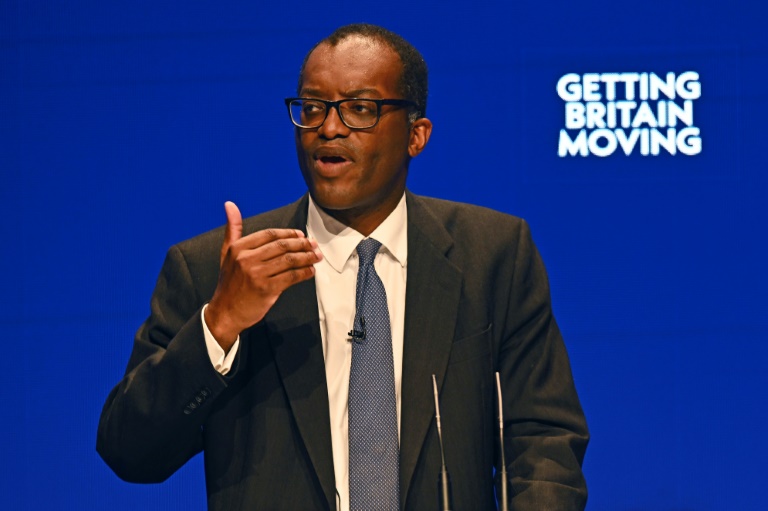
Ahead of a speech to a conference of the ruling Conservatives, finance minister Kwasi Kwarteng dropped the proposal, which was part of a big-borrowing mini-budget that sent shudders through markets.

The UK unit held above $1.13, having last Monday tanked to a record low $1.0350.

The tax cut would have cost about £2-3 billion out of an estimated £72.4 billion worth of debt issuance this year.

But National Australia Bank’s Tapas Strickland said the u-turn “is a sign that the government is responding to market concerns and also to polling which may mean the new government is not as cavalier as some had feared”.

Commodities traders are keenly awaiting Wednesday’s monthly meeting of OPEC and other producers after reports said it is considering a million-barrels-a-day output cut.

WTI surged more than five percent Monday and Brent was up 4.4 percent, recovering some of the huge losses suffered in recent months because of fears about demand caused by an expected recession.

The jump was also helped by the weaker dollar, which makes the so-called black gold cheaper for buyers using other currencies.

A cut would deal an extra blow to central banks trying to fight decades-high inflation, which has partly been driven by the spike in crude markets stoked by Russia’s invasion of Ukraine.

But SPI’s Innes added OPEC could justify the move by pointing to the recent drop in prices, which are down about 40 percent from June.

– Key figures around 0230 GMT –

Tokyo – Nikkei 225: UP 2.4 percent at 26,840.75 (break)

Hong Kong – Hang Seng Index: Closed for a holiday

Shanghai – Composite: Closed for a holiday

Pound/dollar: DOWN at $1.1311 from $1.1315 on Monday

Euro/dollar: DOWN at $0.9817 from $0.9822

Euro/pound: UP at 86.79 pence from 86.74 pence

Dollar/yen: UP at 144.77 yen from 144.66 yen

West Texas Intermediate: UP 0.1 percent at $83.74 per barrel

Brent North Sea crude: UP 0.3 percent at $89.15 per barrel

New York – Dow: UP 2.7 percent at 29,490.89 (close)

London – FTSE 100: UP 0.2 percent at 6,908.76 (close) 

Asian traders track Wall St up as US data tempers rate fears

Asian markets followed Wall Street higher Tuesday after weak US factory data sparked optimism that a series of big interest rate hikes were taking their toll, allowing the Federal Reserve to ease its foot off the pedal.

The rally in equities was matched by more gains in sterling as traders welcomed the government’s decision to scrap a planned cut in the top rate of income tax.

Oil also continued to rise on expectations OPEC and other major producers will slash output this week, having become spooked by a plunge in the commodity on recession fears.

All three main indexes in New York enjoyed a bumper start to the quarter after data showed US manufacturing growth slowed more than expected in September to its weakest in more than two years.

SPI Asset Management’s Stephen Innes said: “The positive aspect in the data is prices paid dropped to 51.7, the lowest print since June 2020, triggering a mini-risk revival in stocks and a sell-off on the US dollar as US yields continued to slide.

“In this hawkishly priced risk environment, bad data is considered good news, as it raises the possibility of a doveish pivot by the Federal Reserve.”

But he added that there was a lot more data to come this week, topped by Friday’s US jobs figures, that could alter investors’ views, while several Fed officials remained wedded to their rate hike plan to tame inflation.

Nicole Webb, at Wealth Enhancement Group, told Bloomberg Television that while the Fed will at some point stop hiking, “how long they hold us or suspend us there is still in question”.

Still, in early trade Tuesday, Asia built on the Wall Street surge.

Tokyo and Seoul were among the leaders, despite news that North Korea had fired a missile over Japan for the first time since 2017.

Sydney, Singapore, Taipei, Manila and Wellington were also sharply higher. Hong Kong and Shanghai are closed for holidays.

On currency markets, sterling held its gains against the dollar, which came on the back of lower US rate hike bets as well as the UK government’s decision to walk back a controversial tax cut.

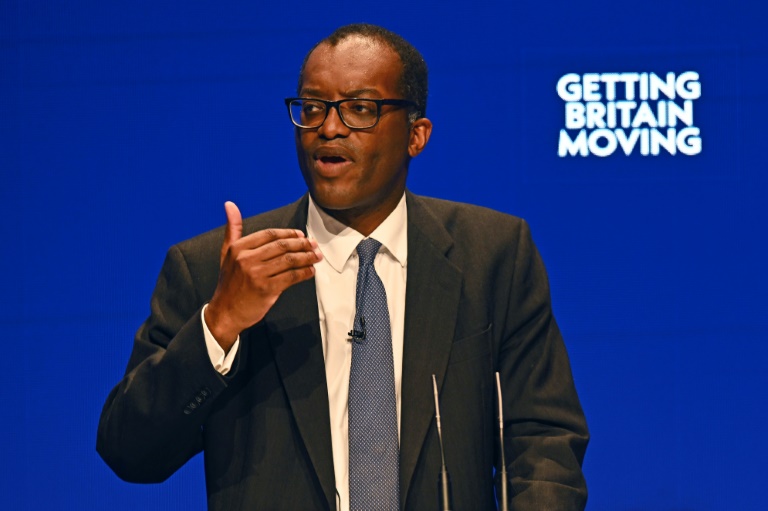
Ahead of a speech to a conference of the ruling Conservatives, finance minister Kwasi Kwarteng dropped the proposal, which was part of a big-borrowing mini-budget that sent shudders through markets.

The UK unit held above $1.13, having last Monday tanked to a record low $1.0350.

The tax cut would have cost about £2-3 billion out of an estimated £72.4 billion worth of debt issuance this year.

But National Australia Bank’s Tapas Strickland said the u-turn “is a sign that the government is responding to market concerns and also to polling which may mean the new government is not as cavalier as some had feared”.

Commodities traders are keenly awaiting Wednesday’s monthly meeting of OPEC and other producers after reports said it is considering a million-barrels-a-day output cut.

WTI surged more than five percent Monday and Brent was up 4.4 percent, recovering some of the huge losses suffered in recent months because of fears about demand caused by an expected recession.

The jump was also helped by the weaker dollar, which makes the so-called black gold cheaper for buyers using other currencies.

A cut would deal an extra blow to central banks trying to fight decades-high inflation, which has partly been driven by the spike in crude markets stoked by Russia’s invasion of Ukraine.

But SPI’s Innes added OPEC could justify the move by pointing to the recent drop in prices, which are down about 40 percent from June.

– Key figures around 0230 GMT –

Tokyo – Nikkei 225: UP 2.4 percent at 26,840.75 (break)

Hong Kong – Hang Seng Index: Closed for a holiday

Shanghai – Composite: Closed for a holiday

Pound/dollar: DOWN at $1.1311 from $1.1315 on Monday

Euro/dollar: DOWN at $0.9817 from $0.9822

Euro/pound: UP at 86.79 pence from 86.74 pence

Dollar/yen: UP at 144.77 yen from 144.66 yen

West Texas Intermediate: UP 0.1 percent at $83.74 per barrel

Brent North Sea crude: UP 0.3 percent at $89.15 per barrel

New York – Dow: UP 2.7 percent at 29,490.89 (close)

London – FTSE 100: UP 0.2 percent at 6,908.76 (close) 

Australia lists small wallaby among new endangered species

Australia listed a small wallaby and the grey snake among 15 new threatened species on Tuesday as it launched a zero-extinction plan for its unique wildlife.

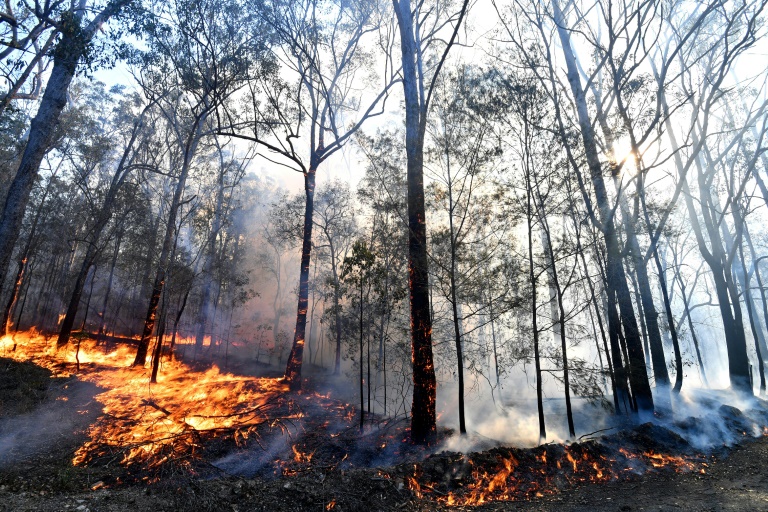
Many of Australia’s species are clinging to existence, their habitats shrinking from human activity and extreme events such as the 2019-2020 Black Summer bushfires, wildlife groups say.

Prime Minister Anthony Albanese’s government announced a new 10-year scheme to try and halt the slide into extinction of 110 “priority species” and shield 20 “priority places” from further degradation.

It aims to prevent any new extinctions of plants and animals while conserving at least 30 percent of Australia’s land mass.

Wildlife groups blame Australia’s poor record in protecting its unique species largely on habitat destruction, accelerated by global warming and resulting extreme weather.

The Black Summer fires burned through 5.8 million hectares in eastern Australia and killed or displaced an estimated 1-3 billion animals.

“The Black Summer bushfires in particular have seen devastating results for many species. We are determined to give wildlife a better chance,” said Environment Minister Tanya Plibersek.

“Listing species as threatened under national environment law is a critical step in protecting the species and habitats in need  of urgent help.”

– ‘Extinction capital’ –

Australia’s attempts to protect its wildlife had not worked so far, the minister added. 

“Australia is the mammal extinction capital of the world,” she said.

Among the 15 plants and animals listed as threatened are the vulnerable small parma wallaby, which faces danger from bushfires and predators, the endangered mildly venomous grey snake of Queensland, and the endangered small wingless matchstick grasshopper, which is sensitive to drought and frequent bushfires.

Wildlife groups welcomed the government’s goal of preventing any new plant or animal extinctions.

The objective “is ambitious but essential if future generations of Australians are to see animals like koalas, mountain pygmy possums, greater gliders and gang gang cockatoos,” said the Australian Conservation Foundation’s nature programme manager Basha Stasak.

“Stopping the destruction of wildlife habitat is the key to achieving this objective.”

Stasak called on the government to strengthen national environment law, saying it had failed to protect animals, plants and ecosystems.

Scientists had estimated the cost of tackling Australia’s “extinction crisis” at 1.69 billion Australian dollars ($1 billion) a year, Stasak said.

– ‘Downward spiral’ –

A five-yearly State of the Environment report released in July painted a picture of wildlife devastation on land and sea.

It cited the clearing of millions of hectares of primary forest and mass coral bleaching on the Great Barrier Reef caused by marine heatwaves.

WWF-Australia called for investment in recovery plans for all threatened species.

“Australia’s wildlife and wild places have been on a dangerous downward spiral,” said WWF-Australia chief conservation officer Rachel Lowry.

She welcomed Australia’s target of zero new extinctions, saying it matched the goals of New Zealand and European Union member countries.

Lowry pressed the government to set out and fund a recovery plan for the more than 1,900 threatened species in Australia.

“This plan picks 110 winners,” she said.

“It’s unclear how it will help our other ‘non priority’ threatened species such as our endangered greater glider for example.”

Plibersek told journalists that protecting 110 prioritised species would create a “halo effect” on interdependent species in the same habitat.

Protecting 20 locations could create “little Noah’s Arks, places that we can be confident we are returning to healthy populations of plants and animals,” she said.

Close Bitnami banner
Bitnami