AFP

Oil jumps but dollar bruised on US data

Oil prices jumped Monday on expectations of an OPEC output cut, while weak US data sent stocks higher amid rising hopes central banks may be able to ease off interest rate hikes.

Investors have been on edge over worries that rising interest rates, aimed at fighting sky-high inflation, could spark recessions, while the United Nations has called on central banks to slow down or risk pushing the world into grim prolonged stagnation.

A key manufacturing survey showing price pressures receding and demand slowing, helped buoy market sentiment amid hopes the Federal Reserve might soon pull back on its aggressive interest rate hikes.

The Institute for Supply Management said its manufacturing index dropped 1.9 points to 50.9 percent, just barely above the 50-percent threshold indicating expansion, as the prices index fell to the lowest in more than two years.

Fed officials have said the central bank will continue raising interest rates until inflation begins to drop, even if that means the US economy enters recession.

New York Fed President John Williams reiterated that message on Monday, saying that despite signs of easing demand and supply issues, inflation has become “broad-based … which will take longer to bring down.”

Still, investors are hoping interest rates may be close to a peak and the benchmark Dow jumped 2.7 percent, a good start to the new quarter after Wall Street’s worst month in 20 years.

Adam Sarhan of 50 Park Investments said “the market was extremely oversold,” which led some investors to come back looking for cheap shares.

“That happens during bear markets, the biggest up moves in history happened during bear markets,” he told AFP.

European stock indices moved higher following the US data, with Frankfurt’s DAX index ending the day 0.8 percent higher, the Paris CAC climbing 0.6 percent and London’s FTSE 100 adding 0.2 percent.

– Oil spikes before OPEC –

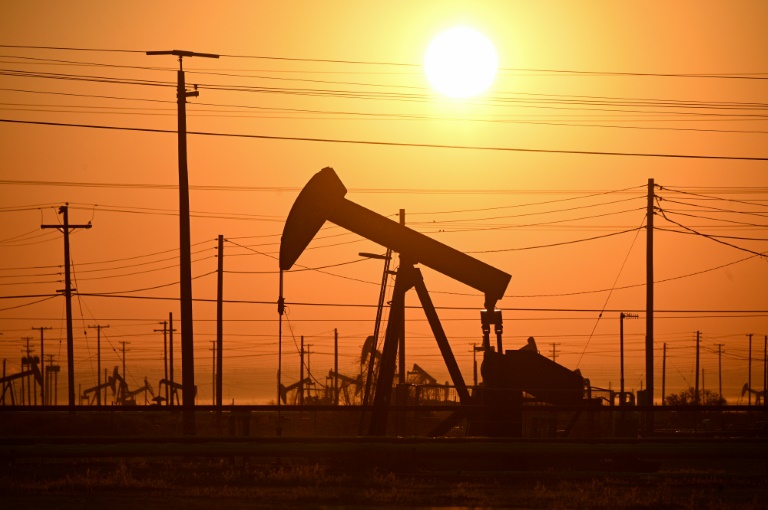
Oil prices leapt on reports that OPEC and its allies are considering a major output cut to stem a price plunge caused by demand worries.

But that stoked concerns about soaring inflation, which has been fueled this year by sky-high energy prices after key producer Russia’s invasion of Ukraine.

“Any cut will no doubt frustrate consuming countries that are on the verge of recession after spending a year dealing with soaring energy costs on the back of the post-pandemic recovery and war in Ukraine,” said OANDA analyst Craig Erlam.

Officials from the 13 members of the Organization of the Petroleum Exporting Countries (OPEC), led by Riyadh, and their 10 partners, led by Moscow, are due to meet physically on Wednesday for the first time since March 2020.

– Sterling gains on U-turn –

The British pound bounded above $1.13 following the latest US data, and after the UK government scrapped plans to axe its top income tax rate which helped send sterling spiraling to a record dollar low of $1.0350 a week ago.

Shares in Credit Suisse plunged to a new low in Zurich on Monday as the scandal-plagued lender sought to ease concerns about its financial health.

Its stock tumbled 11.6 percent to 3.58 Swiss francs ($3.61) before clawing back most of the ground, ending the day with a drop of 0.9 percent at 3.94 francs.

The Financial Times reported that senior executives sought over the weekend to reassure big clients and investors about the bank’s liquidity and capital position due to concerns raised about its financial strength.

Asian equities mainly fell Monday, with Hong Kong tumbling to its lowest point in more than a decade as fears for China’s economy deepens this year’s investor rout.

– Key figures around 2030 GMT –

New York – Dow: UP 2.7 percent at 29,490.89 (close)

New York – S&P 500: UP 2.6 percent at 3,678.43 (close)

New York – Nasdaq: UP 2.3 percent at 10,815.44 (close)

EURO STOXX 50: UP 0.7 percent at 3,342.17 (close)

London – FTSE 100: UP 0.2 percent at 6,908.76 (close) 

Frankfurt – DAX: UP 0.8 percent at 12,209.48 (close)

Paris – CAC 40: UP 0.6 percent at 5,794.15 (close)

Tokyo – Nikkei 225: UP 1.1 percent at 26,215.79 (close)

Hong Kong – Hang Seng Index: DOWN 0.8 percent at 17,079.51 (close)

Shanghai – Composite: Closed for a holiday

Pound/dollar: UP at $1.1315 from $1.1170 on Friday

Euro/dollar: UP at $0.9822 from $0.9802

Euro/pound: DOWN at 86.74 pence from 87.75 pence

Dollar/yen: DOWN at 144.66 yen from 144.74 yen

Brent North Sea crude: UP 4.4 percent at $88.86 per barrel

West Texas Intermediate: UP 5.2 percent at $82.63 per barrel

burs-rl/cdw/hs/des
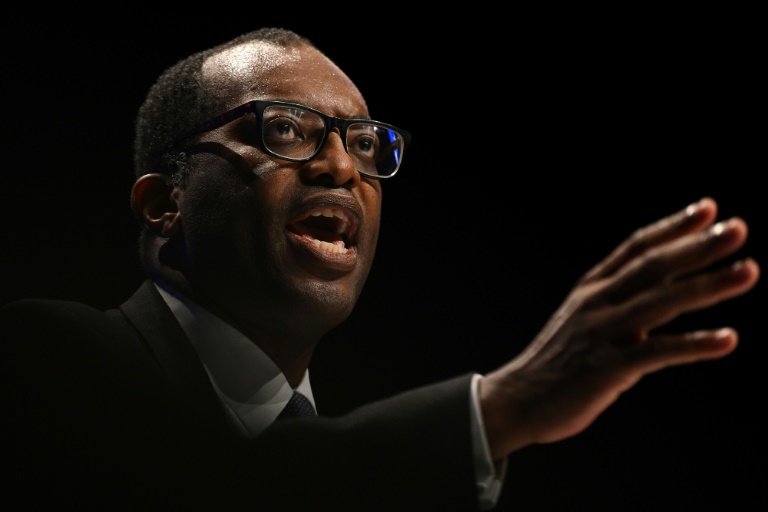
UK govt vows reform despite U-turn on tax cut for the rich

Britain’s under-fire finance minister Kwasi Kwarteng on Monday vowed to press on with his controversial economic reform plans, despite announcing a dramatic U-turn on a controversial tax cut for high earners.

The proposed cut was part of a debt-driven economic package that has bombed with the markets, the electorate and much of the ruling Conservative party.

The abrupt reversal raised questions about his and Prime Minister Liz Truss’s right-wing policy agenda, less than a month after taking power and a day after both vowed to stay the course.

“What a day. It has been tough,” Kwarteng said in a speech to the Tories’ annual conference in Birmingham, central England.

But he told delegates that “we need to focus on the task in hand”, implicitly criticising his Tory predecessors by saying there was a need to boost the economy out of its “slow, managed decline”.

“To grow the economy we really do need to do things differently,” he said.

Kwarteng pointedly avoided any specific mention of his about-face on the proposed scrapping of the 45 percent top rate of income tax.

But he insisted his and Truss’s contentious plans, which include axing a cap on bankers’ bonuses and reversing a planned rise in corporation tax, as well as a recent hike in national insurance contributions, were “sound” and “credible”.

“It will increase growth,” he added in the speech, which was delayed by an unspecified security alert at the venue. Police lifted the alert about an hour later.

– Political storm –

Earlier, Kwarteng said he had never considered resigning over the furore caused by the proposals, saying only that the decision to drop the tax cut was because it had become a “distraction”.

On the markets, the intention to pay for the cuts with billions more in extra borrowing had sent the pound tumbling to a record low against the dollar and UK government bond yields soaring.

The pound rebounded Monday as the government partially reversed course. 

Nevertheless, Kwarteng and Truss remain in the eye of a political storm, given the perceived unfairness of the package, which could yet see cuts to spending and benefits amid Britain’s worst cost-of-living crisis in generations.

As late as Sunday, the finance chief had been due to tell the conference that “we must stay the course”, according to a preview of his speech released by the Conservatives.

Truss on Sunday admitted communication errors in how the September 23 economic package had been presented, but agreed she was “absolutely committed” to abolishing the top tax rate. 

Within 24 hours, though, the 47-year-old prime minister — only in the role since September 6 — had performed one of most striking government U-turns in recent memory.

Truss told the BBC she had not discussed axing the high-earners’ tax band with her cabinet, who only seemed to learn of the reversal along with the public on Monday.

She also appeared to distance herself from the move by claiming “it was a decision that the chancellor made”, but her spokesman downplayed the comments.

“The prime minister was clear that… fiscal events are the responsibility of the chancellor — that’s all she was setting clear,” he told reporters Monday.

Out of a total tax package worth £45 billion ($50 billion), the top rate cut would have cost some £2 billion — relatively small, but outsized for its political impact.

Tory MPs who backed former finance minister Rishi Sunak — Truss’s rival in the recent Tory leadership race — had threatened to vote it down, raising the prospect of a major battle in the House of Commons.

Grant Shapps, who was refused a cabinet job by Truss, welcomed her scrapping the tax cut, which he told BBC radio had been planned with “grossly insensitive timing”.

– Credibility ‘destroyed’ –

With the U-turn, the stakes have soared for Truss as she prepares to close the party conference with a speech Wednesday.

A raft of polls have found Truss and her economic package deeply unpopular, alongside plummeting ratings for the Tories.

Some surveys showed Labour with mammoth leads of up to 33 points — its biggest since the heyday of its former prime minister Tony Blair in the late 1990s.

Labour’s finance spokeswoman Rachel Reeves said the climbdown “comes too late for the families who will pay higher mortgages and higher prices for years to come” following the recent market turmoil.

“The Tories have destroyed their economic credibility and damaged trust in the British economy,” she said.

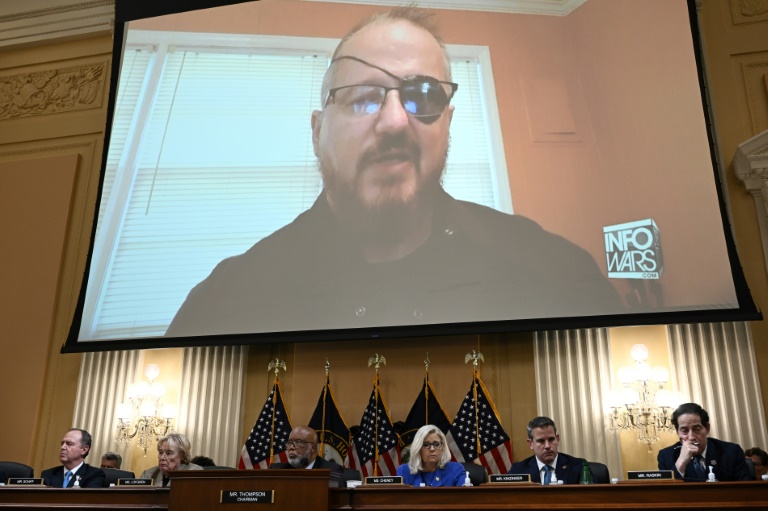
From Yale to insurrection: Stewart Rhodes, Oath Keepers 'general'

The government calls Stewart Rhodes the “general” of a traitorous violent insurrection in Washington on January 6, 2021; his lawyers say he led a “peacekeeping force” in the riot at the US Capitol.

And his former wife called him a narcissistic “sociopath” who mythologizes his own future as “the next George Washington.”

Rhodes, 56, was at the center Monday of the first US sedition trial in decades, accused with other members of this Oath Keepers militia group of plotting the armed attack on the US Congress to block Joe Biden from becoming president.

Prosecutors say that as the leader of the Oath Keepers, the eye-patch-wearing Yale law graduate spearheaded the attack on the Capitol by supporters of then-president Donald Trump, stockpiling weapons nearby for an armed insurrection.

In an indictment, the Justice Department detailed encrypted chats in which Rhodes urged Oath Keeper members to prepare for a revolution after Trump was defeated by Biden in the November 2020 election.

“We aren’t getting through this without civil war,” he told them.

If Biden became president, he said, “It will be a bloody and desperate fight… That can’t be avoided.”

– From Yale Law to conspiracies –

Rhodes has spent years preparing to do battle with a government he views as increasingly repressive. 

He grew up in the southwest US, and joined the army after finishing high school.

But he was discharged early due to an injury in a parachuting exercise.

His former wife Tasha Adams Rhodes, with whom he had six children, says they met as he was working as a parking valet and she was teaching dance in Las Vegas.

He was also working as a firearms instructor — and lost one eye when he dropped a gun and it fired, hitting him.

In 1998 he graduated from a local university and was accepted at Yale University Law School, one of the country’s most elite institutions.

After Yale he set up a law practice in Montana, where he developed the idea for the Oath Keepers in 2009, on the premise that the federal government was increasingly encroaching on citizens’ rights including restricting gun ownership.

Followers must be willing to fight the government, he would say.

– Mainstreaming fringe ideas –

Blogging online about politics and the alleged threat of the American left, Rhodes struck a nerve among many white men with military and police backgrounds, recruiting thousands to the group.

“He showed a talent for giving fringe ideas more mainstream appeal,” wrote Mike Giglio in an Atlantic profile of Rhodes.

As the group grew, Rhodes mobilized armed, combat-suited Oath Keepers for security at Republican rallies and during social disturbances, like the riots in Ferguson, Missouri in 2014 after police shot a Black man.

“The Oath Keepers are basically a peacekeeping force,” Rhodes’ attorney Phillip Linder told the federal district court in Washington Monday. “They make themselves available to help keep peace in the streets.”

– ‘Extremely patriotic’ – 

But government prosecutor Jeffrey Nestler Monday said that text messages and recorded conversations show Rhodes planned the January 6 actions and organized his followers around them.

He depicted Rhodes outside the Capitol during the riot, constantly on his phone texting orders to his followers.

He was “like a general in the battlefield,” said Nestler. The Oath Keepers launched their fight to break through police lines into the Capitol after Rhodes texted them: “The patriots are taking matters into their own hands.”

Linder, Rhodes’ attorney, says that the government has exaggerated and taken out of context many of Rhodes’ text messages to portray his client as plotting to overthrow the government.

“Stewart Rhodes meant no harm to the capitol that day. Stewart Rhodes did not have any violent intent that day,” said Linder.

“Rhodes is extremely patriotic.. he is a constitutional expert,” he added.

More data needed to tackle systemic racism by police: UN experts

A dearth of data in many countries on the race and ethnicity of people arrested or killed by police presents a major barrier to tackling systemic racism, UN investigators warned Monday.

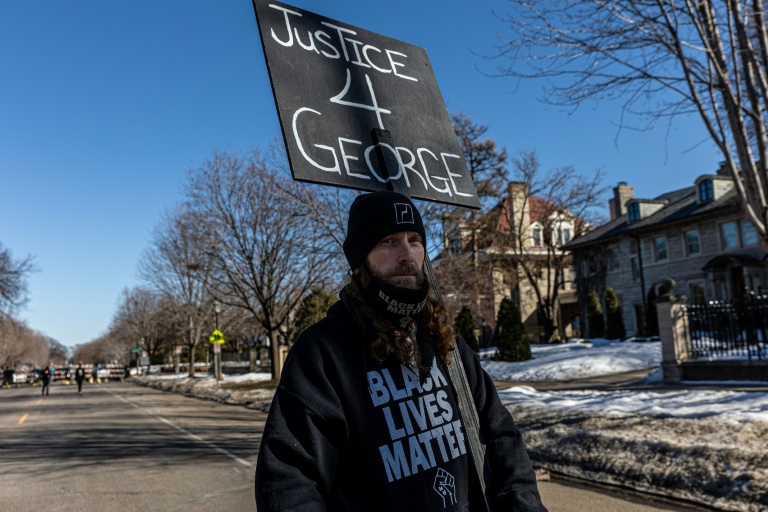
Speaking before the United Nations Human Rights Council, a group of experts appointed after the 2020 murder of George Floyd by a white US police officer insisted it was vital to make systemic racism around the world “visible”.

There is a “crucial need to collect, analyse, use and publish data, disaggregated by race or ethnic origin”, Yvonne Mokgoro, a former South African judge who heads the UN’s so-called Expert Mechanism to Advance Racial Justice and Equality in the context of Law Enforcement.

The team of three independent investigators were presenting their first report to the rights council since it appointed them last year, with a broad mandate to investigate racism by police worldwide.

Mokgoro said it was clear “racial profiling, excessive use of force, and other violations of international human rights law, during and after interactions with law enforcement officials and the criminal justice system, continue to be reported throughout the world”.

But, she warned, this “largely does not show in official statistics”.

– Must ‘become visible’ –

Mokgoro acknowledged that more data alone would not resolve “longstanding racism”.

But she said it was “an essential first step to highlight the magnitude of systemic racism against Africans and people of African descent and its manifestations in law enforcement and criminal justice”.

“It is essential that systemic racism, including its structural and institutional dimensions, become visible.”

In the United States for instance, where the killing of Floyd, a 46-year-old unarmed black man, in Minneapolis in May 2020, sparked mass protests, there is no centralised system to collect such statistics across more than 18,000 law enforcement agencies.

But some NGOs and media organisations scramble to gather the data to get an overview.

Collette Flanagan, who founded Mothers Against Police Brutality after her black son Clinton Allen was killed by police in Dallas, Texas in 2013, told the council his case was emblematic of “the current crisis in policing in the United States”.

She said a black person was “2.5 times more likely to be shot” to death by police in the United States.

Her son was unarmed, yet the white officer who shot him seven times “perceived my son as a threat”, she said.

“This officer escaped all criminal and civil accountability for killing my son.”

– ‘Dismantle racial discrimination’ –

The United States is not the only country facing this problem. 

Presenting a separate report Monday, acting UN rights chief Nada Al-Nashif provided updates on seven cases highlighted by her office last year of police-related fatalities, including Floyd’s, but also cases from Brazil, Britain, Colombia and France.

She said none of the cases had “yet been brought to a full conclusion, with those families still seeking truth, justice and guarantees of non-repetition”.

She highlighted some positive examples of efforts in various countries to act against systemic racism, but warned they largely “remain insufficient”.

US Ambassador Michele Taylor welcomed the report, and that it acknowledged “the progress, continued efforts and dedication to this issue in the United States”.

“We will continue our efforts to dismantle racial discrimination in law enforcement against people of African descent.”

US 'broad-based' inflation will take time to come down: Fed official

While there are some signs that global and domestic inflation pressures are easing, high prices have spread, making it harder to quell quickly, a top US central banker said Monday.

Continued strong demand for goods and for workers will keep pressure on inflation — which has hit the highest in 40 years — New York Federal Reserve Bank President John Williams said.

“This is resulting in broad-based inflation, which will take longer to bring down,” he said.

Prices soared over the past year in part due to worldwide supply chain snags, creating shortages of key components like computer chips needed for cars and electronics.

Those issues have been exacerbated by zero-Covid policies in China and the Russian invasion of Ukraine that sent food and energy prices surging.

Those supply constraints are easing, while rising interest rates are cooling demand, helping to bring down prices of many commodities like lumber, which should lower inflation, Williams said in a speech to the US Hispanic Chamber of Commerce National Conference in Phoenix, Arizona.

“Unfortunately, that’s it for the good news on inflation,” he said, warning that those factors “will not be enough by themselves to bring inflation back to our two percent objective.”

The Fed has moved aggressively this year to tamp down demand to help drive prices lower, hiking interest rates five times, for a total of three percentage points. And the central bank has said more increases are coming this year.

“From Main Street to Wall Street … inflation is the No. 1 concern,” Williams said, adding, “our job is not yet done.”

Even as supply issues improve, “demand for durable goods remains very high  — beyond what can be produced and brought to market,” while “demand for labor and services is far outstripping available supply.”

Still, he said he expects the aggressive Fed moves, along with similar steps by other major central banks, will help to restore balance globally.

Williams said “the combination of cooling global demand and steady improvements in supply … should contribute to inflation declining to about three percent next year.”

The Fed’s preferred index showed annual inflation slowed to 6.2 percent in August, from the 7.0 percent peak in June.

Williams said he expects US economic growth to be close to flat this year and post modest growth in 2023, with a slight uptick in unemployment.

US Supreme Court returns with docket of contentious cases

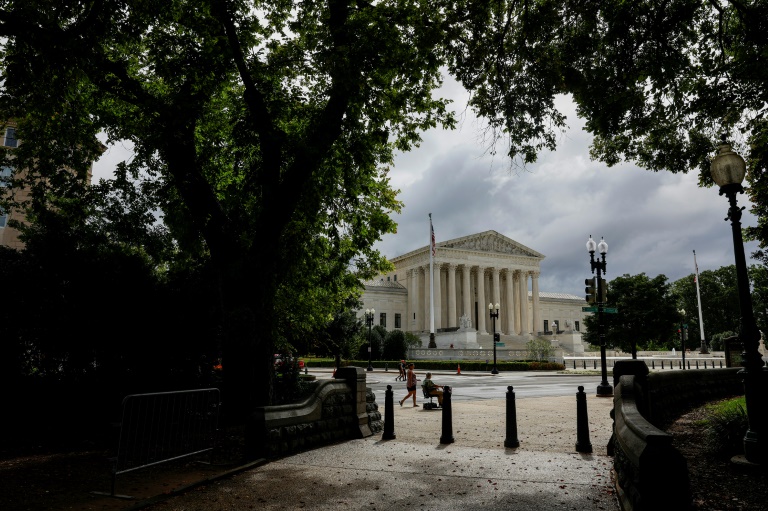
The conservative-dominated US Supreme Court, after delivering landmark rulings on abortion, guns and the environment, began a new term on Monday packed with more controversial cases.

First up on the docket for the nation’s highest court was a dispute involving the authority of the federal government to regulate wetlands under the 1972 Clean Water Act.

Among those asking questions during oral arguments was Ketanji Brown Jackson, 52, who was named to the bench by Democratic President Joe Biden and is the first African-American woman to sit on the court.

The justices are seated in terms of seniority and Jackson, who replaced 84-year-old Stephen Breyer, one of the three liberals on the nine-member panel, was seated at the far left of Chief Justice John Roberts, who sits in the middle.

For the first time since the start of the Covid pandemic, members of the public were allowed to attend oral arguments and metal barricades set up last year ahead of the court’s contentious decision on abortion have been taken down.

In June, the Supreme Court struck down the 1973 ruling guaranteeing a constitutional right to abortion, expanded public carry rights for gun owners and curbed the powers of the government agency responsible for environmental protection.

The court kicked off the latest term with a closely watched case involving the Environmental Protection Agency — Sackett vs EPA.

The dispute involves a couple, Michael and Chantell Sackett, who were stopped by the EPA in 2007 from building a home near Priest Lake in Idaho because the property abuts federally protected wetlands.

The EPA said the Sacketts needed a permit but they are arguing that the Clean Water Act applies only to “traditional navigable waters” and they should be allowed to proceed.  

Environmentalists warned that a ruling in their favor would be a severe setback to anti-pollution protections enshrined in the 1972 Clean Water Act.

Anti-discrimination laws, voting rights and immigration are also on the docket of the court, where conservatives — three of whom were nominated by former president Donald Trump — wield a solid 6-3 majority.

David Cole, legal director of the American Civil Liberties Union (ACLU), said the last term “saw the court aggressively exercising its newfound conservative power to upend long established precedents.”

“This term, the court appears ready to do so again,” Cole said. “The court is not likely to act modestly or at least is not inclined to act modestly.”

– ‘Far-reaching consequences for democracy’ –

The court is to hear arguments on the use of race in deciding who gets to attend Harvard University and the University of North Carolina.

Harvard and UNC, like many other US institutions of higher education, use race as a factor in trying to ensure a diverse student body and to make up for a legacy of racial discrimination against African Americans and Hispanics.

The court has ruled previously in favor of affirmative action but it has long been in the cross-hairs of the right and its opponents believe the current court will be receptive to their arguments.

Another closely watched case, which will be heard by the court on Tuesday, involves the seven congressional districts in the southern state of Alabama and the 1965 Voting Rights Act, which aims to prevent discrimination against African Americans at the polls.

The civil rights legislation allows for the creation of Black-dominated districts to ensure they have representation in Congress.

But it is illegal to restrict their voting power by concentrating Black voters in a single district or by splitting them into multiple districts.

A congressional map drawn up by the Republican-dominated Alabama state legislature provides for only a single Black-majority district although they make up about 25 percent of the population of the state.

Another case before the court would give state legislatures more power to regulate federal elections and could have “far-reaching consequences for democracy,” said Sophia Lin Lakin of the ACLU’s voting rights project.

The case could change how federal elections are conducted and give state legislatures “broad unchecked power over federal elections,” said Sophia Lin Lakin of the ACLU’s voting rights project.

The Supreme Court will also revisit an issue from several years ago, when it ruled in favor of a cake-maker who cited his Christian beliefs in refusing to make a wedding cake for a gay couple.

The ruling in that case was narrow, however, and the court is being asked this time to decide whether a graphic designer who declines to build wedding websites for gay couples is violating anti-discrimination laws.

'Bros' creator blames missing straight audiences for gay rom-com flop

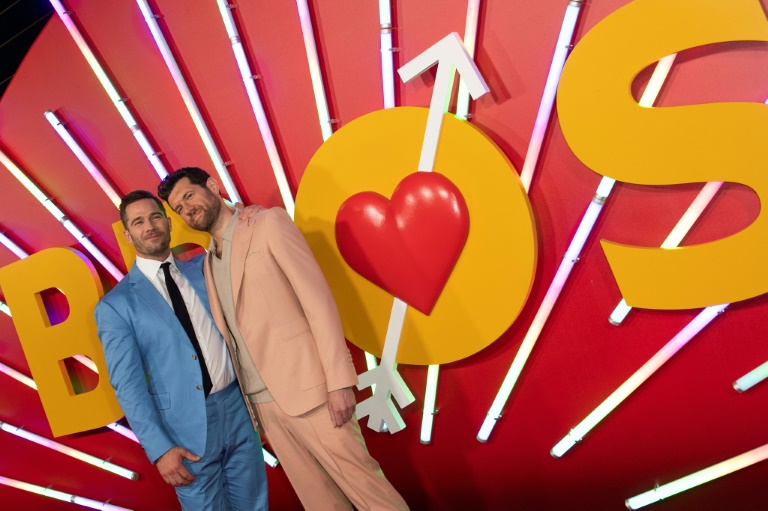
“Bros,” billed as the first gay rom-com from a major Hollywood studio, flopped at the box office because straight people “just didn’t show up,” its creator Billy Eichner said.

Heavily marketed by Universal Pictures and costing $22 million to produce, the movie received mostly glowing reviews but took less than $5 million at North American theaters on its opening weekend. 

Despite opening in more than 3,000 theaters, it ranked only in fourth place at the domestic box office overall, behind Paramount’s mid-budget horror “Smile,” and two other films which debuted earlier last month.

“That’s just the world we live in, unfortunately. Even with glowing reviews… straight people, especially in certain parts of the country, just didn’t show up for Bros,” Eichner, who co-wrote and stars in the film, tweeted Sunday.

“And that’s disappointing but it is what it is.”

The movie follows Bobby, a successful New York-based podcaster who insists he is content being single even as his friends couple up, before his life is changed by an encounter with an equally commitment-phobic lawyer.

Made with an entire cast of openly LGBTQ actors, it features several sex scenes, including one with four men engaged in group sex, and is rated R for “restricted.”

At its world premiere at the Toronto film festival last month, Eichner told AFP it was “absurd and infuriating” that it had taken so long for a major Hollywood studio to release a film like “Bros.”

“There should be tons of these movies by now. But still, I’m very grateful that Universal finally decided that it was time,” he said.

Director Nicholas Stoller said he hoped the film would prevail at the box office in order to show “the studios that there is a big audience for this kind of story, and not just an LGBTQ audience, but a straight audience.”

That now seems less certain, although box office analyst David A. Gross of Franchise Entertainment Research noted that the film’s first weekend figures represented “a fair opening by mainstream romantic comedy standards,” as the once wildly popular genre has been “under pressure for a number of years.”

“There are no norms for gay film stories because there have been so few of them. Those few that came before generally featured funny gay shtick,” he wrote.

In a series of tweets, Eichner said he had attended a “Bros” screening in liberal Los Angeles where the audience response was “truly magical,” but said an unnamed theater chain had threatened to not show the film’s trailer “because of the gay content.”

“Everyone who ISN’T a homophobic weirdo should go see BROS tonight! You will have a blast!” he added.

“And it is special and uniquely powerful to see this particular story on a big screen, esp for queer folks who don’t get this opportunity often.”

Biden flies to take 'care' of storm-hit Puerto Rico

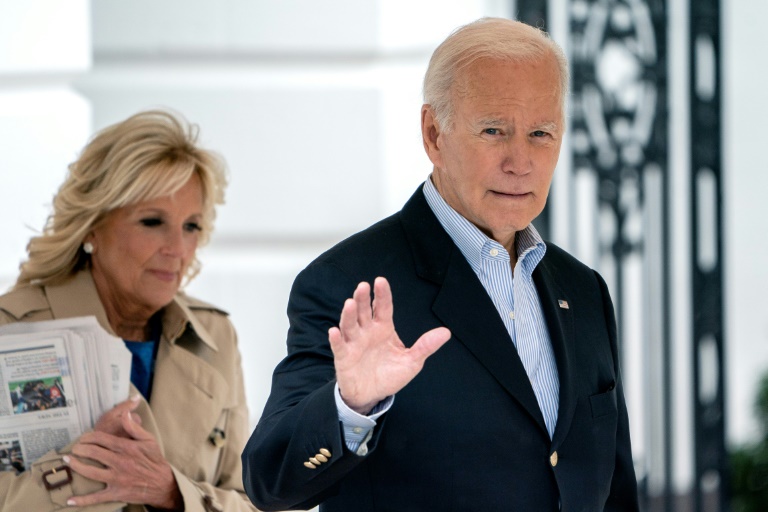
President Joe Biden flew to Puerto Rico on Monday to inspect storm damage, saying in a veiled jab at his predecessor Donald Trump that the territory had not “been taken very good care of” during a crippling series of past hurricanes.

The president and First Lady Jill Biden — who on Wednesday will also visit the devastation caused by deadly Hurricane Ian in Florida — were headed to Ponce, on the south coast of Puerto Rico, pounded by Hurricane Fiona last month.

“He’s going to the hardest hit area of Puerto Rico and it is an area that presidents have not gone to before and I think that shows the president’s and the first lady’s commitment,” Press Secretary Karine Jean-Pierre said aboard Air Force One.

It’s “an area where people have lost almost everything.”

Ahead of the trip, the White House announced $60 million to strengthen storm defenses, including flood barricades and warning systems.

More than two weeks after Hurricane Fiona ended, thousands of people remain without power. Officials said at least seven percent of customers are still without electricity and five percent without water. 

The visit is part of a message from the Biden administration that the government is taking responsibility, in contrast to Trump, who publicly fought with the island’s leadership and suggested in 2018 that the death tolls from hurricanes were manipulated to make him look “bad.”

During a visit to Puerto Rico in 2017 after the especially destructive Hurricane Maria, Trump took flack for an event where he tossed rolls of paper kitchen towels into a crowd of local people whose lives had been turned upside down by flooding and damage.

“I’m heading to Puerto Rico because they haven’t been taken very good care of,” Biden said on departure from the White House. “They’ve been trying like hell to catch up from the last hurricane. I want to see the state of affairs today and make sure we push everything we can.”

Deanne Criswell, administrator of the Federal Emergency Management Agency, said that mayors on the island she had spoken to “finally feel like this administration cares for them.”

– Test of leadership –

The annual hurricanes often cut a ruinous path from the Caribbean up over Puerto Rico and Cuba or the Bahamas before hitting Florida.

Florida officials said the latest death count from Hurricane Ian was now at least 58, with another four deaths were recorded in North Carolina.

In Puerto Rico, 25 deaths have been linked to Hurricane Fiona, according to the island’s public health department, which is still investigating how 12 of the fatalities occurred.

The entire US territory lost power and about one million people were left temporarily without drinking water, when Fiona — then a Category 1 storm — hammered the island in mid-September. Biden quickly declared a state of emergency, freeing up federal funds and expertise.

Island residents, all US citizens but without statehood, have complained of being overlooked by Washington after previous disasters, including the hit from twin hurricanes, Irma and Maria, in 2017.

US authorities — federal, state and local — are often judged by the effectiveness of their response to such disasters.

After Hurricane Katrina devastated New Orleans and the Gulf coast, critics castigated then-president George W. Bush after photos showed him surveying damage while flying high overhead.

Calls for more funding as pre-COP27 climate talks open in DR Congo

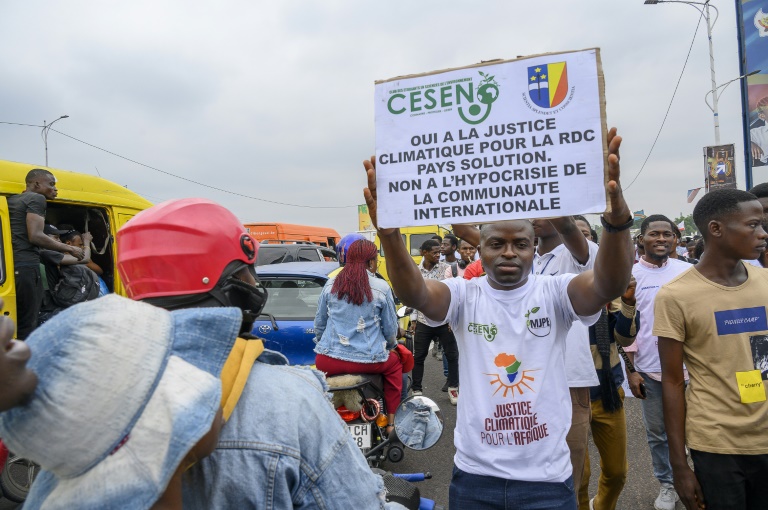
Warning “no-one will escape” a worsening crisis, DR Congo led calls on Monday for a surge in funding to brake global heating and fight its impacts at the start of pre-COP27 climate talks in Kinshasa. 

The haggle comes ahead of COP27 — the UN’s 27th summit-level gathering on climate change, which is due to take place in Egypt next month. 

At opening ceremonies in the DRC’s parliament building, Congolese Environment Minister Eve Bazaiba called on countries to respect financial pledges and endorse plans to help compensate climate-inflicted damage.

She added that money to protect carbon-absorbing rain forests — of which the DRC has vast tracts — should be viewed not as aid but as an investment in humanity’s future.

“Unless a global effort is made… no-one will escape,” Bazaiba warned. “We all breathe the same air.”

Egyptian Foreign Minister Sameh Shoukry also stressed the need for more money, noting an unfulfilled promise — dating back to COP15 in Copenhagen in 2009 — to provide developing countries with $100 billion dollars a year to fight climate change. 

Deputy UN Secretary-General Amina Mohammed offered a gloomy update on the battle today.

“All indicators on climate are heading in the wrong direction,” she said.

– Damages –

Delegates from over 50 countries are attending the two-day informal talks in Kinshasa, including US climate envoy John Kerry. The event winds up on Wednesday with side discussions.

Kerry, after meeting Bazaiba in the afternoon, said he was convinced it was possible to protect the environment, “but also to have appropriate development and job creation in the region”.

No formal announcements are expected in what is billed as a ground-clearing exercise ahead of the next month’s conference, taking place in Sharm el-Sheikh from November 6-18. 

UN Secretary-General Antonio Guterres, in New York, urged the world to act at the pre-COP27 talks against what he called “a life-or-death struggle for our own safety today and our survival tomorrow”.

“A third of Pakistan flooded. Europe’s hottest summer in 500 years. The Philippines hammered. The whole of Cuba in black-out. And here, in the United States, Hurricane Ian has delivered a brutal reminder that no country and no economy is immune from the climate crisis,” he said.

Greater support from wealthier countries, historically the world’s biggest carbon polluters, to their poorer counterparts is expected to dominate the talks. 

But post-pandemic economic strains and Russia’s invasion of Ukraine have cast a pall over the money question.

The last UN climate summit, COP26 in Glasgow in November 2021, reaffirmed the goal — agreed in Paris in 2015 — of limiting the rise in the Earth’s average temperature to well below 2.0 degrees Celsius (3.6 degrees Fahrenheit) above pre-industrial levels and pursuing efforts to limit it to 1.5C.

However, the latter goal may already be beyond reach as the Earth’s temperature is already 1.2C higher than before the Industrial Revolution. 

Poorer countries had also pushed at Glasgow for a financial mechanism to address losses and damage caused by climate change. 

But richer states rejected the call and the participants agreed instead to start a “dialogue” on financial compensation for damages.  

– ‘We also need bread’ –

Egypt, as host of COP27, has made implementing the pledge to curb global heating the priority of the November summit. 

The Democratic Republic of Congo, for its part, is pushing the message that it can act as a “solution country” for climate change due to its vast rainforests, which act as a carbon sink. 

Around 30 billion tonnes of carbon are stored across the Congo Basin, researchers estimated in a study for Nature in 2016. The figure is roughly equivalent to three years of global emissions.

However, the central African nation in July launched an auction for 30 oil and gas blocs — ignoring warnings from environmentalists that drilling could harm ecosystems and release vast amounts of heat-trapping gases. 

Bazaiba, the environment minister, told pre-COP27 delegates that Africa was facing a dilemma since the continent has contributed so little to climate change and yet has fossil-fuel resources that could alleviate poverty. 

“What should we do in this circumstance, let our children and small children die of hunger?” she asked, as applause rung out in the hall of the parliament building.

“As much as we need oxygen, we also need bread,” she said.

Nobel shines light on paleogenetics, study of ancient DNA

While some may have been surprised that the Nobel Prize in Medicine was awarded to a paleogeneticist Monday, researchers say understanding our distant ancestors helps explain modern human health — even when it comes to Covid.

New Nobel laureate Svante Paabo is considered the father of both paleogenetics and paleogenomics, which aims to reconstruct the genetic information of long extinct human relatives.

But the prize may have led some to wonder why a pioneer in this field won the Nobel in medicine.

For example, what is the medical benefit of knowing that modern humans have an average of around two percent Neanderthal DNA, one of Paabo’s great discoveries?

For the second year running, the scientists behind mRNA vaccines were among the odds-maker’s favourites, with millions around the world being aware of the technology after getting it jabbed into their arms.

But the Nobels, which tend to reward research from decades in the past, chose Paabo.

“This revolutionary research in genetics and evolution falls within the range of topics that could and should be recognised by the Physiology or Medicine Nobel Prize,” said David Pendlebury, research head at analytics company Clarivate’s ISI institute.

“It is, however, not an award for a discovery relevant to clinical medicine, which many anticipated this year after a Nobel Prize focusing on physiology last year,” he said in a statement.

– ‘Completely justified’ –

Paleogeneticist Eva-Maria Geigl of the French research agency CNRS said it was “completely justified” to give Paabo a Nobel Prize in medicine.

“We must not forget that medicine is the exercise of keeping human beings in good health, so we must first understand biology,” she told AFP.

Paabo himself provided an example of this in 2020, when he showed that humans with a particular snippet of Neanderthal DNA have a higher risk of getting more serious symptoms from Covid-19.

The research could point towards a potential reason why Covid has often proved deadlier in places like South Asia, where many people have the DNA segment, compared to Africa, where it is far less common.

But the research is unlikely to contribute to new Covid treatment or approach. 

And it “is only a small, secondary subject” of Paabo’s vast amount of research, Geigl said.

It does however serve as an example of how paleogenetics weaves together the present with the distant past.

“We can understand, for example, what genes have made it possible to adapt in the past, and therefore which are important for our current health,” said genetic anthropologist Evelyne Heyer of France’s National Museum of Natural History, citing in particular the case of diabetes.

– Crisis in the field –

But, in a way, it was this unique mix of past and present that plunged the field into crisis in the early 2000s, a decade after first coming to prominence.

Numerous paleogenetics papers were discovered to be incorrect, because DNA from modern-day humans had accidentally been mixed in with samples from ancient humans.

It had apparently proved difficult for researchers to avoid contaminating their samples with their own DNA, which was not a problem for paleogeneticists working on animals. 

With the discipline brought into question, Paabo and other researchers led to the way to develop more reliable and advanced techniques.

Now, paleogeneticists have created a vast library of knowledge tracing the recent evolution of our species that gives insight not just into medical concerns, but also into social issues such as migration.

“We have thousands of ancient genomes that have been published, not just of Neanderthals but also of more recent humans,” Heyer said.

“They let us to show that we all have migrant ancestors, that we are a patchwork tapestry,” she added.

“It’s fundamental to how our species sees itself.”

Paabo said in an interview released by the Nobels on Monday that “it’s interesting to think if Neanderthals had survived another 40,000 years, how would that influence us?”

Would there be “racism against Neanderthals, because they were different from us?”

Close Bitnami banner
Bitnami