AFP

Concerns over Credit Suisse viability surge as shares dive

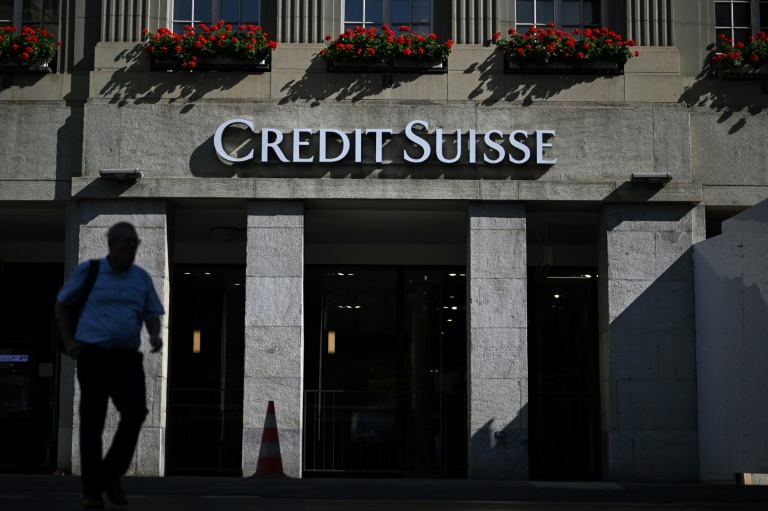
Credit Suisse shares plunged to new lows Monday, spurring swelling fears and even suggestions the bank could face a “Lehman Brothers moment”, despite expert assurances it is too big to fail.

Switzerland’s second-largest bank saw its share price sink 11.5 percent to a historic low of 3.518 Swiss francs ($3.563) a pop, after a new salvo of rumours surrounding the scandal-plagued bank.

The Bank of England is in touch with Swiss authorities to monitor Credit Suisse, British newspaper The Sunday Telegraph reported.

And the Financial Times daily said that senior executives have sought to reassure big clients and investors in recent days about the bank’s liquidity and capital position due to concerns raised about its financial strength.

Credit Suisse chief executive Ulrich Koerner, who only took the reins and the mammoth task of revitalising the bank in August, meanwhile sent an internal message to staff on Friday to ease their concerns.

In it, he warned there were “many factually inaccurate statements being made” about the bank.

It remains unclear if his memo helped calm the nerves of Credit Suisse employees, but it appears to have drawn more attention to the dramatic swings in the bank’s share price in recent weeks, and caused further jitters among investors.

– ‘Transformation plans’ –

Fears surrounding the “transformation plans” which Koerner is due to present on October 27 have been sending the bank’s shares into a tailspin, adding to its woes after two years of repeated scandals and crises.

The bank was especially rocked by the collapse last year of the British financial firm Greensill, in which some $10 billion had been committed through four funds, and then by the implosion of the US fund Archegos, which cost it more than $5 billion.

Since March 2021, Credit Suisse’s shares have lost 70 percent of their value.

Credit Suisse shares, listed on the Swiss stock exchange’s main SMI index, recovered most of their drop suffered in Monday morning trading to close the day down 0.9 percent at 3.94 Swiss francs.

As an indication of the growing concern, the price of so-called credit default swaps, or CDS, on the bank’s bonds suddenly surged last week.

These derivative financial products tend to be taken out by investors to protect against a payment default — a deteriorating view of the Credit Suisse’s creditworthiness.

The swaps now price in a roughly 23-percent chance that the bank defaults on its bonds within five years, according to Bloomberg News, which stresses nonetheless that they remain “far from distressed”.

– ‘Lehman Brothers moment’? –

Social media is meanwhile abuzz with discussions over a looming “Lehman Brothers moment”, referring to the giant US investment bank’s spectacular collapse which kicked off the 2008 global financial crisis.

Many observers however insist there is little risk of a Credit Suisse implosion.

“Is it possible?” Ipek Ozkardeskaya, a Swissquote analyst, asked in a note.

“Yes, it is possible, but it is highly unlikely.”

Credit Suisse figures among the banks worldwide that were labelled “too big to fail” after the Lehman Brothers debacle and were required to put aside large amounts of capital to ensure they could withstand future crises without affecting the rest of the banking sector.

Ozkardeskaya envisages three scenarios, including the bank’s new chief pulling off “a miracle” and quickly strengthening Credit Suisse as promised, “and the bank survives and thrives until the next scandal”.

A second scenario involves the Zurich-based bank becoming “a nice takeover target, and (getting) eaten by another bank,” while the third sees it “saved by the Swiss government.”

– ‘Buy time’ –

So far, the bank has provided no insight into the details of the coming “transformation plans”, beyond suggesting that it could include asset sales.

But even these few details have sparked concerns, with Jefferies analysts warning that “asset sales alone are unlikely to be the solution to the potential capital shortfall problem.”

Credit Suisse in this case would be “a forced seller”, they wrote in a note, pointing out that this could “create price pressure”. 

And while selling assets might “generate capital”, they warned it could also “reduce future earnings generation capacity”.

But asset sales could, the note acknowledged, “be a first step and buy time until shares recover and the outlook gets better.”

In his memo to staff Friday, Koerner meanwhile insisted on the “strong capital base and liquidity position of the bank.”

“We are in the process of reshaping Credit Suisse for a long-term, sustainable future — with significant potential for value creation,” he wrote.

Far-right Trump backers on trial for Capitol riot 'sedition'

The landmark sedition trial of five members of the far-right Oath Keepers opened Monday with prosecutors telling a jury that the group heavily armed itself on January 6, 2021 to attack the Capitol to keep Donald Trump in the presidency. 

Justice Department attorney Jeffrey Nestler said that Stewart Rhodes, the eyepatch-wearing former soldier and Yale law school graduate, knew exactly what he was doing when he led the militia’s followers towards the Capitol.

Showing videos of the violent assault by dozens of group members dressed in military-style combat gear, Nestler said Rhodes directed them “like a general on the battlefield” as they sought to prevent 2020 election winner Joe Biden from being certified as the next president.

On January 6 the Oath Keepers “concocted a plan for an armed rebellion … plotting to oppose by force the government of the United  States,” Nestler said.

“They did not go to the capital to defend or to help. They went to attack,” he said.

– ‘Peacekeeping force’ –

But Rhodes’ lawyer Phillip Linder, the first to present for the defense, rejected the government case, saying Rhodes had brought the Oath Keepers to Washington to provide security for Trump’s speech that day and other pro-Trump events.

“The Oath Keepers are basically a peacekeeping force,” said Linder.

“The real evidence is going to show our clients were there to do security for events that were scheduled for the 5th and 6th” of January 2021, he said.

They had created an armed “quick reaction force” on that day just in case they were needed — it would have been “defensive”, he said, “if Trump called them in.

“Stewart Rhodes did not have any violent intent that day,” he said.

– Rare charge –

The trial was the first in hundreds of cases from the January 6 riot to make use of the rare charge of seditious conspiracy.

Carrying a potential 20-year prison sentence, it is a gamble for the Justice Department, which wants to underscore the seriousness of the event, in which Trump supporters sought to prevent Congress from certifying Joe Biden as the victor in the November 2020 presidential election.

Out of 870 people charged so far, the government has reserved sedition for just a few dozen of the attackers, mostly members of self-styled militia groups like the Oath Keepers and Proud Boys who allegedly planned and coordinated the assault.

Four other Oath Keeper leaders are standing trial with Rhodes: Kelly Meggs, Thomas Caldwell, Jessica Watkins, and Kenneth Harrelson. Another four will undergo a separate trial.

Defense attorneys had argued in filings that the Oath Keepers believed Trump would invoke the 1807 “Insurrection Act,” deputizing them to protect the country.

Linder said Rhodes did believe the Insurrection Act could be invoked, but said he did not plan any attack on the Capitol.

“Rhodes is extremely patriotic.. he is a constitutional expert,” the attorney said.

But Nestler said Rhodes told his followers that the possibility of Trump invoking the Act would provide legal protection for what they did at the Capitol.

“Rhodes’ talk about the Insurrection Act was legal cover,” Nestler said.

Despite being called on by many supporters to invoke it in the weeks and days before January 6, Trump in fact never did, Nestler noted.

Instead, Rhodes and the others spoke on encrypted chats of launching a civil war to prevent Joe Biden from becoming president.

“I’m personally gonna start the civil war myself,” if Congress moves to certify Biden as president-elect, Caldwell wrote to the others, the jury was told.

Sweden's Paabo wins medicine Nobel for sequencing Neanderthal DNA

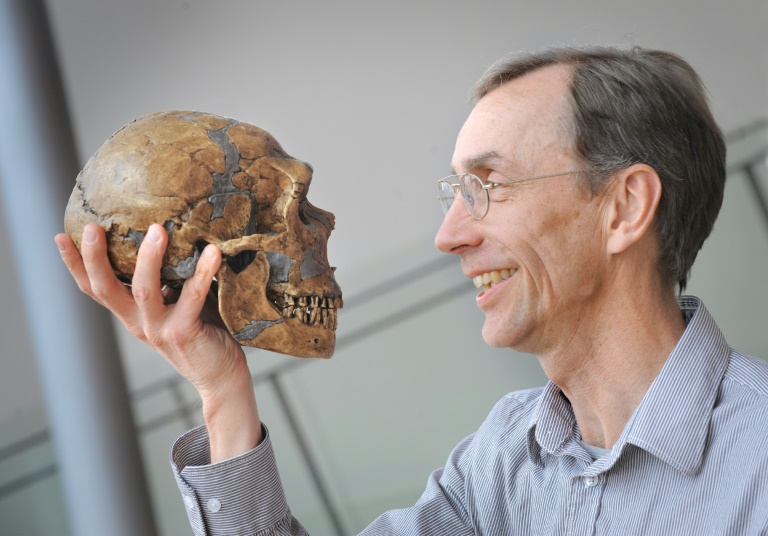
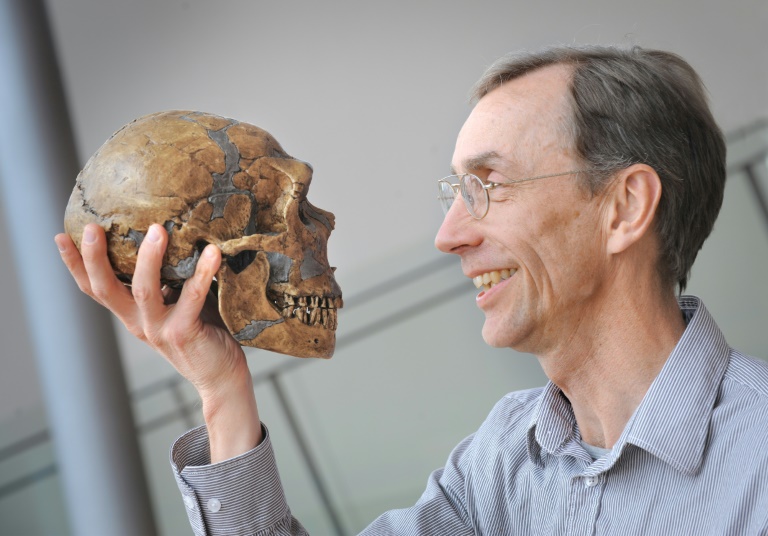
Swedish paleogeneticist Svante Paabo, who sequenced the genome of the Neanderthal and discovered the previously unknown hominin Denisova, on Monday won the Nobel Medicine Prize.

Paabo’s research gave rise to an entirely new scientific discipline called paleogenomics, and has “generated new understanding of our evolutionary history”, the Nobel committee said.

“By revealing genetic differences that distinguish all living humans from extinct hominins, his discoveries provide the basis for exploring what makes us uniquely human,” it said in a statement.

Paabo — the founder and director of the department of genetics at the Max Planck Institute for Evolutionary Anthropology in Leipzig — found that gene transfer had occurred from these now extinct hominins to Homo sapiens following the migration out of Africa around 70,000 years ago.

“This ancient flow of genes to present-day humans has physiological relevance today, for example affecting how our immune system reacts to infections,” the jury said.

One such example is that Covid-19 patients with a snippet of Neanderthal DNA run a higher risk of severe complications from the disease, Paabo found in a 2020 study.

Paabo told reporters he was surprised when the committee called to tell him he had won.

“At first I thought this is probably an elaborate prank done by people in my (research) group. But then it sounded a little bit too serious to me so I sort of accepted the fact”, he said.

Paabo, 67, takes home the award sum of 10 million kronor ($901,500).

He is the son of Sune Bergstrom, a Swede who won the 1982 Nobel Medicine Prize for discovering prostaglandins — biochemical compounds that influence blood pressure, body temperature, allergic reactions and other physiological phenomena.

In his 2014 memoir “Neanderthal Man: In Search of Lost Genomes”, Paabo wrote that he was conceived as a result of a secret extra-marital affair.

He later told The Guardian outlet that Bergstrom’s “official” family knew nothing of his or his mother’s existence, the Estonian chemist Karin Paabo, until 2005 after Bergstrom’s death.

Paabo also wrote in his memoir that he “had always thought of myself as gay” until he met the woman who would become his wife, primatologist Linda Vigilant, who also works at the Max Planck Institute. He now identifies as bisexual.

– Achieved ‘the seemingly impossible’ –

Homo sapiens are known to have first appeared in Africa around 300,000 years ago. 

Our closest known relatives, Neanderthals, developed outside Africa and populated Europe and Western Asia from around 400,000 to 30,000 years ago, when they became extinct.

That means that about 70,000 years ago, groups of Homo sapiens and Neanderthals coexisted in large parts of Eurasia for tens of thousands of years.

“The last 40,000 years is quite unique in human history in that we are the only form of humans around. Until that time there were almost always other types of humans that existed”, Paabo told the Nobel website.

In order to study the relationship between present-day humans and extinct Neanderthals, DNA needed to be sequenced from archaic specimens with only trace amounts of DNA left after thousands of years.

In 1990, Paabo managed to sequence a bit of mitochondrial DNA from a 40,000-year-old piece of bone.

“For the first time, we had access to a sequence from an extinct relative”, the Nobel jury said.

Comparisons with contemporary humans and chimpanzees showed that Neanderthals were genetically distinct.

Paabo then “accomplished the seemingly impossible”, the committee said, when he published the first Neanderthal genome sequence in 2010.

It showed that the most recent common ancestor of Neanderthals and Homo sapiens lived around 800,000 years ago. 

Paabo and his team were able to show that DNA sequences from Neanderthals were more similar to those from contemporary humans originating from Europe or Asia than those from Africa.

“This means that Neanderthals and Homo sapiens interbred during their millennia of coexistence,” the Nobel jury said.

In modern day humans with European or Asian descent, around one to four percent of the genome originates from Neanderthals.

– New addition to family tree –

In 2008, Paabo and his team went on to sequence a 40,000-year-old bone fragment found in the Denisova cave in southern Siberia. 

It contained exceptionally well-preserved DNA.

“The results caused a sensation — the DNA sequence was unique when compared to all known sequences from Neanderthals and present-day humans,” the Nobel jury said.

Paabo had discovered a previously unknown hominin, given the name Denisova.

Comparisons showed the gene flow had also occurred between Denisovans and Homo sapiens.

In the same cave, palaeontologists later discovered the fossil of a young girl who was part Neanderthal, part Denisovan, proving the two species interbred.

Paabo’s research proved that when Homo sapiens migrated out of Africa, at least two extinct hominin populations inhabited Eurasia — Neanderthals in western Eurasia, and Denisovans in the eastern parts.

Sweden's Paabo wins medicine Nobel for sequencing Neanderthal DNA

Swedish paleogeneticist Svante Paabo, who sequenced the genome of the Neanderthal and discovered the previously unknown hominin Denisova, on Monday won the Nobel Medicine Prize.

Paabo’s research gave rise to an entirely new scientific discipline called paleogenomics, and has “generated new understanding of our evolutionary history”, the Nobel committee said.

“By revealing genetic differences that distinguish all living humans from extinct hominins, his discoveries provide the basis for exploring what makes us uniquely human,” it said in a statement.

Paabo — the founder and director of the department of genetics at the Max Planck Institute for Evolutionary Anthropology in Leipzig — found that gene transfer had occurred from these now extinct hominins to Homo sapiens following the migration out of Africa around 70,000 years ago.

“This ancient flow of genes to present-day humans has physiological relevance today, for example affecting how our immune system reacts to infections,” the jury said.

One such example is that Covid-19 patients with a snippet of Neanderthal DNA run a higher risk of severe complications from the disease, Paabo found in a 2020 study.

Paabo told reporters he was surprised when the committee called to tell him he had won.

“At first I thought this is probably an elaborate prank done by people in my (research) group. But then it sounded a little bit too serious to me so I sort of accepted the fact”, he said.

Paabo, 67, takes home the award sum of 10 million kronor ($901,500).

He is the son of Sune Bergstrom, a Swede who won the 1982 Nobel Medicine Prize for discovering prostaglandins — biochemical compounds that influence blood pressure, body temperature, allergic reactions and other physiological phenomena.

In his 2014 memoir “Neanderthal Man: In Search of Lost Genomes”, Paabo wrote that he was conceived as a result of a secret extra-marital affair.

He later told The Guardian outlet that Bergstrom’s “official” family knew nothing of his or his mother’s existence, the Estonian chemist Karin Paabo, until 2005 after Bergstrom’s death.

Paabo also wrote in his memoir that he “had always thought of myself as gay” until he met the woman who would become his wife, primatologist Linda Vigilant, who also works at the Max Planck Institute. He now identifies as bisexual.

– Achieved ‘the seemingly impossible’ –

Homo sapiens are known to have first appeared in Africa around 300,000 years ago. 

Our closest known relatives, Neanderthals, developed outside Africa and populated Europe and Western Asia from around 400,000 to 30,000 years ago, when they became extinct.

That means that about 70,000 years ago, groups of Homo sapiens and Neanderthals coexisted in large parts of Eurasia for tens of thousands of years.

“The last 40,000 years is quite unique in human history in that we are the only form of humans around. Until that time there were almost always other types of humans that existed”, Paabo told the Nobel website.

In order to study the relationship between present-day humans and extinct Neanderthals, DNA needed to be sequenced from archaic specimens with only trace amounts of DNA left after thousands of years.

In 1990, Paabo managed to sequence a bit of mitochondrial DNA from a 40,000-year-old piece of bone.

“For the first time, we had access to a sequence from an extinct relative”, the Nobel jury said.

Comparisons with contemporary humans and chimpanzees showed that Neanderthals were genetically distinct.

Paabo then “accomplished the seemingly impossible”, the committee said, when he published the first Neanderthal genome sequence in 2010.

It showed that the most recent common ancestor of Neanderthals and Homo sapiens lived around 800,000 years ago. 

Paabo and his team were able to show that DNA sequences from Neanderthals were more similar to those from contemporary humans originating from Europe or Asia than those from Africa.

“This means that Neanderthals and Homo sapiens interbred during their millennia of coexistence,” the Nobel jury said.

In modern day humans with European or Asian descent, around one to four percent of the genome originates from Neanderthals.

– New addition to family tree –

In 2008, Paabo and his team went on to sequence a 40,000-year-old bone fragment found in the Denisova cave in southern Siberia. 

It contained exceptionally well-preserved DNA.

“The results caused a sensation — the DNA sequence was unique when compared to all known sequences from Neanderthals and present-day humans,” the Nobel jury said.

Paabo had discovered a previously unknown hominin, given the name Denisova.

Comparisons showed the gene flow had also occurred between Denisovans and Homo sapiens.

In the same cave, palaeontologists later discovered the fossil of a young girl who was part Neanderthal, part Denisovan, proving the two species interbred.

Paabo’s research proved that when Homo sapiens migrated out of Africa, at least two extinct hominin populations inhabited Eurasia — Neanderthals in western Eurasia, and Denisovans in the eastern parts.

US Supreme Court to hear cases challenging tech firm immunity

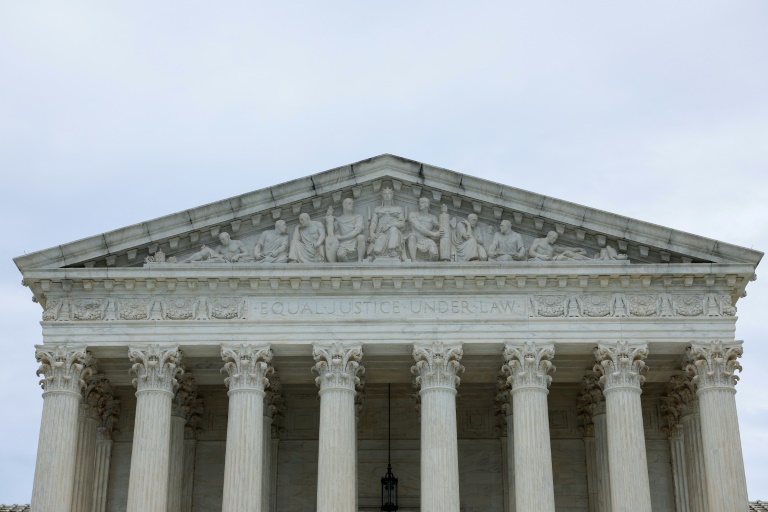
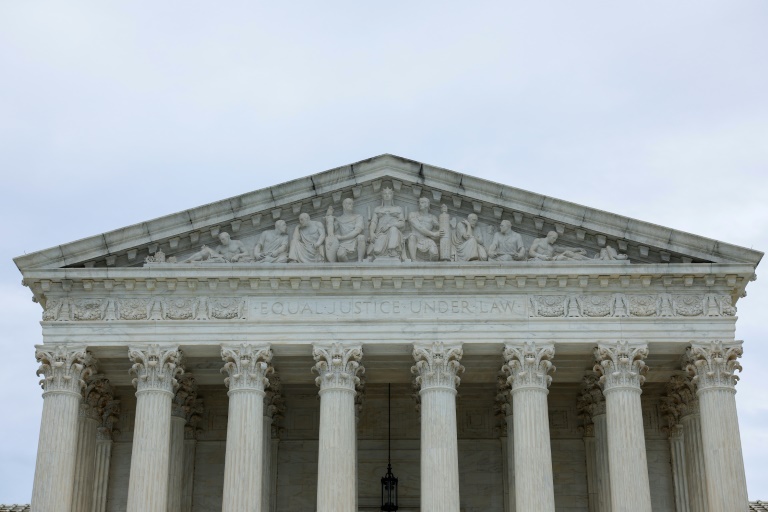
The US Supreme Court, in a decision with potentially far-reaching ramifications, agreed on Monday to hear two cases challenging the legal immunity of internet companies from liability for content posted by their users.

One of the cases accepted by the court was filed by the family of Nohemi Gonzalez, a 23-year-old American who was one of the 130 people killed in the November 2015 Islamic State attacks in Paris.

The complaint alleges that Google violated the US Anti-Terrorism Act by recommending IS videos that incited violence on Google-owned YouTube.

“Google’s services have played a uniquely essential role in the development of IS’s image, its success in recruiting members from around the world, and its ability to carry out attacks,” according to the complaint. 

Under Section 230 of the 1996 Communications Decency Act, social media companies such as Google, Facebook and Twitter are not considered to be publishers and are not legally liable for content posted by their users.

A lower court ruled in the Gonzalez case that Google enjoyed legal protection under Section 230, which its backers claim is essential to protecting freedom of expression on the internet.

Section 230 has come under attack, however, from both Democratic and Republican lawmakers, with the left claiming tech companies are promoting far-right hate speech and the right alleging it allows the firms censor conservative voices.

Among those who have been critical of Section 230 is former Republican president Donald Trump, who was banned from both Twitter and Facebook after the January 6, 2021 attack on the Capitol by his supporters.

The other related case accepted by the Supreme Court involves a lawsuit accusing Twitter of abetting terrorism in which a lower court declined to rule whether the messaging service enjoys a legal shield under Section 230.

US Supreme Court to hear cases challenging tech firm immunity

The US Supreme Court, in a decision with potentially far-reaching ramifications, agreed on Monday to hear two cases challenging the legal immunity of internet companies from liability for content posted by their users.

One of the cases accepted by the court was filed by the family of Nohemi Gonzalez, a 23-year-old American who was one of the 130 people killed in the November 2015 Islamic State attacks in Paris.

The complaint alleges that Google violated the US Anti-Terrorism Act by recommending IS videos that incited violence on Google-owned YouTube.

“Google’s services have played a uniquely essential role in the development of IS’s image, its success in recruiting members from around the world, and its ability to carry out attacks,” according to the complaint. 

Under Section 230 of the 1996 Communications Decency Act, social media companies such as Google, Facebook and Twitter are not considered to be publishers and are not legally liable for content posted by their users.

A lower court ruled in the Gonzalez case that Google enjoyed legal protection under Section 230, which its backers claim is essential to protecting freedom of expression on the internet.

Section 230 has come under attack, however, from both Democratic and Republican lawmakers, with the left claiming tech companies are promoting far-right hate speech and the right alleging it allows the firms censor conservative voices.

Among those who have been critical of Section 230 is former Republican president Donald Trump, who was banned from both Twitter and Facebook after the January 6, 2021 attack on the Capitol by his supporters.

The other related case accepted by the Supreme Court involves a lawsuit accusing Twitter of abetting terrorism in which a lower court declined to rule whether the messaging service enjoys a legal shield under Section 230.

UK govt vows reform despite U-turn on tax cut for the rich

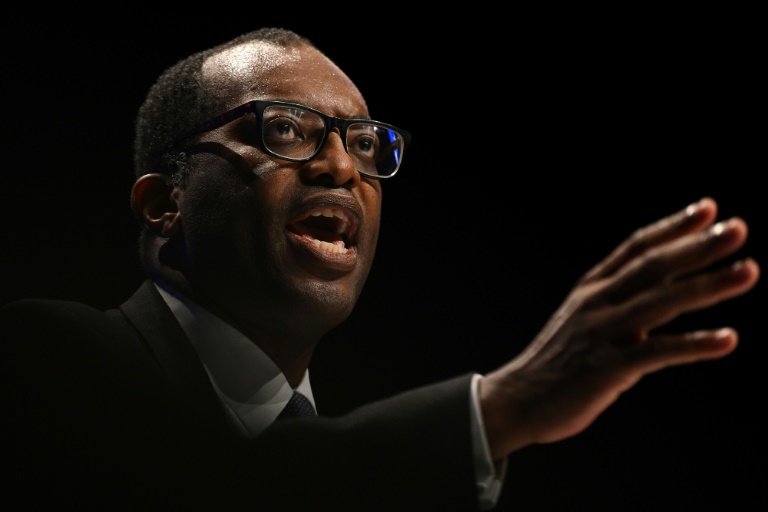
Britain’s under-fire finance minister Kwasi Kwarteng on Monday vowed to press on with his controversial economic reform plans, despite announcing a dramatic U-turn on a controversial tax cut for high earners.

The proposed cut was part of a debt-driven economic package that has bombed with the markets, the electorate and much of the ruling Conservative party.

The abrupt reversal raised questions about his and Prime Minister Liz Truss’s right-wing policy agenda, less than a month after taking power and a day after both vowed to stay the course.

“What a day. It has been tough,” Kwarteng said in a speech to the Tories’ annual conference in Birmingham, central England.

But he told delegates that “we need to focus on the task in hand”, implicitly criticising his Tory predecessors by saying there was a need to boost the economy out of its “slow, managed decline”.

“To grow the economy we really do need to do things differently,” he said.

Kwarteng pointedly avoided any specific mention of his about-face on the proposed scrapping of the 45 percent top rate of income tax.

But he insisted his and Truss’s contentious plans, which include axing a cap on bankers’ bonuses and reversing a planned rise in corporation tax, as well as a recent hike in national insurance contributions, were “sound” and “credible”.

“It will increase growth,” he added in the speech, which was delayed by an unspecified security alert at the venue. Police lifted the alert about an hour later.

– Political storm –

Earlier, Kwarteng said he had never considered resigning over the furore caused by the proposals, saying only that the decision to drop the tax cut was because it had become a “distraction”.

On the markets, the intention to pay for the cuts with billions more in extra borrowing had sent the pound tumbling to a record low against the dollar and UK government bond yields soaring.

The pound rebounded Monday as the government partially reversed course. 

Nevertheless, Kwarteng and Truss remain in the eye of a political storm, given the perceived unfairness of the package, which could yet see cuts to spending and benefits amid Britain’s worst cost-of-living crisis in generations.

As late as Sunday, the finance chief had been due to tell the conference that “we must stay the course”, according to a preview of his speech released by the Conservatives.

Truss on Sunday admitted communication errors in how the September 23 economic package had been presented, but agreed she was “absolutely committed” to abolishing the top tax rate. 

Within 24 hours, though, the 47-year-old prime minister — only in the role since September 6 — had performed one of most striking government U-turns in recent memory.

Truss told the BBC she had not discussed axing the high-earners’ tax band with her cabinet, who only seemed to learn of the reversal along with the public on Monday.

She also appeared to distance herself from the move by claiming “it was a decision that the chancellor made”, but her spokesman downplayed the comments.

“The prime minister was clear that… fiscal events are the responsibility of the chancellor — that’s all she was setting clear,” he told reporters Monday.

Out of a total tax package worth £45 billion ($50 billion), the top rate cut would have cost some £2 billion — relatively small, but outsized for its political impact.

Tory MPs who backed former finance minister Rishi Sunak — Truss’s rival in the recent Tory leadership race — had threatened to vote it down, raising the prospect of a major battle in the House of Commons.

Grant Shapps, who was refused a cabinet job by Truss, welcomed her scrapping the tax cut, which he told BBC radio had been planned with “grossly insensitive timing”.

– Credibility ‘destroyed’ –

With the U-turn, the stakes have soared for Truss as she prepares to close the party conference with a speech Wednesday.

A raft of polls have found Truss and her economic package deeply unpopular, alongside plummeting ratings for the Tories.

Some surveys showed Labour with mammoth leads of up to 33 points — its biggest since the heyday of its former prime minister Tony Blair in the late 1990s.

Labour’s finance spokeswoman Rachel Reeves said the climbdown “comes too late for the families who will pay higher mortgages and higher prices for years to come” following the recent market turmoil.

“The Tories have destroyed their economic credibility and damaged trust in the British economy,” she said.

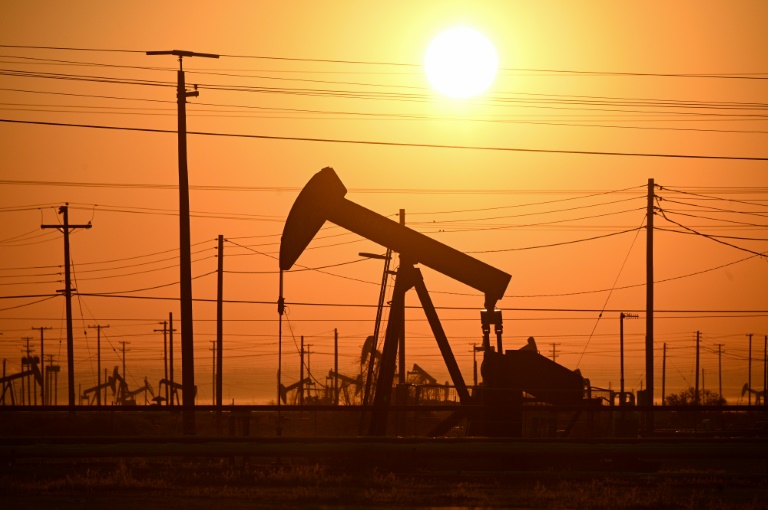
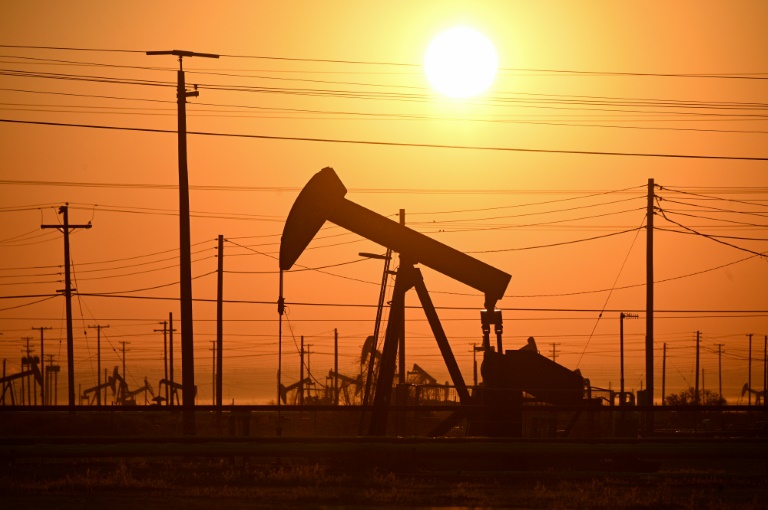
Oil jumps but dollar bruised on US data

Oil prices jumped Monday on expectations of an OPEC output cut, while disappointing US data sent the dollar lower and stocks higher.

Investors have on edge over worries that rising interest rates, aimed at fighting sky-high inflation, could spark recessions.

With a key business survey flagging a slowing of the US economy, the dollar and US government bond yields moved lower as the US Federal Reserve may not need to raise interest rates as much as markets have feared to get a grip on inflation.

The Institute for Supply Management said its manufacturing index dropped 1.9 points to 50.9 percent, well below expectations and just barely above the 50-percent threshold indicating expansion.

That was the weakest pace in more than two years, and new orders fell by four percent.

Fed officials have indicated that the central bank will continue raising interest rates until inflation begins to drop, even if that means the US economy enters recession.

A slowdown means that a peak in interest rates may be close, and helped Wall Street stocks add to gains, with the Dow jumping 2.4 percent in late morning trade.

European stock indices moved higher following the US data, with Frankfurt’s DAX index ending the day 0.8 percent higher, the Paris CAC climbing 0.6 percent and London’s FTSE 100 adding 0.2 percent.

– Oil spikes before OPEC –

Oil prices leapt by more than five percent at one point as reports said OPEC and its allies are considering a major output cut to stem a price plunge caused by demand worries.

That stoked stubborn concerns about soaring inflation, which has been fuelled this year by sky-high energy prices after key producer Russia’s invasion of Ukraine.

“Any cut will no doubt frustrate consuming countries that are on the verge of recession after spending a year dealing with soaring energy costs on the back of the post-pandemic recovery and war in Ukraine,” said OANDA analyst Craig Erlam.

The 13 members of the Organization of the Petroleum Exporting Countries (OPEC), led by Riyadh, and their 10 partners led by Moscow will physically meet on Wednesday for the first time since March 2020.

– Sterling gains on U-turn –

The British pound bounded above $1.13 following the latest US data, and after the UK government scrapped plans to axe its top income tax rate in the wake of finance minister Kwasi Kwarteng’s debt-fuelled mini budget which helped send sterling spiralling to a record dollar low of $1.0350 one week ago.

UK gilts, or government bonds, remain supported by an emergency Bank of England intervention after yields had rocketed following the mini budget announcement.

– ‘Dicey’ sentiment –

Shares in Credit Suisse plunged to a new low in Zurich on Monday as the scandal-plagued lender sought to ease concerns about its financial health.

Its stock tumbled 11.6 percent to 3.58 Swiss francs ($3.61) before clawing back most of the ground, ending the day with a drop of 0.9 percent at 3.94 francs.

The Financial Times reported that senior executives sought over the weekend to reassure big clients and investors about the bank’s liquidity and capital position due to concerns raised about its financial strength.

“Sentiment is still pretty dicey and Credit Suisse is definitely weighing heavily today on European equities,” Markets.com analyst Neil Wilson told AFP.

“A globally systemic bank requiring to raise capital would be a major event and could certainly undermine confidence in the banking system.”

Asian equities mainly fell Monday, with Hong Kong tumbling to its lowest point in more than a decade as fears for China’s economy deepens this year’s investor rout.

– Key figures around 1530 GMT –

New York – Dow: UP 2.4 percent at 29,399.70 points

EURO STOXX 50: UP 0.7 percent at 3,342.17

London – FTSE 100: UP 0.2 percent at 6,908.76 (close) 

Frankfurt – DAX: UP 0.8 percent at 12,209.48 (close)

Paris – CAC 40: UP 0.6 percent at 5,794.15 (close)

Tokyo – Nikkei 225: UP 1.1 percent at 26,215.79 (close)

Hong Kong – Hang Seng Index: DOWN 0.8 percent at 17,079.51 (close)

Shanghai – Composite: Closed for a holiday

Pound/dollar: UP at $1.1301 from $1.1170 on Friday

Euro/dollar: UP at $0.9834 from $0.9802

Euro/pound: DOWN at 86.91 pence from 87.75 pence

Dollar/yen: DOWN at 144.32 yen from 144.74 yen

Brent North Sea crude: UP 3.8 percent at $88.41 per barrel

West Texas Intermediate: UP 4.3 percent at $82.88 per barrel

burs-rl/cdw

Oil jumps but dollar bruised on US data

Oil prices jumped Monday on expectations of an OPEC output cut, while disappointing US data sent the dollar lower and stocks higher.

Investors have on edge over worries that rising interest rates, aimed at fighting sky-high inflation, could spark recessions.

With a key business survey flagging a slowing of the US economy, the dollar and US government bond yields moved lower as the US Federal Reserve may not need to raise interest rates as much as markets have feared to get a grip on inflation.

The Institute for Supply Management said its manufacturing index dropped 1.9 points to 50.9 percent, well below expectations and just barely above the 50-percent threshold indicating expansion.

That was the weakest pace in more than two years, and new orders fell by four percent.

Fed officials have indicated that the central bank will continue raising interest rates until inflation begins to drop, even if that means the US economy enters recession.

A slowdown means that a peak in interest rates may be close, and helped Wall Street stocks add to gains, with the Dow jumping 2.4 percent in late morning trade.

European stock indices moved higher following the US data, with Frankfurt’s DAX index ending the day 0.8 percent higher, the Paris CAC climbing 0.6 percent and London’s FTSE 100 adding 0.2 percent.

– Oil spikes before OPEC –

Oil prices leapt by more than five percent at one point as reports said OPEC and its allies are considering a major output cut to stem a price plunge caused by demand worries.

That stoked stubborn concerns about soaring inflation, which has been fuelled this year by sky-high energy prices after key producer Russia’s invasion of Ukraine.

“Any cut will no doubt frustrate consuming countries that are on the verge of recession after spending a year dealing with soaring energy costs on the back of the post-pandemic recovery and war in Ukraine,” said OANDA analyst Craig Erlam.

The 13 members of the Organization of the Petroleum Exporting Countries (OPEC), led by Riyadh, and their 10 partners led by Moscow will physically meet on Wednesday for the first time since March 2020.

– Sterling gains on U-turn –

The British pound bounded above $1.13 following the latest US data, and after the UK government scrapped plans to axe its top income tax rate in the wake of finance minister Kwasi Kwarteng’s debt-fuelled mini budget which helped send sterling spiralling to a record dollar low of $1.0350 one week ago.

UK gilts, or government bonds, remain supported by an emergency Bank of England intervention after yields had rocketed following the mini budget announcement.

– ‘Dicey’ sentiment –

Shares in Credit Suisse plunged to a new low in Zurich on Monday as the scandal-plagued lender sought to ease concerns about its financial health.

Its stock tumbled 11.6 percent to 3.58 Swiss francs ($3.61) before clawing back most of the ground, ending the day with a drop of 0.9 percent at 3.94 francs.

The Financial Times reported that senior executives sought over the weekend to reassure big clients and investors about the bank’s liquidity and capital position due to concerns raised about its financial strength.

“Sentiment is still pretty dicey and Credit Suisse is definitely weighing heavily today on European equities,” Markets.com analyst Neil Wilson told AFP.

“A globally systemic bank requiring to raise capital would be a major event and could certainly undermine confidence in the banking system.”

Asian equities mainly fell Monday, with Hong Kong tumbling to its lowest point in more than a decade as fears for China’s economy deepens this year’s investor rout.

– Key figures around 1530 GMT –

New York – Dow: UP 2.4 percent at 29,399.70 points

EURO STOXX 50: UP 0.7 percent at 3,342.17

London – FTSE 100: UP 0.2 percent at 6,908.76 (close) 

Frankfurt – DAX: UP 0.8 percent at 12,209.48 (close)

Paris – CAC 40: UP 0.6 percent at 5,794.15 (close)

Tokyo – Nikkei 225: UP 1.1 percent at 26,215.79 (close)

Hong Kong – Hang Seng Index: DOWN 0.8 percent at 17,079.51 (close)

Shanghai – Composite: Closed for a holiday

Pound/dollar: UP at $1.1301 from $1.1170 on Friday

Euro/dollar: UP at $0.9834 from $0.9802

Euro/pound: DOWN at 86.91 pence from 87.75 pence

Dollar/yen: DOWN at 144.32 yen from 144.74 yen

Brent North Sea crude: UP 3.8 percent at $88.41 per barrel

West Texas Intermediate: UP 4.3 percent at $82.88 per barrel

burs-rl/cdw

Hurricane Orlene lashes Mexico's Pacific coast

Hurricane Orlene made landfall on Monday on Mexico’s Pacific coast, bringing strong winds, heavy rain and a risk of flooding and landslides, forecasters said.

Orlene came ashore south of the beachside city of Mazatlan in Sinaloa state as a Category One hurricane — the weakest on a scale of five.

At 1500 GMT, the storm was packing maximum sustained winds of 75 miles (120 kilometers) per hour and moving inland toward the northeast, according to the US National Hurricane Center (NHC).

Boats had been brought ashore in Mazatlan ahead of Orlene’s arrival, and businesses boarded up windows and laid down sandbags in case of flooding.

Orlene had strengthened to a powerful Category 4 hurricane on Sunday in the Pacific, prompting warnings for inhabitants of at-risk areas to take refuge in temporary shelters.

But the storm gradually lost strength as it approached the coast and was expected to quickly lose its hurricane force after making landfall.

“Rapid weakening is expected during the next 12 to 24 hours as Orlene moves inland,” the NHC said.

“Orlene is forecast to weaken to a tropical storm by this afternoon, and dissipate tonight or early Tuesday,” it added.

Tropical cyclones hit Mexico every year on both its Pacific and Atlantic coasts, usually between May and November.

In October 1997, Hurricane Paulina hit Mexico’s Pacific coast as a Category 4 storm, leaving more than 200 dead.

Close Bitnami banner
Bitnami