AFP

Stocks waver, pound wobbles on mixed data

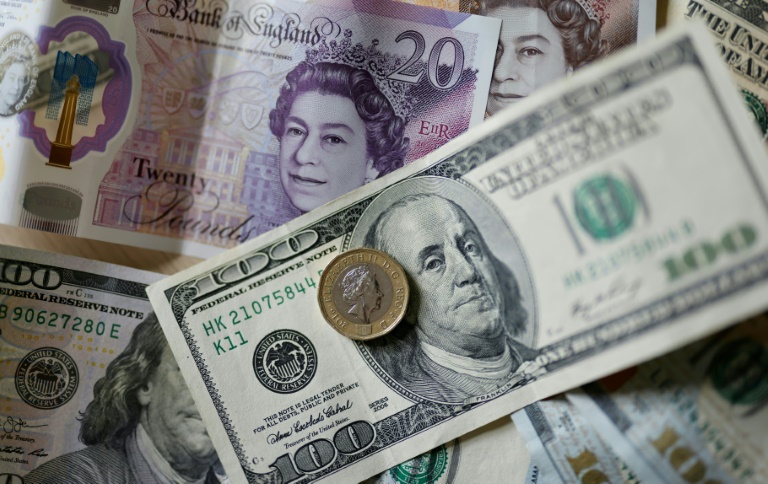
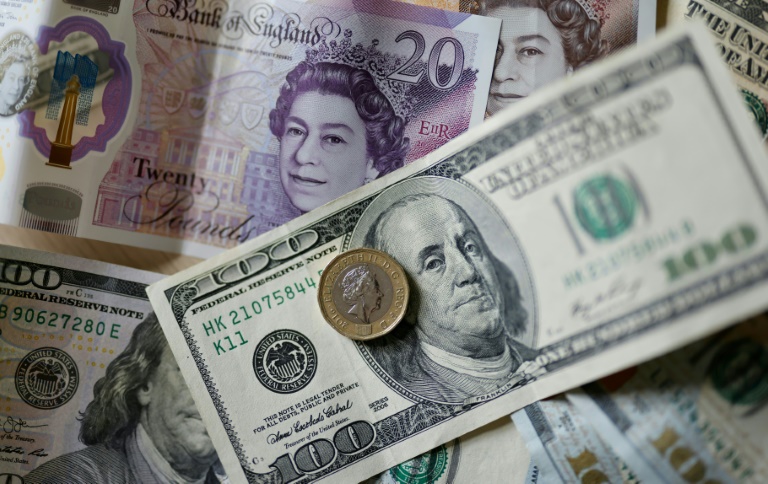
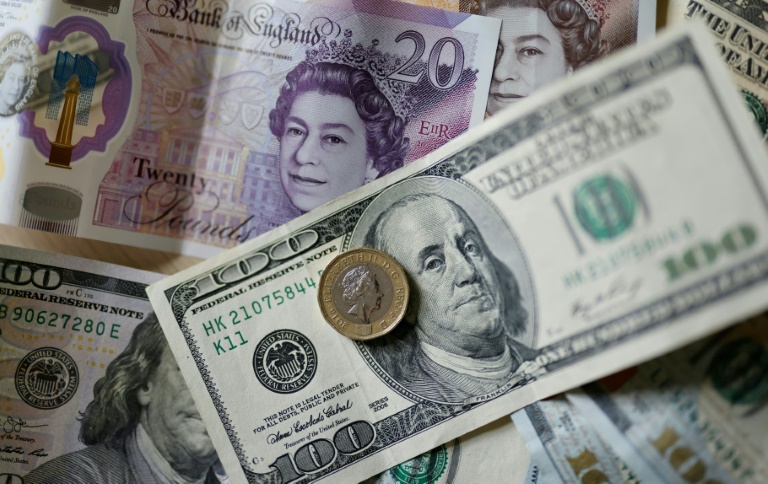
Stock markets advanced and the pound seesawed on Friday as investors tracked fresh growth and inflation data at the end of another turbulent week.

The pound jumped on revised figures showing the UK economy had avoided recession — but it swiftly fell back on expectations of an eventual downturn owing to sky-high inflation, but then moved higher again.

“Sterling has been all over the place this week,” said Fawad Razaqzada, analyst at City Index and Forex.com. “For traders, the pound is a confusing arena to be in right now.”

Britain’s borrowing costs soared and the pound hit a record dollar-low earlier this week days after the government announced a controversial tax-cutting budget. 

London stocks ended the day with a small gain.

In the eurozone, consumer prices rocketed a record 10 percent in September on soaring energy prices caused by Russia’s war on Ukraine, separate official data showed.  

Nevertheless Paris and Frankfurt stocks ended the day with gains of over one percent.

In the United States, data showed the Federal Reserve’s preferred yardstick for inflation — the personal consumption expenditures price index — was higher than expected.

“The key takeaway from the report is that the inflation the Fed says it can control (i.e. core inflation) did not move in a friendly direction in August,” said Patrick O’Hare, analyst at Briefing.com.

“Therefore, market participants can continue to expect the Fed not to be their friend with monetary policy,” he said.

Fed officials have again reiterated their intention to ramp up rates until they have tamed inflation, even if that means plunging the world’s top economy into recession.

Wall Street stocks opened lower and wobbled in early trades, but moved higher by late morning.

In Asia on Friday, Shanghai dropped as data showed China’s manufacturing and services sectors struggled again in September from Covid lockdowns in parts of the country that have battered the world’s number-two economy.

There was also little reaction to news that Beijing would allow some cities to reduce mortgage rates for first-home purchases as it tries to support the property market.

Market sentiment was being eroded also by rising fears about developments in the Ukraine war, as Russia  annexed four occupied regions of its neighbour Friday, with President Vladimir Putin threatening to use nuclear weapons to defend the territories.

– Key figures around 1530 GMT –

New York – Dow: UP 0.3 percent at 29,318.18 points

EURO STOXX 50: UP 1.2 percent at 3,318.20

London – FTSE 100: UP 0.2 percent at 6,893.81 (close)  

Frankfurt – DAX: UP 1.2 percent at 12,114.36 (close)

Paris – CAC 40: UP 1.5 percent at 5,762.34 (close)

Tokyo – Nikkei 225: DOWN 1.8 percent at 25,937.21 (close)

Hong Kong – Hang Seng Index: UP 0.3 percent at 17,222.83 (close)

Shanghai – Composite: DOWN 0.6 percent at 3,024.39 (close)

Pound/dollar: UP at $1.1143 from $1.1116 on Thursday

Euro/dollar: DOWN at $0.9797 from $0.9818

Euro/pound: DOWN at 87.97 pence from 88.28 pence

Dollar/yen: UP at 144.69 yen from 144.42 yen

Brent North Sea crude: DOWN 0.4 percent at $88.15 per barrel

West Texas Intermediate: DOWN 0.6 percent at $80.72 per barrel

burs-rl/pvh

Ketanji Brown Jackson inaugurated as first Black woman on US Supreme Court

The first Black woman to sit on the US Supreme Court, Ketanji Brown Jackson, was inaugurated Friday at a ceremony in Washington attended by President Joe Biden and Vice President Kamala Harris.

Jackson, who was nominated to the top court by Biden, will be part of a progressive minority in the body that decides some of the most important social and legal issues in the United States.

But the 52-year-old may find her hands largely tied by the conservative majority of six justices — three of whom were appointed by Biden’s predecessor, Donald Trump.

That majority has wielded its power in recent months, overturning the constitutional right to abortion and strengthening gun rights. 

Jackson was chosen at the end of February by Democrat Biden, who promised during his campaign to appoint the first African-American woman to the highest judicial institution in the country. 

She replaced Justice Stephen Breyer, 84, who retired. 

Despite acute polarization surrounding the court, her Senate confirmation process went smoothly, and her arrival does not change the balance of power on the bench. 

The 2022/2023 session of the Supreme Court is scheduled to begin Monday.

Strong US dollar an unstoppable force endangering other currencies

The dazzling rise of the US dollar, which has hit one record after another, is raising fears of a currency crash of a severity not seen since the 1997 Asian financial crisis reverberated around the world. 

The Federal Reserve’s rapid, steep interest rate increases and the relative health of the US economy has caused investors to flood into the dollar, driving the greenback up and sending the British pound, Indian rupee, Egyptian pound and South Korean won and others to uncharted depths.

“The moves are definitely getting extreme,” said Brad Bechtel of Jefferies, warning that the exchange rates could fall further creating a “dire situation.”

Most other major central banks also are forcefully tightening monetary policy to bring down inflation, but so far the moves have not helped stabilized the currency market, nor has Japan’s direct intervention to support the yen last week. 

Many fear that the same will be the case with the Bank of England’s plan announced Wednesday to conduct emergency purchases of government bonds to support the pound. 

“We have our doubts that the BoE’s plan will be the silver bullet to kill all of the angst that has been pressuring the pound … considering its plan doesn’t have permanency,” said Patrick O’Hare of Briefing.com.

Others, especially emerging market countries, are even worse off. The Pakistani rupee has lost 29 percent of its value against the US dollar in the past year, and the Egyptian pound has weakened by 20 percent.

Those countries, and others like Sri Lanka and Bangladesh which “benefitted from cheap and plentiful liquidity,” when interest rates were low during the pandemic, “are all suffering from tighter global liquidity,” said Win Thin, head of currency strategy at BBH Investor Services. 

“Those countries with the weakest fundamentals are likely to be tested first but others may join them,” he warned.

Those countries rely on imported oil and grain which have seen prices soar, widening their trade deficits and fueling inflation, massive blows to their currencies. 

The appreciation of the US currency has exacerbated the problem, since many commodities are denominated in dollars. 

Already in a fragile position, Pakistan was hit with historic flooding in August, which prompted the government to discuss a restructuring of its debt.

“There are severe pressures on the financial system now. And it’s only a matter of time until there’s a larger crisis somewhere in the world,” warns Adam Button of ForexLive. 

– Bad memories –

US Treasury Secretary Janet Yellen earlier this week said she has not yet seen signs of “disorderly” financial market developments amid the interest rate hikes.

For countries like Taiwan, Thailand or South Korea, which also dependent on energy imports, China’s zero-Covid policy has caused their exports to this key trading partner to plummet. 

Larger economies like China and Japan have contributed in recent weeks to the turbulence on the foreign exchange market. The Japanese yen plunged its lowest level in 24 years, while the Chinese yuan hit its weakest in 14 years.

Fear of destabilization brings back memories of the 1997 Asian financial crisis, which was triggered by the devaluation of the Thai baht. 

Malaysia, the Philippines and Indonesia followed, which panicked foreign investors and led to massive outflows of capital, pushing several countries into a severe recession and South Korea to the brink of default. 

At the time, the collapse of the baht was in part linked to its fixed parity with the dollar, which forced the Thai government to support its currency, depleting its foreign exchange reserves, which was unsustainable in the face of market forces.

Argentina eventually was forced to abandon its peg to the dollar and defaulted in late 2001 — the largest sovereign default in history.

Erik Nielsen of Wells Fargo said that is a key difference between 2022 and 1997. 

“Now there’s not a lot of fixed exchange rates,” he said. “I’m frankly more worried about developed markets right now.”

Lebanon, one of the few to still peg its currency to the greenback, on Thursday announced a drastic devaluation, taking the country’s pound to 15,000 to the dollar from the previous fixed value of 1,507. 

In the United States, by contrast, where inflation has soared to a 40-year high “the Fed sees strong dollar as a blessing,” said Christopher Vecchio of DailyFX, noting that it helps “insulate the economy from more significant price pressures.”‘

A strong currency means the country pays less for its imported products. 

Strong US dollar an unstoppable force endangering other currencies

The dazzling rise of the US dollar, which has hit one record after another, is raising fears of a currency crash of a severity not seen since the 1997 Asian financial crisis reverberated around the world. 

The Federal Reserve’s rapid, steep interest rate increases and the relative health of the US economy has caused investors to flood into the dollar, driving the greenback up and sending the British pound, Indian rupee, Egyptian pound and South Korean won and others to uncharted depths.

“The moves are definitely getting extreme,” said Brad Bechtel of Jefferies, warning that the exchange rates could fall further creating a “dire situation.”

Most other major central banks also are forcefully tightening monetary policy to bring down inflation, but so far the moves have not helped stabilized the currency market, nor has Japan’s direct intervention to support the yen last week. 

Many fear that the same will be the case with the Bank of England’s plan announced Wednesday to conduct emergency purchases of government bonds to support the pound. 

“We have our doubts that the BoE’s plan will be the silver bullet to kill all of the angst that has been pressuring the pound … considering its plan doesn’t have permanency,” said Patrick O’Hare of Briefing.com.

Others, especially emerging market countries, are even worse off. The Pakistani rupee has lost 29 percent of its value against the US dollar in the past year, and the Egyptian pound has weakened by 20 percent.

Those countries, and others like Sri Lanka and Bangladesh which “benefitted from cheap and plentiful liquidity,” when interest rates were low during the pandemic, “are all suffering from tighter global liquidity,” said Win Thin, head of currency strategy at BBH Investor Services. 

“Those countries with the weakest fundamentals are likely to be tested first but others may join them,” he warned.

Those countries rely on imported oil and grain which have seen prices soar, widening their trade deficits and fueling inflation, massive blows to their currencies. 

The appreciation of the US currency has exacerbated the problem, since many commodities are denominated in dollars. 

Already in a fragile position, Pakistan was hit with historic flooding in August, which prompted the government to discuss a restructuring of its debt.

“There are severe pressures on the financial system now. And it’s only a matter of time until there’s a larger crisis somewhere in the world,” warns Adam Button of ForexLive. 

– Bad memories –

US Treasury Secretary Janet Yellen earlier this week said she has not yet seen signs of “disorderly” financial market developments amid the interest rate hikes.

For countries like Taiwan, Thailand or South Korea, which also dependent on energy imports, China’s zero-Covid policy has caused their exports to this key trading partner to plummet. 

Larger economies like China and Japan have contributed in recent weeks to the turbulence on the foreign exchange market. The Japanese yen plunged its lowest level in 24 years, while the Chinese yuan hit its weakest in 14 years.

Fear of destabilization brings back memories of the 1997 Asian financial crisis, which was triggered by the devaluation of the Thai baht. 

Malaysia, the Philippines and Indonesia followed, which panicked foreign investors and led to massive outflows of capital, pushing several countries into a severe recession and South Korea to the brink of default. 

At the time, the collapse of the baht was in part linked to its fixed parity with the dollar, which forced the Thai government to support its currency, depleting its foreign exchange reserves, which was unsustainable in the face of market forces.

Argentina eventually was forced to abandon its peg to the dollar and defaulted in late 2001 — the largest sovereign default in history.

Erik Nielsen of Wells Fargo said that is a key difference between 2022 and 1997. 

“Now there’s not a lot of fixed exchange rates,” he said. “I’m frankly more worried about developed markets right now.”

Lebanon, one of the few to still peg its currency to the greenback, on Thursday announced a drastic devaluation, taking the country’s pound to 15,000 to the dollar from the previous fixed value of 1,507. 

In the United States, by contrast, where inflation has soared to a 40-year high “the Fed sees strong dollar as a blessing,” said Christopher Vecchio of DailyFX, noting that it helps “insulate the economy from more significant price pressures.”‘

A strong currency means the country pays less for its imported products. 

Strong US dollar an unstoppable force endangering other currencies

The dazzling rise of the US dollar, which has hit one record after another, is raising fears of a currency crash of a severity not seen since the 1997 Asian financial crisis reverberated around the world. 

The Federal Reserve’s rapid, steep interest rate increases and the relative health of the US economy has caused investors to flood into the dollar, driving the greenback up and sending the British pound, Indian rupee, Egyptian pound and South Korean won and others to uncharted depths.

“The moves are definitely getting extreme,” said Brad Bechtel of Jefferies, warning that the exchange rates could fall further creating a “dire situation.”

Most other major central banks also are forcefully tightening monetary policy to bring down inflation, but so far the moves have not helped stabilized the currency market, nor has Japan’s direct intervention to support the yen last week. 

Many fear that the same will be the case with the Bank of England’s plan announced Wednesday to conduct emergency purchases of government bonds to support the pound. 

“We have our doubts that the BoE’s plan will be the silver bullet to kill all of the angst that has been pressuring the pound … considering its plan doesn’t have permanency,” said Patrick O’Hare of Briefing.com.

Others, especially emerging market countries, are even worse off. The Pakistani rupee has lost 29 percent of its value against the US dollar in the past year, and the Egyptian pound has weakened by 20 percent.

Those countries, and others like Sri Lanka and Bangladesh which “benefitted from cheap and plentiful liquidity,” when interest rates were low during the pandemic, “are all suffering from tighter global liquidity,” said Win Thin, head of currency strategy at BBH Investor Services. 

“Those countries with the weakest fundamentals are likely to be tested first but others may join them,” he warned.

Those countries rely on imported oil and grain which have seen prices soar, widening their trade deficits and fueling inflation, massive blows to their currencies. 

The appreciation of the US currency has exacerbated the problem, since many commodities are denominated in dollars. 

Already in a fragile position, Pakistan was hit with historic flooding in August, which prompted the government to discuss a restructuring of its debt.

“There are severe pressures on the financial system now. And it’s only a matter of time until there’s a larger crisis somewhere in the world,” warns Adam Button of ForexLive. 

– Bad memories –

US Treasury Secretary Janet Yellen earlier this week said she has not yet seen signs of “disorderly” financial market developments amid the interest rate hikes.

For countries like Taiwan, Thailand or South Korea, which also dependent on energy imports, China’s zero-Covid policy has caused their exports to this key trading partner to plummet. 

Larger economies like China and Japan have contributed in recent weeks to the turbulence on the foreign exchange market. The Japanese yen plunged its lowest level in 24 years, while the Chinese yuan hit its weakest in 14 years.

Fear of destabilization brings back memories of the 1997 Asian financial crisis, which was triggered by the devaluation of the Thai baht. 

Malaysia, the Philippines and Indonesia followed, which panicked foreign investors and led to massive outflows of capital, pushing several countries into a severe recession and South Korea to the brink of default. 

At the time, the collapse of the baht was in part linked to its fixed parity with the dollar, which forced the Thai government to support its currency, depleting its foreign exchange reserves, which was unsustainable in the face of market forces.

Argentina eventually was forced to abandon its peg to the dollar and defaulted in late 2001 — the largest sovereign default in history.

Erik Nielsen of Wells Fargo said that is a key difference between 2022 and 1997. 

“Now there’s not a lot of fixed exchange rates,” he said. “I’m frankly more worried about developed markets right now.”

Lebanon, one of the few to still peg its currency to the greenback, on Thursday announced a drastic devaluation, taking the country’s pound to 15,000 to the dollar from the previous fixed value of 1,507. 

In the United States, by contrast, where inflation has soared to a 40-year high “the Fed sees strong dollar as a blessing,” said Christopher Vecchio of DailyFX, noting that it helps “insulate the economy from more significant price pressures.”‘

A strong currency means the country pays less for its imported products. 

EU to cut power use, levy energy companies

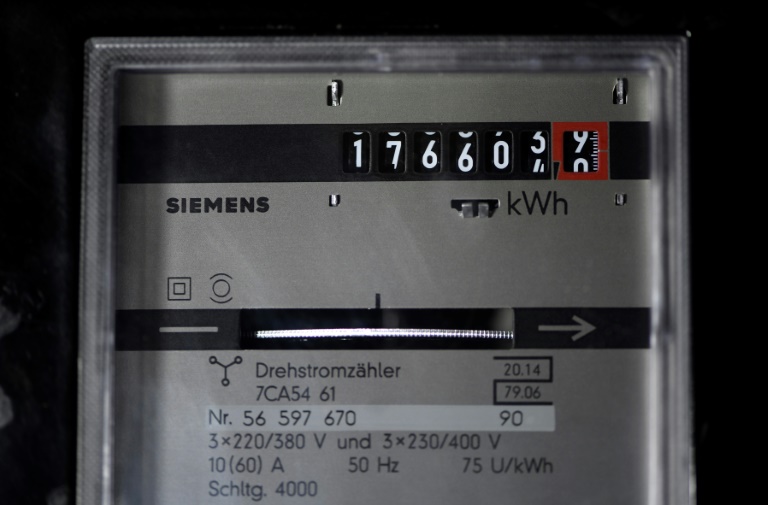
EU ministers on Friday agreed cuts to peak-hour power consumption and windfall levies on energy companies in an urgent effort to bring down sky-high energy prices.

The decision, announced by the Czech Republic in its role holding the EU presidency, aims to mitigate energy costs sent soaring by Russia’s war in Ukraine and as the northern hemisphere winter looms. 

European households and businesses are already staggering under surging energy bills, fuelling record inflation that in the eurozone has hit 10 percent.

Extra drama has been injected with several unexplained leaks this week of Russia-Germany undersea gas pipelines, Nord Stream 1 and 2, that were widely seen as “sabotage”.

The EU ministers’ agreement came a day after Germany — the bloc’s export powerhouse that had long been dependent on Russian gas — announced a 200-billion-euro (about $200 billion) energy aid package to shield its consumers.

Other EU countries have deployed smaller-scale national measures with the same aim, but several demanded European-level concertation, in part to clamp down on energy-buying competition between EU peers.

– Push for gas price cap –

The two measures adopted were proposed by the European Commission.

The EU executive believes it can raise 140 billion euros from the levies on non-gas electricity producers and on energy majors that are raking in outsized profits from the global energy demand.

Its plan to cut power usage foresees a reduction of “at least five percent” during peak hours, according to a commission document seen by AFP.

Missing from the announced measures, however, was an idea espoused by 15 EU countries — among them France, Spain, Italy, Greece, Malta and Poland — for a price cap on imported gas.

The energy crisis, which had been brewing even before the war in Ukraine, took on greater magnitude when Russia severely curtailed natural gas supplies to Europe in retaliation for Western sanctions over its invasion.

Energy prices in the EU are calculated on the basis of the most expensive source, in this case gas, which has gone up around fivefold over the past year.

Several EU ministers went into the meeting wanting a gas price cap to be discussed.

“There is big disappointment that in the proposal that is on the table there is nothing about gas prices,” Polish Climate Minister Anna Moskwa said. 

“This maximum price for gas would be supported by the majority of European countries” and “cannot be ignored,” she said.

But Germany resisted, fearing that a price cap would simply see liquified natural gas (LNG) shipments avoid Europe and sent to more lucrative markets, worsening the supply crunch for the EU.

The European Commission shares those concerns, although EU energy commissioner Kadri Simson said there needed to be a way to target just Russian gas — which arrives in the EU by pipeline, not in LNG form.

“We have to remove the incentives that are there for Russia to manipulate these volumes, and the answer is clear: We have to offer a price cap for all Russian gas.”

She and other participants, including Irish Climate Minister Eamon Ryan, said that, for a gas price cap to be effective other major buyers such as Japan and South Korea needed to cooperate with the EU.

– German opposition –

German Economy Minister Robert Habeck said that, while Berlin was open to the idea of a price cap on Russian gas “as a sanction”, the broader application being called for was “treacherous”.

He insisted that “we need to bring down consumption” as a priority, and “we must not allow too little gas to reach Europe”.

While the measures agreed Friday were steps in the right direction, the Bruegel think tank in Brussels had warned in an analysis they were “not sufficient”.

“A more comprehensive plan needs to ensure that all countries bring forward every available supply-side flexibility, make real efforts to reduce gas and electricity demand, keep their energy markets open and pool demand to get a better deal from external gas suppliers,” it said.

Further EU measures were likely to be discussed at an informal summit in Prague next week, and another EU energy ministers’ meeting on October 11 and 12.

“We need to continue our work. We are in an energy war with Russia,” said Czech Energy Minister Jozef Sikela. 

Tobacco giant Altria ends non-compete accord with Juul

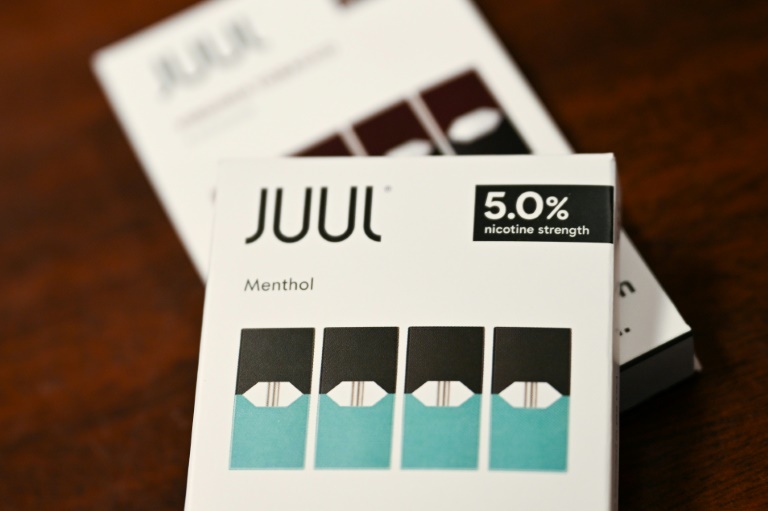
Tobacco giant Altria said Friday it ended a non-compete agreement with Juul, which is mired in a fight with a US agency over its ability to sell vaping products.

Altria, the parent company of Philip Morris USA and other brands in tobacco and nicotine, “exercised our option to be released from our Juul non-competition obligations,” the company said in a securities filing.

The announcement allows Altria to pursue the acquisition of another vaping company, or to develop its own products.

Altria in late 2018 invested about $13 billion in Juul, a stake that has been written down several times as Juul has faced various government crackdowns.

Altria’s move comes as Juul challenges a June action by the US Food and Drug Administration ordering all products made by Juul Labs off the market after finding the vaping giant had failed to address certain safety concerns.

The FDA order was suspended by a federal judge after an appeal by Juul.

Juul has submitted an appeal to the FDA, arguing that its products are safe for adult smokers.

Juul said Friday that the end of the non-compete clause with Altria “gives us more flexibility as it increases the financial and strategic options we can pursue to secure our business and address the impact of the FDA’s now stayed order,” a Juul spokesman said. 

“As we continue to operate in the market and go through the FDA’s review process, we remain confident in our science and evidence and believe that we will be able to demonstrate that our products do in fact meet the statutory standard of being ‘appropriate for the protection of the public health.'”

The agreement between the companies released Altria if its Juul investment falls below 10 percent of its initial value. At June 30, Altria’s investment in Juul was valued at $450 million.

Putin annexes four more Ukraine territories

Russian President Vladimir Putin on Friday annexed four territories in Ukraine controlled by his army at a grand ceremony in the Kremlin and urged Kyiv to lay down its arms and negotiate an end to seven months of fighting.

The lavish ceremony at the Kremlin, a turning point in recent post-Soviet history, came hours after shelling killed 25 people in Ukraine’s southern region of Zaporizhzhia, one of the worst attacks against civilians in months.

Putin was defiant during a address to Russia’s most senior political elite, telling the West the land grab was irreversible and calling on Ukraine’s emboldened army to give up and negotiate a surrender.

“I want to say this to the Kyiv regime and its masters in the West: People living in Lugansk, Donetsk, Kherson and Zaporizhzhia are becoming our citizens forever,” Putin said.

“We call on the Kyiv regime to immediately stop fighting and stop all hostilities… and return to the negotiating table,” the Russian leader added.

The packed hall erupted to chants of “Russia! Russia” after the four leaders inked the deal, and Putin — rarely seen making physical contact since the pandemic — joined hands with his proxy leaders and was shown shouting along in unison on state TV.

Leading up to the ceremony Putin warned he could use nuclear weapons to retain control of the territories as Kyiv vowed the move would make no difference to its aims of kicking out Russian troops. 

Ukraine’s closest backer, Washington, said it would “never” recognise Russia’s authority in the regions.

– ‘Bloodthirsty scum’ –

But early on Friday, an attack in Zaporizhzhia in the south, killed at least 25 people as civilians were preparing to leave to pick up relatives, Ukrainian officials said.

Bodies of people wearing civilian clothes were strewn across the ground after the attack and windows of cars blown out, an AFP photographer said.

One man, 56-year-old Viktor, said his life was saved because he went to get a coffee.

“The waitress gave it to me. And there was a bang. She got scared and left the cafe. A few minutes later, there was another explosion. Now she is on the floor,” he said.

“I managed to hide. She did not.”

“Only complete terrorists could do this,” said Ukrainian President Volodymyr Zelensky. “Bloodthirsty scum! You will definitely answer,” he added. 

But pro-Kremlin regional chief Vladimir Rogov accused Ukrainian troops of carrying out a “terrorist act”.

In central Moscow, at least 10,000 people were convening for state-organised annexation celebrations, with huge banners emblazoned: “Donetsk. Lugansk. Zaporizhzhia. Kherson. Russia!”

– ‘Nobody believes it’ –

“I’m happy if they want to join Russia,” Natalya Bodner, a 37-year-old lawyer told AFP. “They have more hope than we do”.

“It should have been done a long time ago,” a Russian serviceman Ildar Babaev from the southern region of Dagestan said.

“This is the right decision”.

The four territories create a crucial land corridor between Russia and the Crimean peninsula, annexed by Moscow in 2014.

But the Kremlin said Friday it “needed to clarify” the exact borders of Kherson and Zaporizhzhia — neither fully controlled by Moscow’s forces — that it intends to annex.

Together, all five regions including Crimea, make up around 20 percent of Ukraine, whose forces in recent weeks have been clawing back wins as part of a counter-offensive.

In Sloviansk, a city in Donetsk, a military medic who goes by the name of Coconut said the annexations were nonsense.

“If my neighbour comes to my house and announces that it’s his, nobody believes it actually belongs to him,” he told AFP.

In Kherson, Russian officials announced that Ukrainian strikes with US-supplied precision artillery systems had killed a senior security chief of the Russian-controlled region.

– Security Council vote –

A “pinpoint” strike by Himars hit his house, Kirill Stremousov, the deputy head of the Russian proxy administration said.

It was the latest of several targeted attacks on Russian-appointed officials in the region.

Ukrainian forces are also on the doorstep of Lyman in Donetsk, which Moscow’s forces pummelled for weeks to capture this summer. 

“Lyman is partially surrounded,” said Denis Pushilin, the pro-Moscow leader in the breakaway region of Donetsk, on social media. Two nearby villages were “not fully under our control,” he added.

On Thursday, President Joe Biden said the United States would “never, never, never” recognise Russian sovereignty over the territories set for annexation.

The four regions’ Kremlin-installed leaders formally requested annexation after claiming residents backed the move in hastily organised referendums that were dismissed by Kyiv and the West as fraudulent.

Ukraine has said the West’s only appropriate response is to hit Russia with more sanctions and to supply Ukrainian forces with more weapons to keep reclaiming territory.

The UN Security Council will vote Friday on a resolution condemning the referendums, according to France, the council’s current president, but it has no chance of passing due to Moscow’s veto power.

Zelensky is calling an “urgent” meeting of his national security council for Friday, his spokesman said.

burs/jm

Blinken heads to Latin America to see new left-leaning leaders

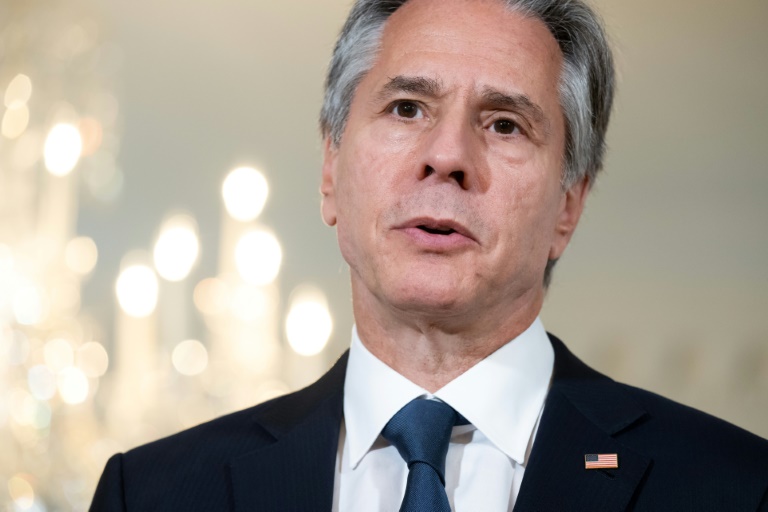
Secretary of State Antony Blinken will head next week to Colombia and Chile to forge ties with new left-leaning leaders elected in the historic US allies, the State Department announced Friday.

The top US diplomat flies Monday to Colombia where he will see President Gustavo Petro, who took office in September as the first leftist to head the country long vital to US strategy in South America.

Blinken will then head Wednesday to Chile and see President Gabriel Boric, a 36-year-old left-wing former student leader who took office on a campaign to sweep away the legacy of US-backed dictator Augusto Pinochet.

The secretary will later travel to Peru for a meeting of the Organization of American States and separately meet with President Pedro Castillo and other top officials.

The State Department said that Blinken throughout the trip will emphasize core themes for President Joe Biden’s administration — democracy and the fight against climate change.

In Colombia, Blinken will discuss “supporting strong democratic governments and respect for human rights throughout the Western Hemisphere,” State Department spokesman Ned Price said.

He will also speak of “implementing a holistic approach to counter narcotics trafficking and address its impacts on health, security and the environment,” he said.

Petro has vowed to bring lasting peace to Colombia after six decades of sporadic violence in part by tamping down the war on drugs, which has long been backed by the United States.

Blinken will also speak in Colombia about its protections for Venezuelan migrants, which serves as “a model for the region,” Price said.

On his last visit to Colombia in October 2021 and later at a US-led summit in Los Angeles, Blinken has encouraged regional cooperation to address migration, a key political issue in the United States for Biden.

Blinken’s trip will come a day after the first round of elections in Latin America’s most populous nation, Brazil, where far-right President Jair Bolsonaro is facing a strong challenge from leftist icon Luiz Inacio Lula da Silva.

Deadly hurricane heads for Carolinas after devastation in Florida

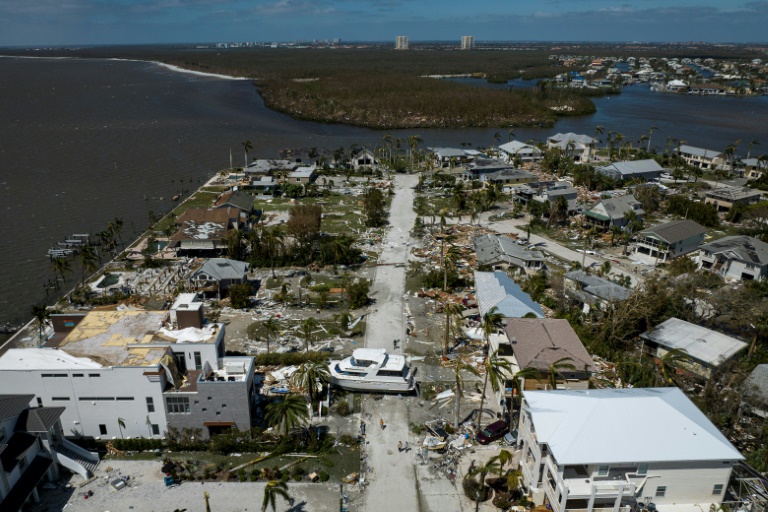
US forecasters expect Hurricane Ian to unleash life-threatening conditions on the Carolina states on Friday after causing devastation in Florida, where it killed at least 12 people with the toll expected to rise.

After weakening across land, Ian regained its Category 1 status in the Atlantic Ocean, the US National Hurricane Center said, predicting up to seven feet (two meters) of storm surge as it slams into the South Carolina coast by afternoon.

The storm, one of the most powerful ever to hit the United States, left hundreds of people in need of rescue in Florida.

State Governor Ron DeSantis on Friday described the coastal Fort Myers area as “ground zero,” adding “but this was such a big storm that there are effects far inland.”

Many people evacuated, but thousands chose to shelter in place. DeSantis said Florida officials had so far contacted 20,000 people who chose to stay.

At least 12 people have been confirmed dead, according to local officials, the majority of them in Charlotte county.

DeSantis has warned that it was too early to give a death toll, and that concrete information about casualty numbers could be expected over several days. 

The NHC has issued a hurricane warning for South Carolina’s entire coast, as well as portions of Georgia and North Carolina.

– ‘Horrifying sounds’ –

Ian then is set to weaken fast and “dissipate near the North Carolina/Virginia border by Saturday night,” the NHC said.

Fort Myers, where Ian came ashore as a powerful Category 4 hurricane on Wednesday, took much of the brunt, as streets became rivers and seawater poured into houses.

Dozens of boats moored in the marina were sunk while others were tossed onto downtown streets.

DeSantis described the destruction as a “500-year flood event.”

Tom Johnson of Fort Myers had a front row seat for the chaos from his apartment on the second floor of a two-story harbourside building.

“I was scared because I’ve never been through that,” the 54-year-old told AFP. “It was just the most horrifying sounds with debris flying everywhere, doors flying off.”

His home was undamaged but one of his neighbors, Janelle Thil, was not so lucky and had to ask other residents for help after her ground floor apartment began to flood.

“They got my dogs and then I jumped out of the window and swam,” the 42-year-old said.

When Thil returned to her apartment after the storm passed, she said she opened the door and “had to wait about five minutes for all the floodwaters to come out.”

“I loved my home,” she said. “But I’m alive and that’s what matters.”

A US Coast Guard official said helicopter crews were plucking people from the rooftops of homes inundated by floodwaters.

– Millions without power –

Seventeen migrants were missing from a boat that sank during the hurricane on Wednesday, with one person found dead and nine others rescued, the Coast Guard said. Among them were four Cubans who swam to shore in the Florida Keys.

Much of Florida’s southwest coast was plunged into darkness after the storm wiped out power.

Tracking website PowerOutage.us said two million homes and businesses remained without electricity in the Sunshine State on Friday.

Two barrier islands near Fort Myers, Pine Island and Sanibel Island, popular with vacationers, were essentially cut off when the storm damaged causeways to the mainland.

Before pummeling Florida, Ian plunged all of Cuba into darkness after downing the island’s power network.

Electricity was gradually returning, but many homes remain without power.

Laura Mujica joined dozens of Cuban women gathered in the capital Havana on Thursday to demand electricity be restored in the city.

“We took to the street, because we haven’t had electricity for several days and we are tired of it. 

“We women decided to take to the streets to empower ourselves and protest so that the electricity will be fixed,” said the 20-year-old.

Human-induced climate change is resulting in more severe weather events across the globe, scientists say — including with Ian.

According to a rapid and preliminary analysis, human-caused climate change increased the extreme rain that Ian unleashed by over 10 percent, US scientists said.

Close Bitnami banner
Bitnami