AFP

UK PM vows to get borrowing 'back on track' after market turmoil over tax cuts

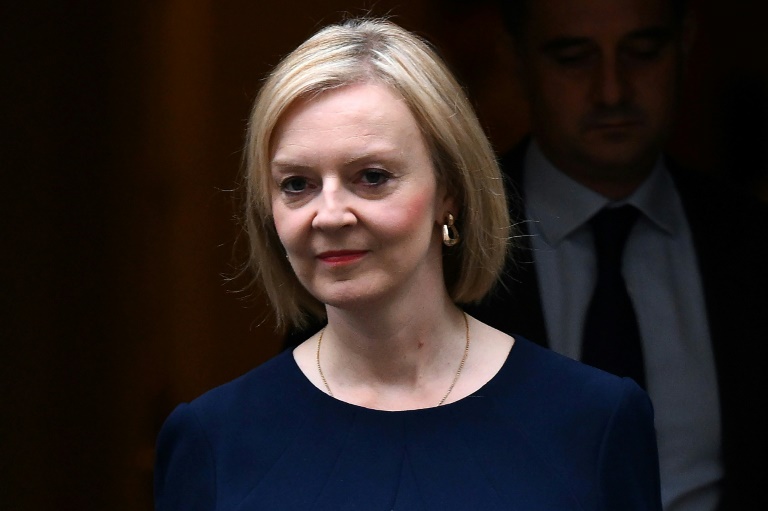
UK Prime Minister Liz Truss defended her tax-slashing plans Thursday but vowed to “get borrowing back on track”, after nearly a week of silence when markets tanked and the Bank of England was forced into an emergency intervention.

“We had to take urgent action to get our economy growing, get Britain moving, and also deal with inflation,” she said in an initial round of local BBC radio interviews.

“And of course, that means taking controversial and difficult decisions, but I’m prepared to do that as prime minister,” she added, in her first comments to UK media since the crisis sparked by Friday’s “mini-budget”.

“It’s important the United Kingdom’s on the front foot, that we are pulling all the levers we can to drive economic growth. That is what we are pushing ahead with.” 

In a series of further BBC regional television interviews, Truss — in power for less than a month — said some aspects of her growth plan “will take time” while insisting “we will get borrowing back on track”.

The under-fire leader is facing severe pressure after the markets reacted to her government’s contentious plans for extra borrowing to fund uncosted tax cuts by sending the pound to an all-time low against the dollar.

UK markets remain highly volatile, with the central bank intervening on Wednesday to buy government bonds in order to prevent a “material risk” to stability.

The Bank of England announced a two-week programme to buy long-term UK bonds, capped initially at £65 billion ($71 billion), as UK pension funds scrambled to sell investments in order to remain solvent.

After sterling hit its dollar low early Monday, the bank said it would “not hesitate to change interest rates by as much as needed” to curb high inflation.

But it also signalled that it would wait until its next policy meeting on November 3 before fully assessing the impact of the government’s contentious plans.

Parliament’s Treasury Committee on Thursday called on Chancellor Kwasi Kwarteng directly to publish a fully costed economic forecast by the end of October to help the bank rather than on November 23 as planned.

Opposition leaders have demanded that Truss cancel her Conservative party’s annual conference starting on Sunday and recall parliament over the crisis.

Britain’s main opposition Labour party has a huge 33-point lead over the ruling Conservatives, new polling out on Thursday suggested, as the government struggles with the fall-out from its economic plans.

YouGov said a voting intentions survey of 1,712 adults carried out on Wednesday and Thursday put Labour on 54 percent compared to the Tories’ 21 percent.

Adding to Truss’s political woes, signs of unease among Truss’s own MPs began to emerge.

Former science minister George Freeman called on the Cabinet to meet and agree a “Plan B”.

“The economic package of borrowing & tax cuts announced last week clearly can’t command market or voter confidence,” he said on Twitter.

Another MP, Charles Walker, admitted that his party would likely lose an election if it was called today based on the polling, but ruled out the possibility of a leadership challenge against Truss.

– Truss v IMF –

Markets are concerned that Britain cannot fund its huge spending commitments, having announced a massive fuel subsidy package alongside the tax cuts.

Truss defended her fiscal policy, which includes a cut to the top rate of income tax, arguing the UK currently had its highest tax burden in 70 years. 

“We’ve reduced those taxes across the board. And of course people who are better off tend to pay more taxes,” she said.

The pound rebounded somewhat during Thursday, rising one percent against the dollar and reaching $1.09, reversing losses the previous day following the BoE’s emergency move.

But former BoE chief Mark Carney said the government had “undercut” financial institutions with its actions. 

“Unfortunately having a partial budget, in these circumstances — tough global economy, tough financial market position, working at cross-purposes with the bank — has led to quite dramatic moves in financial markets,” he told the BBC. 

But Truss insisted she was working “very closely” with the central bank.

In a highly unusual intervention on Wednesday, the International Monetary Fund said it was “closely monitoring” developments and urged the UK government to change tack.

It noted that Truss and Kwarteng, were trying to deal with the energy shock and boost growth.

“However, given elevated inflation pressures in many countries… we do not recommend large and untargeted fiscal packages at this juncture.” 

The IMF stressed the importance of fiscal policy not working “at cross purposes to monetary policy”.

Many central banks, including the Bank of England, are aggressively hiking interest rates in a bid to cool decades-high inflation. 

Brady eyes offensive improvement as Bucs face Chiefs

Tom Brady says the Tampa Bay Buccaneers’ misfiring offense must improve as they prepare for a Super Bowl rematch with Patrick Mahomes and the Kansas City Chiefs on Sunday.

After a week of preparations disrupted by Hurricane Ian, which forced the team to relocate to Miami to practice, the Bucs will host the Chiefs at the Raymond James Stadium on Sunday after receiving the all-clear to stage the game from local authorities.

It is the first meeting between the two teams since Brady led the Bucs to a 31-9 win over the Chiefs at the same venue last year to clinch his seventh Super Bowl crown.

That victory saw the Bucs score four touchdowns while their dominant defense shut down Chiefs quarterback Mahomes.

It has been a different story this season however with the Bucs’ offense averaging just 17 points a game in the team’s first three games.

“I certainly expect us and hope we can score more points than what we’ve been scoring,” Brady told reporters on a conference call.

“We’re all disappointed by the fact that we haven’t scored as many points as we’re capable of scoring. We’re three games in, and we realise there’s things we haven’t done so well that we’ve got to get corrected.

“It comes down to a lot of different things. It’s making the right play, executing the plays. And if we do that I believe we’ll score more points.

“But it hasn’t been at the highest level for the first three weeks of the year.”

The Bucs’ offensive problems were on display as they stumbled to a 14-12 home loss to Green Bay last weekend after low-scoring opening wins over New Orleans and Dallas.

– Brady still the standard –

In overall offense, Tampa Bay rank 27th out of 32 teams so far this season.

By contrast, the Bucs defense is ranked fourth in the league, and as Brady acknowledged, has been largely responsible for helping them to a winning 2-1 start.

“We’ve got to go out there and match what they’re doing,” Brady said. “We’ve got to go out and score more points and take the pressure off them.”

While the 45-year-old Brady’s meagre passing stats have left him 28th in the quarterback rankings this season, Chiefs opposite number Mahomes is in no doubt that the NFL icon is still the gold standard by which other players are measured.

Mahomes, 27, said he hopes to emulate Brady by extending his career for as long as his form and fitness allow.

“I want to play as long as I can play,”Mahomes said. “Obviously, it’s hard to play until you’re 45 years old, and I don’t want to be out there just hanging on.

“But you see what Tom is — he’s still playing at a very high level. I think that’s why it’s hard for him to kind of give it up — when you’re playing at a high level you don’t want to leave it.

“I’m going to try to keep my body in the best shape possible and as long as they’ll let me play and I can play at a high level, I’ll be out there.”

– Pederson eyes Philly return –

The Chiefs head into Sunday’s game smarting from a shock 20-17 loss to the Indianapolis Colts last weekend which followed impressive wins over the Los Angeles Chargers and Arizona Cardinals.

In other highlights this weekend, the Philadelphia Eagles will attempt to preserve their unbeaten record when they host red hot quarterback Trevor Lawrence and the Jacksonville Jaguars.

After the chaos of last season, when head coach Urban Meyer was fired and the team finished 3-14, the Jaguars looked to have turned a corner under former Eagles coach Doug Pederson.

Pederson was sacked by the Eagles in 2021, just three years after leading the team to a memorable Super Bowl.

Pederson admits he is not certain of the reception he will get from the Eagles’ notoriously rambunctious crowd.

“It’s Philly. Anything’s possible, right, with these fans?” he said this week. “I”m just looking forward to running out of the tunnel with the Jaguars and getting ready to play a game there.”

Elsewhere on Sunday, the Buffalo Bills (2-1) will look to get back to winning ways after a bruising loss to the Miami Dolphins last weekend when they travel to Baltimore to take on the Ravens (2-1).

The Ravens’ preparations have been disrupted by a season-ending injury to tackle Michael Pierce, who tore a left biceps in a 37-26 win over New England last weekend.

Moscow calling? Red phone line remains crucial in US-Russia standoff

It’s not red, or even a telephone, but the secure Washington-Moscow communications line known in Cold War legend as the red phone is primed to ring again as the two powers jostle over the Kremlin’s nuclear threats.

With President Vladimir Putin openly brandishing the possibility of using nuclear weapons against Ukraine, where his conventional army is struggling to consolidate a seven-month-old invasion, US officials say secret channels are a key tool in pushing back.

“The answer to your question is yes,” National Security Advisor Jake Sullivan told NBC on Sunday when asked if the hotline was busy.

Messaging at “senior levels,” he said in the interview, has “happened frequently over the course of the past few months. That has happened even in just the last few days.”

What Sullivan wouldn’t comment on is quite what the modern incarnation of the famous red phone idea looks like.

“We have not wanted to indicate exactly what those channels look like because we want to be able to protect them so that we have the continuing ability to reach Russia,” he said.

– Clunky machine –

The concept of an emergency hotline where the Kremlin and White House could communicate in writing for the sake of clarity — and quickly for the sake of avoiding accidental nuclear war — took off in 1963 as a result of the Cuban Missile Crisis the previous year.

But far from the popular image of a red telephone on the president’s desk in the Oval Office, the first device was a clunky telegraph machine relying on cables snaking all the way across the Atlantic and through Europe.

Washington sent an inaugural message on August 30, 1963, using a phrase that has long been a favorite test for typists, since it uses every letter in the English alphabet: “THE QUICK BROWN FOX JUMPED OVER THE LAZY DOG’S BACK 1234567890.”

The reply from the Russians, reported The New York Times when it happened, was “completely unintelligible” and modifications had to be made.

Since then, various generations of technology have come and gone, including satellite links and fax.

While today the two sides use secure comms through computers linked by fiber optic cable, one thing hasn’t changed: at the US end, messages are sent and received not from the Oval Office but a room in the Pentagon.

As for the Russian terminal, that’s secret, but while it was long assumed to be located inside the Kremlin, the Times reported back in 1988 that Soviet leader Leonid Brezhnev once told US reporters it was located across Red Square in the Communist Party Headquarters.

– ‘Hotline is up’ –

Dramatic use of an East-West hotline has featured in everything from “Dr. Strangelove or: How I Learned to Stop Worrying and Love the Bomb” to the “West Wing” TV series and several US election ads along the way.

The non-fiction version has seen plenty of its own dramas, although many remains classified.

Some of the earliest incidents that were made public took place during the 1967 Arab-Israeli war.

Lyndon Johnson recalled in his presidential memoir that he was informed early in the morning on June 5 in his White House bedroom that “the hotline is up.” It was the Soviet leader reassuring him that the USSR would keep out of the Mideast war if the United States did likewise.

The line was used during another Arab-Israeli conflict in 1973, as well as in 1979 when the Soviet Union launched its ill-fated invasion of Afghanistan.

Other hotlines have sprung up around the world, notably between China and Russia, India and Pakistan, and North and South Korea — although this last one is periodically cut in response to the very tensions it is meant to help resolve.

Hurricane Ian a 'catastrophe' for Cuba's vital cigar sector

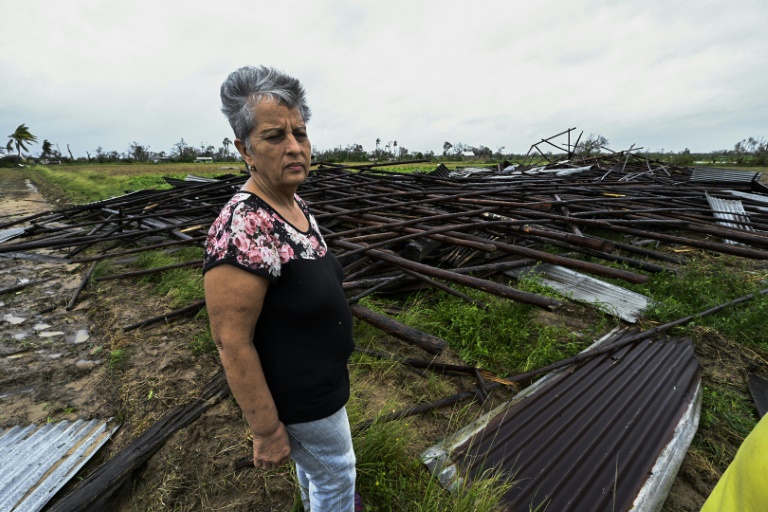
Western Cuba’s tobacco growing heartland has been left devastated by Hurricane Ian with piles of wood and tiles where once stood farms.

A triangle of three municipalities in the Vuelta Abajo region of Pilar del Rio province, the Cuban region worst affected by the tropical storm, is where the best tobacco leaves grow and is a pillar of the island nation’s ravaged economy.

“We’ve never had a catastrophe of this scale,” Maritza Carpio, who runs a tobacco estate in San Luis, told AFP.

Winds that reached speeds of more than 200 kilometers (125 miles) per hour left “an extremely difficult situation for all farmers.”

With Cuba’s economy already in crisis and its vital tourism industry grinding to a halt during the coronavirus pandemic, “we don’t know how we can face this,” said Carpio.

The hurricane could not have struck at a worse time with the tobacco planting season due to begin in October.

The winds and rain smashed makeshift wooden constructions where tobacco leaves are left to dry and benefit from the sun, air and humidity of Cuba.

Ian also eroded the crop fields that were being prepared for planting.

“It’s a blow that slows down the development of the planting season” given that the fields had already been ploughed, said tobacco farmer Sergio Luis Martinez, 59, whose tobacco house in Pinar del Rio was destroyed.

Pilar del Rio produces 65 percent of Cuban tobacco, while Vuelta Abajo is the only region where the three different types of leaves used in the country’s world famous cigars grow.

In San Luis alone, 226 tons of tobacco harvested in August was damaged, local television said.

In 2021, Cuba exported $568 million worth of cigars, a 15 percent increase on the previous year, according to Habanos S.A, the manufacturing company that controls promotion, distribution and export of cigars.

The state-owned Tabacuba company, which buys 95 percent of private producers’ harvests, was not spared by the hurricane, with many of its warehouses, sorting centers and offices destroyed.

– ‘Everything is ugly’ –

The Category 3 hurricane battered Pinar del Rio for six hours on Tuesday, leaving three people dead. Authorities had evacuated 50,000 people as a precaution.

The national electricity grid was also badly damaged with a total nationwide power cut lasting 18 hours, leaving 11.2 million people in the dark.

Two days later, power had still not been restored in the west.

In a matter of hours, decades of work was ruined.

On Carpio’s estate, trees were uprooted and a young banana plantation devastated.

“Before you breathed country air, you could say ‘how beautiful’, and now everything is ugly,” said Carpio, who is putting up her neighbor Caridad Alvarez, a 59-year-old farmhand whose house was destroyed.

The impact is not just economic, but also sentimental.

“It was an old farm, build with hard wood by my grandfather, repaired by my father, who died in April at 93,” said Carpio.

– ‘Great damage’ –

President Miguel Diaz-Canel visited Pinar del Rio on Tuesday and Wednesday.

“There is great damage, even though we haven’t yet been able to evaluate it,” he wrote on Twitter.

Carpio’s estate is classified as a “Vega fina”, a certification needed to grow the tobacco used in Cuban cigars.

This year she harvested 4.8 tons of the tobacco leaf used to carefully make the cigars.

Carpio knows that she is going to have to rebuild her farm quickly to avoid missing out on the next harvest, but for that she says she will need government help.

Google shutting down cloud gaming service Stadia

Google on Thursday said it is shutting down Stadia, the cloud video game service it launched three years ago to let people access console-quality play as easily as they do email.

“It hasn’t gained the traction with users that we expected so we’ve made the difficult decision to begin winding down our Stadia streaming service,” Google vice president Phil Harrison said in a blog post.

Google said it will refund purchases of Stadia hardware, such as controllers, as well as game content bought through its online store, and that players will have access to the service through January 18 of next year, he added.

“They had a great idea and a bad business model,” Wedbush Securities analyst Michael Pachter said of Stadia.

“They tried to offer the service as a subscription without games.”

Xbox-maker Microsoft, meanwhile, offered a rival Game Pass service “with a ton of games,” making it a more tempting option for players, Pachter said.

Game Pass has some 25 million subscribers, while Stadia has fewer than a million, the analyst noted.

Microsoft is considered the streaming video game heavyweight with its Xbox Game Pass service and large community of players who use its consoles and desktop computers.

The Redmond, Washington-based company also has a stable of video game studios.

And while Microsoft makes Xbox video game consoles, it has been leading a shift to letting people play titles on internet-linked devices of their choosing with titles hosted in the cloud.

Microsoft recently announced that the ability to play Xbox games will be built into Samsung smart televisions in its latest cloud gaming move.

“We’re on a quest to bring the joy and community of gaming to everyone on the planet, and bringing the Xbox app to smart TVs is another step in making our vision a reality,” Microsoft Gaming chief Phil Spencer said in a post.

Microsoft catapulted itself into the big league in one of the world’s most lucrative markets early this year by announcing a $69 billion deal to take over video game maker Activision Blizzard — the biggest acquisition in the sector’s history.

Amazon early this year launched its Luna video game streaming service for the general public in the United States, aiming to expand its multi-pronged empire into the booming gaming industry.

Luna allows players to access games directly online with no need for a console as part of the cloud gaming technology that is seen as a future direction of the industry.

Luna takes on Microsoft and PlayStation-maker Sony as well as Stadia.

N.Korea fires ballistic missiles after US VP Harris tours DMZ

North Korea fired two ballistic missiles Thursday just hours after US Vice President Kamala Harris left South Korea, where she had toured the heavily fortified Demilitarized Zone which divides the peninsula.

The launch was Pyongyang’s third in five days, continuing the nuclear-armed country’s record-breaking blitz of weapons tests this year.

Speaking at the Demilitarized Zone (DMZ) earlier Thursday, Harris decried North Korea’s “brutal dictatorship, rampant human rights violations and an unlawful weapons programme that threatens peace and stability”.

She said that the US commitment to South Korea’s defence was “ironclad”, adding the allies were “aligned” in their response to the growing threat posed by the North’s weapons programmes.

Seoul and Washington want “a complete denuclearisation of the Korean peninsula” — but in the interim they are “ready to address any contingency”, she said.

At an observation post atop a steep hill overlooking North Korea, Harris peered through bulky binoculars as US and South Korean soldiers pointed out features, including defences, in the area.

“It’s so close,” she said.

Harris also visited the Panmunjom Truce Village — where then-US president Donald Trump met the North’s Kim Jong Un in 2019 — and talked to US soldiers at Camp Bonifas in the Joint Security Area.

On the North Korean side of the border at Panmunjom, guards in hazmat suits could be seen watching as Harris was shown the demarcation line between the two countries — which remain technically at war.

Seoul said its military had “reinforced monitoring and surveillance” after Pyongyang’s Thursday test of the two short-range ballistic missiles, which was also confirmed by Tokyo.

“North Korea’s repeated ballistic missile launches can never be tolerated,” Japanese defence minister Yasukazu Hamada told reporters.

The US State Department condemned the launches, saying they are a “clear violation of multiple UN Security Council resolutions and demonstrate the threat the DPRK poses to the region, as well as the international community.”

“We remain deeply committed to a diplomatic approach with the DPRK and call on the DPRK to engage in dialogue,” State Department spokesman Vedant Patel told reporters, using the official abbreviation for North Korea.

– Yoon talks –

Washington has about 28,500 troops stationed in South Korea to help protect it from the North, and the allies are conducting a large-scale joint naval exercise this week in a show of force.

Such drills infuriate North Korea, which sees them as rehearsals for an invasion.

Harris’ trip to the DMZ is also likely to have annoyed Pyongyang, which branded US Speaker of the House Nancy Pelosi the “worst destroyer of international peace” when she visited the border in August.

Harris visited Seoul after a trip to Japan, where she attended the state funeral of assassinated former prime minister Shinzo Abe.

Earlier Thursday, Harris met President Yoon Suk-yeol for talks dominated by security issues, although Seoul also raised its concerns over a new law signed by US President Joe Biden that removes subsidies for electric cars built outside America, impacting Korean automakers such as Hyundai and Kia.

Harris, America’s first woman vice president, also met who the White House called “groundbreaking women leaders” of South Korea to discuss gender equality issues, a topic she said she raised with Yoon during their talks.

Yoon, who has pledged to abolish Seoul’s Ministry of Gender Equality, has faced domestic criticism for a lack of women in his cabinet.

– Nuclear test? –

South Korean and US officials have warned for months that Kim Jong Un is preparing to conduct another nuclear test.

On Wednesday, the South’s spy agency said North Korea’s next nuclear test could happen in the window between China’s upcoming party congress October 16 and the US midterms on November 7.

North Korea, which is under multiple UN sanctions for its weapons programmes, typically seeks to maximise the geopolitical impact of its tests with careful timing.

The isolated regime has tested nuclear weapons six times since 2006, most recently in 2017. Earlier this month it changed its laws, declaring itself an “irreversible” nuclear power.

“North Korea’s growing nuclear missile threat raises concerns in Seoul about the reliability of Washington’s defence commitments,” said Leif-Eric Easley, a professor at Ewha University in Seoul.

But sending the USS Ronald Reagan supercarrier and Harris to South Korea demonstrates both America’s military capabilities and political will, he added.

Harris also raised the issue of Seoul working more closely with Japan on security issues during her trip.

Seoul announced Thursday it would hold trilateral anti-submarine drills with Japan and the US, the first such exercises since 2017.

South Korean officials said this weekend they had detected signs Pyongyang could be preparing to fire a submarine-launched ballistic missile.

Hurricane wreaks havoc on Florida, Biden warns of death toll

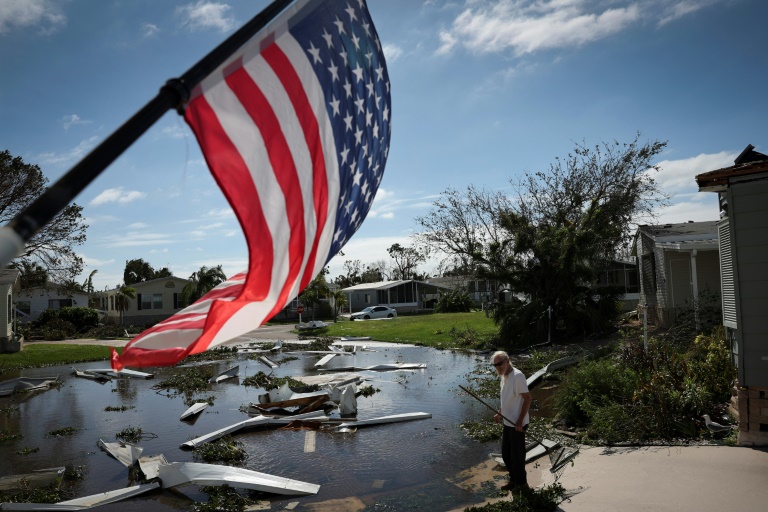
Hurricane Ian left a trail of devastation across Florida on Thursday with whole neighborhoods reduced to shattered ruins and millions left without power as US President Joe Biden warned of a high death toll.

The storm, one of the most powerful ever to hit the United States, churned towards South Carolina after hammering the southern coastal state, where many residents were awaiting rescue in flooded homes.

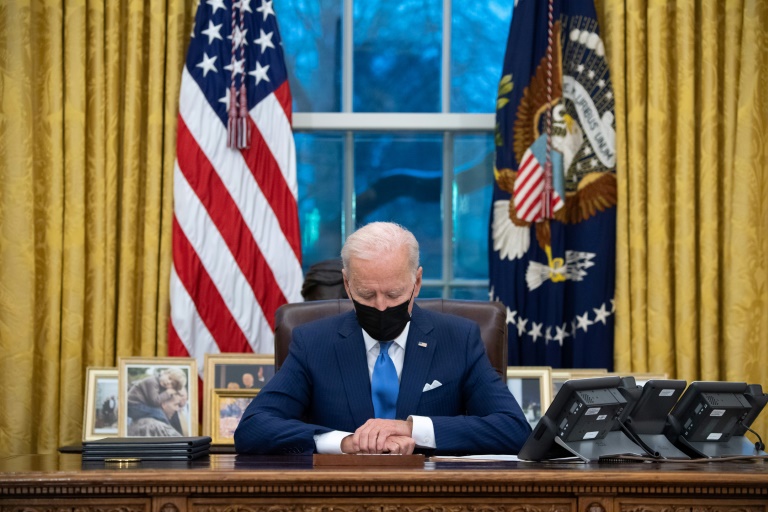
“This could be the deadliest hurricane in Florida history,” Biden said after a briefing at FEMA emergency management headquarters in Washington.

He said the numbers “are still unclear, but we’re hearing reports of what may be substantial loss of life.”

Florida Governor Ron DeSantis described the destruction in the southwest of the state as a “500-year flood event.”

Aerial photos of Fort Myers, where the hurricane made landfall as a powerful Category 4 storm on Wednesday, showed swathes of destruction in residential areas.

Roads and bridges were washed out by storm surge and trees toppled by howling winds of up to 150 miles per hour (240 kilometers per hour).

At least six deaths have been confirmed by county officials but the toll is expected to rise significantly as rescuers fan out.

A Coast Guard official said helicopter crews were plucking people from the rooftops of homes inundated by floodwaters.

The US Border Patrol said a boat carrying migrants sank at sea during the hurricane on Wednesday, leaving 20 missing. Four Cubans swam to shore in the Florida Keys and the coast guard rescued three others.

Ian was downgraded to a tropical storm overnight but the National Hurricane Center (NHC) said it was expected to regain hurricane strength during the day and issued a hurricane warning for the entire coast of South Carolina.

– ‘Really devastated’ –

After an initial look at the breathtaking destruction, DeSantis, the governor, said Fort Myers and adjacent Cape Coral were “inundated and really devastated” by the storm.

Ian also menaced the city of Orlando and the nearby Disney theme parks, which were shuttered.

The hurricane’s savagery was most evident along Florida’s southwest coast, much of which was plunged into darkness after the storm wiped out power.

Tracking website poweroutage.us said 2.66 million homes and businesses were without electricity in the so-called Sunshine State.

Joe Ketcham, 70, of Punta Gorda, told AFP of the “relentless” banging of metal and his fears about what was to come as the hurricane battered his home.

“But I have the almighty savior who I prayed to. This is all material,” Ketcham said of the damage around him. “We’re alive. We’re fine.”

Lisamarie Pierro said that the storm “was long and intense” and left a “mess.”

“But this is nothing,” she said. “My house is still standing.”

Biden declared a “major disaster” in Florida, a move that frees up federal funding for storm relief.

“We’re continuing to take swift action to help the families of Florida,” he tweeted. “I want the people of Florida to know that we will be here at every step of the way.”

– Water rising –

DeSantis meanwhile warned that broad regions of Florida remained under threat.

“The amount of water that’s been rising, and will continue today even as the storm is passing, is basically a 500-year flood event,” he told a press conference.

Two barrier islands near Fort Myers, Pine Island and Sanibel Island, popular with vacationers, were essentially cut off when the storm damaged causeways to the mainland.

Mandatory evacuation orders had been issued in many areas of Florida ahead of the storm, with several dozen shelters set up.

Airports stopped all commercial flights, and cruise ship companies delayed or canceled voyages.

Before pummeling Florida, Ian had plunged all of Cuba into darkness Tuesday after downing the island’s power network.

At least two people died in Pinar del Rio province, state media in the country of more than 11 million reported.

Human activity has caused life-threatening climate change resulting in more severe weather events across the globe.

Hurricane wreaks havoc on Florida, Biden warns of death toll

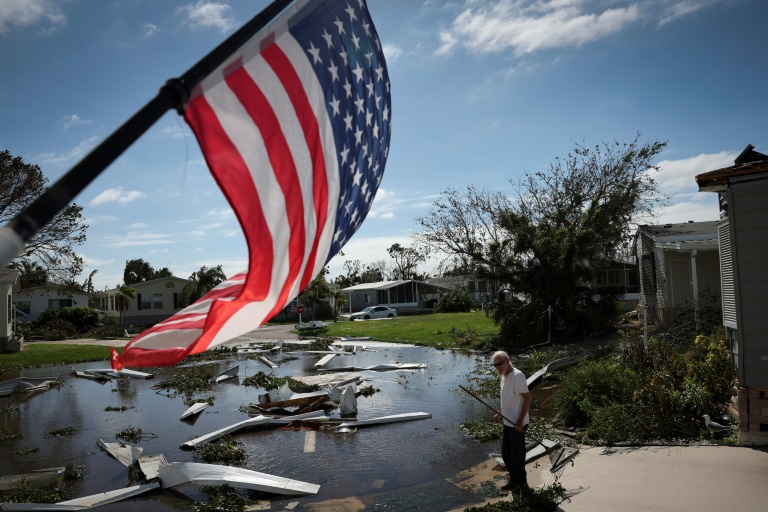
Hurricane Ian left a trail of devastation across Florida on Thursday with whole neighborhoods reduced to shattered ruins and millions left without power as US President Joe Biden warned of a high death toll.

The storm, one of the most powerful ever to hit the United States, churned towards South Carolina after hammering the southern coastal state, where many residents were awaiting rescue in flooded homes.

“This could be the deadliest hurricane in Florida history,” Biden said after a briefing at FEMA emergency management headquarters in Washington.

He said the numbers “are still unclear, but we’re hearing reports of what may be substantial loss of life.”

Florida Governor Ron DeSantis described the destruction in the southwest of the state as a “500-year flood event.”

Aerial photos of Fort Myers, where the hurricane made landfall as a powerful Category 4 storm on Wednesday, showed swathes of destruction in residential areas.

Roads and bridges were washed out by storm surge and trees toppled by howling winds of up to 150 miles per hour (240 kilometers per hour).

At least six deaths have been confirmed by county officials but the toll is expected to rise significantly as rescuers fan out.

A Coast Guard official said helicopter crews were plucking people from the rooftops of homes inundated by floodwaters.

The US Border Patrol said a boat carrying migrants sank at sea during the hurricane on Wednesday, leaving 20 missing. Four Cubans swam to shore in the Florida Keys and the coast guard rescued three others.

Ian was downgraded to a tropical storm overnight but the National Hurricane Center (NHC) said it was expected to regain hurricane strength during the day and issued a hurricane warning for the entire coast of South Carolina.

– ‘Really devastated’ –

After an initial look at the breathtaking destruction, DeSantis, the governor, said Fort Myers and adjacent Cape Coral were “inundated and really devastated” by the storm.

Ian also menaced the city of Orlando and the nearby Disney theme parks, which were shuttered.

The hurricane’s savagery was most evident along Florida’s southwest coast, much of which was plunged into darkness after the storm wiped out power.

Tracking website poweroutage.us said 2.66 million homes and businesses were without electricity in the so-called Sunshine State.

Joe Ketcham, 70, of Punta Gorda, told AFP of the “relentless” banging of metal and his fears about what was to come as the hurricane battered his home.

“But I have the almighty savior who I prayed to. This is all material,” Ketcham said of the damage around him. “We’re alive. We’re fine.”

Lisamarie Pierro said that the storm “was long and intense” and left a “mess.”

“But this is nothing,” she said. “My house is still standing.”

Biden declared a “major disaster” in Florida, a move that frees up federal funding for storm relief.

“We’re continuing to take swift action to help the families of Florida,” he tweeted. “I want the people of Florida to know that we will be here at every step of the way.”

– Water rising –

DeSantis meanwhile warned that broad regions of Florida remained under threat.

“The amount of water that’s been rising, and will continue today even as the storm is passing, is basically a 500-year flood event,” he told a press conference.

Two barrier islands near Fort Myers, Pine Island and Sanibel Island, popular with vacationers, were essentially cut off when the storm damaged causeways to the mainland.

Mandatory evacuation orders had been issued in many areas of Florida ahead of the storm, with several dozen shelters set up.

Airports stopped all commercial flights, and cruise ship companies delayed or canceled voyages.

Before pummeling Florida, Ian had plunged all of Cuba into darkness Tuesday after downing the island’s power network.

At least two people died in Pinar del Rio province, state media in the country of more than 11 million reported.

Human activity has caused life-threatening climate change resulting in more severe weather events across the globe.

Gas flares vastly underperform, causing greater climate impact: study

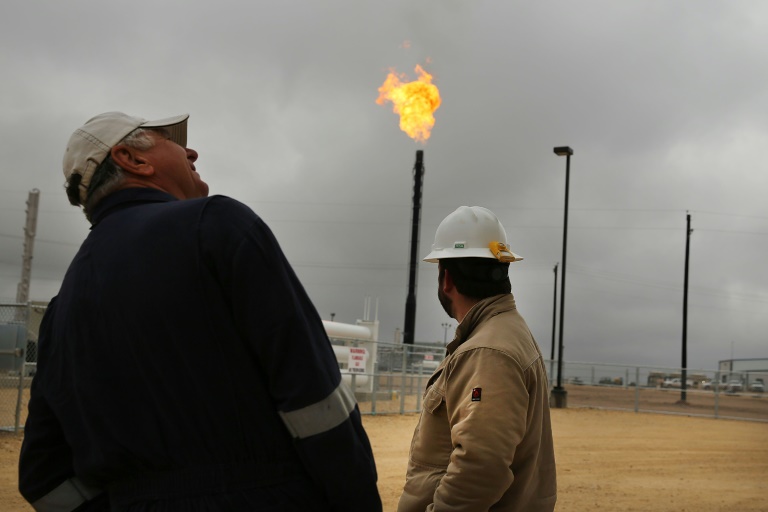
Flaring — burning off unwanted natural gas from oil and gas wells — releases five times more of the potent greenhouse gas methane into the atmosphere over the United States than previously assumed, according to a study published Thursday.

The result is a far greater impact on climate change, with the warming potential between the stated and actual effectiveness of flaring across the United States equivalent to putting 2.9 million more cars onto the road each year, the paper in Science said.

A team led by Genevieve Plant at the University of Michigan carried out airborne sampling over the Permian Basin and Eagle Ford Shale in Texas, as well as the Bakken Formation that straddles North Dakota and Montana. These together account for 80 percent of US flaring.

“We employed a small airplane equipped with highly sensitive sensors to measure the concentrations of methane and carbon dioxide directly downwind of flare stacks,” Plant told AFP.

“Over the course of our airborne survey, we sample around 300 distinct flare stacks throughout the highest-flaring regions in the US.”

The fossil fuel industry and US government work on the assumption that flares remain lit and destroy methane, the predominant component of natural gas, with 98 percent efficiency.

But according to the study, a combination of unlit flares and some flares that were burning highly inefficiently meant that on average, flares destroyed just 91.1 percent of methane.

That implies methane emissions from flaring in the United States, which ranks among the top five nations for flaring activity, are five times as high as currently officially reported. 

– Health impacts –

Digging deeper into the numbers, the team found that most flares actually operate at 98 percent efficiency.

But a modest number of malfunctioning flares operate at efficiency as low as 60 percent, and 3-5 percent of flares are unlit — directly venting unburned gas into the atmosphere.

Flaring is an inherently wasteful activity — as the natural gas associated with oil extraction could be used for productive purposes. 

The amount of gas that is currently flared each year – about 144 billion cubic meters – could power the whole of sub-Saharan Africa, according to the World Bank.

Gas is flared for various reasons. Sometimes it is done for safety, since the extraction process deals with high pressures that can cause explosions. 

At other times it can be economic — when, for example, the target is oil and the associated gas isn’t considered worth bringing to market.

“From anecdotal conversations with industry experts, one potential reason flares may be unlit is due to high wind events and then the flares remain unlit until noticed by the operator if re-igniting systems are either not installed or not working,” said Plant.

The team suggested a number of solutions, key among them: reduce the total volume of flaring activity, increasing flare efficiency, and reducing the number of unlit flares.

Technology solutions can also be deployed, such as re-injecting gas back into oil reservoirs, which is common practice in Alaska.

“Other proposed alternatives to flaring include using the gas to power equipment on-site, as well as storing it, either compressed or liquefied form, for later energy use,” said Plant.

In a related commentary, authors Riley Duren and Deborah Gordon said the findings had important health implications for the half million people who live within five kilometers (three miles) of the three basins studied.

“Unlit and partially combusted flares have the potential to expose front-line communities to a cocktail of co-pollutants that present risks of acute and/or chronic health impacts,” they said.

Methane is a potent greenhouse gas, with more than 80 times the warming power of carbon dioxide over the first 20 years it enters the atmosphere — though carbon dioxide has greater staying power. 

Because of this, more than 120 countries have signed a Global Methane Pledge to cut emissions by 30 percent by 2030.

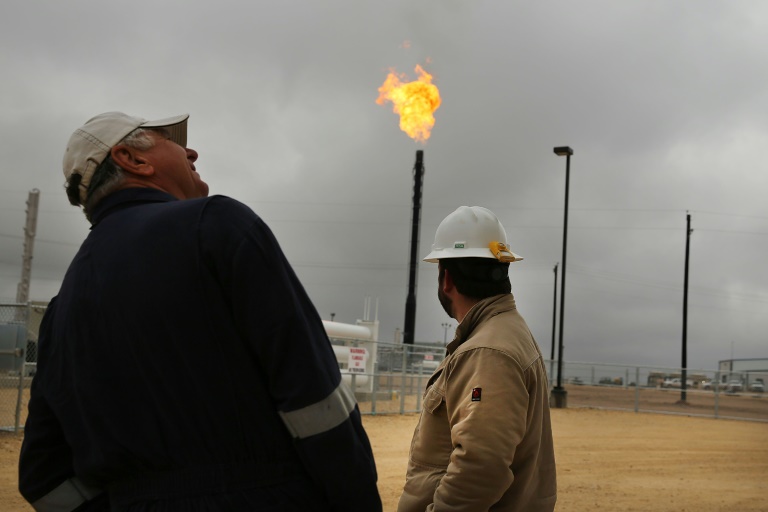
Gas flares vastly underperform, causing greater climate impact: study

Flaring — burning off unwanted natural gas from oil and gas wells — releases five times more of the potent greenhouse gas methane into the atmosphere over the United States than previously assumed, according to a study published Thursday.

The result is a far greater impact on climate change, with the warming potential between the stated and actual effectiveness of flaring across the United States equivalent to putting 2.9 million more cars onto the road each year, the paper in Science said.

A team led by Genevieve Plant at the University of Michigan carried out airborne sampling over the Permian Basin and Eagle Ford Shale in Texas, as well as the Bakken Formation that straddles North Dakota and Montana. These together account for 80 percent of US flaring.

“We employed a small airplane equipped with highly sensitive sensors to measure the concentrations of methane and carbon dioxide directly downwind of flare stacks,” Plant told AFP.

“Over the course of our airborne survey, we sample around 300 distinct flare stacks throughout the highest-flaring regions in the US.”

The fossil fuel industry and US government work on the assumption that flares remain lit and destroy methane, the predominant component of natural gas, with 98 percent efficiency.

But according to the study, a combination of unlit flares and some flares that were burning highly inefficiently meant that on average, flares destroyed just 91.1 percent of methane.

That implies methane emissions from flaring in the United States, which ranks among the top five nations for flaring activity, are five times as high as currently officially reported. 

– Health impacts –

Digging deeper into the numbers, the team found that most flares actually operate at 98 percent efficiency.

But a modest number of malfunctioning flares operate at efficiency as low as 60 percent, and 3-5 percent of flares are unlit — directly venting unburned gas into the atmosphere.

Flaring is an inherently wasteful activity — as the natural gas associated with oil extraction could be used for productive purposes. 

The amount of gas that is currently flared each year – about 144 billion cubic meters – could power the whole of sub-Saharan Africa, according to the World Bank.

Gas is flared for various reasons. Sometimes it is done for safety, since the extraction process deals with high pressures that can cause explosions. 

At other times it can be economic — when, for example, the target is oil and the associated gas isn’t considered worth bringing to market.

“From anecdotal conversations with industry experts, one potential reason flares may be unlit is due to high wind events and then the flares remain unlit until noticed by the operator if re-igniting systems are either not installed or not working,” said Plant.

The team suggested a number of solutions, key among them: reduce the total volume of flaring activity, increasing flare efficiency, and reducing the number of unlit flares.

Technology solutions can also be deployed, such as re-injecting gas back into oil reservoirs, which is common practice in Alaska.

“Other proposed alternatives to flaring include using the gas to power equipment on-site, as well as storing it, either compressed or liquefied form, for later energy use,” said Plant.

In a related commentary, authors Riley Duren and Deborah Gordon said the findings had important health implications for the half million people who live within five kilometers (three miles) of the three basins studied.

“Unlit and partially combusted flares have the potential to expose front-line communities to a cocktail of co-pollutants that present risks of acute and/or chronic health impacts,” they said.

Methane is a potent greenhouse gas, with more than 80 times the warming power of carbon dioxide over the first 20 years it enters the atmosphere — though carbon dioxide has greater staying power. 

Because of this, more than 120 countries have signed a Global Methane Pledge to cut emissions by 30 percent by 2030.

Close Bitnami banner
Bitnami