AFP

Fourth leak detected at Russian gas pipeline to Europe

A fourth leak has been detected in undersea gas pipelines linking Russia to Europe, the Swedish Coast Guard said Thursday, after explosions were reported earlier this week in what NATO called “reckless” sabotage.

The Nord Stream 1 and 2 pipelines link Russia to Germany, and have been at the centre of geopolitical tensions as Russia cut gas supplies to Europe in suspected retaliation against Western sanctions following Moscow’s invasion of Ukraine.

The Swedish Coast Guard confirmed Thursday there were four leaks in total on the pipeline in the Baltic Sea — two on the Swedish side and two on the Danish side. Three leaks were previously reported. 

While the pipelines — operated by a consortium majority-owned by Russian gas giant Gazprom — are not currently in operation, they both still contained gas.

On Thursday, NATO declared that the damage was “the result of deliberate, reckless and irresponsible acts of sabotage”.

“These leaks are causing risks to shipping and substantial environmental damage,” the Western military alliance said in a statement. 

Russia has denied it was behind the explosions — as did the United States, saying Moscow’s suggestion it would damage the pipeline was “ridiculous”. 

Russia’s security service launched an “international terrorism” investigation into the gas leaks, saying the damage had caused “significant economic damage to the Russian Federation”.

It said Thursday suspects a foreign state of being behind the leaks.

The UN Security Council will meet Friday to discuss the matter.

– ‘Constant’ gas flow –

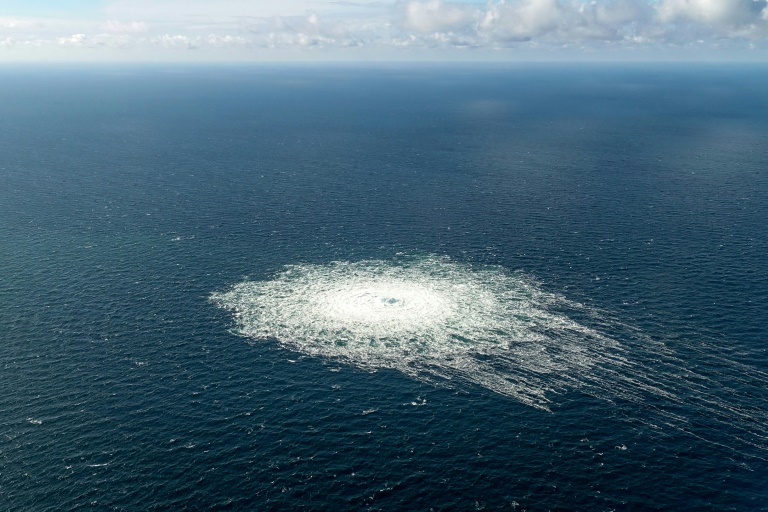
The vast leaks have caused underwater gas plumes, with significant bubbling at the surface of the sea several hundred metres wide, making it impossible to immediately inspect the structures. 

Seismic institutes on Tuesday reported they had recorded “in all likelihood” explosions in the area, prior to the leaks being detected.

A Swedish Coast Guard search and rescue vessel was patrolling the area.

“The crew reports that the flow of gas visible on the surface is constant,” the agency said in a statement. 

Danish authorities said the leaks will continue until the gas in the pipelines is exhausted, which is expected to occur on Sunday.

Fatih Birol, executive director of the International Energy Agency (IEA), said at a symposium in Paris that to him it was “very obvious” who was behind the leaks.

He said natural gas shortages in the wake of the war in Ukraine could make for a tough winter in Europe. 

“In the absence of a major negative surprise, I think Europe, in terms of natural gas, can survive this winter with a lot of bruises in our bodies in terms of prices, economy and social issues, but we can go through that,” Birol said. 

According to climate groups, Nord Stream 1 and 2 contained some 350,000 tonnes of natural gas — methane.

Greenpeace says the leaks could have the effect of almost 30 million tonnes of CO2, or more than two-thirds of the annual emissions of Denmark.


Porsche ignites blockbuster IPO, defying market turmoil

Luxury sports carmaker Porsche raced onto the Frankfurt stock exchange Thursday with one of Europe’s biggest listings in years, leveraging its brand power to defy global market turmoil.

Its shares rose to over 84.70 euros ($81.90) in morning trading, bettering the 82.50 euros price set by its parent company Volkswagen, and outperforming a weak Frankfurt market.

Even as markets worldwide suffer from surging inflation and mounting recession fears, the maker of the 911 sports car has pushed ahead with the bold flotation that gives Porsche a valuation of more than 76 billion euros.

The carmaker’s chief Oliver Blume said the listing was a “historic moment for Porsche”, as he rang the bell to mark the start of trading at the Frankfurt exchange. 

“A big, proud day for all of us… We are adding a new chapter to the unique history of Porsche,” added Blume, who is also the CEO of the wider German auto group Volkswagen.

Volkswagen is set to raise 9.4 billion euros ($9.2 billion) from the listing, with some to be ploughed into the group’s shift to electric vehicles that is bringing it into greater competition with US rival Tesla.

In terms of value of shares issued, Porsche’s is the biggest stock market debut in Germany since Deutsche Telekom’s in 1996, and the largest in Europe since the 2011 flotation of Switzerland-based commodities giant Glencore.

– ‘Crazy, cool’ –

Analysts have looked to the carmaker’s market entry for some cheer against a morose economic backdrop, with investment bank Berenberg saying it could “offer a catalyst in an industry sorely lacking positive surprises”.

It has generated buzz in Porsche’s home market of Germany, where top tabloid Bild described it as “crazy, cool, fast-paced”.

“Sports car icon Porsche goes full throttle and races onto the stock market,” read a column in the paper.

It has also drawn interest from major investors, including Qatar and Abu Dhabi’s public investment funds, Norway’s sovereign wealth fund and US asset management firm T. Rowe Price. 

The IPO has seen 113.9 million shares of “Porsche AG” issued.

While the carmaker’s valuation is below some earlier estimates, it still catapults it above rivals such as BMW, with a valuation of 47 billion euros, and Mercedes-Benz, with a 56-billion-euro capitalisation.

– Electric drive –

Porsche has joined the electric drive of the Volkswagen group, whose brands also include Audi and Skoda, in earnest. 

The electric “Taycan” has been the brand’s best-selling model since January, an electric version of the “Macan” is due in 2024, as well as the launch of a new SUV in the middle of the decade.

The electric strategy includes building battery factories across Europe and the US. Volkswagen announced this week it will work with Belgian group Umicore to produce battery materials. 

The IPO sees preferential shares sold to investors, which have no voting rights, while Volkswagen is also selling 25 percent of the carmaker to Porsche SE. 

The eponymous company is a listed holding controlled by the Porsche-Piech family, who in turn are the main shareholders in Volkswagen.

This means that Porsche SE will have a blocking minority that will allow it to steer the future of the company.

Volkswagen hopes that listing a minority stake in Porsche will push up its own stock market value, which is 85 billion euros — just a fraction of Tesla’s, at just over $900 billion.

While the Porsche IPO generated excitement, concerns surrounding governance have been brewing at Volkswagen.

The dual role of Blume  — who has kept the top job at Porsche, despite being recently appointed CEO of Volkswagen group — has in particular raised eyebrows.

US VP Harris tours DMZ after North Korea missile launches

US Vice President Kamala Harris toured South Korea’s heavily fortified border with the nuclear-armed North on Thursday, part of a trip aimed at strengthening the security alliance with Seoul.

Pyongyang conducted two banned ballistic missile launches in the days before Harris’s arrival, continuing a record-breaking streak of weapons tests this year.

At an observation post atop a steep hill overlooking North Korea, Harris peered through bulky binoculars as US and South Korean soldiers pointed out features, including defences, in the area.

“It’s so close,” she said.

Harris also visited the Panmunjom Truce Village — where then-US president Donald Trump met the North’s Kim Jong Un in 2019 — and talked to US soldiers at Camp Bonifas in the Joint Security Area.

On the North Korean side of the border at Panmunjom, guards in hazmat suits could be seen watching as Harris was shown the demarcation line between the two countries — which remain technically at war.

Speaking at the Demilitarized Zone (DMZ), Harris said that US and South Korean soldiers were “serving shoulder to shoulder… to maintain the security and the stability of this region of the world”.

She said the US commitment to South Korea’s defence was “ironclad”, adding that the allies were “aligned” in their response to the growing threat posed by the North’s weapons programs.

The allies both want “a complete denuclearisation of the Korean peninsula”, but in the interim they are “ready to address any contingency”, she said.

South Korean and US officials have warned for months that Kim Jong Un is preparing to conduct another nuclear test. 

Harris decried North Korea’s “brutal dictatorship, rampant human rights violations and an unlawful weapons program that threatens peace and stability”.

– Yoon talks –

Washington has about 28,500 troops stationed in South Korea to help protect it from the North, and the allies are conducting a large-scale joint naval exercise this week in a show of force.

Harris’ trip to the DMZ is likely to infuriate Pyongyang, which branded United States House Speaker Nancy Pelosi the “worst destroyer of international peace” when she visited the border in August.

Harris arrived in Seoul after a trip to Japan, where she attended the state funeral of assassinated former prime minister Shinzo Abe.

Earlier Thursday, Harris met President Yoon Suk-yeol for talks dominated by security issues — although Seoul also raised its concerns over a new law signed by US President Joe Biden that removes subsidies for electric cars built outside America, impacting Korean automakers such as Hyundai and Kia.

Harris, America’s first woman vice president, also met what the White House called “groundbreaking women leaders” of South Korea to discuss gender equality issues, a topic she said she raised with Yoon during their talks.

Yoon, who has pledged to abolish Seoul’s Ministry of Gender Equality, has faced domestic criticism for a lack of women in his cabinet.

– Nuclear test? –

On Wednesday, the South’s spy agency said North Korea’s next nuclear test could happen as soon as next month, likely after China’s upcoming party congress but before the US midterms.

The isolated regime has tested nuclear weapons six times since 2006, most recently in 2017. Earlier this month it changed its laws, declaring itself an “irreversible” nuclear power.

“North Korea’s growing nuclear missile threat raises concerns in Seoul about the reliability of Washington’s defence commitments,” said Leif-Eric Easley, a professor at Ewha University in Seoul.

But sending the USS Ronald Reagan supercarrier and Harris to South Korea demonstrates both America’s military capabilities and political will, he added.

During President Yoon’s tenure, Seoul and Washington have boosted joint military exercises, which they insist are purely defensive. North Korea sees them as rehearsals for an invasion.

During her trip, Harris also raised the issue of Seoul working more closely with Japan on security issues.

Seoul announced Thursday that it would hold trilateral anti-submarine drills with Japan and the US, the first such exercises since 2017. 

South Korean officials said this weekend they had detected signs Pyongyang could be preparing to fire a submarine-launched ballistic missile.

UK PM Truss defends 'controversial' tax cuts despite market turmoil

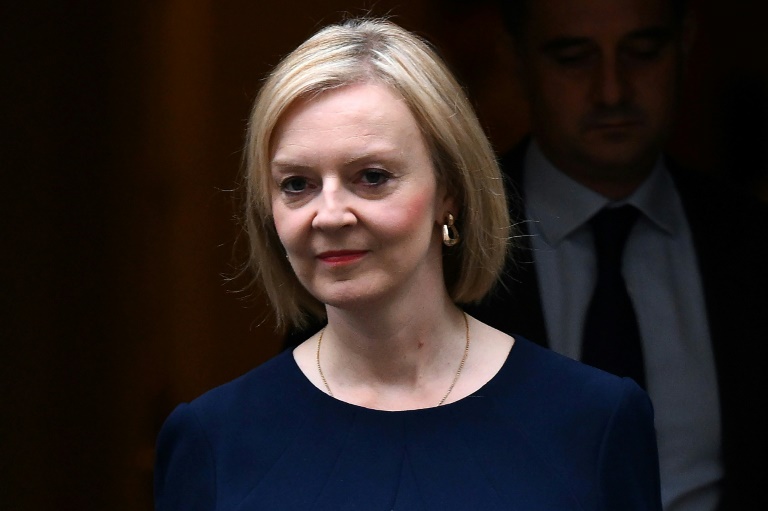
UK Prime Minister Liz Truss on Thursday defended her tax cuts policy, despite it triggering market turmoil and forcing a Bank of England intervention to prevent “material risk” to the economy.

“We had to take urgent action to get our economy growing, get Britain moving, and also deal with inflation,” she told local station BBC Radio Leeds in her first comments since the crisis sparked by Friday’s mini-budget. 

“And of course, that means taking controversial and difficult decisions, but I’m prepared to do that as prime minister.

“It’s important the United Kingdom’s on the front foot, that we are pulling all the levers we can to drive economic growth. That is what we are pushing ahead with,” she later told BBC Radio Lancashire.

Despite being in power for less than a month, Truss is already under severe pressure after the markets reacted to her government’s tax cuts by sending the pound to an all-time low against the dollar.

UK markets remain highly volatile, with the Bank of England intervening on Wednesday to buy government bonds in order to prevent a “material risk” to stability.

After sterling hit its dollar low early Monday, the bank said it would “not hesitate to change interest rates by as much as needed” to curb high inflation.

But it also signalled that it would wait until its next policy meeting on November 3 before fully assessing the impact of the government’s contentious plans.

Opposition leaders have demanded that Truss cancel her party’s conference that starts on Sunday and recall parliament over the crisis.

– Govt ‘undercut’ City –

Markets are concerned that Britain cannot fund its huge spending commitments, having announced a massive fuel subsidy package alongside the tax cuts.

“My priority was making sure that we were supporting the British people in what is going to be a very difficult winter,” she told BBC Radio Norfolk.

“There are many people with many different opinions, but what I think nobody is arguing with is that we had to take action to deal with what is a very, very difficult economic situation.”

The pound slipped again on Thursday, while former Bank of England chief Mark Carney said the government had “undercut” financial institutions.

“Unfortunately having a partial budget, in these circumstances — tough global economy, tough financial market position, working at cross-purposes with the Bank — has led to quite dramatic moves in financial markets,” he told the BBC.

But Truss insisted she was working “very closely” with the central bank.

In a highly unusual intervention on Wednesday, the IMF said it was “closely monitoring” developments and urged the government to change tack.

“We understand that the sizable fiscal package announced aims at helping families and businesses deal with the energy shock and at boosting growth via tax cuts and supply measures.

“However, given elevated inflation pressures in many countries… we do not recommend large and untargeted fiscal packages at this juncture.” 

The IMF stressed the importance of fiscal policy not working “at cross purposes to monetary policy”.

Many central banks, including the Bank of England, are aggressively hiking interest rates in a bid to cool decades-high inflation. 

Sterling, markets drop again as BoE boost wears off

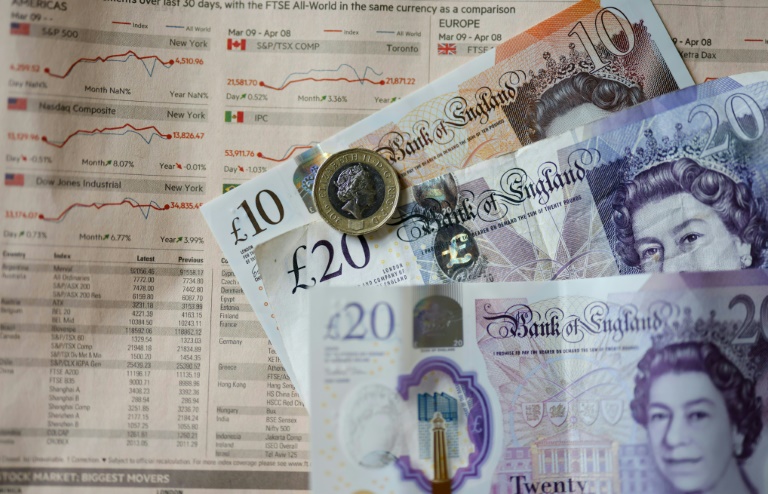
The pound and European equities fell Thursday after the previous day’s bank of England-fuelled rally, with investors growing increasingly worried about the UK economy as Prime Minister Liz Truss backed the controversial mini-budget that sparked turmoil across global markets.

The central bank sparked a surge across risk assets Wednesday following the announcement of a two-week programme to spend £65 billion ($71 billion) buying long-dated UK bonds “to restore orderly market conditions”.

The move came after new finance minister Kwasi Kwarteng unveiled a tax-cutting mini-budget Friday that many experts, including the International Monetary Fund, warned would fan borrowing and deal a further blow to the already fragile economy.

Kwarteng’s plan sent yields on UK government bonds, as well as those of other countries, soaring and raised the prospect of even bigger interest rate hikes.

The BoE move provided a massive shot in the arm for investors, pushing yields down, and sterling and stock markets up. Analysts said the decision provided some hope that central banks were ready to step in with support if things got too bad.

However, the impact was short lived as traders continue to worry about the long-term effect on the UK economy from the budget.

“The Bank moved to stop contagion, but stress remains and it remains the case that it must tighten policy faster to offset the effects of the budget,” said Markets.com analyst Neil Wilson.

The new round of easing also knocked the BoE’s plan to fight inflation off course as it had to suspend a programme to sell “gilts”, which had helped lift borrowing costs.

The pound fell back below $1.0800 Thursday, having spiked at $1.0900 earlier, while the FTSE 100 plunged more than two percent. Paris and Frankfurt were not far behind as data showed German inflation had hit 8.8 percent. Still, in some bright news, Spain said price rises slowed to below 10 percent this month.

That came after most Asian markets enjoyed a rare day of gains.

Truss appeared to push back against calls for her to perform a U-turn.

“We’re facing very, very difficult economic times, we’re facing that on a global level,” she said Thursday in interviews with local BBC radio stations.

“We had to take urgent action to get our economy growing and that means taking controversial and difficult decisions,” she said in her first comments since the storm erupted.

OANDA’s Edward Moya warned of more rough seas for sterling.

“The British pound went on a little roller coaster ride following the BoE action to buy unlimited long-dated gilts, but will still probably remain heavy over the country’s fiscal situation, current account deficit, financial stability risks, and energy poverty likelihood for parts of the population,” he said in a note.

And MUFG analyst Lee Hardman said the BoE move “has certainly upped the level of concern over the potential negative economic and financial market fallout from the loss of confidence in UK’s public finances”.

The general mood on trading floors remains dark as the Fed and other central banks zero in on hiking borrowing costs to fight decades-high inflation.

“All eyes are on inflation and interest rates,” said Josh Emanuel at Wilshire. “Equities are really going to take their cues from bond markets. So if you see bond yields move lower, that is a good sign for equities.”

Julia Raiskin at Citi added that “markets are very pessimistic… Other than the dollar, there are not many assets that are trading constructively.”

– Key figures at around 0720 GMT –

London – FTSE 100: DOWN 2.2 percent at 6,852.06

Pound/dollar: DOWN at $1.0782 from $1.0889 on Wednesday

Euro/dollar: DOWN at $0.9653 from $0.9735

Euro/pound: UP at 89.56 from 89.39 pence 

Dollar/yen: UP at 144.73 yen from 144.11 yen

Tokyo – Nikkei 225: UP 1.0 percent at 26,422.05 (close)

Hong Kong – Hang Seng Index: DOWN 0.5 percent at 17,165.87

Shanghai – Composite: DOWN 0.1 percent at 3,041.20 (close)

West Texas Intermediate: DOWN 0.7 percent at $81.57 per barrel

Brent North Sea crude: DOWN 0.7 percent at $88.68 per barrel

New York – Dow: UP 1.9 percent at 29,683.74 (close)

Sterling, markets drop again as BoE boost wears off

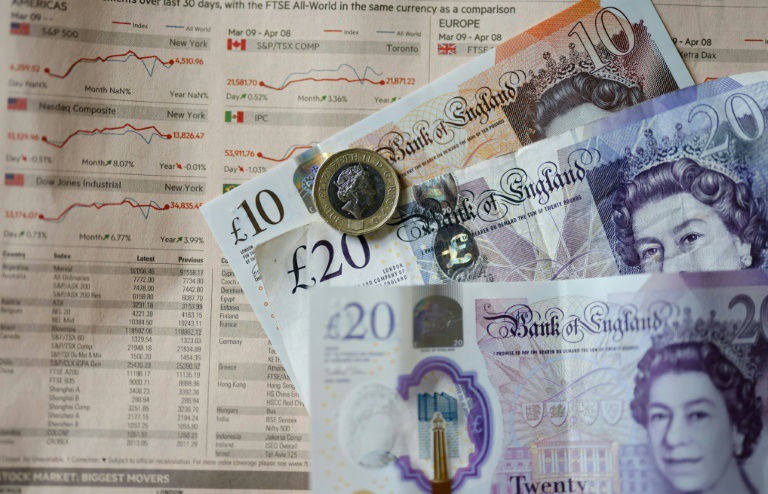
The pound and European equities fell Thursday after the previous day’s bank of England-fuelled rally, with investors growing increasingly worried about the UK economy as Prime Minister Liz Truss backed the controversial mini-budget that sparked turmoil across global markets.

The central bank sparked a surge across risk assets Wednesday following the announcement of a two-week programme to spend £65 billion ($71 billion) buying long-dated UK bonds “to restore orderly market conditions”.

The move came after new finance minister Kwasi Kwarteng unveiled a tax-cutting mini-budget Friday that many experts, including the International Monetary Fund, warned would fan borrowing and deal a further blow to the already fragile economy.

Kwarteng’s plan sent yields on UK government bonds, as well as those of other countries, soaring and raised the prospect of even bigger interest rate hikes.

The BoE move provided a massive shot in the arm for investors, pushing yields down, and sterling and stock markets up. Analysts said the decision provided some hope that central banks were ready to step in with support if things got too bad.

However, the impact was short lived as traders continue to worry about the long-term effect on the UK economy from the budget.

“The Bank moved to stop contagion, but stress remains and it remains the case that it must tighten policy faster to offset the effects of the budget,” said Markets.com analyst Neil Wilson.

The new round of easing also knocked the BoE’s plan to fight inflation off course as it had to suspend a programme to sell “gilts”, which had helped lift borrowing costs.

The pound fell back below $1.0800 Thursday, having spiked at $1.0900 earlier, while the FTSE 100 plunged more than two percent. Paris and Frankfurt were not far behind as data showed German inflation had hit 8.8 percent. Still, in some bright news, Spain said price rises slowed to below 10 percent this month.

That came after most Asian markets enjoyed a rare day of gains.

Truss appeared to push back against calls for her to perform a U-turn.

“We’re facing very, very difficult economic times, we’re facing that on a global level,” she said Thursday in interviews with local BBC radio stations.

“We had to take urgent action to get our economy growing and that means taking controversial and difficult decisions,” she said in her first comments since the storm erupted.

OANDA’s Edward Moya warned of more rough seas for sterling.

“The British pound went on a little roller coaster ride following the BoE action to buy unlimited long-dated gilts, but will still probably remain heavy over the country’s fiscal situation, current account deficit, financial stability risks, and energy poverty likelihood for parts of the population,” he said in a note.

And MUFG analyst Lee Hardman said the BoE move “has certainly upped the level of concern over the potential negative economic and financial market fallout from the loss of confidence in UK’s public finances”.

The general mood on trading floors remains dark as the Fed and other central banks zero in on hiking borrowing costs to fight decades-high inflation.

“All eyes are on inflation and interest rates,” said Josh Emanuel at Wilshire. “Equities are really going to take their cues from bond markets. So if you see bond yields move lower, that is a good sign for equities.”

Julia Raiskin at Citi added that “markets are very pessimistic… Other than the dollar, there are not many assets that are trading constructively.”

– Key figures at around 0720 GMT –

London – FTSE 100: DOWN 2.2 percent at 6,852.06

Pound/dollar: DOWN at $1.0782 from $1.0889 on Wednesday

Euro/dollar: DOWN at $0.9653 from $0.9735

Euro/pound: UP at 89.56 from 89.39 pence 

Dollar/yen: UP at 144.73 yen from 144.11 yen

Tokyo – Nikkei 225: UP 1.0 percent at 26,422.05 (close)

Hong Kong – Hang Seng Index: DOWN 0.5 percent at 17,165.87

Shanghai – Composite: DOWN 0.1 percent at 3,041.20 (close)

West Texas Intermediate: DOWN 0.7 percent at $81.57 per barrel

Brent North Sea crude: DOWN 0.7 percent at $88.68 per barrel

New York – Dow: UP 1.9 percent at 29,683.74 (close)

Hurricane Ian pounds Florida, leaves millions in dark

Hurricane Ian left much of coastal southwest Florida in darkness early Thursday, bringing “catastrophic” flooding that left officials readying a huge emergency response to a storm of rare intensity.

The US Border Patrol said 20 migrants were missing after their boat sank, with four Cubans swimming to shore in the Florida Keys islands and three rescued at sea by the coast guard.

The National Hurricane Center (NHC) said the eye of the “extremely dangerous” hurricane made landfall just after 3:00 pm (1900 GMT) on the barrier island of Cayo Costa, west of the city of Fort Myers.

Dramatic television footage from the coastal city of Naples showed floodwaters surging into beachfront homes, submerging roads and sweeping away vehicles.

Some neighborhoods in Fort Myers, which has a population of more than 80,000, resembled lakes.

The NHC said Ian’s maximum sustained winds reached 150 miles (240 kilometers) per hour when it landed. 

It later weakened to a Category 1 hurricane with winds dropping to a maximum 75 miles per hour, battering Florida with storm surges, damaging winds and “life-threatening catastrophic” flooding, the NHC said at around 2:00 am local time Wednesday (0600 GMT).

More than two million customers were without electricity in Florida early Thursday, out of a total of more than 11 million, with southwestern areas of the state the hardest hit, according to the PowerOutage.us tracking website.

Ian is set to affect several million people across Florida and in the southeastern states of Georgia and South Carolina.

As hurricane conditions spread, forecasters warned of a once-in-a-generation calamity.

“This is going to be a storm we talk about for many years to come,” said National Weather Service director Ken Graham. “It’s a historic event.”

Florida’s Governor Ron DeSantis said the state was going to experience a “nasty, nasty day, two days.”

– ‘Life-threatening’ –

The town of Punta Gorda, north of Fort Myers, was in near-total darkness after the storm wiped out power, save for the few buildings with generators.

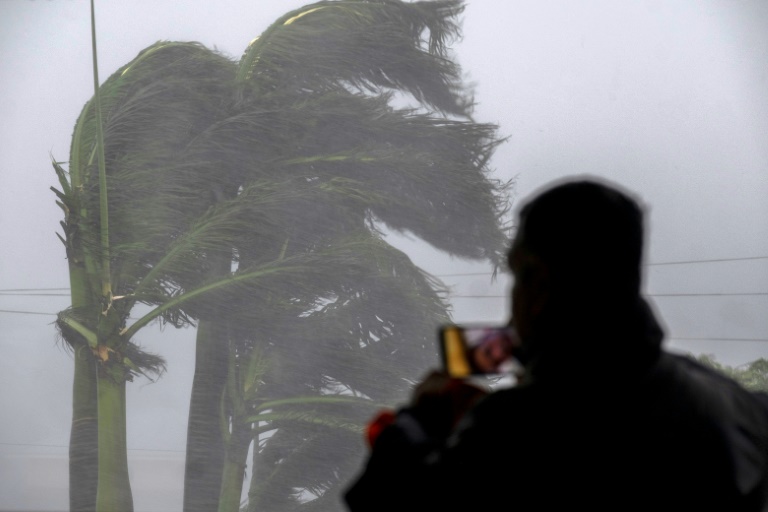
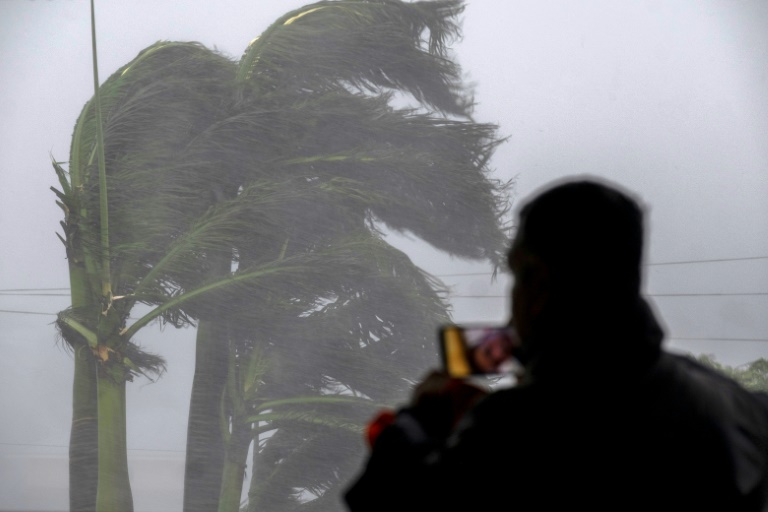
Howling winds ripped branches off trees, pulled chunks out of roofs, and blew the fronds of palm trees horizontal.

About 2.5 million people were under mandatory evacuation orders in a dozen coastal Florida counties, with several dozen shelters set up, and voluntary evacuation recommended in others.

For those who decided to ride out the storm, authorities stressed it was too late to flee and residents should hunker down and stay indoors.

Airports in Tampa and Orlando stopped all commercial flights, and cruise ship companies delayed departures or canceled voyages.

With up to 30 inches (76 centimeters) of rain expected to fall on parts of the Sunshine State, and a storm surge that could reach devastating levels of five to eight feet (1.5 to 2.4 meters), authorities warned of dire emergency conditions.

The storm was set to move across central Florida before emerging in the Atlantic Ocean later Thursday.

– Rebuilding work begins –

Ian had plunged all of Cuba into darkness a day earlier, after battering the country’s west as a Category 3 storm and downing the island’s power network.

At least two people died in Pinar del Rio province, Cuban state media reported.

By Wednesday power had been restored for some residents of Havana and another 11 provinces, but not in Cuba’s three worst-affected provinces in the west of the country.

In the United States, the Pentagon said 3,200 national guard personnel were called up in Florida, with another 1,800 on the way.

DeSantis said state and federal responders were assigning thousands of personnel to address the storm response.

“There will be thousands of Floridians who will need help rebuilding,” he said.

As climate change warms the ocean’s surface, the number of powerful tropical storms, or cyclones, with stronger winds and more precipitation are likely to increase.

The total number of cyclones, however, may not.

According to Gary Lackmann, a professor of atmospheric science at North Carolina State University, studies have also detected a potential link between climate change and rapid intensification — when a relatively weak tropical storm surges to a Category 3 hurricane or higher in a 24-hour period, as happened with Ian.

“There remains a consensus that there will be fewer storms, but that the strongest will get stronger,” Lackmann told AFP.

Hurricane Ian pounds Florida, leaves millions in dark

Hurricane Ian left much of coastal southwest Florida in darkness early Thursday, bringing “catastrophic” flooding that left officials readying a huge emergency response to a storm of rare intensity.

The US Border Patrol said 20 migrants were missing after their boat sank, with four Cubans swimming to shore in the Florida Keys islands and three rescued at sea by the coast guard.

The National Hurricane Center (NHC) said the eye of the “extremely dangerous” hurricane made landfall just after 3:00 pm (1900 GMT) on the barrier island of Cayo Costa, west of the city of Fort Myers.

Dramatic television footage from the coastal city of Naples showed floodwaters surging into beachfront homes, submerging roads and sweeping away vehicles.

Some neighborhoods in Fort Myers, which has a population of more than 80,000, resembled lakes.

The NHC said Ian’s maximum sustained winds reached 150 miles (240 kilometers) per hour when it landed. 

It later weakened to a Category 1 hurricane with winds dropping to a maximum 75 miles per hour, battering Florida with storm surges, damaging winds and “life-threatening catastrophic” flooding, the NHC said at around 2:00 am local time Wednesday (0600 GMT).

More than two million customers were without electricity in Florida early Thursday, out of a total of more than 11 million, with southwestern areas of the state the hardest hit, according to the PowerOutage.us tracking website.

Ian is set to affect several million people across Florida and in the southeastern states of Georgia and South Carolina.

As hurricane conditions spread, forecasters warned of a once-in-a-generation calamity.

“This is going to be a storm we talk about for many years to come,” said National Weather Service director Ken Graham. “It’s a historic event.”

Florida’s Governor Ron DeSantis said the state was going to experience a “nasty, nasty day, two days.”

– ‘Life-threatening’ –

The town of Punta Gorda, north of Fort Myers, was in near-total darkness after the storm wiped out power, save for the few buildings with generators.

Howling winds ripped branches off trees, pulled chunks out of roofs, and blew the fronds of palm trees horizontal.

About 2.5 million people were under mandatory evacuation orders in a dozen coastal Florida counties, with several dozen shelters set up, and voluntary evacuation recommended in others.

For those who decided to ride out the storm, authorities stressed it was too late to flee and residents should hunker down and stay indoors.

Airports in Tampa and Orlando stopped all commercial flights, and cruise ship companies delayed departures or canceled voyages.

With up to 30 inches (76 centimeters) of rain expected to fall on parts of the Sunshine State, and a storm surge that could reach devastating levels of five to eight feet (1.5 to 2.4 meters), authorities warned of dire emergency conditions.

The storm was set to move across central Florida before emerging in the Atlantic Ocean later Thursday.

– Rebuilding work begins –

Ian had plunged all of Cuba into darkness a day earlier, after battering the country’s west as a Category 3 storm and downing the island’s power network.

At least two people died in Pinar del Rio province, Cuban state media reported.

By Wednesday power had been restored for some residents of Havana and another 11 provinces, but not in Cuba’s three worst-affected provinces in the west of the country.

In the United States, the Pentagon said 3,200 national guard personnel were called up in Florida, with another 1,800 on the way.

DeSantis said state and federal responders were assigning thousands of personnel to address the storm response.

“There will be thousands of Floridians who will need help rebuilding,” he said.

As climate change warms the ocean’s surface, the number of powerful tropical storms, or cyclones, with stronger winds and more precipitation are likely to increase.

The total number of cyclones, however, may not.

According to Gary Lackmann, a professor of atmospheric science at North Carolina State University, studies have also detected a potential link between climate change and rapid intensification — when a relatively weak tropical storm surges to a Category 3 hurricane or higher in a 24-hour period, as happened with Ian.

“There remains a consensus that there will be fewer storms, but that the strongest will get stronger,” Lackmann told AFP.

Hong Kong confirms November banking summit after ending quarantine

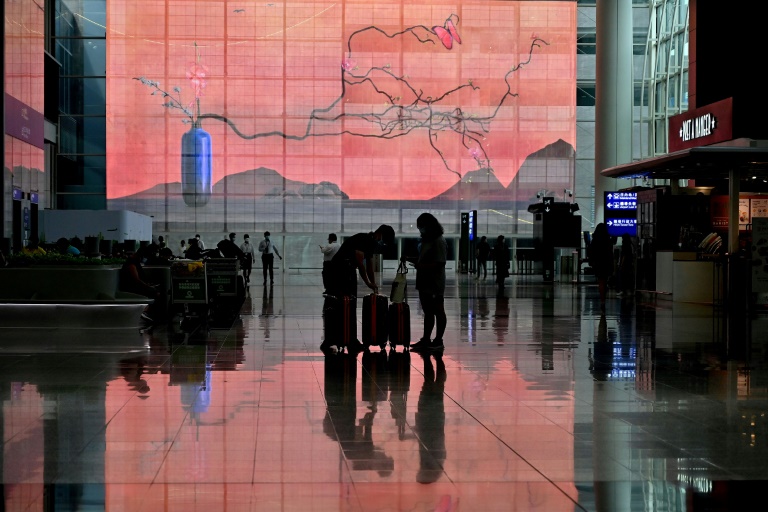
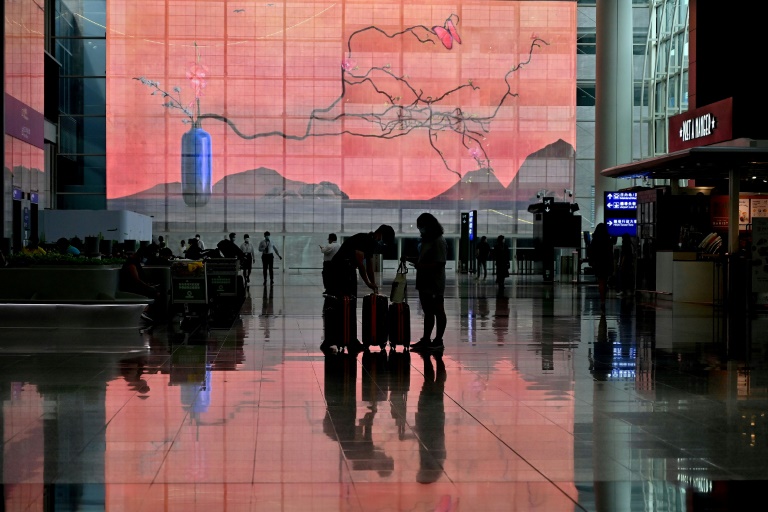
Hong Kong confirmed Thursday it will host an international banking summit in early November, days after it lifted mandatory quarantine rules for arrivals that have battered the city’s reputation as a business hub.

The city has had a difficult three years, with a sweeping crackdown on political freedoms and the imposition of some of the world’s strictest coronavirus pandemic controls, which have kept the city isolated even as competitors reopen.

The banking summit on November 2 is expected to draw 200 participants, including the group chairmen or Chief Executive Officers of 30 major financial institutions, according to the Hong Kong Monetary Authority (HKMA).

HKMA Chief Executive Eddie Yue wrote in a blog post that the event would allow guests to “meet their staff and clients in person, and establish new relationships”. 

“For most of them this will only be a short visit and we need to make sure they can meet people, do business and build relationships in the kind of business-as-usual way they expect from a vibrant international city,” Yue added.

The gathering will include panel talks featuring the CEOs of Goldman Sachs, Morgan Stanley and Citigroup, and top executives from HSBC, Standard Chartered, JPMorgan Chase and BlackRock will also attend.

Hong Kong last week scrapped mandatory hotel quarantine for travellers after two-and-a-half years, amid concerns of brain drain and losing business to rivals like Singapore and London, which reopened to the world once their populations were adequately vaccinated.

– ‘We have to be prepared’ –

But the city still adheres to a version of China’s zero-Covid strategy and has kept some pandemic restrictions in place, including social distancing, business hours limitations and compulsory masking.

Arrivals in the city no longer have to quarantine in hotels, but they cannot enter restaurants or bars for three days after landing and must undergo regular testing. 

Those who test positive face being isolated in hotel rooms at their own expense.

Hong Kong’s health secretary Lo Chung-mau told Bloomberg TV on Thursday that the city was committed to reopening, but warned that a new virus variant could change that. 

“We have to be prepared. Emerging diseases may come anytime,” Lo said, adding that any further relaxations to virus curbs will be made after reviewing data.

Hong Kong cannot follow the global trend of living with the virus as the city has an obligation not to “cause a major outbreak in the rest of China”, Lo added.

It is unclear if summit participants will be exempt from the restrictions, and the HKMA said Thursday that it was working to “finalise an appropriate set of arrangements”.

Earlier this month, Singapore overtook Hong Kong to become Asia’s top financial centre, according to a major ranking index, and has become a choice destination for regional conferences.

Singapore abandoned quarantine and social distancing rules months ahead of Hong Kong. This weekend the city state will host the Formula One Singapore Grand Prix. 

Hong Kong confirms November banking summit after ending quarantine

Hong Kong confirmed Thursday it will host an international banking summit in early November, days after it lifted mandatory quarantine rules for arrivals that have battered the city’s reputation as a business hub.

The city has had a difficult three years, with a sweeping crackdown on political freedoms and the imposition of some of the world’s strictest coronavirus pandemic controls, which have kept the city isolated even as competitors reopen.

The banking summit on November 2 is expected to draw 200 participants, including the group chairmen or Chief Executive Officers of 30 major financial institutions, according to the Hong Kong Monetary Authority (HKMA).

HKMA Chief Executive Eddie Yue wrote in a blog post that the event would allow guests to “meet their staff and clients in person, and establish new relationships”. 

“For most of them this will only be a short visit and we need to make sure they can meet people, do business and build relationships in the kind of business-as-usual way they expect from a vibrant international city,” Yue added.

The gathering will include panel talks featuring the CEOs of Goldman Sachs, Morgan Stanley and Citigroup, and top executives from HSBC, Standard Chartered, JPMorgan Chase and BlackRock will also attend.

Hong Kong last week scrapped mandatory hotel quarantine for travellers after two-and-a-half years, amid concerns of brain drain and losing business to rivals like Singapore and London, which reopened to the world once their populations were adequately vaccinated.

– ‘We have to be prepared’ –

But the city still adheres to a version of China’s zero-Covid strategy and has kept some pandemic restrictions in place, including social distancing, business hours limitations and compulsory masking.

Arrivals in the city no longer have to quarantine in hotels, but they cannot enter restaurants or bars for three days after landing and must undergo regular testing. 

Those who test positive face being isolated in hotel rooms at their own expense.

Hong Kong’s health secretary Lo Chung-mau told Bloomberg TV on Thursday that the city was committed to reopening, but warned that a new virus variant could change that. 

“We have to be prepared. Emerging diseases may come anytime,” Lo said, adding that any further relaxations to virus curbs will be made after reviewing data.

Hong Kong cannot follow the global trend of living with the virus as the city has an obligation not to “cause a major outbreak in the rest of China”, Lo added.

It is unclear if summit participants will be exempt from the restrictions, and the HKMA said Thursday that it was working to “finalise an appropriate set of arrangements”.

Earlier this month, Singapore overtook Hong Kong to become Asia’s top financial centre, according to a major ranking index, and has become a choice destination for regional conferences.

Singapore abandoned quarantine and social distancing rules months ahead of Hong Kong. This weekend the city state will host the Formula One Singapore Grand Prix. 

Close Bitnami banner
Bitnami