AFP

Major energy supplier Norway ups security amid sabotage talk

After worrying drone reports and the “sabotage” of Nord Stream’s Baltic Sea pipelines, Europe’s biggest gas supplier Norway is beefing up security at its energy installations, which experts have singled out as vulnerable targets.

As spectacular as they may be, the gas leaks on the Nord Stream 1 and 2 pipelines linking Russia to Germany have no effect on Europe’s energy supply since they were not operational due to the war in Ukraine.

But a sabotage — the favoured theory among European leaders — of this type on Norwegian facilities would have a catastrophic impact on the continent, which is already struggling to meet its energy needs as winter approaches.

Norway has become Europe’s main gas supplier after Moscow cut deliveries in suspected retaliation against Western sanctions following its invasion of Ukraine.

The Scandinavian country has a vast network of pipelines linking it to the continent.

It is currently pumping at full capacity: according to official forecasts, its gas exports could set a record of 122 billion cubic metres this year.

That can be compared to the 150 billion cubic metres of gas per year that Russia supplied to the European Union before the war in Ukraine.

Faced with these stakes, Norwegian police announced Wednesday they were strengthening security measures already in place in the energy sector in a bid to reduce the risk of an attack.

“The situation is being taken very seriously and several measures have already been put in place to guarantee the best security possible”, police official Tone Vangen said in a statement.

She did not provide details, citing security reasons. 

On Tuesday, Petroleum and Energy Minister Terje Aasland made a similar announcement citing “reports of increased drone activity” near offshore oil platforms.

Norwegian energy giant Equinor has reported flights of “unidentified drones near certain installations”, a phenomenon not encountered before now.

“We are taking this very seriously and we have reported it to police,” Equinor spokesman Eskil Eriksen told AFP, providing no further details.

– Gas pipelines a weak link –

Echoing authorities, oil companies said they were taking extra precautions at their platforms, bases and land and sea installations.

Stretching over thousands of kilometres, sometimes at great depths, the oil and gas pipelines are a weak link in the energy supply chain that is so vital to Europe. 

“They are vulnerable, very exposed,” said Tor Ivar Strommen, a researcher at the Royal Norwegian Naval Academy.

He called for the introduction of additional security measures, including regular pipe inspections to ensure that explosives have not been placed there as well as closer monitoring of shipping near pipelines.

Prime Minister Jonas Gahr Store told Norwegian news agency NTB there was “no specific threat against Norway”.

But for professor and director of the Norwegian Institute for Defence Studies, Sven Holtsmark, it was “likely” that Moscow, often accused of using energy as a weapon, would try to sabotage Norwegian infrastructure.

“Before, the idea of Russia attacking Norwegian facilities would have seemed completely absurd, but we can no longer afford to exclude this possibility” in order to undermine European support for Ukraine, he told AFP.

“(Russian President) Vladimir Putin’s toolbox is running out and the war in Ukraine doesn’t seem to be going away any time soon. 

“So to me it makes sense for Putin to decide to sabotage Norwegian facilities, especially as it would be difficult to prove that Russia was behind it,” the expert added.


Experts encouraged by Alzheimer drug preliminary data

Experts on Wednesday said they were encouraged after preliminary data for a new Alzheimer’s drug showed it slowed cognitive decline, the first medicine to accomplish this goal.

The treatment, called lecanemab, was tested in a clinical trial of nearly 1,800 people, and slowed cognitive decline by 27 percent across an 18-month period, according to early results announced by makers Biogen and Eisai.

“This is the first drug that’s been shown to not only remove the build-up of a protein called amyloid in the brain, but to have a small but statistically significant impact on cognitive decline in people with early-stage disease,” said Susan Kohlhaas of Alzheimer’s UK.

But experts cautioned their comments were tempered by the preliminary nature of the results, which were announced by press release ahead of publication in a peer-reviewed journal, as the companies look to bring the treatment to market as early as January 2023 in the United States.

Biogen previously brought another Alzheimer’s drug to market called Aduhelm, but there was significant controversy over the evidence it worked, and its approval led to three high-level resignations in the US Food and Drug Administration.

According to a statement by Biogen and Eisai, in addition to slowing cognitive decline, the new treatment also slowed build-up in the brain of the protein amyloid, which forms sticky plaques and kills brain cells.

Side effects included higher rates of swelling and bleeding in the brain in the group that received the treatment compared to the group that received a placebo.

Both treatment and placebo groups had people of similar characteristics, including a broad range of underlying conditions. A quarter were either Hispanic or African American.

Michel Vounatsos, CEO of Biogen, said the announcement “gives patients and their families hope that lecanemab, if approved, can potentially slow the progression of Alzheimer’s disease.”

Masud Husain, a professor of neurology at the University of Oxford, said in a statement: “While the summary of the results certainly seems very encouraging, we have to be cautious until we are allowed to review the data fully. 

“It is also important to bear in mind that the trial results apply only to people with mild Alzheimer’s disease, not everyone with the condition, and that there were important side effects of the drug, including bleeds in the brain.”

Experts encouraged by Alzheimer drug preliminary data

Experts on Wednesday said they were encouraged after preliminary data for a new Alzheimer’s drug showed it slowed cognitive decline, the first medicine to accomplish this goal.

The treatment, called lecanemab, was tested in a clinical trial of nearly 1,800 people, and slowed cognitive decline by 27 percent across an 18-month period, according to early results announced by makers Biogen and Eisai.

“This is the first drug that’s been shown to not only remove the build-up of a protein called amyloid in the brain, but to have a small but statistically significant impact on cognitive decline in people with early-stage disease,” said Susan Kohlhaas of Alzheimer’s UK.

But experts cautioned their comments were tempered by the preliminary nature of the results, which were announced by press release ahead of publication in a peer-reviewed journal, as the companies look to bring the treatment to market as early as January 2023 in the United States.

Biogen previously brought another Alzheimer’s drug to market called Aduhelm, but there was significant controversy over the evidence it worked, and its approval led to three high-level resignations in the US Food and Drug Administration.

According to a statement by Biogen and Eisai, in addition to slowing cognitive decline, the new treatment also slowed build-up in the brain of the protein amyloid, which forms sticky plaques and kills brain cells.

Side effects included higher rates of swelling and bleeding in the brain in the group that received the treatment compared to the group that received a placebo.

Both treatment and placebo groups had people of similar characteristics, including a broad range of underlying conditions. A quarter were either Hispanic or African American.

Michel Vounatsos, CEO of Biogen, said the announcement “gives patients and their families hope that lecanemab, if approved, can potentially slow the progression of Alzheimer’s disease.”

Masud Husain, a professor of neurology at the University of Oxford, said in a statement: “While the summary of the results certainly seems very encouraging, we have to be cautious until we are allowed to review the data fully. 

“It is also important to bear in mind that the trial results apply only to people with mild Alzheimer’s disease, not everyone with the condition, and that there were important side effects of the drug, including bleeds in the brain.”

Musk seeks to lift regulator 'muzzle' on Tesla tweets

Tesla chief Elon Musk has asked a New York court to overturn a provision in an agreement with the US securities regulator requiring a lawyer’s pre-approval of tweets related to the electric vehicle company.

In a court document filed Tuesday evening with a Manhattan federal appeals court, Musk’s lawyers described the provision as “a government-imposed muzzle.”

“The effect of the provision is to inhibit and chill Mr. Musk’s lawful speech,” they said, decrying the requirement as “unconstitutional.”

Billionaire Musk was reprimanded by the Securities and Exchange Commission after posting a tweet in 2018, in which he said he had acquired funding to take Tesla private, but did not provide proof or file paperwork with the SEC.

The tweet, which caused share prices to fluctuate wildly, was ruled to be “false and misleading” and shareholders accused Tesla of securities fraud.

The SEC also charged Musk with fraud and ordered him to step down as chair of Tesla’s board of directors, pay a $20 million fine and, after another controversial tweet in early 2019, demanded his tweets directly related to business of the company be vetted by a lawyer before posting.

An attempt by Musk to free himself from oversight was rejected in April, with US District Judge Lewis Liman ruling the “claim that he was the victim of economic duress is wholly unpersuasive.”

He found that Musk did not want to adhere to the agreement anymore as “his company has become, in his estimation, all but invincible.”

Musk, whose fortune is estimated by Forbes to be nearly $260 billion, is also locked in a lawsuit with Twitter over a potential acquisition of the micro-blogging platform, with the trial due to take place in October.

Stocks slump, dollar surges on recession fears

Global stock markets mostly sank Wednesday and the dollar soared as investors fretted over recession fears and heightened Ukraine tensions.

“With the prospect of a sharp economic slowdown, further pain for households and businesses, and investor sentiment on its knees, alas equities markets continue their descent,” said AJ Bell investment director Russ Mould.

The major Asian markets all closed down, and European stocks were down through afternoon trading.

The US was the exception, with markets edging up slightly at the open.

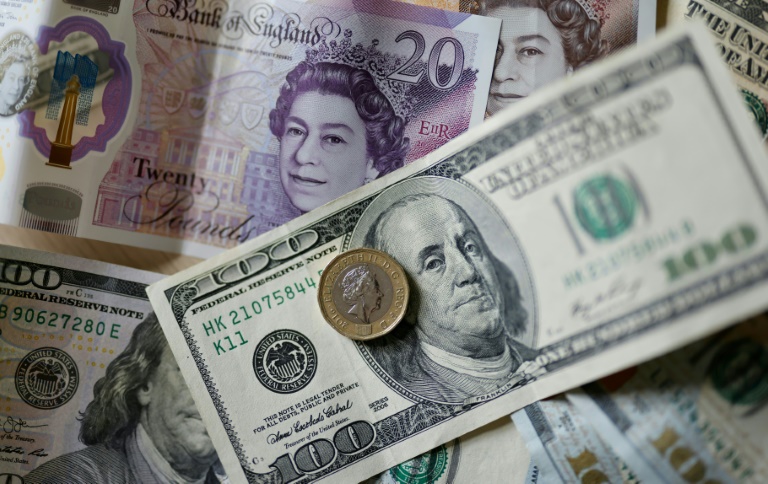
The British pound slumped 1.7 percent against the haven dollar — despite the Bank of England snapping up UK government bonds to try to bring calm to markets.

However, the UK government’s 30-year bond yield managed to retreat to 4.44 percent, having hit a 1998 peak at 5.14 percent.

The BoE intervention followed rare criticism Tuesday from the International Monetary Fund, which argued that Britain’s recent budget could increase inequality and worsen inflation.

Credit ratings agency Moody’s also waded in overnight with a warning about soaring debt.

New finance minister Kwasi Kwarteng’s tax-cutting plan last week sent shockwaves through markets, pushing the pound to a record low and leading to dire warnings for Britain’s economy.

“The BoE’s intervention is an attempt to soothe investor nerves after they were spooked by last week’s mini-budget,” said City Index analyst Fawad Razaqzada.

– Go-to dollar –

The dollar remains the go-to unit as the US Federal Reserve leads the way in raising interest rates.

Observers are betting that US borrowing costs will peak at around 4.75 percent next year, and are expected to remain elevated for some time.

The prospect of such tight monetary policy has battered equities, as US 10-year Treasury yields — a gauge of future rates — hit four percent for the first time since 2010.

“Fear of tightening-induced recessions has wiped out the recovery we saw in stock markets over the bulk of the summer as investors were once again burned by an over-eagerness to catch the bottom in the market, despite there being little evidence of it being justified,” said OANDA’s Craig Erlam.

“That fear has now gripped the markets and we may see a little more caution going forward,” he said.

Sentiment was also rattled by worries about developments in Ukraine, after Kremlin-installed authorities in four regions under Russian control claimed victory in annexation votes, with Moscow warning it could use nuclear weapons to defend the territories.

Ukraine and its allies have denounced the so-called referendums as a sham, saying the West would never recognise the results.

– Key figures at around 1345 GMT –

London – FTSE 100: DOWN 0.3 percent at 6,984.59 points

Frankfurt – DAX: DOWN 0.3 percent at 12104.37 

Paris – CAC 40: DOWN 0.5 percent at 5,728.16 

EURO STOXX 50: DOWN 0.4 percent at 3,315.49

New York – Dow: UP 0.2 percent at 29,193.25 

Tokyo – Nikkei 225: DOWN 1.5 percent at 26,173.98 (close)

Hong Kong – Hang Seng Index: DOWN 3.4 percent at 17,250.88 (close)

Shanghai – Composite: DOWN 1.6 percent at 3,045.07 (close)

Pound/dollar: DOWN at $1.0655 from $1.0730 on Tuesday

Euro/dollar: DOWN at $0.9587 from $0.9595

Euro/pound: UP at 90.67 pence from 89.39 pence 

Dollar/yen: DOWN at 144.43 yen from 144.81 yen

Brent North Sea crude: UP 0.1 percent at $85.67 per barrel

West Texas Intermediate: UP 1.0 percent at $79.46 per barrel

burs-rfj/rox/cdw

Stocks slump, dollar surges on recession fears

Global stock markets mostly sank Wednesday and the dollar soared as investors fretted over recession fears and heightened Ukraine tensions.

“With the prospect of a sharp economic slowdown, further pain for households and businesses, and investor sentiment on its knees, alas equities markets continue their descent,” said AJ Bell investment director Russ Mould.

The major Asian markets all closed down, and European stocks were down through afternoon trading.

The US was the exception, with markets edging up slightly at the open.

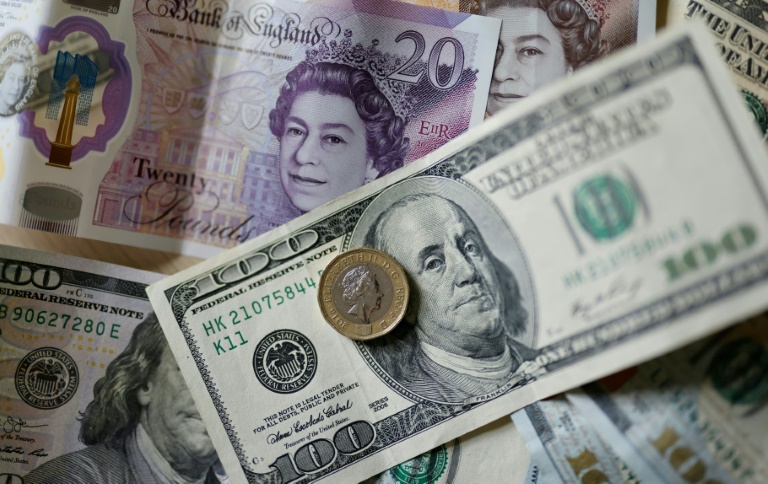
The British pound slumped 1.7 percent against the haven dollar — despite the Bank of England snapping up UK government bonds to try to bring calm to markets.

However, the UK government’s 30-year bond yield managed to retreat to 4.44 percent, having hit a 1998 peak at 5.14 percent.

The BoE intervention followed rare criticism Tuesday from the International Monetary Fund, which argued that Britain’s recent budget could increase inequality and worsen inflation.

Credit ratings agency Moody’s also waded in overnight with a warning about soaring debt.

New finance minister Kwasi Kwarteng’s tax-cutting plan last week sent shockwaves through markets, pushing the pound to a record low and leading to dire warnings for Britain’s economy.

“The BoE’s intervention is an attempt to soothe investor nerves after they were spooked by last week’s mini-budget,” said City Index analyst Fawad Razaqzada.

– Go-to dollar –

The dollar remains the go-to unit as the US Federal Reserve leads the way in raising interest rates.

Observers are betting that US borrowing costs will peak at around 4.75 percent next year, and are expected to remain elevated for some time.

The prospect of such tight monetary policy has battered equities, as US 10-year Treasury yields — a gauge of future rates — hit four percent for the first time since 2010.

“Fear of tightening-induced recessions has wiped out the recovery we saw in stock markets over the bulk of the summer as investors were once again burned by an over-eagerness to catch the bottom in the market, despite there being little evidence of it being justified,” said OANDA’s Craig Erlam.

“That fear has now gripped the markets and we may see a little more caution going forward,” he said.

Sentiment was also rattled by worries about developments in Ukraine, after Kremlin-installed authorities in four regions under Russian control claimed victory in annexation votes, with Moscow warning it could use nuclear weapons to defend the territories.

Ukraine and its allies have denounced the so-called referendums as a sham, saying the West would never recognise the results.

– Key figures at around 1345 GMT –

London – FTSE 100: DOWN 0.3 percent at 6,984.59 points

Frankfurt – DAX: DOWN 0.3 percent at 12104.37 

Paris – CAC 40: DOWN 0.5 percent at 5,728.16 

EURO STOXX 50: DOWN 0.4 percent at 3,315.49

New York – Dow: UP 0.2 percent at 29,193.25 

Tokyo – Nikkei 225: DOWN 1.5 percent at 26,173.98 (close)

Hong Kong – Hang Seng Index: DOWN 3.4 percent at 17,250.88 (close)

Shanghai – Composite: DOWN 1.6 percent at 3,045.07 (close)

Pound/dollar: DOWN at $1.0655 from $1.0730 on Tuesday

Euro/dollar: DOWN at $0.9587 from $0.9595

Euro/pound: UP at 90.67 pence from 89.39 pence 

Dollar/yen: DOWN at 144.43 yen from 144.81 yen

Brent North Sea crude: UP 0.1 percent at $85.67 per barrel

West Texas Intermediate: UP 1.0 percent at $79.46 per barrel

burs-rfj/rox/cdw

Stocks slump, dollar surges on recession fears

Global stock markets mostly sank Wednesday and the dollar soared as investors fretted over recession fears and heightened Ukraine tensions.

“With the prospect of a sharp economic slowdown, further pain for households and businesses, and investor sentiment on its knees, alas equities markets continue their descent,” said AJ Bell investment director Russ Mould.

The major Asian markets all closed down, and European stocks were down through afternoon trading.

The US was the exception, with markets edging up slightly at the open.

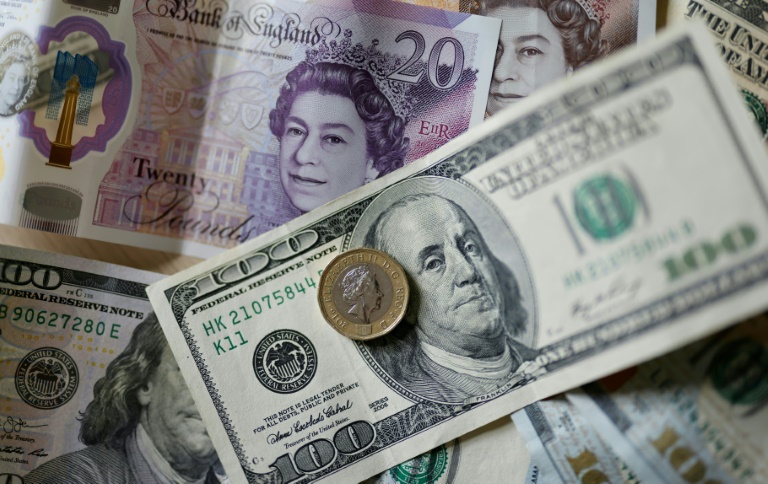
The British pound slumped 1.7 percent against the haven dollar — despite the Bank of England snapping up UK government bonds to try to bring calm to markets.

However, the UK government’s 30-year bond yield managed to retreat to 4.44 percent, having hit a 1998 peak at 5.14 percent.

The BoE intervention followed rare criticism Tuesday from the International Monetary Fund, which argued that Britain’s recent budget could increase inequality and worsen inflation.

Credit ratings agency Moody’s also waded in overnight with a warning about soaring debt.

New finance minister Kwasi Kwarteng’s tax-cutting plan last week sent shockwaves through markets, pushing the pound to a record low and leading to dire warnings for Britain’s economy.

“The BoE’s intervention is an attempt to soothe investor nerves after they were spooked by last week’s mini-budget,” said City Index analyst Fawad Razaqzada.

– Go-to dollar –

The dollar remains the go-to unit as the US Federal Reserve leads the way in raising interest rates.

Observers are betting that US borrowing costs will peak at around 4.75 percent next year, and are expected to remain elevated for some time.

The prospect of such tight monetary policy has battered equities, as US 10-year Treasury yields — a gauge of future rates — hit four percent for the first time since 2010.

“Fear of tightening-induced recessions has wiped out the recovery we saw in stock markets over the bulk of the summer as investors were once again burned by an over-eagerness to catch the bottom in the market, despite there being little evidence of it being justified,” said OANDA’s Craig Erlam.

“That fear has now gripped the markets and we may see a little more caution going forward,” he said.

Sentiment was also rattled by worries about developments in Ukraine, after Kremlin-installed authorities in four regions under Russian control claimed victory in annexation votes, with Moscow warning it could use nuclear weapons to defend the territories.

Ukraine and its allies have denounced the so-called referendums as a sham, saying the West would never recognise the results.

– Key figures at around 1345 GMT –

London – FTSE 100: DOWN 0.3 percent at 6,984.59 points

Frankfurt – DAX: DOWN 0.3 percent at 12104.37 

Paris – CAC 40: DOWN 0.5 percent at 5,728.16 

EURO STOXX 50: DOWN 0.4 percent at 3,315.49

New York – Dow: UP 0.2 percent at 29,193.25 

Tokyo – Nikkei 225: DOWN 1.5 percent at 26,173.98 (close)

Hong Kong – Hang Seng Index: DOWN 3.4 percent at 17,250.88 (close)

Shanghai – Composite: DOWN 1.6 percent at 3,045.07 (close)

Pound/dollar: DOWN at $1.0655 from $1.0730 on Tuesday

Euro/dollar: DOWN at $0.9587 from $0.9595

Euro/pound: UP at 90.67 pence from 89.39 pence 

Dollar/yen: DOWN at 144.43 yen from 144.81 yen

Brent North Sea crude: UP 0.1 percent at $85.67 per barrel

West Texas Intermediate: UP 1.0 percent at $79.46 per barrel

burs-rfj/rox/cdw

Oldest chimp from renown Guinean group dies

Guinea’s oldest chimpanzee and one of the last members of a globally famous endangered community has died in solitude around the age of 71, the environment ministry said.

Fana, a female chimp born around 1951, was part of a troop that gained global fame for uncanny abilities to use tools.

The tiny community of apes lives in a forest around the village of Bossou, in the far southeastern corner of the country.

Scientists have trekked to the remote location for decades to study the chimps’ remarkable use of stone hammers and anvils to crack open nuts — the most sophisticated act ever observed of humanity’s genetically closest relative.

But Fana’s death brings the number of Bossou chimpanzees down to just six or seven.

Half are females, though two are no longer able to reproduce.

Fana had been showing signs of exhaustion over the past few months, the environment ministry said on Facebook Tuesday. 

Her left upper limb has been paralysed since she took a bad fall nearly 25 years ago and she had long since stopped climbing trees. 

She lived alone as she became less mobile.

Her body was found on September 19 and she was buried the next day in the presence of local villagers.

The Bossou apes have a unique relationship with the village population.

The great apes live in the wild but share the territory and its resources with the locals, who protect them, believing them to be reincarnated ancestors.

Up until 2003, the Bossou chimp group had been relatively stable at around 21 animals. But it lost seven members to the flu that year.

It has also been affected by human activities in the area. 

Locals traditionally use slash-and-burn agriculture, and though they had preserved a 320-hectare block of forest around Bossou, surrounding deforestation has cut it off from the rest of the Mount Nimba Strict Nature Reserve, where there are more numerous chimp communities.

Slash-and-burn agriculture sees people cultivate lands until they become depleted, then clear forests to create new lands, and repeat the cycle.

The UNESCO World Heritage-listed reserve straddles Guinea’s borders with Liberia and Ivory Coast.

Fana leaves behind two sons, Foaf and Fanwa. She is predeceased by her daughter, Fotayou.

BoE intervenes as IMF criticises UK budget

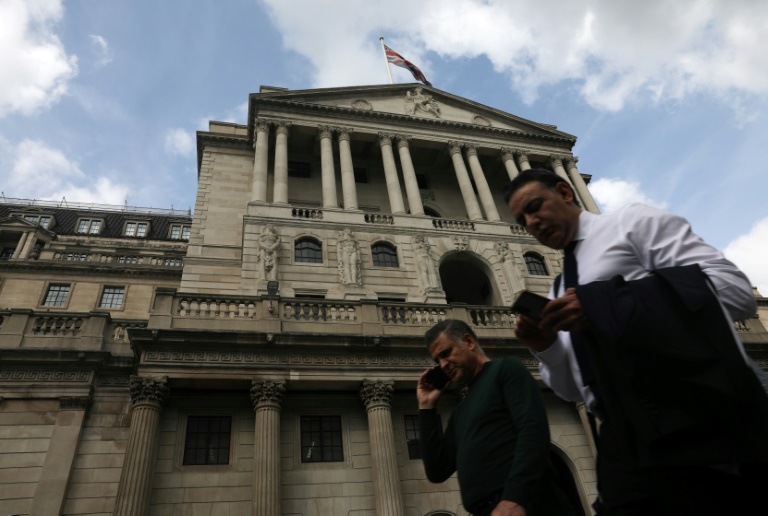
The Bank of England stepped in Wednesday to shore up market confidence after the International Monetary Fund criticised Britain’s inflation-fighting budget.

In a surprise move, the BoE announced it was temporarily buying up long-dated UK government bonds “to restore orderly market conditions”.

The pound promptly slumped 1.7 percent to $1.0552 before clawing back ground.

There was respite elsewhere, with the UK government’s 30-year bond yield retreating to 4.44 percent, having hit a 1998 peak at 5.14 percent.

The BoE intervention followed criticism Tuesday from the IMF, which argued that Britain’s budget could increase inequality and worsen inflation.

Credit ratings agency Moody’s also waded in overnight with a warning about soaring debt.

– ‘Finally intervenes’ –

“So, the Bank of England finally intervenes after coming under so much pressure to act,” said City Index analyst Fawad Razaqzada.

“The BoE’s intervention is an attempt to soothe investor nerves after they were spooked by last week’s mini-budget.”

Finance minister Kwasi Kwarteng’s big tax cuts and energy price freeze, aimed at boosting the UK’s recession-threatened economy, appeared to have had the opposite effect as traders warn of ballooning debt to pay for the incentives.

Following last Friday’s budget, UK bond yields soared and the pound hit a record low at $1.0350, perilously close to parity.

Critics added that Kwarteng’s measures would benefit the rich more than the poorest, as millions of Britons suffer from a cost-of-living crisis.

“We have acted at speed to protect households and businesses through this winter and the next, following the unprecedented energy price rise,” the Treasury said after the IMF criticism.

“We are focused on growing the economy to raise living standards for everyone,” it added, blaming sky-high oil, gas and electricity prices on Russia’s invasion of Ukraine.

– IMF advice –

In a highly unusual intervention, the IMF late Tuesday said it was “closely monitoring” developments and urged the government in London led by new Prime Minister Liz Truss to change tack.

The Fund added: “We understand that the sizable fiscal package announced aims at helping families and businesses deal with the energy shock and at boosting growth via tax cuts and supply measures.

“However, given elevated inflation pressures in many countries… we do not recommend large and untargeted fiscal packages at this juncture.”

The IMF said the “UK measures will likely increase inequality” and stressed the importance of fiscal policy not working “at cross purposes to monetary policy”.

Analysts warned that Britain’s controversial measures could force the BoE to hike interest rates far higher than forecast.

“Expectations that there will be a super-size interest rate hike coming from the Bank of England to try and counter the government splurge on tax cuts and spending have increased,” Hargreaves Lansdown analyst Susannah Streeter noted Wednesday.

Many central banks, including the BoE, are aggressively hiking interest rates in a bid to cool decades-high inflation. 

The BoE on Wednesday warned there was a “material risk to UK financial stability” should current market conditions continue.

Purchases “will be carried out on whatever scale is necessary”, added the bank headed by governor Andrew Bailey.

– Tax cuts –

In his budget, Chancellor of the Exchequer Kwarteng cut the highest rate of income tax and scrapped a cap on banker bonuses.

He also, however, announced a plan to lower income tax for all workers.

Conservative party head Truss appointed Kwarteng to replace Rishi Sunak, who reached the final two in the race to be prime minister.

Sunak had hit out strongly at Truss’s promise of tax cuts, arguing that the UK priority was to first bring down the nation’s inflation rate that stands at a near 40-year high of 9.9 percent. 

Moody’s called Britain’s new fiscal policy regime “credit negative”, adding that a sustained confidence shock could “permanently” weaken its debt affordability.

Kwarteng has said he would wait until November 23 to outline plans on controlling government debt.

'You have to overcome': Cubans carry on as Hurricane Ian sparks blackout

Havana resident Maykel was helping his friend fix an “almendron” — as the decades-old American cars that ply Cuba’s streets are known — when the lights suddenly cut out late Tuesday.

He and his friend were among the 11 million Cubans plunged into darkness after powerful Hurricane Ian tore across the island’s west, damaging the electrical grid and causing a nationwide blackout.

“What are we going to do?” Maykel, 35, said dryly. “Survive.”

Lazaro Guerra, technical director of the state utility Union Electrica, said in televised remarks that there was no electric service “in any part of the country.” 

The energy ministry noted it was dealing with “exceptional circumstances” and that power would be restored gradually.

Communist-ruled Cuba had already been dealing with electricity generation issues stemming from the obsolescence of its plants, breakdowns and maintenance, and heightened demand thanks to the summer heat.

Guerra said the latest problems were affecting the lines linking the country’s west, center and east, and that fluctuations in the charge and electrical frequency were causing instability.

“The western region has the additional complication of having a group of transmission lines that are out of service precisely because of the passing of Hurricane Ian,” he said.

The storm, which hit the provinces of Pinar del Rio, Artemisa and Havana, toppled trees into roadways and fuelled heavy ocean swells that inundated streets around the capital’s popular Malecon promenade.

State media reported that two people were killed Tuesday in Pinar del Rio.

– Completely in the dark –

Harold Baez, a 27-year-old security guard for the half-century-old Coppelia ice cream parlour in the heart of Havana, said he was concerned about the situation but determined to carry on.

“A (nationwide) blackout like that always generates uncertainty, but that’s normal. You have to overcome everything,” he said as he headed for the cafeteria of the Habana Libre hotel which, like many accommodations aimed at international tourists, still enjoyed power thanks to generators.

In Cuba, few homes have gasoline-powered generators, though hospitals, offices and public institutions often do.

Some homes were lit up with candles or rechargeable lamps.

But without streetlights or even traffic signals to illuminate their neighborhoods, many of those living in central Havana found themselves completely in the dark.

“We came out because of the child… because he was going crazy” crying, said one woman who declined to be named as she soothed her baby by the light of her husband’s cell phone.

Restaurant worker Yoelmis Martinez, 36, sought to put an optimistic spin on the situation.

“It isn’t that (we want) it to turn out like this, but… the positive part is that at least we can save a fair bit during this blackout,” Martinez said as she returned home from a friend’s house where she rode out the storm.

Close Bitnami banner
Bitnami