AFP

Menacing Florida, Hurricane Ian nears catastrophic Category 5

Hurricane Ian intensified to just shy of catastrophic Category 5 strength Wednesday as its heavy winds began pummelling the US state of Florida, with forecasters warning of life-threatening storm surges after leaving millions without power in Cuba.

Mandatory evacuation orders had been issued in a dozen coastal Florida counties, with voluntary evacuation recommended in several others, according to the state’s emergency officials as they girded for a potentially historic storm.

In a pre-dawn advisory the US National Hurricane Center (NHC) said “Ian has strengthened into an extremely dangerous Category 4 hurricane,” warning later of “catastrophic storm surge, winds, and flooding.”

At 7:00 am (1100 GMT) it said “data from a Hurricane Hunter aircraft indicate that maximum sustained winds have increased to near 155 miles (250 kilometers) per hour” — just shy of Category 5, the strongest category on the Saffir-Simpson scale.

“This is going to be a nasty, nasty day, two days,” Governor Ron DeSantis said early Wednesday as he warned residents of a “rough stretch” ahead for Florida.

“It could make landfall as a Category 5, but clearly this is a very powerful major hurricane that’s going to have major impacts, both on… southwest Florida but as it continues to work through the state.”

The NHC for its part said Ian was “rapidly intensifying,” while conditions along the Florida coast were “rapidly deteriorating.”

Tropical storm-strength winds were already battering the Florida Keys, as the storm was expected to make landfall later Wednesday near Fort Myers and Port Charlotte, along the state’s west coast, before moving across central Florida and emerging in the Atlantic Ocean by late Thursday.

With up to two feet (61 centimeters) of rain expected to fall on parts of the so-called Sunshine State, and a storm surge that could reach devastating levels of 12 to 16 feet (3.6 to 4.9 meters) above ground, authorities were warning of catastrophic conditions.

“This is a life-threatening situation,” the NHC warned.

DeSantis said on Tuesday night that there had already been at least two “radar-indicated tornadoes” in the state, and warned those in areas projected to be hit hardest that their “time to evacuate is coming to an end.”

Calls to heed evacuation warnings were echoed by US President Joe Biden, who earlier said Ian “could be a very severe hurricane, life-threatening and devastating in its impact.”

White House Press Secretary Karine Jean-Pierre said Biden had spoken with DeSantis — a potential 2024 election challenger — Tuesday evening to discuss storm preparations.

– Widespread blackout –

Ian plunged all of Cuba into darkness on Tuesday after battering the country’s west as a Category 3 for more than five hours before moving back out over the Gulf of Mexico, the Insmet meteorological institute said.

The storm damaged Cuba’s power network and left the island “without electrical service,” state electricity company Union Electrica said.

Only the few people with gasoline-powered generators had access to electricity on the island of more than 11 million people. Others had to make do with flashlights or candles at home, and lit their way with cell phones as they walked the streets.

In the western city of Pinar del Rio, AFP footage showed downed power lines, flooded streets and damaged rooftops.

“Desolation and destruction. These are terrifying hours. Nothing is left here,” a 70-year-old resident of the city was quoted as saying in a social media post by his journalist son, Lazaro Manuel Alonso.

About 40,000 people were evacuated across Pinar del Rio province, which bore the brunt of the storm, local authorities said.

Cuban residents described “destruction” and posted images on social media of flooded streets and felled trees.

At least two people died in Pinar del Rio province, Cuban state media reported.

In Consolacion del Sur, southwest of Havana, 65-year-old Caridad Fernandez said her roof was seriously damaged and water came through her front door.

“Everything we have is damaged,” she said. “But we’ll get through this, we’ll just keep moving forwards.”

– ‘Life and death’ –

In the US, the Pentagon said 3,200 national guardsmen had been called up in Florida, with another 1,800 on the way.

Authorities in several municipalities were distributing sandbags to help residents protect their homes from flooding.

Tampa International Airport suspended operations from Tuesday at 5 pm.

NASA, on the state’s east coast, also took precautions, rolling back its massive Moon rocket into a storage hanger for protection.

Like DeSantis, FEMA administrator Deanne Criswell highlighted the danger of storm surge, saying it was the agency’s “biggest concern.”

“If people are told to evacuate by their local officials, please listen to them. The decision you choose to make may be the difference between life and death,” she said.

Menacing Florida, Hurricane Ian nears catastrophic Category 5

Hurricane Ian intensified to just shy of catastrophic Category 5 strength Wednesday as its heavy winds began pummelling the US state of Florida, with forecasters warning of life-threatening storm surges after leaving millions without power in Cuba.

Mandatory evacuation orders had been issued in a dozen coastal Florida counties, with voluntary evacuation recommended in several others, according to the state’s emergency officials as they girded for a potentially historic storm.

In a pre-dawn advisory the US National Hurricane Center (NHC) said “Ian has strengthened into an extremely dangerous Category 4 hurricane,” warning later of “catastrophic storm surge, winds, and flooding.”

At 7:00 am (1100 GMT) it said “data from a Hurricane Hunter aircraft indicate that maximum sustained winds have increased to near 155 miles (250 kilometers) per hour” — just shy of Category 5, the strongest category on the Saffir-Simpson scale.

“This is going to be a nasty, nasty day, two days,” Governor Ron DeSantis said early Wednesday as he warned residents of a “rough stretch” ahead for Florida.

“It could make landfall as a Category 5, but clearly this is a very powerful major hurricane that’s going to have major impacts, both on… southwest Florida but as it continues to work through the state.”

The NHC for its part said Ian was “rapidly intensifying,” while conditions along the Florida coast were “rapidly deteriorating.”

Tropical storm-strength winds were already battering the Florida Keys, as the storm was expected to make landfall later Wednesday near Fort Myers and Port Charlotte, along the state’s west coast, before moving across central Florida and emerging in the Atlantic Ocean by late Thursday.

With up to two feet (61 centimeters) of rain expected to fall on parts of the so-called Sunshine State, and a storm surge that could reach devastating levels of 12 to 16 feet (3.6 to 4.9 meters) above ground, authorities were warning of catastrophic conditions.

“This is a life-threatening situation,” the NHC warned.

DeSantis said on Tuesday night that there had already been at least two “radar-indicated tornadoes” in the state, and warned those in areas projected to be hit hardest that their “time to evacuate is coming to an end.”

Calls to heed evacuation warnings were echoed by US President Joe Biden, who earlier said Ian “could be a very severe hurricane, life-threatening and devastating in its impact.”

White House Press Secretary Karine Jean-Pierre said Biden had spoken with DeSantis — a potential 2024 election challenger — Tuesday evening to discuss storm preparations.

– Widespread blackout –

Ian plunged all of Cuba into darkness on Tuesday after battering the country’s west as a Category 3 for more than five hours before moving back out over the Gulf of Mexico, the Insmet meteorological institute said.

The storm damaged Cuba’s power network and left the island “without electrical service,” state electricity company Union Electrica said.

Only the few people with gasoline-powered generators had access to electricity on the island of more than 11 million people. Others had to make do with flashlights or candles at home, and lit their way with cell phones as they walked the streets.

In the western city of Pinar del Rio, AFP footage showed downed power lines, flooded streets and damaged rooftops.

“Desolation and destruction. These are terrifying hours. Nothing is left here,” a 70-year-old resident of the city was quoted as saying in a social media post by his journalist son, Lazaro Manuel Alonso.

About 40,000 people were evacuated across Pinar del Rio province, which bore the brunt of the storm, local authorities said.

Cuban residents described “destruction” and posted images on social media of flooded streets and felled trees.

At least two people died in Pinar del Rio province, Cuban state media reported.

In Consolacion del Sur, southwest of Havana, 65-year-old Caridad Fernandez said her roof was seriously damaged and water came through her front door.

“Everything we have is damaged,” she said. “But we’ll get through this, we’ll just keep moving forwards.”

– ‘Life and death’ –

In the US, the Pentagon said 3,200 national guardsmen had been called up in Florida, with another 1,800 on the way.

Authorities in several municipalities were distributing sandbags to help residents protect their homes from flooding.

Tampa International Airport suspended operations from Tuesday at 5 pm.

NASA, on the state’s east coast, also took precautions, rolling back its massive Moon rocket into a storage hanger for protection.

Like DeSantis, FEMA administrator Deanne Criswell highlighted the danger of storm surge, saying it was the agency’s “biggest concern.”

“If people are told to evacuate by their local officials, please listen to them. The decision you choose to make may be the difference between life and death,” she said.
Stocks slump, dollar surges on recession fears

Global stock markets sank Wednesday and the dollar soared as investors fretted over recession fears and heightened Ukraine tensions.

“With the prospect of a sharp economic slowdown, further pain for households and businesses, and investor sentiment on its knees, alas equities markets continue their descent,” said AJ Bell investment director Russ Mould.

The haven dollar held at multi-year highs against rival currencies, with the euro plumbing a new 20-year low at $0.9536.

The British pound slumped 1.7 percent against the greenback — despite the Bank of England snapping up UK government bonds to try and bring calm to markets.

However, the UK government’s 30-year bond yield managed to retreat to 4.44 percent, having hit a 1998 peak at 5.14 percent.

The BoE intervention followed criticism Tuesday from the International Monetary Fund, which argued that Britain’s recent budget could increase inequality and worsen inflation.

New finance minister Kwasi Kwarteng’s tax-cutting plan last week sent shockwaves through markets, pushing the pound to a record low and leading to dire warnings for Britain’s economy.

The dollar remains the go-to unit as the US Federal Reserve leads the way in raising interest rates.

Observers are betting that US borrowing costs will peak at around 4.75 percent next year, and are expected to remain elevated for some time.

The prospect of such tight monetary policy has battered equities, as US 10-year Treasury yields — a gauge of future rates — hit four percent for the first time since 2010.

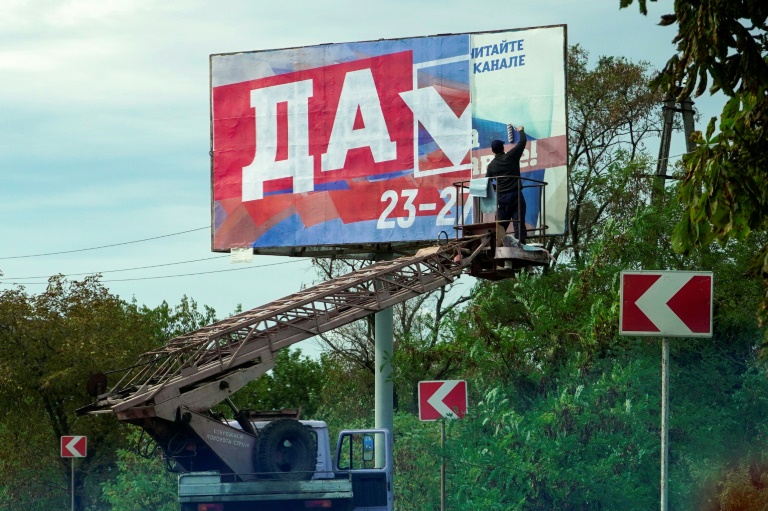
Sentiment was also rattled by worries about developments in Ukraine, after Kremlin-installed authorities in four regions under Russian control claimed victory in annexation votes, with Moscow warning it could use nuclear weapons to defend the territories.

Ukraine and its allies have denounced the so-called referendums as a sham, saying the West would never recognise the results.

– Key figures at around 1145 GMT –

London – FTSE 100: DOWN 0.8 percent at 6,927.75 points

Frankfurt – DAX: DOWN 1.5 percent at 11,961.92

Paris – CAC 40: DOWN 1.4 percent at 5,675.32

EURO STOXX 50: DOWN 1.5 percent at 3,279.53

Tokyo – Nikkei 225: DOWN 1.5 percent at 26,173.98 (close)

Hong Kong – Hang Seng Index: DOWN 3.4 percent at 17,250.88 (close)

Shanghai – Composite: DOWN 1.6 percent at 3,045.07 (close)

New York – Dow: DOWN 0.4 percent at 29,134.99 (close)

Pound/dollar: DOWN at $1.0569 from $1.0730 on Tuesday

Euro/dollar: DOWN at $0.9556 from $0.9595

Euro/pound: UP at 90.41 pence from 89.39 pence 

Dollar/yen: DOWN at 144.76 yen from 144.81 yen

Brent North Sea crude: UP 0.1 percent at $86.36 per barrel

West Texas Intermediate: UP 0.5 percent at $78.86 per barrel

burs-rfj/bcp/rox

Stocks slump, dollar surges on recession fears

Global stock markets sank Wednesday and the dollar soared as investors fretted over recession fears and heightened Ukraine tensions.

“With the prospect of a sharp economic slowdown, further pain for households and businesses, and investor sentiment on its knees, alas equities markets continue their descent,” said AJ Bell investment director Russ Mould.

The haven dollar held at multi-year highs against rival currencies, with the euro plumbing a new 20-year low at $0.9536.

The British pound slumped 1.7 percent against the greenback — despite the Bank of England snapping up UK government bonds to try and bring calm to markets.

However, the UK government’s 30-year bond yield managed to retreat to 4.44 percent, having hit a 1998 peak at 5.14 percent.

The BoE intervention followed criticism Tuesday from the International Monetary Fund, which argued that Britain’s recent budget could increase inequality and worsen inflation.

New finance minister Kwasi Kwarteng’s tax-cutting plan last week sent shockwaves through markets, pushing the pound to a record low and leading to dire warnings for Britain’s economy.

The dollar remains the go-to unit as the US Federal Reserve leads the way in raising interest rates.

Observers are betting that US borrowing costs will peak at around 4.75 percent next year, and are expected to remain elevated for some time.

The prospect of such tight monetary policy has battered equities, as US 10-year Treasury yields — a gauge of future rates — hit four percent for the first time since 2010.

Sentiment was also rattled by worries about developments in Ukraine, after Kremlin-installed authorities in four regions under Russian control claimed victory in annexation votes, with Moscow warning it could use nuclear weapons to defend the territories.

Ukraine and its allies have denounced the so-called referendums as a sham, saying the West would never recognise the results.

– Key figures at around 1145 GMT –

London – FTSE 100: DOWN 0.8 percent at 6,927.75 points

Frankfurt – DAX: DOWN 1.5 percent at 11,961.92

Paris – CAC 40: DOWN 1.4 percent at 5,675.32

EURO STOXX 50: DOWN 1.5 percent at 3,279.53

Tokyo – Nikkei 225: DOWN 1.5 percent at 26,173.98 (close)

Hong Kong – Hang Seng Index: DOWN 3.4 percent at 17,250.88 (close)

Shanghai – Composite: DOWN 1.6 percent at 3,045.07 (close)

New York – Dow: DOWN 0.4 percent at 29,134.99 (close)

Pound/dollar: DOWN at $1.0569 from $1.0730 on Tuesday

Euro/dollar: DOWN at $0.9556 from $0.9595

Euro/pound: UP at 90.41 pence from 89.39 pence 

Dollar/yen: DOWN at 144.76 yen from 144.81 yen

Brent North Sea crude: UP 0.1 percent at $86.36 per barrel

West Texas Intermediate: UP 0.5 percent at $78.86 per barrel

burs-rfj/bcp/rox

Stocks slump, dollar surges on recession fears

Global stock markets sank Wednesday and the dollar soared as investors fretted over recession fears and heightened Ukraine tensions.

“With the prospect of a sharp economic slowdown, further pain for households and businesses, and investor sentiment on its knees, alas equities markets continue their descent,” said AJ Bell investment director Russ Mould.

The haven dollar held at multi-year highs against rival currencies, with the euro plumbing a new 20-year low at $0.9536.

The British pound slumped 1.7 percent against the greenback — despite the Bank of England snapping up UK government bonds to try and bring calm to markets.

However, the UK government’s 30-year bond yield managed to retreat to 4.44 percent, having hit a 1998 peak at 5.14 percent.

The BoE intervention followed criticism Tuesday from the International Monetary Fund, which argued that Britain’s recent budget could increase inequality and worsen inflation.

New finance minister Kwasi Kwarteng’s tax-cutting plan last week sent shockwaves through markets, pushing the pound to a record low and leading to dire warnings for Britain’s economy.

The dollar remains the go-to unit as the US Federal Reserve leads the way in raising interest rates.

Observers are betting that US borrowing costs will peak at around 4.75 percent next year, and are expected to remain elevated for some time.

The prospect of such tight monetary policy has battered equities, as US 10-year Treasury yields — a gauge of future rates — hit four percent for the first time since 2010.

Sentiment was also rattled by worries about developments in Ukraine, after Kremlin-installed authorities in four regions under Russian control claimed victory in annexation votes, with Moscow warning it could use nuclear weapons to defend the territories.

Ukraine and its allies have denounced the so-called referendums as a sham, saying the West would never recognise the results.

– Key figures at around 1145 GMT –

London – FTSE 100: DOWN 0.8 percent at 6,927.75 points

Frankfurt – DAX: DOWN 1.5 percent at 11,961.92

Paris – CAC 40: DOWN 1.4 percent at 5,675.32

EURO STOXX 50: DOWN 1.5 percent at 3,279.53

Tokyo – Nikkei 225: DOWN 1.5 percent at 26,173.98 (close)

Hong Kong – Hang Seng Index: DOWN 3.4 percent at 17,250.88 (close)

Shanghai – Composite: DOWN 1.6 percent at 3,045.07 (close)

New York – Dow: DOWN 0.4 percent at 29,134.99 (close)

Pound/dollar: DOWN at $1.0569 from $1.0730 on Tuesday

Euro/dollar: DOWN at $0.9556 from $0.9595

Euro/pound: UP at 90.41 pence from 89.39 pence 

Dollar/yen: DOWN at 144.76 yen from 144.81 yen

Brent North Sea crude: UP 0.1 percent at $86.36 per barrel

West Texas Intermediate: UP 0.5 percent at $78.86 per barrel

burs-rfj/bcp/rox

Body of missing US ski mountaineer found in Nepal

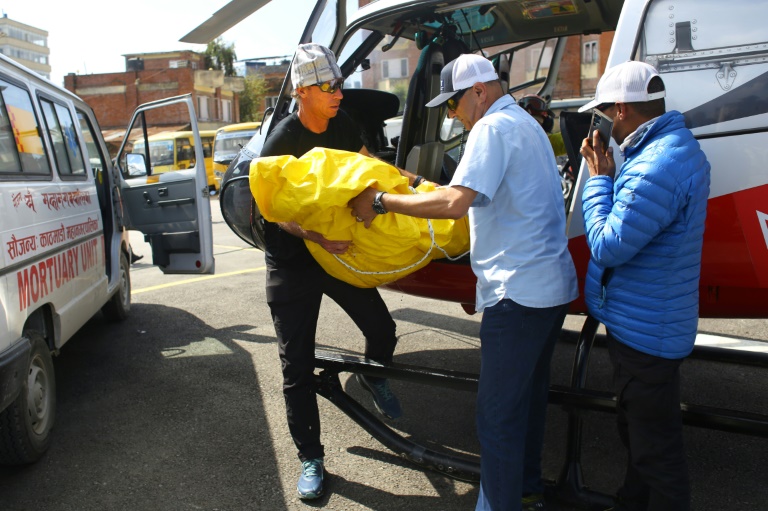
The body of top US ski mountaineer Hilaree Nelson was retrieved from the Himalayas by a search team on Wednesday, two days after she disappeared on the slopes of Nepal’s Manaslu peak.

Nelson slipped and went missing while skiing down the world’s eighth-highest mountain after a successful summit with her partner Jim Morrison on Monday. 

Morrison led the search operations and had left Wednesday morning on a helicopter to resume efforts to locate her at an elevation of around 6,200 metres (20,000 feet).

“They returned to the same area and found her body. They have now flown to Kathmandu,” Jiban Ghimire of Shangri-La Nepal Trek, which organised the expedition, told AFP.

Nelson, 49, is described by her sponsor, The North Face, as “the most prolific ski mountaineer of her generation”.

A decade ago, she became the first woman to summit both the highest mountain in the world, Everest, and the adjacent Lhotse peak within the span of 24 hours.

She returned to Lhotse and made the first ski descent of the mountain in 2018, which earned her the National Geographic Adventurer of the Year award.

In an Instagram post last week, Nelson said her latest climb had been deeply challenging because of “incessant rain” and dangerous conditions.

“I haven’t felt as sure-footed on Manaslu as I have on past adventure into the thin atmosphere of the high Himalaya,” Nelson wrote in a post on Thursday.

“These past weeks have tested my resilience in new ways.”

-‘Her legacy’ –

Mountaineers and well-wishers have shared heartfelt messages for Nelson since she went missing.

“Let’s pray for Hilaree,” fellow The North Face athlete Fernanda Maciel, currently at the Manaslu base camp, wrote on Instagram on Tuesday.

Mountain guide Caroline George thanked Nelson for inspiring her own adventures. 

“She is a beacon… I have infinite gratitude for her journey on this planet and for the legacy she leaves,” she wrote.

Constant rain and snow have been a challenge for the 404 paying climbers attempting to reach the summit of Manaslu this year.

On the same day as Nelson’s accident, an avalanche hit between Camps 3 and 4 on the 8,163-metre (26,781-foot) mountain, killing Nepali climber Anup Rai and injuring a dozen others who were later rescued.

The deaths of Nelson and Rai are the first confirmed casualties of the autumn climbing season in Nepal.

Nepal is home to eight of the world’s 14 highest peaks and foreign climbers who flock to its mountains are a major source of revenue for the country.

The industry was almost completely shut down due to the coronavirus pandemic in 2020, but the country reopened its peaks to mountaineers last year.

BoE intervenes as IMF criticises UK budget

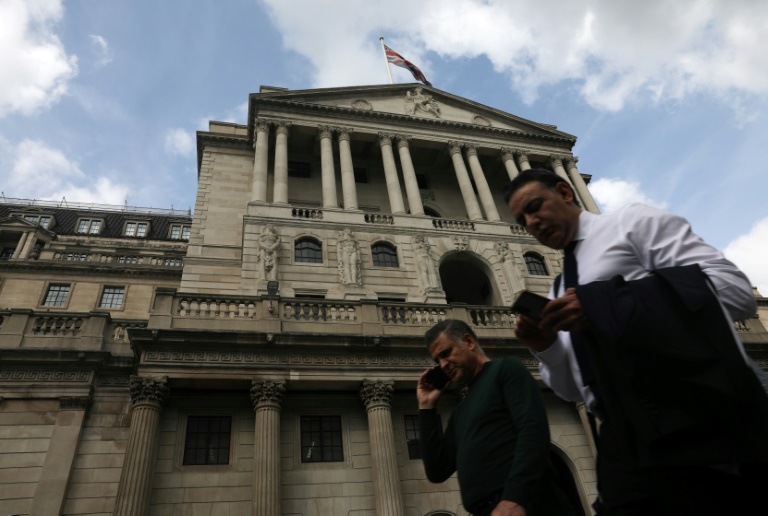
The Bank of England stepped in Wednesday to shore up market confidence after the International Monetary Fund criticised Britain’s inflation-fighting budget.

Reacting to markets turmoil, the BoE announced it was temporarily buying up long-dated UK government bonds “to restore orderly market conditions”.

However, the pound promptly slumped 1.7 percent to $1.0552.

The BoE intervention followed criticism Tuesday from the IMF, which argued that Britain’s budget could increase inequality and worsen inflation.

Credit ratings agency Moody’s also waded in overnight with a warning about soaring debt.

Finance minister Kwasi Kwarteng’s big tax cuts and energy price freeze, aimed at boosting the UK’s recession-threatened economy, appeared to have had the opposite effect as traders warn of ballooning debt to pay for the incentives.

Following last Friday’s budget, UK government bond yields have soared and the pound hit a record low at $1.0350.

Critics added that Kwarteng’s measures would benefit the rich more than the poorest, as millions of Britons suffer from a cost-of-living crisis.

“We have acted at speed to protect households and businesses through this winter and the next, following the unprecedented energy price rise,” the Treasury said as it sought to defend itself.

“We are focused on growing the economy to raise living standards for everyone,” it added, blaming sky-high oil, gas and electricity prices on Russia’s invasion of Ukraine.

– IMF advice –

In a highly unusual intervention, the IMF late Tuesday said it was “closely monitoring” developments and urged the government in London led by new Prime Minister Liz Truss to change tack.

The Fund added: “We understand that the sizable fiscal package announced aims at helping families and businesses deal with the energy shock and at boosting growth via tax cuts and supply measures.

“However, given elevated inflation pressures in many countries… we do not recommend large and untargeted fiscal packages at this juncture.”

The IMF said the “UK measures will likely increase inequality” and stressed the importance of fiscal policy not working “at cross purposes to monetary policy”.

Analysts warned that Britain’s controversial measures could force the Bank of England to hike interest rates far higher than forecast.

“Expectations that there will be a super-size interest rate hike coming from the Bank of England to try and counter the government splurge on tax cuts and spending have increased,” Hargreaves Lansdown analyst Susannah Streeter noted Wednesday.

Many central banks, including the BoE, are aggressively hiking interest rates in a bid to cool decades-high inflation. 

– Tax cuts –

In his budget, Chancellor of the Exchequer Kwarteng cut the highest rate of income tax and scrapped a cap of banker bonuses.

He also, however, announced a plan to lower income tax for all workers.

Conservative party head Truss appointed Kwarteng to replace Rishi Sunak, who reached the final two in the race to be prime minister.

Sunak had hit out strongly at Truss’s promise of tax cuts, arguing that the UK priority was to first bring down the nation’s inflation rate that stands at a near 40-year high of 9.9 percent. 

Moody’s called Britain’s new fiscal policy regime “credit negative”, adding that a sustained confidence shock could “permanently” weaken its debt affordability.

Kwarteng has said he would wait until November 23 to outline plans on controlling government debt.

Half world's birds in decline, species moving 'ever faster' to extinction

Almost half of all bird species are in decline globally and one in eight are threatened with extinction, according to a major new report warning that human actions are driving more species to the brink and nature is “in trouble”.

The four-yearly State of the World’s Birds report, which provides a snapshot of the plight of species globally and more broadly a barometer for biodiversity, comes as the United Nations steers an international process to protect nature.

“One in eight bird species is threatened with extinction, and the status of the world’s birds continues to deteriorate: species are moving ever faster towards extinction,” said the report released this week by BirdLife International. 

Using data from the International Union for Conservation of Nature (IUCN), the report said 49 percent of bird species worldwide have declining populations, with populations falling even in species not normally rare or at risk. 

Roughly 13 percent are considered threatened. 

The main threats include the growth of unsustainable agriculture, logging, invasive species, over-exploitation and climate change. 

Most bird populations face a combination of human-caused threats.   

“The natural world is in trouble. Human actions are driving species rapidly towards extinction, undermining ecosystem functions and services vital to our own survival,” the report said.  

BirdLife International, which has decades of survey data, said there are now 2.9 billion fewer individual birds in North America than there were in 1970, an estimated drop of 29 percent. 

The European Union has seen a net loss of around 600 million birds, roughly 18 percent since 1980.  

In both cases, the losses are most acute among long-distance migrants and farmland birds.

Birdlife said many key bird preservation zones were in a poor state and called for a global push to protect and restore habitats. 

In December, nations gather to finalise a treaty to halt the decline of biodiversity and set humanity on a path to “live in harmony with nature” by mid-century.

BirdLife International chief Patricia Zurita said the framework under negotiation was “the world’s best and perhaps last chance to halt the loss of nature” and restore biodiversity. 

“The birds and the rest of nature are depending on us. And we are depending on them,” she said.

Typhoon Noru tears across Vietnam, Laos

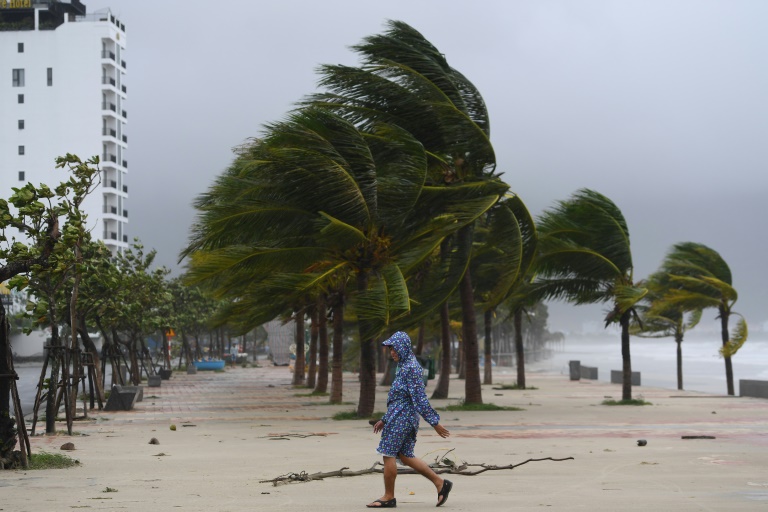
Typhoon Noru tore roofs from homes and caused power outages across central Vietnam Wednesday, with hundreds of thousands of people taking refuge, after the storm claimed at least 10 lives in the Philippines.

In Danang, Vietnam’s third-largest city, high-rise buildings shook as the typhoon made landfall in the early hours of Wednesday, bringing winds of up to around 120 kilometres (75 miles) per hour, according to the national forecaster.

More than 300,000 people in Vietnam hunkered down in shelters overnight after experts predicted the storm would be one of the biggest to ever hit the country.

By Wednesday evening, it weakened to a tropical storm as it crossed into southern Laos, but forecasters in Vietnam warned of landslides and serious flooding in the typhoon’s wake.

The defence ministry has mobilised around 40,000 soldiers and 200,000 militia members, equipped with armoured vehicles and boats in preparation for rescue and relief operations, state media said.

In the tourist city of Hoi An, the Hoai River was close to bursting its banks, while the ground was littered with metal roof sheeting and fallen trees that had damaged cars and blocked roads.

Several streets in the old town were under water.

“The typhoon was terrible last night. I could not sleep as the wind was so strong and loud,” resident Nguyen Thi Hien told AFP.

Around 300 houses in the coastal province of Quang Tri had their roofs blown off on Tuesday as the wind began picking up speed.

“I heard the sound of fallen trees and signboards outside. I was scared. But we were prepared so luckily the losses were not that bad.”

Residents rushed to clean up the debris early on Wednesday, with some shops already open and tourists walking the streets, taking pictures of the floodwater.

Reshma D’Souza, from India, spent a frightening night in her hotel room. At around 1 am, she said, she saw that the “wall was vibrating”.

“(It was) shaking, so I was just praying and I was so scared.”

Airports and offices across central provinces began to reopen on Wednesday afternoon.

But key sections of the highway linking Hanoi in the north with commercial hub Ho Chi Minh City in the south remained closed due to landslides and floods, according to state media.

– Deaths in Philippines –

Noru hit Vietnam after slamming into the Philippines earlier this week as a super typhoon with winds of up to 195 kph, leaving 10 dead and eight missing, the civil defence office said.

In Laos, authorities ordered a close watch on dams and urged people to seek shelter for themselves and for livestock.

Noru is then expected to move over Thailand’s northeastern Ubon Ratchathani province on Thursday, gradually weakening into a tropical depression.

Thai authorities warned of heavy rain and possible flash flooding, saying people living in high-risk areas should prepare to evacuate their homes.

In Cambodia, officials warned residents in low-lying areas already hit by heavy rains in recent days to be alert to the danger of flash floods. 

Vietnam is frequently lashed by heavy storms in the rainy season between June and November, with central coastal provinces the worst affected.

Scientists have warned the storms are becoming more powerful as the world gets warmer because of climate change.

burs-pdw/dhc

Environmental groups slam UK plans to ditch pesticide laws

British wildlife groups and campaigners have hit out at government’s plans to ditch legislation covering pesticide use, as part of a drive to remove EU laws after Brexit.

The government in London said it will scratch 570 environmental laws from the statute book, after they were rolled over from Britain’s time in the European Union.

On Wednesday, popular wildlife television presenter Steve Backshall joined a chorus of opposition, warning that overturning laws on pesticides could have a deadly effect on bee populations and river pollution.

“In recent times increasing pesticide use has caused localised extinctions of bee populations and has make our rivers toxic, this is a time for our government to protect wildlife and people from pesticide harm,” he added.

“I would urge our new government to reconsider removing pesticide regulation,” added Backshall, who s also heads insect conservation group Buglife.

The Royal Society for the Protection of Birds (RSPB) called the plans from new Prime Minister Liz Truss’s government an “unprecedented attack on nature”.

“We will not stand by and let this happen,” it vowed.

More than 68,000 people have already signed up to an application on the RSPB website that automatically contacts their MP to demand that the protections be maintained.

Craig Bennett, the chief executive officer of the Wildlife Trusts of 46 independent conservation charities, said people were “furious at the new threats”.

“Vital legal protections for wildlife are at risk, fossil fuel extraction is being favoured over renewables, and the government is going back on plans to reward farmers for managing land in a nature-friendly way,” he said.

“The government wants de-regulation that will lead to yet more poo in rivers, less wildlife and land that’s unable to adapt to climate change,” he added.

The National Trust heritage body, which has 5.7 million members, also lashed out.

“Rather than ramp up action to support our environment, this government appears however to be heading in the opposite direction,” said director general Hilary McGrady.

“Environmental protections are dismissed as ‘burdens’, whilst investment and growth are pitted against nature and climate action,” she added.

Environment minister Ranil Jayawardena responded to the criticism on Twitter saying there have been claims that are “simply untrue”.

“We’re introducing new schemes that will support our farmers to produce high quality food and support them in enhancing our natural environment.

“Last year we passed our world-leading Environment Act. We are committed to halting the decline of nature by 2030 and will not undermine our obligations to the environment in pursuit of growth,” he added.

Close Bitnami banner
Bitnami