AFP

Biden laying foundation for green energy investments: Yellen

US President Joe Biden’s push for green energy tax credits will help boost a massive ramp up in private investment that will create jobs and lower energy costs for American families, Treasury Secretary Janet Yellen said Tuesday.

Yellen called the administration’s plan “the most aggressive action that we’ve ever taken to address the climate crisis.”

She traveled to North Carolina to tour a solar plant and tout policies included in the recently-approved Inflation Reduction Act, which together with the Infrastructure Law include more than $430 billion in energy investments.

The legislation provides tax credits to households to make their homes more energy efficient or switch to cleaner sources, which will help lower costs, Yellen said.

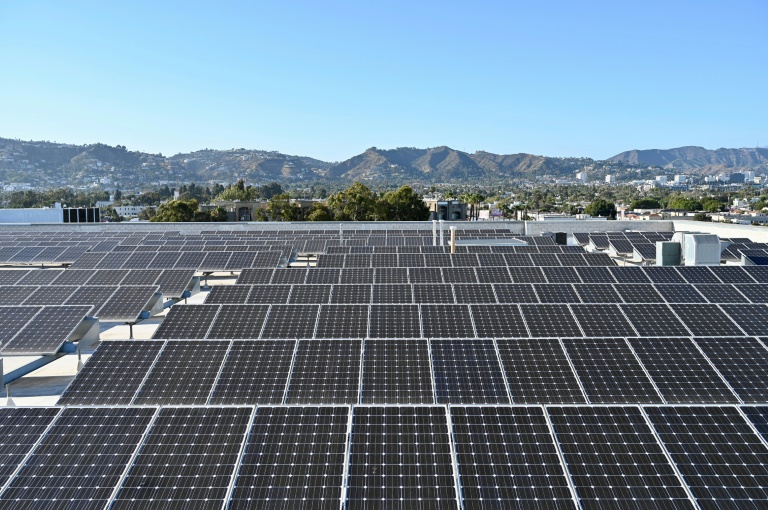
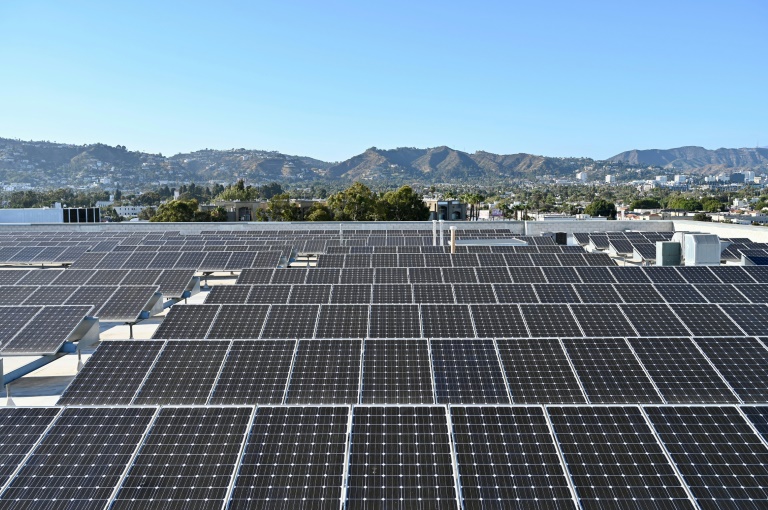
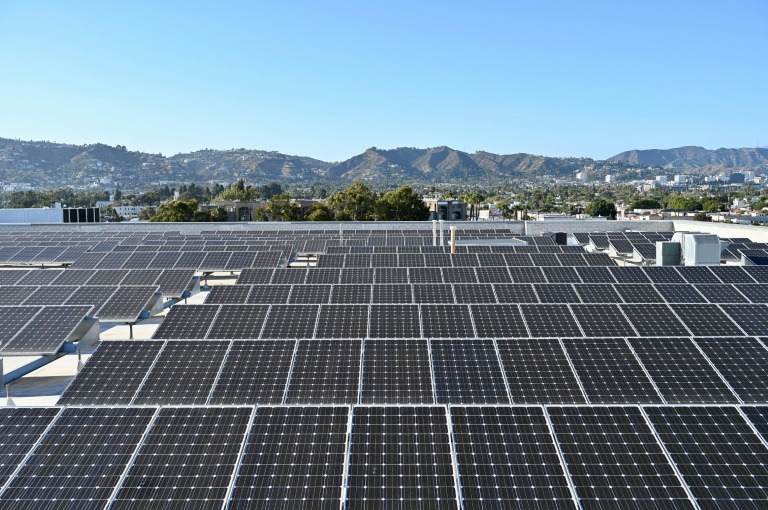
But the administration’s approach also “rests on harnessing the engagement of the private sector,” the official said in her speech, delivered in front of an array of solar panels. 

“Beyond the consumer tax credits, we expect a significant mobilization of private investment into the clean energy sector,” she said. “These investments will accelerate the transition to our green energy future and lower energy costs for American households and businesses.”

In addition, “They will secure our energy supply against global price shocks. And they will provide good-paying, high-quality jobs across America.” 

Yellen said the transition is critical to address climate change which has seen more costly storms arise across the globe. 

“Climate change poses a grave risk to the productive capacity of our economy while also impacting its stability,” she said. 

But the transition to a clean energy economy also brings lower costs and “significant economic opportunities in high-growth industries, while building economic resilience and creating good-paying jobs across the country.”

Biden laying foundation for green energy investments: Yellen

US President Joe Biden’s push for green energy tax credits will help boost a massive ramp up in private investment that will create jobs and lower energy costs for American families, Treasury Secretary Janet Yellen said Tuesday.

Yellen called the administration’s plan “the most aggressive action that we’ve ever taken to address the climate crisis.”

She traveled to North Carolina to tour a solar plant and tout policies included in the recently-approved Inflation Reduction Act, which together with the Infrastructure Law include more than $430 billion in energy investments.

The legislation provides tax credits to households to make their homes more energy efficient or switch to cleaner sources, which will help lower costs, Yellen said.

But the administration’s approach also “rests on harnessing the engagement of the private sector,” the official said in her speech, delivered in front of an array of solar panels. 

“Beyond the consumer tax credits, we expect a significant mobilization of private investment into the clean energy sector,” she said. “These investments will accelerate the transition to our green energy future and lower energy costs for American households and businesses.”

In addition, “They will secure our energy supply against global price shocks. And they will provide good-paying, high-quality jobs across America.” 

Yellen said the transition is critical to address climate change which has seen more costly storms arise across the globe. 

“Climate change poses a grave risk to the productive capacity of our economy while also impacting its stability,” she said. 

But the transition to a clean energy economy also brings lower costs and “significant economic opportunities in high-growth industries, while building economic resilience and creating good-paying jobs across the country.”

Biden laying foundation for green energy investments: Yellen

US President Joe Biden’s push for green energy tax credits will help boost a massive ramp up in private investment that will create jobs and lower energy costs for American families, Treasury Secretary Janet Yellen said Tuesday.

Yellen called the administration’s plan “the most aggressive action that we’ve ever taken to address the climate crisis.”

She traveled to North Carolina to tour a solar plant and tout policies included in the recently-approved Inflation Reduction Act, which together with the Infrastructure Law include more than $430 billion in energy investments.

The legislation provides tax credits to households to make their homes more energy efficient or switch to cleaner sources, which will help lower costs, Yellen said.

But the administration’s approach also “rests on harnessing the engagement of the private sector,” the official said in her speech, delivered in front of an array of solar panels. 

“Beyond the consumer tax credits, we expect a significant mobilization of private investment into the clean energy sector,” she said. “These investments will accelerate the transition to our green energy future and lower energy costs for American households and businesses.”

In addition, “They will secure our energy supply against global price shocks. And they will provide good-paying, high-quality jobs across America.” 

Yellen said the transition is critical to address climate change which has seen more costly storms arise across the globe. 

“Climate change poses a grave risk to the productive capacity of our economy while also impacting its stability,” she said. 

But the transition to a clean energy economy also brings lower costs and “significant economic opportunities in high-growth industries, while building economic resilience and creating good-paying jobs across the country.”

Hurricane Ian leaves western Cuba battered, takes aim for Florida

The powerful Category 3 Hurricane Ian battered western Cuba on Tuesday causing significant damage and prompting mass evacuations, with the storm expected to strengthen as it heads north towards the US state of Florida.

With maximum sustained winds of 125 miles (205 kilometers) per hour, Ian pummeled the island nation’s western regions for more than five hours before its eye moved out over the warm waters of the Gulf of Mexico.

Authorities have not yet been able to assess the damage, but residents described “destruction” and posted images on social media of flooded streets and felled trees.

No deaths or injuries have yet been reported.

“Desolation and destruction. These are terrifying hours. Nothing is left here,” said a 70-year-old resident of the western city of Pinar del Rio in a message to his journalist son that was shared on social media.

Ian is expected to “keep heading northwards, gradually moving over the southeast of the Gulf of Mexico, moving its center away from Cuban territory,” said the Cuba’s Insmet meteorological institute.

The US National Hurricane Center (NHC) said Ian, classified as a major hurricane, made landfall just southwest of the town of La Coloma in Pinar del Rio province at about 4:30 am local time (0830 GMT).

About 40,000 people had been evacuated from their homes in the western province, which was bearing the brunt of the storm, local authorities said.

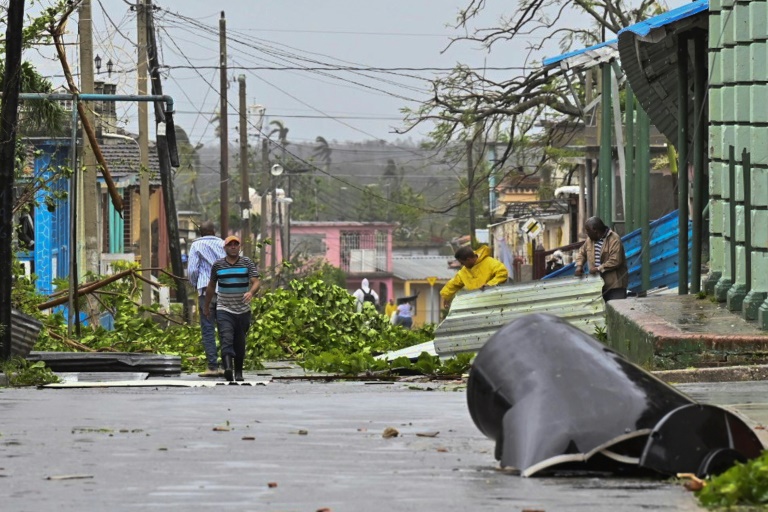
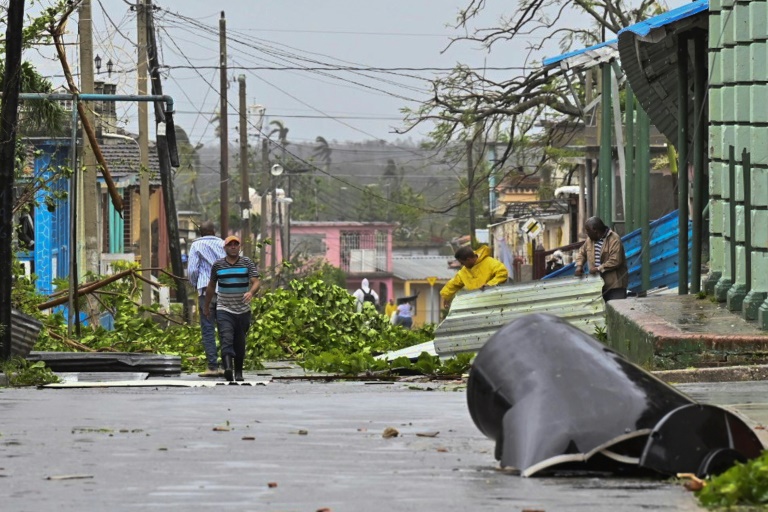
In the town of Consolacion del Sur, images captured by AFP showed downed power lines, flooded streets and a scattering of damaged rooftops.

An official at the state electricity company said power was out in the provinces of Pinar del Rio and Artemisa.

Those were two of the three provinces put on maximum alert Monday night.

– ‘Storm surge’ –

With the hurricane moving north, Florida’s western coast from Fort Myers to Tampa Bay was at greatest risk of “life-threatening” storm surges, the NHC said.

Florida Governor Ron DeSantis said 2.5 million people were under evacuation orders as officials scrambled to prepare for the storm’s forecast landing on Wednesday.

“In some areas there will be catastrophic flooding and life threatening storm surge,” DeSantis said at a press conference on Tuesday.

He urged residents to follow evacuation orders and warned that though Ian’s exact path was still uncertain “the impacts will be far far broader.”

“When you have five to ten feet (1.5 to 3 meters) of storm surge that is not something that you want to be a part of. Mother Nature is a very fearsome adversary.” DeSantis said.

The governor on Monday urged residents to stock up on food, water, medicine and fuel, and he called up 7,000 National Guard members to help with the effort.

Authorities in several Florida municipalities, including Miami, Fort Lauderdale and Tampa, have been distributing free sandbags to residents to help protect their homes from the risk of flooding.

Tampa International Airport said it would suspend operations on Tuesday at 5:00 pm local time (2100 GMT).

US President Joe Biden has approved emergency aid in Florida through the Federal Emergency Management Agency (FEMA), while even NASA on the state’s east coast took precautions, rolling back its massive Moon rocket into its storage hanger for protection.

Like DeSantis, FEMA administrator Deanne Criswell highlighted the danger of storm surge, saying it was the agency’s “biggest concern.”

“If people are told to evacuate by their local officials, please listen to them. The decision you choose to make may be the difference between life and death,” she said.

– Fiona’s wake –

The Caribbean and parts of eastern Canada are still counting the cost of powerful storm Fiona, which tore through last week, claiming several lives.

Half a million residents in the US territory of Puerto Rico were still without power, according to a tracking website, as the island’s governor called on the federal government to waive a policy limiting which ships are able to dock there.

When Fiona arrived as a post-tropical cyclone in Canada on Saturday, it was still packing intense winds of 80 miles per hour, bringing torrential rain and waves of up to 40 feet (12 meters).

Storm surge swept at least 20 homes into the sea in the town of Channel-Port aux Basques, on the southwestern tip of Newfoundland, while three people are believed to have died.

Hurricane Ian leaves western Cuba battered, takes aim for Florida

The powerful Category 3 Hurricane Ian battered western Cuba on Tuesday causing significant damage and prompting mass evacuations, with the storm expected to strengthen as it heads north towards the US state of Florida.

With maximum sustained winds of 125 miles (205 kilometers) per hour, Ian pummeled the island nation’s western regions for more than five hours before its eye moved out over the warm waters of the Gulf of Mexico.

Authorities have not yet been able to assess the damage, but residents described “destruction” and posted images on social media of flooded streets and felled trees.

No deaths or injuries have yet been reported.

“Desolation and destruction. These are terrifying hours. Nothing is left here,” said a 70-year-old resident of the western city of Pinar del Rio in a message to his journalist son that was shared on social media.

Ian is expected to “keep heading northwards, gradually moving over the southeast of the Gulf of Mexico, moving its center away from Cuban territory,” said the Cuba’s Insmet meteorological institute.

The US National Hurricane Center (NHC) said Ian, classified as a major hurricane, made landfall just southwest of the town of La Coloma in Pinar del Rio province at about 4:30 am local time (0830 GMT).

About 40,000 people had been evacuated from their homes in the western province, which was bearing the brunt of the storm, local authorities said.

In the town of Consolacion del Sur, images captured by AFP showed downed power lines, flooded streets and a scattering of damaged rooftops.

An official at the state electricity company said power was out in the provinces of Pinar del Rio and Artemisa.

Those were two of the three provinces put on maximum alert Monday night.

– ‘Storm surge’ –

With the hurricane moving north, Florida’s western coast from Fort Myers to Tampa Bay was at greatest risk of “life-threatening” storm surges, the NHC said.

Florida Governor Ron DeSantis said 2.5 million people were under evacuation orders as officials scrambled to prepare for the storm’s forecast landing on Wednesday.

“In some areas there will be catastrophic flooding and life threatening storm surge,” DeSantis said at a press conference on Tuesday.

He urged residents to follow evacuation orders and warned that though Ian’s exact path was still uncertain “the impacts will be far far broader.”

“When you have five to ten feet (1.5 to 3 meters) of storm surge that is not something that you want to be a part of. Mother Nature is a very fearsome adversary.” DeSantis said.

The governor on Monday urged residents to stock up on food, water, medicine and fuel, and he called up 7,000 National Guard members to help with the effort.

Authorities in several Florida municipalities, including Miami, Fort Lauderdale and Tampa, have been distributing free sandbags to residents to help protect their homes from the risk of flooding.

Tampa International Airport said it would suspend operations on Tuesday at 5:00 pm local time (2100 GMT).

US President Joe Biden has approved emergency aid in Florida through the Federal Emergency Management Agency (FEMA), while even NASA on the state’s east coast took precautions, rolling back its massive Moon rocket into its storage hanger for protection.

Like DeSantis, FEMA administrator Deanne Criswell highlighted the danger of storm surge, saying it was the agency’s “biggest concern.”

“If people are told to evacuate by their local officials, please listen to them. The decision you choose to make may be the difference between life and death,” she said.

– Fiona’s wake –

The Caribbean and parts of eastern Canada are still counting the cost of powerful storm Fiona, which tore through last week, claiming several lives.

Half a million residents in the US territory of Puerto Rico were still without power, according to a tracking website, as the island’s governor called on the federal government to waive a policy limiting which ships are able to dock there.

When Fiona arrived as a post-tropical cyclone in Canada on Saturday, it was still packing intense winds of 80 miles per hour, bringing torrential rain and waves of up to 40 feet (12 meters).

Storm surge swept at least 20 homes into the sea in the town of Channel-Port aux Basques, on the southwestern tip of Newfoundland, while three people are believed to have died.

Stocks slide amid Ukraine, gas worries, as pound rebounds

European equities fell Tuesday as concerns over European gas supplies and the Ukraine conflict again came to the fore, while the dollar weakened slightly against major rivals, helping the pound to rebound from a record low.

Paris, Frankfurt and London all closed in the red, failing to hang on to earlier gains. Wall Street followed suit in mid-morning trades after an early rally.

“There’s little doubt instability is here to stay, and nerves are frayed as central bankers pull out all the stops to battle with inflation,” Danni Hewson, analyst at AJ Bell said.

“And there’s plenty of tension too over Russian moves to try to annex parts of Ukraine as well as worries about gas supplies after it emerged the pipeline that carries gas from Russia to Europe has suffered some kind of damage.”

European natural gas prices surged nearly 10 percent at one point, to 190.50 euros, following news that the two Nord Stream gas pipelines linking Russia and Europe have been hit by unexplained leaks.

Explosions were recorded before the mysterious leaks, seismologists said Tuesday, raising suspicions of sabotage amid tensions over Moscow’s war in Ukraine.

The pipelines have been at the centre of geopolitical tensions in recent months as Russia cut gas supplies to Europe in suspected retaliation against Western sanctions following its invasion of Ukraine.

“This damage is the clearest signal so far that Europe will have to survive the winter without significant Russian gas flows,” analysts at Charles Schwab said in a note to clients.

– Tackling red-hot inflation – 

In the latest warning of a looming economic downturn, World Trade Organization chief Ngozi Okonjo-Iweala said Tuesday that the world was heading towards a global recession as multiple crises collide.

Recession prospects have risen in recent weeks as central banks keep hiking interest rates to try and cool decades-high inflation, boosting in particular the dollar.

The Federal Reserve has carried out three successive bumper US hikes and is warning of more to come.

That has seen investors pile into the dollar, sending it to record or multi-decade peaks, in turn rattling governments from Tokyo to Beijing and London.

On Monday, the pound hit an all-time low at $1.0350, with traders spooked by a UK tax giveaway they warned could further fuel inflation and significantly ramp up British state borrowing.

In late afternoon deals on Tuesday, the pound rose 0.6 percent to $1.0755, having earlier rebounded by more than one percent.

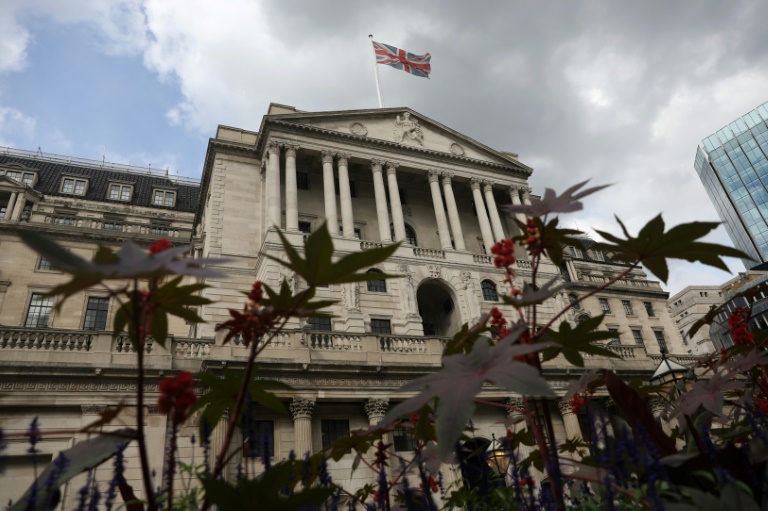
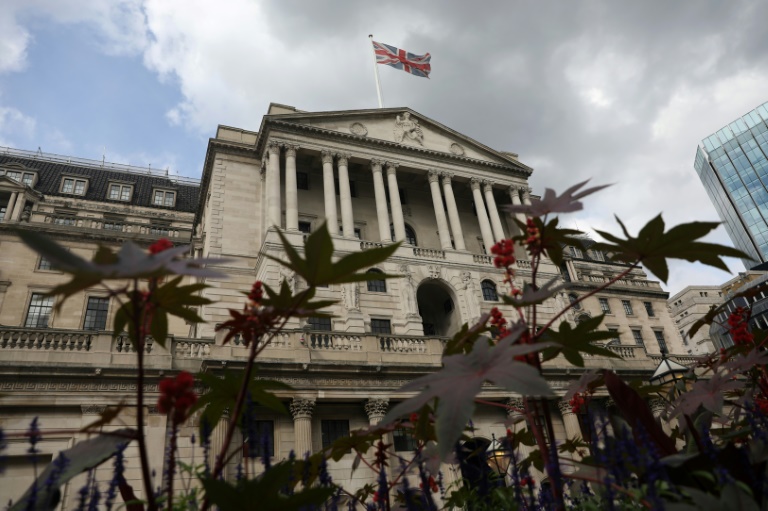
The small recovery came after the Bank of England said it would “not hesitate to change interest rates by as much as needed”.

With the pound showing record weakness against the dollar this week, analysts are forecasting a big rate increase when the BoE holds its next regular policy meeting on November 3.

Oil prices jumped more than two percent, helped by a weaker dollar.

“Oil remains a sellers’ market with worries about a global recession and high interest rates intensifying,” Fawad Razaqzada, analyst at City Index and FOREX.com said.

“In addition, with currencies of major oil importing nations tumbling, anything traded in US dollars will cost more… such as oil.”

– Key figures at around 1745 GMT –

London – FTSE 100: DOWN 0.5 percent at 6,984.59 (close)

Frankfurt – DAX: DOWN 0.7 percent at 12,139.68 (close) 

Paris – CAC 40: DOWN 0.3 percent at 5,753.82 (close)  

EURO STOXX 50: DOWN 0.4 percent at 3,328.65 

New York – Dow: DOWN 0.04 percent at 29,252.34

Tokyo – Nikkei 225: UP 0.5 percent at 26,571.87 (close)

Hong Kong – Hang Seng Index: FLAT at 17,860.31 (close)

Shanghai – Composite: UP 1.4 percent at 3,093.86 (close)

Pound/dollar: UP at $1.0776 from $1.0689 on Monday

Euro/dollar: UP at $0.9625 from $0.9611

Euro/pound: DOWN  at 89.37 pence from 89.87 pence 

Dollar/yen: DOWN at 144.62 yen from 144.72 yen

Brent North Sea crude: UP 2.8 percent at $86.38 per barrel

West Texas Intermediate: UP 2.5 percent at $78.66 per barrel

Stocks slide amid Ukraine, gas worries, as pound rebounds

European equities fell Tuesday as concerns over European gas supplies and the Ukraine conflict again came to the fore, while the dollar weakened slightly against major rivals, helping the pound to rebound from a record low.

Paris, Frankfurt and London all closed in the red, failing to hang on to earlier gains. Wall Street followed suit in mid-morning trades after an early rally.

“There’s little doubt instability is here to stay, and nerves are frayed as central bankers pull out all the stops to battle with inflation,” Danni Hewson, analyst at AJ Bell said.

“And there’s plenty of tension too over Russian moves to try to annex parts of Ukraine as well as worries about gas supplies after it emerged the pipeline that carries gas from Russia to Europe has suffered some kind of damage.”

European natural gas prices surged nearly 10 percent at one point, to 190.50 euros, following news that the two Nord Stream gas pipelines linking Russia and Europe have been hit by unexplained leaks.

Explosions were recorded before the mysterious leaks, seismologists said Tuesday, raising suspicions of sabotage amid tensions over Moscow’s war in Ukraine.

The pipelines have been at the centre of geopolitical tensions in recent months as Russia cut gas supplies to Europe in suspected retaliation against Western sanctions following its invasion of Ukraine.

“This damage is the clearest signal so far that Europe will have to survive the winter without significant Russian gas flows,” analysts at Charles Schwab said in a note to clients.

– Tackling red-hot inflation – 

In the latest warning of a looming economic downturn, World Trade Organization chief Ngozi Okonjo-Iweala said Tuesday that the world was heading towards a global recession as multiple crises collide.

Recession prospects have risen in recent weeks as central banks keep hiking interest rates to try and cool decades-high inflation, boosting in particular the dollar.

The Federal Reserve has carried out three successive bumper US hikes and is warning of more to come.

That has seen investors pile into the dollar, sending it to record or multi-decade peaks, in turn rattling governments from Tokyo to Beijing and London.

On Monday, the pound hit an all-time low at $1.0350, with traders spooked by a UK tax giveaway they warned could further fuel inflation and significantly ramp up British state borrowing.

In late afternoon deals on Tuesday, the pound rose 0.6 percent to $1.0755, having earlier rebounded by more than one percent.

The small recovery came after the Bank of England said it would “not hesitate to change interest rates by as much as needed”.

With the pound showing record weakness against the dollar this week, analysts are forecasting a big rate increase when the BoE holds its next regular policy meeting on November 3.

Oil prices jumped more than two percent, helped by a weaker dollar.

“Oil remains a sellers’ market with worries about a global recession and high interest rates intensifying,” Fawad Razaqzada, analyst at City Index and FOREX.com said.

“In addition, with currencies of major oil importing nations tumbling, anything traded in US dollars will cost more… such as oil.”

– Key figures at around 1745 GMT –

London – FTSE 100: DOWN 0.5 percent at 6,984.59 (close)

Frankfurt – DAX: DOWN 0.7 percent at 12,139.68 (close) 

Paris – CAC 40: DOWN 0.3 percent at 5,753.82 (close)  

EURO STOXX 50: DOWN 0.4 percent at 3,328.65 

New York – Dow: DOWN 0.04 percent at 29,252.34

Tokyo – Nikkei 225: UP 0.5 percent at 26,571.87 (close)

Hong Kong – Hang Seng Index: FLAT at 17,860.31 (close)

Shanghai – Composite: UP 1.4 percent at 3,093.86 (close)

Pound/dollar: UP at $1.0776 from $1.0689 on Monday

Euro/dollar: UP at $0.9625 from $0.9611

Euro/pound: DOWN  at 89.37 pence from 89.87 pence 

Dollar/yen: DOWN at 144.62 yen from 144.72 yen

Brent North Sea crude: UP 2.8 percent at $86.38 per barrel

West Texas Intermediate: UP 2.5 percent at $78.66 per barrel
Blasts recorded before Russia-Europe pipeline leaks

Explosions were recorded before mysterious leaks in two Baltic Sea gas pipelines linking Russia and Europe, seismologists said Tuesday, raising suspicions of sabotage amid tensions over Moscow’s war in Ukraine.

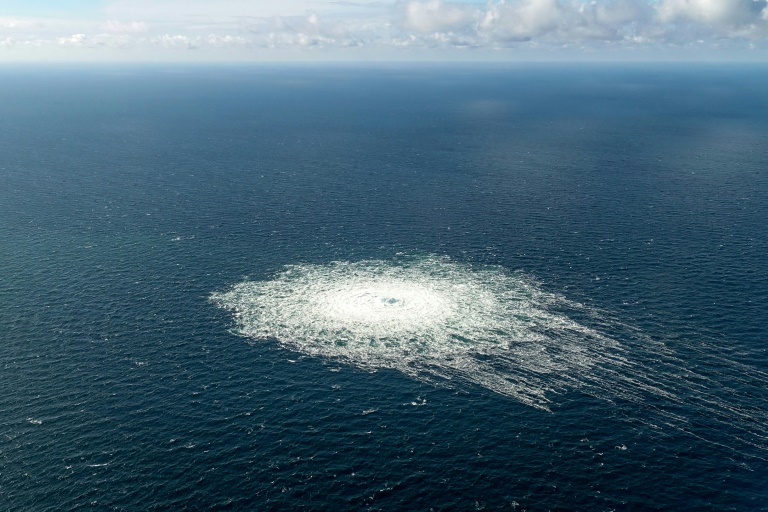
Photos taken by the Danish military showed large masses of bubbles on the surface of the water emanating from the three leaks in Sweden and Denmark’s economic zones north of Poland, from 200 to 1,000 metres (656 feet to 0.62 miles) in diameter.

Polish Prime Minister Mateusz Morawiecki said that while the details of what happened were not yet known, “we see clearly that it’s an act of sabotage, one that probably marks the next step of escalation of the situation in Ukraine”.

Danish Prime Minister Mette Frederiksen meanwhile said it was “hard to imagine that it’s accidental”.

The Swedish National Seismic Network recorded two “massive releases of energy” shortly before the gas leaks near their locations off the coast of the Danish island of Bornholm, Uppsala University seismologist Peter Schmidt told AFP.

“With energy releases this big there isn’t much else than a blast that could cause it,” he added. “You can see that they are quite sudden. It is a very sudden energy release. It’s not a slow collapse of something.”

Russia said earlier that it was “extremely concerned” about the leaks. Asked by reporters whether it could be an act of sabotage, Kremlin spokesman Dmitry Peskov said that at the moment “it is impossible to exclude any options”.

Ukraine, however, pointed the finger directly at Moscow, saying it was “nothing more than a terrorist attack planned by Russia and an act of aggression towards the EU”.

A White House official said the United States would not speculate on the cause but was ready to support European efforts to investigate the leaks.

The Nord Stream 1 and 2 pipelines have been at the centre of geopolitical tensions in recent months as Russia cut gas supplies to Europe in suspected retaliation against Western sanctions following its invasion of Ukraine.

While the pipelines — operated by a consortium majority-owned by Russian gas giant Gazprom — are not currently in operation, they both still contain gas.

One of the leaks on Nord Stream 1 occurred in the Danish economic zone and the other in the Swedish economic zone, while the Nord Stream 2 leak was in the Danish economic zone.

A leak was first reported on Nord Stream 2 on Monday.

Danish climate and energy minister Dan Jorgensen confirmed the two Nord Stream 1 leaks in a statement to AFP on Tuesday.

“It is too early to say anything about the causes of the incidents,” the Danish Ministry of Climate, Energy and Utilities said in a statement.

Two Danish military vessels have been dispatched to the area, while Sweden’s government called an emergency meeting to be held on Tuesday evening.

Navigational warnings have been issued for a distance of five nautical miles and a flight height of 1,000 metres (3,280 feet).

– ‘Extremely rare’ –

“Gas pipeline leaks are extremely rare and we therefore see a reason to increase the level of preparedness following the incidents we have witnessed over the past 24 hours,” Danish Energy Agency director Kristoffer Bottzauw said in a statement.

The European Commission said it was too early to speculate on the causes of the leaks.

“We believe we do not have the elements in order to determine what is the reason for the leak. And obviously any act of sabotage on any infrastructure is something that we would condemn,” commission spokesman Eric Mamer told reporters.

A Nord Stream spokesperson told AFP they had not been able to assess the damage but conceded that “an incident where three pipes experience difficulties at the same time on the same day is not common.”

– ‘Targeted attack’ –

Built in parallel to the Nord Stream 1 pipeline, Nord Stream 2 was intended to double the capacity for Russian gas imports to Germany.

But Berlin blocked newly-completed Nord Stream 2 in the days before the war.

Germany, which has been highly dependent on imports of fossil fuels from Russia to meet its energy needs, has since come under acute stress as Moscow’s supplies dwindle.

Russian energy giant Gazprom progressively reduced the volumes of gas being delivered via Nord Stream 1 until it shut the pipeline completely at the end of August, blaming Western sanctions for the delay of necessary repairs to the pipeline. 

Germany has rebuffed Gazprom’s technical explanation for the cut, instead accusing Moscow of wielding energy as a weapon amid tensions over the war in Ukraine.

Meanwhile, German daily Tagesspiegel reported that the leaks might be the result of “targeted attacks”. 

“We cannot imagine a scenario that is not a targeted attack,” a source close to the government and relevant authorities was quoted as saying in the newspaper.

Blasts recorded before Russia-Europe pipeline leaks

Explosions were recorded before mysterious leaks in two Baltic Sea gas pipelines linking Russia and Europe, seismologists said Tuesday, raising suspicions of sabotage amid tensions over Moscow’s war in Ukraine.

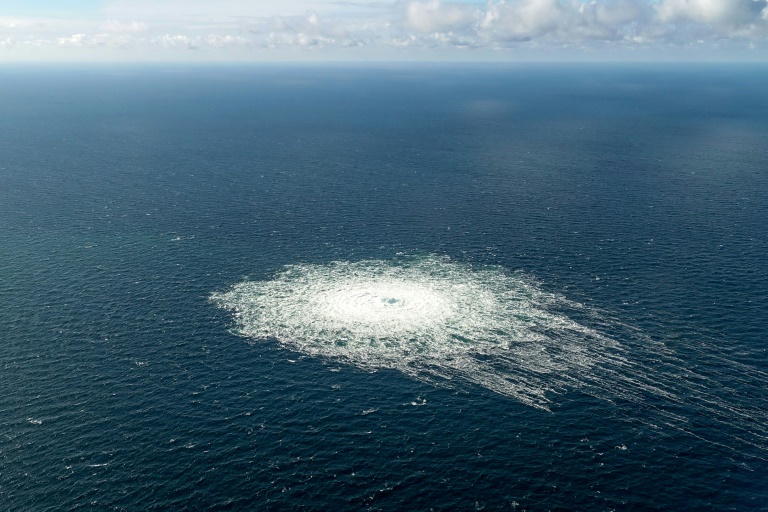
Photos taken by the Danish military showed large masses of bubbles on the surface of the water emanating from the three leaks in Sweden and Denmark’s economic zones north of Poland, from 200 to 1,000 metres (656 feet to 0.62 miles) in diameter.

Polish Prime Minister Mateusz Morawiecki said that while the details of what happened were not yet known, “we see clearly that it’s an act of sabotage, one that probably marks the next step of escalation of the situation in Ukraine”.

Danish Prime Minister Mette Frederiksen meanwhile said it was “hard to imagine that it’s accidental”.

The Swedish National Seismic Network recorded two “massive releases of energy” shortly before the gas leaks near their locations off the coast of the Danish island of Bornholm, Uppsala University seismologist Peter Schmidt told AFP.

“With energy releases this big there isn’t much else than a blast that could cause it,” he added. “You can see that they are quite sudden. It is a very sudden energy release. It’s not a slow collapse of something.”

Russia said earlier that it was “extremely concerned” about the leaks. Asked by reporters whether it could be an act of sabotage, Kremlin spokesman Dmitry Peskov said that at the moment “it is impossible to exclude any options”.

Ukraine, however, pointed the finger directly at Moscow, saying it was “nothing more than a terrorist attack planned by Russia and an act of aggression towards the EU”.

A White House official said the United States would not speculate on the cause but was ready to support European efforts to investigate the leaks.

The Nord Stream 1 and 2 pipelines have been at the centre of geopolitical tensions in recent months as Russia cut gas supplies to Europe in suspected retaliation against Western sanctions following its invasion of Ukraine.

While the pipelines — operated by a consortium majority-owned by Russian gas giant Gazprom — are not currently in operation, they both still contain gas.

One of the leaks on Nord Stream 1 occurred in the Danish economic zone and the other in the Swedish economic zone, while the Nord Stream 2 leak was in the Danish economic zone.

A leak was first reported on Nord Stream 2 on Monday.

Danish climate and energy minister Dan Jorgensen confirmed the two Nord Stream 1 leaks in a statement to AFP on Tuesday.

“It is too early to say anything about the causes of the incidents,” the Danish Ministry of Climate, Energy and Utilities said in a statement.

Two Danish military vessels have been dispatched to the area, while Sweden’s government called an emergency meeting to be held on Tuesday evening.

Navigational warnings have been issued for a distance of five nautical miles and a flight height of 1,000 metres (3,280 feet).

– ‘Extremely rare’ –

“Gas pipeline leaks are extremely rare and we therefore see a reason to increase the level of preparedness following the incidents we have witnessed over the past 24 hours,” Danish Energy Agency director Kristoffer Bottzauw said in a statement.

The European Commission said it was too early to speculate on the causes of the leaks.

“We believe we do not have the elements in order to determine what is the reason for the leak. And obviously any act of sabotage on any infrastructure is something that we would condemn,” commission spokesman Eric Mamer told reporters.

A Nord Stream spokesperson told AFP they had not been able to assess the damage but conceded that “an incident where three pipes experience difficulties at the same time on the same day is not common.”

– ‘Targeted attack’ –

Built in parallel to the Nord Stream 1 pipeline, Nord Stream 2 was intended to double the capacity for Russian gas imports to Germany.

But Berlin blocked newly-completed Nord Stream 2 in the days before the war.

Germany, which has been highly dependent on imports of fossil fuels from Russia to meet its energy needs, has since come under acute stress as Moscow’s supplies dwindle.

Russian energy giant Gazprom progressively reduced the volumes of gas being delivered via Nord Stream 1 until it shut the pipeline completely at the end of August, blaming Western sanctions for the delay of necessary repairs to the pipeline. 

Germany has rebuffed Gazprom’s technical explanation for the cut, instead accusing Moscow of wielding energy as a weapon amid tensions over the war in Ukraine.

Meanwhile, German daily Tagesspiegel reported that the leaks might be the result of “targeted attacks”. 

“We cannot imagine a scenario that is not a targeted attack,” a source close to the government and relevant authorities was quoted as saying in the newspaper.

Spain court orders Shakira to stand trial for tax fraud

A Spanish court has ordered Colombian music superstar Shakira to stand trial on charges of tax fraud to the tune of 14 million euros, with prosecutors seeking an eight-year sentence, filings showed Tuesday.

Prosecutors in Barcelona said in July they would seek to have the singer jailed for more than eight years alongside a fine of nearly 24 million euros ($24 million), after she rejected a plea deal over accusations of tax evasion.

They accuse the 45-year-old “Hips don’t Lie” songstress of defrauding the Spanish tax office of 14.5 million euros ($14.7 million) on income earned between 2012 and 2014.

Prosecutors say Shakira moved to Spain in 2011 when her relationship with FC Barcelona defender Gerard Pique became public, but maintained official tax residency in the Bahamas until 2015. 

The couple, who have two children, announced their separation in June.

On September 19, a Barcelona court ordered the singer to stand trial for six alleged tax crimes, according to a ruling made public on Tuesday.

In a statement, Shakira’s lawyers said “the order to proceed with the oral hearing” was expected and that her legal team would “do its job by presenting its arguments at the appropriate time”.

Shakira has repeatedly denied any wrongdoing and claims she owes nothing to the Spanish tax office.

“I’m confident that I have enough proof to support my case and that justice will prevail in my favour,” she said in an interview published in Elle magazine last week.

“While Gerard and I were dating, I was on a world tour. I spent more than 240 days outside Spain, so there was no way I qualified as a resident,” she added.

“The Spanish tax authorities saw that I was dating a Spanish citizen and started to salivate. It’s clear they wanted to go after that money no matter what.”

– ‘No outstanding debts’ –

The case centres on where Shakira lived during 2012-14.

Shakira’s lawyers have said that until 2014 she earned most of her money from international tours, moved to Spain full time only in 2015 and has met all her tax obligations.

The singer says she has paid 17.2 million euros to Spanish tax authorities and has no outstanding debts.

She says Spanish prosecutors are trying to claim money she earned during her international tour and from her participation as a judge on “The Voice”. 

She joined the judges’ panel on the reality TV singing talent show in the United States at a time when she was not yet resident in Spain, she has said. 

A Barcelona court in May dismissed an appeal from the singer, who has sold over 60 million albums, to drop the charges.

Two months later, she dismissed a plea deal, saying she wanted her day in court to prove her innocence. 

– ‘Darkest hours’ –

Shakira told Elle that the combination of her looming tax fraud trial, separation from Pique and custody battle for their children, as well as her father’s illness meant this was “probably one of the most difficult, darkest hours of my life”.

The Latina superstar was named in one of the largest-ever leaks of financial documents in October 2021, known as the “Pandora Papers”, as a public figure linked to offshore assets.

With her mix of Latin and Arabic rhythms and rock influence, three-time Grammy winner Shakira has scored major global hits with songs such as “Whenever, Wherever” and “Waka Waka”, the official song of the 2010 World Cup.

In an interview with AFP in 2019, Shakira spoke about temporarily losing her voice two years earlier, saying the experience had affected her “deeply”. 

She later recovered her voice naturally, without needing to undergo surgery as recommended by doctors, and subsequently was able to complete a planned world tour.

Spain has in recent years cracked down on football stars like Lionel Messi and Cristiano Ronaldo for not paying their full due in taxes. 

Both players were found guilty of evasion and received prison sentences that were waived for first-time offenders.

Close Bitnami banner
Bitnami