AFP

Kremlin proxies claiming victory in 'sham' annexation votes

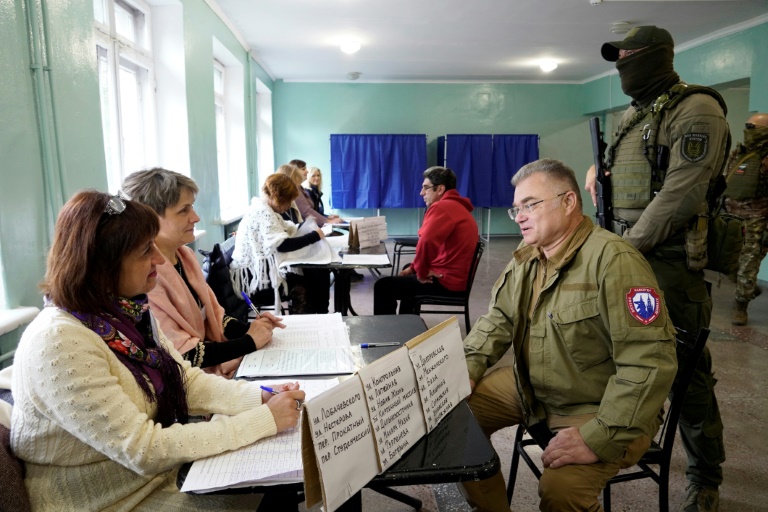
Kremlin-installed authorities were already claiming victory Tuesday in annexation votes in Ukrainian regions under Russian control, as Moscow warned it could use nuclear weapons to defend the territories.

Ukraine and its allies have denounced the so-called referendums as a sham and said the West would never recognise the results of the ballots that have dramatically ratcheted up the stakes of Russia’s seven-month invasion.

“It’s already clear that the vast majority of people supported the issue of secession from Ukraine and joining Russia,” Vladimir Saldo, the Moscow-appointed head of the Russian-held Kherson region, said on social media.

Election officials in Moscow said voters casting their ballots in Russia had overwhelmingly backed annexation, while authorities in Kherson and another Russian-occupied region, Zaporizhzhia, showed an initial 87 and 92 percent backing for the move.

“Saving people in the territories where this referendum is taking place… is the focus of the attention of our entire society and of the entire country,” Russian President Vladimir Putin said earlier during a televised meeting with officials.

His spokesman Dmitry Peskov meanwhile said the votes would have “radical” legal implications and that the so-called referendums “will also have consequences for security”, referring to Moscow’s threats to use nuclear weapons to defend its territory.

Ukrainian Foreign Minister Dmytro Kuleba however doubled down on Kyiv’s promise to push out Russian forces from its country, saying the votes “would not have any influence” on the battlefield.

Russian forces in Ukraine this month have suffered serious setbacks, both in the east and south of the country, which observers say pushed Putin to rush ahead with the vote to cement Moscow’s authority there.

– Nuclear ‘right’ –

Putin said Russia would use any and all available means to defend its territory, implying that after the four regions were annexed Moscow could deploy strategic nuclear weapons to repulse Ukrainian attempts to take back the territory.

“I want to remind you — the deaf who hear only themselves: Russia has the right to use nuclear weapons if necessary,” former leader Dmitry Medvedev warned Tuesday on social media.

The four Russian-occupied regions of Ukraine — Donetsk and Lugansk in the east and Kherson and Zaporizhzhia in the south — announced that they would hold the elections just days before voting began last Friday. 

Together, they form a crucial land connection for the Kremlin between Russia and the Crimean peninsula, which Moscow annexed in 2014 and is otherwise only connected to the mainland by bridge.

The EU spokesman Peter Stano announced the bloc would slap sanctions on organisers of the “illegal” vote, following a similar move by Britain earlier in the week.

“The sham referenda held by Russia have no legitimacy and are a blatant violation of international law. These lands are Ukraine,” NATO chief Jens Stoltenberg said on Twitter.

French Foreign Minister Catherine Colonna meanwhile was in Kyiv for a surprise visit to meet with President Volodymyr Zelensky and underscore her country’s support for Ukraine’s “sovereignty and territorial integrity”.

Even Moscow’s closest ally since the start of the invasion, Beijing, said after the votes were announced last week that Russia should respect territorial integrity in the war.

– Counter-offensive –

The so-called referendums follow a pattern that Moscow utilised in Crimea after nationwide street demonstrations saw Ukraine’s Kremlin-friendly president ousted.

Like then, the outcome of the ballot is being viewed by observers as a foregone conclusion. Election officials brought ballot boxes door-to-door in many cases accompanied by armed Russian forces.

Lawmakers are expected to vote hastily to annex the territories after the results are announced and Russian news agencies have said Putin could sign legislation formalising the land grab this week.

Ukrainian forces meanwhile have pursued their counter-offensive in the east.

The governor of the eastern Kharkiv region announced Tuesday its forces had recaptured Kupiansk-Vuzlovyi, “one of the largest logistical and railway junctions” in the region and not privy to this week’s vote. 

Polling stations were open in Crimea for people who fled fighting after the Russian invasion in February.

“With my voice I want to try to make a small contribution to stopping the war,” 63-year-old Galina Korsakova from Donetsk told AFP. “I really want to go home.”

Along with threats to use nuclear weapons, Putin announced a mobilisation of hundreds of thousands of Russian men to bolster Moscow’s army in Ukraine, sparking demonstrations and an exodus of men abroad.

The United Nations voiced alarm on Tuesday at credible reports of nearly 2,400 arrests in less than a week during nationwide protests in dozens of cities against the draft order.

Ex-Soviet Georgia, which was invaded by Russia in 2008, said the numbers of Russians crossing its borders had increased to around 10,000 people daily since Putin’s announcement.

Kazakhstan, the Central Asian country on Russia’s southern border, meanwhile said nearly 100,000 people had entered the country since September 21 and its leader Kassym-Jomart Tokayev said authorities would “ensure their safety”.

The Russian defence ministry said it would not seek the extradition of those who fled to Georgia and Kazakhstan to evade the draft.


US consumer confidence jumps again in September: survey

Boosted by rising wages and falling gas prices, US consumers were much more upbeat about the state of the American economy now and in the months ahead, according to a closely-watched survey released Tuesday.

The consumer confidence index jumped nearly five points to 108.0 the second straight monthly gain, according to The Conference Board. The result was the highest level since April and far better than the modest improvement economists had expected.

The US Federal Reserve has been raising borrowing costs aggressively this year, and last week announced its third consecutive, 0.75 percentage point increase in the benchmark interest rate as it tries to cool the world’s largest economy to bring down the fastest inflation in 40 years.

So far progress has been slow, as resilient consumers, flush with savings have continued to spend, supporting economic activity. But the survey showed expectations about inflation fell for third straight month, which is good news for the central bank.

“Concerns about inflation dissipated further in September — prompted largely by declining prices at the gas pump — and are now at their lowest level since the start of the year,” said Lynn Franco, senior director of economic indicators at The Conference Board.

Buoyed by a strong job market, respondents felt better about their present situation as well as expectations for the coming six months, the survey showed, but Franco cautioned that “recession risks nonetheless persist.”

Intentions to make big-ticket purchases were mixed, with plans to buy cars and appliances increasing, but more reluctance to invest in a home, which Franco said reflected rising mortgage rates and the cooling housing market.

“Looking ahead, the improvement in confidence may bode well for consumer spending in the final months of 2022, but inflation and interest-rate hikes remain strong headwinds to growth in the short term,” Franco said in a statement.

Ian Shepherdson of Pantheon Macroeconomics cautioned that the good feelings “might not last as people absorb the hit from the recent drop in stock prices and the Fed’s latest rate hikes, with the promise of more to come.”

“For now, though, people’s views of both the current and future economy have perked up, and the headline index is now just a few points shy of the pre-Ukraine invasion peak,” he said.

US consumer confidence jumps again in September: survey

Boosted by rising wages and falling gas prices, US consumers were much more upbeat about the state of the American economy now and in the months ahead, according to a closely-watched survey released Tuesday.

The consumer confidence index jumped nearly five points to 108.0 the second straight monthly gain, according to The Conference Board. The result was the highest level since April and far better than the modest improvement economists had expected.

The US Federal Reserve has been raising borrowing costs aggressively this year, and last week announced its third consecutive, 0.75 percentage point increase in the benchmark interest rate as it tries to cool the world’s largest economy to bring down the fastest inflation in 40 years.

So far progress has been slow, as resilient consumers, flush with savings have continued to spend, supporting economic activity. But the survey showed expectations about inflation fell for third straight month, which is good news for the central bank.

“Concerns about inflation dissipated further in September — prompted largely by declining prices at the gas pump — and are now at their lowest level since the start of the year,” said Lynn Franco, senior director of economic indicators at The Conference Board.

Buoyed by a strong job market, respondents felt better about their present situation as well as expectations for the coming six months, the survey showed, but Franco cautioned that “recession risks nonetheless persist.”

Intentions to make big-ticket purchases were mixed, with plans to buy cars and appliances increasing, but more reluctance to invest in a home, which Franco said reflected rising mortgage rates and the cooling housing market.

“Looking ahead, the improvement in confidence may bode well for consumer spending in the final months of 2022, but inflation and interest-rate hikes remain strong headwinds to growth in the short term,” Franco said in a statement.

Ian Shepherdson of Pantheon Macroeconomics cautioned that the good feelings “might not last as people absorb the hit from the recent drop in stock prices and the Fed’s latest rate hikes, with the promise of more to come.”

“For now, though, people’s views of both the current and future economy have perked up, and the headline index is now just a few points shy of the pre-Ukraine invasion peak,” he said.

Blasts recorded before Russia-Europe pipeline leaks

Explosions were recorded before mysterious leaks in two Baltic Sea gas pipelines linking Russia and Europe, seismologists said Tuesday, raising suspicions of sabotage amid tensions over Moscow’s war in Ukraine.

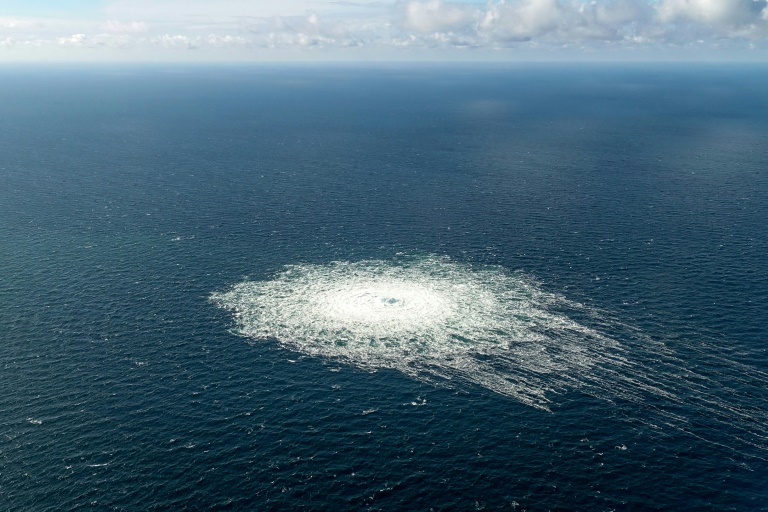
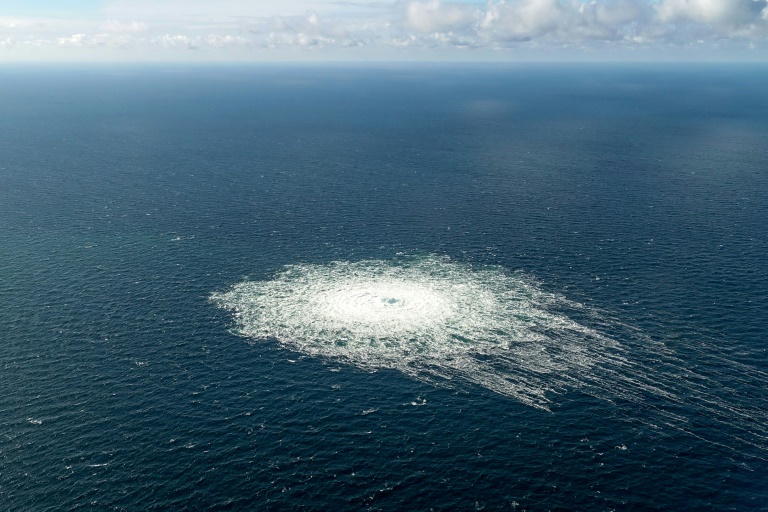
Photos taken by the Danish military showed large masses of bubbles on the surface of the water emanating from the three leaks located in Sweden’s and Denmark’s economic zones, spreading from 200 to 1,000 metres (656 feet to 0.62 miles) in diameter.

“It’s hard to imagine that it’s accidental,” said Danish Prime Minister Mette Frederiksen, noting that it was “unusual” for the leaks to happen at such a distance from each other.

The Swedish National Seismic Network recorded two “massive releases of energy” shortly prior to the gas leaks and near their locations off the coast of the Danish island of Bornholm, Peter Schmidt, an Uppsala University seismologist told AFP.

“With energy releases this big there isn’t much else than a blast that could cause it,” he added. “You can see that they are quite sudden. It is a very sudden energy release. It’s not a slow collapse of something.”

Russia said earlier that it was “extremely concerned” about the leaks. Asked by reporters whether it could be an act of sabotage, Kremlin spokesman Dmitry Peskov said that at the moment “it is impossible to exclude any options”.

Ukraine, however, pointed the finger directly at Moscow, saying the incident was “nothing more than a terrorist attack planned by Russia and an act of aggression towards the EU”.

A White House officials said the United States would not speculate on the cause but was ready to support European efforts to investigate the leaks.

The Nord Stream 1 and 2 pipelines have been at the centre of geopolitical tensions in recent months as Russia cut gas supplies to Europe in suspected retaliation against Western sanctions following its invasion of Ukraine.

While the pipelines, which are operated by a consortium majority-owned by Russian gas giant Gazprom, are not currently in operation, they both still contain gas.

One of the leaks on Nord Stream 1 occurred in the Danish economic zone and the other in the Swedish economic zone, while the Nord Stream 2 leak was in the Danish economic zone.

A leak was first reported on Nord Stream 2 on Monday.

Danish climate and energy minister Dan Jorgensen confirmed the two Nord Stream 1 leaks in a statement to AFP on Tuesday.

“It is too early to say anything about the causes of the incidents,” the Danish Ministry of Climate, Energy and Utilities said in a statement.

Two Danish military vessels have been dispatched to the area, while Sweden called an emergency cabinet meeting to be held on Tuesday evening.

Navigational warnings have been issued for a distance of five nautical miles and a flight height of 1,000 metres (3,280 feet).

– ‘Extremely rare’ –

“Gas pipeline leaks are extremely rare and we therefore see a reason to increase the level of preparedness following the incidents we have witnessed over the past 24 hours,” Danish Energy Agency director Kristoffer Bottzauw said in a statement.

The European Commission said it was too early to speculate on the causes of the leaks.

“We believe we do not have the elements in order to determine what is the reason for the leak. And obviously any act of sabotage on any infrastructure is something that we would condemn,” commission spokesman Eric Mamer told reporters.

A Nord Stream spokesperson told AFP that they had not been able to assess the damage but conceded that “an incident where three pipes experience difficulties at the same time on the same day is not common.”

The Danish energy agency told the Ritzau news agency that only the area where the gas plume is located will be affected by the leak, but methane escaping into the atmosphere has a “climate-damaging effect”.

– ‘Targeted attack’ –

Built in parallel to the Nord Stream 1 pipeline, Nord Stream 2 was intended to double the capacity for Russian gas imports to Germany.

But Berlin blocked newly-completed Nord Stream 2 in the days before the war.

Germany, which has been highly dependent on imports of fossil fuels from Russia to meet its energy needs, has since come under acute stress as Moscow has dwindled supplies.

Russian energy giant Gazprom progressively reduced the volumes of gas being delivered via Nord Stream 1 until it shut the pipeline completely at the end of August, blaming Western sanctions for the delay of necessary repairs to the pipeline. 

Germany has rebuffed Gazprom’s technical explanation for the cut, instead accusing Moscow of wielding energy as a weapon amid tensions over the war in Ukraine.

Meanwhile, German daily Tagesspiegel reported that the leaks might be the result of “targeted attacks”. 

“We cannot imagine a scenario that is not a targeted attack,” a source close to the government and relevant authorities, was quoted as saying in the newspaper.

Blasts recorded before Russia-Europe pipeline leaks

Explosions were recorded before mysterious leaks in two Baltic Sea gas pipelines linking Russia and Europe, seismologists said Tuesday, raising suspicions of sabotage amid tensions over Moscow’s war in Ukraine.

Photos taken by the Danish military showed large masses of bubbles on the surface of the water emanating from the three leaks located in Sweden’s and Denmark’s economic zones, spreading from 200 to 1,000 metres (656 feet to 0.62 miles) in diameter.

“It’s hard to imagine that it’s accidental,” said Danish Prime Minister Mette Frederiksen, noting that it was “unusual” for the leaks to happen at such a distance from each other.

The Swedish National Seismic Network recorded two “massive releases of energy” shortly prior to the gas leaks and near their locations off the coast of the Danish island of Bornholm, Peter Schmidt, an Uppsala University seismologist told AFP.

“With energy releases this big there isn’t much else than a blast that could cause it,” he added. “You can see that they are quite sudden. It is a very sudden energy release. It’s not a slow collapse of something.”

Russia said earlier that it was “extremely concerned” about the leaks. Asked by reporters whether it could be an act of sabotage, Kremlin spokesman Dmitry Peskov said that at the moment “it is impossible to exclude any options”.

Ukraine, however, pointed the finger directly at Moscow, saying the incident was “nothing more than a terrorist attack planned by Russia and an act of aggression towards the EU”.

A White House officials said the United States would not speculate on the cause but was ready to support European efforts to investigate the leaks.

The Nord Stream 1 and 2 pipelines have been at the centre of geopolitical tensions in recent months as Russia cut gas supplies to Europe in suspected retaliation against Western sanctions following its invasion of Ukraine.

While the pipelines, which are operated by a consortium majority-owned by Russian gas giant Gazprom, are not currently in operation, they both still contain gas.

One of the leaks on Nord Stream 1 occurred in the Danish economic zone and the other in the Swedish economic zone, while the Nord Stream 2 leak was in the Danish economic zone.

A leak was first reported on Nord Stream 2 on Monday.

Danish climate and energy minister Dan Jorgensen confirmed the two Nord Stream 1 leaks in a statement to AFP on Tuesday.

“It is too early to say anything about the causes of the incidents,” the Danish Ministry of Climate, Energy and Utilities said in a statement.

Two Danish military vessels have been dispatched to the area, while Sweden called an emergency cabinet meeting to be held on Tuesday evening.

Navigational warnings have been issued for a distance of five nautical miles and a flight height of 1,000 metres (3,280 feet).

– ‘Extremely rare’ –

“Gas pipeline leaks are extremely rare and we therefore see a reason to increase the level of preparedness following the incidents we have witnessed over the past 24 hours,” Danish Energy Agency director Kristoffer Bottzauw said in a statement.

The European Commission said it was too early to speculate on the causes of the leaks.

“We believe we do not have the elements in order to determine what is the reason for the leak. And obviously any act of sabotage on any infrastructure is something that we would condemn,” commission spokesman Eric Mamer told reporters.

A Nord Stream spokesperson told AFP that they had not been able to assess the damage but conceded that “an incident where three pipes experience difficulties at the same time on the same day is not common.”

The Danish energy agency told the Ritzau news agency that only the area where the gas plume is located will be affected by the leak, but methane escaping into the atmosphere has a “climate-damaging effect”.

– ‘Targeted attack’ –

Built in parallel to the Nord Stream 1 pipeline, Nord Stream 2 was intended to double the capacity for Russian gas imports to Germany.

But Berlin blocked newly-completed Nord Stream 2 in the days before the war.

Germany, which has been highly dependent on imports of fossil fuels from Russia to meet its energy needs, has since come under acute stress as Moscow has dwindled supplies.

Russian energy giant Gazprom progressively reduced the volumes of gas being delivered via Nord Stream 1 until it shut the pipeline completely at the end of August, blaming Western sanctions for the delay of necessary repairs to the pipeline. 

Germany has rebuffed Gazprom’s technical explanation for the cut, instead accusing Moscow of wielding energy as a weapon amid tensions over the war in Ukraine.

Meanwhile, German daily Tagesspiegel reported that the leaks might be the result of “targeted attacks”. 

“We cannot imagine a scenario that is not a targeted attack,” a source close to the government and relevant authorities, was quoted as saying in the newspaper.

Italy's far-right Meloni begins tricky government talks

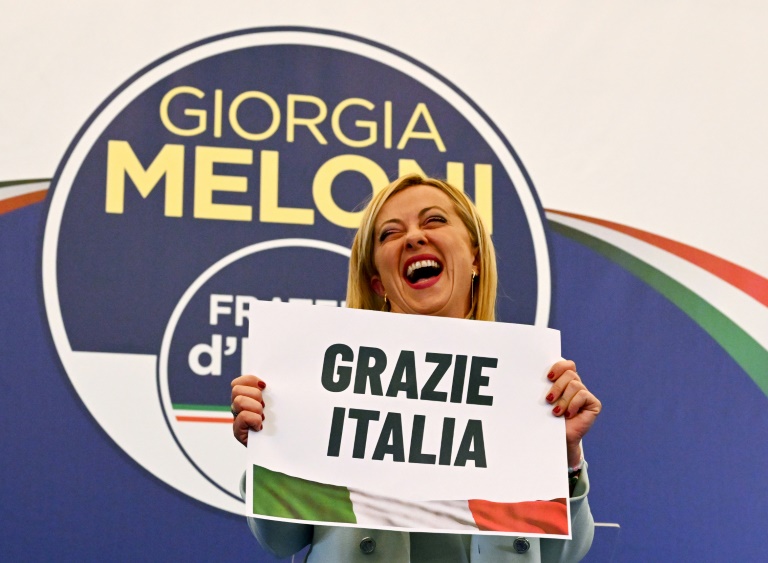
Italian far-right leader Giorgia Meloni and her allies began Tuesday what is likely to be a weeks-long process of forming a new government, with crises looming on several fronts.

Meloni’s post-fascist Brothers of Italy party, which triumphed in Sunday’s elections, has no experience of power but must assemble a cross-party team to tackle sky-high inflation and energy prices, and relations with a wary Europe.

The 45-year-old is hoping to be the first woman to lead Italy as prime minister, but needs her allies, Matteo Salvini’s far-right League party and former Silvio Berlusconi’s Forza Italia, for a majority in parliament.

The division of the top jobs — notably economy, foreign affairs, the defence and interior ministries — will always be political but now, more than ever, “will have to reflect areas of expertise”, the Stampa daily noted.

In the past, it has taken anything between four and 12 weeks for a new administration to take office.

But the first deadline for action is coming up fast, with debt-laden Italy due to submit its draft plan for next year’s budget to Brussels by October 15.

President Sergio Mattarella will begin consultations on who should lead the new government only once the Senate and Chamber presidents have been elected by parliament, which meets on October 13.

With families and businesses struggling with huge bills aggravated by the Ukraine war, sorting out the budget will be “like scaling Everest without oxygen tanks for the new cabinet”, the Corriere della Sera daily said.

Meloni sought to reassure investors during the election campaign that, despite her radical past, she will be a safe pair of hands.

But the Italian ten-year bond rate increased to its highest level since October 2013 on Tuesday morning.

And the gap between German and Italian interest rates, the closely watched spread, rose above 250 points for the first time since the depths of the coronavirus pandemic in spring 2020.

– Non-controversial, credible –

The European Commission approved Tuesday the second instalment of post-pandemic recovery funds to Italy, worth 21 billion euros.

But Meloni has said she wants to renegotiate the deal with Brussels, potentially putting the rest of the fund — worth a total of almost 200 billion euros — at risk.

EU economy commissioner Paolo Gentiloni said he urged “the next Italian government to ensure that this opportunity is seized”, saying it was key to putting Italy on a path to “strong and durable growth”.

Agnese Ortolani, senior Europe analyst at the Economist Intelligence Unit, said she expected Meloni “to continue to reassure the markets by picking a non-controversial figure for the role of finance minister”.

“She will also want to avoid reputational damage by nominating someone who is not perceived as credible by the markets,” she said in a note.

Meloni’s allies have been pitching for heavy-weight positions, Salvini wanting his old job as interior minister back, and Berlusconi eyeing president of the Senate.

Their disappointing performance in the polls, however, with neither reaching 10 percent while Brothers of Italy’s secured 26 percent, means Meloni may already be planning to sideline them.

– Friction –

Salvini and Berlusconi do not see eye-to-eye with Meloni on several fronts, including on sending weapons to Ukraine.

With all the potential friction ahead, winning the elections “was almost the easy part”, commented Luciano Fontana, chief editor of the Corriere della Sera daily.

Berlusconi downplayed concerns he would rock the boat Tuesday, saying his party was ready to make compromises “in the country’s interests”.

His ally Antonio Tajani, a former European parliament president, is tipped as possible foreign minister, an appointment which could both appease Berlusconi and assuage international fears that Meloni’s Eurosceptic populist party plans to pick fights with Brussels.

Salvini, 49, may prove more difficult. He is currently on trial for allegedly abusing his powers as interior minister in 2019 to block migrants at sea, which could rule him out returning to the job.

“Defusing Salvini” without sparking a backlash that could seriously weaken the nascent executive is “Meloni’s first test”, the Repubblica daily said.

Stocks stabilise as pound rebounds

Equity markets stabilised Tuesday after recent volatility, as the dollar weakened slightly against major rivals, helping the pound to rebound from a record low.

Shares in Paris, Frankfurt and London pushed higher in mid-afternoon trading, as investors track central bank moves aimed at tackling soaring inflation.

Wall Street stocks also climbed, rallying after several losing sessions that analysts have said left the market “oversold” in the short term.

Recession prospects have risen in recent weeks as central banks keep hiking interest rates to try and cool decades-high inflation, boosting in particular the dollar.

In the latest warning of a looming economic downturn, World Trade Organization chief Ngozi Okonjo-Iweala said Tuesday that the world was heading towards a global recession as multiple crises collide.

The Federal Reserve has carried out three successive bumper US hikes and is warning of more to come.

That has seen investors pile into the dollar, sending it to record or multi-decade peaks, in turn rattling governments from Tokyo to Beijing and London.

On Monday, the pound hit an all-time low at $1.0350, with traders spooked by a UK tax giveaway they warned could further fuel inflation and significantly ramp up British state borrowing.

“Dollar strength remains the driving force — or wrecking ball — in financial markets at the moment,” said Markets.com analyst Neil Wilson.

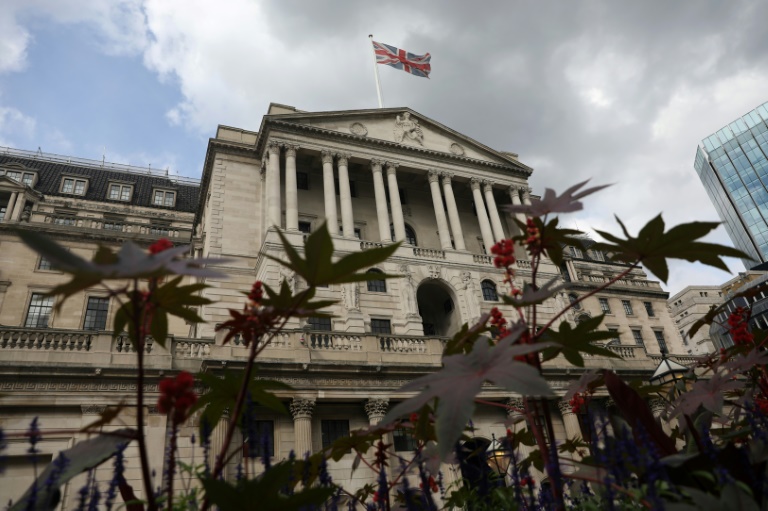
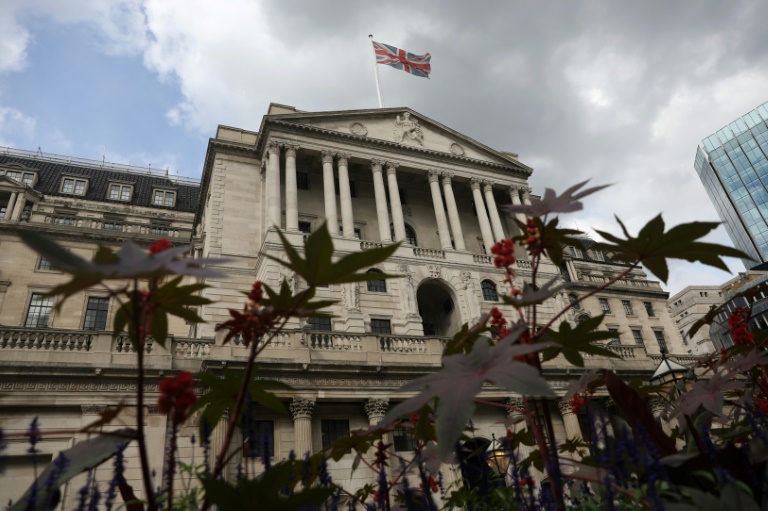
Sterling staged a small recovery Tuesday after the Bank of England said it would “not hesitate to change interest rates by as much as needed”.

With the pound showing record weakness against the dollar this week, analysts are forecasting a big rate increase when the BoE holds its next regular policy meeting on November 3.

“A rate hike of over 150 basis points is currently priced in for the coming meeting,” Commerzbank analyst Esther Reichelt noted Tuesday, questioning if that would even be enough. 

The Bank of England’s statement “is unlikely to calm all those who had already questioned the BoE’s determination to fight inflation even prior to these events”, she added.

– Gas, oil –

Elsewhere, European natural gas prices surged nearly 10 percent to 190.50 euros following news that the two Nord Stream gas pipelines linking Russia and Europe have been hit by unexplained leaks, raising suspicions of sabotage.

The pipelines have been at the centre of geopolitical tensions in recent months as Russia cut gas supplies to Europe in suspected retaliation against Western sanctions following its invasion of Ukraine.

“This damage is the clearest signal so far that Europe will have to survive the winter without significant Russian gas flows,” analysts at Charles Schwab said in a note to clients.

A major new pipeline that will bring in Norwegian gas via Denmark was inaugurated in Poland on Tuesday in a move aimed at helping strengthen Europe’s energy security.

Oil prices jumped more than two percent, helped by a weaker dollar.

“Oil remains a sellers’ market with worries about a global recession and high interest rates intensifying,” Fawad Razaqzada, analyst at City Index and FOREX.com said.

“In addition, with currencies of major oil importing nations tumbling, anything traded in US dollars will cost more… such as oil.”

– Key figures at around 1350 GMT –

London – FTSE 100: UP 0.2 percent at 7,036.62 points

Frankfurt – DAX: UP 0.4 percent at 12,276.85 

Paris – CAC 40: UP 0.6 percent at 5,798.37 

EURO STOXX 50: UP 0.4 percent at 3,356.97

New York – Dow: UP 1.0 percent at 29,552.47

Tokyo – Nikkei 225: UP 0.5 percent at 26,571.87 (close)

Hong Kong – Hang Seng Index: FLAT at 17,860.31 (close)

Shanghai – Composite: UP 1.4 percent at 3,093.86 (close)

Pound/dollar: UP at $1.0766 from $1.0689 on Monday

Euro/dollar: UP at $0.9635 from $0.9611

Euro/pound: DOWN  at 89.41 pence from 89.87 pence 

Dollar/yen: DOWN at 144.61 yen from 144.72 yen

Brent North Sea crude: UP 2.5 percent at $86.13 per barrel

West Texas Intermediate: UP 2.4 percent at $78.51 per barrel

Stocks stabilise as pound rebounds

Equity markets stabilised Tuesday after recent volatility, as the dollar weakened slightly against major rivals, helping the pound to rebound from a record low.

Shares in Paris, Frankfurt and London pushed higher in mid-afternoon trading, as investors track central bank moves aimed at tackling soaring inflation.

Wall Street stocks also climbed, rallying after several losing sessions that analysts have said left the market “oversold” in the short term.

Recession prospects have risen in recent weeks as central banks keep hiking interest rates to try and cool decades-high inflation, boosting in particular the dollar.

In the latest warning of a looming economic downturn, World Trade Organization chief Ngozi Okonjo-Iweala said Tuesday that the world was heading towards a global recession as multiple crises collide.

The Federal Reserve has carried out three successive bumper US hikes and is warning of more to come.

That has seen investors pile into the dollar, sending it to record or multi-decade peaks, in turn rattling governments from Tokyo to Beijing and London.

On Monday, the pound hit an all-time low at $1.0350, with traders spooked by a UK tax giveaway they warned could further fuel inflation and significantly ramp up British state borrowing.

“Dollar strength remains the driving force — or wrecking ball — in financial markets at the moment,” said Markets.com analyst Neil Wilson.

Sterling staged a small recovery Tuesday after the Bank of England said it would “not hesitate to change interest rates by as much as needed”.

With the pound showing record weakness against the dollar this week, analysts are forecasting a big rate increase when the BoE holds its next regular policy meeting on November 3.

“A rate hike of over 150 basis points is currently priced in for the coming meeting,” Commerzbank analyst Esther Reichelt noted Tuesday, questioning if that would even be enough. 

The Bank of England’s statement “is unlikely to calm all those who had already questioned the BoE’s determination to fight inflation even prior to these events”, she added.

– Gas, oil –

Elsewhere, European natural gas prices surged nearly 10 percent to 190.50 euros following news that the two Nord Stream gas pipelines linking Russia and Europe have been hit by unexplained leaks, raising suspicions of sabotage.

The pipelines have been at the centre of geopolitical tensions in recent months as Russia cut gas supplies to Europe in suspected retaliation against Western sanctions following its invasion of Ukraine.

“This damage is the clearest signal so far that Europe will have to survive the winter without significant Russian gas flows,” analysts at Charles Schwab said in a note to clients.

A major new pipeline that will bring in Norwegian gas via Denmark was inaugurated in Poland on Tuesday in a move aimed at helping strengthen Europe’s energy security.

Oil prices jumped more than two percent, helped by a weaker dollar.

“Oil remains a sellers’ market with worries about a global recession and high interest rates intensifying,” Fawad Razaqzada, analyst at City Index and FOREX.com said.

“In addition, with currencies of major oil importing nations tumbling, anything traded in US dollars will cost more… such as oil.”

– Key figures at around 1350 GMT –

London – FTSE 100: UP 0.2 percent at 7,036.62 points

Frankfurt – DAX: UP 0.4 percent at 12,276.85 

Paris – CAC 40: UP 0.6 percent at 5,798.37 

EURO STOXX 50: UP 0.4 percent at 3,356.97

New York – Dow: UP 1.0 percent at 29,552.47

Tokyo – Nikkei 225: UP 0.5 percent at 26,571.87 (close)

Hong Kong – Hang Seng Index: FLAT at 17,860.31 (close)

Shanghai – Composite: UP 1.4 percent at 3,093.86 (close)

Pound/dollar: UP at $1.0766 from $1.0689 on Monday

Euro/dollar: UP at $0.9635 from $0.9611

Euro/pound: DOWN  at 89.41 pence from 89.87 pence 

Dollar/yen: DOWN at 144.61 yen from 144.72 yen

Brent North Sea crude: UP 2.5 percent at $86.13 per barrel

West Texas Intermediate: UP 2.4 percent at $78.51 per barrel

Mass evacuations in Vietnam ahead of Super Typhoon Noru

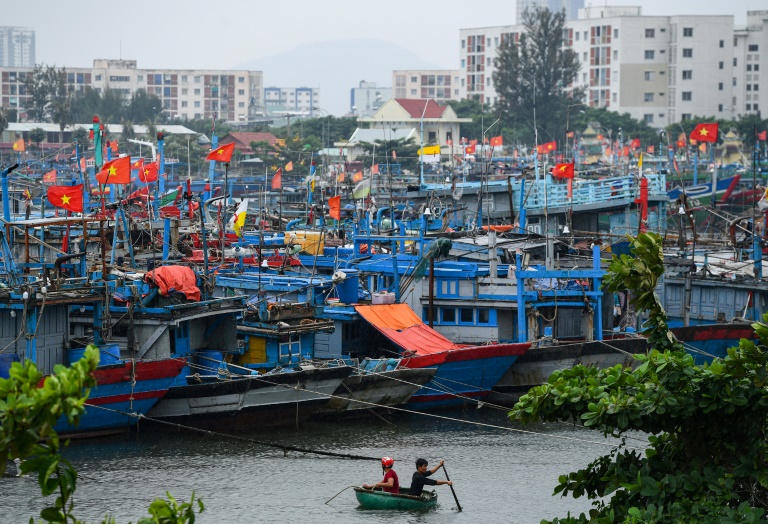
More than 200,000 people in Vietnam took refuge in shelters Tuesday as Super Typhoon Noru barrelled towards its central coast, with forecasters predicting the storm would be one of the biggest to hit the country.

Almost half of Vietnam’s airports have been shut, schools and offices across several provinces — including in the busy city of Danang — were closed and residents rushed to find shelter before the expected arrival of the typhoon on Wednesday.

After slamming into the Philippines earlier this week, where it killed six people, Noru is predicted to make landfall as a super typhoon before 11 am (0400 GMT) and then subside to a severe typhoon as it makes its way inland.

Vietnam’s flood and storm control authority said wind speeds would reach 160 kilometres per hour (100 miles per hour), equalling Typhoon Xangsane — which hit Danang in 2006 and killed 76 people.

Authorities said they have evacuated nearly 260,000 people from their homes, including in the popular tourist city of Hoi An, where residents were brought to a primary school.

“I wanted to leave. My house is not very strong. I am afraid its roof might be blown away when the typhoon hits,” Huynh Mua told AFP, clutching a plastic bag full of clothes, a blanket and several packets of instant noodles.

Three hundred houses in the coastal province of Quang Tri had their roofs blown off late Tuesday as winds began picking up speed. In nearby Hue, trees were blown to the ground.

In Danang, Vietnam’s third-biggest city, all shops and hotels were closed, while residents were banned from going out on the streets. 

The defence ministry has mobilised around 40,000 soldiers and 200,000 militia members, equipped with armoured vehicles and boats in preparation for rescue and relief operations, state media said.

According to data from the Joint Typhoon Warning Center, located in Hawaii, Noru will be only the sixth major typhoon to hit Vietnam since 1945.

Noru hit the Philippines’ Luzon island on Sunday and Monday, toppling trees, knocking out power and flooding low-lying communities.

Five rescuers were killed after being sent to help flooded residents, while another man died after he was hit by a landslide. Officials estimate about $2.4 million worth of crops were damaged.

Scientists urge top publisher to withdraw faulty climate study

A fundamentally flawed study claiming that scientific evidence of a climate crisis is lacking should be withdrawn from the peer-reviewed journal in which it was published, top climate scientists have told AFP.

Appearing earlier this year in The European Physical Journal Plus, published by Springer Nature, the study purports to review data on possible changes in the frequency or intensity of rainfall, cyclones, tornadoes, droughts and other extreme weather events.

It has been viewed thousands of times on social media and cited by some mainstream media, such as Sky News Australia.

“On the basis of observation data, the climate crisis that, according to many sources, we are experiencing today, in not evident,” reads the summary of the 20-page study.

Four prominent climate scientists contacted by AFP all said the study — of which they had been unaware — grossly manipulates data, cherry picking some facts and ignoring others that would contradict their discredited assertions.  

“The paper gives the appearance of being specifically written to make the case that there is no climate crisis, rather than presenting an objective, comprehensive, up-to-date assessment,” said Richard Betts, Head of Climate Impacts Research at Britain’s Met Office. 

The authors ignore the authoritative Intergovernmental Report on Climate Change (IPCC) report published a couple of months before their study was submitted to Springer Nature, Betts noted.

“Human-induced climate change is already affecting many weather and climate extremes in every region across the globe,” the IPCC concluded in that report. 

“Evidence of observed changes in extremes such as heatwaves, heavy precipitation, droughts and tropical cyclones, and, in particular, their attribution to human influence, has strengthened” since the previous report eight years earlier, it said.

“They are writing this article in bad faith,” said Friederike Otto, a senior climatologist at the Grantham Institute for Climate Change and the Environment. 

– ‘Climate sceptics’ –

“They do not have a section on heat waves” — mentioned only in passing — “where the observed trends are so incredibly obvious”, Otto said.  

The peer-reviewed paper by four Italian scientists appeared in January 2022 in one of the more than 2,000 journals published by Springer Nature, one of the most prestigious science publishers in the world.

When asked to explain how a study so clearly at odds with current climate science could have passed peer review and been published, Springer Nature said: “We can’t comment at this time.”

Lead author Gianluca Alimonti is a physicist at a nuclear physics institute. The three co-authors are Luigi Mariani, an agricultural meteorologist, and the physicists Franco Prodi and Renato Angelo Ricci.

The study is written “by people not working in climatology and obviously unfamiliar with the topic and relevant data,” said Stefan Rahmstorf, Head of Earth Systems at the Potsdam Institute for Climate Impact Research. 

“It is not published in a climate journal — this is a common avenue taken by ‘climate sceptics’ in order to avoid peer review by real experts in the field.” 

“They simply ignore studies that don’t fit their narrative and have come to the opposite conclusion.”

All four of the experts consulted by AFP suggested that the study should never have been published in the first place, and two of them called for it to be withdrawn.

“I do not know this journal, but if it is a self-respecting one it should withdraw the article,” said Rahmstorf.

Peter Cox, a professor of climate system dynamics at the University of Exeter, said the study “isn’t good scientifically”, but feared that striking the article from the journal would “lead to further publicity and could be presented as censorship”.

Otto shared this concern, but said the study should be repudiated all the same.

“If the journal cares about science they should withdraw it loudly and publicly, saying that it should not have been published.”

Betts stopped short of calling for withdrawal, drawing a distinction between cherry-picking data and outright fraud.

Close Bitnami banner
Bitnami