AFP

Hurricane Ian hits Cuba as Category 3 storm

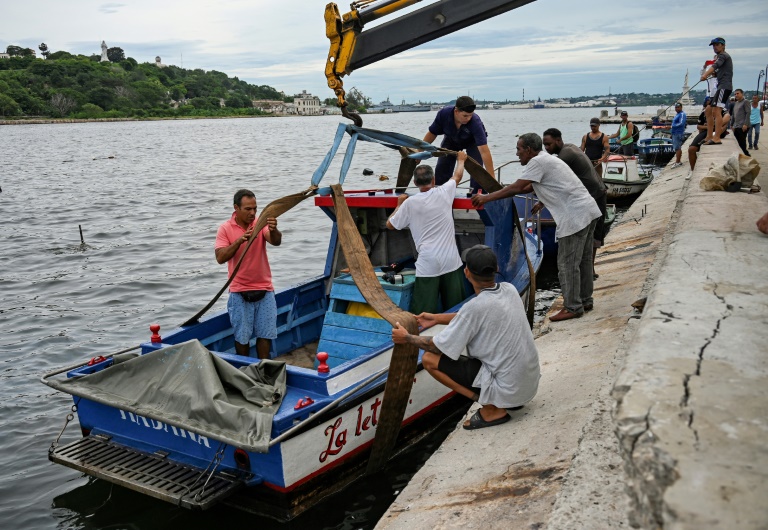
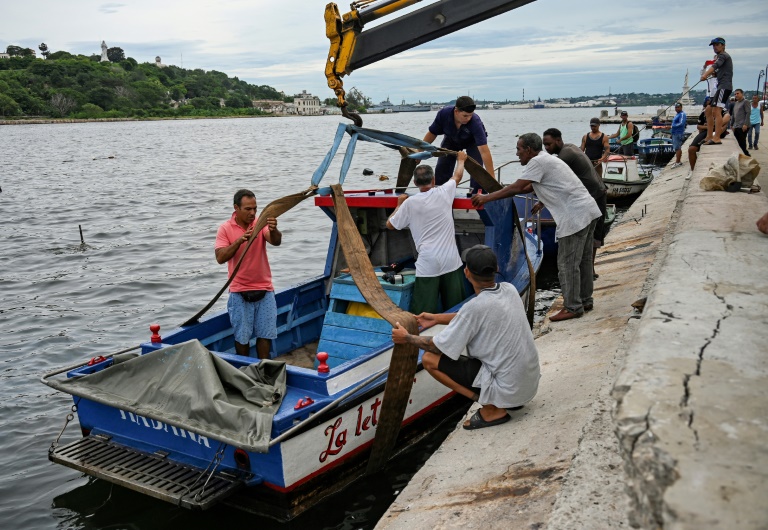
Hurricane Ian made landfall in western Cuba early Tuesday, with the storm prompting mass evacuations and fears it will bring widespread destruction as it heads for the US state of Florida.

“Ian is already over Cuban territory,” said a forecaster from the country’s Institute of Meteorology in a special broadcast on state television. “The outer wall of the storm is on the coast of the province of Pinar del Rio.”

About 38,000 people had been evacuated from their homes in the province, which was bearing the brunt of the storm, local authorities said.

The US National Hurricane Center (NHC) said Ian made landfall just southwest of the town of La Coloma at about 4:30 am local time (0830 GMT).

The hurricane was packing maximum sustained winds of 125 miles (205 kilometers) per hour, the NHC said, making it a Category 3 storm on the Saffir-Simpson scale.

“Devastating wind damage is expected where the core of Ian moves across western Cuba this morning,” it added.

– ‘Storm surge’ –

With the hurricane moving north, Florida’s western coast from Fort Myers to Tampa Bay were at greatest risk of “life-threatening” storm surges, the NHC said.

Florida Governor Ron DeSantis declared a state of emergency in all 67 counties as officials scrambled to prepare for the storm’s forecast landing on Wednesday or Thursday.

Ian “will bring heavy rains, strong winds, flash flooding, storm surge, along with isolated tornado activity along Florida’s Gulf Coast,” DeSantis said at a press conference in Tallahassee on Monday.

He warned people to prepare for power cuts.

“Even if the eye of the storm doesn’t hit your region, you’re going to have really significant winds, it’s going to knock over trees, it’s going to cause interruptions,” DeSantis said, warning of likely flooding.

The governor urged residents to stock up on food, water, medicine and fuel, and he called up 7,000 National Guard members to help with the effort.

Authorities in several Florida municipalities, including Miami, Fort Lauderdale and Tampa, started distributing free sandbags to residents to help protect their homes from the risk of flooding.

Tampa International Airport said it would suspend operations on Tuesday at 5:00 pm local time (2100 GMT).

US President Joe Biden approved emergency aid to 24 counties in Florida through the Federal Emergency Management Agency (FEMA).

NASA said it was rolling back its massive Moon rocket into its storage hangar at the Kennedy Space Center in Florida due to the hurricane.

– Fiona’s wake –

The Caribbean and parts of eastern Canada are still counting the cost of powerful storm Fiona, which tore through last week, claiming several lives.

When it arrived in Canada, the storm packed intense winds of 80 miles per hour, bringing torrential rain and waves of up to 40 feet (12 meters).

Three people are believed to have died when Fiona barreled into Canada’s Atlantic provinces as a post-tropical cyclone early Saturday.

Prince Edward Island authorities confirmed the death of one person, while officials in Newfoundland said they found the body of a 73-year-old woman believed to have been swept from her home. She was apparently sheltering in her basement when waves broke through.

A third person has been reported missing in Nova Scotia — one of the hardest-hit provinces — and is presumed dead.

“The devastation is immense,” Nova Scotia Premier Tim Houston told reporters. “The magnitude of the storm is incredible.”

Storm surges swept at least 20 homes into the sea in the town of Channel-Port aux Basques, on the southwestern tip of Newfoundland.

Around 200 residents had been evacuated before the storm hit.

“Some people have lost everything, and I mean everything,” Mayor Brian Button told CBC News.
Hurricane Ian hits Cuba as Category 3 storm

Hurricane Ian made landfall in western Cuba early Tuesday, with the storm prompting mass evacuations and fears it will bring widespread destruction as it heads for the US state of Florida.

“Ian is already over Cuban territory,” said a forecaster from the country’s Institute of Meteorology in a special broadcast on state television. “The outer wall of the storm is on the coast of the province of Pinar del Rio.”

About 38,000 people had been evacuated from their homes in the province, which was bearing the brunt of the storm, local authorities said.

The US National Hurricane Center (NHC) said Ian made landfall just southwest of the town of La Coloma at about 4:30 am local time (0830 GMT).

The hurricane was packing maximum sustained winds of 125 miles (205 kilometers) per hour, the NHC said, making it a Category 3 storm on the Saffir-Simpson scale.

“Devastating wind damage is expected where the core of Ian moves across western Cuba this morning,” it added.

– ‘Storm surge’ –

With the hurricane moving north, Florida’s western coast from Fort Myers to Tampa Bay were at greatest risk of “life-threatening” storm surges, the NHC said.

Florida Governor Ron DeSantis declared a state of emergency in all 67 counties as officials scrambled to prepare for the storm’s forecast landing on Wednesday or Thursday.

Ian “will bring heavy rains, strong winds, flash flooding, storm surge, along with isolated tornado activity along Florida’s Gulf Coast,” DeSantis said at a press conference in Tallahassee on Monday.

He warned people to prepare for power cuts.

“Even if the eye of the storm doesn’t hit your region, you’re going to have really significant winds, it’s going to knock over trees, it’s going to cause interruptions,” DeSantis said, warning of likely flooding.

The governor urged residents to stock up on food, water, medicine and fuel, and he called up 7,000 National Guard members to help with the effort.

Authorities in several Florida municipalities, including Miami, Fort Lauderdale and Tampa, started distributing free sandbags to residents to help protect their homes from the risk of flooding.

Tampa International Airport said it would suspend operations on Tuesday at 5:00 pm local time (2100 GMT).

US President Joe Biden approved emergency aid to 24 counties in Florida through the Federal Emergency Management Agency (FEMA).

NASA said it was rolling back its massive Moon rocket into its storage hangar at the Kennedy Space Center in Florida due to the hurricane.

– Fiona’s wake –

The Caribbean and parts of eastern Canada are still counting the cost of powerful storm Fiona, which tore through last week, claiming several lives.

When it arrived in Canada, the storm packed intense winds of 80 miles per hour, bringing torrential rain and waves of up to 40 feet (12 meters).

Three people are believed to have died when Fiona barreled into Canada’s Atlantic provinces as a post-tropical cyclone early Saturday.

Prince Edward Island authorities confirmed the death of one person, while officials in Newfoundland said they found the body of a 73-year-old woman believed to have been swept from her home. She was apparently sheltering in her basement when waves broke through.

A third person has been reported missing in Nova Scotia — one of the hardest-hit provinces — and is presumed dead.

“The devastation is immense,” Nova Scotia Premier Tim Houston told reporters. “The magnitude of the storm is incredible.”

Storm surges swept at least 20 homes into the sea in the town of Channel-Port aux Basques, on the southwestern tip of Newfoundland.

Around 200 residents had been evacuated before the storm hit.

“Some people have lost everything, and I mean everything,” Mayor Brian Button told CBC News.
Scientists urge top publisher to withdraw faulty climate study

A fundamentally flawed study claiming that scientific evidence of a climate crisis is lacking should be withdrawn from the peer-reviewed journal in which it was published, top climate scientists have told AFP.

Appearing earlier this year in The European Physical Journal Plus, published by Springer Nature journal, the study purports to review data on possible changes in the frequency or intensity of rainfall, cyclones, tornadoes, droughts and other extreme weather events.

It has been viewed thousands of times on social media and cited by some mainstream media, such as Sky News Australia.

“On the basis of observation data, the climate crisis that, according to many sources, we are experiencing today, in not evident,” reads the summary of the 20-page study.

Four prominent climate scientists contacted by AFP all said the study — of which they had been unaware — grossly manipulates data, cherry picking some facts and ignoring others that would contradict their discredited assertions.  

“The paper gives the appearance of being specifically written to make the case that there is no climate crisis, rather than presenting an objective, comprehensive, up-to-date assessment,” said Richard Betts, Head of Climate Impacts Research at Britain’s Met Office. 

The authors ignore the authoritative Intergovernmental Report on Climate Change (IPCC) report published a couple of months before their study was submitted to Springer Nature, Betts noted.

“Human-induced climate change is already affecting many weather and climate extremes in every region across the globe,” the IPCC concluded in that report. 

“Evidence of observed changes in extremes such as heatwaves, heavy precipitation, droughts and tropical cyclones, and, in particular, their attribution to human influence, has strengthened” since the previous report eight years earlier, it said.

“They are writing this article in bad faith,” said Friederike Otto, a senior climatologist at the Grantham Institute for Climate Change and the Environment. 

– ‘Climate sceptics’ –

“They do not have a section on heat waves” — mentioned only in passing — “where the observed trends are so incredibly obvious”, Otto said.  

The peer-reviewed paper by four Italian scientists appeared in January 2022 in one of the more than 2,000 journals published by Springer Nature, one of the most prestigious science publishers in the world.

When asked to explain how a study so clearly at odds with current climate science could have passed peer review and been published, Springer Nature said: “We can’t comment at this time.”

Lead author Gianluca Alimonti is a physicist at a nuclear physics institute. The three co-authors are Luigi Mariani, an agricultural meteorologist, and the physicists Franco Prodi and Renato Angelo Ricci.

The study is written “by people not working in climatology and obviously unfamiliar with the topic and relevant data,” said Stefan Rahmstorf, Head of Earth Systems at the Potsdam Institute for Climate Impact Research. 

“It is not published in a climate journal — this is a common avenue taken by ‘climate sceptics’ in order to avoid peer review by real experts in the field.” 

“They simply ignore studies that don’t fit their narrative and have come to the opposite conclusion.”

All four of the experts consulted by AFP suggested that the study should never have been published in the first place, and two of them called for it to be withdrawn.

“I do not know this journal, but if it is a self-respecting one it should withdraw the article,” said Rahmstorf.

Peter Cox, a professor of climate system dynamics at the University of Exeter, said the study “isn’t good scientifically”, but feared that striking the article from the journal would “lead to further publicity and could be presented as censorship”.

Otto shared this concern, but said the study should be repudiated all the same.

“If the journal cares about science they should withdraw it loudly and publicly, saying that it should not have been published.”

Betts stopped short of calling for withdrawal, drawing a distinction between cherry-picking data and outright fraud.

Sabotage suspected after Nord Stream pipeline leaks

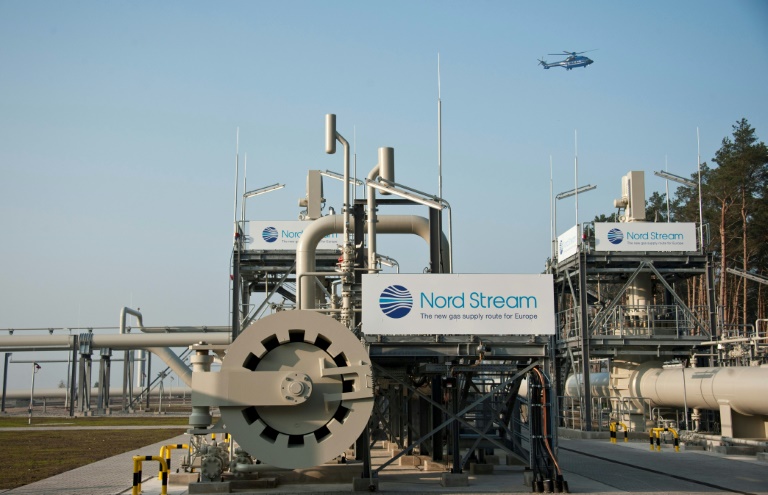
The two Nord Stream gas pipelines linking Russia and Europe have been hit by unexplained leaks, Scandinavian authorities said Tuesday, raising suspicions of sabotage.

The pipelines have been at the centre of geopolitical tensions in recent months as Russia cut gas supplies to Europe in suspected retaliation against Western sanctions following its invasion of Ukraine.

While the pipelines, which are operated by a consortium majority-owned by Russian gas giant Gazprom, are not currently in operation, they both still contain gas but the environmental impact appeared limited so far.

One of the leaks on Nord Stream 1 occurred in the Danish economic zone and the other in the Swedish economic zone, while the Nord Stream 2 leak was in the Danish economic zone.

A leak was first reported on Nord Stream 2 on Monday.

“Authorities have now been informed that there have been another two leaks on Nord Stream 1, which likewise is not in operation but contains gas,” Danish climate and energy minister Dan Jorgensen told AFP in a statement on Tuesday.

“It is too early to say anything about the causes of the incidents,” the Danish Ministry of Climate, Energy and Utilities said in a statement.

Denmark’s energy agency has, however, called for “higher levels of preparedness in the electricity and gas sector” in the country, Jorgensen said.

Russia said it was “extremely concerned” about the situation.

Asked by reporters whether it could be an act of sabotage, Kremlin spokesman Dmitry Peskov said that at the moment “it is impossible to exclude any options”.

– ‘Extremely rare’ –

The Danish energy agency said only the area where the gas plume is located will be affected by the leak, but methane escaping into the atmosphere has a “climate-damaging effect”, according to the Ritzau news agency.

“Gas pipeline leaks are extremely rare and we therefore see a reason to increase the level of preparedness following the incidents we have witnessed over the past 24 hours,” director of the Danish Energy Agency Kristoffer Bottzauw said in a statement.

“We want to ensure thorough monitoring of Denmark’s critical infrastructure in order to strengthen security of supply in the future,” he added.

Ola Westberg, spokesman for the Swedish Energy Agency, told AFP on Tuesday that no decision had been taken yet and that they “were in dialogue with Denmark.”

Built in parallel to the Nord Stream 1 pipeline, Nord Stream 2 was intended to double the capacity for Russian gas imports to Germany.

But Berlin blocked newly-completed Nord Stream 2 in the days before the war.

Germany, which has been highly dependent on imports of fossil fuels from Russia to meet its energy needs, has since come under acute stress as Moscow has dwindled supplies.

Russian energy giant Gazprom progressively reduced the volumes of gas being delivered via Nord Stream 1 until it shut the pipeline completely at the end of August, blaming Western sanctions for the delay of necessary repairs to the pipeline. 

– ‘Targeted attack’ –

Germany has rebuffed Gazprom’s technical explanation for the cut, instead accusing Moscow of wielding energy as a weapon amid tensions over the war in Ukraine.

Meanwhile, German daily Tagesspiegel reported that “the Nord Stream pipelines may have been damaged by targeted attacks and leaked as a result”. 

According to a source close to the government and relevant authorities, quoted in the newspaper, “everything speaks against a coincidence”. 

“We cannot imagine a scenario that is not a targeted attack,” the source said.

The Nord Stream 1 leaks were first spotted Monday evening, hours after a drop in pressure was reported in Nord Stream 2, according to the Swedish Maritime Administration (SMA).

“Around 8:00 pm (1800 GMT) we received a report from a passing ship saying they saw something on their radar a little further north of the island of Bornholm,” Fredrik Stromback, spokesman for the SMA, told AFP.

As a result of the leaks, navigational warnings have been issued for a distance of five nautical miles and a flight height of 1,000 metres (3,280 feet).

“The incidents on the two pipelines have no impact on the supply to Denmark,” Jorgensen said. 

Sabotage suspected after Nord Stream pipeline leaks

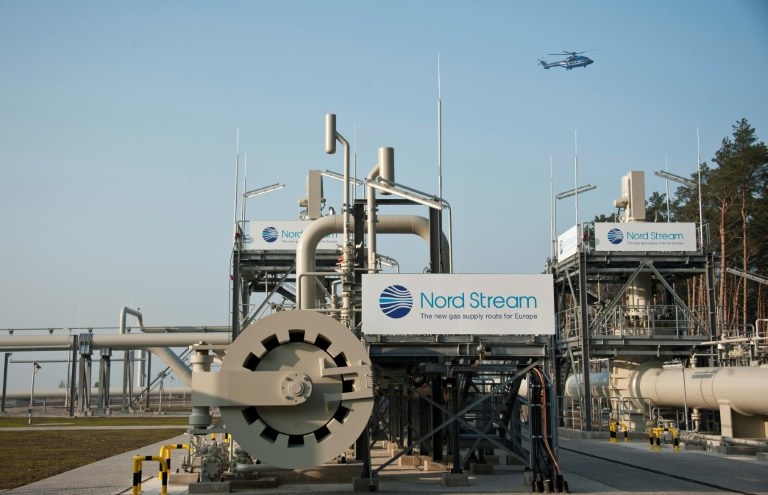
The two Nord Stream gas pipelines linking Russia and Europe have been hit by unexplained leaks, Scandinavian authorities said Tuesday, raising suspicions of sabotage.

The pipelines have been at the centre of geopolitical tensions in recent months as Russia cut gas supplies to Europe in suspected retaliation against Western sanctions following its invasion of Ukraine.

While the pipelines, which are operated by a consortium majority-owned by Russian gas giant Gazprom, are not currently in operation, they both still contain gas but the environmental impact appeared limited so far.

One of the leaks on Nord Stream 1 occurred in the Danish economic zone and the other in the Swedish economic zone, while the Nord Stream 2 leak was in the Danish economic zone.

A leak was first reported on Nord Stream 2 on Monday.

“Authorities have now been informed that there have been another two leaks on Nord Stream 1, which likewise is not in operation but contains gas,” Danish climate and energy minister Dan Jorgensen told AFP in a statement on Tuesday.

“It is too early to say anything about the causes of the incidents,” the Danish Ministry of Climate, Energy and Utilities said in a statement.

Denmark’s energy agency has, however, called for “higher levels of preparedness in the electricity and gas sector” in the country, Jorgensen said.

Russia said it was “extremely concerned” about the situation.

Asked by reporters whether it could be an act of sabotage, Kremlin spokesman Dmitry Peskov said that at the moment “it is impossible to exclude any options”.

– ‘Extremely rare’ –

The Danish energy agency said only the area where the gas plume is located will be affected by the leak, but methane escaping into the atmosphere has a “climate-damaging effect”, according to the Ritzau news agency.

“Gas pipeline leaks are extremely rare and we therefore see a reason to increase the level of preparedness following the incidents we have witnessed over the past 24 hours,” director of the Danish Energy Agency Kristoffer Bottzauw said in a statement.

“We want to ensure thorough monitoring of Denmark’s critical infrastructure in order to strengthen security of supply in the future,” he added.

Ola Westberg, spokesman for the Swedish Energy Agency, told AFP on Tuesday that no decision had been taken yet and that they “were in dialogue with Denmark.”

Built in parallel to the Nord Stream 1 pipeline, Nord Stream 2 was intended to double the capacity for Russian gas imports to Germany.

But Berlin blocked newly-completed Nord Stream 2 in the days before the war.

Germany, which has been highly dependent on imports of fossil fuels from Russia to meet its energy needs, has since come under acute stress as Moscow has dwindled supplies.

Russian energy giant Gazprom progressively reduced the volumes of gas being delivered via Nord Stream 1 until it shut the pipeline completely at the end of August, blaming Western sanctions for the delay of necessary repairs to the pipeline. 

– ‘Targeted attack’ –

Germany has rebuffed Gazprom’s technical explanation for the cut, instead accusing Moscow of wielding energy as a weapon amid tensions over the war in Ukraine.

Meanwhile, German daily Tagesspiegel reported that “the Nord Stream pipelines may have been damaged by targeted attacks and leaked as a result”. 

According to a source close to the government and relevant authorities, quoted in the newspaper, “everything speaks against a coincidence”. 

“We cannot imagine a scenario that is not a targeted attack,” the source said.

The Nord Stream 1 leaks were first spotted Monday evening, hours after a drop in pressure was reported in Nord Stream 2, according to the Swedish Maritime Administration (SMA).

“Around 8:00 pm (1800 GMT) we received a report from a passing ship saying they saw something on their radar a little further north of the island of Bornholm,” Fredrik Stromback, spokesman for the SMA, told AFP.

As a result of the leaks, navigational warnings have been issued for a distance of five nautical miles and a flight height of 1,000 metres (3,280 feet).

“The incidents on the two pipelines have no impact on the supply to Denmark,” Jorgensen said. 

Japan honours assassinated Abe at controversial funeral

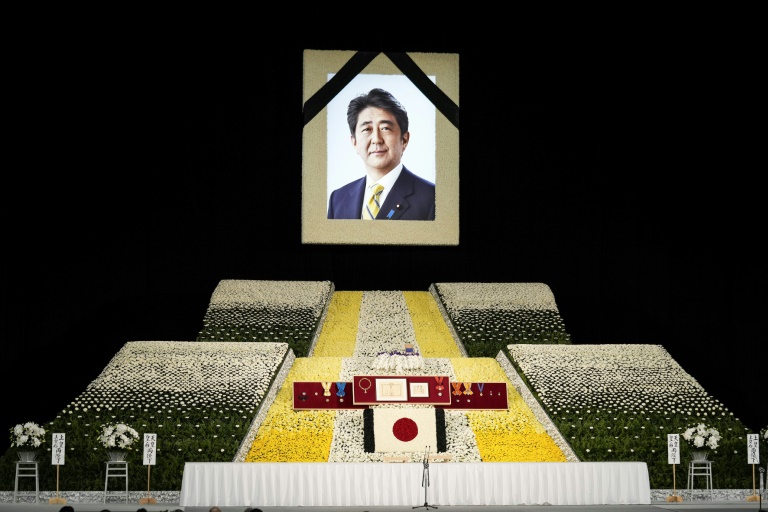
Japanese and foreign dignitaries paid tribute to assassinated former prime minister Shinzo Abe at a state funeral on Tuesday that drew both mourners and protesters to central Tokyo.

Prime Minister Fumio Kishida described the former leader as a “person of courage” in a eulogy, listing his achievements, including efforts to strengthen Japan’s diplomatic ties.

“I feel heart-breaking grief,” Kishida said as he faced a photograph of Abe that was hung above a grand floral structure used to display his ashes, medals and the Japanese flag.

The decorative box of ashes had been carried by his widow Akie into Tokyo’s storied Budokan venue, where a 19-gun salute sounded in honour of the slain politician.

Abe was Japan’s longest-serving prime minister and one of the country’s most recognisable political figures, known for cultivating international alliances and his “Abenomics” economic strategy.

He resigned in 2020 over recurring health problems, but remained a key political voice and was campaigning for his ruling party when a lone gunman killed him with a homemade weapon on July 8.

The shooting sent shock waves through a country with famously low gun crime and prompted international condemnation.

But the decision to give him a state funeral — only the second for a former premier in the post-war period — has provoked opposition, with around 60 percent of Japanese against the event in recent polls.

– ‘So much opposition’ –

US Vice-President Kamala Harris and world leaders including Indian Prime Minister Narendra Modi and Australian premier Anthony Albanese were among those in attendance at the Budokan.

Outside, thousands of people stood in line as the ashes arrived, waiting to deliver flowers and say a prayer in two mourning tents.

Koji Takamori came all the way from northern Hokkaido with his nine-year-old son.

“I wanted to thank him. He has done so much for Japan,” the 46-year-old told AFP.

“The way he died was so shocking. To be honest, I also came because there has been so much opposition. It’s almost like I’m here to oppose those who are opposing this (funeral),” he added.

Those opponents were also out, marching near the tents before a larger demonstration in front of the parliament.

“There are people struggling financially who suffered particularly under the ‘Abenomics’ policies. We must not forget this,” Ryo Machida, a 19-year-old student, said outside the Budokan.

“He may have been a strong leader, but in hindsight, he was iron-fisted and anti-democratic.”

– Divisive tenure –

Abe’s accused killer targeted the former leader believing he had ties to the Unification Church, which the attacker resented over massive donations his mother had made to the sect.

The assassination prompted fresh scrutiny of the church and its fundraising — and uncomfortable questions for Japan’s political establishment, with the ruling party admitting around half its lawmakers had links to the religious organisation.

Kishida has pledged the party will sever all ties with the church, but the scandal helped fuel discontent over the state funeral.

Thousands have protested in the run-up to the ceremony and a man set himself on fire last week near the prime minister’s office, leaving notes reportedly expressing his objection to the event.

Some lawmakers from opposition parties are also boycotting the funeral.

The controversy has several roots, with some accusing Kishida of unilaterally approving the funeral instead of consulting parliament, and others resentful of a nearly $12 million price tag.

It is also the legacy of Abe’s divisive tenure, marked by persistent allegations of cronyism, and opposition to his nationalism and plans to reform the pacifist constitution.

Kishida’s government may have hoped the solemnity of the event, attended by an estimated 4,300 people including 700 foreign invitees, would drown out the controversy.

Abe worked to cultivate close ties with Washington to bolster the key US-Japan alliance, and also courted a stronger “Quad” grouping of Japan, the United States, India and Australia.

Japan’s emperor and empress are not attending, as neutral national figures, but Crown Prince Akishino and his wife led mourners in offering flowers at the end of the service.

Hurricane Ian hits Cuba as Category 3 storm

Hurricane Ian made landfall in western Cuba early Tuesday, with the Caribbean nation and the US state of Florida ramping up preparations for high winds and potential flooding.

About 50,000 people in Cuba’s western Pinar del Rio province moved to safer locations, 6,000 of them to state-run shelters and the rest to the homes of relatives and friends, local authorities said.

“Ian is already over Cuban territory,” said a meteorologist from the institute in a special broadcast on state television. “The outer wall of the storm is on the coast of the province of Pinar del Rio.”

The US National Hurricane Center had warned in an advisory issued early Tuesday that Ian had strengthened into a major Category 3 storm on the Saffir-Simpson scale.

“The maximum winds are now estimated to be 115 miles (185 kilometers) per hour with higher gusts,” it said.

– ‘Storm surge’ –

In Florida, the city of Tampa was under a hurricane watch, and Governor Ron DeSantis declared a state of emergency in all 67 counties as officials scrambled to prepare for the storm’s forecast landing on Wednesday or Thursday.

Ian “will bring heavy rains, strong winds, flash flooding, storm surge, along with isolated tornado activity along Florida’s Gulf Coast,” DeSantis said at a press conference in Tallahassee on Monday.

He warned people to prepare for power cuts.

“Even if the eye of the storm doesn’t hit your region, you’re going to have really significant winds, it’s going to knock over trees, it’s going to cause interruptions,” DeSantis said, warning of likely flooding.

The governor urged residents to stock up on food, water, medicine and fuel, and he called up 7,000 National Guard members to help with the effort.

Authorities in several Florida municipalities, including Miami, Fort Lauderdale and Tampa, started distributing free sandbags to residents to help protect their homes from the risk of flooding.

Tampa International Airport said it would suspend operations on Tuesday at 5:00 pm local time (2100 GMT).

US President Joe Biden approved emergency aid to 24 counties in Florida through the Federal Emergency Management Agency (FEMA).

NASA said it was rolling back its massive Moon rocket into its storage hangar at the Kennedy Space Center in Florida due to the hurricane.

– Fiona’s wake –

The Caribbean and parts of eastern Canada are still counting the cost of powerful storm Fiona, which tore through last week, claiming several lives.

When it arrived in Canada, the storm packed intense winds of 80 miles per hour, bringing torrential rain and waves of up to 40 feet (12 meters).

Three people are believed to have died when Fiona barreled into Canada’s Atlantic provinces as a post-tropical cyclone early Saturday.

Prince Edward Island authorities confirmed the death of one person, while officials in Newfoundland said they found the body of a 73-year-old woman believed to have been swept from her home. She was apparently sheltering in her basement when waves broke through.

A third person has been reported missing in Nova Scotia — one of the hardest-hit provinces — and is presumed dead.

“The devastation is immense,” Nova Scotia Premier Tim Houston told reporters. “The magnitude of the storm is incredible.”

Storm surges swept at least 20 homes into the sea in the town of Channel-Port aux Basques, on the southwestern tip of Newfoundland.

Around 200 residents had been evacuated before the storm hit.

“Some people have lost everything, and I mean everything,” Mayor Brian Button told CBC News.
Hurricane Ian hits Cuba as Category 3 storm

Hurricane Ian made landfall in western Cuba early Tuesday, with the Caribbean nation and the US state of Florida ramping up preparations for high winds and potential flooding.

About 50,000 people in Cuba’s western Pinar del Rio province moved to safer locations, 6,000 of them to state-run shelters and the rest to the homes of relatives and friends, local authorities said.

“Ian is already over Cuban territory,” said a meteorologist from the institute in a special broadcast on state television. “The outer wall of the storm is on the coast of the province of Pinar del Rio.”

The US National Hurricane Center had warned in an advisory issued early Tuesday that Ian had strengthened into a major Category 3 storm on the Saffir-Simpson scale.

“The maximum winds are now estimated to be 115 miles (185 kilometers) per hour with higher gusts,” it said.

– ‘Storm surge’ –

In Florida, the city of Tampa was under a hurricane watch, and Governor Ron DeSantis declared a state of emergency in all 67 counties as officials scrambled to prepare for the storm’s forecast landing on Wednesday or Thursday.

Ian “will bring heavy rains, strong winds, flash flooding, storm surge, along with isolated tornado activity along Florida’s Gulf Coast,” DeSantis said at a press conference in Tallahassee on Monday.

He warned people to prepare for power cuts.

“Even if the eye of the storm doesn’t hit your region, you’re going to have really significant winds, it’s going to knock over trees, it’s going to cause interruptions,” DeSantis said, warning of likely flooding.

The governor urged residents to stock up on food, water, medicine and fuel, and he called up 7,000 National Guard members to help with the effort.

Authorities in several Florida municipalities, including Miami, Fort Lauderdale and Tampa, started distributing free sandbags to residents to help protect their homes from the risk of flooding.

Tampa International Airport said it would suspend operations on Tuesday at 5:00 pm local time (2100 GMT).

US President Joe Biden approved emergency aid to 24 counties in Florida through the Federal Emergency Management Agency (FEMA).

NASA said it was rolling back its massive Moon rocket into its storage hangar at the Kennedy Space Center in Florida due to the hurricane.

– Fiona’s wake –

The Caribbean and parts of eastern Canada are still counting the cost of powerful storm Fiona, which tore through last week, claiming several lives.

When it arrived in Canada, the storm packed intense winds of 80 miles per hour, bringing torrential rain and waves of up to 40 feet (12 meters).

Three people are believed to have died when Fiona barreled into Canada’s Atlantic provinces as a post-tropical cyclone early Saturday.

Prince Edward Island authorities confirmed the death of one person, while officials in Newfoundland said they found the body of a 73-year-old woman believed to have been swept from her home. She was apparently sheltering in her basement when waves broke through.

A third person has been reported missing in Nova Scotia — one of the hardest-hit provinces — and is presumed dead.

“The devastation is immense,” Nova Scotia Premier Tim Houston told reporters. “The magnitude of the storm is incredible.”

Storm surges swept at least 20 homes into the sea in the town of Channel-Port aux Basques, on the southwestern tip of Newfoundland.

Around 200 residents had been evacuated before the storm hit.

“Some people have lost everything, and I mean everything,” Mayor Brian Button told CBC News.
Vietnam orders mass evacuations ahead of Super Typhoon Noru

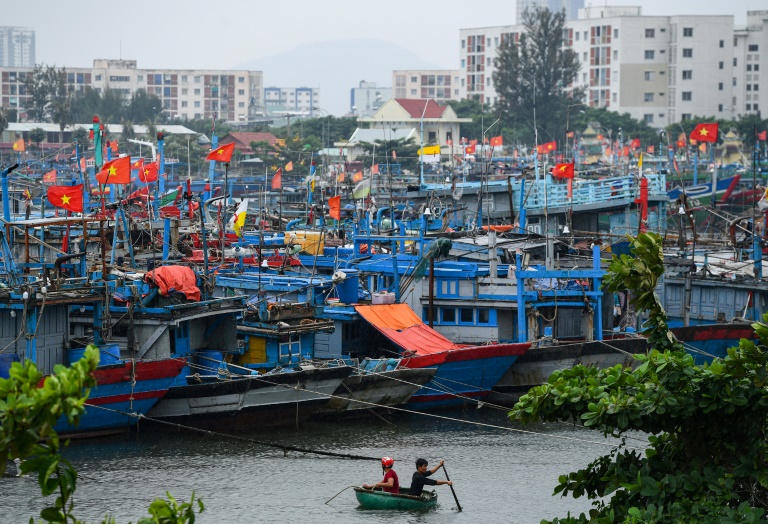
Vietnam ordered hundreds of thousands of people to evacuate their homes Tuesday as Super Typhoon Noru barrelled towards the busy city of Danang, with forecasters predicting the storm would be one of the biggest to hit the country.

Almost half of Vietnam’s airports have been shut, schools and offices across several central provinces were closed and residents rushed to find shelter before the expected arrival of the typhoon on Wednesday.

After slamming into the Philippines earlier this week, where it killed six people, Noru is predicted to make landfall as a super typhoon before 11 am (0400 GMT) and then subside to a severe typhoon as it makes its way inland.

Vietnam’s flood and storm control authority said wind speeds would reach 160 kilometres per hour (100 miles per hour), equalling Typhoon Xangsane — which hit Danang in 2006 and killed 76 people.

Authorities have urged 400,000 people to leave their homes, including in the popular tourist city of Hoi An, where residents were brought to a primary school.

“I wanted to leave. My house is not very strong. I am afraid its roof might be blown away when the typhoon hits,” Huynh Mua told AFP, clutching a plastic bag full of clothes, a blanket and several packets of instant noodles.

In Danang, Vietnam’s third-biggest city, all shops and hotels were closed, while residents have been banned from going out on the streets from late Tuesday. 

According to data from the Joint Typhoon Warning Center, located in Hawaii, Super Typhoon Noru will be only the sixth major typhoon to hit Vietnam since 1945.

Naru hit the Philippines’ Luzon island on Sunday and Monday, toppling trees, knocking out power and flooding low-lying communities.

Five rescuers were killed after being sent to help flooded residents, while another man died after he was hit by a landslide. Officials estimate about $2.4 million worth of crops were damaged.

Dollar softens after rally, stocks stable but uncertainty reigns

The dollar lost a little of its strength Tuesday after starting the week by surging against major peers, including a record high versus the pound, but while equity markets stabilised, sentiment remained dampened by recession fears.

While central banks around the world are ramping up interest rates to fight inflation, the main focus is on the US Federal Reserve’s increasingly hawkish tone that has seen it unveil three successive bumper hikes with a warning of more to come.

That has seen investors pile into the dollar, sending it to record or multi-decade peaks, which has rattled governments from Tokyo to Beijing and London.

On Monday, it hit its highest-ever level against the pound — touching $1.0350 after traders were spooked by a massive tax giveaway mini-budget by new UK finance minister Kwasi Kwarteng.

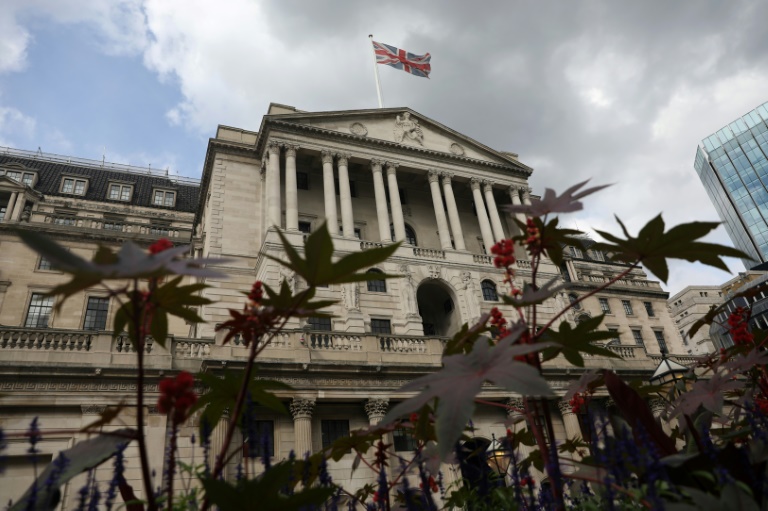
Sterling staged a small recovery but fell back again after traders were left disappointed by a lack of solid action from the Bank of England, with Governor Andrew Bailey saying only it would not hesitate to increase rates by as much as needed.

However, speculation is rife that officials will announce a huge 1.5 percentage point hike at their next meeting in November.

The dollar’s rally against the pound was matched by advances across forex markets, with the euro hitting a new 20-year low and the yen pushing back to the level it hit when the government intervened to support the currency last week.

But the greenback surge ran out of steam Tuesday as a little stability returned to markets, though analysts warned that volatility would remain high as more global rate hikes were in the pipeline and geopolitical crises remained unresolved.

Added to that were concerns that inflation remained stubbornly high.

“The market is pricing in some Fed increases, but we’re a bit worried that it might not be pricing in everything,” Laila Pence, of Pence Wealth Management, told Bloomberg Television.

“We got whipsawed in August when inflation was up not down — everyone is nervous.”

– ‘Wrecking ball’ –

Another selloff in Wall Street stocks saw the S&P 500 suffer its lowest close since December 2020, though Asia was mixed.

Tokyo, Shanghai, Sydney, Seoul, Taipei and Mumbai all rose while Hong Kong eked out marginal gains but Singapore, Wellington, Bangkok, Manila and Jakarta were in the red.

London, Paris and Frankfurt were in positive territory in early business.

“Dollar strength remains the driving force — or wrecking ball — in financial markets at the moment,” said Markets.com analyst Neil Wilson. “It’s not only wrecking relative currency stability but is a major factor in the weakness for equities.”

And OANDA’s Edward Moya added: “Right now, financial markets are a mess.

“Wall Street is realising that we won’t be seeing a significant sign that inflation is easing fast enough in the next couple of months and that should make it tough to buy the dip just yet.”

Oil prices rallied around two percent as news filtered through that the two leaks have been identified on the Nord Stream 1 Russia-Europe gas pipeline in the Baltic Sea, hours after a similar incident on its twin pipeline.

However, both contracts remain wedged around their lowest levels since January owing to the stronger dollar and worries about demand caused by the expected recession.

And Moya added there appeared little chance the commodity will stage a near-term recovery, despite speculation that major producers could announce a fresh output cut.

“Chaos in the forex markets could keep crude prices heavy no matter what OPEC+ does over the short-term,” he wrote. “Forex volatility won’t let up anytime soon and that will send oil on a very long roller-coaster ride.”

– Key figures at around 0810 GMT –

Tokyo – Nikkei 225: UP 0.5 percent at 26,571.87 (close)

Hong Kong – Hang Seng Index: FLAT at 17,860.31 (close)

Shanghai – Composite: UP 1.4 percent at 3,093.86 (close)

London – FTSE 100: UP 0.7 percent at 7,069.40

Pound/dollar: UP at $1.0809 from $1.0689 on Monday

Euro/dollar: UP at $0.9647 from $0.9611

Euro/pound: DOWN at 89.26 pence from 89.87 pence 

Dollar/yen: DOWN at 144.30 yen from 144.72 yen

West Texas Intermediate: UP 2.0 percent at $78.23 per barrel

Brent North Sea crude: UP 1.9 percent at $85.67 per barrel

New York – Dow: DOWN 1.1 percent at 29,260.81 (close)

Close Bitnami banner
Bitnami