AFP

Porsche to race onto German stock exchange with mega IPO

Luxury sports carmaker Porsche will this week race onto the Frankfurt stock exchange in what is set to be one of Europe’s biggest listings in years, seeking to defy recent market turbulence.

While the listing comes at a difficult time for global markets — roiled by the war in Ukraine and surging inflation — the maker of the 9-11 sports car expects to leverage its brand power. 

“Some potential clients may not yet be able to afford a Porsche, but they can buy the shares,” said Lutz Meschke, deputy chairman of the company’s board.

Parent company Volkswagen hopes Thursday’s flotation will raise up to 9.4 billion euros ($9.2 billion) and are targeting a valuation of up to 75 billion euros for Porsche.

Some of the cash will be ploughed into Volkswagen’s high-speed drive towards electric vehicles, which has brought the legacy carmaker into more direct competition with US rival Tesla.

In terms of value of shares issued, Porsche’s is set to be the biggest stock market debut in Germany since Deutsche Telekom’s in 1996, and the largest in Europe since the 2011 flotation of Switzerland-based commodities giant Glencore.

Analysts are looking to the carmaker’s market entry for some cheer in a morose economic backdrop.

“The Porsche AG IPO may offer a catalyst in an industry sorely lacking positive surprises,” Berenberg said in a note.

“Volkswagen’s luxury sports car business holds brand power and electrification momentum in the most desirable automotive segments.”

– Electric drive –

The IPO will see 114 million shares of “Porsche AG” listed, with a price range between 76.50 and 82.50 euros per share. 

VW’s targeted valuation is below some earlier estimates — but should still catapult it above rivals such as BMW, with a valuation of 49 billion euros, and Mercedes-Benz, with a 61-billion-euro price tag. 

The maker of the iconic 911 sports car has joined the electric drive of Volkswagen group, whose brands also include Audi and Skoda, in earnest. 

The electric “Taycan” has been the brand’s best-selling model since January, an electric version of the “Macan” is due in 2024, as well as the launch of a new SUV in the middle of the decade.

The electric strategy — launched by former VW chief Herbert Diess — includes building battery factories across Europe and the US.

The IPO will see preferential shares sold to investors, which have no voting rights, while Volkswagen will also sell 25 percent of the carmaker to Porsche SE. 

The eponymous company is a listed holding controlled by the Porsche-Piech family, who in turn are the main shareholders in Volkswagen.

This means that Porsche SE will have a blocking minority that will allow it to steer the future of the company.

– Major investor interest –

While there is much anticipation ahead of the Porsche IPO, concerns surrounding governance have been brewing at Volkswagen.

The dual role of recently appointed group CEO Oliver Blume  — who has maintained his position as Porsche chief, as well as taking on the top job at Volkswagen group — has in particular raised eyebrows. 

Nevertheless, the listing has generated interested among major investors, including Qatar and Abu Dhabi’s public investment funds, Norway’s sovereign wealth fund and US asset management firm T. Rowe Price. 

They will together hold about 3.6 billion euros in preferential shares, with Qatar making the biggest investment.

Volkswagen hopes that listing a minority stake in Porsche will push up its own stock market value, which is currently about 90 billion euros — just a fraction of Tesla’s, at just under $900 billion.

Deeply divisive Monroe biopic 'Blonde' hits Netflix

Destined to be one of the most divisive films of the year, Marilyn Monroe biopic “Blonde” finally lands on Netflix on Wednesday after more than a decade of troubled production.

While there is almost universal praise for the visceral lead performance by Ana de Armas, critics cannot agree whether the uncompromising, nearly three-hour film is an artistic tour de force or another cruel layer of exploitation perpetrated against the 20th century icon. 

For ID magazine, “Blonde” is “guttural, instinctive, anguished filmmaking that bends space, time, and every cinematic tool at its disposal in service of attaining emotional truth”.

Or viewers might take the position of the New Yorker’s Richard Brody, who called it “ridiculously vulgar”, seeing the endless torment that Monroe experiences on-screen as “a special kind of directorial sadism”.

There are certainly no punches being pulled by Australian director Andrew Dominik in his adaptation of the hit semi-fictional book of the same name by Joyce Carol Oates. 

From the trauma of a mentally unstable and violent mother, through her rape at the hands of a studio boss, to a particularly sordid scene with president John F Kennedy, Monroe’s life is depicted as one of relentless abuse and anguish. 

Dominik spent 11 years trying to get the film made, and has credited the #MeToo movement against sexual assault with finally generating interest in the story — though he reportedly fought long and hard with Netflix over long running time and graphic scenes. 

Armas told reporters at the Venice Film Festival, where the film premiered this month, that she had to go to “uncomfortable, dark and vulnerable” places for the role. 

“She was all I thought about, all I dreamed about, all I could talk about. She was with me, and it was beautiful,” she said. 

The crew filmed in the real locations where Monroe was born and died, with Dominik saying the shoot “took on elements of a seance”. 

– ‘Sense of awe’ –

It is a star-making turn for Armas, who worked for months with a vocal coach to overcome her Cuban accent and find a voice that could express Monroe’s character as well as her own unique intonations.

“On the first day of filming, I went home with this sense of awe that I had the privilege of actually working with Marilyn Monroe,” co-star Adrien Brody, who plays husband Arthur Miller, said in Venice.

Dominik’s films have often proved divisive. 

Many saw his previous biopic, “The Assassination of Jesse James by the Coward Robert Ford” starring Brad Pitt, who serves as a producer on “Blonde”, as a poetic masterpiece, but just as many found it dull and pretentious, and it flopped at the box office.

Dominik is unlikely to be bothered, however.

“Blonde” is “a demanding movie,” he told Screen Daily. “If the audience doesn’t like it, that’s the f—ing audience’s problem. It’s not running for public office.”

NPR were among several outlets saying the film is “an exercise in exploitation, not empathy”. 

But Vogue said a lot of the initial shock may fade over time. 

“History will be kind to ‘Blonde’, a Hollywood biopic in real anarchy mode… (which) in time, could be considered a masterpiece.”

Macau casino stocks surge on mainland travel hopes

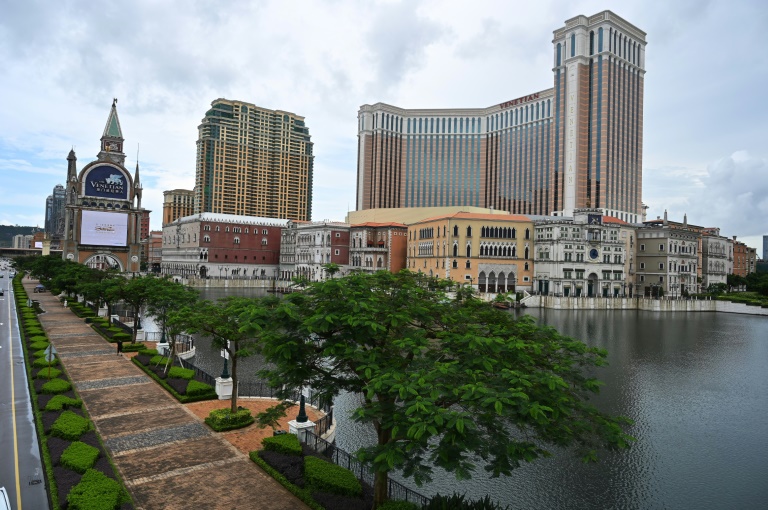
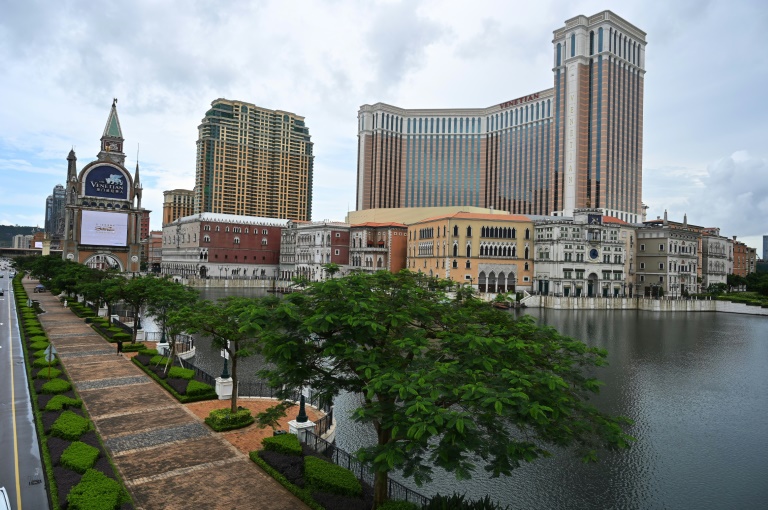
Casino stocks soared in Macau on Monday after authorities announced plans to gradually welcome back tour groups from the Chinese mainland, the demographic that makes up the vast majority of punters.

Macau is the only place in China where casinos are legal and the former Portuguese colony used to dwarf Las Vegas for the scale of bets placed each month.

But China’s strict zero-Covid controls have laid waste to the gaming sector, hammering the city’s economy and its main source of revenue.

Some much-needed relief came on Sunday when city leader Ho Iat-seng said Macau would start allowing group tours from mainland provinces, as well as easier e-visa rules for mainlanders, from November.

Gaming stocks surged the most in six months on Monday morning, with a Bloomberg Intelligence gauge of the city’s six licensed casino operators showing overall gains of more than 10 percent. 

Sands China led the pack, soaring more than 18 percent, SJM holdings rose more than 14 percent while Wynn Macau was up 10 percent.

Ho said tour group rules would initially be eased for the neighbouring mainland province of Guangdong, followed by other major population centres including Shanghai, Zhejiang, Jiangsu and Fujian.

Daily visitation numbers, he added, could rise to 40,000, compared with just 11,000 in August.

But Macau will not, for now, follow Hong Kong which last week announced it was finally scrapping mandatory hotel quarantine for international travellers.

Instead the city will remain largely closed to overseas visitors, maintaining a seven-day hotel quarantine policy.

Even if pandemic measures are fully lifted it is unlikely Macau’s casinos will see a return to their headiest, freewheeling days.

Chinese President Xi Jinping has spearheaded an anti-corruption campaign that has seen increased scrutiny of the high-rollers and officials who travel to gamble in Macau, where cases of money laundering are common.

Macau’s six operating concessions are currently up for renewal. 

Earlier this month all the current operators made bids alongside a seventh newcomer, a company controlled by Malaysian tycoon and Genting chairman Lim Kok Thay.

Macau casino stocks surge on mainland travel hopes

Casino stocks soared in Macau on Monday after authorities announced plans to gradually welcome back tour groups from the Chinese mainland, the demographic that makes up the vast majority of punters.

Macau is the only place in China where casinos are legal and the former Portuguese colony used to dwarf Las Vegas for the scale of bets placed each month.

But China’s strict zero-Covid controls have laid waste to the gaming sector, hammering the city’s economy and its main source of revenue.

Some much-needed relief came on Sunday when city leader Ho Iat-seng said Macau would start allowing group tours from mainland provinces, as well as easier e-visa rules for mainlanders, from November.

Gaming stocks surged the most in six months on Monday morning, with a Bloomberg Intelligence gauge of the city’s six licensed casino operators showing overall gains of more than 10 percent. 

Sands China led the pack, soaring more than 18 percent, SJM holdings rose more than 14 percent while Wynn Macau was up 10 percent.

Ho said tour group rules would initially be eased for the neighbouring mainland province of Guangdong, followed by other major population centres including Shanghai, Zhejiang, Jiangsu and Fujian.

Daily visitation numbers, he added, could rise to 40,000, compared with just 11,000 in August.

But Macau will not, for now, follow Hong Kong which last week announced it was finally scrapping mandatory hotel quarantine for international travellers.

Instead the city will remain largely closed to overseas visitors, maintaining a seven-day hotel quarantine policy.

Even if pandemic measures are fully lifted it is unlikely Macau’s casinos will see a return to their headiest, freewheeling days.

Chinese President Xi Jinping has spearheaded an anti-corruption campaign that has seen increased scrutiny of the high-rollers and officials who travel to gamble in Macau, where cases of money laundering are common.

Macau’s six operating concessions are currently up for renewal. 

Earlier this month all the current operators made bids alongside a seventh newcomer, a company controlled by Malaysian tycoon and Genting chairman Lim Kok Thay.

Petrol stations: running out of road?

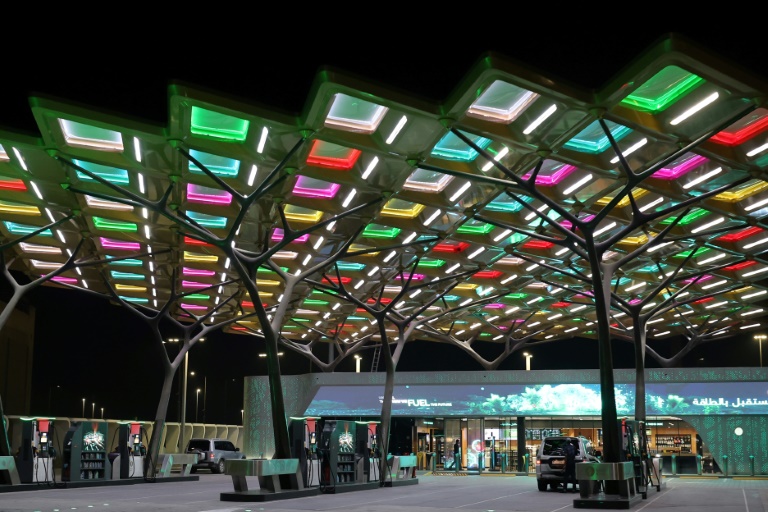
A vintage pump in the Vietnamese hills; a Madrid petrol station topped with a giant sombrero; a multi-coloured futuristic fuel outlet in Dubai -– whatever its form the humble filling stop, emblem of our modern societies, would appear to be running out of road.

Faced with the drive away from hydrocarbons as governments seek to fight global warming, compounded by fuel shortages due to the Ukraine conflict and consequent soaring prices, there is little doubt that the internal combustion engine’s days will likely soon be numbered.

That may well sound the death knell -– or at least trigger a deep reconfiguration –- for petrol stations, whose history was closely tied to the rise of the automobile at the start of the 20th century.

In Moscow, the oldest filling station in the city centre was established in the 1930s. Nine decades later, this sober cream and red building is still there, in the shadow of golden-domed Cathedral of Christ the Saviour.

Some filling outlets have become landmarks in themselves, such as Blackwell’s Corner, in the California desert. A giant billboard with James Dean’s face reminds motorists that it was here the “Rebel Without a Cause” star made his last stop before the accident which killed him 40 kilometres (25 miles) further down the highway.

The common element of most service stations is the canopy above the fuel pumps which, as well as sheltering users from the weather, often serves for marketing.

Some have earned listing as historical monuments, such as Red Hill service station 170 kms north of London, whose futuristic “Pegasus” design from the 1960s comprises six circular canopies.

– Back to the land –

At night the Union 76 petrol station in Beverly Hills looks like a space ship which has landed next to the palm trees of Little Santa Monica Boulevard. It is recognised as a prime example of Googie architecture, and was chosen by British rocker Noel Gallagher in 2011 for the cover of his first album with the High Flying Birds.

But the canopies are not always as flashy. 

In many places it’s just corrugated sheeting. In a typical fuel outlet in Nimba county, Liberia, fuel is sold using jerrycans and people fill their vehicles using funnels.

In Europe, many small village filling stations have closed down. 

In France there were just over 11,000 service stations in 2021, compared to 41,000 at the start of the 1980s. A key reason is competition from supermarkets which can afford to earn smaller margins.

“In the 2000s, we branched out into garage work, then vehicle washing,” said Francis Pousse, in charge of service stations at auto industry body Mobilians. 

“But the margins kept going down, and faced with the investments needed to modernise, lots of managers threw in the towel. And young people who buy garage/fuel stations close down the fuel part,” he added. 

How many still remember that long-ago era of small village petrol stations? In Roaix, north of Marseille, a sign for petrol company Antar and an old red pump are reminders that a second-hand store by the road wasn’t always here.

Elsewhere, for example near Gjilan in Kosovo, some abandoned filling stations are simply disappearing under overgrown vegetation –- possibly presaging the fate of others as humanity switches from hydrocarbons.

In the meantime, some are being recycled, like one former petrol station in Phnom Penh, which has taken the concept of ecological transition to a logical conclusion: instead of fuel, its main product on sale now is plants.

Inflation hits home for Mongolians struggling for basic goods

At Ulaanbaatar’s Naiman Sharga money exchange market, elderly women stand in the street waving wads of money at passers-by, encouraging them to change foreign currency to Mongolian tugriks.

Each transaction nets them a small profit — but when the value of the tugrik fluctuates it makes that more difficult, and lately the currency has taken a dive. 

This year the currency has fallen almost 15 percent against the US dollar — most of that since the start of Russia’s invasion of Ukraine.

Angara Banerji, the International Monetary Fund’s mission chief, listed a raft of factors behind the country’s inflation, including a rise in domestic meat prices, China’s border restrictions, surging oil and food prices, and an increase in transportation and logistical costs for imports.

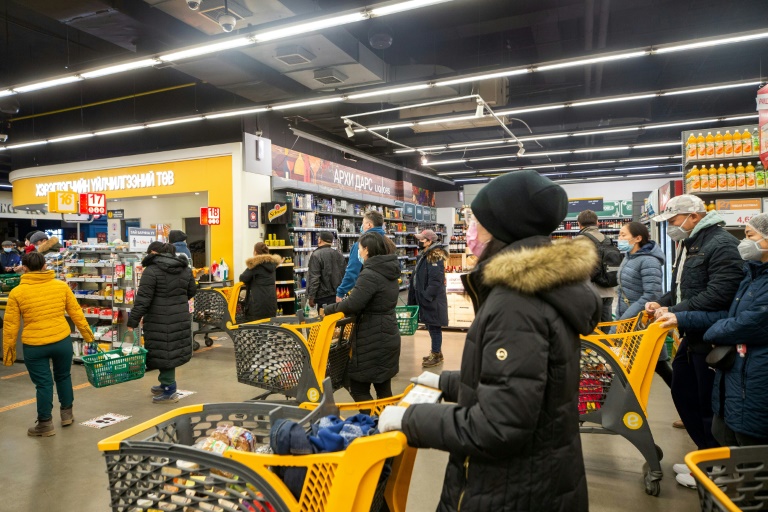
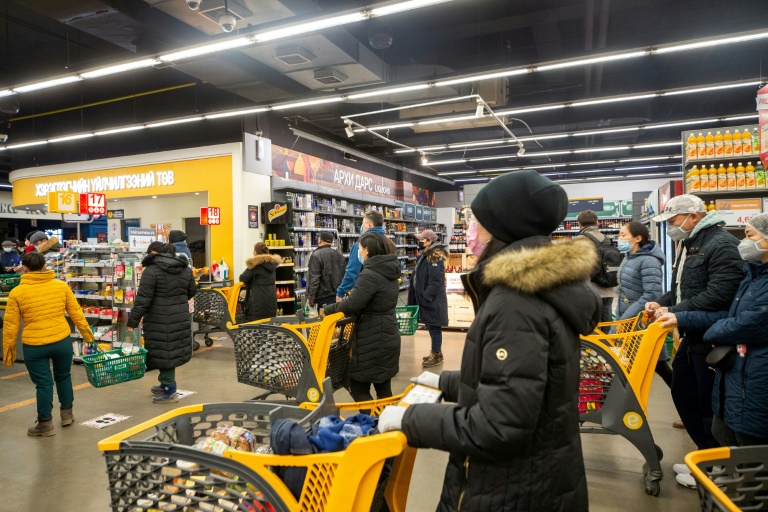
The declining currency has pushed up the cost of everyday goods for a country struggling to navigate global economic headwinds caused by transportation bottlenecks and inflationary pressures, war and economic uncertainty. 

“The rate is going down dramatically because of the war in Ukraine and the coronavirus,” said Ts. Maisaikhan, a currency trader who operates inside the market. 

“We don’t produce much ourselves, most things are imported, so when the dollar goes up the price of everything goes up too.”

Like elsewhere in the world, Mongolia’s inflation has soared this year and reached 14.4 percent in August, compared with 9.5 percent during the same month in 2021, according to the country’s National Statistical Office.

Prices for food and beverages increased by about a fifth on-year in August — the same rate as medicine and health care — while the cost of clothing, utilities and housing also went up.

“Inflation has surged sharply since mid-2021 and has exceeded the Bank of Mongolia’s target band,” said Banerji.

Last summer there were a few weeks when potato prices temporarily tripled after China closed the border over Covid-19.

Next to the money exchange offices lies Urt Tsagaan (Long White), a pedestrian mall filled with jewellery makers, seamstresses, hairdressers, boot repair stalls, cobblers, and tattoo studios. 

In a sewing shop near the money exchange, Sukhbaatar Tuya said she buys some meat and vegetables each day but when prices spike suddenly it just means buying less produce. 

“We’re just going day by day,” she said. “We don’t have any plans beyond the next three days or a week.”

“We have to live like this,” she said. “There is no other way.”

Inflation hits home for Mongolians struggling for basic goods

At Ulaanbaatar’s Naiman Sharga money exchange market, elderly women stand in the street waving wads of money at passers-by, encouraging them to change foreign currency to Mongolian tugriks.

Each transaction nets them a small profit — but when the value of the tugrik fluctuates it makes that more difficult, and lately the currency has taken a dive. 

This year the currency has fallen almost 15 percent against the US dollar — most of that since the start of Russia’s invasion of Ukraine.

Angara Banerji, the International Monetary Fund’s mission chief, listed a raft of factors behind the country’s inflation, including a rise in domestic meat prices, China’s border restrictions, surging oil and food prices, and an increase in transportation and logistical costs for imports.

The declining currency has pushed up the cost of everyday goods for a country struggling to navigate global economic headwinds caused by transportation bottlenecks and inflationary pressures, war and economic uncertainty. 

“The rate is going down dramatically because of the war in Ukraine and the coronavirus,” said Ts. Maisaikhan, a currency trader who operates inside the market. 

“We don’t produce much ourselves, most things are imported, so when the dollar goes up the price of everything goes up too.”

Like elsewhere in the world, Mongolia’s inflation has soared this year and reached 14.4 percent in August, compared with 9.5 percent during the same month in 2021, according to the country’s National Statistical Office.

Prices for food and beverages increased by about a fifth on-year in August — the same rate as medicine and health care — while the cost of clothing, utilities and housing also went up.

“Inflation has surged sharply since mid-2021 and has exceeded the Bank of Mongolia’s target band,” said Banerji.

Last summer there were a few weeks when potato prices temporarily tripled after China closed the border over Covid-19.

Next to the money exchange offices lies Urt Tsagaan (Long White), a pedestrian mall filled with jewellery makers, seamstresses, hairdressers, boot repair stalls, cobblers, and tattoo studios. 

In a sewing shop near the money exchange, Sukhbaatar Tuya said she buys some meat and vegetables each day but when prices spike suddenly it just means buying less produce. 

“We’re just going day by day,” she said. “We don’t have any plans beyond the next three days or a week.”

“We have to live like this,” she said. “There is no other way.”

Five rescuers killed in Philippine typhoon

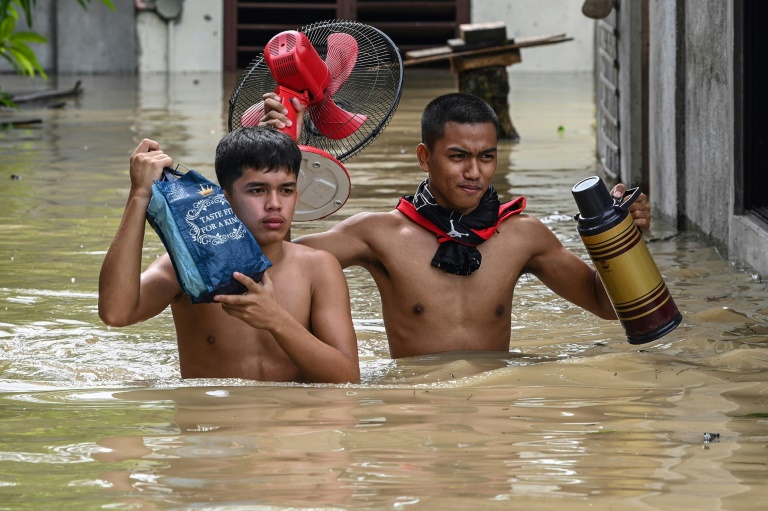
Five rescuers were killed in the Philippines after they were sent to a flooded community during a powerful typhoon, authorities said Monday, the first confirmed casualties of the strongest storm to hit the country this year. 

The typhoon dumped heavy rain and unleashed fierce winds as it swept across the main island of Luzon on Sunday and Monday, toppling trees and flooding low-lying communities. 

So far, there have been no reports of widespread severe damage.

The five rescuers were in San Miguel municipality in Bulacan province, near the capital Manila, when they died. 

“They were deployed by the provincial government to a flooded area,” said Lieutenant-Colonel Romualdo Andres, chief of police in San Miguel.

Andres said the rescuers were wading through floodwaters when a wall beside them collapsed, sending them into the fast current.

The Philippines is regularly ravaged by storms, with scientists warning they are becoming more powerful as the world gets warmer because of climate change.

Super Typhoon Noru smashed into the archipelago nation on Sunday after an unprecedented “explosive intensification” in wind speeds, the state weather forecaster said earlier.

It made landfall about 100 kilometres (62 miles) northeast of the densely populated capital Manila, before weakening to a typhoon as it crossed a mountain range, coconut plantations and rice fields.

Nearly 75,000 people were evacuated from their homes before the storm hit, as the meteorology agency warned heavy rain could cause “serious flooding” in vulnerable areas, trigger landslides and destroy crops.

But on Monday morning there was no sign of the widespread devastation many had feared.

“We were ready for all of this,” President Ferdinand Marcos Jr told a briefing with disaster agencies.

“You might think that we overdid it. There is no such thing as overkill when it comes to disasters.”

Burdeos municipality on the Polillo islands, part of Quezon province, bore the brunt of Noru as it made landfall.

Fierce winds ripped off some roofs and brought down large trees while heavy rain flooded riverside houses, said Ervin Calleja, a 49-year-old teacher.

“It was really worrisome,” Calleja told AFP by mobile phone. 

“The wind was whistling and it had heavy rains. That’s the more dangerous part.”

Despite taking the full force of the typhoon, authorities said it passed over quickly and there were so far no reports of major damage to houses. But some crops were wiped out.

“Here at the town centre all banana trees were flattened, 100 percent,” said Liezel Calusin, a member of the civil defence team in Polillo municipality. 

“We still have no electricity, but the phones are working.”

In Banaba village near Manila, Terrence Reyes fled his riverside home with his family and neighbours during the storm as floodwaters rose. 

They returned home Monday to find their belongings caked in mud.

“We just have to throw them away and start over again,” Reyes, 25, said. 

“It happens each time there is a storm here.”

The Philippines — ranked among the most vulnerable nations to the impacts of climate change — is hit by an average of 20 storms every year.

Pound hits record low versus dollar, markets drop on recession fears

The pound hit a record low against the dollar Monday on surging fears about the UK economy after the government unveiled a huge tax-cutting budget.

The selloff came as most equity markets across Asia fell again owing to a growing expectation that central bank interest rate hikes to fight runaway inflation would lead to deep and painful recessions.

Officials in several countries including the United States, Britain, Switzerland and Sweden unveiled more increases in the cost of borrowing.

The moves sent equity markets deep into the red again after officials reiterated their focus on fighting inflation, even if that means causing a recession.

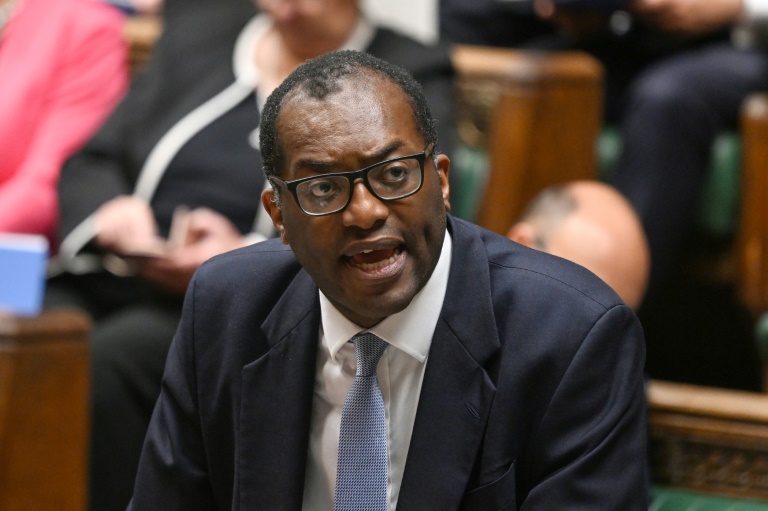
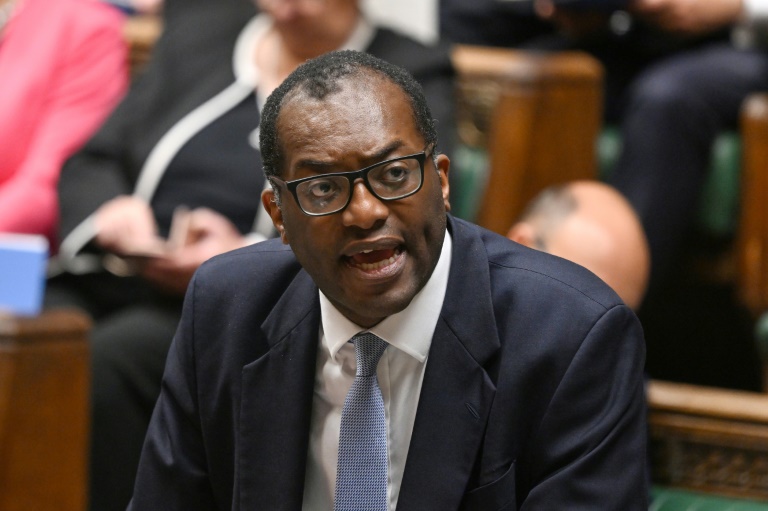
But the biggest casualty of the week was the pound, which fell below $1.10 for the first time since 1985 as new finance minister Kwasi Kwarteng announced his controversial mini-budget.

It then extended the losses Monday to an all-time low of $1.0350 in Asian trade after he said he intended to unveil further reductions, despite his budget causing ructions on London’s markets.

It also fell to a two-year low against the euro, though the single currency remains under pressure against the dollar, sitting at 2002 levels.

Now, observers are warning that the pound could fall to parity with the greenback.

Kwarteng, who was put in place by Liz Truss after she became prime minister earlier this month, said he planned to slash taxes to kickstart the British economy and provide cash to cushion families from rocketing energy costs.

But investors were spooked by the huge amount of borrowing likely needed for the multibillion-pound package, which critics said would benefit the rich far more during a cost-of-living crisis.

“Whether or not the UK government announcement of the biggest tax reduction since 1972… will in time yield a significant growth dividend is not something markets are yet willing to contemplate,” said National Australia Bank’s Ray Attrill.

“Instead, they were consumed by worries over the scale of near-term UK government financing needs, at a time when the current account deficit is running at more than eight percent of GDP.”

He added: “Chatter about a possible UK sovereign rating downgrade has already begun.”

And former US treasury secretary Lawrence Summer was scathing of Britain’s recent monetary policy decisions.

“It makes me very sorry to say, but I think the UK is behaving a bit like an emerging market turning itself into a submerging market,” he told Bloomberg Television’s Wall Street Week last week.

“Between Brexit, how far the Bank of England got behind the curve and now these fiscal policies, I think Britain will be remembered for having (pursued) the worst macroeconomic policies of any major country in a long time.”

The collapse in sterling came as markets across the world are sent into a spin by recession worries caused by a sharp tightening of monetary policy by central banks fighting decades-high inflation. 

The retreat in London was mirrored in Europe and New York, where the Dow hit a two-year low, and Asia followed suit.

Tokyo shed two percent as traders there returned from a long weekend break, while Sydney, Seoul, Singapore, Taipei and Jakarta also tanked.

But Hong Kong rose as traders welcomed news that the city had relaxed strict hotel quarantine measures for travellers, providing a much-needed boost to the embattled economy.

Macau casino stocks led the way as the city said it would accept Chinese tour groups again from November, having been blocked during the pandemic.

Shanghai stocks also rose.

Oil prices edged up slightly, though barely made a dent in the big losses suffered Friday as expectations that a recession is looming hammer demand expectations.

– Key figures at around 0230 GMT –

Pound/dollar: DOWN at 1.0570 from 1.0852 on Friday

Euro/pound: UP at 91.38 pence from 89.28 pence 

Euro/dollar: DOWN at $ 0.9656 from 0.9695

Dollar/yen: UP at 143.82 yen from 143.31 yen

Hong Kong – Hang Seng Index: UP 0.2 percent at 17,970.69 

Shanghai – Composite: UP 0.1 percent at 3,091.82 

Tokyo – Nikkei 225: DOWN 2.0 percent at 26,619.53 (break)

West Texas Intermediate: UP 0.5 percent at $79.13 per barrel

Brent North Sea crude: UP 0.4 percent at $86.52 per barrel

New York – Dow: DOWN 1.6 percent at 29,590.41 (close)

London – FTSE 100: DOWN 2.0 percent at 7,018.60 (close) 

Pound hits record low versus dollar, markets drop on recession fears

The pound hit a record low against the dollar Monday on surging fears about the UK economy after the government unveiled a huge tax-cutting budget.

The selloff came as most equity markets across Asia fell again owing to a growing expectation that central bank interest rate hikes to fight runaway inflation would lead to deep and painful recessions.

Officials in several countries including the United States, Britain, Switzerland and Sweden unveiled more increases in the cost of borrowing.

The moves sent equity markets deep into the red again after officials reiterated their focus on fighting inflation, even if that means causing a recession.

But the biggest casualty of the week was the pound, which fell below $1.10 for the first time since 1985 as new finance minister Kwasi Kwarteng announced his controversial mini-budget.

It then extended the losses Monday to an all-time low of $1.0350 in Asian trade after he said he intended to unveil further reductions, despite his budget causing ructions on London’s markets.

It also fell to a two-year low against the euro, though the single currency remains under pressure against the dollar, sitting at 2002 levels.

Now, observers are warning that the pound could fall to parity with the greenback.

Kwarteng, who was put in place by Liz Truss after she became prime minister earlier this month, said he planned to slash taxes to kickstart the British economy and provide cash to cushion families from rocketing energy costs.

But investors were spooked by the huge amount of borrowing likely needed for the multibillion-pound package, which critics said would benefit the rich far more during a cost-of-living crisis.

“Whether or not the UK government announcement of the biggest tax reduction since 1972… will in time yield a significant growth dividend is not something markets are yet willing to contemplate,” said National Australia Bank’s Ray Attrill.

“Instead, they were consumed by worries over the scale of near-term UK government financing needs, at a time when the current account deficit is running at more than eight percent of GDP.”

He added: “Chatter about a possible UK sovereign rating downgrade has already begun.”

And former US treasury secretary Lawrence Summer was scathing of Britain’s recent monetary policy decisions.

“It makes me very sorry to say, but I think the UK is behaving a bit like an emerging market turning itself into a submerging market,” he told Bloomberg Television’s Wall Street Week last week.

“Between Brexit, how far the Bank of England got behind the curve and now these fiscal policies, I think Britain will be remembered for having (pursued) the worst macroeconomic policies of any major country in a long time.”

The collapse in sterling came as markets across the world are sent into a spin by recession worries caused by a sharp tightening of monetary policy by central banks fighting decades-high inflation. 

The retreat in London was mirrored in Europe and New York, where the Dow hit a two-year low, and Asia followed suit.

Tokyo shed two percent as traders there returned from a long weekend break, while Sydney, Seoul, Singapore, Taipei and Jakarta also tanked.

But Hong Kong rose as traders welcomed news that the city had relaxed strict hotel quarantine measures for travellers, providing a much-needed boost to the embattled economy.

Macau casino stocks led the way as the city said it would accept Chinese tour groups again from November, having been blocked during the pandemic.

Shanghai stocks also rose.

Oil prices edged up slightly, though barely made a dent in the big losses suffered Friday as expectations that a recession is looming hammer demand expectations.

– Key figures at around 0230 GMT –

Pound/dollar: DOWN at 1.0570 from 1.0852 on Friday

Euro/pound: UP at 91.38 pence from 89.28 pence 

Euro/dollar: DOWN at $ 0.9656 from 0.9695

Dollar/yen: UP at 143.82 yen from 143.31 yen

Hong Kong – Hang Seng Index: UP 0.2 percent at 17,970.69 

Shanghai – Composite: UP 0.1 percent at 3,091.82 

Tokyo – Nikkei 225: DOWN 2.0 percent at 26,619.53 (break)

West Texas Intermediate: UP 0.5 percent at $79.13 per barrel

Brent North Sea crude: UP 0.4 percent at $86.52 per barrel

New York – Dow: DOWN 1.6 percent at 29,590.41 (close)

London – FTSE 100: DOWN 2.0 percent at 7,018.60 (close) 

Close Bitnami banner
Bitnami