AFP

UAE agrees to supply Germany with gas, diesel as Scholz tours Gulf

The United Arab Emirates agreed Sunday to supply natural gas and diesel to Germany as part of an “energy security” deal to replace Russian supplies.

Emirati industry minister Sultan Ahmed Al Jaber called it a “landmark new agreement” that “reinforces the rapidly growing energy partnership between the UAE and Germany”, at a signing attended by German Chancellor Olaf Scholz, the UAE’s state news agency WAM reported.

Scholz signed the deal while on a Gulf tour that took him to the UAE, Saudi Arabia and Qatar hunting for new energy sources.

He met with Emirati President Sheikh Mohamed bin Zayed Al-Nahyan, who said on Twitter they had discussed “cooperation in areas including energy security, emissions reduction and climate action”. 

The German leader said he “welcomed” the “energy security” agreement, WAM said.

UAE state oil company ADNOC completed its first direct diesel delivery to Germany this month, and will “supply up to 250,000 tons of diesel per month in 2023”, it reported. 

The first delivery of 137,000 cubic metres of liquefied natural gas will be made in December at Germany’s new floating LNG import terminal at Brunsbuettel, near Hamburg, the RWE energy firm said in a statement.

ADNOC will make more LNG deliveries to Germany in 2023, WAM said. 

Scholz’s two-day Gulf tour aimed to seal new energy deals to replace Russian supplies and mitigate the energy crisis resulting from Moscow’s invasion of Ukraine. 

On Saturday, he met Saudi Crown Prince Mohammed bin Salman in Jeddah.

On Sunday afternoon, following his trip to the UAE, he held talks in Doha with Qatari Emir Sheikh Tamim bin Hamad Al-Thani on energy and investment, according to an official statement.

No deals were announced in Qatar however. The two countries are locked in tough talks on the length of contracts for LNG supplies, according to German media, and Scholz said he wanted to see progress.

Scholz said Qatar’s controversial rights record was improving but did not commit to attending the World Cup in the Gulf state that starts in November.

– Energy transition –

Scholz’s stop in the UAE included a tour of an environmental project at a mangrove park with Emirati climate change minister Mariam Almheiri. 

Almheiri said discussions would cover “climate action and economic growth” as well as energy supplies. 

“The UAE believes all three pillars must go hand in hand. We cannot look at one or two of these pillars separately,” she said.

The UAE, Saudi Arabia and Qatar have been critics of what they call unrealistic energy transition models they say have contributed to shortages that have hit Europe in the past two years.

Scholz told reporters in Abu Dhabi that his country had “made progress on a whole series of projects here in terms of the production and purchase of diesel and gas”, while adding it was determined to avoid energy dependence on Russia. 

“The fact that we are dependent on one supplier and also dependent on its decisions will certainly not happen to us again,” he said. 

“With the investments that we are now making in Germany, and that will become reality bit by bit next year, we will indeed have an infrastructure for gas imports for Germany, such that we are no longer directly dependent on the specific supplier at the other end of the pipeline, as we are with a pipeline connection.” 

Scholz ended the tour in Qatar one day after France’s TotalEnergies signed a new $1.5 billion deal to help expand Doha’s natural gas production. 

The German chancellor said such projects were “important”. 

“We have to ensure that the production of liquefied gas in the world is advanced to such an extent that the high demand that exists can be met — without having to fall back on the production capacities in Russia that have been used so far,” he said. 

Huge fire destroys warehouse at giant Paris wholesale market

A major blaze swept through part of one of the world’s biggest fresh produce markets on the outskirts of Paris on Sunday.

The fire destroyed a fruit and vegetable warehouse at the Rungis complex to the south of the French capital. 

Flames spread shortly after noon, the authorities said, sending a dark plume of smoke billowing over the southern suburbs.

A hundred firefighters brought the fire under control by mid-afternoon and there were no injuries, the fire brigade said.

The warehouse, about the size of a football pitch, belonged to Les Halles Mandar group.

“It’s a shock, but we’re glad there were no injuries”, boss Shaoul Abramczyk said.

“We will not be able to fulfil our partners’ orders from tomorrow (Monday) and for several days”, he added.

“When a market operator is the victim of a tragedy of this nature, the whole market is struck at its heart”, Rungis market head Stephane Layani said.

Super Typhoon Noru slams into the Philippines

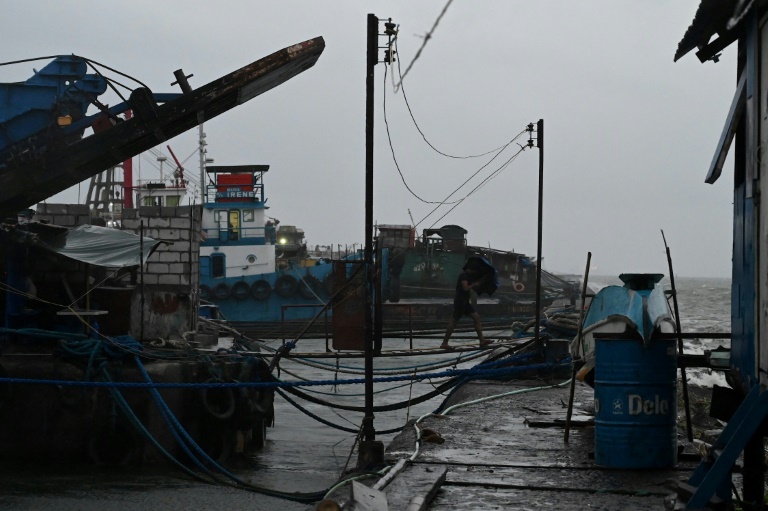
Super Typhoon Noru slammed into the Philippines Sunday, battering the heavily populated main island of Luzon with strong winds and heavy rain that have forced thousands of people to flee their homes.

The storm was packing maximum sustained winds of 195 kilometres (121 miles) an hour as it charged towards the archipelago nation after an unprecedented “explosive intensification”, the state weather forecaster said. 

Noru, the strongest storm to hit the Philippines this year, made landfall in Burdeos municipality on the Polillo islands, part of Quezon province, at 5:30 pm (0930 GMT). 

Videos posted on social media and verified by AFP showed trees swaying wildly as wind and rain whipped across the islands.

The weather bureau issued warnings late Sunday for “serious flooding” in vulnerable areas of the capital Manila and nearby provinces as Noru dumped heavy rain.

“We ask residents living in danger zones to adhere to calls for evacuation whenever necessary,” Philippine National Police chief General Rodolfo Azurin said.

The Philippines is regularly ravaged by storms, with scientists warning they are becoming more powerful as the world gets warmer because of climate change.

“The winds were fierce this morning,” said Ernesto Portillo, 30, who works as a cook in the coastal municipality of Infanta in Quezon.

“We’re a bit worried… We secured our belongings and bought a few groceries so we have food just in case.”

Noru weakened to a typhoon as it swept across central Luzon. It is expected to enter the South China Sea on Monday and head towards Vietnam.

“Typhoons are like engines — you need a fuel and an exhaust to function,” said weather forecaster Robb Gile.

“In the case of Karding, it has a good fuel because it has plenty of warm waters along its track and then there is a good exhaust in the upper level of the atmosphere — so it’s a good recipe for explosive intensification,” he added, using the local name for the storm.

The storm hit about 100 kilometres northeast of Manila. Emergency personnel braced for the possibility of strong winds and heavy rain battering the capital, home to more than 13 million people. 

Forced evacuations were under way in some high-risk areas of the metropolis, including impoverished communities living in flimsy shacks along rivers.

Gloria Perez, 68, was part of a group sheltering in modular tents set up on a covered basketball court.

“I evacuated the house where I’m living in because I’m scared, the flood there gets really high,” Perez told AFP.

“I don’t want a repeat of what happened to me before.”

– Calm before the storm –

Noru came nine months after another super typhoon devastated swathes of the country, killing more than 400 people and leaving hundreds of thousands homeless.

More than 8,300 people fled their homes before the latest storm hit, including residents in several municipalities in Quezon, disaster officials said.

In the neighbouring province of Aurora, residents of Dingalan municipality were forced to seek shelter.

“People living near the coast have been told to evacuate. We live away from the coast so we’re staying put so far. We’re more worried about the water from the mountains,” said Rhea Tan, 54, a restaurant manager in Dingalan.

The weather bureau warned of dangerous storm surges more than three metres high along the coast of Aurora and Quezon, including the Polillo islands, along with widespread flooding and landslides as the storm soaks the region.

It could topple coconut and mango trees, and cause “severe losses” to rice and corn crops in the heavily agricultural region, while inundating villages.

The coast guard reported more than 2,500 people had been left stranded by ferry cancellations as vessels took shelter ahead of the storm.

Dozens of flights in and out of Manila were also cancelled.

School classes and non-essential government services have been suspended for Monday. 

The Philippines — ranked among the most vulnerable nations to the impacts of climate change — is hit by an average of 20 storms every year.

Canada counts damage after Fiona; Cuba and Florida brace for storm Ian

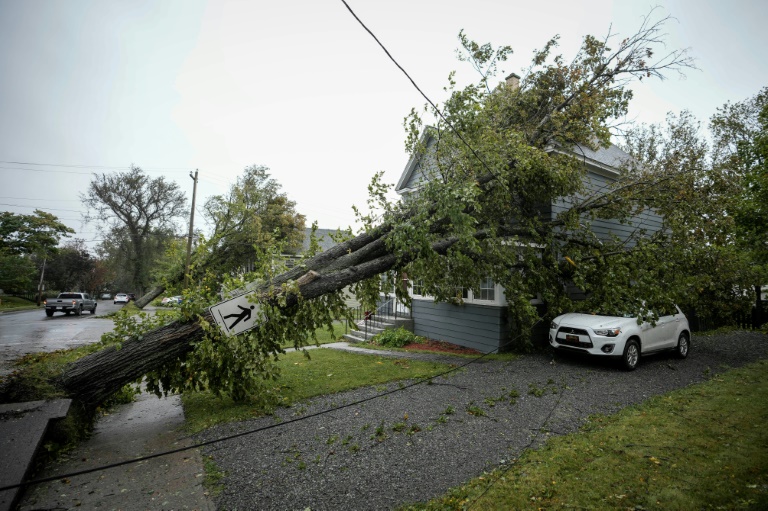
Parts of eastern Canada resembled a “war zone” Sunday after powerful storm Fiona swept houses into the sea and caused major power outages, as the Caribbean and Florida braced for intensifying Tropical Storm Ian.

Fiona, a post-tropical cyclone that had earlier killed seven people in the Caribbean, tore into Nova Scotia and Newfoundland on Saturday.

The storm packed hurricane-force winds of 80 miles (130 kilometers) per hour and brought torrential rain, as well as waves of up to 40 feet (12 meters), which left devastation across the region’s coast. 

Storm surges swept at least 20 homes into the sea in the town of Channel-Port aux Basques, on the southwestern tip of Newfoundland, officials there said, with Mayor Brian Button describing “a total war zone” in the coastal community. 

Some 200 residents had been evacuated before the storm hit, though officials said at least one person was missing.

“The woman was inside her home when a wave struck the residence and destroyed a section of the basement. She has not been seen since.  A search is happening today,” the Royal Canadian Mounted Police told AFP.

“Some people have lost everything, and I mean everything,” Button told CBC News.

“The sea was taking back the land and we were getting separated. A lot of our homes are built along the coastline along the Atlantic Ocean. Down there, Fiona just wiped out parts of that,” he said. 

Tempers were fraying Sunday as residents tried to return to their homes — or what was left of them. 

“I know people are showing up at the barricades angry this morning and wanting to move in and go check up on their properties,” said Button on Facebook Live. 

“You’ve got to give us a little bit of time… Unfortunately, this is going to take days, could take weeks, could take months in some cases,” he said. Button advised businesses to stay closed and residents to await instructions from officials on when they could return.

– ‘Incredible storm’ –

More than 300,000 people were still without power across the region Sunday after the storm felled trees, ripped roofs from buildings and damaged power lines.

“This was an incredible storm,” Nova Scotia Premier Tim Houston told CBC, adding that Fiona may have “caused the most damage of any we’ve seen.”

Houston said the Canadian military had been deployed to help clear trees and roads in the province.  

Television images showed around 100 cars queuing to get gas for generators in Cape Breton, an island off Nova Scotia, where dozens had spent the night in relief centers operated by the Canadian Red Cross.

In Prince Edward Island, Charlottetown Police Chief Brad MacConnell pleaded with residents to stay inside as recovery efforts continue.

“We ask people to stay home unless absolutely necessary,” he told CBC, adding that there’s “a lot of devastation” and hardly an area of the city that had not been significantly impacted.

By mid-morning Sunday the storm was over Labrador, after having moved inland through southeastern Quebec.

The country’s environmental agency said all warnings had ended and that, after causing more than a week of havoc from the Caribbean to Canada, Fiona was finally set to dissipate over the Labrador Sea.

– Ian to become major hurricane –

Further south, parts of the Caribbean as well as the US state of Florida were preparing for Tropical Storm Ian, which the US National Hurricane Center (NHC) said is forecast to become a hurricane on Sunday and a major hurricane by late Monday.

A hurricane warning was in effect for Grand Cayman on Sunday, with Ian poised to brush past the British territory Monday on its way to western Cuba and then Florida by mid-week. 

Governor Ron DeSantis said Saturday that he had declared a state-wide emergency in preparation for the storm, warning on Twitter that “Floridians should take precautions.”

NASA called off the scheduled Tuesday launch of its historic uncrewed mission to the Moon in anticipation of the storm.

Ian’s threat to the Caribbean came after Fiona cut a deadly path through the region earlier this week, killing four people in Puerto Rico, two in the Dominican Republic and one in Guadeloupe. 

The storm had turned north and skirted the Atlantic island of Bermuda on Friday. No fatalities or major damage were reported there.

burs/st/bbk

Swiss narrowly back hiking retirement age for women

Swiss voters on Sunday accepted by a hair a divisive pension reform plan, which will raise women’s retirement age to the same as men’s, but snubbed a push to ban factory farming

Final results showed a tiny majority of Swiss approved a government plan to reform the country’s pension system for the first time in more than a quarter of a century. 

Bern has long argued the need to “stabilise” the country’s old-age security system, under pressure as life expectancy rises and the giant baby boomer generation reaches retirement age.

After failing twice to get the approval needed for similar plans, in 2004 and 2017, two separate votes on different aspects of the reform passed Sunday.

Just 50.57 percent of Swiss agreed to the most controversial part of the reform, involving hiking women’s retirement age by one year.

This means women will need to work until the age of 65 before receiving a full pension, bringing them en par with their male counterparts.

A separate vote on boosting funding for the reform through a sales tax hike meanwhile passed with 55 percent in favour.

Parliament approved the key measures last year, but left-leaning parties and unions decried the reform “on the backs of women” and pushed the issue to a referendum under Switzerland’s direct democratic system.

Backers of the reform argued that it was reasonable for men and women to retire at the same age, with Celine Amaudruz, vice president of the populist rightwing Swiss People’s Party hailing the vote as “a first step towards permanence” for the old-age insurance system.

– ‘Slap in the face’ –

But Sunday’s decision sparked outrage from the plan’s opponents.

The Swiss Socialist Party’s women’s group immediately announced a demonstration in Bern on Monday, warning the plan would dramatically cut women’s already inferior pension income.

“Women’s pension income will be reduced by 7 billion Swiss francs ($7.1 billion) over the next 10 years: a slap in the face of all women,” it said in a statement.

Opponents argued that women face significant discrimination and a broad gender pay-gap in Switzerland, and thus receive far smaller pensions than men, demanding such issues be addressed before hiking their retirement age.

In 2020, women in Switzerland on average received pensions nearly 35 percent smaller than men, according to the Swiss economy ministry.

Polls ahead of Sunday’s vote revealed deep divisions between the sexes, with around 70 percent of men questioned in favour and close to 60 percent of women opposed.

Sunday’s results were not immediately broken down by gender, but did show a dramatic divide between different Swiss regions.

While Switzerland’s German-speaking part was overwhelmingly in favour of the reform, the French and Italian-speaking parts were staunchly opposed, with nearly 63 percent of Geneva voters voting “no” and more than 70 percent in Jura canton.

Pierre-Yves Maillard, head of the Swiss Trade Union Federation, warned that the deep divide seen between the sexes and the regions on such an important issue was “not good politics.”

“It will leave a trace,” he told the Keystone-ATS news agency.

– Factory farming ban rejected –

Another hotly debated issue on Sunday’s ballot, a proposed ban on intensive livestock farming, was meanwhile rejected.

Final results showed just over 63 percent of voters voted “no” to the popular initiative by animal rights and welfare organisations. 

The backers of the initiative had wanted to make protecting the dignity of animals like cattle, chickens or pigs a constitutional requirement.

Their initiative would have imposed stricter minimum requirements for animal-friendly housing and care, access to outdoors and slaughtering practices, essentially outlawing factory farming.

The government and parliament opposed the initiative, insisting that Switzerland already has among the world’s strictest animal welfare laws, and that tightening the rules would significantly hike prices.

Backers of the initiative said Sunday they were pleased the campaign had at least raised awareness about the issue.

“All of Switzerland has discussed the problems linked to intensive livestock farming and our meat consumption,” Vera Weber, head of the Franz Weber Foundation, told RTS.

“For us, it is in any case a victory.”

Voter participation Sunday ticked in at over 52 percent, above the usual ceiling of around 50 percent.

Swiss narrowly back hiking retirement age for women

Swiss voters on Sunday accepted by a hair a divisive pension reform plan, which will raise women’s retirement age to the same as men’s, but snubbed a push to ban factory farming

Final results showed a tiny majority of Swiss approved a government plan to reform the country’s pension system for the first time in more than a quarter of a century. 

Bern has long argued the need to “stabilise” the country’s old-age security system, under pressure as life expectancy rises and the giant baby boomer generation reaches retirement age.

After failing twice to get the approval needed for similar plans, in 2004 and 2017, two separate votes on different aspects of the reform passed Sunday.

Just 50.57 percent of Swiss agreed to the most controversial part of the reform, involving hiking women’s retirement age by one year.

This means women will need to work until the age of 65 before receiving a full pension, bringing them en par with their male counterparts.

A separate vote on boosting funding for the reform through a sales tax hike meanwhile passed with 55 percent in favour.

Parliament approved the key measures last year, but left-leaning parties and unions decried the reform “on the backs of women” and pushed the issue to a referendum under Switzerland’s direct democratic system.

Backers of the reform argued that it was reasonable for men and women to retire at the same age, with Celine Amaudruz, vice president of the populist rightwing Swiss People’s Party hailing the vote as “a first step towards permanence” for the old-age insurance system.

– ‘Slap in the face’ –

But Sunday’s decision sparked outrage from the plan’s opponents.

The Swiss Socialist Party’s women’s group immediately announced a demonstration in Bern on Monday, warning the plan would dramatically cut women’s already inferior pension income.

“Women’s pension income will be reduced by 7 billion Swiss francs ($7.1 billion) over the next 10 years: a slap in the face of all women,” it said in a statement.

Opponents argued that women face significant discrimination and a broad gender pay-gap in Switzerland, and thus receive far smaller pensions than men, demanding such issues be addressed before hiking their retirement age.

In 2020, women in Switzerland on average received pensions nearly 35 percent smaller than men, according to the Swiss economy ministry.

Polls ahead of Sunday’s vote revealed deep divisions between the sexes, with around 70 percent of men questioned in favour and close to 60 percent of women opposed.

Sunday’s results were not immediately broken down by gender, but did show a dramatic divide between different Swiss regions.

While Switzerland’s German-speaking part was overwhelmingly in favour of the reform, the French and Italian-speaking parts were staunchly opposed, with nearly 63 percent of Geneva voters voting “no” and more than 70 percent in Jura canton.

Pierre-Yves Maillard, head of the Swiss Trade Union Federation, warned that the deep divide seen between the sexes and the regions on such an important issue was “not good politics.”

“It will leave a trace,” he told the Keystone-ATS news agency.

– Factory farming ban rejected –

Another hotly debated issue on Sunday’s ballot, a proposed ban on intensive livestock farming, was meanwhile rejected.

Final results showed just over 63 percent of voters voted “no” to the popular initiative by animal rights and welfare organisations. 

The backers of the initiative had wanted to make protecting the dignity of animals like cattle, chickens or pigs a constitutional requirement.

Their initiative would have imposed stricter minimum requirements for animal-friendly housing and care, access to outdoors and slaughtering practices, essentially outlawing factory farming.

The government and parliament opposed the initiative, insisting that Switzerland already has among the world’s strictest animal welfare laws, and that tightening the rules would significantly hike prices.

Backers of the initiative said Sunday they were pleased the campaign had at least raised awareness about the issue.

“All of Switzerland has discussed the problems linked to intensive livestock farming and our meat consumption,” Vera Weber, head of the Franz Weber Foundation, told RTS.

“For us, it is in any case a victory.”

Voter participation Sunday ticked in at over 52 percent, above the usual ceiling of around 50 percent.

United Arab Emirates agrees to supply Germany with gas, diesel

The United Arab Emirates agreed Sunday an “energy security” deal with Germany to supply liquefied natural gas and diesel as Berlin searches for new power sources to replace Russian supplies.

Emirati industry minister Sultan Ahmed Al Jaber called it a “landmark new agreement” that “reinforces the rapidly growing energy partnership between the UAE and Germany”, at a signing attended by German Chancellor Olaf Scholz, the UAE’s state news agency WAM reported.

Scholz was on a visit to the UAE as part of a Gulf tour that also includes stops in Saudi Arabia and Qatar.

He met with Emirati President Sheikh Mohamed bin Zayed Al-Nahyan, who said on Twitter afterwards they had discussed “further opportunities for cooperation in areas including energy security, emissions reduction and climate action”. 

The German leader said he “welcomed” the “energy security” agreement, WAM said.

As part of the deal, the UAE will provide “an LNG cargo for delivery in late 2022, to be used in the commissioning of Germany’s floating LNG import terminal at Brunsbuettel”, a North Sea port, the WAM report added. 

UAE state oil company ADNOC completed its first ever direct diesel delivery to Germany earlier this month, and will “supply up to 250,000 tons of diesel per month in 2023”, it said. 

“ADNOC has reserved a number of further LNG cargos exclusively for German customers in 2023,” it said. 

Sunday was the second and final day of Scholz’s Gulf tour, which he hoped would seal new energy deals to replace Russian supplies and mitigate the energy crisis resulting from Moscow’s invasion of Ukraine. 

On Saturday, he met in Jeddah with Saudi Crown Prince Mohammed bin Salman, and on Sunday afternoon he arrived in gas-rich Qatar to hold talks with Emir Sheikh Tamim bin Hamad Al-Thani. 

– Energy transition –

Scholz’s stop in the UAE included a tour of an environmental project at a mangrove park with Emirati climate change minister Mariam Almheiri. 

Almheiri said discussions on Sunday would, in addition to energy security, cover “climate action and economic growth”. 

“The UAE believes all three pillars must go hand and hand. We cannot look at one or two of these pillars separately,” she said.

She also reiterated Abu Dhabi’s insistence on “a just transition” away from fossil fuels. 

Both the UAE and Saudi Arabia have been leading critics of what they describe as “unrealistic” transition models they say have contributed to the current energy crunch. 

Scholz told reporters in Abu Dhabi that his country had “made progress on a whole series of projects here in terms of the production and purchase of diesel and gas”, while adding it was determined to avoid energy dependence on Russia in the future. 

“The fact that we are dependent on one supplier and also dependent on its decisions will certainly not happen to us again,” he said. 

“With the investments that we are now making in Germany, and that will become reality bit by bit next year, we will indeed have an infrastructure for gas imports for Germany, such that we are no longer directly dependent on the specific supplier at the other end of the pipeline, as we are with a pipeline connection.” 

His visit to Qatar comes one day after France’s TotalEnergies signed a new $1.5 billion deal to help expand Doha’s natural gas production. 

Scholz said such projects were “important”. 

“We have to ensure that the production of liquefied gas in the world is advanced to such an extent that the high demand that exists can be met — without having to fall back on the production capacities in Russia that have been used so far,” he said. 
Swiss back pension reform, hiking retirement age for women: projections

Swiss voters appeared set Sunday to narrowly accept the government’s divisive pension reform plan, which would raise the retirement age for women, while snubbing a push to ban factory farming.

Shortly after polling stations closed at noon (1000 GMT), the gfs.bern polling institute projected that Swiss had voted to reform their pension system for the first time in more than a quarter of a century. 

Bern has long argued the need to “stabilise” the country’s old-age security system, under pressure as life expectancy rises and the giant baby-boomer generation reaches retirement age.

The government has seen its attempts to introduce similar pension reform plans thwarted in the polls twice before, in 2004 and 2017, but gfs.bern projected that separate votes on different aspects of the reform had both passed.

Early results indicated that 51 percent of voters had opted for the most controversial part of the reform, involving hiking women’s retirement age by one year, gfs.bern said an hour after polls closed.

A separate vote on boosting funding for the reform through a sales tax hike was meanwhile on track to pass with 56-percent support, the pollster said.

If those numbers are confirmed, women will need to work until the age of 65, the same age as the current retirement age for men, before receiving a full pension. 

– Gender pension gap –

Parliament approved the key measures, which include a sales tax hike, last year, but left-leaning parties and unions decry the reform “on the backs of women” and pushed the issue to a referendum under Switzerland’s direct democratic system.

While backers of the reform argued that men and women retiring at the same age is not unreasonable, the plan sparked significant pushback, especially from women.

This result “is painful for the left and the unions, but especially for the people it will affect,” Socialist Party parliamentarian Samuel Bendahan told the RTS public broadcaster.

Opponents argued that women face significant discrimination and a broad gender pay-gap in Switzerland, meaning they receive far smaller pensions than men.

They argued it was unfair to increase their retirement age without first addressing those issues.

In 2020, women in Switzerland on average received pensions nearly 35 percent smaller than men, according to the Swiss economy ministry.

Polls ahead of Sunday’s vote revealed deep divisions between the sexes, one Tamedia poll showing 70 percent of men questioned in favour and 58 percent of women opposed.

Early results Sunday were not broken down in terms of gender, but did show a divide between different regions, with the German-speaking part of the country clearly in favour of the reform and the French-speaking part opposed.

Initial results from Geneva for instance showed more than 62 percent of voters had voted against the plan, the RTS public broadcaster reported. 

– Factory farming ban rejected –

While the pension reform plans appeared set to pass, gfs.bern projected that another hotly debated issue on Sunday’s ballot, a proposed ban on intensive livestock farming, would not pass.

Early results showed that a full 63 percent of voters had rejected the popular initiative by animal rights and welfare organisations, gfs.bern said. 

The backers of the initiative had wanted to make protecting the dignity of animals like cattle, chickens or pigs a constitutional requirement, and impose stricter minimum requirements for animal-friendly housing and care, access to outdoors and slaughtering practices.

The proposal, which essentially amounted to outlawing factory farming, would also have extended to imports of animals and animal products.

The government and parliament opposed the initiative, insisting that Switzerland already has among the world’s strictest animal welfare laws, and warning that tightening the rules further would significantly hike prices.

Bern had also cautioned that the import clause could impact relations with Switzerland’s trading partners.

Backers of the initiative said Sunday that while they would have liked to see their proposal pass, they were pleased the campaign had raised awareness about the issue.

“For us, it is in any case a victory,” Vera Weber, head of the Franz Weber Foundation, told RTS, pointing out that “all of Switzerland has discussed the problems linked to intensive livestock farming and our meat consumption.” 

Swiss back pension reform, hiking retirement age for women: projections

Swiss voters appeared set Sunday to narrowly accept the government’s divisive pension reform plan, which would raise the retirement age for women, while snubbing a push to ban factory farming.

Shortly after polling stations closed at noon (1000 GMT), the gfs.bern polling institute projected that Swiss had voted to reform their pension system for the first time in more than a quarter of a century. 

Bern has long argued the need to “stabilise” the country’s old-age security system, under pressure as life expectancy rises and the giant baby-boomer generation reaches retirement age.

The government has seen its attempts to introduce similar pension reform plans thwarted in the polls twice before, in 2004 and 2017, but gfs.bern projected that separate votes on different aspects of the reform had both passed.

Early results indicated that 51 percent of voters had opted for the most controversial part of the reform, involving hiking women’s retirement age by one year, gfs.bern said an hour after polls closed.

A separate vote on boosting funding for the reform through a sales tax hike was meanwhile on track to pass with 56-percent support, the pollster said.

If those numbers are confirmed, women will need to work until the age of 65, the same age as the current retirement age for men, before receiving a full pension. 

– Gender pension gap –

Parliament approved the key measures, which include a sales tax hike, last year, but left-leaning parties and unions decry the reform “on the backs of women” and pushed the issue to a referendum under Switzerland’s direct democratic system.

While backers of the reform argued that men and women retiring at the same age is not unreasonable, the plan sparked significant pushback, especially from women.

This result “is painful for the left and the unions, but especially for the people it will affect,” Socialist Party parliamentarian Samuel Bendahan told the RTS public broadcaster.

Opponents argued that women face significant discrimination and a broad gender pay-gap in Switzerland, meaning they receive far smaller pensions than men.

They argued it was unfair to increase their retirement age without first addressing those issues.

In 2020, women in Switzerland on average received pensions nearly 35 percent smaller than men, according to the Swiss economy ministry.

Polls ahead of Sunday’s vote revealed deep divisions between the sexes, one Tamedia poll showing 70 percent of men questioned in favour and 58 percent of women opposed.

Early results Sunday were not broken down in terms of gender, but did show a divide between different regions, with the German-speaking part of the country clearly in favour of the reform and the French-speaking part opposed.

Initial results from Geneva for instance showed more than 62 percent of voters had voted against the plan, the RTS public broadcaster reported. 

– Factory farming ban rejected –

While the pension reform plans appeared set to pass, gfs.bern projected that another hotly debated issue on Sunday’s ballot, a proposed ban on intensive livestock farming, would not pass.

Early results showed that a full 63 percent of voters had rejected the popular initiative by animal rights and welfare organisations, gfs.bern said. 

The backers of the initiative had wanted to make protecting the dignity of animals like cattle, chickens or pigs a constitutional requirement, and impose stricter minimum requirements for animal-friendly housing and care, access to outdoors and slaughtering practices.

The proposal, which essentially amounted to outlawing factory farming, would also have extended to imports of animals and animal products.

The government and parliament opposed the initiative, insisting that Switzerland already has among the world’s strictest animal welfare laws, and warning that tightening the rules further would significantly hike prices.

Bern had also cautioned that the import clause could impact relations with Switzerland’s trading partners.

Backers of the initiative said Sunday that while they would have liked to see their proposal pass, they were pleased the campaign had raised awareness about the issue.

“For us, it is in any case a victory,” Vera Weber, head of the Franz Weber Foundation, told RTS, pointing out that “all of Switzerland has discussed the problems linked to intensive livestock farming and our meat consumption.” 

Super Typhoon Noru slams into the Philippines

Super Typhoon Noru slammed into the Philippines Sunday, battering the heavily populated main island of Luzon with strong winds and heavy rain that have forced hundreds of people to flee their homes.

The storm was packing maximum sustained winds of 195 kilometres (121 miles) an hour as it charged towards the archipelago nation after an unprecedented “explosive intensification”, the state weather forecaster said. 

Noru, the strongest storm to hit the Philippines this year, made landfall in Burdeos municipality on the Polillo islands, part of Quezon province, at 5:30 pm (0930 GMT). 

“We ask residents living in danger zones to adhere to calls for evacuation whenever necessary,” Philippine National Police chief General Rodolfo Azurin said.

The Philippines is regularly ravaged by storms, with scientists warning they are becoming more powerful as the world gets warmer because of climate change.

“The winds were fierce this morning,” said Ernesto Portillo, 30, who works as a cook in the coastal municipality of Infanta in Quezon.

“We’re a bit worried… We secured our belongings and bought a few groceries so we have food just in case.”

Videos posted on social media and verified by AFP showed trees being buffeted by strong winds in Infanta and on the Polillo islands.

The meteorology agency said the storm’s wind speeds had increased by 90 kilometres per hour in 24 hours. 

“Typhoons are like engines — you need a fuel and an exhaust to function,” said weather forecaster Robb Gile.

“In the case of Karding, it has a good fuel because it has plenty of warm waters along its track and then there is a good exhaust in the upper level of the atmosphere — so it’s a good recipe for explosive intensification,” he added, using the local name for the storm.

The storm hit about 100 kilometres northeast of Manila. Emergency personnel braced for the possibility of strong winds and heavy rain battering the capital, home to more than 13 million people. 

Forced evacuations have started in some “high risk” areas of the metropolis, officials said.

“NCR is prepared. We are just waiting and hoping it will not hit us,” said Romulo Cabantac, regional director for the civil defence office, referring to the National Capital Region. 

– Calm before the storm –

Noru comes nine months after another super typhoon devastated swathes of the country, killing more than 400 people and leaving hundreds of thousands homeless.

Ahead of the latest storm, residents in several municipalities in Quezon were evacuated from their homes, according to the provincial disaster office.

In the neighbouring province of Aurora, residents of Dingalan municipality were forced to seek shelter.

“People living near the coast have been told to evacuate. We live away from the coast so we’re staying put so far. We’re more worried about the water from the mountains,” said Rhea Tan, 54, a restaurant manager in Dingalan.

Tan said residents were securing the roofs of their houses and boats were being taken to higher ground while the weather was still calm.

“We’re even more anxious if the weather is very calm, because that’s the usual indicator of a strong typhoon before it hits land,” Tan added.

Noru is expected to weaken to a typhoon as it sweeps across central Luzon, before entering the South China Sea on Monday and heading towards Vietnam.

The weather bureau has warned of dangerous storm surges more than three metres high along the coast of Aurora and Quezon, including the Polillo islands, along with widespread flooding and landslides as the storm dumps heavy rain.

It could topple coconut and mango trees, and cause “severe losses” to rice and corn crops in the heavily agricultural region, while inundating villages.

The coast guard reported more than 2,500 people had been left stranded by ferry cancellations as vessels took shelter ahead of the storm.

Dozens of flights in and out of Manila were also cancelled.

School classes and non-essential government services have been suspended for Monday. 

The Philippines — ranked among the most vulnerable nations to the impacts of climate change — is hit by an average of 20 storms every year.

Close Bitnami banner
Bitnami