AFP

Pakistan's dire floods signal global crisis, PM tells UN

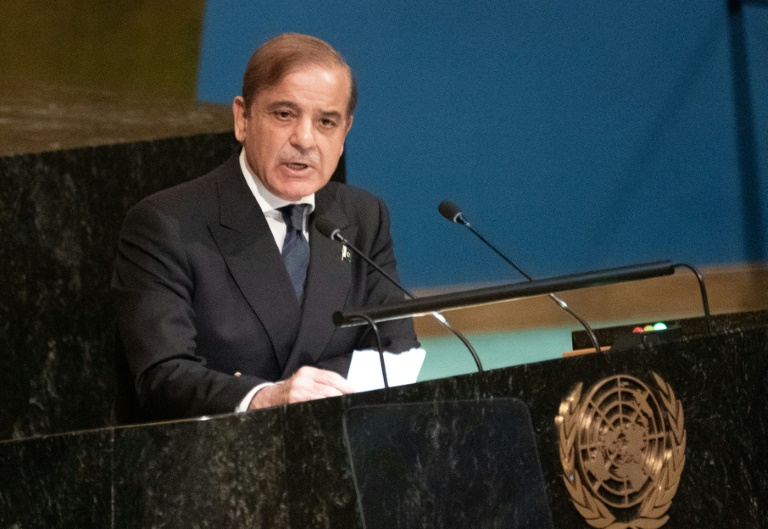
Pakistan Prime Minister Shehbaz Sharif warned the United Nations on Friday that climate disasters will not remain confined to his country, in the wake of floods that have devastated the South Asian giant.

“What happened in Pakistan will not stay in Pakistan,” he said in his first address to the General Assembly, adding that life had “changed forever.”

Sharif drew attention to the injustice inherent in the crisis, with his country at “ground zero” of climate change but responsible for less than one percent of carbon emissions.  

“Why are my people paying the price of such high global warming through no fault of their own? Nature has unleashed her fury on Pakistan without looking at our carbon footprint, which is next to nothing,” he said.

“It is therefore entirely reasonable to expect some approximation of justice for this loss and damage, not to mention building back better with resilience,” he said, adding his voice to growing calls among developing countries for financial compensation from rich polluters.

Pakistan has been lashed by unprecedented monsoon downpours flooding a third of the country — an area the size of the United Kingdom — and killing nearly 1,600 people, according to the latest government figures.

More than seven million people have been displaced, many living in makeshift tents without protection from mosquitoes, and often with little access to clean drinking water or washing facilities.

Blinken urges calm on Taiwan in talks with China

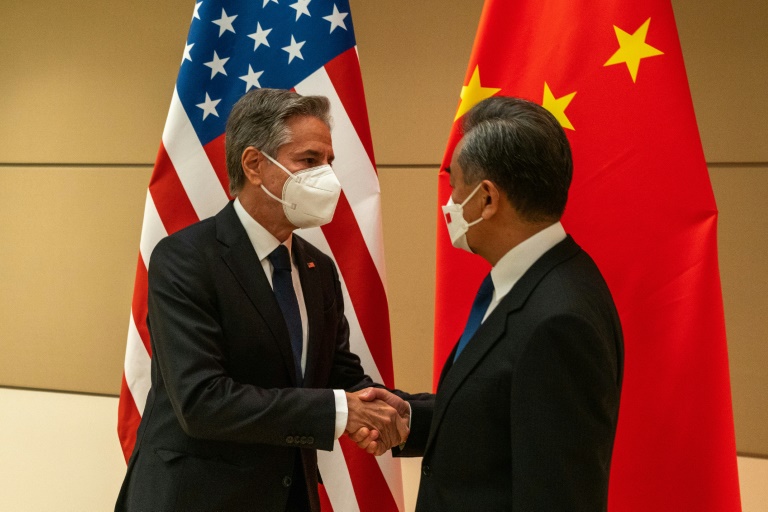
US Secretary of State Antony Blinken called Friday for calm over Taiwan as he met his Chinese counterpart, as soaring tensions showed signs of easing a notch.

Blinken met for 90 minutes with Chinese Foreign Minister Wang Yi in New York on the sidelines of the UN General Assembly, in talks a US official described as “extremely candid” and focused largely on Taiwan.

Blinken “stressed that preserving peace and stability across the Taiwan Strait is critical to regional and global security and prosperity,” a State Department statement said.

He “discussed the need to maintain open lines of communication and responsibly manage the US-PRC relationship, especially during times of tension,” it added, using the acronym for the People’s Republic of China.

A State Department official described the exchange on Taiwan as “direct and honest.” 

The official said Blinken also renewed US warnings not to support Russia’s invasion of Ukraine, amid guarded US hopes that Beijing is taking a distance from Moscow, nominally its ally.

Wang met in New York with Ukraine’s foreign minister for the first time since the war and, in a Security Council session Thursday, emphasized the need for a ceasefire rather than support for Russia.

Blinken, who went ahead with the talks despite the death of his father the previous day, met Wang for the first time since a sit-down in July in Bali, where both sides appeared optimistic for more stability.

One month later, House Speaker Nancy Pelosi visited Taiwan, infuriating Beijing, which staged exercises seen as a trial run for an invasion of the self-governing democracy, which it claims as its territory.

And in an interview aired Sunday, President Joe Biden said he was ready to intervene militarily if China uses force in Taiwan, once again deviating from decades of US ambiguity.

The US official said Blinken insisted to Wang that “there has been no change” to the US policy of only recognizing Beijing and voiced opposition to “unilateral changes to the status quo” by either side.

– Taiwan the ‘biggest risk’ –

In a sign that tensions have eased, Wang also met in New York with US climate envoy John Kerry, despite China’s announcement after Pelosi’s visit that it was curbing cooperation on the issue, a key priority for Biden.

But in a speech before his talks with Blinken, Wang called Taiwan “the biggest risk in China-US relations” and accused the United States of stoking pro-independence forces.

“Taiwan independence is like a highly disruptive great rhinoceros charging toward us. It must be stopped resolutely,” he said at the Asia Society think tank.

“Just as the US will not allow Hawaii to be stripped away, China has the right to uphold the unification of the country,” he said.

He denounced the US decision to “allow” the Taiwan visit by Pelosi, who is second in line to the presidency after the vice president. The Biden administration, while privately concerned about her trip, noted that Congress is a separate branch of government.

But Wang was conciliatory toward Biden. The New York talks are expected to lay the groundwork for a first meeting between Biden and President Xi Jinping since they became their two countries’ leaders, likely in Bali in November on the sidelines of a summit of the Group of 20 economic powers.

Wang said that both Biden and Xi seek to “make the China-US relationship work” and to “steer clear of conflict and confrontation.”

The US Congress is a stronghold of support for Taiwan, a vibrant democracy and major technological power.

Last week, a Senate committee took a first step to providing billions of dollars in weapons directly to Taiwan to deter China, a ramp-up from decades of only selling weapons requested by Taipei.

Tensions have also risen over human rights, with the United States accusing the communist state of carrying out genocide against the mostly Muslim Uyghur people.

World Bank chief Malpass says won't quit over climate denial row

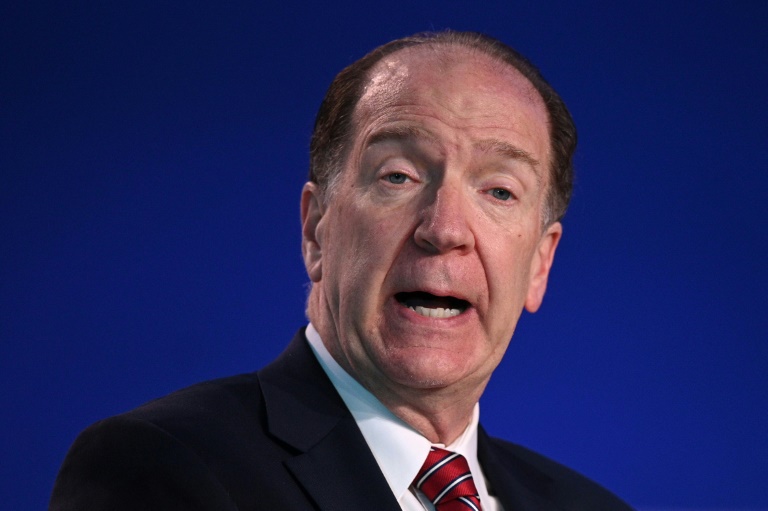
World Bank President David Malpass said Friday he had no plans to stand down, as he battles charges of climate denial for dodging questions on the role of man-made emissions in global warming.

Climate activists had previously called for Malpass to be removed for what they say is an inadequate approach to the climate crisis — and the chorus grew louder after his appearance at a New York Times-organized conference this week.

Pressed on stage to respond to a claim by former US vice president Al Gore that he was a climate denier, Malpass declined multiple times to say whether he believed man-made emissions were warming the planet — responding, “I’m not a scientist.”

Under mounting fire, Malpass has moved to clarify his position and did so again on Friday, as he rebuffed suggestions he might quit over the uproar.

“Not resigning,” Malpass said in an interview with Politico, when asked if he had envisaged quitting over the firestorm. “Nor have I” considered it, he said, affirming that none of the bank’s member countries had asked him to leave.

“Look, it’s clear that greenhouse gas emissions from human activity are adding to, are causing climate change,” he told Politico. “And so the task for us, for the world, is to pull together the projects and the funding that actually has an impact.”

In an interview with CNN a day earlier, Malpass had likewise acknowledged that climate-warming emissions were “coming from manmade sources, including fossil fuels, methane, agricultural uses and industrial uses.”

“I’m not a denier,” he told the network, adding that his message had been “tangled” and he was “not always good at conveying” what he means.

Despite his efforts at damage control, the uproar showed little sign of dying down, with the Union of Concerned Scientists the latest group to call for him to be replaced.

“People living in the Global South deserve to have the World Bank led by a fierce climate advocate, not someone who hasn’t spent enough time with the bank’s deep bench of scientists and experts to understand the most basic facts about the causes of climate change,” the group’s president, Johanna Chao Kreilick, said in a statement.

“Mr. Malpass should be replaced immediately,” she added.

– ‘I am worried’ –

While Malpass sought to emphasize the bank’s action on climate, its critics have grown increasingly loud.

“I am worried right now about the World Bank,” the Nobel Prize-winning economist Joseph Stiglitz told AFP earlier this week.

On critical issues including climate change, he said, “unfortunately the World Bank has not taken the kind of global leadership that the world needs right now.”

The head of the World Bank is traditionally an American, while the leader of the other big international lender in Washington, the IMF, tends to be European. 

Malpass is a veteran of Republican administrations in the United States and was appointed in 2019 while Donald Trump, who famously and repeatedly denied the science behind climate change, was president.

His term ends in 2024 and he can only be removed by a vote of the World Bank’s board.

World Bank chief Malpass says won't quit over climate denial row

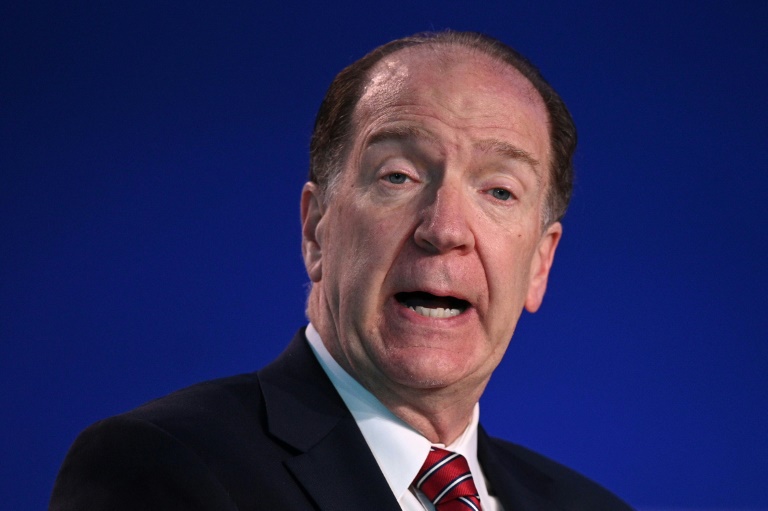
World Bank President David Malpass said Friday he had no plans to stand down, as he battles charges of climate denial for dodging questions on the role of man-made emissions in global warming.

Climate activists had previously called for Malpass to be removed for what they say is an inadequate approach to the climate crisis — and the chorus grew louder after his appearance at a New York Times-organized conference this week.

Pressed on stage to respond to a claim by former US vice president Al Gore that he was a climate denier, Malpass declined multiple times to say whether he believed man-made emissions were warming the planet — responding, “I’m not a scientist.”

Under mounting fire, Malpass has moved to clarify his position and did so again on Friday, as he rebuffed suggestions he might quit over the uproar.

“Not resigning,” Malpass said in an interview with Politico, when asked if he had envisaged quitting over the firestorm. “Nor have I” considered it, he said, affirming that none of the bank’s member countries had asked him to leave.

“Look, it’s clear that greenhouse gas emissions from human activity are adding to, are causing climate change,” he told Politico. “And so the task for us, for the world, is to pull together the projects and the funding that actually has an impact.”

In an interview with CNN a day earlier, Malpass had likewise acknowledged that climate-warming emissions were “coming from manmade sources, including fossil fuels, methane, agricultural uses and industrial uses.”

“I’m not a denier,” he told the network, adding that his message had been “tangled” and he was “not always good at conveying” what he means.

Despite his efforts at damage control, the uproar showed little sign of dying down, with the Union of Concerned Scientists the latest group to call for him to be replaced.

“People living in the Global South deserve to have the World Bank led by a fierce climate advocate, not someone who hasn’t spent enough time with the bank’s deep bench of scientists and experts to understand the most basic facts about the causes of climate change,” the group’s president, Johanna Chao Kreilick, said in a statement.

“Mr. Malpass should be replaced immediately,” she added.

– ‘I am worried’ –

While Malpass sought to emphasize the bank’s action on climate, its critics have grown increasingly loud.

“I am worried right now about the World Bank,” the Nobel Prize-winning economist Joseph Stiglitz told AFP earlier this week.

On critical issues including climate change, he said, “unfortunately the World Bank has not taken the kind of global leadership that the world needs right now.”

The head of the World Bank is traditionally an American, while the leader of the other big international lender in Washington, the IMF, tends to be European. 

Malpass is a veteran of Republican administrations in the United States and was appointed in 2019 while Donald Trump, who famously and repeatedly denied the science behind climate change, was president.

His term ends in 2024 and he can only be removed by a vote of the World Bank’s board.

Strong winds hit Bermuda as Hurricane Fiona heads for Canada

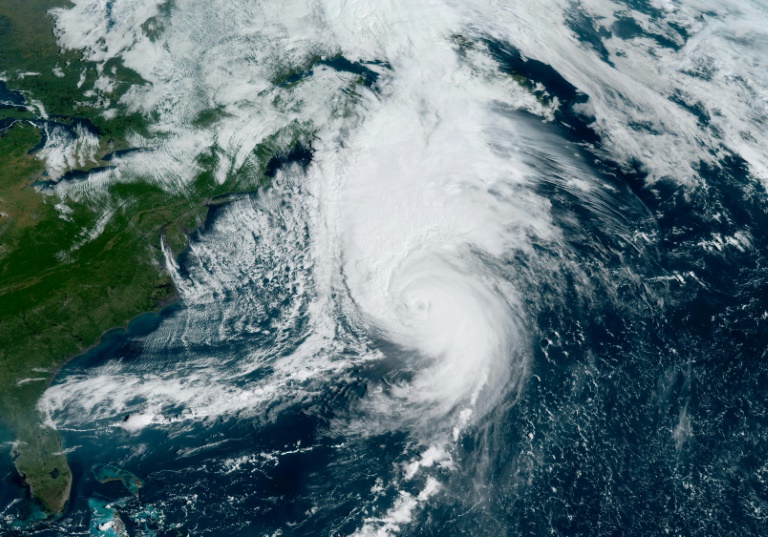
Bermuda assessed damage Friday after Hurricane Fiona brushed past the island overnight, causing flooding and leaving most of the population without power as it set course for Canada.

Hurricane conditions were expected to hit Nova Scotia province by evening, with the US National Hurricane Center saying Fiona had again strengthened to a Category 4 storm as “it races toward Atlantic Canada.”

Emergency officials in Bermuda called on residents to remain inside as strong winds raked over the British territory, which was buffeted by gusts of more than 100 miles (160 kilometers) per hour and pounding seas.

But no fatalities or major damage were reported as Fiona passed roughly 100 miles to the west of the island.

The Belco power company said 29,000 out of 36,000 households were without power.

“We are not in the clear. Stay off the roads,” Premier David Burt tweeted, adding no major incidents were reported.

The Royal Bermuda Regiment and Belco said they were waiting for winds to die down before clearing roads and restoring power.

Residents posted images of downed power lines and some flooding on social media.

“This morning (it is) very windy outside. We had some minor damage to the premises but nothing serious,” Jason Rainer, owner of a souvenir shop in the capital Hamilton told AFP, saying some doors and windows had been blown out.

Store owners had covered windows with metal and wood sheets.

The island of about 64,000 people is no stranger to hurricanes — but it is also tiny, just 21 square miles (54 square kilometers), and one of the most remote places in the world, 640 miles from its closest neighbor, the United States.

– A well-prepared island –

“You have to live with it because you live here, you can’t run anywhere because it’s just a little island,” said JoeAnn Scott, a shopworker in Hamilton.

Bermudians try to “enjoy it as it comes,” she said. “And pray and pray. That’s what we do, pray and party,” she added with a laugh.

At Bermuda’s famed Horseshoe Bay Beach, onlookers watched pounding waves on Thursday before the storm hit, while two kitesurfers risked extreme conditions out at sea.

Because of the island’s isolation, preparations are taken seriously.

Many boats were taken out of the water earlier in the week, public schools were closed, buses and ferries stopped and an emergency shelter opened.

In addition to laying in supplies of candles and food, some Bermudians drew buckets of water and filled bathtubs from the tanks at the side of their homes ahead of the expected power outages.

There is no fresh water source on the island, so all buildings have white, lime-washed roofs that are used to catch rainwater in tanks that is then pumped into homes. 

Bermuda, whose economy is fueled by international finance and tourism, is wealthy compared to most Caribbean countries, and structures must be built to strict planning codes to withstand storms. Some have done so for centuries.

“The construction is really built to last, and we don’t see the devastation ever that the Caribbean has experienced over the years,” resident Elaine Murray said.

Fiona killed four people in Puerto Rico earlier this week, according to US media, while one death was reported in the French overseas department of Guadeloupe and another in the Dominican Republic. 

President Joe Biden has declared a state of emergency in Puerto Rico, a US territory that is still struggling to recover from Hurricane Maria five years ago.

In the Dominican Republic, President Luis Abinader declared three eastern provinces to be disaster zones.

Apple Music to sponsor Super Bowl half-time show

Apple Music is to replace Pepsi as the title sponsor of the Super Bowl’s prestigious half-time show, the NFL announced on Friday.

Neither Apple nor the NFL disclosed terms of the sponsorship, described as a multi-year agreement. 

US media reported the NFL has been seeking around $50 million a year for sponsorship of the show, one of the traditional highlights of the biggest event on the US sporting calendar.

“We couldn’t think of a more appropriate partner for the world’s most-watched musical performance than Apple Music, a service that entertains, inspires, and motivates millions of people,” said Nana-Yaw Asamoah, the NFL’s senior vice president of partner strategy.

The sponsorship is the latest example of a technology giant embracing live sport in the United States.

Amazon has already started screening the NFL’s Thursday fixtures while Apple TV has also struck deals to stream live baseball and Major League Soccer.

Apple Music’s sponsorship of the Super Bowl half-time show will start in 2023, when the NFL’s championship game is staged in Glendale, Arizona on February 12.

More than 120 million viewers watched The Super Bowl half-time show in Los Angeles earlier this year, when stars such as Dr. Dre, Snoop Dogg, Eminem, Mary J. Blige and Kendrick Lamar appeared together.

Past half-time shows have featured a galaxy of music icons, such as Michael Jackson, Madonna, U2, the Rolling Stones and Bruce Springsteen.

Apple Music to sponsor Super Bowl half-time show

Apple Music is to replace Pepsi as the title sponsor of the Super Bowl’s prestigious half-time show, the NFL announced on Friday.

Neither Apple nor the NFL disclosed terms of the sponsorship, described as a multi-year agreement. 

US media reported the NFL has been seeking around $50 million a year for sponsorship of the show, one of the traditional highlights of the biggest event on the US sporting calendar.

“We couldn’t think of a more appropriate partner for the world’s most-watched musical performance than Apple Music, a service that entertains, inspires, and motivates millions of people,” said Nana-Yaw Asamoah, the NFL’s senior vice president of partner strategy.

The sponsorship is the latest example of a technology giant embracing live sport in the United States.

Amazon has already started screening the NFL’s Thursday fixtures while Apple TV has also struck deals to stream live baseball and Major League Soccer.

Apple Music’s sponsorship of the Super Bowl half-time show will start in 2023, when the NFL’s championship game is staged in Glendale, Arizona on February 12.

More than 120 million viewers watched The Super Bowl half-time show in Los Angeles earlier this year, when stars such as Dr. Dre, Snoop Dogg, Eminem, Mary J. Blige and Kendrick Lamar appeared together.

Past half-time shows have featured a galaxy of music icons, such as Michael Jackson, Madonna, U2, the Rolling Stones and Bruce Springsteen.

UK fights inflation with tax-cutting budget

Britain’s new government on Friday unveiled a multi-billion-pound package to support households and businesses hit by the highest inflation in decades, cutting taxes as the nation heads for recession.

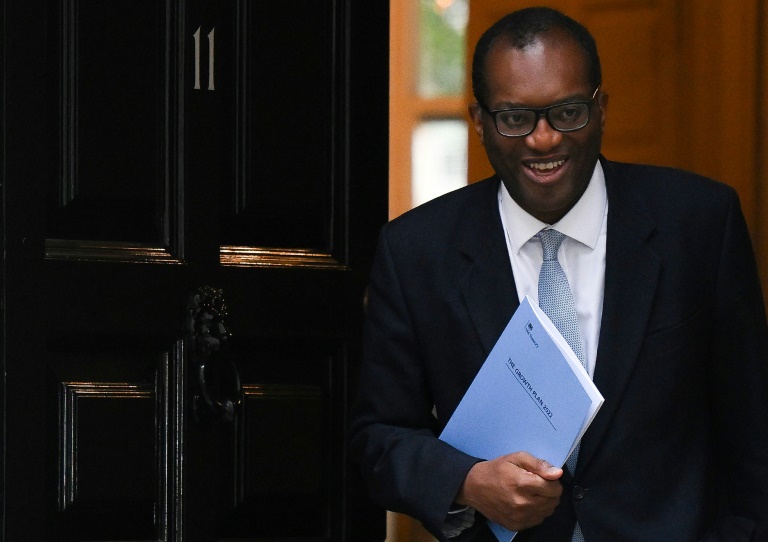
Finance minister Kwasi Kwarteng, fresh from being appointed by new Prime Minister Liz Truss, said caps on soaring energy bills would cost £60 billion ($68 billion) in the first six months.

The costly plan aims to boost economic growth — but sterling collapsed to its lowest level against the dollar since 1985 as traders fretted over its impact on public finances.

“The PM has acted with great speed to announce one of the most significant interventions the British state has ever made,” Kwarteng told parliament in a so-called mini budget.

“People need to know that help is coming.”

In a controversial move as millions of Britons face a cost-of-living crisis, Kwarteng axed an EU-inherited cap on bankers’ bonuses following Brexit to bolster the financial services sector.

He brought forward a plan to cut the lowest rate of income tax, and reduced the highest to 40 percent from 45.

The chancellor of the exchequer also reversed a planned increase in tax on company profits signed off by Truss’s predecessor Boris Johnson.

He had announced Thursday that he would scrap a tax on salaries, reversing a 1.25-percentage-point rise in National Insurance implemented by predecessor Rishi Sunak.

It comes as economists warned that Britain was likely already in recession, with rocketing fuel and food prices taking their toll.

Opposition politicians slammed the budget for rewarding the rich.

“The chancellor has made clear who his priorities are today — not a plan for growth, a plan to reward the already wealthy,” said Rachel Reeves, finance spokeswoman for the main opposition Labour party.

– Pound collapse –

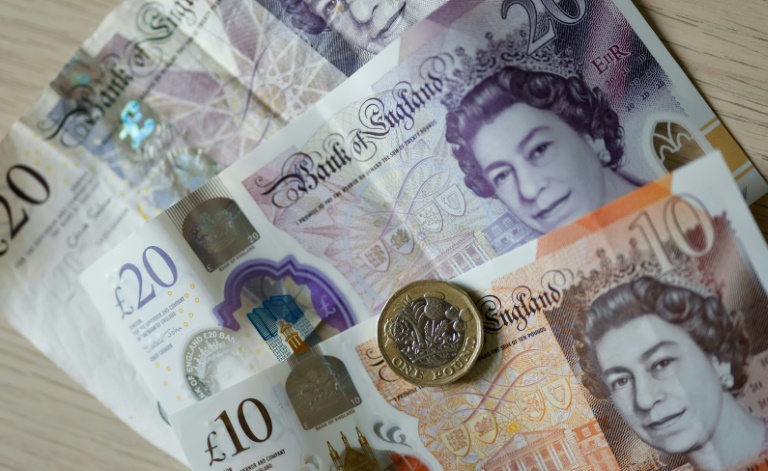
In an ominous sign, the pound tanked to $1.0897 — the lowest level since 1985 — and London’s stock market sank more than two percent as recession fears mounted.

“Sterling is in the firing line. There is a creeping feeling the extra government borrowing that is in the pipeline will severely weigh on the UK economy,” said IG analyst David Madden.

Kwarteng also lifted the point at which tax is levied on purchases of residential properties, as soaring interest rates put the brakes on the housing market.

Britain will meanwhile reintroduce VAT refunds to tourists, a scheme which had previously been scrapped following Brexit.

Kwarteng released his plan a day after the Bank of England suggested the country was slipping into recession as it hiked interest rates again to tame red-hot inflation.

With prices soaring, Britain on Wednesday announced a six-month plan to pay about half of energy bills for businesses.

Truss had already launched a two-year household energy price freeze. The caps will not kick in, however, until Britons face another large hike in gas and electricity bills from October.

The average household will have their annual energy bill capped at £2,500 until 2024 but many are expected to spend above that to keep homes warm over the winter.

Wholesale electricity and gas prices for companies — as well as charities, hospitals and schools — will also be capped.

Yet UK energy firms including BP and Shell will not get the cap, as their profits jumped after Russia’s war in Ukraine sent oil and gas prices soaring.

Labour has demanded that the government extends an energy-sector windfall tax launched by Sunak earlier this year.

But Truss ruled it out, arguing that additional taxes hinder economic recovery and efforts by energy groups to transition into greener companies.

She took office on September 6, two days before the death of Queen Elizabeth II, after winning an election of Conservative party members on a tax-cutting platform.

– ‘Unacceptable strikes’ –

Kwarteng on Friday confirmed plans to shake up the welfare system.

Some 120,000 people in part-time work would face a benefit cut should they fail to take new steps to look for more work.

The cost-of-living crisis has triggered some of the biggest strike action in more than 30 years, involving sectors from the rail industry to postal services and even lawyers.

Kwarteng told MPs the government would legislate “to ensure strikes can only be called once negotiations have genuinely broken down”.

At UN, Vanuatu calls for fossil fuel non-proliferation treaty

Vanuatu on Friday became the first nation to launch a diplomatic push for a fossil fuel non-proliferation treaty, a proposed legal path to phase out coal, oil and gas globally by likening their threat to nuclear weapons. 

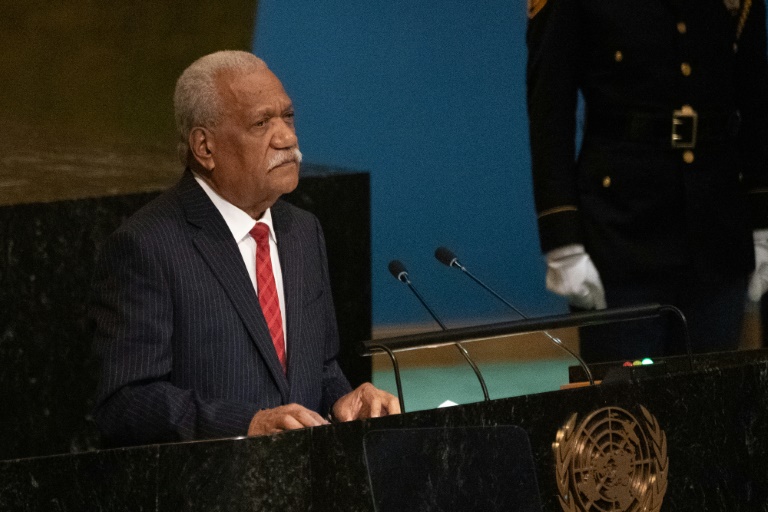
In his address to the United Nations General Assembly, President Nikenike Vurobaravu evoked the existential crisis caused by rapid global heating, from hurricanes and coral bleaching to wildfires, prolonged droughts and flooding.

“Fundamental human rights are being violated, and we are measuring climate change not in degrees of Celsius or tons of carbon, but in human lives,” he said.

“We call for the development of a Fossil Fuel Non-Proliferation Treaty to phase down coal, oil and gas production in line with 1.5C, and enable a global just transition for every worker, community and nation with fossil fuel dependence.”

The Paris climate accord called on nations to aspire to limit warming to 1.5 degrees Celsius above pre-industrial levels, a goal that is far off track.

In a statement, the climate campaign group 350 compared the proposed treaty to accords that were pivotal in managing the threats of nuclear weapons and landmines.

Vanuatu, an archipelago home to 300,000 people that lies some 1,100 miles (1,750 kilometers) to the east of Australia, adds its voice to a call that has been endorsed by more than 65 cities and regional governments around the globe. 

These include London, Lima, Los Angeles, Kolkata, Paris and Hawaii. The proposal has also been backed by the Vatican and the World Health Organization.

“The modern addiction to fossil fuels is not just an act of environmental vandalism. From the health perspective, it is an act of self-sabotage,” WHO chief Tedros Adhanom Ghebreyesus said last week.

– Leading voice on climate –

Tiny Vanuatu is already carbon negative, but it is among the world’s most vulnerable countries to climate change. Its approximately 80 islands are threatened by rising sea levels, droughts and more intense storms. 

In August, it submitted among the most comprehensive climate targets under the UN, including adding cost estimates for how much it required from major polluters in “loss and damage” payments for their historic and ongoing carbon emissions.

The issue is a major sticking point between rich and poor nations, and is set to be discussed at the next UN climate summit, COP27.

Vanuatu has also been leading a campaign to have the International Court of Justice issue an opinion on climate justice and human rights.

Campaigner Kalo Afeaki of Tonga said: “Fossil fuels did this, and if we continue to burn them, we will see more islands in the Pacific, islands like my home of Tonga, disappear. We need countries to be bold, because we have run out of time.”

Without drastic course correction, the world is on track to 2.7C heating by the year 2100, according to the Climate Action Tracker.

This level of warming would dramatically reshape the world’s climate systems, bringing extreme heat to vast swathes of the planet, depleting biodiversity and water availability, and devastating agriculture, among other impacts.

World markets plunge on growing recession fears

Stock markets tumbled, the pound crashed against the dollar and oil prices slumped Friday on growing recession fears after central banks this week ramped up interest rates to fight decades-high inflation.

With price rises showing no solid sign of letting up, monetary policymakers have gone on the offensive, warning that short-term hits to economies are less painful than the long-term effects of not acting.

The Federal Reserve’s decision Wednesday to lift borrowing costs by 0.75 percentage points for a third successive meeting was followed by a warning that more big rises were in the pipeline and that rates would likely come down only in 2024.

There were similar moves by central banks in other countries including Britain, Sweden, Norway, Switzerland, the Philippines and Indonesia — all pointing to a dark outlook for markets.

Wall Street extended losses Friday while European equities sank in afternoon deals and Asia finished lower.

“A negative end to the week in Asia, and Europe has quickly followed as the prospect of much more tightening and a recession weighs on sentiment,” said Craig Erlam, analyst at trading platform OANDA.

In a sign that recession expectations are rising, the 10-year US Treasury yield jumped to its highest level in a decade.

The UK 10-year yield struck an 11-year high on Friday.

The British pound tumbled to a 37-year low under $1.10 as a tax-cutting budget sparked public finance concerns while recession fears mounted.

“Equity markets are also plunging on concerns that this (UK) package could further push inflation even higher, and thus make it more difficult to bring back down,” said Michael Hewson, chief market analyst at CMC Markets UK.

“Sterling is in the firing line as traders are turning their backs on all things British. There is a creeping feeling the extra government borrowing that is in the pipeline will severely weigh on the UK economy,” added David Madden, market analyst at Equiti Capital.

In the eurozone, recession fears deepened as data showed its economic activity fell once again in September.

The S&P eurozone PMI dropped to 48.2 in September — with a score under 50 representing economic contraction.

The euro hit a new two-decade low at $0.9751.

“A eurozone recession is on the cards as companies report worsening business conditions and intensifying price pressures linked to soaring energy costs,” said Chris Williamson, chief business economist at S&P Global Market Intelligence.

He added that falling UK business activity this month indicates that the British economy is likely already in recession.

Recession fears also caused oil prices to fall, with the main US contract, WTI, falling below $80 for the first time since January.

Traders were keeping a close eye as well on developments following the Japanese finance ministry’s intervention to support the yen, after it hit a new 24-year low of 146 against the dollar.

The first such intervention since 1998 helped strengthen the yen but it remained above 140.

Analysts warned the move was unlikely to have much long-term impact and the yen remained vulnerable owing to the Bank of Japan’s refusal to tighten policy — citing a need to boost the economy.

– Key figures at around 1530 GMT –

New York – Dow: DOWN 1.52 percent at 29,618.21 points

London – FTSE 100: DOWN 1.97 percent at 7,018.60 (close) 

Frankfurt – DAX: DOWN 1.97 percent at 12,284.19 (close)

Paris – CAC 40: DOWN 2.28 percent at 5,783.14 (close) 

EURO STOXX 50: DOWN 2.3  percent at 3,355.97  

Hong Kong – Hang Seng Index: DOWN 1.2 percent at 17,933.27 (close)

Shanghai – Composite: DOWN 0.7 percent at 3,088.77 (close)

Tokyo – Nikkei 225: Closed for a holiday

Pound/dollar: DOWN at 1.0926 from $1.1252 Thursday

Euro/dollar: DOWN at $ 0.9727 from $0.9839

Euro/pound: UP at 89.00 pence from 87.40 pence 

Dollar/yen: UP at 143.17 yen from 142.35 yen

West Texas Intermediate: DOWN 4.49 percent at $79.00 per barrel

Brent North Sea crude: DOWN 4.14 percent at $86.32 per barrel

burs-ach/cdw

Close Bitnami banner
Bitnami