AFP

What could happen if Putin used nuclear weapons in Ukraine?

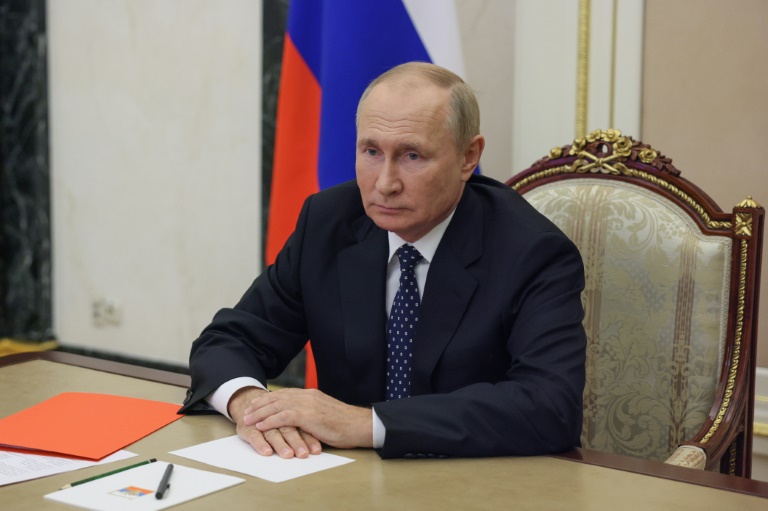
President Vladimir Putin’s threat to use a nuclear weapon in Ukraine if Russian “territorial integrity” is threatened has sparked deep discussion in the West as to how it would respond.

“Those who are trying to blackmail us with nuclear weapons should know that the wind can also turn in their direction,” Putin said, adding: “This is not a bluff.”

However analysts aren’t convinced the Russian president is willing to be the first to unleash nuclear weapons since the US bombed Japan in 1945.

AFP spoke with several experts and officials about the possible scenarios that could arise should Russia carry out a nuclear attack.

What would a Russian nuclear attack look like?

Analysts say Moscow would likely deploy one or more “tactical” or battlefield nuclear bombs.

These are small weapons, ranging from 0.3 kilotons to 100 kilotons of explosive power, compared to the 1.2 megatons of the largest US strategic warhead or the 58 megaton bomb Russia tested in 1961.

Tactical bombs are designed to have a limited impact on the battlefield, compared to strategic nuclear weapons which are designed to fight and win all-out wars.

But “small” and “limited” are relative: The atom bomb the US dropped on Hiroshima in 1945 to devastating effect was just 15 kilotons.

What would Moscow target?

Analysts say Russia’s goal in using a tactical nuclear bomb in Ukraine would be to frighten it into surrender or submission to negotiations, and to divide the country’s Western backers.

Mark Cancian, a military expert with the CSIS International Security Program in Washington, said Russia would not likely use nuclear weapons on the front lines. 

Capturing 20 miles (32 kilometers) of territory could require 20 small nuclear bombs — small gains for the huge risks of introducing nuclear weapons and nuclear fallout.

“Just using one will not be enough,” Cancian said.

Moscow could instead send a strong message and avoid significant casualties by detonating a nuclear bomb over water, or exploding one high over Ukraine to generate an electromagnetic pulse that would knock out electronic equipment.

Or Putin could opt for greater destruction and death: attacking a Ukraine military base, or hitting an urban center like Kyiv, generating mass casualties and possibly killing the country’s political leadership.

Such scenarios “would likely be designed to split the NATO alliance and global consensus against Putin,” Jon Wolfsthal, a former white House nuclear policy expert, wrote Friday on Substack.

But “it is unclear if it would succeed, and could just as easily be seen as desperation as resolve,” he said.

Should the West respond with nukes?

The West has remained ambiguous on how it would respond to a tactical nuclear strike, and the choices are complicated.

The United States and NATO do not want to appear weak in front of an implicit nuclear threat.

But they also would want to avoid the possibility that the war in Ukraine — not a NATO member — could escalate into a much broader, devastating global nuclear war.

Experts say the West would have no option but to respond, and that a response should come from NATO as a group, rather than the United States alone.

Any response should “ensure both that Putin’s military situation did not improve from such a strike, and that his political, economic and personal position suffered as a result,” said Wolfsthal.

The United States has positioned about 100 of its own tactical nuclear weapons in NATO countries and could respond in kind against Russian forces.

That would demonstrate resolve and remind Moscow of the danger of its actions, according to Matthew Kroenig of the Atlantic Council.

However, he said, “it might also provoke a Russian nuclear reprisal, raising the risk of a larger nuclear exchange and further humanitarian disaster.”

Another risk is that some NATO members might reject a nuclear response, serving Putin’s aims of weakening the alliance.

Give Ukraine the ability to attack Russia?

Answering a Russian nuclear attack in a more conventional military or diplomatic way, and supplying Ukraine with more lethal arms to attack Russia, could be more effective, experts say.

“Russian nuclear use might provide an opening to convince countries that have so far been reluctant — such as India and possibly even China — to participate in escalating sanctions,” said Kroenig.

In addition, the United States could offer Ukraine NATO aircraft, Patriot and THAAD anti-missile batteries, and ATACMS long-range missiles that could be used by Ukraine forces to strike deep inside Russia.

“Whatever restrictions we have on Ukraine forces — and I think we have some restrictions — I think we take all of those off,” said Cancian.

Bangladesh PM denounces 'tragedy' of rich nations on climate

A country of fertile, densely populated deltas, low-lying Bangladesh is among the most vulnerable nations in the world to climate change. 

But the urgency of the situation is not being matched by actions of countries responsible for emissions, Prime Minister Sheikh Hasina said.

“They don’t act. They can talk but they don’t act,” she told AFP on a visit to New York for the United Nations General Assembly.

“The rich countries, the developed countries, this is their responsibility. They should come forward. But we are not getting that much response from them. That is the tragedy,” she said.

“I know the rich countries, they want to become more rich and rich. They don’t bother for others.”

Bangladesh has produced a miniscule amount of the greenhouse gas emissions that have already contributed to the warming of the planet by an average of nearly 1.2 degrees Celsius above pre-industrial levels.

The Paris accord called for $100 billion a year by 2020 from wealthy nations to help developing nations cope with climate change. That year, $83.3 billion was committed, including through private sources, according to Organization for Economic Co-operation and Development figures.

One key issue facing the next UN climate summit, to take place in Egypt in November, is whether wealthy nations also need to pay for losses and damages from climate change — not just to pay for adaptation and mitigation.

“We want that fund to be raised. Unfortunately we didn’t get a good response from the developed countries,” Hasina said.

“Because they are the responsible ones for these damages, they should come forward,” the 74-year-old added.

Wealthy nations have agreed only to discuss the loss and damage issue through 2024.

This year’s General Assembly featured repeated calls for climate justice. The leader of tiny Vanuatu urged an international treaty against fossil fuels while the prime minister of Pakistan warned that floods that have swamped one-third of his country could happen elsewhere.

– Questions on Rohingya –

Climate is not the only issue on which Bangladesh sees inaction from the West.

Some 750,000 Rohingya fled to Bangladesh in 2017 after a scorched-earth campaign against the minority group by troops in neighboring Myanmar, a campaign that the United States has described as genocide.

While the world has saluted Bangladesh for taking in the refugees — along with 100,000 who fled earlier violence — attention has shifted since the Covid-19 pandemic and now Russia’s invasion of Ukraine.

“As long as they are in our country, we feel that it is our duty,” she said. But for Bangladeshi hosts, patience is running thin, she said.

Michelle Bachelet, then the UN human rights chief, said on a visit in August that there was growing anti-Rohingya sentiment in Bangladesh.

“Local people also suffer a lot,” Hasina said. “I can’t say that they’re angry, but they feel uncomfortable.”

“All the burden is coming upon us. This is a problem.”

The Rohingya refugees, who are mostly Muslim, live largely in ramshackle camps with tarpaulins, sheet metal and bamboo.

Bachelet on her visit said there was no prospect of sending them back to Buddhist-majority, military-run Myanmar, where the Rohingya are not considered citizens.

But in her interview, Hasina signaled that there were few options other than for the Rohingya to reside in camps.

“It is not possible for us to give them an open space because they have their own country. They want to go back there. So that is the main priority for everybody,” Hasina said.

“If anybody wants to take them, they can take them,” she added. “Why should I object?”

NASA's Tuesday Moon launch threatened by storm

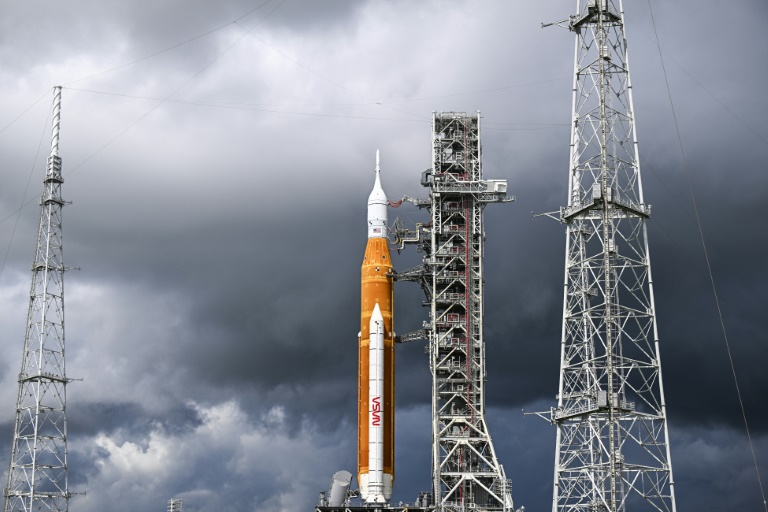
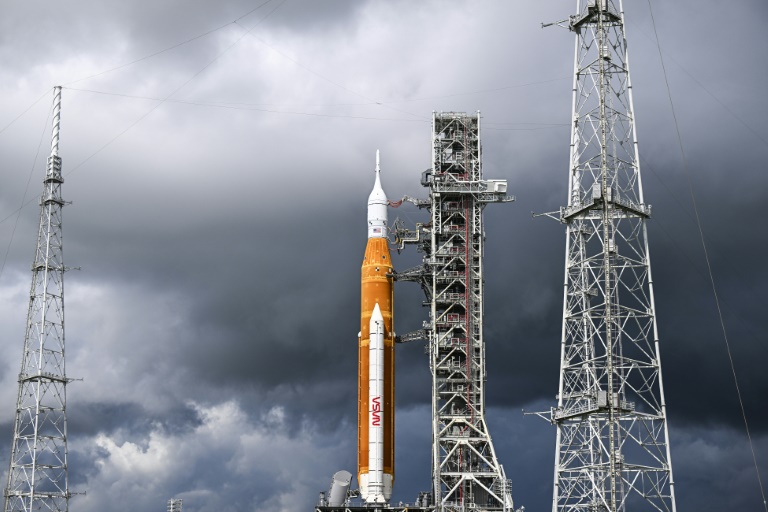
NASA’s historic uncrewed mission to the Moon is facing fresh difficulties.

After technical problems derailed two launch attempts several weeks ago, a new liftoff of the Artemis 1 mission scheduled for Tuesday is now threatened by a storm gathering in the Caribbean.

The storm, which has not yet been assigned a name, is currently located south of the Dominican Republic.

But it is expected to grow into a hurricane in the coming days and could move north to Florida, home to the Kennedy Space Center, from which the rocket is set to launch.

“Our plan A is to stay to course and to get the launch off on September 27,” Mike Bolger, NASA’s exploration ground systems manager, told reporters on Friday. “But we realized we also need to be really paying attention and thinking about a plan B.”

That would entail wheeling the giant Space Launch System rocket back to the Vehicle Assembly Building, known as VAB.

“If we were to go down to Plan B we need a couple days to pivot from our current tanking test or launch configuration to execute rollback and get back into the protection of the VAB,” Bolger said, adding that a decision should be made by early afternoon on Saturday.

On the launch pad the orange and white SLS rocket can withstand wind gusts of up to 137 kilometers per hour. But if it has to be sheltered, the current launch window, which runs until October 4, will be missed.

The next launch window will run from October 17 to 31, with one possibility of take-off per day, except from October 24-26 and 28.

A successful Artemis 1 mission will come as a huge relief to the US space agency, after years of delays and cost overruns. But another setback would be a blow to NASA, after two previous launch attempts were scrapped when the rocket experienced technical glitches including a fuel leak.

The launch dates depend on NASA receiving a special waiver to avoid having to retest batteries on an emergency flight system that is used to destroy the rocket if it strays from its designated range to a populated area.

On Tuesday the launch window will open at 11:37 local time and will last 70 minutes.

If the rocket takes off that day, the mission will last 39 days before it lands in the Pacific Ocean on November 5.

The Artemis 1 space mission hopes to test the SLS as well as the unmanned Orion capsule that sits atop, in preparation for future Moon-bound journeys with humans aboard.

Mannequins equipped with sensors are standing in for astronauts on the mission and will record acceleration, vibration and radiation levels.

The next mission, Artemis 2, will take astronauts into orbit around the Moon without landing on its surface.

The crew of Artemis 3 is to land on the Moon in 2025 at the earliest.

NASA's Tuesday Moon launch threatened by storm

NASA’s historic uncrewed mission to the Moon is facing fresh difficulties.

After technical problems derailed two launch attempts several weeks ago, a new liftoff of the Artemis 1 mission scheduled for Tuesday is now threatened by a storm gathering in the Caribbean.

The storm, which has not yet been assigned a name, is currently located south of the Dominican Republic.

But it is expected to grow into a hurricane in the coming days and could move north to Florida, home to the Kennedy Space Center, from which the rocket is set to launch.

“Our plan A is to stay to course and to get the launch off on September 27,” Mike Bolger, NASA’s exploration ground systems manager, told reporters on Friday. “But we realized we also need to be really paying attention and thinking about a plan B.”

That would entail wheeling the giant Space Launch System rocket back to the Vehicle Assembly Building, known as VAB.

“If we were to go down to Plan B we need a couple days to pivot from our current tanking test or launch configuration to execute rollback and get back into the protection of the VAB,” Bolger said, adding that a decision should be made by early afternoon on Saturday.

On the launch pad the orange and white SLS rocket can withstand wind gusts of up to 137 kilometers per hour. But if it has to be sheltered, the current launch window, which runs until October 4, will be missed.

The next launch window will run from October 17 to 31, with one possibility of take-off per day, except from October 24-26 and 28.

A successful Artemis 1 mission will come as a huge relief to the US space agency, after years of delays and cost overruns. But another setback would be a blow to NASA, after two previous launch attempts were scrapped when the rocket experienced technical glitches including a fuel leak.

The launch dates depend on NASA receiving a special waiver to avoid having to retest batteries on an emergency flight system that is used to destroy the rocket if it strays from its designated range to a populated area.

On Tuesday the launch window will open at 11:37 local time and will last 70 minutes.

If the rocket takes off that day, the mission will last 39 days before it lands in the Pacific Ocean on November 5.

The Artemis 1 space mission hopes to test the SLS as well as the unmanned Orion capsule that sits atop, in preparation for future Moon-bound journeys with humans aboard.

Mannequins equipped with sensors are standing in for astronauts on the mission and will record acceleration, vibration and radiation levels.

The next mission, Artemis 2, will take astronauts into orbit around the Moon without landing on its surface.

The crew of Artemis 3 is to land on the Moon in 2025 at the earliest.

Russia proxies hold breakaway polls in Ukraine

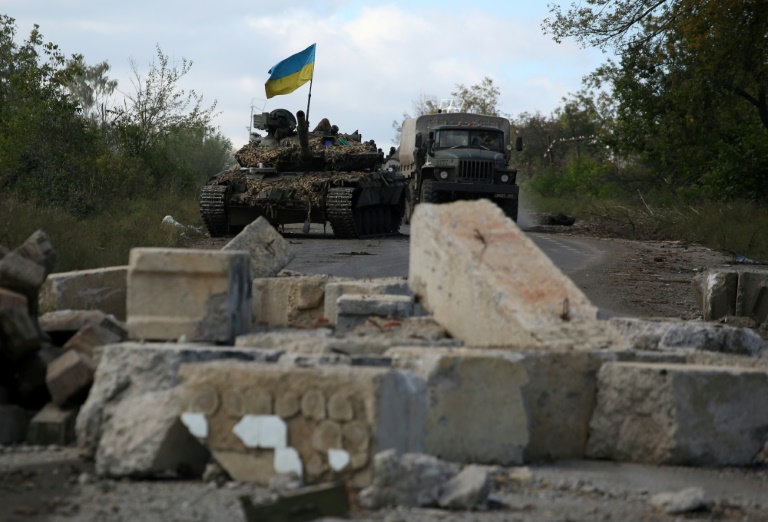
Western nations on Friday dismissed the referendums in Kremlin-controlled regions of eastern and southern Ukraine, as Ukrainian and UN officials revealed what they said was more evidence of Russian “war crimes”.

The voting, on whether Russia should annex these parts of Ukraine into its own territory, opened on Friday, dramatically raising the stakes of Moscow’s seven-month invasion.

Even as polling got under way however, Ukrainian forces said they were clawing back territory from the Moscow-backed separatists in the very lands Russia wants to assimilate.

The votes in the four regions are the latest development in a ferocious war that UN investigators said had seen actions — including executions and torture — that amounted to war crimes.

Kyiv’s western allies have dismissed as a sham the referendums in the eastern Donetsk and Lugansk regions, as well as in the southern Kherson and Zaporizhzhia regions.

US President Joe Biden vowed “swift and severe” costs if Russia followed through and annexed the regions.

Even China, Russia’s closest ally since the war began, acknowledged to Kyiv that the “sovereignty and territorial integrity of all countries must be respected”.

Chinese Foreign Minister Wang Yi made the comments to his Ukrainian counterpart Dmytro Kuleba at the UN General Assembly on Friday.

– ‘Sham’ –

Authorities in the Russian-controlled regions are going door-to-door for four days to collect votes. Polling stations then open Tuesday for residents to cast ballots on the final day of voting. 

It was also possible to vote at the building in Moscow that represents the Donetsk breakaway region. 

Leonid, a 59-year-old military official, told AFP he was “feeling happy”.

“Ultimately, things are moving towards the restoration of the Soviet Union. The referendum is one step towards this,” he said.

But earlier this month, a Ukrainian counter-offensive seized back most of the north-eastern Kharkiv region, bringing hundreds of settlements back under Kyiv’s control after months of Russian occupation.

And on Friday, Kyiv said its forces had made more progress, recapturing a village in the Donetsk region and retaking positions south of the war-scarred town of Bakhmut.

The four regions’ integration into Russia would represent a major escalation of the conflict as Moscow would consider any military move there as an attack on its own territory.

The referendums are reminiscent of the one held after Russia’s annexation of Ukraine’s Crimea in 2014, which was also denounced by Western nations.

– Evidence of ‘war crimes’ –

In his evening address Friday, Ukrainian President Volodymyr Zelensky denounced the polls as “pseudo-referendums” expressing confidence that the world would reject them.

Biden’s statement on Friday backed that position.

“Russia’s referenda are a sham — a false pretext to try to annex parts of Ukraine by force in flagrant violation of international law,” said Biden.

“We will work with our allies and partners to impose additional swift and severe economic costs on Russia.”

Earlier Friday, the G7 Group of Seven industrialised nations condemned the referendums as a “sham” with “no legal effect or legitimacy”.

In Donetsk and Lugansk — which Putin recognised as independent just before invading Ukraine in February — residents are answering if they support their “republic’s entry into Russia”, TASS reported.

Ballots in Kherson and Zaporizhzhia ask the question: “Are you in favour of secession from Ukraine, formation of an independent state by the region and its joining the Russian Federation as a subject of the Russian Federation?”

Russian news agencies reported that voting had begun on Friday at 0500 GMT, while TASS reported paper ballots would be used to save time.

UN investigators meanwhile said Friday that war crimes had been committed in the Ukraine conflict, listing Russian bombings of civilian areas, torture, horrific sexual violence and a “large number of executions”.

In eastern Kharkiv region, Ukrainian officials said Friday they had finished exhuming 447 bodies from a site near the city of Izyum.

“Most of them have signs of violent death, and 30 have signs of torture,” said Kharkiv regional governor Oleg Synegubov in a post on social media.

“There are bodies with rope around their necks, with their hands tied, with broken limbs and gunshot wounds,” he added. Izyum was part of the territory recently recaptured from Russian forces.

The Kremlin has accused Kyiv of fabricating evidence of the alleged war crimes.

– ‘Tomorrow you will go to war’ –

Putin this week warned that Moscow would use “all means” to protect its territory — which former Russian leader Dmitry Medvedev said on social media could include the use of “strategic nuclear weapons”. 

Moscow began its mandatory troop call-up on Thursday after Putin called for about 300,000 reservists to bolster the war effort.

But men were leaving Russia in droves before they were made to join, with flights to neighbouring countries booked up for days to come.

Some however have not been able to avoid the summons.

Mikhail Suetin, 29, was among those detained at an anti-mobilisation protest in Moscow this week and was handed a summons to appear at a recruitment office.

“To be told ‘tomorrow you will go to war’… that was a surprise,” Suetin, who regularly joins opposition protests in Moscow, told AFP.

burs-jj/lcm

World markets plunge on growing recession fears

Stock markets tumbled, the pound crashed against the dollar and oil prices slumped Friday on growing recession fears after central banks this week ramped up interest rates to fight decades-high inflation.

With price rises showing no solid sign of letting up, monetary policymakers have gone on the offensive, warning that short-term hits to economies are less painful than the long-term effects of not acting.

The Federal Reserve’s decision Wednesday to lift borrowing costs by 0.75 percentage point for a third successive meeting was followed by a warning that more big rises were in the pipeline and that rates would likely come down only in 2024.

There were similar moves by central banks in other countries including Britain, Sweden, Norway, Switzerland, the Philippines and Indonesia — all pointing to a dark outlook for markets.

Wall Street extended losses Friday, with the Dow finishing at its lowest level since November 2020, while European equities sank in afternoon deals and Asia finished lower.

“A negative end to the week in Asia, and Europe has quickly followed as the prospect of much more tightening and a recession weighs on sentiment,” said Craig Erlam, analyst at trading platform OANDA.

The British pound tumbled to a 37-year low under $1.10 as a tax-cutting budget sparked public finance concerns while recession fears mounted.

“Equity markets are also plunging on concerns that this (UK) package could further push inflation even higher, and thus make it more difficult to bring back down,” said Michael Hewson, chief market analyst at CMC Markets UK.

“Sterling is in the firing line as traders are turning their backs on all things British. There is a creeping feeling the extra government borrowing that is in the pipeline will severely weigh on the UK economy,” added David Madden, market analyst at Equiti Capital.

In the eurozone, recession fears deepened as data showed its economic activity fell once again in September.

The S&P eurozone PMI dropped to 48.2 in September — with a score under 50 representing economic contraction.

The euro hit a new two-decade low at $0.9751.

“A eurozone recession is on the cards as companies report worsening business conditions and intensifying price pressures linked to soaring energy costs,” said Chris Williamson, chief business economist at S&P Global Market Intelligence.

He added that falling UK business activity this month indicates that the British economy is likely already in recession.

Recession fears also caused oil prices to fall, with the main US contract, WTI, finishing below $80 a barrel for the first time in seven months.

Traders were keeping a close eye as well on developments following the Japanese finance ministry’s intervention to support the yen, after it hit a new 24-year low of 146 against the dollar.

The first such intervention since 1998 helped strengthen the yen but it remained above 140.

Analysts warned the move was unlikely to have much long-term impact and the yen remained vulnerable owing to the Bank of Japan’s refusal to tighten policy — citing a need to boost the economy.

– Key figures at around 2040 GMT –

New York – Dow: DOWN 1.6 percent at 29,590.41 (close)

New York – S&P 500: DOWN 1.7 percent at 3,693.23 (close)

New York – Nasdaq: DOWN 1.8 percent at 10,867.93 (close)

London – FTSE 100: DOWN 2.0 percent at 7,018.60 (close) 

Frankfurt – DAX: DOWN 2.0 percent at 12,284.19 (close)

Paris – CAC 40: DOWN 2.3 percent at 5,783.14 (close) 

EURO STOXX 50: DOWN 2.3  percent at 3,348.60 (close) 

Hong Kong – Hang Seng Index: DOWN 1.2 percent at 17,933.27 (close)

Shanghai – Composite: DOWN 0.7 percent at 3,088.77 (close)

Tokyo – Nikkei 225: Closed for a holiday

Pound/dollar: DOWN at 1.0852 from $1.1252 Thursday

Euro/dollar: DOWN at $ 0.9695 from $0.9839

Euro/pound: UP at 89.28 pence from 87.40 pence 

Dollar/yen: UP at 143.31 yen from 142.35 yen

West Texas Intermediate: DOWN 5.7 percent at $78.74 per barrel

Brent North Sea crude: DOWN 4.8 percent at $86.15 per barrel

burs-jmb/dw

US Republicans roll out 'Commitment to America' ahead of midterms

US House Republicans on Friday unveiled a sales pitch for governing packed with promises — but light on specifics — on a checklist of hot-button issues from crime to immigration and the economy, as they seek a path back to power in the midterm elections.

With just 45 days to go until the nationwide polls that decide who controls Congress, the “Commitment to America” marks the party’s first attempt to formally shape a concrete policy agenda beyond simply hammering President Joe Biden.

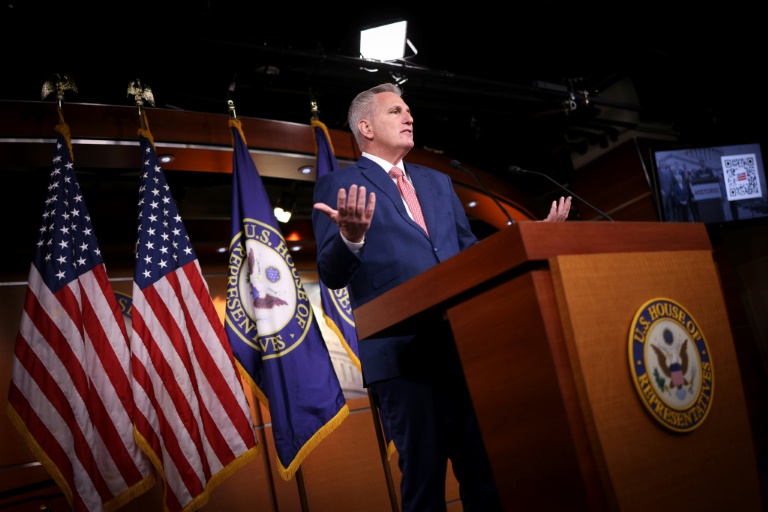
“We’ve spent the last year and a half — all the Republican members in conference — going throughout the country listening — listening to the challenges, fighting what Democrats have been doing,” House Minority Leader Kevin McCarthy said at an event outside Pittsburgh, Pennsylvania.

“And we want to roll it out to you, to the entire country, to know exactly what we will do.”

The agenda prioritizes the usual conservative staples of the economy, illegal immigration, the opioid crisis, combating crime and increased fossil fuel production — all identified weaknesses for Biden. 

It hits on hot-button issues that have polarized voters, such as transgender athletes in girls’ and women’s sports, in parts reflecting former president Donald Trump’s right-wing “Make America Great Again” (MAGA) agenda.

The Republicans are also focused on Democratic policies in schools, where bitter debates have played out on what many parents see as overzealous mask mandates and on the teaching of racism in America’s history. 

Beyond a brief pledge to “protect the lives of unborn children,” however, it notably steers clear of the Republican goal to more tightly regulate abortion, an issue McCarthy didn’t address in his speech.

It also avoids other issues seen by Democrats as electoral catnip, such as protecting democracy in the wake of the 2021 Capitol insurrection and the global climate crisis. 

– ‘Number one killer’ –

“We’ve watched what’s happened to our border, the millions of people who are just walking across, people on the terrorist watch list,” McCarthy said, leaning into Democrats’ perceived weakness on immigration.

“But now we’re watching it create every community to be a border community. Fentanyl, the number one killer of Americans between the ages of 18 and 45: The poison starts in China and comes across our border. You realize it’s killing 300 Americans every day?”

McCarthy said the Republicans’ “very first bill” would be to repeal Democratic legislation providing for 87,000 new internal revenue service agents, a move conservatives have characterized as an intrusion into people’s private lives.

The four-part blueprint — focusing on “An economy that’s strong,” “A nation that’s safe,” “A future that’s free” and “A government that’s accountable” — has broad support among Republicans.

Senate Minority Leader Mitch McConnell, who is not planning to unveil his agenda ahead of election day on November 8, took to Twitter to praise his House counterpart.

“Less inflation. More law and order. Parents’ rights. Border security. American energy,” he said, summarizing what he saw as the highlights.

The roll-out has drawn comparisons with the Republicans’ 1994 “Contract with America,” which ended decades of Democratic dominance in the House, although it is lighter on specifics. 

Democratic House Speaker Nancy Pelosi slammed the Republicans’ “whole-hearted commitment” to Trumpism, accusing them of seeking to criminalize women’s health care and threaten democracy.  

Biden dismissed the “Commitment to America” as a “thin series of policy goals with little detail” that illustrated the hold of the MAGA movement on Republicans. 

The president sought to keep abortion top of the agenda as he vowed to sign nationwide protections into law in the event of big Democratic gains in Congress. 

“Americans can choose,” the president told a gathering of the largest US teachers’ union in Washington. Abortion, guns and health care, are all “on the ballot” in November, he said. 

White House rebukes World Bank chief in climate row

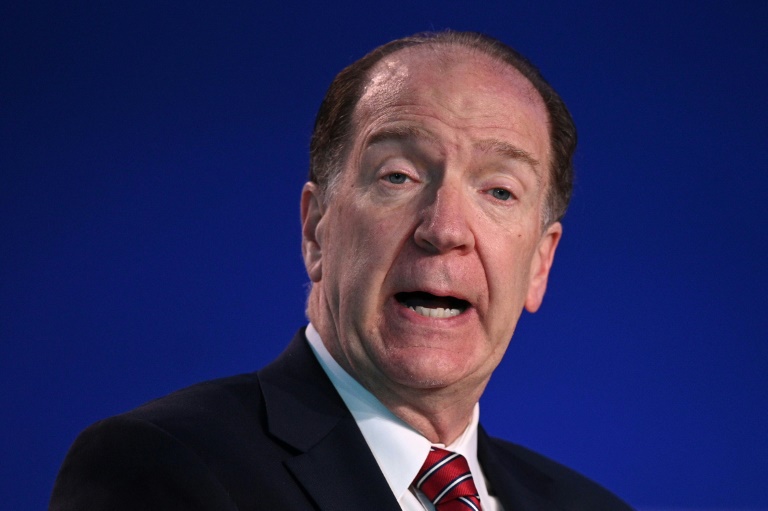
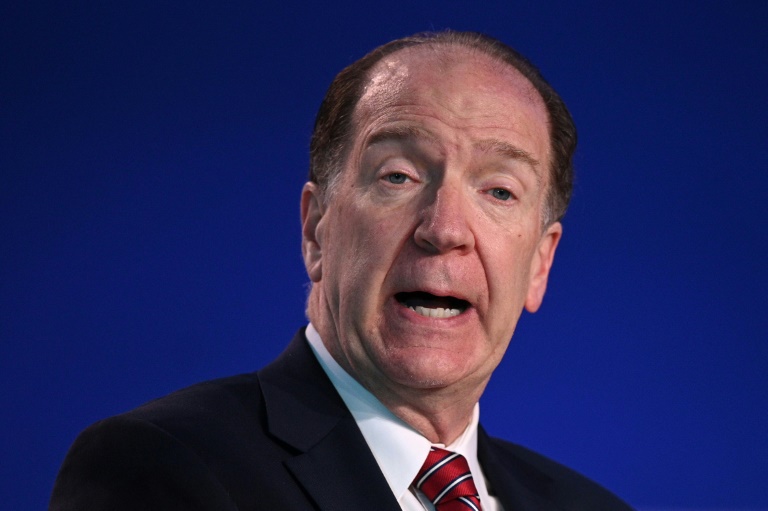
The White House on Friday rebuked the head of the World Bank David Malpass, who is battling charges of climate denial for dodging questions on the role of man-made emissions in global warming.

Under mounting fire, Malpass has rejected suggestions he might quit over the uproar — and has moved to clarify his position several times in recent days.

“Look, it’s clear that greenhouse gas emissions from human activity are adding to, are causing climate change,” he told Politico Friday, affirming that none of the bank’s member countries had asked him to leave and that he was “not resigning.”

“The task for us, for the world, is to pull together the projects and the funding that actually has an impact,” he said.

Malpass is a veteran of Republican US administrations and was tapped to lead the bank in 2019 by then-president Donald Trump, who famously and repeatedly denied the science behind climate change.

Climate activists have previously called for Malpass to be removed for what they say is an inadequate approach to the climate crisis — but the chorus grew suddenly louder after his appearance at a New York Times-organized conference this week.

Asked on stage to respond to a claim by former US vice president Al Gore that he was a climate denier, Malpass declined multiple times to say whether he believed man-made emissions were warming the planet — responding, “I’m not a scientist.”

“We condemn the words of the president,” Press Secretary Karine Jean-Pierre told a White House briefing in response to the incident.

“We expect the World Bank to be a global leader” on the climate crisis response, she said, adding that the US Treasury Department “has and will continue to make that expectation clear to the World Bank leadership.”

Malpass has been seeking to course-correct since the row erupted earlier this week, and in an interview with CNN on Thursday he clearly acknowledged that climate-warming emissions were “coming from manmade sources, including fossil fuels, methane, agricultural uses and industrial uses.”

“I’m not a denier,” he told the network, saying his message had been “tangled” and he was “not always good at conveying” what he means.

But the uproar shows little sign of dying down, with the Union of Concerned Scientists the latest group to call for him to be “replaced immediately.”

Pressed on whether President Joe Biden still has confidence in Malpass and media reports that some US officials are seeking his removal, Jean-Pierre said: “Removing him requires a majority of shareholders, so that’s something to keep in mind.”

“The US believes the World Bank must be a full partner in delivering on the aggressive climate agenda, poverty reduction and sustainability development. Again, Treasury will hold Malpass accountable to this position and support the many staff working to fight climate change.”

– ‘I am worried’ –

Malpass’s initial nomination faced intense criticism but since taking the role he has been a staunch supporter of aid and debt relief for the poorest nations, in addition to consistently noting the dangers from climate change.

In a speech in June where he warned about the overlapping crises facing the global community amid soaring inflation and debt distress, he emphasized the need to “effectively address climate change.”

“It requires massive investments in cleaner energy, energy efficiency, and electricity grids and transmission. Gas flaring, methane leakage, and the operation of antiquated coal-fired power plants, with severe health and environmental impacts, continue with little abatement,” he said.

Even so, critics of the lending institution have grown increasingly loud.

“I am worried right now about the World Bank,” the Nobel Prize-winning economist Joseph Stiglitz told AFP earlier this week.

“Unfortunately the World Bank has not taken the kind of global leadership that the world needs right now” on climate and other critical issues, said Stiglitz, himself a former chief economist of the institution.

The head of the World Bank is traditionally an American, while the leader of the other big international lender in Washington, the IMF, tends to be European. 

Malpass is not the first leader of one of those institutions to come under fire for personal or professional behavior.

His predecessor Jim Yong Kim faced controversy over reforms and management of the Bank and then left early to join the private sector, while current IMF chief Kristalina Georgieva fell into hot water over changes made to data in a now discontinued World Bank report that painted China in a more positive light.

White House rebukes World Bank chief in climate row

The White House on Friday rebuked the head of the World Bank David Malpass, who is battling charges of climate denial for dodging questions on the role of man-made emissions in global warming.

Under mounting fire, Malpass has rejected suggestions he might quit over the uproar — and has moved to clarify his position several times in recent days.

“Look, it’s clear that greenhouse gas emissions from human activity are adding to, are causing climate change,” he told Politico Friday, affirming that none of the bank’s member countries had asked him to leave and that he was “not resigning.”

“The task for us, for the world, is to pull together the projects and the funding that actually has an impact,” he said.

Malpass is a veteran of Republican US administrations and was tapped to lead the bank in 2019 by then-president Donald Trump, who famously and repeatedly denied the science behind climate change.

Climate activists have previously called for Malpass to be removed for what they say is an inadequate approach to the climate crisis — but the chorus grew suddenly louder after his appearance at a New York Times-organized conference this week.

Asked on stage to respond to a claim by former US vice president Al Gore that he was a climate denier, Malpass declined multiple times to say whether he believed man-made emissions were warming the planet — responding, “I’m not a scientist.”

“We condemn the words of the president,” Press Secretary Karine Jean-Pierre told a White House briefing in response to the incident.

“We expect the World Bank to be a global leader” on the climate crisis response, she said, adding that the US Treasury Department “has and will continue to make that expectation clear to the World Bank leadership.”

Malpass has been seeking to course-correct since the row erupted earlier this week, and in an interview with CNN on Thursday he clearly acknowledged that climate-warming emissions were “coming from manmade sources, including fossil fuels, methane, agricultural uses and industrial uses.”

“I’m not a denier,” he told the network, saying his message had been “tangled” and he was “not always good at conveying” what he means.

But the uproar shows little sign of dying down, with the Union of Concerned Scientists the latest group to call for him to be “replaced immediately.”

Pressed on whether President Joe Biden still has confidence in Malpass and media reports that some US officials are seeking his removal, Jean-Pierre said: “Removing him requires a majority of shareholders, so that’s something to keep in mind.”

“The US believes the World Bank must be a full partner in delivering on the aggressive climate agenda, poverty reduction and sustainability development. Again, Treasury will hold Malpass accountable to this position and support the many staff working to fight climate change.”

– ‘I am worried’ –

Malpass’s initial nomination faced intense criticism but since taking the role he has been a staunch supporter of aid and debt relief for the poorest nations, in addition to consistently noting the dangers from climate change.

In a speech in June where he warned about the overlapping crises facing the global community amid soaring inflation and debt distress, he emphasized the need to “effectively address climate change.”

“It requires massive investments in cleaner energy, energy efficiency, and electricity grids and transmission. Gas flaring, methane leakage, and the operation of antiquated coal-fired power plants, with severe health and environmental impacts, continue with little abatement,” he said.

Even so, critics of the lending institution have grown increasingly loud.

“I am worried right now about the World Bank,” the Nobel Prize-winning economist Joseph Stiglitz told AFP earlier this week.

“Unfortunately the World Bank has not taken the kind of global leadership that the world needs right now” on climate and other critical issues, said Stiglitz, himself a former chief economist of the institution.

The head of the World Bank is traditionally an American, while the leader of the other big international lender in Washington, the IMF, tends to be European. 

Malpass is not the first leader of one of those institutions to come under fire for personal or professional behavior.

His predecessor Jim Yong Kim faced controversy over reforms and management of the Bank and then left early to join the private sector, while current IMF chief Kristalina Georgieva fell into hot water over changes made to data in a now discontinued World Bank report that painted China in a more positive light.

Pakistan's dire floods signal global climate crisis, PM tells UN

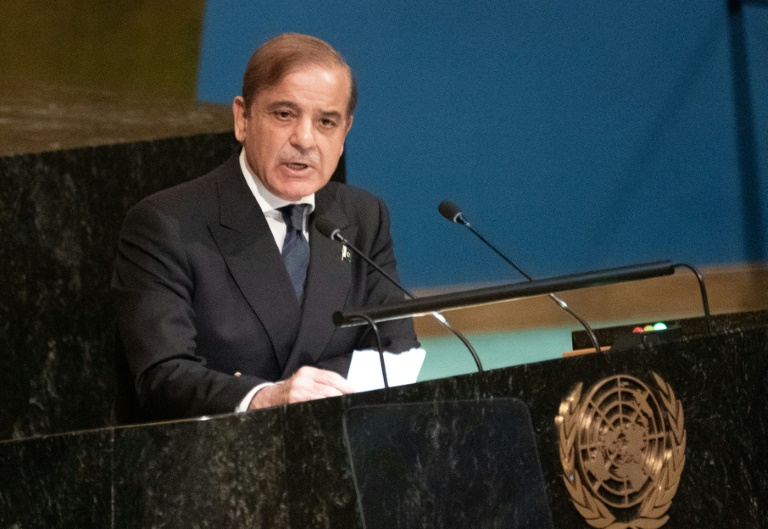
Pakistan Prime Minister Shehbaz Sharif warned Friday that his country’s worst-ever floods were a sign of climate catastrophes to come around the world, as he urged justice for developing nations that bear little responsibility for warming.

Unprecedented monsoon downpours flooded a third of the country — an area the size of the United Kingdom — killing nearly 1,600 people and displacing more than seven million.

“What happened in Pakistan will not stay in Pakistan,” he said in a passionate address to the United Nations General Assembly, adding that lost homes, decimated livelihoods and deluged cropland had meant that for many, life had “changed forever.”

Sharif said injustice was inherent in the crisis, with his country of 220 million people at “ground zero” of climate change but responsible for less than one percent of carbon emissions. 

“Why are my people paying the price of such high global warming through no fault of their own? Nature has unleashed her fury on Pakistan without looking at our carbon footprint, which is next to nothing,” he said.

“It is therefore entirely reasonable to expect some approximation of justice for this loss and damage,” he continued, adding his voice to growing calls among developing countries for financial compensation from rich polluters.

– Climate compensation –

The issue of “loss and damage” payments is deeply contentious. 

Supporters argue that historic polluters have a moral imperative to pay for the loss and damage already caused by multiplying extreme weather events, which have not been prevented by measures to mitigate or adapt to global warming.

The idea has so far been shot down by rich nations, but UN chief Antonio Guterres endorsed the proposal a few days ago and it is due to be discussed at the next UN climate summit in Egypt.

Pakistan has estimated total financial losses at $30 billion, and on Friday its finance minister Miftah Ismail tweeted the county was seeking debt relief from bilateral creditors. 

Turning his attention to neighboring Afghanistan, Sharif urged the international community to heed a $4.2 billion UN appeal for humanitarian and economic assistance and release the country’s financial reserves, frozen since the Taliban seized power last year.

“Pakistan is working to encourage respect for the rights of Afghan girls and women to education and work. Yet, at this point, isolating the Afghan Interim Government could aggravate the suffering of the Afghan people, who are already destitute,” he said.

The United States recently set up an outside fund to manage Afghanistan’s frozen assets, saying it did not trust the Taliban.

On Kashmir, the Himalayan territory disputed between Pakistan and India since the two countries’ independence from Britain, Sharif accused New Delhi of embarking on “illegal demographic changes” by opening the Muslim-majority region to mass migration by Hindu Indians.

He called on India to “walk the path of peace and dialogue by reversing its illegal steps of 15 August 2019,” when New Delhi revoked Kashmir’s constitutional autonomy. 

Close Bitnami banner
Bitnami