AFP

Asian coastal cities sinking fast: study

Sprawling coastal cities in South and Southeast Asia are sinking faster than elsewhere in the world, leaving tens of millions of people more vulnerable to rising sea levels, a new study says.

Rapid urbanisation has seen these cities draw heavily on groundwater to service their burgeoning populations, according to research by Singapore’s Nanyang Technological University (NTU), published in the journal Nature Sustainability last week. 

“This puts cities experiencing rapid local land subsidence at greater risk of coastal hazards than already present due to climate-driven sea-level rise,” the study says.

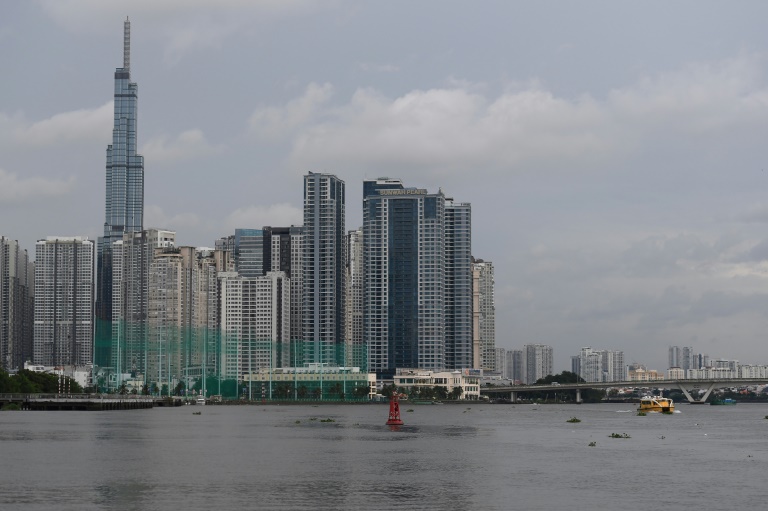
Vietnam’s most-populous urban centre and main business hub, Ho Chi Minh City, was sinking an average of 16.2 millimetres (0.6 inches) annually, topping the study’s survey of satellite data from 48 large coastal cities around the world. 

The southern Bangladeshi port of Chittagong was second on the list, with the western Indian city Ahmedabad, Indonesian capital Jakarta and Myanmar’s commercial hub Yangon also sinking more than 20 millimetres in peak years. 

“Many of these fast-subsiding coastal cities are rapidly expanding megacities, where… high demands for groundwater extraction and loading from densely constructed building structures, contribute to local land subsidence,” the study says.

Sinking cities are not of themselves a result of climate change, but researchers said their work would give a better insight into how the phenomenon would “compound the effects of climate-driven mean sea-level rise”.

More than one billion people will live in coastal cities at risk of rising sea levels by 2050, according to UN Intergovernmental Panel on Climate Change. 

The IPCC says that global sea levels could rise by up to 60 centimetres (24 inches) by the end of the century even if greenhouse gas emissions are sharply reduced.

Lachlan Murdoch faces off with Crikey in defamation row

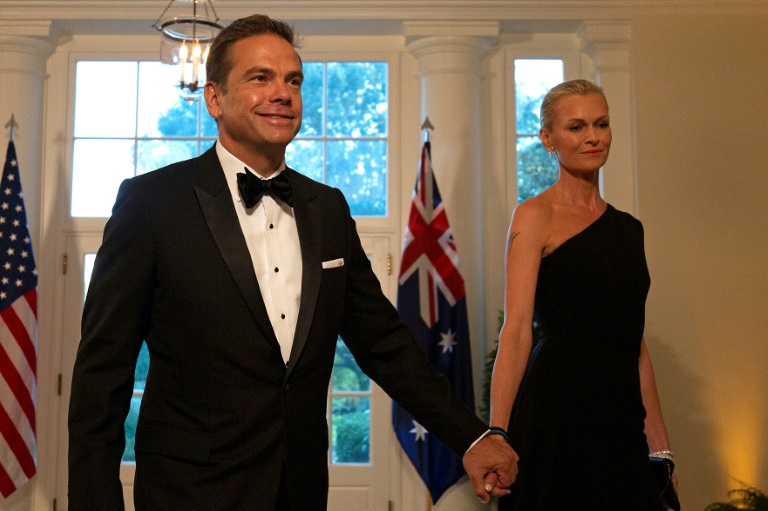
A high-stakes defamation battle between News Corp co-chairman Lachlan Murdoch and small Australian news outlet Crikey will go to trial beginning March 27 in Sydney.

Rupert Murdoch’s eldest son — who is also chief executive of Fox News parent Fox Corporation — is suing Crikey over an opinion piece that linked his family’s media empire to the January 6, 2021 storming of the US Capitol by supporters of then-President Donald Trump.

The media scion’s lawyers claimed their client was defamed over a dozen times in the article, which accused “the Murdochs and their slew of poisonous Fox News commentators” of being “unindicted co-conspirators” in the Capitol riot.

On Friday, Murdoch’s barrister — top defamation litigator Sue Chrysanthou — pushed in the preliminary hearing for the earliest possible trial date, arguing Crikey had been “directing ridicule and hatred” towards her client.

Crikey was “publicly claiming martyrdom”, she told the largely administrative case management hearing, pointing to the outlet running billboard advertisements about the case and fundraising online for its defence.

In the past month, Crikey’s GoFundMe campaign has raised nearly A$500,000 (US$333,000) and garnered support from two former Australian Prime Ministers, Kevin Rudd and Malcolm Turnbull.

“Lachlan Murdoch owns boats that are worth more than Crikey,” Turnbull commented alongside his Aus$5,000 (US$3,400) donation.

– A very public fight –

The legal scuffle over the opinion piece burst into international headlines last month, when Crikey ran an advertisement in The New York Times daring Murdoch to sue.

The often pugilistic website said it welcomed the opportunity to “test this important issue of freedom of public interest journalism in a courtroom”.

Murdoch filed his lawsuit the next day.

The tussle pits an upstart website, with subscriber numbers in the low tens of thousands, against one of the world’s largest media empires.

Defamation expert David Rolph from the University of Sydney told AFP Murdoch’s case could be the first test of recent attempts to reform Australia’s notoriously tough defamation laws.

Australia has gained a reputation as “the defamation capital of the world” after a slew of lawsuits launched by high-profile figures, including actors and politicians.

Crikey’s defence, filed with the Federal Court Tuesday, denied it defamed Murdoch and flagged it would lean on two new defences created by the reforms.

“One is a serious harm threshold… the plaintiff now has to prove that they not only suffered some harm to reputation, but that it was serious harm to reputation,” Rolph explained.

Crikey will also seek to argue that the opinion piece, by writer Bernard Keane, was in the public interest.

“I suppose the difficulty here is that defence is entirely untested. This will be a test case of that,” Rolph said.

– Public interest fight –

In a statement issued Thursday, Crikey chief executive Will Hayward said his company was fighting the case because “there is an issue of fundamental public importance at stake”.

“We think it is important in an open, well-functioning society that the rich and powerful can be critiqued.”

While Murdoch has stayed quiet since launching the case, his statement of claim accused Crikey of using the legal saga to drive subscriptions.

He has asked the court to permanently ban Crikey from publishing anything suggesting he “illegally conspired with Donald Trump” around the events of January 6.

The case will be heard by Justice Wigney, who has overseen several closely-watched defamation trials — including actor Geoffrey Rush’s successful suit against another Australian media outlet.

Wigney said Friday that before the trial begins, he would seek to have the parties enter mediation where “cool commercial minds may prevail”.

Lachlan Murdoch faces off with Crikey in defamation row

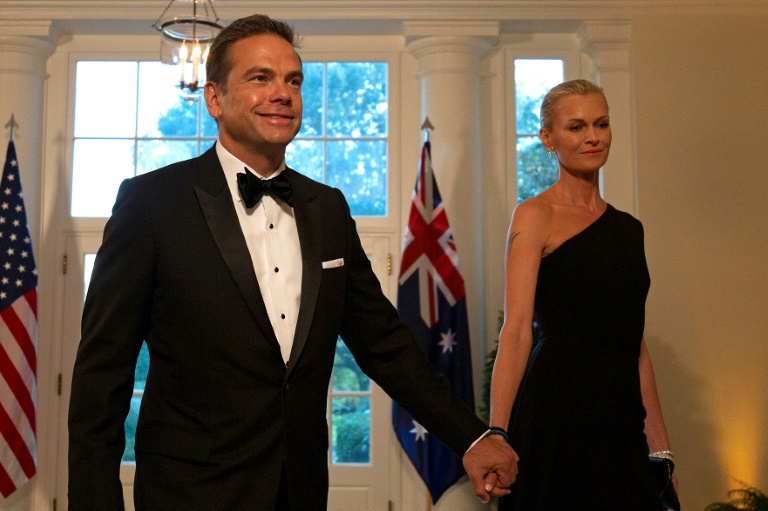
A high-stakes defamation battle between News Corp co-chairman Lachlan Murdoch and small Australian news outlet Crikey will go to trial beginning March 27 in Sydney.

Rupert Murdoch’s eldest son — who is also chief executive of Fox News parent Fox Corporation — is suing Crikey over an opinion piece that linked his family’s media empire to the January 6, 2021 storming of the US Capitol by supporters of then-President Donald Trump.

The media scion’s lawyers claimed their client was defamed over a dozen times in the article, which accused “the Murdochs and their slew of poisonous Fox News commentators” of being “unindicted co-conspirators” in the Capitol riot.

On Friday, Murdoch’s barrister — top defamation litigator Sue Chrysanthou — pushed in the preliminary hearing for the earliest possible trial date, arguing Crikey had been “directing ridicule and hatred” towards her client.

Crikey was “publicly claiming martyrdom”, she told the largely administrative case management hearing, pointing to the outlet running billboard advertisements about the case and fundraising online for its defence.

In the past month, Crikey’s GoFundMe campaign has raised nearly A$500,000 (US$333,000) and garnered support from two former Australian Prime Ministers, Kevin Rudd and Malcolm Turnbull.

“Lachlan Murdoch owns boats that are worth more than Crikey,” Turnbull commented alongside his Aus$5,000 (US$3,400) donation.

– A very public fight –

The legal scuffle over the opinion piece burst into international headlines last month, when Crikey ran an advertisement in The New York Times daring Murdoch to sue.

The often pugilistic website said it welcomed the opportunity to “test this important issue of freedom of public interest journalism in a courtroom”.

Murdoch filed his lawsuit the next day.

The tussle pits an upstart website, with subscriber numbers in the low tens of thousands, against one of the world’s largest media empires.

Defamation expert David Rolph from the University of Sydney told AFP Murdoch’s case could be the first test of recent attempts to reform Australia’s notoriously tough defamation laws.

Australia has gained a reputation as “the defamation capital of the world” after a slew of lawsuits launched by high-profile figures, including actors and politicians.

Crikey’s defence, filed with the Federal Court Tuesday, denied it defamed Murdoch and flagged it would lean on two new defences created by the reforms.

“One is a serious harm threshold… the plaintiff now has to prove that they not only suffered some harm to reputation, but that it was serious harm to reputation,” Rolph explained.

Crikey will also seek to argue that the opinion piece, by writer Bernard Keane, was in the public interest.

“I suppose the difficulty here is that defence is entirely untested. This will be a test case of that,” Rolph said.

– Public interest fight –

In a statement issued Thursday, Crikey chief executive Will Hayward said his company was fighting the case because “there is an issue of fundamental public importance at stake”.

“We think it is important in an open, well-functioning society that the rich and powerful can be critiqued.”

While Murdoch has stayed quiet since launching the case, his statement of claim accused Crikey of using the legal saga to drive subscriptions.

He has asked the court to permanently ban Crikey from publishing anything suggesting he “illegally conspired with Donald Trump” around the events of January 6.

The case will be heard by Justice Wigney, who has overseen several closely-watched defamation trials — including actor Geoffrey Rush’s successful suit against another Australian media outlet.

Wigney said Friday that before the trial begins, he would seek to have the parties enter mediation where “cool commercial minds may prevail”.

Lachlan Murdoch faces off with Crikey in defamation row

A high-stakes defamation battle between News Corp co-chairman Lachlan Murdoch and small Australian news outlet Crikey will go to trial beginning March 27 in Sydney.

Rupert Murdoch’s eldest son — who is also chief executive of Fox News parent Fox Corporation — is suing Crikey over an opinion piece that linked his family’s media empire to the January 6, 2021 storming of the US Capitol by supporters of then-President Donald Trump.

The media scion’s lawyers claimed their client was defamed over a dozen times in the article, which accused “the Murdochs and their slew of poisonous Fox News commentators” of being “unindicted co-conspirators” in the Capitol riot.

On Friday, Murdoch’s barrister — top defamation litigator Sue Chrysanthou — pushed in the preliminary hearing for the earliest possible trial date, arguing Crikey had been “directing ridicule and hatred” towards her client.

Crikey was “publicly claiming martyrdom”, she told the largely administrative case management hearing, pointing to the outlet running billboard advertisements about the case and fundraising online for its defence.

In the past month, Crikey’s GoFundMe campaign has raised nearly A$500,000 (US$333,000) and garnered support from two former Australian Prime Ministers, Kevin Rudd and Malcolm Turnbull.

“Lachlan Murdoch owns boats that are worth more than Crikey,” Turnbull commented alongside his Aus$5,000 (US$3,400) donation.

– A very public fight –

The legal scuffle over the opinion piece burst into international headlines last month, when Crikey ran an advertisement in The New York Times daring Murdoch to sue.

The often pugilistic website said it welcomed the opportunity to “test this important issue of freedom of public interest journalism in a courtroom”.

Murdoch filed his lawsuit the next day.

The tussle pits an upstart website, with subscriber numbers in the low tens of thousands, against one of the world’s largest media empires.

Defamation expert David Rolph from the University of Sydney told AFP Murdoch’s case could be the first test of recent attempts to reform Australia’s notoriously tough defamation laws.

Australia has gained a reputation as “the defamation capital of the world” after a slew of lawsuits launched by high-profile figures, including actors and politicians.

Crikey’s defence, filed with the Federal Court Tuesday, denied it defamed Murdoch and flagged it would lean on two new defences created by the reforms.

“One is a serious harm threshold… the plaintiff now has to prove that they not only suffered some harm to reputation, but that it was serious harm to reputation,” Rolph explained.

Crikey will also seek to argue that the opinion piece, by writer Bernard Keane, was in the public interest.

“I suppose the difficulty here is that defence is entirely untested. This will be a test case of that,” Rolph said.

– Public interest fight –

In a statement issued Thursday, Crikey chief executive Will Hayward said his company was fighting the case because “there is an issue of fundamental public importance at stake”.

“We think it is important in an open, well-functioning society that the rich and powerful can be critiqued.”

While Murdoch has stayed quiet since launching the case, his statement of claim accused Crikey of using the legal saga to drive subscriptions.

He has asked the court to permanently ban Crikey from publishing anything suggesting he “illegally conspired with Donald Trump” around the events of January 6.

The case will be heard by Justice Wigney, who has overseen several closely-watched defamation trials — including actor Geoffrey Rush’s successful suit against another Australian media outlet.

Wigney said Friday that before the trial begins, he would seek to have the parties enter mediation where “cool commercial minds may prevail”.

Australian rescuers race to save stranded pilot whales

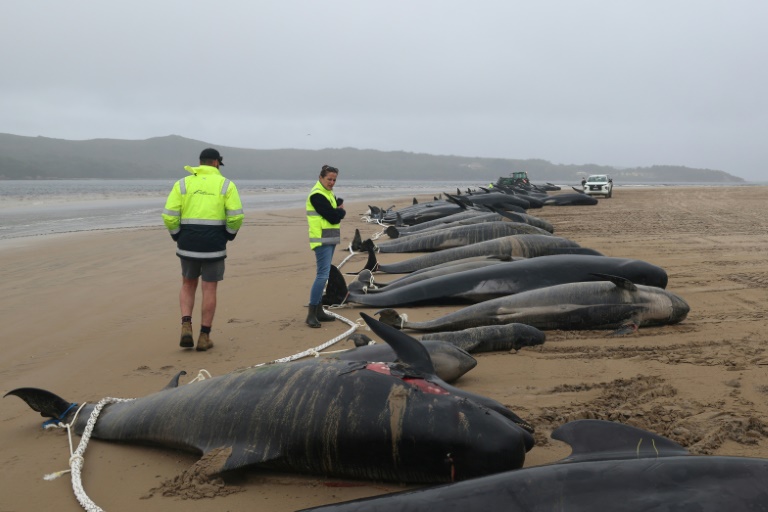
Australian rescuers battled Friday to refloat the last surviving pilot whales from a mass stranding that killed nearly 200 of the animals on a beach in Tasmania.

Fewer than 10 of the shiny black mammals were still alive on Ocean Beach, in remote western Tasmania, state wildlife services said.

About 30 of the animals were released into the ocean on Thursday, but some had beached themselves again, said Brendon Clark, incident controller with the Tasmania Parks and Wildlife Service.

Under drizzle, marine wildlife experts began wrapping up a days-long rescue operation that started after a large pod of the animals, which are part of the dolphin family, stranded on the beach.

Three pilot whales had yet to be reached because of their remote location on the shore and the difficult tidal conditions, Clark told reporters at the scene.

“The priority still is the rescue and release of those remaining animals and any others that we identify that re-strand,” he said.

Next, Clark said, comes the task of disposing of the carcases.

Wildlife workers used a fork-lift truck to drag whale carcasses along the beach, lining them up with tails pointed to the frigid ocean. 

– Carcasses –

One small, young calf could be seen tied up alongside the larger adult pilot whales.

A long white line was looped around the tails of dozens of the animals to allow them to be towed en masse to disposal at sea.

Weather forecasts indicated the “best opportunity” for the operation would be on Sunday, Clark said.

If left in shallow waters or on the beach, the carcasses could attract sharks and can carry disease. 

Workers at Tasmanian marine farming company Petuna Aquaculture helped to release surviving whales into the sea.

“It’s extremely sad to see these beautiful, intelligent animals on land where they are not to be,” Depha Miedecke, general manager of strategy at Petuna, told AFP.

“We will see it right through to the end to also removing, unfortunately, the whales that have not made it.”

– Distress signals –

Two years ago, Macquarie Harbour was the scene of the country’s largest-ever mass stranding, involving almost 500 pilot whales.

More than 300 pilot whales died during that event, despite the efforts of dozens of volunteers who toiled for days in Tasmania’s freezing waters to free them.

Scientists still do not fully understand why mass strandings occur.  

Some have suggested pods go off track after feeding too close to shore.

Pilot whales — which can grow to more than six metres (20 feet) long — are also highly sociable, so they may follow pod-mates who stray into danger.

That sometimes occurs when old, sick or injured animals swim ashore and other pod members follow, trying to respond to the trapped whale’s distress signals.

Others believe gently sloping beaches like those found in Tasmania confuse the whales’ sonar, making them think they are in open waters.

The latest stranding came days after a dozen young male sperm whales were reported dead in a separate mass stranding on King Island — between Tasmania and the Australian mainland.

State officials said that incident may have been a case of “misadventure”.

Strandings are also common in nearby New Zealand.

There, around 300 animals beach themselves annually, according to official figures, and it is not unusual for groups of between 20 and 50 pilot whales to run aground.

But numbers can run into the hundreds when a “super pod” is involved. In 2017, there was a mass stranding of almost 700 pilot whales.

After asteroid collision, Europe's Hera will probe 'crime scene'

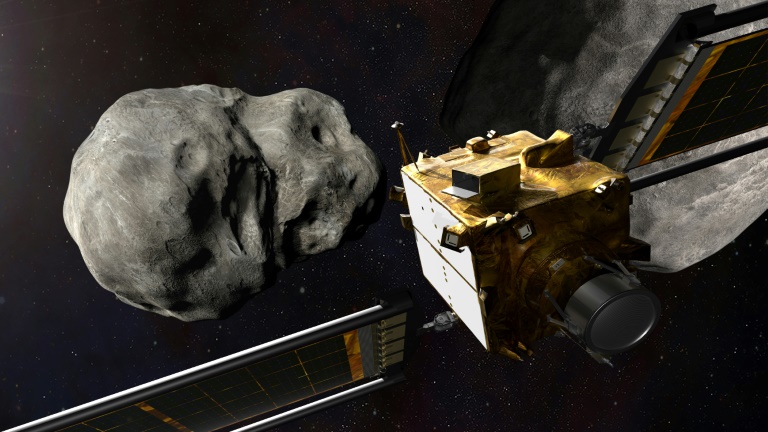
After NASA deliberately smashes a car-sized spacecraft into an asteroid next week, it will be up to the European Space Agency’s Hera mission to investigate the “crime scene” and uncover the secrets of these potentially devastating space rocks.

NASA’s Double Asteroid Redirection Test (DART) aims to collide with the asteroid moonlet Dimorphos on Monday night, hoping to slightly alter its trajectory — the first time such an operation has been attempted.

While Dimorphos is 11 million kilometres (6.8 million miles) away and poses no threat to Earth, the mission is a test run in case the world someday needs to deflect an asteroid from heading our way.

Astronomers around the world will watch DART’s impact, and its effect will be closely followed to see if the mission passed the test.

Then, the European Space Agency’s Hera mission, named after the ancient Greek queen of the gods, will follow in its footsteps. 

The Hera spacecraft is planned to launch in October 2024, aiming to arrive at Dimorphos in 2026 to measure the exact impact DART had on the asteroid.

But scientists are not only excited to see DART’s crater, but also to explore an object that is very much out of this world.

– ‘A new world’ –

Dimorphos, which orbits a larger asteroid Didymos as they hurtle together through space, provides not only a “perfect testing opportunity for a planetary defence experiment, but it is also a completely new environment,” the ESA’s Hera mission manager Ian Carnelli said.

Hera will be loaded up with cameras, spectrometers, radars and even toaster-sized nano-satellites to measure the asteroid’s shape, mass, chemical composition and more. 

NASA’s Bhavya Lal said that it was critically important to understand the size and composition of such asteroids.

“If an asteroid is made up of, for example, loose gravel, approaches to disrupt it may be different than if it was metal or some other kind of rock,” she told the International Astronautical Congress in Paris this week.

So little is known about Dimorphos that scientists will discover “a new world” at the same time as the public on Monday, Hera mission principal investigator Patrick Michel said.

“Asteroids are not boring space rocks — they are super exciting because they have a great diversity” in size, shape and composition, Michel said.

And because they have low gravity compared to Earth, matter there could behave completely differently than expected.

“Unless you touch the surface, you cannot know the mechanical response,” he said.

– ‘Behaved almost like fluid’ – 

For example, when a Japanese probe dropped a small explosive near the surface of the Ryugu asteroid in 2019, it was expected to make a crater of two or three metres. Instead, it blasted a 50-metre hole.

“There was no resistance,” Michel said. 

“The surface behaved almost like a fluid,” rather than solid rock, he added. “How weird is that?” 

One way the Hera mission will test Dimorphos will be to land a nano-satellite on its surface, in part to see how much it bounces.

Binary systems like Dimorphos and Didymos represent around 15 percent of known asteroids, but have not yet been explored.

With a diameter of just 160 metres — around the size of the Great Pyramid of Giza — Dimorphos will also be the smallest asteroid ever studied.

Learning about the impact of DART is not only important for planetary defence, Michel said, but also for understanding the history of our Solar System, where most cosmic bodies were formed through collisions and are now riddled with craters.

That’s where DART and Hera could shine a light not just on the future, but on the past.

Financial markets, Brussels wary of Italy far-right win

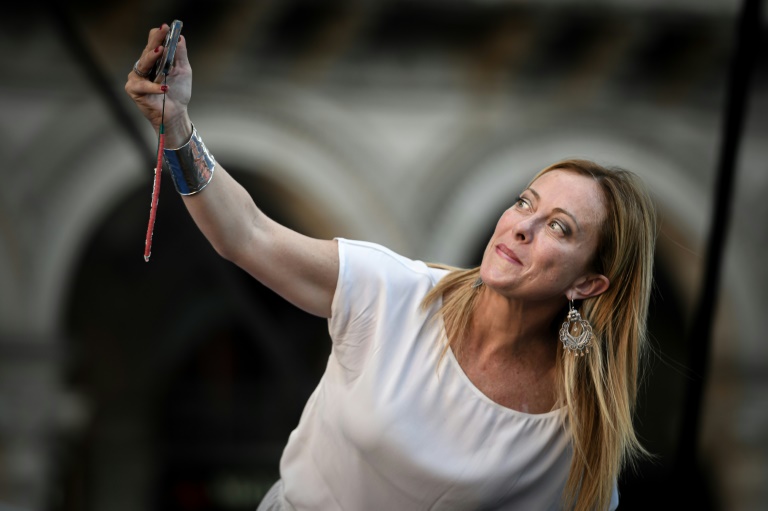
From her euroscepticism to her impact on Italy’s enormous debt, the likely victory of far-right leader Giorgia Meloni in elections Sunday is causing concern in financial markets and in Brussels.

The Brothers of Italy leader has abandoned her calls for the country to leave the EU’s single currency and the joint programme with her right-wing allies — the anti-immigration League and Silvio Berlusconi’s Forza Italia — commits them to the European project.

But concerns persist, particularly after she reiterated her support this week for Hungarian Prime Minister Viktor Orban in his battles with Brussels.

At an election rally in mid-September in Milan, Meloni declared that “the good times are over” and that Italy, like others, “is going to start defending its own national interests” in the EU.

“I don’t know any nationalists who are not against European institutions,” Frans Timmermans, vice-president of the European Commission, noted in an interview with La Repubblica newspaper earlier this month.

– EU recovery plan – 

Well placed to become the next prime minister, Meloni wants a “confederate Europe” which “respects the sovereignty of member states” to manage their own affairs.

She has called for a renegotiation of the Italian part of the EU’s mammoth post-pandemic recovery plan, from which Italy stands to receive almost 200 billion euros, to account for the spike in energy prices linked to the Ukraine war.

But the money is dependent on a series of reforms, which outgoing Prime Minister Mario Draghi began but must still be implemented.

“We could end up with a serious clash of ideas between Italy, which is by far the biggest beneficiary of the recovery plan, and the EU,” noted Nicola Nobile of Oxford Economics, a consultancy.

“There are many risks, but it will all depend on which Meloni leads the government — the one who has attacked Europe in the past or the one who now advocates a more moderate approach and could pursue the status quo on fiscal matters,” she told AFP.

– Spiralling debt –

Concerns about a slip in the reform timetable and an increase in Italy’s debt after the elections have already caused rating agencies Standard & Poor’s and Moody’s to downgrade the outlook for the country’s credit rating. 

Italy is saddled with a debt of more than 2.7 trillion euros, or some 150 percent of gross domestic product (GDP), the highest ratio in the eurozone after Greece.

Meloni’s right-wing coalition is calling for a revision of the EU’s rules against overspending, which were suspended during the pandemic but set a ceiling of three percent of GDP for the deficit and 60 percent for debt.

While some flexibility might be allowed, “it would be political suicide to say, ‘we don’t care about all the rules’,” noted Peter Bofinger, professor of economy at the University of Wuerzburg. 

“If Italy deviates from the European consensus” and does not maintain a minimum of budgetary discipline, “not even the European Central Bank will be able to help it”, he told AFP.

– Costly election promises –

The right-wing coalition has promised to cut taxes while increasing spending, including raising the minimum pension — plans that risk being hugely expensive.

“Their programme is very vague and does not explain how to finance these measures,” said Nobile.

“If they were implemented, Italy’s public deficit would remain above six percent of GDP for five years from 2023,” pushing the already high public debt to “unsustainable levels”.

The coalition’s flagship measure, a so-called flat tax that the League wants to set at 15 percent and Berlusconi 23 percent, could cost between 20 billion and 58 billion euros, according to Italy’s public accounts observatory.

Investors fear the government could end up like its predecessors — Berlusconi’s resigned in 2011, under pressure from the markets and a surge in the cost of debt.

Russia holds breakaway polls in Ukraine

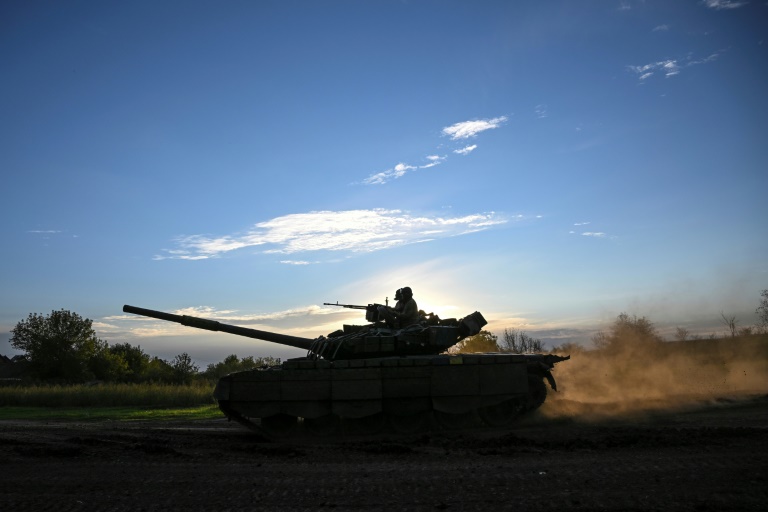
Moscow-held regions of Ukraine began voting Friday on whether to become part of Russia, in referendums that Kyiv and its allies have condemned as an unlawful land grab.

The referendums in eastern Donetsk and Lugansk regions, as well as in the southern Kherson and Zaporizhzhia regions have been roundly dismissed as a sham by Kyiv’s Western allies.

They come after Putin announced this week a mandatory troop call-up for about 300,000 reservists, which also sparked resounding condemnation in the West.

The mobilisation comes after Ukrainian forces seized back most of the northeastern Kharkiv region in a huge counter-offensive that has seen Kyiv retaking hundreds of towns and villages under Russian control for months.

The four regions’ integration into Russia — which for most observers is already a foregone conclusion — would represent a major new escalation of the conflict.

“We cannot –- we will not -– allow President Putin to get away with it,” US Secretary of State Antony Blinken said in a UN Security Council session on Thursday, lashing out against the referendums as a “sham”.

“The very international order we’ve gathered here to uphold is being shredded before our eyes… (Defending Ukraine’s sovereignty) is about protecting an international order where no nation can redraw the borders of another by force,” he said. 

The referendums are reminiscent of one in 2014 that saw Ukraine’s Crimea  annexed by Russia. 

Western capitals have maintained that the vote was fraudulent and hit Moscow with sanctions in response.

In New York this week, Western leaders have unanimously condemned the ballots and the troop call-up, with French President Macron telling the UN General Assembly that the referendums were a “travesty”.

Russian Foreign Minister Sergei Lavrov lashed out at the accusations, condemning Ukraine for driving “Russophobia”.

“There’s an attempt today to impose on us a completely different narrative about Russian aggression as the origin of this tragedy,” Lavrov told the Security Council.

– ‘A farce’ – 

In the eastern Donetsk and Lugansk regions — already recognised as independent by Putin right before he launched the invasion in February — residents are answering if they support their “republic’s entry into Russia”, according to Russian news agency TASS.

Ballots in Kherson and Zaporizhzhia regions  have the question: “Are you in favour of secession from Ukraine, formation of an independent state by the region and its joining the Russian Federation as a subject of the Russian Federation?”

Russian news agencies reported that the voting process began on Friday at 0500 GMT. Earlier, TASS said the balloting in the four regions would be untraditional.

“Given the short deadlines and the lack of technical equipment, it was decided not to hold electronic voting and use the traditional paper ballots,” it added.

Instead, authorities would go door-to-door for the first four days to collect votes, and then polling stations would be open on the final day, Tuesday, for residents to cast ballots.

Leonid Pasechnik, the leader of self-proclaimed Lugansk People’s Republic, told TASS they have been waiting for this referendum since 2014, calling it “our common dream and common future”. 

But Ukrainian President Volodymyr Zelensky denounced the referendums as a “farce”, and hailed Western allies for their condemnation of Russia’s moves.

“I am grateful to everyone in the world who supported us, who clearly condemned another Russian lie,” he said during his daily address on Thursday.

Putin said Moscow would use “all means” to protect its territory — a statement that former Russian leader Dmitry Medvedev said on social media would mean including “strategic nuclear weapons”. 

Medvedev also predicted the voting regions “will integrate into Russia”.

– Russians fleeing – 

Moscow on Thursday began its mandatory troop call-up, after Putin’s call for about 300,000 reservists to bolster the war effort.

Amateur footage posted on social media purported to show hundreds of Russian citizens across the country responding to the military summons, and the Russian military said that at least 10,000 people had volunteered to fight in 24 hours since the order.

But men were also leaving Russia in droves before they were made to join, and across Russia on Wednesday, more than 1,300 people were arrested during protests, a monitoring group reported.

Flights to neighbouring countries, mainly former Soviet republics that allow Russians visa-free entry, are nearly entirely booked and prices have skyrocketed, pointing to an exodus of Russians wanting to avoid going to war.

“I don’t want to go to the war,” a man named Dmitri, who had flown to Armenia with just one small bag, told AFP. 

“I don’t want to die in this senseless war. This is a fratricidal war.”

Military-aged men made up the majority of those arriving off the latest flight from Moscow at Yerevan airport and many were reluctant to speak.

The Armenian capital has become a major destination for Russians fleeing since war began on February 24, drawing fierce international opposition that has aimed to isolate Russia.

Looking lost and exhausted in Yerevan airport’s arrivals hall, 44-year-old Sergei said he had fled Russia to escape being called up.

“The situation in Russia would make anyone want to leave,” he told AFP.

Calling on Russians to resist the mobilisation, Zelensky urged them to protest, fight back “or surrender” to the Ukrainian army. 

“You are already complicit in all these crimes, murders and torture of Ukrainians. Because you were silent,” he said.

US aircraft carrier arrives in South Korea to 'deter' Pyongyang

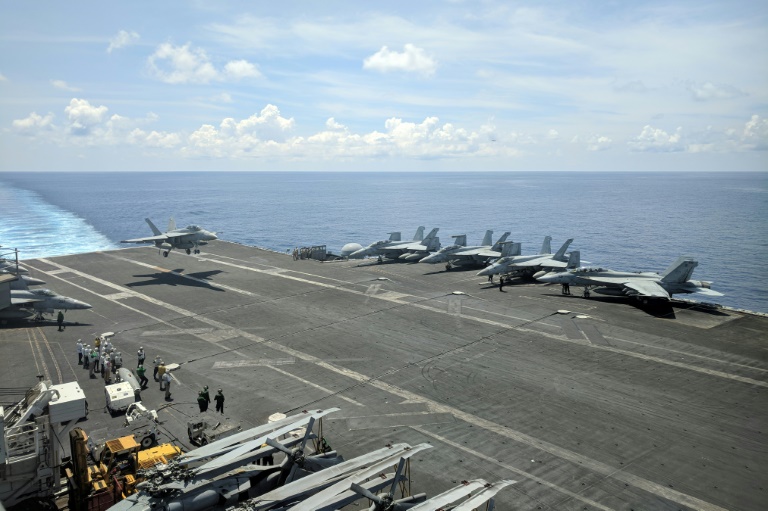
A US aircraft carrier arrived in South Korea Friday for the first time in nearly five years, ahead of joint drills in a show of force aimed at the nuclear-armed North.

The nuclear-powered USS Ronald Reagan and vessels from its strike group docked in the southern port city of Busan, part of a push by Seoul and Washington to have more US strategic assets operating in the region.

South Korea’s hawkish President Yoon Suk-yeol, who took office in May, has vowed to beef up joint military exercises with the United States, after years of failed diplomacy with North Korea under his predecessor.

“The deployment of the carrier USS Ronald Reagan to Busan demonstrates the strength of the South Korea-US alliance,” a South Korean defence ministry official told AFP.

The visit aims to “deter North Korea’s nuclear and missile threats”, the official added.

Pyongyang has conducted a record-breaking blitz of weapons tests this year, and earlier this month revised its nuclear law, enshrining a “first strike” doctrine and vowing never to give up its nukes.

The US Navy said the USS Ronald Reagan is accompanied on the South Korea visit by two vessels from its strike group — the USS Chancellorsville, a guided-missile cruiser, and the USS Barry, a guided missile destroyer.

They will take part in joint drills of South Korea’s east coast this month, the Yonhap news agency said, adding that the nuclear-powered submarine USS Annapolis is also expected to participate.

The carrier’s visit comes after months of warnings from South Korean and US officials that North Korean leader Kim Jong Un is preparing to conduct another nuclear test.

The isolated regime has tested nuclear weapons six times since 2006. Its last and most powerful one in 2017 — which Pyongyang claimed was a hydrogen bomb — had an estimated yield of 250 kilotons.

Washington is Seoul’s key security ally and stations about 28,500 troops in South Korea to protect it from the North.

The two countries have long carried out joint exercises, which they insist are purely defensive but North Korea sees them as rehearsals for an invasion.

Last month, the United States and South Korea staged their biggest combined military drills since 2018 — the resumption of large-scale training sessions that had been scaled back due to Covid-19 and the bout of failed diplomacy with Pyongyang.

Hong Kong replaced by Singapore as Asia's top finance centre

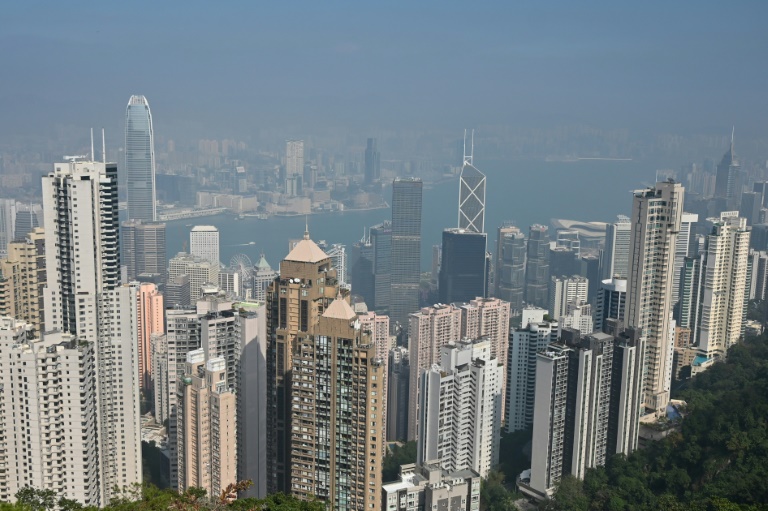
Hong Kong has lost its crown as Asia’s premier finance centre to Singapore in a global ranking list where New York and London maintained their number one and two spots.

Singapore jumped three places to third in the twice-a-year Global Financial Centres Index (GFCI) which assesses 119 cities around the world and was published late Thursday.

Hong Kong has adhered to a version of China’s strict zero-Covid rules throughout the pandemic, battering the economy and deepening a brain drain as rival business hubs reopen.

The city still mandates three days of hotel quarantine for all international arrivals while its border with the Chinese mainland is mostly closed.

In contrast, Singapore successfully shifted to endemicity earlier this year and has reopened without restrictions.

The city-state is hosting a slew of financial and business conferences in the coming months as well as a Formula 1 night race next week, while about four million people are expected to visit this year.

In a 600-word statement responding to the latest GFCI ranking, Hong Kong’s government focused on the city scoring a higher points rating than the year before.

“We will continue to listen to views and be bold in taking forward reforms to consolidate and strengthen Hong Kong’s capital market and our role as an international financial centre,” the government said.

The statement did not mention the coronavirus or the ongoing pandemic controls.

San Francisco came in at number five in the survey, up two spots. Shanghai, which was shut down earlier this year under China’s coronavirus controls, was number six followed by Los Angeles, Beijing and Shenzhen. 

Paris took tenth spot, replacing Tokyo which fell to 16th place.

Close Bitnami banner
Bitnami