AFP

Hong Kong replaced by Singapore as Asia's top finance centre

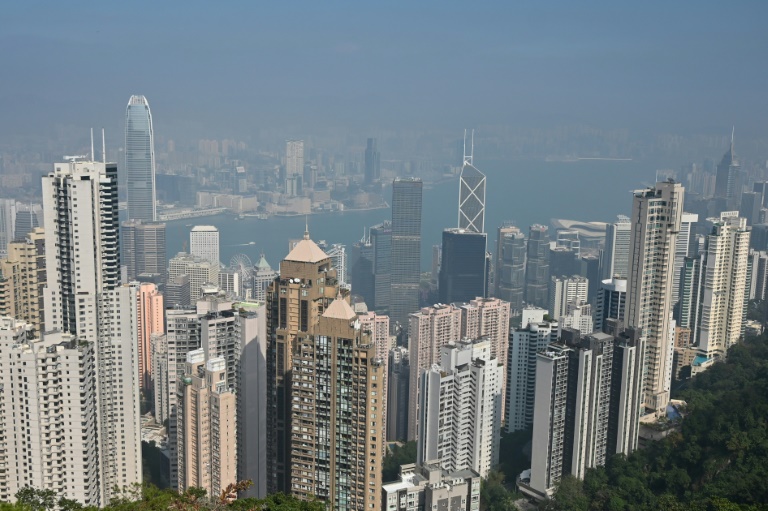
Hong Kong has lost its crown as Asia’s premier finance centre to Singapore in a global ranking list where New York and London maintained their number one and two spots.

Singapore jumped three places to third in the twice-a-year Global Financial Centres Index (GFCI) which assesses 119 cities around the world and was published late Thursday.

Hong Kong has adhered to a version of China’s strict zero-Covid rules throughout the pandemic, battering the economy and deepening a brain drain as rival business hubs reopen.

The city still mandates three days of hotel quarantine for all international arrivals while its border with the Chinese mainland is mostly closed.

In contrast, Singapore successfully shifted to endemicity earlier this year and has reopened without restrictions.

The city-state is hosting a slew of financial and business conferences in the coming months as well as a Formula 1 night race next week, while about four million people are expected to visit this year.

In a 600-word statement responding to the latest GFCI ranking, Hong Kong’s government focused on the city scoring a higher points rating than the year before.

“We will continue to listen to views and be bold in taking forward reforms to consolidate and strengthen Hong Kong’s capital market and our role as an international financial centre,” the government said.

The statement did not mention the coronavirus or the ongoing pandemic controls.

San Francisco came in at number five in the survey, up two spots. Shanghai, which was shut down earlier this year under China’s coronavirus controls, was number six followed by Los Angeles, Beijing and Shenzhen. 

Paris took tenth spot, replacing Tokyo which fell to 16th place.

US charges Boeing with misleading investors on 737 MAX safety, fined $200 mn

US securities officials fined Boeing $200 million over the aviation giant’s misleading assurances about the safety of the 737 MAX airplane following two deadly crashes, regulators announced Thursday.

Boeing agreed to the penalty to settle charges it “negligently violated the antifraud provisions” of US securities laws, the Securities and Exchange Commission said in a statement, saying the company and its leader “put profits over people.”

Boeing’s former chief executive, Dennis Muilenburg, also agreed to pay $1 million to settle the same charges in a civil case.

The settlement is the latest hit to Boeing over the MAX following the Lion Air Crash in Indonesia in October 2018 and the Ethiopian Airlines crash in Ethiopia in March 2019, which together claimed nearly 350 lives.

One month after the first crash, a Boeing press release approved by Muilenburg “selectively highlighted certain facts,” implying that pilot error and poor aircraft maintenance contributed to the crash.

The press release also attested to the aircraft’s safety, not disclosing that Boeing knew a key flight handling system, the Maneuvering Characteristics Augmentation System (MCAS), posed safety issues and was being redesigned.

After the second crash, Boeing and Muilenburg assured the public that there was “no surprise or gap” in the federal certification of the MAX despite being aware of contrary information, the SEC said.

– Boeing ‘failed’ –

“In times of crisis and tragedy, it is especially important that public companies and executives provide full, fair, and truthful disclosures to the markets,” said SEC chair Gary Gensler in a press release.

“The Boeing Company and its former CEO, Dennis Muilenburg, failed in this most basic obligation. They misled investors by providing assurances about the safety of the 737 MAX, despite knowing about serious safety concerns.”

The SEC said both Boeing and Muilenburg, in agreeing to pay the penalties, did not admit or deny the agency’s findings.

Boeing said the agreement “fully resolves” the SEC’s inquiry and is part of the company’s “broader effort to responsibly resolve outstanding legal matters related to the 737 MAX accidents in a manner that serves the best interests of our shareholders, employees, and other stakeholders,” a company spokesman said.

“We will never forget those lost on Lion Air Flight 610 and Ethiopian Airlines Flight 302, and we have made broad and deep changes across our company in response to those accidents.”

Robert Clifford, a lawyer representing families of victims aboard the Ethiopian Airlines flight, called for “Muilenburg or anyone else who persuaded the government to keep the MAX 737 Boeing flying” to be “fully investigated for conduct that could be criminal in nature.”

US air safety authorities cleared Boeing’s 737 MAX to resume service in November 2020 following a 20-month grounding after the crashes.

A principal cause of the two crashes was identified as the MCAS, which was supposed to keep the plane from stalling as it ascended but instead forced the nose of the plane downward. The Federal Aviation Administration required Boeing to upgrade this system to address the flaw.

In January 2021, Boeing agreed to pay $2.5 billion to settle a US criminal charge over claims the company defrauded regulators overseeing the 737 MAX.

US charges Boeing with misleading investors on 737 MAX safety, fined $200 mn

US securities officials fined Boeing $200 million over the aviation giant’s misleading assurances about the safety of the 737 MAX airplane following two deadly crashes, regulators announced Thursday.

Boeing agreed to the penalty to settle charges it “negligently violated the antifraud provisions” of US securities laws, the Securities and Exchange Commission said in a statement, saying the company and its leader “put profits over people.”

Boeing’s former chief executive, Dennis Muilenburg, also agreed to pay $1 million to settle the same charges in a civil case.

The settlement is the latest hit to Boeing over the MAX following the Lion Air Crash in Indonesia in October 2018 and the Ethiopian Airlines crash in Ethiopia in March 2019, which together claimed nearly 350 lives.

One month after the first crash, a Boeing press release approved by Muilenburg “selectively highlighted certain facts,” implying that pilot error and poor aircraft maintenance contributed to the crash.

The press release also attested to the aircraft’s safety, not disclosing that Boeing knew a key flight handling system, the Maneuvering Characteristics Augmentation System (MCAS), posed safety issues and was being redesigned.

After the second crash, Boeing and Muilenburg assured the public that there was “no surprise or gap” in the federal certification of the MAX despite being aware of contrary information, the SEC said.

– Boeing ‘failed’ –

“In times of crisis and tragedy, it is especially important that public companies and executives provide full, fair, and truthful disclosures to the markets,” said SEC chair Gary Gensler in a press release.

“The Boeing Company and its former CEO, Dennis Muilenburg, failed in this most basic obligation. They misled investors by providing assurances about the safety of the 737 MAX, despite knowing about serious safety concerns.”

The SEC said both Boeing and Muilenburg, in agreeing to pay the penalties, did not admit or deny the agency’s findings.

Boeing said the agreement “fully resolves” the SEC’s inquiry and is part of the company’s “broader effort to responsibly resolve outstanding legal matters related to the 737 MAX accidents in a manner that serves the best interests of our shareholders, employees, and other stakeholders,” a company spokesman said.

“We will never forget those lost on Lion Air Flight 610 and Ethiopian Airlines Flight 302, and we have made broad and deep changes across our company in response to those accidents.”

Robert Clifford, a lawyer representing families of victims aboard the Ethiopian Airlines flight, called for “Muilenburg or anyone else who persuaded the government to keep the MAX 737 Boeing flying” to be “fully investigated for conduct that could be criminal in nature.”

US air safety authorities cleared Boeing’s 737 MAX to resume service in November 2020 following a 20-month grounding after the crashes.

A principal cause of the two crashes was identified as the MCAS, which was supposed to keep the plane from stalling as it ascended but instead forced the nose of the plane downward. The Federal Aviation Administration required Boeing to upgrade this system to address the flaw.

In January 2021, Boeing agreed to pay $2.5 billion to settle a US criminal charge over claims the company defrauded regulators overseeing the 737 MAX.

Poitier legacy tackled by Oprah in 'Sidney'

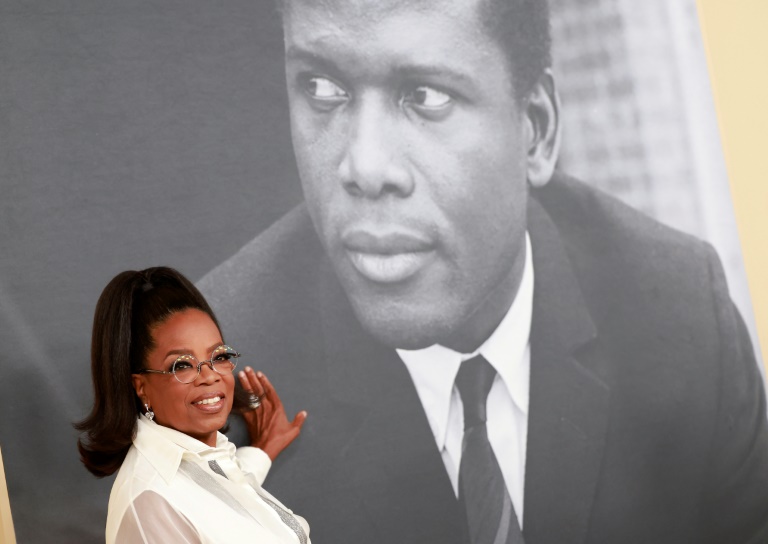
The late Sidney Poitier was at the peak of his Hollywood career when he came under fire from Black activists and intellectuals, accused of playing stereotypical, safe roles for white audiences just as the 1960s civil rights movement was exploding.

“Sidney,” the new Apple TV+ documentary out Friday, produced by Oprah Winfrey and featuring A-list talking heads from Denzel Washington and Morgan Freeman to Barbra Streisand and Robert Redford, sets out to show why they were wrong.

“The reality is, since the invention of cinema there had been these degrading images of Black people, and Sidney Poitier single-handedly destroyed those images, movie after movie after movie,” the film’s director Reginald Hudlin told AFP.

“He was a race warrior. Without him, you don’t have me, and you don’t have Oprah Winfrey, and you don’t have Barack Obama.”

It is one of several debates at the heart of “Sidney,” which features interviews Poitier gave to Winfrey years before his death in January at the age of 94.

The film addresses Poitier’s affair during his first marriage to Juanita Hardy — a potentially prickly topic as she and all three of their surviving daughters are interviewed for the documentary.

“When I first sat down with the family, to talk about the possibility of making the movie, I said, ‘Is anything off limits?’ And I specifically brought up that as an example,” said Hudlin.

“They were like, ‘No, no, no, we want to tell the whole truth.’ So I appreciate the fact that they were not interested in just doing a puff piece.”

The film also delves into terrifying moments of racist violence in Poitier’s life.

In 1964, Poitier and Harry Belafonte were pursued through Mississippi by gun-toting Ku Klux Klan members while delivering cash to a voting rights movement.

An earlier run-in with the Klan, and a white policeman who harassed a teenage Poitier at gunpoint, are presented as formative in his pioneering career and his often-overlooked activism.

“That’s what is amazing — he never dissolved into bitterness, he never let them break him,” said Hudlin.

“He just kept turning it into strength, into more determination, into more willpower.”

– ‘No precedent’ –

But perhaps the most contested part of Poitier’s legacy remains the suggestion he was too amenable or obedient to white audiences and Hollywood.

“Sidney” highlights a 1967 New York Times article entitled “Why Does White America Love Sidney Poitier So?” that accused Poitier of “playing essentially the same role, the antiseptic, one-dimensional hero.”

It described a “Sidney Poitier syndrome: a good guy in a totally white world, with no wife, no sweetheart, no woman to love or kiss, helping the white man solve the white man’s problem.”

Just three years earlier, Poitier had become the first Black actor to win an Oscar for “Lilies of the Field,” in which he played a traveling handyman who helps out and ultimately bonds with a community of white nuns.

Other roles, such as his beggar in “Porgy and Bess,” came to be seen as racist by critics. 

According to Hudlin, the backlash “was an inevitable byproduct of the work he was doing,” and Poitier — who “knew it was going to come” — was more interested in humanizing the Black experience.

“He kept it in a bigger context,” said Hudlin, noting that oppressed minorities were “suddenly fighting, and achieving their freedom,” and “having to figure this out in real time as it happened.”

“I think now we can look at it with a broader historical lens, and say that those decisions that Sidney Poitier made were right and helped the greater cause move forward.”

The documentary also underlines the groundbreaking nature of Poitier’s kiss with white actress Katharine Houghton in “Guess Who’s Coming to Dinner,” and the moment he slaps a white Southern aristocrat in “In The Heat of the Night.”

“There was no precedent for who he was and what he was doing,” said Hudlin.

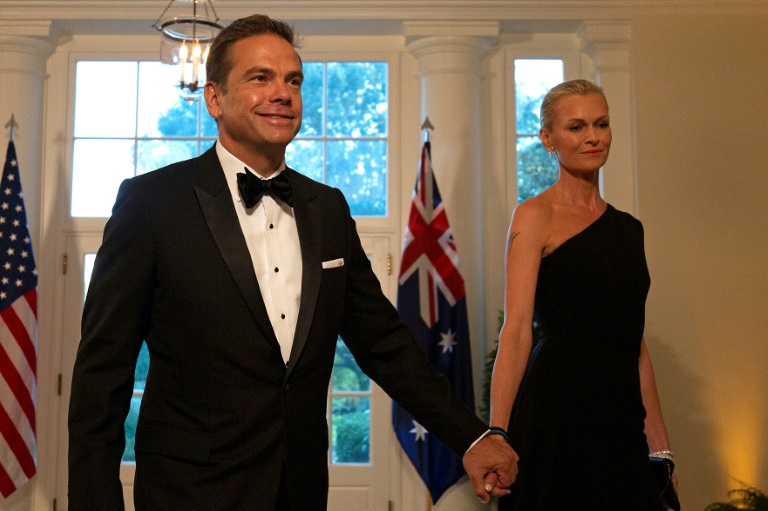
Lachlan Murdoch faces off with Crikey in defamation row

The high-stakes defamation battle between News Corp co-chairman Lachlan Murdoch and small Australian news outlet Crikey will go to trial beginning March 27 in Sydney.

Rupert Murdoch’s eldest son — who is also chief executive of Fox News parent Fox Corporation — is suing Crikey over an opinion piece that linked his family’s media empire to the January 6, 2021 storming of the US Capitol by supporters of then-President Donald Trump.

The media scion’s lawyers claimed their client was defamed over a dozen times in the article, which accused “the Murdochs and their slew of poisonous Fox News commentators” of being “unindicted co-conspirators” in the Capitol riot.

On Friday, Murdoch’s barrister — top defamation litigator Sue Chrysanthou — pushed for the earliest possible trial date, arguing Crikey had been “directing ridicule and hatred” towards her client.

She said Crikey was “publicly claiming martyrdom”, pointing to the outlet running billboard advertisements about the case and fundraising online for its defence.

In the past month, Crikey’s GoFundMe campaign has raised nearly A$500,000 (US$333,000) and garnered support from two former Australian Prime Ministers, Kevin Rudd and Malcolm Turnbull.

“Lachlan Murdoch owns boats that are worth more than Crikey,” Turnbull commented alongside his Aus$5,000 (US$3,400) donation.

– A very public fight –

The legal scuffle over the opinion piece burst into international headlines last month, when Crikey ran an advertisement in The New York Times daring Murdoch to sue.

The often pugilistic website said it welcomed the opportunity to “test this important issue of freedom of public interest journalism in a courtroom”.

Murdoch filed his lawsuit the next day.

The tussle pits an upstart website, with subscriber numbers in the low tens of thousands, against one of the world’s largest media empires.

Defamation expert David Rolph from the University of Sydney told AFP Murdoch’s case could be the first test of recent attempts to reform Australia’s notoriously tough defamation laws.

Australia has gained a reputation as “the defamation capital of the world” after a slew of lawsuits launched by high-profile figures, including actors and politicians.

Crikey’s defence, filed with the Federal Court Tuesday, denied it defamed Murdoch and flagged it would lean on two new defences created by the reforms.

“One is a serious harm threshold… the plaintiff now has to prove that they not only suffered some harm to reputation, but that it was serious harm to reputation,” Rolph explained.

Crikey will also seek to argue that the opinion piece, by writer Bernard Keane, was in the public interest.

“I suppose the difficulty here is that defence is entirely untested. This will be a test case of that,” Rolph said.

– Public interest fight –

In a statement issued Thursday, Crikey chief executive Will Hayward said his company was fighting the case because “there is an issue of fundamental public importance at stake”.

“We think it is important in an open, well-functioning society that the rich and powerful can be critiqued.”

While Murdoch has stayed quiet since launching the case, his statement of claim accused Crikey of using the legal saga to drive subscriptions.

He has asked the court to permanently ban Crikey from publishing anything suggesting he “illegally conspired with Donald Trump” around the events of January 6.

The case will be heard by Justice Wigney, who has overseen several closely-watched defamation trials — including actor Geoffrey Rush’s successful suit against another Australian media outlet.

Wigney said Friday that before the trial begins, he would seek to have the parties enter mediation where “cool commercial minds may prevail”.

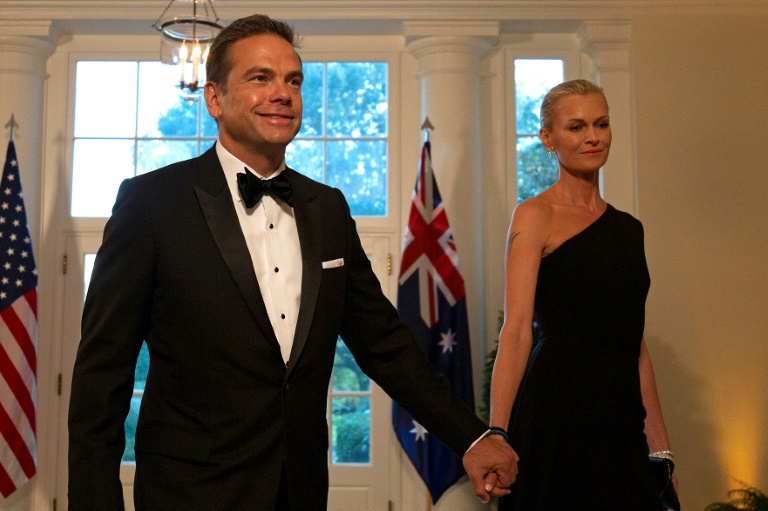
Lachlan Murdoch faces off with Crikey in defamation row

The high-stakes defamation battle between News Corp co-chairman Lachlan Murdoch and small Australian news outlet Crikey will go to trial beginning March 27 in Sydney.

Rupert Murdoch’s eldest son — who is also chief executive of Fox News parent Fox Corporation — is suing Crikey over an opinion piece that linked his family’s media empire to the January 6, 2021 storming of the US Capitol by supporters of then-President Donald Trump.

The media scion’s lawyers claimed their client was defamed over a dozen times in the article, which accused “the Murdochs and their slew of poisonous Fox News commentators” of being “unindicted co-conspirators” in the Capitol riot.

On Friday, Murdoch’s barrister — top defamation litigator Sue Chrysanthou — pushed for the earliest possible trial date, arguing Crikey had been “directing ridicule and hatred” towards her client.

She said Crikey was “publicly claiming martyrdom”, pointing to the outlet running billboard advertisements about the case and fundraising online for its defence.

In the past month, Crikey’s GoFundMe campaign has raised nearly A$500,000 (US$333,000) and garnered support from two former Australian Prime Ministers, Kevin Rudd and Malcolm Turnbull.

“Lachlan Murdoch owns boats that are worth more than Crikey,” Turnbull commented alongside his Aus$5,000 (US$3,400) donation.

– A very public fight –

The legal scuffle over the opinion piece burst into international headlines last month, when Crikey ran an advertisement in The New York Times daring Murdoch to sue.

The often pugilistic website said it welcomed the opportunity to “test this important issue of freedom of public interest journalism in a courtroom”.

Murdoch filed his lawsuit the next day.

The tussle pits an upstart website, with subscriber numbers in the low tens of thousands, against one of the world’s largest media empires.

Defamation expert David Rolph from the University of Sydney told AFP Murdoch’s case could be the first test of recent attempts to reform Australia’s notoriously tough defamation laws.

Australia has gained a reputation as “the defamation capital of the world” after a slew of lawsuits launched by high-profile figures, including actors and politicians.

Crikey’s defence, filed with the Federal Court Tuesday, denied it defamed Murdoch and flagged it would lean on two new defences created by the reforms.

“One is a serious harm threshold… the plaintiff now has to prove that they not only suffered some harm to reputation, but that it was serious harm to reputation,” Rolph explained.

Crikey will also seek to argue that the opinion piece, by writer Bernard Keane, was in the public interest.

“I suppose the difficulty here is that defence is entirely untested. This will be a test case of that,” Rolph said.

– Public interest fight –

In a statement issued Thursday, Crikey chief executive Will Hayward said his company was fighting the case because “there is an issue of fundamental public importance at stake”.

“We think it is important in an open, well-functioning society that the rich and powerful can be critiqued.”

While Murdoch has stayed quiet since launching the case, his statement of claim accused Crikey of using the legal saga to drive subscriptions.

He has asked the court to permanently ban Crikey from publishing anything suggesting he “illegally conspired with Donald Trump” around the events of January 6.

The case will be heard by Justice Wigney, who has overseen several closely-watched defamation trials — including actor Geoffrey Rush’s successful suit against another Australian media outlet.

Wigney said Friday that before the trial begins, he would seek to have the parties enter mediation where “cool commercial minds may prevail”.

Lachlan Murdoch faces off with Crikey in defamation row

The high-stakes defamation battle between News Corp co-chairman Lachlan Murdoch and small Australian news outlet Crikey will go to trial beginning March 27 in Sydney.

Rupert Murdoch’s eldest son — who is also chief executive of Fox News parent Fox Corporation — is suing Crikey over an opinion piece that linked his family’s media empire to the January 6, 2021 storming of the US Capitol by supporters of then-President Donald Trump.

The media scion’s lawyers claimed their client was defamed over a dozen times in the article, which accused “the Murdochs and their slew of poisonous Fox News commentators” of being “unindicted co-conspirators” in the Capitol riot.

On Friday, Murdoch’s barrister — top defamation litigator Sue Chrysanthou — pushed for the earliest possible trial date, arguing Crikey had been “directing ridicule and hatred” towards her client.

She said Crikey was “publicly claiming martyrdom”, pointing to the outlet running billboard advertisements about the case and fundraising online for its defence.

In the past month, Crikey’s GoFundMe campaign has raised nearly A$500,000 (US$333,000) and garnered support from two former Australian Prime Ministers, Kevin Rudd and Malcolm Turnbull.

“Lachlan Murdoch owns boats that are worth more than Crikey,” Turnbull commented alongside his Aus$5,000 (US$3,400) donation.

– A very public fight –

The legal scuffle over the opinion piece burst into international headlines last month, when Crikey ran an advertisement in The New York Times daring Murdoch to sue.

The often pugilistic website said it welcomed the opportunity to “test this important issue of freedom of public interest journalism in a courtroom”.

Murdoch filed his lawsuit the next day.

The tussle pits an upstart website, with subscriber numbers in the low tens of thousands, against one of the world’s largest media empires.

Defamation expert David Rolph from the University of Sydney told AFP Murdoch’s case could be the first test of recent attempts to reform Australia’s notoriously tough defamation laws.

Australia has gained a reputation as “the defamation capital of the world” after a slew of lawsuits launched by high-profile figures, including actors and politicians.

Crikey’s defence, filed with the Federal Court Tuesday, denied it defamed Murdoch and flagged it would lean on two new defences created by the reforms.

“One is a serious harm threshold… the plaintiff now has to prove that they not only suffered some harm to reputation, but that it was serious harm to reputation,” Rolph explained.

Crikey will also seek to argue that the opinion piece, by writer Bernard Keane, was in the public interest.

“I suppose the difficulty here is that defence is entirely untested. This will be a test case of that,” Rolph said.

– Public interest fight –

In a statement issued Thursday, Crikey chief executive Will Hayward said his company was fighting the case because “there is an issue of fundamental public importance at stake”.

“We think it is important in an open, well-functioning society that the rich and powerful can be critiqued.”

While Murdoch has stayed quiet since launching the case, his statement of claim accused Crikey of using the legal saga to drive subscriptions.

He has asked the court to permanently ban Crikey from publishing anything suggesting he “illegally conspired with Donald Trump” around the events of January 6.

The case will be heard by Justice Wigney, who has overseen several closely-watched defamation trials — including actor Geoffrey Rush’s successful suit against another Australian media outlet.

Wigney said Friday that before the trial begins, he would seek to have the parties enter mediation where “cool commercial minds may prevail”.

Asian markets suffer further losses as central banks turn screws

Asian markets fell again Friday as part of a global sell-off fuelled by recession fears after central banks around the world ramped up interest rates to fight decades-high inflation.

With price rises showing no solid sign of letting up, monetary policymakers have been forced to go on the offensive, warning that short-term hits to economies are less painful than the long-term effects of not acting.

The Federal Reserve’s decision Wednesday to lift borrowing costs 75 basis points for a third successive meeting was followed by a warning that more were in the pipeline and they would not likely come down until 2024.

That came along with similar moves by banks in several other countries including Britain, Sweden, Norway, Switzerland, the Philippines and Indonesia — all pointing to a dark outlook for equities.

“We see this new even-higher-for-longer rate path as associated with a substantially higher likelihood of a hard landing, and so not just unambiguously hawkish but unambiguously bad for risk,” Krishna Guha, vice chairman of Evercore ISI, said.

In a sign that recession expectations are rising, the yield on a 10-year US Treasury jumped to 3.7 percent, its highest level in a decade, while the S&P 500 sank to its weakest level since June and just above its 2022 lows.

There were also losses on the Nasdaq and Dow, while London, Paris and Frankfurt shed more than one percent apiece.

Asia largely followed suit, though bargain-buying provided a modicum of support.

Hong Kong, Shanghai, Sydney, Seoul, Singapore, Wellington, Taipei and Manila all dropped.

The dollar, which has surged to multi-decade highs against its major peers as well as emerging currencies, held its strength.

Traders are keeping a close eye on developments following the Japanese finance ministry’s intervention to support the yen, after it hit a new 24-year low of 146 against the dollar.

The first such intervention since 1998, it helped strengthen the yen to just above 140.

However, analysts warned the move was unlikely to have much long-term impact and the yen remained vulnerable owing to the Bank of Japan’s refusal to tighten policy — citing a need to boost the economy — as the Fed ramps up rates.

“Given the now even starker contrast between the (central bank’s) policy stance and central banks everywhere else in the world… (the) MoF will need to be in this intervention game for the long haul and in size if it is to have much hope of arresting yen weakness in an ongoing strong dollar environment,” said National Australia Bank’s Ray Attrill.

Oil markets remain subdued by concerns about a hit to demand caused by the expected recession.

Both main contracts fluctuated as speculation swirled that OPEC and other major producers could cut output as they fear prices are falling too fast.

The commodity has fallen about a third from highs seen soon after Russia’s February invasion of Ukraine, and is even below levels seen before the conflict.

“This is going to be a very, very volatile last quarter,” said Amrita Sen, of Energy Aspects, on Bloomberg Television. She added that there were “just too many different and contradictory factors driving prices right now”.

– Key figures at around 0230 GMT –

Hong Kong – Hang Seng Index: DOWN 0.5 percent at 18,066.14

Shanghai – Composite: DOWN 0.4 percent at 3,096.17

Tokyo – Nikkei 225: Closed for a holiday

Dollar/yen: DOWN at 142.13 yen from 142.35 yen Thursday

Pound/dollar: DOWN at $1.1239 from $1.1252

Euro/dollar: DOWN at $0.9829 from $0.9839

Euro/pound: UP at 87.46 pence from 87.40 pence 

West Texas Intermediate: FLAT at $83.47 per barrel

Brent North Sea crude: DOWN 0.1 percent at $90.40 per barrel

New York – Dow: DOWN 0.4 percent at 30,076.68 (close)

London – FTSE 100: DOWN 1.1 percent at 7,159.52 (close)

— Bloomberg News contributed to this story —

Asian markets suffer further losses as central banks turn screws

Asian markets fell again Friday as part of a global sell-off fuelled by recession fears after central banks around the world ramped up interest rates to fight decades-high inflation.

With price rises showing no solid sign of letting up, monetary policymakers have been forced to go on the offensive, warning that short-term hits to economies are less painful than the long-term effects of not acting.

The Federal Reserve’s decision Wednesday to lift borrowing costs 75 basis points for a third successive meeting was followed by a warning that more were in the pipeline and they would not likely come down until 2024.

That came along with similar moves by banks in several other countries including Britain, Sweden, Norway, Switzerland, the Philippines and Indonesia — all pointing to a dark outlook for equities.

“We see this new even-higher-for-longer rate path as associated with a substantially higher likelihood of a hard landing, and so not just unambiguously hawkish but unambiguously bad for risk,” Krishna Guha, vice chairman of Evercore ISI, said.

In a sign that recession expectations are rising, the yield on a 10-year US Treasury jumped to 3.7 percent, its highest level in a decade, while the S&P 500 sank to its weakest level since June and just above its 2022 lows.

There were also losses on the Nasdaq and Dow, while London, Paris and Frankfurt shed more than one percent apiece.

Asia largely followed suit, though bargain-buying provided a modicum of support.

Hong Kong, Shanghai, Sydney, Seoul, Singapore, Wellington, Taipei and Manila all dropped.

The dollar, which has surged to multi-decade highs against its major peers as well as emerging currencies, held its strength.

Traders are keeping a close eye on developments following the Japanese finance ministry’s intervention to support the yen, after it hit a new 24-year low of 146 against the dollar.

The first such intervention since 1998, it helped strengthen the yen to just above 140.

However, analysts warned the move was unlikely to have much long-term impact and the yen remained vulnerable owing to the Bank of Japan’s refusal to tighten policy — citing a need to boost the economy — as the Fed ramps up rates.

“Given the now even starker contrast between the (central bank’s) policy stance and central banks everywhere else in the world… (the) MoF will need to be in this intervention game for the long haul and in size if it is to have much hope of arresting yen weakness in an ongoing strong dollar environment,” said National Australia Bank’s Ray Attrill.

Oil markets remain subdued by concerns about a hit to demand caused by the expected recession.

Both main contracts fluctuated as speculation swirled that OPEC and other major producers could cut output as they fear prices are falling too fast.

The commodity has fallen about a third from highs seen soon after Russia’s February invasion of Ukraine, and is even below levels seen before the conflict.

“This is going to be a very, very volatile last quarter,” said Amrita Sen, of Energy Aspects, on Bloomberg Television. She added that there were “just too many different and contradictory factors driving prices right now”.

– Key figures at around 0230 GMT –

Hong Kong – Hang Seng Index: DOWN 0.5 percent at 18,066.14

Shanghai – Composite: DOWN 0.4 percent at 3,096.17

Tokyo – Nikkei 225: Closed for a holiday

Dollar/yen: DOWN at 142.13 yen from 142.35 yen Thursday

Pound/dollar: DOWN at $1.1239 from $1.1252

Euro/dollar: DOWN at $0.9829 from $0.9839

Euro/pound: UP at 87.46 pence from 87.40 pence 

West Texas Intermediate: FLAT at $83.47 per barrel

Brent North Sea crude: DOWN 0.1 percent at $90.40 per barrel

New York – Dow: DOWN 0.4 percent at 30,076.68 (close)

London – FTSE 100: DOWN 1.1 percent at 7,159.52 (close)

— Bloomberg News contributed to this story —

NASA gears up to deflect asteroid, in key test of planetary defense

Bet the dinosaurs wish they’d thought of this.

NASA on Monday will attempt a feat humanity has never before accomplished: deliberately smacking a spacecraft into an asteroid to slightly deflect its orbit, in a key test of our ability to stop cosmic objects from devastating life on Earth.

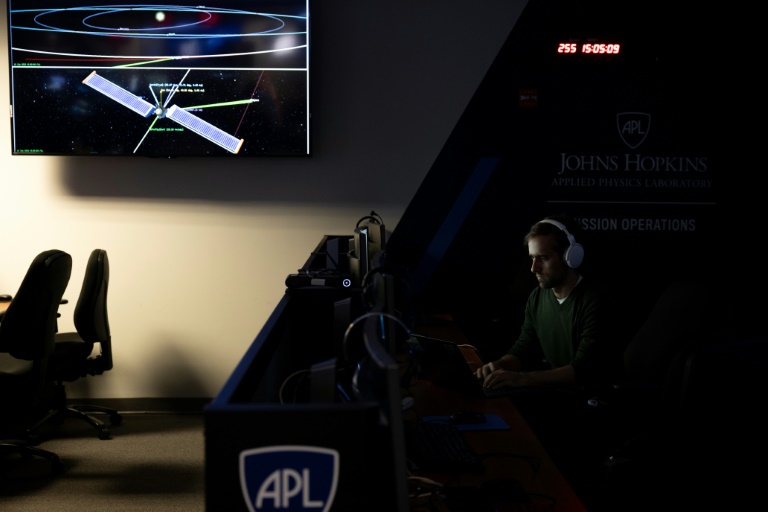
The Double Asteroid Redirection Test (DART) spaceship launched from California last November and is fast approaching its target, which it will strike at roughly 14,000 miles per hour (23,000 kph).

To be sure, neither the asteroid moonlet Dimorphos, nor the big brother it orbits, called Didymos, pose any threat as the pair loop the Sun, passing some seven million miles from Earth at nearest approach.

But the experiment is one NASA has deemed important to carry out before an actual need is discovered.

“This is an exciting time, not only for the agency, but in space history and in the history of humankind quite frankly,” Lindley Johnson, a planetary defense officer for NASA told reporters in a briefing Thursday.

If all goes to plan, impact between the car-sized spacecraft, and the 530-foot (160 meters, or two Statues of Liberty) asteroid should take place at 7:14pm Eastern Time (2314 GMT), and can be followed on a NASA livestream.

By striking Dimorphos head on, NASA hopes to push it into a smaller orbit, shaving ten minutes off the time it takes to encircle Didymos, which is currently 11 hours and 55 minutes — a change that will be detected by ground telescopes in the days that follow.

The proof-of-concept experiment will make a reality what has before only been attempted in science fiction — notably films such as “Armageddon” and “Don’t Look Up.” 

– Technically challenging –

As the craft propels itself through space, flying autonomously for the mission’s final phase like a self-guided missile, its main camera system, called DRACO, will start to beam down the very first pictures of Dimorphos.

“It’s going to start off as a little point of light and then eventually it’s going to zoom and fill the whole entire field of view,” said Nancy Chabot of Johns Hopkins Applied Physics Laboratory (APL), which hosts mission control in a recent briefing.

“These images will continue until they don’t,” added the planetary scientist.

Minutes later, a toaster-sized satellite called LICIACube, which separated from DART a couple of weeks earlier, will make a close pass of the site to capture images of the collision and the ejecta — the pulverized rock thrown off by impact.

LICIACube’s picture will be sent back in the weeks and months that follow. 

Also watching the event: an array of telescopes, both on Earth and in space — including the recently operational James Webb — which might be able to see a brightening cloud of dust.

Finally, a full picture of what the system looks like will be revealed when a European Space Agency mission four years down the line called Hera arrives to survey Dimorphos’s surface and measure its mass, which scientists can only guess at currently.

– Being prepared –

Very few of the billions of asteroids and comets in our solar system are considered potentially hazardous to our planet, and none in the next hundred or so years. 

But “I guarantee to you that if you wait long enough, there will be an object,” said Thomas Zurbuchen, NASA’s chief scientist. 

We know that from the geological record — for example, the six-mile wide Chicxulub asteroid struck Earth 66 million years ago, plunging the world into a long winter that led to the mass extinction of the dinosaurs along with 75 percent of species.

An asteroid the size of Dimorphos, by contrast, would only cause a regional impact, such as devastating a city, albeit with a greater force than any nuclear bomb in history.

Scientists are also hoping to glean valuable new information that can inform them about the nature of asteroids more generally. 

How much momentum DART imparts on Dimorphos will depend on whether the asteroid is solid rock, or more like a “rubbish pile” of boulders bound by mutual gravity, a property that’s not yet known.

We also don’t know its actual shape: whether it’s more like a dog bone or a donut, but NASA engineers are confident DART’s SmartNav guidance system will hit its target.

If it misses, NASA will have another shot in two years’ time, with the spaceship containing just enough fuel for another pass.

But if it succeeds, then it’s a first step towards a world capable of defending itself from a future existential threat, said Chabot. 

Close Bitnami banner
Bitnami