AFP

Japan government intervenes to bolster cratering yen

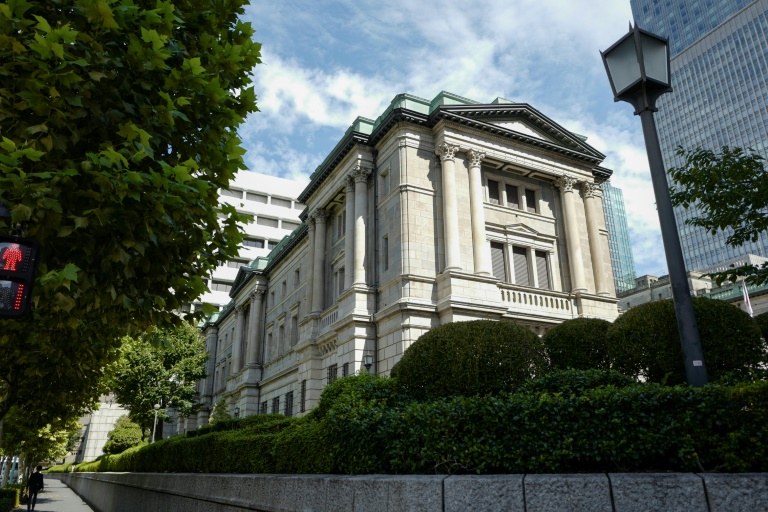
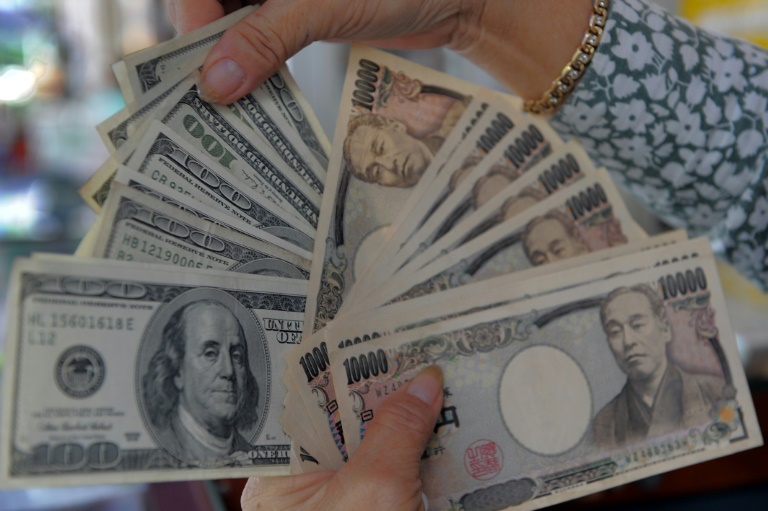
Japan’s finance ministry said Thursday it intervened in the currency market to bolster the yen, which has plummeted against the dollar in recent months on the widening policy gap between the US and Japanese central banks.

It was the first government intervention to prop up the currency since 1998 and came after the dollar surged to nearly 146 yen earlier in the day.

The yen has been weakening against the dollar for months, but sank further on Thursday after the US Federal Reserve again hiked rates to tame inflation, while the Bank of Japan left its ultra-loose monetary policy in place.

“There have been some rapid, one-sided developments on the back of speculative movement in the foreign exchange market,” Japan’s vice finance minister for international affairs Masato Kanda told reporters on Thursday evening.

“The government is worried about these excessive fluctuations and has just taken resolute action,” he added, confirming this referred to intervention.

His remarks saw the yen pare most of its losses, with the dollar retreating as low as 140.70 yen.

Inflation in Japan is rising, with the consumer price index in August at 2.8 percent, its highest level since 2014, but the central bank views the increases as temporary.

In its policy statement earlier Thursday, it said it would leave its current policy in place, “aiming to achieve the price stability target of two percent, as long as it is necessary”.

“It will continue expanding the monetary base until the year-on-year rate of increase in the observed CPI exceeds two percent and stays above the target in a stable manner.”

The bank said it sees Japan’s economy as on a recovery path, “with the impact of Covid-19 and supply-side constraints waning”, though it warned of uncertainty from commodity price increases linked to the war in Ukraine.

The yen’s rapid depreciation has caused concern in Japan, pushing up the cost of imported goods for consumers and businesses.

– ‘BoJ has no choice’ –

Earlier this month, the central bank reportedly conducted a “rate check”, an operation often seen as a precursor to a currency intervention.

The move came shortly after the yen came close to breaching the psychologically significant 145 barrier, and reports of the operation temporarily bolstered the Japanese unit.

It has plunged from around 115 in March, and the BoJ on Thursday repeated that “it is necessary to pay due attention to developments in financial and foreign exchange markets and their impact on Japan’s economic activity and prices”.

Governor Haruhiko Kuroda, whose term expires next year, told reporters before the intervention announcement that the bank would stick with its long-standing programme.

“We haven’t been and will not be targeting certain levels of foreign exchange,” he said.

“It is desirable that forex rates reflect economic and financial fundamentals, however the recent rapid depreciation of the yen is not that and is negative for the economy,” he added.

He noted though that the dollar has gained against most major currencies.

There is little expectation the BoJ will shift course, wrote Shigeto Nagai, head of Japan Economics at Oxford Economics, in a note.

“Although foreign investors might continue challenging the yen and (Japanese government bond) yields until the Fed’s rate tightening cycle peaks, we believe that the BoJ has no choice but to stick to the current… policy.”
Japan government intervenes to bolster cratering yen

Japan’s finance ministry said Thursday it intervened in the currency market to bolster the yen, which has plummeted against the dollar in recent months on the widening policy gap between the US and Japanese central banks.

It was the first government intervention to prop up the currency since 1998 and came after the dollar surged to nearly 146 yen earlier in the day.

The yen has been weakening against the dollar for months, but sank further on Thursday after the US Federal Reserve again hiked rates to tame inflation, while the Bank of Japan left its ultra-loose monetary policy in place.

“There have been some rapid, one-sided developments on the back of speculative movement in the foreign exchange market,” Japan’s vice finance minister for international affairs Masato Kanda told reporters on Thursday evening.

“The government is worried about these excessive fluctuations and has just taken resolute action,” he added, confirming this referred to intervention.

His remarks saw the yen pare most of its losses, with the dollar retreating as low as 140.70 yen.

Inflation in Japan is rising, with the consumer price index in August at 2.8 percent, its highest level since 2014, but the central bank views the increases as temporary.

In its policy statement earlier Thursday, it said it would leave its current policy in place, “aiming to achieve the price stability target of two percent, as long as it is necessary”.

“It will continue expanding the monetary base until the year-on-year rate of increase in the observed CPI exceeds two percent and stays above the target in a stable manner.”

The bank said it sees Japan’s economy as on a recovery path, “with the impact of Covid-19 and supply-side constraints waning”, though it warned of uncertainty from commodity price increases linked to the war in Ukraine.

The yen’s rapid depreciation has caused concern in Japan, pushing up the cost of imported goods for consumers and businesses.

– ‘BoJ has no choice’ –

Earlier this month, the central bank reportedly conducted a “rate check”, an operation often seen as a precursor to a currency intervention.

The move came shortly after the yen came close to breaching the psychologically significant 145 barrier, and reports of the operation temporarily bolstered the Japanese unit.

It has plunged from around 115 in March, and the BoJ on Thursday repeated that “it is necessary to pay due attention to developments in financial and foreign exchange markets and their impact on Japan’s economic activity and prices”.

Governor Haruhiko Kuroda, whose term expires next year, told reporters before the intervention announcement that the bank would stick with its long-standing programme.

“We haven’t been and will not be targeting certain levels of foreign exchange,” he said.

“It is desirable that forex rates reflect economic and financial fundamentals, however the recent rapid depreciation of the yen is not that and is negative for the economy,” he added.

He noted though that the dollar has gained against most major currencies.

There is little expectation the BoJ will shift course, wrote Shigeto Nagai, head of Japan Economics at Oxford Economics, in a note.

“Although foreign investors might continue challenging the yen and (Japanese government bond) yields until the Fed’s rate tightening cycle peaks, we believe that the BoJ has no choice but to stick to the current… policy.”
Markets tumble again as Fed hikes rates, warns more to come

Asian and European markets sank Thursday and the dollar rallied after the Federal Reserve unveiled a third straight jumbo interest rate hike, said more were in the pipeline and warned the battle against inflation was straining the US economy.

While the three-quarter-point rise was widely expected, there was some surprise at the central bank’s forecast that borrowing costs would likely be held above four percent throughout next year.

Fed boss Jerome Powell reiterated his determination to focus on bringing down inflation — which is at a four-decade high — and accepted that the campaign would hit Americans hard.

“We have got to get inflation behind us,” Powell said after a two-day meeting of the Fed policy committee. “I wish there were a painless way to do that. There isn’t.”

He added that “the historical record cautions strongly against prematurely loosening policy” and the Fed would “keep at it until the job is done”.

All three main indexes on Wall Street tumbled Wednesday as traders contemplated an era of higher-for-longer rates, which could hit companies’ bottom lines.

Asia followed suit, with Hong Kong down at an 11-year low — while Tokyo, Shanghai, Seoul, Singapore, Mumbai, Taipei and Manila also down.

London, Paris and Frankfurt extended the losses in early trade.

However, the dollar continued its strong march higher, striking a fresh 24-year high of 145.90 yen, which prompted the government to embark on a rare intervention to protect its currency.

The US Fed has for months tried to walk a fine line between fighting soaring prices and trying to keep the economy from contracting, but officials accept the chances of success are narrow.

“With the new rate projections, the Fed is engineering a hard landing — a soft landing is almost out of the question,” said Seema Shah, of Principal Global Investors.

“Jerome Powell almost channelled his inner Paul Volcker… talking about the forceful and rapid steps the Fed has taken, and is likely to continue taking, as it attempts to stamp out painful inflation pressures and ward off an even worse scenario later down the line.”

Volcker used aggressive measures to quell runaway prices in the 1980s, when inflation was last as high as it is now.

Commentators are now betting on a fourth straight 75-basis-point rate hike at the next Fed meeting in November.

All three main indexes on Wall Street tumbled Wednesday as traders contemplated an era of higher-for-longer rates, which could hit companies’ bottom lines.

– ‘Bitter medicine’ –

“This meeting once again demonstrates that the Fed is willing to do what is necessary to bring inflation under control. It will slow demand by keeping rates higher for longer — even if this means growth and jobs are lost,” said Christian Scherrmann, of asset management firm DWS.

“The current view of the central bankers is still that this will cause a slowdown, but not a recession. We fully agree that bitter medicine to win back price stability is necessary. But we fear its side-effects will be harsher than the Fed is currently projecting.”

And Fidelity International’s Anna Stupnytska said a long-hoped-for change of direction from the Fed “now seems further away”, though added that a significant tightening of monetary financial conditions could see an earlier pause in the rate hikes.

The Swiss central bank followed up Thursday with a 0.75 percentage point hike and Norway lifted its rate to an 11-year high. Indonesia and the Philippines also tightened policy.

Investors are now preparing for a large move from the Bank of England later in the day.

Still, the Bank of Japan decided not to shift from its ultra-loose measures owing to its determination to kickstart the country’s torpid economy. The decision leaves it as the only major central bank with negative rates, a policy that has sent the yen plunging 20 percent this year.

However, the currency got a bounce after the finance ministry stepped into the currency markets, pushing the dollar back below 143 yen.

Other currencies were also under pressure, with the euro wallowing at a 20-year low and sterling touching a fresh 37-year nadir of $1.1221.

The greenback was also at multi-year highs on the South Korean won, Chinese yuan, Australian dollar and Canadian dollar, among others.

Oil prices edged up after a rollercoaster Wednesday.

Both contracts spiked in reaction to President Vladimir Putin’s announcement of a partial mobilisation of the Russian army and a veiled threat to use nuclear weapons against the West.

But they soon retreated as investors once again turned to the likely impact on demand from an expected recession across world economies.

– Key figures at around 0810 GMT –

Tokyo – Nikkei 225: DOWN 0.6 percent at 27,153,83 (close)

Hong Kong – Hang Seng Index: DOWN 1.6 percent at 18,147.95 (close)

Shanghai – Composite: DOWN 0.3 percent at 3,108.91 (close)

London – FTSE 100: DOWN 0.4 percent at 7,209.75

Dollar/yen: UP at 142.63 yen from 144.02 yen Wednesday

Pound/dollar: DOWN at $1.1275 from $1.1275

Euro/dollar: DOWN at $0.9840 from $0.9847

Euro/pound: UP at 87.25 pence from 87.31 pence 

West Texas Intermediate: UP 0.6 percent at $83.46 per barrel

Brent North Sea crude: UP 0.7 percent at $90.41 per barrel

New York – Dow: DOWN 1.7 percent at 30,183.78 (close)

Markets tumble again as Fed hikes rates, warns more to come

Asian and European markets sank Thursday and the dollar rallied after the Federal Reserve unveiled a third straight jumbo interest rate hike, said more were in the pipeline and warned the battle against inflation was straining the US economy.

While the three-quarter-point rise was widely expected, there was some surprise at the central bank’s forecast that borrowing costs would likely be held above four percent throughout next year.

Fed boss Jerome Powell reiterated his determination to focus on bringing down inflation — which is at a four-decade high — and accepted that the campaign would hit Americans hard.

“We have got to get inflation behind us,” Powell said after a two-day meeting of the Fed policy committee. “I wish there were a painless way to do that. There isn’t.”

He added that “the historical record cautions strongly against prematurely loosening policy” and the Fed would “keep at it until the job is done”.

All three main indexes on Wall Street tumbled Wednesday as traders contemplated an era of higher-for-longer rates, which could hit companies’ bottom lines.

Asia followed suit, with Hong Kong down at an 11-year low — while Tokyo, Shanghai, Seoul, Singapore, Mumbai, Taipei and Manila also down.

London, Paris and Frankfurt extended the losses in early trade.

However, the dollar continued its strong march higher, striking a fresh 24-year high of 145.90 yen, which prompted the government to embark on a rare intervention to protect its currency.

The US Fed has for months tried to walk a fine line between fighting soaring prices and trying to keep the economy from contracting, but officials accept the chances of success are narrow.

“With the new rate projections, the Fed is engineering a hard landing — a soft landing is almost out of the question,” said Seema Shah, of Principal Global Investors.

“Jerome Powell almost channelled his inner Paul Volcker… talking about the forceful and rapid steps the Fed has taken, and is likely to continue taking, as it attempts to stamp out painful inflation pressures and ward off an even worse scenario later down the line.”

Volcker used aggressive measures to quell runaway prices in the 1980s, when inflation was last as high as it is now.

Commentators are now betting on a fourth straight 75-basis-point rate hike at the next Fed meeting in November.

All three main indexes on Wall Street tumbled Wednesday as traders contemplated an era of higher-for-longer rates, which could hit companies’ bottom lines.

– ‘Bitter medicine’ –

“This meeting once again demonstrates that the Fed is willing to do what is necessary to bring inflation under control. It will slow demand by keeping rates higher for longer — even if this means growth and jobs are lost,” said Christian Scherrmann, of asset management firm DWS.

“The current view of the central bankers is still that this will cause a slowdown, but not a recession. We fully agree that bitter medicine to win back price stability is necessary. But we fear its side-effects will be harsher than the Fed is currently projecting.”

And Fidelity International’s Anna Stupnytska said a long-hoped-for change of direction from the Fed “now seems further away”, though added that a significant tightening of monetary financial conditions could see an earlier pause in the rate hikes.

The Swiss central bank followed up Thursday with a 0.75 percentage point hike and Norway lifted its rate to an 11-year high. Indonesia and the Philippines also tightened policy.

Investors are now preparing for a large move from the Bank of England later in the day.

Still, the Bank of Japan decided not to shift from its ultra-loose measures owing to its determination to kickstart the country’s torpid economy. The decision leaves it as the only major central bank with negative rates, a policy that has sent the yen plunging 20 percent this year.

However, the currency got a bounce after the finance ministry stepped into the currency markets, pushing the dollar back below 143 yen.

Other currencies were also under pressure, with the euro wallowing at a 20-year low and sterling touching a fresh 37-year nadir of $1.1221.

The greenback was also at multi-year highs on the South Korean won, Chinese yuan, Australian dollar and Canadian dollar, among others.

Oil prices edged up after a rollercoaster Wednesday.

Both contracts spiked in reaction to President Vladimir Putin’s announcement of a partial mobilisation of the Russian army and a veiled threat to use nuclear weapons against the West.

But they soon retreated as investors once again turned to the likely impact on demand from an expected recession across world economies.

– Key figures at around 0810 GMT –

Tokyo – Nikkei 225: DOWN 0.6 percent at 27,153,83 (close)

Hong Kong – Hang Seng Index: DOWN 1.6 percent at 18,147.95 (close)

Shanghai – Composite: DOWN 0.3 percent at 3,108.91 (close)

London – FTSE 100: DOWN 0.4 percent at 7,209.75

Dollar/yen: UP at 142.63 yen from 144.02 yen Wednesday

Pound/dollar: DOWN at $1.1275 from $1.1275

Euro/dollar: DOWN at $0.9840 from $0.9847

Euro/pound: UP at 87.25 pence from 87.31 pence 

West Texas Intermediate: UP 0.6 percent at $83.46 per barrel

Brent North Sea crude: UP 0.7 percent at $90.41 per barrel

New York – Dow: DOWN 1.7 percent at 30,183.78 (close)

Almost 200 pilot whales perish on Australian beach

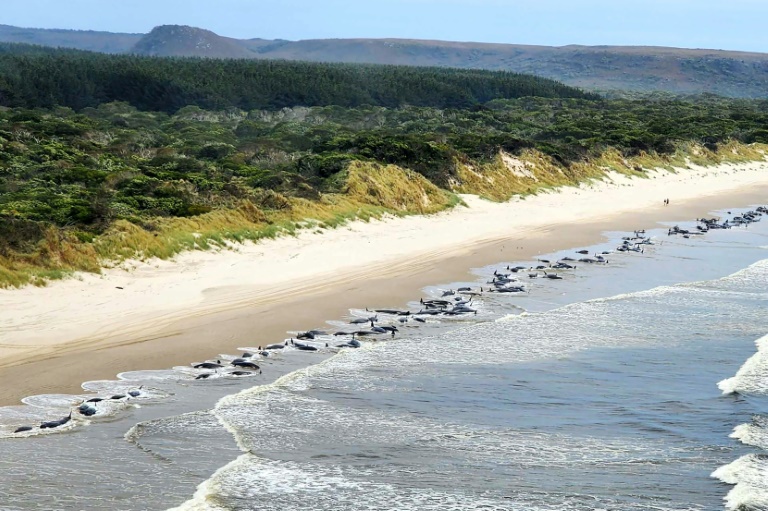
Almost 200 whales have perished at an exposed, surf-swept beach on the rugged west coast of Tasmania, where Australian rescuers were only able to save a few dozen survivors Thursday.

After an arduous, day-long effort in difficult conditions, state wildlife services said just 32 of the 226 beached long-finned pilot whales were strong enough to be rescued. 

“We’ve been refloating those whales that have been deemed suitable for release back to sea,” Sam Thalmann, a marine biologist, told AFP.

“Every whale that has been released has been tagged,” he said. “There may be a few that restrand unfortunately, but we expect that by far the majority will head out to sea.”

Locals had covered some of the mammals with blankets and doused them with buckets of seawater to keep them alive until more help arrived.

But many of the whales were too far gone.

By nightfall, scores of the glossy black whales were strewn along Ocean Beach, their carcasses pock-marking the waterline where the frigid southern ocean meets the sand.

“Unfortunately we do have a high mortality rate on this particular stranding,” said state wildlife operations manager Brendon Clark.

“The environmental conditions, the surf out there on the exposed west coast, Ocean Beach, is certainly taking its toll on the animals.”

Efforts will now turn to the considerable task of disposing of the whale bodies safely.

If left in shallow waters or on the beach, they could attract sharks and can carry disease. 

“There is a lot more work to be done with the carcass disposal,” said Thalmann, who added that “valuable biological samples” would need to be collected from the animals.

Those could help scientists understand how and why “the animals strand at this location”.

“There (are) certainly some local characteristics that lead to this spot being repeatedly a site for mass whale stranding.”

Two years ago, Macquarie Harbour was the scene of the country’s largest-ever mass stranding, involving almost 500 pilot whales.

More than 300 pilot whales died during that event, despite the efforts of dozens of volunteers who toiled for days in Tasmania’s freezing waters to free them.

Clark said the conditions of the latest stranding were tougher for the whales than two years ago, when the animals were in “much more sheltered waters”.

– Distress signals –

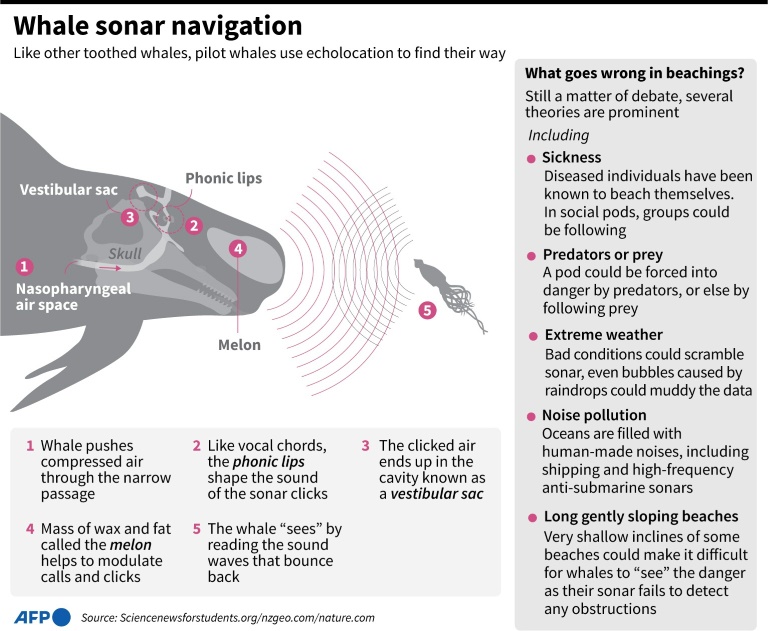
Scientists still do not fully understand why mass strandings occur.  

Some have suggested pods go off track after feeding too close to shore.

Pilot whales — which can grow to more than six metres (20 feet) long — are also highly sociable, so they may follow pod-mates who stray into danger.

That sometimes occurs when old, sick or injured animals swim ashore and other pod members follow, trying to respond to the trapped whale’s distress signals.

Others believe gently sloping beaches like those found in Tasmania confuse the whales’ sonar, making them think they are in open waters.

The latest stranding came days after a dozen young male sperm whales were reported dead in a separate mass stranding on King Island — between Tasmania and the Australian mainland.

State officials said that incident may have been a case of “misadventure”.

Strandings are also common in nearby New Zealand.

There, around 300 animals beach themselves annually, according to official figures, and it is not unusual for groups of between 20 and 50 pilot whales to run aground. 

But numbers can run into the hundreds when a “super pod” is involved — in 2017, there was a mass stranding of almost 700 pilot whales.

Whale strandings: Five questions answered

The death of about 200 pilot whales at a Tasmanian beach has renewed questions about what causes such mass strandings and whether they can be prevented.

With the help of Karen Stockin, a whale stranding expert at New Zealand’s Massey University, here are the answers to five key questions:

What causes mass strandings?

Scientists are still trying to work that out. They do know that there are multiple types of stranding events, with several explanations that can overlap. The causes can be natural, based on bathymetry — the shape of the ocean floor — or they can be species-specific. 

Pilot whales and several smaller dolphin species are known to regularly mass strand, especially in the southern hemisphere, according to Stockin. In some instances, a sick whale headed towards shore and a full group unwittingly followed them. 

Does it happen in certain areas?

There are a few global hotspots. In the southern hemisphere, Tasmania and New Zealand’s Golden Bay have seen several instances, and in the northern hemisphere, the United States bay of Cape Cod, Massachusetts, is another hotspot. 

In those areas, there are similarities between the topography of the beaches and environmental conditions. For example, Cape Cod and Golden Bay share a prominent narrow coastal land feature and shallow water with large tidal variations. Some people call such areas “whale traps” because of the speed at which the tide can recede.

Are strandings becoming more common?

Possibly. Strandings are natural phenomena and have been documented since the days of Aristotle. The health of the oceans has, however, deteriorated in recent decades.

Strandings could become more common as human use of the seas, shipping traffic and chemical pollution all increase. 

Epizootic diseases — outbreaks of sickness that affect a specific animal species — could also lead to more. But there is still much to understand about the phenomenon, Stockin said. 

Is climate change a factor?

Research on how climate change is affecting marine mammals is still in its infancy. Experts know that climate change can give rise to changes in prey and predator distribution. For some species, this may result in whales coming closer to shore. 

For example, recent research based on current climate prediction models suggests that by the year 2050, the distribution of sperm whales and blue whales in New Zealand could vary considerably.

Can strandings be prevented?

Not really. As strandings occur for a multitude of reasons, there is no one-size-fits-all solution. But Stockin said that by better understanding whether and how human-induced changes are causing more mass strandings, solutions could be found. 

Europe throws billions at energy crisis

Almost every week now, European governments are announcing emergency measures to protect households and businesses from the energy crisis stemming from Russia’s war in Ukraine.

Hundreds of billions of euros — and counting — have been shelled out so far since Russia invaded its pro-Western neighbour in late February.

Governments have gone all out: from capping gas and electricity prices to rescuing struggling energy companies and providing direct aid to household to fill up their cars.

The public spending has continued even though European Union countries already accumulated mountains of new debt to save their economies from the fallout of the Covid pandemic in 2020.

But some leaders have taken pride at their use of the public purse to battle this new crisis, which has sent inflation soaring, raised the cost of living and sparked fears of recession.

After announcing 14 billion euros ($13.9 billion) in new measures last week, Italian Prime Minister Mario Draghi boasted that this put Italy “among the countries that have spent the most in Europe”.

The Bruegel institute, a Brussels-based think tank tracking energy crisis spending by EU government, ranks Italy as the second-biggest spender in Europe after Germany.

Rome has allocated 59.2 billion euros since September 2021 to shield households and businesses from the rising energy prices, accounting for 3.3 percent of its gross domestic product.

Germany tops the list with 100.2 billion euros, or 2.8 of its GDP, as the country was hit hard by its heavy reliance on Russian gas supplies, which have dwindled in suspected retaliation over Western sanctions against Moscow for the war.

On Wednesday, Germany announced the nationalisation of troubled gas giant Uniper.

France, which shielded consumers from gas and electricity price rises as early as November, ranks third with 53.6 billion euros allocated so far, representing 2.2 percent of GDP.

– Spending to rise –

EU countries have now put up 314 billion euros so far since September 2021, according to Bruegel.

“This number is set to increase as energy prices remain elevated,” Simone Tagliapietra, a senior fellow at Bruegel, told AFP.

The energy bills of a typical European family could reach 500 euros per month early next year, compared to 160 euros in 2021, according to US investment bank Goldman Sachs.

The measures to help consumers have ranged from a special tax on excess profits in Italy to the energy price freeze in France and subsidies public transport in Germany.

But the spending follows a pandemic response that increased public debt, which in the first quarter accounted for 189 percent of Greece’s GDP, 153 percent in Italy, 127 percent in Portugal, 118 percent in Spain and 114 percent in France.

“Initially designed as a temporary response to what was supposed to be a temporary problem, these measures have ballooned and become structural,” Tagliapietra said.

“This is clearly not sustainable from a public finance perspective. It is important that governments make an effort to focus this action on the most vulnerable households and businesses as much as possible,” he said.

– Budget reform –

The higher spending comes as borrowing costs are rising.

The European Central Bank hiked its rate for the first time in more than a decade in July to combat runaway inflation, which has been fuelled by soaring energy prices.

The yield on 10-year French sovereign bonds reached an eight-year high of 2.5 percent on Tuesday, while Germany now pays 1.8 percent interest after boasting a negative rate at the start of the year.

The rate charged to Italy has quadrupled from one percent earlier this year to four percent now, reviving the spectre of the debt crisis that threatened the eurozone a decade ago.

“It is critical to avoid debt crises that could have large destabilizing effects and put the EU itself at risk,” the International Monetary Fund warned in a recent blog calling for reforms to budget rules.

The EU has suspended until 2023 rules that limit the public deficit of countries to three percent of GDP and debt to 60 percent.

The European Commission plans to present next month proposals to reform the 27-nation bloc’s budget rules, which have been shattered by the crises. 

Batteries, community spirit help California fight heat wave

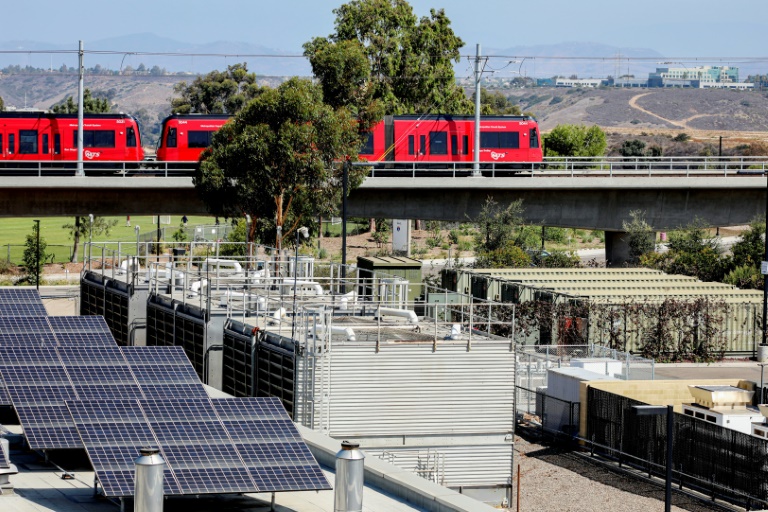
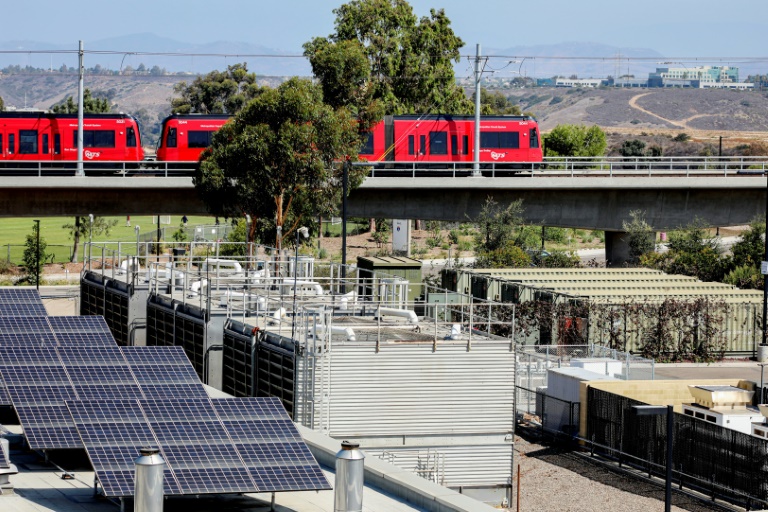
Dire predictions of blackouts in California during a fearsome heat wave this month never came to pass, with technology — and a dose of community spirit — helping the creaking grid through its most testing period ever.

The mercury topped 110 Fahrenheit (43 Celsius) on consecutive days, as a thrumming heat dome parked itself over the western United States.

But the grid never failed, thanks in part to the state’s quietly acquired battery fleet.

“Batteries stepped in and… played a critical role” in rebalancing electricity demand, said Weikko Wirta, director of operations at AES Southland, a 400 megawatt installation at Long Beach near Los Angeles.

The huge electricity storage facility, which resembles an enormous server farm, is one of the largest in the state.

Sunny California has abundant solar energy at its disposal, and harnesses a growing amount of the rays that land on its rooftops.

During daylight hours, solar and other renewables provide around 30 to 40 percent of the state’s electricity needs.

But as the sun dips, there can be a shortfall — especially on very hot days when air conditioners are switched on as everyone gets home from work and school.

“When the solar goes away at the end of the day, (batteries) stepped right in to fill that void between four o’clock in the afternoon… and 10 o’clock at night,” said Wirta.

Nearly every day of the lengthy heat wave that gripped California, Nevada and Arizona, the grid’s operator called on consumers to limit their electricity use.

Automated phone calls rang out urging households to turn up their thermostats, and not to use large appliances — including charging electric vehicles — during peak hours.

– ‘Conserve energy now’ –

“Conserve energy now to protect public health and safety,” read one urgent text message from the California Governor’s Office of Emergency Services.

“Extreme heat is straining the state energy grid. Power interruptions may occur unless you take action. Turn off or reduce nonessential power.”

That message, sent on the day demand reached its highest, seemed to do the trick.

“Within moments, we saw a significant amount of load reduction,” said Elliot Mainzer, president of the California Independent System Operator, the grid operator.

“That significant response from California consumers… allowed us to restore our operating reserves and took us back from the edge.”

Fresh in the minds of many Californians was August 2020, when the grid collapsed, leaving 800,000 homes without power over a two-day period.

Critics have blasted energy policy in the Golden State, insisting its increasing reliance on renewables at the expense of reliable, but dirty, fossil fuels puts needless strain on supply.

Climate change-skeptics took particular glee in pointing out that the call to conserve power came just days after California said it would no longer sell gasoline-powered cars from 2035.

“California’s threat of rolling blackouts ought to be a warning about how the government force-fed green energy transition is endangering grid reliability,” tweeted Kevin McCarthy, a US representative from the state and the lead Republican in the House.

For energy researchers like Eric Fournier at UCLA’s Institute of the Environment and Sustainability, this kind of sentiment is a non-starter.

“Dealing with the source of the problem and stopping emitting so many greenhouse gases into the atmosphere is the only rational way to address the problem” of climate change, he said.

“Instead of criticizing the renewables, we should be championing the value of battery storage.”

And that’s what California has been quietly doing, as it works towards a policy of 100 percent carbon-neutral energy by 2045.

– Peak power –

Over the last two years, battery storage capacity has increased tenfold; at the peak of the heat wave, these batteries were able to put 3,300 megawatts into the grid.

“That’s more combined power than the state’s largest power plant… which is rated at about 2200 megawatts,” said Mike Ferry, research director at the UC San Diego Center for Energy Research.

During the last heat wave “batteries that were interconnected to the grid played a barely noticeable role in meeting that peak power.”

“This time around, everything has changed, and batteries… played a key role in allowing the state to avoid power outages.”

For Fournier, battery solutions are impressive, but not the whole answer; Californians’ impressive voluntary cutbacks could once again be the missing piece of the puzzle.

“Paying people to not ask for power for a small number of hours may be a better option,” he says.

Batteries, community spirit help California fight heat wave

Dire predictions of blackouts in California during a fearsome heat wave this month never came to pass, with technology — and a dose of community spirit — helping the creaking grid through its most testing period ever.

The mercury topped 110 Fahrenheit (43 Celsius) on consecutive days, as a thrumming heat dome parked itself over the western United States.

But the grid never failed, thanks in part to the state’s quietly acquired battery fleet.

“Batteries stepped in and… played a critical role” in rebalancing electricity demand, said Weikko Wirta, director of operations at AES Southland, a 400 megawatt installation at Long Beach near Los Angeles.

The huge electricity storage facility, which resembles an enormous server farm, is one of the largest in the state.

Sunny California has abundant solar energy at its disposal, and harnesses a growing amount of the rays that land on its rooftops.

During daylight hours, solar and other renewables provide around 30 to 40 percent of the state’s electricity needs.

But as the sun dips, there can be a shortfall — especially on very hot days when air conditioners are switched on as everyone gets home from work and school.

“When the solar goes away at the end of the day, (batteries) stepped right in to fill that void between four o’clock in the afternoon… and 10 o’clock at night,” said Wirta.

Nearly every day of the lengthy heat wave that gripped California, Nevada and Arizona, the grid’s operator called on consumers to limit their electricity use.

Automated phone calls rang out urging households to turn up their thermostats, and not to use large appliances — including charging electric vehicles — during peak hours.

– ‘Conserve energy now’ –

“Conserve energy now to protect public health and safety,” read one urgent text message from the California Governor’s Office of Emergency Services.

“Extreme heat is straining the state energy grid. Power interruptions may occur unless you take action. Turn off or reduce nonessential power.”

That message, sent on the day demand reached its highest, seemed to do the trick.

“Within moments, we saw a significant amount of load reduction,” said Elliot Mainzer, president of the California Independent System Operator, the grid operator.

“That significant response from California consumers… allowed us to restore our operating reserves and took us back from the edge.”

Fresh in the minds of many Californians was August 2020, when the grid collapsed, leaving 800,000 homes without power over a two-day period.

Critics have blasted energy policy in the Golden State, insisting its increasing reliance on renewables at the expense of reliable, but dirty, fossil fuels puts needless strain on supply.

Climate change-skeptics took particular glee in pointing out that the call to conserve power came just days after California said it would no longer sell gasoline-powered cars from 2035.

“California’s threat of rolling blackouts ought to be a warning about how the government force-fed green energy transition is endangering grid reliability,” tweeted Kevin McCarthy, a US representative from the state and the lead Republican in the House.

For energy researchers like Eric Fournier at UCLA’s Institute of the Environment and Sustainability, this kind of sentiment is a non-starter.

“Dealing with the source of the problem and stopping emitting so many greenhouse gases into the atmosphere is the only rational way to address the problem” of climate change, he said.

“Instead of criticizing the renewables, we should be championing the value of battery storage.”

And that’s what California has been quietly doing, as it works towards a policy of 100 percent carbon-neutral energy by 2045.

– Peak power –

Over the last two years, battery storage capacity has increased tenfold; at the peak of the heat wave, these batteries were able to put 3,300 megawatts into the grid.

“That’s more combined power than the state’s largest power plant… which is rated at about 2200 megawatts,” said Mike Ferry, research director at the UC San Diego Center for Energy Research.

During the last heat wave “batteries that were interconnected to the grid played a barely noticeable role in meeting that peak power.”

“This time around, everything has changed, and batteries… played a key role in allowing the state to avoid power outages.”

For Fournier, battery solutions are impressive, but not the whole answer; Californians’ impressive voluntary cutbacks could once again be the missing piece of the puzzle.

“Paying people to not ask for power for a small number of hours may be a better option,” he says.

'Very high chance' Hong Kong will end year in recession

Hong Kong is set to end the year in the midst of a full-blown recession, the city’s finance chief warned Thursday, as spiralling interest rates join strict Covid-19 controls in hammering the economy.

“There is a very high chance for Hong Kong to record a negative GDP growth for this year,” Financial Secretary Paul Chan told reporters, adding that interest rates were being raised “at a pace that was never seen in the past three decades”.

The Chinese city’s monetary policy moves with the Federal Reserve because its currency, one of the cornerstones of its business hub reputation, is pegged to the US dollar.

The Fed’s hawkish rate hikes, aimed at curbing soaring inflation, come at an especially difficult time for Hong Kong, dampening sentiment when the economy is already struggling.

The city is currently in a technical recession — recording two consecutive quarters of negative growth this year.

The government has adhered to a version of China’s zero-Covid policy for more than 2.5 years, enforcing strict coronavirus controls and mandatory quarantine for international arrivals.

Quarantine, once as long as three weeks, has been reduced to three days. The government has signalled it may soon join the rest of the world in scrapping travel curbs.

Chan signalled his support for making travel and business easier. 

“The aspects related to the pandemic need to continue to improve in order for us to see larger investments because people are more cautious in a high interest rates environment,” he said.

– ‘Falling behind’ –

Business leaders have long been warning that the pandemic controls, combined with Beijing’s ongoing crackdown on dissent, have made it harder to attract talent and cut off Hong Kong internationally, especially as rivals reopen.

The city has seen a net outflow of more than 200,000 people in the last two years, a record population drop.  

“Hong Kong should be ahead of other Asian cities. But now there’s a feeling that we’re falling behind and being left isolated,” Eden Woon, the new head of the city’s American Chamber of Commerce told the South China Morning Post in an article published Thursday. 

“There are people leaving and the problems of retaining talent. All these things add up together and need to be addressed,” he added.

But earlier this week a senior Chinese official said it was “inappropriate” to say the city was seeing an exodus. 

“Hong Kong’s population drop is caused by various factors and there is no way to suggest that it is a result of an emigration wave,” Huang Liuquan, deputy director of the Hong Kong and Macau Affairs Office, said Tuesday. 

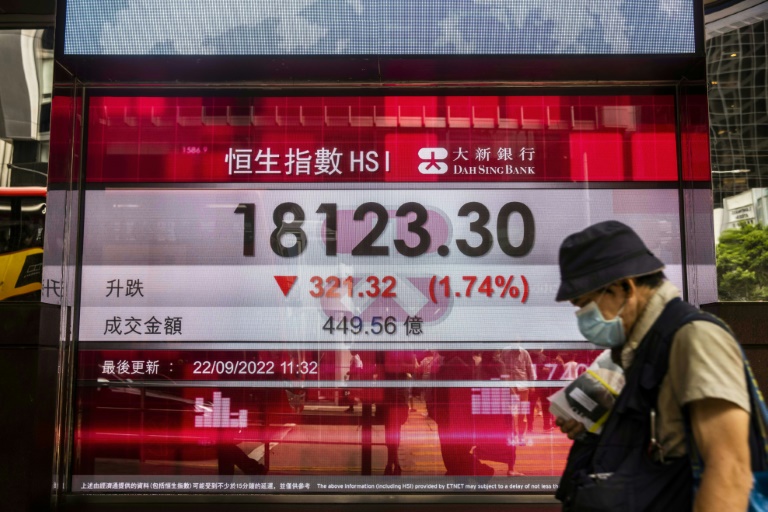
The Fed’s rate hikes hit Hong Kong’s stock market which fell as much as 2.6 percent on Thursday, to 17,965.33, the lowest since December 2011.

The Hang Seng Index has been one of the worst performing top bourses in the past two years, shedding more than 22 percent since the start of January following last year’s 14 percent drop.

While the Hong Kong Monetary Authority has no choice but to follow the Fed, major banks such as Standard Chartered and HSBC had resisted that pressure. 

But on Thursday, HSBC raised its prime lending rate in Hong Kong by 12.5 basis points to 5.125 percent, the bank’s first rise in four years.

Others are likely to follow suit. 

That could impact the city’s once white hot property sector with Goldman Sachs Group estimating prices may slide by about 20 percent over the next four years. 

Hong Kong also saw a recession in 2019 when months of huge and sometimes violent democracy protests rocked the city.

Close Bitnami banner
Bitnami