AFP

Japan government intervenes to support cratering yen

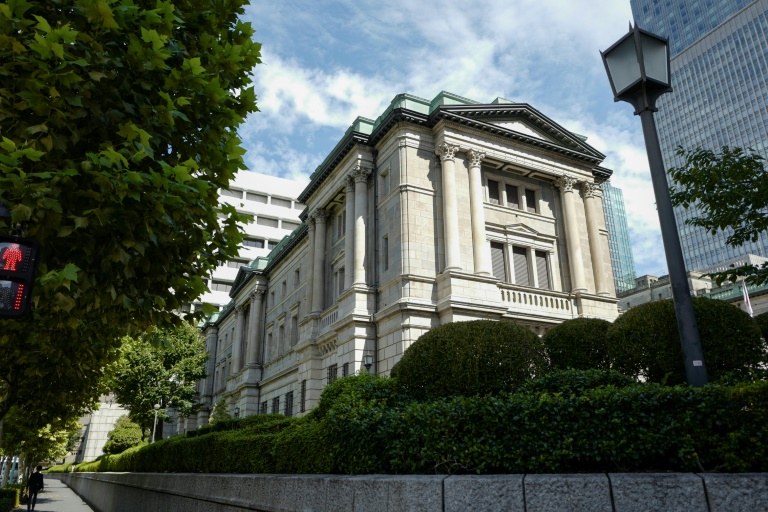
Japan’s finance ministry said Thursday it intervened in the currency market to bolster the yen, which has plummeted against the dollar in recent months on the widening policy gap between the US and Japanese central banks.

It was the first government intervention to prop up the currency since 1998 and came after the dollar neared 146 yen earlier in the day.

“Although exchange rates are in principle determined by the market, excessive fluctuations caused by speculation cannot be tolerated,” Finance Minister Shunichi Suzuki told reporters.

“Based on this, we intervened in the foreign exchange market today. We will continue to monitor developments in the market with a strong sense of urgency and take necessary action against excessive fluctuations,” he added.

He declined to detail the scale of the intervention, or its length. And he refused to confirm whether it had been coordinated with Washington or other capitals, saying only he was “in constant contact with relevant monetary authorities”.

The move, which involves selling dollars and buying yen, saw the greenback retreat as low as 140.70 before gaining slightly.

Top currency official Masato Kanda told reporters that the intervention was not triggered by the yen falling to a particular level.

“We don’t think about the level at all. In principle, (what matters) is volatility.”

The yen has been weakening against the dollar for months, but sank further on Thursday after the US Federal Reserve again hiked rates to tame inflation, while the Bank of Japan left its ultra-loose monetary policy in place.

Prices in Japan are rising, with the Consumer Price Index (CPI) rising by 2.8 percent year-on-year in August, the highest level since 2014.

But the central bank views the increases as temporary, and believes its dovish policy is needed to achieve a long-standing target of sustained two-percent inflation — seen as necessary to turbocharge growth in the world’s third-largest economy.

After a two-day meeting, it said it would leave its current policy in place until “CPI exceeds two percent and stays above the target in a stable manner.”

– ‘Temporary respite’ –

A weaker yen has some positive effects, particularly for Japanese exporters, but the recent rapid depreciation has begun to stir concern in Japan, pushing up the cost of imported goods for consumers and businesses.

Earlier this month, the central bank reportedly conducted a “rate check”, an operation often seen as a precursor to a currency intervention.

The move came shortly after the yen neared the 145 point, but the reports only temporarily bolstered the Japanese unit.

It has plunged from around 115 in March, and the Bank of Japan (BoJ) on Thursday repeated that “it is necessary to pay due attention to developments in financial and foreign exchange markets and their impact on Japan’s economic activity and prices”.

But BoJ Governor Haruhiko Kuroda, whose term expires next year, told reporters before the intervention announcement that the bank’s role did not extend to moving foreign exchange.

“We haven’t been and will not be targeting certain levels of foreign exchange,” he said.

“It is desirable that forex rates reflect economic and financial fundamentals, however the recent rapid depreciation of the yen is not that and is negative for the economy,” he added.

He noted though that the dollar has gained against most major currencies, and analysts said that the yen’s surge after the intervention could prove little more than a “temporary respite”.

“Basically the only thing stopping USD/JPY from rising towards 150 is Japanese foreign exchange intervention, but even then it will only be a temporary respite,” said Alvin Tan, head of Asia FX Strategy at RBC Capital Markets.

“The yawning policy divergence between the Fed and the BoJ, along with the related widening USD-JPY yield spread, is exerting a powerful and fundamental force, propelling USD/JPY higher,” he told AFP, saying he anticipated the dollar breaking 150 yen by 2023.

Japan government intervenes to support cratering yen

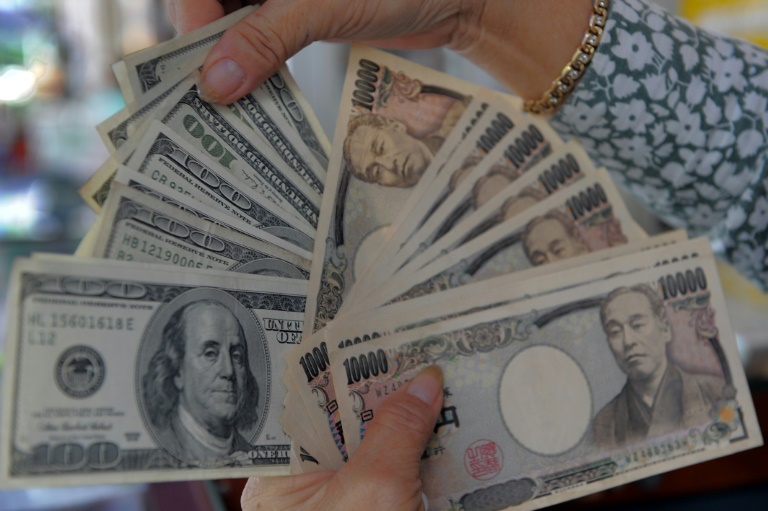
Japan’s finance ministry said Thursday it intervened in the currency market to bolster the yen, which has plummeted against the dollar in recent months on the widening policy gap between the US and Japanese central banks.

It was the first government intervention to prop up the currency since 1998 and came after the dollar neared 146 yen earlier in the day.

“Although exchange rates are in principle determined by the market, excessive fluctuations caused by speculation cannot be tolerated,” Finance Minister Shunichi Suzuki told reporters.

“Based on this, we intervened in the foreign exchange market today. We will continue to monitor developments in the market with a strong sense of urgency and take necessary action against excessive fluctuations,” he added.

He declined to detail the scale of the intervention, or its length. And he refused to confirm whether it had been coordinated with Washington or other capitals, saying only he was “in constant contact with relevant monetary authorities”.

The move, which involves selling dollars and buying yen, saw the greenback retreat as low as 140.70 before gaining slightly.

Top currency official Masato Kanda told reporters that the intervention was not triggered by the yen falling to a particular level.

“We don’t think about the level at all. In principle, (what matters) is volatility.”

The yen has been weakening against the dollar for months, but sank further on Thursday after the US Federal Reserve again hiked rates to tame inflation, while the Bank of Japan left its ultra-loose monetary policy in place.

Prices in Japan are rising, with the Consumer Price Index (CPI) rising by 2.8 percent year-on-year in August, the highest level since 2014.

But the central bank views the increases as temporary, and believes its dovish policy is needed to achieve a long-standing target of sustained two-percent inflation — seen as necessary to turbocharge growth in the world’s third-largest economy.

After a two-day meeting, it said it would leave its current policy in place until “CPI exceeds two percent and stays above the target in a stable manner.”

– ‘Temporary respite’ –

A weaker yen has some positive effects, particularly for Japanese exporters, but the recent rapid depreciation has begun to stir concern in Japan, pushing up the cost of imported goods for consumers and businesses.

Earlier this month, the central bank reportedly conducted a “rate check”, an operation often seen as a precursor to a currency intervention.

The move came shortly after the yen neared the 145 point, but the reports only temporarily bolstered the Japanese unit.

It has plunged from around 115 in March, and the Bank of Japan (BoJ) on Thursday repeated that “it is necessary to pay due attention to developments in financial and foreign exchange markets and their impact on Japan’s economic activity and prices”.

But BoJ Governor Haruhiko Kuroda, whose term expires next year, told reporters before the intervention announcement that the bank’s role did not extend to moving foreign exchange.

“We haven’t been and will not be targeting certain levels of foreign exchange,” he said.

“It is desirable that forex rates reflect economic and financial fundamentals, however the recent rapid depreciation of the yen is not that and is negative for the economy,” he added.

He noted though that the dollar has gained against most major currencies, and analysts said that the yen’s surge after the intervention could prove little more than a “temporary respite”.

“Basically the only thing stopping USD/JPY from rising towards 150 is Japanese foreign exchange intervention, but even then it will only be a temporary respite,” said Alvin Tan, head of Asia FX Strategy at RBC Capital Markets.

“The yawning policy divergence between the Fed and the BoJ, along with the related widening USD-JPY yield spread, is exerting a powerful and fundamental force, propelling USD/JPY higher,” he told AFP, saying he anticipated the dollar breaking 150 yen by 2023.
Markets tumble again as Fed hikes rates, warns more pain to come

European stocks sank Thursday following sharp losses in Asia and on Wall Street, but the dollar spiked after the Federal Reserve signalled more hefty US interest rate hikes.

Equities tanked after the US central bank warned of more pain to come, as it unveiled the third straight jumbo rate increase on Wednesday to tackle decades-high inflation.

The British pound briefly dived to a new 37-year low at $1.1212, even as the Bank of England prepared to announce its second bumper rate rise in a row later Thursday.

The greenback also soared to a fresh 24-year high of 145.90 yen, prompting the Bank of Japan to embark on a rare intervention to protect its currency. The euro wallowed at a 20-year dollar low.

– Pricing in recession –

“Share prices are falling, the dollar is surging, and the bond market is pricing in a recession as the US Federal Reserve keeps tightening monetary policy and seemingly snuffs out any hope for a pivot or even a pause in its new-found zeal for fighting inflation,” said AJ Bell investment director Russ Mould.

“Fed chair Jerome Powell … noted there was no painless way to bring inflation under control,” he added.

The world’s major central banks are rushing to ramp up rates to dampen red-hot global consumer prices, but traders fear rising borrowing costs will herald recession.

Switzerland and Norway sprang hefty interest rate hikes on Thursday, mirroring this week’s big rises in Sweden and the United States.

In Asia, Indonesia and the Philippines also tightened monetary policy but the BoJ left its status quo in place.

While the Fed’s 0.75-percentage-point rise was widely expected, there was some surprise at the central bank’s forecast that borrowing costs would likely be held above four percent throughout next year.

Powell reiterated his determination to focus on bringing down inflation — which is at a four-decade high — and accepted that the campaign would hit Americans hard.

– No ‘painless way’ –

“We have got to get inflation behind us,” Powell said after the decision.

“I wish there were a painless way to do that. There isn’t.”

He added that “the historical record cautions strongly against prematurely loosening policy” and the Fed would “keep at it until the job is done”.

In reaction, Wall Street tumbled as traders contemplated an era of higher-for-longer rates, which could hit companies’ bottom lines.

Asia followed suit, with Hong Kong down at an 11-year low — while Tokyo, Shanghai, Seoul, Singapore, Mumbai, Taipei and Manila also down.

The Fed has for months tried to walk a fine line between fighting soaring prices and trying to keep the economy from contracting, but officials accept the chances of success are narrow.

“With the new rate projections, the Fed is engineering a hard landing — a soft landing is almost out of the question,” said Seema Shah, of Principal Global Investors.

Commentators are now betting on a fourth straight 75-basis-point rate hike at the next Fed meeting in November.

Oil prices extended recent gains after Russian President Vladimir Putin’s announced a partial mobilisation of the Russian army and a veiled threat to use nuclear weapons against the West.

– Key figures at around 1015 GMT –

London – FTSE 100: DOWN 0.4 percent at 7,211.71 points

Frankfurt – DAX: DOWN 0.7 percent at 12,680.86

Paris – CAC 40: DOWN 0.8 percent at 5,985.64

EURO STOXX 50: DOWN 0.7 percent at 3,468.83

Tokyo – Nikkei 225: DOWN 0.6 percent at 27,153,83 (close)

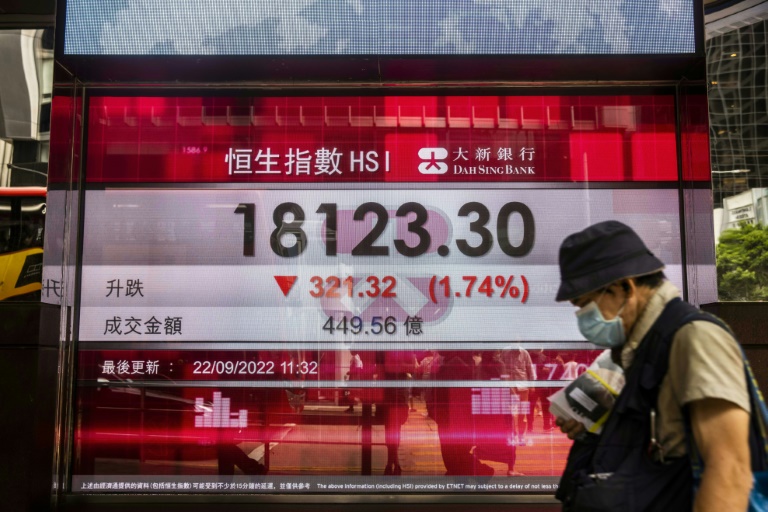
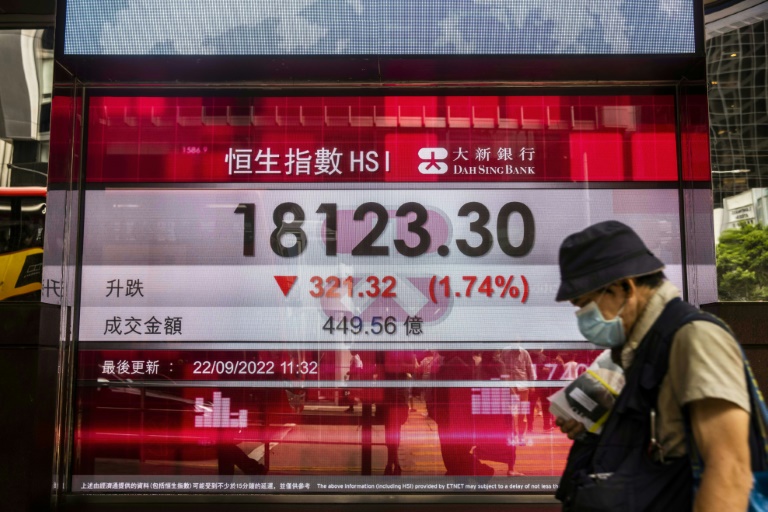
Hong Kong – Hang Seng Index: DOWN 1.6 percent at 18,147.95 (close)

Shanghai – Composite: DOWN 0.3 percent at 3,108.91 (close)

New York – Dow: DOWN 1.7 percent at 30,183.78 (close)

Pound/dollar: UP at $1.1332 from $1.1270 Wednesday

Euro/dollar: UP at $0.9875 from $0.9837

Euro/pound: DOWN at 87.14 pence from 87.29 pence 

Dollar/yen: DOWN at 142.50 yen from 144.06 yen

Brent North Sea crude: UP 1.0 percent at $90.76 per barrel

West Texas Intermediate: UP 1.2 percent at $83.89 per barrel

burs-rfj/yad

Markets tumble again as Fed hikes rates, warns more pain to come

European stocks sank Thursday following sharp losses in Asia and on Wall Street, but the dollar spiked after the Federal Reserve signalled more hefty US interest rate hikes.

Equities tanked after the US central bank warned of more pain to come, as it unveiled the third straight jumbo rate increase on Wednesday to tackle decades-high inflation.

The British pound briefly dived to a new 37-year low at $1.1212, even as the Bank of England prepared to announce its second bumper rate rise in a row later Thursday.

The greenback also soared to a fresh 24-year high of 145.90 yen, prompting the Bank of Japan to embark on a rare intervention to protect its currency. The euro wallowed at a 20-year dollar low.

– Pricing in recession –

“Share prices are falling, the dollar is surging, and the bond market is pricing in a recession as the US Federal Reserve keeps tightening monetary policy and seemingly snuffs out any hope for a pivot or even a pause in its new-found zeal for fighting inflation,” said AJ Bell investment director Russ Mould.

“Fed chair Jerome Powell … noted there was no painless way to bring inflation under control,” he added.

The world’s major central banks are rushing to ramp up rates to dampen red-hot global consumer prices, but traders fear rising borrowing costs will herald recession.

Switzerland and Norway sprang hefty interest rate hikes on Thursday, mirroring this week’s big rises in Sweden and the United States.

In Asia, Indonesia and the Philippines also tightened monetary policy but the BoJ left its status quo in place.

While the Fed’s 0.75-percentage-point rise was widely expected, there was some surprise at the central bank’s forecast that borrowing costs would likely be held above four percent throughout next year.

Powell reiterated his determination to focus on bringing down inflation — which is at a four-decade high — and accepted that the campaign would hit Americans hard.

– No ‘painless way’ –

“We have got to get inflation behind us,” Powell said after the decision.

“I wish there were a painless way to do that. There isn’t.”

He added that “the historical record cautions strongly against prematurely loosening policy” and the Fed would “keep at it until the job is done”.

In reaction, Wall Street tumbled as traders contemplated an era of higher-for-longer rates, which could hit companies’ bottom lines.

Asia followed suit, with Hong Kong down at an 11-year low — while Tokyo, Shanghai, Seoul, Singapore, Mumbai, Taipei and Manila also down.

The Fed has for months tried to walk a fine line between fighting soaring prices and trying to keep the economy from contracting, but officials accept the chances of success are narrow.

“With the new rate projections, the Fed is engineering a hard landing — a soft landing is almost out of the question,” said Seema Shah, of Principal Global Investors.

Commentators are now betting on a fourth straight 75-basis-point rate hike at the next Fed meeting in November.

Oil prices extended recent gains after Russian President Vladimir Putin’s announced a partial mobilisation of the Russian army and a veiled threat to use nuclear weapons against the West.

– Key figures at around 1015 GMT –

London – FTSE 100: DOWN 0.4 percent at 7,211.71 points

Frankfurt – DAX: DOWN 0.7 percent at 12,680.86

Paris – CAC 40: DOWN 0.8 percent at 5,985.64

EURO STOXX 50: DOWN 0.7 percent at 3,468.83

Tokyo – Nikkei 225: DOWN 0.6 percent at 27,153,83 (close)

Hong Kong – Hang Seng Index: DOWN 1.6 percent at 18,147.95 (close)

Shanghai – Composite: DOWN 0.3 percent at 3,108.91 (close)

New York – Dow: DOWN 1.7 percent at 30,183.78 (close)

Pound/dollar: UP at $1.1332 from $1.1270 Wednesday

Euro/dollar: UP at $0.9875 from $0.9837

Euro/pound: DOWN at 87.14 pence from 87.29 pence 

Dollar/yen: DOWN at 142.50 yen from 144.06 yen

Brent North Sea crude: UP 1.0 percent at $90.76 per barrel

West Texas Intermediate: UP 1.2 percent at $83.89 per barrel

burs-rfj/yad

Strong quake shakes Mexico, leaving two dead

A strong earthquake jolted Mexico on Thursday, leaving at least two people dead as residents rushed into the streets of the capital in the middle of the night days after another powerful tremor.

A woman died in Mexico City after falling down some stairs and hitting her head when the quake triggered early warning alarms, while a second victim in the capital suffered a heart attack, authorities said.

The epicenter of the 6.9-magnitude earthquake was near the Pacific coast, 84 kilometers (52 miles) south of Coalcoman in the western state of Michoacan, the national seismological agency reported.

The US Geological Survey (USGS) estimated the magnitude at 6.8.

It was the strongest of more than 1,200 aftershocks from a magnitude 7.7 quake that struck the same area on Monday, the national seismological agency said.

That tremor left two people dead in western Mexico, damaged several thousand buildings and sparked panic more than 400 kilometers away in Mexico City.

The latest quake again triggered alarms in the capital shortly after 1:00 am (0600 GMT) and caused buildings to shake and sway.

Many people quickly evacuated their homes when the alarms sounded, some still dressed in pajamas and carrying their pet dogs.

“We had a 6.9 magnitude aftershock with an epicenter in Coalcoman,” President Andres Manuel Lopez Obrador said on Twitter.

“Unfortunately, two people lost their lives in Mexico City,” he said, adding that there were no reports of victims in the western states of Michoacan, Colima and Jalisco.

Mexico City Mayor Claudia Sheinbaum said official helicopters had flown over the capital and that there were no initial reports of destruction.

“So far there is no damage in the city after the earthquake,” she tweeted.

The quake hit at a depth of 12 kilometers, according to the national seismological agency, while the USGS estimated the depth at 24 kilometers, located about 410 kilometers from Mexico City.

– Traumatic anniversary –

Monday’s tremor came less than an hour after millions of people in Mexico City participated in emergency drills on the anniversary of two deadly earthquakes in 1985 and 2017.

The timing was no more than a coincidence, the national seismological agency said.

“There is no scientific reason to explain it,” it added.

On September 19, 1985, an 8.1-magnitude quake killed more than 10,000 people and destroyed hundreds of buildings.

On the anniversary of that earthquake in 2017, a magnitude 7.1 quake left around 370 people dead, mainly in the capital.

During Monday’s earthquake, a man was killed by falling debris in a shopping center in Manzanillo in the western state of Colima.

A woman later died of injuries caused by a falling wall in the same city.

Mexico sits in the world’s most seismically and volcanically active zone, known as the Ring of Fire, where the Pacific plate meets surrounding tectonic plates.

Mexico City, which together with surrounding urban areas is home to more than 20 million people, is built in a natural basin filled with the sediment of a former lake, making it particularly vulnerable to earthquakes.

The capital has an early warning alarm system using seismic monitors that aims to give residents enough time to evacuate buildings when earthquakes hit seismic zones near the Pacific coast.

Norway, Swiss central banks hike rates to tame inflation

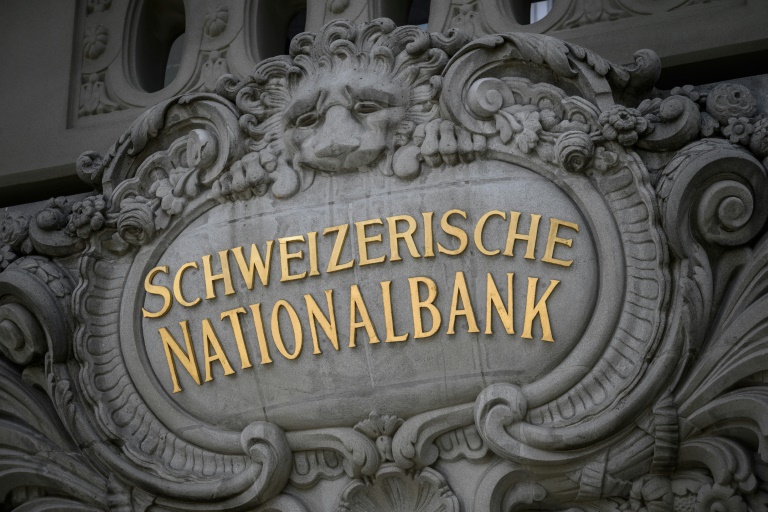
The Swiss and Norwegian central banks announced hefty interest rate hikes on Thursday as global monetary policymakers ramp up the battle against runaway inflation.

The moves follow big rate rises in Sweden and the United States this week and come ahead of another increase expected to be announced by the Bank of England on Thursday.

Norway’s central bank raised its rate to its highest level since 2011 while the Swiss National Bank ended its negative-rate era.

The Swiss central bank raised its policy rate by 0.75 percentage points to 0.5 percent.

The SNB, which first pushed its rates down into negative territory in January 2015, said the move was needed to counter “the renewed rise in inflationary pressure and the spread of inflation to goods and services that have so far been less affected”.

It said the change would take effect on Friday, adding, “It cannot be ruled out that further increases in the SNB policy rate will be necessary to ensure price stability over the medium term.”

The central bank also said it was “willing to be active in the foreign exchange market as necessary… to provide appropriate monetary conditions”.

The negative rate meant that depositors had to pay to park their money at the bank.

The SNB, which in June hiked its interest rate for the first time in 15 years, has joined a global tightening of monetary policy to tame soaring prices.

Inflation began to rise worldwide as economies emerged from Covid lockdowns, and it worsened as energy and food prices skyrocketed after Russia invaded Ukraine in late February.

Inflation in Switzerland rose 3.5 percent in August and is “likely to remain at an elevated level for the time being”, it said.

“The latest rise in inflation is principally due to higher prices for goods, especially energy and food,” it added.

Given the new rate hike, which should rein in price hikes, the bank said it now forecasts that inflation should gradually decline to three percent for the full year 2022, 2.4 percent for 2023 and 1.7 percent for 2024.

“Without today’s SNB policy rate increase, the inflation forecast would be significantly higher,” it said.

The tightening of monetary policy worldwide has caused stock markets to drop as investors fear that the rising rates could spark a recession.

– More hikes elsewhere –

Norway’s central bank lifted its policy rate by 0.5 percentage points to 2.25 percent and warned that it would “most likely” be raised further in November.

“Inflation has risen rapidly over the past months and has been far higher than projected,” Norges Bank said in a statement.

“The labour market is tight but there are now clear signs of a cooling economy,” it said.

Inflation reached 6.5 percent in August, more than triple the central bank’s two-percent target.

“There are prospects that inflation will remain high for longer than projected earlier,” said Norges Bank governor Ida Wolden Bache.

The Swedish central bank surprised markets on Tuesday with a supersized 1.0-percentage-point hike.

The US Federal Reserve rolled out a third consecutive 0.75-percentage-point increase on Thursday, with chairman Jerome Powell saying there was no “painless” way to bring down inflation.

The Bank of England was forecast to lift its key rate by 0.5 percentage points to 2.25 percent later on Thursday, repeating an increase in August that had been the biggest rise since 1995.

noo-nl-phy-lth/gil

'Very high chance' Hong Kong will end year in recession

Hong Kong is set to end the year in the midst of a full-blown recession, the city’s finance chief warned Thursday, as spiralling interest rates join strict Covid-19 controls in hammering the economy.

“There is a very high chance for Hong Kong to record a negative GDP growth for this year,” Financial Secretary Paul Chan told reporters, adding that interest rates were being raised “at a pace that was never seen in the past three decades”.

The Chinese city’s monetary policy moves with the Federal Reserve because its currency, one of the cornerstones of its business hub reputation, is pegged to the US dollar.

The Fed’s hawkish rate hikes, aimed at curbing soaring inflation, come at an especially difficult time for Hong Kong, dampening sentiment when the economy is already struggling.

The city is currently in a technical recession — recording two consecutive quarters of negative growth this year.

The government has adhered to a version of China’s zero-Covid policy for more than 2.5 years, enforcing strict coronavirus controls and mandatory quarantine for international arrivals.

Quarantine, once as long as three weeks, has been reduced to three days. The government has signalled it may soon join the rest of the world in scrapping travel curbs.

Chan signalled his support for making travel and business easier. 

“The aspects related to the pandemic need to continue to improve in order for us to see larger investments because people are more cautious in a high interest rates environment,” he said.

– ‘Falling behind’ –

Business leaders have long been warning that the pandemic controls, combined with Beijing’s ongoing crackdown on dissent, have made it harder to attract talent and cut off Hong Kong internationally, especially as rivals reopen.

The city has seen a net outflow of more than 200,000 people in the last two years, a record population drop.  

“Hong Kong should be ahead of other Asian cities. But now there’s a feeling that we’re falling behind and being left isolated,” Eden Woon, the new head of the city’s American Chamber of Commerce told the South China Morning Post in an article published Thursday. 

“There are people leaving and the problems of retaining talent. All these things add up together and need to be addressed,” he added.

But earlier this week a senior Chinese official said it was “inappropriate” to say the city was seeing an exodus. 

“Hong Kong’s population drop is caused by various factors and there is no way to suggest that it is a result of an emigration wave,” Huang Liuquan, deputy director of the Hong Kong and Macau Affairs Office, said Tuesday. 

The Fed’s rate hikes hit Hong Kong’s stock market, which fell as much as 2.6 percent on Thursday, to 17,965.33, the lowest since December 2011. It pared some of those losses by the close, ending down 1.6 percent. 

The Hang Seng Index has been one of the worst performing top bourses in the past two years, shedding more than 22 percent since the start of January following last year’s 14 percent drop.

While the Hong Kong Monetary Authority has no choice but to follow the Fed, major banks such as Standard Chartered and HSBC have resisted that pressure. 

But on Thursday, both HSBC and Standard Chartered hiked their prime lending rates in Hong Kong by 12.5 basis points, the first raise in years. 

That could impact the city’s once white-hot property sector, with Goldman Sachs Group estimating prices may slide by about 20 percent over the next four years. 

Hong Kong also saw a recession in 2019 when months of huge and sometimes violent democracy protests rocked the city.

'Very high chance' Hong Kong will end year in recession

Hong Kong is set to end the year in the midst of a full-blown recession, the city’s finance chief warned Thursday, as spiralling interest rates join strict Covid-19 controls in hammering the economy.

“There is a very high chance for Hong Kong to record a negative GDP growth for this year,” Financial Secretary Paul Chan told reporters, adding that interest rates were being raised “at a pace that was never seen in the past three decades”.

The Chinese city’s monetary policy moves with the Federal Reserve because its currency, one of the cornerstones of its business hub reputation, is pegged to the US dollar.

The Fed’s hawkish rate hikes, aimed at curbing soaring inflation, come at an especially difficult time for Hong Kong, dampening sentiment when the economy is already struggling.

The city is currently in a technical recession — recording two consecutive quarters of negative growth this year.

The government has adhered to a version of China’s zero-Covid policy for more than 2.5 years, enforcing strict coronavirus controls and mandatory quarantine for international arrivals.

Quarantine, once as long as three weeks, has been reduced to three days. The government has signalled it may soon join the rest of the world in scrapping travel curbs.

Chan signalled his support for making travel and business easier. 

“The aspects related to the pandemic need to continue to improve in order for us to see larger investments because people are more cautious in a high interest rates environment,” he said.

– ‘Falling behind’ –

Business leaders have long been warning that the pandemic controls, combined with Beijing’s ongoing crackdown on dissent, have made it harder to attract talent and cut off Hong Kong internationally, especially as rivals reopen.

The city has seen a net outflow of more than 200,000 people in the last two years, a record population drop.  

“Hong Kong should be ahead of other Asian cities. But now there’s a feeling that we’re falling behind and being left isolated,” Eden Woon, the new head of the city’s American Chamber of Commerce told the South China Morning Post in an article published Thursday. 

“There are people leaving and the problems of retaining talent. All these things add up together and need to be addressed,” he added.

But earlier this week a senior Chinese official said it was “inappropriate” to say the city was seeing an exodus. 

“Hong Kong’s population drop is caused by various factors and there is no way to suggest that it is a result of an emigration wave,” Huang Liuquan, deputy director of the Hong Kong and Macau Affairs Office, said Tuesday. 

The Fed’s rate hikes hit Hong Kong’s stock market, which fell as much as 2.6 percent on Thursday, to 17,965.33, the lowest since December 2011. It pared some of those losses by the close, ending down 1.6 percent. 

The Hang Seng Index has been one of the worst performing top bourses in the past two years, shedding more than 22 percent since the start of January following last year’s 14 percent drop.

While the Hong Kong Monetary Authority has no choice but to follow the Fed, major banks such as Standard Chartered and HSBC have resisted that pressure. 

But on Thursday, both HSBC and Standard Chartered hiked their prime lending rates in Hong Kong by 12.5 basis points, the first raise in years. 

That could impact the city’s once white-hot property sector, with Goldman Sachs Group estimating prices may slide by about 20 percent over the next four years. 

Hong Kong also saw a recession in 2019 when months of huge and sometimes violent democracy protests rocked the city.

Indonesia hikes rates for second straight month to stem inflation

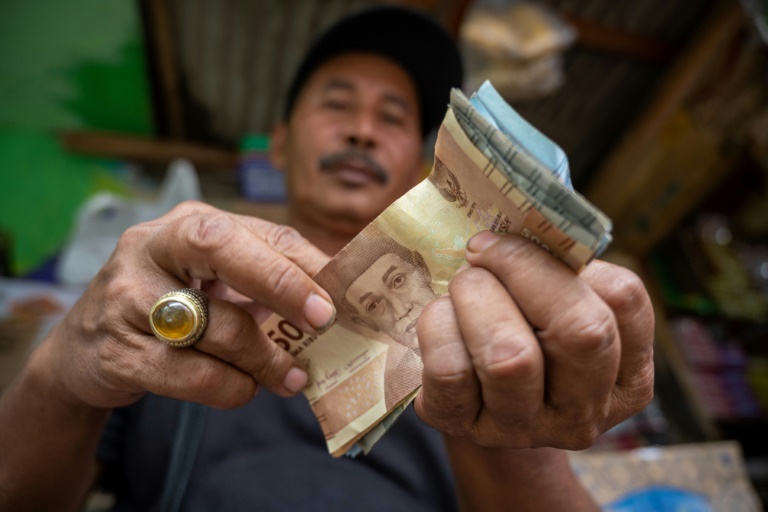
Indonesia’s central bank hiked its key interest rate for the second month in a row Thursday to combat rising inflation stoked by fuel prices and the war in Ukraine.

Bank Indonesia pushed the policy rate to 4.25 from 3.75 percent, and the jump was higher than expected by analysts.

Its two other main rates were also raised by 50 basis points.

The central bank hiked interest rates in August for the first time since 2018 to defend against accelerating inflation, with Russia’s invasion of Ukraine driving up global energy and food prices and pushing millions into poverty.

But a fuel price rise this month has put more pressure on the central bank to act.

The government raised heavily subsidised fuel prices by about 30 percent, a policy expected to further stoke inflation already at 4.69 percent.

Some analysts have forecast inflation reaching as high as seven percent by the end of the year.

Thurday’s rate hike was a “frontloaded, pre-emptive and forward-looking” move aimed at “lowering inflation expectation”, Bank Indonesia Governor Perry Warjiyo said.

It sought to bring down core inflation to within the central bank’s target of between 2 and 4 percent in the second half of next year, he said, predicting it could rise to nearly six percent this month.

President Joko Widodo came to power in 2014 on a pledge to boost annual growth to seven percent.

The commodities-driven economy has remained stuck around five percent, however, and has fallen below that after the onset of the coronavirus pandemic in early 2020.

The outlook for monetary policy is likely even more tightening as the government tries to get a greater handle on inflation, economists said.

“While a rate hike today was never in doubt, the size of the increase was,” said Gareth Leather, Asia economist from Capital Economics.

“With inflation set to jump sharply higher in September and remain well above target until late 2023, further tightening is likely.”

Indonesia hikes rates for second straight month to stem inflation

Indonesia’s central bank hiked its key interest rate for the second month in a row Thursday to combat rising inflation stoked by fuel prices and the war in Ukraine.

Bank Indonesia pushed the policy rate to 4.25 from 3.75 percent, and the jump was higher than expected by analysts.

Its two other main rates were also raised by 50 basis points.

The central bank hiked interest rates in August for the first time since 2018 to defend against accelerating inflation, with Russia’s invasion of Ukraine driving up global energy and food prices and pushing millions into poverty.

But a fuel price rise this month has put more pressure on the central bank to act.

The government raised heavily subsidised fuel prices by about 30 percent, a policy expected to further stoke inflation already at 4.69 percent.

Some analysts have forecast inflation reaching as high as seven percent by the end of the year.

Thurday’s rate hike was a “frontloaded, pre-emptive and forward-looking” move aimed at “lowering inflation expectation”, Bank Indonesia Governor Perry Warjiyo said.

It sought to bring down core inflation to within the central bank’s target of between 2 and 4 percent in the second half of next year, he said, predicting it could rise to nearly six percent this month.

President Joko Widodo came to power in 2014 on a pledge to boost annual growth to seven percent.

The commodities-driven economy has remained stuck around five percent, however, and has fallen below that after the onset of the coronavirus pandemic in early 2020.

The outlook for monetary policy is likely even more tightening as the government tries to get a greater handle on inflation, economists said.

“While a rate hike today was never in doubt, the size of the increase was,” said Gareth Leather, Asia economist from Capital Economics.

“With inflation set to jump sharply higher in September and remain well above target until late 2023, further tightening is likely.”

Close Bitnami banner
Bitnami